
Ecommerce Profit Leaks: The Hidden Ones That AI Is Finally Closing

Last updated on December 17, 2025

In this article
 5 mins
- Why Most Ecommerce Brands Are Less Profitable Than They Think
- The Most Common (and Invisible) Profit Leaks in Ecommerce
- Why Humans Miss These Losses at Scale
- How AI Finds Profit Leaks Humans Can’t
- The Quiet ROI of Fee Recovery and Audits
- Why Closing Profit Leaks Matters More Than Growth Right Now
- Profit Discipline Is Becoming a Competitive Advantage
- Profit Leaks Aren’t Inevitable Anymore
- Frequently Asked Questions
Most ecommerce brands believe they understand their margins.
Revenue looks healthy. Costs appear accounted for. Reports reconcile—at least at a high level. But beneath those summaries sits a different reality: profit leakage. Small errors, missed refunds, fee discrepancies, and operational inefficiencies quietly erode margins day after day, quietly draining profits over time.
Individually, these losses feel insignificant. Collectively, they can decide whether a brand survives a tightening market. Rising costs and shrinking margins are eroding ecommerce profits faster than most sellers realize.
What’s changing now is not awareness—but capability. AI is finally good at uncovering the kinds of profit leaks humans consistently miss.
Many of the insights in this article are informed by real conversations with ecommerce operators, including a live Ugly Talk panel co-hosted by Cahoot that focused on how AI is being used to surface hidden inefficiencies across logistics, billing, and post-purchase operations. What stood out was not bold experimentation, but quiet recovery. In many cases, AI wasn’t creating new revenue, but revealing how much profit had been leaking unnoticed through fees, errors, and operational blind spots.
Why Most Ecommerce Brands Are Less Profitable Than They Think
Ecommerce profitability rarely collapses in dramatic fashion. It erodes gradually. Ecommerce brands often grow revenue without growing profit due to rising costs and shrinking margins.
A few dollars lost on shipping here. A missed platform refund there. An inefficient return routed to the wrong place. None of these events trigger alarms on their own. But at scale, they compound, leading to shrinking margins.
The problem is not negligence. It’s visibility—especially into rising costs.
Modern ecommerce operations span marketplaces, carriers, warehouses, payment processors, and returns platforms. Each system reports its own version of the truth. Reconciling them manually is slow, expensive, and often deprioritized in favor of growth initiatives. Ecommerce brands often chase sales volume without understanding the impact on profit margins.
As a result, many brands operate with a false sense of margin security—until pressure exposes the cracks. Most sellers are unaware of how these issues impact their true profitability.
Slash Your Fulfillment Costs by Up to 30%
Cut shipping expenses by 30% and boost profit with Cahoot's AI-optimized fulfillment services and modern tech —no overheads and no humans required!
I'm Interested in Saving Time and MoneyThe Most Common (and Invisible) Profit Leaks in Ecommerce
Profit leaks tend to cluster in the same operational blind spots, often manifesting as revenue leaks that quietly erode margins.
Platform fees are a major source. Marketplace billing is complex, and errors are more common than brands realize. Incorrect classifications, unclaimed reimbursements, and processing mistakes accumulate quietly.
Shipping overcharges are another. Carrier invoices contain thousands of line items. Dimensional weight errors, fuel surcharge mismatches, and service failures often go unchallenged—not because brands accept them, but because they never see them. This kind of revenue leakage represents an invisible loss of revenue that can significantly impact overall profitability.
One operator noted that many brands assume the price they see when purchasing a shipping label is the price they ultimately pay. In reality, carrier invoices often tell a different story. When teams finally reconcile weekly UPS and FedEx invoices against expected costs, they frequently discover dimensional adjustments, surcharge changes, and billing discrepancies that were never flagged. In many cases, brands are losing margin without realizing it, which directly affects their actual profit.
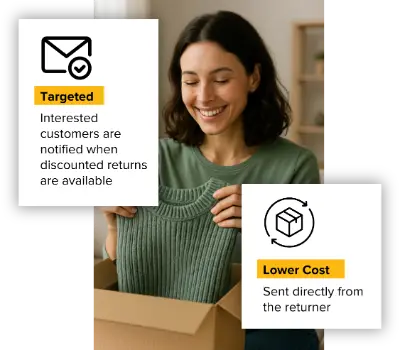
Returns handling creates additional leakage. Routing every return back to a warehouse by default inflates shipping, handling, and restocking costsespecially for low-value items.
Inventory inefficiencies also play a role. Misplaced stock, delayed replenishment, and poor placement decisions increase fulfillment costs and missed sales opportunities.
These operational blind spots are common across ecommerce sites, where friction in the buying journey and backend processes can prevent conversions and reduce profitability.
None of these issues are new. What’s new is the ability to detect them continuously. The average profit leak can erode 1% to 5% of a company’s total earnings in e-commerce.
Why Humans Miss These Losses at Scale
Human review does not scale well in ecommerce operations.
Teams rely on sampling instead of full audits. They prioritize large, visible problems over small recurring ones. And they operate within organizational silos that prevent end-to-end reconciliation.
Finance teams see totals. Operations teams see workflows. Customer service teams see symptoms. Rarely does anyone see the whole picture at once, so teams are often flying blind without full visibility into key metrics.
This is where profit leakage thrives—between systems, between teams, and between reporting cycles. Many ecommerce businesses operate without true SKU-level financials, leading to poor product investment decisions.
One operator described an attempt to calculate real-time contribution margin by manually reconciling marketing, finance, and operations data. Despite significant investment, none of the systems aligned. The effort exhausted the project budget and delivered only a fraction of the intended value. The failure wasn’t effort or intent. It was the inability of humans to continuously reconcile complex, multi-system data at scale.
How AI Finds Profit Leaks Humans Can’t
AI excels where humans struggle: pattern recognition at scale.
Instead of sampling invoices, AI can review all of them. Instead of reconciling monthly summaries, it can match transactions line-by-line in near real time. Instead of relying on static rules, it can adapt as patterns shift.
More importantly, AI does not fatigue. It does not deprioritize “small” discrepancies. It does not assume that yesterday’s assumptions still hold.
By continuously comparing expected outcomes against actual results across platforms, AI surfaces anomalies that would otherwise remain invisible, providing deep insights into performance and operational effectiveness.
This is a practical example of AI in ecommerce logistics operating as infrastructure—not insight. Using tools like ConnectBooks can help ecommerce brands gain visibility into their financials and eliminate hidden profit leaks.
AI can help identify and fix profit leaks that humans might miss, ensuring more sustainable profitability.
Looking for a New 3PL? Start with this Free RFP Template
Cut weeks off your selection process. Avoid pitfalls. Get the only 3PL RFP checklist built for ecommerce brands, absolutely free.
Get My Free 3PL RFPThe Quiet ROI of Fee Recovery and Audits
Few AI use cases feel less exciting than audits. And few deliver ROI more reliably.
Fee recovery is not about innovation—it’s about discipline. AI systems can:
- Detect marketplace fee discrepancies automatically
- Identify missed carrier refunds
- Flag billing errors without manual intervention
- Track recovery outcomes over time
- Monitor ad spend to ensure advertising costs are managed and integrated into profitability calculations
The ROI here is unambiguous. Recovered revenue flows directly to the bottom line. There is no customer risk. No brand exposure. No behavior change required.
Overspending on ads is a significant source of profit leakage for ecommerce brands.
This is why fee recovery often represents the fastest AI payback period in ecommerce operations—especially when brands are under margin pressure.
It also reinforces a broader truth explored in our breakdown of AI ROI in ecommerce operations: AI performs best when applied to repeatable, high-volume tasks with clear outcomes.
One operator shared that after deploying automated fee and chargeback auditing across their Amazon business, the system identified over $300,000 in recoverable chargebacks in a single year, representing roughly 1% of total revenue. What made the result striking wasn’t just the dollar amount, but the effort required. The entire initiative took less than a few dozen hours to set up, yet recovered margin that had been quietly leaking for years.
Why Closing Profit Leaks Matters More Than Growth Right Now
In a forgiving market, inefficiency can hide behind growth in top line revenue.
In a tight market, it cannot.
Rising shipping costs, tariffs, and cautious consumer spending have shifted the priority from expansion to resilience. Brands no longer have the luxury of ignoring margin erosion in favor of top-line growth. Ecommerce brands often grow in revenue but see profits decline due to increasing operational costs and rising costs such as shipping, ad spend, supplier fees, and logistics.
Closing profit leaks does not require new customers. It does not require better ads. It requires operational clarity and a focus on margin recovery—transforming customer experience and operational improvements into increased profits.
This is why many operators are re-evaluating their ecommerce fulfillment services and post-purchase workflows—not to grow faster, but to leak less and achieve healthy growth.
Profit Discipline Is Becoming a Competitive Advantage
As AI closes gaps that once required large finance and ops teams, the playing field is shifting.
Brands that adopt continuous auditing and intelligent routing systems operate with sharper margins and faster feedback, allowing them to scale faster. Brands that rely on periodic manual reviews fall behind—not because they lack effort, but because they lack visibility.
This dynamic increasingly favors smaller, more agile ecommerce brands, and many ecommerce brands are now adopting AI-driven controls without organizational friction.
Scale Faster with the World’s First Peer-to-Peer Fulfillment Network
Tap into a nationwide network of high-performance partner warehouses — expand capacity, cut shipping costs, and reach customers 1–2 days faster.
Explore Fulfillment NetworkProfit Leaks Aren’t Inevitable Anymore
Ecommerce has always been leaky. Complexity made that unavoidable.
What’s changed is that leakage is no longer invisible.
AI is not eliminating every operational cost. It is eliminating the unnecessary ones—the errors, mismatches, and inefficiencies that humans were never equipped to catch at scale.
In today’s environment, that difference matters.
Brands that treat profit discipline as a system—not a quarterly exercise—are building resilience competitors will struggle to match and are better positioned for long term profit. Discount culture can harm long-term profitability by training customers to wait for sales, so focusing on sustainable practices is essential.
Frequently Asked Questions
What are the biggest profit leaks in ecommerce today?
The most common profit leaks include platform fee discrepancies, shipping overcharges, missed refunds, inefficient returns handling, inventory placement errors, and high acquisition costs.
Profit leaks in e-commerce stem from high returns, shipping/fulfillment errors, billing mistakes, high customer acquisition costs (CAC) versus lifetime value (LTV), and hidden overheads.
Why don’t ecommerce brands notice these losses?
Most losses are small individually but significant in aggregate. Manual audits, siloed reporting, and poor cash flow management make them difficult to detect consistently. Many ecommerce businesses operate with outdated or messy financials, leading to poor decision-making. Learn actionable strategies for refund fraud prevention to help protect your revenue.
How does AI help recover lost ecommerce revenue?
AI continuously audits transactions, reconciles data across systems, and flags anomalies faster and more accurately than manual processes. By doing so, AI can fix ecommerce profit leaks by identifying and addressing system gaps or operational inefficiencies that lead to lost revenue. For example, using lifecycle marketing, advanced segmentation, and AI-driven conversion rate optimization (CRO) can rebuild retention and post-purchase systems, further preventing profit leaks and improving overall profitability.
Is fee recovery worth it for smaller ecommerce brands?
Yes. Smaller brands often recover meaningful margin because they lack the internal resources to monitor fees manually at scale. Fee recovery directly contributes to your actual profit by ensuring that your business retains more of its true earnings after accounting for all expenses. Regular audits of financial and inventory processes help identify discrepancies between expected income and actual cash flow, making it easier to spot and address ecommerce profit leaks.
Where does this fit in an overall AI strategy?
Profit leak detection works best as part of a broader AI-driven operating system for ecommerce logistics, not as a standalone tool. AI should continuously monitor performance metrics to identify and address profit leaks. Key performance indicators (KPIs) to monitor for profit leaks include return rates, customer acquisition costs (CAC), lifetime value (LTV), and payment success rates.
Written By:

Manish Chowdhary
Manish Chowdhary is the founder and CEO of Cahoot, the most comprehensive post-purchase suite for ecommerce brands. A serial entrepreneur and industry thought leader, Manish has decades of experience building technologies that simplify ecommerce logistics—from order fulfillment to returns. His insights help brands stay ahead of market shifts and operational challenges.

Turn Returns Into New Revenue
Related Articles
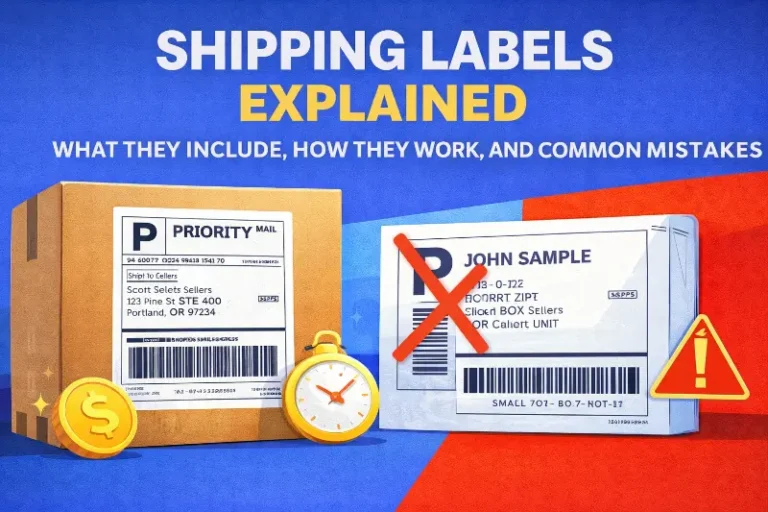
Shipping Labels Explained: What They Include, How They Work, and Common Mistakes
Shipping labels are the operational backbone of ecommerce fulfillment, a small piece of paper that determines whether packages reach customers successfully or trigger costly failur...
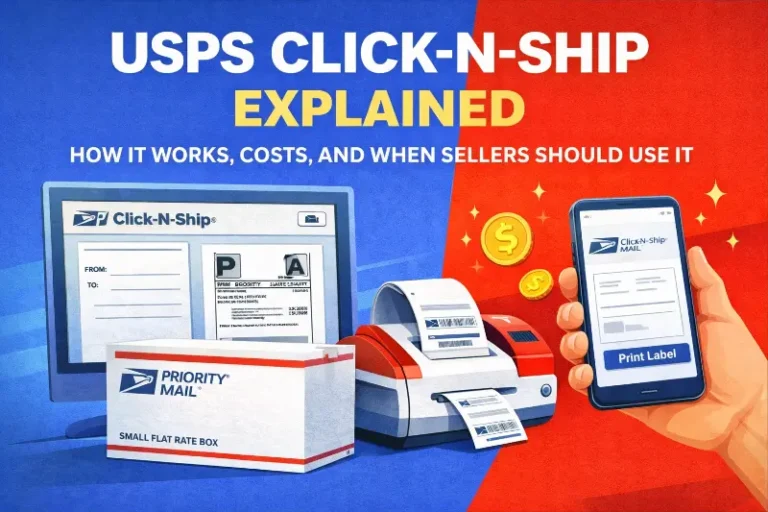
USPS Click-N-Ship Explained: How It Works, Costs, and When Sellers Should Use It
USPS Click-N-Ship is the postal service’s free online label-printing tool, and for most Shopify sellers shipping more than 50 packages monthly, it’s already time to move beyond it....

USPS Tracking Explained: What Each Status Means and How Sellers Should Respond
The “if it fits, it ships” model offers compelling economics for heavy items traveling cross-country, but costs Shopify brands up to 175% more than alternatives for lig...