
Cahoot vs ShipStation: Exploring ShipStation Alternatives

Last updated on September 22, 2026
In this article
 9 minutes
- The Hidden Cost of Holding On to ShipStation
- ⚠️ ShipStation Isn’t a Shipping Platform. It’s a Liability.
- 🧩 Disconnected Tools Create Real Damage
- 📦 Inventory Management — The Overlooked Engine of Fulfillment
- 🧠 Cahoot Is Built for Intelligent Commerce
- 🔥 Real Costs. Real Damage.
- 🛠️ Your Shipping Stack Shouldn’t Be a Frankenstein
- 🧱 PE-Owned, Product-Stalled: Why ShipStation Won’t Catch Up
- ⏳ Upgrade Before It Hurts
- 🚀 Ready for Shipping That Actually Saves You Money?
- Frequently Asked Questions
The Hidden Cost of Holding On to ShipStation
If you’re using ShipStation in 2025, you’re not shipping smarter — you’re bleeding margin. When teams evaluate ShipStation alternatives, names like Veeqo and Easyship often come up, but the best alternative to ShipStation varies based on specific operational needs. Cahoot is one of the best ShipStation alternatives if you need stronger fulfillment economics, but the right alternative depends on your operation, volume, and complexity.
⚠️ ShipStation Isn’t a Shipping Platform. It’s a Liability.
If you’re searching for ShipStation alternatives, the real answer is platforms like Cahoot that go beyond label printing with intelligent automation across fulfillment, shipping, inventory, and returns — because ShipStation’s recent policy changes, pricing, and API restrictions now create real operational limits for a growing ecommerce business. ShipStation was built when ecommerce was simple — one warehouse, one carrier, one label — but modern operations run across multiple locations, channels, and systems, and API access now matters as much as carrier rates because it powers the custom integrations and automation workflows that keep orders moving without manual work.
ShipStation can’t keep up. Its free plan allows just 10 shipments a month, paid plans start at $14.99 for 50 shipments, costs can climb past $1,499/month at higher volume, and API access starts at $29.99/month with limits that can make custom integrations harder to justify. For ecommerce brands trying to protect margins and customer experience, that combination of higher costs, shipping errors, disconnected inventory, and limited operational flexibility is exactly why smarter ShipStation alternatives matter. This comparison breaks down where ShipStation falls short, how Cahoot’s AI-powered approach changes the economics of fulfillment, shipping, inventory, and returns, and which option makes more financial and operational sense as your business grows.
🧩 Disconnected Tools Create Real Damage
ShipStation is a single-player tool in a multiplayer world. Here’s what happens when your ops stack doesn’t talk to itself:
|
Operational Failure
|
ShipStation Problem
|
Financial Impact
|
|---|---|---|
|
Wrong box used for shipping
|
No cartonization logic; using the wrong box increases dim weight. Choosing the right box and minimizing void fill reduces dimensional weight and saves on shipping costs.
|
Higher DIM → inflated label cost → lower margin
|
|
Overnight air shipment from wrong warehouse
|
Limited orchestration for rate comparison across carriers; some platforms let businesses connect own carrier accounts and other carrier accounts, support both those accounts and platform rates, and compare them to optimize shipping costs, while ShipStation allows access to negotiated carrier rates.
|
$100+ per order to salvage reputation or avoid SFP strike
|
|
Duplicate effort during peak
|
No barcode verification, no smart routing
|
Mis-picks, reships, angry customers, team burnout
|
📦 Inventory Management — The Overlooked Engine of Fulfillment
Inventory management isn’t just a back-office task—it’s the engine that powers your entire fulfillment machine. In today’s ecommerce landscape, the way you manage inventory directly impacts shipping costs, customer satisfaction, and your ability to scale across multiple sales channels.
When inventory levels are dialed in, you avoid costly stockouts and overstock situations, ensuring that every order can be fulfilled quickly and accurately. This precision streamlines your order fulfillment workflow, slashing delays and keeping customers happy. Efficient inventory management also means you can optimize packaging materials and reduce dim weights, so you’re not paying extra to ship empty space.
Smart companies know that inventory isn’t just about what’s on the shelf—it’s about how fast and efficiently you can move it. By connecting inventory decisions to broader shipping logistics, you unlock new levels of efficiency, cut fulfillment costs, and support multi-channel growth. Stronger systems like Veeqo also provide real-time inventory management across multiple sales channels—the kind of visibility growing ecommerce operations need to stay accurate and scalable, especially when paired with dedicated ecommerce fulfillment software.
🧠 Cahoot Is Built for Intelligent Commerce
Cahoot’s system isn’t just about label printing or helping you print labels. It makes real-time decisions to improve performance, drive cost savings, efficiently fulfill orders with multi-carrier shipping software for ecommerce, strengthen post-purchase and returns outcomes, protect your margins, enhance your customer experience, and keep your brand future-proof.
|
Cahoot Advantage
|
Result
|
|---|---|
|
AI-powered cartonization tied to packaging inventory
|
Lower DIM + no delays + better unboxing
|
|
SLA-aware shipping logic (Amazon SFP, Walmart 2-Day, etc.)
|
No late orders, no guesswork
|
|
Real-time warehouse reassignment + exception handling
|
Lower costs + higher reliability
|
|
Peer-to-peer fulfillment network
|
Scale with flexibility + resilience
|
|
Integrated post-purchase tools
|
Higher NPS, lower WISMO, verified return fraud detection
|
🔥 Real Costs. Real Damage.
Let’s talk numbers:
- $2.75 per order lost due to wrong packaging (on average) — savings that add up quickly when you implement smart cartonization software to right-size packaging
- $98.00 for every overnight air label due to warehouse mismatch
- $1.20 per order from return fraud via unverified return systems
- Thousands in lost SFP eligibility revenue
Your software cost should match your operation, because different shipping solutions fit different business sizes, budgets, and operational goals when you evaluate total cost. Veeqo offers free shipping and inventory management with no monthly fees, Pirate Ship offers discounted USPS and UPS rates without a monthly subscription, and Shippo charges $199 per month for 5,001–10,000 labels, so subscription costs can vary widely.
Multiply that by 10,000 orders — and ShipStation’s “cheap” software just cost you a six-figure headache.
🛠️ Your Shipping Stack Shouldn’t Be a Frankenstein
Most ShipStation users bolt on plugins, Excel workarounds, and Slack fire drills. That’s not software — it’s survival mode.
Cahoot unifies core order fulfillment services for ecommerce companies:
- Fulfillment operations that outperform traditional 3PLs
- Smart shipping software tightly integrated with major ecommerce and carrier partners
- Automated shipping workflow, including rate-shopping and packaging selection
- Post-purchase visibility, including tighter protection on marketplaces through Amazon Buy Shipping integration
- AI-powered returns management and fast delivery programs for channels like Google Shopping order fulfillment
…in one connected, AI-first single platform instead of a patchwork of point solutions, improving efficiency, reducing costs, and enhancing customer satisfaction. Shopify brands, for example, can consolidate tech debt by using Shopify-focused fulfillment services that plug directly into their storefront while still benefiting from network-wide optimization. Some other ShipStation alternatives solve narrower needs: EasyPost is a developer-focused shipping API for custom fulfillment shipping workflows, while ShippingEasy adds built-in customer marketing tools for small businesses. If those are your priorities, they may fit better than other alternatives built for broader operational control, and fast-growing brands comparing providers often look at a dedicated Cahoot vs. ShipMonk comparison.
🧱 PE-Owned, Product-Stalled: Why ShipStation Won’t Catch Up
ShipStation is owned by a private equity firm (Stamps.com). Innovation has slowed to a crawl. Meanwhile, the complexity of ecommerce logistics is accelerating. Buyers now also weigh international shipping needs more heavily: Sendcloud focuses on European operations with advanced VAT and customs handling, Easyship calculates duties and taxes accurately at checkout, and carrier access like royal mail matters more for global shipping. If your ops are growing, ShipStation will hold you back.
“Good enough” isn’t good enough when you’re scaling.
⏳ Upgrade Before It Hurts
The longer you wait, the more expensive it gets. As order volume grows, support quality matters more, because high volume operations need responsive help and real response times during peak periods. The right platform should also connect you to a real person when issues threaten fulfillment, since platforms built for high-volume operations treat support as core infrastructure, not an extra expense. Every missed SLA, every mistyped label, every oversized box chips away at your brand and your margins for most businesses.
🚀 Ready for Shipping That Actually Saves You Money?
Switch to Cahoot.
Smarter automation. Fully integrated. Built for the next generation of ecommerce brands.
Frequently Asked Questions
What are the main problems with ShipStation, including API Access?
ShipStation was built for simpler ecommerce operations. It’s also harder to justify for growing businesses that need API access and automation rules without premium-tier restrictions, since API access should not be locked behind premium tiers. It lacks intelligent cartonization, dynamic warehouse reassignment, SLA-aware shipping logic, and integrated fraud-resistant returns—all critical for modern ecommerce brands scaling across multiple nodes and channels.
How does Cahoot compare to ShipStation as a ShipStation Alternative?
Cahoot combines multi-node fulfillment, smart shipping software, and returns management in a single AI-powered platform. Unlike ShipStation, which requires bolt-on plugins and manual workarounds, Cahoot automates decision-making and reduces operational errors that cost brands thousands. That said, lighter shipstation alternatives like Shippo can make more sense for smaller teams that mainly need straightforward shipping, with a free tier, api access included on all plans, and even the free tier supporting basic integration needs.
Can Cahoot replace ShipStation completely?
Yes. Cahoot offers all the key functions of shipping software—rate shopping, label generation, cartonization, SLA routing—plus fulfillment and returns in one platform, making it a full replacement for brands with more complex operations that need strong feature depth. Some teams may prefer Shippo if they are small-to-midsize businesses focused on straightforward label creation and an intuitive interface, especially if lower-friction API access matters, since API access on ShipStation starts at $29.99 per month; choosing the right platform depends on how much complexity you actually need.
Is Cahoot only for large brands?
No. Cahoot supports brands at all stages—from growing DTC shops with a single warehouse to enterprise retailers with nationwide fulfillment needs.
That said, not every smaller seller needs Cahoot-level complexity: a free plan or free shipping software can be a better fit for basic needs, and pirate ship offers discounted USPS and UPS rates without a monthly subscription while Veeqo offers free shipping and inventory management with no monthly fees.
Our peer-to-peer fulfillment model makes advanced logistics accessible without massive overhead.
What’s the ROI and Transparent Pricing of Switching from ShipStation to Cahoot?
Brands typically see savings from reduced DIM weight, fewer SLA violations, fewer mis-picks and reships, and better returns fraud detection. These benefits add up quickly—often leading to six-figure annual savings depending on order volume. Switching still takes careful planning, but many businesses complete the move in 1–2 days with minimal disruption before fully committing. During high-volume periods, protecting ROI also depends on responsive customer support.
Written By:

Jeremy Stewart
Jeremy Stewart leads customer success at Cahoot, helping merchants achieve high-performance logistics through smart technology and process optimization. With a background in both ecommerce operations and client services, Jeremy ensures that every merchant using Cahoot gets measurable results—whether they’re scaling from one warehouse to many or managing complex returns.
Turn Returns Into New Revenue
Related Articles
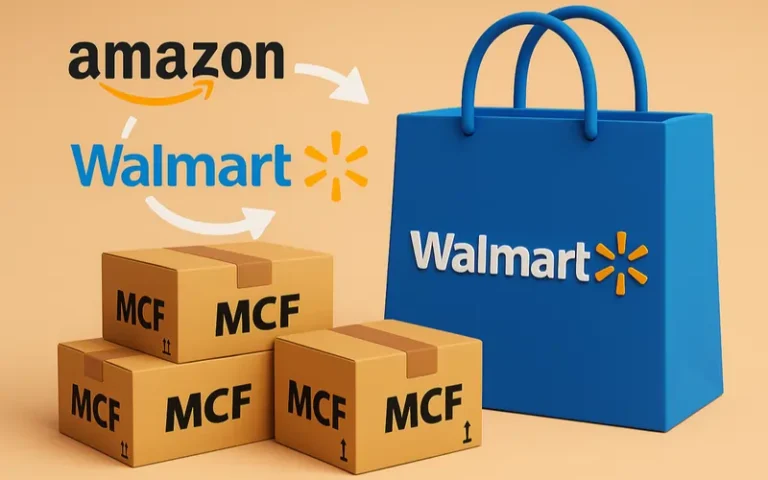
Walmart Officially Allows Amazon Multi-Channel Fulfillment (MCF)
Big news for multichannel sellers: Walmart now officially allows Amazon Multi-Channel Fulfillment (MCF), Amazon’s service for using its fulfillment network to ship orders from mult...
Why Small Ecommerce Brands Are Winning with AI (While Enterprises Struggle)
Conventional wisdom says large companies should dominate AI adoption.
Top 12 Shipping Strategies For Making Free Shipping Profitable
For ecommerce sellers, shipping is more than just getting a package from point A to point B — it’s the invisible backbone, quietly shaping customer satisfaction, operational costs,...