
HTS Code Explained: What It Is, Why It Matters, and How Ecommerce Brands Use It

Last updated on February 18, 2026
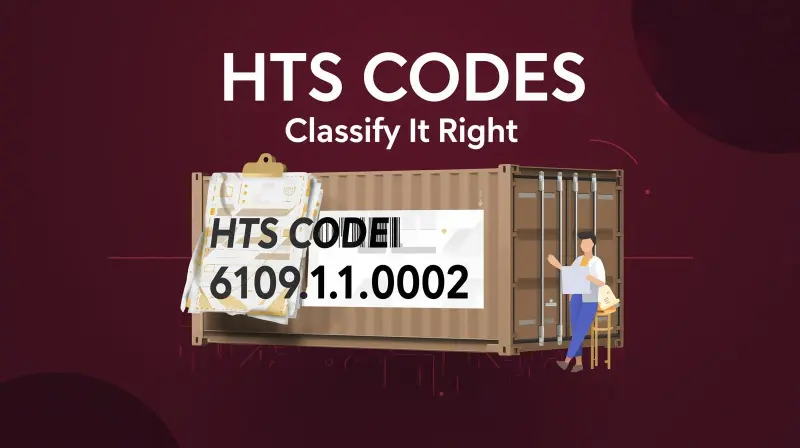
In this article
 28 minutes
- What HTS codes are and how they work in U.S. importing
- How HTS codes differ from HS codes at a high level
- Why HTS classification directly affects duties, taxes, and clearance speed
- Common HTS code mistakes ecommerce brands make
- Operational consequences of incorrect HTS codes
- How ecommerce brands should approach HTS classification responsibly
- How to find the correct HTS code for your products
- The long-term margin impact of classification accuracy
- Frequently Asked Questions
HTS codes (Harmonized Tariff Schedule codes) are standardized numerical classifications that identify imported products for U.S. Customs and Border Protection, determining the duties, taxes, and regulations that apply to each shipment. For ecommerce brands importing inventory from overseas manufacturers, HTS classification directly affects landed costs, clearance speed, and compliance risk in ways that compound across thousands of shipments. A single misclassified product category can trigger duty rate differences of 5-25% due to varying customs duty rates determined by the HTS code, translate to thousands in unexpected costs annually, and create audit exposure that persists for five years after each entry. In the long run, proper HTS code management is essential to avoid compounding costs and compliance risks.
The operational reality is that most ecommerce founders encounter HTS codes only when their customs broker or freight forwarder requests them for the first time. Customs brokerage services play a crucial role in helping importers navigate the complexities of HTS code classification and customs processes. The temptation is to treat classification as a checkbox exercise, selecting whichever code seems close enough or accepting whatever the broker suggests without verification. This approach works until it doesn’t. Customs reclassifications, informed compliance letters, or audits reveal the accumulated cost of incorrect classification years after the pattern began, when correcting the issue requires paying retroactive duties plus penalties on hundreds of past shipments.
When calculating landed costs and assessing compliance risk, the commercial invoice is the key document used to declare the value of imported goods, which is essential for calculating customs duty rates. During audits and compliance reviews, it is important to note that the final determination of duty rates and classification is made by U.S. Customs and Border Protection, not the importer.
What HTS codes are and how they work in U.S. importing
The Harmonized Tariff Schedule (HTS) is the U.S. classification system for imported goods, maintained by the U.S. International Trade Commission, which is the official publisher of the Harmonized Tariff Schedule, and used by U.S. Customs and Border Protection to determine applicable tariff rates, quotas, and statistical tracking for merchandise imported into the United States. The HTS extends the international Harmonized System (HS) maintained by the World Customs Organization, which provides the foundation for classifying traded products globally across most world trade, serving as the global system for classifying goods in international trade.
HTS codes use a 10-digit structure where meaning builds hierarchically, with each number contributing to increasing classification detail. The first six digits align with the international HS code used by most countries worldwide, enabling consistent classification across borders. Digits seven and eight represent U.S.-specific statistical categories that provide more granular product detail for U.S. trade data tracking. Digits nine and ten identify additional statistical details used by the Census Bureau for trade reporting. The full 10-digit code is often referred to as the Schedule B number or ‘b number’ for statistical purposes. This structure means an HTS code like 6109.10.0012 represents a specific product classification: Chapter 61 (Articles of apparel and clothing accessories, knitted or crocheted), heading 6109 (T-shirts, singlets and other vests, knitted or crocheted), subheading 6109.10 (Of cotton), and U.S.-specific detail down to 6109.10.0012 (Men’s or boys’ T-shirts, all white, short hemmed sleeves).
The classification process follows a legal framework established in the General Rules of Interpretation (GRI), which provide the methodology for determining correct classification when products could potentially fit multiple categories. The rules establish hierarchical priority, starting with heading-level classification based on the article’s essential character, then proceeding through increasingly specific subheadings. This structured approach means classification is not arbitrary or opinion-based, but follows defined legal standards that customs authorities worldwide apply consistently. For example, if a product description or image is ambiguous, incorrect classification could lead customs authorities to believe the product is live animals, resulting in delays or penalties.
HTS codes serve multiple functions beyond simply identifying products. They determine duty rates applicable to specific goods, control quota and trade agreement eligibility, trigger compliance requirements like permits or certifications, enable statistical tracking of U.S. imports and exports, and establish preferential treatment under free trade agreements. A single code change can shift a product from duty-free to 15% duty, require FDA registration that wasn’t previously necessary, or make a product subject to quotas that limit importation.
Slash Your Fulfillment Costs by Up to 30%
Cut shipping expenses by 30% and boost profit with Cahoot's AI-optimized fulfillment services and modern tech —no overheads and no humans required!
I'm Interested in Saving Time and MoneyHow HTS codes differ from HS codes at a high level
The relationship between HS codes and HTS codes creates confusion because the terms are often used interchangeably despite technical differences. The Harmonized System (HS) is the global system for product classification—a standardized system of names and numbers to classify traded products, developed and maintained by the World Customs Organization. The system covers approximately 5,000 commodity groups identified by six-digit codes arranged in a legal and logical structure supported by well-defined rules.
HS codes represent the first six digits that remain consistent internationally. A cotton T-shirt classified as 6109.10 under the HS system maintains that same six-digit classification whether imported into the United States, Canada, European Union, or Japan. This international harmonization enables global trade statistics comparison and simplifies cross-border commerce by providing a common classification language.
HTS codes extend the six-digit HS foundation with additional country-specific digits. In the United States, the HTS code consists of 10 digits, compared to the 6-digit HS code. Other countries may add different numbers of digits based on their statistical and regulatory needs. This means an HS code is universal for the first six digits, but the complete HTS code is specific to the destination country. The practical implication is that suppliers providing HS codes from their country may give accurate six-digit classifications, but U.S. importers must extend those to the full 10-digit HTS code required for U.S. customs clearance.
The distinction matters operationally because many ecommerce brands source from manufacturers who provide product HS codes based on their origin country’s system. A Chinese manufacturer might provide a six-digit HS code that’s accurate for Chinese export classification but insufficient for U.S. import purposes. The brand must extend the classification to the full 10-digit U.S. HTS code, and the additional four digits can significantly affect duty rates and compliance requirements. Relying solely on supplier-provided HS codes without verifying the complete U.S. HTS classification creates the gap where errors emerge.
Why HTS classification directly affects duties, taxes, and clearance speed
The financial impact of HTS classification stems from duty rates that vary dramatically by product type. Normal Trade Relations (NTR) duty rates under the U.S. HTS range from zero percent (duty-free) to over 35% for certain sensitive products. The majority of consumer goods fall in the 3-15% range, but variations within seemingly similar product categories can be substantial. A knitted cotton T-shirt might face 16.5% duty under HTS 6109.10.0012, while a woven cotton T-shirt classified under 6205.20.2015 faces 19.7% duty. The fabric construction (knitted versus woven) drives a 3.2 percentage point difference that multiplies across every shipment.
Additional duties beyond standard tariff rates can apply based on HTS classification. Section 301 tariffs targeting Chinese imports added 7.5-25% additional duties on thousands of HTS codes starting in 2018-2019, with specific exclusions for certain products. Antidumping and countervailing duties apply to specific product-country combinations identified by HTS code. Trade agreement preferential rates under USMCA, various bilateral agreements, or Generalized System of Preferences programs require specific HTS codes to qualify for reduced or duty-free treatment. Missing a preferential rate opportunity because of incorrect classification means paying standard duties on products eligible for zero-duty treatment.
Clearance speed suffers when HTS codes trigger additional scrutiny or requirements. Certain HTS codes require FDA prior notice, EPA registration, CPSC compliance certification, or USDA permits before customs release. Products misclassified under codes that don’t require these permits will be detained at the border when customs identifies the discrepancy, creating unexpected delays while correct documentation is obtained. Even when permits aren’t required, unusual or inconsistent HTS code usage can trigger examinations that delay release while customs physically inspects shipments.
The examination rate increases when classification patterns appear inconsistent or suspicious. Customs uses risk assessment algorithms that flag shipments where declared value seems inconsistent with typical values for the claimed HTS code, where HTS codes change frequently for the same supplier and product, or where classification doesn’t align with product descriptions. The commercial invoice is the primary document customs uses to verify the declared value of imported goods for duty calculation, so any discrepancies between the commercial invoice and the HTS code can trigger additional scrutiny. These flags trigger holds and examinations that add 3-10 days to clearance timelines, particularly problematic for time-sensitive inventory or products with upcoming promotional launches.
Statistical reporting accuracy depends on correct HTS classification. The Census Bureau uses HTS codes to track U.S. trade flows, and aggregate trade data drives policy decisions, quota administration, and market analysis. While individual brands may not care about national trade statistics, the same statistical detail that enables government tracking also enables competitors, market researchers, and business intelligence firms to monitor import volumes by specific product categories. Inconsistent or incorrect HTS usage can obscure a brand’s own import tracking, making it difficult to analyze seasonal patterns, supplier performance, or category trends.
Common HTS code mistakes ecommerce brands make
The most frequent classification error is using overly broad or vague HTS codes that don’t reflect actual product specifications. New importers often default to general “catch-all” classifications like 6307.90.9889 (Other made up textile articles) for textile products that should classify under more specific headings. While these general classifications may seem safer because they’re broad, they often carry higher duty rates than the correct, more specific code. The catch-all classification also fails to capture product detail needed for trade agreement qualification or quota tracking.
Inconsistent classification of identical products across multiple shipments creates audit exposure. When the same product from the same manufacturer classifies under different HTS codes in different entry documents, customs algorithms flag the inconsistency as potential misclassification or valuation manipulation. A brand importing ceramic mugs that uses HTS 6912.00.4810 for one shipment, 6912.00.4820 for another, and 6912.00.5000 for a third has created a pattern that invites scrutiny even if one of those codes is technically correct. Consistency matters as much as accuracy.
Relying entirely on supplier-provided codes without verification transfers classification responsibility to parties who lack accountability for U.S. customs compliance. Chinese suppliers frequently provide six-digit HS codes accurate for Chinese export purposes but incorrect or incomplete for U.S. import classification. Freight forwarders and customs brokers often accept whatever classification the shipper provides, particularly for smaller clients, because they’re not legally liable for misclassification (the importer of record bears that liability). Brands that blindly accept supplier or forwarder codes without independent verification own the consequences when customs later identifies errors. Importantly, the final determination of the correct HTS code and duty rate is made by U.S. Customs and Border Protection (CBP), not the importer or supplier.
Failing to update HTS codes when products change creates drift between actual merchandise and declared classification. A brand may have correctly classified a product when first importing in 2022, but subsequent design changes to materials, construction, or functionality may require different classification under HTS rules. Continuing to use the original code after product evolution creates misclassification even though the original determination was correct. This happens frequently with apparel when brands shift from woven to knitted fabrics, or with electronics when components change.
Ignoring Section 301 exclusions and modifications costs brands thousands in unnecessary tariffs. The Section 301 tariff regime targeting Chinese imports has undergone hundreds of modifications, exclusions, and reinstatements since 2018. Specific HTS codes have moved in and out of additional duty coverage, and exclusion processes have allowed certain products to avoid additional duties even when the HTS code is generally covered. Brands that don’t actively monitor Section 301 developments may pay 25% additional duties on products eligible for exclusions, or may be surprised by reinstatement of tariffs they believed were removed.
Misunderstanding the difference between material composition and product function causes classification errors. HTS classification sometimes depends on primary material (plastic versus metal, cotton versus synthetic fiber), but other times depends on functional purpose (kitchen utensil versus decorative item, toy versus functional tool). Classifying solely based on material without considering function, or vice versa, leads to incorrect determinations. A plastic food storage container and a plastic decorative bowl may be made of identical material but classify under completely different HTS chapters based on intended use.
Looking for a New 3PL? Start with this Free RFP Template
Cut weeks off your selection process. Avoid pitfalls. Get the only 3PL RFP checklist built for ecommerce brands, absolutely free.
Get My Free 3PL RFPOperational consequences of incorrect HTS codes
The immediate financial consequence of misclassification is paying the wrong duty rate, either overpaying when using codes with higher rates than applicable or underpaying when using lower-rate codes that don’t accurately describe the product. Overpayment creates lost margin that accumulates silently across every shipment. A brand importing $500,000 annually in products correctly classifiable at 5% duty but using codes at 12% duty pays $35,000 in unnecessary tariffs annually. This margin erosion persists until someone identifies and corrects the classification, and reclaiming overpaid duties requires filing formal protests within specific timeframes.
Underpayment triggers more severe consequences. When customs identifies that a product should classify under a higher duty rate than claimed, they issue a notice of redelivery or notice of action requiring payment of the duty shortage. If the pattern suggests negligence or intentional misclassification, penalties can equal the unpaid duties or even reach multiples of the shortage in cases of gross negligence or fraud. The statute of limitations for customs claims is five years, meaning a brand could face retroactive duty bills covering years of shipments.
Customs examinations disrupt supply chains and create unexpected costs. When shipments are selected for physical inspection due to classification concerns, the merchandise is removed from the container, examined, photographed, and reloaded. This process adds 3-10 days to clearance, incurs examination fees typically $150-400 per container, and creates demurrage charges if the examination delay causes the container to exceed free time at the port. During these inspections, customs will review the commercial invoice to verify the product value and classification, as the commercial invoice provides the essential figure needed to estimate duties based on applicable tariff rates. For brands operating on tight inventory timelines or JIT replenishment models, these delays can trigger stockouts with cascading customer satisfaction consequences.
Informed compliance letters from CBP notify importers that their classification practices are incorrect and must change. While not formal penalties, these letters create official records of non-compliance that increase scrutiny on future shipments and can elevate to formal enforcement if the brand doesn’t correct the issues. The correction often requires reclassifying months or years of prior entries and paying duty differentials retroactively.
Seizures occur in extreme cases where misclassification appears intentional or where products are prohibited or restricted under the claimed HTS code but not under the correct code. Footwear classified under codes claiming textile uppers when actually made of leather can be seized for false classification if customs suspects intentional duty avoidance. The seizure process requires formal petitions to reclaim merchandise and often results in civil penalties plus duty payments before release.
Binding ruling requests become necessary when HTS classification is unclear. Importers can request formal rulings from CBP that establish the correct HTS code for specific products. While binding rulings provide certainty and protection from future challenges, the ruling process takes 30-60 days on average and requires detailed product descriptions, samples, and technical specifications. Brands that should have obtained rulings before starting imports often discover the need only after problems emerge, creating the awkward situation of having imported under incorrect classification for months while awaiting the ruling that establishes the correct code.
Trade agreement benefits can be permanently lost. Many free trade agreements require products to be classified correctly under specific HTS codes to qualify for preferential duty treatment. If a brand has been incorrectly classifying products that would otherwise qualify for USMCA duty-free treatment, they’ve paid duties unnecessarily on every shipment. Worse, if they’ve been claiming preferential treatment under an incorrect HTS code, they may owe duties retroactively plus penalties for improper claims, even though the product would have qualified under the correct classification.
How ecommerce brands should approach HTS classification responsibly
The starting point for responsible HTS classification is accepting that classification is the importer’s legal responsibility, not the supplier’s, forwarder’s, or broker’s. U.S. law establishes the importer of record as responsible for declaring correct classification, value, and origin. While brands can and should leverage expertise from customs brokers and consultants, the ultimate accountability remains with the brand. This means investing time to understand classification for your specific product categories rather than outsourcing the entire function without oversight.
For brands importing small product catalogs (under 50 SKUs), direct research using the online Harmonized Tariff Schedule is feasible. The U.S. International Trade Commission publishes the complete HTS at usitc.gov with search functionality that allows keyword searching by product name or browsing by chapter. The HTS dataset is available to the public under a specific license, such as ‘us-pd’, ensuring open access for research and compliance purposes. The search engine provides starting points, but correct classification requires reading chapter notes, section notes, and heading text to confirm the code accurately describes the product. This research takes 30-60 minutes per product category but provides foundational understanding that prevents errors.
Requesting binding rulings from CBP for products where classification is ambiguous provides legal certainty. The ruling process requires submitting detailed product descriptions, material compositions, manufacturing methods, intended use, and often physical samples or technical drawings. CBP issues a written ruling that establishes the correct HTS code and binds the agency to honor that determination for identical products. Binding rulings remain valid until revoked or modified and provide complete protection from duty challenges on products matching the ruling description. The investment in obtaining rulings (typically legal costs of $1,000-3,000 per product) pays for itself quickly when dealing with high-volume or high-value imports.
Working with experienced customs brokers who specialize in your product category provides practical guidance. Not all customs brokers maintain the same level of classification expertise, particularly for niche products. Engaging a reputable customs brokerage with a proven track record can be invaluable for navigating complex classification issues and ensuring compliance. Brokers handling thousands of entries across dozens of industries may default to general classifications for unfamiliar products. Seeking brokers who regularly handle your product type (footwear, electronics, supplements, textiles) ensures they understand the nuances of classification rules specific to your category. Ask prospective brokers about their classification process, whether they carry errors and omissions insurance, and whether they obtain binding rulings for ambiguous products.
Establishing internal documentation of classification decisions creates defensible positions during audits. When determining HTS codes, document the reasoning: what chapter notes were considered, why specific subheadings were selected, what General Rules of Interpretation were applied, and what material composition or functionality drove the determination. This documentation demonstrates reasonable care and good faith compliance if customs later challenges the classification. Without documentation, brands appear to have arbitrarily selected codes without analysis.
Conducting periodic classification reviews as products evolve or tariff rules change prevents drift from correct codes. Schedule annual reviews where each imported product’s HTS code is verified against current tariff schedules, recent customs rulings, and actual product specifications. This review catches situations where product design changes have made original classifications obsolete, where new binding rulings have clarified previously ambiguous classifications, or where Section 301 modifications have changed applicable rates.
Monitoring customs rulings and Federal Register notices relevant to your product categories keeps classification current. CBP publishes new binding rulings weekly and proposed changes to HTS classifications annually. Industry-specific customs attorneys, trade associations, or compliance services can monitor these developments and alert brands to changes affecting their imports. This proactive monitoring prevents the scenario where a brand continues using codes that customs has specifically ruled incorrect in published decisions.
Using classification software or trade compliance platforms makes sense for brands with large, complex catalogs. Enterprise resource planning systems like NetSuite, SAP, or specialized trade compliance platforms like Amber Road (now E2open) or Descartes maintain HTS code databases with built-in logic for classification rules. These tools don’t eliminate the need for human judgment but provide frameworks that reduce errors and ensure consistency across product lines. The cost (typically thousands to tens of thousands annually) justifies itself for brands importing hundreds of SKUs where manual classification becomes unmanageable.
Building relationships with customs lawyers for complex situations provides specialized expertise. When dealing with products that blend multiple materials or functions, when products might qualify for specialized duty reduction programs, or when facing binding ruling challenges or penalty assessments, customs attorneys provide technical expertise that customs brokers typically don’t maintain. The hourly rates ($300-600) seem expensive until compared to the cost of misclassification across thousands of shipments or the penalties from improper handling of compliance issues.
For the most up-to-date information on HTS codes, regulations, and official rulings, visit the official U.S. Customs and Border Protection or USITC websites. For recent updates on USPS Hazmat shipping requirements, consult this guide.
Scale Faster with the World’s First Peer-to-Peer Fulfillment Network
Tap into a nationwide network of high-performance partner warehouses — expand capacity, cut shipping costs, and reach customers 1–2 days faster.
Explore Fulfillment NetworkHow to find the correct HTS code for your products
Finding the correct HTS code for your products is a vital step in ensuring smooth, compliant international trade and avoiding costly mistakes. The Harmonized Tariff Schedule (HTS) is the official system used by U.S. Customs and Border Protection to classify all merchandise imported into the United States, and it’s built on the global Harmonized System (HS) maintained by the World Customs Organization. Using the correct HTS code determines the applicable tariff rates, customs duties, and regulatory requirements for your shipment—making accuracy essential for every ecommerce brand.
To start, identify your product’s HS code, which forms the first six digits of the HTS code and is recognized worldwide for classifying traded products. This standardized numerical method is the backbone of most world trade, ensuring that products are described and categorized consistently across borders. Once you have the HS code, you’ll need to determine the full 10-digit HTS code required for U.S. imports, which includes additional statistical categories and country-specific details.
The U.S. International Trade Commission (USITC) offers a robust online search engine at usitc.gov, where you can search for the correct HTS code by product name, description, or keyword. This tool allows you to browse the tariff schedule, review applicable codes, and compare descriptions to find the best match for your merchandise. For example, searching “coffee beans” will present different codes depending on whether the beans are raw, roasted, or decaffeinated—each with its own applicable tariff rates and customs duty requirements.
When using the USITC search engine, pay close attention to the product descriptions and any notes or rules that may affect classification. The international harmonized system is detailed, and small differences in product characteristics—such as material, use, or processing—can change the correct HTS code and, consequently, the duty rates and regulations that apply.
For more complex products or when in doubt, consulting a licensed customs broker is highly recommended. Customs brokers are experts in classifying traded products and can help you navigate the nuances of the tariff schedule, ensuring you find the correct HTS code and comply with all applicable regulations. They can also advise on customs duties, additional tariffs, and any special requirements for your shipment, such as licenses or permits.
In addition to the USITC, the Census Bureau’s website provides valuable resources, including a searchable database of HTS codes and their statistical categories. If you need further clarification, you can contact the USITC or Customs and Border Protection directly for guidance. These agencies can help you interpret the tariff schedule, understand the rules for classifying your merchandise, and provide official resources for determining the correct code.
Remember, the accuracy of your HTS code affects not only the duty you pay but also your compliance with U.S. import regulations. Incorrect codes can lead to shipment delays, fines, or even seizure by border protection authorities. Always verify the code with your manufacturer or supplier, but don’t rely solely on their information—especially if they provide only the first six digits or use codes from another country’s system.
In summary, finding the correct HTS code is a critical part of your import process. Use the USITC’s online search engine, consult with a knowledgeable customs broker, and leverage official resources from the Census Bureau and CBP to ensure your products are classified accurately. This diligence will help you avoid costly errors, streamline your shipments, and keep your ecommerce business compliant in the fast-moving world of international trade.
The long-term margin impact of classification accuracy
The cumulative financial impact of HTS classification accuracy compounds across the business lifetime. A brand importing $2 million annually who uses HTS codes averaging 8% duty when correct classification would result in 5% duty pays $60,000 annually in unnecessary tariffs. Over five years, this margin erosion reaches $300,000 plus opportunity cost of capital that could have funded growth, marketing, or inventory. In the long run, accurate HTS code management is essential for sustained business success and compliance. The loss is particularly painful because it’s invisible in standard financial reporting unless someone specifically analyzes landed cost variance by HTS code.
The compliance risk exposure persists for five years after each entry. Customs maintains the statutory authority to review and demand additional duties for entries filed up to five years prior. This means errors made in year one of imports can trigger retroactive bills in year five, long after the brand has forgotten the specific shipments or grown comfortable with existing classification practices. The surprise nature of these assessments can create cash flow crises for brands unprepared for five-figure duty bills covering years of accumulated errors.
The competitive disadvantage from incorrect classification can be decisive in price-sensitive markets. When competing brands classify identical products correctly at lower duty rates, they achieve better landed costs and can either price more competitively or maintain higher margins. A brand paying 12% duty on products that competitors correctly classify at 6% faces a 6-percentage-point landed cost disadvantage that multiplies through every sale. In ecommerce where 50-100 basis points can separate profitable products from losers, this duty differential can make entire product lines unviable.
The strategic limitation from poor classification prevents taking advantage of trade agreement benefits or duty reduction programs. Products that might qualify for USMCA preferential treatment (duty-free) if correctly classified and documented yield no benefits when misclassified. Brands miss opportunities to source from agreement-partner countries or restructure supply chains to qualify for preferential programs because they don’t understand which HTS codes enable these benefits. The strategic flexibility that comes from understanding classification rules creates options that poorly-managed brands never realize exist.
Frequently Asked Questions
What is an HTS code and why does it matter for ecommerce imports?
An HTS code (Harmonized Tariff Schedule code) is a standardized 10-digit numerical classification that identifies imported products for U.S. Customs and Border Protection, determining the duties, taxes, and regulations that apply to each shipment. For ecommerce brands importing inventory from overseas manufacturers, HTS classification directly affects landed costs (duty rates range from 0-35%), clearance speed (certain codes require permits or trigger examinations), and compliance risk (incorrect classification can result in fines and penalties). A single misclassified product category can trigger duty rate differences of 5-25%, translating to thousands in unexpected costs annually, with audit exposure persisting for five years after each entry.
How is an HTS code structured and what do the digits mean?
HTS codes use a 10-digit hierarchical structure where meaning builds from general to specific. The HTS code consists of 10 digits, and each number provides increasing detail about the product. The first six digits align with the international HS code used globally for classifying traded products, enabling consistent classification across countries. Digits seven and eight represent U.S.-specific statistical categories providing more granular product detail. Digits nine and ten identify additional statistical details used by the Census Bureau for trade reporting. The full 10-digit HTS code is sometimes referred to as the Schedule B number or ‘b number’. For example, HTS 6109.10.0012 represents: Chapter 61 (knitted/crocheted apparel), heading 6109 (T-shirts), subheading 6109.10 (of cotton), and U.S.-specific detail identifying men’s/boys’ white T-shirts with short sleeves. This structure means small changes in digits can significantly affect applicable duty rates and compliance requirements.
What’s the difference between HTS codes and HS codes?
HS codes (Harmonized System codes) are the six-digit international foundation maintained by the World Customs Organization that classify traded products consistently across most world trade. The Harmonized System serves as the global system for classifying and describing goods in global trade and customs procedures. HTS codes (Harmonized Tariff Schedule codes) extend the six-digit HS foundation with four additional country-specific digits for U.S. imports (total 10 digits). The first six digits remain consistent internationally (a cotton T-shirt is 6109.10 worldwide), but the complete 10-digit HTS code is U.S.-specific. This means suppliers may provide accurate six-digit HS codes from their country, but U.S. importers must extend classification to the full 10-digit HTS code required for customs clearance, and those additional four digits can significantly affect duty rates and compliance requirements.
What are the consequences of using incorrect HTS codes?
Incorrect HTS classification creates multiple consequences: immediate financial impact from paying wrong duty rates (overpaying loses margin, underpaying triggers penalty exposure), customs examinations that add 3-10 days to clearance plus $150-400 in fees per container, informed compliance letters requiring retroactive corrections and duty payments, potential seizures in cases of suspected intentional misclassification, and five-year audit exposure where customs can demand additional duties on past shipments. The final determination of duty rates and classification is made by U.S. Customs and Border Protection (CBP), not the importer, and CBP has the authority to make this official ruling on customs matters. A brand importing $500,000 annually using codes at 12% duty instead of correct 5% classification pays $35,000 in unnecessary tariffs annually. Systematic underpayment can trigger penalties equaling or exceeding the unpaid duties, and the statute of limitations runs five years from entry date.
How should ecommerce brands determine correct HTS codes for their products?
Brands should approach HTS classification as their legal responsibility (not the supplier’s or broker’s) through several steps: research using the online Harmonized Tariff Schedule at usitc.gov for small catalogs (under 50 SKUs), noting that the HTS dataset is available under a public license such as ‘us-pd’; read chapter notes and section notes to confirm codes accurately describe products; request binding rulings from CBP for ambiguous products (providing detailed descriptions, samples, technical specs for written determinations that provide legal certainty); work with experienced customs brokers specializing in your product category who understand classification nuances; document classification reasoning internally (chapter notes considered, subheading selection, material composition) to demonstrate reasonable care during audits; conduct annual classification reviews as products evolve or tariff rules change; and monitor customs rulings and Federal Register notices for developments affecting your product categories.
For authoritative guidance on HTS codes, duty rates, and rulings, visit the official USITC or CBP websites.
Can incorrect HTS codes affect free trade agreement benefits?
Yes, incorrect HTS classification can eliminate or invalidate free trade agreement preferential treatment. Many agreements (USMCA, bilateral agreements, Generalized System of Preferences) require products to classify under specific HTS codes to qualify for reduced or duty-free treatment. Products misclassified under codes that don’t align with agreement eligibility lose preferential benefits, meaning brands pay standard duties on imports that could qualify for zero-duty treatment if correctly classified. Worse, claiming preferential treatment under incorrect HTS codes can trigger retroactive duty bills plus penalties for improper claims, even if products would have qualified under correct classification. The strategic limitation prevents brands from restructuring supply chains to take advantage of trade agreement opportunities they don’t realize exist.
Written By:

Indy Pereira
Indy Pereira helps ecommerce brands optimize their shipping and fulfillment with Cahoot’s technology. With a background in both sales and people operations, she bridges customer needs with strategic solutions that drive growth. Indy works closely with merchants every day and brings real-world insight into what makes logistics efficient and scalable.

Turn Returns Into New Revenue
Related Articles
Inventory Turnover Ratio: What It Is, How to Calculate It, and How Ecommerce Brands Improve It
Inventory turnover ratio (also called stock turnover) measures how many times a company sells and replaces its inventory during an accounting period.
HTS Code Explained: What It Is, Why It Matters, and How Ecommerce Brands Use It
Cost of Goods Sold (COGS) represents the direct costs attributable to producing the goods a company sells during an accounting period.
Shipping Labels Explained: What They Include, How They Work, and Common Mistakes
Shipping labels are the operational backbone of ecommerce fulfillment, a small piece of paper that determines whether packages reach customers successfully or trigger costly failur...