
What Amazon’s Frequently Returned Label Really Signals
In this article
 18 minutes
- What the Frequently Returned Item Label Actually Does
- Returns Are No Longer a Back-Office Problem
- The Historical Arc That Made This Inevitable
- Retailers Are Normalizing Return Fees
- What Investors and Boards Are Now Asking About Customer Satisfaction
- Sustainability and Regulatory Pressure Are Amplifying the Signal
- Sales Data Analysis: Quantifying the Impact
- The Structural Insight Behind the Label
- Frequently Asked Questions
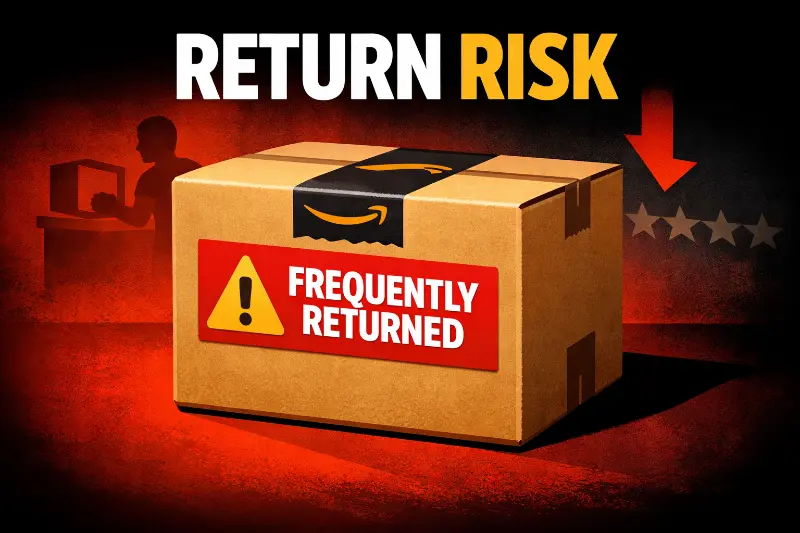
Amazon’s “Frequently Returned Item” label is not a customer service feature. It is a structural signal that returns have crossed from backend friction into public, platform-enforced accountability. For ecommerce operators, this label represents something far bigger than a badge on a product listing: it marks the moment returns stopped being invisible. Amazon aims to improve transparency and customer satisfaction by introducing features like the frequently returned item label.
For years, high return rates were absorbed quietly. Brands paid the logistics costs, warehouses processed the volume, and consumers experienced little friction. That arrangement is over. The company has introduced visibility markers for products with unusually high return rates, including “Frequently Returned Item” labels on product detail pages and internal seller penalties tied to excessive returns. These features are used to enforce accountability and improve the shopping experience. The implications extend well beyond Amazon’s marketplace. The badge also informs customers to check product reviews and product details before purchasing, which helps reduce return logistics costs.
What the Frequently Returned Item Label Actually Does
The mechanics are straightforward. When a product exceeds Amazon’s return rate thresholds for its category, a label (or tag) appears directly on the product detail page, visible to shoppers before they click “Add to Cart.” Amazon may assign the badge earlier in the product lifecycle if return rates spike quickly, and the tag is applied at the ASIN level, meaning it does not affect product variants such as colors or sizes. Sellers also face internal consequences, including suppressed placement, flagged ASINs, and pressure to investigate root causes through Amazon Seller Central. Sellers cannot manually remove the badge or request exemptions, even for returns due to buyer remorse.
What makes this significant is not the label itself. It is the logic behind it. Amazon automatically removes the badge once the return rate approaches the suggested level for the product category.
Amazon is doing three things simultaneously:
- Shifting accountability upstream to sellers, making return rates a product quality signal rather than a fulfillment variable
- Training consumers to interpret return frequency as a proxy for product reliability, which directly influences conversion rates and informed purchase decisions
- Making return data publicly surfaced in a way that affects search ranking and sales performance
This is not a warning system. It is a reputation system. A product with a frequently returned badge is no longer just expensive to sell. It is harder to sell.
Returns Are No Longer a Back-Office Problem
The deeper implication of Amazon’s label is that return rates have entered the public-facing layer of commerce. They now influence how buyers evaluate products, how algorithms rank listings, and how brands are perceived at scale. Customers often rely on reviews and the display of return information to make informed purchase decisions.
This represents a permanent repositioning. Returns used to be a financial line item, something the CFO tracked and the warehouse absorbed. Now they are:
- A visible signal on product pages that shapes more informed purchase decisions
- A factor in marketplace ranking alongside reviews and sales data
- A proxy for product quality that consumers increasingly interpret as such
- A risk that cascades into conversion, customer satisfaction, and brand trust
The label has made explicit what was always true operationally: high return rates reflect product description accuracy, size chart quality, packaging integrity, and manufacturing consistency. The difference is that now, buyers see it before they commit, and sellers feel it in their numbers.
For Amazon sellers watching a consistent downward trend in conversion on flagged listings, the connection is direct. The frequently returned item badge displayed on a product page sends a signal similar to a cluster of negative reviews. Shoppers notice, hesitate, and often choose similar items or similar products without the label. Sellers can avoid the frequently returned item badge by ensuring accurate product descriptions, high-quality images, and clear size charts.
The Historical Arc That Made This Inevitable
To understand why Amazon’s label landed when it did, it helps to trace how the industry got here.
Between 2009 and 2015, free returns normalized across ecommerce. Zappos built its reputation on them. Amazon Prime made them a standard expectation. Return policies became a conversion lever rather than a cost concern. The logic was sound at the time: reducing purchase anxiety increased order volume, and return rates were manageable.
From 2016 to 2020, the convenience race accelerated. More SKUs, faster shipping, easier return flows, and broader ecommerce adoption pushed return rates higher across every category. Apparel and footwear led the surge, with return rates reaching 20 to 40 percent in some segments.
COVID changed the trajectory. From 2020 to 2022, ecommerce volumes exploded, and with them, return volumes. Total U.S. retail returns hit $761 billion in 2021, a 78 percent increase over the prior year. Consumers bought more, returned more, and expected the same frictionless experience. Brands absorbed the costs without changing the underlying system.
By 2023 and 2024, the first meaningful retrenchment began. Return fees appeared. Policies tightened. Platforms started penalizing excessive return behavior and rethinking how to craft an effective e-commerce returns program. Amazon’s frequently returned label emerged from this moment as a concrete, visible signal that tolerance for the old model was running out. The company is continually experimenting with new tools and features to improve transparency and customer experience. Amazon aims to set industry standards for return transparency.
By 2025, regulatory pressure and carrier cost escalation added another layer. The historical arc is not one of isolated experiments. It is a coordinated industry recalibration. Amazon does not publish specific percentages for when the badge is applied, as the threshold varies by product category.
Retailers Are Normalizing Return Fees
Amazon’s label did not emerge in isolation. It is part of a broader industry-wide expectation reset around free returns that accelerated between 2022 and 2023.
Major apparel retailers began introducing paid return fees during this period:
- Zara introduced return fees across multiple markets, charging the equivalent of roughly $3.95 to $4.95 depending on region
- H&M, Anthropologie, and J.Crew followed with similar policies
- Consumer backlash was widely predicted, and it largely did not materialize
That last point is critical. The absence of significant customer revolt signals something important: free returns are no longer perceived as a sacred entitlement. They are being reclassified as a priced service, and a meaningful portion of the market has accepted the reclassification without abandoning the brands that made the change.
This is an expectation reset, and expectation resets only stick when they happen industry-wide rather than brand by brand. When Amazon labels a product as frequently returned, when Zara charges for returns, when H&M follows suit, and when Amazon imposes internal seller penalties, they are collectively moving the market. No single action is decisive. The pattern is.
For sellers on Amazon, this matters because customer experience expectations are now being shaped on both sides. Consumers are adapting to shorter return windows, paid fees, slower refunds, and more scrutiny on eligibility as e-commerce return rates continue to rise. Sellers are being held accountable for the conditions that generate returns in the first place. The return badge is where those two adaptations collide.
What Investors and Boards Are Now Asking About Customer Satisfaction
The visibility Amazon created at the consumer level is mirrored by a different kind of scrutiny at the executive level. Returns have moved into boardroom conversations in ways they never occupied before.
The questions being asked have changed. They are no longer operational. They are strategic:
- Why are return costs rising faster than revenue?
- Which portion of return spend is actually controllable?
- How is return volume showing up in Scope 3 emissions disclosures?
- What is the fraud exposure embedded in the current reverse logistics model?
- Can the business scale if return rates continue at current levels?
- Are products with significant sales volume and high return rates at greater risk of receiving the Amazon frequently returned label?
These questions cascade from the board into product, operations, finance, and customer experience teams simultaneously. The result is cross-functional pressure to treat returns as a managed business risk rather than an accepted cost of ecommerce.
For brands selling on Amazon, this means the frequently returned item badge is not just a listing problem. It is a margin leakage problem, a working capital drag problem, and increasingly a sustainability disclosure problem. The badge is visible on a product page. Its consequences run through the entire business.
To help address these challenges, Amazon provides sellers with tools and dashboards to analyze sales and return data, enabling them to make informed decisions and optimize their strategies. Sellers should regularly monitor return rates at the ASIN level to avoid the frequently returned item badge.
Sustainability and Regulatory Pressure Are Amplifying the Signal
Amazon’s label gains additional weight when placed alongside the regulatory and sustainability forces reshaping how returns are evaluated globally.
Returns double transportation emissions and dramatically increase packaging waste. Roughly 44 percent of apparel returns never reenter inventory. They are liquidated, incinerated, or sent to landfill. That environmental cost has historically been externalized, invisible in financial reporting and disconnected from brand accountability, even though a well-designed returns program that prioritizes customer loyalty can reduce both waste and churn.
That is changing.
In Europe, France’s Anti-Waste Law has banned the destruction of unsold non-food goods since 2022, forcing rapid investment in resale, donation, and recycling pipelines. The EU has imposed landfill bans on unsold fashion. Extended Producer Responsibility mandates in Germany, Canada, and elsewhere are making packaging waste from returns a compliance liability, not just an operational nuisance.
The United States is not immune. California has floated anti-waste proposals modeled on EU frameworks. The SEC’s climate disclosure drafts include Scope 3 emissions, which means reverse logistics emissions may become reportable. Carrier surcharges tied to dimensional weight and inefficient return flows are already increasing the cost of doing nothing.
Returns are no longer just a logistics problem. They are a waste problem, a compliance problem, and a reputational problem. Amazon’s label exists in the same ecosystem as these regulatory forces. They are all pointing in the same direction.
Sales Data Analysis: Quantifying the Impact
To fully understand the impact of Amazon’s frequently returned item badge, sellers must move beyond anecdotal evidence and leverage hard sales data. Analyzing metrics such as the number of units shipped, return rates, and conversion rates provides a clear picture of how the item badge affects sales performance and customer satisfaction.
Tools like DataChannel and Amazon’s Voice of the Customer dashboard offer valuable insights into product listings, allowing sellers to track the return badge displayed column, monitor at-risk ASINs, and pinpoint where high return rates are eroding business results. By analyzing FBA return patterns and reasons, sellers can identify which product pages see a drop in conversion rates after the badge appears, or which return reasons are most frequently cited by buyers.
This data-driven approach enables sellers to address the root causes behind the frequently returned item label. For example, if sales data reveals that inaccurate product descriptions or unclear size charts are driving returns, sellers can enhance product descriptions and update product details to set more accurate expectations. If packaging issues or product quality concerns are flagged in customer feedback, these can be prioritized for corrective action. For some high-value listings, Amazon’s invite-only FBA Return Expert Service for high-return ASINs can provide additional guidance. Each improvement not only reduces the risk of the return badge but also enhances customer satisfaction and supports excellent customer service.
Monitoring the return badge displayed column in the customer dashboard helps sellers track progress in real time. By analyzing the correlation between return rates and sales performance, sellers can see how quickly corrective actions translate into improved search ranking and increased sales. This feedback loop is essential for maintaining a competitive edge in Amazon’s search results, where even small differences in customer experience and product quality can shift conversion rates.
Sales data analysis also informs broader business decisions. By understanding which factors — such as product category, packaging, or listing accuracy — contribute most to high return rates, sellers can optimize inventory, adjust pricing, and refine advertising strategies. The goal is not just to remove the frequently returned item badge, but to build a system that consistently delivers accurate product descriptions, high-quality products, and excellent customer service.
Ultimately, sellers who fully understand and act on their sales data are best positioned to reduce return rates, improve customer satisfaction, and drive sustained sales growth. In a marketplace where the frequently returned item badge can impact everything from search ranking to brand reputation, a data-driven approach is no longer optional — it’s essential for long-term success.
The Structural Insight Behind the Label
Amazon’s frequently returned item label is a useful diagnostic tool for sellers. Tracking return rate by product category, analyzing Voice of the Customer feedback, improving product descriptions, fixing size charts, and addressing packaging failures are all legitimate corrective actions that reduce return rates and improve sales data. Maintaining high product quality and providing excellent customer service are essential for avoiding the badge and can enhance customer satisfaction.
But treating the label as a seller optimization problem misses the larger point.
The label is a symptom of a deeper structural failure. The assumption underlying most ecommerce returns remains intact: returned items must travel back to a central warehouse or distribution center before they can move forward again. Every return generates two shipping legs, intake labor, inspection queues, repackaging, restocking delays, and markdown risk. Returns Management Systems have improved the customer-facing experience without changing that underlying cost structure. Platforms like Return Prime’s return management solution streamline workflows but still sit on top of the same warehouse-centric assumptions. Scale has not fixed it. Software has not fixed it.
Amazon’s label signals that this loop is unstable.
By surfacing return rates publicly, Amazon is acknowledging that the volume and cost of returns can no longer be absorbed invisibly. The platform is not resolving the structural problem. It is making clear that sellers can no longer ignore it. Return rates that once stayed hidden in warehouse reports are now visible to buyers, affecting conversion, search ranking, and brand perception in real time. Tools that optimize core mechanics like return shipping labels and alternative return methods can help sellers track return rates and identify trends, which can attract more customers and improve business outcomes.
This is the moment the industry stops asking how to optimize returns and begins asking why returns must work this way at all. The warehouse-centric loop made sense when ecommerce operated at lower volumes, when labor was cheap, when customer patience was higher, and when sustainability was not measured. None of those conditions exist anymore. The label is a data point in a larger argument: the old model is no longer stable under modern ecommerce conditions.
For brands willing to look past the badge and interrogate the routing logic itself, a different architecture is emerging. One where recoverable returns move forward to the next buyer rather than backward to a warehouse, supported by digital orchestration layers like ZigZag’s returns management platform. The economics of that shift, where roughly 60 percent of eligible returns can bypass centralized intake entirely, are compelling on their own. The regulatory and reputational context makes them urgent.
Sellers face challenges in managing return rates and maintaining positive product perception. While Amazon support can assist with some issues, sellers must proactively manage their listings and customer feedback to avoid the badge.
The frequently returned item label is not the problem. It is the signal that the problem has been surfaced, publicly, permanently, and with real consequences for anyone who treats it as someone else’s concern.
Frequently Asked Questions
What is Amazon’s frequently returned item label and where does it appear?
Amazon’s frequently returned item label is a badge displayed on product detail pages when a product’s return rate exceeds the threshold for its category. The badge is prominently displayed on the product listing itself, encouraging customers to review product details and feedback before purchasing. It is visible to shoppers before purchase and signals that a significant number of buyers have returned the item. The label appears on the product listing itself, not in seller-facing dashboards alone, making it a public-facing reputation signal.
How does the frequently returned item badge affect sales performance on Amazon?
When the return badge is displayed on a product detail page, it influences conversion rates by giving buyers a reason to hesitate. Shoppers may choose similar items or similar products without the label. Sellers can analyze sales and return data to understand the impact of the badge and make informed decisions to improve performance. Beyond direct conversion impact, Amazon also factors return rates into internal seller evaluation, which can affect search ranking and placement over time, creating a consistent downward trend in sales performance for flagged listings.
What causes a product to receive the frequently returned item label?
The label is triggered when a product’s return rate approaches or exceeds Amazon’s suggested return rate threshold for its category. The badge is typically triggered if the return rate exceeds a certain threshold, often cited around 10–15% over a trailing 3-month period. For some categories, a 5% return rate might trigger the label in low-return categories, while a 20% rate may not trigger it for apparel categories. The return rate for a product is calculated based on the number of units shipped and the number of returns initiated by customers over a trailing 3-month period. Common root causes include inaccurate product descriptions, misleading size charts, poor packaging, quality consistency problems, and category-specific expectations that the product does not meet. Amazon’s seller support and Seller Central tools provide return reason data that sellers can use to address corrective action.
Can sellers remove the frequently returned item label from their listings?
Sellers cannot manually remove the label. Amazon automatically removes it when the return rate for the product drops below the threshold for a sustained period. The path to removal is addressing the root cause of high return rates, which typically involves improving product descriptions, enhancing size charts, fixing packaging, or resolving product quality issues. Sellers can monitor at-risk ASINs in Seller Central and view their return rates and suggested thresholds through the Voice of the Customer dashboard provided by Amazon. Amazon’s Voice of the Customer dashboard provides trailing 3-month and 12-month return rates to help sellers manage return rates effectively. Monitoring at-risk ASINs in Seller Central allows sellers to track progress.
Why are Amazon sellers being held accountable for return rates they did not control?
Amazon’s label reflects a broader platform-level decision to shift accountability upstream to sellers rather than absorbing return costs as an invisible operational variable. The logic is that sellers are in the best position to influence the conditions that generate returns: product description accuracy, packaging, fit guidance, and quality control. By making return rates visible on product pages and tying them to seller penalties, Amazon is incentivizing sellers to address those root causes rather than treating returns as a fulfillment externality.
Is Amazon’s approach to return labeling part of a broader industry shift?
Yes. Amazon’s label is one signal within a coordinated industry recalibration that includes retailers normalizing paid return fees, regulators in Europe restricting the destruction of unsold goods, and investors asking harder questions about return-related margin leakage and sustainability disclosures. The expectation reset is happening industry-wide, not as a single policy change, which is what makes it durable rather than temporary.
How should ecommerce brands respond to the structural shift Amazon’s label represents?
Brands should treat the label as a diagnostic signal rather than a cosmetic problem. Short-term corrective action involves improving product descriptions, size charts, and packaging to reduce preventable returns. Longer-term, brands should examine the routing logic of their returns infrastructure. The warehouse-centric return loop generates cost and friction at every stage, and the conditions that once made it viable — low volume, cheap labor, low regulatory pressure — no longer apply. The structural question is not just how to reduce returns but how to handle the returns that do occur with fewer backward-moving steps. Sellers should use data analytics tools to track return rates and identify trends for better inventory and pricing strategies.
Written By:

Manish Chowdhary
Manish Chowdhary is the founder and CEO of Cahoot, the most comprehensive post-purchase suite for ecommerce brands. A serial entrepreneur and industry thought leader, Manish has decades of experience building technologies that simplify ecommerce logistics—from order fulfillment to returns. His insights help brands stay ahead of market shifts and operational challenges.

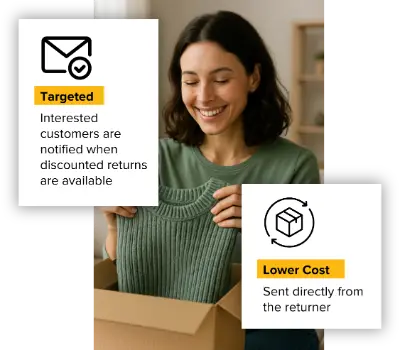
Turn Returns Into New Revenue
Related Articles

Why Returns Look Manageable Until They Suddenly Aren’t
Returns management is the retail process of handling customer returns across reverse logistics, cost control, and customer experience—and it rarely fails the way leadership expects...

The Economics of Peer-to-Peer Returns
Traditional returns management has one fundamental flaw: it optimizes a process that should not exist in its current form.

The Myth of “Efficient” Reverse Logistics
Efficient reverse logistics is treated as a goal worth chasing.
Why Returns Software Doesn’t Actually Fix Returns
In this article
18 minutes
- What Returns Management Software Actually Does Well
- Understanding the Returns Process
- The Warehouse Loop Doesn't Move
- Visibility Does Not Equal Recovery
- The Illusion of Efficiency
- Scale Is Not the Answer Either
- Sustainability and Regulation Are Changing the Stakes
- The Failure Is Architectural
- Frequently Asked Questions
Returns management software has never been better — and yet the cost of returns has never been higher. U.S. retail returns hit $890 billion in 2024, and most of the brands experiencing that pressure are already running some form of returns management platform. That’s not a coincidence. It’s a design problem.
This article is not an argument against returns software. RMS platforms do real, measurable things. However, many companies still struggle with the complexities of managing returns, even with software in place. But there is a specific and important limit to what they can accomplish — and that limit is architectural, not operational. Understanding it matters for any ecommerce operator currently evaluating returns technology, and for any operations leader wondering why their returns costs aren’t coming down despite better tooling.
What Returns Management Software Actually Does Well
To be fair about the limitations, you have to start with what RMS platforms genuinely deliver. The category has matured substantially, and the leading platforms have built credible, useful products. In the context of ecommerce returns, modern returns management software offers several key features:
- Branded self-serve return portals that reduce inbound support volume
- Policy automation that enforces eligibility rules, return windows, and item conditions without manual review
- Automated returns capabilities that enable efficient post-purchase workflows, real-time tracking, and improved customer satisfaction
- Exchange flows that redirect customers toward swaps rather than refunds, retaining revenue in the process
- Return reason analytics that surface product and sizing patterns over time
- Label generation — QR-based, printless, or traditional — that streamlines the customer-facing experience
- Customer communication flows that keep buyers informed through each stage of the return
These key features enable the software to efficiently handle product returns, exchanges, and refunds, streamlining the entire process for both businesses and customers.
These are real improvements. Brands running manual returns processes or using basic carrier tools feel the difference immediately when they deploy a proper returns management system. Most customers now expect and prefer self-service, online return processes, making these solutions essential for meeting customer expectations. Certain functionalities, such as automated returns and branded portals, are must-have tools for effective returns management. Customer satisfaction scores tend to go up. Support ticket volume tends to go down. Refund processing becomes more consistent.
When it comes to customization or integration, many platforms allow businesses to create custom APIs or integrations with third-party ecommerce platforms, ensuring seamless automation and data flow.
Companies can implement returns management software quickly, adapting it to their specific workflows and requirements.
The benefits of using returns management software include significant time savings, improved customer experience, and greater operational efficiency.
The problem starts when operators assume that operational improvement translates into economic improvement. It frequently does not.
Understanding the Returns Process
The returns process is a cornerstone of successful ecommerce, directly shaping customer satisfaction and long-term loyalty. For businesses selling online, managing returns efficiently is not just about handling returned items — it’s about delivering a seamless post-purchase experience that keeps customers happy and coming back. A well-structured returns management system can significantly improve the overall process, transforming what is often seen as a pain point into a powerful tool for building trust and driving repeat sales.
Effective returns management relies on advanced returns management software that automates and streamlines reverse logistics. By implementing the best returns management software, businesses can reduce processing time, minimize manual errors, and save valuable resources. Features like branded returns portals and automated label generation make it easy for customers to initiate returns, track their status, and receive refunds or store credit — all of which contribute to a hassle-free, positive customer experience.
For enterprise retailers and high-volume operations, the ability to customize the returns process is essential. Customization options allow businesses to tailor their returns management system to fit unique operational needs, whether that means setting specific return policies, integrating with existing systems, or automating approval flows. This level of control helps retailers manage returns operations more efficiently, reduce costs, and maintain operational efficiency even during peak seasons.
Automation is a game-changer for managing returns at scale. By leveraging technology to handle repetitive tasks with modern returns management systems, businesses can save time and focus resources on more strategic goals, such as analyzing return data to identify product issues or improve inventory management. The right returns management system not only streamlines the flow of returned items but also provides valuable insights that can inform product development, marketing, and customer service strategies.
Ultimately, a robust returns management system is about more than just processing returns — it’s about creating a customer-centric experience that drives profitability. By making returns easy and transparent, businesses can significantly improve customer satisfaction, foster loyalty, and turn returns into an opportunity for growth. With the right software and operational focus, companies can transform returns from a cost center into a competitive advantage, ensuring they remain agile and successful in the fast-paced world of ecommerce.
The Warehouse Loop Doesn’t Move
Here is the core issue with returns management software: in almost every implementation, a company still routes returned items to the same destinations.
A brand-owned warehouse. A third-party logistics provider. A centralized inspection facility. A carrier-managed reverse logistics hub.
The RMS platform changes how the return is initiated, approved, and communicated. It does not change where the item physically goes. That means the most expensive parts of the returns process — inbound freight, receiving labor, inspection, repackaging, restocking, and markdown exposure — remain fully intact, especially when handling returned products.
Returns management software, in most cases, is a polished front end running on top of the same warehouse-centric reverse logistics loop that has existed for decades. Better UX does not change that reality. Faster label generation does not change that reality. Improved analytics do not change that reality.
In many cases, a well-implemented RMS actually accelerates return volume into that expensive backend by making the customer-facing experience smoother. Returns become easier to initiate, which is good for customer satisfaction, but the items that come back still move through the same costly infrastructure. The on-ramp gets faster. The destination stays the same.
Visibility Does Not Equal Recovery
There is a specific assumption embedded in how most returns technology is sold: if you can see the problem clearly enough, you can fix it. Better dashboards. More granular return reason codes. SKU-level analytics. Trend reporting by category or carrier.
Visibility is valuable. But visibility does not eliminate inbound freight. It does not remove inspection labor. It does not prevent markdown decay while an item sits in a receiving queue. It does not stop fraud from occurring during any of the multiple handoffs between customer, carrier, warehouse, and resale channel.
Knowing why an item was returned does not change what it costs to process that return or the amount of money lost through inefficient returns management.
This is not a criticism of analytics as a capability. It is a statement about what analytics alone can accomplish when the underlying physical flow remains unchanged. A returns management system can tell you, with great precision, that 34% of your size-medium hooded sweatshirts are coming back because of fit issues. That is genuinely useful data for your merchandising team. It does not, by itself, reduce the cost of processing those returns or recovering the margin on them.
The tools get better. The economics do not. Pricing models for returns management software often promise cost savings, but operators should carefully evaluate whether the pricing structure aligns with their expectations for actual financial impact.
That gap — between operational visibility and actual cost reduction — is where most evaluations of returns management software quietly fall apart. Operators buy a platform expecting cost improvement. They get process improvement. Those are not the same thing, and they still have to confront the underlying rise of e-commerce return rates driving volume into the system.
The Illusion of Efficiency
This distinction becomes clearer when you trace what happens inside the warehouse-centric loop regardless of which RMS is running above it.
Every return routed back to a warehouse requires:
- Two shipping legs: one outbound to the customer, one inbound back to a distribution center, and often a third outbound to a secondary buyer or liquidation channel
- Physical intake: dock receiving, scanning, and queue management
- Inspection labor: condition assessment, fraud screening, documentation
- Repackaging: new materials, relabeling, prep for resale
- Restocking or disposition decisions: return to available inventory, liquidate, donate, or destroy
- Markdown exposure: the longer an item sits in the reverse logistics pipeline, the more its resale value decays
Automation at the portal level does not remove any of these steps. Faster label generation does not eliminate inspection labor. Branded customer communications do not reduce the two-shipment cost structure. Better exchange flows retain revenue for items that do convert, but they do not address the economic reality of the items that don’t.
Customer-facing improvements, such as streamlined returns portals and proactive notifications, can help improve customer retention rates by making the process less frustrating and more transparent, especially when they are part of an exceptional returns program designed to build loyalty. However, these improvements alone do not fundamentally change the underlying logistics.
The most honest framing is this: returns management software was built to sit on top of warehouse-centric logistics, not to challenge it. That is not a product failure. It reflects the design intent of the category. RMS platforms exist to improve returns experiences within an existing physical infrastructure, not to reroute the physical infrastructure itself. While these enhancements can positively influence customer loyalty by providing a smoother post-purchase experience, the core logistics remain the same.
The consequence is that even a well-deployed, fully integrated returns management system leaves the most expensive parts of the process exactly where they were. The efficiency gains are real but bounded. They operate at the edges of a system whose core mechanics remain unchanged.
Scale Is Not the Answer Either
When software optimization reaches its limits, the industry’s default response is scale. More warehouses. More drop-off locations. More carrier integration. More volume run through the same infrastructure in hopes that unit economics improve.
The assumption is reasonable on the surface: if returns are a fixed-cost problem, spreading volume across a larger base should reduce cost per return. In practice, that curve flattens rather than bends.
Scale in reverse logistics introduces its own complications. Higher volume increases congestion at inbound receiving docks. Labor becomes harder to staff and train consistently at scale. Fraud becomes harder to detect when bulk processing obscures individual item conditions. Inventory velocity slows precisely when speed matters most, during peak seasons when return volumes spike and warehouse capacity is most constrained, underscoring the need to optimize reverse logistics end to end rather than simply push more volume through it.
The industry already ran this experiment. The consolidation wave of the last several years — larger reverse logistics networks, carrier-led initiatives, mega-warehouse investments — did not produce a step-change in per-return economics. It produced more throughput capacity running through the same cost structure.
The UPS acquisition of Happy Returns and its drop-off network is the clearest example of this pattern playing out at scale. The combination improved drop-off convenience meaningfully. Consumers gained thousands of additional return points through the UPS Store network. Box-free, label-free drop-off expanded. The customer-facing experience improved.
But items still entered a centralized network. They still required handling and consolidation. They still flowed back into warehouses or resale pipelines. The acquisition optimized the first mile of the returns journey — the part that happens before the warehouse — without changing what the warehouse does to returned inventory. FedEx’s launch of FedEx Easy Returns in 2025 confirmed the pattern: carriers are competing to own return entry points, not to eliminate the reverse logistics cost structure underneath them.
The insight that matters here is simple: returns are physical. They involve labor, space, fuel, and time. No amount of software, capital, or carrier leverage removes those constraints when the item still must travel backward through the system. Scale optimizes throughput. It does not remove structural waste.
Cost curves flatten. They do not bend.
Sustainability and Regulation Are Changing the Stakes
The economics of returns have been uncomfortable for years. But two factors are now converting that discomfort into urgency, and neither one is addressed by better software or larger networks.
The first is environmental impact. Returns double transportation emissions. Packaging is consumed twice. A significant share of returned inventory — roughly 44% of apparel returns by some estimates — never re-enters active inventory at all. Items get liquidated, incinerated, or disposed of. Every returned item that ends up destroyed represents not just a margin loss but a documented emissions event and a waste event, calling into question whether common practices like broadly offering “free” returns are economically and environmentally sustainable.
For brands with ESG commitments or sustainability reporting obligations, this is no longer an abstract concern. Reverse logistics is increasingly visible in Scope 3 emissions accounting — the category that captures indirect emissions across a company’s value chain. Returns sit squarely in that bucket. As Scope 3 reporting requirements grow, the environmental cost of warehouse-centric returns becomes a disclosed liability, not a background operational detail.
The second factor is regulatory momentum. The direction of travel internationally is clear, and the U.S. is not far behind.
France’s AGEC law, in effect since 2022, prohibits retailers from destroying unsold non-food goods, forcing investment in resale, donation, and recycling pipelines. EU landfill bans are restricting where unsold fashion can be disposed of. Extended Producer Responsibility frameworks in Germany, Canada, and other jurisdictions are creating mandatory packaging takeback and recycling obligations — returns multiply packaging counts directly against brands under these rules. The UK’s right-to-repair mandates are steering electronics returns toward refurbishment rather than replacement, all of which raise the bar for how carefully brands must craft an e-commerce returns program that aligns economics, customer expectations, and compliance.
In the United States, California has explored anti-waste proposals modeled on EU frameworks. SEC climate disclosure drafts have included Scope 3 emissions provisions. FTC scrutiny of “free returns” marketing claims is growing.
The practical consequence for operators evaluating returns management software is this: even if the economics of the current model were tolerable, the regulatory environment is beginning to remove that option. A system designed around centralizing returned goods in warehouses that may then liquidate or destroy a substantial portion of them is increasingly at odds with where compliance requirements are heading.
Better returns software does not change what happens to inventory at the end of the reverse logistics pipeline. It does not reduce emissions per return. It does not reduce the share of items that end up in liquidation. Regulatory pressure does not respond to dashboard improvements.
The Failure Is Architectural
Despite significant investment across the returns technology landscape — better software, more scale, more capital, more sophisticated analytics — the industry has not produced meaningful reductions in four things that actually matter: cost per return, fraud exposure, environmental impact, and time to recovery. Even seemingly small components, like how return shipping labels are created and managed, still sit inside the same warehouse-centric architecture.
That is a specific and important fact. The investment has been real. The results, measured against those four outcomes, have not matched it.
The reason is not execution. The returns technology market has produced capable, well-resourced platforms. Leading RMS vendors have built serious products. Carriers have invested in infrastructure. The talent and capital applied to this problem are not trivial.
The reason is architecture.
Returns management software and reverse logistics scale both work within a system built on a single assumption: returned items must travel back to a central warehouse or distribution center before they can re-enter the market. That assumption creates the cost structure. It creates the fraud exposure. It creates the sustainability liability. It creates the delay.
Tools that optimize within that assumption cannot change the outcomes it produces. That is not a criticism of the tools. It is a description of their limits.
An RMS platform, however capable, is working on the wrong part of the problem. It improves the experience of entering a system whose architecture generates costs that no amount of experience improvement can eliminate. Compliance, processing time, visibility — these are edge gains relative to the structural cost embedded in routing logic.
The question operators should be asking when they evaluate returns management software is not “does this platform have better features?” It is: “does this platform change where returns go?” For most platforms currently in the market, the honest answer is no. They improve what happens before and around the warehouse. They do not change the role the warehouse plays in the returns system.
That gap is where the real problem lives. And it is not a gap that better dashboards, larger networks, or more carrier integration will close — because all of those solutions, however well-executed, are still working within the same flawed assumption.
The failure is not operational. It is the architecture of the system itself.
Frequently Asked Questions
What does returns management software actually do for ecommerce brands?
Returns management software handles the customer-facing and operational mechanics of the returns process: branded self-serve portals, policy enforcement, label generation, exchange flows, return reason analytics, and customer communications. It improves the experience of initiating and tracking a return, reduces inbound support volume, and can help retain revenue through exchange nudges. It does not, in most implementations, change where returned items physically go or eliminate the warehouse processing costs that represent the majority of per-return expense.
Why doesn’t better returns software reduce cost per return?
Because the most expensive parts of the returns process — inbound freight, inspection labor, repackaging, restocking, and markdown exposure — occur inside the warehouse-centric reverse logistics loop that RMS platforms sit on top of, not inside the software itself. Better automation, faster label generation, and improved analytics improve the front-end experience without removing the back-end cost structure. Visibility into return reasons does not eliminate the cost of processing the items that come back.
Does scaling up return operations or using drop-off networks reduce per-return costs?
Scale flattens cost curves rather than bending them. Larger networks and more drop-off locations improve customer convenience and first-mile efficiency, but items still require centralized handling, warehouse processing, and disposition. The UPS integration of Happy Returns is a clear example: drop-off convenience improved significantly, but the fundamental reverse logistics cost structure remained intact. Carriers competing to own return entry points are not eliminating warehouse processing — they are expanding access to it.
What is the connection between returns management and Scope 3 emissions?
Returns double transportation emissions and generate packaging waste at multiple points in the reverse logistics chain. A significant share of returned inventory — particularly in apparel — never re-enters active inventory and is liquidated or destroyed. Scope 3 emissions accounting captures these indirect emissions across the value chain, and regulatory requirements for Scope 3 disclosure are growing. For brands with ESG reporting obligations, warehouse-centric returns represent a documented and growing liability that returns software alone does not address.
What is the AGEC law and why does it matter for U.S. retailers?
France’s Anti-Waste for a Circular Economy law (AGEC), effective since 2022, prohibits retailers from destroying unsold non-food goods, including returned inventory. It has forced retailers operating in France to build resale, donation, and recycling pipelines. U.S. retailers should monitor it as a leading indicator: California has explored similar anti-waste proposals, EU-style frameworks are advancing internationally, and the regulatory trajectory points toward greater scrutiny of how returned goods are disposed of. Retailers that wait for U.S. regulation to arrive before adjusting their returns infrastructure will adapt under pressure rather than on their own terms.
If returns management software doesn’t solve the cost problem, what does?
The cost problem in returns is structural: it follows from routing items backward through the supply chain before they can move forward again. Solving it requires changing the routing logic, not improving the experience layer on top of existing routing. The architecture of the returns system — not the quality of the software operating within it — is what determines cost per return, fraud exposure, environmental impact, and time to recovery.
Written By:
Manish Chowdhary
Manish Chowdhary is the founder and CEO of Cahoot, the most comprehensive post-purchase suite for ecommerce brands. A serial entrepreneur and industry thought leader, Manish has decades of experience building technologies that simplify ecommerce logistics—from order fulfillment to returns. His insights help brands stay ahead of market shifts and operational challenges.
Turn Returns Into New Revenue
Related Articles
Why Returns Look Manageable Until They Suddenly Aren’t
Returns management is the retail process of handling customer returns across reverse logistics, cost control, and customer experience—and it rarely fails the way leadership expects...
The Economics of Peer-to-Peer Returns
Traditional returns management has one fundamental flaw: it optimizes a process that should not exist in its current form.
The Myth of “Efficient” Reverse Logistics
Efficient reverse logistics is treated as a goal worth chasing.
How Customer Data Trains AI Shopping Systems

In this article
11 minutes
- Introduction to Artificial Intelligence
- Behavioral Data Is the First Signal
- Customer Preferences Connect the Signals
- Advertising Data Feeds the Loop
- Product Data Still Matters
- How AI Algorithms Work
- Measuring Success with Conversion Rates
- Customer Engagement Strategies
- A New Layer of AI Powered Product Recommendations Discovery
During Cahoot’s Ugly Talk: Selling in a World Run by Algorithms panel in New York, much of the conversation centered on how artificial intelligence might influence the future of ecommerce discovery. But one of the most interesting parts of the discussion focused not on the visible interface of AI shopping assistants, but on the data systems operating behind them.
When customers interact with AI-driven discovery tools, it can feel as though the system simply understands what they want. A shopper asks a question, and the assistant responds with a recommendation that appears tailored to their needs.
But AI systems do not generate those recommendations out of thin air. An AI product recommendation engine powers these personalized experiences by leveraging advanced algorithms to deliver relevant product suggestions.
Behind the scenes, these engines collect data from various customer interactions, such as browsing history, purchase activity, and website analytics. They analyze customer behavior using historical data to generate AI-powered recommendations that are timely and relevant.
During the panel discussion, participants explored how these signals form a feedback loop that helps train modern recommendation systems. These systems are customer-based, meaning they tailor recommendations to individual behaviors and preferences, resulting in a more personalized experience.
This article is part of a series inspired by Ugly Talk: Selling in a World Run by Algorithms, a live panel hosted by Cahoot in New York. The discussion brought together operators and technology leaders including Manish Chowdhary of Cahoot, Nihar Kulkarni of Roswell NYC, Frank Pacheco of Nearly Natural, and YiQi Wu of Aimerce.
AI product recommendation systems collect data and use machine learning algorithms to analyze this data and deliver relevant product suggestions.
Throughout the conversation, the panel explored how artificial intelligence, recommendation systems, and platform algorithms are changing how ecommerce brands compete for visibility and customers.
Machine learning algorithms analyze customer browsing and purchasing history to identify patterns and preferences for product recommendations.
These ideas are part of a broader framework for understanding how AI is reshaping ecommerce. For a complete breakdown of how discovery systems, product pages, brand authority, behavioral data, and multichannel fulfillment infrastructure interact, see The AI Commerce Playbook for Ecommerce Brands.
AI analyzes various data points, such as browsing habits, past purchases, and product attributes, to deliver personalized recommendations.
The more clean and accurate data you have on what your shoppers do and what products they like, the better your AI recommendation system can learn and personalize its suggestions.
Introduction to Artificial Intelligence
Artificial intelligence (AI) is transforming the ecommerce landscape by enabling machines to perform tasks that once required human intelligence, such as learning from data, solving problems, and making decisions. In online shopping, AI is especially valuable for analyzing vast amounts of customer data to deliver personalized product recommendations. These AI-powered product recommendations are now a cornerstone of successful ecommerce businesses, helping to increase sales, improve customer satisfaction, and foster customer loyalty.
By leveraging advanced machine learning algorithms, AI systems can sift through customer data to identify patterns and preferences unique to each shopper. This allows ecommerce platforms to suggest relevant products that align with individual interests and needs. As a result, customers enjoy a more tailored shopping experience, while businesses benefit from higher conversion rates and stronger relationships with their audience. Ultimately, artificial intelligence and machine learning are driving a new era of product recommendations that not only boost sales but also enhance the overall customer experience.
Behavioral Data Is the First Signal
One of the most important sources of data for AI discovery systems is simple behavioral activity, which includes various data points and customer interactions such as browsing habits, purchase history, and product attributes.
Every time a shopper searches for a product, clicks on a listing, reads reviews, or compares options, they create signals that help platforms understand how people evaluate products.
Implicit data includes behaviors that show interest without explicit rating, such as clicks, views, and time spent on a page.
Over time, these patterns accumulate across millions of users. The system begins to recognize which products are frequently viewed together, which features attract attention, and which items ultimately convert into purchases.
Data collection in AI-driven systems tracks user clicks, searches, and purchases as key data points for analysis.
These patterns allow recommendation systems to infer what customers might be looking for, even when their questions are vague or open-ended.
In this sense, AI discovery systems are constantly learning from how shoppers behave.
Customer Preferences Connect the Signals
During the panel discussion, another point emerged that is often overlooked in conversations about AI shopping: behavioral data becomes much more powerful when it can be connected to a consistent identity.
In many ecommerce environments, that identity is tied to an email address or customer account.
Email addresses serve as durable identifiers that allow platforms to connect activity across multiple sessions and devices. A shopper might browse products on their phone, read reviews on a laptop, and complete a purchase later that evening. The email identity links those interactions together into a single behavioral profile, and browsing history is linked across devices to build a comprehensive understanding of the shopper’s preferences.
This allows recommendation systems to move beyond simple session-level signals and begin interpreting longer-term patterns in customer behavior.
Over time, these patterns help algorithms understand not just what a shopper is looking at in the moment, but what kinds of products they tend to prefer.
AI algorithms can process historical data across thousands of interactions to identify patterns in shopper behavior.
Advertising Data Feeds the Loop
Advertising systems play an important role in this data environment as well.
Every time a shopper clicks on an advertisement, interacts with a promoted product, or responds to a marketing email, the platform records another signal about how that customer responds to different types of offers. By analyzing data from these interactions—including customer preferences, browsing history, and behavioral data—AI-powered product recommendations can generate more personalized suggestions that enhance the shopping experience and increase sales.
These signals do more than simply inform advertising performance. They contribute to the broader data ecosystem that recommendation systems analyze.
When enough signals accumulate, algorithms can begin identifying patterns between advertising exposure, browsing behavior, and eventual purchases.
This feedback loop helps platforms refine their understanding of which products are relevant to which types of shoppers.
AI product recommendations should maintain consistency across all customer touchpoints to increase trust.
Product Data Still Matters
While behavioral signals are critical, the discussion during the Ugly Talk panel also emphasized that recommendation systems still rely heavily on product information itself.
Descriptions, attributes, customer reviews, and brand signals all contribute to how algorithms interpret a product’s relevance. Product attributes, along with high-quality data and up-to-date data, are crucial for AI product recommendations to deliver accurate and relevant suggestions.
If a product’s data is incomplete or inconsistent, the system may struggle to understand where it fits within the broader recommendation environment. Personalized content relies on accurate product attributes to tailor recommendations to individual users.
For ecommerce brands, this means that product data quality remains essential. Clear descriptions, consistent attributes, and accurate categorization all help ensure that algorithms can interpret the product correctly. High-quality, structured product data is essential for effective AI product recommendations, especially when combined with market and product research for marketplaces like Amazon.
In many cases, the combination of strong behavioral signals and well-structured product data determines whether a product becomes part of the recommendation set. A Product Information Management (PIM) system ensures product data is clean, consistent, and enriched for better recommendations.
The effectiveness of AI product recommendations relies on the quality and structure of the underlying product data.
How AI Algorithms Work
At the heart of AI-powered product recommendations are sophisticated algorithms designed to analyze customer data and predict what shoppers are most likely to buy. These AI algorithms process information such as purchase history, browsing behavior, and demographic details to identify patterns in customer behavior. By understanding how individual customers interact with products and what similar customers have purchased, these systems can deliver highly relevant product suggestions.
Machine learning algorithms, including collaborative filtering and content-based filtering, play a key role in this process. Collaborative filtering examines the behavior of similar customers to recommend products that others with comparable preferences have enjoyed. Content-based filtering, on the other hand, focuses on the attributes of products a customer has shown interest in, suggesting items with similar features. By continuously analyzing customer data and browsing behavior, AI algorithms can adapt to changing preferences and provide up-to-date, personalized recommendations. This not only increases the likelihood of conversion but also improves customer satisfaction by ensuring shoppers are presented with products that truly match their interests.
Measuring Success with Conversion Rates
To understand the impact of AI-powered product recommendations, ecommerce businesses rely on key metrics that reflect customer behavior and business outcomes, including how often purchases ultimately lead to returns. One of the most important metrics is conversion rates—the percentage of customers who make a purchase after receiving a product recommendation. High conversion rates indicate that the recommendations are relevant and persuasive, directly contributing to increased sales, but brands must also monitor the average ecommerce return rate to understand the full revenue impact.
In addition to conversion rates, businesses track average order value, customer satisfaction, and customer retention to gauge the effectiveness of their AI-powered product recommendations. Monitoring average order value helps businesses see if recommendations are encouraging customers to add more items to their carts, while customer satisfaction and retention rates reveal how well the recommendations are meeting shopper needs and fostering long-term loyalty. Because returns directly erode margins, brands also need to understand how ecommerce return rate affects profit margins when evaluating the true performance of their recommendation systems. By analyzing these key metrics, ecommerce brands can refine their AI strategies, optimize product recommendations, and ultimately drive sustained revenue growth.
Customer Engagement Strategies
Engaging customers is essential for ecommerce success, and AI-powered product recommendations offer powerful tools to boost customer engagement. By delivering personalized product suggestions based on individual customer preferences and behavior, businesses can encourage customers to explore more of their website and discover new, relevant products. This not only increases the likelihood of conversion but also enhances the overall shopping experience, especially when paired with an exceptional returns program that builds customer loyalty.
AI-powered product recommendations also open up cross-selling opportunities, allowing businesses to suggest complementary products that can increase the average order value. Personalized campaigns, such as targeted email marketing, can be crafted using insights from AI-driven recommendations, ensuring that each message resonates with the recipient’s unique interests. By creating a personalized shopping experience tailored to each individual customer, businesses can drive customer loyalty, improve customer satisfaction, and encourage repeat purchases. Ultimately, leveraging AI-powered product recommendations as part of a comprehensive customer engagement strategy helps ecommerce brands build lasting relationships and achieve higher sales.
A New Layer of AI Powered Product Recommendations Discovery
“Things like structured data, behavioral intent, and conversion rates are becoming increasingly important because that’s what machines and algorithms are looking for.” — Manish Chowdhary
The emergence of AI-driven discovery does not replace traditional ecommerce signals.
Search algorithms still influence visibility. Marketplace rankings still affect which products appear first in platform results. Human shoppers still make the final purchasing decision.
But AI recommendation systems add another layer of interpretation to this environment. AI-powered recommendations and sophisticated recommendation engines are now key drivers of this new discovery layer, leveraging machine learning to analyze customer data and deliver highly relevant product suggestions.
They attempt to synthesize behavioral data, identity signals, and product information into suggestions that match the shopper’s intent. These systems enhance tailored recommendations and improve product discovery by helping customers find relevant and new products more efficiently.
For ecommerce operators, this means that discovery is becoming less about isolated actions and more about interconnected data ecosystems.
AI product recommendations can introduce customers to new products they may not have discovered otherwise, enhancing product discovery, but brands must also be prepared to address the rise of e-commerce return rates that can accompany increased experimentation and purchasing.
Every click, review, purchase, and interaction contributes to the signals that shape how products are recommended. AI-driven product recommendation engines have revolutionized how businesses engage with their customers, boosting sales and enhancing user experience.
AI-powered product recommendations drive higher conversion rates and sales by presenting relevant products to customers at the right time.
Understanding how those signals accumulate may become an increasingly important part of ecommerce strategy as AI-driven discovery continues to evolve.
AI-powered recommendations can increase average order value through smart upselling and cross-selling, and can give ecommerce businesses a competitive edge by improving customer experience and increasing revenue. Click for additional insights into how inventory placement, warehouse efficiency, and carrier reliability all contribute to shaping customers’ perception of a brand after the purchase.
Written By:
Manish Chowdhary
Manish Chowdhary is the founder and CEO of Cahoot, the most comprehensive post-purchase suite for ecommerce brands. A serial entrepreneur and industry thought leader, Manish has decades of experience building technologies that simplify ecommerce logistics—from order fulfillment to returns. His insights help brands stay ahead of market shifts and operational challenges.
Turn Returns Into New Revenue
Related Articles
Why Returns Look Manageable Until They Suddenly Aren’t
Returns management is the retail process of handling customer returns across reverse logistics, cost control, and customer experience—and it rarely fails the way leadership expects...
The Economics of Peer-to-Peer Returns
Traditional returns management has one fundamental flaw: it optimizes a process that should not exist in its current form.
The Myth of “Efficient” Reverse Logistics
Efficient reverse logistics is treated as a goal worth chasing.