
How Backorders Impact Ecommerce Inventory and Customer Experience

Last updated on August 06, 2026
In this article
 18 minutes
- What a Backorder Actually Means in Practice
- Backorder vs. Out of Stock: A Meaningful Distinction
- The Revenue vs. Customer Experience Tradeoff
- The Contrarian View: Backorders Are Not Always Conservative
- What Happens to Inventory Management During a Backorder
- Storage and Warehouse Management During Backorders
- How to Communicate With Customers During a Backorder
- Minimizing Backorders Over Time
- Frequently Asked Questions
A backorder happens when a customer places an order for a product that is not currently in stock, and the business accepts that order with the intent to fulfill it once inventory arrives. In other words, a backordered item is temporarily unavailable but can still be purchased, with shipment expected after the product is restocked.
For ecommerce brands, inventory managers, and business owners, that distinction matters because accepting a backorder is a customer commitment, not just an inventory status. This article explains what backorder means, how it differs from an out-of-stock item, where it affects revenue, warehouse operations, and customer experience, and what teams can do to communicate clearly and reduce backorders over time.
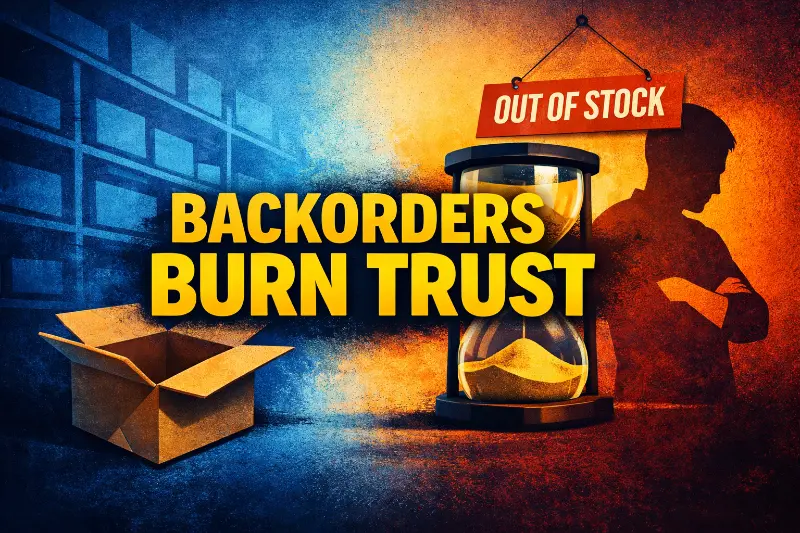
Done well, backorder management preserves demand and buys time to restock. Done poorly, it turns a supply chain problem into a customer trust problem, and that damage usually lasts longer than the stockout itself.
What a Backorder Actually Means in Practice
When a customer places an order on a backordered item, a transaction is completed and revenue is collected against inventory that does not yet exist. The business logs a sale, but fulfillment is deferred. The customer expects to receive the product by a specific date, typically communicated at checkout. Everything between that moment and the actual delivery is the backorder window, and it is operationally fragile. It is important to inform customers and focus on updating customers about the backorder status and expected shipping dates to maintain transparency and trust.
Backorders happen when product demand exceeds available inventory. Supply chain disruptions, raw material shortages, demand spikes that outpace forecasts, and low safety stock all contribute. In some cases, they are genuinely unforeseeable. In many cases, they reflect a reorder point that was set too low or a replenishment cycle that did not account for supplier lead times accurately, especially as consumer expectations have been reshaped by Amazon-style fast, free shipping and alternative fulfillment models.
A rolling backorder compounds the problem. When the initial restock date slips, the customer’s wait extends, communications have to be updated, and the risk of cancellation rises with every passing week. Transparency in communicating accurate timelines to customers is crucial, as it builds trust and improves customer satisfaction during backorder situations. When an item is backordered, the retailer communicates an estimated delivery date or keeps the customer informed as soon as updates are available. What started as a two-week backorder can stretch into a month-long trust deficit.
Backorder vs. Out of Stock: A Meaningful Distinction
These two terms describe different operational decisions, and treating them as interchangeable creates real business risk. Communicating a product’s availability is crucial: for out of stock items, customers are informed that the product cannot be purchased and there is no estimated restock date, while for backordered items, customers are told the product is temporarily unavailable but will be restocked within a certain timeframe.
An out-of-stock item is unavailable for purchase. The product listing reflects that, and the customer cannot complete a transaction. There is no promise made, no revenue collected, and no customer expectation set. It is a lost sale opportunity, which has a real cost, but it does not create a commitment you might fail to fulfill. An item is out of stock when the seller doesn’t have the item in inventory and has no sure date to restock, which is why a resilient ecommerce fulfillment strategy that supports profitability matters as volume and complexity grow.
A backordered item, by contrast, is available for purchase even though inventory is zero or insufficient. This differs from a pre-order, which is for a product that has not yet been released. The business is explicitly telling the customer: we do not have this yet, but we will, and we are accepting your order on that basis. Unlike an out-of-stock item, a backordered item should have a confirmed restock date, even if the exact arrival timing shifts slightly, and be expected within a reasonable timeframe.
The critical variable is whether you actually know when inventory will arrive. If a confirmed purchase order and a reliable supplier lead time sit behind the backorder, the commitment is manageable. If the backorder is accepted without a confirmed restock date, it is essentially speculation, and customers are bearing the cost of that uncertainty.
A practical rule: if your restocking timeline is confirmed and within a reasonable window (typically under two weeks for most ecommerce contexts), a backorder is defensible. If the timeline is uncertain or extends beyond three weeks, showing the item as out of stock and offering a back-in-stock notification is a more honest and less operationally risky choice. Remember, backordered items are sold out but expected to be restocked within a certain timeframe, while out of stock means there is no sure date for restocking.
The Revenue vs. Customer Experience Tradeoff
The case for businesses that accept backorders is straightforward on paper. You capture demand that would otherwise evaporate, keep revenue flowing, and gather real data on which products customers want badly enough to wait for. Backorders allow customers to reserve a product in advance, reserve their place in line on a first-come, first-served basis, and ensure the business maintains sales revenue during temporary shortages. However, if you do not manage backorders properly, you risk losing sales due to customers turning to competitors when faced with delays. Backorder revenue can also fund the restock purchase itself, which has cash flow advantages for brands with tight working capital, especially when paired with ecommerce order fulfillment services that outclass traditional 3PLs.
The case against is equally clear, but it tends to be underweighted. Customer expectations for delivery speed have tightened significantly. When a customer accepts a backorder with a promised ship date, they have made a specific plan around that timeline. If the date slips, the reaction is not neutral. If customers experience long delays with backorders, they may cancel their order and purchase elsewhere, leading to potential loss of sales. Research consistently shows that a poor delivery experience is one of the highest-impact drivers of customer attrition, and one poor experience can suppress repeat purchase behavior at a rate that exceeds the initial revenue the backorder generated, much like elevated ecommerce return rates quietly erode long-term profitability. Poor backorder management can cause you to lose customers to competitors who can fulfill orders faster, just as failing to address rising ecommerce return rates drives shoppers toward brands that offer a smoother post-purchase experience, and a weak backorder experience can undo the gains of an otherwise exceptional ecommerce returns program that builds loyalty.
The math here is worth doing explicitly. If your average order value is $80 and your customer lifetime value is $320, accepting a backorder that leads to a cancellation or a deeply dissatisfied customer costs you not just the $80 in potential revenue you might have lost by showing out of stock, but potentially the full $320 in future value. Brands that optimize purely for immediate revenue capture when going out of stock routinely underestimate this downstream effect. Frequent backorders can lead to a loss of customers if they become frustrated with repeated stockouts.
The Contrarian View: Backorders Are Not Always Conservative
There is a common assumption that allowing backorders is the cautious move, a way to avoid losing a sale without taking on much risk. In reality, backorders represent a strategic decision that can align with broader business goals, and whether you accept backorders should depend on the business model, especially for replenishment-focused or subscription-based businesses, rather than being just an operational workaround. The actual risk profile is inverted.
Showing out of stock is operationally clean. You lose a potential sale, but you make no promises. The customer may return when the product is available. They may sign up for a notification. They may buy a comparable alternative from you. The relationship is not damaged. Backorders can also be used to test and respond to market demand, allowing businesses to gauge customer interest and adjust safety stock levels accordingly, much like a well-designed ecommerce returns program reveals which products or policies are undermining repeat purchases.
Accepting a backorder under uncertain supply conditions is the aggressive move. You are taking on a customer commitment before you have the operational ability to back it up. If your supplier delivers late, your carrier loses a shipment, or your demand forecast was wrong on total volume, the backorder queue does not absorb those shocks quietly. It amplifies them into customer service volume, cancellation requests, and negative reviews that are publicly visible on the exact product pages where you are trying to convert new buyers.
The brands that manage backorders well treat them as a deliberate, time-bounded tactic with clear operational prerequisites, not a default response to running out of stock. Staying current on emerging logistics best practices through ecommerce logistics and fulfillment events can sharpen this strategy further. Backorders can provide better demand insights, helping businesses adjust inventory strategies based on which items frequently go into backorder status.
What Happens to Inventory Management During a Backorder
A backorder is not just a customer-facing event. It creates complexity inside your inventory management system that compounds if not handled carefully. When a backorder is placed, it is typically converted into one of several sales orders for fulfillment once inventory becomes available. The accumulation of these unfulfilled sales contributes to the company’s backlog, which may be tracked by unit count or as a dollar figure in accounting records and supports broader business processes tied to inventory control and fulfillment.
Once stock arrives, retailers usually prioritize shipping to customers who placed their backorders first, and efficient pick and pack fulfillment processes and accurate packing slip practices for ecommerce shipping are essential to ensure those orders are processed accurately and quickly.
When backordered items are recorded, your accounting records show a completed sale against zero available inventory. That gap has to be tracked accurately so that when the replenishment shipment arrives, the system fulfills backorders in the correct sequence before releasing units to new orders. If your warehouse management discrepancies go unnoticed, backorder customers can end up waiting while new orders jump the queue. Managing fulfillment in this context requires careful coordination to ensure backorders are handled efficiently and customer satisfaction is maintained.
Partial backorders add another layer. A customer orders three items, two are in stock and one is backordered. You can ship the available items immediately and hold fulfillment until the third arrives, or you can split the shipment. Both options have cost and experience implications. Partial shipments solve the immediacy problem but create additional shipping costs and the potential for a customer to receive a box that feels incomplete. Holding the full order keeps shipping costs contained but holds in-stock items hostage to a supply chain problem that only affects one SKU. Analyzing historical data on sales trends can help optimize inventory levels and reduce the likelihood of future backorders, though relying solely on past data may not always predict demand accurately.
Safety stock exists precisely to absorb the kind of demand variability that generates backorders. When safety stock is too low relative to demand patterns and supplier lead times, backorders become a recurring operational mode rather than an occasional exception. That is when the cost accumulates at scale. Using real-time inventory tracking helps prevent overselling and reduces the likelihood of backorders.
Managing backorders can increase operational workload due to the need for communication with suppliers and customer notifications, especially when shipment delays or carrier shipment exceptions further extend already sensitive timelines and poor coordination often drives customer complaints, which is where robust ecommerce fulfillment software with real-time visibility becomes increasingly valuable.
Storage and Warehouse Management During Backorders
Effective warehouse management services are a critical, often overlooked, component of managing backorders successfully and supporting streamlined inventory management. When backordered items are expected, the way your storage and fulfillment processes are organized can make the difference between a smooth recovery and a cascade of customer frustration, while lean handling helps control storage costs and warehousing costs by avoiding unnecessary excess inventory.
A robust warehouse management system should track incoming replenishment shipments and clearly flag which products are allocated to backorders. Designating specific storage areas for backordered items ensures that, once inventory arrives, these products are prioritized for fulfillment in the correct order. This prevents mix-ups where new customer orders are shipped before existing backorders, which can quickly erode trust and create unnecessary service issues.
Implementing a first-in, first-out (FIFO) approach is especially important for backordered items. By fulfilling the oldest backorders first, you maintain fairness and transparency, reducing the risk of customer dissatisfaction. Accurate, real-time inventory levels are essential—not only to avoid overselling but also to keep customers informed about their order status.
Ultimately, strong warehouse management practices during backorders help minimize delays, streamline backorder fulfillment, and maintain customer loyalty even when supply chain issues arise. Leveraging expert insights from educational ecommerce logistics webinars can further refine these practices over time. By proactively organizing your storage and fulfillment processes, you can turn a potential pain point into an opportunity to demonstrate operational excellence and care for your customers, while efficient replenishment and allocation also help reduce storage costs.
How to Communicate With Customers During a Backorder
Customer communication is where backorders are won or lost. Customers who are kept informed and given accurate timelines are far more likely to wait. Following best practices in communication, such as proactive updates and transparency, is essential to minimize negative experiences. Customers who receive silence or vague updates after placing an order are far more likely to cancel and leave with a negative impression.
Several communication practices reduce the risk significantly, and the same mindset underpins effective returns management software that streamlines post-purchase experiences:
- Set the expectation before purchase. The estimated ship date should appear on the product page and in the checkout flow, not just in a post-purchase email. Customers who discover the backorder status after paying feel misled, even if the disclosure was technically present somewhere in the process.
- Send a clear confirmation immediately after order placement. This should include the specific expected ship date, a direct path to contact support, and a straightforward cancellation option. Customers who know they can cancel without friction are less likely to leave a negative review.
- Proactively communicate if the timeline changes. A delayed restock should trigger an immediate notification, not a response to a customer inquiry. Every day a customer waits past a promised date without an update is a day their likelihood of cancellation and their frustration compound together.
- Update the timeline with specificity. “Your order will ship by March 18” is a recoverable update. “We are still working on restocking this item” is not. Vague status updates signal that you do not have operational control of the situation, which is the impression you most need to avoid.
- Proactively update customers about backorder status. Regular, transparent updates—even if there is no new information—help maintain customer trust and satisfaction.
By following these best practices and ensuring effective communication about backorders, you can help maintain customer trust and satisfaction even when delays occur.
Minimizing Backorders Over Time
Backorders are sometimes unavoidable, but stronger forecasting and supplier planning support effective backorder management. Setting accurate reorder points using historical sales data, sales forecasts, and supplier lead times is the foundational step, as set reorder points help prevent backorders by triggering timely replenishment before stockouts occur. However, while trying to avoid backorders, businesses should also be cautious of excess inventory, which can lead to overstocking and unnecessary holding costs. Balancing inventory levels is crucial, and managing excess stock ensures you have enough to meet unexpected demand without tying up too much capital. Setting safety stock levels can help businesses manage unexpected demand spikes and reduce backorders, while regularly monitoring stock levels of popular items helps ensure timely replenishment and prevents backorders. The safety stock buffer has to account for both demand variability and supply variability, not just one of them, just as choosing the best returns management software for your business requires balancing cost, control, and customer experience.
Using multiple suppliers reduces the risk that a single disruption creates a stockout across your full supply of a SKU. If one supplier faces a raw material shortage or production delay, a secondary source with existing onboarding gives you options rather than a forced backorder. This lowers backorder risk during supply chain disruptions.
Demand planning that incorporates market trends, promotional calendars, seasonal patterns, and sudden demand fluctuations prevents the most predictable category of backorders: the demand spike that was visible in advance but not reflected in the replenishment plan. Accurately anticipating future demand helps minimize backorders by ensuring inventory levels align with expected sales. Analyzing market insights, such as real-time data and industry trends, can further improve demand planning and reduce the likelihood of backorders; excessive backorders are often a sign that inventory planning or supplier coordination is failing across supply chains.
Frequently Asked Questions
What is a backorder in ecommerce?
A backorder is when a customer places and pays for an order on an item that is not currently in stock, with the expectation that the business will fulfill it once inventory arrives. The sale is recorded immediately, but fulfillment is deferred until the product is available. Backorders work by allowing customers to purchase out-of-stock items, and the business manages these orders by processing them as soon as inventory is replenished.
What is the difference between a backorder and out of stock?
An out-of-stock item cannot be purchased because inventory is zero and no purchase option is offered; some retailers instead label an item as temporarily out of stock when replenishment is expected but they are not accepting a backorder. A backordered item can still be purchased even though inventory is zero, because the business has committed to fulfilling the order when stock arrives. The key difference is whether a customer commitment is made. With backorders, customers can expect the item to be restocked within a foreseeable future, while out-of-stock items have no such expectation of resupply.
How long do backorders typically last?
Backorder timelines vary depending on the cause and the supplier’s lead time. A demand spike that a supplier can address quickly might resolve in one to two weeks. A supply chain disruption affecting raw materials or manufacturing can extend backorders for months. Communicating a specific, accurate estimated ship date at the point of purchase is more important than the length of the wait.
Do backorders hurt customer satisfaction?
They can, significantly, particularly when the timeline is not communicated clearly or when the promised ship date slips without notice. Customers who are informed proactively and given accurate updates are substantially more likely to wait and remain satisfied. The damage to customer satisfaction is less about the delay itself and more about how the delay is managed.
Should you allow backorders on marketplaces like Amazon?
In most cases, no. Amazon does not formally support backorders and requires that orders ship within the promised delivery window. Accepting orders you cannot fulfill on time on Amazon damages your on-time delivery rate and can trigger account health penalties. Backorders are generally better suited to direct-to-consumer channels where you control the customer experience end to end.
What causes backorders to happen?
Backorders occur when customer demand exceeds available inventory, often due to insufficient stock levels. Demand fluctuations can lead to backorders when the demand for certain products is unpredictable. Supply disruptions can cause delays, leading to backorders. Common causes include low safety stock, inaccurate demand forecasting, supply chain disruptions, supplier delays, and demand spikes driven by promotions or viral attention. Poor reorder point settings relative to actual supplier lead times are a frequent structural cause in growing ecommerce businesses, much like weak controls around returns can open the door to ecommerce returns fraud that quietly erodes margins.
How do backorders affect inventory management systems?
Accepted backorders create a recorded sale against zero available inventory, which has to be tracked and reconciled accurately. When an order contains a backordered item, it can’t be packed and shipped immediately due to the lack of physical inventory at the time. This can also create complications with payment processing, especially if payment is only processed at shipping time. In some cases, a partial backorder occurs when only some items in an order are out of stock, requiring inventory management systems to split shipments or postpone fulfillment for those specific items. When new stock arrives, the system must fulfill backorders in sequence before releasing units to new orders. Failures in this process, where new orders fulfill ahead of existing backorders, create customer service problems and operational discrepancies that are difficult to resolve cleanly, especially on high-volume platforms like Shopify where choosing the right order fulfillment option and partners is critical.
Written By:

Indy Pereira
Indy Pereira helps ecommerce brands optimize their shipping and fulfillment with Cahoot’s technology. With a background in both sales and people operations, she bridges customer needs with strategic solutions that drive growth. Indy works closely with merchants every day and brings real-world insight into what makes logistics efficient and scalable.

Turn Returns Into New Revenue
Related Articles
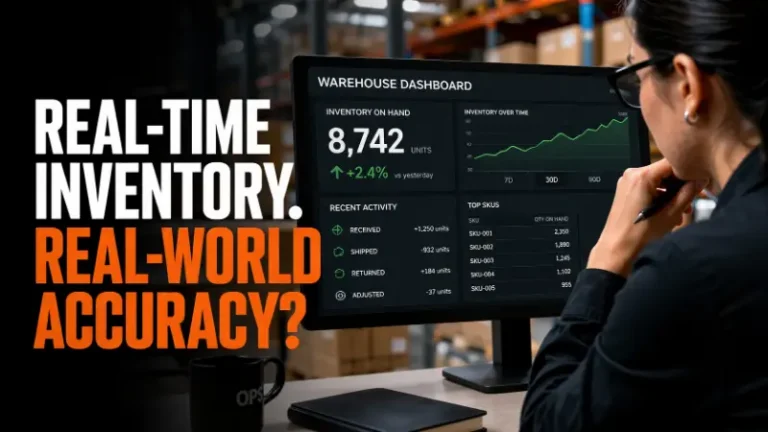
What Is a Perpetual Inventory System? How It Works in Ecommerce
A perpetual inventory system is an inventory management approach in which stock levels are updated continuously and automatically every time a transaction occurs.

The Hidden Economics of a $100 Return
The cost of returns is one of the most systematically underestimated figures in ecommerce finance.
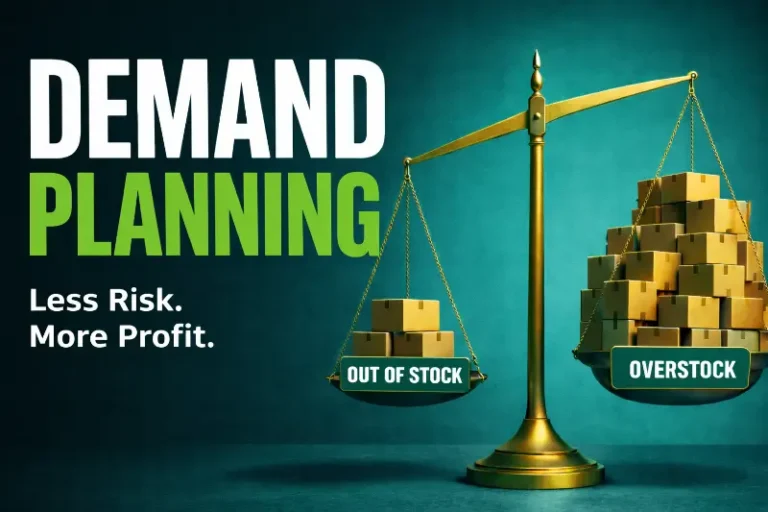
What Is Demand Planning? How It Impacts Inventory, Forecasting, and Profitability
Demand planning is the process of estimating future customer demand so that a business can align its inventory, procurement, and operations to meet that demand without carrying mor...