
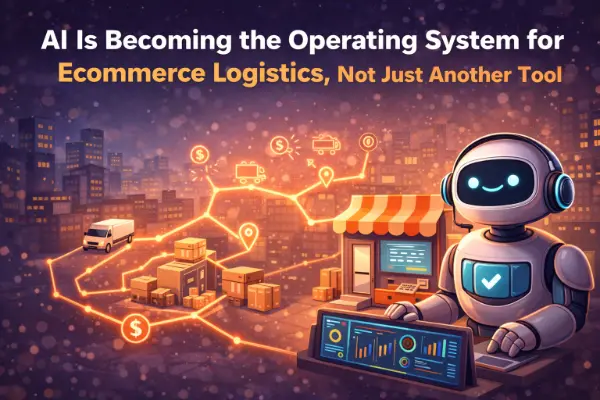
AI Is Becoming the Operating System for Ecommerce Logistics, Not Just Another Tool

Last updated on December 12, 2025
In this article
 5 minutes
- Why Ecommerce’s Real Battle Has Moved to Operations
- Why AI Tools Fail When Bolted Onto Ecommerce Logistics
- What It Means for AI to Act as an Operating System for Ecommerce
- Where AI Is Already Running Ecommerce Logistics and Operations
- The New Ecommerce Advantage: Learning Faster With AI
- Why Ecommerce Logistics Is the Ideal Domain for AI
- How AI Is Enabling New Ecommerce Fulfillment and Returns Models
- What Ecommerce Operators Should Do Next With AI
- AI Is Infrastructure Now, Not Experimentation
- Frequently Asked Questions
For most of the last decade, ecommerce growth followed a familiar playbook: spend more on ads, acquire customers faster, and worry about operations later. That model is breaking down.
Customer acquisition costs are rising. Margins are thinner. Tariffs, shipping volatility, and returns are no longer edge cases, they are structural realities. As a result, the real battle in ecommerce has shifted away from the top of the funnel and into the operational core of the business.
This is where AI enters the picture, not as another productivity tool, but as something far more fundamental.
AI is becoming the operating system for ecommerce logistics. It is the layer that coordinates decisions across shipping, fulfillment, returns, inventory, pricing signals, and post-purchase experiences. And the brands that understand this shift early are building an advantage that competitors will struggle to unwind.
This shift explains why AI in ecommerce logistics is no longer experimental: it’s becoming foundational infrastructure.
Why Ecommerce’s Real Battle Has Moved to Operations
Ecommerce has not become easier, it has become more operationally complex.
Growth is now constrained less by demand and more by execution. Late deliveries, inefficient fulfillment networks, rising carrier fees, and costly returns erode profitability faster than most brands realize. Marketing can still drive traffic, but it can no longer compensate for weak operations.
In this environment, logistics is no longer a back-office function. It is the system that determines whether growth compounds or collapses under its own weight.
Brands that treat fulfillment, shipping, and returns as static cost centers are finding themselves boxed in. Brands that treat them as dynamic systems (systems that can learn and adapt) are creating room to grow even in a tougher economy.
For many operators, this means rethinking how they approach ecommerce fulfillment services and fulfillment strategy as a whole.
Why AI Tools Fail When Bolted Onto Ecommerce Logistics
Many ecommerce teams approach AI the same way they approached previous waves of software: as a bolt-on tool.
They add a chatbot here. A forecasting tool there. A rules engine somewhere else. Each tool solves a narrow problem, but none of them understand the whole system.
Logistics does not work that way.
Shipping decisions affect delivery speed, which affects returns. Returns affect inventory availability, which affects fulfillment routing. Fulfillment routing affects costs, which affects pricing and margins. These are not isolated workflows, they are interconnected decisions.
When AI is deployed as a point solution, it inherits the same silos humans struggle with. It optimizes locally and breaks globally.
For AI to work in ecommerce logistics, it has to sit above individual tools. It has to orchestrate decisions across systems, not just assist within them.
Slash Your Fulfillment Costs by Up to 30%
Cut shipping expenses by 30% and boost profit with Cahoot's AI-optimized fulfillment services and modern tech —no overheads and no humans required!
I'm Interested in Saving Time and MoneyWhat It Means for AI to Act as an Operating System for Ecommerce
An operating system does not perform one task well. It coordinates many tasks continuously. When AI in ecommerce logistics acts as an operating system, it doesn’t just optimize tasks — it coordinates the entire post-purchase stack.
Applied to ecommerce logistics, an AI operating system does four critical things:
First, it makes decisions, not just recommendations. Instead of telling a human what could be done, it determines what should be done based on real-time inputs.
Second, it learns from outcomes. Every shipment, return, delay, and exception becomes training data that improves future decisions.
Third, it connects systems that were never designed to talk to each other. Carriers, warehouses, marketplaces, returns platforms, and customer service tools become part of a single decision layer.
Finally, it replaces manual glue work. The spreadsheets, reconciliations, and handoffs that once required human oversight are absorbed into the system itself.
This is the conceptual foundation for everything that follows in this AI series — including how brands evaluate ROI, customer experience, and profitability.
Where AI Is Already Running Ecommerce Logistics and Operations
Across ecommerce operations, AI is quietly taking ownership of decisions that humans cannot make fast enough or consistently enough.
Shipping selection is a clear example. Instead of relying on static rules or human judgment, AI evaluates carrier performance, cost, delivery promises, and destination constraints in real time, selecting the optimal option for each order.
Inventory placement is another. AI can analyze demand patterns, shipping zones, and fulfillment costs to determine where inventory should sit, not just where there is space.
Advertising optimization, long treated as a marketing function, increasingly feeds into operational planning. AI-driven ad performance insights influence demand forecasts, inventory allocation, and fulfillment readiness; particularly in multi-channel ecommerce fulfillment environments.
Even returns — historically a blunt, manual process — are becoming more intelligent. AI can route returns dynamically, identify anomalies, and reduce unnecessary handling costs by understanding context instead of applying blanket rules.
These are not nice-to-have efficiencies. They are structural improvements to how ecommerce businesses function.
The New Ecommerce Advantage: Learning Faster With AI
The most underappreciated advantage AI delivers is not automation. It is speed of learning.
Traditional operations rely on post-mortems. Something breaks, teams investigate weeks later, and adjustments are made slowly. AI collapses this feedback loop.
When AI monitors outcomes continuously, it does not wait for quarterly reviews. It adapts immediately. Poor carrier performance is detected in days, not months. Cost anomalies are flagged before they accumulate. Operational bottlenecks are surfaced while they are still manageable.
This learning speed advantage shows up clearly in areas like AI ROI in ecommerce operations, where brands that instrument feedback loops outperform those that rely on static analysis.
Looking for a New 3PL? Start with this Free RFP Template
Cut weeks off your selection process. Avoid pitfalls. Get the only 3PL RFP checklist built for ecommerce brands, absolutely free.
Get My Free 3PL RFPWhy Ecommerce Logistics Is the Ideal Domain for AI
AI adoption in ecommerce often starts in marketing because it feels creative and visible. But marketing is also noisy, probabilistic, and highly sensitive to external factors.
Logistics is different.
Operational workflows are deterministic. Inputs and outputs are measurable. Success and failure are easier to define. Feedback loops are cleaner.
This makes logistics an ideal domain for AI. When AI improves a shipping decision or reduces a return cost, the result is immediately visible in margins and customer experience.
Ironically, this also means fewer competitors are applying AI deeply here. Logistics improvements are quieter than flashy marketing wins, but far more defensible.
How AI Is Enabling New Ecommerce Fulfillment and Returns Models
Some ecommerce business models were previously impractical because they required too much coordination, trust, or real-time decision-making.
AI changes that.
When systems can verify data, route inventory dynamically, and detect anomalies at scale, entirely new approaches to fulfillment and returns become viable. Inventory no longer needs to move through rigid, centralized paths. Returns no longer need to default to warehouses.
This shift underpins emerging ideas like AI-driven profit recovery and smarter returns routing, topics explored further in our deep dive on hidden ecommerce profit leaks.
What Ecommerce Operators Should Do Next With AI
For ecommerce leaders, the shift to AI as an operating system requires a change in mindset.
The goal is not to deploy more tools. It is to map decision flows. Identify where humans are acting as bottlenecks, where rules break down, and where outcomes are slow to surface.
AI should own repeatable, high-volume decisions. Humans should own exceptions, judgment calls, and strategy. Escalation paths matter as much as automation.
This is especially true for small ecommerce brands, which often move faster with AI than large enterprises due to fewer silos and faster iteration cycles.
Scale Faster with the World’s First Peer-to-Peer Fulfillment Network
Tap into a nationwide network of high-performance partner warehouses — expand capacity, cut shipping costs, and reach customers 1–2 days faster.
Explore Fulfillment NetworkAI Is Infrastructure Now, Not Experimentation
Ecommerce is entering a phase where operational intelligence matters more than surface-level growth tactics.
The brands that thrive will not be the ones with the most tools. They will be the ones with the most coherent operating systems. Systems that learn, adapt, and coordinate continuously.
AI is no longer an experiment at the edges of ecommerce. It is becoming the infrastructure that holds modern operations together.
And the sooner brands treat it that way, the more durable their advantage will be. In the next phase of ecommerce, mastery of AI in ecommerce logistics will separate resilient operators from fragile ones.
Frequently Asked Questions
What does it mean for AI to act as an operating system in ecommerce logistics?
When AI acts as an operating system, it coordinates decisions across shipping, fulfillment, returns, inventory, and customer service instead of assisting with isolated tasks.
How is AI in logistics different from traditional automation?
Traditional automation follows fixed rules. AI adapts based on outcomes, learns from exceptions, and optimizes decisions continuously across multiple systems.
Where is AI already being used successfully in ecommerce operations?
AI is delivering strong results in shipping optimization, inventory placement, ad performance, fee recovery, returns routing, and demand forecasting.
Why are ecommerce operations better suited for AI than marketing?
Logistics workflows are more deterministic and data-rich than marketing, making them ideal environments for AI-driven optimization and learning.
Do small ecommerce brands really have an advantage using AI?
Yes. Smaller teams often adopt AI faster because they face fewer organizational barriers and can iterate quickly without enterprise-level friction.
Written By:

Manish Chowdhary
Manish Chowdhary is the founder and CEO of Cahoot, the most comprehensive post-purchase suite for ecommerce brands. A serial entrepreneur and industry thought leader, Manish has decades of experience building technologies that simplify ecommerce logistics—from order fulfillment to returns. His insights help brands stay ahead of market shifts and operational challenges.

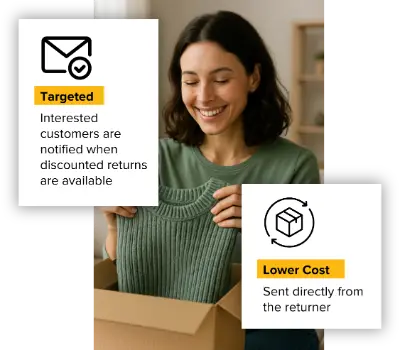
Turn Returns Into New Revenue
Related Articles
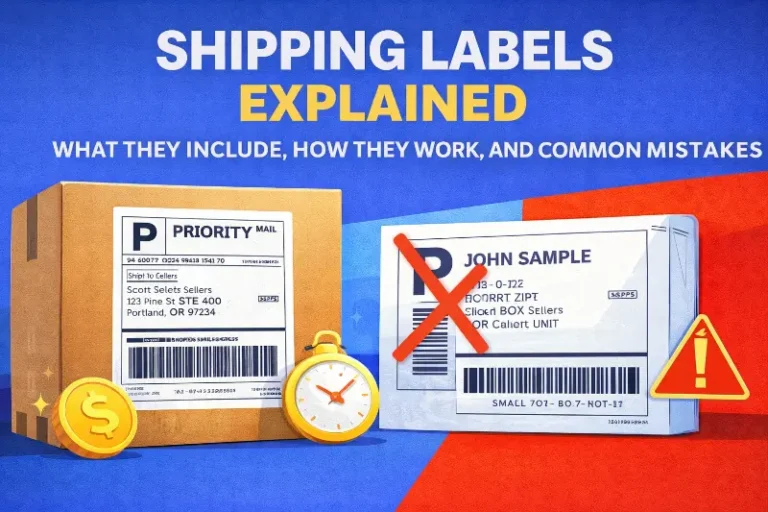
Shipping Labels Explained: What They Include, How They Work, and Common Mistakes
Shipping labels are the operational backbone of ecommerce fulfillment, a small piece of paper that determines whether packages reach customers successfully or trigger costly failur...
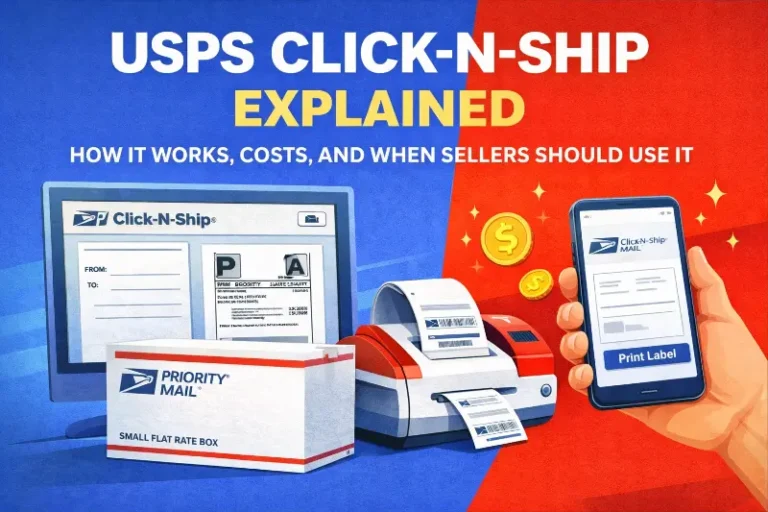
USPS Click-N-Ship Explained: How It Works, Costs, and When Sellers Should Use It
USPS Click-N-Ship is the postal service’s free online label-printing tool, and for most Shopify sellers shipping more than 50 packages monthly, it’s already time to move beyond it....
USPS Tracking Explained: What Each Status Means and How Sellers Should Respond
The “if it fits, it ships” model offers compelling economics for heavy items traveling cross-country, but costs Shopify brands up to 175% more than alternatives for lig...