
Returns Are No Longer a CX Feature – They’re a Balance Sheet Liability

Last updated on January 6, 2025
 15 minutes
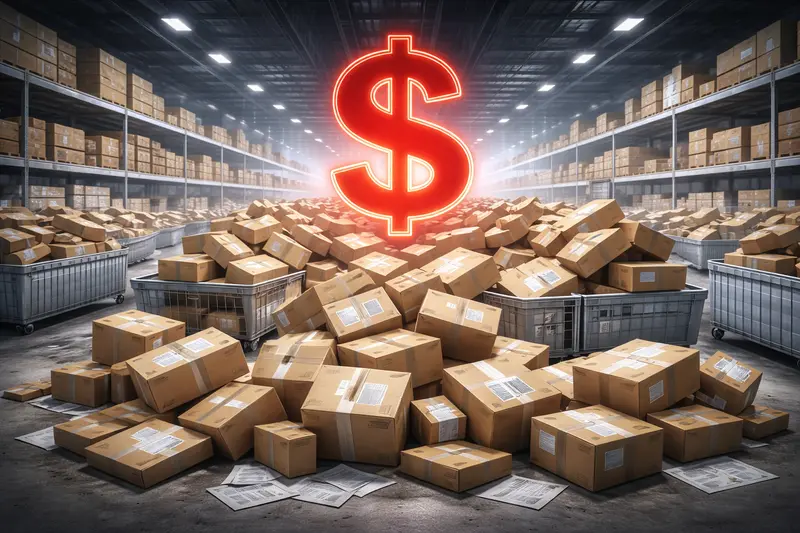
E-commerce returns have exploded in scale, and retailers are grappling with the cost. What was once a customer-friendly “free returns” policy is now being reined in: major brands are imposing flat fees or stricter rules. Industry data show this is no flash in the pan. For example, the National Retail Federation (NRF) and Happy Returns report finds 72% of U.S. retailers now charge customers for at least one return method, and nearly three-quarters of all stores levy some kind of return fee. In practice, major retailers have quietly added fixed costs to returns: Marshall’s and T.J. Maxx each deduct $11.99 per returned package, Macy’s charges $9.99 per return, and JCPenney and J.Crew roughly $8. In short, returns have shifted from being a cost of customer service to becoming a line item on the balance sheet.
- Industry Benchmarks: ~72% of retailers charge for at least one return method; nearly 75% of stores have return fees (NRF).
- Retailer Examples: Marshall’s/TJ Maxx – $11.99 per return; Macy’s – $9.99; JCPenney – $8; J.Crew – $7.50.
These figures mark a sharp change. Consumer shopping sites and news outlets report that many leading chains introduced return fees in late 2024/2025. ABC News (via ABC15) confirms that “J. Crew, Macy’s, JCPenney and more have fees for some returns on holiday gifts”. Similarly, a Money magazine analysis notes that over the past year “retailers have slowly been rolling back one of online shopping’s biggest perks: free returns,” as nearly three-quarters of retailers now charge for returns. These fees include shipping surcharges, restocking charges, and other handling fees, all aimed at recouping the hidden cost of returns.
Ecommerce Returns: Why Free-Returns Policies Broke at Scale
The U.S. online shopping boom has made ecommerce returns a massive operational burden. During the pandemic and beyond, consumers ordered more and returned more. According to the NRF/Happy Returns 2025 report, the average ecommerce return rate was 16.9% in 2024, as reported by the National Retail Federation, and is estimated to reach 15.8% of annual sales in 2025—roughly $850 billion of merchandise. The NRF report also notes that collectively, consumers returned products worth a staggering $890 billion in 2024. The average ecommerce return rate can vary significantly by product category, with clothing and shoes typically having higher rates. (For perspective, returns accounted for 10.6% of U.S. retail sales in 2020 and jumped to 16.6% in 2021.) Handling this torrent of returned goods has become expensive. In 2025, approximately 19.3% of all online sales are expected to be returned, making effective management essential for protecting profit margins and maintaining customer loyalty.
Returns impose multiple overlapping costs on retailers. Transportation and logistics are especially costly. As one analysis notes, each $100 returned item costs a retailer about $32 to process and resell. Retailers effectively pay twice to handle the same item: they ship it to the customer, and then pay again for the return transit and processing. Warehouse labor, inspection, and repackaging add more expenses. In the aggregate, the NRF estimates returns now cost “almost $890 billion each year” to U.S. retailers. Retailers are predicted to spend 8.1% of total sales on reverse logistics. Even that colossal figure likely understates the burden, since many returned items cannot be sold at full price. Returns often incur additional markdowns or liquidations, eroding margins further. In fact, studies show a significant share of returned merchandise (often cited around 10–25%) cannot go back to inventory at full value. The environmental impact from high return volumes also contributes significantly to carbon emissions and landfill waste, especially in fast fashion and electronics.
In summary, free returns became unsustainable once volumes grew large. Retailers report that the principal drivers of new fees are soaring carrier costs and the expense of reverse logistics. One supply-chain analysis observes, “Returns also drain resources because they require reverse logistics: shipping, inspecting, restocking, and often repackaging items”. Third-party logistics (3PL) providers can handle the entire order fulfillment process, including returns, to help streamline operations. The result is that retailers can no longer absorb returns as a marketing perk without jeopardizing profitability. As Happy Returns CEO David Sobie puts it, “Return policies and their overall process have transformed into a strategic touchpoint”, forcing retailers to modernize how they manage returns. A clear and generous ecommerce return policy, including a well-defined return window and specifying the purchase date, can increase sales without increasing the volume of returns. Retailers may also implement restocking fees to recover costs for large or costly items. Ecommerce return fraud is a growing concern, making it critical for online retailers to monitor customer returns closely. Many customers, especially online shoppers, review return policies before making online purchases, and making returns easy builds trust and encourages repeat business. Many customers prefer to return items in-store if a physical or brick and mortar store is available, which can enhance their shopping experience and lead to additional in store sales. Returns can be an opportunity for more business if handled well, as customers may return to shop again after a positive return experience, supporting customer loyalty and future sales. The evolution of return policies now trends toward a generous ecommerce returns policy, which is key to attracting potential customers and maintaining a competitive edge, especially during the holiday season when ecommerce sales and customer returns surge.
Make Returns Profitable, Yes!
Cut shipping and processing costs by 70% with our patented peer-to-peer returns solution. 4x faster than traditional returns.
See How It WorksReturns and Customer Satisfaction Are a Balance-Sheet Liability
For retailers (and Shopify brands), returns are a balance-sheet liability, not merely a customer-experience feature. Every return ties up inventory and triggers costs: outbound shipping credits to the customer, inbound transportation for the return, labor to sort and inspect the item, and restocking or writing it off. Among these, transportation is a “biggest expense”. As one logistics executive observes, retailers are seeing “about 20 to 25% more” of them charge for returns this year – explicitly as a way to recoup these mounting costs.
A key step in the ecommerce returns process is the return merchandise authorization (RMA), which allows retailers to manage and track returns efficiently. The RMA process often includes generating a return shipping label and ensures that each return is properly documented, helping streamline operations and improve customer satisfaction. The return process typically begins when the customer initiates return through an online portal or help form, making a seamless experience essential for customer retention. Implementing self-service online returns portals can reduce customer service workload and increase processing speed, while returns management software and returns platforms automate the process, including label generation, approval workflows, and inventory updates. Automation and data analytics further help solve operational challenges, flag return abuse, and provide flexible options for loyal and honest customers, ensuring that fraud prevention measures do not unfairly penalize good shoppers.
Returns also carry hidden capital costs. While cash may be refunded to the customer immediately, the item often requires new handling. Many returned products are not in pristine condition: they need relabeling, repackaging or even discounting. When managing refunds, offering alternatives like store credit instead of cash refunds can help prevent fraud and retain value. Industry analysis finds that processing returns adds both labor and operational expenses. Retailers are adapting by dedicating more resources to returns: NRF data show 49% of retailers plan to rely more on third-party logistics providers for returns, and 43% plan to hire extra seasonal staff to handle the volume. All of this indicates that returns impact inventory, headcount, and cash flow – hallmarks of a balance-sheet liability.
Key cost factors include:
- Reverse logistics costs: Inbound shipping, return shipping labels, and handling fees (often 20–30% of an item’s price).
- Labor and facilities: Sorting, inspection and repackaging by warehouse teams, plus administrative handling.
- Inventory recovery loss: A portion of returned goods can’t be resold at full price, necessitating markdowns or liquidation.
- Fraud prevention and overhead: Although not shopper-blame, retailers note return fraud adds to the cost base (roughly 9% of returns) and must be countered with systems or policies that balance fraud prevention with not penalizing honest customers. Data analytics can help identify serial returners while providing flexible options for loyal customers.
As a result, retailers are explicitly factoring online returns into margins. For example, one study reports that 40% of merchants cite operational costs of processing returns as a reason to start charging fees, and another 40% cite carrier shipping costs. In other words, return fees directly offset the very expenses incurred on the balance sheet.
Accurate product descriptions, high-quality images, AR/VR tools, and authentic customer reviews with real-life photos and videos are crucial in reducing returns, especially since fit-related issues account for approximately 67% of fashion returns. Leveraging these strategies, along with collecting and analyzing feedback on return reasons, helps retailers identify trends, improve product offerings, and enhance trust among potential buyers. Providing tracking information for return shipments and a hassle-free return process—something 58% of customers want—can significantly improve satisfaction and loyalty. Notably, up to 23% of customers who receive instant refunds will shop again immediately, and many expect their credit processed within five days. Clear and accessible return policies further enhance trust, satisfaction, and repeat business.
Convert Returns Into New Sales and Profits
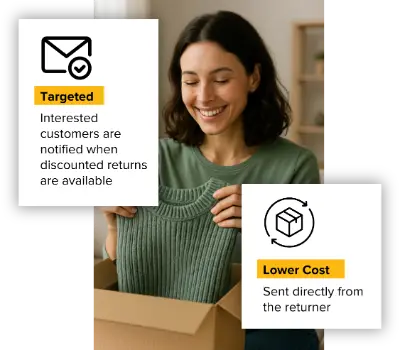
Our peer-to-peer returns system instantly resells returned items—no warehouse processing, and get paid before you refund.
I'm Interested in Peer-to-Peer ReturnsThe Role of Reverse Logistics
Reverse logistics is the backbone of ecommerce returns management, encompassing every step required to move products from the customer back to the online retailer. When a customer initiates a return, the reverse logistics process begins: items are received, inspected for quality, and processed for either restocking, refurbishment, or disposal. Depending on the retailer’s return policy, customers may receive a cash refund, exchange, or store credit—each requiring precise coordination behind the scenes.
For online retailers, a streamlined reverse logistics process is essential to meet customer expectations for a hassle free return policy. Shoppers today expect a smooth, transparent return process, whether they are seeking a replacement, store credit for future purchases, or a prompt refund. Efficient reverse logistics not only helps manage costs by minimizing unnecessary shipping and labor expenses, but also plays a direct role in customer satisfaction and loyalty. When returns are handled quickly and fairly, customers are more likely to become repeat customers and leave positive online reviews, boosting the reputation of the ecommerce store.
Moreover, effective reverse logistics allows ecommerce businesses to recover value from returned merchandise, whether by restocking items for future inventory or offering them at a discount. This capability is especially important during peak periods like the holiday shopping season, when return volume surges and customer expectations are at their highest. By investing in robust ecommerce returns management and leveraging technology such as returns software and online portals, online merchants can save time, reduce hidden fees, and ensure that the returns management process supports both operational efficiency and customer retention.
In today’s competitive online shopping landscape, reverse logistics is no longer just an operational necessity—it’s a strategic differentiator that helps online retailers manage returns, control costs, and deliver the level of service that customers expect.
Major Retailers’ Return Policy and Fee Policies
Today’s return fee policies are often spelled out on retailer websites. Having a clear and accessible ecommerce return policy is crucial, as half of online shoppers review a retailer’s returns policy before buying. Recent policy language confirms the new charges:
- Macy’s: Store returns remain free, and members of its Star Rewards program get free return shipping. All other customers have a $9.99 return shipping fee (tax added) deducted from their refund. In short, only loyalty members or in-store returns are truly free – mail-in returns for other shoppers incur the fee. Macy’s ecommerce return policy also clearly defines the return window for eligible items.
- JCPenney: Its online return portal clearly states a flat $8 UPS fee for any mail-in return, streamlining the process by allowing customers to generate return labels and manage returns easily. (In-store returns remain free.) The return window and any applicable restocking fees are outlined in their ecommerce return policy, helping set clear expectations for customers.
- J.Crew: The official returns FAQ notes that using the prepaid return label costs $7.50 for any number of items, which is deducted from the refund. Exchanges, however, are offered at no charge. Their policy details the return window and any restocking fees for certain items.
- T.J. Maxx/Marshalls: Both retailers’ sites say that any return by mail incurs an $11.99 shipping-and-handling fee (per package). Again, in-store returns for online orders remain free of charge. Their ecommerce return policies specify the return window and clarify when restocking fees may apply.
In each case, the flat fee mirrors the amounts reported in the press. For example, ABC News notes “Marshall’s and T.J. Maxx charge $11.99 per package… Macy’s charges $10” (the $9.99 is often rounded to $10 in coverage). These updated policy details illustrate how return fees have moved from rumor to reality. (Retailers emphasize that avoiding the fee is possible by returning in-store, but that still means accepting returns as a cost of operations. Clear policies on when and how merchants accept returns, including any restocking fees, are essential for compliance and customer trust.)
Industry Outlook: Retail and logistics surveys indicate this trend will continue. In a recent NRF report summary, 64% of merchants said updating their returns process is a priority. Retailers are striking a new balance: maintaining customer goodwill while protecting their margins. For mid-market brands, the lesson is clear: treat returns as a cost center, not a free bonus. Expect return fees, tighter deadlines or other policies such as clearly defined return windows and restocking fees to roll out as standard practice, and plan your operations accordingly. Having a return policy that is easy to find and understand can reduce customer frustration and increase sales. Clear return policies that are easy to find and understand improve customer experiences, build trust, and encourage repeat business.
No More Return Waste
Help the planet and your profits—our award-winning returns tech reduces landfill waste and recycles value. Real savings, No greenwashing!
Learn About Sustainable ReturnsFrequently Asked Questions
Why are returns costly for retailers?
Returns touch almost every part of the retail operation. Every return generates a host of expenses before a refund is even issued. Key cost components of handling a return include:
- Return shipping: Even if retailers use a prepaid label, they ultimately pay the carrier. This often runs on the order of $7–$15 per package, depending on weight and distance.
- Processing labor: Warehouse teams must unpack, verify, and inspect returned items. Typical labor costs add roughly $5–$9 per return (about 12–18 minutes of work).
- Restocking and materials: If original packaging is damaged, retailers spend on replacement materials, labels, and packing (often $1–$3 extra). Even time spent relabeling or condition-checking adds to cost.
- Inventory impact: While an item is being returned (often 7–14 days in transit and processing), it sits off the market and cannot generate new sales. This delay can mean lost revenue—imagine a dress returned at Christmas, which might have sold again if it were immediately available. One analysis quantified this “down time” cost as tens of thousands of dollars in foregone margin for a mid-size retailer.
- Markdowns and write-offs: Not all returns can be resold at full price. Studies show 15–25% of returned goods require discounting or disposal. At a 40% markdown, a $45-margin item loses $18 margin; at worst it loses the full $45 if unsaleable. Over a year, markdowns can add hundreds of thousands in hidden losses for a mid-sized retailer.
- Refund fees: The financial transaction itself has a cost. Returns incur payment processing fees (around $2–$3) since the retailer is refunding money and still paying credit-card networks.
- Customer service: Each return can spawn multiple service interactions. Industry benchmarks suggest 2–3 inquiries per return (authorization, status check, refund query), with up to 10–12 minutes of support time each. This represents a non-trivial operational expense.
When tallied together, these costs convert returns from a small blip into a significant drag on profits. Bizowie’s breakdown demonstrates how the “gross margin” on a sale can evaporate once reverse logistics are factored in. Retailers might earn a 45% margin on a fashion item, only to see it cut by 55–65% after return handling, markdowns, and fees. In balance-sheet terms, returns directly shrink net revenue and increase selling expenses.
What sources were leveraged for return policy and cost data?
The information above is drawn from official retailer sites and industry reports. For example, Macy’s, JCPenney and J.Crew customer-service pages explicitly show their return shipping fees. T.J. Maxx and Marshalls policy pages list the $11.99 return fee. News coverage and industry surveys provide context and stats: Good Morning America (via ABC15) reports retailer fees for Macy’s, JCPenney, J.Crew and others; and CBS News cite NRF/Happy Returns data (72% of retailers charging fees, cost breakdowns); and a Supply & Demand Chain Executive summary of the 2025 NRF returns report provides detailed percentages on return costs and policies.
- https://www.abc15.com/news/smart-shopper/what-to-know-about-new-return-fees-timelines-from-retailers-for-holiday-gifts#:~:text=This%20holiday%20gift,fee%2C%20which%20is%20money%20custom
- https://www.cbsnews.com/philadelphia/news/holiday-shopping-extended-return-policy/#:~:text=Return%20and%20restocking%20fees
- https://www./news/saving-smarter/holiday-shoppers-face-growing-return-fees-as-retailers-cut-back-on-free-policies#:~:text=A%20new%20National%20Retail%20Federation,items%20back%20in%20many%20cases
- https://online-shopping-free-return-policies/#:~:text=According%20to%20a%20report%20released,last%20year
- https://www.modernretail.co/operations/the-case-for-and-against-return-fees/#:~:text=One%20of%20the%20biggest%20reasons,19%20pandemic
- https://erp-for-high-return-ecommerce-managing-reverse-logistics-without-margin-erosion#:~:text=The%20economics%20are%20sobering,attributable%20to%20reverse%20logistics%20costs
Written By:

Manish Chowdhary
Manish Chowdhary is the founder and CEO of Cahoot, the most comprehensive post-purchase suite for ecommerce brands. A serial entrepreneur and industry thought leader, Manish has decades of experience building technologies that simplify ecommerce logistics—from order fulfillment to returns. His insights help brands stay ahead of market shifts and operational challenges.

Turn Returns Into New Revenue
Related Articles
Inventory Turnover Ratio: What It Is, How to Calculate It, and How Ecommerce Brands Improve It
Inventory turnover ratio (also called stock turnover) measures how many times a company sells and replaces its inventory during an accounting period.
HTS Code Explained: What It Is, Why It Matters, and How Ecommerce Brands Use It
Cost of Goods Sold (COGS) represents the direct costs attributable to producing the goods a company sells during an accounting period.
Shipping Labels Explained: What They Include, How They Work, and Common Mistakes
Shipping labels are the operational backbone of ecommerce fulfillment, a small piece of paper that determines whether packages reach customers successfully or trigger costly failur...