
Why 100% P2P Adoption Is the Wrong Goal

In this article
 17 minutes
- 100% Peer to Peer Returns Is the Wrong Goal
- The Best Returns Strategy Uses More Than One Path
- Some Returns Still Belong at the Warehouse for Reverse Logistics
- The Real Win Is Capturing the Perfectly Good Returns
- Adoption Should Be Crawl, Walk, Run
- Cahoot Supports Both Paths
- Hybrid Is the Correct Model, Not a Fallback
- Summary
- Frequently Asked Questions
Peer-to-peer returns let customers send eligible returned items directly to other customers instead of routing every package back through the warehouse, cutting shipping and processing costs by as much as 70% while avoiding unnecessary handling. For ecommerce retailers and brands trying to reduce return costs, operational strain, and environmental impact, that matters because rising ecommerce return rates are making traditional warehouse-first flows more expensive to sustain.
Peer-to-peer returns do not work by replacing your entire returns operation overnight, and the brands evaluating them should stop measuring them that way. Many retailers are exploring peer-to-peer returns as a solution to the challenges posed by high ecommerce returns rates, and understanding the average ecommerce return rate by category helps quantify the baseline problem. Ecommerce returns present unique operational and financial challenges that peer-to-peer models aim to address. The right question is not whether P2P can handle every single return. The right question is which returns should stop making an unnecessary trip back to the warehouse in the first place.
That distinction matters because the all-or-nothing mental model is the single biggest source of hesitation among operators who are otherwise ready to act. They hear “peer-to-peer returns” and picture a forced migration away from the warehouse. In peer-to-peer return models, the retailer manages the returns process by providing oversight and logistical support, such as supplying the shipping label, even as the actual exchange occurs directly between customers. What they should picture is a smarter routing decision sitting alongside everything they already run. Some returns belong in the warehouse. Many do not. A hybrid returns model that routes only eligible returns peer-to-peer and keeps the rest in the traditional flow is usually the better operating design. That is the frame for everything that follows: how peer-to-peer returns work, where they fit, which items qualify, how to adopt them, and how they complement warehouse processing rather than replace it.
100% Peer to Peer Returns Is the Wrong Goal
Say it plainly: the goal of peer-to-peer returns is not to force 100% of returns through a single new path. That framing sets up a failure condition from the start. No returns operation will ever route every item peer-to-peer, and attempting to do so would create more problems than it solves.
The question operators actually need to ask is simpler: which returns should skip the trip back to the warehouse entirely?
A customer returns a shirt that did not fit. It has been tried on once. The item is in perfectly sellable condition. That return never needed to visit a receiving dock, move through an inspection queue, get re-shelved, and wait weeks to find a buyer at a markdown. It was a recoverable item being treated as a warehouse problem by default. Returned items like these can be routed directly to other customers, reducing unnecessary handling and delays.
That default assumption is what peer-to-peer returns challenges. If you want to understand what peer-to-peer returns are at a foundational level, the full definition is covered in what peer-to-peer returns are. The point here is narrower: the model does not demand universality. It demands selectivity. Traditional returns processes often generate significant return waste, both in terms of cost and environmental impact, especially when brands offer broadly advertised free returns in ecommerce without fully accounting for the financial and ecological tradeoffs, a tension that is driving many merchants to reconsider whether free returns are sustainable long term.
Brands that spend their time asking “Can P2P replace everything?” will keep arriving at the wrong answer. Brands that ask “Where does routing items back to the warehouse create the most avoidable cost?” will find the real opportunity quickly. Peer-to-peer returns allow customers to return unwanted items directly to others, streamlining the process and reducing operational burdens.
The Best Returns Strategy Uses More Than One Path
Here is the contrarian truth in this conversation: needing a hybrid model is not a sign that peer-to-peer returns are incomplete. It is a sign that the returns strategy is grounded in operational reality rather than ideology.
Different returns have fundamentally different characteristics, and treating them identically is where the existing system breaks down. Consider two returns that arrive on the same day for the same brand. The first is a pair of sneakers returned because the buyer ordered the wrong size. The box is intact, the shoes are unworn, and resale demand for that SKU is strong. The second is a jacket that arrived with a broken zipper and visible damage from transit. Both returns enter the same queue under a warehouse-centric model. This approach increases shipping costs and labor costs due to unnecessary handling and processing at the distribution center, which is especially painful as ecommerce return rates continue to rise across categories. One of them had no business being there.
That is the operational failure a hybrid model fixes. Peer-to-peer returns reduce the need for manual intervention, streamlining the process and improving efficiency. P2P routing is not applied universally. It is applied selectively, to the returns that fit. The warehouse handles the rest. Neither path cannibalizes the other. They operate in parallel, with each return assigned to the path that reflects its actual condition and suitability.
A hybrid model is not a stepping stone to something better. It is the destination.
Some Returns Still Belong at the Warehouse for Reverse Logistics
The hybrid model has credibility because some returns genuinely do require centralized handling. Getting specific about which ones matters, because the examples make the logic obvious.
A customer receives a jacket with a manufacturing defect. The zipper is broken. That item cannot go to the next buyer. It requires inspection, root-cause documentation, and potentially a vendor claim. Centralized quality control at the processing center ensures that only items meeting strict standards are resold. It belongs in the warehouse flow.
A package arrives damaged in transit. The product inside was crushed during shipment. That return needs carrier claims processing and controlled disposition. Identifying the root causes of such returns helps improve future product quality and reduce repeat issues. The warehouse is the right endpoint, and any damage caused during transit must also be managed alongside carrier shipment exceptions that can disrupt delivery timelines and customer experience.
An item comes back missing components, such as a coffee maker returned without its carafe and filter basket. It is not in sellable condition. Routing it peer-to-peer would mean the next buyer receives an incomplete product. That outcome is worse than the original return cost.
Regulated or non-eligible items, including certain cosmetics, medical-adjacent products, or consumables with tamper-evident requirements, carry legal constraints on resale. Those categories require warehouse handling regardless of condition, often with tightly controlled return shipping label workflows to ensure compliance and traceability.
For a full treatment of the categories and edge cases where peer-to-peer returns are not suitable, where peer-to-peer returns don’t work covers the full landscape. The purpose here is to name the warehouse-worthy scenarios clearly, because doing so makes the overall hybrid argument more credible, not less. A system that knows when to stop is a system operators can actually trust.
The Real Win Is Capturing the Perfectly Good Returns
The leverage in peer-to-peer returns lives in a specific category: the subset of returns that were never warehouse problems to begin with.
These are the returns where the item is intact, the condition is sellable, and the only thing sending it back to the warehouse is the default assumption that all returns must go backward. That assumption is the cost driver. Breaking it for the right items is where the economics shift.
If you want to understand the full economics of peer-to-peer returns, the detailed breakdown is available in the economics of peer-to-peer returns. The operational point here is that P2P does not need to handle all returns to create meaningful value. The majority of recoverable margin lives in the subset of items that should have bypassed the warehouse entirely, which is the same cohort that needs to be prioritized when crafting an effective ecommerce returns program.
Think about the shirt that fit fine and came back unworn. The shoes that were the wrong color, returned in original packaging. The kitchen accessory tried once and sent back in perfect condition. Each of these items has a next buyer. Each of these items loses value every day it sits in a receiving queue. Routing these items forward, directly to the next customer, captures that value before it erodes. This approach also reduces packaging waste and carbon emissions by minimizing unnecessary shipments, complementing more traditional options such as Happy Returns-style drop-off networks that focus on convenience within a warehouse-centric model.
That is where P2P creates leverage, and that leverage compounds as more of those returns are identified and rerouted. Peer-to-peer returns reduce costs and streamline the supply chain, contributing to a lower environmental impact.
The insight is not that P2P is universally better. The insight is that the best returns are being systematically mistreated by the default routing assumption, and fixing that for the recoverable subset is where the real win is.
Adoption Should Be Crawl, Walk, Run
Brands do not need to replace their entire returns infrastructure to start creating value from peer-to-peer returns. The correct adoption model is staged, selective, and deliberately small at the start.
Begin with a narrow category. Apparel is a natural starting point for many brands because the return rates are high, the items are durable, and the resale demand is predictable. Identify the SKUs where items come back most often in good condition. High-volume SKUs are particularly well-suited for peer-to-peer returns due to their consistent demand and scalability, making operations more efficient as the program grows and pairing well with modern returns management software platforms that can automate routing rules. That is the first cohort.
Run a controlled pilot. Track which returns qualify for P2P routing, how buyers respond to the open-box listings, and how the economics compare against the traditional warehouse flow for the same category. Treat it as a live data collection exercise, not a full rollout.
Once the pilot validates the economics and the operational flow, expand SKU coverage and increase scope. The returns strategy roadmap covers the full crawl-walk-run adoption logic in detail, including how to establish a cost baseline before making any changes, how to define SKU eligibility, and how to design guardrails as the program scales. Future proofing the returns process ensures adaptability and resilience as business needs evolve, especially when supported by returns management software that centralizes policies, workflows, and data.
The key point here is simpler: partial adoption still creates real value. A brand that routes 30% of its returns peer-to-peer is not running a broken implementation. It is running the correct model for the current phase of adoption. The value does not require completeness. It requires starting with the right returns and building from there. Improving the returns process can also enhance customer loyalty by providing a more seamless and satisfying experience, especially when paired with an exceptional returns program designed around loyalty.
That is operational discipline. It is not a limitation.
Cahoot Supports Both Paths
One concern that comes up during evaluation is whether adopting peer-to-peer returns means losing access to the standard warehouse path for returns that need it. It does not.
Non-P2P returns, including damaged items, defective goods, regulated products, and anything not in sellable condition, still move through the traditional warehouse flow. That capability does not go away. Warehouse returns remain fully supported for the cases that require centralized handling, inspection, or controlled disposition.
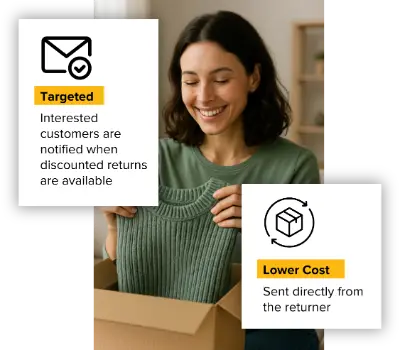
What changes is the default assumption. Instead of sending every return backward regardless of condition, the system evaluates each return and routes it to the path that fits. Eligible items move forward to the next buyer. To facilitate this, the retailer provides a shipping label so both the sender and other customers can complete the transaction directly, ensuring accountability and a smooth process. Additionally, offering store credit can incentivize customers to participate in the peer-to-peer returns process and improve overall satisfaction. Everything else moves through the standard process it always has.
If you want to understand what the mechanics of that routing decision look like in practice, how peer-to-peer returns actually work walks through the operational flow step by step.
Hybrid Is the Correct Model, Not a Fallback
The right frame for peer-to-peer returns is not “does this replace what we have?” The right frame is “which returns were being handled the expensive way when they never needed to be?”
When you approach it from that angle, the hybrid model stops feeling like a compromise and starts feeling like the only sensible answer. The warehouse handles what requires centralized control. P2P handles what never needed to go there. Both paths operate at the same time. Neither replaces the other.
Brands can start that process with a narrow pilot, prove the economics in a controlled environment, and expand deliberately over time. They do not need to overhaul their entire returns operation to get started. They need to identify the returns that are already costing them the most, determine which of those were recoverable items being treated as warehouse problems, and change the routing for that subset. This approach reduces the returns burden on warehouse operations and provides valuable insights into return patterns and customer behavior.
That is the goal. Not 100% P2P. Not a complete migration. A smarter path for the returns that never needed to go backward in the first place.
Summary
The goal of peer-to-peer returns should not be 100% adoption. The strongest returns strategy is a hybrid model that routes the right products directly to the next buyer while keeping damaged, defective, regulated, or otherwise ineligible items in traditional reverse logistics workflows. This selective approach allows ecommerce brands to reduce unnecessary shipping, warehouse handling, processing time, markdown exposure, and waste without forcing every return through the same path. The real opportunity is to identify perfectly sellable returns that never needed to go back to a warehouse in the first place. By starting with high-fit SKUs and expanding gradually, brands can improve returns economics while preserving the warehouse for genuine exceptions.
Frequently Asked Questions
Does adopting peer-to-peer returns mean removing the warehouse from the returns process entirely?
No. Peer-to-peer returns add a smarter routing path for eligible items. The warehouse path remains available for damaged returns, defective items, regulated goods, and anything not in sellable condition. Both paths operate simultaneously.
What percentage of returns should go peer-to-peer?
There is no universal target. In practice, roughly 60% of returns across many ecommerce operations are viable P2P candidates. That number varies by category, SKU mix, and return reason. The correct approach is to evaluate returns by eligibility, not to set an arbitrary percentage and force volume through a single path.
What types of returns still belong in the warehouse flow?
Returns involving manufacturing defects, items damaged in transit, items missing components, and regulated or non-eligible goods still require centralized handling. These categories need inspection, controlled disposition, or compliance-driven processing that the P2P path is not designed to handle.
Can a brand start with peer-to-peer returns for just one product category?
Yes, and that is the recommended approach. Starting with a narrow category, such as apparel with high return rates and predictable resale demand, allows brands to validate the economics before expanding. Partial adoption creates real value and does not require a complete operational overhaul.
Does hybrid adoption mean the system is incomplete or in a transitional state?
No. Hybrid is the correct operating model, not a stepping stone to something else. Not all returns are suitable for the same path. A strategy that routes different returns to different endpoints based on condition and eligibility is not incomplete. It is operationally accurate.
How is peer-to-peer returns different from existing returns software?
Returns management systems improve the customer experience for initiating returns and help enforce policy rules, whether through full-stack platforms or lighter tools like Return Prime’s return management solution. They do not change where returned inventory goes. Peer-to-peer returns change the routing logic itself, so that eligible items move forward to the next buyer instead of backward through the warehouse. Traditional returns involve multiple steps—such as warehouse intake, inspection, and repackaging—and often rely on traditional financial institutions for processing refunds, which adds cost and delay. Peer-to-peer models streamline the process by bypassing traditional financial institutions, reducing costs and improving efficiency. The two approaches address different parts of the problem and can operate together.
Do customers accept open-box or like-new listings from peer-to-peer returns?
Open-box and like-new purchasing behavior is already well-established across major marketplaces. Acceptance depends on clear condition labeling, transparent pricing, and fast refund cycles. When those elements are in place, buyers respond to value rather than to how an item was routed. However, inexperienced human feedback can sometimes lead to inconsistencies in assessing item condition, so clear guidelines and technology support are important to maintain quality.
How does peer-to-peer lending relate to peer-to-peer returns?
Peer-to-peer lending (also known as P2P lending) is a financial model where individual lenders use an online lending platform or peer lending platform to lend money directly to individual borrowers, bypassing traditional banks and traditional financial institutions. These platforms connect individual borrowers and individual lenders, allowing borrowers to complete a loan application, post financial profiles, and receive loan offers so people can borrow money directly and lend money, often at attractive interest rates and with potentially high returns for investors. Depending on the platform, investors may purchase loan notes or fund small portions of multiple loans across different loan options and loan types. Lenders earn money through interest payments, and the process involves evaluating risk, as higher interest rates may reflect higher risk profiles. Expected returns can exceed savings accounts and may reach about 10% annually for some loans, while reported median results for credit grades A-D have ranged from roughly 4.7% to 10.3%. Like peer to peer returns, peer to peer loans can be a compelling alternative to bank loans, traditional loans, and traditional lenders, but the process also involves evaluating credit risk and default risk through credit scores, credit ratings, credit grades, and platform risk assessments. Borrowers with low credit scores are more likely to default, and if a borrower fails to repay, investors can lose principal and expected returns. Like peer-to-peer returns, P2P lending operates outside the scope of traditional returns and traditional banks, offering new opportunities and risks in personal finance by streamlining transactions and reducing reliance on intermediaries. Both models highlight the benefits and challenges of bypassing traditional financial institutions, including efficiency, attractive returns, and the need for careful risk management. Individual investors and institutional investors often focus on managing risk by building a diversified portfolio across multiple loans and different loan types, which can help smooth cash flow over time. Sellers exploring similar decentralization on the fulfillment side can look at options like Merchant Fulfilled Prime and other FBA alternatives, where distributed networks change how orders are routed without relying solely on a single provider. Each online lending platform also has fees, investor protection standards, regulatory compliance obligations, and a platform’s ability to screen borrowers and manage invested funds that should be reviewed carefully.
Written By:

Manish Chowdhary
Manish Chowdhary is the founder and CEO of Cahoot, the most comprehensive post-purchase suite for ecommerce brands. A serial entrepreneur and industry thought leader, Manish has decades of experience building technologies that simplify ecommerce logistics—from order fulfillment to returns. His insights help brands stay ahead of market shifts and operational challenges.

Turn Returns Into New Revenue
Related Articles
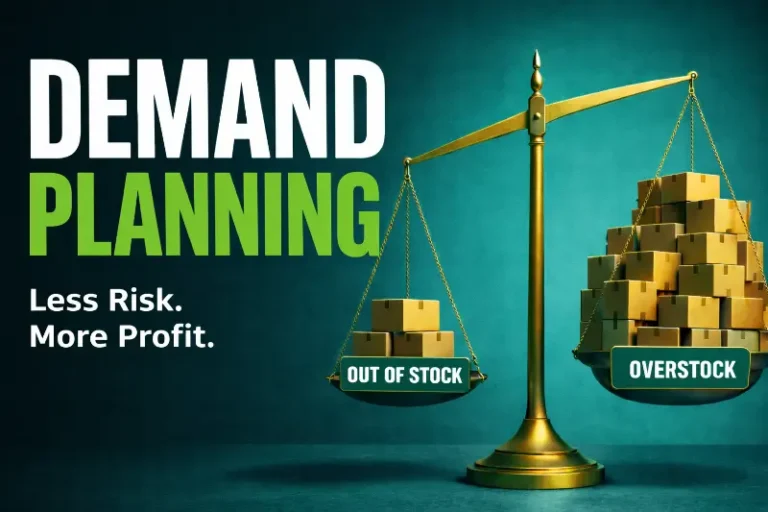
What Is Demand Planning? How It Impacts Inventory, Forecasting, and Profitability
Demand planning is the process of estimating future customer demand so that a business can align its inventory, procurement, and operations to meet that demand without carrying mor...
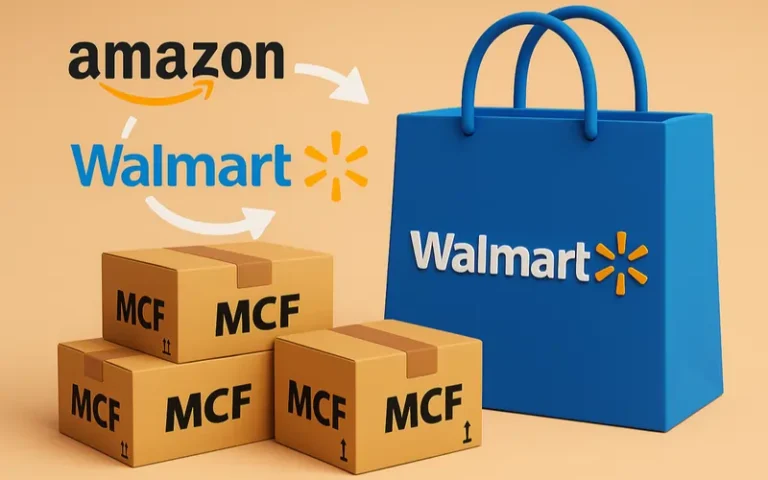
Walmart Officially Allows Amazon Multi-Channel Fulfillment (MCF)
Big news for multichannel sellers: Walmart now officially allows Amazon Multi-Channel Fulfillment (MCF), Amazon’s service for using its fulfillment network to ship orders from mult...
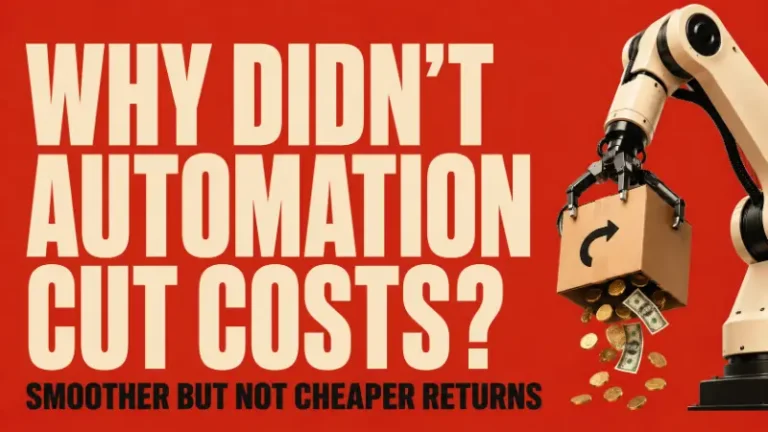
Why More Automation Didn’t Lower Return Costs
Returns automation does improve returns operations: it cuts manual touches, smooths intake, speeds sorting, and makes workflow execution more consistent.
Why More Automation Didn’t Lower Return Costs
In this article
17 minutes
- Introduction
- Automation Solved Real Execution Problems
- But Return Cost Was Never Just a Labor Problem
- Automation Improved Throughput Inside the Wrong Loop
- Faster Processing Did Not Remove Reverse Logistics, Shipping, Delay, or Markdown Drag
- Improving Customer Experience in the Returns Process
- Understanding Return Data and Its Impact on Costs
- Automating a Broken Flow Scales Waste
- The Real Constraint Was Architecture, Not Effort
- Summary
- Frequently Asked Questions
Returns automation does improve returns operations: it cuts manual touches, smooths intake, speeds sorting, and makes workflow execution more consistent. What it does not do, on its own, is materially lower the total cost of a return. The bills get paid faster. They do not get smaller.
That gap between operational improvement and structural cost relief is what ecommerce operators, warehouse managers, CFOs, and other executives often underestimate when they evaluate automation pitches. Speed inside a warehouse-first reverse loop is not the same as a cheaper returns system. The biggest cost layers in a return are usually not labor. They are shipping, time, markdown drag, and recovery lag, and none of those move much when you put a faster conveyor under the same broken design.
So this piece stays focused on the decision that actually matters: where returns automation helps, where it does not, how return costs are really structured, how process architecture changes the outcome, and how better customer experience and return data can improve performance even when automation alone does not reduce total return cost. If you are trying to decide whether automation will create real savings or just a cleaner workflow, that distinction is the whole point.
Automation Solved Real Execution Problems
Let’s be fair to the technology. Returns automation actually delivered on the operational promises it made, with the ability to streamline workflows, automate complex processes, and enhance the overall customer experience. Returns automation increases efficiency by simplifying and speeding up the returns process, eliminating the need for manual handling of each return request and saving significant time.
Inside the four walls of a returns center, automation reduced manual effort, improved consistency, and accelerated the steps that used to be the most painful: intake scanning, disposition routing, condition grading, label generation, refund triggering, system updates. Automated returns processing uses intelligent business rules to trigger actions, update inventory in real-time, and provide a seamless interface for both warehouse teams and customers, replacing slow, error-prone human touches and reducing human error, much like dedicated returns management software for ecommerce businesses. Automation also frees up the customer service team to focus on more complex issues, rather than routine return requests. Throughput went up. Errors went down. Seasonal spikes became survivable. For operators who had been drowning in paper RMAs and Excel disposition logs five years earlier, that was real progress.
This is the part that gets glossed over by automation skeptics, and it shouldn’t be. The frontline experience of running returns is meaningfully better with modern tooling than it was without it. Local efficiency gains at the warehouse line are real. The customer-facing portal experience is real. The data visibility is real.
The problem is not that automation failed to do what it said. The problem is what people assumed would follow.
But Return Cost Was Never Just a Labor Problem
Here is the contrarian piece most automation business cases skip: manual labor was never the dominant cost in a return.
When you decompose what a return actually costs, the line items stack up across categories that have nothing to do with how fast a worker can scan a box:
- Shipping in both directions, often two full freight legs before an item is even ready for resale
- Handling returns and inspection, including the queue time before inspection happens
- Delay, which silently destroys resale value while the item sits
- Markdown drag, because by the time the item is ready to relist, the window has shifted
- Recovery lag, the gap between when cash left the business and when any of it comes back
- Exception complexity, which scales nonlinearly with volume
Manual labor is in there, but it is one slice of a much larger pie. Even if automation drove manual labor cost on a return to zero, which it can’t, the rest of those layers would still be sitting on the P&L. Automating the returns process can help reduce costs associated with handling returns by minimizing manual work and saving on labor and operational expenses, especially when brands adopt modern returns management software platforms. This is the heart of the myth of “efficient” reverse logistics: the assumption that the work itself is worth preserving, when in fact the work is a symptom of routing the item the wrong direction in the first place.
If you’ve ever looked at a fully loaded cost-per-return number and wondered why it barely budged after a six-figure tooling investment, this is the answer. You optimized the smallest cost layer.
Automation Improved Throughput Inside the Wrong Loop
Every modern returns platform, whether it sits at the portal layer or the warehouse layer, was built on top of one assumption: the item goes back to a centralized facility. Intake, inspection, repackaging, restocking, and disposition all happen at a node that is not where the next buyer lives.
While automation made that node run faster, it did not change the fact that the node exists, or that the item has to physically travel there. However, automated returns processing can help reduce costs by optimizing transportation routes, increasing labor productivity, and accelerating time-to-resale, thereby preventing product depreciation.
So the warehouse-first architecture stayed exactly the same. Two shipping legs, still there. Centralized intake, still there. Time-to-relist measured in days or weeks, still there. The item still moves backward through the same expensive chain. The only thing that changed is that the chain runs more smoothly.
This is a different problem from what returns management software doesn’t actually fix, and it’s worth being precise about the distinction. Software-layer tools mostly relieve symptoms in the customer-facing flow, like portals, policies, and exchange UX. Operations automation, especially in a returns process based on specific rules and triggers, can use intelligent business rules to trigger actions such as real-time inventory updates and customer notifications, providing a seamless interface for both warehouse teams and customers. Both are useful. Neither changes routing. The item still goes backward, and going backward is what’s expensive.
Faster Processing Did Not Remove Reverse Logistics, Shipping, Delay, or Markdown Drag
Here is the practical version of the argument, and it’s the one CFOs respond to.
A returns operation can automate intake, speed up sorting, reduce manual touches, and standardize disposition decisions. Automation also enables real-time tracking of the status of each return, providing transparency throughout the process. These gains are real and measurable. Additionally, returns automation provides real-time updates on inventory levels, which aids in restocking and relisting returned items efficiently. This leads to faster restocking cycles, ensuring that returned items are processed and relisted quickly, maintaining product value and reducing the risk of markdowns. What stays unchanged after all of that:
- The inbound freight cost on the return leg
- The outbound freight cost when the item resells (assuming it does)
- The days the item spends in motion or in queue, during which its market value decays
- The markdown the merchandising team eventually has to take to move it
- The gap between refund-out and revenue-in
You can run the most automated returns center on the continent and still not touch any of those numbers. They are properties of the routing decision, not the processing speed. A 30-second intake versus a 3-minute intake doesn’t change what the carrier charges, doesn’t change how long the item has been off-shelf, and doesn’t change the price the next buyer is willing to pay for last season’s color.
This is why per-return cost curves have flattened, not bent, across the industry. Local efficiency hit a ceiling that the architecture defined.
Improving Customer Experience in the Returns Process
A positive customer experience in the returns process is no longer a nice-to-have—it’s a competitive advantage for any online store, and an exceptional ecommerce returns program is often the foundation of that advantage. Customers expect a hassle-free returns experience, and how a business manages returns can directly impact customer loyalty and customer lifetime value. When the returns process is smooth, transparent, and quick, customers are more likely to return for future purchases, even after a return.
Implementing a robust returns management system is key to delivering this seamless experience. Automated notifications keep customers informed at every stage, from the moment they submit a return request to when their refund, store credit, or exchange is processed. Clear return instructions and an intuitive return portal reduce confusion and frustration, making it easy for customers to process returns without needing to contact the support team for routine tasks.
Offering flexible options—such as store credit or coupon codes—can turn a return into an opportunity for more revenue, encouraging customers to shop again rather than walk away. A streamlined exchange process also helps retain sales that might otherwise be lost. Ultimately, a well-designed returns management approach not only increases customer satisfaction but also builds long-term customer loyalty, driving value for both the customer and the business.
Understanding Return Data and Its Impact on Costs
Return data is a powerful asset for any business looking to optimize its returns management solution and reduce costs, and it directly shapes how ecommerce return rates impact profit margins. By systematically collecting and analyzing return data through returns management software, businesses can uncover the underlying return reasons—such as product defects, inaccurate descriptions, or sizing issues—that drive customer returns and contribute to the rise of ecommerce return rates. Addressing these root causes can significantly reduce the volume of returns, saving money on reverse logistics and improving operational efficiency.
Beyond cost savings, return data provides valuable insights into the customer journey. By understanding patterns in customer behavior, businesses can refine their product offerings, improve descriptions, and enhance the overall customer experience. This data-driven approach allows companies to proactively identify pain points in the returns process and implement targeted improvements, leading to higher customer satisfaction and a more efficient returns process.
Leveraging returns analytics not only helps manage returns more effectively but also informs broader business decisions, from inventory management to product development. In a competitive e-commerce landscape, using return data to drive continuous improvement in returns management can be a game changer—helping businesses save time, reduce costs, and craft a more effective ecommerce returns program that keeps customers happy.
Automating a Broken Flow Scales Waste
This is the sharpest version of the point, and it’s worth sitting with.
If the underlying flow is structurally wrong, then making it faster doesn’t fix it. It just lets the business handle more of the wrong motion in less time. Throughput of returned products goes up. The cost-per-unit of the wrong motion stays roughly where it was. The system gets better at handling waste without eliminating it.
Returns automation tools streamline the returns process by simplifying return requests, tracking inventory, and providing timely updates, which reduces operational costs for eCommerce stores while enhancing customer satisfaction. But compared with manual processes, that often means scaling a broken flow more efficiently rather than redesigning it, even if companies using AI for returns management see a 25% reduction in refund rates and AI analyzes return patterns to detect fraud in real time. However, even with reduced manual intervention, automation alone cannot solve structural issues in the returns process.
This is the same trap behind why scale and consolidation failed to reduce returns. More volume through the same loop, even with better tools, doesn’t bend the cost curve. It widens it. A bigger network running a faster version of the wrong process is still running the wrong process, just at scale.
Efficiency, in other words, is not the same as design. You can be highly efficient at moving items in a direction that destroys value. The output looks impressive (units processed per hour, dwell time at intake, days-to-disposition) right up until you compare it to the actual recovered margin per return, at which point the gains evaporate.
The problem isn’t that automation is bad. The problem is that automation inside a structurally expensive loop produces structurally expensive results, just faster, and many brands still treat returns as a cost center, which is why they overfocus on throughput metrics instead of recovered margin.
The Real Constraint Was Architecture, Not Effort
Tools help. Effort matters. Better execution beats worse execution every time. None of that is in dispute.
What’s worth being honest about is the ceiling. The ceiling on how much you can lower return cost through automation alone is set by the architecture of the loop you’re automating. If the loop sends items backward through a centralized chain before they can move forward again, then the maximum savings available through automation are bounded by how much labor and process friction sit inside that chain. Once you’ve squeezed those out, you’re done. The shipping, delay, and markdown layers are still there, untouched, because they aren’t effort problems. They are routing problems.
Integrating returns automation with your ecommerce platform is crucial, as seamless connections between your online store and fulfillment services can streamline order management and scaling. Optimizing the returns process in this way can help protect profit margins by reducing unnecessary costs and inefficiencies. Rethinking the architecture can also help businesses save money by minimizing waste and operational expenses.
This is why the more interesting conversations in returns right now are about whether returns need to go forward, not back in the first place. Not as a marketing pivot, but as a structural question: what would the cost curve actually look like if the item didn’t have to be routed through the centralized loop at all? That’s a different argument than this one, and it deserves its own treatment. The point here is narrower: automation cannot answer that question, because automation operates inside whatever architecture you give it.
If the architecture is the constraint, the architecture is what you have to change. Automating around it gets you a smoother version of what you already have.
Summary
Returns automation has made ecommerce returns faster, more consistent, and easier to manage, but it has not eliminated the biggest drivers of return costs. Shipping, handling, delay, markdown drag, recovery lag, and centralized reverse logistics still create substantial expense even when warehouse workflows are highly automated. The key lesson is that returns automation can improve execution, but lowering return costs requires changing the underlying returns architecture, not just making the same process run faster. Ecommerce brands that want better returns economics should look beyond labor efficiency and focus on routing, recovery speed, inventory value, and the total cost of each return.
Frequently Asked Questions
Did returns automation lower costs at all?
Yes, but mostly at the labor and process-friction layer. Automation reduced manual touches, sped up workflow execution, and improved consistency, which translated into measurable savings on the smallest portion of the total cost of a return while also improving processing time. Automating the returns process also allows customers to easily initiate return requests, print a shipping label, and track the status of their returns, significantly improving customer experience. Key features of returns automation systems include automatic label generation and real-time tracking updates, which further streamline the process. The larger cost layers, including shipping, delay, markdown drag, and recovery lag, were largely unaffected because they are determined by routing rather than by processing speed.
What’s the difference between returns automation and returns software?
Returns automation usually refers to operational tooling at the warehouse and workflow layer, including intake, sorting, disposition, and refund triggering. Returns software more often refers to the customer-facing portal layer, including return initiation, policy enforcement, and exchange flows. Implementing returns automation involves transitioning to a system-led approach centered on a self-service returns portal, which empowers customers to manage their own returns efficiently. An integrated knowledge base is also an important component of returns automation, enabling self-service, improving customer satisfaction, and supporting seamless customer support. Both improve specific parts of the experience. Neither changes whether the item has to travel back to a centralized facility, which is where most of the cost lives.
Why didn’t automation reduce shipping costs on returns?
Because shipping cost is a function of carrier rates, distance, and the number of legs in the journey. Automation can speed up what happens between shipments, but it doesn’t eliminate the shipments themselves. However, integrating with shipping APIs can provide discounted rates for return shipments, helping to reduce costs. Additionally, offering drop-off returns at designated locations, such as Return Bar® locations, can further reduce shipping costs and improve convenience for customers. As long as the architecture requires an inbound leg back to a warehouse and often an outbound leg again afterward, the freight bill stays roughly the same regardless of how fast the warehouse runs.
Is the argument that automation is bad for returns?
No. Automation produced real, durable improvements in execution and is worth the investment for what it does well. Returns automation provides valuable data and can provide insights into customer behavior and operational efficiency, helping businesses optimize the process. Additionally, collecting and analyzing customer feedback is important for monitoring and continuously improving the returns automation process. The argument is narrower: automation cannot deliver structural cost reduction in a system whose biggest costs are structural. Recognizing that limit is what separates a useful automation strategy from one built on overstated expectations.
What does it take to actually lower return costs materially?
Material cost reduction in returns generally requires changing the routing of the item rather than the speed of processing it. That means looking at whether eligible returns have to travel backward through a centralized loop at all, or whether some portion of them can move forward to the next buyer directly. That conversation is about architecture, not tooling, and it’s where the larger cost layers actually live. Market pricing varies widely: AfterShip Returns starts at $19 per month for basic return management, Returnless pricing starts at EUR 105 per month, loop returns pricing begins at $155 per month, and ReturnLogic uses a usage-based model at $3.90 to $0.25 per return rather than fixed paid plans or a premium plan; Narvar and ReverseLogix offer custom pricing with no public rates. Providing customers with seamless return options, such as drop-off returns at Happy Returns-style Return Bars and in-store returns at a physical store, can greatly enhance the post-purchase experience. A robust returns solution can automatically approve or reject return requests based on specific conditions, streamlining the process and reducing manual intervention. Optimizing the returns process not only helps protect profit margins by minimizing manual work, increasing accuracy, and saving time and resources, but also significantly improves customer experience—leading to increased loyalty and higher customer lifetime value, even as merchants confront the real cost of offering free ecommerce returns. In fact, 65% of customers say the speed and ease of refunds affect where they choose to buy from, so a streamlined and automated returns process can have a direct impact on conversion rates and customer retention. Improving the returns process can also positively influence online purchases and retail sales by building trust and making the customer journey more convenient.
Written By:
Manish Chowdhary
Manish Chowdhary is the founder and CEO of Cahoot, the most comprehensive post-purchase suite for ecommerce brands. A serial entrepreneur and industry thought leader, Manish has decades of experience building technologies that simplify ecommerce logistics—from order fulfillment to returns. His insights help brands stay ahead of market shifts and operational challenges.
Turn Returns Into New Revenue
Related Articles
What Is Demand Planning? How It Impacts Inventory, Forecasting, and Profitability
Demand planning is the process of estimating future customer demand so that a business can align its inventory, procurement, and operations to meet that demand without carrying mor...
Why 100% P2P Adoption Is the Wrong Goal
Peer-to-peer returns let customers send eligible returned items directly to other customers instead of routing every package back through the warehouse, cutting shipping and proces...
Walmart Officially Allows Amazon Multi-Channel Fulfillment (MCF)
Big news for multichannel sellers: Walmart now officially allows Amazon Multi-Channel Fulfillment (MCF), Amazon’s service for using its fulfillment network to ship orders from mult...
Crafting a Return Policy that Drives Customer Loyalty and Reduces Returns
In this article
9 minutes
- How to Create a Returns Policy With Store Credit That Benefits Both Your Customers and Your Business
- Balancing Generosity and Profitability in Your Returns Policy: Managing Return Shipping Costs
- Monitoring and Improving Your Returns Policy Based on Customer Feedback and Customer Satisfaction
- Final Thoughts: Why Your Returns Policy Should Be a Key Component of Your Loyalty Strategy
Let’s talk about ecommerce returns policies. A return policy is the set of rules that explains how customers can send products back, and the best ones use simple language so people can understand their options quickly and buy with confidence. You might be thinking, “What’s the big deal? It’s just a formality, right?” Well, no; your returns policy can either make or break your relationship with your customers. If done right, it builds trust through transparency, improves the customer experience, and supports repeat purchases. If done wrong, it can prevent new customers from buying from you, create avoidable returns friction, or worse, send your loyal customers running for the hills.
A clear, customer-friendly returns policy isn’t just some legal jargon to throw on your website for show. It’s a vital piece of your customer growth and retention strategy. For ecommerce business owners and managers, a customer centric return policy helps balance generosity with profitability, gives you a framework for handling returns consistently, and gives customers a reason to trust your store. In this guide, you’ll see how to write a simple, clear policy, use customer feedback to improve it, and connect it to a broader loyalty strategy so returns management supports business growth instead of creating operational headaches.
How to Create a Returns Policy With Store Credit That Benefits Both Your Customers and Your Business
Let’s dive into the how: how do you create a returns policy that strikes a perfect balance between establishing confidence and trust in your brand, and giving away the farm? First, keep it simple. Your returns policy should be straightforward enough that anyone can understand it in a few seconds. Use simple language. Don’t hide the details. Don’t make it overly complex with all kinds of ifs, thens, and buts. Customers don’t want to dig through pages of fine print to figure out how to return something. No one has time for that, especially when they’re annoyed about needing to send an item back.
Next, let’s talk about timing. You need to give your customers enough time to make up their minds. A customer centric return policy should set a certain time window with a clear start date and end date. A reasonable return window (30 days? 45 days?) is fair, but don’t go overboard. A year to return a pair of socks might sound generous, but it’s a logistical nightmare. Somewhere between “24 hours” and “whenever you feel like it” is the sweet spot. Make sure your policy includes crystal clear instructions: what’s returnable, whether you accept returns on specific items, how to submit a return form, whether items need original packaging, how refunds are handled through the original payment method or store credit, and how customers can contact support if they need help. A user friendly layout also makes those details easier to find.
Here’s an example: I bought a pair of shoes online. They were great in theory: super stylish. But, when I tried them on, they made me look like I was auditioning for a ’90s boy band. Not the vibe I was going for. Thankfully, the return policy was clear and painless. It wasn’t complicated, it didn’t require a dozen emails back and forth, and I got my refund promptly. That’s the type of experience you want to offer: easy, fast, and no run-around. A simple, straightforward policy will make your customers feel like you’ll take care of them if it comes down to it, which improves the broader customer experience, and that’s important for growing organic brand affinity.
Balancing Generosity and Profitability in Your Returns Policy: Managing Return Shipping Costs
Now, here’s the tricky part: balancing generosity and profitability. You want to be kind and flexible, but you also need to make sure your returns policy keeps the financials manageable. A flexible return policy can still protect your margins if it also includes safeguards against ecommerce returns fraud. Offering free returns on every single order sounds nice, but in reality, not all businesses can afford it, and not all products warrant it because of the true cost of free returns.
Here’s the trick: limit what’s eligible for free returns. For example, offer free returns only on high-ticket items or for orders above a certain value. For smaller items, you could charge a small return fee, clarify any shipping charges, or ask customers to cover return shipping costs. And if your customers are loyal and happy, they’ll be more likely to accept small fees for the service you’re offering.
Other options include a product pricing strategy that increases prices and order value across the board so there’s some extra room to absorb the cost of returns as a whole, rather than treating them on a one-by-one basis, especially as many retailers are rethinking whether free returns are sustainable. That can support sales without making every order unprofitable. Or consider incentivizing customers to keep items by offering discounts on future purchases. This can be effective for encouraging customers to choose store credit. If you really want to get creative, offer exchanges instead of cash refunds for certain returns. This retains the revenue while still letting the customer pick something else out, and they don’t feel like they’re losing out on their original purchase or money.
Here’s a real-world analogy: I bought an inexpensive phone case from a popular online retailer, but I wasn’t thrilled with it. It was cheaply made, so I wanted to return it. I wasn’t annoyed by the small return fee because the company had been transparent about it upfront, including any shipping fees. It didn’t feel like they were trying to sneak anything past me. And, honestly, the small fee was worth it to me because they took care of me quickly and offered amazing customer service during the entire process. They were fair with me, so I was fair with them, and that turned me into a repeat customer. When the item qualifies for a full refund, many businesses send it back to the original payment method, following well-known standards like major marketplace returns policies. You can do the same: offer free returns where it counts, and keep your bottom line in check elsewhere.
Monitoring and Improving Your Returns Policy Based on Customer Feedback and Customer Satisfaction
So, you’ve got your returns policy in place. Great. Now what? Keep an eye on it! Your returns policy isn’t a one-and-done deal. The best policies evolve, just like your business does. And the best way to improve? Customer feedback. This is where the real magic happens. For perspective, some brands go much further: Brooklinen offers a 365-day return period, Patagonia’s Ironclad Guarantee allows returns or repairs anytime, Baseballism has a lifetime return policy for all purchases, and Mejuri offers free returns within 30 days for select countries.
Check your return data. Why are customers returning items? Is it because of sizing issues, poor product descriptions, or something else? Tracking return reasons gives you the power to fine tune your policy and product pages, which can improve customer satisfaction while also making managing returns easier and help you respond to the rise of e-commerce return rates. Say you run an apparel shop, and a certain jacket is frequently returned for being too small. Then maybe you need a better size guide. Or, if customers consistently say an item’s color isn’t what they expected, perhaps you need better product photos and/or descriptions.
Just keep in mind that your returns policy should be a living, breathing document that adapts to the changing needs of your customers and your business, and returns management software can support that with automated, data-driven returns workflows. Regularly reviewing feedback and adjusting your policy accordingly will help you stay in sync with customer expectations.
Final Thoughts: Why Your Returns Policy Should Be a Key Component of Your Loyalty Strategy
When you’re building out your returns policy, don’t just slap something together and call it a day. It’s a critical part of your customer loyalty strategy and should be afforded the attention that it deserves. Trust me, if your returns policy is super easy, clear, and fair, it can be the key to a relationship with your customers that keeps them coming back for more. When people know they won’t get stuck with a dud product, they’re way more likely to hit that “Buy” button now, and again in the future.
Remember, when it comes to your returns policy, you’re not just fixing post-purchase problems, you’re building loyalty. Think about it: nobody likes jumping through hoops to return something. A clear returns page, simple return labels, and a hassle free experience show consumers that convenience and responsibility matter to your ecommerce business. So, if you can make it easy and communicate that from the start, they’ll remember that. Happy customers are loyal customers, and an exceptional returns program makes it much more likely they’ll come back to your store. And loyal customers are how you grow a successful business, especially when you back your promises with eco-friendly returns practices. Here’s the recap: Keep it simple, clear, and fair. Don’t overcomplicate it. Offer free returns when it makes sense, and track return reasons in your data so you can fine tune the policy. You’d be surprised at how much info you can get from customer feedback; use it to improve your policy, but also use it to improve your products and merchandising to reduce returns in the first place and manage them more efficiently, while still crafting the perfect e-commerce returns program. Over time, it’ll become more than just a “customer service thing” that online shoppers expect. It’ll actually help attract new customers, keep them around, and improve customer satisfaction along with policy performance. And isn’t that what we’re all after?
Written By:
Manish Chowdhary
Manish Chowdhary is the founder and CEO of Cahoot, the most comprehensive post-purchase suite for ecommerce brands. A serial entrepreneur and industry thought leader, Manish has decades of experience building technologies that simplify ecommerce logistics—from order fulfillment to returns. His insights help brands stay ahead of market shifts and operational challenges.
Turn Returns Into New Revenue
Related Articles
What Is Demand Planning? How It Impacts Inventory, Forecasting, and Profitability
Demand planning is the process of estimating future customer demand so that a business can align its inventory, procurement, and operations to meet that demand without carrying mor...
Why 100% P2P Adoption Is the Wrong Goal
Peer-to-peer returns let customers send eligible returned items directly to other customers instead of routing every package back through the warehouse, cutting shipping and proces...
Walmart Officially Allows Amazon Multi-Channel Fulfillment (MCF)
Big news for multichannel sellers: Walmart now officially allows Amazon Multi-Channel Fulfillment (MCF), Amazon’s service for using its fulfillment network to ship orders from mult...
Why Faster Refunds Made Returns More Expensive
In this article
14 minute
- Introduction
- Refund Faster Solutions Solved a Real Customer Satisfaction Pain
- Speed Removed Friction From the Wrong Part of the Loop
- The Money Goes Out via Direct Deposit Before the Operational Costs Come Back
- Better Refund CX Did Not Mean Better Returns Management Process Economics
- The Industry Optimized Reassurance Before Reverse Logistics Recovery
- Faster Refunds Made a Broken System Feel Better, Not Work Better
- What Operators Should Take From This
- Conclusion
- Frequently Asked Questions
Introduction
Faster refunds feel like obvious progress. For shoppers, they often are. For merchants, they also quietly made an already fragile system more expensive. The money started going out faster. The value did not start coming back faster.
That gap is the entire story of modern returns management. Over the last decade, the industry poured energy into smoothing the refund experience, shrinking the wait from weeks to days to instant. Customer reassurance climbed. Recovery did not climb at the same pace. The emotional loop closed faster while the economic loop stayed open just as long, sometimes longer. In 2023, consumers returned retail purchases worth a staggering $743 billion—about 14.5% of all sales—highlighting the significant financial impact of returns, especially in e-commerce. This article unpacks that tradeoff, why it matters operationally, and why a smoother refund is not the same thing as a healthier return.
Ultimately, the returns process—the sequence of steps from customer initiation to final resolution—plays a crucial role in shaping both customer experience and business outcomes.
Refund Faster Solutions Solved a Real Customer Satisfaction Pain
Before going further, it is worth saying clearly: faster refunds fixed something real.
Research shows that 91% of customers say the overall ease of their returns experience impacts their willingness to shop with a retailer again, highlighting how critical a seamless returns experience is for customer satisfaction and loyalty.
Customers dislike waiting for their own money. A refund that takes two or three weeks creates anxiety, distrust, and support tickets. People wonder if the package arrived. They wonder if the merchant is stalling. They wonder if they will need to dispute the charge. Every day the refund sits in limbo is a day the brand feels less trustworthy. A clear and concise returns policy helps set customer expectations and builds customer trust, reducing misunderstandings and fostering loyalty.
Faster refunds reduced that anxiety. They improved perceived service quality. They gave customers a reason to take a chance on a brand they had not bought from before, because the downside risk felt small and well-managed. In a category where buying sight unseen is the default, that reassurance has measurable conversion value.
So this is not an argument that refund speed is bad, or that customers should be made to wait longer. The point is narrower and more uncomfortable: refund speed solved a customer experience problem and, in the process, accelerated a financial problem that was already present.
Speed Removed Friction From the Wrong Part of the Loop
Returns have always involved friction. Some of it was bad friction, the kind that frustrated customers and damaged loyalty. Some of it was structurally useful, the kind that slowed casual or low-intent return behavior, including behaviors like ordering multiple sizes with the intent to return most of them, simply because the returns process had a few rough edges.
When refunds sped up, the bad friction came down. So did the useful friction, making processing returns an even greater operational challenge.
A seamless returns process is crucial for building a positive relationship with your customers. In fact, 70% of North American consumers stated they purchased more from a retailer after a positive return experience, highlighting the impact of customer returns on loyalty and repeat business.
A refund that lands the moment a tracking event fires, or even at the moment a return is initiated, removes hesitation from the most behaviorally sensitive part of the loop. The decision to return becomes lighter. Bracketing becomes easier. Casual returns, the ones a shopper might have shrugged off when refund pain was higher, become routine. None of this is a moral failing on the part of customers. It is a predictable response to a smoother experience.
The center of the issue is this: refund-speed improvements reduced emotional friction without fixing the underlying recovery problem. The loop felt smoother. It did not become structurally healthier. This is one of the reasons why returns software doesn’t actually fix returns on its own. Better portals, faster approvals, and instant credit improve the front end of returns while leaving the expensive back end intact.
The Money Goes Out via Direct Deposit Before the Operational Costs Come Back
This is the part most refund-speed conversations skip.
Every return has two clocks. One is the refund clock, the time from return initiation to the customer seeing their money. The other is the recovery clock, the time from return initiation to the merchant actually recapturing value, whether through resale, restock, liquidation, or write-down.
For a long time, those two clocks ran somewhat in parallel. A return came in, the warehouse processed it, inventory updated, the refund issued, the item went back on the shelf. Slow on both sides, but at least synchronized.
Faster refunds severed that link. Consider what a typical returned item still has to go through on the merchant side, a process that involves optimizing reverse logistics across the network for the physical movement of goods and careful inventory management to track and restock returned merchandise:
- Inbound shipping back to a distribution center (reverse logistics)
- Intake and queue time at the dock
- Inspection, grading, and disposition of returned merchandise
- Repackaging or relisting as part of order fulfillment
- Restocking, resale at a discount, liquidation, or destruction, all requiring accurate inventory management
None of that happens at refund speed. Inbound freight takes days. Intake queues swell during peak. Inspection labor is finite. Markdown decisions take time, and every day an item sits unsold, its resale value erodes. Delays in these steps increase operational costs, impacting overall efficiency and profitability, especially in categories where high ecommerce return rates directly erode already thin profit margins. The result is a widening gap. Cash leaves the business in hours. Value comes back in weeks, partially, or sometimes not at all.
It’s important to note that returns management is the process of overseeing returned products to ensure a seamless experience for both customers and businesses, covering everything from authorizing returns to restocking items or disposing of products that can’t be resold. While reverse logistics focuses on the physical transportation and handling of returned products, returns management encompasses the broader strategic management of returns, including their impact on inventory, order fulfillment, and customer experience.
That timing mismatch is the economic heart of the problem. It is also one of the quieter reasons returns became a silent margin killer inside many ecommerce P&Ls. The cost is not in any single line item. It is in the gap between two timelines that used to move together and now don’t.
Better Refund CX Did Not Mean Better Returns Management Process Economics
It is tempting to assume that if customer satisfaction with returns is up, the returns system itself must be healthier. However, the financial impact of returns is substantial—average ecommerce return rates often range from 15% to 30%, and consumers returned retail purchases worth approximately $743 billion in 2023, representing about 14.5% of all sales. This highlights the critical importance of effective returns management for e-commerce profitability.
A useful way to see it:
- What improved: customer reassurance, perceived trust, speed of emotional resolution, post-purchase NPS.
- What did not improve proportionally: recovery timing, value recapture, fraud exposure from returns and refunds, inventory velocity, cost per return, operational efficiency.
A shopper can have a five-star refund experience on a return that costs the merchant more than the original margin on the sale. The customer’s loop closed in 30 seconds, often due to streamlined processing refunds as part of the returns management process. The merchant’s loop is still open, accruing shipping, labor, markdown, and opportunity cost. From the customer’s perspective, the return is done. From a finance perspective, it has barely started.
This is why refund speed and return health are easy to confuse and important to separate. A smoother return feeling is not the same as a healthier loop, and dashboards that only track refund time and CSAT will systematically miss the part of the system that is actually leaking money. Friction removal at the front end was real progress for shoppers. It was also part of the reason free returns were always a loss leader in the way most brands implemented them, paid for in margin nobody was watching.
Returns management focuses on the customer-facing side of the process, ensuring returns are handled quickly, accurately, and with minimal friction to prioritize customer satisfaction and operational efficiency, often through dedicated returns management software that automates these workflows. In contrast, reverse logistics deals with the full journey of a product moving back through the supply chain for repair, refurbishment, recycling, or resale, focusing on maximizing asset recovery and environmental responsibility. Both are critical components of modern e-commerce.
The Industry Optimized Reassurance Before Reverse Logistics Recovery
Step back from any individual brand and the pattern across the industry becomes obvious. The emotional experience of returns improved much faster than the economic structure underneath it, even as companies began to focus on returns management best practices and best practices to optimize order fulfillment, reduce costs, and improve customer satisfaction.
Self-serve portals, branded return pages, automated approvals, instant credit, label-free drop-off, real-time refund notifications—all of these arrived years before the industry seriously revisited where returned items actually go and how quickly value can be recovered. While reassurance got the budget, returns management software that automates and analyzes these flows and addressing operational inefficiencies in manual returns processing often lagged behind, even in complex environments like Amazon FBA where sellers must actively analyze return patterns to protect profitability. Regularly reviewing returns data is essential for optimizing returns management strategies, improving customer satisfaction, and reducing costs.
That is not an accident. Reassurance is visible. It shows up in conversion rates, support ticket volume, review scores, and retention metrics. Recovery is invisible until somebody adds up the cost-per-return, the markdown decay, the fraud losses, and the working capital tied up in items waiting to be processed. By the time those numbers get attention, the customer-facing experience has already been rebuilt around the assumption that refunds will be near-instant.
The loop felt better before it worked better. That is the line worth remembering.
Faster Refunds Made a Broken System Feel Better, Not Work Better
This is the part that ties everything together. While faster refunds provide valuable symptom relief in the returns management process, they do not address the underlying structural issues. Improving the returns management process involves more than just speeding up refunds—it requires optimizing each step, from customer initiation to inspection, inventory updates, and logistics coordination.
Symptom relief is what happens when:
- The portal is faster than the warehouse
- The notification is faster than the inspection
- The credit is faster than the restock
- The customer feels resolved before the inventory is
However, focusing only on symptom relief can mask inefficiencies such as long processing times and increased risk of human error. Automating tasks like issuing return shipping labels and other documentation, updating inventory, and processing refunds—whether through in-house tools or specialized returns solutions built for platforms like Shopify—can significantly reduce processing times and minimize human error, leading to greater operational efficiency.
Structural repair is something different. It addresses where returns go, how value is recovered, and how quickly the economic loop can actually close. Selecting the right technology—such as returns management systems, barcode scanners, warehouse management systems, and machine learning tools—can further enhance the returns management process. For some brands, that includes evaluating network-based options like Happy Returns’ drop-off reverse logistics model or SaaS-based portals such as ZigZag’s returns management solution. For example, machine learning tools can assign risk scores at checkout to identify chronic returners or suspicious patterns, helping to prevent fraud and streamline operations. It is the conversation that begins when a brand stops asking “how do we make refunds faster?” and starts asking “why do returns have to take this path at all?” That is the deeper shift, and the case that returns need to go forward, not back belongs to a different article. This piece has a narrower job: to make clear that faster refunds, on their own, do not get a brand there.
What Operators Should Take From This
A few practical takeaways for anyone running, financing, or rethinking a returns program—and for anyone trying to use returns as a lever for stronger loyalty through an exceptional returns program:
- Track refund time and recovery time as two separate metrics. If only one is improving, the gap is widening, and often that gap widens fastest when ecommerce return rates climb due to issues like poor fit or bracketing behavior or when returns fraud quietly inflates the apparent volume and cost of returns.
- Resist the urge to read rising refund CSAT as evidence that the returns system is getting healthier. Those signals can move in opposite directions.
- When evaluating returns software or refund-speed initiatives, ask explicitly what the change does to recovery timing, not just refund timing. If the answer is nothing, the underlying economics will not improve.
- Treat refund speed as a customer experience input, not a returns strategy. The strategy lives downstream, in how value is recaptured.
- Implement a returns portal to streamline the returns process. Self-service online portals provide a frictionless experience for customers to initiate returns, receive instant QR codes, and access return shipping labels, improving efficiency and satisfaction—while still allowing you to revisit whether free returns remain sustainable at scale, whether tools like restocking fees or alternative incentives make more sense, or whether they need to evolve as more retailers rethink or roll back blanket free-return policies.
- Prioritize clear customer communication and swift customer resolution throughout the returns process to build trust and encourage repeat business.
- Analyze return data to identify trends, such as frequently returned products, and use these insights to cut costs and reduce costs by addressing inefficiencies and improving product quality, while also aligning with eco-friendly returns practices that reduce waste and logistics emissions and maintaining clear, customer-friendly return policies across marketplaces like Amazon.
None of this argues for slower refunds. It argues for honest accounting of what speed did and didn’t fix.
Conclusion
Faster refunds were a real win for customers and a real shift in what people expect from ecommerce. They were also one of the cleanest examples in retail of an experience improvement outpacing an economic one. The money started going out faster. The value did not come back faster. The emotional loop closed quickly. The economic loop stayed open just as long.
Recognizing that gap is not an argument against customer experience. It is an argument for measuring the loop honestly, on both sides, and for understanding that a smoother refund is the beginning of the conversation about returns economics, not the end of it.
Frequently Asked Questions
Are faster refunds bad for ecommerce businesses?
No. Faster refunds solved a real customer pain and improved trust, conversion, and perceived service quality. The issue is not that refunds got faster. It is that refund timing pulled away from value-recovery timing, and many brands track only the first. The cost shows up in the gap between the two.
What does tax refund timing have to do with returns economics?
Refund timing controls when cash leaves the business. Recovery timing controls when, and how much, value comes back. When refunds accelerate but inbound shipping, inspection, restocking, and resale stay on their original timelines, the merchant absorbs a longer interest-free liability on every return.
Is this the same problem as free returns?
It is related but distinct. Free returns is a subsidy question, whether the merchant absorbs the round-trip shipping cost. Refund speed is a timing question, how quickly cash goes out relative to when value is recovered. The two compound, but they are separate levers.
Can returns software fix this?
Returns software can make refunds faster, smoother, and more consistent. It does not, on its own, change where returned items go or how quickly value is recovered. That is a routing and structural question, not a portal question.
Should brands slow down refunds to protect margin?
Slowing refunds is not the answer. It would damage trust without fixing the underlying recovery problem. The more useful move is to measure refund timing and recovery timing separately, and to focus structural investment on the recovery side, where most return losses actually compound.
Written By:
Manish Chowdhary
Manish Chowdhary is the founder and CEO of Cahoot, the most comprehensive post-purchase suite for ecommerce brands. A serial entrepreneur and industry thought leader, Manish has decades of experience building technologies that simplify ecommerce logistics—from order fulfillment to returns. His insights help brands stay ahead of market shifts and operational challenges.
Turn Returns Into New Revenue
Related Articles
What Is Demand Planning? How It Impacts Inventory, Forecasting, and Profitability
Demand planning is the process of estimating future customer demand so that a business can align its inventory, procurement, and operations to meet that demand without carrying mor...
Why 100% P2P Adoption Is the Wrong Goal
Peer-to-peer returns let customers send eligible returned items directly to other customers instead of routing every package back through the warehouse, cutting shipping and proces...
Walmart Officially Allows Amazon Multi-Channel Fulfillment (MCF)
Big news for multichannel sellers: Walmart now officially allows Amazon Multi-Channel Fulfillment (MCF), Amazon’s service for using its fulfillment network to ship orders from mult...
How CFOs Should Evaluate Returns Strategy

In this article
21 minutes
- What Returns Actually Represent on the Income Statement
- The Problem with Average Cost Per Return in Cost Management
- Gross Margin Sensitivity to Return Rate
- Supply Chain Optimization and Its Impact on Returns
- Working Capital, Cash Flow, and the Cash Conversion Cycle
- Predictability and the Variance Problem
- Scenario Planning for Returns Strategy
- Capital Allocation: The Question That Should Be Asked
- CFO Evaluation Framework for Finance Teams
- Skills Required by a CFO in Returns Strategy
- Presenting Returns to the Board
- What Delay Actually Costs
- Conclusion: The CFO’s Role in Shaping Returns Strategy
- Frequently Asked Questions
Returns are no longer a logistics footnote. They are a structural drag on gross margin, working capital, and customer acquisition efficiency that most finance functions are still measuring incorrectly. The question facing CFOs in 2025 is not whether returns are expensive. It is whether the organization is structurally equipped to reduce that expense, or whether it is simply absorbing a growing liability and calling it the cost of doing business.
This article is not about return policy design or customer experience. As the evolving role of the CFO expands beyond traditional finance, CFOs face new challenges in aligning returns strategy with the company’s business model and overall business goals. CFOs enhance ROI by implementing ROI-driven financial leadership, aligning strategy with key metrics, and optimizing capital allocation—making a strategic returns approach essential for the company’s business. It is about financial decision architecture. How should a CFO think about returns? What does a properly constructed cost model look like? Where does capital allocation go wrong? And what does a board-ready framing of the returns problem actually require?
What Returns Actually Represent on the Income Statement
Financial statements provide a key format for presenting detailed returns data to different stakeholders, such as CFOs, department heads, and investors. Enhanced visibility into returns metrics within these financial statements enables better decision-making, streamlined reporting, and strategic insights for scalable growth. Developing a scalable, tailored analytical framework allows CFOs to identify trends, spot opportunities, and mitigate risks, ultimately enhancing ROI. By framing analysis and insights for different stakeholders, CFOs can further enhance decision-making and ensure that each audience receives the most relevant information.
The Problem with Average Cost Per Return in Cost Management
The industry default is to calculate an average cost per return and monitor it as a KPI. This is analytically insufficient for two reasons. A sharper focus on key metrics, rather than relying solely on averages, is essential for strategic clarity. Additionally, optimizing cost structure directly improves margins and creates headroom for strategic reinvestment, which enhances ROI.
First, averages flatten volatility. A blended cost per return of $40 across your SKU portfolio could mask a subset of high-velocity, high-cost returns that are destroying margin disproportionately. The average tells you nothing about distribution, concentration, or tail risk.
Second, the cost layers themselves are often incomplete. A fully loaded cost per return must include all of the following:
- Shipping: inbound return label, plus the original outbound leg that is now unrecoverable
- Labor: receiving, inspection, repackaging, restocking, and system updates at the warehouse
- Markdown: the discount applied when the item eventually sells as open box, refurbished, or through liquidation
- Fraud and shrinkage: wardrobing, item swaps, and empty box claims that result in full refunds against items that were never legitimately returned. Robust processes for detecting and preventing ecommerce returns fraud are essential to limit these losses.
When these four cost layers are stacked together, returns routinely cost 17 to 30 percent of the original sale price, which raises fundamental questions about whether the cost of free returns is sustainable. For many apparel and consumer goods categories, the math is worse. An item that generates an $18 margin on a clean sale can produce a $54 loss on a returned, unsellable unit.
The financial question is not whether returns are expensive. It is whether the organization has ever looked at its returns P&L with enough granularity to know which returns are catastrophic outliers and which ones are manageable. Aligning financial KPIs with business goals improves decision-making and ensures that each initiative contributes to overall ROI.
Gross Margin Sensitivity to Return Rate
Finance leaders should model returns as a margin sensitivity variable, not a fixed assumption, grounding their scenarios in a clear view of average ecommerce return rates and drivers.
A useful scenario modeling approach examines what happens to contribution margin across three return rate assumptions: current rate, a 20 percent increase, and a 40 percent increase. For many ecommerce businesses, a return rate spike of 20 percent during peak season is not an edge case. It is a planning scenario.
The variables that amplify margin compression under volume spikes include:
- Markdown depth: as more returns enter the resale pipeline simultaneously, liquidation pricing deteriorates and discount rates increase
- Labor cost volatility: warehouse intake operations do not scale linearly; beyond capacity thresholds, overtime and temp labor costs accelerate
- Inventory days impact: when large return volumes arrive, inspection backlogs grow, extending the time items are unavailable for resale and pushing out revenue recognition
The point of this modeling exercise is not to produce a precise number. It is to demonstrate that returns are not a flat-rate cost. They are a variable with non-linear behavior under stress conditions. Boards and finance committees need to understand that the downside of returns is not well-captured by averages.
Supply Chain Optimization and Its Impact on Returns
Supply chain optimization is a critical pillar of any robust financial strategy, directly influencing a company’s bottom line and overall enterprise value. For finance leaders and strategic CFOs, the supply chain is not just an operational concern—it is a lever for cost management, gross margin improvement, and long-term business performance. By streamlining logistics, reducing inefficiencies, and leveraging data to improve forecast accuracy, CFOs can drive significant reductions in both direct and indirect costs associated with returns.
A strategic CFO will analyze customer acquisition cost and gross margin at a granular level to pinpoint where supply chain processes may be eroding value. This approach enables finance leaders to identify and address bottlenecks, minimize waste, and ensure that capital allocation decisions reinforce financial discipline and capital efficiency. Effective supply chain management also mitigates risk exposure, ensuring business continuity even during periods of volatility or disruption.
Moreover, optimizing the supply chain demonstrates a company’s commitment to financial discipline and operational excellence, which can enhance investor relations and support long-term success. As regulatory and market pressures mount, companies with agile, efficient supply chains are better positioned to adapt, protect margins, and sustain enterprise value. Ultimately, supply chain optimization is not just about reducing cost—it is about building a resilient foundation for strategic growth and superior business performance.
Working Capital, Cash Flow, and the Cash Conversion Cycle
Returns introduce a specific form of working capital distortion that deserves its own treatment in financial planning, starting with how seemingly simple mechanics like return shipping labels and routing choices affect timing and cost.
When a return is initiated, three things happen simultaneously: a refund liability is created, the physical item enters a processing queue, and the inventory record remains in limbo until inspection is complete and the item is restocked or written down. Depending on warehouse throughput, this cycle can take anywhere from several days to several weeks.
The financial consequences:
- Refund cycle time directly extends the period between cash outflow (refund issued) and cash inflow recovery (resale of returned item)
- Recovery rate, the percentage of returned items successfully restocked or resold at meaningful price, determines whether that cash inflow materializes at all
- Inventory days impacted by returns are inventory days not generating revenue, which distorts working capital metrics and misleads cash flow forecasting
Alternative routing approaches that eliminate warehouse intake can compress this timeline materially. When a returned item moves directly to the next buyer without entering a warehouse queue, refund settlement is tied to delivery confirmation rather than inspection completion. The gap between refund outflow and resale recovery narrows from weeks to days.
For CFOs who are actively managing cash conversion cycles, the difference is not trivial. It affects short-term liquidity planning, credit facility utilization, and the accuracy of rolling cash flow forecasts.
Predictability and the Variance Problem
Finance leaders are trained to manage not just expected outcomes but variance around those outcomes. Returns present a specific variance challenge that most returns cost models do not address. Organizations face increasing challenges in managing returns variance, especially as market disruptions, rising ecommerce return rates, and strategic hurdles become more frequent.
Return rates are correlated with external events: promotional intensity, seasonal patterns, product category trends, and consumer sentiment shifts. This means the distribution of return costs across a fiscal year is not smooth. There are periods of significantly elevated cost followed by periods of relative calm.
A finance function that models returns as a stable monthly expense will systematically misforecast gross margin during high-return periods. The miss is not random noise. It is a predictable consequence of treating a volatile input as a fixed one.
The appropriate financial discipline here is variance reduction as a parallel objective to mean reduction. Predictability in return-related cash flows has real value, particularly for businesses with thin gross margins, high seasonal concentration, or active investor relations obligations. Forecast accuracy is a finance function output, and returns are one of the inputs that most erodes it.
Establishing accountability through detailed planning ensures that all teams are working towards the same goals, which can improve ROI.
Scenario Planning for Returns Strategy
Scenario planning is an essential tool for finance leaders seeking to future-proof their returns strategy and safeguard business performance. A basic annual budget is insufficient during periods of fast growth, so the plan should use flexible scenarios instead. By developing multiple scenarios, a strategic CFO can stress-test financial plans against a range of potential risks and opportunities, from sudden spikes in return rates to shifts in consumer behavior or regulatory changes. This proactive approach enables companies to anticipate risk exposure and make informed, strategic decisions about resource allocation across business units.
Through scenario planning, finance leaders can foster collaboration between departments, ensuring that all stakeholders—from operations to marketing—are aligned on the company’s strategy and prepared to respond to evolving market conditions. Regular interdepartmental meetings also improve collaboration and data analysis during scenario planning. This process not only strengthens risk management but also uncovers opportunities for market expansion, new investments, and business development. By integrating scenario planning into the financial planning cycle, CFOs can drive more accurate forecasting, support strategic decisions, and position the company for sustained growth and improved financial results, including redesigning ecommerce returns programs before structural risks crystallize.
Ultimately, scenario planning empowers decision makers to navigate uncertainty with confidence, ensuring that the company’s returns strategy remains agile, resilient, and aligned with long-term business objectives.
Capital Allocation: The Question That Should Be Asked
Here is a question that most ecommerce finance teams have never formally posed: if your returns operation were a standalone business unit, would you invest in its current structure? Capital allocation choices should balance revenue growth and profitability rather than reinforce legacy infrastructure.
That question reframes the capital allocation problem in useful terms.
Every dollar spent optimizing a warehouse-centric returns loop, whether on better software, expanded warehouse capacity, or more labor, is capital reinforcing a cost structure that has demonstrated consistent inability to reduce per-return expense. The market has run this experiment at scale. More warehouses did not reduce per-return cost. Carrier consolidation did not remove labor. Better software accelerated volume into the same expensive reverse flow. With 33% of corporate leaders prioritizing cost management for 2025, the pressure to fund changes that reduce operational costs structurally is only increasing.
Capital that eliminates entire cost layers behaves differently than capital that optimizes existing cost layers. AI tools and returns management software can uncover hidden revenue opportunities and inform pricing strategy decisions in returns-related capital planning. When the underlying routing logic changes and items stop traveling backward through the supply chain before reaching the next buyer, shipping legs, inspection labor, and markdown decay disappear structurally rather than being managed more efficiently, instead of merely trimming operational costs.
Sale-leasebacks serve as a strategic capital allocation tool to fund both internal and external growth in all market conditions, and can be tailored to the company’s specific industry to address unique operational requirements and asset types. Transactions such as sale-leasebacks are significant business events that impact growth strategies, capital allocation, and long-term planning, just as selecting the best returns management software for 2025 has long-run implications for cost structure and scalability.
The capital allocation question worth asking is not “how do we make this process cheaper?” It is “do we continue investing in a structure with demonstrated return-on-capital limitations, or do we redirect that capital toward an architecture that removes the cost entirely for a meaningful portion of eligible returns?”
This is not an argument for radical disruption. It is an argument for applying standard capital efficiency thinking to a cost center that has historically been treated as fixed infrastructure rather than an investment decision. As free returns come to an end for many retailers, dynamic return policies can deter unprofitable consumer behavior upstream. Tiered policies can charge restocking fees for discretionary returns when appropriate.
CFO Evaluation Framework for Finance Teams
Before any strategic decision on returns can be defended to a board or investment committee, the following baseline questions need documented answers. Finance leaders who cannot answer these questions with specificity do not yet have the data to make a capital allocation decision, in either direction.
Do we know our fully loaded cost per return? Not an average. A distribution. Cost broken down by shipping, labor, markdown, and fraud. By category. By season. By channel.
What is our current return rate by SKU, and what is its trend? Is return rate rising, flat, or declining? What is driving the change? Are high-return SKUs concentrated in specific categories where margin compression is already a concern?
What percentage of returns are structurally eligible for alternative routing? Not all returns require warehouse processing. Identifying the portion of recoverable, non-defective, non-regulated inventory that could bypass centralized intake is the starting point for any investment case.
What is the capital required to modernize returns routing? This requires a vendor or build assessment. The relevant number is not the sticker price of a new platform. It is the fully loaded cost of implementation, integration, and change management against a baseline of current annual returns spend.
What is the payback period on that capital? Using the fully loaded cost per return as the baseline and a conservative estimate of the eligible return volume, what is the margin recovery within 12 and 24 months? Finance leaders should require a payback period analysis before approving any returns modernization investment.
What is the downside risk of doing nothing? This question is often skipped. Returns compound. Regulatory exposure increases as sustainability disclosure requirements expand. Return volume tends to grow with revenue. The cost of inaction is not zero. It is the present value of a worsening cost structure plus the optionality lost by being a late adopter when market standards shift.
CFOs can unify the organization around a consistent set of financial and operational metrics, ensuring alignment across departments and improving decision-making. Leveraging shared services to support finance transformation enables scalable, integrated FP&A solutions, helping CFOs drive efficiency and create long-term value as part of their returns strategy.
Skills Required by a CFO in Returns Strategy
Developing and executing an effective returns strategy requires a CFO to possess a diverse and evolving skill set. Beyond traditional financial planning and cash flow management, a strategic CFO must excel in data analytics, leveraging insights to drive business performance and optimize working capital. Manual processes across multiple systems are often time consuming and can limit strategic output. The ability to interpret complex data and translate it into actionable strategies is essential for managing returns in large organizations with intricate systems and processes.
A modern CFO also needs strong communication skills to articulate financial concepts and strategic issues to business leaders and non-financial stakeholders. As the CFO role continues to evolve, advising CEOs and guiding business units on both short-term and long-term strategy has become increasingly important. Balancing immediate cost management with investments in growth and strategic assets requires both financial discipline and a forward-looking mindset.
In today’s dynamic business environment, a CFO must be adept at integrating financial systems with broader business operations, ensuring that processes and assets are aligned to support the company’s strategy and growth objectives. CFOs should use modern tools and other tools to streamline operations across finance. They should automate workflows to reclaim valuable time so teams can focus on strategic insights and provide recommendations instead of repetitive work. Ultimately, the CFO’s ability to drive business performance, maintain capital efficiency, and support enterprise-wide transformation is critical to the long-term success of the organization.
Presenting Returns to the Board
CFOs who need to bring returns into a board-level conversation should organize the discussion around four dimensions. Advising CFOs and the chief financial officer is critical in guiding board-level discussions, ensuring that financial leadership is aligned with strategic business outcomes.
Margin durability is the starting point. The question is whether gross margin guidance is reliable if the returns cost model is incomplete or based on averages that mask volatility. Boards focused on margin durability need to understand that returns are not a stable cost; they are a variable with significant downside potential that is not fully captured in current reporting.
Regulatory exposure is an increasingly relevant disclosure consideration. Sustainability reporting requirements are expanding across jurisdictions. Scope 3 emissions, which include reverse logistics, are moving from voluntary disclosure toward mandatory frameworks in multiple markets. The financial exposure of a returns operation that generates outsized emissions or routes significant volumes to liquidation or destruction is not purely reputational. It carries emerging compliance risk.
ESG risk connects to investor expectations as much as to regulatory requirements. Institutional investors are asking harder questions about the sustainability of reverse logistics operations. A returns program that sends 44 percent of apparel returns to liquidation or disposal is an ESG liability that will eventually surface in investor relations conversations.
Competitive positioning is the forward-looking dimension. The companies currently rethinking returns architecture will have a structural cost advantage over those that delay. That advantage compounds over time. For boards focused on long-term enterprise value, returns modernization is not a cost reduction project. It is a strategic positioning decision about where the company wants to be when market standards shift. Modern CFOs must be prepared to adapt and course correct in response to changing market conditions. CFOs are increasingly involved in complex and cross-functional projects, including business transformation and digital initiatives.
Cahoot Returns StrategyTraditional Returns Are Ending
Ecommerce built a returns system for a smaller internet. Today it’s collapsing under scale. Warehouses can’t absorb the volume, costs keep rising, and retailers are quietly tightening policies. This article explains why the old model is failing and what replaces it.
The definitive guide to modern returns
What Delay Actually Costs
There is a tendency in finance to treat the decision not to act as a neutral outcome. It is not. Many organizations face CFO transitions unprepared, often appointing interim CFOs during these transitions.
Returns compound. Every year the current structure remains in place locks in avoidable cost, increases exposure to regulatory requirements that are moving in one direction, and normalizes inefficient behavior across operations, procurement, and customer expectations. The organization adapts to a broken system and calls the adaptation competency.
The financial case for acting early on returns modernization is not speculative. The fully loaded cost of the current model is measurable. The portion of that cost that is structurally eliminable, rather than merely optimizable, is identifiable through SKU eligibility analysis. The capital required to modernize is quotable. The payback period is calculable.
What is not calculable with precision is the cost of waiting. But finance leaders know from first principles that structural problems do not self-correct. They get priced into the business over time, until the cost of change exceeds the comfort of inertia.
That is the point at which late adopters discover what early movers already knew: returns strategy is a capital allocation decision, not a logistics problem.
Investing in the current CFO and their successors is crucial for maintaining a healthy future CFO candidate pipeline.
Conclusion: The CFO’s Role in Shaping Returns Strategy
In summary, the CFO’s role in shaping a company’s returns strategy is both critical and multifaceted. From optimizing the supply chain to implementing scenario planning and cultivating essential skills, a strategic CFO is at the forefront of driving business performance and long-term value creation. By leveraging financial planning, data analytics, and cross-functional collaboration, CFOs can ensure that the company’s returns strategy supports future growth, market expansion, and enterprise value.
Investing in finance transformation and the ongoing development of the CFO and their team is essential for sustaining success in an increasingly complex business landscape. The CFO’s influence extends beyond financial management to strategic leadership, business development, and the alignment of resources with the company’s mission and objectives. As the demands on the finance function continue to evolve, companies that prioritize the strategic role of the CFO will be best positioned to achieve long-term growth, maximize value, and maintain a competitive edge in the market.
Frequently Asked Questions
What is the right way to measure cost per return for a CFO audience?
Cost per return should be broken into four components: shipping, labor, markdown, and fraud. Each should be tracked separately rather than blended into a single average. The distribution across SKU categories and seasons matters as much as the mean, because returns are a variable cost with significant volatility around the average. CFOs who rely on blended averages will systematically misforecast gross margin impact during high-return periods.
How should returns be modeled in a gross margin sensitivity analysis?
Returns should be treated as a sensitivity variable, not a fixed assumption. The most useful approach is to model contribution margin under three scenarios: current return rate, a moderate increase of 20 percent, and a stress scenario of 40 percent. This surfaces how margin behaves non-linearly under volume spikes due to markdown depth deterioration, labor cost escalation, and inventory day extension. The goal is not precision but understanding the shape of the downside.
How do returns affect the cash conversion cycle?
Returns create a gap between refund outflow and resale recovery that can extend from several days to several weeks depending on warehouse throughput and inspection capacity. During this period, refund liabilities are live, inventory is unavailable for resale, and cash flow forecasting is impaired. Alternative routing models that eliminate warehouse intake can compress this gap significantly by tying refund settlement to delivery confirmation rather than inspection completion.
Why does capital allocation for returns optimization often produce limited results?
Most returns technology investment optimizes the front end of an existing warehouse-centric loop. It improves the customer experience and policy enforcement but does not change where inventory flows. The structural costs of inbound freight, inspection labor, and markdown exposure remain intact. Capital that reduces cost at the margin within the existing architecture produces marginal results. Capital that changes the routing logic for a meaningful portion of eligible returns eliminates entire cost categories rather than managing them.
What should CFOs present to the board about returns?
The board framing should address four dimensions: margin durability (are current gross margin assumptions reliable given returns volatility?), regulatory exposure (what is the emerging compliance risk from sustainability disclosure requirements?), ESG risk (what is the long-term investor relations exposure of the current returns footprint?), and competitive positioning (what is the cost of being a late mover when returns architecture standards shift?). Returns should be presented as a capital allocation decision with strategic implications, not as an operational cost management item.
Is there a point at which doing nothing on returns becomes a competitive disadvantage?
Yes, and that point tends to arrive before it is visible in the income statement. The companies that redesign returns architecture early build a structural cost advantage that compounds over time. That advantage shows up in gross margin, working capital efficiency, and the ability to absorb volume growth without proportional cost escalation. The companies that wait inherit the industry standard on worse terms, because by the time they act, the gap between their cost structure and early movers has already widened.
Written By:
Manish Chowdhary
Manish Chowdhary is the founder and CEO of Cahoot, the most comprehensive post-purchase suite for ecommerce brands. A serial entrepreneur and industry thought leader, Manish has decades of experience building technologies that simplify ecommerce logistics—from order fulfillment to returns. His insights help brands stay ahead of market shifts and operational challenges.
Turn Returns Into New Revenue
Related Articles
What Is Demand Planning? How It Impacts Inventory, Forecasting, and Profitability
Demand planning is the process of estimating future customer demand so that a business can align its inventory, procurement, and operations to meet that demand without carrying mor...
Why 100% P2P Adoption Is the Wrong Goal
Peer-to-peer returns let customers send eligible returned items directly to other customers instead of routing every package back through the warehouse, cutting shipping and proces...
Walmart Officially Allows Amazon Multi-Channel Fulfillment (MCF)
Big news for multichannel sellers: Walmart now officially allows Amazon Multi-Channel Fulfillment (MCF), Amazon’s service for using its fulfillment network to ship orders from mult...
Why Returns Are Becoming a Board-Level Topic

In this article
22 minutes
- Return Costs Are No Longer Treated as the Cost of Customer Satisfaction in Ecommerce
- How Returns Cause Gross Margin Erosion at Scale
- Working Capital and Cash Flow Are Getting Trapped in the Reverse Logistics Cycle
- Fraud Is a Financial Exposure, Not Just a Policy Problem
- Sustainability and Regulation Are Removing the Option to Do Nothing
- The Importance of Detailed Product Information
- The Architecture Problem Boards Are Beginning to Ask About
- Frequently Asked Questions
Returns have quietly become one of the most consequential financial problems in ecommerce, and boards are finally being forced to confront what operators have known for years: returns significantly erode gross margin through shipping, processing labor, repackaging, markdown losses, and unrecoverable inventory, with the fully loaded cost of a return often reaching 27-30% of the original purchase price. What began as a logistics footnote has evolved into a cross-functional liability that directly affects gross margin, working capital, fraud exposure, ESG disclosures, and long-term scalability.
This is not a customer experience story. It is a finance story. And for ecommerce executives, board members, financial leaders, and retail operators, the shift is already underway.
For years, returns were treated as the cost of doing ecommerce — an acceptable trade-off for higher conversion and customer loyalty. That assumption no longer holds. According to the NRF, U.S. retail returns totaled $890 billion in 2024, representing 16.9% of all merchandise sold. That figure has roughly doubled in five years, not because ecommerce is growing at the same pace, but because the system handling returns was never built to operate at this scale. Returns did not grow into a problem. They escaped the infrastructure designed to contain them. This gap between reported profits and the true economic reality for a company is widening, as return-related expenses like shipping, handling, and disposal are often underestimated and create significant challenges for overall profitability.
What changed is who is noticing. Returns are no longer appearing only in logistics reports and customer satisfaction scores. They are showing up in margin analyses, investor questions, ESG filings, and risk assessments. While most brands have historically treated returns as just a logistics issue, companies must now recognize the strategic impact returns have on profits and margin.
Those are not operational questions. They are strategic ones. Returns introduce additional overhead costs that are often not visible in standard ecommerce analytics reports, and they now sit alongside working capital pressure, return fraud, sustainability compliance, and product information quality as board-level issues that shape profitability and growth.
Return Costs Are No Longer Treated as the Cost of Customer Satisfaction in Ecommerce
The clearest signal of this shift is the nature of the conversation at the executive and board level. Returns now appear explicitly in discussions that previously had nothing to do with reverse logistics.
The specific topics surfacing include:
- Margin leakage from shipping, labor, markdowns, and inventory distortion
- Working capital drag from cash tied up in refunds and unsaleable returned inventory
- Sustainability disclosures and Scope 3 emissions exposure from reverse logistics
- Fraud exposure as return fraud scales faster than detection capabilities
- Operational scalability as return volume outpaces warehouse capacity
A high return rate is now recognized as a major factor impacting profit margins and operational scalability, forcing leadership to address returns as a core business issue that demands optimized reverse logistics strategies.
Each of these was once managed in isolation, buried in departmental budgets, or simply accepted as unavoidable friction. That tolerance is running out.
The pattern from Part III of Cahoot’s Returns Bible is clear: over the past 24 months, the ecommerce returns landscape has been reshaped more profoundly than in the prior decade. Pressure arrived simultaneously from platforms, carriers, retailers, regulators, investors, and consumers. No single event drove this. The cumulative weight of structural signals reached a threshold where the problem could no longer be managed quietly. Product returns are now a central concern for companies, requiring a strategic approach to the returns process to minimize revenue loss and shrinkage.
Amazon’s introduction of “Frequently Returned Item” labels in March 2023 made returns reputationally visible. Sellers report the badge as a conversion killer, and Amazon compounded the accountability pressure in June 2024 by introducing return processing fees for FBA sellers whose return rates exceed category-specific thresholds. Returns are no longer invisible friction handled behind the scenes. They are now a seller-facing, consumer-visible reputational metric with direct fee consequences.
Major apparel retailers followed by normalizing return fees across the market. Zara began charging $3.95 for U.S. returns in 2022. H&M followed shortly after. J.Crew, Anthropologie, Abercrombie and Fitch, Macy’s, and Best Buy all introduced or expanded fees. By 2025, 72% of retailers charge for at least some returns, up from 66% the prior year. What was once considered brand risk is now standard practice. The expectation reset happened industry-wide, which is the only way such resets stick. Most brands now treat returns as a strategic issue, not just a logistics issue, and are implementing smarter ways to treat returns, including leveraging data insights and cost-optimization strategies.
At the board level, the questions being asked have shifted from tactical to structural. Why is the cost per return not declining despite better tooling? Why does return volume continue to grow even as ecommerce penetration stabilizes? What portion of these costs is actually reducible, versus inherent to the current model? A major challenge is reconciling data from multiple systems, which impacts accurate reporting of net sales and overall profitability, especially when handling returns and restatements across different data sources.
Those are not questions operations can answer alone.
Return fraud and abuse can ripple throughout an entire business, reducing net sales and creating shrink, acting as a silent profit killer for retailers, with wardrobing in particular emerging as a costly form of return abuse that retailers must minimize. Returns management software can automate the returns process and collect valuable return data to identify trends. Real-time data analysis can reduce return fraud and improve cash flow by keeping cash where it belongs. Using data analytics to track returns helps identify high-risk return fraud patterns and improve profitability, while implementing smart segmentation in return policies allows businesses to manage returns and deliver a seamless customer experience.
How Returns Cause Gross Margin Erosion at Scale
The returns impact on margin is not subtle. It is systematic, and it compounds.
Processing a single return costs between 27 and 30% of the original purchase price, according to CBRE and Optoro. When shipping, inspection labor, repackaging, and markdown risk are stacked together, the fully loaded cost per return approaches $40 or more on average. On a moderately priced item, the margin that looked healthy at point of sale can be entirely consumed or inverted by the time a returned unit is reprocessed and resold, if it is resold at all. The costs associated with ecommerce returns—including reverse logistics, processing fees, and lost profit margins—can total between 20% and 65% of the item’s original value.
Only about 48% of returned merchandise is resold at full price. The rest is often resold at a discount, moved as open-box items, liquidated, or disposed of. Roughly 44% of apparel returns never reenter inventory at full value. The items that do return take time — time during which seasonal demand decays, styles shift, and markdown pressure accumulates, and inventory depreciation occurs as returned items lose market value while sitting in the reverse logistics cycle. Even when recovery happens, the margin recovered is a fraction of what was originally earned. Every return generates new shipping, handling, and restocking costs that can significantly impact profit margins.
The deeper problem is that revenue growth can mask this broader margin problem, especially for brands that still rely on costly incentives like free returns and lenient return policies. A brand scaling aggressively may report rising top-line numbers while unit economics quietly erode underneath. When return rates run at 20 to 25% of online orders — a range that is now common in apparel and footwear — the effective margin on a large portion of the revenue line is structurally negative before any other cost is considered. Returns can represent 10-20% of total revenue, severely impacting profit margins, especially in low-margin environments. High-revenue items can be disproportionately affected by returns, making it critical to identify and manage these products to protect overall business performance.
This is why the finance conversation matters. The per-return math that operations teams track in averages hides the tail risk. Averages flatten volatility. The real exposure lies in categories with high return rates, high-cost items, and concentrated return timing. Boards care about margin durability, not average-case scenarios. And the average case in ecommerce returns is increasingly the wrong frame. To understand true profitability, it is essential to analyze contribution margin at the product level, adjusting for return costs, so that strategic decisions and inventory management are based on accurate, return-adjusted financial performance.
The practical consequence: a brand can grow revenue by 20% while gross margin shrinks—the true margin impact of returns—and the divergence can persist for multiple quarters before it surfaces clearly in financial reporting. By the time it becomes obvious, the corrective window has narrowed considerably. In some e-commerce sectors, return rates exceeding 50% can severely damage profitability.
Working Capital and Cash Flow Are Getting Trapped in the Reverse Logistics Cycle
Returns are not only a P&L problem. They are a balance sheet problem.
When a customer initiates a return, the cash moves immediately. The refund is processed. The revenue is reversed. But the inventory does not move at the same pace. Under manual processing, returned goods spend an average of 7 to 14 days in receiving queues before they are inspected, graded, and restored to a saleable state. In lower-investment operations, that lag can extend to 60 days or more.
During that window, the retailer has already absorbed the cash outflow of the refund, and the returned order reverses cash before inventory value is recovered, has paid the supplier for the original inventory cost, and cannot yet sell the returned unit. Cash is out. The asset is in limbo. Inventory systems frequently show “out of stock” while returned units sit in the warehouse unprocessed, generating phantom stockouts and missed sales opportunities. Optoro estimates that 47% of retail executives cite slow time-to-restock as their primary returns pain point, a number that points directly to the capital efficiency problem boards care about.
The working capital damage compounds across three dimensions. First, the refund creates an immediate cash outflow that does not correspond to any corresponding asset recovery until the item is restocked and resold. Second, the delayed restocking inflates effective Days Inventory Outstanding, degrading the cash conversion cycle. Third, for any returned items that cannot be resold at full price — roughly half of the total — the capital invested in that inventory is permanently impaired. It becomes a write-down, not a recovery.
Boards and CFOs focus on cash velocity and capital efficiency. Working capital trapped in slow-moving, incomplete returns processing directly reduces both, especially given the difference between the immediate refund timing and the delayed asset recovery. It is not P&L noise. It is a predictable, structural drain on the cash available to fund growth.
Forecast accuracy suffers as well. Returns create demand signal distortion. For planning purposes, split returned inventory into two categories: units likely to recover quickly and units likely to require markdown or write-down, and use returns management software to structure and automate this process. When a significant portion of shipped orders return, the sell-through data becomes unreliable. Inventory planning built on distorted demand signals generates both overstock and stockout risks. The operational cost of poor forecasting flows back into working capital through excess inventory carrying costs and emergency restocking.
Fraud Is a Financial Exposure, Not Just a Policy Problem
Return fraud reached $103 billion in 2024, according to Appriss Retail and Deloitte. That figure represents 15.14% of all returns, up from 13.7% the prior year and roughly four times the level reported in 2019. The trajectory is not random. It is a structural consequence of a system that creates fraud opportunity at every handoff.
The fraud problem matters to boards not because any single incident is catastrophic, but because the aggregate loss compounds quietly and the detection gap is widening. Retailers surveyed by Appriss Retail and Deloitte reported increases across every fraud category: overstated return quantities, empty box schemes, counterfeit item substitutions, wardrobing, and claims fraud. Meanwhile, 85% of retailers have deployed AI fraud detection tools, but only 45% find those tools effective. Fraudsters are adapting faster than controls.
From an investor and board perspective, the critical framing is not which fraud type is most common. It is that fraud exposure is rising, reactive detection is insufficient, and the cost sits in the same margin bucket as legitimate operational losses. It does not appear as a separate line item on the P&L. It is folded into the return cost that finance teams attempt to model and boards attempt to understand.
The scale matters: $103 billion in fraudulent returns represents a loss pool larger than the annual revenue of most individual retailers in the country. At a portfolio level, fraud is not a rounding error. It is a material drag on profitability that no amount of current tooling has demonstrably reversed.
The systemic reason fraud scales so effectively in traditional return flows is that the warehouse-centric model creates multiple anonymous handoffs — between customer, carrier, dock, inspection queue, and restocking workflow — where items can be swapped, misrepresented, or manipulated, especially on large marketplaces where sellers must analyze their FBA return patterns and drivers. Each additional touchpoint is an attack surface. The more complex the reverse logistics chain, the more opportunity fraud finds.
Sustainability and Regulation Are Removing the Option to Do Nothing
Returns have historically been treated as an environmental externality — a cost the supply chain absorbed without disclosure. That era is ending.
The emissions footprint of reverse logistics is substantial. U.S. retail returns generated approximately 24 million metric tons of CO2 in a single year, equivalent to the annual output of more than 5 million passenger vehicles. Every returned item effectively doubles its shipping emissions. Approximately 9.5 billion pounds of returned goods reach landfill annually. For apparel specifically, roughly 44% of returns never reenter active inventory and are liquidated, incinerated, or discarded.
These numbers are becoming harder to externalize as regulators move from voluntary disclosure to mandatory reporting and from reporting to outright prohibition.
The regulatory environment is advancing on multiple fronts, increasing the need for retailers to adopt returns management software that supports compliance and sustainability reporting. The EU’s Ecodesign for Sustainable Products Regulation bans large companies from destroying unsold apparel, footwear, and accessories effective July 2026, with medium-sized companies following by 2030. Retailers operating in the EU will be required to publicly disclose the number, weight, category, and disposal destination of discarded unsold products beginning in 2027. France’s AGEC law has already implemented this ban domestically since 2022. The EU Packaging and Packaging Waste Regulation requires all ecommerce packaging to be recyclable by 2030, with dimensional constraints on empty space that tighten return packaging options.
In the United States, the federal SEC climate disclosure rule has been abandoned by the current administration and is effectively dead. However, California’s SB 253 is very much in force. It requires companies with over $1 billion in annual revenue doing business in California to report Scope 1 and 2 emissions by August 2026 and Scope 3 emissions beginning in 2027, with CARB approving implementing regulations in February 2026. Reverse logistics emissions fall within the Scope 3 categories that will require disclosure for in-scope retailers. Similar legislation is advancing in New York, Colorado, New Jersey, and Illinois.
For global brands with EU operations or revenue, sustainability is already a compliance obligation. For U.S.-only retailers above the California threshold, it becomes one by 2027. For brands below those thresholds today, the investor and consumer pressure that accompanies voluntary sustainability reporting is already present and intensifying.
The strategic risk is not only regulatory. Brands that are seen publicly disposing of returned merchandise face reputational exposure with a consumer base that increasingly connects purchasing decisions to environmental impact. Returns are framed as a waste problem in ways they were not even five years ago. That framing carries real brand risk at scale.
When returns create sustainability liability, compliance exposure, and reputational risk simultaneously, they belong in the boardroom regardless of whether any specific regulation has yet triggered a reporting obligation.
The Importance of Detailed Product Information
In today’s ecommerce landscape, detailed product information is no longer a nice-to-have—it’s a critical lever for reducing return rates, improving customer satisfaction, and protecting profit margins. As returns continue to account for nearly 17% of total retail sales in 2024, the cost burden on retailers has become impossible to ignore. What was once dismissed as just a logistics issue now threatens the entire business, eroding net sales, customer loyalty, and ultimately, the bottom line.
Not all customers are the same, and their reasons for returning products are as varied as their preferences. Some returns are inevitable, but many are preventable. In fact, 14.2% of returns are considered preventable loss. When ecommerce businesses provide accurate, comprehensive product descriptions—including sizing charts, high-resolution images, and customer reviews—they empower customers to make better choices at the point of purchase. This reduces the likelihood of returns due to mismatched expectations around size, color, fit, or quality, and directly lowers processing costs, shipping costs, and restocking fees.
Fashion ecommerce is a prime example of how high return rates can become a massive drain on resources. Apparel and footwear categories routinely see higher return rates, often exceeding 20%, with each return chipping away at profit margins through reverse logistics, markdowns, and inventory write-downs. For these retailers, investing in detailed product information—such as precise sizing charts, fabric details, and real customer feedback—can significantly reduce return rates, improve customer satisfaction, and foster loyalty that drives future purchases and revenue growth.
Effective inventory management is another essential piece of the puzzle. By leveraging returns data and analytics, ecommerce businesses can identify high-return categories and root causes, allowing them to refine product pages, adjust inventory levels, and implement targeted strategies like free returns or restocking fees where appropriate. This data-driven approach not only reduces unnecessary returns but also optimizes inventory turnover and cash flow, supporting healthier contribution margins and net sales.
However, the rise of return fraud and serial returners adds another layer of complexity. Some customers exploit generous return shipping policies or free returns, or take advantage of ultra-convenient drop-off networks like Happy Returns’ Return Bars and software-driven flows, turning what should be a customer satisfaction tool into a cost center. To combat this, retailers must implement robust return policies, monitor return rates, and flag suspicious patterns. By combining strong policy enforcement with transparent, detailed product information, ecommerce businesses can reduce the risk of losing money to fraudulent returns while maintaining a positive customer experience for loyal customers.
Ultimately, detailed product information is a strategic asset for ecommerce businesses. It reduces the high return rates that erode profitability, supports better inventory management, and helps build the trust and loyalty that drive future purchases while supporting lifetime value. In a market where returns are a massive drain on resources and a growing threat to profitability, treating returns as a necessary evil is no longer enough. Retailers who prioritize accurate product descriptions, leverage returns data, and enforce smart return policies will be best positioned to protect margin over time, drive growth, and deliver the customer satisfaction that fuels long-term success.
The Architecture Problem Boards Are Beginning to Ask About
Boards are not just asking about cost optimization. They are beginning to question the underlying architecture.
Every response the industry has deployed — better returns management software, more drop-off locations, exchange-first flows, AI fraud scoring, return fees, and third-party portals like the ZigZag returns management solution — operates inside the same core assumption: returned items must travel back to a centralized warehouse or distribution center before they can reenter the market.
That assumption is the source of most of the costs outlined above. The two shipping legs, the inspection labor, the repackaging, the restocking delay, the markdown risk while inventory sits idle — these are not inefficiencies that better execution can eliminate. They are structural features of a warehouse-centric model applied to a problem it was not built to handle at ecommerce scale. Additionally, process inefficiencies are often compounded by the challenge of reconciling data from multiple systems, which can hinder accurate reporting and decision-making regarding returns’ impact on margin.
No amount of software fixes the physics. Tools can reorder steps, optimize decisions, and reduce errors. They cannot change the fact that distance, time, and handling compound cost every time an item moves backward through the supply chain. However, centralizing and automating the returns process can provide consumers with a seamless returns experience across all channels, as seen with Shopify-focused tools like the Return Prime returns management solution.
This is the hinge on which the board conversation turns. When returns cost what they cost despite years of investment in tooling and process improvement, the question shifts from “how do we execute this better?” to “why does this have to work this way at all?” Volume, fraud, and markdown risk all make the traditional model worse as scale increases. The diseconomies are structural, not operational. Using returns management software can help automate the returns process and collect valuable return data.
Boards are beginning to recognize that the question is not whether returns are expensive. It is whether the organization is structurally equipped to reduce that expense in a way that does not merely redistribute the cost or add friction to the customer experience. When that question surfaces at the board level, incremental fixes are no longer a sufficient answer. Data-driven decisions in returns management can help retailers identify high-risk ecommerce return and refund fraud patterns and improve customer loyalty.
Frequently Asked Questions
What does returns impact on margin actually mean for an ecommerce business?
Returns impact on margin refers to the total effect that returned merchandise has on a retailer’s gross margin after all associated costs are accounted for, with direct implications for gross profit. This includes inbound shipping, inspection and processing labor, repackaging, markdown losses on resold units, logistics costs, and the portion of inventory that cannot be resold at all. Industry estimates place the fully loaded cost of a single return at 27 to 30% of the original purchase price on average, which means a product with a 30% gross margin can appear profitable at the original sale yet be entirely unprofitable once a return is processed. At scale, even modest return rates can compress total gross margin by several percentage points across the revenue base. Fashion ecommerce and fashion brands face unique challenges due to high return rates, making it especially important to use detailed descriptions and virtual fitting technology to help reduce returns and protect margins, and to leverage programs like Amazon’s FBA Return Expert Service for high-return ASINs where relevant.
Why are boards and investors paying more attention to returns now than they were five years ago?
Several forces converged simultaneously. Return volumes doubled between 2020 and 2025, reaching $890 billion in 2024. Fraud losses crossed $100 billion annually. EU regulations began restricting the destruction of returned and unsold goods. Sustainability disclosure requirements are advancing at state and international levels. Major platform players like Amazon introduced seller penalties and consumer-facing return rate badges. Each of these individually would have warranted attention. Together, they made returns a material financial, regulatory, and reputational issue that could no longer remain an operational footnote.
How do returns create working capital drag beyond the direct cost per return?
Returns create a timing mismatch between cash outflows and asset recovery. When a refund is issued, the cash leaves immediately. The returned item then spends days or weeks in processing before it is inspectable, gradeable, and returned to saleable inventory. During that window, the retailer has spent the refund, still owes the supplier for the original item cost, and cannot yet generate revenue from the returned unit. For items that cannot be resold at full price — roughly half of all returns — the capital invested in that inventory is permanently impaired. This extends the cash conversion cycle and distorts demand signals used for inventory forecasting.
Is return fraud actually a board-level concern or primarily an operational issue?
Return fraud is a board-level concern because of its scale and trajectory, not just its operational complexity. Fraudulent returns cost U.S. retailers $103 billion in 2024, representing more than 15% of all returns. The fraud rate has risen significantly year over year despite widespread investment in AI detection tools. At those magnitudes, fraud sits in the same financial bucket as legitimate margin compression and is not separately visible on most P&Ls. Boards and investors cannot properly assess profitability risk without understanding how much of the returns cost line is fraudulent and what the trend is. That makes it a financial governance issue, not just a logistics one.
What sustainability regulations are actually binding on U.S. retailers right now regarding returns?
For U.S. retailers operating solely domestically, the most immediate binding requirement is California’s SB 253, which requires companies with over $1 billion in annual revenue doing business in California to disclose Scope 3 emissions beginning in 2027. Reverse logistics falls within the Scope 3 categories that must be reported. For retailers with EU operations or revenue above relevant thresholds, the EU’s Ecodesign for Sustainable Products Regulation bans the destruction of unsold apparel, footwear, and accessories for large companies effective July 2026. France’s AGEC law has already implemented a similar ban since 2022. Retailers selling into the EU who are above the CSRD threshold also face Scope 3 reporting requirements under that directive.
If returns software and better processes already exist, why hasn’t the cost problem been solved?
Because returns management software optimizes the front end of the process — policy enforcement, customer experience, label generation, exchange flows — without changing where returned items go. In virtually every current implementation, returns management systems still route goods back to warehouses or distribution centers. The expensive steps remain: inbound shipping, inspection labor, repackaging, and restocking delays that allow markdown risk to accumulate. Better software makes the existing system faster and more visible. It does not change the underlying cost structure, which is determined by the routing logic, not the policy interface built on top of it.
What questions should a CFO or finance leader be asking about returns that most teams are not currently tracking?
The most important questions are ones that reveal the fully loaded economics rather than averaged operational metrics. These include: What is the cost per return broken down by shipping, labor, markdown, and fraud — not just the blended average? What is the recovery rate of returned inventory, and how does it vary by category? Does the company have enough cash or available cash to absorb refund timing and return spikes without stressing cash flow? What is the refund cycle time, and how does it affect cash conversion? What share of returns are fraudulent or abusive, and is that share trending up or down? What portion of the returns cost is actually controllable through routing or policy changes, versus inherent to the current model? And what happens to gross margin if the return rate increases by two percentage points? Teams that cannot answer these questions with current data are operating with a significant blind spot.
Written By:
Manish Chowdhary
Manish Chowdhary is the founder and CEO of Cahoot, the most comprehensive post-purchase suite for ecommerce brands. A serial entrepreneur and industry thought leader, Manish has decades of experience building technologies that simplify ecommerce logistics—from order fulfillment to returns. His insights help brands stay ahead of market shifts and operational challenges.
Turn Returns Into New Revenue
Related Articles
What Is Demand Planning? How It Impacts Inventory, Forecasting, and Profitability
Demand planning is the process of estimating future customer demand so that a business can align its inventory, procurement, and operations to meet that demand without carrying mor...
Why 100% P2P Adoption Is the Wrong Goal
Peer-to-peer returns let customers send eligible returned items directly to other customers instead of routing every package back through the warehouse, cutting shipping and proces...
Walmart Officially Allows Amazon Multi-Channel Fulfillment (MCF)
Big news for multichannel sellers: Walmart now officially allows Amazon Multi-Channel Fulfillment (MCF), Amazon’s service for using its fulfillment network to ship orders from mult...
The End of Traditional Ecommerce Returns
In this article
41 minutes
- PART I — THE PROBLEM
- Why Returns Didn’t Just Break — They Were Never Built for This
- PART II — WHY TODAY’S SOLUTIONS FAIL
- How Better Tools, Bigger Networks, and More Scale Preserved the Wrong System
- PART III — THE SHIFT ALREADY UNDERWAY
- Why the Old Returns Model Is Breaking Before Peer-to-Peer Even Arrives
- Why This Moment Is Different
- PART IV — PEER-TO-PEER RETURNS
- The Structural Rewrite
- Core Takeaway
- PART V — LIMITATIONS, REALITY, AND CREDIBILITY
- Where Peer-to-Peer Does Not Work
- Why This Chapter Matters
- PART VI — STRATEGY & EXECUTION
- The Executive Case for Change
- Core Takeaway
- PART VII — CONCLUSION
- Let's Conclude
PART I — THE PROBLEM
Why Returns Didn’t Just Break — They Were Never Built for This
Returns are ecommerce’s dirty secret: a billion-dollar bonfire that most brands prefer not to look at directly. Traditional ecommerce returns are built on a warehouse-centric model: products are shipped back to centralized facilities for inspection, triage, restocking, liquidation, or disposal — a system that made sense when ecommerce was smaller, simpler, and less return-heavy, but is now structurally misaligned with current volume, product mix, and customer behavior.
For years, returns were framed as a customer-friendly perk — a small, acceptable cost in exchange for higher conversion rates and buyer trust. Free returns reduced friction, calmed purchase anxiety, and helped normalize buying sight unseen. In the early days of ecommerce, that tradeoff worked. Returns existed, but they were episodic. Manageable. Contained. That is no longer the reality facing ecommerce executives, operations leaders, marketers, and board members responsible for margins, customer experience, fraud exposure, and sustainability.
What changed is not that returns suddenly became a problem. What changed is that ecommerce outgrew the system that was quietly absorbing them.
Returns didn’t just increase. Ecommerce return rates are projected to reach 12.1% by 2029, driven by factors like bracketing, sizing issues, and shifting customer behavior that many retailers still struggle to manage effectively as they address the rise of ecommerce return rates. They escaped the design assumptions that once kept them under control. This article examines where traditional ecommerce returns break down, why incremental fixes keep failing, how peer-to-peer returns are emerging as a structural alternative, and what that shift means for economics, fraud, sustainability, compliance, and adoption strategy.
Returns Were Never Designed for Ecommerce at Scale
The original returns model was built for a very different version of commerce.
Early ecommerce assumed lower order volumes, fewer SKUs, and limited product complexity. Apparel was not yet dominant. Size and fit issues existed, but they were not industrialized. Purchases were made by humans, at human speed, with human hesitation. Warehouses processed returns as exceptions, not as a parallel supply chain.
In that environment, free returns made economic sense. The occasional inbound shipment could be absorbed by warehouse labor. Returned inventory could be inspected, restocked, and resold without catastrophic value loss. Reverse logistics was a nuisance, not a structural threat.
That world no longer exists.
By the mid-2020s, ecommerce had transformed into something else entirely. SKU counts exploded. Shipping networks stretched nationwide and then global. Apparel, footwear, and home goods — the categories with the highest return rates — became core growth drivers. In the past year, 25% of U.S. online shoppers returned clothing. Consumer expectations hardened around instant refunds and no-questions-asked policies. At the same time, purchasing behavior accelerated. What used to be deliberation turned into experimentation. Bracketing — buying multiple sizes or variations with the intention of returning most of them — became normalized.
Returns stopped being incidental. They became structural.
The data makes this shift impossible to ignore. In 2018, total U.S. retail returns were estimated at $396 billion. In 2019, that figure dipped to $309 billion, with $27 billion attributed to fraud and abuse. Then COVID detonated the system. In 2020, returns jumped to $428 billion, representing more than 10% of all retail sales. In 2021, they surged 78% year over year to $761 billion. By 2022, returns reached $816 billion — 16.5% of retail sales. After a brief dip in 2023, returns climbed again in 2024 to a record $890 billion.
In less than four years, returns nearly doubled — without adjusting for inflation, ecommerce penetration, or SKU growth.
This is not volatility. It is structural escalation.
Why Free Returns Worked — Briefly
As retailers now recognize the true cost and sustainability impact of so-called “free” returns, the tradeoffs that once felt marginal are redefining how return policies are structured.
Free returns didn’t fail because they were a bad idea. They failed because the environment underneath them changed.
COVID accelerated ecommerce adoption by years. It normalized bracketing behavior and retrained consumers to expect instant resolution. Even as shoppers returned to physical stores, online return habits stuck, with rising customer expectations helping keep return behavior elevated. By mid-2025, ecommerce stabilized at roughly 16.3% of U.S. retail — matching pandemic peaks — yet return rates remained elevated.
That contradiction matters. Ecommerce growth plateaued. Returns did not.
The industry never recalibrated free returns for this new reality. Policies designed for edge cases quietly became default behavior. What once reduced friction began quietly manufacturing loss.
The Warehouse-Centric Reverse Logistics Loop
At the center of the modern returns crisis sits a single, outdated assumption: every return must go back to a warehouse.
This assumption created the canonical reverse logistics loop that still dominates today. A customer initiates the returns process through a portal or support workflow. The item ships back to a distribution center. Warehouse staff receive it, inspect it, repackage it, and decide its fate — restock, resale, liquidation, or destruction.
Two shipping legs are unavoidable. Labor is unavoidable. Delay is unavoidable. Markdown risk is unavoidable.
Most brands manage this process through Returns Management Systems. These platforms have undeniably improved the front end of returns. Customers get branded portals, faster approvals, QR codes, and cleaner communication; those portals often let them initiate returns and generate a return label or shipping labels automatically. Operations teams gain visibility through return merchandise authorization (RMA), disposition codes, and basic analytics.
But these systems sit on top of the same warehouse-centric loop.
Inbound shipping still happens. Inspection labor still happens. Repackaging still happens. Inventory still waits. Markdown exposure still accumulates. In practice, modern returns software often accelerates volume into the most expensive part of the system.
The tools got better. The economics did not.
Any meaningful step-change in return economics requires changing routing — not just improving policy UX, because faster approvals do not necessarily make processing returns cheaper when routing stays warehouse-bound.
The Hidden Economics of Returns
Returns hurt not because they exist, but because their true cost is systematically underestimated.
Most retailers track an “average cost per return.” That number is misleading. Averages flatten volatility and hide tail risk. Returns behave less like a steady expense and more like a margin-destroying outlier that compounds at scale. Return policies often determine who absorbs shipping costs.
Across multiple industry analyses, the cost layers stack quickly. Return shipping often costs $7–$9 per leg and is a major cost driver. Warehouse labor for intake, inspection, repackaging, and restocking commonly adds $10–$15 per unit. When all operational costs are included, the average cost per return lands around $40. In many categories, returns consume 17–30% of the item’s original sale price — before markdowns, fraud, or wasted acquisition spend are considered.
Consider a $59.99 apparel item. When it sells and is kept, it might generate roughly $18 in margin. When it is returned and deemed unsellable, the loss can exceed $50. Even when it is successfully resold at a discount, the transaction often still produces a $20-plus loss once shipping, labor, and markdowns are accounted for.
And logistics is only part of the damage.
Customer acquisition costs do not reverse when an item comes back. Seasonal inventory misses its resale window. Frequent returns correlate with lower lifetime value. When CAC is included, a $100 sale can quietly turn into an $80–$90 loss.
Returns don’t nibble at margins. They eat them alive.
Sustainability Is Not Separate From Economics
The environmental cost of returns mirrors the financial one.
Every return doubles shipping emissions. Nearly half of apparel returns never reenter inventory. Items are liquidated, incinerated, or dumped. At the same time, regulatory pressure is rising — extended producer responsibility laws, landfill restrictions, and Scope 3 emissions disclosure requirements are no longer theoretical.
Economic loss and environmental cost are two sides of the same coin. The same inefficiencies that destroy margin also generate waste.
Fraud Thrives Where Systems Are Opaque
Return fraud is often framed as a customer behavior problem. In reality, it is a systems problem. In ecommerce, ecommerce return fraud creates both direct financial loss and abuse within the returns flow, as outlined in analyses of returns fraud and refund fraud as a silent profit killer.
Between 2019 and 2023, return fraud ballooned from roughly $27 billion to more than $100 billion, with projections approaching $125 billion by 2025. In 2025, 11% of online returns were classified as abusive, and fraud and abuse are the biggest pain point for 44% of brands. The reason is structural. Warehouse-centric returns create opacity. Delayed verification, multiple handoffs, and pooled inventory make abuse difficult to detect in real time.
Wardrobing, item swapping, empty-box scams, and triangulation fraud all exploit the same weakness: distance between the return event and its verification. For example, 42% of men admitted lying about not receiving purchases. Traditional countermeasures — serial matching, receipt validation, AI risk scoring — now often include the AI tools 85% of retailers use to detect fraudulent returns, but they do not close the loop. Fraud adapts faster than controls.
More volume plus more handoffs equals more opportunity.
Fraud is not an anomaly in the returns system. It is an emergent property of it.
Where This Leaves the Industry
By 2025, returns have become all of the following at once:
A margin destroyer. A fraud accelerator. A sustainability liability. A trust-eroding customer experience that also weakens customer satisfaction, with 71% of shoppers less likely to buy again after a poor returns experience.
This crisis did not arrive overnight. It was built year by year, through well-intentioned decisions layered onto an outdated model, including attempts to craft the perfect ecommerce returns program around policies and workflows rather than structural change. To understand why today’s solutions keep falling short — and why incremental fixes cannot solve a structural problem — we need to examine how the industry tried to patch returns instead of rewriting them.
That is where the story goes next.
PART II — WHY TODAY’S SOLUTIONS FAIL
How Better Tools, Bigger Networks, and More Scale Preserved the Wrong System
Part I showed why returns broke: ecommerce outgrew a warehouse-centric model that was never designed for volume, speed, or modern consumer behavior.
Part II explains why the industry’s response — better software, more infrastructure, and massive consolidation — has failed to fix that breakage.
Not because these efforts were naive.
But because they optimized around the problem instead of removing it.
The common failure mode is simple:
most solutions make the warehouse loop more efficient, more visible, and more palatable — without questioning whether it should exist at all.
Returns Software Is a Band-Aid
Over the last decade, ecommerce returns management matured into a serious software category. What began as ad hoc workflows became full-fledged platforms promising smoother customer experiences, clearer policies, and better analytics. On the surface, this looks like progress — and in many ways, it is.
Modern returns software excels at the front end. Customers get branded portals instead of email chains. Policies are enforced consistently. Exchanges are encouraged. A returns management software platform powers those branded flows and the better analytics behind them. Labels are generated automatically. Return reasons are captured and categorized, and some systems also automate return requests to reduce the operational burden of manual reviews. Communication improves.
But none of this changes where returned items go.
In almost every implementation, returns software still routes inventory back to the same endpoints: brand-owned warehouses, third-party logistics providers, centralized inspection hubs, or carrier-managed reverse networks. The most expensive parts of the process — inbound freight, inspection labor, repackaging, and resale delay — remain intact.
This is the critical disconnect. Visibility is not recovery. Knowing why an item was returned does not eliminate inbound shipping. Dashboards do not reduce labor. Better UX does not prevent markdown decay. Fraud analytics do not erase the cost of delayed verification.
In fact, better tooling often increases return velocity. When returns become easier, faster, and more frictionless, volume rises. The customer experience improves — but the cost curve does not bend. In many cases, it steepens.
Returns software did exactly what it was designed to do: polish the on-ramp to a broken system. It was never built to challenge the assumption that every return must re-enter a warehouse before it can move forward again.
The tools improved. The economics did not.
Scale Is Not a Solution
When software failed to meaningfully reduce cost per return, the industry turned to its oldest lever: scale.
More warehouses.
More drop-off locations.
More carrier partnerships.
More volume.
The belief was intuitive. If outbound fulfillment benefits from economies of scale, returns should too. Larger networks should lower unit costs, speed processing, and improve recovery.
That belief turned out to be wrong.
Returns are fundamentally different from outbound logistics. They are physical, labor-intensive, and exception-heavy. They do not flow predictably. They arrive in bursts. They require inspection, judgment, and manual handling. As volume increases, congestion increases faster than efficiency.
At scale, fixed costs rise. Labor becomes harder to staff and train. Transit distances often grow, not shrink. Inventory pooling delays increase markdown risk. Fraud detection becomes harder as identical SKUs move through anonymous intake queues.
The cost curve flattens.
It does not bend.
Scale improves throughput. It does not remove waste.
Why Carrier-Led Returns Are Symbolic, Not Structural
The consolidation of drop-off networks illustrates this failure perfectly.
Happy Returns began as a convenience innovation: box-free, label-free returns that lowered friction for customers. In 2021, PayPal acquired the company. In 2023, PayPal sold it to UPS. By 2024 and 2025, Happy Returns was fully integrated into the UPS Store network and widely cited as an example of the advantages and disadvantages of carrier-led drop-off returns.
The network expanded dramatically. Consumer convenience improved. Adoption surged.
And yet, the underlying economics barely changed.
Returned items still entered centralized networks. They still required handling, consolidation, and downstream routing back into warehouses or resale pipelines, even if local drop-off consolidation can help omnichannel sellers cut shipping costs when items are returned nearby instead of mailed back long distances. The innovation improved the first mile, not the entire journey.
The fact that Happy Returns now partners with returns software platforms instead of competing directly with them is telling. Its value lies in physical access points, not systemic cost elimination.
FedEx’s launch of FedEx Easy Returns in 2025 confirmed the pattern. major retailers and carriers alike are racing to own return entry points, not to eliminate reverse logistics itself. The industry is consolidating control over the loop — not breaking it.
Why Cost Curves Don’t Bend With Size
There is a simple reason scale fails to solve returns: physics.
Returns require space.
They require labor.
They require transport.
They require time.
No amount of software, capital, or carrier leverage removes those constraints if the item still has to travel backward through the system. Even perfectly optimized warehouses cannot escape the fact that returned goods lose value the longer they sit idle.
Returns suffer from diseconomies of scale. As volume increases, complexity multiplies faster than efficiency. Fraud increases. Inspection accuracy declines. Inventory velocity slows precisely when speed matters most.
This is why the industry’s favorite escape hatch — “we’ll fix it when we’re bigger” — keeps failing.
This realization is uncomfortable.
It removes the promise that growth alone will make the problem go away.
Sustainability and Regulation Remove Optionality
For years, returns were treated as a purely economic problem. That framing no longer holds.
Returns are now a visible sustainability liability.
Every return doubles transportation emissions. Packaging waste multiplies. Roughly 44% of apparel returns never reenter inventory. Reverse logistics emissions are increasingly captured in ESG reporting under Scope 3.
Outside the U.S., regulation has already moved. France banned the destruction of unsold non-food goods in 2022, forcing retailers to build resale, donation, and recycling pathways. The EU has advanced landfill restrictions and circular economy mandates. The UK’s right-to-repair laws have shifted how electronics returns are handled.
These policies are not abstract ideals. They impose real operational cost and reporting requirements.
The U.S. is lagging — but not idle. California has explored EU-style anti-waste legislation. Draft SEC climate disclosure rules include Scope 3 emissions. The FTC has begun scrutinizing “free returns” language where the environmental reality contradicts the marketing promise.
The direction is clear. Returns are moving from optional optimization to mandatory accountability.
Doing nothing is no longer neutral.
What This Section Proves
Despite better software, more scale, more capital, and more analytics, the industry has not materially reduced:
Cost per return.
Fraud exposure.
Environmental impact.
Time to recovery.
The failure is not execution.
It is architecture.
Modern solutions orbit the same assumption: that returns must go backward before they can move forward again. As long as that assumption remains intact, improvements will be incremental at best — and overwhelmed by volume at worst.
To move forward, the industry needs more than better tools or bigger networks. It needs a structural rewrite.
That rewrite begins by questioning whether returns need to go back at all.
PART III — THE SHIFT ALREADY UNDERWAY
Why the Old Returns Model Is Breaking Before Peer-to-Peer Even Arrives
Up to this point, the argument has been diagnostic. Returns broke because ecommerce outgrew a warehouse-centric system. Software and scale failed because they optimized around that system instead of replacing it.
Part III moves from diagnosis to inevitability.
The traditional returns model is not waiting to be disrupted. It is already cracking under pressure. Not because of one bold innovation, but because tolerance for its failures is collapsing simultaneously across platforms, retailers, carriers, regulators, investors, and consumers.
What follows are not “news events.” They are signals. And signals matter more than announcements, because they reveal where the system is no longer stable.
The Market Is Repricing Returns in Public
For most of ecommerce history, returns were invisible. Customers initiated them quietly. Brands absorbed the cost quietly. Marketplaces treated them as background noise, and generous free-return policies were rarely questioned until mounting losses forced retailers to ask whether free returns were coming to an end.
That era is ending.
In 2024 and 2025, Amazon quietly began surfacing return behavior directly to shoppers. Products with unusually high return rates now carry warnings such as “Frequently Returned Item” badges directly on product pages, shaping purchase confidence before checkout. Internally, sellers with elevated return rates face penalties and scrutiny.
This is a subtle but foundational shift. Returns are no longer a private operational problem; they are a public signal of product quality, fit, and trustworthiness. High return rates are being reframed as a failure upstream, not just a downstream inconvenience.
Once returns become visible, they become reputational. And once they become reputational, they cannot be ignored or quietly subsidized.
At the same time, major apparel retailers began doing something that would have been unthinkable just a few years earlier: charging for returns.
Zara introduced return fees in multiple markets starting in 2022, typically around four dollars per return. Critics predicted backlash. It largely didn’t happen. H&M, Anthropologie, J.Crew, and others followed. What was once considered customer-hostile became normalized almost overnight.
The lesson was not that consumers suddenly enjoy paying for returns. It was that expectations reset when the entire market moves together. Free returns stopped being treated as a moral right and began to be understood as a priced service.
This matters because expectation resets are sticky. Once customers adapt to paid returns in one place, resistance elsewhere weakens. The social contract changes.
Returns are no longer sacred.
Consumers Are Adjusting Faster Than Retailers Expected
For years, the industry assumed that tightening return policies would trigger mass churn. That assumption underestimated how adaptable consumers actually are.
Today’s shoppers routinely accept shorter return windows, with the typical return window now ranging from 30 to 90 days after delivery or shipping, conditional refunds that often require items to be unworn and in original packaging, paid returns, and slower reimbursements — as long as those constraints are applied consistently and transparently. What once felt punitive now feels normal.
At the same time, consumers have become more comfortable with “open box” and “like new” goods. Marketplaces normalized resale. Price-sensitive shoppers actively seek discounted returns. Sustainability-conscious buyers prefer reuse over waste.
The result is a paradox: customers still demand convenience, but they no longer demand that convenience be free, invisible, or wasteful.
This is a critical shift. It creates space for new return flows that would have been rejected outright five years ago.
Boards and Investors Have Stopped Treating Returns as a Footnote
Internally, the pressure is just as intense.
Returns are no longer buried inside fulfillment line items. They are showing up in board conversations about margin durability, working capital drag, fraud exposure, and sustainability risk.
Executives are asking questions that were rarely articulated before: Why do returns cost what they cost? Which portion of this expense is actually controllable? What happens if return volume continues to grow faster than revenue? How exposed are we to regulatory or disclosure risk?
These questions matter because they signal a loss of patience. When boards stop accepting “that’s just the cost of ecommerce” as an answer, the burden shifts from operations to strategy.
Returns are no longer an operational nuisance. They are part of a broader returns strategy and a governance issue, and boards are increasingly asking for a formal returns management strategy tied to profitability and risk.
Sustainability Has Turned Returns Into a Liability, Not a Tradeoff
The sustainability dimension accelerated everything.
Returns are a carbon multiplier. Every additional shipment, box, and handling step compounds emissions and waste. In categories like apparel, where nearly half of returned items never reenter inventory, the optics are especially poor.
Outside the U.S., regulation has already forced action. France’s anti-waste laws prohibit the destruction of unsold non-food goods. The EU has advanced landfill bans and circular economy mandates. The UK’s right-to-repair laws are reshaping electronics returns.
These policies did not emerge in a vacuum. They reflect a growing consensus that waste at scale is no longer acceptable, regardless of convenience.
In the U.S., formal regulation lags, but the signals are unmistakable. Scope 3 emissions are creeping into disclosure frameworks. States are experimenting with extended producer responsibility rules. “Free returns” claims are facing scrutiny when the environmental reality contradicts the marketing narrative.
The direction is one-way. Returns are becoming measurable, reportable, and eventually regulated.
The Warehouse Is the Wrong Endpoint — Permanently
Taken together, these pressures expose a deeper truth: the warehouse is no longer a viable default endpoint for returns.
Warehouses made sense when return volume was low, labor was cheap, consumer patience was high, and waste was invisible. None of those conditions exist today.
No amount of software can change the physics of two shipping legs. No amount of scale can eliminate inspection labor. No amount of consolidation can prevent time from destroying resale value.
Sending goods backward through the supply chain is structurally misaligned with how modern ecommerce operates: fast, distributed, demand-driven, and increasingly conscious of waste.
This is the point of no return.
The industry has tried every way to escape without challenging this assumption. Resale, drop-offs, BORIS, exchanges, AI prevention, insurance, consolidation — each addresses a symptom. None remove the underlying cause.
They buy time.
They do not change trajectory.
Why This Moment Is Different
What makes this moment different is not innovation. It is convergence.
Platforms are making returns visible and punitive.
Retailers are pricing returns explicitly.
Carriers are consolidating without lowering cost.
Regulators are framing returns as waste.
Consumers are recalibrating expectations.
Boards are demanding accountability.
When pressure comes from every direction at once, systems don’t adapt slowly. They break.
The industry is no longer asking how to optimize returns. It is beginning to ask a more dangerous question:
Why do returns have to work this way at all?
That question is the opening peer-to-peer steps into.
PART IV — PEER-TO-PEER RETURNS
The Structural Rewrite
Up to this point, every attempt to fix returns has shared one unexamined assumption: that returned goods must travel backward through the supply chain before they can move forward again.
Peer-to-peer returns begin by rejecting that assumption.
They do not optimize the existing system. They do not make warehouses faster or returns portals friendlier. They change the direction of the flow itself.
What Peer-to-Peer Returns Actually Are
At its core, peer-to-peer returns are not a new policy or a new customer experience. They are a routing decision.
In the traditional model, a return is a detour. An item leaves the forward supply chain, enters a warehouse for inspection and processing, and only later—if it survives—reenters the market. Time, labor, and value are lost in the gap.
Peer-to-peer returns eliminate that detour.
Instead of sending an eligible return back to a warehouse, the system forwards that item directly from the returning customer to the next buyer who wants it. The return does not boomerang. It continues moving forward.
Mechanically, the process looks familiar at the surface. A customer initiates a return through a branded self service returns portal, just as they would today. Eligibility is evaluated using criteria the retailer already understands: SKU type, condition thresholds, return reason, demand signals, and regulatory constraints, with policy rules sometimes offering exchange or store credit before a refund.
What changes happens next.
If the item qualifies, a “like new” or “open box” version of that SKU is created and surfaced directly on the same product page as the new item, clearly labeled and modestly discounted. When another customer purchases it, the original returner is issued a shipping label addressed not to a warehouse, but to that next buyer.
Once the item is shipped and delivery is confirmed, refunds, inventory records, and financials update automatically; in traditional flows, refunds are generally issued to the original payment method following inspection, while peer-to-peer changes the timing mechanics. In some implementations, returners receive small incentives for proper preparation and condition compliance, aligning behavior with outcomes.
Nothing about ecommerce needs to be rebuilt for this to work. Checkout stays the same. Customer support stays the same. Carrier infrastructure stays the same.
Only the routing logic changes.
That distinction is critical. Peer-to-peer returns are not a new stack. They are a different assumption inside the existing stack, and that routing logic can sit inside the merchant’s ecommerce platform.
What Peer-to-Peer Removes From the System
The power of peer-to-peer returns comes not from what they add, but from what they remove entirely.
In the warehouse-centric model, every return enters the most expensive environment in retail. It must be received, inspected, reprocessed, re-shelved, or disposed of. Even “good” returns sit in queues, waiting for labor, losing value with each passing day.
Peer-to-peer removes warehouse intake altogether for eligible items. There is no inbound dock. No receiving crew. No inspection backlog. Returned goods never enter the costliest part of the system.
It also removes redundant shipping. Traditional returns require at least two legs: outbound to the customer, inbound back to the warehouse, and often a third leg if the item is resold or liquidated. Peer-to-peer collapses this into a forward-only flow. The return ships once more, directly to demand.
Time disappears as a cost driver. In traditional flows, delay silently destroys value through markdowns and missed selling windows. In peer-to-peer, resale happens immediately. Inventory records update automatically, and removing intake lag can improve inventory accuracy. Discounts are intentional and transparent, not reactive and compounding.
Opacity disappears as well. Instead of separating the customer experience, the physical product, and the financial settlement into disconnected timelines, peer-to-peer ties them together. Refunds are faster. Tracking is clearer. Accountability improves.
These are not efficiency gains. They are stage eliminations.
What Peer-to-Peer Adds to the System
Removing stages creates room for new advantages.
Speed is the most obvious. Items move faster. Refunds arrive sooner. Inventory velocity increases. What once took weeks compresses into days, and faster refunds with clearer outcomes can strengthen customer loyalty.
Recovery becomes the default outcome rather than the exception. Because items are resold before value decays, fewer products fall into liquidation or destruction. More inventory stays productive.
Accountability tightens. Direct point-to-point shipping reduces anonymous handling and shrinks opportunities for fraud. Refunds tied to confirmed delivery make abuse harder to execute quietly.
Perhaps most importantly, incentives realign. In the traditional model, returners are detached from outcomes. The item disappears into “the system.” In peer-to-peer flows, customers understand that condition matters, because another person is receiving the item. This mirrors the behavioral shift seen in ride-sharing and resale platforms, where mutual accountability reduces abuse without heavy policing and helps protect the customer journey.
The system becomes more human, not more bureaucratic.
The Economics of Peer-to-Peer Returns
The economic case for peer-to-peer returns is part of effective ecommerce returns management and follows directly from the structural changes.
In a traditional return, roughly thirty to forty dollars of value are lost for every hundred dollars of returned merchandise once shipping, labor, markdowns, and shrinkage are fully accounted for. These losses are not anomalies; they are systemic.
Peer-to-peer returns remove entire cost layers. There is no warehouse labor. No intake processing. No repeated markdown cycles. Shipping is reduced to a forward leg rather than a round trip.
In practice, this cuts average return losses by more than half for eligible items. Even conservative scenarios show losses dropping from roughly thirty-seven dollars per hundred to closer to fifteen.
This matters because returns losses are not evenly distributed. A large share of total return cost is concentrated in recoverable items that are still perfectly sellable. Peer-to-peer does not need to handle every return to deliver disproportionate value.
In real operations, routing just thirty to sixty percent of returns peer-to-peer captures most of the economic upside. The cost curve bends early.
Warehouses still exist. They simply stop being the default destination for items that never needed to go there in the first place, while stronger recovery and repeat trust can lift customer lifetime value over time.
Sustainability Is a Consequence, Not a Feature
Peer-to-peer returns were not designed as a sustainability initiative. Sustainability is the byproduct of removing wasteful motion.
Traditional returns multiply emissions by doubling or tripling transportation and packaging. Peer-to-peer removes at least one shipment and one box from the loop.
Across millions of returns, this reduction is material. More importantly, it is measurable. Scope 3 emissions decline in ways that can be reported, not inferred. Waste decreases because more items stay in active use.
In a regulatory environment moving toward disclosure and accountability, this matters more than green marketing ever did.
Fraud Becomes Harder Because the System Is Simpler
Fraud thrives in complexity. Every handoff, delay, and anonymous queue creates an opening.
Peer-to-peer reduces those openings. Fewer touchpoints mean fewer opportunities for swaps, wardrobing, and empty-box scams. Refunds tied to delivery confirmation close timing gaps that fraudsters exploit.
This does not eliminate fraud entirely. No system does. But it shifts the balance. Fraud prevention becomes structural rather than reactive, blocking abuse without creating unnecessary friction for legitimate customers.
Peer-to-Peer Is Not Universal — and That’s the Point
Not every SKU belongs in a peer-to-peer flow. Fragile goods, regulated products, defective items, and certain seasonal edge cases will always require centralized handling.
This is not a weakness. It is the reason the model is credible.
Peer-to-peer returns are a hybrid strategy. They coexist with warehouses. They respect constraints. They focus on the portion of returns where the waste is obvious and the economics are broken.
That restraint is precisely what makes the model scalable.
Core Takeaway
Peer-to-peer returns work because they change where returns go, not how politely they are processed.
Traditional returns turn every return into a cost center.
Peer-to-peer turns a large share of them into margin protectors.
This is not optimization.
It is escape velocity.
PART V — LIMITATIONS, REALITY, AND CREDIBILITY
If peer-to-peer returns were presented as a universal solution, it would immediately fail the credibility test.
Retail logistics does not reward absolutes. Any model that claims to work for every product, every category, and every scenario is either naïve or dishonest. Peer-to-peer returns are neither. They are powerful precisely because they are constrained.
This section exists to draw those boundaries clearly.
Where Peer-to-Peer Does Not Work
Peer-to-peer returns succeed by removing unnecessary stages. But not all returns are unnecessary, and not all products can safely bypass centralized handling.
Some goods simply cannot tolerate a second shipment when packed by consumers. Fragile items—glassware, ceramics, consumer electronics—carry an unacceptable risk of damage if they are forwarded without professional repackaging. In these cases, controlled inspection and standardized outbound protection remain the safer option. Warehouses still earn their keep here.
Regulatory constraints create another hard boundary. Categories such as cosmetics, personal care, medical devices, and consumables face legal and compliance requirements that restrict resale or re-routing. Chain-of-custody matters. Inspection is non-negotiable. Until regulations evolve, peer-to-peer adoption in these verticals will remain limited, regardless of economic appeal.
Then there are damaged or defective items. Not every return is a recoverable asset. Products that arrive broken, incomplete, or non-functional must be verified, diagnosed, and routed into repair, replacement, or claims workflows. Peer-to-peer is not designed to handle failure cases. It is designed to recover value from inventory that is still viable.
Timing matters as well. End-of-season apparel, event-driven merchandise, and trend-sensitive SKUs lose relevance quickly. If downstream demand no longer exists, forwarding offers no advantage. In those scenarios, liquidation, recycling, or disposal may still be the least bad option.
These limits do not undermine the model. They define its operating envelope. A system that knows where to stop is far more trustworthy than one that claims to replace everything.
The Hybrid Reality
No serious retailer should aim for 100% peer-to-peer adoption; the stronger model is a hybrid approach to managing returns. And none will achieve it.
In real operations, a meaningful share of returns will always require traditional handling. Items arrive damaged. Categories are restricted. Some returns occur too late in the selling cycle to be recoverable. Expecting otherwise is fantasy.
What matters is where the losses actually live.
Across most ecommerce businesses, the majority of return-related losses are concentrated in a subset of recoverable items: products that are intact, in-demand, and returned for non-defect reasons. These are customer returns that do not need centralized handling and that bleed margin when routed through warehouses unnecessarily.
In practice, this often represents roughly sixty percent of returns. That is where peer-to-peer delivers its leverage. The remaining forty percent continue through traditional reverse logistics, handled by warehouses that now specialize in exceptions rather than serving as default endpoints.
This hybrid model outperforms both extremes. Pure warehouse-centric systems maximize cost. Pure peer-to-peer systems are operationally fragile. Hybrid models capture the upside without overreach.
Warehouses do not disappear. Their role changes.
Common Objections — and Why They Miss the Point
Most objections to peer-to-peer returns argue against the wrong thing. They assume replacement, when the actual goal is rerouting.
The first objection is customer acceptance. The concern is that shoppers will reject anything that deviates from familiar return flows. But customer behavior has already shifted. Paid returns are now common. “Open box” goods are normalized across major marketplaces, and the most successful brands already use alternative return outcomes to preserve margin and trust. Sustainability awareness is rising. Acceptance hinges not on routing diagrams, but on outcomes: faster refunds, clear labeling, fair pricing, and transparency.
When those conditions are met, customers respond to benefits, not backend mechanics, and balanced policies should protect loyal customers, not just suppress abuse.
Another objection is friction. The assumption is that peer-to-peer adds steps. In reality, traditional returns already impose friction—repackaging, label printing, long refund delays—much of which is invisible only because customers have been conditioned to tolerate it. Peer-to-peer can reduce steps rather than add them, particularly when refunds are faster and outcomes are clearer.
Returns software is often cited as a reason peer-to-peer is unnecessary. This misunderstands the role of software. Returns management systems optimize requests, policies, and visibility. They do not change where inventory flows. Peer-to-peer does not compete with returns software. It complements it by altering the most expensive decision the software currently does not make.
Finally, there is the belief that scale will eventually fix returns. This has already been tested. More warehouses did not reduce per-return cost. Carrier consolidation did not eliminate labor. Volume amplified fraud and markdown risk rather than containing it. Scale improves throughput. It does not remove structural waste.
Peer-to-peer does not promise infinite scale. It changes direction.
Why This Chapter Matters
This section exists to prevent overclaiming. It enables pragmatic adoption. It arms operators, executives, and boards with clear answers to predictable pushback. Most importantly, it reinforces trust with skeptical readers.
Peer-to-peer returns are not universal—and they do not need to be.
They work because they target recoverable inventory, coexist with warehouses, and eliminate entire cost layers where doing so is both safe and rational.
The question is not whether peer-to-peer replaces everything.
It is whether retailers can afford to keep sending clearly recoverable returns back to places they never needed to go.
PART VI — STRATEGY & EXECUTION
What to Do Next — and Why Delay Is the Riskiest Option
By this point, three facts should be unambiguous.
First, returns are structurally broken.
Second, incremental fixes—better software, tighter policies, more scale—have failed to correct that breakage.
Third, peer-to-peer returns represent a credible structural alternative, not because they optimize the existing system, but because they change its direction.
This section answers the only question that matters now: what should leaders actually do?
The Executive Case for Change
Returns are no longer a back-office detail. They sit at the intersection of finance, operations, customer experience, and the broader customer lifetime of the relationship, and an exceptional returns program can directly influence loyalty and repeat purchase behavior by turning returns into a trust-building moment. That makes them a board-level issue, whether they are discussed explicitly or not.
From a finance perspective, returns represent silent margin erosion. They introduce downside risk that is rarely modeled properly, trap working capital in slow-moving inventory, and quietly erase customer acquisition spend. CFOs care less about return rates than about fully loaded cost per return, recovery rates, and predictability of cash flow. Peer-to-peer matters here because it removes entire cost categories rather than attempting to manage them more efficiently. The financial question is no longer whether returns are expensive. It is whether the organization is structurally equipped to make them cheaper.
Operations teams feel the pressure first. Warehouse-centric returns create inbound congestion, labor volatility, exception-heavy workflows, and seasonal bottlenecks that scale poorly precisely when demand spikes. For COOs, peer-to-peer is not about replacing infrastructure. It is about protecting core operations from being overwhelmed by exceptions. By shifting recoverable returns out of centralized intake, peer-to-peer reduces operational drag where it hurts most.
Marketing leaders see returns as part of the brand experience, not a logistics afterthought. Customers increasingly expect fast refunds, transparency, and credible sustainability narratives. Defending outdated returns policies is becoming harder as waste becomes visible and fees normalize across the market. Peer-to-peer supports faster refunds, clearer messaging, and discounted “Like New” options that align price sensitivity with sustainability while also supporting online sales. For CMOs, the risk is not changing returns. The risk is explaining why nothing has changed.
At the board level, returns intersect with margin durability, regulatory exposure, ESG commitments, and long-term competitiveness. Boards are beginning to ask why return costs are rising faster than revenue, which portions of those costs are actually controllable, and what happens if regulation moves faster than internal systems. Peer-to-peer does not answer every question. But it changes the direction of travel, which is ultimately what boards care about.
A Pragmatic Adoption Roadmap
The goal is not disruption for its own sake. The goal is measurable progress with controlled risk.
Any credible adoption begins with baseline measurement. Before changing routing, organizations must understand their current returns P&L and benchmark the average ecommerce return rate against category norms as part of that baseline. That means breaking down cost per return into shipping, labor, markdowns, fraud, and refund cycle time. It means using returns data to understand return rates by SKU, identify high-return products and customer segments, and assess recovery rates of returned inventory. Without this baseline, improvements remain anecdotal and ROI cannot be defended. Measurement is not a finance exercise. It is the foundation of strategic decision-making.
The next step is defining SKU eligibility. Not all products should follow the same return path. High-fit peer-to-peer candidates typically share stable resale value, durable packaging, predictable demand, and lower regulatory constraints. Fragile, regulated, custom, or perishable goods remain in traditional flows. Clear eligibility rules prevent overreach and protect customer trust.
Successful programs start with pilots, not rollouts. A disciplined pilot focuses on a narrow SKU set, limited geography, or specific customer segment. Economics, customer experience, and fraud signals are tracked closely. The goal is evidence, not optimism, and these measurement steps are core best practices for building a defensible program. Executives expand confidently when pilots produce data rather than anecdotes.
Guardrails must evolve alongside adoption. Peer-to-peer shifts where risk can occur, not whether risk exists. Effective controls include condition proof at initiation, AI-assisted risk scoring for edge cases, support ticket workflows for exceptions that fall outside automated rules, refunds tied to confirmed delivery, and incentives for proper preparation. These safeguards should tighten as volume grows, not lag behind it.
Once validated, expansion becomes normalization. SKU coverage increases. Geographic scope widens. Peer-to-peer becomes a default returns process for eligible items rather than a special program. At scale, it fades into the background as infrastructure, not initiative.
The Future of Returns
The future of traditional ecommerce returns will evolve with or without proactive action. The question is who shapes that evolution.
In a best-case scenario, peer-to-peer adoption becomes widespread. More than half of recoverable returns bypass warehouses. Return costs shrink materially. Scope 3 emissions decline measurably. Returns become a loyalty and margin lever rather than a tolerated tax.
In a middle-case scenario—arguably the most likely—hybrid models dominate. Thirty to forty percent of returns route peer-to-peer. Warehouses handle true exceptions. Meaningful savings are achieved without full reinvention, making hybrid adoption a practical best practice for any ecommerce business seeking lower costs and better resilience. This outcome alone represents a major improvement over today’s status quo.
The worst-case scenario is not failure of peer-to-peer. It is delay. Regulation outpaces innovation. Return restrictions tighten before systems modernize. Costs rise faster than revenue. Brands face compliance risk and margin compression simultaneously. In this world, returns remain a liability—and late adopters pay the highest price.
Delay is not neutral. Every year locks in avoidable cost, increases regulatory exposure, normalizes inefficient behavior, and weakens competitive position. Structural problems do not self-correct.
Core Takeaway
Returns are shifting from a tolerated cost to a strategic capability.
The question facing retailers is no longer, *“Can we afford to change how returns work?”
*It is, “Can we afford not to?”
Peer-to-peer returns are not a trend. They are a structural response to a system that no longer fits modern commerce. The companies that act early will shape the standard. Those that wait will inherit it.
PART VII — CONCLUSION
Returns Don’t Need to Go Back. They Need to Go Forward.
Let’s Conclude
For more than a decade, ecommerce treated returns as a necessary inconvenience—something to be absorbed, optimized around, or hidden behind policy language. Even as return volumes exploded, margins thinned, fraud accelerated, and sustainability pressure mounted, the underlying mindset stayed intact. Returns were framed as an execution problem.
This work shows that framing was wrong.
Returns did not break because retailers executed poorly. They broke because the system they were built on no longer fits how commerce actually operates.
The original design assumptions made sense in another era: lower volumes, slower decision-making, cheaper labor, invisible waste, and centralized infrastructure that could quietly absorb exceptions. Modern ecommerce operates under none of those conditions. Yet the industry responded by layering software on top of warehouses, expanding physical networks, consolidating carriers, tightening policies, and shifting risk onto customers. Each response bought time. None changed direction.
What actually changes outcomes is not better tooling or stricter rules. It is changing the routing logic itself.
Peer-to-peer returns matter because they challenge the most fundamental assumption in reverse logistics: that goods must travel backward before they can move forward again, improving the overall returns process rather than just individual transactions. By rerouting eligible returns directly to the next buyer, entire cost layers disappear. Inventory velocity improves. Fraud opportunities shrink. Waste declines. Sustainability becomes measurable instead of rhetorical.
This is not optimization. It is structural realignment.
The shift toward peer-to-peer returns is not happening in isolation. It is emerging at the intersection of forces that can no longer be ignored, with consequences that now extend beyond operations into the entire ecommerce business model. Platforms are making returns visible and punitive. Retailers are normalizing return fees. Carriers are consolidating without reducing cost. Regulators are targeting waste and emissions. Consumers are recalibrating expectations. Boards are asking harder questions.
Taken together, these forces mean the old model is not merely inefficient—it is unstable. Stability will not return by doing more of the same.
Peer-to-peer returns are not a feature, a tool, or a policy tweak. They represent a different way of thinking about returns, and a new approach to ecommerce returns management: as forward-moving transactions, as recoverable value flows, as moments of shared accountability, and as strategic infrastructure rather than operational cleanup. They coexist with warehouses. They respect constraints. They do not pretend to solve everything.
That restraint is their strength.
Every retailer now faces the same decision, whether explicitly or by default. Continue absorbing return losses and hope incremental fixes keep pace—or redesign returns as a system that reflects how commerce actually works today, building a durable return policy for modern commerce rather than treating the choice as policy alone. Doing nothing is not neutral. It is a decision to let costs, fraud, and waste compound.
Returns are no longer a back-office problem. They are a test of whether ecommerce infrastructure can evolve without breaking under its own weight.
Peer-to-peer returns do not promise perfection. They offer something more valuable: a credible path out of a system that no longer works.
Returns don’t need to go back. They need to go forward.
Written By:
Manish Chowdhary
Manish Chowdhary is the founder and CEO of Cahoot, the most comprehensive post-purchase suite for ecommerce brands. A serial entrepreneur and industry thought leader, Manish has decades of experience building technologies that simplify ecommerce logistics—from order fulfillment to returns. His insights help brands stay ahead of market shifts and operational challenges.
Turn Returns Into New Revenue
Related Articles
What Is Demand Planning? How It Impacts Inventory, Forecasting, and Profitability
Demand planning is the process of estimating future customer demand so that a business can align its inventory, procurement, and operations to meet that demand without carrying mor...
Why 100% P2P Adoption Is the Wrong Goal
Peer-to-peer returns let customers send eligible returned items directly to other customers instead of routing every package back through the warehouse, cutting shipping and proces...
Walmart Officially Allows Amazon Multi-Channel Fulfillment (MCF)
Big news for multichannel sellers: Walmart now officially allows Amazon Multi-Channel Fulfillment (MCF), Amazon’s service for using its fulfillment network to ship orders from mult...
Why Returns Management Is Becoming a Strategic Capability in 2026

In this article
25 minutes
- Why returns were treated as a necessary evil
- What changed going into 2026
- Visibility isn’t the same as recovery
- Restocking speed is the new KPI
- The hidden cost of traditional reverse logistics
- Customer initiates the return: the new first impression
- Customer resolution and support: turning returns into loyalty
- Reducing fraudulent returns in a digital-first era
- What a strategic returns management process actually looks like
- Technology’s role in next-generation returns management
- Continuous improvement: building a future-proof returns operation
- Why customer satisfaction will separate winners from everyone else
- Frequently Asked Questions
In 2026, product returns management is no longer just about processing refunds. As margins tighten and volumes rise, the ability to restock faster, recover inventory value, and reduce waste is becoming a strategic capability. Most returns platforms optimize for visibility and convenience, but brands that optimize for recovery are gaining a measurable advantage. The National Retail Federation projects $850 billion in merchandise returns for 2025, representing nearly one-quarter of all online sales. In 2023 alone, consumers returned retail purchases worth $743 billion, about 14.5% of all sales, highlighting the massive scale and complexity of ecommerce returns. For ecommerce operators, the question has shifted from “how do we make returns convenient” to “how do we turn returned inventory back into sellable stock before it loses value.”
To address rising return volumes and evolving customer expectations, businesses need a comprehensive returns strategy and an effective returns management strategy that covers logistics, inventory management, and customer support. This distinction matters because the operational gap between processing a return and recovering its value determines whether returns function as a controllable cost or an uncontrolled margin drain. Operations leaders and ecommerce founders who recognize this difference are restructuring reverse logistics around recovery speed, not just customer satisfaction scores. A positive returns experience can also drive future growth—70% of North American consumers say they purchased more from a retailer after a good return experience, underscoring the importance of meeting or exceeding customer expectations.
Why returns were treated as a necessary evil
For most of ecommerce’s history, the customer returns process existed as a customer experience function. The logic was straightforward: online shopping required trust, and generous return policies built that trust. Amazon normalized free returns, Zappos built its brand on hassle-free exchanges, and the entire industry converged on the idea that friction-free returns were table stakes for customer acquisition and retention.
This framing positioned returns as a cost of doing business in the service of customer loyalty. Retailers invested in return portals, prepaid labels, extended windows, and streamlined refund processing. Clear, transparent policies reduce friction in the returns process, making them easy to find and understand, which is essential for a positive customer experience. The operational goal was speed to refund, not speed to recovery. Processing returns meant getting money back to customers quickly to preserve satisfaction scores and avoid chargebacks.
The underlying economics were tolerable when margins were healthier and return volumes from online purchases were lower. Ecommerce return rates hovered around 15-20% industry-wide, concentrated in specific categories like apparel and footwear where fit issues drove predictable return patterns, and understanding the average ecommerce return rate and its key drivers became essential for managing these costs. Accurate product information, including comprehensive descriptions and high-resolution images, helps prevent returns due to mismatches in these categories, and preventive returns management also depends on answering pre sales questions before checkout. Brands absorbed the cost as customer acquisition expense, measuring success through Net Promoter Scores and repeat purchase rates rather than inventory recovery metrics.
Warehouse operations reflected these priorities. Returned products entered the same receiving queues as new inventory, got triaged when capacity allowed, and often sat in holding areas waiting for inspection and disposition decisions. The focus was compliance (did we issue the refund within policy?) rather than velocity (how fast can we get this back on the virtual shelf?). For many operations, a two-week return processing cycle seemed acceptable if customer-facing resolution happened in 48 hours.
What changed going into 2026
Multiple structural forces converged to make this approach unsustainable. Return volumes accelerated beyond historical norms, with online sales now experiencing 24.5% return rates compared to 8.9% for physical retail and brick and mortar stores. The gap reflects fundamental differences in purchase behavior when customers can’t touch, try, or examine products before buying. Categories like fashion see returns reaching 30-40%, while electronics, home goods, and beauty products all trend above 20%, mirroring broader trends in rising ecommerce return rates and their causes. These high return rates present unique challenges for ecommerce businesses, requiring tailored returns management strategies to address the specific difficulties of online retail. Generous return policies may build trust, but preventive returns management starts before checkout by answering pre sales questions clearly.
Margin pressure intensified across ecommerce. Digital customer acquisition costs rose 222% between 2013 and 2024, climbing from roughly $9 to $29 per customer. Simultaneously, carriers implemented 5.9% rate increases in 2024 with additional surcharges for peak seasons, rural delivery, and oversized packages, making it critical for brands to adopt strategies to mitigate FedEx and UPS surcharges as part of their margin protection playbook. Brands operating on 30-40% gross margins discovered that absorbing both outbound and return shipping costs on a 25% return rate left little room for profitability. Operational inefficiencies, especially those caused by manual or outdated returns processes, further erode margins by introducing delays and errors in returns management and inventory updates. For e commerce retailers, those pressures make every preventable return more costly.
The resale and recommerce market matured into a $200+ billion global industry, creating new expectations around product lifecycle value. Customers increasingly view returns not as failures but as part of normal shopping behavior, and returns happen often enough that 67% of online shoppers check return policies before making purchase decisions, pushing retailers to craft returns programs that balance loyalty with cost. This normalization increased return frequency while simultaneously raising the stakes for recovery, as competitors with faster restocking could capture secondary sales that slower operators missed. Analyzing return reasons is now critical—collecting and reviewing data on why items are returned helps identify common causes such as sizing issues, product quality, and wrong items sent. High return rates are often driven by these factors, as well as poor product descriptions, making accurate product information a form of preventive returns management that reduces avoidable returns and improves customer satisfaction.
Sustainability scrutiny added regulatory and reputational pressure. An estimated 5.8 billion pounds of returned goods end up in landfills annually in the U.S. alone, with some estimates suggesting that up to 25% of returns are ultimately destroyed rather than resold. Brands facing Extended Producer Responsibility legislation in Europe and increasing consumer activism around waste found that returns management directly impacted environmental commitments and public perception.
The emergence of AI shopping agents introduced a new dynamic. As automated purchasing tools evaluate inventory availability in real-time, returned items sitting in processing limbo represent invisible stockouts. Products marked as available but actually tied up in reverse logistics create failed purchase attempts when agents try to complete transactions. This means slow returns processing now directly impacts future conversion, not just current customer satisfaction.
Make Returns Profitable, Yes!
Cut shipping and processing costs by 70% with our patented peer-to-peer returns solution. 4x faster than traditional returns.
Visibility isn’t the same as recovery
The returns management software market responded to growing complexity with dashboards, analytics, and process automation. However, an efficient returns management process requires more than just visibility; it transforms returns from a challenge into an opportunity by protecting profit margins and enhancing customer trust, especially given how ecommerce return rates directly affect profit margins. Most platforms focus on visibility: tracking return requests, monitoring refund timing, analyzing return reasons, and providing customers with status updates. This creates the appearance of control without necessarily improving the underlying economic outcome.
A returns management system, as a comprehensive, cloud-based software solution, automates key tasks throughout the returns process—from authorization to inventory updates and customer notifications—enhancing efficiency, data analysis, and integration with other logistics and warehouse management systems. Implementing returns management software automates tasks such as generating return labels and processing refunds, increasing speed and accuracy. Automating returns also involves using software for return authorization, tracking, and initial inspection validation, which streamlines the process and reduces manual errors. Keeping customers updated on their return status is crucial for effective communication and maintaining customer trust.
Visibility tells you that 3,000 units are in return transit. Recovery gets those units back into sellable inventory within 72 hours. Visibility shows you that apparel returns average 35%. Recovery reduces the time between customer return initiation and product availability from 14 days to 3 days. Visibility provides a dashboard showing return reasons. Recovery implements disposition logic that routes items directly to the right endpoint (restock, outlet, liquidation, disposal) without manual intervention.
The distinction matters because time is the enemy of inventory value. Research from the reverse logistics industry shows that products lose approximately 1-2% of value per week they spend in return processing. A $100 item returned in Week 1 might restock at full price. The same item processed in Week 8 may require a 15-20% markdown to clear. For fashion and seasonal goods, this depreciation accelerates dramatically as trends shift and seasons change.
Processing speed also determines working capital efficiency. When $500,000 in inventory sits in return processing for two weeks, that capital is neither generating revenue nor available for reinvestment. For brands operating on tight cash cycles, the difference between 3-day and 14-day return processing can determine whether they have budget to restock bestsellers or run out of cash before the next sales cycle.
Current returns platforms typically optimize for metrics that don’t correlate with recovery value: customer satisfaction with the return experience (95%+ regardless of restocking speed), refund processing time (usually 2-5 days, independent of inventory recovery), return request completion rate (measures portal functionality, not operational outcome), and return reason analytics (useful for product improvement but disconnected from reverse logistics velocity).
Recovery-focused metrics look different: median time from customer handoff to inventory availability (measures full-cycle speed), percentage of returns restocked at full value versus marked down (measures value preservation), inventory availability impact from in-process returns (measures opportunity cost), and working capital tied up in reverse logistics at any given time (measures financial efficiency).
Restocking speed is the new KPI
Return authorization is the first step in an effective returns management process, where the customer initiates the return request. The operational reality of returns creates a hidden constraint on inventory availability. When a customer returns a product, it typically enters a multi-stage process: after return authorization, the return shipment is sent as the customer ships the item back to the returns center, often using prepaid return shipping labels. Once the product arrives at the warehouse, it is received and checked in. At this point, the item undergoes a thorough inspection and quality control to ensure it meets standards and to prevent fraudulent returns or restocking of damaged goods. The disposition decision then determines the next step (restock, repair, liquidate, dispose), and finally, approved items get added back to available inventory. The need to ship the product back to the business after authorization adds to the cost and time associated with returns, so the right execution layer directly affects operational efficiency.
Industry data shows this process averages 10-14 days for most ecommerce operations, with many taking 3-4 weeks during peak seasons. For high-velocity SKUs, this creates a perpetual availability gap. A product selling 100 units weekly with a 25% return rate has 25 units constantly in reverse logistics limbo. If processing takes two weeks, that’s 50 units of phantom inventory, equivalent to 3.5 days of lost sales. In practice, the system typically uses Return Merchandise Authorization for authorization and tracking, and it can connect with an online store to support self-service returns, refunds, replacements, or store credit once the customer receives the final resolution after inspection.
Self-service return portals reduce customer service demand and improve user experience, and over 60% of consumers prefer automated self-service return options.
This compounds during peak seasons when both sales and returns spike simultaneously. Holiday 2024 data showed return rates surging from 17.6% to 20.4% during peak periods, with processing backlogs extending to 30+ days at some operations, underscoring the need to optimize reverse logistics rather than treating it as an afterthought. Brands that couldn’t clear this backlog entered January with their bestselling items showing as out-of-stock despite warehouses full of returned inventory awaiting processing.
The competitive advantage of speed becomes clear in marketplace dynamics. On Amazon, products experiencing stockouts lose organic ranking by 30-50% after just 7 days, requiring 3-4 weeks of consistent availability to recover. A brand that restocks returns in 3 days maintains continuous availability and ranking. A competitor taking 14 days experiences repeated micro-stockouts that trigger algorithmic penalties, requiring higher advertising spend to maintain visibility.
The math scales with volume. A brand processing 10,000 returns monthly at $75 average order value has $750,000 in inventory circulating through reverse logistics at any given time. Cutting processing time from 14 days to 5 days frees up approximately $480,000 in working capital while simultaneously improving availability across the catalog. For brands operating on tight margins, this capital efficiency directly determines growth capacity.
Restocking speed also impacts the ability to fulfill new orders from existing inventory. Distributed Order Management systems can’t route orders to inventory that’s physically present but systemically unavailable due to return processing status. This forces brands to carry higher safety stock to buffer against the availability gap created by slow reverse logistics, increasing storage costs and inventory carrying costs. Recovery-focused metrics also matter here, because teams can use data insights to manage returns effectively and more cost effectively.
The hidden cost of traditional reverse logistics
Standard warehouse operations treat returns as a secondary priority behind outbound fulfillment. This makes operational sense when measured by revenue per labor hour (outbound generates revenue, returns represent costs), but it creates systematic delays that quietly erode profitability and disrupt the overall supply chain.
Returned items typically arrive at the same receiving dock as new inventory. During high-volume periods, they wait in queues behind vendor deliveries and FBA shipments. Once received, returns enter holding areas awaiting quality inspection. Inspection teams work through backlogs based on available capacity, which shrinks during peak seasons when warehouses prioritize pick, pack, and ship operations. In many workflows, return authorization also triggers a prepaid return label before the item reaches the warehouse or distribution center. Items requiring cleaning, minor repair, or repackaging wait for these services to be performed. Disposition decisions often require manual review and approval, creating bottlenecks when operations managers are focused on outbound performance. Once condition is confirmed, the customer receives the promised resolution, whether that is a refund, exchange, or store credit.
This structure creates a predictable failure mode during growth phases. As sales volume increases, warehouse capacity gets consumed by outbound operations. Return processing teams get pulled to help with fulfillment. The return queue grows longer, processing times extend, and the percentage of returns ultimately marked down or liquidated increases because products age out of full-price sellability while sitting in processing.
The financial impact manifests in several ways. Markdown costs average 15-30% of original value for products that can’t be restocked at full price. Liquidation channels typically recover 10-25% of retail value. Disposal costs range from $5-15 per unit depending on product category and disposal method. Storage costs accumulate at roughly $5-8 per cubic foot monthly for inventory sitting in return processing areas.
Labor inefficiency compounds these costs. Traditional return processing requires manual inspection of each item, individual disposition decisions, separate workflows for different return reasons, and manual data entry to update inventory systems. This manual approach increases the risk of human error, leading to mistakes in processing and inventory records. Automation and technological tools can help reduce human error, resulting in more efficient and accurate returns management, which becomes even more important as many retailers reconsider free returns and explore alternatives to blanket free-return policies. Industry benchmarks show that processing a single return can consume 15-30 minutes of labor time depending on product complexity. At $20/hour fully loaded labor costs, that’s $5-10 per return in processing expense before accounting for any markdown or liquidation losses.
Quality control failures create additional exposure. Items restocked without proper inspection may get returned again, doubling reverse logistics costs. Products with defects that slip through inspection and get resold generate negative reviews that impact future conversion. Missing or damaged items create customer service escalations and potential fraud losses. Achieving operational excellence in returns management requires robust quality control and process improvement to minimize these risks. Implementing a system for inspecting and evaluating returned products, along with a clear and well-defined returns management process, can help verify the authenticity of returns and reduce return fraud. The industry estimates that fraudulent returns (returning used, damaged, or counterfeit items) account for 5-10% of all returns, representing tens of billions in annual losses.
Convert Returns Into New Sales and Profits
Our peer-to-peer returns system instantly resells returned items—no warehouse processing, and get paid before you refund.
I’m Interested in Peer-to-Peer Returns
Customer initiates the return: the new first impression
When a customer initiates a return, it marks the beginning of the returns management process—and sets the stage for the entire customer experience. This initial step is more than just a transaction; it’s a critical moment that can shape customer satisfaction and influence future loyalty. A well-designed returns process, with clear instructions and transparent policies, reassures customers that their concerns will be addressed efficiently. By providing customers with straightforward return options and proactive communication, businesses can transform a potentially negative situation into a positive one. This approach not only resolves immediate issues but also demonstrates a commitment to customer care, turning the returns process into an opportunity to build trust and foster long-term customer loyalty.
Customer resolution and support: turning returns into loyalty
Delivering effective customer resolution and support is essential for a successful returns management process. When customers reach out with a return, they expect responsive, empathetic service that addresses their needs quickly, and even a more restrictive approach still needs to feel clear and fair at the point of initiation. By offering flexible solutions such as store credit or easy exchanges, businesses can encourage customers to remain engaged, support customer retention, and improve long-term loyalty even after a return, especially when these elements are built into an exceptional ecommerce returns program that drives loyalty. Implementing returns management best practices—like timely communication, clear status updates, personalized support, and transparent policies on details such as return fees—ensures operational efficiency and reinforces customer satisfaction. Additionally, gathering and acting on customer feedback allows companies to continuously refine their returns management strategy, turning each return into a chance to strengthen relationships and drive repeat business while also improving the return experience by setting expectations earlier in the buying journey.
Reducing fraudulent returns in a digital-first era
Fraudulent returns have become a significant challenge for online retailers, especially as ecommerce continues to grow. To protect both margins and customer trust, businesses must leverage return data and advanced analytics to identify suspicious patterns and prevent abuse. Implementing robust verification steps—such as tracking return histories, flagging high-risk transactions, and using AI-driven fraud detection—can help reduce the incidence of fraudulent returns and address the broader problem of returns fraud and refund fraud eroding profits. Transparent communication about return policies and the consequences of dishonest behavior further discourages abuse, while maintaining a fair and respectful environment for genuine customers. By proactively addressing fraudulent returns, companies can safeguard their operations and uphold the integrity of their returns management process.
What a strategic returns management process actually looks like
Returns management focuses on a comprehensive approach that prioritizes both customer experience and operational efficiency, ensuring that every aspect of the returns process is optimized for satisfaction and business outcomes. Recovery-focused returns management starts with a fundamental reframing: returned inventory is an asset to be recovered, not a problem to be processed. This shifts operational priorities from customer service metrics to economic outcomes, and highlights the importance of forward logistics in integrating inventory management and customer service to streamline the return process and product reintegration.
The first element is speed-optimized routing. Rather than sending all returns to a central warehouse where they compete for attention with outbound operations, strategic operators route returns to facilities with dedicated reverse logistics capacity. This might mean regional return centers near major population clusters, partnerships with 3PLs specializing in return processing, or in some cases, leveraging distributed networks where returns can be inspected and restocked at the nearest location to where they’ll be resold. As a business grows, managing returns and logistics becomes increasingly complex, often requiring specialized vendors or third-party logistics providers to handle scaling operations efficiently.
Disposition automation eliminates the manual review bottleneck. Rule-based systems can make instant decisions on straightforward cases: unopened items in original packaging auto-approve for full-price restock, minor wear items route to outlet channels, products with specific defect types go to repair partners, and SKUs below minimum resale value route directly to liquidation. This reduces manual touches from 100% of returns to perhaps 15-20% of edge cases requiring human judgment. Automation and process improvements like these help reduce costs by streamlining workflows and minimizing manual intervention.
Parallel processing replaces sequential workflows. Traditional operations inspect items, then make disposition decisions, then execute the chosen action. Strategic operators inspect, photograph, and process items simultaneously, updating inventory systems in real-time as products move through quality control. This collapses multi-day processes into same-day cycles and helps transform returns from a challenge into a strategic advantage by improving customer experience, optimizing operations, and gaining a competitive edge.
Value preservation becomes an explicit goal. This means implementing cleaning and refurbishment capabilities for products that can be restored to full-price condition, maintaining relationships with multiple liquidation channels to ensure competitive bids on items that can’t be restocked, and tracking which return reasons correlate with successful full-price restocking versus markdowns (to identify product quality issues or listing problems that can be fixed). Effective strategies for managing product returns involve proactive prevention, clear policies, automation, technology use, data analysis, and excellent customer communication. Reducing unnecessary returns through customer education and accurate product information is also crucial for operational efficiency and cost reduction. For example, improving product listings with high-quality images, detailed descriptions, accurate sizing, and materials helps set correct expectations and prevent avoidable returns. Additionally, virtual try on tools can reduce return rates by enabling customers to better visualize products and make more accurate purchase decisions.
Working capital metrics get tracked with the same rigor as customer satisfaction scores. Strategic operators monitor total inventory value in reverse logistics, average processing cycle time by category, percentage of returns restocked at full value, and days of sales lost due to return processing delays. These metrics get reviewed in the same operational meetings where outbound fulfillment performance is discussed. Regularly analyzing returns data helps identify trends and issues that inform future improvements.
Cross-functional coordination treats returns as a full-lifecycle concern. Product teams receive feedback on which items generate high return rates or fail quality inspection. Marketing teams factor return rates and processing speeds into promotional planning. Finance teams incorporate return processing efficiency into margin analysis and cash flow forecasting. Warehouse operations receive clear SLAs for return processing speed, not just accuracy.
Technology integration enables visibility and execution simultaneously. Systems that connect return portals, warehouse management systems, inventory management platforms, and ecommerce backends ensure that restocked items become available for purchase the moment they’re approved for restock, rather than waiting for batch updates or manual data entry.
Technology’s role in next-generation returns management
Modern returns management is powered by technology designed for managing returns efficiently and delivering improved operational efficiency, from return initiation to final resolution. Integrated technology solutions automate routine tasks like generating return labels, processing refunds, and updating inventory, reducing manual effort and operational costs. Advanced analytics and machine learning provide deep insights into customer behavior, enabling businesses to identify trends, improve product quality, and enhance customer communication in customers native languages. Technology also supports omnichannel returns, allowing customers to initiate returns online, in-store, or via mobile, and receive consistent, high-quality support across all touchpoints.
Integrated platforms can also enforce a country specific strategy for international returns. When returns are routed across facilities or partners, selecting the right shipping solution matters. The same systems can support insuring return shipments for valuable shipments by applying automatic value thresholds, helping teams insure valuable shipments with less manual review.
These tools also speed parallel workflows and disposition decisions, which helps operators stay competitive. By embracing integrated technology, businesses can deliver a seamless returns experience that boosts customer satisfaction and drives operational efficiency.
Continuous improvement: building a future-proof returns operation
To stay ahead in the competitive ecommerce landscape, businesses must view their returns management process as a dynamic, evolving capability. Continuous improvement means regularly evaluating returns operations, incorporating customer feedback, and adopting a strategic approach that aligns with changing consumer behavior. Investing in scalable, cloud-based returns management systems enables companies to adapt quickly to market shifts and support business growth. By focusing on reducing operational costs, enhancing customer satisfaction, and leveraging data-driven insights, businesses can transform their returns management into a true competitive advantage. This commitment to innovation and agility ensures that returns operations not only meet today’s demands but are also prepared for the challenges and opportunities of tomorrow.
No More Return Waste
Help the planet and your profits—our award-winning returns tech reduces landfill waste and recycles value. Real savings, No greenwashing!
Learn About Sustainable Returns
Why customer satisfaction will separate winners from everyone else
The competitive separation happens along three dimensions: margin preservation, inventory efficiency, and algorithmic advantage.
On margin preservation, efficient returns management is critical. The gap between operators processing returns in 3 days versus 14 days translates directly to bottom-line performance. A brand with $10M in annual returns, operating on 35% gross margins, and experiencing 20% markdown rates on slow-processed returns loses approximately $400,000 annually to avoidable markdowns. Cutting processing time in half might reduce markdown rates to 8%, recovering $240,000 in annual margin. At scale, this difference determines whether the business is profitable.
On inventory efficiency, faster return processing means lower working capital requirements and higher inventory turnover. Brands that excel at recovery can operate with 10-15% less total inventory while maintaining the same in-stock rates, because they don’t need to buffer against the availability gap created by slow reverse logistics. This capital efficiency creates compounding advantages: less inventory requires less warehouse space, lower storage costs, and freed capital to invest in growth initiatives or weather cash flow challenges. Efficient returns management also helps reduce returns by enabling proactive measures such as quality control, accurate product descriptions, and clear customer communication.
The algorithmic advantage manifests in marketplace performance. Platforms like Amazon, Walmart, and emerging channels increasingly use availability consistency as a ranking factor. Products that maintain high in-stock rates, avoid frequent stockouts, and demonstrate reliable fulfillment earn better organic positioning. Returns that restock in 3 days instead of 14 reduce stockout frequency by roughly 75%, directly improving algorithmic treatment and reducing the paid acquisition costs needed to maintain visibility.
As AI shopping agents become more prevalent, the advantage intensifies. Agents evaluating purchase options in real-time can’t select products that show as available but are actually tied up in return processing. The agent moves to the next seller with verified inventory. Brands that recover return inventory faster capture these automated purchases that slower competitors never even see as lost opportunities.
The environmental and regulatory dimension will increasingly matter for brand reputation and compliance. Operations that minimize return-to-landfill rates, maximize product lifecycle value, and transparently report on waste reduction will meet both consumer expectations and emerging regulatory requirements. This isn’t just reputation management, it’s risk mitigation against Extended Producer Responsibility legislation and waste disposal restrictions expanding globally.
The strategic insight is that managing returns optimization compounds over time rather than providing a one-time benefit. Every percentage point improvement in restock rates, every day reduced from processing cycles, and every markdown avoided flows through to both immediate profitability and long-term competitive positioning. Analyzing return patterns and customer feedback is essential for reducing future returns and maximizing profitability. Brands that treat returns as a strategic capability rather than a customer service cost center are building systematic advantages that competitors will find increasingly difficult to match. Efficient returns management not only keeps customers happy by providing a smooth experience, but a well-managed returns process can turn a dissatisfied customer into a loyal advocate. In addition, returns management can enhance brand reputation, as a smooth returns process can turn dissatisfied customers into loyal advocates.
Frequently Asked Questions
What is the difference between returns visibility and returns recovery?
Returns visibility focuses on tracking and reporting: knowing where returns are in the process, monitoring refund timing, and analyzing return reasons through dashboards and analytics. Returns recovery focuses on economic outcomes: how quickly returned inventory becomes sellable again, what percentage restocks at full value versus markdown, and how much working capital is tied up in reverse logistics. Most returns platforms optimize for visibility metrics like customer satisfaction and refund speed. Strategic operators optimize for recovery metrics like time-to-restock and value preservation. The distinction matters because visibility alone doesn’t improve profitability.
How does return processing speed impact inventory availability and sales?
Products lose approximately 1-2% of value per week in return processing. A high-velocity SKU selling 100 units weekly with 25% returns has 25 units constantly in reverse logistics. If processing takes two weeks, that creates a 50-unit availability gap equivalent to 3.5 days of lost sales. On Amazon, stockouts reduce organic ranking by 30-50% after 7 days, requiring 3-4 weeks to recover. Brands processing returns in 3 days versus 14 days maintain higher availability, better marketplace rankings, and lower advertising costs while reducing the working capital tied up in inventory limbo.
What are the hidden costs of traditional reverse logistics approaches?
Traditional warehouse operations treat returns as secondary to outbound fulfillment, creating systematic delays. Returns compete with new inventory at receiving docks, wait in queues for inspection, require manual disposition decisions, and often take 10-14 days to process (extending to 30+ days during peak). This creates markdown costs of 15-30% for aged inventory, liquidation recovery of only 10-25% of retail value, storage costs of $5-8 per cubic foot monthly, and labor costs of $5-10 per return for manual processing. For a brand processing 10,000 returns monthly at $75 AOV, slow processing ties up $750,000 in working capital while generating avoidable markdown losses.
What operational changes enable faster returns recovery?
Strategic operators implement speed-optimized routing to dedicated reverse logistics facilities instead of central warehouses, disposition automation using rule-based systems to eliminate manual review bottlenecks (reducing manual touches from 100% to 15-20% of cases), parallel processing that inspects and updates inventory systems simultaneously rather than sequentially, cleaning and refurbishment capabilities to restore items to full-price condition, and real-time inventory system integration so restocked items become available immediately. These changes can reduce processing cycles from 10-14 days to 3-5 days while increasing the percentage of returns restocked at full value.
Why does returns management increasingly impact competitive positioning?
Returns management affects three competitive dimensions simultaneously. First, margin preservation: cutting processing time from 14 days to 5 days can reduce markdown rates from 20% to 8%, recovering hundreds of thousands in annual margin. Second, inventory efficiency: faster processing requires 10-15% less total inventory to maintain in-stock rates, freeing working capital and reducing storage costs. Third, algorithmic advantage: maintaining availability through faster restocking improves marketplace rankings and reduces paid acquisition costs. As AI shopping agents become prevalent, they select sellers with verified inventory availability, making recovery speed directly impact conversion for automated purchases.
How do return volumes and economics differ between online and physical retail?
Online sales experience 24.5% return rates compared to 8.9% for physical retail, reflecting fundamental differences when customers can’t examine products before purchase. Fashion categories see 30-40% online return rates, while electronics, home goods, and beauty trend above 20%. The National Retail Federation projects $850 billion in merchandise returns for 2025. With ecommerce gross margins typically 30-40% and carriers implementing 5.9% rate increases plus surcharges, absorbing both outbound and return shipping on 25% of sales leaves minimal profitability. An estimated 5.8 billion pounds of returned goods reach U.S. landfills annually, with up to 25% of returns destroyed rather than resold.
Written By:

Indy Pereira
Indy Pereira helps ecommerce brands optimize their shipping and fulfillment with Cahoot’s technology. With a background in both sales and people operations, she bridges customer needs with strategic solutions that drive growth. Indy works closely with merchants every day and brings real-world insight into what makes logistics efficient and scalable.
Turn Returns Into New Revenue
Related Articles
What Is Demand Planning? How It Impacts Inventory, Forecasting, and Profitability
Demand planning is the process of estimating future customer demand so that a business can align its inventory, procurement, and operations to meet that demand without carrying mor...
Why 100% P2P Adoption Is the Wrong Goal
Peer-to-peer returns let customers send eligible returned items directly to other customers instead of routing every package back through the warehouse, cutting shipping and proces...
Walmart Officially Allows Amazon Multi-Channel Fulfillment (MCF)
Big news for multichannel sellers: Walmart now officially allows Amazon Multi-Channel Fulfillment (MCF), Amazon’s service for using its fulfillment network to ship orders from mult...
Return Reason Codes Lie: How to Find the Real Cause of Ecommerce Returns
In this article
14 minutes
- Key takeaways
- ACH return codes and return reason codes are useful signals, not ground truth
- Shopify is making return reasons more specific, such as 'invalid account number', because better data matters
- The box can tell a different story than the portal
- Kulfi found a packaging defect that internal QA missed
- A "defective" return may need functional diagnosis, not a dropdown
- Physical evidence can separate product problems from customer abuse
- Use three layers of evidence to establish root cause
- Send the corrected cause to the team that can actually fix it
- Frequently Asked Questions
Return reason codes are the dropdown options customers select when returning an item—wrong size, changed mind, damaged, defective. For ecommerce operators, product teams, merchandising staff, and fulfillment managers, they’re a useful structured signal, but they’re also self-reported and unverified, which makes each one a clue, not a diagnosis. Before a code gets used to redesign a product, retrain fulfillment, tighten a policy, or write off a unit as unsellable, it needs checking against what comes back in the box and what the order record shows.
That’s the core of this piece: what return reason codes can tell you, where they break down, how to validate them with physical and operational evidence, how platforms like Shopify can improve reason granularity, and how to route the real root cause to the right owner. Komar’s Jay Harris summarized the gap at Cahoot’s August 2026 Ugly Talk event: “Return codes lie, garments don’t.” Kulfi Beauty’s leaky lip-product package, already passed by quality control, shows the same pattern from the product side. When brands treat customer-selected labels as fact, they fix the wrong problem, miss preventable product or process issues, and absorb avoidable return costs.
Key takeaways
- A return reason code is a clue, not a diagnosis. Validate it against physical and operational evidence before acting on it.
- Every return carries three stories: what the customer said, what the item showed, and what actually caused it.
- Granular reason options, like Shopify’s 2026 category-specific update, improve the initial signal but don’t establish root cause alone.
- Physical inspection can surface a manufacturing defect labeled as sizing, a setup problem labeled “defective,” or product use that looks like abuse.
- A six-step validation workflow assigns a corrected root-cause owner: product, merchandising, fulfillment, carrier, customer preference, or abuse.
- Don’t optimize the dropdown. Diagnose the return.
ACH return codes and return reason codes are useful signals, not ground truth
Structured return reasons exist because free text doesn’t scale. A dropdown lets a team count “wrong size” returns, more useful than reading a thousand open-ended comments one at a time. That structure has real value, and more granular options make it more valuable still.
It’s also, at the level of any single return, still just what a customer chose to click under real constraints: a short option list and a desire to close the return quickly, which sometimes makes a comfortable reason more likely than an accurate one. That doesn’t make the customer dishonest. It means a reason code is an input to a diagnosis, not the diagnosis itself. The table below shows how that gap typically resolves once a team looks past the selected reason.
| Customer said | Item showed | Root cause | Action |
| Doesn’t fit | Recurring construction/grading issue on one SKU | Product / fit issue | Escalate to product design |
| Defective | Works after reset; software or setup issue | Product support | Improve setup guidance and QA test path |
| Damaged | Packaging failure or carrier-damage pattern | Fulfillment / carrier | Fix packaging or carrier handling |
| Product issue | Temperature-sensitive packaging failure | Product development / supplier | Rework packaging or supplier spec |
| Changed mind / other | Significant product use before return | Potential abuse / policy issue | Apply targeted verification |
Treat these as illustrations, not a fixed classification scheme. The mapping between a stated reason and its real cause looks different at every brand, which is why validation, not a better dropdown alone, is the work.
Shopify is making return reasons more specific, such as ‘invalid account number’, because better data matters
Platforms are investing in more granular reason data because broad categories weren’t giving operators enough to work with. Operators trying to benchmark against the average ecommerce return rate across categories need reason data that explains why items come back, not just how often. In its January 16, 2026 changelog, Shopify introduced category-specific return reasons built on its Standard Product Taxonomy. Apparel returns can now select “Too big” and “Too small” instead of a generic “wrong size,” standardized across Admin, POS, self-serve returns, and Shop.
That update matters the way a better lab test matters before a diagnosis: a sharper input produces a sharper starting signal. It doesn’t, on its own, tell a brand whether “Too small” means a customer misjudged their size, a size chart was wrong, or a style runs small across an entire grading run. Granularity narrows the range of possible explanations. It doesn’t pick one.
Shopify’s March 13, 2026 changelog made a related clarification: the difference between broad sales reversals and metrics tied to an actual physical return, such as “Quantity returned” and “Return line item reason.” A refund isn’t automatically the same event as a customer sending a physical item back, so a root-cause investigation should work from line-item return data.
Narvar’s return-reasons research, updated in January 2026, reports that 42% of consumers cited size or fit for their last return, and recommends splitting that category into choices like “too small” versus “too big” because vague labels limit what a team can act on. That lines up with Shopify’s update: better categories improve the starting signal, but neither establishes root cause by itself.
The box can tell a different story than the portal
Granular categories still describe what the customer reported, not what actually happened. Closing that gap is the habit Jay Harris described building at Komar: when a return arrives, reconcile the selected reason code against the purchase and order record, the customer’s report, and the physical item itself. Jay called this “course correcting” the data, treating the reason code as a hypothesis to confirm or overturn, not a fact to log and move past. He pointed to imagery, a repository of reference images, and benchmark comparisons as tools that help establish what a return actually shows, especially in apparel, where “damaged” or “doesn’t fit” can mean several different things.
Academic research backs the idea that returns split into meaningfully different categories of cause. A 2024 study in the Journal of Retailing and Consumer Services grouped online-return causes into company-centric reasons, including unsuitable products, compromised delivery, and manipulated information, and customer-centric reasons, including regret, wardrobing, and spontaneous purchasing. Broader analyses of the rise of ecommerce return rates to 20–30% similarly highlight how fit issues, expectation gaps, and behaviors like wardrobing and bracketing sit behind what customers select in a portal. Treat that as a conceptual ownership map, not a U.S. incidence benchmark; the study is qualitative and focused on young consumers in India.
Cahoot’s guide to common ecommerce return reasons covers the broader taxonomy of what customers typically select, and its guide to using customer feedback to reduce future returns covers what to do once a theme is confirmed. This article sits between them: once a reason is selected, how a team confirms whether it’s actually what happened. And once validated causes accumulate, Cahoot’s guide to diagnosing what a blended return rate is hiding shows where cohort, SKU, and seasonality cuts point a team to look next. For a sense of how these ideas show up in the market, Cahoot’s recent news and partnerships highlight how peer-to-peer fulfillment and returns innovation are being adopted by leading merchants.
Kulfi found a packaging defect that internal QA missed
Return data isn’t only useful for catching mislabeled reasons. It can surface a real product problem standard quality control never caught. Kulfi Beauty’s Gabrielle Kerins described exactly this at Ugly Talk: a lip product whose packaging had passed QA before launch, then showed a consistent pattern in customer feedback once it was in the market, leaking under certain temperature conditions the lab test hadn’t caught.
Kulfi’s response was to repackage the product rather than treat the returns as ordinary buyer’s remorse. That’s the payoff of validating returns instead of trusting the selected reason code at face value: a batch marked “damaged” or “product issue” can be routine noise, and it can also be the earliest signal a QA process has a blind spot.
A “defective” return may need functional diagnosis, not a dropdown
“Defective” is one of the least specific labels a return system offers, and George Bova’s description of handling sophisticated alarm clocks at Ugly Talk shows why. A customer marks a unit defective. Before it can be classified, resold, refurbished, or scrapped, someone plugs it in, runs a hard reset, checks for a software issue, resets it again if needed, and repackages it for whatever disposition comes next.
That process is specific to that product category and operation, not a universal SOP every electronics return should follow, and no fixed inspection time or cost applies across categories. What it shows is that “defective” is a starting label, not an ending one: a dead battery, a genuine hardware fault, and a unit that simply needed a factory reset all get returned under the same word, and each points to a different fix. Modern returns management software for ecommerce helps standardize this kind of testing and disposition logic across SKUs so “defective” cases are inspected consistently. Cahoot’s overview of how 3PL returns processing works covers the physical handling side; the point here is narrower: functional testing turns “defective” from a guess into an operational fact.
Physical evidence can separate product problems from customer abuse
Validation cuts both ways. It can reveal a defect the brand is responsible for, and it can also reveal that a return has nothing to do with the product at all. George Bova described a wholesale restaurant customer who returned bottles of hand sanitizer after using approximately 40% of the product. Whatever reason code accompanied that return, the physical evidence told a different story: product use, not a product complaint.
That kind of finding is why Jay Harris argued brands should validate the real cause before tightening a policy across the board, challenging the assumption that whatever reason a customer picks first becomes operational truth. A validated return can point to several owners: a construction flaw belongs with product and quality, a confusing size chart with merchandising, a damaged package with fulfillment or a carrier lane, and product use before return, like the sanitizer example, with targeted verification and structured returns-fraud prevention workflows rather than a blanket policy.
Use three layers of evidence to establish root cause
Every return carries three separate stories: what the customer said when they selected a reason and, when available, added free text or a photo; what came back, meaning the physical item, its condition, and what the packaging and order paperwork show; and what actually caused the return, which becomes clear once the first two are reconciled against the operational record. The distance between those three stories is where the useful information lives. A return where all three align confirms itself; one where they diverge is worth a closer look.
Turning that model into practice is what the operators at Ugly Talk described doing, and it holds up as a practical six-part workflow rather than a formal industry standard:
- Capture the stated reason at the line-item level, logging the specific SKU or variant, not just the order, and collecting free text or photos when the return flow offers them.
- Inspect the physical item against that reason: condition, wear, damage, size or fit evidence, completeness, packaging, and functional behavior where it applies.
- Reconcile the operational record: SKU and variant, order details, what was actually shipped, carrier events, and batch or manufacturing context when available.
- Check for repetition across the same SKU, variant, batch, channel, cohort, or fulfillment node.
- Assign a corrected root-cause owner: product or quality, merchandising, fulfillment or the warehouse, a carrier, customer preference, or abuse and fraud review, especially where patterns match known returns and refund fraud tactics.
- Feed the corrected cause back to the team that can act on it, keeping the original reason alongside the validated cause rather than overwriting it.
None of this requires treating every return as a forensic investigation. It requires treating the reason code as the first data point in a short chain of evidence, not the last one, because even small improvements in root-cause accuracy compound when high ecommerce return rates erode profit margins.
Send the corrected cause to the team that can actually fix it
A validated root cause is only useful if it lands somewhere it can change a decision. A product team can’t fix a construction flaw it never hears about because the dashboard only shows “doesn’t fit” as an aggregate count, and merchandising can’t rewrite a misleading size chart if the complaint gets logged as “changed mind.” Getting the corrected cause to the right owner is the actual payoff of validation.
Cahoot is an end-to-end ecommerce fulfillment operations suite built around a simple principle: save every penny a returns process doesn’t need to spend. Misclassified returns work against that principle: a team fixes a problem the data never actually pointed to, and inventory misclassified as unsellable when it was really a setup issue or a carrier-damage pattern is recoverable value walking out the door. Returns workflows built to capture item-level reasons and condition signals, rather than just an order-level refund, give a team the raw material this kind of process needs. Once a return’s condition and validated cause are clear, brands can route eligible units through Cahoot’s Peer-to-Peer Returns as a downstream option, sending resellable inventory back toward new demand instead of a full warehouse cycle. For brands wrestling with whether generous policies and free returns are sustainable, Cahoot’s analysis of the true cost of free returns sits alongside its guide to returns KPIs worth tracking and its breakdown of the hidden economics of a return to show what’s at stake once a misdiagnosed return turns costly.
The dropdown will keep getting better, and every brand should take advantage of more specific reason categories where they’re available. But a better category is still a better guess, and the operators closest to this problem keep landing on the same discipline: don’t optimize the dropdown. Diagnose the return.
See how Cahoot helps ecommerce brands turn return data into smarter recovery and fulfillment decisions, from smarter root-cause workflows to more efficient options like digital and boxless ecommerce return shipping labels.
Frequently Asked Questions
What are ecommerce return reason codes?
Return reason codes are the structured options a customer selects when requesting a return, such as wrong size, changed mind, damaged, or defective. They let a business count and categorize returns at scale, but each selection is self-reported and unverified until checked against the returned item and order record.
Why can return reason codes be inaccurate?
Customers select a reason under real constraints, including a short option list and a desire to finish quickly, so the selection doesn’t always match what happened. A customer might choose “changed my mind” instead of admitting a fit problem. Jay Harris of Komar described the pattern directly: “Return codes lie, garments don’t.”
How should ecommerce brands validate a return reason?
Reconcile the stated reason against the physical item and the operational record: the order, what actually shipped, delivery events, and any batch or manufacturing context. This turns a self-reported code into a confirmed or corrected root cause before it drives a product, policy, or fulfillment decision.
What should be checked during physical return inspection?
Inspection typically covers condition, wear, and completeness; visible damage and packaging failure; size or fit evidence for apparel and footwear; and functional behavior for anything that plugs in or runs software, which may need a reset before “defective” is confirmed.
How can return reason data and account holder information improve product quality?
Validated returns can surface manufacturing or packaging defects that routine complaints hide. Kulfi Beauty found a temperature-sensitive packaging failure this way, one that had already passed standard QA, and redesigned the packaging, reinforcing how understanding the broader rise in ecommerce return rates and their drivers matters as much as fixing individual defects.
Who should own root-cause analysis for ecommerce returns?
Ownership depends on what validation finds: product or quality for construction issues, merchandising for sizing and description gaps, fulfillment or a carrier for packaging and shipping damage, and a fraud review process for confirmed abuse. The validated cause, not the selected reason alone, determines who owns the fix.
Written By:
Manish Chowdhary
Manish Chowdhary is the founder and CEO of Cahoot, the most comprehensive post-purchase suite for ecommerce brands. A serial entrepreneur and industry thought leader, Manish has decades of experience building technologies that simplify ecommerce logistics—from order fulfillment to returns. His insights help brands stay ahead of market shifts and operational challenges.
Turn Returns Into New Revenue
Related Articles
What Is Demand Planning? How It Impacts Inventory, Forecasting, and Profitability
Demand planning is the process of estimating future customer demand so that a business can align its inventory, procurement, and operations to meet that demand without carrying mor...
Why 100% P2P Adoption Is the Wrong Goal
Peer-to-peer returns let customers send eligible returned items directly to other customers instead of routing every package back through the warehouse, cutting shipping and proces...
Walmart Officially Allows Amazon Multi-Channel Fulfillment (MCF)
Big news for multichannel sellers: Walmart now officially allows Amazon Multi-Channel Fulfillment (MCF), Amazon’s service for using its fulfillment network to ship orders from mult...
Ecommerce Returns Analytics: Why Your Return Rate Hides the Real Problem
In this article
17 minutes
- Key takeaways
- A blended return rate tells you scale, not cause
- Carve Designs shows why customer cohorts must be separated
- The SKU leaderboard tells you what the company average cannot
- Return reason codes are clues, not verdicts
- Kulfi shows how returns data can expose a product defect
- Seasonality can make the same headline rate mean something different
- Recovery value changes while the returned item is in motion
- Use five return analytics diagnostic numbers before changing policy or product
- After diagnosis, manage the outcome KPIs separately
- Frequently Asked Questions
Your ecommerce return rate tells you that returns happened. It does not tell you what to fix. Ecommerce returns analytics is the work of breaking that blended return rate into diagnostic cuts, so an operator can see whether the problem sits with a customer cohort, a specific SKU, a likely cause, a seasonal swing, or the recovery value lost after an item comes back. A blended figure like a 22% return rate is a warning light, not a diagnosis: it cannot say whether the shift came from new customers who don’t yet trust your sizing, from a handful of SKUs a merchandising team should have pulled months ago, from a fulfillment mistake, from a seasonal swing that one month exaggerates, or from returned inventory sitting too long before it recovers value. Skip that split, and a fix aimed at the average risks solving a problem that was never actually there.
For ecommerce operators, retail brand managers, merchandising teams, fulfillment and reverse logistics personnel, and product quality teams, that distinction changes real decisions about assortment, fit content, warehouse process, and resale recovery. Komar’s event data from Cahoot’s August 2026 Ugly Talk series shows what this looks like in practice. Before Carve Designs did combined fit and purchase-path work, its new-customer return rate ran around 35% and its repeat-customer rate around 25%, a wide gap sitting quietly inside whatever single return-rate number appeared on Carve’s dashboard. After that work, new-customer returns fell to roughly 20% and repeat-customer returns to about 12%. A brand watching only the blended average would have seen one figure move and had no way to know which customers, or which fix, actually mattered.
The rest of this guide walks through those five cuts—customer cohort, SKU, return reasons, seasonality, and recovery value—and then separates diagnosis from the outcome KPIs a team tracks once it knows what it is fixing.
Key takeaways
- A blended return rate is a warning light, not a diagnosis. It shows scale, not cause.
- Splitting return rate by new versus repeat cohort often reveals two different businesses in one number, as Carve Designs’ shift from 35%/25% to 20%/12% shows.
- Ranking return rate by SKU usually finds a small number of products, not a random cross-section of shoppers, driving most of the volume.
- Reason codes are a starting clue, not a verdict. Customers often mislabel why they’re actually returning an item.
- Seasonality and recovery value, what a returned unit is worth once sellable again, both change what the same headline rate means.
- Diagnosis identifies the problem. Outcome KPIs measure whether the fix works, and the two belong in separate conversations.
| Headline view | Diagnostic cut | What decision it changes |
|---|---|---|
| Company-wide return rate | New vs. repeat customer cohort | Acquisition, onboarding, and fit-confidence investment |
| Overall return volume | Return rate by SKU / variant | Product, sizing, grading, and assortment decisions |
| Top return reason | Customer reason plus inspection evidence | Product quality, content, fulfillment, returns fraud and refund fraud prevention controls |
| Monthly average | Comparable periods / seasonality | Inventory, staffing, and campaign planning | | Resale / restock rate | Recovery per unit net of cycle time | Routing, processing speed, markdown exposure |
A blended return rate tells you scale, not cause
U.S. retailers were on pace to process $849.9 billion in returned merchandise in 2025, with an estimated 19.3% of online purchases sent back, according to NRF and Happy Returns research. Another benchmark shows 92% of global shoppers return up to 30% of online purchases, which underscores how routine returns are in e-commerce. That figure confirms returns are a permanent, material line item in ecommerce. It says nothing about any single brand’s problem, because a market-wide aggregate blends every category, business model, and customer base into one number. For most retailers, headline return rates still miss context such as why customers bought in the first place, and 88% of customers check return policies before purchasing.
Apparel makes the point clearly. Fit can’t be verified until a product is on a body, so apparel and footwear carry some of the highest return rates in ecommerce. Coresight Research, sponsored by sizing-technology vendor 3DLOOK, put the U.S. online apparel return rate at 24.4%, with size and fit cited by 53% of surveyed brands and retailers among top return reasons, and estimated 2023 online apparel returns at roughly $38 billion, with about $25.1 billion in processing costs attached. A beauty or home-goods brand won’t see anything close to that rate, and comparing rates across categories without adjusting for that is a common reporting mistake; understanding why ecommerce return rates are rising helps teams avoid drawing the wrong conclusions from a single benchmark.
Cahoot’s breakdown of the average ecommerce return rate by category is a useful ceiling check for whether an ecommerce business sits inside a normal range. Its companion piece on how return rate affects profit margins explains why that blended number is dangerous to plug directly into a margin model. Resources on crafting the perfect ecommerce returns program pick up from there, but neither answers the operator’s real question: what inside that number needs to change.
Carve Designs shows why customer cohorts must be separated
New and repeat customers are not the same population wearing the same size. A new customer is guessing at fit for the first time and may be buying on impulse or as a gift. A repeat customer already knows how a brand’s sizing runs and buys with more confidence, and that matters because return behavior can shape customer lifetime value, not just the immediate return rate. Blending their return rates into one company-wide figure erases that difference, along with the clearest signal in the data.
Carve Designs’ cohort numbers show the gap in practice. Per the Komar event deck presented by Jay Harris at Ugly Talk NYC, new-customer returns ran around 35% and repeat-customer returns around 25% before Carve’s combined fit and purchase-path work; afterward, the same cohorts fell to roughly 20% and 12%. About one in five Carve shoppers now completes the brand’s proprietary swim-fit quiz before buying, and the event deck reports higher average order value and lower returns among that group, without isolating an exact reduction attributable to the quiz alone. More personalized post-purchase and return experiences based on customer differences can strengthen customer loyalty, and an exceptional returns program turns those operational choices into a retention asset. The larger cohort-level gain came from pairing that guidance with changes across the purchase path, not one feature working in isolation, and a smooth return experience can increase customer lifetime value.
It’s worth being direct about what 35% means here. As Jay Harris put it, a 2% return rate and a 35% return rate can represent completely different business models. Bad SKUs, poor sizing charts, weak construction, and design choices that don’t match how customers use a product can all push a headline number up. Treating 35% as simply too high, without asking why, misses the point as much as treating it as acceptable would. The cohort split turns that number into a question worth answering, especially when longer windows can improve customer confidence and when policy choices need to match customer expectations if you want retention, not just a lower rate.
The SKU leaderboard tells you what the company average cannot
A company-wide return rate can sit at a stable, unremarkable number while a small set of products quietly drives most of the volume behind it. The Komar deck put this bluntly: “Repeat offenders are SKUs, not shoppers.” The recommendation is straightforward: rank return rate by SKU, not just by category or channel, and use return analytics to track product, variant, order, customer, and reason level data so you can investigate the styles that keep coming back rather than assuming the problem is spread evenly across the catalog.
This doesn’t mean every brand has the same concentration pattern; there’s no fixed share of returns that always sits in the worst-performing SKUs. What’s consistent is the habit: a SKU-level leaderboard turns a vague “returns are up” conversation into a specific one about a style, size grade, fabric, or listing, with the key metrics needed to understand product performance. Cahoot’s guide to why ecommerce returns run high covers the product, content, and fulfillment drivers that tend to concentrate in a handful of SKUs, pointing merchandising toward a sizing correction, a copy update, or pulling the SKU from the assortment.
Return reason codes are clues, not verdicts
Most returns platforms ask a customer to select a reason or submit a return request: wrong size, changed mind, item not as described, defective. Those codes are useful as a starting point and unreliable as a final answer. Jay Harris described selected reason codes as frequently wrong in his own operating experience, summarized on the Komar deck in one line: “Reason codes lie. Garments don’t.” A customer who feels awkward admitting a product wasn’t as flattering as expected may select “changed my mind” instead, and one returning a defective item may just pick whichever option sits first in the list. That’s an attributed operating observation, not a published industry statistic, but it argues for treating a reason code as a clue, not a number to report at face value.
The correction is inspection. When merchandise physically comes back, someone can look at the item itself: is it worn, damaged, mismatched to the order, or genuinely defective? Carrier tracking and return processing time help validate what happened across the entire process, from initiation to completion. Pairing the stated reason with what the item shows closes the gap between what a shopper says and what happened. Cahoot’s guide to reducing returns using customer feedback goes deeper on turning that combined data into prevention work, and platforms like Return Prime’s Shopify-focused returns solution can operationalize those insights for smaller brands without in-house reverse logistics.
Kulfi shows how returns data can expose a product defect
Return data isn’t only an operations signal; it’s a product-development signal, and Kulfi Beauty’s experience shows why. Speaking on Ugly Talk, Kulfi’s Gabrielle Kerins described a lip product whose packaging had passed quality control before launch. Consistent return feedback on that one product eventually revealed the real problem: the packaging was temperature-sensitive and leaked under certain conditions, something a standard QA pass hadn’t caught. Kulfi used that pattern to redesign the packaging rather than treating the returns as ordinary buyer’s remorse, illustrating how convenient drop-off networks like Happy Returns’ reverse logistics solution can surface recurring issues quickly when feedback and inspection data flow back to product.
That sequence only works if return data reaches product and quality teams, not just the returns desk. A defect showing up as a handful of “damaged” or “wrong item” codes each week can look like noise in a dashboard and a clear pattern once someone maps it back to a single SKU and root cause, using real-time visibility to spot return trends and customer behavior patterns faster. Treating returns data as an input to product development, not just a cost center, is what turned Kulfi’s leaky packaging into a fixed product in a data-driven way that supports smarter decisions.
Seasonality can make the same headline rate mean something different
A return rate is not a fixed characteristic of a brand. It moves with the calendar, and a trailing average can smooth away the exact months where the economics spike. Gabrielle Kerins made this point directly on Ugly Talk: return rate is not static. Manish Chowdhary added the operator framing on the same panel: an annual average can hide the specific months where returns jump, whether from a holiday gifting surge, a size-run change between seasonal collections, or a spike in first-time buyers from a new marketing channel.
The fix isn’t to distrust monthly reporting; it’s to compare like periods against like periods. A December return rate should be measured against last December, not the trailing twelve-month average, and when seasonality and channel mix move together, the comparison should also be broken out by sales channels. A spike tied to a product launch should be evaluated against that launch’s own cohort. What drives a spike in one category during one season won’t generalize to every brand or month, which is why the comparison has to be specific rather than assumed.
Recovery value changes while the returned item is in motion
A returned unit’s value isn’t fixed at the moment a customer requests a return. The value of returned items decays the longer that item takes to travel back, get inspected, and become sellable again, so recovery value and cycle time have to be measured together for better inventory management decisions by product category.
McKinsey’s research on apparel returns management found the difference between a retailer’s least and most expensive return channel averaged $5 to $6 per unit, and that in-store processing could save up to 18 days compared with warehouse processing, improving the odds an item resells at full price rather than at a markdown. Full return costs also include shipping and restocking labor, so tracking the complete operational cost supports more rational return window and return policy choices, especially when weighing the true cost of offering free returns. Those days are the gap between an item back on a shelf at full margin and one reaching a liquidator after a season has turned, with consequences for markdown exposure and the broader supply chain. Cahoot’s breakdown of the hidden economics of a return walks through the full cost stack this section only touches.
Use five return analytics diagnostic numbers before changing policy or product
Pull these five measurements before rewriting a return policy, redesigning a product, or restructuring reverse logistics. Together, they make up the diagnostic scorecard Komar presented at Ugly Talk NYC, useful as a working method rather than a universal Cahoot KPI standard every brand must adopt.
- Return rate split by customer cohort, especially new versus repeat, to separate an acquisition and fit-confidence problem from a retention problem.
- Return rate by SKU, ranked, to identify products carrying disproportionate return exposure instead of assuming volume spreads evenly.
- Recovery per returned unit, net of cycle time, to capture what an item was actually worth once it became sellable again, not what it was worth on the day it shipped.
- Reverse cost per unit versus forward cost per unit, to show how policy choices affect both cost recovery and customer experience instead of treating the return journey as a fixed cost.
- Share of returns the brand caused, covering wrong item, damage, lateness, misleading copy, fit or shade guidance, and product or packaging defects.
- Exchange-versus-refund mix, because exchanges retain revenue that refunds surrender and often correlate with higher satisfaction, creating a more positive experience.
Reading these five together, rather than one at a time, turns a single return-rate headline into a specific decision about acquisition, product, quality control, fulfillment, or reverse-logistics routing, including whether policy, routing, or store credit can improve recovery.
After diagnosis, manage the outcome KPIs separately
Effective ecommerce returns management separates diagnosis from outcome measurement, and conflating them is how a returns program tracks the wrong thing. The five-number scorecard above explains what’s driving a return-rate change. Once diagnosis points at a cause, outcome KPIs measure whether the response is working.
Cahoot’s guide to the KPIs that actually matter for modern returns management owns that second layer, covering metrics like refund time, share of returns eligible for peer-to-peer resale, and net cost per order. Predictive insights, machine learning, and fraud detection in modern returns management software can automate ecommerce returns management and cut handling costs by up to 40%. Those metrics show whether a returns operation is executing well; they don’t explain why the underlying return rate moved, which is the gap diagnosis closes first.
Cahoot is an end-to-end e-commerce returns management and fulfillment operations suite built around a simple principle: save every penny a returns process doesn’t need to spend while supporting brand reputation and customer satisfaction when execution is strong. A brand that has diagnosed where its returns value is actually being lost is better positioned to use a recovery lever like Cahoot’s Peer-to-Peer Returns or broader returns management software, which routes eligible items toward new demand instead of a full warehouse cycle, on the SKUs and cohorts where routing will matter most to enhance customer satisfaction.
Frequently Asked Questions
What is the best way to analyze an ecommerce return rate?
The best approach is systematic return analytics: split the blended rate into cohort, SKU, cause, seasonality, and recovery-value cuts rather than reacting to the headline number, and track product, variant, order, customer, and reason as core key metrics. Each cut points to a different owner and fix, whether that’s acquisition, merchandising, product quality, fulfillment, or reverse-logistics routing.
Why can an average ecommerce return rate be misleading?
An average blends every customer, product, season, and cause into one figure, so it can stay flat, rise, or fall for different reasons underneath, including shifts across customer segments and changes in customer behavior. A brand can show a stable company-wide rate while one cohort or a handful of SKUs drives most of the actual volume and cost.
Should ecommerce brands track return rate by new and repeat customers?
Yes. Repeat customers already know a brand’s fit and sizing, while new customers are often guessing for the first time. High return rates do not automatically lower customer lifetime value when the return experience is smooth. Carve Designs’ shift from a 35% new-customer and 25% repeat-customer return rate to roughly 20% and 12%, following combined fit and purchase-path work, shows how differently those cohorts can move. Brands can gauge the retention impact with Net Promoter Score.
How do you calculate return rate by SKU?
Divide units returned for a SKU by units of that SKU sold over the same period, then rank every SKU from highest to lowest. The goal is a ranked list showing which products drive disproportionate return volume, so a team can investigate the specific style, size grade, product page, or product descriptions.
Can return reason codes be inaccurate?
Yes. Komar’s Jay Harris described selected reason codes as frequently wrong in his own operating experience, using the shorthand “reason codes lie, garments don’t” to describe the gap between what a customer selects and what inspecting the item actually shows. Authentic negative reviews can also help validate whether fit or quality complaints are isolated or recurring.
Which returns metrics should ecommerce brands track beyond return rate?
Once diagnosis identifies the cause of a return-rate change, brands should also monitor self-service portal workflows, real-time tracking, and how they communicate proactively, alongside outcome metrics like refund time, share of returns eligible for peer-to-peer resale, and net cost per order. Many teams also track fraudulent returns, patterns involving multiple items, and the effect of free return shipping because they shape both cost and customer experience. Cahoot’s guide to the KPIs that actually matter for modern returns management covers that layer in detail. Automation can reduce handling costs by up to 40%.
Written By:
Manish Chowdhary
Manish Chowdhary is the founder and CEO of Cahoot, the most comprehensive post-purchase suite for ecommerce brands. A serial entrepreneur and industry thought leader, Manish has decades of experience building technologies that simplify ecommerce logistics—from order fulfillment to returns. His insights help brands stay ahead of market shifts and operational challenges.
Turn Returns Into New Revenue
Related Articles
What Is Demand Planning? How It Impacts Inventory, Forecasting, and Profitability
Demand planning is the process of estimating future customer demand so that a business can align its inventory, procurement, and operations to meet that demand without carrying mor...
Why 100% P2P Adoption Is the Wrong Goal
Peer-to-peer returns let customers send eligible returned items directly to other customers instead of routing every package back through the warehouse, cutting shipping and proces...
Walmart Officially Allows Amazon Multi-Channel Fulfillment (MCF)
Big news for multichannel sellers: Walmart now officially allows Amazon Multi-Channel Fulfillment (MCF), Amazon’s service for using its fulfillment network to ship orders from mult...