
How Rithum Fulfillment Works (And How to Choose the Right 3PL)

Last updated on January 20, 2026
In this article
 15 minutes
- How Rithum evolved from two competing platforms into commerce middleware
- The order lifecycle from retailer purchase to customer delivery
- Retailer SLAs demand near-perfect execution with significant financial penalties
- Why sellers struggle after Rithum implementation
- What qualified 3PLs need to handle Rithum-connected orders
- Integration architecture connects WMS to retail channels
- Selecting the right fulfillment partner determines retail dropship success
- Frequently Asked Questions
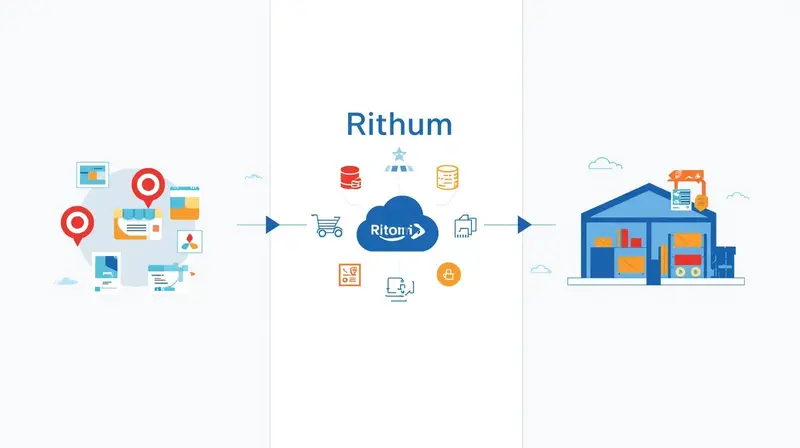
Rithum is the middleware providing the orchestration and data routing needed for seamless order fulfillment, routing orders between retailers like Target Plus, Nordstrom, and Walmart to your fulfillment operation. However, it won’t pick, pack, or ship a single product—those physical actions are handled by your 3PL, in-house warehouse, or Amazon’s Multi-Channel Fulfillment service. By accurately managing inventory levels and order quantities, sellers can feel confident in the reliability of their integrated ecommerce solution, knowing that Rithum orchestrates the entire order fulfillment process.
This distinction matters because retailers like Walmart require 99% on-time shipping with $5-per-order penalties for violations, while Nordstrom cancels orders entirely if shipment doesn’t occur within one business day. When inventory sync fails or carrier performance drops, Rithum’s orchestration capabilities become irrelevant. Rithum maintains real-time inventory levels across all connected channels to prevent overselling and automatically syncs your Amazon inventory quantities with your channels. Your 3PL relationship determines whether you meet these unforgiving standards or face suspension from programs that took months to join. Rithum uses machine learning to provide accurate delivery dates at the time of purchase, accounting for variables like carrier performance, but successful implementation also depends on having the needed information, configuration, and support in place.
How Rithum evolved from two competing platforms into commerce middleware
Rithum emerged in December 2023 when CommerceHub and ChannelAdvisor unified under a single brand following CommerceHub’s $23.10 per share acquisition of ChannelAdvisor in November 2022. The combined company also absorbed DSCO, a distributed inventory platform acquired in 2020, and Cadeera, an AI company. This consolidation brought together CommerceHub’s enterprise retailer integration strengths (primarily EDI-based connections with major retailers) and ChannelAdvisor’s marketplace listing and advertising platform serving 40,000+ companies globally.
The platform now operates three core systems under the Rithum umbrella. OrderStream from the CommerceHub legacy handles enterprise dropship and retailer integration through EDI and SFTP connections. DSCO provides a modern API-first architecture supporting dropship, marketplace, and buy-online-pickup-in-store workflows. The original ChannelAdvisor platform manages multichannel marketplace listings and digital marketing across 420+ marketplace integrations, allowing users to list products across multiple marketplaces and efficiently manage their catalog.
What unifies these components is their function as translation and routing software sitting between sellers and retail channels. Rithum normalizes purchase orders, inventory feeds, and shipment confirmations across different file formats and retailer-specific requirements. When Home Depot sends an EDI 850 purchase order or Nordstrom expects an ASN within 24 hours of shipment, Rithum handles format compliance and data routing, but the warehouse operations remain entirely your responsibility. To learn more about how these integrations work together, visit the dedicated Rithum fulfillment page or documentation.
If you want to learn more about the unified Rithum platform and how to list your products efficiently, visit this page for additional resources and support.
Slash Your Fulfillment Costs by Up to 30%
Cut shipping expenses by 30% and boost profit with Cahoot's AI-optimized fulfillment services and modern tech —no overheads and no humans required!
I'm Interested in Saving Time and MoneyThe order lifecycle from retailer purchase to customer delivery
Understanding exactly how orders flow through Rithum reveals where seller responsibility begins and ends. When a customer orders from Target.com or Nordstrom.com, the retailer generates a purchase order transmitted to Rithum’s network. Rithum validates the order against product catalog and inventory data, then routes it to your designated fulfillment endpoint based on pre-configured business rules. Rithum provides an Order Summary page to help users manage their open orders. You can click on the Order Summary page to quickly see the status of all your open orders, which are categorized based on their current state in the order fulfillment lifecycle. Rithum provides real-time visibility into the entire order lifecycle from pick and pack to final delivery.
Your 3PL receives the order via SFTP, API, or EDI connection, typically as an EDI 940 warehouse shipping order. The 3PL acknowledges receipt, picks and packs the product, generates a shipping label, and ships with the carrier. Critically, shipment confirmation data (tracking number, carrier, service level, and ship date) must flow back through Rithum to the retailer via an EDI 856 advance shipment notice, often required same-day for retailers like Nordstrom.
The business rules you configure in Rithum determine routing logic. Orders can route based on warehouse proximity to customers, inventory availability at specific locations, carrier service levels required to meet delivery promises, or cost optimization. You can set quantity buffers to hide listings when stock falls below thresholds and establish priority-based distribution center selection. But these rules only work if your inventory data is accurate and your 3PL can execute within the required timeframes. Depending on your retailer’s business rules, you may be able to partially ship an order when you have enough stock on hand to fulfill some items. You may need to split the items into separate packages, known as a split shipment, when preparing an order for shipment.
You must review your new orders and determine how you plan to ship the items before you can ship your orders or create packing slips.
Sellers configure fulfillment endpoints for internal warehouses, Amazon FBA/MCF, Walmart Fulfillment Services, third-party 3PLs, or dropship supplier networks. Rithum’s recent RithumIQ AI engine claims 96% accuracy in delivery promise forecasting and up to 10% shipping cost savings through machine learning-based routing, but these benefits require accurate underlying data from fulfillment partners. Rithum provides predictive delivery dates at checkout, achieving up to 96% accuracy.
Retailer SLAs demand near-perfect execution with significant financial penalties
Each major retailer connected through Rithum enforces distinct compliance requirements with meaningful consequences for violations. These requirements explain why 3PL selection matters so critically. Missing a single metric can trigger chargebacks, payment denials, or program suspension. Managing order quantities accurately is essential to meet retailer requirements and avoid backorders or inventory discrepancies.
Walmart’s Drop Ship Vendor program sets the most stringent bar: 99% on-time shipping, ≤0.1% backorder rate, and line-level order acknowledgment within four business hours. Orders received before the local warehouse cutoff (typically noon) must ship the same day. Chargebacks include $5 per purchase order for late shipments and $5 per unit for rejected or backordered items. Two or more ignored order alerts trigger a suspension warning, with minimum seven-day suspensions for non-response.
Nordstrom requires shipment within one business day of order receipt. Failure means Nordstrom cancels the order and you receive no payment. The advance shipment notice must transmit the same day as physical shipment. Nordstrom supplies shipping labels through their UPS account, and using the wrong carrier account means no payment. Monthly scorecards track performance across timeliness, compliance, and fulfillment accuracy, with $10 fees per non-compliant invoice.
Managing multiple retailer SLAs can be complex, but Rithum pulls orders from all sales channels into a single platform, providing a unified view of every order. Automation in Rithum helps to eliminate manual errors, achieving up to 40% reduction in errors.
Target Plus requires fulfillment within 24 business hours with a maximum five-business-day transit time. Sellers must use Target-branded packing slips, maintain $5 million commercial general liability insurance, and accommodate all carrier service levels. Amazon and Walmart fulfillment services are explicitly prohibited, requiring US-based fulfillment from your own operation or 3PL.
Best Buy’s Supplier Direct Fulfillment expects shipment within two business days with monthly SLA targets: 99% adjusted fill rate, 95% shipped-on-time rate, 99% timely ship notices, and 95% timely inventory advice. Performance reviews occur weekly at the warehouse level, and orders unfulfilled within 30 calendar days are automatically cancelled.
Macy’s Vendor Direct Fulfillment also requires shipment within two business days, but critically mandates that sellers cancel orders if product won’t ship within that window, regardless of reason. Out-of-stock items must be cancelled and communicated within one business day.
Why sellers struggle after Rithum implementation
Industry analysis reveals consistent patterns of post-implementation difficulty rooted in platform limitations, inventory synchronization failures, and the inherent complexity of multi-retailer dropship operations. According to a 2025 Threecolts analysis, brands commonly wait months before going live while being billed, with setup involving endless back-and-forth, rigid templates, and a one-size-fits-all workflow.
Inventory accuracy problems compound exponentially with scale. Unlike owned inventory with direct warehouse visibility, retail dropship requires suppliers to accurately report real-time availability across multiple locations. A Rithum and eTail industry report found 40% of companies cite inventory coordination across platforms as their top challenge, with 33% citing marketplace data integration as their second-biggest issue. When a store shows 100 units available but the supplier has zero, the seller faces refunds, angry customers, and potential account suspension. Errors add up to $8,000 to $15,000 in lost profit annually from preventable mistakes.
Multi-location fulfillment complexity creates routing failures where orders route to distant warehouses while closer facilities have stock, or split shipments divide orders across multiple locations unnecessarily. Without proper systems, gaining visibility across multiple warehouses requires calling or emailing each warehouse, waiting for responses, and manually aggregating information. By the time you have the answer, it’s already outdated. A nationwide network can resolve these challenges by increasing efficiency and visibility.
Platform rigidity forces businesses into workflows that don’t adapt to their needs. Custom rules for inventory allocation or specific sequences require additional payment and long waits, with results often partial fixes or compromises that never fully solve the underlying need. However, businesses can expand product assortments without carrying inventory through Rithum. Rithum also allows businesses to test new product categories through dropshipping or private marketplaces without the risk of owning inventory. Adding new channels becomes especially painful. Each marketplace has unique requirements, forcing teams to map attributes manually, reformat catalogs, and wait on slow updates. For successful integration, the needed steps include providing all required information, configuring system connections, and ensuring ongoing support to address marketplace-specific requirements.
Integration failures between Rithum and WMS/ERP systems create disconnects where orders don’t fulfill on time, inventory shows as available when it’s not, and tracking information doesn’t reach customers. Traditional integrations require 60 to 90 days of custom development, with each new client bringing unique tech stacks, data models, and business rules.
Looking for a New 3PL? Start with this Free RFP Template
Cut weeks off your selection process. Avoid pitfalls. Get the only 3PL RFP checklist built for ecommerce brands, absolutely free.
Get My Free 3PL RFPWhat qualified 3PLs need to handle Rithum-connected orders
Selecting a 3PL for retail dropship through Rithum requires specific capabilities that many fulfillment providers lack. The core requirement is certified EDI compliance supporting essential transactions. The required EDI transactions can be listed as follows: EDI 850 (purchase orders), 855 (acknowledgments), 856 (advance ship notices), 810 (invoices), 940 (warehouse shipping orders), and 945 (warehouse shipping confirmations).
Multi-warehouse networks provide geographic coverage enabling one-to-two-day delivery to 96%+ of the US population, with automated order routing based on inventory availability, customer proximity, and SLA requirements. When items are unavailable at one location, orders automatically route to alternative facilities. This redundancy proves critical when individual warehouse disruptions would otherwise cause SLA violations.
Real-time inventory synchronization must flow bidirectionally from WMS to Rithum to prevent overselling, and from sales channels back through the system to maintain accurate availability and quantities across 420+ connected marketplaces. The National Retail Federation reports inventory distortion costs retailers billions annually, making immediate sync of every order, receipt, transfer, and adjustment essential to ensure correct quantities are reflected at all times.
Carrier diversification protects against single-carrier disruptions while enabling rate shopping for cost optimization. Required capabilities include integration with UPS, FedEx, USPS, DHL, and regional carriers, plus support for retailer-supplied shipping labels where programs like Nordstrom provide their own UPS account credentials.
Technical integration typically occurs through SFTP file automation (every Rithum account includes unique SFTP credentials), AS2 protocol for secure data exchange, or REST APIs with webhooks for real-time connectivity. File formats use specific extensions: .neworders for incoming orders, .confirm for acknowledgments, .inventory for stock updates, and .shipment for tracking confirmations.
ChannelAdvisor provides launch services to assist customers with setting up their ChannelAdvisor Fulfillment Services account. The ChannelAdvisor Launch Team is responsible for establishing the necessary calls with customers during the setup process, and customers will have access to the Launch Team via email for the duration of the services period. The number of calls with the ChannelAdvisor Launch Team will not exceed three per Fulfillment Endpoint.
Integration architecture connects WMS to retail channels
Rithum’s integration architecture supports multiple data exchange methods depending on retailer requirements and seller technical capabilities. API-based connections use REST architecture with JSON format, requiring Content-Type, API-Key, Timestamp, and Authorization headers with HMAC signature or access token authentication. Webhooks enable real-time event-driven data push for immediate updates.
EDI connections remain essential for major retailers who require specific document formats. The workflow proceeds from retailer purchase order (EDI 850) through supplier acknowledgment (EDI 855) to warehouse shipping instruction (EDI 940), warehouse confirmation (EDI 945), advance ship notice (EDI 856), and invoice (EDI 810). Each retailer may require different EDI formats, which Rithum translates through its Universal Connection Hub that normalizes supply chain communications across different file formats.
WMS integration connects through pre-built connectors from providers like Extensiv, Shipedge, Logiwa, and Deposco, or through integration platforms like Cleo, TrueCommerce, and SPS Commerce. Pre-built integrations can deploy in under one hour with documentation available on the integration documentation page. To learn more about setup options, click on the integration documentation page for detailed guidance.
SKU mapping across channels requires maintaining a master database with external identifier mappings. A single product may have different SKUs per channel or retailer, requiring one-to-many mapping relationships. Rithum’s Shadow SKU functionality enables channel-specific presentation while maintaining internal inventory consistency. Poor SKU mapping drives 10%+ error rates that cascade into fulfillment failures.
To learn more about Rithum’s integration architecture, visit the dedicated resource page for additional information.
Scale Faster with the World’s First Peer-to-Peer Fulfillment Network
Tap into a nationwide network of high-performance partner warehouses — expand capacity, cut shipping costs, and reach customers 1–2 days faster.
Explore Fulfillment NetworkSelecting the right fulfillment partner determines retail dropship success
The fundamental truth of Rithum-connected retail dropship is that platform capabilities become irrelevant without execution excellence at the fulfillment level. Sellers choosing 3PLs should feel confident in their fulfillment partner’s ability to meet retailer requirements. Sellers should verify specific capabilities: certified Rithum or CommerceHub integration through EDI or API, multi-warehouse network with intelligent order routing, real-time inventory synchronization with sub-15-minute update frequency, and multi-carrier relationships enabling rate shopping across UPS, FedEx, USPS, and regional carriers.
Critical performance metrics to require contractually include 99.5%+ order accuracy (with some 3PLs guaranteeing 99.9%), same-day fulfillment for orders received by cutoff, inventory accuracy matching physical counts to recorded inventory, and OTIF (on-time, in-full) rates meeting or exceeding retailer thresholds. Rithum computes SLA performance based on retailer-provided delivery dates and notifies suppliers of each order that misses requirements, but that notification arrives too late if your 3PL already failed.
Top 3PLs with demonstrated retail dropship expertise are providing comprehensive support for ecommerce businesses by managing the entire order fulfillment process. This includes providers like a2b Fulfillment (specializing in Amazon FBM/SFP and Walmart DSV), ShipBob (distributed inventory with 2-day express shipping), Red Stag Fulfillment (zero shrinkage guarantee with 99.9% accuracy), and DCL Logistics (40+ years of fulfillment SLA expertise). Integration platform partners like Extensiv 3PL Warehouse Manager, Pipe17, and ConnectPointz provide pre-built CommerceHub/Rithum connectors that accelerate deployment.
Frequently Asked Questions
Is Rithum a 3PL or fulfillment provider?
No. Rithum is order orchestration and retail connectivity software that routes orders between retailers and your fulfillment operation. It does not warehouse inventory, pick and pack orders, or ship products. All physical fulfillment happens through your chosen 3PL, in-house warehouse, or fulfillment service like Amazon MCF. Rithum handles order translation, inventory sync, and retailer integration, but execution responsibility sits entirely with your fulfillment partner.
How does Rithum connect to retailers like Target Plus and Nordstrom?
Rithum maintains pre-built integrations with 420+ retail channels through EDI connections, API partnerships, and SFTP file exchanges. When a customer purchases on Target.com or Nordstrom.com, the retailer sends a purchase order to Rithum in their required format (typically EDI 850). Rithum normalizes this data and routes it to your designated fulfillment endpoint based on business rules you configure. Your 3PL then fulfills the order and sends shipment confirmation back through Rithum to the retailer.
What happens if my 3PL misses a retailer SLA deadline?
Consequences vary by retailer but typically include financial penalties and potential program suspension. Walmart charges $5 per order for late shipments and $5 per unit for backorders. Nordstrom cancels orders and you receive no payment if shipment doesn’t occur within one business day. Best Buy tracks weekly performance at the warehouse level with monthly scorecards. Repeated violations can result in account suspension from retail programs, which often take months to rejoin.
Can I use Amazon FBA or Walmart fulfillment services for Rithum orders?
It depends on the retailer. Target Plus explicitly prohibits using Amazon or Walmart fulfillment services, requiring US-based fulfillment from your own operation or a third-party 3PL. Other retailers may allow it if the fulfillment partner can meet their specific SLA requirements and technical integration needs. Check individual retailer program terms before configuring fulfillment endpoints, as violations can result in immediate suspension.
Why do multi-warehouse 3PLs reduce order cancellation risk?
Multi-warehouse networks provide inventory redundancy and geographic distribution. When one location is out of stock or experiences disruptions, orders automatically route to alternative facilities that have inventory. This prevents the order cancellations that occur when single-warehouse operations run out of stock or face localized issues like weather delays, labor shortages, or carrier disruptions. Geographic distribution also enables faster delivery times, helping meet strict retailer transit requirements.
How long does it take to integrate a 3PL with Rithum?
Integration timelines vary by technical approach. Pre-built EDI or API connectors from certified 3PL partners can deploy in under one hour with proper documentation. Custom API integrations typically require two to six weeks for development, testing, and certification. Traditional EDI connections need careful setup and retailer-specific testing before production go-live, often requiring 60 to 90 days for full deployment across multiple retail channels. Choose 3PLs with existing Rithum or CommerceHub certifications to minimize implementation time.
Written By:

Indy Pereira
Indy Pereira helps ecommerce brands optimize their shipping and fulfillment with Cahoot’s technology. With a background in both sales and people operations, she bridges customer needs with strategic solutions that drive growth. Indy works closely with merchants every day and brings real-world insight into what makes logistics efficient and scalable.

Turn Returns Into New Revenue
Related Articles
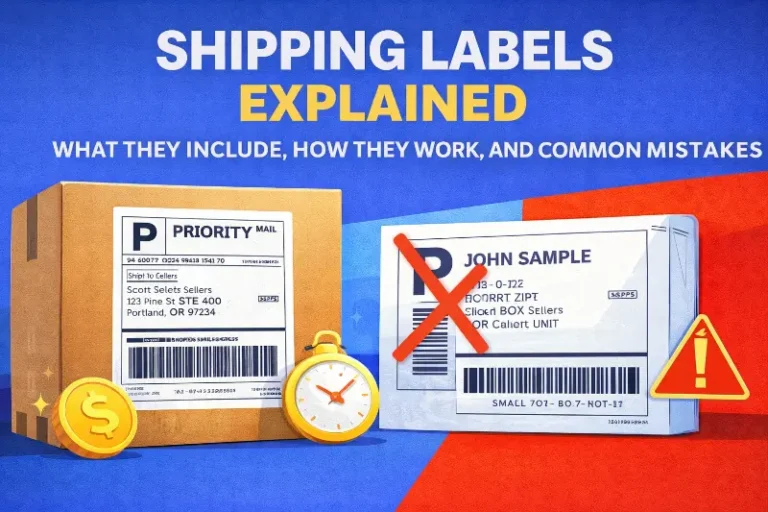
Shipping Labels Explained: What They Include, How They Work, and Common Mistakes
Shipping labels are the operational backbone of ecommerce fulfillment, a small piece of paper that determines whether packages reach customers successfully or trigger costly failur...
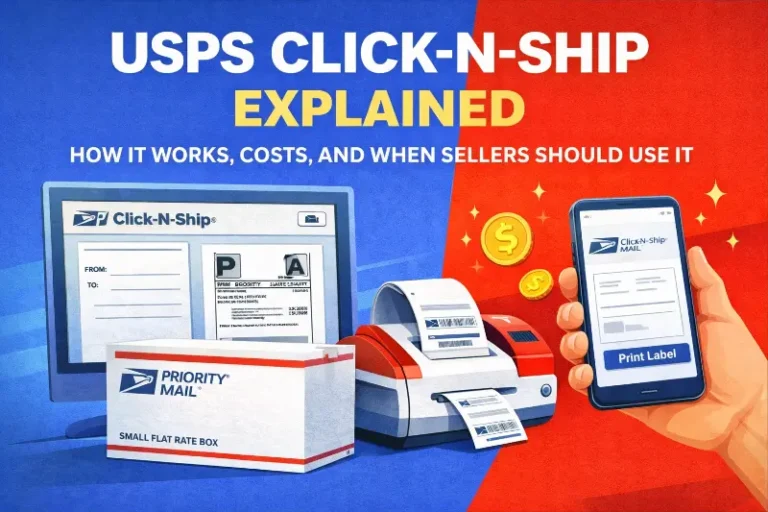
USPS Click-N-Ship Explained: How It Works, Costs, and When Sellers Should Use It
USPS Click-N-Ship is the postal service’s free online label-printing tool, and for most Shopify sellers shipping more than 50 packages monthly, it’s already time to move beyond it....

USPS Tracking Explained: What Each Status Means and How Sellers Should Respond
The “if it fits, it ships” model offers compelling economics for heavy items traveling cross-country, but costs Shopify brands up to 175% more than alternatives for lig...