
3PL Returns: How Outsourced Returns Actually Work and Where Brands Lose Money

Last updated on February 06, 2026
In this article
 26 minutes
- Introduction to Ecommerce Returns
- What 3PL returns means operationally
- The journey of a returned package through a 3PL facility
- Common reverse logistics disposition paths and their economic implications
- SLAs and where they break down
- Hidden costs in 3PL returns operations
- Benefits of Outsourcing Returns
- What brands should control versus what to outsource in returns management
- Common failure modes impacting customer satisfaction and how to prevent them
- Best Practices for 3PL Returns
- Technology and integration requirements
- When to keep returns in-house versus outsource
- Future of 3PL Returns
- Frequently Asked Questions
Most brands outsource returns to a 3PL expecting cost savings, but returns fail when disposition rules, SLAs, and audit controls are undefined. 3PLs can help brands save money by reducing logistics costs and achieving reverse logistics cost savings, especially by optimizing returns processing and warehouse operations. The real risk in 3PL returns is not software, but loss of visibility and accountability after the package arrives. Industry data shows that returns processing through 3PLs can take 10-14 days on average, with some operations extending to 20+ days during peak seasons. When brands lack defined disposition logic, clear SLAs, and audit mechanisms, they discover hidden costs through inventory shrinkage (2-5% of returned goods), delayed restocking that creates phantom stockouts, and billing disputes that can reach thousands monthly. High labor costs are a significant burden on third-party logistics providers in the logistics industry, and outsourcing returns to a 3PL can help mitigate risks associated with handling returns, such as high labor costs and inefficiencies.
For mid-market Shopify brands processing hundreds or thousands of returns monthly, understanding what actually happens inside a 3PL’s reverse logistics operation determines whether outsourcing reduces costs or simply moves complexity out of sight. The operational reality is that returns management requires as much strategic oversight as outbound fulfillment, regardless of which entity physically handles the packages.
Introduction to Ecommerce Returns
Ecommerce returns are an unavoidable aspect of running an online business, and how they are managed can make or break customer satisfaction and operational efficiency. The returns process involves much more than simply accepting products back—it requires careful coordination of receiving, inspecting, and processing returned items, all while keeping customers informed and happy. For many ecommerce companies, handling the entire returns process in-house can be time consuming and resource-intensive, especially as order volumes grow. This is where third party logistics providers (3PLs) play a critical role. By leveraging the expertise and infrastructure of third party logistics, ecommerce businesses can ensure a smooth process for both their operations and their customers. Effective management of ecommerce returns not only supports maintaining customer satisfaction but also drives operational efficiency, helping ecommerce companies stay competitive in a demanding market.
What 3PL returns means operationally
3PL returns refers to outsourcing the reverse logistics process to a third-party logistics provider who receives, inspects, processes, and dispositions returned merchandise on behalf of the brand. Unlike outbound fulfillment where the workflow is straightforward (pick, pack, ship), returns involve decision trees that directly impact inventory value, customer experience, and financial reconciliation.
The operational scope typically includes receiving returned packages from customers or carriers, performing initial inspection and condition assessment, executing disposition decisions based on predefined rules, updating inventory systems to reflect returned stock, processing refunds or exchanges according to brand policies, managing defective or damaged items, coordinating liquidation or disposal for unsellable goods, and providing reporting on return reasons, processing times, and disposition outcomes. The use of return merchandise authorization (RMA) numbers is standard practice to track and manage returned items throughout the entire process, ensuring transparency and efficient reverse logistics.
What 3PL returns does not automatically include unless explicitly contracted: customer-facing return portal management (this often remains with the brand or a separate software platform), return policy definition and updates, disposition logic creation, fraud detection and investigation, customer service for return inquiries, and strategic decision-making on how to handle edge cases.
The handoff point is critical. The entire process starts when a customer requests shipping details for reverse logistics, typically through the brand’s system (Shopify, a returns app, or custom portal), receives a prepaid return shipping label, and ships the package back. Once the return shipment arrives at the 3PL warehouse, the items are logged against their Return Merchandise Authorization (RMA) number. The 3PL’s responsibility is to process returns, manage refunds, and handle the returned merchandise according to the brand’s policies. Everything before arrival remains the brand’s operational responsibility unless additional services are contracted.
For brands accustomed to controlling outbound fulfillment details, the mental shift required for returns outsourcing is substantial. You cannot inspect what you cannot see, and once packages enter the 3PL facility, visibility depends entirely on the systems, processes, and SLAs you established upfront.
Make Returns Profitable, Yes!
Cut shipping and processing costs by 70% with our patented peer-to-peer returns solution. 4x faster than traditional returns.
See How It WorksThe journey of a returned package through a 3PL facility
When a return arrives at a 3PL warehouse, it enters a multi-stage process where each decision point creates opportunity for value recovery or value loss. The receiving stage involves scanning the return label or RMA number to log receipt in the warehouse management system, visual inspection of outer packaging for damage, and sorting into processing queues based on priority (date received, product type, or customer tier). Returns fulfillment often takes longer than initial order fulfillment due to the additional steps required in returns processing.
Initial inspection and condition assessment follows, where warehouse staff open the package and verify contents match the return authorization, inspect product condition against predefined criteria (new, like new, damaged, defective, missing components), photograph items when condition is questionable or high-value, and flag discrepancies between what was authorized and what arrived. A dedicated return warehouse with trained staff enables more efficient returns processing and professional handling of returned goods, reducing errors and processing time.
This inspection stage represents the first critical control point. 3PLs typically employ one of three inspection models: basic visual inspection taking 2-3 minutes per item, detailed inspection with functionality testing taking 5-10 minutes per item, or automated inspection using standardized checklists or AI-assisted imaging. The inspection depth directly correlates with accuracy of disposition decisions and restocking rates.
Disposition execution follows the inspection. Based on predefined rules (which should be documented in the 3PL contract), items are routed to restock (return to sellable inventory), refurbish (cleaning, repackaging, or minor repair before restocking), liquidation (sell to secondary market buyers at discounted rates), donation (transfer to charitable organizations), or destruction (dispose of unsellable, hazardous, or brand-protected items).
Inventory system updates should occur simultaneously with disposition, but this represents a common failure point. Many 3PLs operate on batch update cycles (end of day or end of shift) rather than real-time updates, creating windows where inventory shows as unavailable even though inspection determined it’s sellable. Reliance on manual processes in these updates can introduce inefficiencies and delays, impacting inventory management and operational speed. For high-velocity SKUs, a 12-hour lag between physical inspection and system update can trigger stockouts and lost sales.
Financial reconciliation closes the loop, with the 3PL billing for receiving fees, inspection fees, disposition fees, storage fees for items awaiting processing, and any value-added services (cleaning, repackaging, photography). Simultaneously, the brand must reconcile inventory value changes (full-price restock versus liquidation recovery versus total loss) and update customer accounts with refunds, store credit, or exchange shipping.
Common reverse logistics disposition paths and their economic implications
An effective 3PL returns strategy relies on several key components: implementing automated return systems, establishing dedicated inspection areas, and leveraging technology for integration with inventory systems. These elements streamline reverse logistics, reduce processing costs, and improve value recovery.
Restock represents the optimal outcome where returned items re-enter sellable inventory at full value. Industry benchmarks suggest that 40-60% of ecommerce returns qualify for direct restocking, though this varies dramatically by category (apparel sees lower rates due to wear and hygiene concerns, electronics higher rates if unopened). The economic value is straightforward: a $50 item restocked recovers $50 in inventory value minus processing costs (typically $3-8 per item for 3PL handling).
The timeline matters critically for restocking value. An item returned, inspected, and restocked within 3-5 days maintains full sellability. The same item taking 14-21 days to process may face markdown pressure due to seasonality shifts, new model releases, or simply aging in fast-moving categories. Fashion and electronics face the steepest depreciation curves, where a two-week delay can reduce sellable value by 10-20%.
Refurbish or repackage creates a middle path for items that are functionally sound but cosmetically imperfect or missing original packaging. This might involve cleaning, replacing damaged packaging, bundling with new accessories, or light repairs. 3PLs typically charge $5-15 per item for refurbishment services, and brands must decide whether the recovered value justifies the cost. A $100 item that can be refurbished for $10 and sold for $85 delivers $75 net value versus $0-20 from liquidation.
Liquidation channels vary in recovery rates. Wholesale liquidators typically pay 10-25% of retail value for bulk lots. Recommerce platforms (B-Stock, Optoro, Liquidity Services) may achieve 20-40% through competitive bidding. Direct-to-consumer outlets or flash sale sites can reach 40-60% if the brand controls the channel. The key variable is volume and product category. High-demand consumer electronics recover more than generic apparel. Large consistent volumes command better rates than sporadic small lots.
Destruction represents complete value loss plus disposal costs. Beyond the lost inventory value, 3PLs charge $2-10 per item for disposal depending on whether special handling is required (hazmat, data destruction, witnessed destruction for brand protection). Some categories demand destruction: recalled products, expired consumables, counterfeits, or items where brand integrity requires preventing secondary market sales. One brand reported destroying $50,000 in returned goods annually to prevent liquidation channel conflicts with authorized retailers.
The strategic decision framework requires calculating total value recovery across all paths. If 50% restock at 100% value, 30% liquidate at 25% value, and 20% destroy at 0% value, average recovery is 57.5% before processing costs. Processing costs of $6 per item average reduce net recovery to approximately 45-50% for a $50 average order value product. These economics explain why high return rates (above 20-25%) can eliminate profitability entirely for margin-constrained categories.
SLAs and where they break down
Standard 3PL returns SLAs typically promise 3-5 business days for inspection and disposition after receipt, 95-98% inventory accuracy in system updates, and 24-48 hours for reporting on return reasons and disposition outcomes. These SLAs sound reasonable but obscure critical gaps.
The “after receipt” qualifier creates the first gap. Receipt means when the 3PL scans the package into their facility, not when the customer ships it. If a customer ships Monday and the carrier delivers Thursday, that’s three days before the SLA clock starts. If the 3PL then takes five business days to process, total time from customer shipment to disposition is 8+ business days. For the customer expecting a refund, this timeline feels unacceptable even though the 3PL met their SLA. Effective communication during the returns process is essential for reducing customer anxiety and maintaining customer trust, as timely updates and transparency help reassure customers and foster loyalty.
Inventory accuracy SLAs measure whether the system reflects physical inventory correctly, not whether disposition decisions were correct. A 3PL can achieve 98% inventory accuracy while making poor disposition choices (liquidating items that should restock, or restocking items that should liquidate). The accuracy metric confirms the database matches the warehouse, not that the warehouse made optimal decisions.
Peak season carve-outs represent another common gap. Many 3PL contracts include provisions allowing extended processing times during Q4 (November-December) when return volumes spike 200-400%. These clauses may extend the 5-day SLA to 10-15 days, precisely when customers are most sensitive to refund timing. One Shopify brand reported 18-day average processing during December 2024, creating massive customer service burden and refund inquiries.
The most critical SLA gap involves exception handling. Standard SLAs govern routine returns, but 15-25% of returns are non-routine: wrong item received, damaged in transit, fraudulent return, missing components, or condition that doesn’t match inspection criteria. Most 3PL contracts don’t define SLAs for these exceptions, leading to items sitting in “pending review” queues for weeks while the brand and 3PL exchange emails about disposition authority.
Enforcement mechanisms for SLA violations are often weak. Contracts may promise “service credits” for missed SLAs, but these credits typically cap at 5-10% of monthly fees. If poor returns processing causes $10,000 in lost sales due to inventory delays, a $500 service credit provides inadequate remedy. The real cost of SLA failures isn’t the contractual penalty but the operational impact on inventory availability and customer satisfaction. Continuous improvement in returns management is vital for maintaining customer satisfaction and operational efficiency, ensuring that processes evolve to meet changing expectations and reduce recurring issues.
Convert Returns Into New Sales and Profits
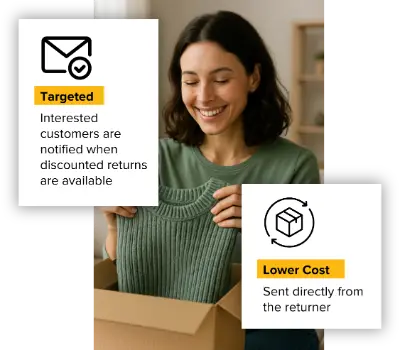
Our peer-to-peer returns system instantly resells returned items—no warehouse processing, and get paid before you refund.
I'm Interested in Peer-to-Peer ReturnsHidden costs in 3PL returns operations
Shrinkage represents the most insidious hidden cost. Industry averages suggest 2-5% of returned inventory disappears between customer shipment and final disposition, with higher rates in certain categories (small valuable items like jewelry or electronics accessories). Shrinkage sources include theft, misplacement within the warehouse, incorrect disposition (items destroyed that should have been restocked), and data entry errors where items are written off in the system but physically present.
The financial impact compounds when shrinkage affects high-value items. A 3% shrinkage rate on $100,000 monthly return volume equals $3,000 monthly or $36,000 annually. Many brands don’t discover this loss because they lack independent audit mechanisms. The 3PL reports “received and processed 1,000 returns” and the brand accepts this number without verification against customer shipping data or carrier delivery confirmations.
Delayed restocking creates opportunity cost that doesn’t appear on 3PL invoices. When a bestselling SKU shows out-of-stock but 50 units sit in the returns processing queue, every day of delay costs potential sales. For an item selling 20 units daily at $40 margin, a one-week processing delay costs $5,600 in lost contribution margin. The 3PL’s processing fee might be $250, but the total cost to the brand is $5,850.
Billing complexity and disputes consume operational time. 3PL invoices for returns typically include per-item receiving fees, per-item inspection fees, per-item disposition fees that vary by path (restock cheaper than refurbish or liquidate), storage fees for items pending processing, special handling fees for exceptions, and miscellaneous fees for photography, additional packaging, or customer service inquiries.
Reconciling these invoices against actual return volume and expected costs requires dedicated financial operations resources. One mid-market brand reported spending 15-20 hours monthly on 3PL invoice reconciliation and dispute resolution, discovering overbilling errors averaging $800-1,200 monthly. Over a year, the discovered errors exceeded $10,000, but the labor cost to find them was nearly $8,000 (assuming $40/hour loaded cost).
Technology integration gaps create manual work and errors. If the 3PL’s WMS doesn’t integrate seamlessly with Shopify inventory management, someone must manually update stock levels, product condition codes, and disposition statuses. This manual work introduces lag (updates happen daily or weekly rather than real-time) and errors (data entry mistakes, missed updates during high-volume periods). Manual processes not only increase the risk of errors but also drive up operational costs, making 3PL returns less efficient and more expensive.
The quality control gap emerges when 3PL inspection standards don’t match brand standards. What the 3PL deems “like new” and restocks might fail the brand’s quality bar, leading to customer complaints, negative reviews, and returns of already-returned items. One apparel brand found that 15% of items their 3PL restocked were returned again within 30 days with condition complaints, effectively doubling the return rate and processing costs for those items. Poor returns management can directly result in negative reviews from customers, especially when expectations for product quality or refund speed are not met.
Many e-commerce businesses do not have the processes or staff in place for effective returns management, and returns management is often regarded as a major operational hurdle by warehouse operators.
Benefits of Outsourcing Returns
Outsourcing the returns process to a 3PL offers ecommerce businesses a range of strategic advantages. By entrusting the entire returns process to a specialized provider, brands can free up internal resources and focus on growth-driving activities. 3PLs are equipped to handle everything from receiving and inspecting returned products to processing refunds and restocking inventory, which helps reduce labor costs and improve inventory accuracy. Their advanced systems and processes also minimize errors and ensure that returned inventory is quickly made available for resale, supporting better cash flow and inventory management. Additionally, 3PLs provide valuable insights into customer return behavior and reasons for returns, enabling ecommerce companies to identify trends, address product issues, and optimize their operations. Ultimately, outsourcing returns to a 3PL enhances customer satisfaction by ensuring a fast, reliable, and transparent returns experience, giving ecommerce businesses a competitive edge.
What brands should control versus what to outsource in returns management
The strategic framework divides returns management into policy decisions (brand retains control), execution standards (brand defines, 3PL executes), and physical operations (3PL performs, brand audits).
Brand-controlled elements must include return policy definition (timeframes, conditions, refund versus store credit), disposition logic for each product category and condition, pricing for liquidation channels and markdown strategies, fraud detection thresholds and investigation protocols, customer communication templates and timing, and escalation procedures for exceptions requiring brand judgment.
These elements represent core business strategy and cannot be delegated without risking brand integrity and financial performance. A 3PL can advise based on industry benchmarks and operational feasibility, but the final policy decisions must remain with the brand owner.
Jointly defined execution standards include inspection criteria and condition definitions (what qualifies as “new” versus “like new” versus “damaged”), quality control sampling protocols, turnaround time expectations and prioritization rules, inventory system update timing and accuracy requirements, reporting frequency and metrics, and audit and verification procedures. Regulatory compliance is critical in returns processing, as the complexity of returns can lead to compliance issues that may result in delays and increased waste if not properly managed.
These standards should be documented in the 3PL contract with specific examples and photographic references. “Inspect for damage” is too vague. “Items with visible wear, stains, missing tags, or non-functional components must be photographed and flagged for brand review before disposition” provides actionable guidance.
3PL-executed physical operations include receiving and scanning returned packages, performing inspection according to defined standards, executing disposition based on brand logic, updating inventory systems, coordinating liquidation channel shipments, processing refunds and exchanges, and generating weekly or monthly reporting. 3PLs can also support sustainability by implementing efficient and environmentally responsible returns management practices, reducing waste and promoting operational efficiency.
The critical requirement is that 3PL execution follows brand standards, not 3PL convenience. If the brand requires same-day inventory updates but the 3PL operates on batch cycles, either the 3PL must change their process or the brand must find a different provider. Service requirements should drive vendor selection, not vendor limitations constraining brand operations.
Audit and verification mechanisms must be brand-controlled. Recommended practices include monthly physical inventory audits (comparing 3PL reported inventory to actual counts), disposition decision reviews (sampling 5-10% of processed returns to verify correct disposition), customer feedback monitoring (tracking complaints about refund timing or restocked item quality), financial reconciliation (comparing 3PL invoices to contractual rates and actual volumes), and performance metrics tracking (measuring actual processing times, restock rates, shrinkage, and customer satisfaction).
One sophisticated brand implements quarterly “mystery returns” where they ship known products in known conditions and track whether the 3PL correctly identifies the items, applies proper disposition, updates inventory accurately, and processes within SLA. This provides objective performance data beyond the 3PL’s self-reported metrics.
A simplified returns process not only enhances customer satisfaction but also encourages repeat purchases, supporting long-term customer loyalty.
Common failure modes impacting customer satisfaction and how to prevent them
The undefined disposition authority failure occurs when returns arrive in conditions not covered by the brand’s disposition logic. The 3PL doesn’t know what to do, items sit in pending queues, and inventory remains unavailable. Prevention requires comprehensive disposition matrices covering all realistic scenarios: new/unopened, opened but unused, light wear, moderate wear, damaged packaging only, functional defect, cosmetic defect, missing accessories, wrong item received, and suspected fraud.
The inspection quality failure happens when 3PL staff lack training, time, or incentive to inspect thoroughly. Items that should liquidate get restocked and later returned by customers, or items that could restock get unnecessarily liquidated. Poor returns management can lead to disgruntled customers, damaging brand reputation and customer loyalty. Prevention requires detailed inspection protocols with photographic examples, quality control sampling by the brand, and financial incentives tied to restock rates and customer satisfaction rather than processing speed alone.
The inventory lag failure creates phantom stockouts where items are physically available but show unavailable in the system for days or weeks. Prevention demands real-time or near-real-time inventory updates (within 2-4 hours of disposition) and system integration rather than manual data entry.
The billing opacity failure leaves brands unable to verify if they’re charged correctly. Prevention requires detailed invoicing with line-item charges tied to specific RMA numbers or return IDs, automated invoice validation against contracted rates, and monthly reconciliation processes.
The peak season capacity failure occurs when the 3PL underestimates Q4 volume and processing times balloon from 5 days to 20+ days. Prevention involves contractual capacity guarantees, early peak season planning (by June or July for Q4), temporary staffing plans, and alternative disposition paths (like temporarily halting liquidation to focus on restocking high-value items).
The customer experience disconnect failure happens when customers contact the brand about return status but the brand lacks real-time visibility into where the 3PL is in processing. Prevention requires customer-facing tracking integration, proactive status updates at key milestones (received, inspected, refund processed), and empowering customer service teams with 3PL system access. Best practices for 3PL returns management focus on creating a seamless, transparent, and efficient reverse logistics process that streamlines operations and enhances efficiency in handling customer returns.
Customer feedback during the returns process can inform product improvements and better inventory decisions.
Best Practices for 3PL Returns
To maximize the value of a 3PL returns process, ecommerce businesses should adopt several best practices. Start by establishing clear communication channels with your 3PL provider, ensuring that roles, responsibilities, and performance expectations are well defined from the outset. Implement a streamlined returns process that prioritizes both efficiency and customer satisfaction, with standard operating procedures that minimize delays and errors. Regular updates and transparent reporting from the 3PL are essential, allowing the ecommerce business to monitor the returns process and quickly identify areas for improvement. It’s also important to choose a 3PL that offers flexible and scalable solutions, so your returns management can adapt as your business grows or as return volumes fluctuate seasonally. By following these best practices, ecommerce companies can ensure an efficient, customer-centric, and scalable 3PL returns process that supports repeat business and brand loyalty.
No More Return Waste
Help the planet and your profits—our award-winning returns tech reduces landfill waste and recycles value. Real savings, No greenwashing!
Learn About Sustainable ReturnsTechnology and integration requirements
Effective 3PL returns require integration between multiple systems: the ecommerce platform (Shopify), the returns management platform (if using dedicated software like Loop, Narvar, or Returnly), the third party logistics (3PL) provider’s warehouse management system, the brand’s inventory management system, the accounting system for financial reconciliation, and customer service tools. Third party logistics (3PL) providers play a crucial role in managing supply chain operations, including transportation, warehousing, inventory management, order fulfillment, and especially returns, ensuring an efficient supply chain for business success.
The minimum viable integration provides daily inventory updates via CSV or API, weekly returns reporting with disposition data and return reasons, and monthly financial reconciliation data. This enables basic operations but creates significant lag in inventory availability.
The optimal integration provides real-time inventory updates within 2-4 hours of disposition, real-time return tracking visible to customer service teams, automated financial reconciliation with anomaly flagging, and API-based data exchange eliminating manual data entry. Data feedback loops in returns management help identify product defects and marketing inaccuracies, allowing for improvements that lower future return rates and reduce future returns.
The technical capability gap often emerges here. Many 3PLs, particularly smaller regional providers, operate on legacy WMS platforms with limited API capabilities. They can provide data but only through manual exports and email. Advanced 3PLs may use AI-driven systems to detect return fraud, such as item swapping, during the inspection process. Brands accustomed to real-time ecommerce platforms find this unacceptable, but switching to a more technically capable 3PL may cost 20-30% more in processing fees.
The strategic question is whether the operational benefit of real-time data justifies the cost premium. For high-velocity businesses where inventory turns weekly and stockouts cost thousands in lost sales, the answer is typically yes. For slower-velocity businesses with longer planning cycles, daily batch updates may suffice.
When to keep returns in-house versus outsource
The decision framework balances volume, complexity, and strategic importance. For an online retailer, several key components must be considered when deciding whether to outsource returns, including the impact on customer loyalty. In-house returns make sense when monthly return volume is below 200-300 units (below this threshold, 3PL minimum fees often exceed in-house costs), when product inspection requires deep brand knowledge or specialized equipment, when return reasons provide critical product development feedback, when the brand operates its own warehouse for outbound fulfillment, or when tight control over customer experience and refund timing is competitively critical.
3PL returns make sense when monthly volume exceeds 500+ units and the brand lacks warehouse infrastructure, when returns processing distracts from core business operations, when seasonal volume spikes create capacity challenges (in-house team can’t scale for Q4 then downsize), when multiple fulfillment locations require distributed returns processing, or when the brand wants to consolidate logistics operations with a single partner handling both outbound and returns. 3PL providers can automate return processes, which improves workplace productivity rates.
The hybrid model splits returns by type: high-value or complex returns processed in-house where brand expertise adds value, while commodity or straightforward returns go to the 3PL. This requires clear allocation rules and typically higher operational complexity, but it optimizes for value recovery on items where inspection quality matters most. A well-managed returns process can enhance customer satisfaction and encourage repeat business.
Future of 3PL Returns
The future of 3PL returns is being shaped by rapid technological innovation and evolving consumer expectations. As shoppers demand faster, easier, and more sustainable returns, ecommerce businesses and their logistics partners must adapt to stay ahead. 3PL providers are increasingly investing in automation, artificial intelligence, and advanced data analytics to support efficient returns management and deliver a seamless customer experience. These technologies enable faster processing, better inventory control, and more accurate insights into return trends, all of which contribute to higher customer satisfaction. Additionally, the focus on sustainability is driving 3PLs to develop greener reverse logistics solutions, such as optimizing transportation routes and reducing waste. To meet rising consumer expectations, 3PLs are also offering more personalized and flexible returns options, supporting both customer convenience and brand loyalty. By embracing these trends, ecommerce companies and their logistics partners can create a future-ready returns process that enhances operational efficiency, supports sustainability, and keeps customers happy.
Frequently Asked Questions
What does 3PL returns actually mean and what do they handle?
3PL returns means outsourcing reverse logistics to a third-party logistics provider who receives, inspects, processes, and dispositions returned merchandise. The 3PL’s scope typically includes receiving returned packages, inspecting item condition, executing disposition decisions (restock, refurbish, liquidate, destroy), updating inventory systems, and providing reporting. What it doesn’t automatically include: customer-facing return portal management, return policy definition, disposition logic creation, customer service for return inquiries, or fraud detection. The 3PL’s responsibility typically begins when returned packages arrive at their facility, not when customers initiate returns.
What happens when a returned item arrives at a 3PL warehouse?
The package enters a multi-stage process: receiving (scanning return label, logging in WMS, visual inspection of outer packaging), initial inspection (opening package, verifying contents, assessing condition against criteria, photographing questionable items), disposition execution (routing to restock, refurbish, liquidation, or destruction based on predefined rules), inventory system updates (returning sellable items to available inventory), and financial reconciliation (billing for processing fees, updating inventory values). The critical control point is inspection quality, which determines whether items are correctly dispositioned for maximum value recovery.
What are common return disposition paths and how much value do they recover?
Restock returns items to sellable inventory at full value (typically 40-60% of returns qualify, recovering 100% of inventory value minus $3-8 processing costs). Refurbish involves cleaning or repackaging for $5-15 per item, recovering 70-90% of value. Liquidation sells to secondary markets, recovering 10-40% of retail value depending on category and channel. Destruction represents total loss plus $2-10 disposal costs. Average recovery across all paths typically reaches 45-50% of original value after processing costs. Timeline matters critically as items taking 14-21 days to process face 10-20% value depreciation in fast-moving categories.
What are typical 3PL returns SLAs and where do they break down?
Standard SLAs promise 3-5 business days for inspection and disposition after receipt, 95-98% inventory accuracy, and 24-48 hour reporting. Breakdowns occur because “after receipt” starts when the 3PL scans packages (not when customers ship), adding carrier transit time. Peak season carve-outs extend processing to 10-15 days during Q4. Inventory accuracy measures system accuracy, not disposition decision quality. Exception handling (15-25% of returns) often lacks defined SLAs, causing items to sit in pending queues. Enforcement mechanisms are weak, with service credits capping at 5-10% of fees while operational impacts from delays can cost 10-100x more.
What hidden costs appear in 3PL returns that don’t show on invoices?
Shrinkage averages 2-5% of return value ($36,000 annually on $100,000 monthly returns) through theft, misplacement, incorrect disposition, or data errors. Delayed restocking creates opportunity costs when bestsellers show out-of-stock while units sit in processing (one week delay on a 20-unit/day SKU at $40 margin costs $5,600 in lost sales). Billing reconciliation consumes 15-20 hours monthly, discovering $800-1,200 in overbilling errors. Quality control gaps cause 15% of restocked items to be returned again with condition complaints. Technology integration gaps require manual updates introducing lag and errors.
What should brands control versus outsource in returns management?
Brands must control policy decisions including return timeframes, disposition logic, liquidation pricing, fraud thresholds, customer communication, and exception handling. Jointly define execution standards including inspection criteria, quality sampling, turnaround times, inventory update timing, reporting metrics, and audit procedures. Outsource physical operations including receiving, inspection (following brand standards), disposition execution, system updates, liquidation coordination, and refund processing. Maintain audit mechanisms including monthly inventory audits, disposition decision reviews (sampling 5-10% of returns), customer feedback monitoring, financial reconciliation, and performance metrics tracking. The 3PL executes operations, but the brand defines standards and verifies compliance.
Written By:

Rinaldi Juwono
Rinaldi Juwono leads content and SEO strategy at Cahoot, crafting data-driven insights that help ecommerce brands navigate logistics challenges. He works closely with the product, sales, and operations teams to translate Cahoot’s innovations into actionable strategies merchants can use to grow smarter and leaner.

Turn Returns Into New Revenue
Related Articles
The End of Traditional Ecommerce Returns
PART I — THE PROBLEM Why Returns Didn’t Just Break — They Were Never Built for This Returns are ecommerce’s dirty secret: a billion-dollar bonfire that most brands prefer not to lo...
Fast Delivery Isn’t the Hard Part – Inventory Decisions Are
Fast delivery is no longer a differentiator in ecommerce, it is an expectation.
Moving from Amazon 1P to 3P: What It Actually Takes to Succeed
The decision to move from Amazon Vendor Central (1P) to Seller Central (3P) usually follows months of frustration with pricing control loss, erratic purchase orders, and margin com...