
What Happens When Amazon Overrides Your Return Policy?

Last updated on March 26, 2026

In this article
 11 minutes
Introduction
You set your return policy. Amazon refunds the customer anyway, often because the company manages customer expectations by making returns easy and hassle-free.
Amazon’s return policy is designed to meet customer expectations, even if it means overriding seller preferences to ensure a positive shopping experience.
This is not a rare exception. It is a structural reality of selling on Amazon. The company prioritizes customer experience and speed over seller-defined rules, which means your return policy is not always enforced the way you expect. For sellers, this creates hidden cost leakage, operational uncertainty, and a loss of control that directly impacts margins.

When Amazon Overrides Your Return Policy
Amazon can override your return policy through a combination of automated systems and manual intervention.
Automatic return authorization is the most common path. If a return request falls within Amazon’s broader return framework, it can be approved instantly with a prepaid return label, regardless of your own conditions. In these cases, the seller is charged a fee for the returned item, specifically when the return is due to buyer fault, and this applies even for seller fulfilled orders.
Customer service intervention is another trigger. For seller fulfilled orders, including Seller Fulfilled Prime, Amazon customer support can issue refunds directly when response time requirements are not met. The goal is to resolve customer issues quickly, not to enforce seller-specific rules.
There is also automated refund enforcement. If a seller does not resolve a return request within the required window, Amazon may issue a returnless refund. In these cases, the customer keeps the product and receives a refund, and the seller absorbs the loss, consistent with Amazon’s broader marketplace returns policy framework.
Refund at First Scan adds another layer. In this system, a refund can be issued as soon as the returned item is shipped and scanned by the carrier, before the seller receives or inspects the item, similar in spirit to other instant-refund, drop-off-centric services like Happy Returns reverse logistics solutions.
Each of these mechanisms is designed for speed and consistency at scale. None of them are designed to preserve seller-level control.
Why Amazon Does This
Amazon is not trying to enforce your return policy. It is trying to optimize customer behavior, especially how shoppers respond to its policies.
The platform is built around a simple priority stack. Fast refunds increase customer trust. Higher trust drives more purchases. More purchases increase overall transaction volume, and each sale or purchase triggers Amazon’s return policy processes and related procedures.
From Amazon’s perspective, the cost of occasional seller losses is outweighed by the long-term value of customer retention and repeat buying, even as the broader ecommerce industry is rethinking whether free returns are sustainable.
This creates a structural conflict. Sellers think in terms of margin protection and policy enforcement. Amazon thinks in terms of customer lifetime value and frictionless experience, even when that means flagging products with a “Frequently Returned Item” badge to steer customer expectations and behavior.
When those priorities collide, the platform wins. This means customers benefit from easier returns, faster refunds, and a more convenient shopping experience.
The Hidden Cost of Losing Control
The impact of return policy overrides is not always obvious at first. It shows up in small, repeated losses that compound over time.
Return shipping costs are one example. Even for buyer fault returns such as “no longer needed,” sellers are often charged for prepaid return labels. Sellers are typically responsible for a return shipping fee, which directly impacts their payments and reduces the overall money they receive and underscores the need to understand how different types of return shipping labels work. This becomes especially painful for heavy or oversized products where return shipping can approach the value of the item itself.
Out-of-policy returns are another issue. Sellers report cases where returns are accepted outside the stated return window or for reasons that do not match the original request. This undermines the predictability of return operations.
Refund timing also creates risk. When refunds are issued before inspection, sellers lose the ability to verify item condition. If the returned item is damaged, used, or missing parts, sellers may only receive a partial refund, as Amazon may deduct a damage fee or other charges from the money refunded.
There is also fraud exposure. Some buyers learn how to navigate return reasons or claim non-delivery, knowing that the system often resolves in their favor, which can result in sellers having lost money due to system abuse and broader patterns of returns fraud and refund fraud.
Individually, these issues may seem manageable. Collectively, they erode margin, increase operational overhead, and make returns difficult to control at scale, which is why it’s critical for sellers to analyze their FBA return patterns and reasons. There are exceptions to standard return procedures, but these are rare and often require additional action from the seller.
SAFE-T Claims and A-to-Z Claims Are Not Real Protection
Amazon provides mechanisms like SAFE-T claims and A-to-Z Guarantee claims to address issues. On paper, these look like protection systems. In practice, they are reactive and limited.
SAFE-T claims allow sellers to request reimbursement for situations such as damaged returns, wrong items, or Amazon-initiated refunds. Only certain cases are eligible for a SAFE-T claim, such as when the returned item is damaged or does not match the original shipment. However, they can only be filed after the refund is completed and the seller account has already been debited.
The burden of proof is high. Sellers must provide detailed documentation including tracking, photos, and customer communication, and it is important to mention specific reasons or reference relevant Amazon policies when filing a claim. Even with documentation, approval is not guaranteed.
A-to-Z claims operate on a strict timeline. Sellers typically have 48 to 72 hours to respond. If they miss that window or fail to provide sufficient evidence, the claim is granted in favor of the customer.
Appeals are possible, but they require new supporting information and must be submitted within a defined period. There are exceptions to the standard process, but these are rare and usually require additional action or evidence, which is why some high-priced, high-return ASINs are being funneled into programs like Amazon’s invite-only FBA Return Expert Service to address return issues upstream.
The key limitation is that both systems are reactive. They do not prevent losses. They attempt to recover them after the fact, often with inconsistent outcomes.
What Sellers Can Actually Do
There is no way to fully prevent Amazon from overriding your return policy. That decision layer belongs to the platform, not the merchant. The only real lever sellers have is how they operate within that constraint.
The first shift is speed. Many overrides are not arbitrary. They are triggered when sellers miss response windows. A delayed reply is often treated as no reply at all, which activates Amazon’s automated systems. In practice, this means operational responsiveness is not just good customer service, it is loss prevention.
The second is documentation. Returns on Amazon are not judged on intent, they are judged on evidence. Tracking data, delivery confirmation, product condition photos, and customer communication all need to be captured and retrievable. When a dispute happens, the seller who can produce clean, structured documentation has a higher chance of recovering losses, even if the process is imperfect. Under Amazon’s normal return policy, most items must be returned in original or unused condition to be eligible for a full refund.
The third is accepting that return leakage is not an exception. It is part of the model. If refunds can be issued before inspection and return shipping costs are often unavoidable, then these costs need to be priced into the business. Treating them as one-off issues leads to margin erosion that compounds over time.
Product strategy also becomes more important. Categories with high return rates or expensive reverse logistics will feel the impact of these policies more acutely, especially where customer “bracketing” and other behaviors drive up volumes and demand a more carefully crafted e-commerce returns program. What works on a controlled DTC channel may behave very differently on a marketplace where the seller does not control the return process. Completing returns is designed to be convenient for customers, especially since Amazon emphasizes a simple and hassle-free process for most items, provided they are in original or unused condition.
Finally, there is the question of dependency. When a business relies entirely on one platform, it inherits that platform’s rules without leverage. Diversifying channels does not eliminate the problem, but it reduces exposure to any single system’s decisions and may justify investing in separate tools such as Shopify-focused return management platforms like Return Prime.
None of these are perfect solutions. They are operational adaptations to a system where control is fundamentally limited.
The Bigger Shift: Returns Are No Longer a Policy Problem
The real issue is not that Amazon overrides return policies. It is that sellers believe they are in control of returns in the first place.
On large marketplaces, returns are not governed by seller-defined rules. They are governed by platform-level systems designed to optimize for customer experience, speed, and trust. Your policy exists, but it operates within a system that can supersede it at any time.
This changes how returns should be understood. It is not a policy problem that can be solved with stricter wording or tighter conditions. It is a system design problem. When the system is built to favor fast refunds and low friction, then verification and cost control become secondary by design.
That is why losses feel inconsistent. It is not because the rules are unclear. It is because the rules are not the final authority.
The more useful question is not how to enforce your return policy more strictly. It is how to operate profitably inside a system where enforcement is conditional, and sometimes optional.
During the holiday season, items purchased may be eligible for an extended return window, offering customers more flexibility for returns. However, certain exceptions apply—apple branded products often have a shorter return window and specific eligibility criteria, so it’s important to check product details before purchase. Additionally, products that present safety risks may not be eligible for return or could require special handling, further limiting standard return options.
Once you see returns through that lens, the strategy shifts. You stop trying to control the outcome of each return, and start designing your business to absorb and manage the outcomes the system produces.
Frequently Asked Questions
What is an Amazon return policy override?
An Amazon return policy override occurs when Amazon approves a return or issues a refund that does not align with the seller’s defined return terms, effectively bypassing the standard Amazon return policy, often through automation or customer service intervention.
Can Amazon override my return policy as a seller?
Yes, Amazon can override seller return policies through automatic return authorization, customer service actions, or enforcement mechanisms when response timelines are not met, and this applies to seller fulfilled orders as well.
What is Refund at First Scan?
Refund at First Scan is a process where Amazon issues a refund to the customer as soon as the return shipment is shipped and scanned by the carrier, before the seller receives or inspects the item.
What is a SAFE-T claim and when should I use it?
A SAFE-T claim is a reimbursement request sellers can file when they incur losses due to issues like damaged returns, incorrect items, or Amazon-issued refunds. Only situations that are eligible for a SAFE-T claim include cases where the return meets Amazon’s criteria, such as the item being returned in a different condition, missing parts, or when the refund was issued incorrectly by Amazon. It is used after the refund has already been processed.
Why does Amazon refund customers before returns are inspected?
Amazon prioritizes speed and customer experience. Issuing refunds quickly increases customer trust and repeat purchases, even if it creates risk for sellers. This process is designed to make returns more convenient for customers, ensuring a hassle-free experience.
How can sellers reduce losses from Amazon return policy overrides?
Sellers can reduce losses by responding quickly to return requests, maintaining strong documentation, adjusting pricing to account for return costs, and diversifying sales channels.
Written By:

Rinaldi Juwono
Rinaldi Juwono leads content and SEO strategy at Cahoot, crafting data-driven insights that help ecommerce brands navigate logistics challenges. He works closely with the product, sales, and operations teams to translate Cahoot’s innovations into actionable strategies merchants can use to grow smarter and leaner.

Turn Returns Into New Revenue
Related Articles
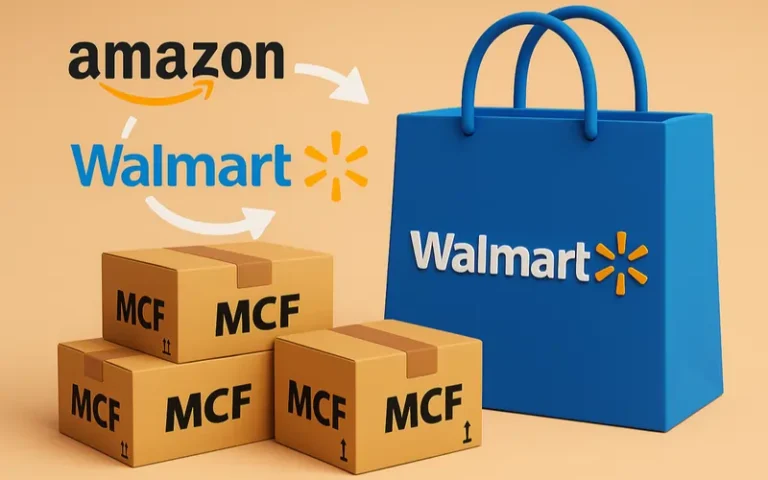
Walmart Officially Allows Amazon Multi-Channel Fulfillment (MCF)
Big news for multichannel sellers: Walmart now officially allows Amazon Multi-Channel Fulfillment (MCF), Amazon’s service for using its fulfillment network to ship orders from mult...

Why More Automation Didn’t Lower Return Costs
Returns automation does improve returns operations: it cuts manual touches, smooths intake, speeds sorting, and makes workflow execution more consistent.
Shopify Subscription Payment Change: Why It Could Hurt Reactivation
Shopify changed how subscription payment information is handled at cancellation.