
Is There Still a Warehouse Shortage? What Ecommerce Brands Are Missing

Last updated on March 27, 2026
In this article
 24 minutes
- Introduction to Warehouse Shortage Challenges
- Causes of Warehouse Shortages
- From Record Scarcity to 1.8 Billion Square Feet of New Supply
- Regional Markets Tell Two Very Different Stories
- Pandemic-Era Leases Have Become Expensive Traps
- Labor Is the Bottleneck That New Space Cannot Solve
- Why Adding Space Does Not Fix Fulfillment Cost Issues
- The Role of Technology in Warehouses
- How Brands Are Rethinking Warehouse Strategy Without New Leases
- Warehouse Management Best Practices
- Conclusion
- Frequently Asked Questions
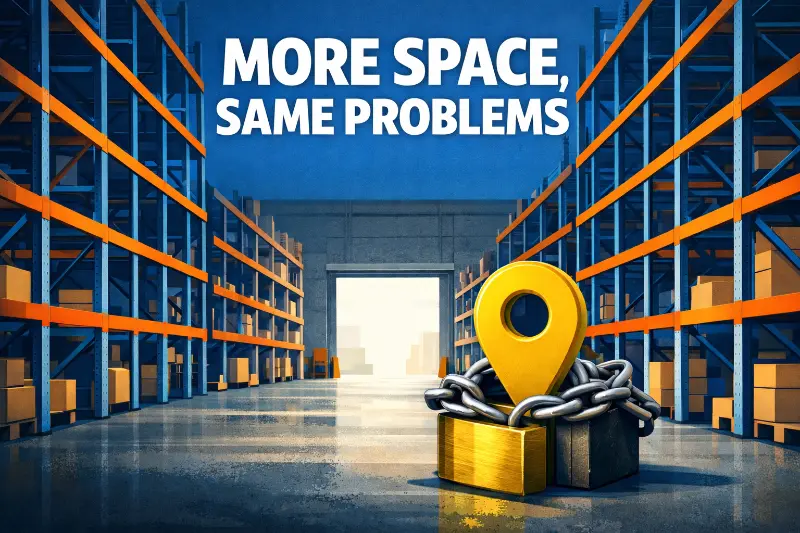
The national warehouse crunch that paralyzed ecommerce supply chains from 2020 to 2023 has effectively ended. U.S. industrial vacancy rates climbed to 7.1% by Q4 2025, more than double the all-time low of 3.0% set in early 2022, according to Cushman & Wakefield. But this headline number masks a deeper, more stubborn problem: ecommerce brands aren’t struggling because they can’t find warehouse space, they’re struggling because space was never the real bottleneck. Labor shortages, shipping zone economics, rigid lease structures, and exploding last-mile costs now dominate the fulfillment equation. For brands that signed leases during the pandemic frenzy, the market correction has turned their real estate into an anchor rather than an asset.
Introduction to Warehouse Shortage Challenges
The warehouse industry is navigating a complex landscape marked by persistent warehouse space shortages, ongoing labor shortages, and escalating labor costs. These challenges ripple through the entire supply chain, driving up higher operational costs, causing delayed shipments, and ultimately impacting customer satisfaction for every category, from general merchandise to brands that require specialized food grade warehouse fulfillment. As e-commerce continues to fuel demand for rapid order fulfillment, many warehouses and distribution centers are under constant pressure to expand capacity and improve efficiency. However, the competition for warehouse workers is fierce, with companies offering increasingly competitive pay and benefits to attract and retain talent. Despite high demand, many warehouses struggle to maintain adequate staffing levels, leading to operational bottlenecks and increased costs. Effective inventory management and streamlined warehouse operations have become essential for companies seeking to stay competitive in this dynamic industry. The warehouse market is dynamic and evolving, with trends pointing to a growing need for flexibility and cost-effective solutions. The ability to adapt to these challenges is now a key differentiator for businesses operating in the warehouse and logistics sector.
Causes of Warehouse Shortages
Warehouse shortages stem from a combination of interrelated factors that challenge even the most prepared companies. The surge in e-commerce has dramatically increased demand for warehouse space, as businesses race to store more inventory closer to their customers for faster order fulfillment. However, this demand has outpaced the available supply of suitable facilities, especially in key markets. Labor shortages further complicate the situation, as many warehouses rely on temporary labor to fill gaps, which can lead to unpredictable staffing levels and operational inefficiencies. The struggle to retain staff is intensified by the need to offer competitive pay and benefits, as workers are often lured away by better opportunities elsewhere. To address these challenges, companies are increasingly turning to technology solutions such as automated storage and retrieval systems, which help reduce reliance on manual labor and improve efficiency. Staffing agencies also play a vital role in connecting warehouses with skilled personnel, helping to manage operations more effectively. Ultimately, overcoming warehouse shortages requires a multifaceted approach that balances investment in technology, competitive compensation, and strategic workforce management.
In recent years, developers have focused on constructing large warehouses in response to the eCommerce boom, which has contributed to a scarcity of smaller spaces, particularly in urban and suburban areas. This trend is especially pronounced in suburban areas, where land is more expensive and less available, leading to higher rent costs and lower tenant churn for smaller warehouse spaces. As a result, warehouses under 100,000 square feet now have a vacancy rate of just 3.9%, compared to 10.9% for larger warehouses, highlighting the significant shortage of smaller spaces available to lease. Additionally, the average size of new 3PL warehousing needs indicates a clear trend toward smaller footprints, driven by increased demand and attractive pricing dynamics.
From Record Scarcity to 1.8 Billion Square Feet of New Supply
The pandemic triggered an unprecedented warehouse land grab. E-commerce penetration surged, consumers stockpiled goods, and supply chain disruptions forced companies to hold more safety stock. Industrial vacancy plunged from 4.9% in early 2020 to an all-time low of roughly 3.0% in Q1 2022. Rents spiked 16% year-over-year in that same quarter. Developers responded with staggering construction: approximately 1.8 billion square feet of new industrial space was delivered across the U.S. between 2020 and 2025, more than the entire previous decade combined.
The correction arrived in 2023. A record 612 million square feet was delivered that year, more than 80% of it built speculatively, yet net absorption fell to just 295 million square feet. Over half the space built in 2023 remained available for lease at year-end. By 2024, net absorption dropped further to 170.8 million square feet, the lowest since 2011. Construction starts collapsed in response, with the under-construction pipeline falling 60% from its peak to roughly 270 million square feet by mid-2025.
Rent growth reflects this shift. After years of double-digit increases, annual rent growth slowed to 2.8% in 2024 and just 1.5% by Q4 2025, the weakest pace since early 2020. Roughly 40% of U.S. markets posted year-over-year rent declines in 2025, with the West Coast down 4.5% and the Northeast off 3.8%. One-third of markets still saw cumulative rent increases of more than 50% between 2020 and 2025, however, meaning the affordability damage from the boom years is already baked in for brands renewing leases now.
Regional Markets Tell Two Very Different Stories
The national average obscures a widening gap between oversupplied Sun Belt boom markets and stubbornly tight logistics hubs. Ecommerce brands choosing warehouse locations based on headline vacancy data risk landing in exactly the wrong market for their customer base.
Markets with excess space
Dallas-Fort Worth saw vacancy hit 9.2% to 11.6% after absorbing more than 115 million square feet of new deliveries since 2023. Phoenix is even more challenged, with overall vacancy at 10.7% to 11.8% and mid-sized warehouse availability exceeding 20%, a glut that could take three or more years to normalize. Savannah soared from a record-low 0.8% vacancy in 2022 to 10.8% to 11.7% after nearly 50 million square feet of deliveries. Memphis sits at roughly 12.7%, the highest in the South. Pennsylvania’s Lehigh Valley corridor saw Class A vacancy climb past 11% with negative net absorption.
Markets that remain genuinely tight
Chicago holds steady at roughly 4.7% vacancy in Q4 2025, with only 1.1% of inventory under construction and 64% of that pre-leased. Kansas City posted the lowest vacancy among major U.S. markets at 4.8%. Houston held at a healthy 6.1%. These markets absorb space steadily because they sit at the center of the country’s population and freight networks.
The split that matters most for ecommerce
The most critical structural gap is between big-box and small-bay space. Large-format warehouses of 300,000 or more square feet hit 10.6% vacancy at mid-year 2025 before settling to 9.8%, a clear oversupply. But small-bay space under 100,000 square feet, exactly what most mid-market ecommerce brands need, remains pinched at just 4.4% to 4.8% nationally, near pre-pandemic lows. The space that got built during the boom does not match the space most brands actually want. Finding a 20,000 to 80,000 square foot facility in a dense metro is still a real challenge.
Pandemic-Era Leases Have Become Expensive Traps
The typical U.S. industrial lease runs five to seven years, with the largest distribution deals averaging 8.2 years in 2025 according to CBRE. Annual rent escalations, which hovered at 2% to 3% before the pandemic, surged during 2021 and 2022. The share of leases carrying escalations above 3% jumped from 7.8% in 2019 to 39.6% in 2022. Current long-term deals carry an average escalation of 3.5% per year. Early termination penalties, when available at all, typically run six to twelve months of rent, plus unamortized tenant improvements and broker commissions. Most commercial warehouse leases contain no early termination clause whatsoever.
The math is punishing for brands that signed during the boom. Total occupancy costs increased 42.2% since 2019 according to Newmark, driven by rent, operating expenses up 19.6%, and insurance up 45%. CBRE found that rental rates on expiring five-year contracts are 25% higher on average compared to when they were signed. But for brands that locked in near the 2022 peak, current market rents have already fallen below their contracted rate. U.S. logistics rents dropped 4.5% year-over-year in 2025 according to Prologis, meaning those tenants are now paying above-market prices with years remaining on their leases.
Amazon’s experience is the most dramatic cautionary tale. The company doubled its fulfillment network in 24 months, leasing 370 million square feet by end of 2021, twice its pre-pandemic footprint. The overshoot contributed to $10 billion in excess costs in the first half of 2022 alone. Amazon subsequently tried to shed at least 14 million square feet through subleases and pullbacks. Pandemic-era lease terms on these spaces extend into 2030 and beyond.
Over 37% of all U.S. industrial leases expire by 2027, many signed at rates far below current market levels but others at 2021 and 2022 peaks. This looming wave of renewals will force difficult decisions on ecommerce brands: renew at rates that may not reflect where their customers actually are, or eat termination penalties and relocate, often prompting a search for order fulfillment case studies from leading 3PL providers to de-risk the next move.
Labor Is the Bottleneck That New Space Cannot Solve
Over 370,000 warehouse jobs sat unfilled in early 2025, a 15% increase from a year earlier. A Descartes survey of 1,000 supply chain leaders found 76% face notable labor shortages, with 37% describing conditions as high to extreme. Warehouse operations and transportation suffer the most. The biggest challenge for warehouse operations is the difficulty in hiring and retaining employees due to a highly competitive job market.
Annual turnover in warehousing runs 46% to 49%, roughly 50% higher than the national average for all industries. Amazon’s turnover rate reaches an estimated 150% annually, with 70% of new hires leaving within 90 days. This churn is extraordinarily expensive. High employee turnover is often due to competition for top talent, with employees leaving for better opportunities. The full cost of replacing a single warehouse worker, including separation, vacancy, recruiting, and ongoing training, averages roughly $18,600 per departure according to KPI Solutions. New hires take six to twelve weeks to reach full productivity. Warehouse labor shortages can lead to inefficiencies such as delayed shipments and fulfillment errors. Investing in employee retention strategies, such as competitive wages and ongoing training, is essential to manage labor shortages. Creating safer jobs in warehouses can help improve employee retention and reduce turnover rates.
Competitive pay, recognition, and clear advancement opportunities help transform warehouse and manufacturing roles into long-term careers. Recruiting from diverse backgrounds opens new doors to skilled and dependable talent, supporting talent development and building a more resilient workforce.
Wages have risen sharply but haven’t closed the gap. Amazon’s starting pay climbed to $22 or more per hour in September 2024, with total compensation exceeding $29 per hour. This forced the entire market upward: UPS warehouse workers negotiated starting pay of $21 per hour in their 2023 Teamsters contract, and Target and Walmart distribution centers reportedly match at $22 per hour. Average warehouse staff hourly rates climbed 48% between 2017 and 2024. While higher wages are a common strategy to address the warehouse labor shortage, they are not the sole solution, and hiring remains difficult due to the competitive labor market. Fulfillment costs spike 30% to 40% during peak seasons due to temporary staffing and overtime, with temp agency fill rates reaching only 70% to 80%. Flexible shifts and dynamic staffing pools can help companies manage labor shortages during peak seasons, and utilizing ecommerce order fulfillment services that outclass traditional 3PLs during peak periods can alleviate pressure on warehouse operations.
Deloitte projects the U.S. will need 3.8 million industrial workers over the next decade but faces a potential shortfall of 1.9 million people. Automation offers a partial solution, with 52% of warehouse operators planning investments over the next three years. But high upfront costs and the shortage of skilled technicians to maintain automated storage and retrieval systems mean relief is years away for most mid-market brands. Automation and technology can help warehouses operate with a reduced physical workforce during labor shortages, and investing in automation technologies can improve safety and stabilize labor needs. Investing in robotics, cobots, and predictive analytics reduces repetitive tasks and gives leaders better visibility into labor planning. Implementing robotics and automation technology helps protect warehouse operations by ensuring they can still function, even with a reduced workforce. Modern warehouse management systems can enhance worker morale by providing clear instructions and real-time feedback. Automation can reduce reliance on manual labor while improving inventory control and overall warehouse operations. The global warehouse automation market is projected to grow significantly, indicating a shift towards automated solutions in response to labor shortages. Companies that implement automation report better inventory turnover rates and enhanced customer satisfaction, especially when paired with an order fulfillment service where peer-to-peer beats old 3PLs. Technology and smart automation can reduce repetitive tasks and improve visibility into labor planning.
Modern warehouse management systems guide workers through order processes with clear instructions, touch screens, and real-time feedback, making workers more confident in their roles.
Shortages of qualified warehouse personnel are causing slower loading cycles and reduced efficiency, limiting warehouse capacity. Collaborating with trade schools and workforce programs can help develop future talent for warehouse operations.
Recently, changes in worker availability and preferences have further impacted labor shortages and workplace conditions in the supply chain.
The key operational reality for ecommerce founders is this: you can sign a new warehouse lease tomorrow and still not be able to staff it consistently. The warehouse labor shortage is not a problem that square footage solves.
Why Adding Space Does Not Fix Fulfillment Cost Issues
The most persistent misconception in ecommerce logistics is that warehouse rent drives fulfillment expense. In reality, rent represents just 3% to 6% of total fulfillment cost per order when outbound shipping is included. The dominant cost drivers are labor at 45% to 65% of warehouse operating costs and outbound shipping at 40% to 70% of total fulfillment cost. Last-mile delivery alone accounts for 53% of all shipping costs, averaging $10 per small urban package and up to $50 for large rural deliveries.
Shipping zone economics dwarf any rent savings. A 5-pound package shipped via FedEx Ground costs roughly $11.98 in Zone 2 (under 150 miles) but $18.42 in Zone 8 (over 1,800 miles), a 54% premium. For UPS the gap widens further. A brand shipping 1,000 packages per month primarily to customers in Zones 7 and 8 instead of Zones 2 and 3 faces over $100,000 in additional annual shipping costs. Cross-country shipments cost 40% to 60% more than regional deliveries.
Carrier rate increases compound the problem. UPS and FedEx have implemented 5.9% general rate increases for three consecutive years through 2026, well above the pre-pandemic norm of 3% to 4%. Surcharges for higher zones have jumped even further, and peak-season residential surcharges have climbed over 25%. USPS Parcel Select rates climbed 9.2% in 2024 with further increases planned.
Increased costs for storage and expedited shipping are compressing profit margins, especially for businesses operating with tight margins. Overcrowded warehouses can also lead to lower productivity and increased safety risks.
The implication is direct. A brand operating from a single West Coast warehouse reaches two-day ground delivery for only a sliver of the U.S. population. Adding a second warehouse doesn’t just reduce rent per order, it fundamentally restructures the shipping cost equation. Two strategically located fulfillment centers, for example Knoxville and Salt Lake City, can reach 96% of U.S. households within two days via ground shipping. Four nodes can provide one to two day delivery to 99.97% of the continental U.S. while cutting shipping costs 15% to 25%. That is a real savings number. A lease in a cheap Sun Belt market with 11% vacancy does not produce anything close to that.
The Role of Technology in Warehouses
Technology is rapidly reshaping how warehouses operate, offering powerful tools to optimize logistics operations, streamline inventory management, and reduce labor costs. Automated storage and retrieval systems are becoming standard in many warehouses, minimizing the need for manual labor and significantly improving accuracy and speed in inventory flow. These systems not only enhance productivity but also help mitigate the risks associated with labor shortages and high turnover. Advanced inventory management software enables companies to track stock levels in real time, optimize storage, and ensure efficient order processing. Data analytics and artificial intelligence are increasingly used to forecast demand, identify operational bottlenecks, and inform strategic decisions across the supply chain, including whether to rely on traditional 3PLs or a peer-to-peer fulfillment network versus 3PL. By embracing these technological advancements, companies can achieve greater efficiency, reduce operational costs, and position themselves for sustainable growth in a highly competitive market.
Innovation—through advancements like artificial intelligence, robotics, and shared logistics platforms—serves as a strategic driver for resilience, operational efficiency, and future growth in logistics.
How Brands Are Rethinking Warehouse Strategy Without New Leases
The rise of fractionalized space and spot warehousing is a direct response to the growing demand for flexible, attractively priced alternatives to traditional long-term leases. Flexible warehousing offers significant opportunities for optimization and enables companies to respond quickly to both short-term disruptions and long-term growth opportunities.
Rather than signing new leases, ecommerce brands are increasingly turning to asset-light fulfillment models. For many, this involves shifting from an in-house warehouse to a 3PL. The numbers suggest this is a structural shift, not a temporary workaround.
Third-party logistics networks
3PLs now handle fulfillment for 60% of ecommerce brands at least partially, with 37% fully outsourcing. The U.S. 3PL market reached $308 billion in 2024 and is projected to nearly double by 2033. For brands shipping under 1,000 orders per month, 3PLs typically cost 20% to 40% less than self-fulfillment thanks to negotiated carrier rates and shared infrastructure, and many sellers rely on top Amazon 3PL shipping companies for reliable fulfillment to capture these advantages. Third party logistics providers play a crucial role in managing inventories, distribution, and fulfillment, especially as the industry faces staffing challenges and market fluctuations. The average size of new 3PL warehousing needs indicates a trend toward smaller footprints.
The strategic advantage is not just cost, it is placement. A 3PL network with nodes in Chicago, Dallas, Atlanta, and Los Angeles reaches the entire U.S. population more efficiently than any single owned or leased facility, and brands evaluating partners should consider providers that support Amazon SFP-focused 3PL fulfillment services and follow a structured approach to choose the right 3PL company.
On-demand and flex warehousing
On-demand warehousing is projected to reach $26.2 billion by 2030 at a 15.3% annual growth rate. Platforms in this space operate networks of thousands of warehouse locations and can stand up new distribution capacity in two to four weeks versus three to nine months for traditional lease implementations. Pricing is consumption-based rather than fixed-lease, converting a long-term capital obligation into a variable operating expense. This model is particularly effective for managing peak season demand without the permanent overhead of excess space and is increasingly attractive for brands evaluating alternatives to traditional 3PL ecommerce fulfillment.
Shared and co-warehousing
Shared warehouse concepts provide small to midsize brands with month-to-month space, shared equipment, and fulfillment services at a fraction of dedicated facility costs. Marketplace sellers reduce warehouse fees an estimated 20% to 30% through shared infrastructure. These arrangements also sidestep the warehouse labor shortage problem, since staffing is handled by the operator, not the brand, making them especially compelling when paired with the best 3PL options for small businesses or a top 3PL for Amazon Seller Fulfilled Prime.
Distributed inventory as a competitive strategy
The brands gaining ground are not chasing the cheapest lease in an oversupplied Sun Belt market. They are reframing the question entirely, moving from “where can we find warehouse space?” to “where do our customers live, and how do we reach them in two days at the lowest total cost?” Analyzing order data by zip code and overlaying it against carrier zone maps reveals, in most cases, that the optimal warehouse footprint looks nothing like the single-facility model most brands start with. That analysis costs nothing, and when layered with a clear understanding of 3PL costs for ecommerce fulfillment, it becomes a powerful decision framework. Committing to the wrong lease costs years.
Warehouse Management Best Practices
Effective warehouse management is the cornerstone of a successful warehouse or distribution center. Implementing best practices such as ongoing training for staff ensures that the workforce remains skilled and adaptable to new technologies and processes. Optimizing inventory management is crucial for maintaining accurate stock levels, reducing excess inventory, and improving order accuracy. Leveraging technology to automate routine tasks and streamline operations can lead to significant gains in productivity and efficiency. Retaining staff through competitive pay and comprehensive benefits is essential, as a stable and experienced workforce directly contributes to operational excellence. Additionally, maintaining a safe and healthy work environment, managing equipment maintenance, and controlling transportation costs are all critical components of effective warehouse management, especially for retailers scaling on platforms like Shopify who must follow a guide to choosing the right Shopify order fulfillment option and choose the best 3PL for their store. By focusing on these areas, companies can reduce operational costs, improve lead times, and drive growth, ensuring their warehouses remain agile and responsive to market demands.
Conclusion
In summary, warehouses and distribution centers are facing a host of challenges, from labor shortages and warehouse space constraints to rising labor costs and evolving supply chain demands. To remain competitive, companies must invest in technology, prioritize staff retention, and implement robust inventory management and logistics operations. Adopting best practices and leveraging technological innovations can significantly enhance productivity, efficiency, and growth while keeping operational costs in check. The warehouse industry is in a state of constant evolution, requiring businesses to stay agile and responsive to shifts in market conditions and customer expectations. As e-commerce continues to drive demand for faster and more reliable fulfillment, optimizing warehouse operations and investing in skilled personnel will be key to long-term success. By proactively addressing these challenges, companies can position themselves at the forefront of the industry, ready to capitalize on new opportunities and navigate the complexities of the modern supply chain.
Frequently Asked Questions
Is there still a warehouse shortage in the United States?
No, not in the broad sense. National industrial vacancy reached approximately 7.1% by late 2025, more than double the historic low of 3.0% set in early 2022. Big-box space in markets like Dallas-Fort Worth, Phoenix, and Memphis is in clear oversupply. However, small-bay space under 100,000 square feet remains tight at 4.4% to 4.8% nationally, and several major logistics hubs including Chicago and Kansas City continue to see healthy demand with limited availability.
Why are ecommerce fulfillment costs still rising if warehouse space is more available?
Warehouse rent represents only 3% to 6% of total fulfillment cost per order. The dominant cost drivers are labor, which accounts for 45% to 65% of warehouse operating costs, and outbound shipping, which can represent 40% to 70% of total cost. Both have increased substantially. Carrier general rate increases of 5.9% per year through 2026, combined with surcharge escalation and the warehouse labor shortage, are pushing total fulfillment costs higher regardless of what is happening to lease rates.
What is the real constraint on warehouse operations today?
For most ecommerce brands, labor availability is the primary operational constraint. Over 370,000 warehouse jobs were unfilled in early 2025. Annual turnover runs 46% to 49% industry-wide, driving constant recruiting, training, and productivity losses. The cost of replacing a single warehouse worker averages roughly $18,600. A brand can sign a new lease in a market with plenty of available space and still struggle to staff it reliably.
How does warehouse location affect shipping costs?
Significantly. Carrier pricing is structured around shipping zones based on the distance between the origin warehouse and the delivery destination. A 5-pound package shipped via FedEx Ground from Zone 2 costs roughly 54% less than the same package shipped from Zone 8. A brand with its only warehouse on the West Coast will ship the majority of U.S. orders at Zone 5 through Zone 8 rates, paying substantially more per package than a brand with strategically placed nodes in the central U.S. For most ecommerce brands shipping 500 or more orders per month, this zone cost difference far exceeds any savings achievable through cheaper rent.
What is a shipping zone and why does it matter for order fulfillment?
Shipping zones are geographic bands that major carriers use to calculate delivery costs based on distance from the origin point. Zone 1 is the closest (under 50 miles) and Zone 8 is the farthest (over 1,800 miles). Every carrier, including UPS, FedEx, and USPS, applies higher rates to higher zones. Brands with inventory located far from their customers’ geographic concentration pay more per shipment on every single order, which compounds significantly at scale.
Should ecommerce brands sign warehouse leases in oversupplied markets to save on rent?
Not without running the full fulfillment cost model first. Cheap rent in an oversupplied market like Phoenix or Memphis may look attractive, but if that location results in a higher average shipping zone for your customer base, the shipping cost increase will likely exceed the rent savings by a wide margin. Labor availability in those markets is also not guaranteed to be better. The correct decision framework starts with analyzing where your customers are located, then working backward to the optimal warehouse placement, then evaluating what lease or third-party fulfillment arrangement makes sense in those locations.
What alternatives exist to signing a traditional warehouse lease?
The main alternatives are third-party logistics networks, which handle space and labor under a pay-per-order or storage-plus-fulfillment model; on-demand warehousing platforms, which offer consumption-based space access without multi-year commitments; and shared or co-warehousing arrangements, which provide month-to-month access to shared facilities and staff. Each removes the fixed-cost structure and long-term obligation of a direct lease, while offering faster setup and the ability to shift nodes as demand patterns change, which is especially important for channels like Wayfair that benefit from the best 3PL for Wayfair order fulfillment.
How long is a typical warehouse lease and what does early termination cost?
Most U.S. industrial leases run five to seven years. Large distribution center deals average 8.2 years. Early termination clauses are not standard, and when they do exist they typically require a penalty of six to twelve months of rent plus reimbursement of unamortized tenant improvements. Many leases offer no early exit at all, meaning brands that sign in the wrong location are effectively committed for the full term. This rigidity is one of the primary reasons asset-light fulfillment models have grown so rapidly among mid-market ecommerce brands.
Written By:

Rinaldi Juwono
Rinaldi Juwono leads content and SEO strategy at Cahoot, crafting data-driven insights that help ecommerce brands navigate logistics challenges. He works closely with the product, sales, and operations teams to translate Cahoot’s innovations into actionable strategies merchants can use to grow smarter and leaner.

Turn Returns Into New Revenue

Related Articles
Walmart Officially Allows Amazon Multi-Channel Fulfillment (MCF)
Big news for multichannel sellers: Walmart now officially allows Amazon Multi-Channel Fulfillment (MCF), Amazon’s service for using its fulfillment network to ship orders from mult...
Why More Automation Didn’t Lower Return Costs
Returns automation does improve returns operations: it cuts manual touches, smooths intake, speeds sorting, and makes workflow execution more consistent.

Shopify Subscription Payment Change: Why It Could Hurt Reactivation
Shopify changed how subscription payment information is handled at cancellation.