
Peer-to-Peer vs Warehouse Returns: A Structural Comparison

Last updated on May 18, 2026
In this article
 13 minutes
- Warehouse Returns Are Built Around a Centralized Reverse Logistics Loop
- Peer-to-Peer Returns Are Built Around Forward Routing
- This Is an Architecture Decision, Not a Workflow Tweak
- Convenience Can Improve the Experience Without Changing the System
- Once Routing Changes, Everything Else Changes With It
- Not Every Return Needs the Same Path
- Conclusion
- Frequently Asked Questions
Most returns content compares portals, labels, and drop-off options. The more important question is where the inventory goes next. Peer-to-peer returns and warehouse returns are not two slightly different versions of the same process. They are different routing systems, and that difference changes transport, labor, recovery speed, fraud exposure, and markdown risk.
That distinction matters because ecommerce returns are large enough to shape operating strategy, not just post-purchase workflow. Average ecommerce return rates are high enough that the approved source pack uses NRF and Happy Returns data showing that retailers estimated 16.9% of annual sales would be returned in 2024, totaling $890 billion. In 2025, total retail returns are estimated to reach $849.9 billion, with 19.3% of online sales expected to be returned, highlighting the significant impact of returns on ecommerce businesses. At that scale, routing is not a minor process preference. It determines how many shipping legs, queue points, labor touches, and resale delays get built into the system before optimization even starts.
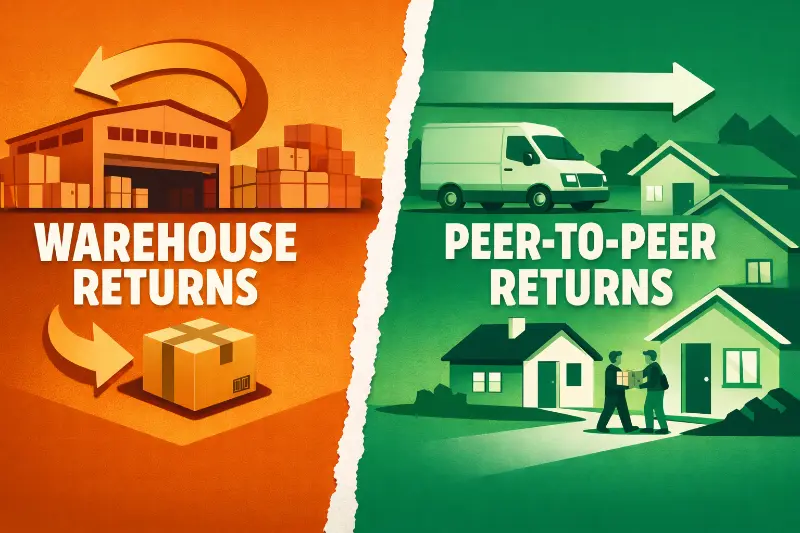
In the traditional warehouse-centric return loop, ecommerce returns are sent back to a brand or warehouse processing center, where items are inspected, restocked, and eventually resold. This process adds extra steps, costs, and delays, amplifying the true cost of “free” returns for retailers. In contrast, peer-to-peer returns allow the original buyer to ship the item directly to a new customer, bypassing the processing center entirely, which reduces costs, speeds up refunds, and improves sustainability.
Warehouse Returns Are Built Around a Centralized Reverse Logistics Loop
Traditional returns start from one assumption: the item needs to go back to a warehouse, return center, or DC before it can re-enter commerce. That creates the familiar reverse flow: the customer initiates the return, the item ships backward into the network, it enters centralized intake, it gets inspected, then it is repackaged, restocked, liquidated, or disposed. That is the logic behind the warehouse-centric return loop.
The important point is not that warehouses sometimes execute returns badly. It is that inbound shipping, centralized labor, queue time, and resale delay are built into the model itself, which is why a high ecommerce return rate can erode profit margins through reverse logistics costs. Two shipping legs are unavoidable. Labor is unavoidable. Delay is unavoidable. Markdown exposure is unavoidable. In this architecture, value recovery happens only after the item travels backward, waits, gets touched, and gets processed. The cash flow impact is similar to operating a bank account that constantly loses value through fees and delays, draining resources. Compared to the safety and predictability of bank deposits, traditional returns expose retailers to more risk and uncertainty, with no federal insurance or guarantees. The slow and costly nature of traditional returns is much like the low yields of traditional savings accounts—inefficient and uncompetitive compared to modern alternatives. Additionally, traditional return processes can take several weeks for customers to receive their refunds, which negatively impacts satisfaction. In contrast, peer-to-peer returns can reduce costs associated with return shipping, warehouse labor, and customer service, making the process more efficient than traditional returns.
Peer-to-Peer Returns Are Built Around Forward Routing
Peer-to-peer returns start from a different assumption. Drawing a parallel to peer p2p lending, peer to peer lending, peer lending, marketplace lending, and lending platforms, which use online platforms to connect individual lenders directly with individual borrowers, peer-to-peer returns leverage online platforms to connect returners directly with the next customer. Instead of treating the warehouse as the default destination, the system checks whether the return is eligible to move directly to the next buyer. Much like loan listings in social lending, where individual lenders review and fund requests from individual borrowers, peer-to-peer returns enable a direct connection between the returner and the next customer, bypassing traditional intermediaries.
In the approved framing for what peer-to-peer returns are, the customer still initiates the return through a branded experience, but an eligible item is rerouted, not reprocessed. A like-new or open-box listing can be created, and the returner uses a shipping label to send the item directly to the next customer instead of back to centralized intake. This process allows customers to ship returned items directly to new buyers, bypassing the warehouse, which reduces costs and speeds up the resale process. Additionally, peer-to-peer returns enhance sustainability by reducing carbon emissions and packaging waste associated with traditional return logistics, as items are forwarded directly to new customers.
That sounds like a simple change, but it is not a cosmetic one. It changes where the item goes next, how many handoffs it experiences, how quickly it can be resold, and which cost layers disappear altogether. For the detailed mechanics, see how peer-to-peer returns actually work. The point here is narrower: peer-to-peer returns are a forward-moving routing model for eligible inventory.
This Is an Architecture Decision, Not a Workflow Tweak
This is the center of the comparison. Most teams frame returns decisions around refund timing, portal design, label convenience, or drop-off experience. Those choices matter, but they sit on top of a more consequential design choice: does returned inventory move backward to a centralized intake node, or can eligible inventory move forward to the next buyer? That routing assumption is what changes cost, speed of recovery, inventory velocity, and fraud surface area, especially as ecommerce return rates continue to rise—much like how peer to peer investing decisions impact risk, liquidity, and returns for investors.
A returned shirt makes the difference easy to see. In a warehouse model, it ships back to a return center, waits for intake, gets checked, gets rebagged or restocked, and only then has a chance to re-enter demand. In a peer-to-peer model, that same eligible shirt can move directly from the returner to the next buyer with no inbound warehouse handling at all. The item did not change. The route did. That is why the system changed with it.
This routing decision parallels the way investors approach peer-to-peer lending platforms, where individual and institutional investors lend money directly to borrowers, bypassing traditional financial institutions and traditional banks. Investors must assess credit risk, liquidity risk, and the risks involved—such as borrower defaults—when evaluating loan offers and deciding how to allocate money across loans. Just as investors can spread capital across multiple loans to mitigate the impact of borrower defaults and align with their risk tolerance and financial goals, brands must make informed decisions about routing to balance higher returns, attractive returns, and lower risk in their returns process.
Peer-to-peer lending platforms match lenders with borrowers, assess borrower creditworthiness, and assign risk grades that determine interest rates. These platforms offer attractive interest rates and higher returns compared to traditional loans or savings accounts, but also come with higher risk, especially since many loans are unsecured and not government-insured, meaning loss of capital is possible. P2P loans are fixed-income assets with defined interest rates and repayment schedules, making them less volatile than stocks, but liquidity risk remains since investments are often tied up for 3–5 years unless a secondary market is available. Economic downturns can increase borrower defaults, impacting net returns. The regulatory landscape is also fragmented, with some states limiting or prohibiting peer-to-peer investing.
Ultimately, just as investors in peer-to-peer lending must weigh the risks and benefits of lending money to borrowers—considering factors like good credit, business loans, personal loans, lower interest rates, and the ability for the borrower to repay—brands must evaluate whether backward or forward routing best aligns with their operational risk tolerance and financial objectives. Both models require careful risk management and a clear understanding of the potential for higher returns versus the risks involved.
Convenience Can Improve the Experience Without Changing the System
This is where modern returns conversations often get confused. Better portals, easier labels, and box-free drop-off can improve the customer experience and boost customer satisfaction by making returns less of a hassle, but they do not fundamentally change the inventory path. Customers prefer a return process that is quick and easy, as they dislike the hassle of traditional return methods that involve printing labels and waiting for refunds, which is why many brands focus on streamlining return labels and digital alternatives. Peer-to-peer returns can improve customer satisfaction by providing a quicker and more convenient process, allowing customers to receive refunds faster than traditional methods. That is why returns software doesn’t actually fix returns. Software improves intake, not routing. Convenience does not equal structural change.
The source pack gives concrete examples. UPS acquired Happy Returns’ reverse logistics network in 2023, and FedEx launched FedEx Easy Returns in 2025. Those are meaningful signals that the market is investing in faster, easier return entry. But they are also evidence that the industry is still strengthening collection and reverse logistics infrastructure, not necessarily escaping it. The point is not that convenience is unimportant. The point is that modern returns convenience and modern returns redesign are not the same thing. Peer-to-peer returns can significantly reduce shipping costs and eliminate return shipping and restocking fees, which can average 20% of revenue for ecommerce businesses. Additionally, by forwarding items directly to new customers, peer-to-peer returns help reduce packaging waste and lower the carbon emissions associated with traditional return logistics, enhancing sustainability efforts.
Amazon’s “frequently returned” visibility adds another signal. Returns are no longer just a back-room operating issue. They are visible enough to influence the shopping experience itself. That does not prove peer-to-peer is the right answer for every category. It does show that the old model is under pressure in ways shoppers can increasingly see.
Once Routing Changes, Everything Else Changes With It
The cost difference starts with routing. In a warehouse model, backward movement creates inbound transport, intake labor, queue-driven delay, avoidable rehandling, and repeated markdown exposure by design. In a forward-routing model, eligible items can skip warehouse intake, redundant shipping, and some of the labor tied to centralized inspection and restocking. As many retailers reassess whether free returns are still sustainable, routing becomes a first-order lever. For ecommerce businesses, especially ecommerce brands and small business owners, peer-to-peer returns can significantly reduce costs by eliminating return shipping and restocking fees, which can average 20% of revenue. This model also allows for faster resale of returned items, as products can be sold directly to new customers without going through traditional return processing, thus improving cash flow. In fact, ecommerce businesses can resell returned items quickly, often at 85-95% of retail value, without incurring additional shipping and handling costs. Additionally, peer-to-peer returns enhance sustainability efforts and reduce environmental impact by lowering carbon emissions and packaging waste associated with traditional return logistics, as items are forwarded directly to new customers instead of being shipped back to warehouses. That is the basic logic behind the hidden economics of a return and the economics of peer-to-peer returns.
Time is the hidden destroyer here. The approved source pack is explicit that teams underestimate returns when they flatten them into an average and ignore how costs stack across shipping, labor, delay, markdown pressure, and fraud exposure. Time destroys value in reverse logistics because every extra queue pushes recovery farther away from fresh demand. Delay creates markdown drag.
Routing also changes control. A warehouse-centric model creates more handoffs and more opacity. A shorter chain changes the fraud equation because accountability is clearer when fewer parties touch the item. It also changes the role of the warehouse. Once selective forward routing exists, the warehouse stops being the default destination for everything and becomes an exception handler for the returns that truly need centralized processing, while lighter-weight tools like a returns management solution such as Return Prime can focus on policy, routing rules, and customer communication instead of owning all the physical logistics.
Not Every Return Needs the Same Path
A credible comparison has to say this plainly: not every SKU belongs in peer-to-peer. Fragile items, defective items, regulated goods, and timing-sensitive returns may still need warehouse handling. That is the hybrid reality, and it is why where peer-to-peer returns don’t work matters as much as the upside case.
The point is not to replace warehouses with ideology. The point is to stop sending every return through the same expensive path by default. Peer-to-peer is most credible as a selective structural layer for eligible inventory, while warehouses continue to handle exceptions, defects, and non-qualifying items. Warehouses still matter, just not for every return. That is the practical middle ground.
Conclusion
When operators say they want a better returns process, they usually mean a better front door. But the real comparison starts after the customer clicks return. Warehouse returns optimize the backward loop. Peer-to-peer returns reroute eligible items out of it. One model tries to manage transport, labor, delay, and markdown exposure more efficiently. The other changes the route so some of those layers never appear in the first place. That is why this is not a portal decision. It is an architecture decision. And it is also why returns need to go forward, not back.
Frequently Asked Questions
Are peer-to-peer returns just another kind of returns portal?
No. A portal can exist in either model. The structural difference is what happens after return initiation. In a warehouse model, the item goes back to centralized intake. In a peer-to-peer model, an eligible item can be rerouted directly to the next buyer.
Do peer-to-peer returns replace warehouses?
No. The approved model is explicitly hybrid. Warehouses still matter for defective, fragile, regulated, or timing-sensitive returns. Peer-to-peer is a selective structural layer for eligible inventory, not a universal replacement.
Why doesn’t box-free drop-off solve the same problem?
Because easier return entry is not the same as changing the inventory route. The source pack uses UPS and Happy Returns plus FedEx Easy Returns as evidence that convenience infrastructure is improving even while reverse logistics infrastructure remains central.
What kinds of returns are best suited for peer-to-peer?
The approved framing centers peer-to-peer on eligible, resellable items that can move forward as like-new or open-box inventory. Damaged, highly fragile, regulated, or otherwise unsuitable items are better candidates for warehouse handling.
Why does routing matter so much economically?
Because routing determines which costs exist at all. Backward movement adds transport, labor, queue time, and delay. Forward movement can remove some of those layers before optimization begins. That is why the gap starts with path design, not just better processing after the item has already come back.
Written By:

Manish Chowdhary
Manish Chowdhary is the founder and CEO of Cahoot, the most comprehensive post-purchase suite for ecommerce brands. A serial entrepreneur and industry thought leader, Manish has decades of experience building technologies that simplify ecommerce logistics—from order fulfillment to returns. His insights help brands stay ahead of market shifts and operational challenges.

Turn Returns Into New Revenue
Related Articles

The Hidden Economics of a $100 Return
The cost of returns is one of the most systematically underestimated figures in ecommerce finance.
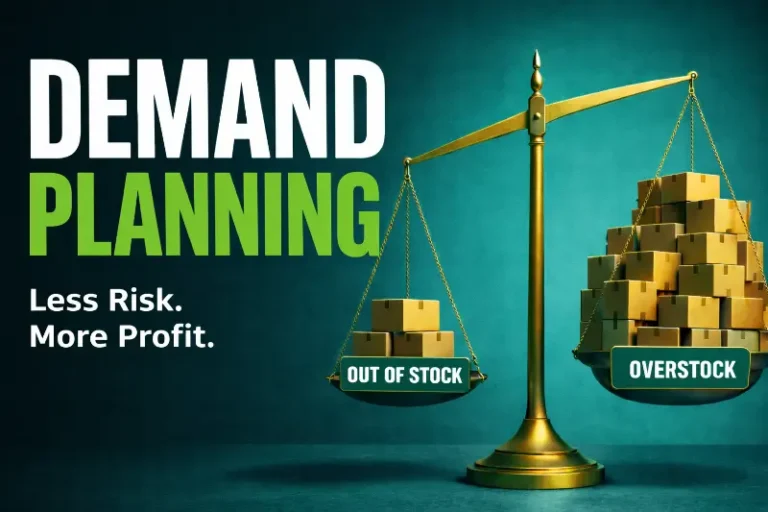
What Is Demand Planning? How It Impacts Inventory, Forecasting, and Profitability
Demand planning is the process of estimating future customer demand so that a business can align its inventory, procurement, and operations to meet that demand without carrying mor...
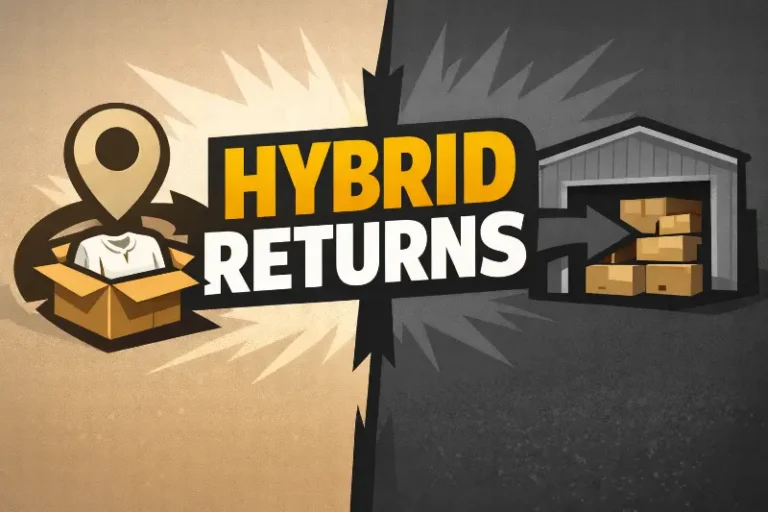
Why 100% P2P Adoption Is the Wrong Goal
Peer-to-peer returns let customers send eligible returned items directly to other customers instead of routing every package back through the warehouse, cutting shipping and proces...