
Crafting a Return Policy that Drives Customer Loyalty and Reduces Returns

Last updated on October 09, 2026
In this article
 9 minutes
- How to Create a Returns Policy With Store Credit That Benefits Both Your Customers and Your Business
- Balancing Generosity and Profitability in Your Returns Policy: Managing Return Shipping Costs
- Monitoring and Improving Your Returns Policy Based on Customer Feedback and Customer Satisfaction
- Final Thoughts: Why Your Returns Policy Should Be a Key Component of Your Loyalty Strategy
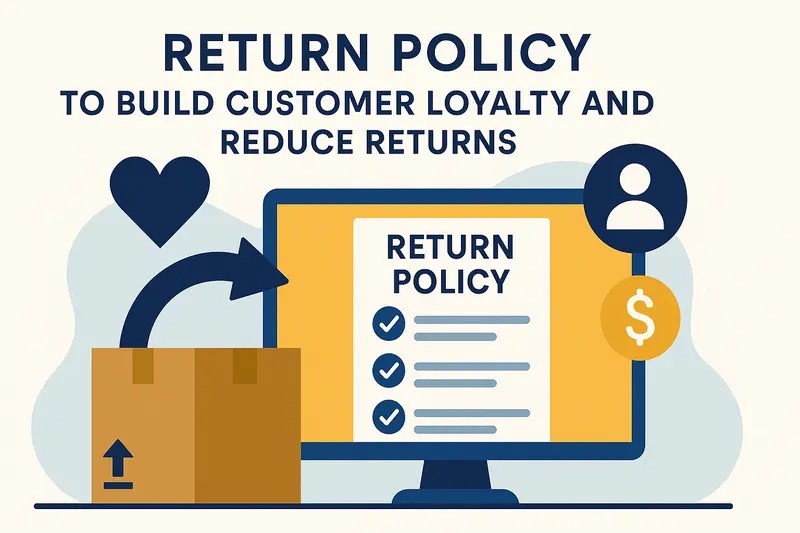
Let’s talk about ecommerce returns policies. A return policy is the set of rules that explains how customers can send products back, and the best ones use simple language so people can understand their options quickly and buy with confidence. You might be thinking, “What’s the big deal? It’s just a formality, right?” Well, no; your returns policy can either make or break your relationship with your customers. If done right, it builds trust through transparency, improves the customer experience, and supports repeat purchases. If done wrong, it can prevent new customers from buying from you, create avoidable returns friction, or worse, send your loyal customers running for the hills.
A clear, customer-friendly returns policy isn’t just some legal jargon to throw on your website for show. It’s a vital piece of your customer growth and retention strategy. For ecommerce business owners and managers, a customer centric return policy helps balance generosity with profitability, gives you a framework for handling returns consistently, and gives customers a reason to trust your store. In this guide, you’ll see how to write a simple, clear policy, use customer feedback to improve it, and connect it to a broader loyalty strategy so returns management supports business growth instead of creating operational headaches.
How to Create a Returns Policy With Store Credit That Benefits Both Your Customers and Your Business
Let’s dive into the how: how do you create a returns policy that strikes a perfect balance between establishing confidence and trust in your brand, and giving away the farm? First, keep it simple. Your returns policy should be straightforward enough that anyone can understand it in a few seconds. Use simple language. Don’t hide the details. Don’t make it overly complex with all kinds of ifs, thens, and buts. Customers don’t want to dig through pages of fine print to figure out how to return something. No one has time for that, especially when they’re annoyed about needing to send an item back.
Next, let’s talk about timing. You need to give your customers enough time to make up their minds. A customer centric return policy should set a certain time window with a clear start date and end date. A reasonable return window (30 days? 45 days?) is fair, but don’t go overboard. A year to return a pair of socks might sound generous, but it’s a logistical nightmare. Somewhere between “24 hours” and “whenever you feel like it” is the sweet spot. Make sure your policy includes crystal clear instructions: what’s returnable, whether you accept returns on specific items, how to submit a return form, whether items need original packaging, how refunds are handled through the original payment method or store credit, and how customers can contact support if they need help. A user friendly layout also makes those details easier to find.
Here’s an example: I bought a pair of shoes online. They were great in theory: super stylish. But, when I tried them on, they made me look like I was auditioning for a ’90s boy band. Not the vibe I was going for. Thankfully, the return policy was clear and painless. It wasn’t complicated, it didn’t require a dozen emails back and forth, and I got my refund promptly. That’s the type of experience you want to offer: easy, fast, and no run-around. A simple, straightforward policy will make your customers feel like you’ll take care of them if it comes down to it, which improves the broader customer experience, and that’s important for growing organic brand affinity.
Balancing Generosity and Profitability in Your Returns Policy: Managing Return Shipping Costs
Now, here’s the tricky part: balancing generosity and profitability. You want to be kind and flexible, but you also need to make sure your returns policy keeps the financials manageable. A flexible return policy can still protect your margins if it also includes safeguards against ecommerce returns fraud. Offering free returns on every single order sounds nice, but in reality, not all businesses can afford it, and not all products warrant it because of the true cost of free returns.
Here’s the trick: limit what’s eligible for free returns. For example, offer free returns only on high-ticket items or for orders above a certain value. For smaller items, you could charge a small return fee, clarify any shipping charges, or ask customers to cover return shipping costs. And if your customers are loyal and happy, they’ll be more likely to accept small fees for the service you’re offering.
Other options include a product pricing strategy that increases prices and order value across the board so there’s some extra room to absorb the cost of returns as a whole, rather than treating them on a one-by-one basis, especially as many retailers are rethinking whether free returns are sustainable. That can support sales without making every order unprofitable. Or consider incentivizing customers to keep items by offering discounts on future purchases. This can be effective for encouraging customers to choose store credit. If you really want to get creative, offer exchanges instead of cash refunds for certain returns. This retains the revenue while still letting the customer pick something else out, and they don’t feel like they’re losing out on their original purchase or money.
Here’s a real-world analogy: I bought an inexpensive phone case from a popular online retailer, but I wasn’t thrilled with it. It was cheaply made, so I wanted to return it. I wasn’t annoyed by the small return fee because the company had been transparent about it upfront, including any shipping fees. It didn’t feel like they were trying to sneak anything past me. And, honestly, the small fee was worth it to me because they took care of me quickly and offered amazing customer service during the entire process. They were fair with me, so I was fair with them, and that turned me into a repeat customer. When the item qualifies for a full refund, many businesses send it back to the original payment method, following well-known standards like major marketplace returns policies. You can do the same: offer free returns where it counts, and keep your bottom line in check elsewhere.
Monitoring and Improving Your Returns Policy Based on Customer Feedback and Customer Satisfaction
So, you’ve got your returns policy in place. Great. Now what? Keep an eye on it! Your returns policy isn’t a one-and-done deal. The best policies evolve, just like your business does. And the best way to improve? Customer feedback. This is where the real magic happens. For perspective, some brands go much further: Brooklinen offers a 365-day return period, Patagonia’s Ironclad Guarantee allows returns or repairs anytime, Baseballism has a lifetime return policy for all purchases, and Mejuri offers free returns within 30 days for select countries.
Check your return data. Why are customers returning items? Is it because of sizing issues, poor product descriptions, or something else? Tracking return reasons gives you the power to fine tune your policy and product pages, which can improve customer satisfaction while also making managing returns easier and help you respond to the rise of e-commerce return rates. Say you run an apparel shop, and a certain jacket is frequently returned for being too small. Then maybe you need a better size guide. Or, if customers consistently say an item’s color isn’t what they expected, perhaps you need better product photos and/or descriptions.
Just keep in mind that your returns policy should be a living, breathing document that adapts to the changing needs of your customers and your business, and returns management software can support that with automated, data-driven returns workflows. Regularly reviewing feedback and adjusting your policy accordingly will help you stay in sync with customer expectations.
Final Thoughts: Why Your Returns Policy Should Be a Key Component of Your Loyalty Strategy
When you’re building out your returns policy, don’t just slap something together and call it a day. It’s a critical part of your customer loyalty strategy and should be afforded the attention that it deserves. Trust me, if your returns policy is super easy, clear, and fair, it can be the key to a relationship with your customers that keeps them coming back for more. When people know they won’t get stuck with a dud product, they’re way more likely to hit that “Buy” button now, and again in the future.
Remember, when it comes to your returns policy, you’re not just fixing post-purchase problems, you’re building loyalty. Think about it: nobody likes jumping through hoops to return something. A clear returns page, simple return labels, and a hassle free experience show consumers that convenience and responsibility matter to your ecommerce business. So, if you can make it easy and communicate that from the start, they’ll remember that. Happy customers are loyal customers, and an exceptional returns program makes it much more likely they’ll come back to your store. And loyal customers are how you grow a successful business, especially when you back your promises with eco-friendly returns practices. Here’s the recap: Keep it simple, clear, and fair. Don’t overcomplicate it. Offer free returns when it makes sense, and track return reasons in your data so you can fine tune the policy. You’d be surprised at how much info you can get from customer feedback; use it to improve your policy, but also use it to improve your products and merchandising to reduce returns in the first place and manage them more efficiently, while still crafting the perfect e-commerce returns program. Over time, it’ll become more than just a “customer service thing” that online shoppers expect. It’ll actually help attract new customers, keep them around, and improve customer satisfaction along with policy performance. And isn’t that what we’re all after?
Written By:

Manish Chowdhary
Manish Chowdhary is the founder and CEO of Cahoot, the most comprehensive post-purchase suite for ecommerce brands. A serial entrepreneur and industry thought leader, Manish has decades of experience building technologies that simplify ecommerce logistics—from order fulfillment to returns. His insights help brands stay ahead of market shifts and operational challenges.

Turn Returns Into New Revenue
Related Articles

The Shipping Speed Paradox: Why DTC Brands Are Slowing Down
Everyone’s talking about faster delivery.

Ecommerce Profit Leaks: The Hidden Ones That AI Is Finally Closing
Most ecommerce brands believe they understand their margins.

Cheapest Shipping from USA to UK: What It Really Costs
Shipping from the USA to the UK is one of the most common international routes for ecommerce brands, and it is also one of the most misunderstood from a cost perspective.