
Why Scale and Consolidation Failed to Reduce Returns

Last updated on June 18, 2026
In this article
 14 minutes
- Introduction
- Scale Solved Some Local Problems
- But Scale Did Not Change the Loop
- Consolidation Optimized Reverse Logistics Handling, Not Structural Waste
- Bigger Networks Can Magnify the Same Inefficiencies
- Bigger Footprints Did Not Mean Better Economics
- The Importance of Customer Experience
- Product Quality and Returns
- The Real Constraint Was Architecture, Not Network Size
- Future Outlook
- Frequently Asked Questions
Introduction
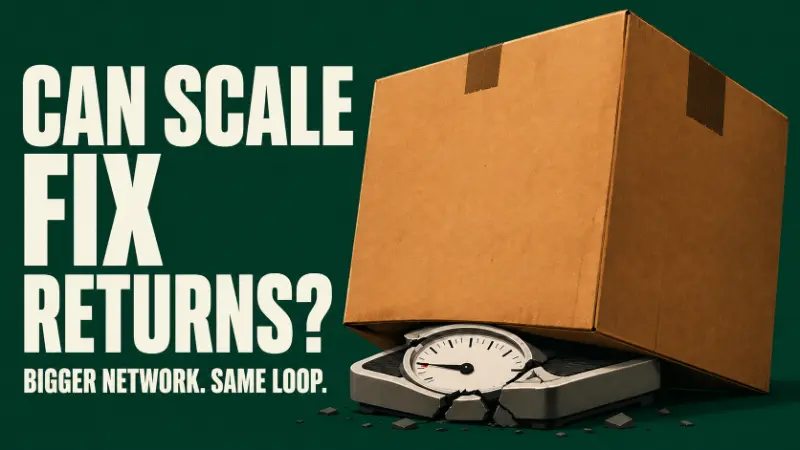
Bigger networks and more consolidation did not solve returns. Scale improved local execution, throughput, and bargaining power, but it did not change the warehouse-first logic underneath the system, which means the structural costs of returns management stayed exactly where they were.
That distinction matters because most operators still assume size will eventually fix the math. It hasn’t. The industry built bigger footprints, tighter carrier relationships, and more centralized recovery hubs, and per-return economics barely moved. In some cases, scale spread the same inefficiencies across a wider footprint. If you’re trying to figure out why returns kept getting more expensive even as return networks grew, the answer is architectural, not operational.
Scale Solved Some Local Problems
It’s worth being fair about what scale actually did.
Many brands have experienced real, measurable gains from scaling their returns operations. Bigger return networks delivered specific improvements in key areas. More nodes meant broader geographic reach. Higher consolidated volume meant smoother throughput during peaks and troughs. Larger players negotiated better rates with carriers and earned better terms with downstream recovery partners. Process consistency and reporting improved as more returns operations flowed through standardized intake and disposition workflows.
These are not trivial wins. A returns operation that can absorb a holiday surge without crippling delays is genuinely better than one that can’t. A network that can move returned inventory between regional hubs to balance load is genuinely more resilient. A buyer with enough volume to negotiate carrier surcharges down by a few percentage points is genuinely better off.
The problem isn’t that scale did nothing. The problem is what scale didn’t do.
But Scale Did Not Change the Loop
Every one of those improvements happens inside the same structural pattern: an item moves through the return flow, traveling backward from the customer, landing at a centralized recovery facility, getting handled, and waiting for value to be restored before it can move forward again.
Network size does not change direction. A return routed through a bigger system is still a return routed backward. A drop-off network with more locations is still a funnel into the same warehouse-centric pipeline. A carrier with more reach is still moving the same package through the same number of legs to reach the same kind of endpoint.
The most labor-intensive parts of returns management—such as inbound freight, intake, inspection, repackaging, and restocking—are all components of returns processing that sit on the back end of that loop. They are not solved by adding nodes to the front end of it. This is the heart of the warehouse-centric return loop, and no amount of network expansion changes its physics.
Consolidation Optimized Reverse Logistics Handling, Not Structural Waste
Consolidation gets framed as a structural fix because it sounds like one. Combine more volume under fewer roofs, the thinking goes, and unit economics will bend.
What consolidation actually does is optimize handling. It coordinates more activity across more places. It reduces some duplication in administration and overhead. It creates leverage in negotiation. These are coordination gains, and they show up as marginally lower per-handle costs, slightly faster throughput, and modestly improved disposition rates.
Picture a brand that consolidates returns from three regional partners into one national reverse logistics provider. Intake gets standardized. Disposition codes line up across regions. Carrier rates drop a few points because total volume is now negotiable as a single block. Reporting improves because the data lives in one system, making it easier to track key metrics such as ROI, cost per return, and customer experience indicators. These are real wins, and they show up cleanly in operating reviews.
What does not show up in those reviews is the cost layer that did not move. The returned item still travels backward from the customer to a recovery facility. It still waits in a queue. It still loses resale value while it waits. It still gets repackaged before it can move forward again. Consolidation made the handling of those steps more efficient. It did not eliminate any of them.
That distinction is easy to lose when coordination metrics improve year over year and leadership concludes the system is getting better. The metrics are improving. The system is not. As we’ve covered in the myth of “efficient” reverse logistics, process efficiency inside the wrong system is not the same as system-level cost reduction.
Bigger Networks Can Magnify the Same Inefficiencies
This is the sharpest point in the argument, and it tends to surprise operators who haven’t traced the math through.
Shipping still happens. Handling still happens. Delay still happens. Markdown drag still happens. None of these go away because the network got bigger. What changes is how widely they get distributed. A bigger network means more nodes participating in the same backward flow, more carrier legs absorbing the same redundant shipping, more facilities holding the same aging inventory while resale value decays. Scale spreads the pattern, it doesn’t break it.
Consider the cost layers that survive every consolidation move:
- Inbound freight from customer to recovery node
- Labor at intake and inspection, now distributed across more facilities
- Time-driven markdown exposure, now affecting more units in transit
- Outbound freight when items eventually move to resale or liquidation
- Fraud and shrinkage opportunities, multiplied across more handoffs, with significant financial implications for profitability as these risks and costs accumulate at scale
A bigger network with the same loop means more touchpoints exposed to the same risks. This is why first-mile improvements like expanded drop-off networks haven’t bent the curve either. They’re a real convenience win for customers, but as we’ve explained in why drop-off networks improve UX but don’t fix economics, they preserve the same downstream recovery logic and do little to address how a high ecommerce return rate impacts profit margins. The consumer-facing friction goes down. The structural cost stays put.
The pattern repeats with automation. Faster sorters, better scanners, smarter routing inside the warehouse. Each of these tools makes the existing loop run more smoothly without making the loop itself shorter or cheaper, which is the territory we cover in why more automation didn’t lower return costs.
Bigger Footprints Did Not Mean Better Economics
Here’s a useful test. Look at the major returns network expansions and consolidations of the past few years. Carriers acquiring drop-off specialists. Reverse logistics platforms rolling up under enterprise supply chain stacks. Brand networks expanding regional intake capacity. In nearly every case, the strategic narrative was the same: scale will deliver structural cost improvement.
The economics tell a different story. Per-return cost has not materially declined across the industry. Recovery rates—the percentage of returned goods successfully resold—have not meaningfully improved. The true cost of returns, which includes not just the refund amount but also markdown drag, lost cost of goods, and the additional sales needed to compensate for returns, still consumes a large portion of returned value, particularly in apparel and seasonal goods, where time-to-resale is the single most important variable in determining whether a return becomes a partial recovery or a near-total loss.
What got better was reach. What got better was throughput coordination. What got better was the ability to negotiate. None of those things change the equation that says a return traveling backward through a centralized recovery process loses value at every stage, regardless of how big the network handling it is.
A returns network can add carriers, add nodes, add volume, and improve regional execution. Every one of those returns still travels backward through the same recovery logic before value is restored. The business has made the same loop bigger. It has not made the loop smarter.
The Importance of Customer Experience
Customer experience sits at the heart of effective ecommerce returns management. In today’s competitive landscape, the returns process is no longer just a backend operation—it’s a defining moment in the customer journey. When ecommerce brands deliver a seamless, transparent, and hassle-free returns process, they build customer trust and foster brand loyalty through an exceptional returns program that encourages customer loyalty. Customers who feel confident that returns will be handled smoothly are far more likely to make repeat purchases and recommend the brand to others.
On the flip side, a complicated or slow returns process can quickly erode customer satisfaction. Delayed refunds, unclear return eligibility, or cumbersome return requests can turn a single return into a lost customer. For ecommerce brands, this means that returns management is not just about controlling costs; it’s about protecting and enhancing the overall customer experience while understanding the true cost of offering free returns and whether that promise is sustainable.
Best-in-class ecommerce returns management prioritizes streamlined returns processes, clear communication, and flexible options. Features like free returns, extended return windows, and in-store returns give customers the confidence to buy, knowing they have control if something isn’t right. By making the returns process as frictionless as possible, brands can turn what was once seen as a pain point into a strategic advantage—driving customer satisfaction, repeat purchases, and long-term loyalty.
Product Quality and Returns
Product quality is a foundational driver of returns in ecommerce. High-quality products not only delight customers but also significantly reduce the volume of returns, minimizing the need for costly reverse logistics and return shipping. When product quality slips, returns spike—triggering a cascade of operational inefficiencies, increased shipping costs, and lost revenue.
Ecommerce brands that treat returns management as a strategic function use returns data to identify patterns and root causes behind returns. By analyzing which products are most frequently returned and why, brands can make targeted improvements in product design, manufacturing, and quality control. This data-driven approach not only reduces returns but also enhances customer satisfaction and loyalty, as customers receive products that meet or exceed expectations.
Ultimately, investing in product quality pays dividends across the entire returns lifecycle. Fewer returns mean lower operational costs, less strain on reverse logistics, and a stronger reputation for reliability. For ecommerce brands, focusing on quality is not just about reducing returns—it’s about building a foundation for sustainable growth and customer loyalty in a crowded market, especially in categories where understanding the average ecommerce return rate is critical to planning and performance.
The Real Constraint Was Architecture, Not Network Size
The reason scale didn’t bend the curve is that the bottleneck was never network size in the first place. It was the architecture of the loop.
Footprint is not the same as redesign. A bigger system that still routes every return backward through centralized recovery is solving the wrong problem at a larger scale. The constraint is structural: the assumption that returned items must travel backward before they can move forward again. Until that assumption changes, network growth produces local improvements without producing structural cost relief.
This is the bridge to a deeper rethink, which we’ve laid out in our argument that returns need to go forward, not back. It’s also why the wider innovation cycle in returns has plateaued in the way we describe in why reverse logistics innovation plateaued. The vendors and networks running the existing loop have largely optimized what they can optimize. The remaining cost is locked into the architecture itself, and returns management at this stage risks becoming just damage control rather than a source of strategic value.
For operators evaluating returns management strategy, the implication is concrete. If your case for cost relief depends on getting bigger, getting more nodes, or signing better carrier contracts, you will get marginal improvement and call it progress. If your case for cost relief depends on changing where returns go, you will move the line that actually matters.
Scale and consolidation made returns networks bigger and sometimes smoother. They did not make the warehouse-first model fundamentally cheaper. The architecture is what determines whether the next dollar spent on returns produces real recovery or just another lap around the same loop.
Future Outlook
The future of ecommerce returns management is being shaped by a shift in mindset: from viewing returns as just a cost center to recognizing them as a strategic priority and potential competitive advantage, where crafting the perfect e-commerce returns program becomes part of core customer and margin strategy. As customer expectations continue to rise, ecommerce brands must invest in returns processes that deliver both operational efficiency and exceptional customer experience, often by adopting modern returns management software for 2025 that can automate and orchestrate the loop more intelligently.
Emerging technologies are at the forefront of this transformation. AI and machine learning are enabling smarter return authorization, real-time inventory accuracy, and personalized customer communication, often delivered through platforms like the Return Prime returns solution that plug directly into ecommerce stacks. Automation is reducing manual processes and human error, speeding up refund cycles and improving the overall returns process. At the same time, sustainability is becoming a key consideration, with brands exploring ways to recycle, refurbish, or resell returned units to minimize environmental impact and design eco-friendly returns practices that align cost management with customer expectations.
Brands that treat returns management as more than just a cost—by leveraging returns data, optimizing the returns flow, and prioritizing customer satisfaction—will be best positioned to turn returns into a source of significant value. By making returns a strategic priority, ecommerce brands can drive customer loyalty, unlock new revenue streams, and secure a lasting competitive advantage in an ever-evolving market. As the industry continues to innovate, those who invest in efficient, customer-centric returns management will lead the way in shaping the future of ecommerce.
Frequently Asked Questions
Did scale and consolidation make returns cheaper?
Not structurally. Scale produced local gains in throughput, bargaining power, and process consistency, but it did not lower per-return economics in a meaningful way. The cost layers built into backward flow, inbound freight, intake labor, delay-driven markdowns, and late recovery, remained intact regardless of how big the network became.
Why doesn’t a bigger returns network bend the cost curve?
Because the cost is structural, not operational. Per-return economics are dictated by where the item has to go before value is restored. A bigger network with the same warehouse-first routing moves more items through the same backward path. It can move them more smoothly, but it can’t make the path shorter or cheaper.
Is consolidation pointless for returns management?
No. Consolidation produces real coordination gains and can improve handling efficiency across a wider footprint. The point is that handling efficiency is not the same as removing structural waste. Consolidation should be evaluated for what it actually delivers, which is operational coordination, not for what it doesn’t, which is architectural redesign.
What’s the difference between scale and structural redesign in returns?
Scale changes how much volume the system can absorb and how efficiently it coordinates handling. Structural redesign changes where returned items go in the first place. Scale optimizes the existing loop. Structural redesign questions whether the loop needs to exist in its current form.
Can scale magnify returns problems instead of fixing them?
Yes. A bigger network means more nodes participating in the same backward flow, more carrier legs absorbing the same redundant shipping, and more facilities holding aging inventory while value decays. Without changing the underlying routing logic, scale can spread the same inefficiencies across a wider footprint rather than removing them.
What actually reduces returns cost if scale doesn’t?
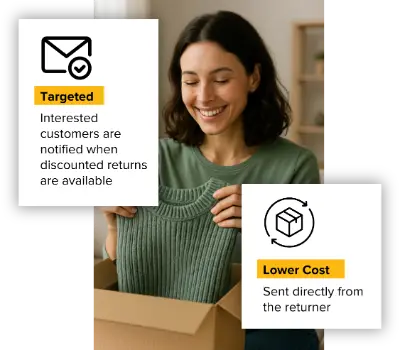
Changing the routing itself. The most meaningful cost reductions come from rerouting eligible returns out of the warehouse-first loop entirely, rather than running them through a bigger or more consolidated version of it. The architecture determines the economics, not the footprint.
Written By:

Manish Chowdhary
Manish Chowdhary is the founder and CEO of Cahoot, the most comprehensive post-purchase suite for ecommerce brands. A serial entrepreneur and industry thought leader, Manish has decades of experience building technologies that simplify ecommerce logistics—from order fulfillment to returns. His insights help brands stay ahead of market shifts and operational challenges.

Turn Returns Into New Revenue
Related Articles

Why Returns Look Manageable Until They Suddenly Aren’t
Returns management is the retail process of handling customer returns across reverse logistics, cost control, and customer experience—and it rarely fails the way leadership expects...

The Economics of Peer-to-Peer Returns
Traditional returns management has one fundamental flaw: it optimizes a process that should not exist in its current form.

The Myth of “Efficient” Reverse Logistics
Efficient reverse logistics is treated as a goal worth chasing.