
Universal Commerce Protocol (UCP) Explained: How Agentic Commerce Works

Last updated on January 14, 2026
In this article
 17 minutes
- Introduction to Universal Commerce
- Technical Overview of UCP
- Agentic Commerce: Action-Taking AI Agents
- How UCP Checkout Differs from a Traditional Checkout
- AI Commerce Today: Where It’s Happening
- How Agentic Checkout Looks in Practice
- Merchant Control vs. Agent Actions
- UCP Roadmap and Future Development
- Frequently Asked Questions
The Universal Commerce Protocol (UCP) is an open standard co-developed by Google in collaboration with industry leaders including Shopify, Etsy, Wayfair, Target, and Walmart, and is co-developed and endorsed by more than 20 partners across the ecosystem. UCP is an open-source project that invites developers, businesses, and platform architects to contribute. In plain terms, UCP lets an AI “agent” treat any store like a programmable service rather than a website. The protocol defines how agents can discover products, understand checkout requirements, and complete purchases on behalf of a shopper in a structured way.
Merchants expose a machine-readable manifest (via APIs) of their catalog and checkout capabilities, and AI agents query that manifest to drive the sale. UCP was built to solve fragmented commerce journeys that lead to abandoned carts and frustrated shoppers. In practice, UCP allows an agent to:
- Discover products: AI assistants use UCP to query a merchant’s inventory and retrieve up-to-date product details, prices, availability, variants, images and descriptions via standard API calls.
- Handle checkout logic: UCP provides the agent with all the rules and inputs needed for checkout. This includes shipping methods, taxes, return policies, discount or promo codes, loyalty points, recurring subscription terms, etc. These are delivered in a structured data format, so the agent knows exactly what options to present or apply. For example, loyalty rewards or a special “guest checkout” rule are encoded in the protocol rather than hidden in a page UI. UCP uses reverse-domain naming for extensions, allowing merchants and agents to define their capabilities without needing approval.
- Complete transactions: UCP lets the agent assemble a cart and submit the order. It negotiates payment via the user’s preferred method (credit card, digital wallet, etc.) in a standard way. The protocol is payment-agnostic (it can work with any processor) and preserves the merchant’s checkout flow. UCP supports complex cart logic, dynamic pricing, tax calculations, and more across millions of businesses through unified checkout sessions. UCP features a modular payment architecture that separates payment instruments from payment handlers, promoting interoperability and payment method choice. Payment handlers are published by providers and selected during transactions, enabling flexible and dynamic payments. UCP uses OAuth 2.0 for secure account linking and AP2 for secure payment processing, and it uses tokenized payments, verifiable credentials, and cryptographic proof of user consent for every transaction to protect sensitive user information. UCP creates a transparent accountability trail between merchants, credential providers, and payment services, helping to ensure each transaction is secure. In short, the AI can finalize the purchase without manual page browsing, because it follows the machine-readable steps defined by the merchant.
These core capabilities – product discovery, checkout negotiation, and transaction completion – are what make UCP a “universal language” for e-commerce. The protocol is not a marketplace or app; it’s an industry standard supported by major partners such as American Express, Best Buy, Home Depot, Mastercard, and Stripe, demonstrating broad support across the ecosystem. It acts like an abstraction layer that translates between different store systems and AI interfaces. The result is that agents (whether built by Google, Microsoft, or others) can plug into any UCP-enabled store with minimal custom integration. UCP allows merchants to define their own bespoke functionality and capabilities, while maintaining security through proven standards for account linking, payment processing, and protecting customer data.
Introduction to Universal Commerce
The Universal Commerce Protocol (UCP) is ushering in a new era of digital shopping by redefining how businesses and consumers connect across the online ecosystem. As a groundbreaking commerce protocol, UCP is designed to create a seamless, unified shopping journey for everyone – no matter where they shop or which device they use. Developed as an open standard through the collaboration of industry leaders like Google, Shopify, and major retailers, UCP establishes a universal language for commerce that works across platforms, including Google’s AI Mode and the Gemini app.
By adopting the Universal Commerce Protocol, merchants can tap into the full potential of agentic commerce, where AI-powered agents handle everything from product discovery to checkout. This means shoppers enjoy a more intuitive, personalized experience, while retailers can reach consumers wherever they are – whether in search, chat, or voice interfaces. UCP is designed to break down barriers between different commerce systems, making it easier for businesses to participate in universal commerce and for shoppers to get what they need, when and where they want it. As the protocol gains traction, it’s set to become the new standard for digital commerce, benefiting both industry and consumers alike.
Let AI Optimize Your Shipping and Boost Profits
Cahoot.ai software selects the best shipping option for every order—saving you time and money automatically. No Human Required.
See AI in ActionTechnical Overview of UCP
UCP is built with flexibility and scalability at its core, enabling it to support a diverse range of commerce capabilities and extensions. The protocol’s architecture is designed to facilitate smooth, secure interactions between consumer-facing surfaces, businesses, and payment providers, ensuring a frictionless shopping experience from discovery to checkout. Thanks to its layered protocol design, UCP can be easily integrated with existing commerce infrastructure, allowing merchants to adopt the protocol without overhauling their current systems.
One of UCP’s standout features is its support for customizable capabilities and extensions. Merchants can define their own business logic, add new features, and tailor the protocol to fit their unique needs – whether that means supporting subscriptions, loyalty programs, or special promotions. UCP also accommodates a wide variety of payment methods, including Google Pay, PayPal, and other popular providers, making it easy for shoppers to pay however they prefer. This extensibility ensures that as new commerce trends and technologies emerge, UCP can evolve to support them, keeping the shopping experience fresh and relevant across all surfaces and platforms.
Agentic Commerce: Action-Taking AI Agents
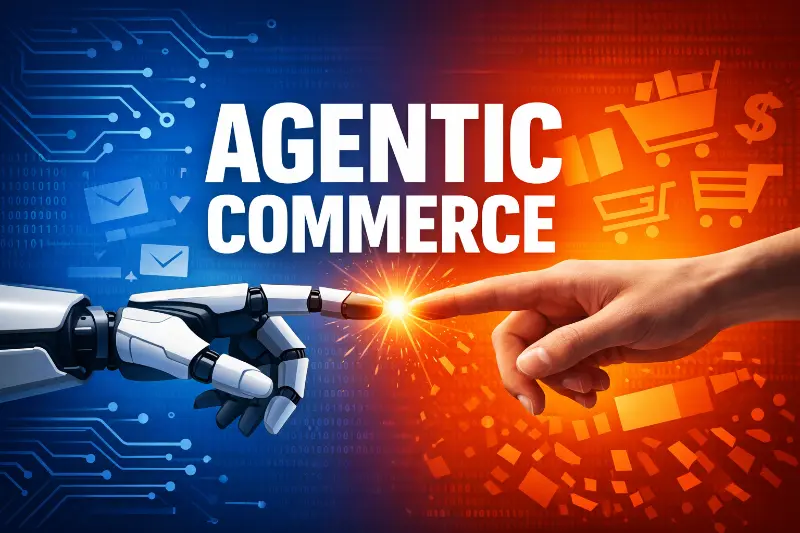
UCP is the backbone of agentic commerce – a new mode of shopping where AI does the heavy lifting of the transaction. Unlike a simple chatbot or recommendation engine, an agentic shopping assistant acts. It can autonomously plan and carry out a purchase under user guidance. For example, imagine telling an AI: “Find me a lightweight suitcase under $200 and buy it.” An agentic commerce system could search multiple stores, compare options, handle any questions (“Should it be black or grey?”), and complete the checkout – all within the same flow. This is different from a traditional AI assistant that only suggests products or answers questions. AI platforms provide the foundational technology that enables streamlined business onboarding, integration with APIs, and enhanced user experiences through compatible frameworks.
In the agentic commerce model, the AI agent behaves like a diligent digital personal shopper. It follows the user’s instructions (and even proactively asks clarifying questions), then executes the purchase when the customer is ready. For instance, Microsoft’s Copilot example illustrates this: a shopper asks for a dress recommendation, the AI compares options, answers follow-ups, and the user decides – all in one conversation. Copilot Checkout can then finalize the order without the customer leaving the chat. The agent handles the multi-step process from intent to purchase seamlessly. These AI-powered tools and standards are designed to help retailers and consumers by simplifying connections, improving discovery, and enabling smarter shopping experiences. In short, agentic commerce goes “beyond chat” by converting conversation into action.
How UCP Checkout Differs from a Traditional Checkout
UCP-enabled checkouts are fundamentally different from the web pages shoppers see today. The key difference is machine-readable logic instead of visual UI. A traditional checkout page is designed for humans, often requiring form-filling and clicking through dialogs. UCP, by contrast, encodes those steps in a standardized data format. This means:
- No scraping or browser simulation. AI agents don’t need to interpret HTML or navigate webpages. Instead, they query UCP endpoints directly. A merchant’s server publishes a UCP manifest (at a well-known URL) that tells the agent what actions are supported (product search, add-to-cart, apply-discount, etc.) and how to call them. This removes the fragile, one-off integrations that come with screen-scraping or custom bots.
- Structured inputs and negotiation. Information like shipping options, tax rules, return window, subscription details, and available discounts are all included as structured data. For example, UCP can represent a merchant’s entire loyalty program or subscription terms in JSON, so an agent can automatically apply earned points or set up recurring orders. This ensures the agent respects all business rules: “Your discount codes, shipping rules, taxes, and loyalty settings still apply – even if the purchase happens through an AI interface”. In other words, nothing “disappears” just because the agent is handling the sale. When the agent negotiates payment, payment handlers are published by providers, selected during transactions, and integrated into profiles to facilitate seamless and dynamic payment negotiations between merchants and consumers.
- Embedded commerce flows. With UCP, the checkout is often embedded in the AI interface rather than redirecting to a website. When a customer goes to buy, the agent will push all required data (address, payment, items) through UCP, and the order is recorded on the merchant’s side just as if the customer filled a cart on the site. The shopping experience stays within the conversation window, giving a seamless feel without sacrificing merchant control.
In summary, protocol-based checkout means the AI and merchant talk the same “language,” so the exchange is transparent and reliable for machines. This is unlike brittle scripts that try to click through a generic checkout page – UCP provides a clear, versioned protocol that can evolve with new commerce features (like loyalty or subscriptions) without breaking agents.
AI Commerce Today: Where It’s Happening
Agents are already starting to sell. UCP-powered shopping is rolling out on several platforms and surfaces:
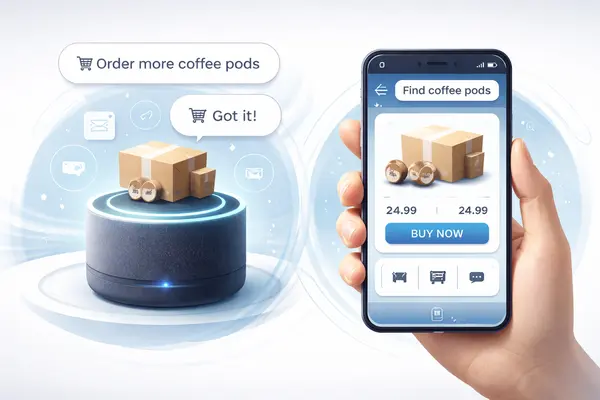
- AI Search & Smart Assistants: Google is launching UCP-powered shopping in its new AI search mode and Gemini app. Soon, when you search for a product in Google AI Mode, you can buy directly in the chat window. (For example, Target announced that shoppers will soon be able to browse and buy Target products right inside the Google Gemini app and Search AI Mode.) Google’s AI integrates with the Universal Commerce Protocol to enable seamless, agentic commerce actions across Google’s AI surfaces and shopping platforms, facilitating direct purchases and post-purchase support within AI-enhanced search environments. Similarly, Microsoft Copilot (in Bing and Windows) has enabled Copilot Checkout, an in-chat purchase feature for select retailers.
- Conversational Surfaces: Any app or device that can chat can also become a storefront. For instance, Google’s Business Agent lets users ask questions in Search and buy from a brand’s inventory without leaving the results page. The same could happen in messaging apps, voice assistants (like Alexa/Siri with shopping features), social media chatbots, or even productivity tools with AI assistants. The broad idea is that every place you can converse with an AI might one day handle commerce.
- Embedded E-commerce Tools: Companies are integrating shopping into tools people already use. Shopify’s “Agentic Storefront” concept means a brand can use Shopify’s backend to sell on AI channels even if it doesn’t have a Shopify website. That way, a retailer’s products and checkout live in Shopify but can be accessed by agents anywhere. Other commerce platforms (and payment partners like Stripe, PayPal, etc.) are also building UCP support so that AI agents have lots of stores to connect to.
In practice, this means AI commerce isn’t limited to one app. We’ll see it in search engines, voice assistants, chat apps, social media feeds – essentially any interface where people are asking questions or browsing interactively. For example, Google mentions “discovering and buying to post-purchase support” on any channel (search, shopping graph, etc.) and partners like Walmart, Etsy, Wayfair and Visa are involved. Major retailers such as Best Buy and Home Depot are also supporting or endorsing UCP, further expanding the protocol’s reach. Additionally, leading payment providers including American Express, Mastercard, and Stripe are collaborating with UCP to enable secure and efficient agentic commerce solutions across platforms and retail ecosystems. The key point: UCP is already being used by major players (Google, Shopify, Microsoft, retailers) to turn AI UIs into shopping surfaces.
ShipStation vs. Cahoot: 21x Faster, Real Results
Get the inside scoop on how a leading merchant switched from ShipStation to Cahoot—and what happened next. See it to believe it!
See the 21x DifferenceHow Agentic Checkout Looks in Practice
One concrete example of UCP in action is Microsoft’s Copilot Checkout. This feature lets customers buy products directly inside the Copilot chat (e.g. in Bing or Windows) without redirecting to the store’s site. Under the hood, Copilot Checkout uses a protocol like UCP to communicate with the retailer’s system. When you choose to pay, the agent calls the merchant’s checkout endpoint (via UCP) to submit the order. Importantly, this happens in an embedded frame in Copilot, so the entire experience stays in the conversation window.
From the merchant’s perspective, nothing magical happens: the sale is processed by their own checkout logic, and they remain the merchant of record. Microsoft states that “you stay the merchant of record. You own the transaction, the customer data, and the relationship” with customers who buy via Copilot. This means the merchant still sets the price, payment acceptance, shipping rules, and so on – the AI is simply filling in and submitting the order. For example, Urban Outfitters and Ashley Furniture announced they will use Copilot Checkout to sell in Bing. Shopify says: “If you’re on Shopify, you’ll automatically be able to sell in Copilot Checkout – no integration needed”.
Another example is coming from Google: Shopify merchants will soon be able to sell directly in Google Search’s AI Mode and the Gemini app using UCP. This “direct shopping” feature will use Google Pay behind the scenes, and again retailers remain the seller of record. (Customers will tap or click to buy in the Google interface, but the order will be owned by the original retailer.)
The pattern is consistent: the AI interface invokes the merchant’s checkout without losing any store-specific logic. The agent acts like a friendly front-end, but fulfillment, inventory, pricing, and post-sale support stay under the merchant’s control. This model – embedded checkout with UCP – is the opposite of third-party marketplaces. The brand does not hand off its customers to a new platform; it simply enables the agent to carry out its own checkout flow as if it were another channel.
Merchant Control vs. Agent Actions
UCP explicitly preserves merchant control over core business rules. In an agentic purchase:
- Merchants keep control of products and policies. The merchant decides what to sell, at what price, and under what conditions. All product data (images, descriptions, variants, pricing) still comes from the merchant. Likewise, shipping options, return policies, tax calculations, loyalty programs, subscriptions and discount codes are defined by the merchant’s backend. These rules are passed to the agent in UCP messages, but the merchant authored them. For example, “your discount codes, shipping rules, taxes, and loyalty settings still apply – even if the purchase happens through an AI interface”.
- Merchants remain merchant of record. The agent never replaces the checkout host. The retailer still processes the payment (via their payment gateway) and delivers the product. As noted earlier, with Copilot Checkout the retailer “owns the transaction, the customer data, and the relationship”. This also means the retailer is responsible for packing, shipping, and support. The AI agent simply initiates the order; fulfillment happens on the merchant’s side just like any normal order.
- Agents control selection and timing. The AI agent’s job is to find the right products and execute the purchase when the customer wants. The agent chooses the items (based on the conversation), decides when to hit “checkout,” and can even submit multiple payment attempts with the user’s saved methods if needed. However, the agent cannot override merchant constraints. It cannot, for example, promise a faster ship date than the merchant allows, or apply a discount that is not valid. It simply reads those constraints from UCP data and respects them. If a step requires human input – say the store requires the customer to pick a delivery date or upload a custom print file – the protocol includes a “continue” URL. The agent hands control back to the customer at exactly the right step in the merchant’s original interface. The customer finishes those steps, and UCP is designed so the agent can rejoin or complete the order afterward.
In short, UCP lets agents do the shopping work, but merchants keep the business logic. Pricing, inventory, branding, shipping options and after-sale service all stay with the merchant. The agent handles searching, decision support, and pushing through the checkout in the background, under the merchant’s pre-set terms.
The Universal Commerce Protocol is a new way for AI and stores to work together. It turns AI assistants into active shopping agents while keeping merchants fully in control of their business. As this standard rolls out, expect to see AI-powered checkout in many places – but always with the merchant managing pricing, shipping, and fulfillment on the backend.
Cut Costs with the Smartest Shipping On the Market
Guranteed Savings on EVERY shipment with Cahoot's AI-powered rate shopping and humanless label generation. Even for your complex orders.
Cut Costs TodayUCP Roadmap and Future Development
The Universal Commerce Protocol is not a static solution – it’s a living, evolving standard designed to keep pace with the rapidly changing world of commerce. The UCP roadmap is packed with innovative features aimed at enhancing both the merchant and consumer experience. Upcoming developments include support for multi-item carts, seamless account linking for loyalty and rewards programs, and advanced post-purchase support, all of which will make the shopping journey even more streamlined and personalized.
As UCP continues to grow, its open-source foundation and collaborative development process ensure that it remains responsive to the needs of the entire commerce ecosystem. Industry leaders, merchants, and technology partners are all contributing to the protocol’s evolution, helping to shape the next generation of universal commerce. By joining the UCP ecosystem, businesses can future-proof their operations, offer cutting-edge shopping experiences, and ensure they’re never left behind as the industry moves forward. For consumers, this means more choice, convenience, and support at every stage of the purchase journey – heralding a new era in the future of commerce.
Frequently Asked Questions
Is this live yet?
UCP itself was announced in January 2026 and the first agentic shopping features are just rolling out. Google has said UCP will power “native shopping on Google Search and Gemini” soon. Microsoft’s Copilot Checkout is in limited US rollout for Shopify merchants. In practice, expect pilot programs and staged launches in 2026. It’s not fully widespread yet, but it’s already real – major players are integrating it now.
Do merchants lose customer ownership?
Not at all. UCP is designed so that the merchant stays the seller. In every agentic purchase, the retailer remains the merchant of record. This means the store gets the money, owns the order data, and keeps the customer for marketing/loyalty. The AI is only a guided interface, not a third-party middleman. Shopify’s announcement explicitly notes that merchants “retain sovereignty” and continue to own the checkout experience.
Does this replace my website or store?
No. Agentic commerce is an additional channel, not a substitute for your site. Customers will still visit the merchant’s website for trust, content, and richer experience. UCP is more like SEO or advertising: it helps your store appear in new places (AI chats, searches) but it doesn’t eliminate your own store. The Shopify team emphasizes that websites will remain important for branding and customer education. Think of UCP as letting more doors open to your store via AI, but you still need your storefront.
Is Shopify required to participate?
No. UCP is an open industry standard. Any merchant or platform can adopt it. Shopify is one founder and provides tools (even letting any brand use Shopify’s backend to get agentic exposure), but it’s not mandatory. In fact, by design “UCP isn’t locked to Shopify” – the whole e-commerce ecosystem can adopt it. Google, Mastercard, Visa, Stripe and others are already on board too. You don’t have to use Shopify; you just need your platform or an app/plugin to speak the UCP.
Written By:

Indy Pereira
Indy Pereira helps ecommerce brands optimize their shipping and fulfillment with Cahoot’s technology. With a background in both sales and people operations, she bridges customer needs with strategic solutions that drive growth. Indy works closely with merchants every day and brings real-world insight into what makes logistics efficient and scalable.

Turn Returns Into New Revenue
Related Articles

The End of Traditional Ecommerce Returns
PART I — THE PROBLEM Why Returns Didn’t Just Break — They Were Never Built for This Returns are ecommerce’s dirty secret: a billion-dollar bonfire that most brands prefer not to lo...

Fast Delivery Isn’t the Hard Part – Inventory Decisions Are
Fast delivery is no longer a differentiator in ecommerce, it is an expectation.
Moving from Amazon 1P to 3P: What It Actually Takes to Succeed
The decision to move from Amazon Vendor Central (1P) to Seller Central (3P) usually follows months of frustration with pricing control loss, erratic purchase orders, and margin com...