
What Is Reverse Logistics? How Ecommerce Returns Actually Flow Back

Last updated on December 30, 2025
In this article
 3 minutes
- What Is Reverse Logistics in Ecommerce?
- Forward vs. Reverse Logistics: What’s the Difference?
- Common Steps in Reverse Logistics and Returns Management Process
- Key Cost Drivers in Reverse Logistics
- Technology and Reverse Logistics
- Improving Reverse Logistics: Operational Takeaways
- Frequently Asked Questions
Introduction: Online shoppers return a significant portion of what they buy, making efficient returns handling a critical part of ecommerce operations. In fact, U.S. consumers sent back about 14.5% of all purchases in 2022 – representing $743 billion in lost sales for retailers. This is where reverse logistics comes in. Reverse logistics manages how those returned products flow from the customer back to the seller or manufacturer. Rather than goods moving outbound to shoppers, reverse logistics handles the opposite direction – bringing items back through the supply chain after a return, repair, or recycling need arises.
What Is Reverse Logistics in Ecommerce?
Reverse logistics refers to the end-to-end process for handling products that come back into the supply chain after a sale. In ecommerce, this typically means managing everything that happens after a customer initiates a return or exchange. The process starts with the consumer and works backward, making efficient management of returned merchandise crucial for optimizing costs and customer satisfaction.
An effective reverse logistics system aims to regain as much value as possible from returns—through restocking, refurbishing, recycling, or responsible disposal. By investing in good reverse logistics practices, ecommerce companies can reduce waste, maintain customer trust, and recover revenue.
Forward vs. Reverse Logistics: What’s the Difference?
Forward logistics covers the movement of products from suppliers to customers. Reverse logistics moves products in the opposite direction—from customers back to retailers. Reverse logistics is more unpredictable, more labor-intensive, and often 2–3 times more expensive per parcel than outbound shipping.
Common Steps in Reverse Logistics and Returns Management Process
- Initiation & Shipping: Customer initiates a return and ships the item back.
- Receiving & Inspection: Items are checked, verified, and graded.
- Processing & Restocking: Resalable items return to inventory.
- Repair or Refurbishment: Fixing items with recoverable value.
- Resale or Secondary Markets: Liquidation, clearance, or recommerce.
- Disposal & Recycling: Responsible handling of unsellable goods.
Make Returns Profitable, Yes!
Cut shipping and processing costs by 70% with our patented peer-to-peer returns solution. 4x faster than traditional returns.
See How It WorksKey Cost Drivers in Reverse Logistics
- Labor-intensive processing
- Reverse shipping costs
- Inventory value loss over time
According to the National Retail Federation, returns cost retailers an average of $0.21 per $1 of returned sales. Many retailers offset this by charging restocking fees.
Technology and Reverse Logistics
Technology enables automation across the reverse logistics process, from return portals to inventory updates and analytics. Tools such as returns platforms and warehouse management software help reduce costs and improve customer satisfaction.
Convert Returns Into New Sales and Profits
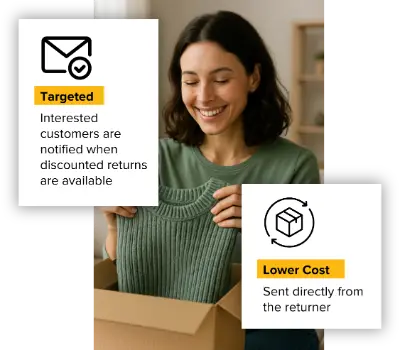
Our peer-to-peer returns system instantly resells returned items—no warehouse processing, and get paid before you refund.
I'm Interested in Peer-to-Peer ReturnsImproving Reverse Logistics: Operational Takeaways
- Design for fewer returns
- Streamline workflows with automation
- Optimize disposition decisions
- Leverage secondary markets and partners
- Monitor metrics and customer feedback
Well-managed reverse logistics can transform returns from a cost center into a driver of customer loyalty and sustainability.
Frequently Asked Questions
What is reverse logistics?
Reverse logistics is the process of moving goods from customers back to sellers after purchase, including returns, repairs, recycling, or disposal.
Why is reverse logistics important?
It helps recover value from returns, reduce waste, control costs, and maintain customer satisfaction.
Written By:

Indy Pereira
Indy Pereira helps ecommerce brands optimize their shipping and fulfillment with Cahoot’s technology. With a background in both sales and people operations, she bridges customer needs with strategic solutions that drive growth. Indy works closely with merchants every day and brings real-world insight into what makes logistics efficient and scalable.

Turn Returns Into New Revenue
Related Articles
3PL Returns: How Outsourced Returns Actually Work and Where Brands Lose Money
Most brands outsource returns to a 3PL expecting cost savings, but returns fail when disposition rules, SLAs, and audit controls are undefined.
The End of Traditional Ecommerce Returns
PART I — THE PROBLEM Why Returns Didn’t Just Break — They Were Never Built for This Returns are ecommerce’s dirty secret: a billion-dollar bonfire that most brands prefer not to lo...
Amazon AWD vs FBA: What’s the Difference and Which One Should You Use?
Amazon Warehousing and Distribution (AWD) and Fulfillment by Amazon (FBA) serve fundamentally different purposes, and using them correctly can slash storage costs by up to 80% duri...