
Ecommerce Order Routing: How Brands Decide Where Orders Ship From

Last updated on December 18, 2025
In this article
 30 minutes
- Why Order Routing Matters for Ecommerce Fulfillment
- Key Factors in Smart Order Routing Decisions
- Reducing Shipping Costs with Smarter Routing
- Speeding Up Delivery and Meeting Customer Expectations
- Optimizing Inventory Use and Preventing Stockouts
- Static Rules vs. Dynamic Routing: The Risk of One-Size-Fits-All
- Implementing a Smart Order Routing System
- FAQ
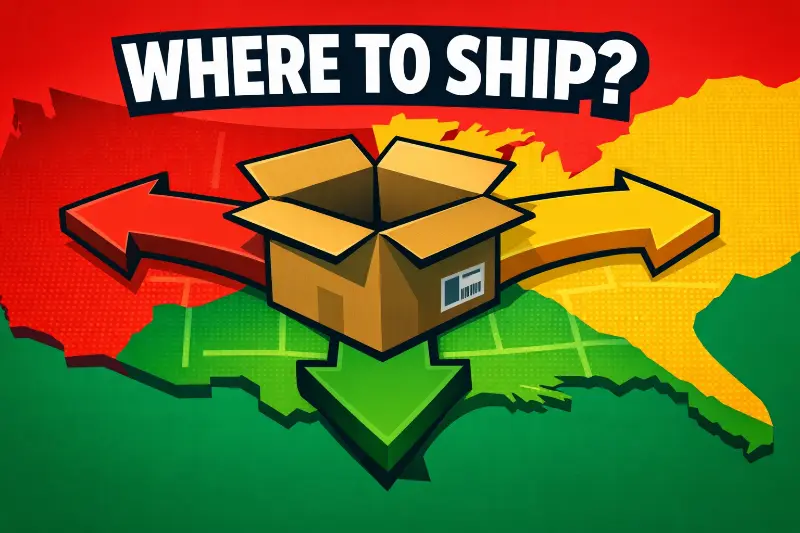
Order routing is the behind-the-scenes decision process that determines where each online order ships from. For any ecommerce business, efficient order routing is essential to optimize operations, reduce costs, and enhance customer satisfaction. It’s not just a technical detail buried in a fulfillment system – it’s a strategic layer of operations that directly influences shipping costs, delivery times, inventory efficiency, and customer satisfaction.
For ecommerce brands with multiple fulfillment centers or store locations, having a smart order routing strategy is vital. An ecommerce platform often provides the routing rules and infrastructure needed to automate and customize fulfillment based on proximity, stock levels, cost, and facility capacity. Brands that rely on static routing rules or treat it as an afterthought often leave money on the table through higher shipping expenses and slower deliveries.
In today’s fast-paced market, misrouted orders and delayed shipments can quickly erode customer trust and inflate costs. By contrast, optimizing your order routing gives you a competitive edge, ensuring every order ships from the best possible location for speed and cost-effectiveness. Using advanced analytics through comprehensive order management platforms provides accurate real-time data about sales, orders, and inventory, enabling smarter routing decisions. This article explores what order routing means for ecommerce operations, how smart routing works in practice, and how it can transform your entire fulfillment process into a strategic system and a competitive advantage.
Why Order Routing Matters for Ecommerce Fulfillment
Order routing might sound like a wonky logistics term, but it has very real consequences for an ecommerce business’s bottom line and customer experience. At its core, order routing is about matching each customer order to the optimal fulfillment location – whether that’s a warehouse, distribution center, retail store, or third-party logistics hub. Many modern systems are fulfillment center based, assigning orders to fulfillment centers depending on specific criteria such as proximity, inventory levels, or operational efficiency. The goal is to get the order shipped from the location that can deliver it to the customer fastest and at the lowest cost, given the inventory available. When done right, this routing decision can significantly reduce shipping costs, speed up delivery times, and even help balance inventory across multiple locations.
Consider a brand that operates two or more fulfillment centers. How do they decide which warehouse will ship a given order? This is where the order routing process comes in, using order routing rules to determine the most suitable fulfillment center for each order. Often the intuitive approach is to send the order from the nearest warehouse to the customer. Indeed, many order management systems default to routing orders from the closest location that has the entire order in stock. Proximity matters: shipping from the nearest fulfillment center usually means shorter transit distance, lower transportation costs, and faster delivery to the customer. However, proximity is not the only factor at play – and that’s where many static routing approaches fall short.
Treating order routing as a set of rigid, static rules (for example, always ship from Warehouse A for West Coast orders, Warehouse B for East Coast) can leave money on the table. Why? Because the “best” fulfillment location for an order can change dynamically based on multiple criteria. Selecting the right fulfillment center, suitable fulfillment center, and optimal location for each order is crucial for maximizing efficiency and minimizing costs. If you only ever ship from the closest center, you might overlook situations where another location could ship it almost as quickly for a fraction of the cost, or where inventory realities make a different location more sensible. Smart order routing takes into account a range of factors in real time, not just geography. In other words, it finds the truly optimal fulfillment option for each order rather than applying a one-size-fits-all rule.
Agreeing on standards and commitments regarding the quality and time of service can include metrics such as delivery lead time, order accuracy, and customer support responsiveness.
Let AI Optimize Your Shipping and Boost Profits
Cahoot.ai software selects the best shipping option for every order—saving you time and money automatically. No Human Required.
See AI in ActionKey Factors in Smart Order Routing Decisions
Modern ecommerce order routing systems (often as part of an Order Management System or fulfillment software) evaluate each incoming order against several key factors to determine where it should ship from. Here are the most important considerations:
- Inventory availability and levels: First and foremost, the system checks which locations have the items in stock to fulfill the order. It will favor a location that can ship all items in the order together, to avoid splitting the order into multiple shipments. If a customer ordered three products, and one warehouse has all three available while another only has two, the system will likely choose the warehouse with all items to send a single complete shipment. Additionally, inventory levels matter – if an item is in high demand or running low at one warehouse, the system might route the order to a location where there’s plenty of stock, reducing the risk of stockouts or backorders. This ensures the customer’s order isn’t delayed waiting for restocks and helps balance inventory usage across your fulfillment network. Stock availability is a key factor in selecting the fulfillment location, as real-time inventory data ensures orders are routed to the most appropriate site.
- Customer location and proximity: Shipping distance remains a crucial factor. All else being equal, an order will be routed to the fulfillment center closest to the customer’s delivery address, which minimizes transit time and shipping costs. Routing to the nearest distribution center or nearest fulfillment location with sufficient inventory helps optimize shipping time and ensures faster delivery. A shorter distance means the package can often be delivered via ground service instead of expensive air shipping, saving money while still meeting delivery promises. For example, if a customer in Los Angeles places an order and you have inventory in both a Los Angeles warehouse and a New York warehouse, routing from LA will result in a much quicker, cheaper delivery than shipping cross-country.
- Shipping costs and carrier options: A smart routing system doesn’t just assume closer is cheaper – it actually calculates shipping costs and compares options. Different warehouses might use different shipping carriers or service levels based on region. One fulfillment center might have better local courier rates for same-day delivery, while another has cheaper ground shipping for a particular zone. The routing algorithm can evaluate the estimated shipping expense from each potential location (considering package weight, dimensions, destination zone, and carrier rates) and select the option that minimizes shipping and handling costs without compromising delivery speed. The system also considers how the shipping carrier transports the package, including handover, tracking, and delivery confirmation, to ensure the most reliable and cost-effective delivery. Lower transportation costs directly boost margins or allow you to offer customers lower shipping fees.
- Delivery speed requirements: Not all orders are equal in urgency. Some customers select expedited shipping options or have delivery deadlines (e.g. gifts needed by a holiday). Order routing takes into account the promised delivery date or shipping speed chosen by the customer. If an order needs overnight delivery, the system might route it to a fulfillment center that can achieve that deadline (even if it’s not the absolutely closest location) – perhaps one that’s near a major air hub or has capacity for late pickup. For routine orders, it might prioritize cost over speed, but for two-day or same-day deliveries, it will favor the location that can guarantee meeting that timeframe. Order status updates are used throughout the process to ensure timely fulfillment and provide real-time visibility to both the business and the customer. Essentially, the routing decision balances speed and cost based on each order’s service level commitments.
- Fulfillment center capacity and workflow: A more advanced factor is the current workload and capacity at each fulfillment site. If one warehouse is swamped with orders or operating at peak capacity, an intelligent routing system might send new orders to a different location that can process them faster. This prevents bottlenecks and keeps orders flowing out on time. For instance, during a holiday rush, if your East Coast warehouse is overwhelmed, routing some orders to the Central or West warehouse can avoid delays in picking and packing. By distributing orders based on each facility’s capabilities and queue, you maintain operational efficiency and consistent service quality. The system also evaluates overall fulfillment operations and directs orders to the best equipped fulfillment centers to maintain efficiency and service standards.
- Fulfillment cost and regional tax considerations: Sometimes one fulfillment location might be more cost-efficient beyond just shipping fees. Factors like labor costs, storage costs, or even tax differences can play a role in routing. If your company must collect sales tax based on the shipping origin (in some cases) or if one warehouse has a lower handling cost per order, the routing logic might incorporate that into the decision as well. The overarching idea is to fulfill the order from the location that can do it most cost-effectively while still meeting the customer’s expectations. Leveraging store inventory and integrating physical stores as fulfillment nodes can further optimize costs and provide additional options for in-store pickup or local delivery.
By weighing all these factors, automatic order routing algorithms assign each order to the fulfillment center (or store) that represents the best trade-off – fastest, cheapest, and most efficient given the circumstances. Understanding customer demands helps optimize routing decisions by aligning inventory placement and fulfillment strategies with real-time market needs. Crucially, this decision happens in real time and can adjust to changing conditions. For example, if a certain warehouse suddenly runs out of an item at 3 PM, orders placed afterward will automatically route to the next best location with stock, without skipping a beat. This agility is something manual or static rule-based routing simply can’t match.
A key goal of a smart routing system is to minimize order splitting by consolidating shipments whenever possible, which reduces costs and improves the customer experience.
Advanced AI-driven route optimization can reduce total operating costs by up to 30%–46%.
Reducing Shipping Costs with Smarter Routing
Shipping can be one of the most expensive aspects of ecommerce operations. Every extra zone a package travels or every split shipment you send adds to your transportation costs. Effective order routing directly tackles these costs by shortening the distance orders travel and consolidating fulfillment when possible. By selecting a fulfillment location that reduces travel distance and bundles items together, order routing helps bring down shipping costs significantly. These savings can then be passed on or shared – either improving your profit margins or enabling you to offer customers cheaper (or free) shipping options. In addition, automated order routing helps streamline operations and improve customer satisfaction by optimizing fulfillment processes, reducing manual work, and ensuring faster, more accurate deliveries.
For example, imagine an order comes in from a customer in Florida. You have inventory for that order in both a New York warehouse and a Texas warehouse. Shipping from New York to Florida via ground might take several days and cost, say, $15. Shipping from Texas to Florida is a shorter haul and might only cost $8. A smart routing system will evaluate those carrier rates in real time and choose the Texas location to save $7 on that order’s shipping. Multiply such savings across hundreds of orders, and the cost reduction is substantial. In fact, one of the biggest advantages of multi-node fulfillment (having inventory in multiple locations) is the ability to cut shipping zones and costs by always shipping from the nearest node. Order routing is the mechanism that makes that possible – it automatically picks the nearest or otherwise most economical node for each shipment.
Another cost factor is order splitting. If an order’s items are spread across different warehouses, a poor routing strategy might fulfill from two or three locations, meaning multiple packages (and multiple shipping charges) for one customer order. Customers generally dislike receiving two boxes for one order (and you certainly dislike paying double shipping). Good order routing logic will try to avoid splitting by finding a single fulfillment center that can send the whole order, even if it’s not the absolutely closest warehouse. It might sometimes be worth shipping an extra hundred miles if it means one package instead of two. This reduces total shipping cost and also saves on packaging, handling, and complexities in tracking. By intelligently allocating orders to minimize splits, you not only save money but also present a better experience to the customer, resulting in increased customer satisfaction. Additionally, order routing supports sustainable practices by shipping from closer locations to reduce emissions and minimizing split shipments, which also saves on packaging and transportation costs.
Order routing also enables businesses to offer flexible fulfillment options like ship-from-store, curbside pickup, and in-store pickup, boosting convenience and satisfaction for customers.
Lastly, reducing shipping costs through smart routing can give you flexibility in your sales strategy. If your logistics are efficient and cost-effective, you might be able to offer free shipping thresholds or promotions without eroding your margins. In competitive marketplaces, being able to promise low-cost or free shipping (and actually maintain profitability) is a huge advantage. Order routing that consistently finds the lowest-cost fulfillment option makes this feasible. It’s a direct way that behind-the-scenes operations strategy translates into marketing and sales leverage.
A real-world example: Our Place reduced shipping times from five to six business days to just two and a half days on average by using automated order routing, demonstrating how these strategies can directly improve customer satisfaction, as seen in this case study.
ShipStation vs. Cahoot: 21x Faster, Real Results
Get the inside scoop on how a leading merchant switched from ShipStation to Cahoot—and what happened next. See it to believe it!
See the 21x DifferenceSpeeding Up Delivery and Meeting Customer Expectations
In the age of Amazon Prime and same-day delivery services, customer expectations around delivery speed have skyrocketed. Today’s shoppers often expect to receive their orders within a day or two – some even within hours for certain products. In fact, roughly two-thirds of online consumers expect to receive their items within 24 hours of purchase, and about 40% expect delivery in two hours or less for online orders. While not every business can meet those ultra-fast time frames, having an efficient order routing system is crucial to even getting close. Order routing enables efficient delivery by directing orders to the most suitable fulfillment centers, which helps reduce shipping times and costs, and helps ensure timely delivery for customers.
Order routing accelerates delivery times by shortening the last-mile distance and choosing fulfillment sites that can hit the promised delivery window. As noted, a smart system will route the order to the closest warehouse with stock, which inherently cuts down transit time. If you can shave a day off shipping solely by choosing a warehouse in the same region as the customer, that’s a win. Moreover, if you offer multiple shipping speeds, the routing engine will make sure to only assign orders to locations that can meet those speeds. For example, if a customer in Chicago pays for overnight shipping, the system might avoid routing from a California warehouse (which even via air might be late) and instead pick your Midwest location that can overnight via ground or a short air hop.
Faster delivery isn’t just a nice-to-have; it directly ties into customer satisfaction and loyalty. Customers who get their purchases quickly and on time are more likely to be satisfied, leave positive reviews, and become repeat buyers. By routing orders from the nearest or fastest option, you’re delighting customers with speedy service at a reasonable cost. Conversely, if you were routing orders sub-optimally – say, always shipping from one central warehouse even when the customer is across the country – you’d be adding days of unnecessary transit. In a world where your competitor might deliver in 2 days, taking 5-7 days because of poor routing can lose you customers. Every mile and every hour counts. In 2025, speed is critical, and same-day or next-day delivery is often achieved through micro-fulfillment centers near urban areas.
An often overlooked aspect is how order routing can improve reliability in delivery times. When you consistently use the optimal fulfillment center, you reduce the variability in transit. Fewer things go wrong when a package travels 100 miles versus 1,000 miles. There are fewer chances for weather delays, hand-offs between carrier hubs, or mistakes. So not only are deliveries faster, they’re also more reliable and predictable. This reliability means you can meet delivery deadlines more consistently, which keeps customer trust high. The importance of timely delivery cannot be overstated in maintaining customer trust and meeting service level agreements (SLAs).
Finally, fast and reliable delivery has a ripple effect on other parts of the business. Your customer support team gets fewer “Where is my order?” inquiries. Your chances of repeat purchases go up because a happy customer is a returning customer. All of this stems from the simple concept of shipping each order from the best location. As one retail technology expert put it, order routing is essential for meeting modern delivery demands – it lets retailers streamline fulfillment and delight customers with faster deliveries. In short, it’s a key weapon in competing on delivery promise and customer experience. As ecommerce evolves, eco-conscious logistics—such as carbon-neutral delivery options—are also becoming increasingly important to customers and retailers alike.
Optimizing Inventory Use and Preventing Stockouts
Effective order routing doesn’t just affect shipping – it also has a big impact on how you manage and utilize inventory across multiple locations. If you have product stock distributed in several warehouses or stores, you want to make the most of it. Order routing optimizes the supply chain by ensuring inventory is used efficiently across all locations, reducing costs and improving fulfillment speed. A naive routing approach might unintentionally create imbalances: one warehouse could be burning through inventory and running out of items (leading to stockouts), while another warehouse sits on piles of the same SKU. Smart routing helps mitigate this by factoring in inventory levels and even steering orders toward locations that have excess stock.
For instance, suppose Warehouse A has 5 units of an item left, and Warehouse B has 500 units of that item. If an order for that item comes in and both locations can serve the customer in roughly the same delivery time, it might be wise to route from Warehouse B to preserve the last few units at A for customers in A’s immediate region (or to avoid a stockout at A). An intelligent system can do this, effectively balancing inventory consumption. Some advanced order management platforms even allow setting rules like “if stock falls below X at a given location, stop routing new orders there” to prevent depleting a location completely when other options exist. This keeps inventory healthier at each node and reduces emergency transfers or customer backorders.
Additionally, order routing helps to minimize split shipments as mentioned earlier, which is not only a cost benefit but also an inventory management benefit. By shipping complete orders from one location, you avoid scenarios where one item gets marked as sold from Warehouse A and another from Warehouse B for the same order. Those splits can complicate inventory tracking and reconciliation across systems. With a unified routing approach, each order draws from a single stock pool when possible, simplifying inventory accounting.
Another inventory-related advantage is the ability to clear aging stock or excess inventory through routing decisions. If one fulfillment center has a surplus of certain products (perhaps due to regional demand differences or forecasting errors), you can configure the routing logic to preferentially ship those products from that location until levels even out. For example, if your West Coast warehouse is overstocked on winter jackets that aren’t selling there, while your East Coast warehouse could use more, you might route a higher proportion of jacket orders to the West, even for some East Coast customers. This way, you sell through the excess stock and avoid markdowns or holding costs, at the cost of maybe an extra day in shipping. It’s a strategic use of order routing to improve inventory turnover and avoid waste.
Lastly, by preventing stockouts and backorders via smart routing, you improve customer experience. Nothing is more frustrating to a customer than placing an order only to be told a day later that the item is actually out of stock or delayed. With real-time inventory awareness and routing, the system will only send an order to a warehouse that actually has the goods ready to pick. If a warehouse is out, the order goes somewhere that can ship now. This means customers are less likely to get “sorry, we oversold” messages. In this sense, order routing and inventory management work hand in hand – you need accurate, real-time inventory data across all locations, and in return the routing system uses that data to keep orders flowing and customers happy.
A real-world example: Vince leverages advanced order routing capabilities to improve customer experience and sales, demonstrating how smart routing can drive both supply chain efficiency and business growth.
Static Rules vs. Dynamic Routing: The Risk of One-Size-Fits-All
Many growing ecommerce brands start with simple, static routing rules. For example, you might hard-code that East Coast orders ship from the New Jersey warehouse and West Coast orders ship from the California warehouse. This approach can work at a small scale or as a starting point, but it has limitations. Static rules assume that the initial conditions (inventory levels, cost assumptions, etc.) remain constant and that one rule fits all situations. In reality, conditions fluctuate constantly – and static routing can lead to suboptimal or even problematic outcomes as a business scales.
One major downside of static rules is inflexibility in the face of change. Suppose your East Coast facility temporarily runs out of a hot product, but your routing rule keeps sending new orders there anyway because the customer is on the East Coast. Those orders will get delayed or go unfulfilled when they could have been routed to another location that actually has stock. Or imagine a sudden spike in shipping rates for cross-country shipments; a static rule might keep shipping from one location even though it’s now much more expensive than an alternative. Essentially, rigid rules can’t easily accommodate real-time changes in inventory, cost, or demand.
Dynamic order routing, on the other hand, is rule-based but not rigid – it’s adaptive. You set up a framework of logic and priorities (like “minimize cost, then time, but ensure full in-stock orders”), and the system’s algorithm will adjust decisions order-by-order based on the latest data. This ensures that each order is routed optimally given the current conditions, not yesterday’s assumptions. For example, if one warehouse sells out of an item, dynamic routing automatically stops sending orders there and switches to a backup location without manual intervention. If carrier rates change or a particular route is delayed (say a snowstorm in one region), an advanced system could even take that into account in choosing a different facility for orders that need on-time delivery. Real-time order status updates further improve transparency and customer experience by providing accurate information on processing, shipping, and delivery, enabling better decision-making and efficient rerouting.
Another pitfall of static routing is leaving savings on the table. As we discussed, the nearest warehouse is not always the cheapest or best in a multi-factor sense. Brands that never update their routing logic might consistently pay more for shipping than necessary or dispatch from a less efficient node. Over time, that’s a significant cumulative cost. Static approaches also tend to over-simplify the fulfillment operation – treating it as a set path – whereas in reality there’s an opportunity to optimize each decision. In contrast, dynamic routing algorithms have been shown to improve fulfillment efficiency by analyzing real-time data and selecting the most efficient option for each order. Retailers adopting these intelligent systems have transformed their fulfillment performance across metrics like cost per order and on-time delivery percentage. Effective order routing also positively impacts customer support responsiveness, a key metric in service level agreements (SLAs), by ensuring prompt and efficient handling of customer inquiries and issues.
To put it simply: static rules are like an autopilot set on an unchanging course, while dynamic routing is like a GPS that re-routes you in real time if there’s traffic ahead. The latter ensures you always take the best route available. In ecommerce terms, that means lower costs, faster deliveries, and fewer logistical headaches with the same resources. Brands that cling to static routing out of habit or fear of complexity should recognize that modern order routing engines can be configured to align with their business goals and then largely trusted to make the right call on each order. The result is a more agile fulfillment operation that can adapt as the business grows and customer expectations continue to rise. Automated order routing also reduces the need for manual work and helps allocate resources more optimally, allowing teams to focus on tasks that require human attention.
Cut Costs with the Smartest Shipping On the Market
Guranteed Savings on EVERY shipment with Cahoot's AI-powered rate shopping and humanless label generation. Even for your complex orders.
Cut Costs TodayImplementing a Smart Order Routing System
Moving from basic rules or manual decision-making to an automated, smart order routing system requires the right tools and data infrastructure. Here are some key considerations and best practices for implementing effective order routing:
- Real-Time Inventory Visibility: You can’t route orders intelligently if you don’t have an accurate, up-to-the-minute picture of stock levels at each fulfillment location. Invest in a robust inventory management system or an OMS that syncs inventory in real time across all your warehouses and sales channels. This ensures that as soon as a SKU sells out in one location, the system knows not to send further orders there, and if new stock arrives or another order cancels, that inventory count is updated immediately. Real-time visibility is the backbone of smart routing – without it, you’re routing on guesswork.
- Integrated Order Management System (OMS): A central order management system that aggregates orders from all channels (website, marketplaces, stores, etc.) will streamline the routing process. When all orders flow into one platform, you can apply uniform routing logic to every order regardless of source. The OMS can evaluate each order against your routing rules and automatically assign it to the optimal fulfillment center. Modern, flexible OMS platforms support complex routing algorithms, item-level routing (deciding different line items to different locations if absolutely needed), and allow for setting custom rules and priorities. Modern systems also enable flexible fulfillment options such as ship-from-store, curbside pickup, and in-store pickup, giving customers more choices and improving delivery speed and satisfaction. Choose an OMS or order routing software that fits your needs – one that can handle the number of locations and orders you have and integrate with your warehouse systems and carrier rates.
- Define Your Routing Rules and Priorities: Implementing smart routing doesn’t mean you cede all control to a black box algorithm. You should clearly define what factors matter most to your business and set the rules or at least the weightings accordingly. For example, you might decide that shipping cost is slightly more important than delivery time for standard orders, as long as a certain delivery window is met. Or you might prioritize that orders should whenever possible ship complete from one location (minimize split shipments). Modern systems allow you to encode these preferences – e.g., “Ship from the closest location that has all items in stock” as a primary rule, followed by “if not possible, then ship from location that can fulfill majority of the order,” etc. You can also set fallback rules (like if an item is nowhere in stock on the East Coast, allow West Coast fulfillment even if slower). Take the time to map out these scenarios and configure the system accordingly. It may take some tweaking, but having your routing logic mirror your business strategy is crucial.
- Use Data and Analytics: Once your routing system is in place, continuously monitor its performance and use analytics to refine it. Look at metrics like average shipping cost per order, average delivery time, percentage of orders split between warehouses, stockouts frequency, etc., before and after implementing smart routing. The data might reveal further optimizations – for instance, you may discover a particular region’s customers are always being served from a slightly farther warehouse because their “closest” one is often out of stock on key items. That insight could inform better inventory allocation (e.g., stocking more of those items in that region) or an adjustment in routing rules. Advanced platforms even provide recommendations for how to distribute inventory across your network for optimal results. Treat the routing system as a living part of your operation that you fine-tune over time for peak efficiency.
- Testing and Gradual Rollout: If you’re transitioning from a simpler method, consider testing the smart routing on a subset of orders or in one region first. This phased approach can help catch any configuration issues and build confidence. Monitor outcomes: Are orders shipping from logical locations? Are delivery times improving? Tweak rules if you notice anomalies (for example, if it chose a slightly cheaper shipping option that ended up delaying delivery unacceptably, you might raise the priority of speed in that scenario). Once proven, roll it out fully so all orders are benefitting.
- Communication and Customer Transparency: With multiple fulfillment locations, customers might wonder or notice that their order shipped from somewhere unexpected. This typically isn’t an issue if speed is good, but it’s wise to ensure your customer communication (like shipping confirmation emails) are clear. Some brands even leverage their distributed fulfillment as a selling point, e.g., “We shipped your order from our nearest warehouse to get it to you faster!” which reinforces the benefit. Internally, make sure your customer service team understands how orders are being routed so they can confidently answer questions or troubleshoot issues (“I see this item was shipped from our Texas center because it was out of stock in New York, which allowed us to get it to you by the promised date.”).
Implementing smart order routing is a significant step toward streamlining operations. It can seem complex, but with the right systems (often the OMS that integrates inventory and orders) and clear business rules, it largely runs in the background making instant decisions that used to require manual analysis. Companies like Amazon pioneered this kind of automated decision-making to ensure every order is routed optimally through their vast logistics network – now the same principles and technologies are accessible to mid-market ecommerce brands. Solutions ranging from advanced OMS software to fulfillment partners with nationwide networks (such as Cahoot’s fulfillment network) can provide automated order routing capabilities, allowing you to route orders efficiently based on real-time data instead of static assumptions. The result is a more agile fulfillment operation that scales as you grow, keeping costs in check and customers delighted.
Order routing also supports sustainable practices by shipping from closer locations to reduce emissions and minimizing split shipments, which saves on packaging and transportation costs.
FAQ
What is order routing in ecommerce?
Order routing in ecommerce is the process of deciding which fulfillment location will ship each customer order. In other words, when an order comes in, an order routing system automatically assigns it to the optimal warehouse or store based on factors like product availability, the customer’s location, shipping cost, and delivery speed. This ensures every order is fulfilled from the best possible location rather than using a one-size-fits-all approach.
How do ecommerce companies decide which warehouse ships an order?
Smart ecommerce companies use automated order routing algorithms within their order management system to decide which warehouse (or fulfillment center) ships an order. The system evaluates each order against criteria such as which warehouses have the items in stock, which location is closest to the customer, and where it’s cheapest and fastest to ship from. Based on this analysis, the order is assigned to the fulfillment center that can deliver most efficiently. This dynamic approach replaces manual decision-making or static rules, especially for brands operating multiple warehouses.
Why does order routing help reduce shipping costs?
Order routing helps reduce shipping costs by always selecting a cost-efficient fulfillment option for each order. By shipping from the nearest or best-positioned warehouse, it shortens the distance packages travel and often enables cheaper shipping methods. It also avoids split shipments by finding a single location with all items, so you don’t pay to ship multiple packages for one order. Over time, these optimizations significantly cut down total shipping expenses.
How does order routing improve delivery times?
Routing orders to the closest or fastest fulfillment center directly speeds up delivery. If a customer’s order is fulfilled from a nearby location, the transit time is inherently shorter, enabling quicker delivery (often same-day or next-day). Additionally, an intelligent routing system will consider delivery promises and choose a location that can meet the expected timeframe (for example, routing urgent orders to a warehouse that can overnight the package). The result is that customers receive their orders faster on average, which boosts satisfaction.
What’s the difference between static routing rules and dynamic order routing?
Static routing rules are fixed instructions (often based on simple logic like geographic regions) for where to ship orders, and they don’t adapt to changing conditions. Dynamic order routing uses real-time data and algorithms to make fulfillment decisions for each order on the fly. Unlike static rules, dynamic routing will adjust if inventory runs out at one location or if another site can ship more cost-effectively. This means dynamic routing is more flexible and optimized, whereas static rules can become inefficient and cause higher costs or delays when reality deviates from the preset plan.
Can smaller ecommerce businesses implement automated order routing?
Yes, automated order routing isn’t just for retail giants. Many modern ecommerce platforms and third-party logistics providers offer order routing capabilities that mid-sized and smaller brands can use. For example, there are cloud-based order management systems that plug into Shopify or other ecommerce platforms and handle multi-warehouse routing automatically. As long as you have inventory in more than one location (warehouses, stores, or even different 3PL centers), you can set up routing rules to ensure each order goes to the best location. Starting with a simple rule (like ship from closest location with stock) and then gradually incorporating more factors is a common approach. The investment in an order routing system can pay off through lower shipping costs and happier, faster-served customers.
Written By:

Indy Pereira
Indy Pereira helps ecommerce brands optimize their shipping and fulfillment with Cahoot’s technology. With a background in both sales and people operations, she bridges customer needs with strategic solutions that drive growth. Indy works closely with merchants every day and brings real-world insight into what makes logistics efficient and scalable.

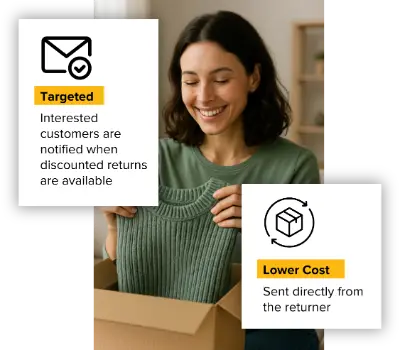
Turn Returns Into New Revenue
Related Articles
HTS Code Explained: What It Is, Why It Matters, and How Ecommerce Brands Use It
HTS codes (Harmonized Tariff Schedule codes) are standardized numerical classifications that identify imported products for U.
FIFO Inventory Explained: What It Means for Ecommerce, Warehousing, and Profitability
FIFO (First In, First Out) is the dominant inventory method for ecommerce brands for good reason: it prevents obsolescence, aligns with international accounting standards, and deli...
Shipping Labels Explained: What They Include, How They Work, and Common Mistakes
Shipping labels are the operational backbone of ecommerce fulfillment, a small piece of paper that determines whether packages reach customers successfully or trigger costly failur...