
How Peer-to-Peer Returns Actually Work Step by Step

Last updated on April 09, 2026
In this article
 16 minutes
- Introduction to Peer-to-Peer Returns
- The Core Inversion: Forward, Not Backward
- The Full Step-by-Step Flow
- A Visual Comparison: Where the Flow Diverges
- Comparing to Traditional Returns Processes
- What the Routing Engine Actually Controls
- What Stays the Same
- What Changes
- How Fraud Control Works in P2P
- Settlement and Financial Reconciliation
- Eligibility and Partial Adoption
- Integration with Existing Returns Software
- Frequently Asked Questions
Peer-to-peer returns work by changing one decision: where a returned item goes next. Instead of routing every return back to a warehouse for intake, inspection, and reprocessing, a P2P system evaluates eligibility and forwards the item directly to the next buyer who has already purchased or expressed demand for that SKU. The result is a fundamentally different cost structure, not because the physical infrastructure changed, but because the destination logic did.
Much like peer-to-peer lending, which allows individuals to lend and borrow money directly without traditional banks, peer-to-peer returns bypass traditional intermediaries to create a more efficient process for handling returned goods.
This article walks through the full mechanical flow of how peer-to-peer returns operate, what the system evaluates, how settlement works, and where the model fits and where it does not. If you are evaluating P2P as an operational layer or trying to understand how it integrates with your existing stack, this is the technical explanation.
Introduction to Peer-to-Peer Returns
Peer-to-peer returns represent a transformative shift in how ecommerce brands handle the returns process. Instead of routing returned items back to a central warehouse or processing center, peer-to-peer returns enable customers to send their unwanted items directly to the next buyer. This innovative approach leverages advanced technology—such as generative AI—to assess the condition of returned products and instantly relist them for sale, ensuring that items remain in active circulation.
By adopting peer-to-peer returns, ecommerce brands can significantly reduce shipping costs and eliminate unnecessary warehouse overhead. The process not only streamlines operations but also enhances customer satisfaction by making returns faster and more convenient, reinforcing how a well-designed ecommerce returns program can drive loyalty. Peer-to-peer returns minimize the environmental impact associated with traditional ecommerce returns, as fewer shipments and less packaging are required. Ultimately, this peer-driven model empowers brands to create a more efficient, sustainable, and customer-friendly returns process, setting a new standard for the industry.
Make Returns Profitable, Yes!
Cut shipping and processing costs by 70% with our patented peer-to-peer returns solution. 4x faster than traditional returns.
See How It WorksThe Core Inversion: Forward, Not Backward
Traditional returns assume a fixed routing destination. When a customer initiates a return, the item goes back to a warehouse or distribution center. From there, it gets inspected, repackaged, and either restocked, liquidated, or discarded. The flow is inherently backward: outbound to customer, inbound to warehouse, outbound again to secondary buyer.
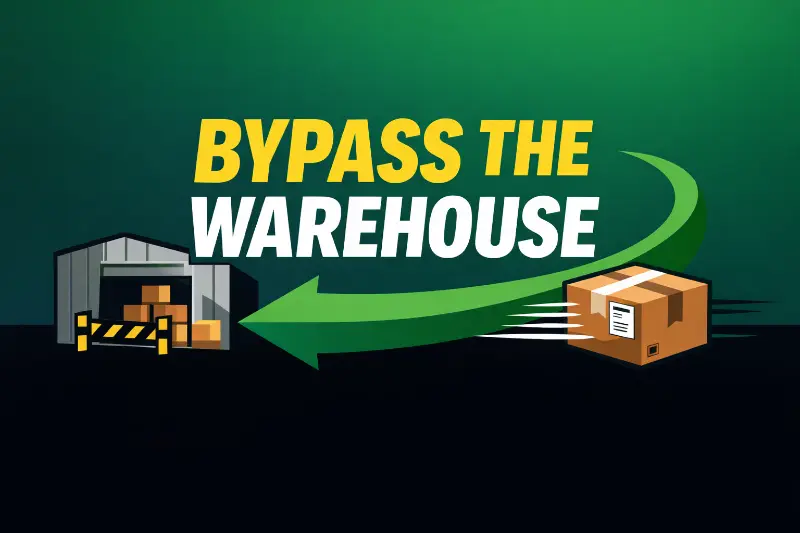
Peer-to-peer returns invert that logic. The default destination is no longer a warehouse. It is the next buyer. Returned goods move forward through the supply chain, not backward through it. That single change in routing logic is what drives the economic and operational differences between the two models.
This approach is similar to how peer-to-peer (P2P) lending connects individual borrowers directly with individual lenders, bypassing traditional financial institutions. Just as P2P lending eliminates the need for banks or other intermediaries, peer-to-peer returns bypass the warehouse, creating a more direct and efficient process.
This is not a warehouse optimization. It is a routing decision engine layered onto your existing returns infrastructure.
The Full Step-by-Step Flow
Step 1: Customer Initiates the Return
The process begins exactly as it does today. A buyer submits a return request through a branded returns portal, selecting a return reason and confirming item condition. Nothing about this customer-facing experience changes from what shoppers already expect. The portal, the policy enforcement, the communication workflows — all remain intact.
What happens behind that familiar interface is where the architecture diverges.
Step 2: The System Evaluates Eligibility
Before any routing decision is made, the system runs an eligibility assessment against the return request. This is the core of the decision engine. It evaluates several factors, including:
- SKU type: Is this a product category that holds resale value in a peer-forward context? Apparel and footwear pass easily. Fragile glassware or custom-order goods typically do not.
- Condition thresholds: Does the stated and verified condition meet the standard for a “Like New” or “Open Box” designation? Items flagged as defective, missing components, or damaged in transit are routed out of the P2P path.
- Return reason: A size exchange is a different signal than a product defect. Return reason codes inform the eligibility decision. Preference-based returns are strong P2P candidates. Failure-based returns are not.
- Demand signals: Is there an active buyer for this SKU, in this region, at this price point? The system checks current demand against available inventory context. No downstream buyer means no P2P routing.
- Regulatory constraints: Certain product categories face legal or compliance restrictions on resale — cosmetics, medical devices, consumables with tamper-evident requirements. These items are automatically excluded from peer-to-peer paths.
The eligibility evaluation is automated and runs against rule sets that operators configure. It does not require human review for standard cases.
Step 3: A Like New or Open Box SKU Is Created
When an item clears eligibility, the system generates a secondary listing. This listing:
- Appears on the same product detail page as the new-condition item
- Carries a modest discount, typically 10 to 20 percent below the original price
- Is clearly labeled as “Like New” or “Open Box” for full buyer transparency
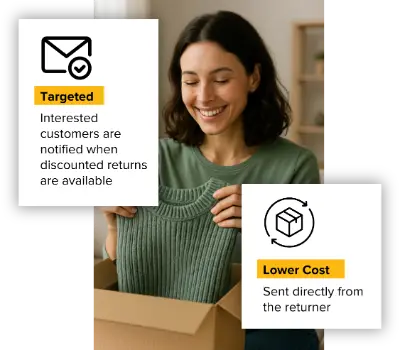
The secondary listing is not a separate product page on a liquidation channel. It lives alongside the primary listing, visible to buyers in the standard shopping experience. This placement matters: it keeps the brand experience intact and allows price-sensitive buyers to access near-new inventory without migrating to third-party resale platforms.
The condition standard, discount level, and labeling language are configurable by the operator based on category norms and brand positioning.
Step 4: Direct Forwarding Is Triggered
This is where the physical flow diverges from the traditional model. Instead of generating an inbound label addressed to a warehouse, the system generates a forward label addressed to the next buyer.
The returner receives a pre-paid shipping label. The package moves once more — forward to the next customer — rather than backward through the supply chain. There is no warehouse intake. No inbound dock. No receiving queue. No inspection labor. No repackaging.
The item travels from one customer directly to another, with the brand operating as the orchestration layer rather than a physical intermediary.
Step 5: Confirmation and Settlement
Once the forward shipment is in motion, the settlement logic closes the loop.
- Tracking confirms delivery to the next buyer
- The original returner receives a refund, triggered either at time of shipment or upon confirmed delivery, depending on operator configuration
- Inventory records update automatically to reflect the completed transaction
- Financial systems post the refund, the secondary sale, and any applicable adjustments
In some implementations, the returner receives a small cash incentive for proper preparation and condition compliance. This aligns returner behavior with system outcomes, similar to how mutual-rating systems on service platforms encourage accountability from both parties.
The entire settlement flow integrates with the existing ecommerce stack. There is no new financial system required. The logic sits inside the existing order management, inventory, and refund infrastructure.
A Visual Comparison: Where the Flow Diverges
Traditional Returns Lifecycle: Outbound to customer → Return initiated → Inbound to warehouse → Intake and inspection → Repackaging → Restocking, resale, liquidation, or disposal → Outbound to secondary buyer
Peer-to-Peer Returns Lifecycle: Outbound to customer → Return initiated → Eligibility evaluation → Direct forward shipment to next buyer → Settlement confirmed
The traditional flow requires multiple truck trips, warehouse labor at multiple stages, and a delay period during which inventory sits idle and value decays, which compounds the financial and environmental burden already associated with so-called “free” ecommerce returns. The P2P flow requires one additional shipment, forward, with no warehouse step between return initiation and final delivery.
Returns do not need to go back. They need to go forward.
Comparing to Traditional Returns Processes
Traditional returns processes are often cumbersome and resource-intensive. When a customer initiates a return, the item typically travels back to a warehouse, where it undergoes inspection, repackaging, and restocking before it can be resold or disposed of. This reverse logistics chain involves multiple steps, each adding to transportation emissions, return waste, and overall costs. Customers may face delays and frustration as they wait for refunds or exchanges, while ecommerce brands absorb fees related to shipping, labor, and storage.
Peer-to-peer returns offer a cost-effective alternative by allowing returned items to move directly from one customer to another, bypassing the warehouse entirely, and they fit naturally into broader efforts to craft an effective ecommerce returns program. This streamlined approach reduces the number of shipments, effectively cutting transportation emissions and minimizing packaging waste. By keeping unwanted items out of storage and in circulation, ecommerce brands can lower their operational fees and reduce the environmental footprint of their returns process. The result is a more sustainable, efficient, and customer-centric experience—one that benefits both the business and the planet, especially for brands actively investing in eco-friendly returns strategies. Peer-to-peer returns not only simplify the returns process but also help ecommerce brands stand out by offering a faster, greener, and more convenient solution for handling returns.
What the Routing Engine Actually Controls
The key distinction in P2P architecture is that the change is logical, not physical. The carrier infrastructure remains the same. The label generation mechanism remains the same. What changes is the address on the label and the decision logic that produced it.
In a traditional model, destination is a constant: warehouse. In a P2P model, destination is a variable: best available next buyer, and this shift shows up most concretely in how return shipping labels are generated and used.
This means P2P can be layered onto existing carrier relationships, existing WMS integrations, and existing return portal workflows without replacing them. It operates as a routing decision layer, not a separate physical network.
The operator sets the eligibility rules. The system evaluates each return against those rules. Qualifying returns are forwarded. Non-qualifying returns follow the existing reverse logistics path. Both flows run simultaneously within the same operational environment.
What Stays the Same
A common concern when evaluating P2P is operational disruption. In practice, the elements that shape customer experience and compliance remain unchanged:
- The branded returns portal that customers interact with
- Policy enforcement logic, including return windows, condition requirements, and exception handling
- Refund logic and amounts
- Carrier infrastructure and label generation mechanics
- Customer support workflows and escalation paths
Operators do not need to rebuild their post-purchase stack to implement P2P. They need to add routing logic that intercepts eligible returns before they default to warehouse intake.
Convert Returns Into New Sales and Profits
Our peer-to-peer returns system instantly resells returned items—no warehouse processing, and get paid before you refund.
I'm Interested in Peer-to-Peer ReturnsWhat Changes
The architectural delta is concentrated in the following areas:
Routing logic: The default destination shifts from warehouse to next buyer for eligible items.
Inventory flow: Returned items re-enter active commerce immediately, without passing through an intake and restock cycle.
Cost structure: Inbound freight, receiving labor, inspection queues, repackaging, and markdown exposure are eliminated for P2P-routed items. Shipping still occurs — but once, forward, not twice in opposing directions.
Fraud exposure: Fewer handoffs mean fewer points where substitution, tampering, or misrepresentation can occur without detection. Refunds tied to delivery confirmation create a closed accountability loop.
Sustainability footprint: One fewer shipment leg, one fewer packaging cycle, and fewer items entering liquidation or disposal channels reduce both emissions and waste.
How Fraud Control Works in P2P
Fraud is not eliminated in a peer-to-peer system, but the attack surface narrows significantly, which is critical given how damaging returns and refund fraud has become for retailers.
Traditional reverse logistics creates fraud exposure at every handoff. When a returned item passes through multiple anonymous warehouse stages before anyone verifies its condition, the opportunity for wardrobing, item swapping, or empty-box abuse persists. More touchpoints means more cracks in verification.
P2P reduces three specific fraud vectors:
- Reduced anonymous handling: Point-to-point shipping eliminates the anonymous warehouse queue where substitution is easiest to execute.
- Refund tied to delivery confirmation: When the refund trigger is confirmed delivery to the next buyer, not simply label generation or warehouse intake, the incentive structure for fraudulent returns changes.
- Fewer time gaps: The window between return initiation and final verification shrinks dramatically, reducing the operational opacity that fraud exploits.
Fraud becomes harder to execute quietly when the chain of custody is shorter and tracked end-to-end.
No More Return Waste
Help the planet and your profits—our award-winning returns tech reduces landfill waste and recycles value. Real savings, No greenwashing!
Learn About Sustainable ReturnsSettlement and Financial Reconciliation
One of the operational questions that arises with P2P is how financial settlement integrates with existing systems. The answer is that it is designed to fit within the current stack, not replace it.
When a return is routed peer-to-peer:
- The return authorization and refund logic remain within the existing RMS or platform workflow
- The secondary sale is recorded as a new order transaction, with appropriate pricing and discount applied
- Inventory records adjust in real time rather than after a warehouse processing delay
- The refund posts against the original order once the tracking confirmation threshold is met
The result is that P2P returns appear in financial systems as a coordinated pair: a refunded return and a completed secondary sale, with the net impact visible across the P&L rather than buried in reverse logistics cost centers.
For operations teams, this means fewer manual reconciliation steps and faster inventory velocity. For finance teams, it means return-related cost and recovery are visible in the same reporting cycle, not offset by weeks of warehouse processing time.
Eligibility and Partial Adoption
Peer-to-peer is a hybrid orchestration model, not an all-or-nothing switch. Across most ecommerce operations, roughly 30 to 60 percent of returns are viable P2P candidates. The remaining portion continues through traditional reverse logistics paths. That split is not a failure of the model; it is the expected operating state.
The eligibility framework maps naturally to product categories:
High fit:
- Apparel
- Footwear
- Accessories
Medium fit:
- Durable home goods
- Non-fragile consumer items with stable resale value
Low fit:
- Fragile items (glassware, ceramics, fragile electronics)
- Custom or made-to-order goods
- Regulated or perishable products
- Cosmetics and personal care items subject to resale restrictions
The practical implication is that operators should identify their high-fit SKU cohort first. This is where the cost curve bends fastest, because these returns are the most recoverable and carry the largest concentration of avoidable cost. Once the high-fit cohort is routing through P2P, medium-fit SKUs can be evaluated against category-specific condition and demand thresholds.
The warehouse does not disappear in a hybrid model. It becomes a specialized handler for exception cases — defective items, regulated returns, end-of-season inventory with no demand signal — rather than the default endpoint for every return, complementing traditional efforts to optimize reverse logistics operations.
Traditional Returns Are Ending
Ecommerce built a returns system for a smaller internet. Today it’s collapsing under scale. Warehouses can’t absorb the volume, costs keep rising, and retailers are quietly tightening policies. This article explains why the old model is failing and what replaces it.
Read the Returns BibleIntegration with Existing Returns Software
A common objection is that an existing RMS investment makes P2P redundant. It does not. Returns management systems and peer-to-peer routing solve different problems.
RMS platforms handle the customer-facing workflow: portal UX, policy enforcement, label generation, exchange flows, return reason analytics, and customer communication. They are effective at what they do, as seen in solutions like ZigZag’s global returns management platform.
What RMS platforms do not change is where the item goes after the label is printed. In nearly every case, the default destination remains a warehouse, DC, or carrier-managed reverse logistics hub.
P2P routing is a layer that operates downstream of the RMS decision. It intercepts the label generation step and redirects qualifying returns to the next buyer rather than to the warehouse. The RMS continues to handle policy, UX, and communication. The P2P engine handles destination.
They are complementary, not competitive. Operators who already use Loop, ReturnLogic, Narvar, Return Prime’s returns solution, or similar platforms — including drop-off–heavy models like Happy Returns — can add P2P routing without rebuilding their post-purchase stack.
Frequently Asked Questions
How does a peer-to-peer return differ from a standard ecommerce return in the customer experience?
From the customer’s perspective, a peer-to-peer return begins identically to a standard return: they submit a request through the branded portal, select a reason, and receive a pre-paid label. The difference is that the label is addressed to the next buyer rather than to a warehouse. Customers who are informed about this routing often respond positively, particularly when refund timing is faster and the sustainability benefit is communicated clearly.
What happens to a return that does not qualify for peer-to-peer routing?
Non-qualifying returns are automatically routed through the existing reverse logistics path, whether that is a brand-owned warehouse, a third-party logistics provider, or a carrier-managed returns hub. The P2P eligibility engine only intercepts returns that meet all five eligibility criteria; everything else follows the default flow.
How does the system determine whether a next buyer exists for a returned item?
The eligibility evaluation includes a demand signal check, which assesses whether there is active or near-term buyer demand for that SKU at a modest discount in the relevant geography. If demand exists, P2P routing is triggered. If demand is insufficient or timing is unfavorable, such as an end-of-season SKU with limited remaining sales cycle, the return routes traditionally.
Does peer-to-peer returns require a separate carrier network or logistics infrastructure?
No. P2P routing uses the same carrier infrastructure, label generation mechanics, and tracking systems already in place. The change is in the destination address on the label and the decision logic that produced it, not in the physical network that moves the package.
How does refund timing work in a peer-to-peer returns flow?
Refund timing is configurable by the operator. The most common implementation triggers the refund upon confirmed shipment of the forward package, though some operators tie it to confirmed delivery at the next buyer’s address. Either way, refund speed is typically faster than the traditional model, which often requires warehouse intake and inspection before the refund is authorized.
What share of a typical return volume is realistically eligible for peer-to-peer routing?
Based on the framework in the Returns Bible, approximately 30 to 60 percent of returns across most ecommerce operations are viable P2P candidates. The exact percentage depends on SKU mix, return reasons, product categories, and seasonal demand patterns. High-fit categories like apparel and footwear tend toward the upper end of that range.
How does peer-to-peer returns reduce fraud risk compared to traditional reverse logistics?
The fraud reduction in P2P comes from fewer handoffs and tighter settlement logic. When items do not pass through anonymous warehouse queues, the opportunity for item swapping or condition misrepresentation narrows. When refunds are triggered by confirmed delivery rather than label generation, fraudulent return claims face a harder verification requirement. The attack surface shrinks because the chain of custody is shorter and tracked continuously.
Can peer-to-peer returns be implemented alongside an existing returns management system?
Yes. P2P routing operates as a layer beneath the RMS, intercepting the routing decision after policy enforcement has already occurred. The RMS continues to handle portal UX, policy rules, customer communication, and analytics. The P2P engine handles the destination decision for eligible returns. The two systems are designed to operate in parallel, not as alternatives.
Written By:

Manish Chowdhary
Manish Chowdhary is the founder and CEO of Cahoot, the most comprehensive post-purchase suite for ecommerce brands. A serial entrepreneur and industry thought leader, Manish has decades of experience building technologies that simplify ecommerce logistics—from order fulfillment to returns. His insights help brands stay ahead of market shifts and operational challenges.

Turn Returns Into New Revenue
Related Articles

Cheapest Shipping from USA to UK: Options, Costs, and What to Watch
Shipping from the USA to the UK is one of the most common international routes for ecommerce brands, and it is also one of the most misunderstood from a cost perspective.
What Is Demand Planning? How It Impacts Inventory, Forecasting, and Profitability
Demand planning is the process of estimating future customer demand so that a business can align its inventory, procurement, and operations to meet that demand without carrying mor...

What Is JIT Management? Benefits, Risks, and When It Works
JIT management, short for Just-in-Time, is an inventory and production approach where goods are acquired, produced, or replenished only when they are needed to fulfill demand, rath...