
Save Money With Ecommerce Shipping Software: Next-Gen Solutions

Last updated on September 29, 2026
In this article
 10 minutes
- Shipping Costs are One of the Biggest Challenges for Ecommerce Businesses Today
- Calculating Shipping Costs
- Savings: Stay Ahead and Boost Margins Despite Rising Costs
- Pick the Cheapest Label Automatically, Every Time
- Pay the Right Shipping Fees, Even on Complex Orders
- Ease of Use
- Summary: Why Next-Gen Shipping Software is Essential for Cost Savings
- Frequently Asked Questions
Shipping costs are one of the biggest challenges for ecommerce businesses today, and understanding them is essential to reducing expenses and increasing profit margins. With rising carrier fees, labor expenses, and warehouse leases, every dollar saved makes a difference. Shipping costs can vary greatly depending on several factors, including package weight, dimensions, destination, and shipping method. Traditional shipping software, built for a simpler time, often fails to optimize costs effectively, leaving businesses to absorb unnecessary expenses. By gaining a clear understanding of these costs, businesses can make informed decisions that help reduce shipping expenses and improve overall efficiency.
That’s where next-generation ecommerce shipping software comes in. Designed to reduce shipping costs at every stage, these advanced solutions automate key processes: choosing the most affordable shipping labels, optimizing package sizes to avoid dimensional weight fees, and streamlining fulfillment with minimal manual intervention. By leveraging automation and AI-driven decision-making, merchants can significantly cut costs while improving delivery efficiency.
In this article, we’ll explore how next-gen shipping software helps save money, eliminate cost leakages, and improve warehouse efficiency, giving businesses the competitive edge they need to succeed in ecommerce today.
Shipping Costs are One of the Biggest Challenges for Ecommerce Businesses Today
Shipping costs can be a significant challenge for ecommerce businesses, as they can eat into profit margins and affect customer satisfaction (and revenue) if they skimp on delivery speed. To reduce shipping costs, ecommerce businesses can implement various strategies, such as negotiating with shipping carriers, using discounted shipping supplies, and optimizing pricing strategies to make free shipping profitable. By taking proactive steps to manage shipping expenses, businesses can protect their profit margins and offer competitive shipping rates to their customers.
Calculating Shipping Costs
Calculating shipping costs involves considering all the factors mentioned above. To calculate shipping costs, ecommerce businesses can use shipping calculators, consult with shipping carriers, or connect to carrier APIs for real-time rate shopping to determine the most cost-effective option. It’s essential to factor in all shipping fees, including fuel surcharges, handling fees, delivery area surcharges, and insurance costs, among others. By accurately calculating shipping costs, businesses can set appropriate pricing strategies and avoid unexpected expenses.
Savings: Stay Ahead and Boost Margins Despite Rising Costs
We’ve now identified two key things that next-generation ecommerce shipping software must do — not all shipping software delivers the same level of efficiency or support for growth, so the right option must simplify operations in today’s complex world while also boosting your team’s productivity and freeing up their time to save time.
However, the biggest pressure merchants face today is around costs. With 2026 carrier rate and surcharge updates now in effect or announced across FedEx, UPS, and USPS, along with rising labor and warehouse costs, Sellers need to protect margins by reducing avoidable shipping spend. It can make the difference between going out of business and finding success.
Legacy software does a poor job of unlocking savings because it was built for a world where resource optimization or cost-cutting was not needed. We believe there are three key areas of the shipping workflow where software must be able to unlock cost savings:
- Does the software pick the cheapest shipping label every time?
- Does the software optimize packaging and shipping costs for large, complex orders?
- Is the software easy to use, with minimal human oversight? Can it work effectively with untrained, seasonal, or part-time labor?
Pick the Cheapest Label Automatically, Every Time
Legacy Software – You’ll Never Know if You’re Saving Money
As we’ve seen previously, legacy software requires many manual automation rules to support workflows. Printing shipping labels should happen automatically, not through manual, rule-heavy workflows. But why do merchants go to all this trouble? The answer is simple – to identify the cheapest shipping label on every order.
However, the automations (mapping SKUs and customer addresses to fulfillment locations and carrier services) are simply a means to an end, and they often fail to account for evolving FedEx and UPS surcharge mitigation strategies. There is no way to verify whether the rules ensure the cheapest option is picked every time.
To determine that, manual and deep cost comparison analysis is required. The possibility of cost leakage is real, and in a world where customers expect free and fast shipping on every order, every last dollar matters. You need certainty and confidence in the labels your shipping software selects. When the software consistently picks the lowest-cost service, batch label printing also speeds up the packing process.
Next-Gen Software – Savings on Every Label
Cahoot’s software removes the maze of complex, human-defined automation rules. It acts as a shipping platform for centralized shipping management, not just a label selector. With no rules to manage, you don’t need to worry about optimizing them for maximum savings. The system intelligently factors in all parameters to make the right choice every time.
It’s easy to overlook scenarios when defining rules manually. For example, a one-unit order might fall into USPS Ground Advantage’s lighter-weight pricing tiers, while a larger multi-unit order could shift to a different rate break or carrier-service combination. But what if someone orders three units or six units? Cahoot’s system considers all data to make the optimal decision. It can also compare multiple carriers automatically to identify the best shipping method for each order.
You no longer need to perform deep investigations to confirm savings. You can reduce the need for manual rate-checking and improve confidence that each order is routed to a cost-effective shipping option, improving the overall shipping process.
Pay the Right Shipping Fees, Even on Complex Orders
Legacy Software – Cost Leakages From Human Error
Manual packaging choices can hurt shipping operations because staff have to rely on judgment instead of system guidance, which can lead to cost leakages. Carriers charge based on dimensional weight, and oversized boxes increase costs beyond actual shipping rates. Manual data entry or manual packaging decisions also increase the chance of costly mistakes.
Without automation or guidance, package selection relies on human judgment, raising the risk of errors.
Next-Gen Software – Pay the Optimal Rate Every Time
Cahoot’s Intelligent Cartonization ensures optimal box selection for even the most complex orders, demonstrating how smart cartonization software helps efficient shippers save. As an ecommerce shipping solution, Cahoot is built to reduce packaging mistakes, while its shipping software solution logic helps minimize rate errors before labels are created. Barcode scanning can further reduce fulfillment errors on complex orders. You pay only the minimum required shipping rate, and errors are dramatically reduced.
Ease of Use
Legacy Software – Needs Staff to Babysit the Tool
Legacy software is clunky and requires constant manual data entry, workflow updates, and oversight. That gets even harder when an ecommerce store sells through multiple sales channels or marketplaces, since older tools often cannot automatically import orders from each source. Changes from carriers or product catalogs break automations, demanding dedicated resources to maintain the tool. Weak integrations also make order management harder because orders are not imported and synchronized automatically, even though modern ecommerce shipping software can manage all orders across multiple marketplaces.
Many Sellers hire teams just to configure and maintain their legacy shipping software, increasing staffing costs and diverting talent from more valuable work, especially when comparing Veeqo vs. Cahoot shipping software for automation.
Next-Gen Software – Anyone Can Use It
Cahoot automates most workflows, adapts to changes automatically, and requires minimal setup. As next-gen software for ecommerce, it supports seamless integration with connected systems so teams can keep operations moving without extra manual work. Untrained, part-time, or seasonal staff can quickly learn and use the system, reducing staffing costs and freeing teams to focus on higher-value tasks. Look for ecommerce software that shipping software integrates with on your store platform, while also supporting inventory management across multiple channels and leveraging robust order fulfillment integrations and ecommerce partners. This helps ecommerce order fulfillment run with fewer handoffs.
Summary: Why Next-Gen Shipping Software is Essential for Cost Savings
As an ecommerce business grows, the right shipping software matters because shipping expenses rise. Legacy software leads to cost leakages, inefficient packaging, and manual labor inefficiencies, harming profit margins.
Next-gen shipping software reduces costs with a shipping solution that simplifies shipping workflows by: ✅ Automatically selecting the cheapest label for every order ✅ Optimizing packaging to avoid dimensional weight fees ✅ Eliminating manual labor with intelligent automation, so shipping software automates routine fulfillment work ✅ Enabling untrained or seasonal staff to handle fulfillment easily
By embracing smarter shipping software, merchants can stop overpaying, streamline operations, and reinvest savings into growth.
This was Part 4 of our four-part Next-Generation Shipping Software Guide. To learn more, check out the other parts covering the old vs. new world, simplified fulfillment, and warehouse efficiency.
Frequently Asked Questions
What is the best shipping software?
It depends on your needs, because shipping software options vary widely. Legacy solutions like ShipStation handle basic label printing but have limitations, and popular shipping software platforms include ShipStation, Shippo, and Veeqo, while Cahoot is the next-gen option discussed here for automation and optimized shipping with built-in discounted rates.
How is Cahoot able to offer discounted shipping rates for small businesses?
Cahoot aggregates shipping volume across all users and partners with carriers and consolidators to negotiate best-in-class discounts, which we pass on to our users through order fulfillment services for ecommerce companies.
Through these network relationships, Cahoot can also offer carrier discounts and, where available, exclusive shipping discounts based on negotiated rates with major carriers.
What shipping carriers does Cahoot work with?
Cahoot’s public integrations currently include major shipping carriers and other major carriers such as UPS, FedEx, USPS, DHL eCommerce, DHL Express, Amazon Shipping, OSM Worldwide, OnTrac, and other carrier partners, so merchants can choose the shipping provider that best fits each order or pair them with ecommerce order fulfillment services that outclass traditional 3PLs. These shipping services support both domestic and international shipping. Check Cahoot’s live integrations page for the most current list.
How do I integrate Cahoot with my ecommerce platform?
Cahoot integrates with platforms including Shopify, WooCommerce, BigCommerce, Amazon, TikTok Shop, Rithum, and additional commerce and operations partners listed on its live integrations page.
Native integrations can streamline onboarding and help merchants access discounted shipping options with less implementation effort, especially when using Amazon Buy Shipping integration for ecommerce order fulfillment.
How quickly can I save on my shipping costs?
Once onboarding is complete, merchants can access pre-negotiated shipping rates that may help reduce shipping costs. Available pricing plans and customized pricing may depend on shipment volume and onboarding scope. Cahoot does not advertise a free plan or free starter plan for merchants who want to test the software before committing.
Do you provide customer support in case I need help?
Yes, Cahoot offers customer support along with self-service help resources to assist with onboarding, shipping questions, and operational issues. Support demand also tends to drop when real-time shipment tracking is available, because proactive customer communication improves the customer experience and reduces customer inquiries about order status. Our support team is here to assist you with everything from integrating your ecommerce platforms to choosing the best shipping options and navigating packaging costs.
Can ecommerce shipping software handle returns?
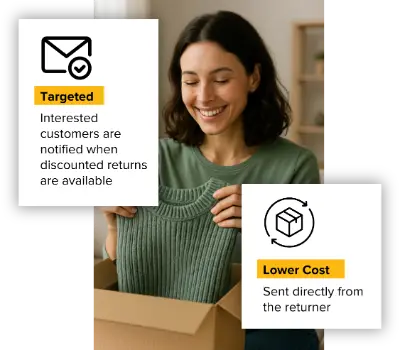
Yes, Cahoot supports returns-related workflows as part of the broader delivery process after an order is shipped, including reverse-logistics coordination, return label workflows for ecommerce, return tracking, and inventory-related processes. An integrated returns portal can improve customer experience and support stronger customer retention rates. For peer-to-peer returns—where unused items move directly from one customer to the next—see our Peer-to-peer ecommerce returns solution, powered by ecommerce fulfillment software built on a peer-to-peer network, which cuts return costs by 64%, increases turnaround by 4×, and reduces CO₂ emissions by 54% on average. Automated communications for returns keep customers informed and can turn some returns into second-chance sales. In cross-border cases, details like packing slips and customs forms can also matter.
Written By:

Rinaldi Juwono
Rinaldi Juwono leads content and SEO strategy at Cahoot, crafting data-driven insights that help ecommerce brands navigate logistics challenges. He works closely with the product, sales, and operations teams to translate Cahoot’s innovations into actionable strategies merchants can use to grow smarter and leaner.

Turn Returns Into New Revenue
Related Articles
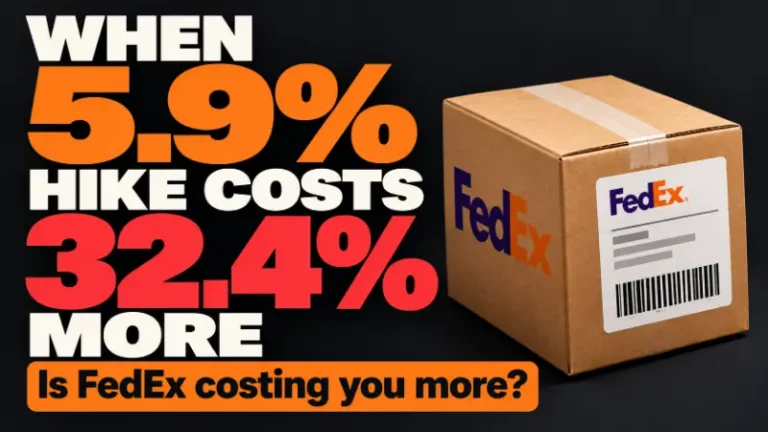
FedEx 2027 Rate Increase: How 5.9% Becomes 32.4% on One Package
FedEx’s announced 2027 rate increase averages 5.
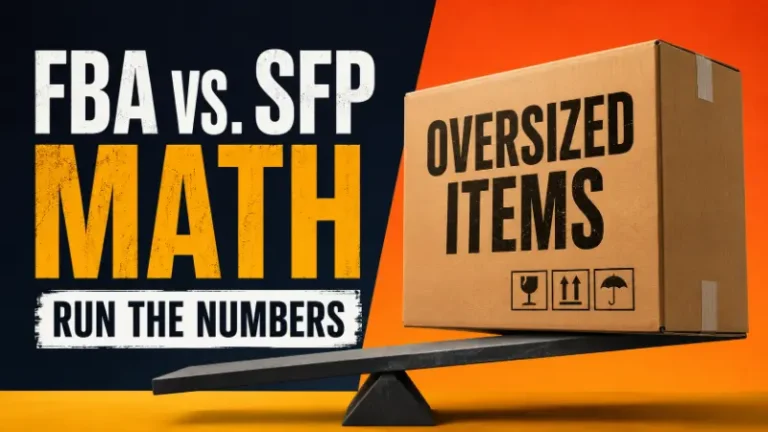
Seller Fulfilled Prime for Oversized Items: The FBA vs. SFP Math Sellers Need to Run
Seller Fulfilled Prime can work for oversized and bulky items, but it is not automatically cheaper than FBA.
What Is Post-Purchase Experience in Ecommerce?
After a customer clicks “buy,” the post-purchase experience begins – it’s all the steps and interactions a shopper encounters from checkout through delivery and beyond.