
When Warehouse Returns Still Make Sense

Last updated on July 01, 2026
In this article
 12 minutes
- Peer-to-Peer Returns Were Never Meant to Handle Every Return
- Some Returns Belong in the Warehouse Management System Because Verification or Resale Fit Breaks Down
- Damaged, Defective, Delayed, and Unsuitable Returns Still Need the Standard Reverse Logistics Flow
- The Warehouse Is Still the Right Place for Exceptions and Fallback Handling
- Selective Optimization in the Returns Process Is Stronger Than Ideological Routing
- Warehouse Returns Still Make Sense for Returns Management When They Protect Trust, Control, or Recovery Discipline
- Frequently Asked Questions
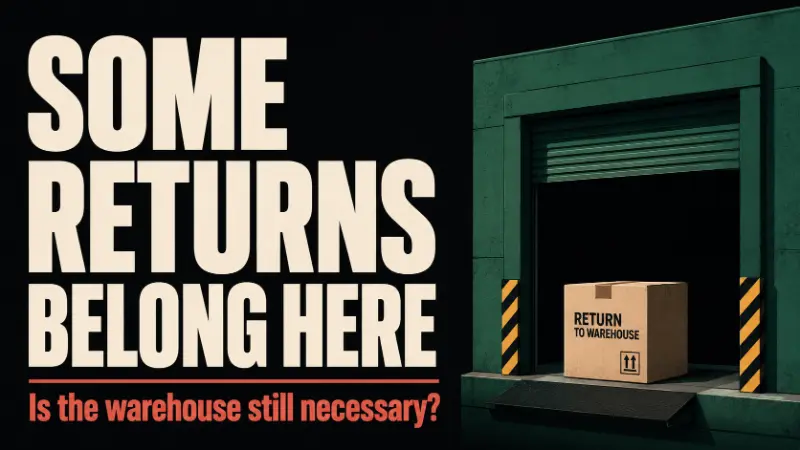
A serious returns strategy does not pretend one path fits every return. Warehouse returns still make sense when verification, product condition, item type, timing, or resale suitability make Peer-to-Peer Returns a poor fit. The question is not whether warehouses still matter. The question is when they are still the right choice for a specific return.
That distinction is doing real work. Most of the noise around modern returns frames the debate as warehouse versus peer-to-peer, as if one model has to win. That framing misses what actually happens inside a credible operation. Some returns belong in a forward-moving recovery path. Others belong in the standard warehouse flow. The job of the operator is to route each one through whatever fits it best. Warehouse returns are not a contradiction to Peer-to-Peer. They are part of taking Peer-to-Peer seriously.
Peer-to-Peer Returns Were Never Meant to Handle Every Return
Peer-to-Peer Returns is a returns optimization solution. It sits as a selective optimization layer on top of an existing operation, working alongside existing warehouses rather than replacing them. It is verification-first by design, which means the system only forwards items that have been confirmed as eligible. If you want the longer treatment of the model itself, the canonical explainer on what are peer-to-peer returns covers the definition in depth.
The realism baked into that definition matters. Not all returns qualify. Some pass verification, remain suitable for resale, and create a recovery opportunity before warehouse processing. Others fail verification, arrive damaged, miss the resale window, or fall into categories where direct forwarding would be inappropriate. Those continue through the standard warehouse process. That is not a workaround. That is the design.
A returns strategy that claims to send every return down a single path, in either direction, is making a marketing claim, not an operations claim. The credible position is more modest and more useful: Peer-to-Peer Returns handles the eligible portion well, and the warehouse handles everything that should not be there.
Some Returns Belong in the Warehouse Management System Because Verification or Resale Fit Breaks Down
The center of any routing decision is fit. A returned item either fits the conditions that make recovery before warehouse processing safe and effective, or it does not. When fit breaks down, the warehouse path is the right answer, and forcing the item into a peer-to-peer flow would create more risk than it removes.
Fit breaks down in a few specific ways:
- The item fails verification. The system cannot confirm condition, identity, or eligibility with enough confidence to forward it to another customer, and warehouse staff may need to inspect for damage, completeness, and original packaging before determining whether it should be restocked, repaired, or disposed of.
- The item is damaged or defective. It needs controlled inspection, root-cause analysis, or a vendor or carrier claim that only a warehouse environment can support.
- The item is unsuitable for resale. Hygiene, safety, regulatory, or control concerns make any near-term resale inappropriate.
- The item is not sold in time. Even an initially eligible item can age out of its resale window, at which point it belongs in the standard flow for fallback handling.
These are not edge cases worth apologizing for. They are predictable categories that any honest returns program plans for from day one. The piece on where peer-to-peer returns don’t work goes deeper into the broader set of limitations. For the purposes of routing, the takeaway is narrower: when verification or resale fit breaks down, the warehouse path is the operationally disciplined choice.
Damaged, Defective, Delayed, and Unsuitable Returns Still Need the Standard Reverse Logistics Flow
It helps to make the warehouse-fit categories concrete, because abstractions hide the operational stakes. In practice, effective reverse logistics starts when the customer decides to return an item and continues through return authorization and shipment back to the warehouse, where careful planning helps control costs and customer satisfaction while processing returns and other returned products.
A returned electronics item that powers on but shows damage to internal components is not a candidate for forwarding. It needs controlled inspection, possibly a warranty review, and a disposition decision that may involve repair, refurbishment, or write-off. After warehouse staff process the return, the item is sorted for restocking, repair, or disposal, inventory management is updated, and the customer receives a refund or exchange. The standard warehouse flow is built for that work.
A piece of apparel that arrives with a clear defect, missing tags, or evidence of wear beyond normal try-on is similarly not a candidate for forwarding. Even if a buyer somewhere would accept it, the brand cannot responsibly route an item in that condition to another customer without inspection. The warehouse flow handles the call.
An item that was initially eligible at the moment of return initiation can also drift out of fit. A seasonal product returned late in its cycle may no longer have a near-term buyer at the right price. Rather than force a forwarding decision against weak demand, the standard flow can absorb it, hold it for the next cycle, route it to liquidation, or process it through whatever fallback path the brand has built.
Categories with hygiene, safety, or regulatory sensitivity sit in the same bucket. Some product types simply require deeper inspection or controlled handling before any resale decision is made, regardless of how clean the return looks on the surface. For those items, recovery before warehouse processing is not appropriate, and pretending otherwise creates compliance and trust risk that no incremental margin gain is worth.
The pattern across all of these examples is the same. Damaged, defective, delayed, and unsuitable returns are not failures of the model. They are the cases the model is explicitly designed to send into the standard flow.
The Warehouse Is Still the Right Place for Exceptions and Fallback Handling
The warehouse role in a modern returns strategy is not residual. It is specialized. Once eligible returns are pulled into a recovery-before-warehouse path, what remains in the warehouse is more concentrated in cases that genuinely need warehouse capabilities. That is a stronger operational position, not a weaker one.
Three categories define that specialized role:
- Inspection-heavy cases. Items where condition, authenticity, or compliance has to be verified before any further movement.
- Controlled handling cases. Items that require specific environments, equipment, or processes that a peer cannot reasonably replicate.
- Fallback processing. The items that flowed into the warehouse path because something disqualified them from forwarding, and now need a disposition decision that may include resale, repair, donation, liquidation, or write-off. Clear procedures and strict disposition rules make that triage more efficient as incoming items are categorized.
A designated returns location with dedicated warehouse space helps prevent bottlenecks in standard fulfillment areas and supports smoother warehouse operations. Strong cross-team communication also improves returns handling when specific areas are used for processing.
That role is durable. It does not shrink to zero as Peer-to-Peer Returns scales. It actually clarifies. The mechanics of how peer-to-peer returns actually work show how the eligibility logic at the front of the process determines which items ever reach the warehouse in the first place. Everything that reaches the warehouse arrives there because that is the right place for it to be.
Selective Optimization in the Returns Process Is Stronger Than Ideological Routing
The most useful frame for thinking about this is also the simplest. The best returns system routes each return through the path that fits it best. That is selective optimization, and it is stronger than ideological routing in either direction.
A warehouse-only model treats every return identically, which means eligible items get the full cost stack of inbound freight, inspection, repackaging, and restocking even when they did not need it. Direct costs include labor, shipping, and warehouse space tied up by returned merchandise, plus loss when items cannot go back into inventory. Indirect costs show up as time spent managing returns instead of other work, refund-related cash flow pressure, and rising operational costs that drain money from margins. That is the structural problem the original Returns Bible argument identifies, and it is real.
A peer-to-peer-only model would do the inverse. It would force items into a forwarding path that were never appropriate for one, which would degrade buyer trust, create fraud and compliance exposure, and erode the credibility of the eligible returns that the model handles well.
Neither extreme survives contact with a real catalog. The argument for hybrid is not a compromise. It is the operating model. The article on why 100% P2P adoption is the wrong goal goes deeper into the adoption pacing logic, but the routing logic stands on its own: fit over ideology, every time.
This is also why most objections to Peer-to-Peer Returns lose their force once routing is understood. A lot of the resistance assumes the model is trying to replace warehouses entirely, which it is not. The piece on common objections to peer-to-peer returns unpacks that confusion in detail. The short version is that the warehouse path is not the thing peer-to-peer is competing with. It is the thing peer-to-peer is built to work alongside, improving operational efficiency and customer satisfaction while protecting the business bottom line.
Warehouse Returns Still Make Sense for Returns Management When They Protect Trust, Control, or Recovery Discipline
There is one more dimension worth naming directly, because it gets lost in cost-focused arguments.
Some returns belong in the warehouse not because the math says so, but because trust, control, or recovery discipline require it. A well-run warehouse returns process protects trust when cases are borderline and helps maintain control across the supply chain. A brand that forwards a borderline item to another customer to save a few dollars on intake labor has not optimized anything. It has spent down credibility that takes years to rebuild. A returns strategy that routes every borderline case toward forwarding will eventually meet a buyer who receives something they should not have, and the cost of that single moment will dwarf any operational savings on the route.
Warehouse returns protect that discipline. They give the operation a controlled space to verify, inspect, and decide. They preserve the ability to make conservative calls on items that sit near the line, supporting returns management through better inventory control and stronger customer loyalty. They keep the brand standard intact in the cases where automation alone is not enough, while a clear returns process also helps meet customer expectations.
That is the reason this framing matters. Peer-to-Peer Returns earns its place by handling eligible returns well. The warehouse earns its place by handling everything else with the seriousness those cases require. Together they make up a credible system. Apart, either one is a worse version of itself.
The honest pitch for a modern returns strategy is not that warehouses are obsolete. It is that warehouses, used selectively, are stronger than warehouses used by default. Reducing unnecessary reverse logistics on the eligible portion of returns frees the warehouse to do what it actually does well on everything else.
Frequently Asked Questions
Are warehouse returns going away?
No. Warehouse returns remain the right path for return types that are a poor fit for Peer-to-Peer Returns, including items that fail verification, are damaged or defective, are unsuitable for resale, or arrive too late to find a near-term buyer. They also remain important for brands and retailers that need a clear returns policy with defined eligibility criteria and timeframes. Peer-to-Peer Returns reduces unnecessary reverse logistics on eligible returns. It does not eliminate the warehouse role.
What kinds of returns still belong in the standard warehouse flow?
Returns that fail verification, arrive damaged or defective, are unsuitable for resale, miss the resale window, or fall into categories with hygiene, safety, or control concerns. For standard warehouse-flow items, the process works best when the return label is included with the shipment or easy for the customer to print at home. These cases need inspection, controlled handling, or fallback processing that the standard flow is built to provide.
Does using Peer-to-Peer Returns mean replacing the existing warehouse?
No. Peer-to-Peer Returns is a selective optimization layer that works alongside existing warehouses. It is verification-first, it handles only eligible returns, and it leaves the standard warehouse flow in place for everything else. It is not a rip-and-replace platform. Existing operations can still improve with a warehouse management system that automates tracking, reduces errors, and speeds returns handling.
How is the decision made between a peer-to-peer path and a warehouse path?
The decision is driven by eligibility and fit. The system evaluates the item against verification, condition, resale suitability, and timing criteria. That decision is strengthened by proactive data tracking, standardized triage, and clear grading protocols, often supported by automated return portals and real-time inventory tracking to route items correctly. Eligible items can move through the recovery-before-warehouse path. Once a return arrives, barcode scanning, RFID, or mobile devices can update its status and speed inventory reintegration by identifying available stock faster. Items that fail those checks continue through the standard warehouse process.
Is it a sign of weakness in the model that some returns still go to the warehouse?
No. Routing some returns to the warehouse is part of the design. A returns system that claimed to forward every return regardless of condition or fit would be less credible, not more. Selective routing is what makes the overall strategy operationally sound.
Why is selective routing better than sending everything to the same place?
Because each return is different. A return that passes verification and remains suitable for resale creates a recovery opportunity that the warehouse path would erode through delay and rehandling. Better routing also improves over time through reporting on return reasons and data analysis that helps identify patterns. A damaged or defective return needs controlled inspection that a forwarding path cannot provide, helping teams identify issues earlier. Sending each return through the path that fits it produces better outcomes than forcing every return into one model. Returns Management Systems can also support customer portals, generate shipping labels, and keep customers informed during the process.
Written By:

Manish Chowdhary
Manish Chowdhary is the founder and CEO of Cahoot, the most comprehensive post-purchase suite for ecommerce brands. A serial entrepreneur and industry thought leader, Manish has decades of experience building technologies that simplify ecommerce logistics—from order fulfillment to returns. His insights help brands stay ahead of market shifts and operational challenges.

Turn Returns Into New Revenue
Related Articles

The Shipping Speed Paradox: Why DTC Brands Are Slowing Down
Everyone’s talking about faster delivery.

Ecommerce Profit Leaks: The Hidden Ones That AI Is Finally Closing
Most ecommerce brands believe they understand their margins.
Crafting a Return Policy that Drives Customer Loyalty and Reduces Returns
Let’s talk about ecommerce returns policies.