
Why Ecommerce Returns Were Never Designed for Scale

Last updated on March 12, 2026
In this article
 17 minutes
- Returns Were Episodic, Not Industrial
- The $396B to $890B Trajectory and the Average Ecommerce Return Rate
- Why Free Returns Worked for Customer Satisfaction, and Then Why They Stopped
- Reverse Logistics and Ecommerce
- Ecommerce Return Fraud
- The Macro Forces Converging in 2025
- The Structural Conclusion for Reverse Logistics
- Frequently Asked Questions
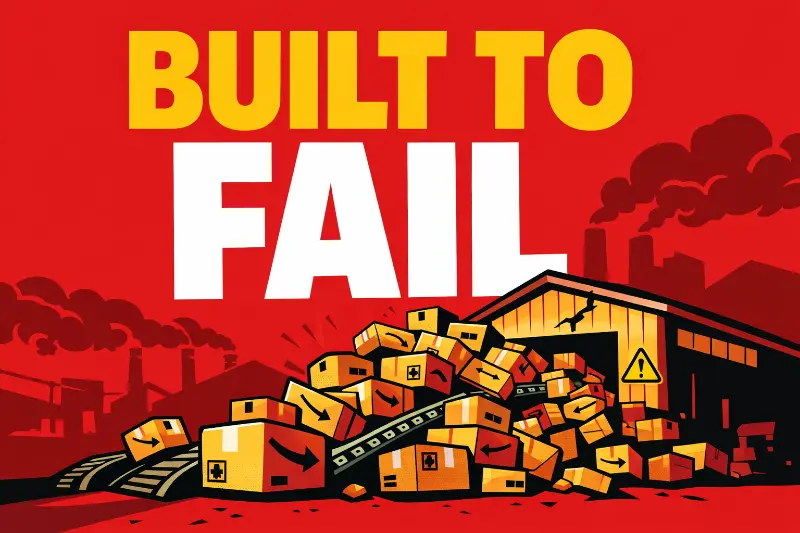
Ecommerce returns have grown from a manageable operational footnote into a $890 billion structural crisis, and the system retailers rely on to handle them was never built for this reality. The warehouse-centric model that underpins virtually every return policy in existence today was designed for a different era of commerce entirely, and no amount of software, carrier consolidation, or policy tightening changes that underlying fact. The average ecommerce return rate varies by sector and season, but often ranges from 15% to 30%, highlighting the scale of the challenge facing online retailers.
This is not a story about retailers doing returns wrong. It is a story about a system built for one set of conditions being asked to perform under conditions that bear no resemblance to the original design. Consumer expectations around flexible and convenient return policies have become a key factor influencing how retailers must adapt, adding to operational challenges. Understanding how that happened is the first step toward understanding why returns keep getting more expensive, more fraud-prone, and more damaging to the brands that rely on them, especially when considering the hidden costs associated with ecommerce returns, such as processing, shipping, and inventory loss.
Returns Were Episodic, Not Industrial
When retailers first extended return policies to online shoppers, the assumption was simple: returns would be occasional. A customer ordered something, it did not fit, they sent it back. The warehouse absorbed it, restocked it, and moved on. Returns were episodic events managed within normal operational rhythms, not a parallel industrial process requiring its own infrastructure, labor pools, and financial modeling. Store returns and return in-store options, where customers could bring online purchases back to physical locations, also provided convenience and helped build trust in the early days of ecommerce.
That assumption was reasonable at the time because ecommerce itself was still developing. The early environment looked nothing like today:
- Order volumes were modest by modern standards
- SKU counts were manageable
- Size and fit complexity was limited compared to the product categories that would later dominate online retail
- Consumer purchasing decisions happened at a more deliberate, human pace
- Reverse logistics flows were light enough that warehouses could absorb them without dedicated resources
In that context, free returns made sense as a trust-building tool. Buying sight unseen was still unfamiliar to many shoppers. Setting clear expectations for customers regarding returns was crucial to building confidence. A no-questions-asked return policy reduced friction, signaled confidence in the product, and helped convert browsers into buyers. Clear return policies also attracted potential customers and reduced hesitation, ensuring that shoppers felt secure in their purchasing decisions. Returns were not a cost center under scrutiny. They were a marketing line item that paid for itself in conversion lift.
What no one planned for was what happened when ecommerce scaled.
The $396B to $890B Trajectory and the Average Ecommerce Return Rate
The scale of what followed is not a spike or an anomaly. It is structural escalation, and the data from the past several years makes that clear.
A key metric to understand this trend is the average ecommerce return rate. The average ecommerce return rate was 16.9% in 2024, serving as a benchmark for the industry, with rates often spiking even higher during the holiday shopping season due to increased purchase volumes and gift returns.
U.S. retail returns stood at $396 billion in 2018. By 2021, that figure had jumped to $761 billion, a 78 percent increase in a single year. It climbed again to $816 billion in 2022, representing 16.5 percent of all retail sales. After a brief pullback to $743 billion in 2023, returns hit their highest recorded level in 2024: $890 billion, with online returns alone accounting for $247 billion of the 2023 total.
That trajectory is not driven by one bad year or one unusual event. It reflects a market that outgrew its own infrastructure. Returns nearly doubled in four years, without adjusting for inflation, ecommerce penetration, or the explosive growth in SKU counts across apparel, home goods, and consumer electronics. The escalation of returns has also led to rising costs for retailers, including increased shipping, processing, and logistical expenses, directly impacting profit margins and overall ecommerce profitability.
Major retailers have responded to these challenges by implementing extended holiday return windows and introducing fees for certain return methods, aiming to make return policies more sustainable and to manage return abuse.
The line from $396 billion to $890 billion is not volatility. It is a system behaving exactly as designed, just at a scale the design was never meant to handle.
Why Free Returns Worked for Customer Satisfaction, and Then Why They Stopped
Free returns did not fail because they were a bad idea. They failed because the conditions that made them workable changed faster than anyone recalibrated the policy, leading many retailers to question whether free ecommerce returns are coming to an end.
The acceleration began with COVID. The pandemic compressed years of ecommerce adoption into months. Consumers who had never bought apparel or home goods online were suddenly doing exactly that, and they were doing it in volume. Return rates followed. Bracketing, the practice of buying multiple sizes or colorways with the intention of returning what does not work, became normalized behavior for entire new cohorts of online shoppers, contributing to the broader rise of ecommerce return rates. Free return shipping quickly became a consumer expectation, with 79% of customers stating they won’t purchase from an online store that charges return shipping fees.
By mid-2025, ecommerce had stabilized at approximately 16.3 percent of U.S. retail, essentially matching the pandemic peak it hit in 2020. But that stabilization came with a troubling contradiction: return rates did not stabilize alongside it. Consumers had reverted to pre-COVID offline shopping habits in many ways, but they kept their online return habits. The behavior patterns baked in during the pandemic years proved far stickier than ecommerce growth itself. Managing customer returns effectively became crucial for controlling costs and improving customer satisfaction.
Free returns were never recalibrated for this reality. Policies designed for the exception became the default, and warehouses built to handle occasional reverse flows found themselves managing an industrial-scale reverse logistics operation they were never equipped to run efficiently. The costs associated with return shipping have a direct impact on both profitability and customer loyalty.
A positive customer returns experience can turn a one-time buyer into a repeat customer, and returns can be a core part of a customer retention program, especially when brands focus on crafting the perfect ecommerce returns program. Satisfied returners are more likely to make repeat purchases, while negative returns experiences can significantly affect customer loyalty and future purchase decisions, which is why an exceptional returns program to encourage customer loyalty is becoming a strategic priority.
Reverse Logistics and Ecommerce
Reverse logistics is the backbone of ecommerce returns management, encompassing every step required to move products from the customer back to the seller. In today’s ecommerce landscape, where customer expectations for hassle free return policies are higher than ever, a streamlined reverse logistics process is essential for online retailers aiming to deliver a superior customer experience.
Effective reverse logistics goes far beyond simply accepting returns. It involves the careful receipt, inspection, and processing of returned items, as well as the timely issuance of refunds or exchanges. When executed well, this process not only reduces costs associated with labor, shipping, and restocking, but also helps retain revenue that might otherwise be lost to inefficient handling or unsellable inventory.
For ecommerce businesses, investing in robust returns management systems can transform reverse logistics from a cost center into a source of competitive advantage. By minimizing friction in the returns process, retailers can boost customer satisfaction and foster customer loyalty, encouraging repeat purchases and positive online reviews. Additionally, efficient reverse logistics supports sustainability goals by reducing waste and ensuring that more products are recovered and resold rather than discarded, especially when retailers optimize reverse logistics end to end.
Ultimately, the ability to manage returns efficiently and transparently is a key differentiator in a crowded online marketplace. Retailers who prioritize the customer experience at every stage of the reverse logistics process are better positioned to retain revenue, reduce costs, and build lasting relationships with their customers.
Ecommerce Return Fraud
Ecommerce return fraud has emerged as a significant threat to online retailers, undermining both profit margins and customer trust. Return fraud occurs when individuals manipulate the returns process for personal gain—whether by sending back used or damaged goods, claiming an item was never received, or exploiting loopholes in return policies. According to the National Retail Federation, returns fraud and refund fraud cost the industry billions of dollars annually, making it a top concern for ecommerce businesses.
The rise of online shopping and the expectation of hassle free returns have created new opportunities for fraudulent activity. As return volumes increase, so does the challenge of distinguishing legitimate shoppers from those seeking to abuse the system. Common tactics include “wardrobing” (returning used items), empty box scams, and decoy returns, all of which can erode revenue and damage a retailer’s reputation.
To combat return fraud, online retailers are adopting a range of strategies. Offering store credit instead of cash refunds can deter fraudulent returns while still supporting customer satisfaction for legitimate customers. Advanced returns management systems, powered by AI and data analytics, help identify suspicious patterns and flag high-risk return requests before they impact the bottom line. Requiring proof of purchase and tracking returns data across channels further strengthens defenses against abuse, especially when paired with step-by-step returns fraud prevention tactics.
By proactively addressing return fraud, ecommerce businesses can protect their profit margins, maintain a positive customer experience, and secure a competitive advantage in the market. The goal is to create a returns process that is fair and convenient for genuine customers, while minimizing opportunities for exploitation and ensuring the long-term health of the business.
The Macro Forces Converging in 2025
The mismatch between the system’s design and its current workload has been widening for years, but several forces are now converging in ways that make the problem impossible to ignore at the executive level.
Logistics costs have risen sharply. Tariffs, carrier surcharges, driver shortages, and elevated warehousing costs mean that each return now costs more at every stage, not just in shipping but in labor, cardboard, and warehouse footprint. Reverse logistics costs, which include the expenses of processing, shipping, and handling returned items, have a significant impact on overall profitability and are now a critical focus for ecommerce businesses.
AI shopping agents are beginning to industrialize the return rate problem in ways that human behavior never could. Where a single indecisive consumer might bracket two sizes, an automated purchasing agent can place bulk orders across multiple configurations, test price thresholds, and initiate returns at machine speed. The consumer behavior that drove return rates to record levels was manageable at human scale. AI-assisted purchasing is not.
Return fraud has not stood still either. What was $27 billion in 2019 had grown to $101 billion by 2023, with projections approaching $125 billion in 2025. The warehouse-centric model creates opacity at every handoff, and fraudsters exploit every gap. More volume handled through more touchpoints means more opportunity for abuse, regardless of how many software-based controls are layered on top, underscoring the need for robust ecommerce return fraud vs. refund fraud prevention strategies.
As costs continue to rise, retailers are rethinking their return policies. Some are introducing fees for mail in returns or encouraging customers to use alternative options to better manage expenses. Offering multiple return options, such as drop off locations and in-person drop off points, can enhance customer convenience while reducing operational costs and emissions.
Sustainability pressure is arriving from both regulators and consumers. Roughly 44 percent of apparel returns never reenter inventory. They are liquidated, incinerated, or landfilled. As disclosure requirements around Scope 3 emissions tighten and consumer scrutiny of waste practices grows, the environmental cost of returns is becoming a reputational and compliance issue, not just an operational one. Green returns, which allow customers to keep low-value items while still receiving refunds, are being adopted to reduce reverse logistics costs and carbon emissions.
Optimizing reverse logistics may include negotiating better shipping rates for returns and using centralized hubs for faster processing. Modern ecommerce returns management technology addresses both operational costs and customer satisfaction. To succeed, retailers must align their returns management strategies with business outcomes, ensuring that technology investments directly support company goals and measurable results.
The Structural Conclusion for Reverse Logistics
Taken together, the ecommerce returns problem in 2025 is not a customer behavior problem or a policy enforcement problem. It is an architecture problem.
Returns as they are processed today are a margin destroyer. The true cost of returns extends far beyond the initial transaction, impacting ongoing operational expenses and lost revenue opportunities for any ecommerce business. Shipping costs accumulate in both directions. Warehouse labor handles intake, inspection, repackaging, and restocking. Inventory sits idle while resale value decays. Markdown pressure arrives whether or not the item ever sells again. The average fully loaded cost per return runs roughly $40, and for lower-priced items, that figure can exceed the original sale price entirely.
They are a fraud accelerator. Every additional handoff in the reverse logistics flow is a surface area for abuse. The warehouse-centric model does not reduce those handoffs. It concentrates them.
They are a sustainability liability. Every return doubles its shipping emissions at minimum, and a meaningful share of returned goods never reach a second buyer at all. As regulatory frameworks evolve, those waste outcomes will carry compliance consequences, not just reputational ones.
And they are eroding customer trust. When refunds are slow, communication is absent, and the overall post-purchase experience feels opaque, the loyalty value of an easy return policy disappears. Brands bear the operational cost without capturing the customer relationship benefit that justified the policy in the first place. Effective returns management can drive future sales and improve revenue retention by building trust and encouraging repeat purchases.
Ecommerce brands and ecommerce business leaders are adapting to these challenges, recognizing that effective returns management is essential for maintaining customer loyalty and profitability. Ecommerce returns management can be transformed into a competitive advantage by improving customer relationships and reducing operational costs. Analyzing data on future returns helps businesses improve inventory management, reduce return rates, and enhance the customer experience.
The system was designed for a world where returns were episodic and volumes were manageable. That world no longer exists. What exists instead is an industrial-scale reverse logistics operation running inside an infrastructure that was never designed to support it. Deciding whether to accept returns has both legal and operational implications, and ecommerce businesses must clearly disclose their return and refund policies to ensure compliance and transparency.
That is the foundational problem. The downstream consequences, what they cost, how fraud exploits them, and why the standard software responses have not solved them, each deserve their own examination. But none of those conversations make sense without first understanding that the failure is not operational. It is structural, and it started long before anyone noticed how large the bonfire had grown.
Encouraging exchanges over refunds can help ecommerce brands retain revenue and improve customer loyalty, turning returns management into a strategic advantage.
Frequently Asked Questions
Why have ecommerce returns grown so dramatically over the past decade?
Returns grew because ecommerce outgrew the model designed to contain them. Early policies assumed low volume, limited SKU complexity, and occasional reverse logistics needs. As ecommerce scaled into apparel, home goods, and consumer electronics, return volumes followed, and the infrastructure never caught up. Consumer behavior patterns like bracketing, normalized by free and hassle free return policies, compounded the problem. The rise of the online store and the ability to buy online and return in-store (BORIS) at a physical store or brick and mortar store have also contributed to increased return activity.
What does it mean that returns were “never designed for scale”?
It means the warehouse-centric model underpinning most return policies was built for an era when returns were occasional events, not a parallel industrial operation. The assumption was that warehouses could absorb returns as a side function. At modern ecommerce volumes, that assumption collapses under its own weight, especially as online merchants now need to integrate online returns portals and track returns across both online and physical stores.
How did COVID affect the trajectory of ecommerce return rates?
COVID accelerated ecommerce adoption by several years and normalized bracketing and high-volume online purchasing. Even after ecommerce growth plateaued at around 16 percent of U.S. retail, return behaviors established during the pandemic remained elevated. The growth in returns outlasted the conditions that created it, with more customers expecting to initiate returns through an online returns portal and track returns in real time.
What is the total cost of a returned item to a retailer?
The fully loaded average cost per return runs approximately $40, factoring in inbound and outbound shipping, warehouse labor for intake and inspection, repackaging, restocking, and markdown exposure. For lower-priced items, return processing costs can exceed the original sale price of the item. Hidden fees and the hidden costs of returns, such as potential loss of future sales due to poor return experiences, also impact retailers.
Why is return fraud growing alongside return volume?
The warehouse-centric model creates multiple anonymous handoffs between the customer and the eventual outcome. Each handoff is an opportunity for abuse. As return volume increases, so does the number of those handoffs, and fraud scales proportionally. Standard controls add friction but do not close the structural gaps the model creates. Online returns portals can help reduce fraud by providing better tracking and transparency for both you and your customers.
What is the sustainability impact of current ecommerce returns practices?
Every return effectively doubles its shipping emissions by adding a reverse logistics leg. Beyond transportation, approximately 44 percent of apparel returns never reenter saleable inventory. They are liquidated, incinerated, or discarded. As Scope 3 emissions disclosure requirements tighten globally, these outcomes are becoming compliance and reputational liabilities for retailers. Best practices now include using eco-friendly packaging and green shipping partners to reduce the environmental impact of ecommerce returns.
How does the free returns policy expectation affect brands today?
Free returns were introduced as a trust-building tool in early ecommerce when volumes were low. They have since hardened into a consumer expectation that the current operational model cannot support profitably at scale. The cost of honoring that expectation has grown faster than the revenue benefit it generates, particularly for mid-market and enterprise retailers operating high return-rate categories. Customers expect a hassle free return policy with no hidden fees, and 79% say they won’t purchase from an online store that charges return shipping fees.
What is the difference between a returns management system and fixing the actual returns problem?
Returns management systems improve the customer-facing experience and provide policy automation and analytics. They operate on top of the warehouse-centric reverse logistics model rather than replacing it. The expensive steps—inbound freight, inspection labor, repackaging, and restocking—remain intact. Better tooling for the existing model does not change the underlying cost structure that makes returns so damaging to margins. However, online merchants can use software to automate the process, offer an online returns portal for easy return initiation, generate a return label, and allow customers to track returns, benefiting both you and your customers by reducing workload and improving satisfaction.
Written By:

Manish Chowdhary
Manish Chowdhary is the founder and CEO of Cahoot, the most comprehensive post-purchase suite for ecommerce brands. A serial entrepreneur and industry thought leader, Manish has decades of experience building technologies that simplify ecommerce logistics—from order fulfillment to returns. His insights help brands stay ahead of market shifts and operational challenges.

Turn Returns Into New Revenue
Related Articles

The Shipping Speed Paradox: Why DTC Brands Are Slowing Down
Everyone’s talking about faster delivery.
Ecommerce Profit Leaks: The Hidden Ones That AI Is Finally Closing
Most ecommerce brands believe they understand their margins.
Crafting a Return Policy that Drives Customer Loyalty and Reduces Returns
Let’s talk about ecommerce returns policies.