
Why 100% P2P Adoption Is the Wrong Goal

Last updated on May 22, 2026

In this article
 14 minutes
- 100% Peer to Peer Returns Is the Wrong Goal
- The Best Returns Strategy Uses More Than One Path
- Some Returns Still Belong at the Warehouse for Reverse Logistics
- The Real Win Is Capturing the Perfectly Good Returns
- Adoption Should Be Crawl, Walk, Run
- Cahoot Supports Both Paths
- Hybrid Is the Correct Model, Not a Fallback
- Frequently Asked Questions
Peer-to-peer returns do not work by replacing your entire returns operation overnight, and the brands evaluating them should stop measuring them that way. Many retailers are exploring peer-to-peer returns as a solution to the challenges posed by high ecommerce returns rates. Ecommerce returns present unique operational and financial challenges that peer-to-peer models aim to address. The right question is not whether P2P can handle every single return. The right question is which returns should stop making an unnecessary trip back to the warehouse in the first place.
That distinction matters because the all-or-nothing mental model is the single biggest source of hesitation among operators who are otherwise ready to act. They hear “peer-to-peer returns” and picture a forced migration away from the warehouse. In peer-to-peer return models, the retailer manages the returns process by providing oversight and logistical support, such as supplying the shipping label, even as the actual exchange occurs directly between customers. What they should picture is a smarter routing decision sitting alongside everything they already run. Some returns belong in the warehouse. Many do not. A returns strategy that recognizes the difference between those two categories is not incomplete. It is correct.
100% Peer to Peer Returns Is the Wrong Goal
Say it plainly: the goal of peer-to-peer returns is not to force 100% of returns through a single new path. That framing sets up a failure condition from the start. No returns operation will ever route every item peer-to-peer, and attempting to do so would create more problems than it solves.
The question operators actually need to ask is simpler: which returns should skip the trip back to the warehouse entirely?
A customer returns a shirt that did not fit. It has been tried on once. The item is in perfectly sellable condition. That return never needed to visit a receiving dock, move through an inspection queue, get re-shelved, and wait weeks to find a buyer at a markdown. It was a recoverable item being treated as a warehouse problem by default. Returned items like these can be routed directly to other customers, reducing unnecessary handling and delays.
That default assumption is what peer-to-peer returns challenges. If you want to understand what peer-to-peer returns are at a foundational level, the full definition is covered in what peer-to-peer returns are. The point here is narrower: the model does not demand universality. It demands selectivity. Traditional returns processes often generate significant return waste, both in terms of cost and environmental impact, especially when brands offer broadly advertised free returns in ecommerce without fully accounting for the financial and ecological tradeoffs.
Brands that spend their time asking “Can P2P replace everything?” will keep arriving at the wrong answer. Brands that ask “Where does routing items back to the warehouse create the most avoidable cost?” will find the real opportunity quickly. Peer-to-peer returns allow customers to return unwanted items directly to others, streamlining the process and reducing operational burdens.
The Best Returns Strategy Uses More Than One Path
Here is the contrarian truth in this conversation: needing a hybrid model is not a sign that peer-to-peer returns are incomplete. It is a sign that the returns strategy is grounded in operational reality rather than ideology.
Different returns have fundamentally different characteristics, and treating them identically is where the existing system breaks down. Consider two returns that arrive on the same day for the same brand. The first is a pair of sneakers returned because the buyer ordered the wrong size. The box is intact, the shoes are unworn, and resale demand for that SKU is strong. The second is a jacket that arrived with a broken zipper and visible damage from transit. Both returns enter the same queue under a warehouse-centric model. This approach increases shipping costs and labor costs due to unnecessary handling and processing at the distribution center, which is especially painful as ecommerce return rates continue to rise across categories. One of them had no business being there.
That is the operational failure a hybrid model fixes. Peer-to-peer returns reduce the need for manual intervention, streamlining the process and improving efficiency. P2P routing is not applied universally. It is applied selectively, to the returns that fit. The warehouse handles the rest. Neither path cannibalizes the other. They operate in parallel, with each return assigned to the path that reflects its actual condition and suitability.
A hybrid model is not a stepping stone to something better. It is the destination.
Some Returns Still Belong at the Warehouse for Reverse Logistics
The hybrid model has credibility because some returns genuinely do require centralized handling. Getting specific about which ones matters, because the examples make the logic obvious.
A customer receives a jacket with a manufacturing defect. The zipper is broken. That item cannot go to the next buyer. It requires inspection, root-cause documentation, and potentially a vendor claim. Centralized quality control at the processing center ensures that only items meeting strict standards are resold. It belongs in the warehouse flow.
A package arrives damaged in transit. The product inside was crushed during shipment. That return needs carrier claims processing and controlled disposition. Identifying the root causes of such returns helps improve future product quality and reduce repeat issues. The warehouse is the right endpoint, and any damage caused during transit must also be managed alongside carrier shipment exceptions that can disrupt delivery timelines and customer experience.
An item comes back missing components, such as a coffee maker returned without its carafe and filter basket. It is not in sellable condition. Routing it peer-to-peer would mean the next buyer receives an incomplete product. That outcome is worse than the original return cost.
Regulated or non-eligible items, including certain cosmetics, medical-adjacent products, or consumables with tamper-evident requirements, carry legal constraints on resale. Those categories require warehouse handling regardless of condition, often with tightly controlled return shipping label workflows to ensure compliance and traceability.
For a full treatment of the categories and edge cases where peer-to-peer returns are not suitable, where peer-to-peer returns don’t work covers the full landscape. The purpose here is to name the warehouse-worthy scenarios clearly, because doing so makes the overall hybrid argument more credible, not less. A system that knows when to stop is a system operators can actually trust.
The Real Win Is Capturing the Perfectly Good Returns
The leverage in peer-to-peer returns lives in a specific category: the subset of returns that were never warehouse problems to begin with.
These are the returns where the item is intact, the condition is sellable, and the only thing sending it back to the warehouse is the default assumption that all returns must go backward. That assumption is the cost driver. Breaking it for the right items is where the economics shift.
If you want to understand the full economics of peer-to-peer returns, the detailed breakdown is available in the economics of peer-to-peer returns. The operational point here is that P2P does not need to handle all returns to create meaningful value. The majority of recoverable margin lives in the subset of items that should have bypassed the warehouse entirely, which is the same cohort that needs to be prioritized when crafting an effective ecommerce returns program.
Think about the shirt that fit fine and came back unworn. The shoes that were the wrong color, returned in original packaging. The kitchen accessory tried once and sent back in perfect condition. Each of these items has a next buyer. Each of these items loses value every day it sits in a receiving queue. Routing these items forward, directly to the next customer, captures that value before it erodes. This approach also reduces packaging waste and carbon emissions by minimizing unnecessary shipments, complementing more traditional options such as Happy Returns-style drop-off networks that focus on convenience within a warehouse-centric model.
That is where P2P creates leverage, and that leverage compounds as more of those returns are identified and rerouted. Peer-to-peer returns reduce costs and streamline the supply chain, contributing to a lower environmental impact.
The insight is not that P2P is universally better. The insight is that the best returns are being systematically mistreated by the default routing assumption, and fixing that for the recoverable subset is where the real win is.
Adoption Should Be Crawl, Walk, Run
Brands do not need to replace their entire returns infrastructure to start creating value from peer-to-peer returns. The correct adoption model is staged, selective, and deliberately small at the start.
Begin with a narrow category. Apparel is a natural starting point for many brands because the return rates are high, the items are durable, and the resale demand is predictable. Identify the SKUs where items come back most often in good condition. High-volume SKUs are particularly well-suited for peer-to-peer returns due to their consistent demand and scalability, making operations more efficient as the program grows and pairing well with modern returns management software platforms that can automate routing rules. That is the first cohort.
Run a controlled pilot. Track which returns qualify for P2P routing, how buyers respond to the open-box listings, and how the economics compare against the traditional warehouse flow for the same category. Treat it as a live data collection exercise, not a full rollout.
Once the pilot validates the economics and the operational flow, expand SKU coverage and increase scope. The returns strategy roadmap covers the full crawl-walk-run adoption logic in detail, including how to establish a cost baseline before making any changes, how to define SKU eligibility, and how to design guardrails as the program scales. Future proofing the returns process ensures adaptability and resilience as business needs evolve, especially when supported by returns management software that centralizes policies, workflows, and data.
The key point here is simpler: partial adoption still creates real value. A brand that routes 30% of its returns peer-to-peer is not running a broken implementation. It is running the correct model for the current phase of adoption. The value does not require completeness. It requires starting with the right returns and building from there. Improving the returns process can also enhance customer loyalty by providing a more seamless and satisfying experience, especially when paired with an exceptional returns program designed around loyalty.
That is operational discipline. It is not a limitation.
Cahoot Supports Both Paths
One concern that comes up during evaluation is whether adopting peer-to-peer returns means losing access to the standard warehouse path for returns that need it. It does not.
Non-P2P returns, including damaged items, defective goods, regulated products, and anything not in sellable condition, still move through the traditional warehouse flow. That capability does not go away. Warehouse returns remain fully supported for the cases that require centralized handling, inspection, or controlled disposition.
What changes is the default assumption. Instead of sending every return backward regardless of condition, the system evaluates each return and routes it to the path that fits. Eligible items move forward to the next buyer. To facilitate this, the retailer provides a shipping label so both the sender and other customers can complete the transaction directly, ensuring accountability and a smooth process. Additionally, offering store credit can incentivize customers to participate in the peer-to-peer returns process and improve overall satisfaction. Everything else moves through the standard process it always has.
If you want to understand what the mechanics of that routing decision look like in practice, how peer-to-peer returns actually work walks through the operational flow step by step.
Hybrid Is the Correct Model, Not a Fallback
The right frame for peer-to-peer returns is not “does this replace what we have?” The right frame is “which returns were being handled the expensive way when they never needed to be?”
When you approach it from that angle, the hybrid model stops feeling like a compromise and starts feeling like the only sensible answer. The warehouse handles what requires centralized control. P2P handles what never needed to go there. Both paths operate at the same time. Neither replaces the other.
Brands can start that process with a narrow pilot, prove the economics in a controlled environment, and expand deliberately over time. They do not need to overhaul their entire returns operation to get started. They need to identify the returns that are already costing them the most, determine which of those were recoverable items being treated as warehouse problems, and change the routing for that subset. This approach reduces the returns burden on warehouse operations and provides valuable insights into return patterns and customer behavior.
That is the goal. Not 100% P2P. Not a complete migration. A smarter path for the returns that never needed to go backward in the first place.
Frequently Asked Questions
Does adopting peer-to-peer returns mean removing the warehouse from the returns process entirely?
No. Peer-to-peer returns add a smarter routing path for eligible items. The warehouse path remains available for damaged returns, defective items, regulated goods, and anything not in sellable condition. Both paths operate simultaneously.
What percentage of returns should go peer-to-peer?
There is no universal target. In practice, roughly 60% of returns across many ecommerce operations are viable P2P candidates. That number varies by category, SKU mix, and return reason. The correct approach is to evaluate returns by eligibility, not to set an arbitrary percentage and force volume through a single path.
What types of returns still belong in the warehouse flow?
Returns involving manufacturing defects, items damaged in transit, items missing components, and regulated or non-eligible goods still require centralized handling. These categories need inspection, controlled disposition, or compliance-driven processing that the P2P path is not designed to handle.
Can a brand start with peer-to-peer returns for just one product category?
Yes, and that is the recommended approach. Starting with a narrow category, such as apparel with high return rates and predictable resale demand, allows brands to validate the economics before expanding. Partial adoption creates real value and does not require a complete operational overhaul.
Does hybrid adoption mean the system is incomplete or in a transitional state?
No. Hybrid is the correct operating model, not a stepping stone to something else. Not all returns are suitable for the same path. A strategy that routes different returns to different endpoints based on condition and eligibility is not incomplete. It is operationally accurate.
How is peer-to-peer returns different from existing returns software?
Returns management systems improve the customer experience for initiating returns and help enforce policy rules, whether through full-stack platforms or lighter tools like Return Prime’s return management solution. They do not change where returned inventory goes. Peer-to-peer returns change the routing logic itself, so that eligible items move forward to the next buyer instead of backward through the warehouse. Traditional returns involve multiple steps—such as warehouse intake, inspection, and repackaging—and often rely on traditional financial institutions for processing refunds, which adds cost and delay. Peer-to-peer models streamline the process by bypassing traditional financial institutions, reducing costs and improving efficiency. The two approaches address different parts of the problem and can operate together.
Do customers accept open-box or like-new listings from peer-to-peer returns?
Open-box and like-new purchasing behavior is already well-established across major marketplaces. Acceptance depends on clear condition labeling, transparent pricing, and fast refund cycles. When those elements are in place, buyers respond to value rather than to how an item was routed. However, inexperienced human feedback can sometimes lead to inconsistencies in assessing item condition, so clear guidelines and technology support are important to maintain quality.
How does peer-to-peer lending relate to peer-to-peer returns?
Peer-to-peer lending (also known as P2P lending) is a financial model where individual lenders use online lending platforms to lend money directly to individual borrowers, bypassing traditional banks and traditional financial institutions. These platforms connect individual borrowers and individual lenders, allowing people to borrow money directly and lend money, often at attractive interest rates and with potentially high returns for investors. Lenders earn money through interest payments, and the process involves evaluating risk, as higher interest rates may reflect higher risk profiles. Like peer-to-peer returns, P2P lending operates outside the scope of traditional returns and traditional banks, offering new opportunities and risks in personal finance by streamlining transactions and reducing reliance on intermediaries. Both models highlight the benefits and challenges of bypassing traditional financial institutions, including efficiency, attractive returns, and the need for careful risk management.
Written By:

Manish Chowdhary
Manish Chowdhary is the founder and CEO of Cahoot, the most comprehensive post-purchase suite for ecommerce brands. A serial entrepreneur and industry thought leader, Manish has decades of experience building technologies that simplify ecommerce logistics—from order fulfillment to returns. His insights help brands stay ahead of market shifts and operational challenges.

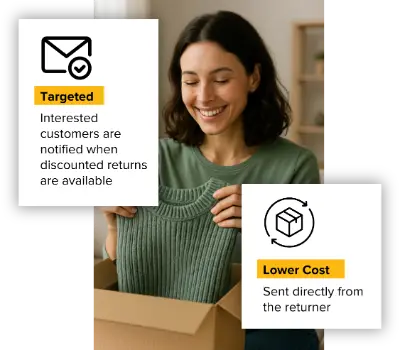
Turn Returns Into New Revenue
Related Articles

Shopify Estimated Delivery Date: A Complete Guide for Ecommerce Stores
A Shopify estimated delivery date is the specific arrival date or date range shown on a product page before purchase, so shoppers know when an order is expected to arrive.
Save Money With Ecommerce Shipping Software: Next-Gen Solutions
Shipping costs are one of the biggest challenges for ecommerce businesses today, and understanding them is essential to reducing expenses and increasing profit margins.
10 Best European 3PLs for Ecommerce Sellers in 2026
Bigblue is the best overall choice among the best European 3PLs in this comparison: one provider with 11 fulfilment centres across France, Spain, Italy, the UK, and Germany, its ow...