
Why “Free Returns” Was Always a Loss Leader

Last updated on June 11, 2026
In this article
 17 minutes
- Free Returns Boosted Conversion for a Reason
- A Loss Leader Can Work — Until People Mistake It for a Business Model
- Low Volume Made the Economics Look Safer Than They Were
- Return Costs Were There Long Before Most Brands Modeled Them
- Venture Subsidy and Operational Inertia Kept the Illusion Alive
- Free Returns Didn't Fail Overnight — They Were Misread as Sustainable
- The Takeaway
- Frequently Asked Questions
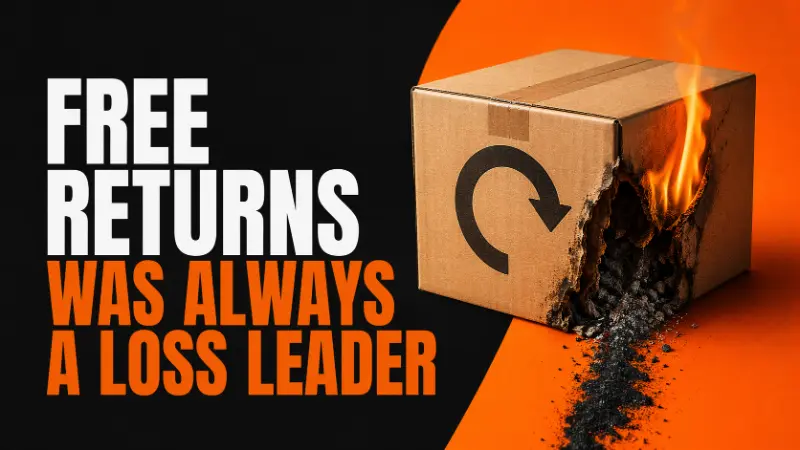
Free returns were not a durable economic truth. They were a conversion-era subsidy that looked sustainable only because return volume was lower, cost visibility lagged, and the downside was masked by growth. The mistake was not offering free returns — the mistake was mistaking them for a permanent model.
Clear return policies and transparent return terms are essential for building customer trust and reducing abandoned carts. Personalized and clearly communicated return policies, including dynamic return terms, help increase conversion by providing clarity and reassurance to shoppers.
That distinction matters because a lot of the current anxiety around returns policy is being misread. Brands are framing today’s corrections as a reversal of something that once worked. It is more accurate to say those corrections are a delayed recognition of something that was always conditional. Free returns functioned as a growth lever from the start. They were never structurally self-sustaining. Understanding why they appeared that way for so long is more useful than debating whether to bring them back.
In fact, 72% of consumers say return policies directly influence their purchasing decisions, highlighting how effective return policies can increase conversion and turn browsers into paying customers.
Today, businesses are shifting their approach to view returns as a strategic opportunity rather than merely a cost, aiming for more sustainable, data-driven ecommerce returns programs.
Free Returns Boosted Conversion for a Reason
When early ecommerce brands introduced free returns, the decision was rational. Buying online meant purchasing something sight unseen. Consumers could not feel the fabric, check the fit, or verify the color in person. Most online retailers made offering free returns and free return shipping a top priority to attract customers and reduce purchase risk. Removing the penalty for being wrong reduced hesitation at the moment it mattered most — the purchase decision.
The tactic worked. Conversion rates improved, with offering free returns boosting sales conversion by up to 30%. Average order values increased. Notably, 79% of shoppers consider free returns an important factor in their purchasing decisions, often ranking it higher than fast shipping. Ecommerce adoption accelerated in categories like apparel and footwear, where the mismatch between online browsing and physical product experience was sharpest. Free returns did not just reduce friction for individual customers; they helped normalize online shopping as a behavior across entire consumer segments.
None of that was irrational. The brands that adopted free returns early were responding correctly to the conditions in front of them. A hassle-free return process became crucial, as over 90% of shoppers will buy again if returns are easy, but nearly 80% may churn after a poor return experience. A lower-volume environment, a relatively small ecommerce market, and a consumer base that needed convincing — free returns addressed all three. The tactic made sense in context. The problem came later, when the context changed and the tactic did not.
86% of online shoppers are more likely to return to merchants offering free returns.
A Loss Leader Can Work — Until People Mistake It for a Business Model
A loss leader is a well-understood commercial concept. A business accepts a short-term loss on a specific product or service in order to attract customers, build volume, or drive adoption. Grocery stores use it on staple goods. Software companies use it on introductory plans. The logic is the same: absorb cost now to earn more later.
Free returns operated on exactly that logic. The immediate cost of absorbing a return was justified by the conversion lift, the reduced customer acquisition friction, and the signal it sent about brand confidence. While offering free returns can boost customer lifetime value and top-line revenue through higher conversion rates, it can also erode net profit margins due to high operational costs, environmental impact, and increased return volumes. The tactic helped bring customers in. In that narrow sense, it worked, but retailers must now weigh the true cost and sustainability of free returns.
What a loss leader cannot do is sustain itself indefinitely. The economics only hold if the business model around it captures enough value elsewhere to cover the ongoing cost. Retailers can incur an average loss of 3.8% in profit annually due to returns, with some sectors, like apparel, experiencing even higher losses. When that does not happen — when the subsidy keeps running without a compensating structure — the loss leader stops being a strategy and starts being a liability.
That is what happened with free returns. The tactic helped acquisition and conversion. It was never recalibrated as volume scaled. And over time, the distinction between a smart short-term tactic and a permanent operating model collapsed. What had been a growth lever became an assumed entitlement — for consumers, for industry analysts, and in many cases for the brands themselves. If managed strategically, the returns process can shift from being a cost center to a strategic opportunity by finding the right balance between customer satisfaction and protecting profit margins.
Short-term rationality is not the same as long-term durability. Understanding that distinction is the foundation of understanding why free returns were always, structurally, a loss leader.
Low Volume Made the Economics Look Safer Than They Were
The early ecommerce environment had one property that made free returns appear sustainable: the volume was manageable. When return counts are low, the absolute dollar amount of losses is low. According to the National Retail Federation, the average return rate in 2022 was 16.5%, resulting in an estimated $816 billion in returns across the retail industry. Operationally, a warehouse that processes a few hundred returns a week can absorb that activity without visible strain. The labor, space, and logistics costs exist, but they are small enough to be treated as rounding errors, even though rising ecommerce return rates can quietly erode profit margins.
This created a distorted picture. Because the pain was small in absolute terms, it felt proportionate and controllable. Brands were not wrong to feel that way — at that scale, the model genuinely was not breaking anything. However, processing a single return can cost a retailer between 15% and 30% of the original purchase price, including transportation costs and labor for handling return items. The system was absorbing the cost because the system was small enough to absorb it.
The mistake was treating low-volume viability as proof of structural durability. A model that works when you are processing 500 returns a month looks very different when you are processing 50,000. The unit economics do not improve with scale in reverse logistics the way they do in outbound fulfillment. Labor, space, and shipping costs compound. The cost of handling a return is approximately 17% of the purchase cost, which can escalate to as high as 30% depending on factors such as product handling and shipping. Operational strain increases. The same return that cost a few dollars to process at low volume starts costing significantly more as volume, SKU complexity, and geographic spread increase.
The economics were always conditional on the environment staying small. The environment did not stay small. And the model was never recalibrated because the growth in return volume was gradual enough that no single moment forced a reckoning. Roughly 10% of returned merchandise cannot be resold, and items that are resold often require steep markdowns, especially for seasonal goods.
Return Costs Were There Long Before Most Brands Modeled Them
Every return has a cost. Inbound shipping, intake labor, inspection, repackaging, restocking, markdown risk — the cost stack exists regardless of whether it is fully visible on a P&L. Online purchases tend to have higher return rates, and online retailers face significant financial risks due to return fraud, which can further erode profitability. These forms of returns and refund fraud range from wardrobing to receipt manipulation and product switching, compounding the already high cost of processing legitimate returns. The reason these costs went unmodeled for so long is not that the costs were hidden. It is that they were distributed, delayed, and easy to rationalize when top-line metrics were strong.
A brand running a successful quarter does not urgently investigate why return processing costs are rising. The conversion lift from free returns shows up immediately in revenue. For every $100 in returned products, online retailers lose an average of $10.30 to return fraud, underscoring the financial risks associated with generous return policies. The downstream cost of processing those returns is spread across logistics invoices, warehouse labor bills, markdown activity, and inventory distortion — each of which arrives at a different time, in a different budget line, managed by a different team.
That structure made it genuinely difficult to connect cause and effect. The conversion gain was attributable and visible. The return cost was diffuse and lagging. For example, for an average $50 purchase with a 10% margin, a single $15 return process results in a net loss of $10 for the retailer, highlighting how the costs associated with product returns can quickly outweigh the initial profit. Early success reinforced the policy because the gain was measurable and the downside was not yet fully assembled into a clear number.
This is not a failure of intelligence. It is a predictable consequence of how cost visibility works in complex operations. The full economics of a $100 return — including wasted customer acquisition spend, inventory distortion, and markdown exposure — are not obvious until someone builds the model deliberately. Analyzing returns data is essential to identify inefficiencies and manage the costs associated with product returns. For a long time, most brands did not. If you want to understand what that math actually looks like, the hidden economics of a $100 return breaks it down in full.
Venture Subsidy and Operational Inertia Kept the Illusion Alive
Two forces extended the life of the free returns model well past the point where the economics justified it: external capital and organizational inertia. Return policies play a significant role in customer retention and brand loyalty, particularly among loyal and existing customers who have come to expect free returns as part of their shopping experience, making an exceptional returns program a powerful loyalty lever.
During the high-growth era of ecommerce, many brands were operating on venture capital or growth equity that prioritized customer acquisition over unit economics. In that environment, subsidizing conversion through free returns was not just acceptable — it was consistent with the broader mandate to grow fast and worry about margins later. The return cost was a line item. The customer growth was the story. When capital is cheap and the market rewards growth, subsidizing behavior at the top of the funnel makes rational sense within that framework. To protect profits, retailers are increasingly adopting tiered return policies, offering free returns only for loyalty program members or high-value orders.
The problem is that subsidy logic only works while the subsidy continues. When capital became more expensive and investor priorities shifted toward profitability, the same free returns policy that had been a growth tool became a margin drag. Brands had built customer expectations, supplier relationships, and operational processes around a policy that was never intended to be permanent. Unwinding that is harder than setting it up. Offering free returns also helps segment customer return policies, providing leniency to loyal customers while implementing stricter policies for serial returners.
Operational inertia compounded the issue. Returns policies, once established, become embedded in customer communication, website copy, logistics contracts, and team workflows. The effort required to revisit, redesign, and communicate a policy change is significant. As long as the cost of inaction felt lower than the cost of change, the inertia held. Early success was repeatedly misread as evidence of sustainability rather than evidence that conditions had not yet forced a correction. The importance of customer experience in shaping customer retention and brand loyalty cannot be overstated, as seamless and transparent return processes directly impact how customers perceive and remain loyal to a brand.
Free Returns Didn’t Fail Overnight — They Were Misread as Sustainable
This is the core reframe the data supports: free returns did not work and then stop working. They were always conditional, and the conditions changed gradually enough that no single moment forced an honest accounting.
The trajectory of total U.S. retail returns makes the point clearly. In 2018, returns totaled $396 billion. By 2021, that figure had reached $761 billion — a 78% increase in a single year. By 2024, total retail returns hit $890 billion, the highest level on record. That is not a sudden reversal. That is a structural escalation that was visible in the data for years before most brands adjusted their policies. Retailers are increasingly implementing return fees and dynamic return policies to manage high return rates and control costs, reflecting a shift toward paid returns as a strategy to protect profit margins and influence customer behavior.
The reason so many brands are now recalibrating — tightening windows, introducing fees, restricting certain categories — is not that the economics suddenly changed. It is that the gap between the real cost of free returns and the assumed cost of free returns became too large to ignore, prompting many retailers to question whether free returns are coming to an end as a default practice. Setting a clear return window of 30 to 60 days is essential to prevent dead stock and manage customer expectations. What is happening now is delayed realism, not betrayal. Brands are recognizing something that was always true but was masked for long enough that it looked like a standard.
Understanding why ecommerce returns were never designed for scale in the first place is useful context here. The system was built for lower volume, simpler SKU sets, and a smaller consumer base, yet rising ecommerce return rates and behaviors like bracketing have pushed that system beyond its limits. Free returns made sense within that system. They became structurally untenable when the system grew well beyond what it was designed to handle. That longer structural argument is covered in detail in the article on why ecommerce returns were never designed for scale.
Today’s policy corrections are not the industry abandoning a successful model. They are the industry catching up to what the model always was. For retailers, clarifying return terms is crucial to ensure transparency about any costs or conditions associated with returns, especially for serial returners who frequently exploit return policies. Marketplace guidelines such as Amazon-aligned returns policy standards also influence how generous or restrictive individual merchants can be. And for readers wondering what comes after the correction — whether free returns are still expected, still offered, or simply no longer sacred — that shift in expectations is its own story, one that the broader question of whether free returns aren’t sacred explores directly.
The Takeaway
Free returns were not irrational. They were temporary. The tactic boosted conversion, reduced purchase friction, and helped normalize online shopping at a moment when those outcomes were worth subsidizing. The brands that adopted them were making reasonable decisions given the environment they were operating in.
The structural mistake was not the policy. It was the misclassification of the policy — treating a low-volume, growth-era conversion subsidy as if it were a permanent operating model. Once that misclassification took hold, it became self-reinforcing. Consumers expected it. Analysts treated it as a standard. Operators built around it. And the cost kept accumulating beneath the surface, visible in aggregate data long before it was visible in any single brand’s decisions. Returns policies must be managed effectively to balance customer satisfaction with profitability, ensuring that operational costs do not erode net profit margins while still meeting customer expectations.
The correction now underway reflects a clearer reading of what free returns always were: a loss leader with conditions attached, not a permanent law of ecommerce. For those tracking where returns need to go forward, not back, that reframe matters as much as any policy change. For example, some brands lean on third-party solutions such as Happy Returns’ reverse logistics network to deliver convenient drop-off experiences while still controlling costs. Others focus on eco-friendly returns strategies that reduce waste, cut emissions, and align with sustainability-minded shoppers. Free returns also help segment customer return policies, offering leniency to loyal customers while implementing stricter policies for serial returners.
Frequently Asked Questions
Were brands making a mistake when they first offered free returns?
No. Free returns were a rational tactic in the early ecommerce environment. They reduced purchase hesitation, boosted conversion, and helped drive adoption in categories where consumers were unfamiliar with buying online. The tactic made sense given the volume levels, competitive dynamics, and consumer behavior of the time. The mistake was not offering free returns — it was treating them as a permanent model rather than a conditional one.
What does it mean to say free returns functioned as a loss leader?
A loss leader is a tactic where a business accepts a short-term financial loss on one element in order to generate acquisition, conversion, or loyalty. Free returns fit that definition precisely. The cost of absorbing returns was justified by the conversion lift and customer acquisition benefit at the top of the funnel. That logic can be rational without the underlying subsidy being structurally sustainable.
Why did free returns look sustainable for as long as they did?
Three forces masked the real economics: lower return volume kept absolute losses small, lagging cost visibility prevented a clear picture of total return cost from assembling in any one place, and external capital subsidized growth-era policies that prioritized acquisition over unit economics. When those conditions changed — volume grew, capital became more expensive, and cost visibility improved — the model’s fragility became apparent.
Did the economics of returns suddenly change, or was this always coming?
The economics did not suddenly change. Total U.S. retail returns grew from $396 billion in 2018 to $890 billion in 2024. The escalation was gradual and visible in the data well before most brands adjusted policy. What changed was not the underlying economics but the point at which the gap between assumed cost and real cost became impossible to rationalize. Today’s corrections reflect delayed realism, not a sudden reversal.
What is the difference between a free returns policy that works and one that is structurally sustainable?
A policy that works produces the outcomes it was designed for — in the case of free returns, improved conversion and reduced purchase friction. A policy that is structurally sustainable can generate those outcomes while also recovering the costs they create at scale. Free returns accomplished the first. They were never structured to accomplish the second. That gap is what makes them a loss leader rather than a durable business model.
Is offering free returns still reasonable today?
Context still matters. For certain categories, customer segments, or competitive situations, absorbing return costs may still be a rational tactic. The argument here is not that free returns are never appropriate — it is that they should be treated as a deliberate, conditional tactic rather than a default policy. Brands that understand what they are subsidizing and why can make better decisions about when and how to offer it.
Written By:

Manish Chowdhary
Manish Chowdhary is the founder and CEO of Cahoot, the most comprehensive post-purchase suite for ecommerce brands. A serial entrepreneur and industry thought leader, Manish has decades of experience building technologies that simplify ecommerce logistics—from order fulfillment to returns. His insights help brands stay ahead of market shifts and operational challenges.

Turn Returns Into New Revenue
Related Articles
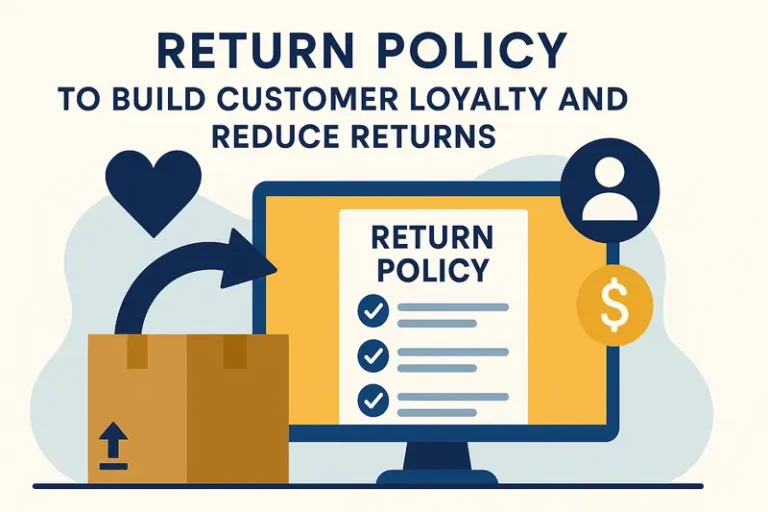
Crafting a Return Policy that Drives Customer Loyalty and Reduces Returns
Let’s talk about ecommerce returns policies.

Cheapest Shipping from USA to UK: What It Really Costs
Shipping from the USA to the UK is one of the most common international routes for ecommerce brands, and it is also one of the most misunderstood from a cost perspective.

Why Faster Refunds Made Returns More Expensive
Introduction Faster refunds feel like obvious progress.