
Why Peer-to-Peer Returns Reduce Fraud by Design

Last updated on June 10, 2026
In this article
 18 minutes
- Fraud Thrives Where the Returns Process Chain Is Opaque
- Warehouse Returns Create Multiple Places for Claims to Hide
- Peer-to-Peer Reduces Fraud by Shortening the Chain
- Verification Emerges From Routing, Not Just Detection
- Fewer Handoffs Mean Fewer Places for Abuse to Hide
- Better Tools Help — But the Bigger Win Is Structural
- Peer-to-Peer Does Not Eliminate Fraud. It Changes the Conditions Fraud Depends On.
- Frequently Asked Questions
Return fraud in ecommerce is not primarily a bad-actor problem — it is a systems problem, and the system most brands rely on was built to create it. A peer-to-peer returns platform connects the original buyer of a product directly with a new customer, eliminating the need to ship the item back to a brand’s warehouse. Warehouse-centric returns generate fraud opportunity through opacity, delay, and handoff complexity, and adding more detection tools on top of that structure does not close the loop — it just raises the cost of managing it.
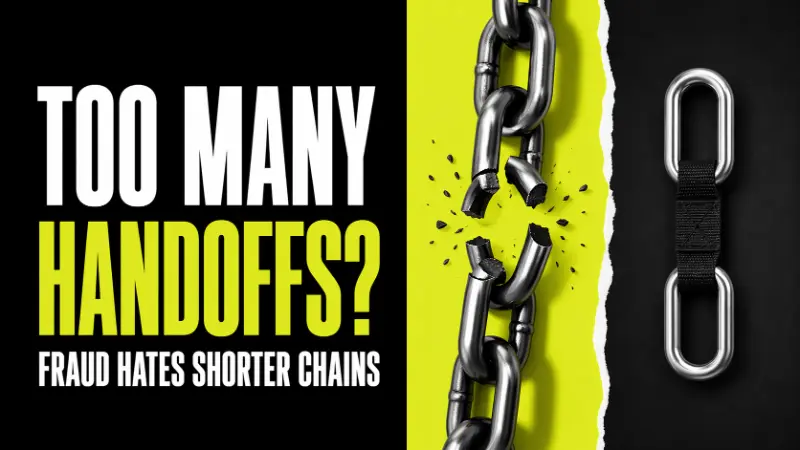
The contrarian insight that most operators miss is this: the strongest fraud control is not always more detection. Sometimes it is fewer handoffs. Peer-to-peer returns reduce fraud structurally by shortening the return chain, moving proof earlier in the process, and leaving fewer places for abuse to hide quietly. By streamlining the return process and eliminating additional shipping legs, peer-to-peer returns can reduce operating costs and improve cash flow for ecommerce businesses, while supporting the broader goal of encouraging customer loyalty with an exceptional returns program. Peer-to-peer returns platforms also implement safeguards and verification measures to protect both businesses and their customers during the returns process. That is not a claim that fraud disappears. It is a claim that the environment fraud depends on gets harder to exploit. The broader case for why returns need to go forward, not back, runs deeper than fraud alone — but fraud is one of the clearest places where routing design produces a measurable structural difference. Additionally, the peer-to-peer returns model supports sustainability goals by reducing waste associated with traditional returns processes, which often involve multiple shipping stages, aligning closely with best practices for supporting eco-friendly returns, while also delivering attractive returns for businesses by streamlining the process and connecting returns with new buyers.
Fraud Thrives Where the Returns Process Chain Is Opaque
Most discussions about return fraud focus on the fraudster. The more useful question is what the system gives them to work with.
Fraud is an emergent property of opaque systems. When verification is delayed, when accountability is fragmented across multiple parties, and when claims move faster than confirmation, abuse finds room to operate. The problem is not just that bad actors exist. The problem is that the return chain, in its warehouse-centric form, is structurally suited to hide what they do.
Return fraud grew from $27 billion in 2019 to over $101 billion in 2023, with projections approaching $125 billion by 2025, turning into a silent profit killer for retailers. That trajectory did not happen because fraudsters suddenly got smarter. It happened because return volume scaled inside a chain architecture that was never designed to verify what was actually happening at each step.
More volume flowing through a system built on delayed verification does not just maintain fraud risk. It multiplies it, as seen across a spectrum of ecommerce return and refund fraud schemes. Understanding why fraud detection alone will never stop returns abuse starts here — with the structure, not the actors.
Warehouse Returns Create Multiple Places for Claims to Hide
A warehouse-centric return passes through several stages before a business has high-confidence confirmation about what was returned, in what condition, and where ambiguity entered the process.
The chain looks something like this: a customer initiates a return, ships an item back, a carrier moves it, a warehouse receives it, a team inspects it, and someone eventually updates the record. At each transition, there is a window where the item’s identity, condition, and chain of custody are uncertain. Those windows are where fraud operates.
Wardrobing thrives when warehouses cannot detect subtle use, making wardrobing and how to minimize it a critical topic for any retailer. Item-swapping persists when multiple identical SKUs move through intake at scale — condition differences blur in the volume. Empty-box fraud survives because lagging proof of condition means the claim has already been processed before verification catches up.
The issue is not a single weak point. It is that the chain has multiple weak points, each compounding the last. Blurred accountability spreads across handoffs. Delayed verification creates time gaps that make claims harder to challenge. Ambiguity about what was returned and when allows abuse to settle quietly into the noise of operational throughput.
This is structural, not incidental. A longer chain with more transitions is not just slower — it is genuinely harder to verify. That design reality is what makes warehouse-centric returns a favorable environment for return fraud to scale.
Peer-to-Peer Reduces Fraud by Shortening the Chain
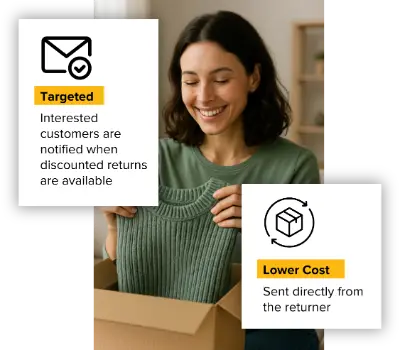
Peer-to-peer returns change the fraud environment by changing where the return goes. Instead of routing items backward through a warehouse before they reach the next buyer, a peer-to-peer returns platform connects the original buyer of a product with a new customer who wants to purchase it, avoiding the need to ship the item back to the brand’s warehouse. This platform enables direct transactions between users, making the process more efficient and cost-effective, while complementing more traditional approaches to detecting and preventing ecommerce returns fraud. That single routing change has meaningful consequences for verification quality.
To understand how peer-to-peer returns actually work at the mechanics level, the step-by-step process is covered in detail at [/how-peer-to-peer-returns-work]. The relevant point here is what the shorter chain removes from the fraud equation.
First, eligibility screening happens before the return moves. The platform evaluates whether the item qualifies based on SKU type, condition thresholds, return reason, and demand signals. This is condition proof earlier in the process — not after the item arrives at a warehouse days later, but before a label is generated.
Second, the item moves directly to the next buyer. There is no warehouse intake queue, no anonymous handoff, no period where the item sits in a staging area while a claim is processed. The chain is shorter, and the fewer touchpoints it has, the fewer places a claim can hide.
Third, buyer confirmation on arrival closes the proof loop. The refund is tied to a confirmed delivery event, not to a warehouse intake scan. That structural change tightens accountability in a way that detection tools alone do not.
The fraud types that warehouse-centric returns enable – wardrobing, item swapping, empty-box scams – each depend on gaps in verification. P2P does not eliminate the motivation to commit fraud. It removes several of the gaps that fraud depends on to go undetected.
To start using a peer-to-peer returns platform, ecommerce sellers can integrate the system, set product eligibility rules, and let the platform connect returns with new buyers, streamlining processes.
Verification Emerges From Routing, Not Just Detection
This is the distinction most fraud strategies miss.
Verification quality is not only a function of how sophisticated the detection tools are. It is a function of when and where in the chain verification happens. A detection tool operating late in a long chain is working with delayed information, on an item that has already passed through multiple anonymous handoffs. The most capable AI risk model cannot fully compensate for a chain that was designed to obscure what happened upstream.
Routing changes that. When the chain is shorter, earlier proof points are not an upgrade — they are a natural consequence of the architecture. The item moves fewer times, through fewer parties, with fewer opportunities for condition ambiguity to enter.
This does not mean detection tools are irrelevant. AI, rules-based screening, and risk-scoring can improve outcomes at every stage of a returns process. But there is a meaningful difference between tools operating on top of a shorter, clearer chain versus tools trying to compensate for a longer, opaque one. Tools on top of a better structure beat tools alone.
The larger win is structural, not just better monitoring. That framing holds whether a brand is evaluating its current fraud exposure or planning a P2P pilot, or rethinking how to craft the perfect e-commerce returns program around both customer experience and risk.
Fewer Handoffs Mean Fewer Places for Abuse to Hide
The core logic of fraud reduction through P2P can be compressed into one principle: ambiguity scales with handoffs, and reduced ambiguity reduces abuse opportunity.
Every transition in a return chain is a moment where the answer to “what exactly was returned, and in what condition” becomes slightly less certain. In a warehouse-centric flow, those uncertainty moments stack. In a P2P flow, most of them never happen.
Direct point-to-point shipping means the item’s movement is traceable to specific parties. When a return is not going to an anonymous warehouse intake queue but to a specific next customer, the behavioral dynamic shifts. The returner is no longer interacting with an abstraction — they are part of a transaction that has a visible downstream recipient. That accountability, even when informal, changes the calculus for the marginal fraudster who operates in the space where nobody seems to be watching.
Shorter chains reduce the number of ambiguous transitions. Fewer ambiguous transitions mean fewer places for a claim to settle into the noise. The result is that quiet abuse — the kind that does not trigger a detection flag because it is just similar enough to a normal return — becomes harder to execute successfully.
This is not a guarantee. Determined fraud will find other vectors. But the baseline of operational abuse that thrives in complexity and delay is directly addressed by a system that removes complexity and delay by design.
For cases where P2P routing is not the right fit — certain fragile goods, regulated categories, or damaged items — traditional warehouse handling remains the appropriate path, often supported by software-only tools like the Return Prime returns solution. The full picture of where peer-to-peer returns don’t work is worth understanding before making adoption decisions.
Better Tools Help — But the Bigger Win Is Structural
Nothing in this article argues against fraud detection tools. AI risk scoring, refund gating, serial binding, and rules-based screening all contribute to a more defensible returns operation. The point is narrower than that.
When fraud detection sits on top of a warehouse-centric chain, it is compensating for structural conditions that generate fraud opportunity in the first place. The tools can reduce the volume of successful fraud, but they cannot fully close the gaps that the chain architecture keeps opening.
When those same tools operate on top of a shorter, more accountable P2P chain — with earlier proof points, direct shipment visibility, and buyer confirmation built in — the tools are doing less compensatory work. They are reinforcing a system that is already harder to abuse, rather than patching one that is inherently porous.
That is the practical argument for thinking about fraud as a routing problem first, and a detection problem second. Understanding why fraud detection alone will never stop returns abuse is a useful frame for anyone approaching this from the detection side. The structural argument does not replace detection — it changes what detection is working with.
Common objections to peer-to-peer returns often include concerns about condition trust and whether a returner can be relied on to prep an item properly. Those objections are worth understanding clearly, but they tend to assume the wrong comparison point. The relevant comparison is not P2P against a perfect warehouse-centric system. It is P2P against the actual warehouse-centric system — with its opacity, its handoffs, and its structural ambiguity. On that comparison, the fraud surface area picture is clear.
Peer-to-Peer Does Not Eliminate Fraud. It Changes the Conditions Fraud Depends On.
The goal of this article is not to position P2P as a fraud elimination technology. It is not that. Returns fraud will exist in any system, and any honest accounting of P2P needs to say so.
What P2P does is reduce some of the specific conditions that make fraud easy to execute quietly and at scale. The contrast is concrete: in a warehouse-centric flow, a fraudster who ships back an item that does not match the original may not face meaningful scrutiny until days after the return was accepted, after a refund was issued, after the claim has already settled. In a P2P flow, the next buyer’s confirmation of what arrived is part of the settlement event. The proof loop closes faster, and the window for quiet substitution shrinks.
Shorter chains mean fewer handoffs. Fewer handoffs mean fewer ambiguous transitions. Fewer ambiguous transitions mean fewer places for claims to hide inside operational delay. Earlier proof points and buyer confirmation tighten the accountability loop in ways that detection tools, applied downstream in a long chain, cannot fully replicate.
That structural difference matters whether a brand is running thousands of returns a month or tens of thousands. The fraud surface area shrinks because the chain shrinks. Not to zero — but to a size that is meaningfully harder to abuse without detection.
The system becomes harder to exploit quietly. That is what fraud reduction by design actually means.
Frequently Asked Questions
Does peer-to-peer returns eliminate return fraud entirely?
No. Peer-to-peer returns reduce fraud by removing structural conditions that fraud depends on, such as opacity, delayed verification, and multiple anonymous handoffs. Fraud can still occur in a P2P system, but it has fewer places to hide quietly and is more likely to be detected because accountability loops are tighter and proof points appear earlier in the process.
Why does the number of handoffs in a return chain affect fraud risk?
Each handoff in a return chain introduces a moment of ambiguity — about what was returned, in what condition, and where the chain of custody stands. Fraud tends to operate in those ambiguous transitions, where claims can settle into the noise before verification catches up. Fewer handoffs mean fewer ambiguous moments, which reduces the surface area available for quiet abuse.
How does peer-to-peer returns change the verification process compared to warehouse-centric returns?
In warehouse-centric returns, verification typically happens after the item has passed through multiple parties and arrived at a central facility — often days after the return was initiated. In a P2P flow, eligibility screening and condition assessment happen earlier, and buyer confirmation on delivery closes the proof loop in a way that ties refund settlement to a real delivery event rather than a warehouse intake scan.
Are fraud detection tools still necessary in a peer-to-peer returns system?
Yes. AI risk scoring, rules-based screening, and refund gating all remain valuable in a P2P returns operation. The structural argument is not that tools become unnecessary — it is that tools operating on top of a shorter, clearer chain are doing less compensatory work. They reinforce a system that is already harder to abuse, rather than trying to compensate for a system that generates fraud opportunity by design.
What types of return fraud are most reduced by peer-to-peer routing?
P2P routing most directly reduces the conditions that enable wardrobing, item swapping, and empty-box fraud. Each of these depends on delayed verification, anonymous warehouse handling, or ambiguity about what was actually returned. By removing those conditions through direct point-to-point shipment and earlier proof requirements, P2P makes these fraud types harder to execute without detection.
Does peer-to-peer returns work for all product categories?
No. Some product categories are not well suited for P2P routing, including fragile goods, regulated categories like cosmetics and medical devices, and items that arrive damaged or defective. For these, warehouse-based returns remain the appropriate path. P2P is most effective for durable, resaleable goods with stable demand. The realistic target for most ecommerce operations is routing fifty to sixty percent of eligible returns through P2P, with the remainder handled through traditional flows.
How do peer-to-peer returns benefit ecommerce businesses financially?
Peer-to-peer returns help reduce operating costs by eliminating the need for large warehouses and minimizing shipping expenses. This model improves cash flow for ecommerce brands, especially those without access to traditional loans or significant storage facilities, by providing faster turnaround and greater financial flexibility. Additionally, P2P returns increase customer satisfaction through quicker resolutions and more convenient processes.
FAQ: Peer-to-Peer Lending, Returns, and Investment Concepts
What is peer-to-peer lending (also called peer p2p lending, p2p lending, or peer lending)?
Peer-to-peer lending refers to online platforms that connect individual borrowers directly with individual lenders, bypassing traditional financial institutions and banks. These lending platforms allow borrowers to request personal loans and receive loan offers from individual lenders or investors, who can invest money directly into these loans. This model is also known as social lending and is used worldwide to provide access to credit and investment opportunities.
How do lending platforms operate and what roles do individual lenders and borrowers play?
Lending platforms facilitate the process by allowing individual borrowers to apply for loans and individual lenders (investors) to fund those loans. Investors can invest in personal loans, diversify their portfolio by spreading funds across many loans, and use features like auto invest to automate their investments. Borrowers receive loan offers based on their creditworthiness, and lenders can select loans that match their risk preferences.
What are the potential returns and risks of peer-to-peer lending compared to traditional banks and savings accounts?
P2P lending platforms often offer higher returns and attractive interest rates for lenders compared to traditional banks or savings accounts, as well as better interest rates for borrowers. However, these higher returns come with higher risk, including the risk of borrower default, platform failure, and lack of government insurance. Loans are typically rated from lower risk (AA) to higher risk (HR), and investors can choose their preferred risk-reward profile.
Why is diversification important in P2P lending, and how can investors achieve it?
Diversification helps reduce the impact of a single default by spreading investments across hundreds of small loans. Many platforms offer auto invest features that allow investors to automatically allocate funds across a diversified portfolio, optimizing returns and managing risk.
What types of fees are charged by P2P lending platforms, and how are payments processed?
P2P lending platforms may charge various fees, including loan origination fees, late fees, and transaction fees. Payments from borrowers are processed monthly and paid to lenders, often automatically. Investors should review all fees before investing, as they can affect net returns.
Are P2P investments protected by government insurance or federal government guarantees?
No. Unlike bank deposits, P2P investments are not protected by government insurance such as FDIC coverage. The federal government does not guarantee repayment in the event of borrower defaults or platform failure, so there is a risk of losing invested funds.
How is interest from P2P lending taxed?
Interest earned from P2P lending is typically treated as taxable income, similar to interest from a savings account. However, it lacks government protections like FDIC insurance, and investors are responsible for reporting and paying taxes on their earnings.
How liquid are P2P investments, and can funds be withdrawn early?
Funds invested in P2P loans are usually locked in until the loan term ends. Early liquidation is difficult unless the platform offers a secondary market for selling loans. This limited liquidity is an important risk factor for investors.
Can P2P loans help stabilize my investment portfolio?
Yes. P2P loans can act as an alternative asset class with low correlation to the stock market, helping to stabilize overall portfolio performance and diversify investments beyond stocks and bonds.
What are the average returns and default rates for P2P lending?
Average net annual returns for well-diversified P2P portfolios typically range from 5% to 12%, with higher-risk loans reaching up to 18%. However, defaults on P2P platforms can be more common than at traditional banks, with default rates sometimes exceeding 10%. Diversification helps mitigate the impact of borrower defaults.
How do I open an account and invest in P2P lending? What security measures are in place?
To invest, you open an account on a lending platform, deposit money, and select loans or use auto invest features. Platforms implement security measures such as cybersecurity protocols and FDIC-insured accounts for uninvested funds, but invested funds are not government-insured.
What is the Prosper platform, and how do stock, inventory, loan offers, and sold items work in P2P systems?
The Prosper platform is a leading P2P lending marketplace where investors can fund loans and manage their portfolio. Some platforms also allow investment by purchasing company stock. Inventory refers to the available loans (Notes) for investment, and loan offers are proposals made to borrowers. In peer-to-peer systems, once an item or loan is sold, it is transferred directly to the new owner, streamlining the process without the need for returns or restocking.
Is P2P lending available worldwide, and what is social lending?
Yes, P2P lending platforms operate globally, supporting borrowers and lenders in many countries. Social lending emphasizes the community aspect, connecting people directly and often supporting underserved populations.
How does P2P lending differ from traditional banks and financial institutions?
P2P lending bypasses traditional financial institutions, connecting borrowers and lenders directly. This can result in better interest rates for both parties, but also means there are fewer regulatory safety nets and higher risks compared to traditional banks.
Written By:

Manish Chowdhary
Manish Chowdhary is the founder and CEO of Cahoot, the most comprehensive post-purchase suite for ecommerce brands. A serial entrepreneur and industry thought leader, Manish has decades of experience building technologies that simplify ecommerce logistics—from order fulfillment to returns. His insights help brands stay ahead of market shifts and operational challenges.
Turn Returns Into New Revenue
Related Articles

Why Returns Look Manageable Until They Suddenly Aren’t
Returns management is the retail process of handling customer returns across reverse logistics, cost control, and customer experience—and it rarely fails the way leadership expects...

The Economics of Peer-to-Peer Returns
Traditional returns management has one fundamental flaw: it optimizes a process that should not exist in its current form.

The Myth of “Efficient” Reverse Logistics
Efficient reverse logistics is treated as a goal worth chasing.