
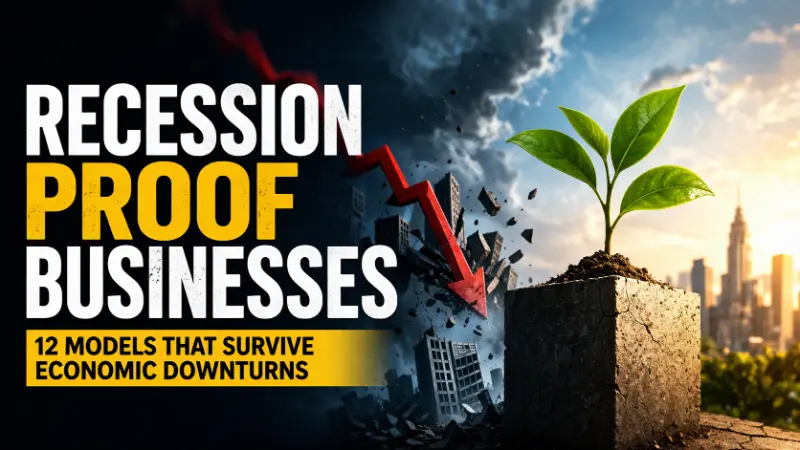
Recession Proof Businesses: 12 Models That Survive Economic Downturns

Last updated on May 11, 2026
In this article
 19 minutes
- What Actually Makes a Business Resilient
- 12 Business Models That Hold Up in Downturns
- Why Some "Recession Proof" Businesses Still Fail
- The Operational Angle: Margin, Logistics, and Returns
- Understanding Economic Downturns and Business Cycles
- Frequently Asked Questions
- Conclusion: Building for Resilience in Any Economy
Economic slowdowns redistribute demand. They do not eliminate it. Most businesses face significant challenges during an economic crisis, but some adapt and survive. Consumers still need food, healthcare, and shelter. Businesses still need cleaning, repairs, and logistics. Parents still need childcare. The question for any business is not whether a recession will change buying behavior, because it will, but whether the business sells something that remains necessary when discretionary spending contracts.
The phrase “recession proof” overpromises. No business model guarantees survival in an economic downturn regardless of how it is run. During an economic crisis, most businesses struggle, but adaptable business models characterized by flexibility and a willingness to adjust to changing market conditions are better positioned to thrive. What actually holds up are business models built around essential demand, with cost structures that allow margins to survive lower volumes, and operations flexible enough to adapt as conditions shift. The 12 categories below reflect those characteristics consistently across economic cycles.
What Actually Makes a Business Resilient
Before listing business types, it is worth being precise about what resilience actually means in an economic downturn, because the term is used loosely.
Demand stability is the most important characteristic. Businesses that sell goods or services people need regardless of their income level maintain volume during downturns. Businesses that sell goods or services people want but can postpone or eliminate contract sharply.
Margin durability matters as much as demand. A business with 50 percent gross margins can absorb volume decreases and still remain profitable. A business running on 10 percent margins may not survive a 15 percent revenue drop even if demand holds. Cost control in logistics, labor, and inventory becomes the deciding factor at thin margins.
Operational flexibility determines whether a business can respond to changing conditions rather than just surviving them. Businesses that can scale down costs as volume falls, shift product mix toward higher-demand categories, and reduce inventory risk through just-in-time or demand-driven purchasing hold up better than those locked into fixed cost commitments.
The contrarian insight worth making explicit: many businesses described as recession proof fail during recessions, not because their market dried up but because they were over-leveraged, under-capitalized, or operationally inflexible going into the downturn. The business category matters less than how the business within that category is structured and run.
12 Business Models That Hold Up in Downturns
1. Grocery and Essential Food Retail
People do not stop eating during recessions. They adjust what they buy and where they buy it, often trading down from restaurants to grocery stores and from premium brands to private label alternatives. Grocery businesses benefit from this trade-down effect because total food spending contracts less than restaurant spending. The grocery store industry is expected to grow at a compound annual growth rate of 3% from 2024 to 2030, reflecting rising demand for essential food products even during economic downturns.
For ecommerce brands in food and pantry categories, recessions often bring volume increases in shelf-stable staples, bulk formats, and value-positioned products. Discount retailers and thrift stores see increased traffic as consumers become more budget-conscious, sometimes engaging in retail therapy as a form of comfort during tough times. The operational challenge is margin management: consumers buying down in price and trading toward lower-cost options compresses unit economics just as volume increases.
2. Healthcare and Medical Services
Demand for health care is largely inelastic. People do not defer urgent medical care because of economic conditions, and chronic conditions require ongoing management regardless of household income changes. Health care and pharmaceuticals remain stable as people still require medical care and medications regardless of the economic situation. Elective procedures are more sensitive to economic pressure, but primary care, pharmaceuticals, and essential health services maintain relatively stable demand through downturns. The healthcare industry is projected to be one of the fastest growing sectors in the U.S. from 2022 to 2032, driven by an aging population and increased rates of chronic diseases.
Ecommerce brands in health and wellness categories, including supplements, over-the-counter health products, and personal care items marketed toward health outcomes, often see resilient demand during recessions, particularly products that offer a substitute for more expensive healthcare options. Healthcare services are considered essential as they remain in constant demand regardless of economic conditions.
3. Funeral Services
Funeral services represent one of the clearest examples of demand that does not respond to economic conditions. Death does not slow during recessions. Even when a recession hits, demand for funeral services remains stable. The total number of funerals conducted is determined by mortality rates, not by GDP growth. Pricing can compress as families seek lower-cost options, but volume is structurally stable. The funeral services industry contracted less than 1 percent in revenue during the Great Recession.
4. Auto Repair and Maintenance
During recessions, consumers keep vehicles longer rather than purchasing new ones. Car maintenance becomes a priority as consumers postpone buying new vehicles and invest in repairs, leading to higher demand for mechanics. This behavioral shift increases the volume of repair and maintenance work as older vehicles require more service. The same dynamic that suppresses auto sales supports auto repair businesses.
For ecommerce brands selling automotive parts, accessories, and maintenance supplies, recessions tend to increase the addressable market as more consumers attempt DIY maintenance to avoid labor costs and as the average age of vehicles on the road increases.
5. Home Repair and Maintenance Services
When housing markets weaken and people cannot afford to move, they invest in maintaining and improving the homes they are already in. Plumbing failures, electrical problems, and HVAC breakdowns do not wait for economic recovery. Essential home repair holds up well. Regular maintenance becomes even more important during a recession, as consumers tend to repair existing homes rather than buying new ones. Premium renovation projects that are discretionary contract more, but repair-oriented businesses targeting essential maintenance see relatively stable demand.
For ecommerce brands selling tools, hardware, or home improvement supplies, the shift toward homeowner-driven maintenance over contractor-driven renovation changes the product mix that performs best, but total category demand typically holds or increases in recessions.
6. Childcare Services
Working parents with children cannot simply stop working because of an economic slowdown. In many cases, economic pressure increases the number of dual-income households that need childcare as secondary earners return to work. Childcare demand is not perfectly inelastic, some families adjust by relying on family members or reducing hours, but the structural need for reliable childcare is not optional for most working parents. There is a rising demand for childcare services, and spending on children’s goods remains steady during downturns as parents prioritize their children’s needs. Childcare services are essential, as working parents continue to seek reliable options regardless of economic conditions.
7. Commercial and Residential Cleaning Services
Cleaning services split into two categories with different recession profiles. Residential cleaning is more discretionary and contracts when household budgets tighten. Commercial cleaning, serving healthcare facilities, food production environments, and regulated industries, is much more stable because it is legally required and operationally essential. Commercial cleaning services, in particular, are considered recession-proof businesses due to the ongoing demand for specialized cleaning standards in essential sectors such as healthcare facilities, educational institutions, and retail spaces, especially following increased sanitation needs after COVID-19. Both residential and commercial cleaning services are essential as they provide necessary sanitation and maintenance, which are critical regardless of the economic climate. Businesses targeting commercial and institutional cleaning have more recession-resistant revenue than those targeting residential customers.
8. Utility Services and Energy
Electricity, water, natural gas, and internet access represent essential infrastructure that consumers and businesses cannot easily reduce. Utility services provide essential services, and essential services like healthcare, utilities, and emergency repairs are inelastic in demand, meaning they are needed regardless of economic conditions. Utility services are among the most stable demand categories in any economic climate. Utility businesses are regulated industries with pricing controls and do not compete in traditional market terms, but the operational characteristic of non-discretionary demand is worth naming as a category.
For ecommerce brands, utility-adjacent products such as energy efficiency hardware, home energy monitoring equipment, and products that reduce utility costs can see increased demand during recessions as consumers look for ways to reduce ongoing bills.
9. Discount Retail and Resale
When consumer budgets contract, discount channels capture spending that previously went to full-price retail. Dollar stores, off-price retailers, and secondhand or resale platforms tend to see volume increases during recessions as value-seeking behavior intensifies. This is the trade-down effect in non-food categories.
For ecommerce brands, the recession period is a strategic inflection point on pricing and positioning. Brands that can credibly offer value relative to premium alternatives, or that operate in the resale or refurbished space, are better positioned than those selling premium-priced discretionary goods.
10. Tax Preparation and Financial Advisory Services
Tax obligations do not pause during recessions, and economic uncertainty increases the complexity of individual and business financial situations. Demand for tax preparation services tends to hold. Financial advisory services that focus on budgeting, debt management, and financial planning for stress-affected households see increased engagement during downturns. Financial planning services are essential as they help individuals and businesses manage their finances, especially during economic downturns when financial challenges arise. Advisory services helping businesses with cost restructuring are particularly in demand.
11. Logistics and Delivery Services
Essential goods still need to move during recessions, and the ongoing structural shift toward ecommerce means that last-mile delivery infrastructure remains in consistent demand regardless of broader economic conditions. Courier services are experiencing significant growth, with global parcel shipping volume projected to reach 256 billion parcels by 2027, driven by the rise of e-commerce and online shopping. This growth is supported by a strong compound annual growth rate, highlighting the resilience and expansion prospects of the sector. Carriers, freight companies, and fulfillment operations serving essential categories maintain relatively stable volume.
For ecommerce brands, the recession test for fulfillment operations is whether shipping costs and returns processing remain manageable at lower order volumes. A fulfillment cost structure built for peak season volume that is applied to a reduced-volume recession period can erode margins quickly.
12. Pet Care and Pet Supplies
Pet ownership rates are relatively stable through economic cycles, and the relationship between owners and their pets is resistant to spending cuts in ways that many other categories are not. Consumers will reduce spending on themselves before cutting back on pets. There is a constant demand for pet care services and products, as pets are increasingly viewed as family members and their care is prioritized even during tough economic times. Routine veterinary care, pet food, and basic pet supplies maintain demand relatively well during downturns.
For ecommerce brands in the pet category, the risk is in premium and luxury pet products rather than essentials. Gourmet treats, premium accessories, and high-end pet wellness products face more pricing pressure than food, basic care supplies, and routine health products.
13. Beauty and Personal Services
The beauty and personal services industry stands out as a recession proof business idea, consistently demonstrating resilience during tough economic times. Even when consumers cut back on discretionary spending, many continue to prioritize essential grooming and self-care services such as haircuts, nail care, and skincare. These services are not only important for maintaining a professional appearance but also provide a sense of normalcy and confidence during periods of economic uncertainty.
A phenomenon known as the “lipstick effect” often emerges during downturns, where people indulge in small luxuries like beauty services and products as a form of affordable comfort. This trend, combined with the influence of social media and the ongoing need for personal upkeep, ensures that beauty services remain in steady demand. According to the Bureau of Labor Statistics, employment for barbers, hairstylists, and cosmetologists is projected to grow 10% from 2020 to 2030—outpacing the average for all occupations. This growth is fueled by a rising population and an increasing emphasis on personal appearance, making beauty and personal services a recession resistant industry with continuous opportunities for entrepreneurs offering essential products and services.
Why Some “Recession Proof” Businesses Still Fail
The businesses described above operate in resilient demand categories. That does not protect any specific business within those categories from failure if the underlying operations are poorly structured.
Over-leverage is the most common failure mechanism. A grocery distribution business carrying significant debt from an expansion entered during the preceding growth period may face insolvency during a recession even if sales hold flat. The revenue line is stable. The debt service is not manageable at that revenue level.
Inventory risk accumulates in ways that are invisible during growth. An ecommerce brand in a recession-resistant category that is carrying excess inventory heading into a downturn faces a cash flow problem that its demand resilience does not solve. Dead stock consumes capital and incurs holding costs regardless of whether the category is essential.
Returns volume increases during recessions. Financially stressed consumers are more likely to return purchases, more likely to dispute charges, and more likely to buy multiples with the intention of returning some, amplifying broader trends of rising ecommerce return rates driven by behavior like bracketing and wardrobing and the need for crafting the perfect e-commerce returns program. Businesses without efficient reverse logistics operations absorb higher effective costs on each returned unit and benefit from optimizing reverse logistics, especially in categories where the average ecommerce return rate ranges from 15 to 30 percent. For ecommerce brands, a returns rate that was manageable at full-price margins becomes damaging at recession-driven promotional pricing because the cost of free returns and ecommerce return rates directly erode profit margins.
Operational cost structures built for growth do not automatically right-size for recessions. Warehouse space committed in long-term leases, staffing levels built for higher order volumes, and carrier contracts structured around volume commitments all become liabilities when volume contracts. The businesses that survive recessions are those that can reduce operational costs in proportion to volume reduction without triggering service failures. Companies with strong cash flow management and low debt are better able to navigate periods of reduced revenue during a recession, as successful recession-proof businesses often have high cash flow and minimal debt.
Additionally, support ensures smooth technology operation and minimizes work disruptions during challenging financial periods. It’s also important to note that job security can be lower in some roles, such as freelancing or virtual assistant positions, compared to traditional employment, especially during economic downturns. At the same time, retailers need to guard against returns fraud and refund fraud by detecting and preventing ecommerce returns fraud, and many will rely on returns management software or even evaluate the best returns management software for 2025 to keep operations efficient and protect margins.
The Operational Angle: Margin, Logistics, and Returns
For ecommerce brands evaluating their recession resilience, the most actionable questions are operational rather than strategic. A strong customer base is essential for resilience, as it helps sustain revenue even when demand fluctuates. Recession-proof industries tend to operate independently of broader economic trends, maintaining steady performance regardless of what’s happening in the stock market.
What is the gross margin at 70 percent of current volume? If the answer is negative or unsustainably thin, the business is not operationally resilient regardless of its demand category.
What happens to fulfillment costs per unit if order volume drops by 30 percent? Fixed components of fulfillment cost, including warehouse rent, minimum labor, and platform fees, do not scale down proportionally with volume. The per-unit cost rises as volume falls, compressing margins further at exactly the moment when pricing pressure from consumers is also increasing.
What is the returns rate under promotional pricing? If a brand reduces prices to maintain volume during a downturn, and returns rates are higher on discounted purchases, the effective margin per order may be worse than the margin at standard pricing with lower volume. Managing this tradeoff requires an exceptional returns program that drives loyalty, smart use of return labels and modern return options, and, for Shopify merchants, careful evaluation of tools like the Return Prime returns solution to keep the experience positive without letting costs spiral.
The brands best positioned to survive a recession are those that have answered these questions before the recession arrives, not during it. Businesses that thrive during a recession typically provide essential goods, services, or budget-friendly alternatives that consumers cannot cut from their budgets, which is a key characteristic of a recession proof industry.
Understanding Economic Downturns and Business Cycles
Economic downturns, or recessions, are periods when overall economic activity declines, often marked by two or more consecutive quarters of falling gross domestic product (GDP). During these times, many businesses face reduced sales, tighter cash flow, and increased financial pressure. However, not all businesses are affected equally. Some business models, especially those providing essential services or products, are more recession proof and can even thrive when economic conditions are challenging.
For small business owners and entrepreneurs, understanding the nature of business cycles and how economic downturns unfold is crucial. By recognizing which industries and business ideas are recession resistant, entrepreneurs can make informed decisions about where to invest their time and resources. This knowledge helps small businesses adapt to tough economic times, identify new opportunities, and build resilience against future economic uncertainty. Ultimately, focusing on recession proof business ideas and understanding the dynamics of economic activity can give small business owners a significant advantage in navigating unpredictable economic conditions.
Frequently Asked Questions
Are there any truly recession proof businesses?
No. No business is entirely immune to economic downturns. However, recession proof jobs are typically found in industries that serve fundamental human needs and maintain consistent demand even during downturns. What exists are business models in categories with stable, non-discretionary demand that, when operated with appropriate margins and cost structures, can maintain profitability at reduced economic activity. The business category matters, but operational fundamentals matter as much.
Which ecommerce categories hold up best during recessions?
Categories tied to essential goods, including food staples, health and personal care products, pet supplies, home maintenance items, and cleaning supplies, tend to maintain demand better than discretionary lifestyle, fashion, or luxury categories. Value-positioned products within any category perform better than premium-positioned ones as consumer budgets contract.
Both digital marketing and ecommerce sectors have shown continuous growth, even during economic downturns, making them strong contenders among recession proof businesses. For example, the beauty industry—including makeup and hair services—is projected to exceed $784.6 billion by 2027, with a strong compound annual growth rate, highlighting its resilience as consumers seek small indulgences. Similarly, the global baby product market is expected to grow at a compound annual growth rate of almost six percent between now and 2030, indicating consistent demand for child services and products.
What makes a business vulnerable during a recession even in a resilient category?
High leverage, excess inventory, inflexible cost structures, thin margins, and high returns rates are the primary vulnerabilities, and financial challenges can exacerbate these vulnerabilities during a recession. A business in a resilient demand category can still fail if it enters the downturn over-extended or if its operations cannot right-size costs in proportion to volume changes.
How should ecommerce brands prepare for a potential recession?
Practical preparation includes reducing excess inventory to free working capital, reviewing fulfillment cost structures for fixed cost exposure at lower volumes, modeling margin at 70 to 80 percent of current revenue, and stress-testing the impact of higher returns rates on effective margin. Preparing for an economic crisis as well as a recession ensures brands are ready for any financial downturn. Brands that understand their breakeven point at reduced volume are better positioned to make informed decisions quickly if conditions deteriorate.
Do discount businesses always thrive during recessions?
They tend to gain market share as consumers trade down, but growth is not guaranteed. Some consumers may even spend more money on small luxuries or essentials at discount retailers during downturns, seeking affordable ways to boost morale or meet needs. Discount businesses with thin margins must manage volume increases carefully to avoid operational strain. Profitability depends on whether the operational cost structure can absorb higher throughput without margin erosion.
Is a service business more recession resistant than a product business?
Not inherently. The determining factor is whether the service or product addresses essential demand. A premium spa service is vulnerable in a recession. A plumbing repair service is not. An ecommerce brand selling luxury goods is vulnerable. One selling essential household supplies is more resilient. The essential versus discretionary distinction matters more than the product versus service distinction.
Conclusion: Building for Resilience in Any Economy
Building a recession proof business is about more than just choosing the right industry—it requires strategic planning, adaptability, and a focus on providing essential services that people rely on regardless of the economic climate. By understanding economic downturns and business cycles, entrepreneurs can anticipate challenges and position their businesses to withstand tough economic times.
Success in any economy comes from offering recession proof business ideas that meet high demand, such as financial advisors, childcare services, and beauty services. These recession resistant businesses provide products and services that remain essential, even when consumers are looking to save money and cut costs. Small business owners who develop a solid business plan, stay flexible, and focus on resilience can not only survive but thrive during periods of economic uncertainty. By prioritizing essential services and adapting to changing economic conditions, businesses can build a foundation that supports long-term growth and stability, no matter what the future holds.
Written By:

Manish Chowdhary
Manish Chowdhary is the founder and CEO of Cahoot, the most comprehensive post-purchase suite for ecommerce brands. A serial entrepreneur and industry thought leader, Manish has decades of experience building technologies that simplify ecommerce logistics—from order fulfillment to returns. His insights help brands stay ahead of market shifts and operational challenges.

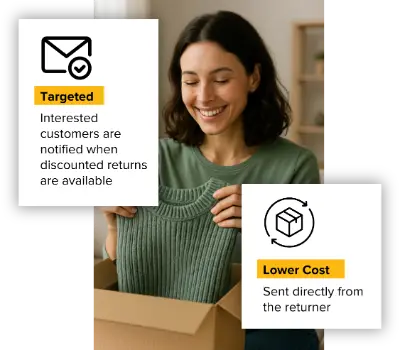
Turn Returns Into New Revenue
Related Articles
Save Money With Ecommerce Shipping Software: Next-Gen Solutions
Shipping costs are one of the biggest challenges for ecommerce businesses today, and understanding them is essential to reducing expenses and increasing profit margins.

10 Best European 3PLs for Ecommerce Sellers in 2026
Bigblue is the best overall choice among the best European 3PLs in this comparison, while everstox, Paxon (including Active Ants), Fulfillment-Box, and Bleckmann are stronger picks...
Why Returns Are Becoming a Board-Level Topic
Returns have quietly become one of the most consequential financial problems in ecommerce, and boards are finally being forced to confront what operators have known for years: retu...