
What “Fulfilled by TikTok” Really Means for Ecommerce Sellers

Last updated on March 04, 2026

In this article
 19 minutes
- Introduction to Fulfilled by TikTok
- How inventory moves through TikTok's fulfillment network
- The real difference between seller-managed and platform-managed fulfillment
- Sellers do not control where inventory goes or how orders route
- Fee structures that compress margins faster than sellers expect
- Documented operational failures reveal infrastructure immaturity
- Benefits of Fulfilled by TikTok
- Inventory Management and Metrics
- Getting Started with FBT
- When FBT works and when it creates problems
- Frequently Asked Questions
Fulfilled by TikTok (FBT) is a platform-managed fulfillment program where TikTok stores, picks, packs, and ships orders on behalf of TikTok Shop sellers. For ecommerce operators evaluating this fulfillment option, the operational reality is more complex than the pitch: FBT trades packaging control, inventory flexibility, and margin transparency for faster delivery badges and metric protection. Whether that trade-off makes sense depends entirely on your product profile, channel mix, and tolerance for platform dependency. This article breaks down how FBT actually works, what it costs, and when it creates more problems than it solves.
Introduction to Fulfilled by TikTok
Fulfilled by TikTok (FBT) is a game-changing fulfillment service designed to simplify the order fulfillment process for TikTok Shop sellers. By leveraging TikTok’s robust logistics infrastructure and fulfillment expertise, FBT allows sellers to shift their focus from packing and shipping to what matters most—content creation, marketing, and driving sales. With FBT, TikTok Shop sellers can trust that their products will be stored, picked, packed, and shipped efficiently, ensuring a high level of customer satisfaction and a seamless customer experience. As a cornerstone of TikTok’s fulfillment services, FBT not only streamlines operations but also enhances the overall shopping journey for buyers, making it easier for sellers to grow their businesses within the dynamic TikTok Shop ecosystem.
How inventory moves through TikTok’s fulfillment network
At its core, FBT follows the same model as other platform-managed fulfillment services. Sellers ship inventory to TikTok’s designated fulfillment centers, and TikTok handles everything from that point forward: warehousing, order processing, picking, packing, shipping, and returns. TikTok manages inventory storage within its warehouse or fulfillment center, ensuring products are available and ready for efficient processing.
The inbound process starts in TikTok’s Seller Center portal, where sellers create shipments, assign SKUs, and schedule delivery appointments for pallet-sized loads. TikTok operates 14+ fulfillment centers across the United States, with hub consolidation points on both coasts. Sellers choose from three inbound methods: shipping to a single hub (East or West), shipping to both hubs, or shipping directly to multiple fulfillment centers. Each method carries different cost and compliance implications.
Once inventory arrives, TikTok’s system takes over order management entirely. When a customer places a TikTok Shop order, the platform’s routing system identifies the nearest warehouse holding that product and processes customer orders within 24 hours. TikTok is responsible for packing orders and shipping orders directly from its warehouses, using standardized packaging and handing parcels to carrier partners, with a delivery target of two to five business days. According to TikTok’s internal data, 82.7% of FBT orders arrive within three business days when a seller routes more than 30% of volume through the program.
Products listed through FBT receive a “Free 3-Day Delivery” badge visible to shoppers. TikTok claims this badge drives a 15 to 20% higher conversion rate and a 30%+ increase in daily product views. These are platform-reported figures, and operators should weigh them accordingly. The number of orders fulfilled and the efficiency of TikTok’s warehouses contribute to these performance metrics.
The real difference between seller-managed and platform-managed fulfillment
The distinction between fulfilling your own TikTok Shop orders and using FBT is not just operational convenience. It is a fundamental shift in who controls the customer experience.
With seller-managed fulfillment (or using a third party logistics provider such as those outlined in this guide to choosing the right 3PL company), sellers retain control over packaging, branding, carrier selection, and inventory allocation across channels. Sellers can choose fulfilling orders in house or opt for self fulfillment, giving them full control over the logistics process. Inventory can be allocated across different sales channels, such as a Shopify store, wholesale, and other platforms. A branded unboxing experience, custom inserts, and the ability to fulfill orders from a shared inventory pool serving Shopify, wholesale, and other channels all remain intact. The tradeoff is that sellers bear full responsibility for meeting TikTok’s performance metrics: a Valid Tracking Rate of 95% or higher, on-time delivery within six business days, and a Seller-Fault Cancellation Rate below 2.5%. For those who do not want to handle fulfillment in house, fulfillment experts at third party logistics providers can assist with efficient order management, especially when you understand how the best 3PLs for small business structure their services and pricing.
FBT removes that operational burden. Logistics-related issues (late dispatch, cancellations, shipping damage, and negative reviews tied to delivery problems) are excluded from seller performance metrics when using FBT. TikTok also reimburses sellers for lost or damaged packages. This metric protection is one of FBT’s most tangible benefits, particularly for sellers who struggle to maintain consistent fulfillment quality at scale.
But the cost of that protection is control. FBT ships in TikTok’s standardized packaging with no branded boxes, no inserts, and no custom materials. Sellers cannot select carriers or influence delivery routing. And critically, inventory stored in FBT warehouses can only fulfill TikTok Shop orders. That stock cannot be used for Shopify storefront orders, marketplace listings, or any other channel. For multi-channel ecommerce businesses, this creates a forced inventory split that complicates demand forecasting and reduces allocation efficiency.
Sellers do not control where inventory goes or how orders route
FBT’s inventory placement system requires sellers to follow TikTok’s routing guide and allocation recommendations regardless of which inbound method they choose. When shipping directly to multiple fulfillment centers (the option that avoids hub placement fees), TikTok specifies which locations to ship to and how much inventory each should receive. Sellers cannot freely select warehouses.
Non-compliance carries real financial penalties. Inbound incident fees start at $0.50 per unit for routing violations, including misrouted shipments, incorrect quantities, mislabeled cartons, and failure to meet arrival timelines. These fees are tiered by weight and add up quickly for large shipments.
On the outbound side, TikTok’s system automatically routes each order to the nearest warehouse holding the ordered product. Sellers have no ability to manually route individual orders or prioritize specific fulfillment centers. This automated routing is efficient when the network functions well, but it also means sellers have no recourse when specific warehouse locations underperform. TikTok does not operate all of its warehouses directly. It partners with external 3PL providers, known as TikTok partners, and service quality can vary between locations compared with more modern options like a peer-to-peer fulfillment network versus traditional 3PLs. The efficiency and reliability of fulfillment through TikTok partners can be significantly impacted by order volumes, especially during sales spikes or viral moments. As one logistics consultancy noted, “Your brand is at the mercy of whichever 3PL TikTok chooses for you.”
Fee structures that compress margins faster than sellers expect
FBT’s cost structure is an all-inclusive per-unit fulfillment fee covering pick, pack, packaging materials, and last-mile shipping. For single-unit orders, fees start at $3.58 per item in the lightest weight tier and increase with weight. Multi-unit orders from the same seller start at $2.86 per item (as of January 2026). Fees are calculated on the greater of actual unit weight or dimensional weight. However, sellers should be aware of potential additional fees for packaging non-compliance or when selecting special logistics services, which can increase overall fulfillment costs.
These fulfillment costs stack on top of TikTok’s referral fee (approximately 6% of the sale price for most categories) and a transaction fee of roughly 3.78%. For a $50 product shipped as a single unit, minimum platform fees reach approximately $8.47 before accounting for product cost, advertising, or affiliate commissions. That represents about 17% of the sale price before cost of goods. For some sellers, the availability of express shipping options and the benefit of faster shipping can help justify these higher fees, as they can improve customer satisfaction and boost sales performance, especially when balanced against how ecommerce return rates affect profit margins.
The margin pressure intensifies for lower-priced products. A $12 item faces minimum platform fees of $4.30 or more, consuming roughly 36% of the sale price in fees alone. Add affiliate commissions (commonly 10 to 20% on TikTok Shop) and the economics become difficult to sustain.
Storage fees add another layer. TikTok offers 60 days of free storage per inbound shipment. After that, daily fees per cubic foot escalate on a tiered schedule: modest rates through 270 days, then a sharp increase to $0.25 per cubic foot per day after 365 days. For slow-moving inventory management scenarios, these storage fees accumulate well above industry averages for warehouse space. Hub placement fees ($0.31 to $0.45+ per unit depending on hub location and weight) and a $3 return handling fee per item further erode margins on products with high return rates.
Documented operational failures reveal infrastructure immaturity
The risks of FBT are not theoretical. Investigative reporting from Modern Retail in early 2026 documented several significant operational failures with TikTok shipping, highlighting the challenges of maintaining reliable shipping through TikTok’s logistics services.
One agency executive reported that TikTok’s warehouse shipped entire case packs of three units as individual orders instead of breaking them into single units. This error persisted for approximately one month, resulting in losses exceeding six figures for the affected brand. During peak holiday season, another brand found that orders tagged with the “Free 3-Day Delivery” badge were severely delayed, with shipments stuck for weeks. These operational failures can be especially damaging during flash sales or other high-volume events, where rapid fulfillment is critical to capitalize on viral demand. Customers repeatedly canceled orders and left negative reviews, and when the brand sought compensation, TikTok attributed the delays to third-party carrier partners.
These incidents reflect a fulfillment network that is still maturing. TikTok’s U.S. warehouse infrastructure has been operational for only a few years, and the reliance on a patchwork of 3PL partners introduces inconsistency. Sellers who depend on FBT for customer experience should understand that fulfillment quality is ultimately outside their control, and reliable shipping is not always guaranteed.
Policy volatility compounds the operational risk. In early 2026, TikTok announced it would discontinue independent seller shipping entirely, requiring all U.S. sellers to use FBT or TikTok-controlled logistics by March 31, 2026. After significant seller backlash, TikTok reversed the mandate on February 17, 2026, preserving seller shipping as an option. This reversal underscores a pattern of abrupt policy shifts that makes long-term operational planning difficult.
Benefits of Fulfilled by TikTok
Fulfilled by TikTok offers a host of benefits that can transform the way sellers operate on TikTok Shop. By outsourcing the entire fulfillment process to TikTok, sellers can significantly reduce fulfillment costs and eliminate the hassle of managing multiple fulfillment methods. FBT’s streamlined logistics help improve shipping lead times, resulting in faster deliveries and higher conversion rates. Sellers also enjoy robust seller protection, as FBT shields them from logistics-related issues and negative reviews tied to shipping or delivery problems. With free storage for a set period and no hidden fees, FBT helps sellers avoid the unexpected costs often associated with traditional fulfillment. The platform makes it easy to create inbound shipments, track inventory, and forecast replenishment needs, ensuring sellers can meet customer demand and provide a seamless shopping experience. By leveraging TikTok’s fulfillment network, sellers are well-positioned to drive business growth and customer satisfaction.
Inventory Management and Metrics
Effective inventory management is at the heart of success with Fulfilled by TikTok. Sellers must keep their TikTok Shop inventory levels accurate and ensure they have enough stock to meet customer demand. FBT provides real-time inventory tracking, allowing sellers to monitor stock, track orders, and optimize fulfillment metrics such as shipping lead times and orders delivered. By analyzing these key performance indicators, sellers can refine their fulfillment strategies, improve customer satisfaction, and make data-driven decisions to support business growth. TikTok’s network of fulfillment centers and warehouses further reduces shipping lead times, enabling fast delivery and helping sellers consistently meet customer expectations. With FBT, sellers gain the tools and insights needed to manage inventory efficiently and deliver a superior customer experience.
Getting Started with FBT
Getting started with Fulfilled by TikTok is designed to be straightforward and accessible for all TikTok Shop sellers. To begin, sellers simply log in to the Seller Center, select the “Fulfilled by TikTok” option, and follow the guided steps to create their first inbound shipment. Once registered, sellers ship their products to TikTok’s fulfillment centers, where TikTok handles storage, picking, packing, and shipping directly to customers. FBT integrates seamlessly with TikTok Shop sales, streamlining order management and fulfillment so sellers can focus on content creation and growing their business. By letting TikTok handle the logistics, sellers benefit from the platform’s extensive resources and fulfillment expertise, ultimately driving customer satisfaction, increasing sales, and setting the stage for long-term success.
When FBT works and when it creates problems
FBT delivers the most value for a specific seller profile: high-velocity, lightweight products with fast inventory turnover and no branded packaging requirements. If your best-selling SKUs are simple, standardized items (phone accessories, basic apparel, beauty consumables) that move through inventory in under 30 days, the conversion lift from the delivery badge and the metric protection may outweigh the costs and control tradeoffs.
Sellers without existing warehouse infrastructure also benefit. For a small independent company or small operations testing product-market fit on TikTok Shop, FBT eliminates the need for fulfillment staff, storage space, and carrier negotiations, though some may instead prefer dedicated ecommerce order fulfillment services that outclass traditional 3PLs. TikTok offers numerous benefits to these sellers, such as enabling sellers to focus on growth by handling logistics, warehousing, and delivery. The all-inclusive fee structure simplifies order fulfillment cost calculations, even if total costs are higher than a mature in-house operation. There are numerous benefits, including cost savings, improved customer loyalty through fast deliveries, and the ability to capitalize on TikTok’s virality for sales growth.
FBT creates problems in several clearly identifiable scenarios:
- Multi-channel sellers lose inventory flexibility because FBT stock cannot fulfill Shopify, wholesale, or other marketplace orders, forcing a separate demand forecast for TikTok alone
- Brands that depend on custom packaging sacrifice the unboxing experience entirely, since TikTok ships in standardized materials with no room for inserts or branded elements
- Low-margin products face unsustainable fee stacking when fulfillment costs, referral fees, transaction fees, and affiliate commissions combine
- Sellers with unpredictable viral demand face a forecasting dilemma, as inventory committed to FBT warehouses cannot be redirected during spikes on other channels
- Products requiring special handling, kitting, or assembly are poorly suited to TikTok’s standardized warehouse operations
For mid-market Shopify brands operating across multiple sales channels, the most practical approach is selective use: route a limited number of fast-moving, high-margin SKUs through FBT to capture the delivery badge benefits while maintaining fulfillment flexibility for the rest of your catalog, applying the same strategic thinking you would use when evaluating Shopify order fulfillment options. Keep FBT inventory allocation tight (under 30 days of supply) to stay within free storage windows, and maintain a parallel fulfillment capability through your existing 3PL or warehouse operation.
There are already success stories of sellers who have grown their business with FBT, showing how TikTok is enabling sellers to focus on scaling and customer satisfaction.
Frequently Asked Questions
What is Fulfilled by TikTok and how does it work?
Fulfilled by TikTok (FBT) is a platform-managed fulfillment program primarily used by TikTok Shop merchants—businesses that sell products through TikTok’s platform and leverage TikTok’s fulfillment services. Also known as FBT Fulfilled, this service is part of TikTok’s comprehensive fulfillment services, which manage storage, order picking, packing, shipping, and customer satisfaction. Sellers create inbound shipments through TikTok’s Seller Center, send inventory to designated warehouses, and TikTok handles all order fulfillment from that point forward. When customers place orders, TikTok’s system automatically routes them to the nearest warehouse holding that product and ships within 24 hours. Products fulfilled through FBT receive a “Free 3-Day Delivery” badge visible to shoppers.
How much does Fulfilled by TikTok cost?
FBT charges an all-inclusive per-unit fulfillment fee starting at $3.58 per item for single-unit orders in the lightest weight tier (as of January 2026). Multi-unit orders from the same seller start at $2.86 per item. These fees stack on top of TikTok’s 6% referral fee and 3.78% transaction fee. For a $50 product, minimum platform fees reach approximately $8.47 (about 17% of the sale price) before product cost or advertising. Storage is free for 60 days, then incurs daily fees per cubic foot on an escalating schedule. Hub placement fees range from $0.31 to $0.45+ per unit, and return handling costs $3 per item. Additional fees may apply for packaging compliance issues, non-compliance penalties, or when using special logistics services.
What is the difference between seller-managed fulfillment and Fulfilled by TikTok?
Seller-managed fulfillment (also known as self fulfillment or fulfilling orders in house, including using your own 3PL) lets you control packaging, branding, carrier selection, and inventory allocation across all sales channels. You can use the same inventory pool for TikTok Shop, Shopify, wholesale, and other marketplaces when your fulfillment tech stack is supported by robust order fulfillment integrations and ecommerce partners. However, you bear full responsibility for meeting TikTok’s performance metrics (95% Valid Tracking Rate, on-time delivery, cancellation rate below 2.5%). FBT removes this operational burden and excludes logistics-related issues from your seller performance metrics. But you lose all packaging control, cannot choose carriers, and inventory stored in FBT warehouses can only fulfill TikTok Shop orders, not other channels.
Can I control where my inventory is stored in TikTok’s fulfillment network?
No. TikTok’s inventory placement system specifies which fulfillment centers receive your inventory and how much each location should hold. Order volumes and various factors, such as sales spikes or regional demand, can influence which warehouse or fulfillment center is selected to receive inventory and how quickly orders are processed. Even when shipping directly to multiple warehouses (avoiding hub placement fees), sellers must follow TikTok’s routing guide. Non-compliance results in inbound incident fees starting at $0.50 per unit for routing violations, misrouted shipments, incorrect quantities, or missed arrival timelines. On the outbound side, TikTok’s system automatically routes each order to the nearest warehouse holding that product with no seller override capability.
What are the margin risks of using Fulfilled by TikTok?
FBT creates significant margin pressure through fee stacking. A $50 product faces approximately $8.47 in minimum platform fees (17% of sale price) before product cost. For a $12 item, minimum fees of $4.30+ consume roughly 36% of the sale price. Add affiliate commissions (commonly 10 to 20% on TikTok Shop) and margins compress rapidly. Storage fees after the 60-day free period escalate to $0.25 per cubic foot per day after 365 days. The $3 return handling fee per item erodes margins on products with high return rates. Low-margin products and lower-priced items face the most severe pressure from this fee structure.
What operational problems have sellers experienced with Fulfilled by TikTok?
Documented failures include TikTok warehouses shipping entire case packs of three units as individual orders instead of breaking them apart, causing six-figure losses for one brand over approximately one month. During holiday peak season, orders with “Free 3-Day Delivery” badges were severely delayed for weeks, stuck in TikTok’s fulfillment network with customers canceling and leaving negative reviews. These issues highlight the challenges of maintaining reliable shipping through TikTok Shipping and TikTok partners, as operational failures and delays with third-party carrier partners can undermine seller credibility and customer satisfaction. In early 2026, TikTok announced it would force all sellers to use FBT by March 31, 2026, then reversed the mandate on February 17, 2026 after seller backlash, illustrating policy volatility that complicates planning.
When does Fulfilled by TikTok make sense versus when should sellers avoid it?
FBT makes sense for high-velocity, lightweight products with fast inventory turnover (under 30 days), no branded packaging requirements, and sellers without existing warehouse infrastructure. For a small independent company, TikTok offers numerous benefits through FBT, such as cost savings, improved customer loyalty with fast deliveries, and the ability to capitalize on TikTok’s virality for sales growth, similar to how the right 3PL for your Shopify store can unlock scale on that channel. The delivery badge conversion lift and metric protection justify the costs for simple, standardized items like phone accessories or beauty consumables.
FBT creates problems for multi-channel sellers (inventory locked to TikTok only), brands requiring custom packaging (TikTok uses standardized materials only), low-margin products (unsustainable fee stacking), sellers with unpredictable viral demand (cannot redirect inventory to other channels), and products requiring special handling or kitting (TikTok’s standardized operations cannot accommodate).
There are also success stories of sellers who have grown their business with FBT, demonstrating the positive impact of the service for small independent companies.
Can I use Fulfilled by TikTok for some products and self-fulfill others?
Yes. The most practical approach for mid-market Shopify brands is selective use: route a limited number of fast-moving, high-margin SKUs through FBT to capture delivery badge benefits while maintaining fulfillment flexibility for the rest of your catalog through your existing 3PL or warehouse. For products that do not fit the FBT model, sellers can use self fulfillment or fulfilling orders in house, allowing them to manage storage, packing, and shipping independently, much like choosing between FBA vs FBM on Amazon based on control, cost, and service tradeoffs. Keep FBT inventory allocation tight (under 30 days of supply) to stay within free storage windows. This hybrid approach lets you benefit from the conversion lift and metric protection on products that fit FBT’s model while preserving packaging control, multi-channel inventory flexibility, and lower costs for products where FBT economics do not work, similar to leveraging specialized Amazon FBM shipping and order fulfillment services alongside platform-managed options.
Written By:

Rinaldi Juwono
Rinaldi Juwono leads content and SEO strategy at Cahoot, crafting data-driven insights that help ecommerce brands navigate logistics challenges. He works closely with the product, sales, and operations teams to translate Cahoot’s innovations into actionable strategies merchants can use to grow smarter and leaner.
Turn Returns Into New Revenue
Related Articles
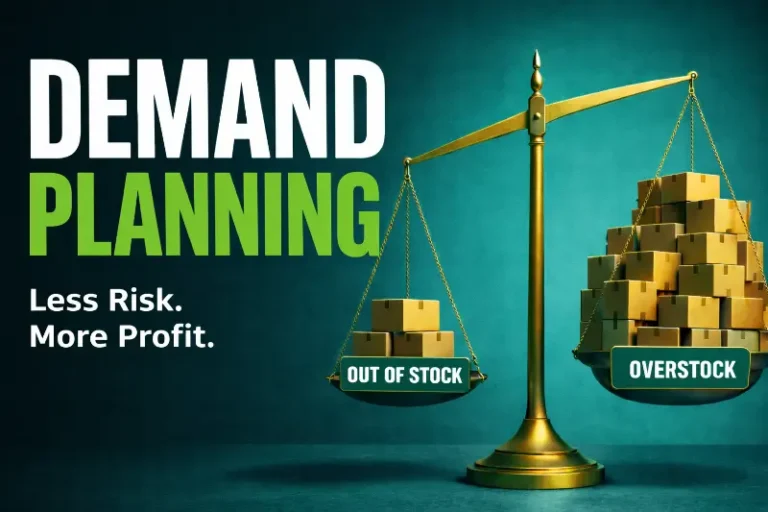
What Is Demand Planning? How It Impacts Inventory, Forecasting, and Profitability
Demand planning is the process of estimating future customer demand so that a business can align its inventory, procurement, and operations to meet that demand without carrying mor...
Why 100% P2P Adoption Is the Wrong Goal
Peer-to-peer returns let customers send eligible returned items directly to other customers instead of routing every package back through the warehouse, cutting shipping and proces...
Walmart Officially Allows Amazon Multi-Channel Fulfillment (MCF)
Big news for multichannel sellers: Walmart now officially allows Amazon Multi-Channel Fulfillment (MCF), Amazon’s service for using its fulfillment network to ship orders from mult...