
How to Get Cheaper Shipping Rates Without Chasing Carrier Discounts

Last updated on March 04, 2026

In this article
 20 minutes
- Introduction to Shipping Costs
- Why discounts alone deliver diminishing returns
- The real lever is decision-making before you print shipping labels
- Service-level discipline: the ground vs air misuse problem
- Zone avoidance via inventory placement
- Cartonization and dimensional optimization
- Flat Rate Shipping: When It Makes Sense
- International Shipping Options for Cost Control
- Automation rules and exception handling
- Returns and reshipment as hidden cost drivers
- Avoiding Extra Charges in Your Shipping Operations
- A clear framework for prioritizing savings levers
- What ecommerce operators should evaluate when comparing options
- Frequently Asked Questions
Cheaper shipping rates are usually won or lost before a label is printed. If you want to know how to get cheaper shipping rates, stop treating discounts as the main lever and start treating shipping as a set of controllable decisions. The biggest savings come from service discipline, dimensional efficiency, inventory proximity, and automation that prevents avoidable mistakes.
Many businesses now access shipping discounts and instant access to lower rates through third-party shipping platforms, but the most significant savings come from operational improvements that address the root causes of high shipping costs.
Most mid-market Shopify brands spend too much time trying to access discounted shipping rates and not enough time reducing the conditions that cause high shipping costs in the first place. Carrier discounts matter, but they deliver diminishing returns because they do not fix the upstream decisions that create unnecessary spend: choosing air when ground would arrive on time, shipping from the wrong node into high shipping zones, paying dimensional weight pricing because cartonization is sloppy, or leaking margin through returns and reshipment. This article lays out a clear framework to prioritize savings levers that actually move your average shipping cost without relying on negotiation narratives.
Introduction to Shipping Costs
Shipping costs are one of the most significant expenses for ecommerce businesses, especially for small businesses looking to stay competitive. Understanding what drives shipping rates is the first step toward finding the cheapest shipping rates and optimizing your shipping strategy. The cheapest shipping method for your business will depend on several factors, including package weight, dimensions, shipping zones, and delivery speed. Major carriers like USPS, UPS, and FedEx each offer a range of shipping services and rates, so it’s important to compare carrier rates before making a decision. By analyzing these variables and choosing the right shipping options, businesses can keep shipping costs low, improve customer satisfaction, and protect their margins. For small businesses, even small reductions in shipping expenses can make a big difference in profitability and customer loyalty.
Why discounts alone deliver diminishing returns
Carrier discounts feel like a clean solution because they are easy to understand. You compare carrier rates, you see a lower line item, and you assume you are done. The problem is that discounts apply to the spend you generate. If your shipping strategy generates the wrong spend, you just get a discounted version of the wrong spend. Shipping discounts, such as USPS discounts or volume-based rates that require minimum volumes, are helpful for reducing costs, but they do not address the root causes of high shipping expenses.
Diminishing returns show up in three ways.
First, the easy wins get captured quickly. Once you have baseline discounted shipping rates through a shipping platform or minimum volume program, incremental reductions are typically smaller than the operational mistakes you are still making daily.
Second, discounts do not protect you from the parts of shipping costs that are driven by behavior. Residential surcharges, fuel surcharges, dimensional weight charges, and FedEx and UPS surcharges that keep expanding each year are not solved by a better base rate. If your packages are oversized relative to actual weight, dimensional weight pricing will eat your discount. If your routing logic is inconsistent, you will overpay in shipping zones you could avoid.
Third, discount focus often creates the wrong incentives internally. Teams chase a cheaper shipping method on paper while ignoring the operational requirement: deliver on the promised delivery time with stable shipping costs. The result is a system that looks “cost effective” in rate tables but creates customer service load, reships, and returns, which are the most expensive shipping expenses you can incur.
If you want cheapest shipping rates at scale, treat discounts as a tailwind, not a strategy.
The real lever is decision-making before you print shipping labels
Shipping is a sequence of decisions that happen in a predictable order:
- Where the order ships from
- What service level is selected
- What packaging is used
- How exceptions are handled when something does not fit the happy path
At this stage, it is essential to compare rates and shipping carriers using shipping platforms to compare shipping rates. This helps ensure you are making the most cost-effective decisions for each shipment.
Each decision is a lever. Each lever can be systematized. Most merchants keep these levers manual or inconsistent, then try to compensate with carrier discounts.
When operators ask how to get cheaper shipping rates, the answer is usually “make fewer expensive decisions by default.”
Service-level discipline: the ground vs air misuse problem
Service-level discipline is the fastest way to reduce shipping costs without changing carriers. The mistake is not using air. The mistake is using air as a habit.
Air becomes default when teams conflate delivery speed with shipping method. The correct lens is delivery time, not service branding. If ground arrives within the delivery window, air is waste. If your shipping platform auto-selects a fast shipping option because the rules are simplistic, you will pay for speed you did not need. Shipping speed directly impacts shipping cost—the faster the delivery speed, the more you’ll end up paying. Balancing cost and speed is crucial to optimize expenses and meet customer expectations.
Service discipline is operational, not philosophical:
- Define delivery promises that match your actual fulfillment capability.
- Map service levels to delivery time targets by shipping zone, not by intuition.
- Enforce rules that prevent premium services from being selected when a ground service meets the same delivery time.
Different courier services can provide vastly different delivery lead times, so comparing options is important. For shipping heavy items such as 50-pound packages, FedEx Express Saver is often the cheapest shipping service in the U.S., providing a good balance of cost and delivery time.
This is where many merchants lose money quietly. They say they need “fast shipping,” but the real requirement is “on-time delivery.” If you understand when to use expedited shipping and faster delivery options, and when you can meet on-time delivery with ground, you have found cheaper shipping.
Service discipline also protects you from the opposite problem: choosing the cheapest way to ship that breaks customer expectations. When you miss delivery time, you pay twice: once in refunds or appeasements, and again in reshipment or returns.
Zone avoidance via inventory placement
Zone avoidance is the lever most brands underuse because it looks like a network problem. In reality, it is a decision problem.
Shipping zones are a proxy for distance. In domestic shipping, services like USPS split the United States into different shipping zones based on the distance your package has to travel. The further the destination address is from the origin shipping zone, the higher the shipping rate will be. Shipping costs can vary significantly based on the shipping zone, making inventory placement a key lever for cost control. Distance drives cost. If you regularly ship from one location to far zones, your shipping rates will be structurally high no matter how good your discounted shipping rates are.
Inventory placement solves this by reducing average shipping distance:
- Place inventory closer to where orders occur.
- Use multiple fulfillment centers when volume supports it.
- Keep popular SKUs in proximity to demand so you avoid long-haul shipments.
This is not about building a complicated network. It is about reducing the portion of orders that default into expensive shipping zones.
Operationally, zone avoidance requires discipline in how you allocate inventory. Many brands split inventory across locations without thinking about SKU velocity, then create stockouts that force shipping from a far node anyway. The goal is not “more nodes.” The goal is “fewer far shipments.”
If your order sources are concentrated, even a simple two-node strategy can reduce shipping distance meaningfully. If demand is diffuse, the leverage comes from putting the highest-velocity products in the right place and letting slower items ship from a central location.
Zone avoidance also reduces delivery time variability. That helps service-level discipline because you can confidently select ground shipping more often when proximity is engineered into the network.
Cartonization and dimensional optimization
Dimensional weight pricing is where brands bleed money without realizing it. Many operators obsess over package weight and ignore package size. To calculate shipping costs, carriers use either the actual weight or the dimensional (DIM) weight—whichever is higher. The size of the package determines how much space it occupies in transit, and carriers price many shipments based on dimensional weight, which means volume matters as much as actual weight. Dimensional weight is calculated by dividing the package’s dimensions by a specified divisor, and USPS, UPS, and FedEx each calculate shipping costs differently, so it’s important to compare options to find the cheapest way to ship a package.
Cartonization is the operational practice of choosing the right box for the order. If you ship small items in oversized packaging, you are buying air. Dimensional optimization reduces shipping costs by shrinking the package size relative to product volume. Choosing packaging that fits your product snugly and using smaller, lightweight materials can help reduce shipping costs by lowering DIM weight and avoiding unnecessary fees. Accurate weighing and measuring of packages is crucial to avoid adjustment fees, which can occur if the carrier determines the package was heavier or larger than reported.
There are three practical ways brands fail cartonization:
- Too many box sizes, creating picking errors and slow packing
- Too few box sizes, forcing oversized packaging for mixed carts
- No carton logic, so packers choose boxes by habit
Dimensional optimization is not about packing supplies aesthetics. It is about preventing dimensional weight charges that invalidate your cheapest shipping rates. Product prices can be affected by shipping costs, and pricing strategies that make free shipping profitable often integrate shipping costs into product prices to help maintain profitability and provide transparent pricing for customers. Shipping insurance can protect against losses and should be considered as part of your overall shipping cost strategy.
The operational wins come from:
- Rationalizing box sizes around your most common cart profiles
- Using mailers when they protect the product and reduce package size
- Designing packaging materials to protect product without excess volume
- Auditing dimensional outcomes so you see where package size is driving cost
A useful mental model is to treat packaging as a product decision. If your packaging inflates dimensional weight, your shipping costs become a tax on every order. That tax is often larger than any carrier discount delta you will negotiate.
Flat Rate Shipping: When It Makes Sense
Flat rate shipping can be a game-changer for businesses that want to maintain steady shipping costs and simplify their shipping process. Services like USPS Flat Rate boxes offer predictable pricing regardless of the package’s weight or shipping zone, making it easier to budget and avoid surprises. Flat rate shipping is especially cost effective when you’re shipping items of similar size and weight, or when you want to offer customers a consistent shipping rate at checkout. By using flat rate boxes, you also save on packaging materials, since the boxes are provided for free. However, it’s important to compare flat rate shipping with other shipping services to ensure it’s truly the cheapest way to ship for each order. Strategic use of flat rate shipping can help reduce shipping costs, streamline operations, and support a more predictable bottom line.
International Shipping Options for Cost Control
International shipping often comes with higher shipping costs and added complexity, but there are ways to keep international shipping costs under control. Choosing the right shipping services is key—USPS Priority Mail Express and FedEx International Economy are popular options that balance delivery speed and cost for global shipments. To find the cheapest shipping options, always compare carrier rates for each destination and consider using flat rate boxes or poly mailers to minimize packaging costs and avoid dimensional weight surcharges. Staying informed about international shipping regulations and leveraging shipping platforms with real-time tracking can help you manage shipping expenses and provide a better experience for your global customers. By taking a strategic approach to international shipping, businesses can reduce costs, avoid unnecessary fees, and support sustainable international growth.
Automation rules and exception handling
Once you have service discipline, inventory placement, and cartonization in place, the next savings lever is preventing “expensive exceptions” from becoming normal.
Using ecommerce shipping software for warehouse automation and a multi-carrier shipping rate calculator can help automate decision-making, compare rates across carriers, and save money by selecting the most cost-effective shipping options for each order. Shipping software can also streamline operations, reduce manual errors, and provide access to discounted shipping rates. Many shipping platforms offer tools to track shipping trends and costs, helping businesses identify further savings opportunities.
Automation rules should do two things, especially when you’re dealing with carrier shipment exceptions and how to fix them fast:
- Make the right decision by default
- Escalate the edge cases early so they do not turn into late shipments or reships
In practice, this means your shipping platform and order management system should encode rules like:
- If ground meets the delivery time, do not allow an air upgrade without explicit exception handling.
- If a SKU is stocked in multiple locations, route based on lowest landed cost that still meets delivery time.
- If a shipment is likely to incur dimensional weight charges above a threshold, flag it for packaging review.
- If an order has address risk or service constraints, hold it briefly for validation rather than shipping and paying correction fees later.
Exception handling matters because shipping gets expensive when you are reactive. A missed carrier pickup becomes an air upgrade. A packaging mistake becomes a damage claim. A routing mistake becomes a zone eight shipment that could have been zone three.
Automation does not eliminate exceptions. It prevents exceptions from becoming invisible cost drivers.
Returns and reshipment as hidden cost drivers
Returns are not just reverse logistics. They are a shipping cost multiplier.
The visible cost is the outbound label, including how you generate and manage return shipping labels in ecommerce. The hidden costs include:
- Return shipping label cost
- Handling labor and processing time
- Repackaging and restocking
- Damage and write-offs
- Reshipments when a replacement is needed
Reshipment is often the most expensive outcome because you pay outbound shipping twice, and you usually expedite the second shipment to protect customer experience. Using shipping insurance, especially third-party options like Shipsurance, can help save money by covering losses on high-value items, reducing the financial impact of returns and reshipments.
If you want to get cheaper shipping rates in a way that holds over time, you have to reduce the conditions that create returns and reships:
- Fit and expectation accuracy in product data and merchandising
- Packaging that prevents damage
- Service discipline that avoids late deliveries that trigger refunds and replacements
- Clear policies that reduce customer confusion and unnecessary shipments
This is why shipping strategy cannot live only in the shipping label workflow. It has to connect to product decisions, packaging materials, reverse logistics optimization, and customer experience. If your return rate is high, your shipping costs will never feel steady because you are paying for second and third movements.
Avoiding Extra Charges in Your Shipping Operations
Hidden fees and extra charges can quickly inflate your shipping costs if you’re not careful. To reduce shipping costs, start by validating delivery addresses before printing shipping labels—address errors can lead to costly surcharges and failed deliveries. Use address validation tools to catch mistakes early and avoid unnecessary delivery fees. Accurately weighing and measuring each package is also essential, as incorrect information can trigger adjustment fees or dimensional weight charges. Choosing the right packaging materials and maintaining accurate packing slips and documentation for each shipment helps minimize dimensional weight and keeps shipping expenses in check. Regularly reviewing your shipping data can reveal patterns in extra charges, allowing you to adjust your shipping strategy and optimize your shipping process. By staying proactive and detail-oriented, you can avoid hidden costs and keep your shipping operations running efficiently.
A clear framework for prioritizing savings levers
Operators often ask for the cheapest shipping method or a shipping rate calculator that compares carrier rates. That is useful, but it is not the framework. Here is the framework that prioritizes levers in the order they typically deliver durable savings:
Bulk shipping and combining multiple shipments can help you access shipping discounts and achieve significant savings, especially when you negotiate rates with carriers for high shipping volumes. By leveraging volume discounts and using third-party platforms with pre-negotiated rates, businesses can optimize cost efficiency. However, it’s important to balance cost and service quality to ensure you meet customer expectations while maximizing savings.
Start with service discipline
This is the fastest lever because it does not require physical changes. It requires rules. Optimizing shipping speed is crucial—choosing slower delivery speeds when possible can significantly reduce shipping costs without sacrificing service quality. Fix ground vs air misuse first because it directly reduces premium service spend.
Then fix packaging and dimensional weight
Dimensional optimization is the second lever because it reduces shipping costs across every carrier and every service. It is structural.
To calculate shipping costs accurately, you need to use right-sized packaging, as carriers often charge based on the greater of actual weight or dimensional (volumetric) weight. Using the right packaging can minimize shipping costs by reducing dimensional weight charges.
Then reduce shipping zones through inventory placement
Zone avoidance is powerful, but it requires inventory strategy and operational coordination. Once service and packaging are disciplined, proximity becomes the next major driver.
For domestic shipping, using regional carriers for local deliveries can help reduce costs compared to national carriers.
Then automate the decisions and manage exceptions
Automation rules lock in the gains. Exception handling prevents backsliding. This is where steady shipping costs come from: fewer surprises, fewer expensive last-minute fixes.
Shipping software can streamline shipping operations, making it easier to manage multiple carriers and services.
Finally, treat returns and reshipments as a shipping cost problem
If you ignore reverse logistics, you will misread your true shipping expenses. Reducing returns is not only about margins. It is about lowering the number of shipments per customer outcome.
Using shipping insurance, including third-party options like Shipsurance, can help save on coverage for high-value items and mitigate the costs of returns and reshipments.
Carrier discounts sit around all of this. They help, but they are not first. They amplify the system you build. If the system is undisciplined, discounts amplify waste less. If the system is disciplined, discounts become real savings.
What ecommerce operators should evaluate when comparing options
If your search intent includes evaluating options, focus less on which shipping services promise cheapest shipping rates and more on which operational approach makes good decisions consistently. Using a shipping rate calculator to compare shipping rates and shipping carriers for every shipment can help identify the most cost-effective options. A multi-carrier shipping strategy allows businesses to optimize costs by selecting the best carrier for each shipment.
Ask questions like:
- Can our systems route orders based on inventory proximity and delivery time?
- Do we have packaging standards that prevent dimensional weight surprises?
- Are we using flat rate shipping only when it matches the cart profile, or as a habit?
- Do we have visibility into hidden costs like reshipments, address corrections, and damage?
- Can we maintain steady shipping costs through automation rather than manual heroics?
- Are we consistently using a multi-carrier shipping rate calculator to compare rates and compare shipping rates for every order?
The goal is not to chase carrier discounts. The goal is to make cheaper shipping the default outcome of a better system.
Frequently Asked Questions
How do I get cheaper shipping rates without negotiating carrier discounts?
Focus on decisions before labels are printed: service-level discipline, inventory placement to avoid high shipping zones, dimensional optimization, and automation that prevents expensive exceptions. You can also access shipping discounts through platforms like ShipStation or Shippo, which provide pre-negotiated discounted shipping rates without the need for direct carrier negotiations.
Why do carrier discounts have diminishing returns for shipping costs?
Shipping discounts reduce the rate you pay, but they do not fix upstream waste like air overuse, oversized packaging that triggers dimensional weight pricing, and long-distance shipments from poor inventory placement. While shipping discounts can help lower costs, implementing a comprehensive shipping strategy that leverages these discounted shipping rates is necessary to maintain steady shipping costs over time.
What is service-level discipline in shipping?
Service-level discipline means choosing shipping services based on delivery time requirements, not habit, and avoiding air services when ground meets the same delivery time. This involves selecting the appropriate shipping speed to match customer expectations and order urgency. Different courier services can provide vastly different delivery lead times, so comparing options is essential for cost-effective and timely shipping.
How does inventory placement reduce shipping rates?
Placing inventory closer to demand reduces average shipping distance and shipping zones, which structurally lowers shipping costs and makes ground shipping viable more often. In domestic shipping, using regional carriers for local deliveries can further reduce costs by taking advantage of lower rates for nearby destinations.
What is cartonization and why does it affect shipping costs?
Cartonization is selecting the right box or mailer for each order. It directly affects dimensional weight charges, which can raise shipping costs even when package weight is low. To calculate shipping costs accurately, it’s important to use right-sized packaging to minimize dimensional weight charges.
How do automation rules lower shipping expenses?
Automation rules standardize routing and service selection, flag packaging edge cases, and escalate exceptions early so they do not turn into late shipments, reships, or higher-cost services. Shipping software can help automate these processes and streamline operations, making it easier to manage multiple carriers and services.
Why do returns and reshipments increase shipping costs so much?
Returns add reverse shipping, processing labor, and restocking costs. Reshipments often require a second outbound shipment, sometimes expedited, which multiplies shipping expense per order. Using shipping insurance, including third-party options like Shipsurance, can help save on coverage for high-value items and mitigate the costs associated with returns and reshipments.
What is the best framework for prioritizing shipping savings levers?
Start with service-level discipline, then fix packaging and dimensional weight, then reduce zones through inventory placement, then automate decisions and exception handling, and finally reduce returns and reshipments as hidden cost drivers.
In addition, consider implementing bulk shipping strategies by combining multiple shipments to benefit from volume discounts. If your shipping volume is high, negotiate rates with carriers to achieve significant savings. When applying these strategies, it’s important to balance cost and service quality to ensure you meet customer expectations while optimizing expenses.
Written By:

Indy Pereira
Indy Pereira helps ecommerce brands optimize their shipping and fulfillment with Cahoot’s technology. With a background in both sales and people operations, she bridges customer needs with strategic solutions that drive growth. Indy works closely with merchants every day and brings real-world insight into what makes logistics efficient and scalable.

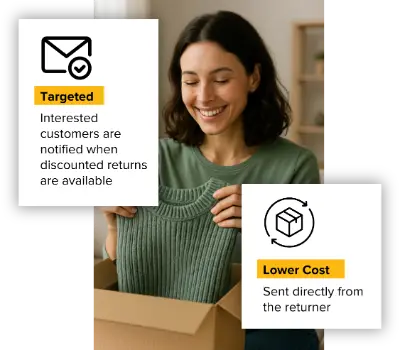
Turn Returns Into New Revenue
Related Articles
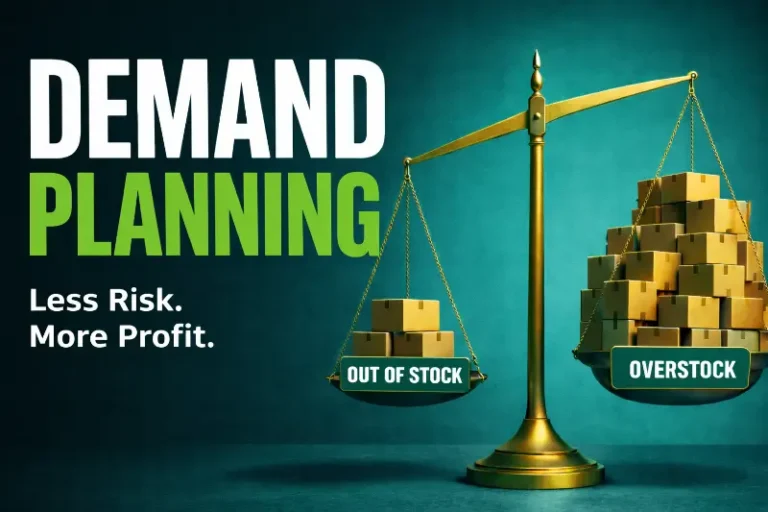
What Is Demand Planning? How It Impacts Inventory, Forecasting, and Profitability
Demand planning is the process of estimating future customer demand so that a business can align its inventory, procurement, and operations to meet that demand without carrying mor...

Why 100% P2P Adoption Is the Wrong Goal
Peer-to-peer returns let customers send eligible returned items directly to other customers instead of routing every package back through the warehouse, cutting shipping and proces...
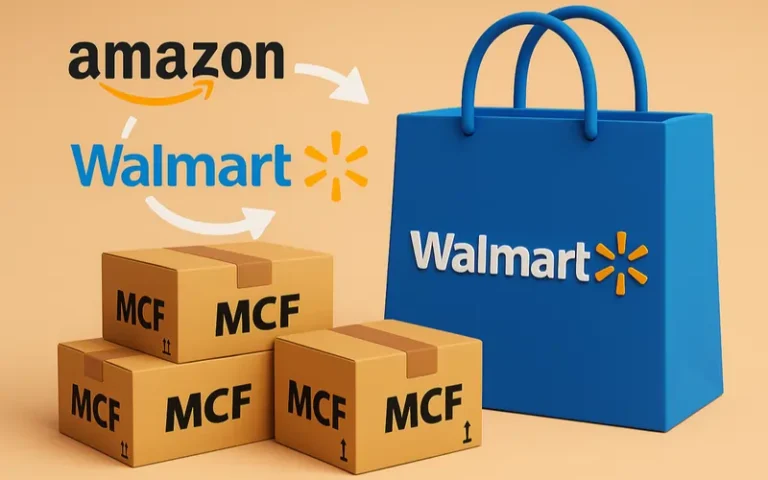
Walmart Officially Allows Amazon Multi-Channel Fulfillment (MCF)
Big news for multichannel sellers: Walmart now officially allows Amazon Multi-Channel Fulfillment (MCF), Amazon’s service for using its fulfillment network to ship orders from mult...