
Why Peer-to-Peer Returns Are Inevitable

Last updated on June 29, 2026
In this article
 10 minutes
- Introduction
- The Old Sequence with Financial Institutions Is the Real Problem
- Loss First, Recovery Later: Why That Sequence No Longer Holds
- What Peer-to-Peer Returns and the Secondary Market Actually Change
- Why Markets Converge on Lower-Loss and Lower Default Risk Systems
- Verification Is What Makes the Direction Credible
- Inevitable Does Not Mean Instant
- What This Means for Operators Right Now
- Frequently Asked Questions
Introduction
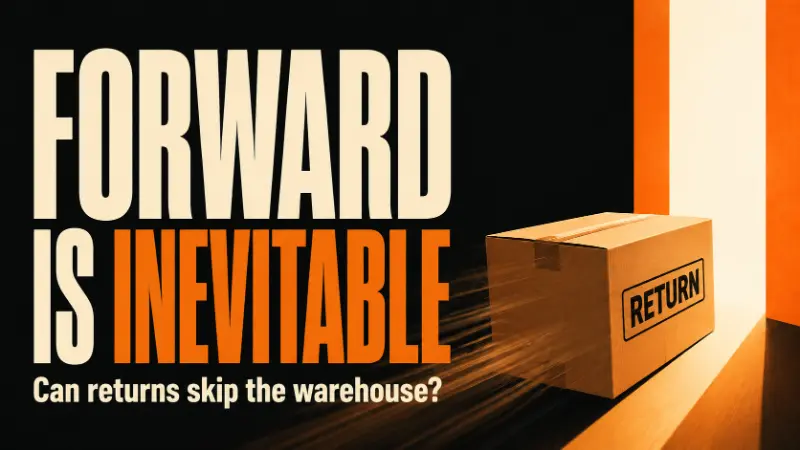
Peer-to-peer returns are inevitable because warehouse-first returns are structurally misaligned with where ecommerce economics and operations are going. The old sequence assumes loss first and recovery later, and that sequence is getting too expensive to defend.
Inevitable does not mean instant. It means the direction of travel is clear, even if adoption is gradual, hybrid, and uneven. For operators reading return P&Ls every month, this is not an abstract debate. It is a question of when, not whether, the sequence gets rewritten.
The Old Sequence with Financial Institutions Is the Real Problem
For most of the last decade, the returns conversation has been a tooling conversation. Better portals. Better drop-off networks. Better fraud scoring. Better analytics. Useful work, but it has not changed the underlying sequence of events.
The traditional sequence looks like this:
- A customer initiates a return
- The refund is processed
- The item ships back to a warehouse
- Receiving, inspection, repackaging, and restocking begin
- Some portion of the inventory is recovered weeks later, often at a markdown
Notice what happens first. Loss is assumed. Recovery is attempted later. Every return is treated as if it must travel backward through the supply chain before it can move forward again, no matter what the item is, no matter what condition it is in, and no matter whether another buyer is already waiting for it.
That warehouse-first assumption is the part that ages badly. It made sense when volumes were low, labor was cheap, customer patience was high, and waste was invisible. None of those conditions still hold.
Loss First, Recovery Later: Why That Sequence No Longer Holds
When the default assumption is “back to the warehouse,” costs compound by design. Two shipping legs are unavoidable. Inspection labor is unavoidable. Restocking delay is unavoidable. Markdown drag is unavoidable. By the time recovery is even attempted, the most expensive operational steps have already happened.
This is not a tooling problem. It is a sequencing problem. Better software running on top of the same loop accelerates volume into the most expensive part of the system. That is why dashboards keep improving while cost per return does not.
Markets do not stay stable around sequences that destroy value at every step. They drift toward whatever sequence reduces unnecessary handling, delay, and waste. That drift is what makes the shift directional, not promotional.
What Peer-to-Peer Returns and the Secondary Market Actually Change
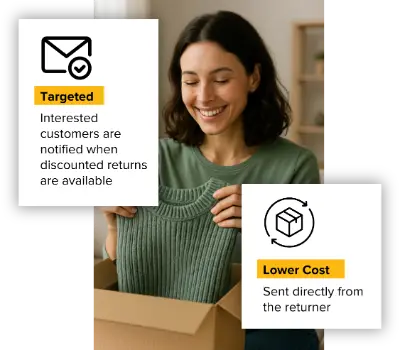
Peer-to-Peer Returns is a returns optimization solution that verifies eligible returned items and matches them to new demand before warehouse processing occurs. The mechanics matter less here than the sequence change. (For the full step-by-step, see how peer-to-peer returns actually work. For the canonical definition, see what are peer-to-peer returns.)
The shift is in the order of operations:
- Traditional returns: loss is assumed first, recovery is attempted later
- Peer-to-Peer Returns: recovery opportunity is evaluated first for eligible, verified returned items, before unnecessary warehouse processing happens
That is the entire argument compressed into two lines. Everything else, the cost savings, the speed, the sustainability narrative, follows from changing when recovery is evaluated. This is not about moving products differently. It is about deciding earlier in the process whether a warehouse leg is necessary at all.
For returns that do not qualify, fail verification, arrive damaged, or are not matched to demand in time, the standard warehouse flow still handles them. The warehouse does not disappear. It stops being the default endpoint for every return.
Why Markets Converge on Lower-Loss and Lower Default Risk Systems
Inevitability here is not a vibe. It is structural convergence.
Across categories and decades, markets tend to migrate toward systems that recover value earlier and reduce unnecessary handling. The reasons are unromantic:
- Capital is impatient with sequences that lock value in transit
- Labor is too expensive to spend on steps that can be skipped
- Carrier costs reward fewer legs, not more, and the economics that once justified free ecommerce returns at scale are rapidly eroding
- Regulators are starting to price waste explicitly, which makes the true cost of “free” returns for ecommerce harder to ignore
- Boards are starting to ask which portion of return cost is actually controllable
When a sequence becomes harder to defend on cost, on speed, on emissions, and on fraud exposure all at once, it does not get fixed by being polished. It gets replaced by a sequence that does not start with “assume loss first.”
That is what is happening to warehouse-first returns. The pressure is not coming from one direction. It is coming from finance, operations, sustainability reporting, and customer expectations simultaneously. Any one of those would be a tailwind. Together, they make the direction of travel hard to misread.
The deeper structural argument, that recovery-first systems handle volume better than warehouse-first systems do, is its own discussion. We treat it in why peer-to-peer returns scale when warehouses don’t. The point here is narrower: the direction is clear.
Verification Is What Makes the Direction Credible
Inevitability arguments fail when they sound magical. The reason Peer-to-Peer Returns work as a direction of travel, rather than a wish, is that the model is verification-first.
Before any eligible returned item is matched to new demand, the system applies robust verification that materially reduces exposure to returns fraud and refund fraud:
- Item condition evaluation
- Fraud screening on the returner and the order
- Eligibility checks against SKU rules and policy
- Resale suitability assessment
Items that fail any of those checks do not move forward. They go through the standard warehouse flow, the same way they do today. The model is not built on trusting every return. It is built on identifying the subset of returns where loss does not need to occur first.
That gating is what makes the shift operationally credible at enterprise scale. It is also why the economics work without depending on heroic customer behavior. The economics of peer-to-peer returns get into the per-unit math; the relevant point here is that the model only routes forward what it has verified.
Inevitable Does Not Mean Instant
The contrarian point that makes this whole argument honest: inevitable does not mean instant.
Adoption will be gradual. It will be hybrid. It will be selective. It will be uneven across categories. There will not be a single day when warehouses stop receiving returns. Some categories, including fragile goods, regulated products, and items past their resale window, will continue through traditional reverse logistics built around shipping items back with a conventional return shipping label workflow for the foreseeable future. That realism is the point, not a footnote. See where peer-to-peer returns don’t work for the honest version of the limitations.
It is also why chasing 100% adoption is the wrong target. The leverage is concentrated in the subset of returns that are clearly recoverable, clearly verifiable, and clearly matchable to new demand. Capture that subset and the cost curve bends early. We argue this more directly in why 100% P2P adoption is the wrong goal.
So the right way to read “inevitable” is not “universal overnight.” It is “the old sequence is getting too expensive to defend, and the pressure is coming from too many directions to absorb forever.”
What This Means for Operators Right Now
If you run returns, finance, or operations at an ecommerce business, the practical implication is not “rip out your warehouse.” It is much smaller and much more useful, starting with designing a returns program that balances loyalty and cost:
- Start measuring cost per return as a fully loaded number, not an average
- Identify the subset of your returns where recovery is already plausible but currently delayed
- Treat verification as the gate, not the warehouse
- Stop assuming every return must move backward before it can move forward
That last point is the one worth sitting with. The reason this direction is hard to reverse is not technology. It is that once an operator sees recovery happening before unnecessary warehouse processing on a verified subset of returns, the loss-first sequence stops looking like the default. It starts looking like a choice. And it is a choice that gets harder to defend every quarter.
This argument ties directly into the broader canonical case that returns need to go forward, not back, aligning with the same peer-to-peer logic that is already reshaping the future of ecommerce order fulfillment. That is the end-state framing. This article is the part of the argument that says the direction is clear, even if the timeline is not.
Frequently Asked Questions
What does it mean to say peer-to-peer returns are inevitable?
It means the direction of travel in retail returns points toward systems that evaluate recovery earlier and reduce unnecessary handling. It does not mean universal overnight adoption. Markets tend to converge on sequences that reduce loss, delay, and waste, and warehouse-first returns are increasingly hard to defend against that pressure.
How is peer-to-peer different from traditional returns?
Traditional returns assume loss first and attempt recovery later, after the item has traveled back to a warehouse and gone through inspection and restocking. Peer-to-Peer Returns is a verification-first model that evaluates eligible returned items for recovery before unnecessary warehouse processing occurs. The difference is the sequence, not just the destination.
Do warehouses go away under a peer-to-peer model?
No. Warehouses continue to handle damaged items, regulated categories, items that fail verification, and returns that are not matched to new demand in time. The change is that warehouses stop being the default endpoint for every return. They become specialized exception handlers rather than the first stop for everything.
Why is this happening now?
Several pressures are arriving at once: rising carrier and labor costs, growing fraud exposure, regulatory scrutiny of waste and Scope 3 emissions, board-level questioning of return economics, and customer expectations that have already reset around paid returns and “open box” inventory in response to rising ecommerce return rates. Any one of these would be manageable. Together, they make the warehouse-first sequence structurally fragile.
Does adoption have to be all-or-nothing to deliver value?
No. The leverage is concentrated in the subset of returns that are clearly recoverable and verifiable. Hybrid adoption, where a portion of eligible returns are evaluated for recovery first while the rest follow the standard warehouse flow, captures most of the value without requiring radical operational change while still enabling an exceptional returns experience that builds loyalty.
Is this just a way to skip quality control?
No. Verification is central to the model. Eligibility, condition assessment, fraud screening, and resale suitability checks all happen before an item is matched to new demand. Items that fail those checks continue through the standard reverse logistics flow. The model is gated by design, which is a materially different approach from solutions like Return Prime’s return management platform or networked drop-off offerings such as Happy Returns reverse logistics.
Written By:

Manish Chowdhary
Manish Chowdhary is the founder and CEO of Cahoot, the most comprehensive post-purchase suite for ecommerce brands. A serial entrepreneur and industry thought leader, Manish has decades of experience building technologies that simplify ecommerce logistics—from order fulfillment to returns. His insights help brands stay ahead of market shifts and operational challenges.

Turn Returns Into New Revenue
Related Articles
The Shipping Speed Paradox: Why DTC Brands Are Slowing Down
Everyone’s talking about faster delivery.
Ecommerce Profit Leaks: The Hidden Ones That AI Is Finally Closing
Most ecommerce brands believe they understand their margins.
Crafting a Return Policy that Drives Customer Loyalty and Reduces Returns
Let’s talk about ecommerce returns policies.