
A Pragmatic Roadmap for Redesigning Returns

Last updated on April 14, 2026

In this article
 24 minutes
- Starting From Where the Evidence Actually Lands
- Why This Decision Belongs in the Boardroom
- Crafting a Clear Returns Policy
- Implementing a Returns Management System
- Managing Returned Items Effectively
- Product Roadmap Alignment
- The Five-Step Returns Process Adoption Roadmap
- Three Scenarios for the Future of Reverse Logistics and Returns
- Returns as a Growth Loop
- Frequently Asked Questions
The future of returns will not be defined by bold declarations. It will be defined by disciplined execution. Most conversations about redesigning returns stall at the diagnosis stage, cycling through the same data points without ever reaching a question that executives actually need answered: what do we do, in what order, and how do we measure whether it is working? Creating effective roadmaps as dynamic, strategic tools is essential for guiding your returns strategy and aligning stakeholders toward measurable results.
This article is an answer to that question. It is grounded in one core conviction: measurable progress with controlled risk is more valuable than radical reinvention that never ships. Making the mindset shift from diagnosis to execution is crucial for teams to implement change and achieve results. If your organization is ready to move from awareness to action, this is your returns strategy roadmap—a guide to navigating the broader world of returns strategy and its impact.
Starting From Where the Evidence Actually Lands
Before any roadmap makes sense, three facts need to be in the room. Not debated. Not relitigated. Accepted.
First, returns are structurally broken. The warehouse-centric model was built for a retail environment that no longer exists. Low volumes, cheap labor, patient customers, and invisible waste were the conditions under which “return everything to a DC” made economic sense. None of those conditions apply today. Customers’ expectations have evolved, and unmet expectations often lead to returns, making it crucial to optimize product listings and align with what customers anticipate. Most retailers implement return policies as a strategy to reduce customer risk and encourage purchases, carefully balancing customer satisfaction and business protection.
Second, incremental fixes have failed. Better portals, more drop-off locations, smarter fraud scoring, carrier consolidation — these investments have improved parts of the experience without changing the underlying cost structure. The per-return loss has not materially declined. The fraud exposure has not closed, and unchecked returns fraud and refund fraud can silently erode profit at a scale many retailers underestimate. The sustainability footprint has not shrunk. Tools got better. Economics did not. In fact, 67% of shoppers check the return policy before making a purchase, and a well-crafted return policy can build trust and reduce hesitation among customers.
Third, peer-to-peer returns represent a credible structural alternative. By rerouting eligible returned items directly to the next buyer rather than backward through a warehouse, entire cost categories are removed rather than managed. This is not optimization. It is a different routing assumption built into the same operational infrastructure you already have.
These three facts position what follows not as a new thesis, but as a logical continuation. The argument has been made. This article is about execution.
Why This Decision Belongs in the Boardroom
Returns have lived too long in operations. They are not an operations problem. They are a cross-functional strategic issue that now carries implications for finance, operations, marketing, and governance simultaneously. Any returns strategy roadmap must address all four dimensions and clearly communicate strategic initiatives that require cross-functional alignment to ensure buy-in and effective execution.
When designing adaptable returns processes, it is essential to create environments that support efficient decision making, especially in areas such as returns storage, sorting, inspection, and routing. Effective decision making in these processes streamlines operations, reduces processing times, and improves overall returns management.
If returns are not addressed as a strategic issue, there is a significant risk of misaligned priorities, where teams may work on conflicting or unfocused initiatives, leading to wasted resources and friction with stakeholders.
The CFO Lens: Margin Protection and Capital Efficiency
Finance leaders feel returns as margin erosion and capital drag. The cost of a return is not what most companies are measuring. Averaged figures obscure the real structure of the loss. What a CFO actually needs to understand is the fully loaded cost per return, broken down into its components: shipping, labor, markdown, and fraud. Each category behaves differently and responds to different interventions.
Beyond the per-return figure, the CFO concerns that matter most are the gross margin impact of elevated return rates, the recovery rate of returned inventory once it enters the reverse logistics flow, the predictability of return-related cash flows across seasonal cycles, and the amount of working capital sitting idle in slow-moving returned inventory that has not been inspected, restocked, or resold.
Peer-to-peer returns reframe this entire picture. They do not make returns cheaper to process. They eliminate entire processing stages for eligible items. That distinction matters to a finance leader because it changes the shape of the cost curve, not just the height of a single data point.
The COO Lens: Operational Resilience
Operations teams experience returns as friction that compounds under pressure. The specific pain points are familiar: inbound congestion at receiving docks during peak season, labor volatility tied to unpredictable return volumes, exception-heavy workflows that require human judgment at every step, peak-season bottlenecks that force tradeoffs between outbound fulfillment and inbound returns processing, and the broader warehouse throughput pressure that makes the returns flow feel like it is always competing with forward operations for the same resources. To handle returns efficiently, whether through in-house processes or by outsourcing to third-party providers, is essential for minimizing these operational disruptions.
The warehouse-centric model does not scale gracefully. It scales expensively. More volume means more congestion, more labor, more errors, and more exceptions. A returns strategy roadmap that shifts a meaningful share of returns away from the inbound dock entirely does not just reduce cost. It protects the operational capacity that outbound fulfillment depends on. Automated reverse logistics processes are vital for efficiently receiving, inspecting, and processing items back into inventory. Standardized inspection protocols should categorize returns quickly for either restock, refurbish, recycle, or dispose.
For COOs, the case for peer-to-peer is not about technology. It is about protecting the core operation from being overwhelmed by an exception-handling workflow that was never designed to absorb this much volume. To manage returns effectively is now a core operational capability, and the ultimate goal is to create a well oiled machine in returns management.
The CMO Lens: Trust, Customer Satisfaction, and Loyalty
Marketing leaders are increasingly accountable for the post-purchase experience, even though they rarely control it. Returns are where brand promises get tested, and improving customer satisfaction is a key marketing goal. A customer who receives a fast refund with clear communication is far more likely to purchase again. A transparent returns process can build customer trust and encourage repeat purchases—92% of customers will buy from a brand again if the returns process is easy, and an exceptional returns program that prioritizes loyalty turns every return interaction into a chance to deepen the relationship. A customer who waits three weeks for a refund while tracking a package in reverse logistics limbo is quietly disengaging.
The specific pressures marketing leaders face include rising expectations for faster refunds, growing scrutiny on sustainability claims (particularly as younger consumers actively evaluate whether brands are responsible or performative), transparency expectations across the full return journey, and Gen Z value alignment, which increasingly connects brand loyalty to how a company handles its environmental and ethical commitments.
Peer-to-peer supports all of these. Faster refunds become structurally easier when items do not wait in warehouse queues, and issuing a credit to a customer’s account can streamline the refund process, improve transparency, and enhance customer experience. Sustainability narratives become credible when fewer items travel redundant miles and fewer items enter liquidation. And a returns experience framed as forward-moving rather than bureaucratic lands differently with a generation that has already normalized secondhand markets.
Giving customers clear options and incentives in the returns process—such as a well-defined exchange policy or offering store credit instead of refunds—can improve customer experience, keep money within the business, and encourage future purchases. The importance of a clear exchange policy as part of the returns strategy cannot be overstated, as it provides structure and incentives for both the customer and the business.
For the CMO, the risk is not changing how returns work. The risk is defending outdated return policies that feel misaligned with what the brand claims to stand for.
Board-Level Implications for Returns Strategy
At the governance level, returns intersect with four areas that boards now scrutinize directly: margin durability, regulatory exposure, ESG commitments, and long-term competitiveness. Boards are increasingly interested in how a returns strategy can generate new customer leads and drive business growth, making returns management a key lever for strategic advantage.
Boards are asking why return costs are rising faster than revenue. They are asking which portion of that cost is actually controllable and what the operational plan is if regulation moves faster than internal systems can adapt. They are asking whether sustainability disclosures are backed by measurable operational changes or just positioned as marketing.
Returns sit at the intersection of all of these questions. A returns strategy roadmap that reaches the board level is not a logistics proposal. It is an answer to how the business intends to remain competitive, compliant, and financially sound as the environment around it continues to shift. Defining and measuring success for stakeholders is essential to ensure alignment and to track progress toward strategic goals. Optimizing returns can also create new opportunities for the business, enabling continuous improvement and growth.
Crafting a Clear Returns Policy
A clear returns policy is the foundation of a trustworthy customer relationship and a critical component of an effective returns process. Customers expect transparency and simplicity when it comes to returning products, and a well-communicated policy can make all the difference in their purchase decisions. To build trust and reduce the likelihood of unnecessary returns, your returns policy should be easy to locate—featured prominently on your website, product pages, order confirmation emails, packaging, and in-store signage.
The policy itself should provide a clear understanding of the return window, outline any restocking fees, and detail the step-by-step process for initiating a return. It’s equally important to specify which items are final sale and non-returnable, so customers know exactly what to expect before making a purchase. By setting clear expectations, you empower customers to make informed decisions, which can reduce returns and improve overall customer satisfaction.
Offering free returns where feasible can further enhance customer loyalty, but even when that’s not possible, clarity and fairness in your returns policy will help build long-term trust while also helping you manage the rise of e-commerce return rates driven by changing shopper behavior. Ultimately, a transparent and accessible returns policy not only streamlines the returns process but also encourages repeat business, turning a potential pain point into a competitive advantage.
Implementing a Returns Management System
A robust returns management system is essential for transforming returns from a costly necessity into a strategic asset. By leveraging returns management software to automate and streamline the returns process, businesses can significantly reduce associated costs and improve customer satisfaction. Key features of an effective returns management system include online return initiation, automated return shipping label generation, and real-time tracking of returned items.
Beyond operational efficiency, a well-oiled returns management system provides valuable insights into return rates, reasons for returns, and customer behavior, especially when you implement best-in-class returns management software that centralizes data and workflows. These insights can inform business strategy, helping you identify patterns, address root causes, and refine your approach to returns management. With the right system in place, your team can focus on delivering a superior customer experience rather than getting bogged down in manual processes.
The result is a smoother, faster returns process that enhances customer loyalty, boosts conversion rates, and drives revenue growth. By treating returns management as a core business function—rather than an afterthought—you position your company to respond proactively to customer needs and market changes, turning returns into a source of competitive strength.
Managing Returned Items Effectively
Effectively managing returned items is key to minimizing waste and protecting your bottom line. Every returned item represents both a cost and an opportunity. By implementing a structured process for inspecting returned items, businesses can determine whether products can be restocked, refurbished, or resold, reducing losses and supporting sustainability goals as part of a broader effort to optimize reverse logistics end-to-end.
Offering store credit or exchanges instead of automatic refunds can further reduce the financial impact of returns and encourage customers to make another purchase, strengthening customer relationships and retention. For example, if a customer returns a product due to sizing issues, providing an easy exchange process or store credit can turn a potentially negative experience into a positive one.
Analyzing data on returned items also enables businesses to spot trends—such as high return rates for specific products or categories—and make targeted improvements to product descriptions, sizing guides, or quality control. By proactively addressing these issues, you can reduce returns over time and enhance the overall customer experience.
Product Roadmap Alignment
Aligning your product roadmap with your returns strategy is a powerful tool for driving customer satisfaction and achieving business goals. By prioritizing initiatives that address customer pain points—such as enhancing product descriptions, simplifying the returns process, and offering multiple return options—you create a clear understanding of your objectives and ensure that resources are allocated where they will have the greatest impact, especially when crafting the perfect e-commerce returns program to balance cost and loyalty.
A customer-centric product roadmap not only improves the returns process but also strengthens the overall customer experience, leading to higher conversion rates, increased loyalty, and greater revenue. For example, investing in more accurate product descriptions can reduce the likelihood of returns, while providing flexible return options can meet diverse customer expectations and build trust.
Ultimately, a well-aligned product roadmap enables your business to adapt to changing market conditions, respond to customer feedback, and maintain a competitive edge. By making returns management a strategic priority within your product development process, you turn a traditional pain point into a driver of growth and customer retention.
The Five-Step Returns Process Adoption Roadmap
The goal is not disruption. The goal is measurable progress with controlled risk. Creating a returns strategy roadmap is a 6–12 month iterative process focused on reducing return rates and accelerating the speed of restocking. The following five steps are not theoretical. They are the sequence that turns a structural argument into an operational reality.
After completing these five steps, quarterly reviews of the returns strategy roadmap should assess KPIs like return rates and customer satisfaction scores. Collecting and analyzing returns data can unveil patterns, highlight issues, and guide ongoing strategic decisions.
Step 1: Baseline Measurement
Nothing that follows is defensible without this step. Before any routing changes, eligibility decisions, or pilot designs, the organization must establish a clear and honest baseline.
That baseline includes cost per return broken down by its actual components: shipping costs in and out, labor for intake, inspection, repackaging, and restocking, markdown exposure for items that lose value during the return cycle, and fraud-related losses that are currently being absorbed without clean attribution. It also includes refund cycle time from initiation to settlement, return rate by SKU category, and the recovery rate of returned inventory once it enters the warehouse.
Without a baseline, gains appear anecdotal. ROI cannot be defended in a board presentation or a budget conversation. Scaling decisions lack credibility because there is no before-and-after to point to. Baseline measurement is not a finance exercise. It is the foundation of every decision that follows.
Step 2: SKU Eligibility Definition
Not all products should follow the same return path. This step is where discipline matters more than enthusiasm. The temptation is to identify P2P as the new default and push as many SKUs into it as possible. That is the wrong instinct. Eligibility definition is about finding the right cohort, not the largest one.
Organizations can reverse engineer their reverse logistics processes to optimize SKU routing, analyzing existing returns data and workflows to systematically plan which SKUs are best suited for each return path.
High-fit P2P candidates typically share a set of characteristics: stable resale value that does not decay quickly, durable packaging that can support a second shipment without professional repackaging, higher return rates that make demand signals easier to match, predictable buyer demand for the item in a like-new condition, and lower regulatory constraints that do not restrict resale or require chain-of-custody documentation.
Low-fit SKUs remain in traditional flows. Fragile items that require controlled inspection and professional repackaging belong in the warehouse. Regulated goods with resale restrictions, custom or made-to-order items, and perishable or consumable products are all natural exceptions. These SKUs do not undermine the model. They define its realistic operating envelope.
Discipline in eligibility protects customer trust and prevents the kind of overreach that creates a bad experience in the early days of a pilot, when the program is most vulnerable to internal skepticism.
Step 3: Pilot Design
Successful adoption starts small. A pilot that tries to cover too many SKUs, too many markets, or too many customer segments at once will not produce clean evidence. It will produce noise.
Best practice is to select a narrow SKU set or limit by geography or customer segment, then track three categories of signal closely: the economics (cost per return, recovery rate, refund cycle time), the customer experience (feedback, repeat purchase behavior, satisfaction signals), and the fraud indicators (abuse patterns, condition disputes, delivery exceptions), ideally supported by a flexible platform like the Return Prime returns solution for test-and-learn pilots.
As part of the pilot, consider including an onboarding flow specifically designed for new users. Designing a new onboarding flow should focus on outcome-based metrics, such as increasing user retention or engagement, rather than just launching a feature. It is important to track the experience of new users during the pilot to measure the effectiveness of the onboarding process and its impact on overall returns strategy roadmap outcomes.
The framing matters. A pilot is not a rollout. It is a live experiment designed to produce evidence. Executives who commission a pilot looking for confirmation rather than data will misread the results. The evidence a disciplined pilot produces is the currency needed to expand confidently and defend the decision at every level of the organization.
Step 4: Guardrails and Controls
Peer-to-peer changes where risk occurs. It does not eliminate risk. Any returns strategy roadmap that presents P2P as a fraud-free system is either uninformed or overselling. The honest framing is that risk shifts, and guardrails must be built to match the new risk profile from the beginning.
Effective guardrails for a P2P returns system include photo or condition proof required at the point of return initiation, AI-assisted risk scoring for orders that fall outside normal parameters, refunds tied to confirmed delivery to the next buyer rather than to the moment of shipment, incentives for proper preparation (clear packaging, accurate condition representation), and defined penalties for abuse to prevent the system from being gamed once it becomes familiar. Offering flexible return options, such as drop-off locations, carrier pickup, or in-store returns, or leveraging networks like Happy Returns drop-off Return Bars, can also serve as a guardrail by increasing customer convenience and reducing friction. Additionally, implementing self-service portals empowers customers to manage their own returns and can significantly reduce customer service inquiries related to returns.
These guardrails should evolve alongside adoption. The risk profile in a narrow pilot is different from the risk profile at scale. Controls that are appropriate in month three may need to be recalibrated in month twelve. Building the governance infrastructure to monitor and adjust is as important as building the routing logic itself.
Step 5: Expansion and Normalization
Once a pilot has produced real evidence of economics, experience, and fraud performance, expansion becomes a structured decision rather than a leap of faith. SKU coverage expands to include more of the high-fit cohort. Geographic scope widens based on where demand signals and logistics infrastructure align. P2P becomes integrated into standard returns policy rather than operating as a parallel track. As part of a comprehensive returns strategy roadmap, brands can also offer exchanges and in store returns, providing customers with flexible options such as store credit and alternative to refunds. Competitor return policies often span return windows from 30 to 90 days, and studying leaders like Amazon’s returns policy can help benchmark expectations, while speed to resale aims to make returned items available for resale within 24 hours of receipt to minimize depreciation.
At scale, the objective is for P2P to function as an invisible routing decision. The customer does not need to know which path their return takes. The operations team does not need to treat it as a special program with its own set of exceptions. It becomes a default path for eligible items, a structural advantage embedded in the policy and infrastructure, and a routine outcome rather than a celebrated experiment.
This is what normalization looks like. Not a press release. A well-functioning system operating quietly in the background.
Three Scenarios for the Future of Reverse Logistics and Returns
Returns will evolve. The question is not whether the system will change. It is who is positioned to shape that change and who will be reacting to it under pressure. Brands that proactively develop a returns strategy roadmap can turn returns into strategic opportunities for business growth, customer satisfaction, and competitive advantage by optimizing returns management and leveraging flexible storage solutions.
In the best-case scenario, peer-to-peer adoption becomes widespread across the industry. More than half of recoverable returns bypass warehouse processing. Return costs decline materially. Scope 3 emissions drop measurably. Returns evolve from a cost center into a loyalty and margin lever for brands that implement the model well.
The middle-case scenario is more likely in the near term, and it is still a significant improvement over the status quo. Hybrid models dominate. Somewhere between 30 and 40 percent of returns route peer-to-peer, with warehouses handling the genuine exceptions: defective items, regulated categories, and end-of-cycle inventory with no downstream buyer. Brands that reach this level of adoption achieve meaningful savings without requiring full operational reinvention. This is not a consolation prize. It is a material shift in the economics of returns for companies willing to do the work.
In the worst-case scenario, regulation moves faster than internal systems. Return restrictions increase before companies have modernized their routing. Costs rise faster than revenue. Brands face compliance risk and margin compression at the same time. In this scenario, returns remain a growing liability, and the brands that delayed adaptation pay the highest price in capital, reputation, and competitive position.
The cost of delay is not abstract. Every year without a returns strategy roadmap locks in avoidable cost that compounds. It increases regulatory exposure as the gap between current operations and emerging compliance requirements widens. It normalizes inefficient behavior inside operations teams that come to treat the broken model as the natural state of things. It also creates operational constraints, as the majority of reverse logistics partners have long contracts, making it vital to sort out existing contracts before making changes. And it weakens competitive position relative to brands that have already begun building a structural advantage.
Structural problems do not self-correct.
Returns as a Growth Loop
The final reframe is the most important one, and it is the one most often lost in the operational detail.
Returns have been treated as a necessary evil for so long that most organizations have stopped asking whether that framing is still accurate or useful. It is neither. Aligning your returns strategy roadmap with broader product goals ensures that your approach supports not just operational efficiency, but also the achievement of key business objectives.
When returns are redesigned with the right routing logic, they generate a compounding effect. Lower costs free up margin. Faster refunds improve the customer experience, especially at first glance—when customers initially evaluate your returns process, a clear and hassle-free policy can make a strong positive impression. Better customer experience drives higher loyalty. Higher loyalty produces more sales. More sales produce more data on return patterns, which improves eligibility decisions and routing logic. The loop reinforces itself.
This is not a diagram that needs to be overengineered. The logic is straightforward: lower costs lead to faster refunds, faster refunds drive higher loyalty, and higher loyalty creates more sales. What matters is that this loop exists, that it is measurable, and that it requires a deliberate returns strategy to set it in motion.
The brands that recognize returns as a strategic capability rather than an operational cost center will build this loop. Those that continue to treat returns as a back-office cleanup function will continue absorbing losses that are, at this point, largely avoidable.
The question facing every retailer is no longer whether the returns system needs to change. That question has been answered. The question now is whether the organization is ready to move from understanding the problem to executing against it.
The companies that act now will define the standard. Those that wait will inherit it on worse terms.
Frequently Asked Questions
What does a returns strategy roadmap actually include?
A returns strategy roadmap includes five core phases: establishing a cost baseline broken down by shipping, labor, markdown, and fraud; defining SKU eligibility for peer-to-peer routing versus traditional warehouse handling; designing and running a controlled pilot with clear economic and experience metrics; building guardrails and controls to manage shifted risk; and expanding peer-to-peer to normalized policy at scale. Each step is sequential and builds on the evidence produced by the prior one.
Why do CFOs need to be involved in a returns redesign initiative?
Returns carry direct implications for gross margin, working capital, and cash flow predictability. The fully loaded cost per return is rarely visible in averaged reporting, and the recovery rate of returned inventory affects inventory planning and capital efficiency. CFOs who are not involved in returns strategy tend to inherit the cost without the tools to address it structurally.
What is the most realistic near-term outcome for peer-to-peer returns adoption?
Based on current industry conditions, the most likely near-term outcome is a hybrid model where 30 to 40 percent of returns route peer-to-peer and warehouses handle genuine exceptions. This level of adoption still produces material savings in shipping, labor, and markdown exposure without requiring full operational reinvention.
How does a returns strategy roadmap connect to sustainability goals?
Every return routed directly to the next buyer rather than backward through a warehouse eliminates at least one shipping leg, reduces packaging waste, and removes warehouse handling energy from the equation. At scale, this produces measurable reductions in Scope 3 emissions and provides defensible data for ESG disclosures and regulatory reporting requirements that are increasingly mandatory in major markets.
What guardrails are needed when implementing peer-to-peer returns?
Effective controls include requiring photo proof at the point of return initiation, applying AI-assisted risk scoring for flagged orders, tying refunds to confirmed delivery rather than shipment, offering incentives for customers who prepare returns correctly, and enforcing penalties for abuse. Risk in a peer-to-peer system does not disappear; it shifts, and guardrails must be designed to match the new exposure profile from the start.
What happens operationally if a company delays building a returns strategy?
Delay locks in avoidable costs that compound annually, increases exposure to regulatory requirements that are already in motion in international markets and trending toward the U.S., normalizes inefficient warehouse-centric behavior that becomes harder to change the longer it persists, and weakens competitive position relative to brands that begin capturing the structural advantages of forward-moving returns models earlier.
Written By:

Manish Chowdhary
Manish Chowdhary is the founder and CEO of Cahoot, the most comprehensive post-purchase suite for ecommerce brands. A serial entrepreneur and industry thought leader, Manish has decades of experience building technologies that simplify ecommerce logistics—from order fulfillment to returns. His insights help brands stay ahead of market shifts and operational challenges.

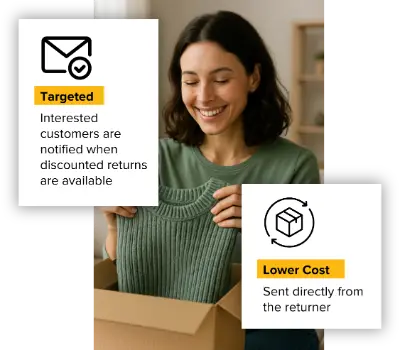
Turn Returns Into New Revenue
Related Articles
What Is Demand Planning? How It Impacts Inventory, Forecasting, and Profitability
Demand planning is the process of estimating future customer demand so that a business can align its inventory, procurement, and operations to meet that demand without carrying mor...
Why 100% P2P Adoption Is the Wrong Goal
Peer-to-peer returns let customers send eligible returned items directly to other customers instead of routing every package back through the warehouse, cutting shipping and proces...
Walmart Officially Allows Amazon Multi-Channel Fulfillment (MCF)
Big news for multichannel sellers: Walmart now officially allows Amazon Multi-Channel Fulfillment (MCF), Amazon’s service for using its fulfillment network to ship orders from mult...