
Amazon Wants to Help Its Employees Quit and Start Delivery Businesses
In this article
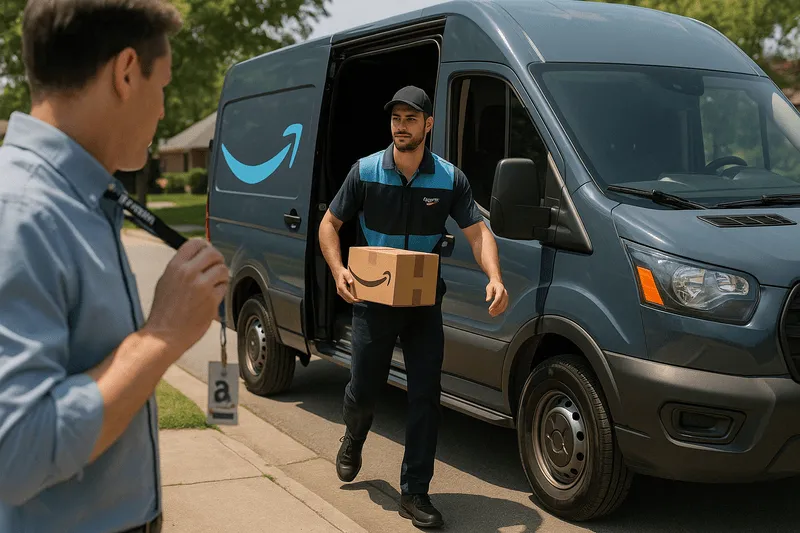
Amazon announced that it wants to help its employees quit — so they can start their own delivery businesses. Tthe e-commerce giant said that it’s expanding its Delivery Service Partner program to include an incentive for current Amazon workers
The program promises up to $10,000 in startup costs for employees who partake in the program. Amazon is also throwing in the equivalent of three months of an employee’s most recent salary to help soon-to-be entrepreneurs get their fleet of delivery cars off the ground.
The program is Amazon’s solution to its last-mile delivery problem where the company is trying to compete with legacy players like UPS and FedEx.
Written By:

Jeremy Stewart
Jeremy Stewart leads customer success at Cahoot, helping merchants achieve high-performance logistics through smart technology and process optimization. With a background in both ecommerce operations and client services, Jeremy ensures that every merchant using Cahoot gets measurable results—whether they’re scaling from one warehouse to many or managing complex returns.

Turn Returns Into New Revenue
Related Articles

Amazon Meltable Fulfillment: Keep Chocolate Selling Through Summer
Amazon meltable fulfillment does not have to stop when FBA’s summer restrictions begin.
Amazon FBM Prepaid Return Labels What Changes December 18 and What Sellers Should Do
Starting December 18, 2026, covered US seller-fulfilled Amazon returns require a prepaid return label, and heavy and bulky items are temporarily excluded, according to a seller not...

Which SKUs Should Not Be in Seller Fulfilled Prime?
Seller Fulfilled Prime SKUs are the individual products an Amazon seller chooses for SFP based on whether each one can protect both the Prime promise and the seller’s margin.
5 Tips to Track Down Unauthorized 3P Sellers

In this article
In the era of online reviews and SEO, the impact of unauthorized ecommerce sellers ranges from lost revenue to damaged relationships with authorized sellers to questionable brand integrity. If you want to protect the integrity of your brand, unauthorized third-party sellers should be a big deal.
In order to protect themselves, the first step for online retailers is collecting the basic facts about these ecommerce sellers: Who they are, what they’re doing and where they are operating. In short, brand manufacturers first need to figure out who the seller is and how to reach them.
Written By:

Indy Pereira
Indy Pereira helps ecommerce brands optimize their shipping and fulfillment with Cahoot’s technology. With a background in both sales and people operations, she bridges customer needs with strategic solutions that drive growth. Indy works closely with merchants every day and brings real-world insight into what makes logistics efficient and scalable.
Turn Returns Into New Revenue
Related Articles
Amazon Meltable Fulfillment: Keep Chocolate Selling Through Summer
Amazon meltable fulfillment does not have to stop when FBA’s summer restrictions begin.
Amazon FBM Prepaid Return Labels What Changes December 18 and What Sellers Should Do
Starting December 18, 2026, covered US seller-fulfilled Amazon returns require a prepaid return label, and heavy and bulky items are temporarily excluded, according to a seller not...
Which SKUs Should Not Be in Seller Fulfilled Prime?
Seller Fulfilled Prime SKUs are the individual products an Amazon seller chooses for SFP based on whether each one can protect both the Prime promise and the seller’s margin.
Amazon Gives Brands Power to Delete Counterfeit Listings

In this article
Amazon.com has launched Project Zero, a program that enables brands to designate counterfeit product listings on the e-tailer’s site for removal. Amazon is providing each product with a unique code that can be scanned to determine whether a product is authentic or counterfeit. The online retail giant launched a new anticounterfeiting program, called Project Zero, that it says would better protect brands from scammers by letting them designate listings for removal, rather than going through a cumbersome reporting process with Amazon.
The company has been testing it with roughly 15 brands for a few months, and will now start inviting selected additional companies to participate. Amazon said it wants all brand owners to join the program eventually but declined to specify a timeline.
As part of Project Zero, Amazon also is including a tool that generates a unique code for each product unit that the brand can print onto existing packaging or attach onto items using a sticker. The codes can then be scanned to ensure a product’s authenticity when it enters an Amazon warehouse.
In shifting some monitoring duties and authority to brands themselves, Amazon is taking an unusual step. Other tech companies use outside contractors to help monitor their platforms but don’t generally let users remove content. Amazon, for example, has required brand owners to report suspected counterfeits to an internal team that would investigate and decide whether or not to remove them.
Written By:
Jeremy Stewart
Jeremy Stewart leads customer success at Cahoot, helping merchants achieve high-performance logistics through smart technology and process optimization. With a background in both ecommerce operations and client services, Jeremy ensures that every merchant using Cahoot gets measurable results—whether they’re scaling from one warehouse to many or managing complex returns.
Turn Returns Into New Revenue
Related Articles
Amazon Meltable Fulfillment: Keep Chocolate Selling Through Summer
Amazon meltable fulfillment does not have to stop when FBA’s summer restrictions begin.
Amazon FBM Prepaid Return Labels What Changes December 18 and What Sellers Should Do
Starting December 18, 2026, covered US seller-fulfilled Amazon returns require a prepaid return label, and heavy and bulky items are temporarily excluded, according to a seller not...
Which SKUs Should Not Be in Seller Fulfilled Prime?
Seller Fulfilled Prime SKUs are the individual products an Amazon seller chooses for SFP based on whether each one can protect both the Prime promise and the seller’s margin.
What does the future hold for Amazon sellers?

In this article
This is the million dollar question. Actually, it is a multi-million dollar question, as thousands of people have staked a claim in the success of Amazon’s seller marketplace, and many more are eyeing the potential of selling on Amazon and ready to make a move.
The goal was simply to get a better understanding of what an Amazon seller looked like: simple demographics like age, gender, location, but also at a deeper level, what factors helped the top sellers succeed?
Getting Started is Key!
The hardest part is getting started: finding a product idea, maintaining momentum, and ultimately getting it live on Amazon. If you can do that well, you have set yourself up for success. That is the exact path that every one of these successful sellers we surveyed took.
Written By:
Indy Pereira
Indy Pereira helps ecommerce brands optimize their shipping and fulfillment with Cahoot’s technology. With a background in both sales and people operations, she bridges customer needs with strategic solutions that drive growth. Indy works closely with merchants every day and brings real-world insight into what makes logistics efficient and scalable.
Turn Returns Into New Revenue
Related Articles
Amazon Meltable Fulfillment: Keep Chocolate Selling Through Summer
Amazon meltable fulfillment does not have to stop when FBA’s summer restrictions begin.
Amazon FBM Prepaid Return Labels What Changes December 18 and What Sellers Should Do
Starting December 18, 2026, covered US seller-fulfilled Amazon returns require a prepaid return label, and heavy and bulky items are temporarily excluded, according to a seller not...
Which SKUs Should Not Be in Seller Fulfilled Prime?
Seller Fulfilled Prime SKUs are the individual products an Amazon seller chooses for SFP based on whether each one can protect both the Prime promise and the seller’s margin.
Both USPS and Amazon Experience Data Security Glitches

In this article
In the midst of the kickoff to the busiest shopping season of the year, news emerged that both the U.S. Postal Service and Amazon experienced data glitches that exposed customer information.
The USPS may have exposed the personal data of more than 60 million customers via a security hole, including access to information on when checks and other critical documents were set to arrive. Amazon meanwhile told an unknown number of customers their names and email addresses were exposed due to a technical error on its ecommerce site.
Written By:
Jeremy Stewart
Jeremy Stewart leads customer success at Cahoot, helping merchants achieve high-performance logistics through smart technology and process optimization. With a background in both ecommerce operations and client services, Jeremy ensures that every merchant using Cahoot gets measurable results—whether they’re scaling from one warehouse to many or managing complex returns.
Turn Returns Into New Revenue
Related Articles
Amazon Meltable Fulfillment: Keep Chocolate Selling Through Summer
Amazon meltable fulfillment does not have to stop when FBA’s summer restrictions begin.
Amazon FBM Prepaid Return Labels What Changes December 18 and What Sellers Should Do
Starting December 18, 2026, covered US seller-fulfilled Amazon returns require a prepaid return label, and heavy and bulky items are temporarily excluded, according to a seller not...
Which SKUs Should Not Be in Seller Fulfilled Prime?
Seller Fulfilled Prime SKUs are the individual products an Amazon seller chooses for SFP based on whether each one can protect both the Prime promise and the seller’s margin.
USPS Price Hikes on Jan. 27 to Cost Amazon More than $1 Billion
In this article
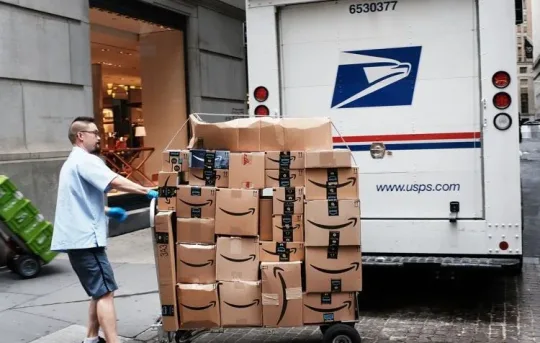
Amazon.com Inc.’s retail operating income could take a 5% hit from shipping cost inflation if the U.S. Postal Service’s proposed price hikes go into effect, according to calculations by Barclays analysts. The proposed uptick in shipping and mailing fees at the U.S. Postal Service could cost Amazon more than $1 billion in 2019, according to Credit Suisse, which cut its near-term estimates for operating profit on the e-commerce behemoth.
“As we roll forward the sensitivity analysis to 2019, we arrive at a potential incremental Shipping Expense range of $400 million to $1.1 billion range with the assumption that 40 percent to 50 percent of U.S. packages are shipped via the Postal Service,” analyst Stephen Ju wrote Monday. “Our math …suggests Amazon will have 5% lower retail operating income from this shipping cost inflation, if we assume there are no offsetting factors,” Barclays said. The changes would go into effect on Jan. 27, 2019.
“Specifically, the USPS shipping rates for small and medium boxes, typically used by e-commerce companies, are proposed to be increased by 10% and 5% respectively,” Barclays analysts led by Ross Sandler wrote. “[T]he price increases for packages suggested by USPS this year are higher than in prior years.”
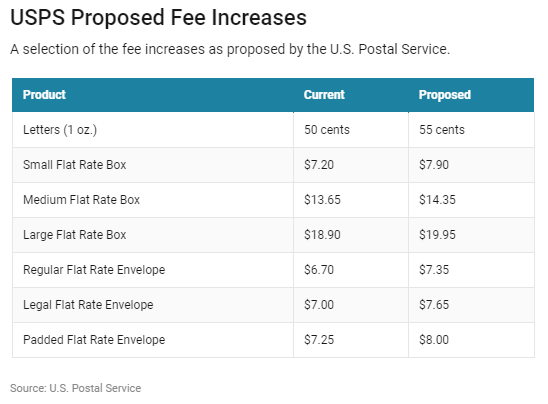
“If other Amazon shipping partners like UPS, FedEx, On-Trac, etc. raise their prices, which has happened in the past (but we are currently not factoring in), every 5% hike for last mile would weigh down operating income by an additional 3%, all else constant,” the note said.
President Trump said the USPS is Amazon’s “delivery boy” in a tweet earlier this year, and blamed the e-commerce giant for its billion-dollar-plus losses in the second fiscal quarter. However, the USPS said it’s actually government policy that’s hurting the group’s finances. The USPS said “legislative and regulatory changes” would be necessary for financial stability.
“To be clear, our current estimates already factor in [a] shipping cost increase by a modest level, consistent with prior years,” Barclays said. “However, the steeper increase proposed for 2019 could weigh further on Amazon’s FY19 profitability.”
Barclays forecast that Amazon shares could take a hit after third-quarter earnings if they are in line with guidance and forecast below expectations. And in the fourth-quarter, the $15 minimum wage hike will add about $310 million to expenses.
Amazon will already see declines due to the $15 minimum wage hike, analysts say. Barclays analysts think the minimum wage hike is just one of a few coming initiatives that could impact operating margin expansion.
Written By:
Jeremy Stewart
Jeremy Stewart leads customer success at Cahoot, helping merchants achieve high-performance logistics through smart technology and process optimization. With a background in both ecommerce operations and client services, Jeremy ensures that every merchant using Cahoot gets measurable results—whether they’re scaling from one warehouse to many or managing complex returns.
Turn Returns Into New Revenue
Related Articles
Amazon Meltable Fulfillment: Keep Chocolate Selling Through Summer
Amazon meltable fulfillment does not have to stop when FBA’s summer restrictions begin.
Amazon FBM Prepaid Return Labels What Changes December 18 and What Sellers Should Do
Starting December 18, 2026, covered US seller-fulfilled Amazon returns require a prepaid return label, and heavy and bulky items are temporarily excluded, according to a seller not...
Which SKUs Should Not Be in Seller Fulfilled Prime?
Seller Fulfilled Prime SKUs are the individual products an Amazon seller chooses for SFP based on whether each one can protect both the Prime promise and the seller’s margin.
Free Shipping Becomes a Blessing and Curse at Amazon and Target

In this article
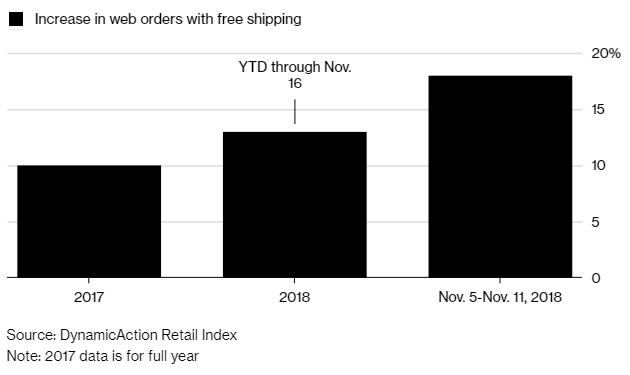
Amazon.com Inc. and Target Corp. have opened the floodgates on free shipping. Web orders with the free service have increased 13% in 2018. Offer can boosts sales but wreaks havoc with profit margins.
Recent moves by the two retailers to eliminate minimum-purchase amounts for free shipping have boosted the share of online orders that get delivered gratis, according to data from retail analytics company DynamicAction. Orders with the free service included have risen 13 percent so far this year through Nov. 16, including an 18 percent spike in the week that began Nov. 5., when Amazon unveiled its offer.
Free Falling
Amazon and Target have eliminated shipping fees for online holiday orders
“Free shipping is the new normal,” DynamicAction’s Chief Marketing Officer Sarah Engel said.
While free shipping can entice customers to buy, it can wreak havoc with retailers’ profit margins, which are typically razor-thin already during the holiday quarter due to rampant discounts and increased marketing costs. Web orders that included some sort of promotion since the end of October have risen 13 percent from the same period last year, DynamicAction found. It also doesn’t help that transportation costs were already soaring this year due to a shortage of truckers.
Target is offering two-day free shipping from Nov. 1 through Dec. 22 on hundreds of thousands of items with no minimum purchase, while Amazon said on Nov. 5 that shoppers without Prime memberships need not buy at least $25 to earn free regular shipping, which typically takes five to eight business days.
Walmart Inc. has thus far declined to match the offers, sticking with its $35 minimum purchase requirement. The world’s largest retailer has suffered from narrowing gross profit margins in recent quarters, even as its online sales have grown.
E-commerce sales overall will jump 17 percent this holiday season, according to data tracker EMarketer, and account for about 12 cents of every holiday dollar spent. Amazon garners just under half of all online sales in the U.S., EMarketer said.
This article was written and published at Bloomberg by Matthew Boyle
Written By:

Manish Chowdhary
Manish Chowdhary is the founder and CEO of Cahoot, the most comprehensive post-purchase suite for ecommerce brands. A serial entrepreneur and industry thought leader, Manish has decades of experience building technologies that simplify ecommerce logistics—from order fulfillment to returns. His insights help brands stay ahead of market shifts and operational challenges.
Turn Returns Into New Revenue
Related Articles
Amazon Meltable Fulfillment: Keep Chocolate Selling Through Summer
Amazon meltable fulfillment does not have to stop when FBA’s summer restrictions begin.
Amazon FBM Prepaid Return Labels What Changes December 18 and What Sellers Should Do
Starting December 18, 2026, covered US seller-fulfilled Amazon returns require a prepaid return label, and heavy and bulky items are temporarily excluded, according to a seller not...
Which SKUs Should Not Be in Seller Fulfilled Prime?
Seller Fulfilled Prime SKUs are the individual products an Amazon seller chooses for SFP based on whether each one can protect both the Prime promise and the seller’s margin.
How to Win in an Amazon Prime World
In this article
A 5% increase in customer retention can improve a company’s profitability by 75%, according to Bain research. Yet most retailers are more focused on acquisition and conversion than retention. Despite investing billions in this pursuit, ecommerce has created a “customer experience gap” for retailers unable to engage customers at key post-purchase moments. Brands are learning the hard way that lackluster engagement and an afterthought communication strategy is a guaranteed way to lose loyalty.
To address this important issue Pulse Commerce conducted mystery shopping at nearly 500 leading U.S. online merchants prior to the 2017 peak holiday shopping season. The result is a picture of true behavior rather than survey feedback, and benchmarking by product category for comparison to peers as well as to Amazon.
Written By:
Manish Chowdhary
Manish Chowdhary is the founder and CEO of Cahoot, the most comprehensive post-purchase suite for ecommerce brands. A serial entrepreneur and industry thought leader, Manish has decades of experience building technologies that simplify ecommerce logistics—from order fulfillment to returns. His insights help brands stay ahead of market shifts and operational challenges.
Turn Returns Into New Revenue
Related Articles
Amazon Meltable Fulfillment: Keep Chocolate Selling Through Summer
Amazon meltable fulfillment does not have to stop when FBA’s summer restrictions begin.

Why Fast Ground Delivery Requires Distributed Fulfillment
Fast hazmat shipping for products restricted to ground transportation comes from inventory placement, not from a faster service upgrade.

Modern Order Fulfillment Strategies for Ecommerce Success
In today’s fiercely competitive ecommerce landscape, ecommerce order fulfillment has evolved from a back-office operation to a critical strategic advantage.
The Prime Effect
In this article
How Amazon’s two-day shipping is disrupting retail. The quest to offer fast, free delivery has triggered an arms race among the largest retailers.
Amazon is already making up most of the US ecommerce sales. However, they rely heavily on 3rd party sellers. These sellers experience major pain related to shipping cost and time. Fast shipping is now an expectation, but it is expensive for most sellers. Sellers often limit fast shipping to veru=y samll items or to local addresses. This limits their buy box opportunities.
Alongside life, liberty and the pursuit of happiness, you can now add another inalienable right: two-day shipping on practically everything .
Amazon.com Inc. has made its Prime program the gold standard for all other online retailers, according to surveys of consumers. The $119-a-year Prime program—which now includes more than 100 million members world-wide—has triggered an arms race among the largest retailers, and turned many smaller sellers into remoras who cling for life to the bigger fish.
In the past year, Target Corp. , Walmart Inc. and many vendors on Google Express have all started offering “free” two-day delivery. (Different vendors have different requirements for no-fee shipping, whether it’s order size or loyalty-club membership.)
Optimizing Prime
Amazon’s shipping infrastructure isn’t used just by Amazon. As shoppers who read the fine print know, it’s also available to its retail partners through its Amazon Marketplace. Of the top 10,000 sellers on Amazon—collectively representing about half of Amazon’s Marketplace revenue—at least 90% have one product in the Fulfillment by Amazon program, says Juozas Kaziukėnas, chief executive of Marketplace Pulse, a business-intelligence firm focused on e-commerce. Almost 70% use it to stock and ship at least half of their products, he adds.
Competitors Great and Small
Amazon’s nominal competitor in online retail, Walmart, also offers a marketplace for third parties to sell their goods; the big difference is, it doesn’t assist them with fulfillment—and forbids them from using Amazon’s fulfillment services.
Scale is essential. Mom-and-pop shops and even midsize retailers can no longer assume buyers will put up with getting their goods days later via the U.S. Postal Service. In response, startups are trying to aggregate enough retail customers that they can offer the all-important fixed rates for nationwide two-day shipping.
Written By:
Indy Pereira
Indy Pereira helps ecommerce brands optimize their shipping and fulfillment with Cahoot’s technology. With a background in both sales and people operations, she bridges customer needs with strategic solutions that drive growth. Indy works closely with merchants every day and brings real-world insight into what makes logistics efficient and scalable.
Turn Returns Into New Revenue
Related Articles
Amazon Meltable Fulfillment: Keep Chocolate Selling Through Summer
Amazon meltable fulfillment does not have to stop when FBA’s summer restrictions begin.
Amazon FBM Prepaid Return Labels What Changes December 18 and What Sellers Should Do
Starting December 18, 2026, covered US seller-fulfilled Amazon returns require a prepaid return label, and heavy and bulky items are temporarily excluded, according to a seller not...
Which SKUs Should Not Be in Seller Fulfilled Prime?
Seller Fulfilled Prime SKUs are the individual products an Amazon seller chooses for SFP based on whether each one can protect both the Prime promise and the seller’s margin.
Amazon Will Spend $800M to Bring Free One-Day Shipping to Prime
In this article
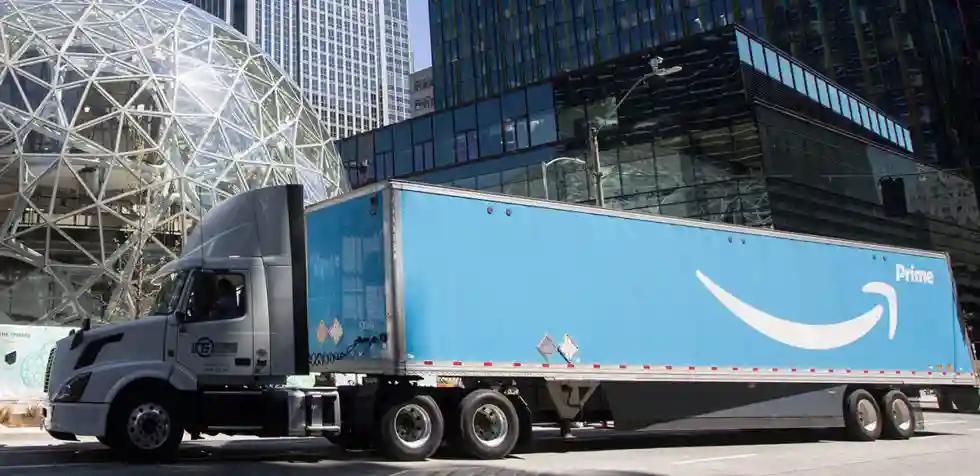
At the company’s quarterly earnings call, CFO Brian Olsavsky disclosed that Amazon is working to shorten its promised two-day shipping on Amazon Prime to one day. It’s going to cost the company a lot of money, however.
At the company’s quarterly earnings call, CFO Brian Olsavsky disclosed that Amazon is working to shorten its promised two-day shipping on Amazon Prime to one day. It’s going to cost the company a lot of money, however.
Olsavsky said it would cost about $800 million, which will likely eat into Amazon’s bottom line in the coming quarters.
“We’re trying to take advantage of the fulfillment capacity and transportation capacity . . . that we have,” the CFO said. Amazon’s push for faster delivery has put a lot of pressure on other retailers to speed up their ecommerce order fulfillment.
As for a timeline, Amazon wouldn’t give too many specifics. “We expect to make steady programs quickly and through the year,” Olsavky said, but wouldn’t say whether it would be fully rolled out by the holidays.
Written By:
Jeremy Stewart
Jeremy Stewart leads customer success at Cahoot, helping merchants achieve high-performance logistics through smart technology and process optimization. With a background in both ecommerce operations and client services, Jeremy ensures that every merchant using Cahoot gets measurable results—whether they’re scaling from one warehouse to many or managing complex returns.
Turn Returns Into New Revenue
Related Articles
Amazon Meltable Fulfillment: Keep Chocolate Selling Through Summer
Amazon meltable fulfillment does not have to stop when FBA’s summer restrictions begin.
Amazon FBM Prepaid Return Labels What Changes December 18 and What Sellers Should Do
Starting December 18, 2026, covered US seller-fulfilled Amazon returns require a prepaid return label, and heavy and bulky items are temporarily excluded, according to a seller not...
Which SKUs Should Not Be in Seller Fulfilled Prime?
Seller Fulfilled Prime SKUs are the individual products an Amazon seller chooses for SFP based on whether each one can protect both the Prime promise and the seller’s margin.