
How Ecommerce Brands Can Survive Trump’s 2025 Liberation Day Tariffs

In this article
 18 minutes
Key Takeaways
- Trump’s 2025 Liberation Day tariffs will significantly raise import costs, especially from China and the EU, forcing ecommerce brands to re-evaluate sourcing, pricing, and fulfillment strategies to stay profitable.
- Small and medium-sized businesses (SMBs) face heightened risk due to shrinking margins, rising consumer prices, and reduced global access, making agility and cost-efficiency vital for survival.
- To navigate this tariff-driven landscape, ecommerce merchants should audit SKUs, delay non-essential investments, and leverage tech-enabled logistics platforms like Cahoot to reduce operational costs and preserve margins.
Trump’s 2025 Liberation Day Tariffs
The recent Trump “Liberation Day” Tariffs aim to protect U.S. industries and address trade deficits. But the impact on SMBs and the retail and ecommerce industry in particular (besides the inflationary shock to the regular consumer’s wallet) is nothing short of dire. While these measures aim to boost domestic manufacturing and reduce reliance on foreign goods, ecommerce merchants must prepare for substantial increases to the cost basis of inventory sourced overseas to protect themselves from extinction.
These sweeping tariffs will hit cross-border Sellers especially hard, as a 10% baseline duty will apply to nearly all imports starting April 5, 2025, with elevated rates, (up to 34% for Chinese goods and 20% for the EU and other nations), starting April 9, 2025. In most cases, the elevated tariff rates are essentially calculated as half (50%) of the tariff rates being imposed on US-based imports shipping into each of the 60 countries on the list. In some cases, these new tariffs are in addition to the existing tariff rate (for example, China, which will be at 54% after the new rate is added to the existing 20% tariff). We’ve added the full list of tariffs by country down below in the FAQ section (the 10% flat tariff rates are removed from the table for readability).
For online Sellers, this is more than a policy shift, it’s a direct threat to profitability, and thus, survival. Tariffs are effectively a tax on imports, which means higher landed costs for inventory and less flexibility in pricing strategies. Margins will shrink unless Sellers either pass those costs onto customers (risking demand) or find ways to cut operational overhead. Cross-border commerce will become less viable due to both U.S.-imposed tariffs and expected retaliatory tariffs from key trading partners like China, Canada, and the EU, further limiting access to international buyers and fulfillment routes.
As your cost of goods sold (COGS) rises, so will related expenses like packaging, especially for those relying on international suppliers and traditional fulfillment models. If you’re importing from Asia or Europe, your business is likely in the direct line of fire. These changes signal a need for ecommerce brands to rethink sourcing, fulfillment, and pricing strategies to maintain competitiveness and survive in an increasingly protectionist market.
Now more than ever, ecommerce Sellers must turn to flexible, digitally-powered solutions that reduce fixed costs, optimize logistics, and preserve margins. Weathering the impact of the 2025 tariffs will require both agility and efficiency, and those who adapt quickly will be in the best position to survive and thrive.
It’s worth mentioning that on May 2, 2025, the de minimis tax exemption that had been in place for nearly 100 years is also set to end for all goods shipping from China and Hong Kong. This means that postal shipments valued at $800 or less that previously were able to be imported duty-free, will now be subject to a duty rate of either 30% of their value or $25 per item, (increasing to $50 per item after June 1, 2025).
Slash Your Fulfillment Costs by Up to 30%
Cut shipping expenses by 30% and boost profit with Cahoot's AI-optimized fulfillment services and modern tech —no overheads and no humans required!
I'm Interested in Saving Time and MoneyConsequences for Small and Medium-sized Businesses (SMBs)
SMBs that import foreign goods will experience immediate cost increases due to tariffs on items like wine, automobiles, produce such as avocados, and grains used to brew beer and distill liquor. Asian imports in particular will be hit the hardest. The introduction of tariffs is expected to raise prices significantly, potentially adding an average of $2,100 to household costs annually. This increase in consumer prices can lead to decreased demand, further challenging small businesses.
Ecommerce merchants, specifically, face challenges due to tariffs, requiring them to adopt flexible strategies to remain competitive. The uncertainty created by tariffs may hinder business investment decisions among small and medium-sized enterprises. This uncertainty, combined with rising operational costs, including increased packaging and shipping expenses, can strain the resources of SMBs.
Increased tariffs can lead to cash flow challenges as small businesses struggle to maintain earnings without passing on costs to customers. The tariffs are anticipated to negatively impact employment, as businesses may slow hiring or enact layoffs to manage rising costs. Industry experts suggest that SMBs need targeted government support to navigate the complexities introduced by new trade barriers.
As we transition to the next section, it’s essential to explore practical strategies that ecommerce merchants can adopt to navigate these challenges. The following subsections will provide actionable insights on auditing SKUs, delaying non-essential investments, and bulk warehousing before enforcement.
Strategies for Ecommerce Merchants to Navigate Tariffs
Ecommerce merchants can implement various strategies to alleviate the financial impact of tariffs on their operations. By adapting their operations to enhance resilience, businesses can survive in a competitive and changing market environment. Four specific strategies are recommended: auditing SKUs, communicating with suppliers, reviewing pricing strategies, and delaying non-essential investments.
These strategies will help ecommerce merchants navigate the complexities introduced by new tariff rates and maintain their competitive edge. By focusing on high-impact areas, conserving financial resources, and mitigating price hikes, businesses can better withstand the economic turbulence caused by tariffs.
Audit SKUs
Conducting thorough SKU audits helps identify which products are significantly impacted by tariff changes. By analyzing their supply chain, businesses can identify specific products and materials affected by tariffs, allowing them to address their biggest cost risks first. This meticulous approach enables merchants to focus on the items most affected by tariff increases and make informed decisions about pricing and inventory management. This proactive strategy will be vital for maintaining profitability in this challenging economic environment.
Effective SKU auditing also helps businesses streamline their operations and improve their overall efficiency. By focusing on high-impact areas, ecommerce merchants can better allocate their resources and optimize their supply chain management.
Communicate with Suppliers
Effective communication with suppliers is crucial for ecommerce businesses to respond swiftly to fluctuations in costs and adjust their pricing structures. By maintaining regular dialogue with suppliers, businesses can stay informed about market changes and negotiate better terms. The tariff impact is global in nature, not one-sided, so a proactive approach to understanding the perspectives from international trade partners can help ecommerce merchants anticipate price changes and adjust their pricing models accordingly.
Looking for a New 3PL? Start with this Free RFP Template
Cut weeks off your selection process. Avoid pitfalls. Get the only 3PL RFP checklist built for ecommerce brands, absolutely free.
Get My Free 3PL RFPPricing Strategies to Protect Margins
Ecommerce merchants must take decisive action to safeguard profit margins and ensure long-term viability. One of the most immediate and effective levers available is strategic pricing. With increased costs stemming from tariffs on imported goods, packaging materials, and supply chain disruptions, merchants should not shy away from adjusting product pricing thoughtfully and transparently. Rather than sudden, sweeping hikes, businesses can consider incremental increases paired with clear messaging that explains the necessity to customers. Most consumers are aware of inflationary pressures and global economic shifts; honest communication can maintain trust while preserving margin.
Another smart tactic is to repackage value through product bundling. By combining complementary items into curated sets, merchants can increase perceived value and average order value (AOV), even as individual product costs rise. Bundles offer a way to mask price increases while optimizing shipping efficiency and margin structure. For instance, rather than selling a single item for $20, offering a two-item bundle at $36 not only incentivizes the customer but also improves margin flexibility. Bundles also help reduce the inventory of slower-moving SKUs that may be impacted more heavily by tariffs, turning potential liabilities into sales drivers.
Ultimately, pricing strategy in a high-tariff environment isn’t about squeezing customers, it’s about maintaining operational resilience. Ecommerce merchants must be agile, data-driven, and creative in their pricing models. Bundling, value-based pricing, and ongoing SKU audits can form a powerful defense against margin erosion. By making deliberate, customer-centric adjustments today, merchants can weather the economic storm and emerge leaner, smarter, and stronger on the other side.
Delay Non-Essential Investments
During tariff periods, ecommerce merchants are encouraged to postpone non-critical investments to conserve financial resources and adapt to changing costs. Postponing unnecessary expenditures can preserve financial resources during turbulent tariff periods. This approach allows businesses to maintain liquidity and navigate the economic uncertainty caused by tariffs.
For example, delaying investments in marketing or expansion can provide ecommerce businesses with needed liquidity during uncertain tariff periods. This strategic approach helps businesses focus on essential operations and maintain their financial stability. By postponing non-essential spending, ecommerce businesses can better manage their cash flow and gain the flexibility needed to make rapid adjustments comfortably.
Cahoot Can Help By Leveraging Technology

Ecommerce businesses can thrive in the long term by implementing strategic changes in operations and technology. Utilizing advanced technologies, such as AI, allows ecommerce businesses to streamline processes, enhance customer engagement, and ultimately reduce costs. Cahoot is well-positioned as a partner in resilience and profitability for ecommerce merchants, offering innovative solutions to mitigate the financial impact of tariffs.
Cahoot provides four key features that can help ecommerce merchants navigate the complexities introduced by new tariff rates: cost-saving shipping solutions, intelligent cartonization and label generation, low-cost distributed ecommerce order fulfillment, and a next-generation ecommerce returns program that can save merchants two-thirds of their reverse logistics costs. These features are designed to optimize various processes, making ecommerce operations more efficient and cost-effective.
Shipping Software That Finds the Cheapest Rate Autonomously
When every nickel counts, ecommerce merchants can’t afford to overspend on shipping. Cahoot’s intelligent shipping software automatically selects the most cost-effective service for every order; no manual rate shopping, no guesswork. Whether you’re shipping USPS, UPS, FedEx, or regional carriers, Cahoot’s platform compares rates in real-time and chooses the lowest-cost option that still meets delivery expectations. This ensures maximum savings on every shipment while maintaining customer satisfaction, even as tariffs increase your baseline costs.
Intelligent Cartonization and Label Generation
Cahoot’s Intelligent Cartonization technology automatically ensures that products are shipped in optimally sized boxes, thereby minimizing shipping fees by limiting dimensional weight shipping costs, which improves the bottom line.
The implementation of Intelligent Cartonization also leads to improved efficiency, allowing for faster processing times and better use of shipping resources because the technology does all of the work without human input. By optimizing the packaging process, ecommerce merchants can streamline their operations and reduce the time and effort required for order fulfillment, positively impacting profitability.
Multi-Warehouse Fulfillment: Shorter Zones = Lower Costs
Cahoot uses a multi-warehouse fulfillment model that allows merchants to reduce shipping expenses by shipping from the closest distribution centers to their customers. This strategy enables businesses to optimize shipping routes and reduce delivery times, ultimately lowering logistics costs. By leveraging Cahoot’s platform, ecommerce merchants can achieve significant cost savings on shipping.
With shipping zones playing a major role in total fulfillment costs, Cahoot’s multi-warehouse fulfillment network is a powerful solution. By distributing your inventory across strategically located fulfillment centers and outsourcing fulfillment operations, you can cut out the overhead associated with maintaining and running your own warehouse and fulfillment team. Shorter shipping distances mean lower costs, faster delivery, and happier buyers. In a tariff-heavy economy, reducing final-mile costs is one of the smartest ways to preserve profit margins. Cahoot makes it easy and automatic.
Additionally, traditional 3PLs come with steep storage and handling fees that eat into your margins, while Cahoot’s peer-to-peer fulfillment network is cheaper by design because the pricing model is based on “excess capacity” without the need to charge higher fees to cover warehouse leases, staff, and infrastructure. Especially in a volatile economic environment, peer-to-peer fulfillment lets you stay agile, scalable, and cost-efficient without locking into long-term warehousing commitments.
Returns Without the Waste: Peer-to-Peer Returns
Returns can be a huge margin killer, especially when reverse logistics are inefficient and expensive. Cahoot transforms the returns process with peer-to-peer returns, rather than asking customers to send items back to the merchant, they are sending their returns forward to the next customer purchasing the item. This eliminates 2 additional shipping trips (back to the warehouse and then forward to the next customer), dramatically reducing logistics costs and carbon emissions. Plus, it speeds up resale cycles and keeps your operations lean, even as costs everywhere else are going up.
One Platform, Many Savings: Flexible, AI-Powered, Built to Adapt
Cahoot isn’t just a fulfillment solution, it’s a full ecosystem designed to help ecommerce businesses thrive in unpredictable markets. Its AI-powered platform adapts to your needs, automates complex logistics tasks, and integrates seamlessly with your existing tech stack. Whether you’re optimizing shipping, managing inventory, or navigating tariff-induced supply chain changes, Cahoot provides a centralized, scalable platform that drives efficiency at every step. One platform, many ways to save. And right now, that flexibility is more valuable than ever.
Long-Term Survival Strategies for Ecommerce Businesses
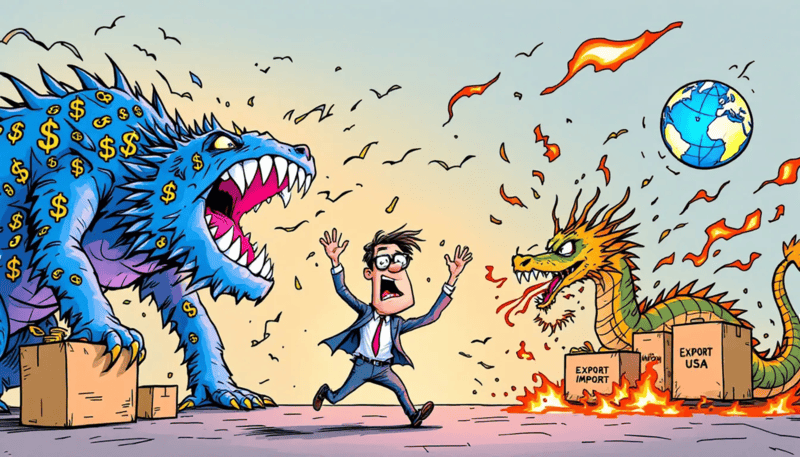
In the face of rising tariffs and an increasingly volatile trade environment, long-term survival strategies are essential for ecommerce businesses. By implementing proactive strategies, businesses can not only weather economic downturns but may even emerge more robust.
Three key strategies for long-term survival include shifting to digital services, stockpiling important inventory, and diversifying suppliers. These strategies are designed to help ecommerce merchants reduce costs, optimize operations, and maintain competitive pricing in a challenging economic environment.
Shifting to Digital Services
Transitioning to digital services can help ecommerce businesses minimize fixed operational costs and increase scalability. This shift enables businesses to streamline operations and decrease overhead costs, making them more agile and responsive to market changes. By embracing digital services, ecommerce merchants can reduce reliance on physical infrastructure and lower their operational expenses.
Pivoting towards leaner, more flexible solutions is a smart way to cut costs and scale efficiently. Examples include:
- Migrate to Cloud-Based Platforms
Replace on-premise software and servers with cloud-based ecommerce platforms, ERPs, and customer service tools. Cloud services reduce upfront capital investment and allow you to pay only for what you use, scaling up or down as needed.
- Outsource Fulfillment to On-Demand Networks
Transition from self-managed or long-term warehouse leases to digital fulfillment networks like Cahoot. This eliminates overhead and enables dynamic fulfillment based on demand, location, and cost efficiency.
- Use AI-Driven Shipping Software
Automate rate shopping and carrier selection with software that finds the cheapest shipping option per order in real-time. This cuts both costs and labor while ensuring reliable delivery.
- Adopt Virtual Customer Support Tools
Implement AI chatbots and ticketing systems to handle routine customer inquiries. This reduces the need for large support teams and provides 24/7 service without adding headcount.
- Digitize Returns Management
Switch to solutions that facilitate local, consolidated returns, or more cost-effective programs such as peer-to-peer returns, to minimize reverse logistics costs and warehouse congestion.
- Automate Marketing and Sales Funnels
Leverage digital ad platforms, email automation, and CRM tools to reduce manual campaign management. Focus your team’s effort on strategy while the tools handle execution.
By embracing digital-first, flexible services, ecommerce merchants can drastically lower their fixed cost base and create a foundation for scalable, resilient growth, even in a turbulent economy.
Scale Faster with the World’s First Peer-to-Peer Fulfillment Network
Tap into a nationwide network of high-performance partner warehouses — expand capacity, cut shipping costs, and reach customers 1–2 days faster.
Explore Fulfillment NetworkBulk Warehousing Before Tariff Enforcement
Storing larger quantities of inventory before tariffs take effect can help ecommerce businesses avoid abrupt cost hikes associated with new tariffs. Stocking inventory in large quantities before tariffs take effect can mitigate the risk of price hikes. This approach allows businesses to maintain stable pricing and avoid supply shortages.
Look into low-cost outsourced warehousing for bulk inventory to keep costs down. The point of stockpiling is to mitigate the risk of price spikes, not to shift the cost from tariffs to warehousing costs. There’s no shortage of third-party logistics providers (3PLs) that are hungry for your low-overhead storage project and willing to get very competitive with pricing, so stockpiling inventory before tariffs get out of control can indeed help businesses maintain their competitive edge and optimize their supply chain management.
Diversifying Supplier Base
Explore reshoring and nearshoring as strategies to diversify supply sources and mitigate risks associated with international tariffs. This approach allows businesses to maintain more control over their supply chains and reduce dependency on single-source suppliers.
And it may help keep pricing in check by pitting them against one another for your business. By diversifying their supplier base, ecommerce merchants can better navigate the complexities introduced by new tariff rates, maintain agility in supply chain management, and ensure a steady supply of products.
Summary
The impact of Trump’s tariffs on the U.S. economy will be profound, affecting jobs, prices, and trade relations. From immediate economic effects to shifts in global trade relationships, the tariffs have created a complex and challenging environment for businesses and consumers alike. For small and medium-sized businesses, the rise in costs and operational challenges necessitates strategic adjustments to maintain profitability.
Ecommerce merchants, in particular, must adopt proactive strategies to navigate the complexities introduced by new tariff rates. By auditing SKUs, delaying non-essential investments, and bulk warehousing before enforcement, businesses can better manage their resources and mitigate the financial impact of tariffs. Additionally, leveraging innovative solutions such as those provided by Cahoot can help ecommerce merchants optimize their operations and maintain their competitive edge.
In conclusion, surviving the tariff storm requires cutting costs, not corners. By implementing long-term survival strategies and leveraging technology, businesses can adapt to the changing economic landscape and emerge stronger. The key to success lies in resilience, adaptability, and a proactive approach to managing the complexities introduced by new tariff rates.
Frequently Asked Questions
How have Trump’s tariffs impacted the U.S. economy?
Trump’s tariffs have raised costs for businesses and consumers, contributing to a projected 0.5% decrease in U.S. GDP in 2025. This has complicated pricing strategies and adversely affected business investments.
What are the immediate economic effects of the tariffs?
The immediate economic effects of tariffs include increased costs for businesses and higher consumer prices, which are estimated to lead to an economic contraction of 1% in the U.S.
How have global trade relationships been affected by the tariffs?
Global trade relationships have been significantly affected by retaliatory tariffs, prompting countries to reevaluate and seek new partnerships to counterbalance the impact of U.S. tariffs. This has led to shifts in trade dynamics and a more fragmented global trade environment.
What strategies can ecommerce merchants adopt to navigate tariffs?
Ecommerce merchants should audit their SKUs, delay non-essential investments, and consider bulk warehousing strategies to effectively manage resources and mitigate the financial impact of tariffs. Implementing these tactics, along with the adoption of technology to reduce costs, will help safeguard business operations against tariff challenges.
How can Cahoot help ecommerce merchants mitigate tariff impacts?
Cahoot can significantly help ecommerce merchants mitigate tariff impacts by providing cost-saving shipping solutions and intelligent cartonization, which optimize operations and reduce overall expenses. By outsourcing ecommerce order fulfillment to a distributed network of warehouses, Cahoot helps put every extra penny back into profit margins to help merchants adapt to changes in tariff rates efficiently.
What are the reciprocal tariffs announced on Liberation Day?
Below are the list of tariffs announced. The countries not listed in this table receive a 10% import tariff.
|
Country
|
New US Tariffs (%)
|
Tariffs charged to the USA
|
|---|---|---|
|
Reunion
|
73
|
37
|
|
Lesotho
|
50
|
99
|
|
Saint Pierre and Miquelon
|
50
|
99
|
|
Cambodia
|
49
|
97
|
|
Laos
|
48
|
95
|
|
Madagascar
|
47
|
93
|
|
Vietnam
|
46
|
90
|
|
Sri Lanka
|
44
|
88
|
|
Myanmar
|
44
|
88
|
|
Falkland Islands
|
41
|
82
|
|
Syria
|
41
|
81
|
|
Mauritius
|
40
|
80
|
|
Iraq
|
39
|
78
|
|
Guyana
|
38
|
76
|
|
Bangladesh
|
37
|
74
|
|
Serbia
|
37
|
74
|
|
Botswana
|
37
|
74
|
|
Liechtenstein
|
37
|
73
|
|
Thailand
|
36
|
72
|
|
Bosnia and Herzegovina
|
35
|
70
|
|
China
|
34
|
67
|
|
North Macedonia
|
33
|
65
|
|
Taiwan
|
32
|
64
|
|
Indonesia
|
32
|
64
|
|
Fiji
|
32
|
63
|
|
Angola
|
32
|
63
|
|
Switzerland
|
31
|
61
|
|
Moldova
|
31
|
61
|
|
Libya
|
31
|
61
|
|
South Africa
|
30
|
60
|
|
Algeria
|
30
|
59
|
|
Nauru
|
30
|
59
|
|
Pakistan
|
29
|
58
|
|
Norfolk Island
|
29
|
58
|
|
Tunisia
|
28
|
55
|
|
Kazakhstan
|
27
|
54
|
|
India
|
26
|
52
|
|
South Korea
|
25
|
50
|
|
Japan
|
24
|
46
|
|
Malaysia
|
24
|
47
|
|
Brunei
|
24
|
47
|
|
Vanuatu
|
22
|
44
|
|
Côte d’Ivoire
|
21
|
41
|
|
Namibia
|
21
|
42
|
|
European Union
|
20
|
39
|
|
Jordan
|
20
|
40
|
|
Nicaragua
|
18
|
36
|
|
Zimbabwe
|
18
|
35
|
|
Israel
|
17
|
33
|
|
Philippines
|
17
|
34
|
|
Zambia
|
17
|
33
|
|
Malawi
|
17
|
34
|
|
Mozambique
|
16
|
31
|
|
Norway
|
15
|
30
|
|
Venezuela
|
15
|
29
|
|
Nigeria
|
14
|
27
|
|
Equatorial Guinea
|
13
|
25
|
|
Chad
|
13
|
26
|
|
Democratic Republic of the Congo
|
11
|
22
|
Written By:

Manish Chowdhary
Manish Chowdhary is the founder and CEO of Cahoot, the most comprehensive post-purchase suite for ecommerce brands. A serial entrepreneur and industry thought leader, Manish has decades of experience building technologies that simplify ecommerce logistics—from order fulfillment to returns. His insights help brands stay ahead of market shifts and operational challenges.

Turn Returns Into New Revenue
Related Blog Posts
Best Returns Management Software for 2025

In this article
12 minutes
- What is Returns Management?
- The Returns Process
- Why a Seamless Returns Process Matters
- Key Features of a Great Returns Management System
- How Returns Management Software Saves Time & Money
- Benefits of Returns Management Software
- Using Data & Analytics for Smarter Returns Management
- Customization & Flexibility to Fit Your Business Needs
- Protecting Your Business from Return Fraud
- Better Inventory Management Through Smarter Returns
- Sustainability & Eco-Friendly Returns
- Peer-to-Peer Returns: A Game-Changer for Ecommerce
- Top Returns Management Software for 2025
- Choosing and Implementing a Returns Management System
- Final Thoughts
- Frequently Asked Questions
Handling product returns can be a challenge for any business, but the right returns management software can turn this process into an opportunity. By automating key tasks—like return authorizations, inventory updates, and refund processing—this software makes returns smoother for both you and your customers. The result? Improved efficiency, lower costs, and happier customers.
In this article, we’ll break down the top benefits of using returns management software, explore key features to look for, and share best practices to help you streamline your return process.
What is Returns Management?
Returns management refers to the process of handling product returns and managing the associated logistics and operations. It encompasses the entire ecommerce order return process, from the initial return request to the final resolution, whether that be a refund, exchange, or store credit. Effective returns management is crucial for ecommerce business as it directly impacts customer satisfaction and the overall customer experience. By efficiently managing returns, businesses can reduce return costs and streamline the entire return process, ensuring a smooth and hassle-free experience for their customers while preventing revenue erosion.
The Returns Process
The returns process typically consists of 7 important steps that impact how smooth and efficient the return experience is:
- Return Authorization: The customer initiates a return request, and the retailer authorizes the return based on their return policy.
- Return Packaging: The customer packages the item for return, often using a return shipping label or QR code provided by the retailer.
- Reverse Logistics: The returned item is shipped back to the retailer or a designated return location, or dropped off at an attended kiosk such as Staples, FedEx Office, Kohl’s, etc.
- Inspection and Assessment: The returned item is inspected and assessed for any damage or defects.
- Refund or Exchange: Depending on the retailer’s return policy, the customer is offered a refund, exchange, or store credit.
- Restocking or Disposal: The returned item is either restocked, disposed, liquidated, or donated, based on its condition.
- Analytics and Improvement: Retailers analyze returns data to identify trends and areas for improvement, optimizing the returns process over time.
By managing each stage effectively, businesses can enhance the customer experience and streamline their returns process.
Returns That Recover Value
Most returns software tracks activity, not outcomes. Cut shipping and handling costs while recovering resale value faster.
See How It WorksWhy a Seamless Returns Process Matters
A smooth return process is key to building customer trust and loyalty. A seamless returns process is a crucial part of the post-purchase experience, significantly impacting customer satisfaction and loyalty. Shoppers want to know that if they need to send something back, it’ll be easy and hassle-free. Returns management software helps businesses deliver on this expectation by simplifying the process for both customers and employees.
With self-service options like a user-friendly return portal, customers can initiate and track returns on their own—without needing to contact support. Real-time updates keep them informed every step of the way, reducing frustration and increasing confidence in your brand.
Even better, customizable return policies let businesses tailor the process to fit different products, customers, or situations, making the experience feel more personal and seamless.
Key Features of a Great Returns Management System
The best returns management solutions are packed with features that make the process more efficient and cost-effective. Here are some of the key capabilities to look for:
- Automated Inventory Updates: As returns come in, the system automatically updates stock levels, helping you manage resale opportunities more effectively.
- Instant Refund Processing: Once a return is approved, the refund process can be initiated immediately, reducing manual work and enhancing customer satisfaction.
- Seamless Integrations: The best systems sync with your ecommerce platform, POS system, and/or logistics tools, ensuring accurate tracking and streamlined operations.
- Batch Returns & Consolidation: Some platforms allow customers to combine multiple items into a single return shipment, cutting shipping costs and improving efficiency.
- User-Friendly Self-Service Portals: A simple, intuitive return portal makes it easier for customers to initiate and track returns independently.
By leveraging these features, businesses can cut costs, improve efficiency, and enhance the customer experience all at once.
How Returns Management Software Saves Time & Money
One of the biggest advantages of returns management software is how much time and money it saves. By optimizing the returns process, businesses can enhance the customer journey, leading to higher satisfaction and repeat purchases. Automation eliminates the need for manual processing, reducing labor costs and speeding up the entire return process.
Other cost-saving benefits include:
- Lower Shipping Costs: Optimized logistics and consolidated returns mean fewer shipments, reducing expenses.
- Better Inventory Control: Real-time tracking of returned goods prevents overstocking and inventory mismatches.
- Reduced Customer Service Workload: Self-service portals handle most returns, freeing up your team for more complex issues.
- Prevent Revenue Erosion: Offering customers exchanges or store credit (including store credit bonuses) retains revenue that would have otherwise been lost to a refund.
By optimizing these areas, businesses can turn returns from a costly burden into a streamlined, cost-efficient process.
Let AI Optimize Your Shipping and Boost Profits
Cahoot.ai software selects the best shipping option for every order—saving you time and money automatically. No Human Required.
See AI in ActionBenefits of Returns Management Software
Returns management software offers numerous benefits to ecommerce businesses, making the returns process more efficient and customer-friendly:
- Complete Visibility of Returns Data: Real-time tracking and visibility of returns data enables retailers to make informed decisions and manage returns more effectively.
- Actionable Insights: The software analyzes returns data to identify trends and areas for improvement, helping retailers optimize their returns process, product offerings and quality, and listing management.
- Time-Saving Automation of Tasks: Automation of tasks such as return authorization, return shipping label generation, and refund processing saves time and reduces manual errors.
- Integration with Warehouse Management Systems: Seamless integration with warehouse management systems ensures efficient returns processing and inventory management.
- Management of the Entire Returns Lifecycle: The software manages the entire returns lifecycle, from the initial return request to the final resolution.
- Option to Offer Store Credit or Refunds: Retailers can offer store credit or refunds, depending on their return policy, providing flexibility to customers.
- Customer Communication and Transparency: Keeping customers informed throughout the returns process improves customer satisfaction and loyalty.
By leveraging these benefits, businesses can enhance their returns process, reduce return costs, and improve overall customer satisfaction.
Using Data & Analytics for Smarter Returns Management
One of the most powerful aspects of returns management software is real-time data analytics. Businesses can track return trends, identify problem areas, and make informed decisions that reduce return rates and improve inventory management.
For example, analyzing return reasons can help companies adjust product descriptions, improve quality control, or refine sizing charts, ultimately cutting down on unnecessary returns.
Additionally, tracking return fraud patterns allows businesses to put safeguards in place, such as requiring photo verification or flagging repeat offenders.
With the right data, businesses can continuously refine their returns process, making it more efficient over time.
Customization & Flexibility to Fit Your Business Needs
Every business has unique return challenges, which is why customization is key. The best returns management solutions allow you to:
- Define return policies based on product categories or customer types.
- Set up automated workflows for different return scenarios.
- Integrate with supply chain and warehouse systems for seamless tracking.
For example, companies using ReverseLogix or other flexible solutions can easily manage returns across retail stores, ecommerce channels, and third-party logistics (3PL) partners, ensuring consistency no matter where a return originates.
ShipStation vs. Cahoot: 21x Faster, Real Results
Get the inside scoop on how a leading merchant switched from ShipStation to Cahoot—and what happened next. See it to believe it!
See the 21x DifferenceProtecting Your Business from Return Fraud
Return fraud is a growing issue, but returns management software helps businesses stay ahead of scammers. Some fraud prevention features include:
- Photo Verification: Customers upload pictures before returning an item, ensuring authenticity.
- Suspicious Activity Alerts: The system flags unusual return behavior so you can investigate.
- Customizable Return Fees: Retailers can charge a restocking fee for serial returners, discouraging abuse.
With these safeguards in place, businesses can reduce fraud-related losses while keeping returns fair for honest customers.
Better Inventory Management Through Smarter Returns
Returns can disrupt inventory flow, but a good returns management system helps businesses stay in control. By automatically updating stock levels and processing returned items quickly, retailers can:
- Avoid overstocking and sell returned items faster
- Improve demand forecasting by analyzing return patterns
- Ensure defective items are properly routed for repair, recycling, or disposal
An efficient return process means less wasted inventory and more opportunities to recapture revenue.
Sustainability & Eco-Friendly Returns
Sustainability is becoming a major factor in returns management, with businesses looking for ways to reduce waste. Eco-friendly returns solutions can include:
- Refurbishing & Reselling Returned Items: Instead of discarding returned products, businesses can repair and resell them.
- Routing Returns to Recommerce Channels: Sending lightly used items to secondhand marketplaces instead of landfills.
- Automating Sustainable Disposition: Using software to prioritize resale, liquidation, donation, or recycling based on item condition.
Not only do sustainable practices help the planet, but they also boost brand reputation and attract environmentally conscious customers.
Peer-to-Peer Returns: A Game-Changer for Ecommerce
A newer trend in returns management is peer-to-peer (P2P) returns, where customers ship their new condition returned items directly to the next purchasing customer rather than sending them back to the retailer, removing substantial cost and carbon emissions from the reverse logistics process. And, this eco-friendly approach minimizes waste and appeals to environmentally conscious consumers.
While P2P returns require careful implementation to prevent fraud, they offer a fresh, innovative way to handle returns efficiently.
Top Returns Management Software for 2025
The top returns management software for 2025 includes:
- Happy Returns: Best known for its convenient Return Bar® attended kiosk service at The UPS Store®, Staples, Ulta Beauty, Giant Eagle, among others, that accepts boxless in-person returns while providing a lower cost and more efficient reverse logistics solution for online Sellers.
- Narvar: This software automates the return process, provides personalized return options, and offers store credit or refunds for improved customer choice.
- ReturnBear: A versatile returns management software that handles customer returns efficiently, including return requests, return shipping, and refund processing.
- Loop: Known for its extensive portfolio of brands on Shopify, Loop Returns offers a leading return portal for RMA initiation and automation.
- AfterShip: A full-suite returns solution that automates the returns experience for customers with greater ease-of-use, and transparent pricing.
These solutions offer a range of features to streamline the returns process, improve customer satisfaction, and reduce return costs.
Choosing and Implementing a Returns Management System
Selecting and implementing a returns management system requires careful consideration of several key factors:
- Integration with Existing Setup: Ensure the returns management software integrates seamlessly with your ecommerce platform and inventory management system.
- Analytics and Reporting Features: Look for software that provides real-time tracking and visibility of returns data, enabling informed decision-making.
- Customization Options: The software should be customizable to fit your specific business needs, including return policies and procedures.
- Scalability: Choose a solution that can grow with your business, handling increased return volumes and complexity.
- Pricing: Consider the value for money, including upfront costs and ongoing fees.
- Support: Ensure you have access to support during implementation and onboarding, including a dedicated customer success manager.
- User-Friendly Interface: The software should have an intuitive and straightforward interface, ensuring a seamless onboarding process.
- Automation Capabilities: Look for software that automates repetitive tasks, saving time and reducing manual errors.
The right returns solution makes a big difference, helping businesses turn returns into a competitive advantage rather than a cost burden. By considering these key aspects, ecommerce businesses can implement a returns management system that improves customer satisfaction, reduces return costs, and optimizes the returns process.
Final Thoughts
A well-managed returns program and policy is essential for keeping customers happy, reducing costs, and running an efficient business. Returns management software helps streamline the process, prevent fraud, and improve inventory control — all while enhancing the customer experience.
By choosing the right system and following best practices, businesses can transform returns from a headache into an opportunity for growth, efficiency, and sustainability.
Ready to upgrade your returns process? Investing in returns management software is a smart move for any business looking to stay ahead in today’s competitive market.
Frequently Asked Questions
What is a return management system?
A Returns Management System (RMS) is a software solution designed to help ecommerce businesses manage the process of product returns. Using an RMS automates and streamlines the returns process, making it easier for businesses to manage the process and for customers to initiate returns.
How do small businesses handle returns?
- Understand Your Customers’ Needs.
- Make Your Return and Refund Policy Easy to Find.
- Offer a Reasonable Time Frame.
- Outline Items That Are Returnable vs NOT Returnable.
- Consider Offering Free Returns.
What is the most common return timeframe?
The standard return policy typically ranges from 15 to 30 days, with some businesses offering up to 90 days or even 365 days with a receipt. Some businesses offer longer return time frames around the holiday season, recognizing that many products will be given as gifts and purchased well in advance. It’s important to check the specific policy of the store before making a purchase to ensure clarity on return timeframes.
What is Buy Online, Return in Store (BORIS)?
BORIS is an acronym that stands for Buy Online, Return In-Store. It’s an omnichannel strategy that belongs to the same group of ‘online-to-offline’ shopping experiences as BOPIS — Buy Online, Pick Up In-Store — and ROPIS — Reserve Online, Pick Up In-Store. In other words, it’s a service that enables customers to purchase goods online and return in-store — all as easy as traditional shopping would be.
Written By:

Rinaldi Juwono
Rinaldi Juwono leads content and SEO strategy at Cahoot, crafting data-driven insights that help ecommerce brands navigate logistics challenges. He works closely with the product, sales, and operations teams to translate Cahoot’s innovations into actionable strategies merchants can use to grow smarter and leaner.
Turn Returns Into New Revenue
Related Articles
HTS Code Explained: What It Is, Why It Matters, and How Ecommerce Brands Use It
HTS codes (Harmonized Tariff Schedule codes) are standardized numerical classifications that identify imported products for U.
Shipping Labels Explained: What They Include, How They Work, and Common Mistakes
Shipping labels are the operational backbone of ecommerce fulfillment, a small piece of paper that determines whether packages reach customers successfully or trigger costly failur...
USPS Click-N-Ship Explained: How It Works, Costs, and When Sellers Should Use It
USPS Click-N-Ship is the postal service’s free online label-printing tool, and for most Shopify sellers shipping more than 50 packages monthly, it’s already time to move beyond it....
Adapting to Amazon’s New Order Handling Capacity Changes
Amazon made a significant change to how it manages Seller-fulfilled order volume by implementing automatic minimum thresholds for order handling capacity. Since February 24, 2025, this new system was put in place to help Sellers align their fulfillment promises with their actual capabilities. This change came with both opportunities and challenges, requiring Sellers to stay informed and adapt their strategies accordingly.
Amazon’s Order Handling Capacity Now Based on Historicals
The new policy introduced an automatic minimum threshold for a Seller’s order handling capacity, based on their average daily orders over the past 30 days. Amazon recalculates this figure weekly to ensure it remains aligned with the Seller’s fulfillment capabilities. If a Seller’s handling capacity falls below the calculated minimum, Amazon automatically adjusts it to better reflect recent performance. Sellers still have the flexibility to set higher order limits if they choose.
This feature was designed to help Sellers manage realistic fulfillment expectations, preventing scenarios where an unexpected influx of orders resulted in late shipments or negative customer experiences. It applies exclusively to Standard and Free Economy shipping methods, excluding Seller Fulfilled Prime and Premium Shipping orders.
What This Means for Sellers
For Sellers, this change represents a shift in how fulfillment capacity is determined. Historically, Sellers could manually adjust their order handling limits based on their expected capabilities. Since this update, Amazon takes a more data-driven approach, automatically setting a baseline based on past performance.
For Sellers with strong fulfillment records, this can be an advantage. If they consistently meet or exceed expectations, they may find their order capacity increasing over time, allowing them to accept more orders without negatively impacting delivery promises. However, Sellers who have struggled with fulfillment issues, even temporarily, will see their capacity restricted. This will be a challenge for businesses that experience seasonal spikes or sudden demand surges that aren’t reflected in historical data.
Slash Your Fulfillment Costs by Up to 30%
Cut shipping expenses by 30% and boost profit with Cahoot's AI-optimized fulfillment services and modern tech —no overheads and no humans required!
I'm Interested in Saving Time and MoneyThe Pros and Cons of Amazon’s Automatic Capacity Handling
There are both advantages and potential downsides to Amazon’s automatic handling capacity adjustment.
Pros: Avoid Overpromising on Delivery Dates
One of the most notable benefits is that it helps prevent over-commitment. Sellers have more realistic fulfillment expectations set automatically, reducing the risk of late shipments and potential penalties.
Additionally, customers receive more accurate delivery estimates, improving overall satisfaction. By automatically recalibrating capacity, Amazon is attempting to create a more reliable shopping experience where buyers receive their items within the promised timeframe.
Cons: Fulfillment Setbacks Haunt Sellers Longer
However, the automated approach also introduces some challenges. Sellers who experience sudden growth or occasional high-volume periods will find their handling capacity constrained if the system doesn’t quickly recognize their increased ability to fulfill orders. Furthermore, businesses that have recently dealt with supply chain disruptions or temporary fulfillment delays may be penalized by having their capacity automatically reduced, even if their operations have since stabilized.
How Sellers Can Stay Proactive & Maintain High Performance
Sellers must stay proactive. Regularly monitoring order handling settings within Seller Central are crucial to ensure that automatic adjustments align with actual business capabilities. If a Seller notices a significant drop in their capacity limit, they should assess whether past fulfillment issues may have contributed to the change and work on improving those metrics.
Sellers can also manually increase their order handling capacity if they anticipate higher demand, such as during holiday seasons or promotional events. Since the automatic threshold is only a minimum, having the ability to set a higher limit allows Sellers to maintain control over their operations while still benefiting from the safeguards Amazon has introduced.
Another key strategy is maintaining a strong fulfillment performance record. Fast, reliable shipping, low cancellation rates, and high customer satisfaction help ensure that Amazon’s system views a Seller as capable of handling higher volumes. Partnering with a high-capacity and robust fulfillment partner (3PL) can help if meeting the expectations is challenging. Sellers who consistently meet fulfillment expectations are in a better position to scale their operations.
Looking for a New 3PL? Start with this Free RFP Template
Cut weeks off your selection process. Avoid pitfalls. Get the only 3PL RFP checklist built for ecommerce brands, absolutely free.
Get My Free 3PL RFPSummary
Amazon’s decision to implement automatic minimum thresholds for order handling capacity is a shift toward a more data-driven approach that prioritizes more accurate fulfillment capacity and better protection against over-commitment. It also places added pressure on Sellers to maintain consistent shipping and delivery performance.
Sellers should focus on improving their order fulfillment metrics, proactively managing capacity settings, and staying ahead of any potential limitations. By understanding how this works and taking the necessary steps to optimize operations, Sellers ensure they remain competitive while continuing to deliver a high-quality experience for their customers.
Frequently Asked Questions
What are the Amazon order handling requirements?
Amazon’s order handling requirements include strict guidelines for order processing times, packaging standards, and shipping methods. These guidelines aim to streamline the fulfillment process and enhance the customer experience.
How can sellers optimize their shipping methods to meet Amazon’s requirements?
Sellers can optimize their shipping methods by selecting the most efficient and cost-effective shipping options, leveraging Amazon’s shipping services such as Fulfillment by Amazon (FBA), and ensuring that orders are shipped promptly.
What strategies can sellers use to adapt to seasonal demand fluctuations?
To adapt to seasonal demand fluctuations, sellers should plan ahead and ensure they have sufficient inventory and resources to handle increased order volumes. This may involve hiring additional staff, optimizing inventory levels, and leveraging technology to manage peak periods effectively.
Written By:

Jeremy Stewart
Jeremy Stewart leads customer success at Cahoot, helping merchants achieve high-performance logistics through smart technology and process optimization. With a background in both ecommerce operations and client services, Jeremy ensures that every merchant using Cahoot gets measurable results—whether they’re scaling from one warehouse to many or managing complex returns.
Turn Returns Into New Revenue
Related Articles

Moving from Amazon 1P to 3P: What It Actually Takes to Succeed
The decision to move from Amazon Vendor Central (1P) to Seller Central (3P) usually follows months of frustration with pricing control loss, erratic purchase orders, and margin com...
Why Amazon 1P Feels Out of Control — and Why That’s Not Your Fault
When your Amazon Vendor Central account starts generating problems faster than your team can fix them, the instinct is to treat each issue as a separate operational failure.
Amazon AWD vs FBA: What’s the Difference and Which One Should You Use?
Amazon Warehousing and Distribution (AWD) and Fulfillment by Amazon (FBA) serve fundamentally different purposes, and using them correctly can slash storage costs by up to 80% duri...
Tariff Squeeze: How Can Retailers Still Remain Profitable

Recently, tariffs have become a big topic in conversations about trade worldwide. A post by Manish Chowdhary on LinkedIn got many people talking about how tariffs affect goods from China and change how companies get their products. As governments change trade rules to help their businesses, companies face higher costs and issues getting supplies. This new situation means that businesses must think carefully about where they get their products and how to manage risks.
The Rising Impact of Tariffs
Tariffs are designed to level the playing field for domestic producers and counteract perceived unfair trade practices. However, their real-world impact is far more complex. As Chowdhary’s post highlights, the imposition of tariffs on Chinese goods has resulted in a noticeable slowdown in Chinese import activity. This deceleration is not just a matter of shifting numbers on a balance sheet—it signals a significant transformation in the global trade ecosystem.
Rethinking Global Supply Chains
China has been the go-to place for manufacturing for many years because it provides cheaper products and many options. Companies relied heavily on Chinese factories to keep prices low. But now, with tariffs raising the cost of imports, businesses have to rethink their dependence on China. These changes affect prices, increasing operating costs and lengthening lead times, creating challenges in markets where every penny counts.
Diversification as a Strategic Imperative
Because of these tariffs, companies are looking for new ways to get their products. This means finding different suppliers to avoid being too dependent on one country. By spreading out their production, businesses can protect themselves from sudden changes in trade rules. This new strategy could also lead to exciting innovations as companies use technology and data to be more flexible. This shift towards a more diversified yet efficient supply chain model could foster a new era of innovation as businesses invest in technology and data analytics to enhance flexibility and responsiveness.
Slash Your Fulfillment Costs by Up to 30%
Cut shipping expenses by 30% and boost profit with Cahoot's AI-optimized fulfillment services and modern tech —no overheads and no humans required!
I'm Interested in Saving Time and MoneyLeveraging Technology and Data Analytics
Looking for suppliers in different countries forces businesses to examine their supply chain management closely. Tariffs drive this change, so companies invest in technology that helps them predict problems and handle their inventory better. A strong, data-driven approach to supply chain management is becoming essential in a world where trade rules can change quickly. Advanced technology can help spot potential issues and provide helpful information so businesses can stay agile.
Global Trade Implications
These changes due to tariffs can also affect how countries collaborate in trade. While tariffs aim to protect local markets, they can also create tension between countries. Fewer imports from China might lead to retaliations or more trade barriers, making international trade more complicated. Therefore, business leaders and policymakers must balance helping local industries and maintaining good trade relations with other countries.
Building Resilience in a Shifting Landscape
The need for businesses to be strong and adaptable has never been more critical. Companies willing to change and find new solutions can turn challenges into advantages. By rethinking how they source products and using new technologies, businesses can handle the challenges brought on by tariffs and set themselves up for future growth. This situation teaches us the importance of being flexible, ready, and open to change.
Conclusion: Adapting for Future Success
Manish Chowdhary’s post highlights a crucial moment in global trade. Tariffs have changed the amount of goods from China, forcing businesses to think critically about their supply strategies. As companies face these challenges, finding new suppliers, using advanced technology, and being flexible are essential. The future of trade will belong to those who can notice changes, adapt quickly, and turn challenges into chances for success. In a world where trade rules constantly evolve, the ability to innovate and rethink supply chains isn’t just an advantage—it’s a must.
Written By:
Jeremy Stewart
Jeremy Stewart leads customer success at Cahoot, helping merchants achieve high-performance logistics through smart technology and process optimization. With a background in both ecommerce operations and client services, Jeremy ensures that every merchant using Cahoot gets measurable results—whether they’re scaling from one warehouse to many or managing complex returns.
Turn Returns Into New Revenue
Related Articles
Returns Are No Longer a CX Feature – They’re a Balance Sheet Liability
E-commerce returns have exploded in scale, and retailers are grappling with the cost.

TikTok’s USPS Label Requirement Is Not a Carrier Change. It’s a Control Shift
TikTok Shop is ending an era of seller-controlled shipping, at least for USPS.
Why the Auctane-WWEX Merger Redefines the Future of Ecommerce Logistics
Introduction The $12 billion merger of Auctane and WWEX Group is poised to reshape how ecommerce brands manage shipping and logistics.
PONY UP Act: USPS Could Be Paying for Late Deliveries

In this article
3 minutes
Mail delivery has become increasingly unreliable, and lawmakers are taking action. Legislators have reintroduced the PONY UP Act, a bold legislative effort to address chronic delays in postal service by holding the United States Postal Service financially responsible for late deliveries. The proposal has sparked discussions across industries, particularly within the e-commerce sector, which relies heavily on timely delivery to meet customer expectations. If passed, the legislation could introduce new financial liabilities for USPS while reshaping the landscape for online sellers and consumers alike.
Understanding the PONY UP Act
Formally known as the “Penalizing Oversight Neglecting Your Universal Postal Service” (PONY UP) Act, this bill seeks to reimburse consumers for late fees incurred due to delayed USPS deliveries. Specifically, it would require USPS to cover penalties arising from tardy bill payments (e.g., that pesky $35 late fee when a credit card payment is not received on time) when the delay results from late mail service. The legislation is in response to many complaints about unreliable delivery service that has led to financial burdens for its users.
The regulation would apply to situations where a bill, notice, or payment was mailed with ample time to arrive before its due date but was delivered late. It also proposes an online and in-person claims process for reimbursement and an appeal mechanism for denied claims. Additionally, the legislation mandates annual reports on USPS delivery performance to improve transparency and oversight.
Why the PONY UP Act is Being Introduced
USPS has faced increasing scrutiny over delivery inefficiencies, particularly in rural areas, which have frequent delays. Audits have revealed significant lags in sorting and delivering mail. Reports cite instances of late medical payments, utility bills, and even time-sensitive shipments such as live poultry for agricultural businesses. These delays have led to growing frustration among consumers and businesses that depend on consistent delivery expectations for financial stability and operational continuity.
Legislators argue that the PONY UP Act will create a stronger incentive for USPS to prioritize service reliability. By attaching financial consequences to delivery failures, the bill aims to ensure that USPS meets its congressionally mandated six-day delivery obligation while providing relief to those negatively affected by missed service level agreements (SLAs).
Let AI Optimize Your Shipping and Boost Profits
Cahoot.ai software selects the best shipping option for every order—saving you time and money automatically. No Human Required.
See AI in ActionPotential Impacts on E-Commerce
If the PONY UP Act becomes law, it could mean several things for the e-commerce industry, which relies heavily on USPS for daily business operations:
- Improved Delivery Performance: The prospect of financial penalties may push USPS to improve efficiency. Fewer delays translate to increased consumer confidence in delivery expectations for online purchases.
- Rising Shipping Costs: USPS may need to increase shipping rates to offset potential investments required to meet the expectations established by law. Those fees would be passed onto e-commerce businesses, pushing operational costs higher and creating margin pressure for merchants of small, light, and inexpensive items that are heavily reliant on USPS for affordable shipping solutions to turn a profit. They may be unduly forced to adjust product and pricing strategies and/or explore alternative carriers to remain viable.
- Greater Emphasis on Delivery Guarantees: Online retailers that depend on USPS’s Priority Mail and other expedited services may benefit from increased accountability, as USPS would be compelled to meet delivery SLAs. Late deliveries are rarely the result of late shipping. E-commerce businesses, as a whole, are very good at meeting their customers’ on-time shipping obligations. As the carrier’s delivery reliability increases, so does consumer trust, resulting in more online shopping and, thus, more growth and prosperity for the industry.
- Changes in Carrier Strategies: One e-commerce Seller told me, “Almost anything is better than USPS; I’m confident that a messenger pigeon is better than USPS.” As confidence in USPS increases, more merchants who had lost faith in the service and migrated to more reliable national carriers may reintroduce lower-cost USPS services to improve their profit margins.
Shipping and logistics are pivotal to the success of online retail, and any regulatory changes affecting USPS operations will inevitably profoundly impact the industry. Retailers and brands should monitor legislative developments and be prepared to adapt to potential cost increases or modifications to service levels.
Summary
The PONY UP Act is an effort to address longstanding issues with USPS delivery delays. It provides a mechanism for consumer protection while aiming to drive operational improvements. While primarily intended to target and remedy first-class mail service issues, its potential impact on e-commerce remains speculative. While increased accountability could enhance service reliability, shipping rate hikes could challenge Sellers dependent on affordable delivery options.
Written By:
Jeremy Stewart
Jeremy Stewart leads customer success at Cahoot, helping merchants achieve high-performance logistics through smart technology and process optimization. With a background in both ecommerce operations and client services, Jeremy ensures that every merchant using Cahoot gets measurable results—whether they’re scaling from one warehouse to many or managing complex returns.
Turn Returns Into New Revenue
Related Articles
HTS Code Explained: What It Is, Why It Matters, and How Ecommerce Brands Use It
HTS codes (Harmonized Tariff Schedule codes) are standardized numerical classifications that identify imported products for U.
Shipping Labels Explained: What They Include, How They Work, and Common Mistakes
Shipping labels are the operational backbone of ecommerce fulfillment, a small piece of paper that determines whether packages reach customers successfully or trigger costly failur...
USPS Click-N-Ship Explained: How It Works, Costs, and When Sellers Should Use It
USPS Click-N-Ship is the postal service’s free online label-printing tool, and for most Shopify sellers shipping more than 50 packages monthly, it’s already time to move beyond it....
2025 NMFC Changes for LTL Freight Shipments (Improved Classification)

The National Motor Freight Classification (NMFC) system was established in 1936 to standardize Less-Than-Truckload (LTL) shipping. It uses a uniform system for classifying commodities to ensure consistency and fairness in pricing and handling. The NMFC system is undergoing a significant transformation for the first time in decades. Starting July 19, 2025, the industry will begin a multi-phased shift to a predominantly density-based classification system to achieve greater clarity and efficiency for all stakeholders in the LTL supply chain.
Traditionally, the NMFC has evaluated freight based on 4 characteristics: density, stowability, handling, and liability. While comprehensive, this complex system leads to frequent misinterpretations and disputes between shippers and carriers (which can drag out for years). The 2025 update intends to streamline this process by using density as the primary means for classifying the vast majority of freight shipments, while the remaining 3 characteristics will be reserved for classifying only the more complicated commodities. Let’s look at each in more detail:
- Density refers to how much a shipment weighs compared to the space it occupies. Higher density typically results in a lower freight class and lower shipping costs because these shipments take up less space on a truck. For example, a small box of steel parts weighing 200 pounds in a small cubic space is denser than a large box of pillows weighing 200 pounds.
- Handling considers how easy or difficult it is to move freight. Heavy, fragile, oddly shaped, or hazardous items often require special handling, increasing the freight class and, thus, the cost. For example, a granite countertop may need extra care due to its weight and fragility, while a box of sand is easier to manage despite being dense.
- Stowability refers to how well the shipment fits in the carrier’s space (e.g., a 53-foot trailer). Again, size, shape, or transportation restrictions on certain items (e.g., hazardous materials) can make freight more challenging to load on a truck (think about a poorly played game of Tetris), leading to higher costs. For example, a shipment of pipes with irregular protrusions may leave unusable gaps in the truck. In contrast, neatly packed boxes fit more efficiently, allowing for the truck to move more items in a given move from point A to point B.
- Liability measures the risk associated with the goods, including susceptibility to damage, potential to harm other goods, perishability, and/or hazardous considerations. For example, a shipment of fresh produce is perishable and requires more careful handling and faster transit than a carton of vitamins, which is durable and lower risk.
Let AI Optimize Your Shipping and Boost Profits
Cahoot.ai software selects the best shipping option for every order—saving you time and money automatically. No Human Required.
See AI in ActionKey Changes Coming in 2025
The new NMFC structure introduces several significant changes, notably the expansion of the density scale. Moving from 11 subprovisions to 13, the system now includes classes 50 and 55 for heavy, dense products. Approximately 5,000 commodity listings will be affected, with an estimated 3,500 single-class items moving to the new subcategories.
The updated classification system maintains all 4 of the transportation characteristics. Still, as noted above, it aims to simplify the classification process by defaulting to density-based classification when NO special handling, stowability, or liability concerns are known. In addition, products requiring special consideration will be marked with a new unique identifier, making it easier to identify freight that needs additional attention.
The transition begins with the public release of Docket 2025-1 on January 30, 2025, and the final implementation becomes effective on Saturday, July 19, 2025. Docket 2025-1 is the list of NMFC codes considered for class changes based on the new density scale (nearly 40%). Once the list is finalized, changes will be made before the effective date.
Impact on Shippers and Third-Party Logistics (3PL) Companies
The simplified system should make identifying the correct freight classes for most shipments easier but still rely on accurately measuring and reporting “handling unit” dimensions and weight (pallet length, width, height, and weight) used to calculate density. In short, Shippers and 3PLs can multiply length x width x height in inches, divide by 1,728 to convert cubic inches to cubic feet, and then divide the shipment weight by the cubic feet to determine pounds per cubic foot (PCF). Don’t forget to include the ~6-inch height and ~30-pound weight of the pallets. Carriers will still remeasure/reweigh and reclass/rebill for underreported shipment details.
ShipStation vs. Cahoot: 21x Faster, Real Results
Get the inside scoop on how a leading merchant switched from ShipStation to Cahoot—and what happened next. See it to believe it!
See the 21x DifferencePreparing for the Transition
To prepare for these changes, organizations should:
- Train Personnel: Educate staff on density calculations and measurement techniques. Providing training in advance will help reduce errors.
- Start Now: Begin creating shipments with accurate dimensions and weights now (if it’s not already being done), so it becomes second nature and prevents tendering delays later.
- Assess Current Shipping Pricing: Evaluate historical shipment pricing and contact carriers to identify areas where the updated density-based classifications might affect pricing.
- Implement Reliable Processes: Establish workflows to ensure every shipment is measured, weighed, and documented correctly before leaving the dock. Documenting shipments early could help resolve disputes more quickly.
Summary
While the initial transition may present challenges, the long-term benefits of modernizing the NMFC system may be considerable. The simplified, standardized approach should reduce classification errors (and thus, disputes), improve and quicken communication between parties, and create a more efficient LTL shipping workflow. Future dockets beyond 2025-1 will continue to refine the system, particularly for freight with specific handling, stowability, or liability requirements. Guidance on the timing of future dockets (NMFC improvements) has not been announced.
Written By:
Jeremy Stewart
Jeremy Stewart leads customer success at Cahoot, helping merchants achieve high-performance logistics through smart technology and process optimization. With a background in both ecommerce operations and client services, Jeremy ensures that every merchant using Cahoot gets measurable results—whether they’re scaling from one warehouse to many or managing complex returns.
Turn Returns Into New Revenue
Related Articles
HTS Code Explained: What It Is, Why It Matters, and How Ecommerce Brands Use It
HTS codes (Harmonized Tariff Schedule codes) are standardized numerical classifications that identify imported products for U.
Shipping Labels Explained: What They Include, How They Work, and Common Mistakes
Shipping labels are the operational backbone of ecommerce fulfillment, a small piece of paper that determines whether packages reach customers successfully or trigger costly failur...
USPS Click-N-Ship Explained: How It Works, Costs, and When Sellers Should Use It
USPS Click-N-Ship is the postal service’s free online label-printing tool, and for most Shopify sellers shipping more than 50 packages monthly, it’s already time to move beyond it....
Amazon FBA Reimbursement Changes Threaten Seller Payouts Starting March 2025

Amazon recently announced that Fulfillment by Amazon (FBA) fees would be frozen for 2025 in the US, and no new fees would be introduced. But in classic Amazon sleight of hand, they’ve made a move that allows them to stay true to their word while still improving their bottom line.
Starting March 10, 2025, Amazon will implement changes to its Fulfillment by Amazon (FBA) Inventory Reimbursement Policy, specifically, how they will pay out claims for lost or damaged inventory. The new plan is to start reimbursing Sellers the Manufacturing Cost for each item rather than the current reimbursement rate equal to the Amazon Sale Price. Manufacturing Cost is defined as the cost of sourcing a product from a manufacturer, wholesaler, or reseller, excluding expenses like shipping, handling, and customs duties. Some estimate that this change could slash reimbursements by as much as 60% on average, posing a substantial loss for FBA Sellers that rely on their new condition inventory to make new sales and earn new customers. The policy page will be updated to reflect the changes after the policy goes into effect in March.
Unfortunately, there is little that can be done other than to take prompt action between now and the transition date to maximize the reimbursements owed under the current policy.
The New Calculation
Amazon offers two ways to determine Manufacturing Costs:
- Amazon Estimates: Amazon will determine cost based on a comprehensive evaluation of comparable products sold by Amazon and competitive Sellers.
- Seller-Provided Costs: Starting January 2025, sellers can configure their manufacturing costs through a new “Manage Your Manufacturing Cost” page in the Inventory Defect and Reimbursement Portal. Amazon reserves the right to ask for proof to validate the amount.
It’s worth noting that the new payout rate applies to items that are lost or damaged before the item is sold on Amazon’s store. Items that are lost or damaged after a customer places an order will continue to be reimbursed at the Amazon Sales Price minus applicable fees.
While Amazon now offers automatic reimbursements for eligible items to save Sellers the time it takes to submit a claim, this new payout rate represents a substantial financial change. Thus, keep a keen eye on inventory status and submit claims promptly, or risk losing the opportunity to collect reimbursement at the current 2024 rate and safeguard entitled revenue.
Slash Your Fulfillment Costs by Up to 30%
Cut shipping expenses by 30% and boost profit with Cahoot's AI-optimized fulfillment services and modern tech —no overheads and no humans required!
I'm Interested in Saving Time and MoneyThe Losses Add Up
Some reports estimate that reimbursements can account for 1 – 3% of most Sellers’ revenue. With payouts dropping by 60% or more, even smaller Sellers stand to lose tens of thousands of dollars annually—more if they sell in high-value categories or products prone to pre-fulfillment damage.
New Administrative Burden
Sellers must now provide (and continuously manage) accurate manufacturing costs on new Seller Central screens to avoid discrepancies and limit inevitable disputes with Amazon. The alternative is accepting Amazon’s determination of value, which will not likely be a favorable number.
Time-Sensitive Claims
Reimbursement claims for lost or damaged items must be filed within 60 days of the reported loss or damage. Delays in filing claims could result in missed reimbursements.
To maximize recaptured value, Sellers should take the following steps:
- File Claims Before the Deadline: Sellers must prioritize filing eligible claims ahead of the March 10 deadline to receive reimbursements based on the Amazon Sale Price.
- Use Tools and Technology: Advanced auditing tools, such as those provided by GETIDA, can automate most identification and submission work. They can also help identify overlooked claims, ensure compliance, and maximize reimbursements.
Optimize Manufacturing Cost Reporting
Starting January 2025, Sellers should:
- Use the “Manage Your Manufacturing Cost” page to input accurate costs.
- Regularly review and update cost data to reflect market changes.
- Prepare necessary documentation to support cost claims to expedite the reporting updates.
Summary
Whether you’re a veteran at this and have ample experience regularly submitting claims or haven’t gotten around to it yet, Amazon’s upcoming FBA Inventory Reimbursement Policy changes will hurt Sellers through reduced payout amounts–to tens of thousands of dollars on average. We shouldn’t be surprised that Amazon announces no FBA fee increases for 2025 but then reduces payouts that will dramatically affect the bottom line of its third-party Sellers. Different sides of the same coin. But predictable. And there’s no shortage of stories going further back.
All e-commerce retailers should diversify their fulfillment strategies and have FBA alternatives in place when Amazon exercises its whim and throws its “partners” under the bus again. It’s a matter of when, not if.
Learn more about Cahoot e-commerce order fulfillment services to protect your business from monopolies like Amazon.
Written By:
Jeremy Stewart
Jeremy Stewart leads customer success at Cahoot, helping merchants achieve high-performance logistics through smart technology and process optimization. With a background in both ecommerce operations and client services, Jeremy ensures that every merchant using Cahoot gets measurable results—whether they’re scaling from one warehouse to many or managing complex returns.
Turn Returns Into New Revenue
Related Articles
Moving from Amazon 1P to 3P: What It Actually Takes to Succeed
The decision to move from Amazon Vendor Central (1P) to Seller Central (3P) usually follows months of frustration with pricing control loss, erratic purchase orders, and margin com...
Why Amazon 1P Feels Out of Control — and Why That’s Not Your Fault
When your Amazon Vendor Central account starts generating problems faster than your team can fix them, the instinct is to treat each issue as a separate operational failure.
Amazon AWD vs FBA: What’s the Difference and Which One Should You Use?
Amazon Warehousing and Distribution (AWD) and Fulfillment by Amazon (FBA) serve fundamentally different purposes, and using them correctly can slash storage costs by up to 80% duri...
Amazon Warehouse Workers Across 8 Facilities Now On Strike

Labor tensions between Amazon and its workforce have escalated in recent years as allegations of unsafe working conditions have been made public, along with a growing interest among employees to unionize and organize labor under a collective bargaining agreement to improve workplace safety and align compensation with current market rates. After Amazon allegedly failed to respond to a Teamsters request to “come to the table” by Dec 15, 2024. The Teamsters approved a strike and 7 out of 10 unionized facilities took to the picket line representing the “largest strike against Amazon in U.S. history,” targeting major delivery hubs in New York, Georgia, Illinois, and California.
Thirteen (13) months after sending an open letter to Amazon CEO Andy Jassy in June 2023 regarding investigations into the working conditions at the e-commerce giant’s facilities, (and a call for Amazon employees to come forward with stories), the Senate Health, Education, Labor, and Pensions (HELP) Committee led by Chair, Senator Bernie Sanders, of Vermont (I), published a report titled “PEAK SEASONS, PEAK INJURIES: Amazon Warehouses Are Especially Dangerous During Prime Day and the Holiday Season—and the Company Knows It”.
The report describes just how bad the rate of recordable injuries is (10 out of every 100 workers) and goes on to indicate that 10% is more than double the industry average injury rate over the last seven years. If all injuries reported by employees were considered, (not just the ones required to be submitted to OSHA), the injury rate is closer to 50%! It’s no wonder employees in many facilities have been wanting to unionize and negotiate better working conditions, despite Amazon’s well-publicized efforts to thwart unionization attempts.
Workplace Safety Concerns and Senate Allegations
Amazon faces sharp criticism from workers and drivers alike over its workplace safety practices. The HELP Committee’s investigation uncovered alarming data regarding the company’s warehouses. The report alleges that Amazon prioritized productivity over safety, creating a “uniquely dangerous” environment. Internal company studies, such as Project Elderwand and Project Soteria, identified that high rates of repetitive motions led to elevated injury risks. The latter study even showed that injury rates dropped when speed-based disciplinary measures were temporarily suspended during the pandemic (i.e. when allowed to work at a slower pace, risk for injury went down).
Despite these findings, Amazon reportedly rejected safety recommendations that would reduce productivity, alleging that the company manipulates injury data to obscure risks. Additionally, workers reported being discouraged from seeking external medical care, and some were terminated while on approved medical leave.
Amazon has dismissed these findings as outdated and selective examples unrepresentative of the whole. The company cites improvements in workplace safety and claims a 28% reduction in incident rates since 2019. However, these assertions have done little to deter criticism from lawmakers and labor organizers.
Slash Your Fulfillment Costs by Up to 30%
Cut shipping expenses by 30% and boost profit with Cahoot's AI-optimized fulfillment services and modern tech —no overheads and no humans required!
I'm Interested in Saving Time and MoneyAmazon Workers Path to Unionization
Unionization efforts at Amazon gained meaningful momentum in 2022 when workers at the Staten Island, NY warehouse voted in favor of organizing labor. Then in June 2024, the Amazon Labor Union (ALU), which led the Staten Island push, successfully affiliated with the International Brotherhood of Teamsters (IBT), consolidating the movement and enabling more resources to further their goals. The new partnership also enabled the ALU to leverage the Teamsters’ extensive resources to target multiple facilities simultaneously. Today, the Teamsters represent approximately 10,000 Amazon workers and contractors across warehouses, delivery hubs, and air facilities.
Financial Context and Broader Implications
As the second-largest private employer in the United States, Amazon’s practices have far-reaching implications for workplace standards in the online retail and logistics sectors. Internationally, Amazon’s labor policies have also come under scrutiny. For example, German workers represented by the United Services Union announced strikes alongside the American workers to show support and solidarity.
Summary
The strikes last week represent a critical juncture in the ongoing labor struggle between Amazon and its workforce. While the coordinated pickets disrupted some fulfillment and warehousing operations, Amazon asserts that on-time delivery remains unaffected. Participation levels varied, with some sites seeing dozens of picketers while others reported normal activities. The Teamsters claim “thousands” of members are currently on strike and have vowed to expand their efforts, threatening to picket additional facilities if their demands continue to be ignored.
Meanwhile, legislative efforts, including Senator Sanders’ proposed Warehouse Worker Protection Act and Protecting America’s Workers Act, aim to address safety and accountability issues at companies like Amazon. If passed, these proposals would increase transparency around work quotas and impose stricter penalties for safety violations.
Amazon’s resistance to unionization reflects broader tensions in a digital economy where traditional labor protections often clash with new business models. And as organized labor continues to push back against one of the world’s most influential companies, the outcome of these unionization and labor strike efforts could reshape labor relations far beyond the e-commerce and logistics industries, potentially extending to manufacturing and other assembly line-like workflows.
Written By:
Jeremy Stewart
Jeremy Stewart leads customer success at Cahoot, helping merchants achieve high-performance logistics through smart technology and process optimization. With a background in both ecommerce operations and client services, Jeremy ensures that every merchant using Cahoot gets measurable results—whether they’re scaling from one warehouse to many or managing complex returns.
Turn Returns Into New Revenue
Related Articles
Moving from Amazon 1P to 3P: What It Actually Takes to Succeed
The decision to move from Amazon Vendor Central (1P) to Seller Central (3P) usually follows months of frustration with pricing control loss, erratic purchase orders, and margin com...
Why Amazon 1P Feels Out of Control — and Why That’s Not Your Fault
When your Amazon Vendor Central account starts generating problems faster than your team can fix them, the instinct is to treat each issue as a separate operational failure.
Amazon AWD vs FBA: What’s the Difference and Which One Should You Use?
Amazon Warehousing and Distribution (AWD) and Fulfillment by Amazon (FBA) serve fundamentally different purposes, and using them correctly can slash storage costs by up to 80% duri...
UPS Announces Astonishing SurePost Rate Increases for 2025

UPS SurePost is a hybrid delivery service that integrates UPS’s network with USPS’s extended final-mile reach and capabilities. It’s a partnership between two competitors playing to each of their strengths to achieve greater cost efficiency, and it’s set to undergo notable changes in 2025. In particular, the primary benefit of SurePost, the lower cost of getting packages into the hands of their intended recipients, will see a substantial rate hike and service modifications in 2025, marking a profound shift in what ecommerce shippers have come to expect from the service. Understanding these developments is crucial for merchants to adapt their operations and optimize margins next year.
Key Changes to UPS SurePost Rates in 2025
Starting January 13, 2025, packages weighing 1 to 9 pounds will see a 9.9% price increase, while those weighing 10 to 70 pounds will increase 5.9 to 7.1%. Additionally, surcharges for deliveries to less densely populated areas will increase dramatically. The Delivery Area Surcharge (DAS) will rise 61.8% to $6.15, and the Extended Delivery Area Surcharge will climb a whopping 69.4% to $8.30. These changes reflect the broader trend of rising costs of last-mile delivery services.
In addition to these changes, the U.S. Postal Service will discontinue the allowance of dual shipping labels starting January 1, 2025, as it looks to increase its network’s efficiency and gain more direct customers for USPS Ground Advantage Services, which has a faster delivery SLA than SurePost by ~2 days on average. This will limit UPS’s package routing flexibility which currently allows them to decide which agency will deliver the package to the doorstep much later in the sortation workflow. Now, shippers must use labels that indicate the responsible final mile delivery agent when the package is accepted for processing.
Slash Your Fulfillment Costs by Up to 30%
Cut shipping expenses by 30% and boost profit with Cahoot's AI-optimized fulfillment services and modern tech —no overheads and no humans required!
I'm Interested in Saving Time and MoneyComparisons Across National Carriers
UPS’s SurePost fee changes align with what we see in the broader shipping industry. USPS will increase rates for its Parcel Select service by an average of 9.2%, depending on where the package enters the postal network, while its Ground Advantage service will rise by 3.2% for commercial accounts. FedEx is implementing various surcharges and rate adjustments, including a new $1.50 inbound processing fee, expanded fuel surcharges to include address correction and dangerous goods, and implementing their own DAS price increases. So, although UPS’s SurePost increases are significant, they reflect all the national carriers’ efforts to address rising operational costs and align pricing with market demands.
Implications for E-commerce Merchants
All shipping rate hikes pose challenges for e-commerce businesses, particularly those with razor-thin margins that rely on lower-cost carrier services to operate profitably. In many cases, the increased shipping costs trickle down to the consumer through higher pricing because online retailers cannot shoulder the entire burden. We may eventually observe altered consumer spending behavior, forcing Sellers to find new opportunities to reduce costs and return the business to healthy and sustainable margins.
Strategic Adjustments for Merchants
Several strategies could be employed to help reduce shipping costs:
- Shipping Cost Analysis and Carrier Negotiations: Conduct a detailed shipping cost analysis to identify order distribution across the product catalog and which SKUs, customers, regions, channels, etc., will contribute to increased cost. Use the data to adjust the carrier/service mix, matching delivery date promises with carrier/service SLAs and pricing. Identify opportunities to negotiate carrier contracts to reduce shipping costs in other areas, such as different package sizes, weights, variances, zones, and alternative delivery services, to minimize the impact of the new rate changes (or explore alternative carriers and services in particular, regional carriers that are trying to compete with the large national carriers to gain market share).
- Shipping Optimization: Leverage technologies such as next-generation shipping label software for AI-assisted rate shipping, automatically creating optimal shipping labels and optimizing fulfillment across inventory locations (in and out of the ‘network’).
- Free Shipping Adjustments: Retailers offering free shipping may either need to raise minimum order thresholds to balance customer expectations with the new financial realities or, as mentioned above, intelligently merge the new overall expected transportation cost into the complete product catalog pricing to minimize or offset the financial burden.
- Packaging Optimization: Review packaging (boxes, mailers) and void fill (air cushions, paper) pricing and optimize for smaller packages and less void fill where possible. Also, shift to less expensive padded mailers. Use intelligent cartonization software to pack shipments efficiently to reduce carrier shipping costs and packaging waste. Negotiate with packaging suppliers and consider taking larger deliveries less frequently or pre-buying supplies to take advantage of volume/commitment discounts.
Looking for a New 3PL? Start with this Free RFP Template
Cut weeks off your selection process. Avoid pitfalls. Get the only 3PL RFP checklist built for ecommerce brands, absolutely free.
Get My Free 3PL RFPSummary
As carriers adjust to ever-rising costs by updating their fee structures and passing costs on to their customers, e-commerce brands and retailers must also determine how to manage the rising costs by cutting elsewhere or passing all or part of the costs further to their customers.
The last-mile delivery space is continuously evolving as new solutions are brought to market and innovations applied to existing technologies and services continue to mature. There are a dozen prominent regional carriers that could help reduce shipping costs for some percentage of shipments. Or, consider partnering with fulfillment experts to distribute the high-volume inventory and capture meaningful margin savings by shipping orders from warehouses closer to the customer.
In any case, one thing is clear…costs continue to rise year after year, and the solution isn’t one-dimensional. To stay competitive and grow a successful online commerce business, there needs to be a fundamental shift in how e-commerce order fulfillment and reverse logistics are managed.
Written By:
Rinaldi Juwono
Rinaldi Juwono leads content and SEO strategy at Cahoot, crafting data-driven insights that help ecommerce brands navigate logistics challenges. He works closely with the product, sales, and operations teams to translate Cahoot’s innovations into actionable strategies merchants can use to grow smarter and leaner.
Turn Returns Into New Revenue
Related Articles
HTS Code Explained: What It Is, Why It Matters, and How Ecommerce Brands Use It
HTS codes (Harmonized Tariff Schedule codes) are standardized numerical classifications that identify imported products for U.
Shipping Labels Explained: What They Include, How They Work, and Common Mistakes
Shipping labels are the operational backbone of ecommerce fulfillment, a small piece of paper that determines whether packages reach customers successfully or trigger costly failur...
USPS Click-N-Ship Explained: How It Works, Costs, and When Sellers Should Use It
USPS Click-N-Ship is the postal service’s free online label-printing tool, and for most Shopify sellers shipping more than 50 packages monthly, it’s already time to move beyond it....
How AI Agents Will Transform Ecommerce Order and Inventory Management Systems

Knowledge workers have their work cut out for them. The advent of Artificial Intelligence (AI) Agents represents a revolutionary leap in technological innovation and will transform how businesses operate across every sector. They are highly specialized applications built from a foundation of Large Language Models (LLM) and Natural Language Processing (NLP) capabilities (think ChatGPT or Llama by Meta AI), but instead of just returning an answer from a huge database of content built from webpages in the public domain, they can understand private, proprietary data and then “act” on the initial result to complete a workflow or achieve an outcome. These AI agents also leverage machine learning models to optimize various processes within ecommerce systems.
“Act” is the key word. AI Agents take autonomous action on the user’s behalf to complete the task or achieve the desired outcome. So, knowledge workers will either need to learn to harness the power of AI to 10X their output (or the output from the tools at their disposal), or AI agents will take over those jobs at a fraction of the cost. Being able to understand how these new tools work and marshal them in the right direction will be critical to gaining an early edge in the retail market and then staying there.
Ecommerce Order and Inventory Management Systems are already starting to incorporate AI agents to evolve these SaaS platforms into back-office powerhouses (unlike anything that has come before) that will do a better job, do it faster, and achieve lower overall costs for the business. Examples include:
1. Best-in-Class Demand Forecasting
Predict demand with remarkable accuracy. Merchants have historically used unsophisticated data analysis tools and methods that led to unreliable forecasts, but typically some kind of guesses were better than no guesses at all. But modern Inventory Management Systems (IMS’s) using AI agents can analyze many millions of historical sales data points, current inventory on hand, and real-time market trends and supply chain issues to make intelligent forecasts to avoid stockouts and tying up capital in overstock.
2. Automatic [Humanless] Procurement
AI agents can automatically create Purchase Orders with vendors at precisely the right time based on current inventory on hand using demand forecasts that include vendor lead times and transit times that consider real-time ocean freight availability, holidays such as Chinese New Year, weather conditions, port strikes, etc.
3. Optimize Fulfillment Costs
Modern AI-enabled shipping software takes the thinking out of shipping label creation by removing the human and creating the optimal shipping label in the smallest packaging (box, mailer) that will deliver the order safely and on time, every time. It tells the warehouse staff which packaging the label was created for and tracks the packaging quantity on hand with reorder points. AI-assisted Order Management Systems (OMS’s) can monitor weather conditions and assign orders to fulfillment centers that are more likely to deliver them on time. See how much you can save.
Slash Your Fulfillment Costs by Up to 30%
Cut shipping expenses by 30% and boost profit with Cahoot's AI-optimized fulfillment services and modern tech —no overheads and no humans required!
I'm Interested in Saving Time and Money4. Eliminate Returns and Reclaim Revenue Faster
It’s critical to manage returns effectively (especially for the highest return rate categories such as women’s apparel), and frequent shoppers/returners typically represent the customers with the highest lifetime value. So it’s important to take care of them. If an exchange or store credit is declined by the customer and a return is the only option, groundbreaking new returns technologies such as the Cahoot Peer-to-Peer Returns Solution are already eliminating returns altogether by enabling the return to be graded, approved, and quickly shipped by the customer—but not back to the warehouse. The shipping label delivers the item directly to the next customer, saving merchants significant money and time. AI detects the product’s condition by picture and automatically lists acceptable items at an open box discounted price, all without human oversight.
5. Dynamic Pricing Strategies
AI agents can monitor competitor pricing and compare it with unique and repeat page views, sell-through rates, and unit quantity available to make real-time pricing adjustments that convert the sale while maximizing profitability and remaining competitive. Add a real-time discount incentive if an item is added to the cart. And, these personalized interactions not only drive sales, but also foster loyalty.
AI Glossary for Ecommerce Sellers
Agentic AI – AI systems capable of autonomous decision-making and action-taking to complete workflows without human intervention.
Artificial Intelligence (AI) – The simulation of human intelligence in machines, enabling them to learn, reason, and solve problems.
Chatbots – AI-driven virtual assistants that engage with customers, answering queries and processing orders independently, and enhancing the speed of customer service.
Computer Vision – AI technology that enables machines to interpret and analyze visual data, often used in automated product recognition and return processing.
Deep Learning – A subset of machine learning that uses neural networks to process vast amounts of data and improve decision-making over time.
Dynamic Pricing – AI-powered pricing strategies that adjust in real time based on competitor pricing, demand fluctuations, and customer behavior.
Generative AI – AI models, such as ChatGPT or Llama, that create human-like text, images, or other content based on patterns in existing data.
Large Language Model (LLM) – A type of AI model trained on massive datasets to understand, generate, and process human language. LLMs power chatbots, content creation, and decision-making in AI-driven systems.
Machine Learning (ML) – A branch of AI that enables systems to learn from data, identify patterns, and improve performance without explicit programming.
Natural Language Processing (NLP) – AI’s ability to understand and generate human language, crucial for chatbots, search optimization, and automated customer interactions.
Predictive Analytics – AI-driven forecasting models that analyze past and real-time data to predict future demand, trends, or customer behavior.
Reinforcement Learning – An AI training method where models improve by learning from feedback and rewards, often used in logistics and order fulfillment optimization.
Robotic Process Automation (RPA) – AI-driven software that automates repetitive tasks such as data entry, order processing, and inventory updates.
Smart Inventory Management – AI-enhanced systems that optimize stock levels by analyzing sales trends, supply chain disruptions, and lead times.
Supply Chain Optimization – AI-driven analysis of logistics, vendor performance, and demand forecasts to reduce costs and improve efficiency.
Z-Score in Inventory Management – A statistical measure used in AI-driven stock calculations to quantify the risk of stockouts and determine optimal safety stock levels.
Looking for a New 3PL? Start with this Free RFP Template
Cut weeks off your selection process. Avoid pitfalls. Get the only 3PL RFP checklist built for ecommerce brands, absolutely free.
Get My Free 3PL RFPSummary
Agentic AI is here, and the transformative power of the technology extends way beyond mere automation rules and logic trees. Some people are worried about how this new technology will replace jobs, and they should be. But it can’t take over all higher-level jobs. At least in the near term, people are still needed to build and direct the agents to work on the problems that will improve business outcomes.
It’s an extremely exciting time in history, and particularly for the ecommerce industry. As ecommerce businesses embrace these advancements and the powerful tools that emerge (such as the Order and Inventory Management agents described above that can dig deep into the data and deliver precise forecasting, intelligent automation, and lower operational costs), they will not only streamline their operations but also build the agility needed to thrive in an increasingly complex and competitive industry.
Frequently Asked Questions
How does AI improve ecommerce order and inventory management?
AI enhances order and inventory management by leveraging advanced machine learning models to automate procurement, optimize fulfillment costs, and provide highly accurate demand forecasting. AI-powered systems analyze real-time data, market trends, and logistics variables to ensure businesses maintain optimal stock levels while reducing costs.
Can AI help reduce ecommerce returns?
Yes, AI-powered return management solutions can assess product conditions through images, automate grading, and even facilitate peer-to-peer returns, eliminating unnecessary warehouse processing. By dynamically adjusting pricing and providing personalized recommendations, AI also minimizes returns by helping customers make better purchasing decisions.
What role does AI play in ecommerce shipping and logistics?
AI optimizes shipping by determining the most cost-effective delivery routes, selecting the best packaging for safe transport, and dynamically adjusting order fulfillment locations based on real-time weather conditions and demand trends. This leads to lower shipping costs and faster deliveries.
How does AI enable dynamic pricing strategies in ecommerce?
AI continuously monitors competitor pricing, consumer demand, and inventory levels to adjust prices in real time. This ensures competitive pricing while maximizing profitability. AI can also trigger personalized discounts when a customer adds an item to their cart, improving conversion rates.
What are the key benefits of AI in supply chain management for ecommerce businesses?
AI-driven supply chain management improves demand forecasting, automates procurement, enhances logistics, reduces operational costs, and mitigates risks from supply chain disruptions. These efficiencies translate to higher profitability, faster delivery times, and improved customer satisfaction.
Written By:
Manish Chowdhary
Manish Chowdhary is the founder and CEO of Cahoot, the most comprehensive post-purchase suite for ecommerce brands. A serial entrepreneur and industry thought leader, Manish has decades of experience building technologies that simplify ecommerce logistics—from order fulfillment to returns. His insights help brands stay ahead of market shifts and operational challenges.
Turn Returns Into New Revenue