
5 Brutal Truths About Ecommerce Profitability (from Ugly Talk NYC)

In this article
 14 minutes
- Meet the Panelists Featured Here
- Brutal Truth #1: The ZIRP Era Is Dead
- Brutal Truth #2: Old Tracking Playbooks Are Broken
- Brutal Truth #3: CAC Math Is a Lie in 2025
- Brutal Truth #4: Less Is More — SKUs, Content, Channels
- Brutal Truth #5: AI Will Not Save You Without Context
- The Playbook That Replaces the Old One
- Full Session Video
- Frequently Asked Questions
- Speaker Bios
In August 2025, founders and operators packed a standing room only space at NomadWorks in Times Square, New York City for Ugly Talk NYC: Building Profitable Ecommerce in a Downward Market, a panel designed to cut through the noise. No “growth hacks.” No feel-good fluff. Just raw, unfiltered truth about why ecommerce profitability has never been harder, and what you need to do about it now.
If you’re reading this, you’re not looking for theory. You want survival strategies. This article distills the 5 brutal truths shared on stage, each a direct challenge to the old playbooks that no longer work. It distills the sharpest insights from blends them with current data and outside examples, and leaves you with a focused playbook for the second half of 2025. Use it as the pillar article that spawns your clips, carousels, emails, and deep-dives.
Meet the Panelists Featured Here
- Manish Chowdhary — Founder & CEO, Cahoot (panel moderator)
- London Glorfield — Founder, Kickback (screenless electronics)
- Maya Juchtman — Senior Director, Marketing & Partnerships, Roswell NYC
- Sabir Semerkant — Founder, Growth by Sabir, helped drive $1B+ in ecommerce growth
(Detailed bios appear at the end of this article.)
Brutal Truth #1: The ZIRP Era Is Dead
Panel moderator Manish Chowdhary opened with a stark reminder:
“For a long time until very recently we were in a zero interest rate phenomenon and money was easy, money was flowing. When that happens, fundamentals go out the door which means weak businesses thrive or appear to thrive. There are 10 ecommerce darlings … Stitch Fix, Grove Collaborative, even Olaplex are penny stocks. They probably won’t be trading on the New York Stock Exchange for much longer now.”
For a decade, zero interest rates hid a lot of sins. That era really is over. The Federal Reserve kept policy tight through mid-2025 as inflation and growth data stayed mixed; capital is scarce again and the bar for profitability is higher. Translation: if your growth story depends on forever-cheap money, it is not a story anymore.
At the same time, the rules of trade changed. In 2025 the White House directed sweeping tariff actions, including reciprocal tariffs, a new tariff commission, and orders to suspend de minimis entry benefits to certain countries for national security and unfair trade concerns. If you import, your landed-cost model changed whether you noticed or not. Plan pricing, assortment, and cash cycles accordingly.
Panelists underscored how the “free money plus cheap acquisition” era minted fragile brands.
“Weak businesses thrived under cheap money. Today, those same brands say ‘I don’t want to be like me.’” — Manish.
This is a hard reset: brands that looked unstoppable during the ZIRP boom are collapsing. A harsh reminder that product love without durable unit economics does not keep the lights on. The takeaway is not doom; it is clarity. Rebuild your plan around cash margin, inventory turns, and repeat behavior instead of “fundraising as a strategy.”
What to do next:
- Re-forecast demand with tariff-inclusive costs, not “last year plus five percent.” Build A/B/C scenarios that stress test your cash conversion cycle under higher duties and slower demand.
- Renegotiate with suppliers using tariff math as leverage. Lock freight earlier and shorten cash exposure windows where possible.
- Tighten SKU economics: kill long-tail variants that tie up working capital and complicate replenishment. We revisit SKU discipline in Brutal Truth #4.
Brutal Truth #2: Old Tracking Playbooks Are Broken
The story is not “iOS killed the Pixel” and that is the end. It started with Apple’s App Tracking Transparency (ATT) and Mail Privacy Protection, then spread to browser privacy defaults, ad blockers, and a shifting timeline for third-party cookies in Chrome. Treating the Meta Pixel as gospel in 2025 is how you fly blind.
Email metrics are distorted too. The panel called out inflated open rates: those “35% opens” many teams celebrate are not real if a big chunk of your audience is on Apple Mail with MPP. Litmus and others confirm that MPP obscures open behavior and that “open” is no longer a reliable KPI. Expect inconsistent handling of MPP across email service providers and move your reporting toward clicks, conversions, revenue, and deliverability health.
“You need to manage ecommerce like your Charles Schwab or Fidelity account, money management first, not blind ad spend.” — Sabir.
The fix is a hybrid, first-party stack:
- Pixel + Conversions API (CAPI) with deduplication. Send server-side events, include event IDs, and deduplicate against browser events. This is Meta’s own recommendation for restoring signal quality post-ATT.
- Aggregated Event Measurement and prioritized web events, plus server-to-server purchase reporting, to stabilize performance reporting.
- Email reality check: prune disengaged segments, build exclusion rules, and monitor sender reputation daily. Spray-and-pray is a deliverability death spiral.
- Measure beyond last-click. Use modeled attribution and incrementality testing where possible; treat platform-reported ROAS as a directional input, not financial truth.
“I just looked at a few accounts recently…their deliverability [was] horrible. But they came to me and they were like, ‘Oh I’m seeing 35% open rates. 30% open rates, that’s fine, right?’ Actually no. If you’re sending to lists and you’re not doing exclusions and you’re not actually thinking about Apple privacy which auto inflates. So those numbers, that open rate, that’s not real, that’s Apple privacy, Google and Hotmail inflating that. So your open rate is actually probably going to be more like 10.” — Maya.
Why this matters: brands that relied on Meta Pixel lost signal, misallocated budget, and watched revenue wobble when the ground shifted. Hybrid tracking, server events, and healthier email lists (even is leaner) help you defend spend and redirect dollars faster.
Brutal Truth #3: CAC Math Is a Lie in 2025
“CAC isn’t one number anymore, layered strategy required.” — Summary of Maya’s segment.
CAC used to be a single dashboard tile. Now it is a portfolio of acquisition costs across funnel stages and channels. Top-of-funnel stories are expensive and slow, but they seed cheaper retargeting, stronger LTV, and more resilient cohorts. Roswell’s work with Hyperlite illustrates this: brand and experience up top, brand-aware retargeting down-funnel, and a different CAC expectation for each layer.
When you treat CAC as a single number, you are tempted to shut off expensive awareness that actually lowers blended CAC over time. In 2025, the math that matters is blended CAC to contribution margin by cohort, with inventory and cash timing in the same equation.
A tighter model:
- Top-funnel CAC: higher; track assist value, search lift, and branded queries.
- Mid-funnel CAC: creative-led; expect decays in 3 – 6 weeks as creative burns out. Rotate on a schedule.
- Bottom-funnel CAC: cheaper retargeting; cap frequency, and watch saturating segments.
- Community CAC: Discord, events, direct mail; small volumes, high LTV, exceptional payback.
Finally, build a channel-shift reflex. If 70% of spend sits on Meta and performance degrades, rebalance to 70% Google, 30% Meta overnight; the panel was blunt that single-platform dependency is a solvency risk now.
Brutal Truth #4: Less Is More — SKUs, Content, Channels
SKUs. The room agreed: assortment bloat is a silent margin killer. If you have “30 orders and 300 SKUs,” you do not have a marketing problem, you have a focus problem. Ship the hero, kill the laggards, and stop coloring the T-shirt sixteen ways.
“If you can’t make your hero product succeed in a big way, these chotchkes are not going to save you. That’s just a pure distraction. And I can tell you from my own personal experience, we throw away that stuff because nobody wants it. We can’t even get pennies on the dollar. The brand may associate such deep emotional and financial value to that, but it has zero or very little value outside. So you have to be very, very consider it in your product skus election. Just because one customer says, I wanted a small burgundy, that is not a reason to produce that in small burgundy.” — Manish.
Outside the room, SKU discipline shows up in the data. Post-pandemic, CPG leaders that rationalized assortments saw service levels recover and productivity improve; fewer SKUs meant fewer changeovers and better on-shelf availability. Ecommerce is no different: fewer variants mean faster replenishment, fewer stockouts, and cleaner creative.
Content. Volume for volume’s sake is out. London put it plainly: Kickback moved from “posting 10 times a day” to scripted, value-driven content, because audiences are saturated and can sniff filler. Manish’s team blasted out 300 AI-generated videos in a week and one handcrafted video outperformed all of them combined by ~100x. That is not a cute anecdote, it is a strategy correction: quality over volume.
Channels. Kickback treats channels like a portfolio. TikTok is growth equity, Instagram is the S&P, email is for committed audiences, Discord and physical mail are VIP touchpoints. That last one matters. London’s team sends text-first emails and literal playlists, and then backs it up with quarterly handwritten notes. Community intimacy beats blast discounts.
Direct mail is back in the mix. Panelists see postcards and letters driving meaningful second-purchase behavior; Sabir cited 14 – 20% response rates in recent campaigns and argued that, for the first time in years, a stamped postcard can be cheaper than a Meta click. Meanwhile, stamp prices rose again in July 2025 to 80¢ for a First-Class Forever stamp, which is still a modest input compared to volatile CPCs. The point is not that mail is “cheap,” it is that it can be predictable, targeted, and human in a way digital often is not.
Brutal Truth #5: AI Will Not Save You Without Context
“AI is like hiring interns from MIT, University of Penn, Harvard, or Yale, really smart, really smart kids, right? Phenomenal. Very intelligent. They have amazing intelligence, but they just don’t know how to use it. It’s my job to guide them.” — Sabir.
Generative tools are incredible force multipliers, and they also flood the feed with sameness. When everyone can ship 100 posts a day, quality becomes the only differentiator. That is visible in search as well. Google’s evolving guidance keeps prioritizing E-E-A-T (experience, expertise, authoritativeness, and trust) and people-first content; gaming systems with AI-written mush is a fast track to nowhere.
London’s read on Gen Z is instructive: they spot AI instantly and reward brands that feel human. Use AI to research, draft, and speed checks, then layer on your voice, data, and video craft. Manish’s 100x lesson is the headline here, and it pairs with a second one from the panel: optimize for AI discovery, not just traditional SEO. Package your catalogs and content so LLMs can “see” them, test queries in AI products, and partner with publishers those models cite. That is the new distribution.
“The reality on the ground is that most brands, they’re so obsessed with paying Meta ads and Google Ads that they’re not focused on the organic strategies where they need to be developing. Especially AI. SEO is a thing right now where you can, you can package your content and actually feed it so that it can get discovered by AI engines. Because that’s where we are going, you know. And if you are optimizing your business based on what worked in 2022, that was a different part, different world at that time, right? It doesn’t exist. That world doesn’t exist right now.” — Sabir.
The Playbook That Replaces the Old One
1) Operate like a money manager. Review spend daily; shift between channels quickly; protect cash; model tariffs explicitly; keep a rolling 13-week cash forecast.
2) Rebuild measurement. Pixel + CAPI with deduplication; AEM-prioritized events; click- and conversion-centric email analytics; full-funnel blended CAC.
3) Design for repeat behavior. Fewer products, tighter variants, faster replenishments, and community touchpoints that earn a second purchase.
4) Make fewer, better assets. Script, storyboard, and ship formats the audience would watch even if your brand name disappeared.
5) Treat physical mail and in-channel communities as profit centers. When done thoughtfully, they compound LTV while ad channels churn.
Full Session Video
[Embed the full recording here once live on YouTube or Vimeo. Use chapters by question for skimmability.]
Frequently Asked Questions
What is the single biggest profitability mistake brands are making in 2025?
Treating growth like it is still 2019. Cheap money and cheap acquisition masked weak unit economics. Today, you must run a tariff-aware P&L, operate with cash discipline, and design your plan around repeat purchase, not just net-new.
How exactly has Apple changed the way we measure marketing?
ATT and MPP broke legacy habits. App-level tracking is limited; email “opens” are inflated or meaningless. Shift to first-party data, Pixel + CAPI with deduplication, prioritized events, and conversion-level outcomes. Make “deliverability health” and “incremental revenue” your email KPIs.
Are third-party cookies still going away?
Chrome’s timing has been fluid and subject to regulatory review, but the direction is the same: less cross-site tracking, more privacy-preserving APIs. Plan as if third-party cookies are not dependable and invest in first-party audiences and server-side measurement now.
Why is direct mail suddenly on everyone’s roadmap?
Because it creates a human moment, is targetable, and, for many segments, has become cost-competitive with paid clicks again. Stamp prices rose to 80¢ in July 2025, yet response rates on targeted house-file mailings can be multiples of cold digital traffic. Use it for high-value cohorts and second-purchase nudges.
What does “Less Is More” mean in practice?
Cut SKUs aggressively, ship only what you can replenish, and make media you are proud to sign. Treat content and assortments like constrained resources. The panel’s best-performing video was a single crafted piece, not 300 AI clones.
How should I think about CAC now?
Make CAC layered: top-funnel story costs more and pays off in retargeting and LTV; mid-funnel burns out faster; bottom-funnel is cheaper but finite. Report blended CAC to contribution margin by cohort, not a single number.
Is email still worth the work?
Yes, but only if you run it like deliverability-first CRM. Build exclusions, cull dead segments, personalize copy, and measure clicks, conversions, and revenue. “Set and forget” is how you get clipped in 2025.
Speaker Bios
Manish Chowdhary — Manish Chowdhary is the Founder & CEO of Cahoot, the most comprehensive post-purchase logistics platform for ecommerce brands. We help merchants scale profitably with a bundled suite of services that includes:
- Fast, cost-effective fulfillment (1-day and 2-day nationwide coverage)
- AI-powered multi-warehouse shipping software that selects the cheapest label automatically
- An industry-first peer-to-peer returns solution that eliminates return shipping and restocking costs
With over 100 warehouses and advanced shipping automation, we help brands maintain control, boost speed, and cut logistics costs without the overhead of traditional 3PLs. I’m passionate about helping ecommerce businesses grow smarter. If you’re looking to improve your margins, delight customers, and future-proof your logistics, let’s connect.
My work has been recognized with multiple industry accolades, most recently winning the SaaStock USA Global Pitch Competition 2024. I’m passionate about using technology and collaboration to push the boundaries of ecommerce and logistics and create new opportunities for merchants worldwide.
London Glorfield — London is a founder and creative strategist who’s built at the intersection of culture and product his entire career. A former RCA-signed artist, he previously ran a creative direction firm and a Squarespace-style software startup. He is currently reimagining consumer electronics with Kickback.world, a fashion-forward audio brand rooted in youth culture and design.
Maya Juchtman — Maya is a creative marketing strategist and partnerships leader known for blending brand storytelling with performance. As Senior Director of Marketing & Partnerships at Roswell NYC, a Webby Award–winning Shopify Plus agency, she’s helped brands like Brixton, Hyperlite, and Curious Elixirs scale through thoughtful strategy and standout campaigns. With a background in customer experience and leading brands through start-up to acquisition, she brings a human-first, culturally aware lens to every project, building community, driving growth, and pushing the boundaries of what digital marketing can be.
Sabir Semerkant — Sabir is the go-to eCommerce growth strategist, credited with over $1B in revenue for 200+ brands from Canon to Sour Patch Kids. Backed by Gary Vee and Neil Patel, Sabir’s Rapid 2X method delivers 2X growth in 12–18 months profitably. Since 2024, it’s powered 70+ brands across 17 industries with an average 108% lift. His Rapid 2X Protocol is the unfair advantage for any eCom brand with product–market fit, engineered to scale revenue and profit even in down markets. Want real talk? Sabir reveals why most brands will fail in 2025 and exactly how to make sure yours isn’t one of them.
Written By:

Jeremy Stewart
Jeremy Stewart leads customer success at Cahoot, helping merchants achieve high-performance logistics through smart technology and process optimization. With a background in both ecommerce operations and client services, Jeremy ensures that every merchant using Cahoot gets measurable results—whether they’re scaling from one warehouse to many or managing complex returns.

Turn Returns Into New Revenue
Related Articles
What Is Demand Planning? How It Impacts Inventory, Forecasting, and Profitability
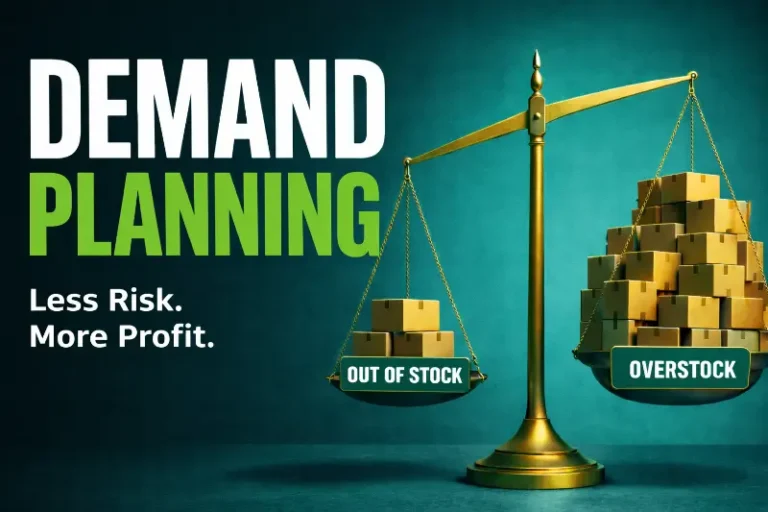
Demand planning is the process of estimating future customer demand so that a business can align its inventory, procurement, and operations to meet that demand without carrying mor...
Why 100% P2P Adoption Is the Wrong Goal
Peer-to-peer returns let customers send eligible returned items directly to other customers instead of routing every package back through the warehouse, cutting shipping and proces...
Walmart Officially Allows Amazon Multi-Channel Fulfillment (MCF)
Big news for multichannel sellers: Walmart now officially allows Amazon Multi-Channel Fulfillment (MCF), Amazon’s service for using its fulfillment network to ship orders from mult...
USPS Harmonized Tariff Code Requirement Starts September 2025

Effective September 1, 2025, mailers worldwide must provide, at minimum, the applicable 6-digit HS code for each item in an international shipment. For years, merchants could get away with vague product descriptions, but now the Harmonized System (HS) is the law of the land. USPS later clarified that customers can provide a detailed description on the customs form and USPS will provide an HS code during processing if needed, but the sender remains responsible for accurate item descriptions. This isn’t just bureaucratic red tape, it’s a restructuring of how international trade data flows through customs, taxes, and shipping.
The System Behind the Codes
At its core, the HS code system is a global classification system governed by the World Customs Organization (WCO). The first six digits are universal across all countries. Beyond that, nations tack on their own rules:
- The U.S. uses the Harmonized Tariff Schedule (HTS) for imports.
- The Census Bureau oversees Schedule B codes for U.S. exports.
The result? Your ten-digit codes must match precisely, or your traded products get flagged. Misclassification leads to delays, penalties, or worse, lost shipments.
Why USPS Is Forcing the Issue
Other carriers (FedEx, UPS, DHL) have long required these codes, but USPS gave merchants a free pass. That ends in 2025. Why? Two reasons:
- Data accuracy: Governments want to tighten control over tariff rates, duties, and economic statistics.
- Trade enforcement: From precious metals to musical instruments, if the right code isn’t on the box, customs will block it.
This shift means even small businesses and Etsy sellers must learn the difference between a “scarf” and “silk scarf” in the eyes of the harmonized system.
How to Classify Products Without Losing Your Mind
USPS now notes that a 6-digit HS code is often not enough to determine the applicable duty rate, so mailers may need a destination-country-specific HS code from USPS’s lookup tool.
Here’s the brutal truth: figuring out the particular product classification isn’t straightforward. For example:
- A wooden chair: one code.
- A plastic chair: a totally different code.
- A musical instrument case: not the same as the instrument itself.
The general rules of interpretation guide classification, but they’re dense. Many merchants rely on customs brokers or US International Trade Commission lookup tools. The Census Bureau’s Schedule B search is another option, but it requires patience.
What Happens if You Get It Wrong
Misclassifying products is expensive. You risk:
- Delayed shipments stuck in customs limbo.
- Fines and back duties when audits uncover mistakes.
- Angry customers when orders don’t arrive.
In a world of instant shipping, one wrong tariff code can tank a brand’s reputation overnight.
The Big Picture: Tariffs as Trade Weapons
This isn’t just about compliance. It’s about global trade politics. Tariffs have become the new sanctions, and the U.S. government wants airtight data to enforce them. When the next round of temporary legislation or retaliatory duties hits, officials will lean on the harmonized tariff schedule to target industries. That means your shipment classification isn’t just paperwork, it’s part of trade policy itself.
Preparing Now: Practical Steps for Businesses
If you export anything, start now:
- Identify codes: Use the Census Bureau or a customs broker to nail down the correct HS code.
- Update systems: Make sure your ecommerce platform or shipping software captures the digits long field USPS will require.
- Train your team: Teach staff how to spot when a new product needs a new code.
- Audit your catalog: Don’t wait until September 2025, clean up your classifications today.
Businesses that get ahead will breeze through customs. Those that don’t will face a pile of returned shipments, taxes, and unhappy buyers.
Frequently Asked Questions
What is the harmonized tariff code?
It’s a global classification system run by the World Customs Organization that standardizes product categories for international trade. The first six digits are universal, but each country adds its own rules.
What’s the difference between HTS codes and Schedule B numbers?
Both come from the same HS system. HTS codes apply to imports, while Schedule B codes apply to U.S. exports and are overseen by the Census Bureau.
How long are HTS codes and Schedule B numbers?
Typically ten digits long in the U.S. The first two digits identify the broad product group, with more digits narrowing down to the particular product.
Do I need a tariff code for every product I export?
Yes. Every traded product must be linked to the right code. Even small differences in material or design may change classification.
What happens if I ship without the correct HTS code?
Your shipment can be delayed, and customs authorities may assess duties, taxes, or other enforcement actions if the classification is incorrect. Customs agencies use these codes to determine tariff rates, duties, and taxes. As a customer, you are responsible for accurately describing the item you are shipping, and USPS will provide an HS Code for your customs form during processing.
Written By:
Jeremy Stewart
Jeremy Stewart leads customer success at Cahoot, helping merchants achieve high-performance logistics through smart technology and process optimization. With a background in both ecommerce operations and client services, Jeremy ensures that every merchant using Cahoot gets measurable results—whether they’re scaling from one warehouse to many or managing complex returns.
Turn Returns Into New Revenue
Related Articles
Walmart Officially Allows Amazon Multi-Channel Fulfillment (MCF)
Big news for multichannel sellers: Walmart now officially allows Amazon Multi-Channel Fulfillment (MCF), Amazon’s service for using its fulfillment network to ship orders from mult...
Shopify Subscription Payment Change: Why It Could Hurt Reactivation
Shopify changed how subscription payment information is handled at cancellation.
Why Small Ecommerce Brands Are Winning with AI (While Enterprises Struggle)
Conventional wisdom says large companies should dominate AI adoption.
AI Tools for Ecommerce: Choosing the Right Tech to Stay Competitive
In this article
6 minutes
- Why AI in Ecommerce Is No Longer Optional
- The Power of Data in Ecommerce
- Key Areas Where AI Tools Drive Impact
- Evaluating the Right AI Tools for Ecommerce
- Adoption Challenges: Data Quality and Trust
- The Future: Generative AI in Ecommerce
- Why Adoption Matters More Than Experimentation
- Conclusion
- Frequently Asked Questions
Why AI in Ecommerce Is No Longer Optional
AI has become the hidden engine driving the ecommerce industry. From automated inventory management to personalized recommendations, AI tools for ecommerce are reshaping how online businesses operate. Walmart, Amazon, and Shopify have already made AI a core part of their strategies, which means independent ecommerce businesses need to adopt the right AI technology, or risk falling behind. OpenAI now supports shopping discovery through structured product feeds in ChatGPT, and Shopify product data is already integrated into ChatGPT through Shopify Catalog.
AI tools are no longer a futuristic add-on; they are essential for analyzing customer data, predicting demand, improving customer satisfaction, and staying competitive in a market dominated by giants. Sellers who fail to implement AI-powered solutions will find themselves reacting to market trends rather than shaping them.
The Power of Data in Ecommerce
Ecommerce runs on customer data: purchase history, browsing behavior, customer interactions, and even customer feedback. AI tools allow retailers to analyze this data at scale, transforming raw information into valuable insights. These insights power predictive analytics and personalized recommendations that drive customer engagement and loyalty.
For example, using natural language processing, an AI system can analyze customer reviews and social media posts to identify product issues before they spiral into bad ratings. Competitor pricing can also be tracked in real time, helping retailers adjust pricing strategies dynamically.
Key Areas Where AI Tools Drive Impact
Inventory Management
Poor inventory management leads to either excess costs or missed sales. AI-powered inventory management tools use historical sales data and market trends to forecast demand, ensuring retailers avoid both overstocking and stockouts. These systems adapt to consumer demand patterns and can even factor in seasonality and marketing campaigns.
Marketing Strategies
AI marketing tools automate content creation, generate SEO optimized product descriptions, and evaluate messaging performance. For ecommerce businesses competing with retailers that have entire AI-driven marketing departments, tools that improve campaign targeting and analyze customer behavior are essential.
AI also powers personalized marketing. By analyzing transaction patterns and purchase history, businesses can create tailored email marketing campaigns, targeted promotions, and personalized shopping experiences that boost conversion rates.
Customer Experience
Customer experience is now a key differentiator. AI-powered chatbots and virtual assistants deliver real-time customer service, reducing reliance on human customer service agents while still providing seamless support. Personalized shopping experiences powered by AI keep customers engaged and increase satisfaction.
For instance, AI tools can analyze customer preferences and browsing behavior to make real-time product recommendations. Retail websites that fail to offer this level of personalization risk losing customers to competitors who can.
Supply Chain Optimization
Supply chain analytics powered by AI improves operational efficiency across the retail value chain. From supply chain management to store operations, AI tools help forecast demand, optimize logistics, and lower costs. For ecommerce platforms managing complex supply chains, these solutions ensure better supply chain management and keep customers happy with faster, more reliable deliveries.
Evaluating the Right AI Tools for Ecommerce
Not every tool labeled “AI” provides value. Ecommerce businesses must evaluate AI tools carefully. Factors to consider:
- Seamless integration with existing ecommerce platforms
- User-friendly interface for non-technical teams
- Detailed analytics to drive data-driven decisions
- Proven track record with leading retailers
- Ability to ensure data quality and protect customer data
Retailers should test AI algorithms against real customer behavior data before fully implementing them. Evaluating AI tools also means comparing ROI across customer retention, sales growth, and operational efficiency.
Adoption Challenges: Data Quality and Trust
NRF says retail companies are using artificial intelligence systems to enhance the customer experience, accelerate product development and improve operational efficiency, and it now advocates a uniform, risk-based federal framework for AI.
AI adoption isn’t without friction. The data retailers rely on often comes from multiple sources, sales data, purchase patterns, social media platforms, and customer feedback. Ensuring data quality is critical. If the data is incomplete or biased, predictive analytics and machine learning algorithms won’t provide accurate insights.
Customer trust is another challenge. Consumers want personalized shopping experiences, but they don’t want to feel surveilled. Retail businesses must balance the use of customer insights with transparent policies around data usage.
The Future: Generative AI in Ecommerce
In March 2026, Amazon introduced a canvas experience in Seller Central that combines AI-powered chat with personalized visual workspaces so sellers can analyze data and take action in real time.
Generative AI is emerging as the next wave. Gen AI solutions are now capable of writing product descriptions, generating marketing messages, and even designing personalized promotions. Ecommerce platforms that leverage generative AI in content creation and marketing campaigns will have an advantage in producing large volumes of high-quality, SEO optimized content quickly.
Retail companies that adopt these tools now will be positioned to remain competitive as generative AI reshapes the ecommerce industry.
Why Adoption Matters More Than Experimentation
AI tools are only valuable if they’re implemented strategically. Too many ecommerce businesses experiment with pilots but fail to integrate AI deeply into their operations. Leading retailers like Amazon and Walmart aren’t just using AI for marketing, they’re embedding AI across store operations, supply chains, and customer engagement. In June 2025, Walmart announced Sparky, a GenAI assistant that synthesizes reviews, offers occasion-based recommendations, and helps customers plan, compare, and purchase with confidence.
Independent ecommerce sellers need to follow suit. Using AI-powered tools for ecommerce isn’t about chasing hype; it’s about survival in a marketplace where data-driven decision making, predictive analytics, and customer-centric strategies are now table stakes.
Conclusion
The ecommerce sector is being redefined by artificial intelligence. Sellers who embrace AI technologies, from predictive analytics and automated inventory management to AI-powered marketing and generative AI, will stay ahead of consumer demand and competitor pricing pressures. Those who hesitate risk irrelevance.
Adopting the right AI tools for ecommerce allows retailers to gain valuable insights, improve customer satisfaction, and remain competitive against giants like Walmart, Amazon, and Shopify. In the future retail landscape, AI won’t just optimize ecommerce operations, it will decide who survives.
Frequently Asked Questions
What are the best AI tools for ecommerce businesses?
The best AI tools for ecommerce include AI-powered chatbots, predictive analytics platforms, AI marketing tools, and automated inventory management solutions. These tools improve customer satisfaction, boost sales, and optimize retail operations.
How can AI improve customer satisfaction in ecommerce?
AI improves customer satisfaction by analyzing customer interactions, purchase history, and browsing behavior to deliver personalized shopping experiences, real-time customer service, and targeted promotions that meet customer preferences.
How does AI impact inventory management in ecommerce?
AI-powered inventory management tools analyze historical sales data and forecast future customer demand. This ensures ecommerce businesses avoid stockouts, reduce excess inventory, and adapt quickly to market trends.
What role does generative AI play in ecommerce marketing?
Generative AI helps ecommerce companies create product descriptions, social media posts, email marketing campaigns, and other marketing materials at scale. These tools allow retailers to optimize marketing strategies and remain competitive.
Why should ecommerce businesses adopt AI tools now?
Adopting AI tools now ensures ecommerce businesses remain competitive as the retail industry embraces artificial intelligence. Early adoption allows retailers to gain valuable insights, improve customer retention, and build sustainable growth strategies before competitors dominate.
Written By:
Jeremy Stewart
Jeremy Stewart leads customer success at Cahoot, helping merchants achieve high-performance logistics through smart technology and process optimization. With a background in both ecommerce operations and client services, Jeremy ensures that every merchant using Cahoot gets measurable results—whether they’re scaling from one warehouse to many or managing complex returns.
Turn Returns Into New Revenue
Related Articles
Why 100% P2P Adoption Is the Wrong Goal
Peer-to-peer returns let customers send eligible returned items directly to other customers instead of routing every package back through the warehouse, cutting shipping and proces...
Walmart Officially Allows Amazon Multi-Channel Fulfillment (MCF)
Big news for multichannel sellers: Walmart now officially allows Amazon Multi-Channel Fulfillment (MCF), Amazon’s service for using its fulfillment network to ship orders from mult...
Why More Automation Didn’t Lower Return Costs
Returns automation does improve returns operations: it cuts manual touches, smooths intake, speeds sorting, and makes workflow execution more consistent.
AI in Retail Operations: Reshaping the Future of Retail
In this article
17 minutes
- Introduction: The Retail AI Paradox
- AI is Everywhere in Retail Operations (and That’s a Good Thing)
- The Coming Disruption: AI-Powered Shopping Agents and Changing Consumer Behavior
- Bridging the Gap: What Retailers Should Do Now
- Summary: Embrace the Paradox for Retail Success
- Frequently Asked Questions
Introduction: The Retail AI Paradox
In the retail world, we’re facing a bit of an AI paradox. On one hand, AI in retail operations is a powerhouse for efficiency; it can optimize everything from inventory management to dynamic pricing, making businesses run leaner and smarter. On the other hand, the rise of AI-driven shopping (think intelligent agents making purchases for consumers) threatens to disrupt traditional retail models in ways we’re only beginning to grasp. I’ve been watching this space closely, and the signal is clear: retailers must embrace AI to streamline and survive today, even as they brace for the bigger shifts AI could cause in customer behavior tomorrow.
As one industry observer from AWS (Amazon Web Services) hinted, retailers should “optimize for efficiency, prepare for disruption.” That phrase sums it up nicely. You want to use AI tools to sharpen your operations and improve customer satisfaction, but you also need to keep an eye on how AI technologies are changing shopper expectations and competitive dynamics (the disruption part). Let’s unpack this paradox and explore both sides, the here-and-now benefits of AI and the looming changes on the horizon.
AI is Everywhere in Retail Operations (and That’s a Good Thing)
In July 2025, Walmart said its global supply chain is being reengineered with real-time AI and automation across markets such as Costa Rica, Mexico, and Canada.
First, the obvious part: artificial intelligence is increasingly embedded in nearly every facet of retail operations. We’re well past the days of AI being a novelty or confined to a pilot project. Today, if you’re not leveraging AI in some form, you’re already behind. Here are some key areas where AI is improving efficiency and decision-making in retail:
- Demand Forecasting: Gone are the times of forecasting based only on last year’s sales and a spreadsheet. Modern AI systems ingest historical sales data, real-time trends, market trends, even weather and social media cues to predict demand with remarkable accuracy. This means retailers can anticipate how much of each product to have and where, reducing stockouts and overstocks. A 2025 study by OpenText noted that AI-driven forecasts are “far more accurate than traditional methods”, integrating diverse data points to predict demand with unprecedented precision. Fewer stockouts means happier customers and fewer lost sales; less overstock means lower holding costs and markdowns. It’s directly boosting the bottom line.
- Automated Inventory Management: Inventory management itself has been supercharged by AI. Machine learning models can determine optimal reorder points for each SKU, triggering restocks automatically. They factor in lead times, current velocity, and even competitor pricing changes. Some large retailers have AI that reallocates inventory across stores. If one location’s stock of an item is moving slowly but another can’t keep it on shelves, an AI might prompt a transfer to balance it out. Computer vision is also used in warehouses to monitor inventory levels (smart cameras that “see” when shelf stock is low) and even in stores (Amazon’s Just Walk Out tech, for example, automatically tracks when items are taken so inventory is updated in real-time). All this reduces labor and errors. It’s not sexy to customers, but operationally it’s a big efficiency gain.
- Dynamic Pricing and Markdown Optimization: AI allows truly dynamic pricing strategies that would be impossible to do manually. By analyzing sales patterns, inventory aging, and competitor prices, AI can adjust prices in real time to maximize revenue. For instance, if data shows a certain apparel item isn’t selling as fast as predicted, an AI system might initiate a slight price drop or a promotion to boost demand, rather than waiting for an end-of-season clearance. Alternatively, for high-demand products, AI might inch prices up (within allowed limits) to capitalize on willingness to pay. These pricing strategies are increasingly common in ecommerce but are also hitting brick-and-mortar via electronic shelf labels and apps. The result is higher operational efficiency, you sell products closer to the ideal price point, improving margins without manual intervention on each pricing decision.
- Supply Chain Optimization: Retail supply chains are getting smarter through AI analytics. Everything from predicting delays (using AI to analyze weather, political climate, etc.) to optimizing supply chain management (choosing the best shipping routes and methods) can be AI-driven. For example, AI can analyze past shipping data and real-time freight rates to suggest the most cost-effective way to move goods (should I ship by rail or truck for this distribution lane this week?). Supply chain analytics provided by AI also help retailers respond faster, if there’s a hint of disruption (like a factory issue or port delay), AI systems flag it early by detecting anomalies, giving retailers a head start to reroute or adjust orders. This improves resilience and reduces costly last-minute expediting.
- Workforce and Task Optimization: Beyond merchandise, retailers use AI to improve store operations and workforce management. AI can forecast foot traffic by time of day, helping set optimal employee schedules (so you’re not overstaffed during lulls or understaffed during rushes). It can also prioritize tasks, for instance, if an AI sees that online orders for curbside pickup are spiking on Monday mornings, it might prompt managers to assign more staff to picking and packing at those times. Some stores even use AI-driven robots to scan aisles for out-of-stock items or misplaced products, freeing up human staff for customer service tasks.
All these examples point to one thing: operational efficiency. Retail is a low-margin game, and AI is helping shave off costs and improve throughput in countless small ways that add up. Retailers use AI to better serve their customers, improve the shopping experience and increase the efficiency of their operations. In fact, top retailers (the Walmarts and Targets of the world) are achieving notable cost reductions; one stat I came across said the top 5% of retailers have 31% lower fulfillment costs through integrated automation and AI, compared to the average. That’s huge in an industry where a 1% margin improvement is celebrated.
From a customer perspective, they might not see these AI tools, but they feel the effects: products are in stock more often, they get what they want when they want it, and even pricing can feel more “right” (no massive end-of-season gluts or mysterious price jumps). Customer satisfaction benefits from these back-end optimizations.
Case in point: Look at how a company like Stitch Fix (an online apparel retailer) used AI. They combined AI algorithms with human stylists to improve customer insights and inventory alignment. The AI would analyze customer profile data (size, style preferences) and purchase patterns to suggest what inventory to buy and how to personalize outfits for each customer. The result was less excess inventory and a more personalized, satisfying experience for the shopper, i.e., operational efficiency meeting customer experience improvement. This dual win is why AI’s ROI in retail has been compelling.
The Coming Disruption: AI-Powered Shopping Agents and Changing Consumer Behavior
In October 2025, Walmart announced an in-ChatGPT app experience and said customers and members will soon be able to shop Walmart through ChatGPT using Instant Checkout.
So, everything above is great; AI is making the retail value chain run smoother. Now comes the potentially disruptive part: how AI might fundamentally change how consumers shop and what they expect. This is the side that could catch a lot of retailers off guard if they’re only thinking about internal efficiencies.
The concept of AI shopping agents or AI assistants handling shopping tasks for consumers is gaining traction (sometimes called “agentic commerce”). We touched on this in other discussions: digital assistants that can search products, compare, and even purchase on behalf of someone. This isn’t widespread yet, but the pieces are falling into place quickly. For example:
- Personal AI Shoppers: Imagine a busy professional who doesn’t want to manually shop for groceries or even clothes. They might use an AI assistant (maybe through a voice device or chat app) to handle it. “Buy me a week’s worth of keto-friendly groceries” or “I need a black cocktail dress for under $150 by next Friday.” The AI will parse this and engage with retailer systems to find the best fits and execute the orders. This moves the decision process from the person browsing websites to an AI scouring data. If you’re a retailer, suddenly your customer is a bot with a checklist, not a human swayed by branding or emotional advertising.
- Close-Up Algorithmic Comparison: These AI agents will compare products in an ultra-rational way. They’ll look at specs, features, price, reviews, warranties, materials, all the quantifiable attributes. Flashy marketing copy like “best ever” won’t register unless it’s backed by data. As a retailer or brand, this means you’d better have your factual ducks in a row. Products need rich attribute data and genuine differentiators. If not, the AI might just choose based on the lowest price or the highest average rating. Think about how Google’s search evolved websites to focus on SEO keywords and structured data; similarly, AI shoppers could birth a whole new concept of AEO (AI Engine Optimization), where brands structure product data to be friendly to AI algorithms.
- Changes in Loyalty and Discovery: Today, many shoppers have favorite stores or go-to brands. They might trust Nike for sneakers or always check Target for home goods. But an AI agent might be brand-agnostic; it will just find the product that fits the criteria best. This could erode traditional brand loyalty and retailer loyalty. If Alexa or Siri is placing the order, you might not even know which retailer it used if you don’t specify. The customer experience becomes abstracted away from the retailer’s own interface. This is disruptive because retailers invest heavily in their apps, sites, and branding to create a certain experience. If transactions increasingly happen through third-party AI intermediaries, retailers will have to find new ways to differentiate (perhaps through unique products or ensuring their data makes their items more likely to be recommended by AIs).
- Direct-to-AI Marketing: We might see retailers or brands trying to “market” to algorithms. For example, ensuring their products are the ones that AI agents “like” to choose. How do you do that? High ratings, consistent stock, competitive pricing, complete and accurate product info. Possibly even integrating with the AI platforms via APIs, so your products are prioritized. It’s a whole new kind of B2B2C dance. In fact, it’s already starting: some brands are providing detailed product feeds to smart assistants and working on partnerships (we saw Shopify partnering with OpenAI and others, so Shopify merchants’ products appear in AI search results).
- Reduced Impulse Buys / Changed Store Formats: If AI agents handle routine purchases, physical stores might shift more toward experiential shopping or immediate need fulfillment. Fewer people might roam aisles for weekly shopping if their AI does it. But they might still go to stores for experiences or immediate gratification. Retailers may need to rethink store layouts, perhaps focusing on showcasing products (for people or for the AI’s “eyes” like scanning QR codes) and offering easy pickup for AI-placed orders. The retail industry could split into two: a highly automated replenishment business vs. experiential retail for discretionary buying.
I find this disruption aspect both exciting and daunting. It reminds me of when ecommerce itself emerged. Initially, it was a small efficiency play (buy from home, ship to door), but it massively changed consumer behavior over time. Now we take online shopping for granted. AI-driven shopping might be a similar wave: small now (maybe a few early adopters letting an AI pick their grocery list), but potentially huge in a decade.
AWS folks (and others in the cloud/AI space) are already talking about this shift. Amazon’s CEO, Andy Jassy, recently predicted that generative AI and agentic AI will change how customers shop and even how Amazon’s own workforce is structured. When the CEO of the world’s biggest online retailer says that, you pay attention. Walmart also isn’t sitting idle; they’ve announced their own AI “super agents” for customers (like a personalized shopping assistant called “Sparky” in their app). They’re essentially trying to build their own AI interface with shoppers to not lose that connection. Walmart’s CTO said they envision these AI agents as “the primary way people engage with Walmart” in the future. That’s a radical statement: it implies that instead of browsing the Walmart app, you might just chat with “Walmart AI” to get what you need.
Bridging the Gap: What Retailers Should Do Now
OpenAI now supports shopping discovery through structured product feeds in ChatGPT, and Shopify product data is already integrated into ChatGPT through Shopify Catalog.
NRF’s 2025 AI survey found that 86% of retailers already have AI governance policies in place and 77% allocate 5% or less of their technology budget to AI.
We have efficiency today and disruption tomorrow, so how do retailers handle both? In my view, it’s not an either/or. You should do both concurrently: double down on AI for operational excellence (because that pays off immediately and gives you the bandwidth to strategize) and start positioning your business for the coming changes in shopper behavior.
Tactically, on the efficiency side: If you haven’t already, invest in AI tools or platforms for the core areas: predictive analytics for demand and inventory, AI-driven personalization engines for ecommerce (making use of all that valuable customer data you have to improve engagement), and even NLP (natural language processing) for things like analyzing customer feedback at scale. Many retailers have data but struggle to use it; AI thrives on data. For example, use NLP to read through thousands of customer reviews or service transcripts to spot pain points or emerging trends (maybe customers are all asking if a product is sustainable, that insight could drive your merchandising).
Also, consider pilot programs with more frontier tech: maybe an AI vision system in your store to optimize product placements or a generative AI tool to create product descriptions and social media content (speeding up content creation in your marketing campaigns). These improve current operations and also get your team comfortable working alongside AI.
On the disruption preparation side: Begin enriching your product data now. If you’re a retailer, ensure every product in your catalog has a thorough, structured dataset (attributes like dimensions, materials, features, etc.). Standardize it in formats that can be easily consumed by AI assistants. Many industry groups are working on data standards for AI consumption; keep an eye on those and adopt them. The term “AI-ready product data” is something I predict we’ll hear a lot. It’s akin to how sites had to implement schema markup for SEO to be “Google-ready.”
Next, think about alliances or integrations with AI platforms. If, say, Alexa, Google Assistant, or some popular shopping app’s AI gets big, how will your products be surfaced? For example, some brands are now creating ChatGPT plugins or integrating with the likes of Instacart’s Ask AI feature, so that when a user asks “I need ingredients for tacos,” their brand products are recommended. Those kinds of partnerships could become the new SEO/ads, basically paid placement for AI recommendations, or at least organic optimization for them.
And don’t forget the human element. Even as AI grows, brands should emphasize what makes them humanly unique: brand story, community, and in-person experiences. Those intangible factors will still matter to consumers on some level and can influence what they tell their AI agents to value. For example, a consumer might instruct their AI, “I prefer sustainable products” or “support local businesses when possible.” If your brand identity includes those values (and you communicate them), you might be the choice an AI makes when those conditions are set.
Culture and talent: Internally, prepare your team for this future. Upskill your employees in data analytics and AI literacy. Encourage a culture that’s not afraid of testing new tech. Many retailers historically have been tech-laggards, which won’t fly in this coming environment. The ones who treat AI as an opportunity (not just internally, but as part of the customer offering) will adapt fastest. We may even see new roles like “AI shopper experience manager” or “algorithmic merchandising strategist” in retail org charts.
One example to emulate is how Target has been investing in its data science and tech teams. They use AI heavily for supply chain and pricing, but they’re also experimenting with chatbots for customer service and visual search (taking a photo of an item and finding similar products). They’re essentially weaving AI into both back-end and front-end. That’s the blueprint: holistic integration.
Summary: Embrace the Paradox for Retail Success
The AI retail paradox, optimizing for efficiency while preparing for disruption, isn’t something to solve, but rather a dual mandate to embrace. Retailers who harness AI to streamline operations will enjoy immediate gains: lower costs, better customer experiences through personalization, and data-driven decision-making that outpaces gut instinct. These improvements are becoming the price of entry to stay competitive (as a recent Chain Store Age article put it, AI has moved from “experiment to expected” in retail). At the same time, those same retailers must keep their gaze on the horizon. The very AI tools making life easier inside the business are empowering entirely new consumer behaviors outside it.
It reminds me of a chess game where you have to think a few moves ahead. You make your current move (deploying AI for efficiency) while anticipating your opponent’s response (how AI will alter the market landscape). The retail industry players that will “win” in the coming years are likely those treating AI as both an operational tool and a strategic disruptor. They’ll squeeze every drop of ROI from AI in the present (from predictive analytics and automation) and invest in the capabilities to serve AI-driven shoppers of the future (through data quality, integration, and maybe even their own consumer-facing AI features).
We stand at a point where AI technologies can boost our profit margins and potentially erode certain revenues (like if an AI always finds a cheaper competitor product). It’s a bit of a tightrope walk. But retailers have walked similar tightropes before: ecommerce, mobile commerce, and omni-channel integration; each time, the key was to adapt rather than resist. AI is just the next evolution.
Ultimately, the retailers that lean into this paradox, leveraging AI for all its worth internally, while radically open-minded about reimagining their customer approach, will not just remain competitive; they’ll set the pace. Efficiency and disruption don’t have to be opposites; used wisely, they can be complementary. Efficient operations free up resources to experiment with new models; disrupted markets reward the most efficient and innovative players.
In my own work with retail clients, I often say: use AI to run better, and be ready for AI to change the game. Do both with equal zeal. Those who do will find that when the dust settles on this next wave of retail transformation, they’ll be ahead of the pack, having turned a paradox into a strategy.
Frequently Asked Questions
What is the AI paradox in retail?
The AI paradox refers to the tension between AI’s promise of efficiency and the disruption it causes by reshaping customer expectations and competitive dynamics.
Why is retail adoption of AI more important than efficiency?
Efficiency gains help retailers cut costs, but without adoption, they risk being overtaken by competitors using AI to reinvent entire customer journeys.
What are the risks of delaying retail AI adoption?
Retailers that delay adoption risk falling behind as competitors capture market share with AI-driven personalization, predictive logistics, and seamless shopping experiences.
How can retailers start adopting AI effectively?
Retailers can begin by investing in AI literacy, modernizing data infrastructure, piloting customer-facing use cases, and aligning with partners who understand retail’s unique challenges.
What role does culture play in AI adoption?
Culture is critical. Organizations that encourage experimentation and accept fast iteration adapt more quickly, while rigid, risk-averse cultures struggle to integrate AI meaningfully.
Written By:
Jeremy Stewart
Jeremy Stewart leads customer success at Cahoot, helping merchants achieve high-performance logistics through smart technology and process optimization. With a background in both ecommerce operations and client services, Jeremy ensures that every merchant using Cahoot gets measurable results—whether they’re scaling from one warehouse to many or managing complex returns.
Turn Returns Into New Revenue
Related Articles
What Is Demand Planning? How It Impacts Inventory, Forecasting, and Profitability
Demand planning is the process of estimating future customer demand so that a business can align its inventory, procurement, and operations to meet that demand without carrying mor...
Why 100% P2P Adoption Is the Wrong Goal
Peer-to-peer returns let customers send eligible returned items directly to other customers instead of routing every package back through the warehouse, cutting shipping and proces...
Walmart Officially Allows Amazon Multi-Channel Fulfillment (MCF)
Big news for multichannel sellers: Walmart now officially allows Amazon Multi-Channel Fulfillment (MCF), Amazon’s service for using its fulfillment network to ship orders from mult...
AI Shopping Assistant Revolution: Shopify’s Big Bet on Agentic Commerce

In this article
11 minutes
Why AI Shopping Agents Are Suddenly Everywhere
Just a couple of years ago, “AI shopping assistant” sounded like a gimmick. Today, it’s feeling like the future of online shopping. Shopify’s latest earnings blew past expectations (31% revenue growth year-over-year), and the company’s leadership credited much of that success to investments in AI-powered shopping. In Shopify’s Q2 2025 call, president Harley Finkelstein talked up “agentic commerce” as the next big thing, saying Shopify’s unique position with brands gives it an edge in this emerging online retail industry. In plain English: AI shopping assistants and AI agents are moving from tech demo to core business driver. And the results are already showing up in Shopify’s bottom line.
From my perspective, this isn’t just Shopify hyping new tools; it’s a sign of a broader shift in how shoppers and retailers interact. AI agents (essentially smart algorithms often powered by large language models like GPT-5) can now handle tasks that used to require a human. They can track price drops, compare features across dozens of products, answer detailed questions about specs or reviews, and even complete purchases on behalf of a user. All automatically. We’re witnessing the rise of the agentic AI era, where consumers might simply tell their phone or smart assistant, “Find me the best budget 4K TV and buy it,” and an AI agent does the rest. That might have sounded sci-fi, but Shopify’s saying it’s just about here.
Shopify’s AI Playbook: Building the Agentic Commerce Infrastructure
Shopify isn’t sitting around. They’re actively opening the door for these AI shopping agents to drive sales on their platform. In fact, Shopify just rolled out a comprehensive suite of tools enabling AI agents to execute complete shopping transactions. Let’s break that down:
- Shopify Catalog – A giant database that lets AI agents instantly search hundreds of millions of products with real-time inventory and pricing. Basically, an AI assistant can see what’s in stock across Shopify’s network and at what price, so it knows where to find the best deal or quickest ship time for you.
- Universal Cart – This one blew my mind a bit. It lets an AI agent hold items from multiple different stores in one cart. Imagine you’re chatting with a generative AI shopping bot that recommends a shirt from one Shopify store and sneakers from another. Normally, you’d have to check out twice. But with Universal Cart, the AI can lump them together and handle all the complexity in the background. One shopping journey, one checkout, even though the products are from different businesses.
- Checkout Kit – The final piece: when it’s time to buy, the AI agent can seamlessly initiate the purchase through each store’s checkout flow, while keeping the experience within the assistant interface. In practice, that means the end customer doesn’t feel like they left the chat or app to go fill out forms on a website. The AI handles it, maintaining the assistant’s “branding” or interface. Smooth.
Shopify basically built the plumbing so that any AI, whether it’s Shopify’s own assistant, or a third-party AI agent like something running on Google’s Gemini or OpenAI, can plug into Shopify stores and transact. It’s a bold move to position Shopify as the behind-the-scenes infrastructure for AI-driven shopping. Harley Finkelstein even said Shopify’s ahead because of their relationships with AI companies (they’ve partnered with OpenAI and others). The message: if brands want their products found and purchased by the coming wave of AI assistants, they need to be on platforms (like Shopify) that are ready for it.
And it’s not just Shopify. Amazon and Walmart are experimenting with their own AI shopping solutions. (Amazon recently piloted a “Buy for Me” feature where their app’s AI will literally purchase items from other websites for you, wild.) The future of e-commerce might not be customers browsing websites at all; it could be AI agents doing the browsing based on our preferences and instructions. Consumers might simply say what they want, and AIs will do the searching, vetting, and buying.
A New Type of Customer Experience, Powered by AI
If you’re wondering why anyone would use an AI agent instead of going to a store website or app themselves, here’s the appeal: efficiency and personalization. A good AI shopping assistant can instantly filter through thousands of options across the web, taking into account your specific preferences, past purchases, and even pulling in reviews or expert data. It’s like having a personal shopper who knows everything about every product ever made, available 24/7. Busy buyers love anything that saves time and makes life easier. If an AI can find the exact product that fits my needs (cheapest price, highest rated, arriving tomorrow), why would I slog through multiple websites and read endless reviews myself?
These agents can also answer questions in real time, “Does this laptop support 32GB RAM? What’s the return policy? Is there a warranty?”, without me having to dig through FAQ pages. They can compare and find products that meet very specific criteria (e.g., “find me a dining table under $500 that’s solid wood and has at least 4-star reviews”). That’s a level of service traditional search or e-commerce interfaces haven’t delivered. Generative AI and LLMs are making the experience more conversational and human-like. It feels less like using a search engine and more like chatting with a super knowledgeable sales associate.
However, this shift has huge implications for brands and online retailers. If customers start delegating their purchase decisions to AI agents, the online shopping experience changes fundamentally. Product recommendations might be coming from an algorithm that doesn’t care about flashy marketing; it cares about data and facts. That’s a bit of an AI retail paradox: on one hand, AI-driven personalization can boost customer satisfaction by surfacing exactly what people want; on the other hand, it could disrupt the traditional notions of brand loyalty and impulse buying. Consumers might rely on cold, hard facts from an AI (specs, price, reviews) more than brand image or emotional ads. As an industry colleague of mine noted, things like emotional ad copy and lifestyle photos may lose punch, while verifiable data on materials and performance become more critical. In a world of AI agents, your product descriptions, specs, and reviews (essentially, your data) matter more than shiny marketing.
Another consideration: secure shopping experiences. AI agents will need access to a lot of information to do their jobs, including product feeds, inventory levels, and maybe even your past purchase history (if you allow it). Platforms like Shopify are focusing on ensuring these integrations are secure and privacy-compliant. Trust is key: both retailers and shoppers need to trust the AI systems. Shopify has even tweaked its code to manage how third-party AI scrapers or bots interact with stores, likely to prevent abuse while still enabling genuine assistants. It’s a delicate balance of opening up for new opportunities (AI-driven sales) without losing control of the customer relationship.
What It Means for Retailers and Brands
So, what should business owners and brand operators take away from this? I see a few immediate action items:
1. Optimize Your Product Data for Machines: In the same way we all learned about SEO (Search Engine Optimization) to rank on Google, now we have to think about “AEO” – AI Engine Optimization. AI shopping agents don’t “see” your pretty web design; they consume your data. Are your product titles, descriptions, specs, pricing, and stock info easily readable by a machine? Are they comprehensive and accurate? If your listings aren’t structured for machine readability, you’ll be invisible to these assistants. This might mean adopting structured data standards, improving your product information management, and syncing inventory in real-time. Brands should audit their catalogs and ensure everything from size dimensions to materials to customer ratings are correctly exposed. An AI can’t appreciate your lifestyle imagery – it’s parsing text and numbers. Make those count.
2. Embrace AI Tools Yourself: Just as consumers will use AI, brands can leverage AI-powered tools on their end. For example, AI can help write better product descriptions (tailored to what consumers ask about), manage customer service chats via chatbots, and analyze customer behavior patterns to see what factors influence purchase decisions. Many ecommerce businesses are already using AI for things like dynamic pricing, personalized email marketing, and inventory forecasting. These improve the shopping journey for customers (through more relevant recommendations, etc.) and improve operations for you (through efficient stock management and pricing). If your competitors are using AI to create a smoother shopping online experience and you’re not, you’ll fall behind.
3. Prepare for New Customer Journeys: The purchase decisions of the near future might not involve a customer slowly meandering through a site and adding things to the cart. It could be an AI agent presenting 2 options to the customer for instant approval. Or an AI just orders refills of a product for a subscriber without them even asking (based on preset preferences). Retailers need to anticipate these flows. That could mean focusing more on subscription models, direct integrations with assistant platforms, or ensuring your brand is recommended by the algorithms (possibly via great reviews, or partnerships, or by having unique products an AI can’t find elsewhere). It’s a new kind of marketing: instead of appealing solely to consumers, you’re also appealing to the logic of AI systems. For instance, if sustainability or warranty length becomes a key attribute that AIs consider (because consumers expect those factors), brands might highlight those more. I’m curious which product attributes will matter most to the “AI shoppers”; it could be sustainability, warranty, reviews, origin, etc., as speculated by industry observers.
4. Don’t Ditch the Human Touch: Even as technology takes over routine interactions, there’s still a role for human-centric branding and community. AI assistants might handle transactions, but brand discovery can still happen through content, social media, and real-world experiences. Smart retailers will use AI for what it’s good at (speed, data-crunching, automation) while continuing to invest in brand storytelling and customer relationships. The end customer ultimately benefits from AI efficiency, but they’ll still connect with brands that stand for something relatable. In short, let AI handle the tedious stuff so you can focus on higher-level value and creativity.
Conclusion: Adapting to an AI-Driven Commerce Era
The rise of AI shopping assistants is not a far-off fantasy; it’s here, and it’s accelerating. Shopify’s big bet on agentic commerce is a wake-up call across the commerce space. They’re effectively saying: the way people shop online is evolving, and Shopify intends to be the backbone powering those AI-mediated experiences. For consumers, this promises more personalized, efficient shopping journeys where an AI does the heavy lifting of finding deals and making sense of endless options. For retailers and brands, it means now is the time to ensure your data and systems are ready for algorithmic scrutiny. Embrace the change rather than fear it. Much like the early days of ecommerce itself, there will be winners and losers in this transition. The winners will be those who see AI not as a threat but as a tool, one that can create new opportunities for engagement and growth.
From secure shopping experiences and streamlined checkouts to AI-driven product recommendations, the pieces are falling into place for a new era of ecommerce. I won’t pretend there aren’t challenges (privacy, maintaining customer loyalty, and the sheer unpredictability of letting robots do the shopping). But one thing’s clear: online retail is headed into an AI-driven future, and it’s better to expect and prepare for it than play catch-up later. As Shopify’s leadership hinted, the brands whose products are “front and center” in AI workflows will have a huge advantage. It’s time to focus on that future now. The checkout bots are coming, and they might already have your site in their cart.
Frequently Asked Questions
What is an AI shopping assistant?
An AI shopping assistant is software that helps shoppers find products, compare prices, and make purchase decisions using generative AI and large language models.
How do AI shopping agents work?
They pull product data, reviews, and prices from retailers, then use AI to filter, rank, and recommend the best options based on customer preferences.
Why is Shopify betting on AI agents?
Shopify believes agentic AI commerce will dominate online shopping and is building tools like Catalog and Universal Cart to connect brands with AI-driven purchase decisions.
How will AI shopping assistants change online shopping?
They’ll make shopping faster and more personalized, offering product recommendations, price tracking, and even automated checkout.
How should retailers prepare for AI-driven shopping?
Retailers should optimize product listings with structured data, maintain strong reviews, and embrace AI-friendly platforms to stay visible to shopping agents.
Written By:
Jeremy Stewart
Jeremy Stewart leads customer success at Cahoot, helping merchants achieve high-performance logistics through smart technology and process optimization. With a background in both ecommerce operations and client services, Jeremy ensures that every merchant using Cahoot gets measurable results—whether they’re scaling from one warehouse to many or managing complex returns.
Turn Returns Into New Revenue
Related Articles
What Is Demand Planning? How It Impacts Inventory, Forecasting, and Profitability
Demand planning is the process of estimating future customer demand so that a business can align its inventory, procurement, and operations to meet that demand without carrying mor...
Why 100% P2P Adoption Is the Wrong Goal
Peer-to-peer returns let customers send eligible returned items directly to other customers instead of routing every package back through the warehouse, cutting shipping and proces...
Walmart Officially Allows Amazon Multi-Channel Fulfillment (MCF)
Big news for multichannel sellers: Walmart now officially allows Amazon Multi-Channel Fulfillment (MCF), Amazon’s service for using its fulfillment network to ship orders from mult...
Brace Yourself: Trump’s Tariffs Are Triggering the Next Ecommerce Reorg

Trump’s tariffs went live on August 7th, and yes, it’s messy. What we’re seeing now isn’t just numbers on a chart; it’s a full-on rattle through supply chains, pricing, strategy, and even brand identity.
What Just Happened?
On November 20, 2025, the White House narrowed the Brazil tariff order by exempting certain agricultural products from the additional 40 percent duty, effective for entries on or after November 13, 2025.
On August 7th, the U.S. government implemented sweeping tariff hikes that have been repeatedly postponed since their introduction, affecting dozens of nations. Countries like Canada, the EU, Japan, South Korea, India, Brazil, and more were hit with new duties ranging from 10% to 50%. Some sectors, like semiconductors, face tariffs as high as 100% unless manufacturing is brought stateside. The expected impact? Treasury Secretary Scott Bessent said tariff revenue could be anywhere from $300 billion to $600 billion a year, and Treasury later reported customs duties net of refunds of $86.8 billion in fiscal year 2025.
This Isn’t a Trade Skirmish, It’s a Strategic Reset
On January 14, 2026, the White House imposed a 25% ad valorem duty on certain advanced computing chips and derivative products, with exemptions for imports that support the U.S. technology supply chain and a possible broader second phase later.
On September 5, 2025, the White House updated the reciprocal tariff framework and said certain European Union products can move to a zero percent reciprocal tariff once the framework agreement’s conditions are met.
This isn’t like the 2018 China tariffs. This time, the scale is broader and the penalties more targeted. India was hit with 50% tariffs over its ties to Russian oil. Copper got a 50% tariff starting August 1. Switzerland faces 39%, Canada 35%, Brazil 50%. Even long-time allies like the UK didn’t get spared: 10% baseline. There’s no hiding behind “friendly” supply chains anymore.
Why Ecommerce Sellers Should Be Nervous
If you’re sourcing electronics, semiconductors, base metals, or consumer packaged goods from affected regions, your landed cost just exploded. The buffer of inventory on hand might help… for a few weeks. But when it runs dry, restocks will be brutally expensive unless you pivot your sourcing strategy fast.
Retailers without diversified suppliers are about to enter a pricing war with themselves, eat the cost, or pass it on? Neither is good for brand perception.
5 Real Impacts on Ecommerce Brands
- Skyrocketing COGS. Raw materials and components are suddenly 10 – 50% more expensive, especially for those sourcing from India, Canada, or Brazil.
- Last-minute rerouting. Brands are scrambling to shift to Mexico or Southeast Asia, where tariffs are lower, but contracts and production timelines are tight.
- Inventory imbalance. Expect overstocked goods from pre-tariff suppliers to get pushed while new SKUs are delayed or repriced.
- Customer confusion. Sudden price hikes with no explanation erode trust, especially on marketplaces like Amazon.
- Legal grey zones. Some of these tariffs are still under judicial review; brands don’t know if the fees will hold or be clawed back.
Cahoot’s Perspective: How to Stay Ahead
Now’s the time for every brand to get ruthlessly tactical. Here’s what we’re advising:
Run a tariff impact audit. Map every supplier and part by country of origin and assign risk scores based on tariff exposure.
Explore nearshoring. It’s not just about dodging tariffs. Shipping from Mexico or within the U.S. cuts days off delivery, which improves conversion and reduces return risk.
Bulk up on compliant SKUs. If your bestsellers are safe from tariffs, frontload inventory now before competitors drive up lead times.
Communicate with clarity. If prices are going up, don’t hide it. Build transparency with customers: “We’re adapting to global cost shifts, and here’s how we’re keeping value strong.”
Simulate, don’t speculate. Run three scenarios: full tariff continuation, partial rollback, or legal reversal. Adjust pricing, sourcing, and fulfillment options in advance, not in panic mode.
Final Thoughts
This is not a twilight event; it’s full daylight chaos in trade policy. Tariffs are real, they’re sweeping, and they’re reshaping cost equations, routing logic, and sourcing playbook. Ecommerce operators, logistics strategists, you’ve got work to do. But with foresight, modeling, and a little ingenuity behind you, you’ll not just survive, you’ll adapt, pivot, and thrive.
Frequently Asked Questions
Which countries are impacted most by Trump’s 2025 tariffs?
India (50%), Brazil (50%), Canada (35%), Switzerland (39%), and the EU (20 – 30%) are among the most heavily impacted. The July 31, 2025 reciprocal tariff order lists 70 country-and-territory entries in Annex I.
How will these tariffs affect ecommerce pricing?
Higher tariffs will raise costs for imported goods, forcing brands to either increase prices or take margin hits. Electronics, apparel, and raw materials will see the sharpest increases.
Are there legal challenges to these new tariffs?
Yes, a May 2025 court ruling deemed some of these tariffs unconstitutional, but that decision is under appeal. The legal outcome remains uncertain.
What can brands do now to mitigate risk?
Conduct a sourcing review, prioritize low-tariff countries, adjust pricing strategies, and use platforms like Cahoot to test fulfillment and inventory models under different trade scenarios.
Written By:
Jeremy Stewart
Jeremy Stewart leads customer success at Cahoot, helping merchants achieve high-performance logistics through smart technology and process optimization. With a background in both ecommerce operations and client services, Jeremy ensures that every merchant using Cahoot gets measurable results—whether they’re scaling from one warehouse to many or managing complex returns.
Turn Returns Into New Revenue
Related Articles
What Is Demand Planning? How It Impacts Inventory, Forecasting, and Profitability
Demand planning is the process of estimating future customer demand so that a business can align its inventory, procurement, and operations to meet that demand without carrying mor...
Why 100% P2P Adoption Is the Wrong Goal
Peer-to-peer returns let customers send eligible returned items directly to other customers instead of routing every package back through the warehouse, cutting shipping and proces...
Walmart Officially Allows Amazon Multi-Channel Fulfillment (MCF)
Big news for multichannel sellers: Walmart now officially allows Amazon Multi-Channel Fulfillment (MCF), Amazon’s service for using its fulfillment network to ship orders from mult...
UPS DIM Weight: Matches FedEx with Dimensional Weight Change, and Yes, Your Margins Will Notice
UPS just matched FedEx on packaging trickery, rounding up every fractional inch in a package’s length, width, or height when calculating its dimensional weight (DIM weight) starting August 18. Another silent cost increase shipping pros like us need to wrestle with.
The What, When, and Why
Both UPS and FedEx now say, “If your box is 11.1 inches, we treat it as 12.” No more sweet rounding down at the half-inch mark. That’s a subtle but powerful switch. For example, if your box measures 8.2” x 6.5” x 3.9”, UPS will treat it as 9” x 7” x 4”. And if you’re shipping at scale, this change adds up fast. Keep in mind that if the longest side of your package exceeds certain limits, you may face additional charges or a change in rate category.
This wasn’t on the 2025 pricing roadmap early in the year. But by early August, UPS confirmed the move, aligning with FedEx’s earlier announcement for the same date: August 18.
Why It Matters, A Quick Math Example
Dimensional weight (DIM weight) is the king in shipping math-land; it uses (length × width × height) ÷ divisor to decide billing weight, and the higher of actual weight vs. DIM weight wins. The calculation of dimensional weight involves multiplying the package’s length, width, and height to get the cubic size, then dividing by the carrier’s dim factor (dimensional factor), which is a specific number set by UPS. This process is essential to calculate dimensional weight or volumetric weight, and the result is expressed in pounds.
Historically, UPS (and FedEx) calculated DIM weight using actual package dimensions, including fractions, which gave brands a little wiggle room when packaging tightly. Now, any fraction is rounded up to the next whole inch, which inflates the dimensional weight pricing for nearly every box. Think of it as the “rounding tax”; death by inches. The calculation is done in pounds, and the result is always rounded up to the next whole pound.
By rounding each dimension up just a hair… suddenly, cubic volume, and thus billable weight, jumps. For packages exceeding one cubic foot, different dim factors may apply, and UPS uses different numbers for retail rates and daily rates. In one example, a small box shoots from 6 lbs to 8 lbs DIM-weight, and that’s before surcharges. This calculation determines whether the billable weight is based on the actual package weight or the dimensional weight. And by the way, this doesn’t affect the weight on your label; you can tell UPS the box is any size you want, but their scanners will pick up the actual weight and sneak the “real” billed weight into your invoice. Dimensional weight calculations are important for both domestic and international shipments, and using a dimensional weight calculator can help estimate shipping costs accurately.
eShipper’s VP ran the numbers: a model shipper doing 2,500 packages a month sees a $32,678 annual bump, just from this rounding—no volume increase, just rounding.
Carriers Are Quietly Squeezing Margins
This isn’t a one-off. It’s part of a pattern; we’re deep into mid-year margin creep season: surcharges, zone changes, weight triggers. FedEx and UPS are no longer politely increasing GRI once a year, or waiting for peak season to implement Q4 surcharges. What we’re seeing here is an arms race in billing sophistication. Both carriers are squeezing more margin from every cubic inch. Shipping companies like FedEx and UPS use dimensional weight pricing as a pricing technique to optimize shipping rates and shipping cost, basing charges on package size rather than just weight. It’s not about moving packages more efficiently, it’s about charging more per unit of perceived volume.
What Ecommerce Pros and Brand Operators Should Do Now
If you’re an ecommerce brand shipping 1,000+ orders a week, this change will silently eat your margins. A few cents extra per shipment becomes thousands of dollars over time — and that’s before peak season surcharges hit. This change will hurt:
- Merchants using slightly oversized packaging (even if only by millimeters)
- Sellers who haven’t optimized box size or invested in cartonization software
- Brands that rely on single-node fulfillment and can’t zone-optimize shipping
Optimizing package size and packaging materials is essential to reduce shipping costs, especially when dealing with large packages, bulky items, or light packages. Carriers calculate shipping charges based on dimensional weight, so minimizing package size helps ensure you pay less and allows carriers to fit as many packages as possible into their vehicles.
Practical Takeaways: How to Adapt Right Now
- Audit packaging profiles: Even small fractions now cost real money—time to measure every template. Where are you paying for air?
- Use a UPS DIM weight calculator: Re-run your most common SKUs and packaging.
- Optimize box sizes: Right-size packaging or switch to flexible poly; trimming half an inch per dimension saves dollars more than you’d think. Reducing the space your package occupies in a truck can help lower shipping heavy items costs.
- Run scenario modeling: Use your shipping data to calculate the delta between the “old math” and the “new math” so finance isn’t blindsided. Note that different shipping carriers may have different dimensional weight policies, so compare options.
- Strategize your fulfillment network: Smaller boxes, smarter distribution; Cahoot’s multi-node platform helps you ship closer to the customer cost-effectively.
Cahoot Angle, Because We’re Not Just Shipping Software
Here’s where Cahoot helps bring clarity (and savings). Our platform enables smarter packaging rules, right down to optimal cartonization, so you don’t accidentally over-bill yourself. Cahoot also helps brands ensure their package dimensions meet shipping company requirements, reducing the risk of unexpected charges from shipping companies like FedEx, UPS, and USPS. Plus, with nationwide networked fulfillment and peer-to-peer returns, you shrink both parcels and long delivery times.
Here’s what you won’t get from a bloated warehouse management system:
- Cartonization automation built-in, not a bolt-on
- Real-time visibility into how packaging size impacts your shipping bill
- Multi-node elasticity: Scale up or down your fulfillment capacity with a national network that flexes with your demand
- No complex IT overhead, WMS integrations, or delays
- A solution designed for ecommerce sellers, not 3PLs stuck in 2015
Think of it this way: while carriers crank up DIM weight via rounding, Cahoot helps you counterbalance—less packing wiggle, more routing finesse, fewer surprise bills.
Putting It All Together, So What’s the Real Impact?
Dimensional weight changes feel minor, but they compound. Carriers just nudged your cost structure upward twice already this summer; this is a third strike, and doing nothing is not an option. The new dimensional weight policy applies to both domestic shipments and international shipments, and most packages will be affected, often resulting in higher shipping costs. But it’s not all bad news.
With a sharpened eye, smart packaging, and tools built to optimize fulfillment (like Cahoot), there’s a way to maintain margins, even in a world where every fractional inch counts.
Frequently Asked Questions
What is UPS dimensional weight and how is it calculated?
UPS DIM weight is a pricing method based on the size of a package, not just its weight. It’s calculated as (L × W × H) ÷ 139. Now, each measurement is rounded up to the next inch before this formula is applied. The number 139 is called the dim factor (or dimensional factor), which is a specific number set by UPS. To calculate dimensional weight in pounds, you divide the cubic size of the package by this dim factor.
How does this change affect ecommerce sellers?
Sellers may see higher shipping charges, especially if packaging is not tightly optimized. This change increases shipping cost and shipping rates, particularly for large packages, bulky items, and light packages, as dimensional weight calculations now play a bigger role in determining the final price. Small differences in box dimensions can now lead to bigger billing weights, raising costs without warning.
How much more could I pay due to the DIM weight round-up rule?
It depends, but even minor changes can push DIM weight up a pound or two per package. This cost increase is a result of dim weight pricing and updated dimensional weight calculations used by carriers to determine shipping rates. Model scenarios showed cost jumps in the 6% to 9% range, and cumulative monthly billing increases thousands of dollars.
What immediate actions should brands take?
Measure all the things. Right-size packaging by carefully selecting package dimensions to fit your products, which can help reduce shipping costs and avoid extra charges from the shipping company. Run cost simulations. And, if you’re using Cahoot, lean on our platform to automate smarter routing, packaging, and scale-efficient fulfillment.
Can Cahoot help reduce dimensional weight shipping costs?
Yes. Cahoot’s platform includes cartonization software and multi-node fulfillment, helping brands use the smallest possible packaging and ship from closer to the customer — cutting both DIM charges and zone surcharges.
Do FedEx and UPS now use the same dimensional weight policy?
Yes. As of August 18, 2025, UPS matches FedEx by rounding up every dimension to the nearest inch, standardizing the DIM weight billing model across both major U.S. parcel carriers.
Written By:
Jeremy Stewart
Jeremy Stewart leads customer success at Cahoot, helping merchants achieve high-performance logistics through smart technology and process optimization. With a background in both ecommerce operations and client services, Jeremy ensures that every merchant using Cahoot gets measurable results—whether they’re scaling from one warehouse to many or managing complex returns.
Turn Returns Into New Revenue
Related Articles
What Is Demand Planning? How It Impacts Inventory, Forecasting, and Profitability
Demand planning is the process of estimating future customer demand so that a business can align its inventory, procurement, and operations to meet that demand without carrying mor...
Why 100% P2P Adoption Is the Wrong Goal
Peer-to-peer returns let customers send eligible returned items directly to other customers instead of routing every package back through the warehouse, cutting shipping and proces...
Walmart Officially Allows Amazon Multi-Channel Fulfillment (MCF)
Big news for multichannel sellers: Walmart now officially allows Amazon Multi-Channel Fulfillment (MCF), Amazon’s service for using its fulfillment network to ship orders from mult...
Shrinkflation Is Back: What Ecommerce Retailers Need to Know in 2025
In this article
5 minutes
- What Is Shrinkflation (and When Did It Start)?
- Why Shrinkflation Isn’t Just About Product Size Anymore
- Why It’s Accelerating Now (And Who’s Leading It)
- Shrinking the Reverse Logistics Problem
- Should You Shrink Your Returns Policy?
- The Cahoot Take
- So What Should Brands Be Doing Right Now?
- Frequently Asked Questions
You know the feeling. You tear open your favorite snack bag, only to find it’s mostly air. You scroll Amazon for paper towels and realize the “12 = 24 rolls” trick isn’t fooling anyone anymore. That’s shrinkflation, where you’re paying the same, or more, for less.
But here’s the thing: Shrinkflation isn’t just a grocery store phenomenon. It’s creeping into ecommerce, DTC brands, and even the way retailers manage inventory, fulfillment, and returns.
So let’s unpack it. What is shrinkflation really doing to retail in 2025? And what’s your move if you’re running an ecommerce business?
What Is Shrinkflation (and When Did It Start)?
Shrinkflation has technically been around for decades. But it entered mainstream vocabulary during the post-pandemic inflation spike of 2021 – 2022, when CPG brands quietly started downsizing products without lowering prices.
Fast forward to 2025, and it’s become institutionalized. The Wall Street Journal recently reported that consumers now expect shrinkflation. It’s no longer a scandal, it’s a strategy.
What started with toilet paper and breakfast bars has extended to ecommerce packaging sizes, SKU quantities, return windows, and more.
Why Shrinkflation Isn’t Just About Product Size Anymore
Here’s where things get interesting. In ecommerce, shrinkflation shows up in ways that are harder to see, but just as costly:
- Bundles that include fewer items but still carry the same price tag.
- Return policies with stricter timelines and more exclusions.
- Free shipping thresholds are creeping upward, from $35 to $50, then $75.
- “Deluxe” editions that used to be standard, now basic, means barebones.
This is the kind of shrinkflation that impacts not just what consumers get, but what they expect from you as a brand. And it’s often hiding in plain sight.
Why It’s Accelerating Now (And Who’s Leading It)
In Q1 and Q2 of 2025, pressure on margins is back in a big way. Tariffs on Chinese imports, consumer pullback, and warehouse vacancies are making it tougher for ecommerce brands to survive, let alone grow.
So retailers are leaning into shrinkflation not as a one-time fix, but as part of a bigger playbook:
- Target quietly cut the size of its in-house tech accessories.
- A major DTC pet brand reduced its “starter kit” contents by 25%.
- A Shopify brand known for home goods reduced its return window from 60 to 30 days, citing “inventory health.”
They’re not advertising it. But if you read between the lines, or the reviews, you’ll spot the moves.
Shrinking the Reverse Logistics Problem
Here’s the twist nobody’s talking about: Shrinkflation isn’t just about getting more out of the sale. It’s also about cutting the cost of everything after the sale.
For example, returns.
In the past, brands could afford generous return policies because margins were fat. Not anymore.
Now we’re seeing:
- Fewer pre-paid return labels.
- More “final sale” language on seasonal SKUs.
- Higher restocking fees or “re-inspection” charges.
Returns are one of the biggest hidden costs in ecommerce, and shrinkflation is giving brands permission to quietly shrink that part of the business, too.
Should You Shrink Your Returns Policy?
Not automatically. If you’re building long-term customer trust, cutting corners on service can backfire.
But here’s what you should do: audit your reverse logistics. Ask questions like:
- Are we taking returns on items that can’t be resold profitably?
- Are our policies optimized for margin or for habit?
- Are there SKUs that should be final sale or non-returnable?
If the answer is yes, make strategic adjustments. Not punitive ones.
The Cahoot Take
At Cahoot, we’re seeing more brands experiment with leaner fulfillment and returns strategies, not by squeezing customers, but by gaining more control over how returns are routed, restocked, or resold.
For example, peer-to-peer returns allow brands to keep returned items circulating closer to the next buyer, avoiding restock delays and slashing return shipping costs. That’s not shrinkflation. That’s smart fulfillment.
Shrinkflation is inevitable. But how you manage it isn’t.
So What Should Brands Be Doing Right Now?
Well, you can’t completely avoid shrinkflation in today’s market. But you can be intentional about it.
Here’s what I’m telling brands:
- Be transparent where it counts. If you’re reducing bundle sizes, explain why.
- Audit returns before slashing them. Customer experience still matters.
- Get proactive with fulfillment efficiency before costs force your hand.
- Use this moment to clean up your SKU strategy, packaging waste, and shipping bloat.
And above all, don’t assume customers aren’t paying attention. They are, especially the ones you want to keep.
Frequently Asked Questions
What is shrinkflation in ecommerce?
Shrinkflation in ecommerce refers to the practice of reducing product quantity, features, or services while keeping prices the same or increasing them, often subtly, such as smaller bundles or stricter return policies.
How is shrinkflation affecting online retail in 2025?
Retailers are downsizing offerings, tightening returns, and raising shipping thresholds to protect margins amid tariffs, inflation, and slowed consumer spending.
Are consumers aware of shrinkflation?
Yes, consumer awareness is growing. Many are actively calling it out in reviews or social media, especially when changes feel deceptive or unacknowledged.
Is shrinkflation legal?
Yes, as long as the packaging and product info are accurate. However, misleading practices can risk reputational damage and consumer trust.
How can ecommerce brands manage shrinkflation without hurting loyalty?
Be transparent, audit returns strategically, and explore fulfillment models that cut costs without compromising the customer experience, like Cahoot’s peer-to-peer network.
Written By:
Jeremy Stewart
Jeremy Stewart leads customer success at Cahoot, helping merchants achieve high-performance logistics through smart technology and process optimization. With a background in both ecommerce operations and client services, Jeremy ensures that every merchant using Cahoot gets measurable results—whether they’re scaling from one warehouse to many or managing complex returns.
Turn Returns Into New Revenue
Related Articles
What Is Demand Planning? How It Impacts Inventory, Forecasting, and Profitability
Demand planning is the process of estimating future customer demand so that a business can align its inventory, procurement, and operations to meet that demand without carrying mor...
Why 100% P2P Adoption Is the Wrong Goal
Peer-to-peer returns let customers send eligible returned items directly to other customers instead of routing every package back through the warehouse, cutting shipping and proces...
Walmart Officially Allows Amazon Multi-Channel Fulfillment (MCF)
Big news for multichannel sellers: Walmart now officially allows Amazon Multi-Channel Fulfillment (MCF), Amazon’s service for using its fulfillment network to ship orders from mult...
Amazon Vine Reviews Are Now Allowed Pre-Launch (July 2025 Update)

In this article
15 minutes
- What Is Amazon Vine (and How Did It Work Before 2025)?
- What Changed in July 2025? (Pre-Launch Reviews are Live!)
- A Boost for Conversion and Ranking
- Who Can Use Vine Now? (It’s Not Just Brand Owners Anymore)
- How Does Pre-Launch Vine Compare to the Past?
- Tips for Sellers: Making the Most of Vine’s New Powers
- Final Thoughts
- Frequently Asked Questions
Imagine launching a brand-new product on Amazon, and on day one, it already has a full page of glowing reviews. Sounds almost too good to be true, right? Well, Amazon just flipped the script for sellers. As of July 1, 2025, the Amazon Vine program got a major upgrade. Vine Voices (Amazon’s invite-only community of top reviewers) can now post product reviews before your listing even goes live. In other words, eligible products can launch with up to 30 real Amazon customer reviews on day one, and these reviews are immediately visible to Amazon customers, giving shoppers instant insight and confidence. This is a huge deal for Amazon sellers looking for an early boost in conversion, ranking, and customer trust.
What Is Amazon Vine (and How Did It Work Before 2025)?
For those not familiar, Amazon Vine is a program where a select group of trusted reviewers, called Vine Voices, receive free products from Amazon sellers or brands in exchange for writing honest, unbiased, and insightful reviews. These Vine members are not paid (aside from the free item) and are chosen based on their reviewer rank and past helpful votes from the Amazon community. Reviewers are invited to join the Vine program based on their review activity and reputation. Once invited, reviewers must accept the invitation to participate in the Vine program. Consistently buying things on Amazon and leaving detailed reviews can increase a customer’s chances of being noticed and eventually invited to the Vine program. The goal is to generate high-quality reviews that help other customers make informed buying decisions. Vine has been around for quite a few years (since the late 2000s), originally as an invite-only club for top reviewers.
In the past, Amazon Vine was available only to 1P vendors, but in recent years, Brand Registered 3P sellers have also been allowed to participate through Seller Central, provided their listings met Amazon’s criteria. But it wasn’t cheap; Amazon used to charge a hefty fee (around $200 per ASIN for many sellers) to participate. You’d create a new listing, enroll it in Vine, and then wait. Vine reviewers would claim the product, get it shipped for free, and then post a review after trying it out. However, those reviews would only appear post-launch (once your listing was live and the Vine member submitted their feedback). This meant new products often spent days or weeks with zero reviews until Vine Voices or early buyers chimed in. Sellers often had to hold off on big marketing pushes (like PPC ads) because a product with no reviews is a tough sell; most shoppers won’t even consider a product if nobody’s vouching for it. In fact, one analysis found that displaying at least five reviews can increase conversion rates by up to 270%, which shows how critical initial reviews are for buyer confidence.
What Changed in July 2025? (Pre-Launch Reviews are Live!)
The big news is that Amazon now allows Vine reviews to be posted before a product’s public launch. This means you can have a full roster of reviews ready to go the moment customers first see your listing. Here’s how it works in practice:
- You create your Amazon listing but keep it in a “not yet live” state.
- Enroll that ASIN into the Amazon Vine program through Seller Central (it must be an FBA item in new condition, with fewer than 30 existing reviews, and you need to have a Professional seller account with Brand Registry).
- Specify the quantity of units (typically up to 30) you want to make available for review, and provide products to Vine reviewers by sending these units for them to test.
- Vine reviewers request your product, receive the free product shipment, and start testing it out immediately.
- These Vine members can then write their reviews before the product is available to the general public. Amazon holds those reviews in a queue.
- When you’re ready, you “flip the switch” to make the listing live for sale, and bam! All the Vine reviews that were written pre-launch become visible on your product page from day one.
Pretty cool, right? It’s essentially seeding your new product with social proof right out of the gate. Previously, reviews had to be gathered after launch, which delayed that crucial social proof and made launching a new ASIN feel like pushing a boulder uphill. Now, with Vine pre-launch reviews, Amazon sellers can start with momentum. By providing products and specifying the quantity for Vine, you can receive reviews from Vine members before your product is available to the general public. Imagine launching with 25 – 30 reviews that are labeled as “Vine Voice,” customers immediately see that real people have tried the product and shared their thoughts. This can only help conversions. Amazon itself touts that using Vine can boost sales by up to 30% for new launches (and that stat might climb higher now that the reviews can appear sooner).
A Boost for Conversion and Ranking
From a conversion optimization standpoint, this change is gold. Early reviews mean higher conversion rates because shoppers feel more confident. Instead of being the dreaded “zero-review” product that people skip over, your item has a healthy chunk of feedback. Social proof drives behavior; a shopper is far more likely to buy something that already has, say, 25 reviews and a 4.5-star rating versus a blank slate. There’s even evidence that just having a handful of reviews dramatically increases the likelihood of purchase (remember that five reviews = +270% conversion stat). Now you can potentially have those five (or twenty-five) reviews immediately. Early Vine reviews can also highlight key features, answer questions, and add photos or videos. Many Vine Voices write very detailed reviews, sometimes even uploading unboxing pics or demo videos, which can enrich your product page content. Vine reviewers often post their feedback within a week of receiving the product, helping to build early momentum for your launch. All of this not only convinces customers but also feeds Amazon’s algorithm, products with more engagement (reviews, Q&A, etc.) tend to get a boost in search ranking. It’s like jumping to level 5 while your competitors are starting at level 1.
However, there’s a flip side: Vine reviews are unbiased and not guaranteed to be positive. Vine members are asked to give honest opinions. If your product has flaws or doesn’t meet expectations, Vine Voices will call it out. This is risky if you rush a product that isn’t ready for prime time. The last thing you want is 10 bad reviews at launch because that can tank conversion just as fast. Even a single negative review from a Vine reviewer can significantly impact a seller’s life and business trajectory, affecting both reputation and future sales. So, while it’s tempting to enroll every new item in Vine, smart sellers will make sure the product is solid and the listing details are accurate to set reviewers’ expectations correctly. The Amazon Vine program isn’t about churning out good reviews; it’s about getting accurate and insightful reviews quickly. The hope is they’re positive, but they’ll be honest above all. In our experience, Vine Voices often provide balanced feedback, usually positive if the product delivers value, with constructive criticism if not. They have no reason to “spam” or slant things because their Vine status can be revoked if they abuse the program. (Remember, Vine members are selected by Amazon and want to maintain a good standing. Their reviews are marked with a special badge, and other customers can vote if the review was helpful, so Vine reviewers strive to be fair and thorough, not to mention they’ve been doing this for years. As a trusted source, feedback from Vine reviewers can shape a product’s reputation and influence its success.)
Who Can Use Vine Now? (It’s Not Just Brand Owners Anymore)
Another notable change is who’s eligible to enroll products in Vine. Historically, only brand owners (sellers with their brand in the Amazon Brand Registry) or vendors could use Vine. But Amazon has quietly expanded access. Now, authorized resellers can also participate in Vine for a brand’s products if they meet certain criteria. Essentially, if you’re a reseller who has been added as an official Brand Representative or Reseller on a brand’s Amazon account (via Brand Registry), and you have a Pro seller account with FBA, you can enroll that brand’s ASINs into Vine. Selling on Amazon is now more accessible for resellers who want to leverage Vine reviews to promote and gather feedback on their products.
This is a pretty big shift. It means brands can partner with their key third-party sellers to share the cost and effort of generating reviews. For example, if you distribute your product to a few authorized sellers, those sellers could volunteer to enroll new ASINs in Vine (spending their resources to give away units) to help kickstart sales for both of you. Amazon’s essentially saying, “We’ll allow more players to help get authentic reviews on new products.” The reviews still attach to the product (ASIN), not to any one seller, so it benefits the whole listing. From a brand perspective, that’s great—less pressure for you to do all the work for every new launch. From the reseller perspective, it’s a way to add value and potentially secure more buy box time if you help a product succeed (plus you’ll likely coordinate with the brand on this). The Amazon site serves as the central platform for coordinating these reviews and selling activities. It’s a win-win as long as everyone’s aligned.
How Does Pre-Launch Vine Compare to the Past?
Let’s put this into perspective. Previously, launching a new product meant you either crossed your fingers for organic reviews (slow and painful), or you enrolled in Vine and waited a few weeks post-launch to accumulate maybe 5 – 20 Vine reviews, or perhaps you used other programs (like Amazon’s Early Reviewer Program, which was discontinued in 2021). It always felt like a race to get that first review. Many sellers felt stuck because a product with zero reviews rarely gets purchased, but to get reviews, you need purchases—a classic chicken-and-egg problem. Vine was one solution, but it wasn’t instant.
Now, Amazon has essentially removed that lag. You can start day one with social proof in place. That’s a huge competitive advantage. It’s almost like having a built-in base of customer testimonials at launch. This drastically changes launch strategies. Sellers can confidently run ads immediately, knowing they have some review credibility. You can drive external traffic without fear that shoppers will bounce when they see “No reviews yet.” It’s also a confidence booster for the seller; launching is less scary when you’re not starting from zero.
From the buyer’s side, shoppers might not even realize the reviews were pre-launch Vine reviews; they’ll just see that green Vine Voice tag and presumably think, “Oh, someone in the Amazon community reviewed this.” Many savvy buyers know the Vine badge means the reviewer got the item for free, but they also recognize that Vine reviews tend to be detailed and genuine, not the one-liner spam reviews you sometimes see. Over the years, Amazon Vine reviews have a reputation for being thorough (often lengthy, with pros and cons listed). Many Vine Voices wrote detailed feedback that contributed to the program’s credibility. Still, some shoppers may wonder about the authenticity of reviews, especially with the prevalence of fake reviews. Amazon has sometimes been unable to fully prevent fake or biased reviews, which is why programs like Vine are important. In theory, that quality should remain high because Amazon still controls who gets to be a Vine Voice.
Tips for Sellers: Making the Most of Vine’s New Powers
If you’re planning to use Vine’s new pre-launch feature, here are a few tips and insights:
- Ensure your product is ready: Don’t treat Vine as a magic bullet for a mediocre product. Vine reviewers will call out issues. You want those first 20 – 30 reviews to be overwhelmingly positive, if possible. Make sure you’ve tested your product, your quality control is on point, and your listing description is accurate (so Vine members aren’t surprised by anything). Using high-quality materials is crucial to avoid negative feedback and ensure durability, which can lead to better reviews and customer satisfaction. The Vine community has been around a long time; they’ve seen it all, and they will notice if something’s off.
- Time your Vine enrollment strategically: Ideally, you want Vine reviews to come in right around your target launch date. Vine reviewers typically post within a couple of weeks of receiving the product (some are quicker). It might make sense to enroll in Vine and ship units maybe 2 – 4 weeks before your intended “go live” date. That way, by the time you make the product available for sale, a chunk of Vine reviews are already written (or will be written soon). You can technically launch as soon as one Vine review is in (even one review is better than zero, sometimes one review can make the difference for that first shopper). But waiting until you have, say, 10+ reviews ready could make a stronger splash.
- Leverage the momentum: Once you launch with Vine reviews, capitalize on it. Ramp up your advertising (since now your ads show a product with a star rating), consider promotions, and monitor your conversion rate. You might find you can charge a premium price if those early reviews are stellar, because the value of social proof is significant. Also, those first reviews can reveal any common questions or minor cons that you can address quickly (either by updating your listing copy or in a future product iteration).
- Stay within Amazon’s rules: Vine is Amazon-sanctioned, but that means you need to stick to the program guidelines. Don’t try to influence Vine reviewers (no reaching out to them to beg for a 5-star rating, a big no-no). Also, you have to eat the cost of those free units and the Vine enrollment fee (if any). The good news is Amazon has made Vine more accessible cost-wise, as of 2025, new Brand Registry sellers get a $200 Vine credit and can enroll up to 2 products for free. Additional enrollments might cost a nominal fee (much less than $200 in many cases). Always check the latest Vine fee structure in Seller Central.
- Monitor the outcomes: Keep an eye on how those Vine reviews perform. Are they getting “helpful” upvotes from other customers? A review with many helpful votes will rise to the top of your review section, becoming the de facto first impression. Vine Voices often write “insightful reviews” that others mark as helpful, which is great. If a Vine review highlights a product improvement, consider commenting on it or actually making that improvement. Showing that you’re attentive to feedback can turn a potentially negative point into a positive for future customers reading the reviews. Be prepared to handle refund requests if Vine reviews reveal significant product issues, as managing refunds promptly can help maintain your seller reputation. If you encounter problematic or inappropriate reviews, remember you can report them to Amazon for review and possible removal.
Final Thoughts
In summary, Amazon’s new Vine update is a game-changer for launching products. It levels the playing field a bit between new entrants and established products. Now, even a brand-new ASIN can look seasoned from day one. It’s not an exaggeration to say this could be one of the most impactful changes to Amazon’s review ecosystem in years. We’re pretty excited about it (as you can probably tell). It aligns with Amazon’s push to help trusted brands and sellers hit the ground running, while still providing accurate and insightful reviews for customers.
As ecommerce operators, we live and die by reviews and customer trust. Seeing Amazon allow pre-launch reviews is like getting a head start in a marathon. You still have to run a good race (i.e., have a good product, good marketing, and all that), but at least you’re not starting 50 yards behind the line with a blindfold on. Take advantage of this if you can. And if you need help strategizing your launch or managing the logistics (after all, once those orders roll in, you’ve got to fulfill them seamlessly, that’s where Cahoot can help on the fulfillment side), don’t hesitate to reach out to experts or partner services.
Happy launching, and may your new products rack up Vine reviews and sales in record time!
Frequently Asked Questions
What’s changed with Amazon Vine in July 2025?
Sellers can now get Vine reviews before a product goes live, giving listings a major head start.
How many reviews can you get before launch?
Up to 30 Vine reviews can be posted pre-launch.
Why do pre-launch reviews matter?
They improve conversion rates, boost search rankings, and create early trust.
Do Vine reviews cost money?
Sellers provide the product for free, but Amazon charges a submission fee per ASIN.
Is Vine worth it for new products?
Yes, especially for higher-priced or competitive items where early momentum is crucial.
Written By:
Jeremy Stewart
Jeremy Stewart leads customer success at Cahoot, helping merchants achieve high-performance logistics through smart technology and process optimization. With a background in both ecommerce operations and client services, Jeremy ensures that every merchant using Cahoot gets measurable results—whether they’re scaling from one warehouse to many or managing complex returns.
Turn Returns Into New Revenue
Related Articles
What Is Demand Planning? How It Impacts Inventory, Forecasting, and Profitability
Demand planning is the process of estimating future customer demand so that a business can align its inventory, procurement, and operations to meet that demand without carrying mor...
Why 100% P2P Adoption Is the Wrong Goal
Peer-to-peer returns let customers send eligible returned items directly to other customers instead of routing every package back through the warehouse, cutting shipping and proces...
Walmart Officially Allows Amazon Multi-Channel Fulfillment (MCF)
Big news for multichannel sellers: Walmart now officially allows Amazon Multi-Channel Fulfillment (MCF), Amazon’s service for using its fulfillment network to ship orders from mult...
Luxury Brands on TikTok: How TikTok’s Influence Is Reshaping Luxury Retail

In this article
8 minutes
- Luxury Brands on TikTok: From Reluctant to Ready
- Gen Z Trusts TikTok More Than Traditional Retail
- Physical Footfall Meets Digital Discovery
- For Ecommerce Operators: What This Means
- TikTok Is a Platform, but It’s Also a Lens
- Ecommerce Is Now Entertainment
- Final Take: Don’t Chase Trends. Build Culture.
- Frequently Asked Questions
When you think of luxury fashion, what comes to mind? Glossy magazines. Paris runways. $3,000 handbags. Today, luxury fashion brands are embracing new strategies on TikTok, adapting their traditionally exclusive image to connect with younger, digital-savvy audiences.
Now add this to the list: A teenager in sweatpants unboxing Louis Vuitton on TikTok while dancing to a trending sound.
Welcome to luxury in the age of TikTok, where Gen Z’s trust in fashion is built in 30-second videos, not storefronts. And it’s not just an aesthetic shift, it’s reshaping retail, ecommerce, and how consumers decide what’s worth their money, as the social platform continues to redefine the landscape of luxury retail.
Luxury Brands on TikTok: From Reluctant to Ready
For years, luxury brands avoided TikTok like it was fast fashion. Too noisy, too chaotic, too “off-brand.” But as the luxury space evolves, TikTok is changing how these brands connect with new demographics and build cultural relevance.
But the tide has turned, and not just for views.
Brands like Louis Vuitton, Gucci, and Fenty Beauty are now leaning into TikTok strategy, developing innovative strategies to engage audiences and drive brand awareness. These luxury brands and other premium brands are leveraging TikTok’s unique features to create engaging posts that resonate with their target audiences. Their success is evident in increased engagement rates, higher visibility, and a stronger connection with younger consumers. This shift marks a new mindset for the luxury brand world, as even established fashion brands are adopting TikTok to showcase their collections and personalities.
Why?
Because the average engagement rate on TikTok is over 5%, it dwarfs other platforms, especially when brands focus on engaging content and creative posts. Because Gen Z audiences don’t want to be sold to, they want to be in on the moment. Because TikTok users treat brands as characters in a shared story, not distant monoliths, and brands are tailoring their content to these audiences for maximum impact.
Gen Z Trusts TikTok More Than Traditional Retail
A growing number of young people don’t trust billboards or brand websites. They trust when a user comments, “this bag is worth it” on a GRWM video, seeing it as authentic engagement.
This isn’t just “social proof,” it’s social curation. TikTok creators become tastemakers. They translate luxury fashion into something relatable, even aspirational, again, for an audience who grew up during economic uncertainty. The interest generated by TikTok content drives higher engagement and sales, as customers are drawn in by rising curiosity and platform popularity.
Brands are increasingly listening to their customers, using feedback and reviews to shape brand perception on TikTok. Understanding customer preferences and sharing educational content helps build loyalty and makes luxury products more accessible and desirable.
It’s less “here’s a product” and more “here’s how this product makes me feel.”
Physical Footfall Meets Digital Discovery
Surprisingly, TikTok isn’t just fueling online sales. It’s driving physical store visits, too.
Fashion-savvy users are tracking down items they saw in TikTok hauls. They’re walking into stores asking for the “bag that was in that one TikTok.” It’s a full-circle effect: video to vibe to visit to value.
For retailers, this is a goldmine if you’re tracking where that foot traffic originates. A key point here is the importance of integrating your POS, ecommerce, and social data; if these are siloed, you’re flying blind.
For Ecommerce Operators: What This Means
Let’s talk tactics. If you run an ecommerce brand, luxury or not, here’s what TikTok is teaching us: Having a clear social strategy is essential for success on TikTok, guiding your approach to content creation, engagement, and brand positioning. Focus on creating content that resonates with TikTok audiences by leveraging trends, challenges, and authentic storytelling. Don’t just rely on influencers; producing your own content, such as branded videos and behind-the-scenes clips, can help boost your brand’s presence and connect directly with your audience.
1. Authenticity Beats Polish
Forget hyper-produced ads. On TikTok, creativity is a key driver of authentic content that resonates with audiences. Content that performs is real, messy, and human. Brands can engage with their audiences by creating content that feels real and relatable, think user-submitted videos, founder behind-the-scenes, and imperfect moments.
2. Your Creators Are Your Retailers
TikTok creators don’t just create, they convert. Influencers, including both celebrities and micro-influencers, play a crucial role in driving sales and building brand awareness through authentic partnerships. A shoutout from a mid-tier creator or influencer can outperform paid ads. Brands often collaborate with models as part of their influencer marketing strategies to enhance authenticity and visibility. Build relationships, not just sponsorships. Let them interpret your brand in their own voice.
3. Your Product Needs a Narrative
“Luxury” used to be exclusivity, with brands offering exclusive products or experiences to create a sense of rarity and prestige. Now, it’s emotional resonance. Why does your product matter? What moment does it fit into? Even a premium brand needs storytelling that makes sense to both the brand and its audience. Content should create a sense of alignment with brand messaging, ensuring that every narrative feels authentic and contextually appropriate.
4. Cross-Platform Matters
Your TikTok may go viral, but if your site can’t support discovery, if your return policy is confusing, or if delivery is slow, you’ll lose them. Seamless post-click experience is everything, and maintaining consistent quality across every touchpoint is essential to building trust and meeting luxury consumer expectations.
TikTok Is a Platform, but It’s Also a Lens
TikTok isn’t just influencing marketing. It’s redefining what luxury means.
Today’s luxury consumers want:
- Transparency
- Accessibility (without dilution)
- Fun
- Community
The TikTok community and various niche communities on the platform play a crucial role in shaping brand engagement, as users actively participate in trends and content sharing. Luxury brands like Fenty Beauty and Gucci have embraced TikTok as a creative playground, not just a conversion funnel, and have built a huge following by showcasing their products and campaigns through innovative videos and live events. These brands have created unique experiences and content that resonate with the TikTok community, often providing examples and case studies, such as Gucci’s playful irreverence or Fenty’s authentic approach, to illustrate successful campaigns. For example, luxury watch brands like Breitling have used TikTok to watch their brand identity grow by incorporating watches into relatable, humorous content. A brand’s strategy and personality are key, allowing it to establish itself in its own right and stand out from traditional perceptions of luxury. To maintain engagement and visibility, brands are producing more videos based on fan interactions and trending topics, further strengthening their connection with diverse communities.
The result? Relevance. And often, revenue.
Ecommerce Is Now Entertainment
If you sell online and you’re not treating your content like entertainment, you’re already behind.
Yes, that includes you, even if you sell $600 loafers or heritage handbags. TikTok content works because it feels human. It feels like someone sharing a secret, not shouting a slogan.
The fashion industry is rapidly adapting to TikTok, using the platform to engage new audiences and stay culturally relevant. There is a growing interest in luxury brands on TikTok, with users increasingly drawn to content that highlights the unique value of designer goods compared to high-street fashion. For many consumers, purchasing luxury items is seen as an investment, both in terms of quality and long-term value.
That shift, from advertising to authenticity, is what’s catching luxury brands off guard… and transforming how younger consumers discover, trust, and buy.
Final Take: Don’t Chase Trends. Build Culture.
TikTok isn’t just about what’s trending today. It’s about how culture moves. What Gen Z values today, transparency, personality, and fluidity, will shape the next decade of ecommerce. Last year, TikTok saw explosive growth, becoming a key platform for audience acquisition and engagement.
Brands are leveraging viral trends, such as the #guccimodelchallenge, to boost engagement and visibility. Some luxury brands are taking a low-key approach to TikTok marketing, maintaining an understated presence that preserves brand elegance while still engaging authentically.
If you treat TikTok like another ad channel, you’ll miss it. If you treat it like a cultural mirror, you’ll find opportunities no spreadsheet could predict.
A notable example is Louis Vuitton’s appointment of Pharrell Williams as men’s creative director, which has driven cultural relevance and trendsetting through high-profile collaborations and influencer campaigns on TikTok.
The brands winning on TikTok aren’t just “on the app.” They’re in the community. They’re part of the conversation. And they’re learning that luxury doesn’t mean exclusivity anymore, it means belonging to the right story.
Frequently Asked Questions
Why are luxury brands using TikTok now?
Luxury brands are using TikTok to connect with Gen Z shoppers, build community trust, and promote products in a relatable, story-driven format that traditional advertising can’t replicate.
How does TikTok impact Gen Z’s trust in fashion brands?
Gen Z users trust peer reviews and creator content more than traditional marketing. TikTok fosters transparency and emotional connection, which drives trust and purchase behavior.
Can TikTok drive in-store traffic for luxury retailers?
Yes, TikTok is influencing both online sales and physical footfall. Shoppers often seek out products in-store after seeing them featured in trending TikTok videos.
What can ecommerce brands learn from luxury TikTok strategies?
Even non-luxury brands can benefit by embracing authenticity, creator partnerships, and a content-first approach that mirrors how Gen Z shops and consumes media.
Is TikTok a reliable platform for ecommerce growth?
Yes, when used strategically. With high engagement rates and influence over buyer decisions, TikTok can significantly boost visibility and sales, especially for brands targeting younger audiences.
Written By:
Jeremy Stewart
Jeremy Stewart leads customer success at Cahoot, helping merchants achieve high-performance logistics through smart technology and process optimization. With a background in both ecommerce operations and client services, Jeremy ensures that every merchant using Cahoot gets measurable results—whether they’re scaling from one warehouse to many or managing complex returns.
Turn Returns Into New Revenue
Related Articles
What Is Demand Planning? How It Impacts Inventory, Forecasting, and Profitability
Demand planning is the process of estimating future customer demand so that a business can align its inventory, procurement, and operations to meet that demand without carrying mor...
Why 100% P2P Adoption Is the Wrong Goal
Peer-to-peer returns let customers send eligible returned items directly to other customers instead of routing every package back through the warehouse, cutting shipping and proces...
Walmart Officially Allows Amazon Multi-Channel Fulfillment (MCF)
Big news for multichannel sellers: Walmart now officially allows Amazon Multi-Channel Fulfillment (MCF), Amazon’s service for using its fulfillment network to ship orders from mult...