
AI Shopping Assistant Revolution: Shopify’s Big Bet on Agentic Commerce

In this article
 11 minutes
Why AI Shopping Agents Are Suddenly Everywhere
Just a couple of years ago, “AI shopping assistant” sounded like a gimmick. Today, it’s feeling like the future of online shopping. Shopify’s latest earnings blew past expectations (31% revenue growth year-over-year), and the company’s leadership credited much of that success to investments in AI-powered shopping. In Shopify’s Q2 2025 call, president Harley Finkelstein talked up “agentic commerce” as the next big thing, saying Shopify’s unique position with brands gives it an edge in this emerging online retail industry. In plain English: AI shopping assistants and AI agents are moving from tech demo to core business driver. And the results are already showing up in Shopify’s bottom line.
From my perspective, this isn’t just Shopify hyping new tools; it’s a sign of a broader shift in how shoppers and retailers interact. AI agents (essentially smart algorithms often powered by large language models like GPT-5) can now handle tasks that used to require a human. They can track price drops, compare features across dozens of products, answer detailed questions about specs or reviews, and even complete purchases on behalf of a user. All automatically. We’re witnessing the rise of the agentic AI era, where consumers might simply tell their phone or smart assistant, “Find me the best budget 4K TV and buy it,” and an AI agent does the rest. That might have sounded sci-fi, but Shopify’s saying it’s just about here.
Shopify’s AI Playbook: Building the Agentic Commerce Infrastructure
Shopify isn’t sitting around. They’re actively opening the door for these AI shopping agents to drive sales on their platform. In fact, Shopify just rolled out a comprehensive suite of tools enabling AI agents to execute complete shopping transactions. Let’s break that down:
- Shopify Catalog – A giant database that lets AI agents instantly search hundreds of millions of products with real-time inventory and pricing. Basically, an AI assistant can see what’s in stock across Shopify’s network and at what price, so it knows where to find the best deal or quickest ship time for you.
- Universal Cart – This one blew my mind a bit. It lets an AI agent hold items from multiple different stores in one cart. Imagine you’re chatting with a generative AI shopping bot that recommends a shirt from one Shopify store and sneakers from another. Normally, you’d have to check out twice. But with Universal Cart, the AI can lump them together and handle all the complexity in the background. One shopping journey, one checkout, even though the products are from different businesses.
- Checkout Kit – The final piece: when it’s time to buy, the AI agent can seamlessly initiate the purchase through each store’s checkout flow, while keeping the experience within the assistant interface. In practice, that means the end customer doesn’t feel like they left the chat or app to go fill out forms on a website. The AI handles it, maintaining the assistant’s “branding” or interface. Smooth.
Shopify basically built the plumbing so that any AI, whether it’s Shopify’s own assistant, or a third-party AI agent like something running on Google’s Gemini or OpenAI, can plug into Shopify stores and transact. It’s a bold move to position Shopify as the behind-the-scenes infrastructure for AI-driven shopping. Harley Finkelstein even said Shopify’s ahead because of their relationships with AI companies (they’ve partnered with OpenAI and others). The message: if brands want their products found and purchased by the coming wave of AI assistants, they need to be on platforms (like Shopify) that are ready for it.
And it’s not just Shopify. Amazon and Walmart are experimenting with their own AI shopping solutions. (Amazon recently piloted a “Buy for Me” feature where their app’s AI will literally purchase items from other websites for you, wild.) The future of e-commerce might not be customers browsing websites at all; it could be AI agents doing the browsing based on our preferences and instructions. Consumers might simply say what they want, and AIs will do the searching, vetting, and buying.
A New Type of Customer Experience, Powered by AI
If you’re wondering why anyone would use an AI agent instead of going to a store website or app themselves, here’s the appeal: efficiency and personalization. A good AI shopping assistant can instantly filter through thousands of options across the web, taking into account your specific preferences, past purchases, and even pulling in reviews or expert data. It’s like having a personal shopper who knows everything about every product ever made, available 24/7. Busy buyers love anything that saves time and makes life easier. If an AI can find the exact product that fits my needs (cheapest price, highest rated, arriving tomorrow), why would I slog through multiple websites and read endless reviews myself?
These agents can also answer questions in real time, “Does this laptop support 32GB RAM? What’s the return policy? Is there a warranty?”, without me having to dig through FAQ pages. They can compare and find products that meet very specific criteria (e.g., “find me a dining table under $500 that’s solid wood and has at least 4-star reviews”). That’s a level of service traditional search or e-commerce interfaces haven’t delivered. Generative AI and LLMs are making the experience more conversational and human-like. It feels less like using a search engine and more like chatting with a super knowledgeable sales associate.
However, this shift has huge implications for brands and online retailers. If customers start delegating their purchase decisions to AI agents, the online shopping experience changes fundamentally. Product recommendations might be coming from an algorithm that doesn’t care about flashy marketing; it cares about data and facts. That’s a bit of an AI retail paradox: on one hand, AI-driven personalization can boost customer satisfaction by surfacing exactly what people want; on the other hand, it could disrupt the traditional notions of brand loyalty and impulse buying. Consumers might rely on cold, hard facts from an AI (specs, price, reviews) more than brand image or emotional ads. As an industry colleague of mine noted, things like emotional ad copy and lifestyle photos may lose punch, while verifiable data on materials and performance become more critical. In a world of AI agents, your product descriptions, specs, and reviews (essentially, your data) matter more than shiny marketing.
Another consideration: secure shopping experiences. AI agents will need access to a lot of information to do their jobs, including product feeds, inventory levels, and maybe even your past purchase history (if you allow it). Platforms like Shopify are focusing on ensuring these integrations are secure and privacy-compliant. Trust is key: both retailers and shoppers need to trust the AI systems. Shopify has even tweaked its code to manage how third-party AI scrapers or bots interact with stores, likely to prevent abuse while still enabling genuine assistants. It’s a delicate balance of opening up for new opportunities (AI-driven sales) without losing control of the customer relationship.
What It Means for Retailers and Brands
So, what should business owners and brand operators take away from this? I see a few immediate action items:
1. Optimize Your Product Data for Machines: In the same way we all learned about SEO (Search Engine Optimization) to rank on Google, now we have to think about “AEO” – AI Engine Optimization. AI shopping agents don’t “see” your pretty web design; they consume your data. Are your product titles, descriptions, specs, pricing, and stock info easily readable by a machine? Are they comprehensive and accurate? If your listings aren’t structured for machine readability, you’ll be invisible to these assistants. This might mean adopting structured data standards, improving your product information management, and syncing inventory in real-time. Brands should audit their catalogs and ensure everything from size dimensions to materials to customer ratings are correctly exposed. An AI can’t appreciate your lifestyle imagery – it’s parsing text and numbers. Make those count.
2. Embrace AI Tools Yourself: Just as consumers will use AI, brands can leverage AI-powered tools on their end. For example, AI can help write better product descriptions (tailored to what consumers ask about), manage customer service chats via chatbots, and analyze customer behavior patterns to see what factors influence purchase decisions. Many ecommerce businesses are already using AI for things like dynamic pricing, personalized email marketing, and inventory forecasting. These improve the shopping journey for customers (through more relevant recommendations, etc.) and improve operations for you (through efficient stock management and pricing). If your competitors are using AI to create a smoother shopping online experience and you’re not, you’ll fall behind.
3. Prepare for New Customer Journeys: The purchase decisions of the near future might not involve a customer slowly meandering through a site and adding things to the cart. It could be an AI agent presenting 2 options to the customer for instant approval. Or an AI just orders refills of a product for a subscriber without them even asking (based on preset preferences). Retailers need to anticipate these flows. That could mean focusing more on subscription models, direct integrations with assistant platforms, or ensuring your brand is recommended by the algorithms (possibly via great reviews, or partnerships, or by having unique products an AI can’t find elsewhere). It’s a new kind of marketing: instead of appealing solely to consumers, you’re also appealing to the logic of AI systems. For instance, if sustainability or warranty length becomes a key attribute that AIs consider (because consumers expect those factors), brands might highlight those more. I’m curious which product attributes will matter most to the “AI shoppers”; it could be sustainability, warranty, reviews, origin, etc., as speculated by industry observers.
4. Don’t Ditch the Human Touch: Even as technology takes over routine interactions, there’s still a role for human-centric branding and community. AI assistants might handle transactions, but brand discovery can still happen through content, social media, and real-world experiences. Smart retailers will use AI for what it’s good at (speed, data-crunching, automation) while continuing to invest in brand storytelling and customer relationships. The end customer ultimately benefits from AI efficiency, but they’ll still connect with brands that stand for something relatable. In short, let AI handle the tedious stuff so you can focus on higher-level value and creativity.
Conclusion: Adapting to an AI-Driven Commerce Era
The rise of AI shopping assistants is not a far-off fantasy; it’s here, and it’s accelerating. Shopify’s big bet on agentic commerce is a wake-up call across the commerce space. They’re effectively saying: the way people shop online is evolving, and Shopify intends to be the backbone powering those AI-mediated experiences. For consumers, this promises more personalized, efficient shopping journeys where an AI does the heavy lifting of finding deals and making sense of endless options. For retailers and brands, it means now is the time to ensure your data and systems are ready for algorithmic scrutiny. Embrace the change rather than fear it. Much like the early days of ecommerce itself, there will be winners and losers in this transition. The winners will be those who see AI not as a threat but as a tool, one that can create new opportunities for engagement and growth.
From secure shopping experiences and streamlined checkouts to AI-driven product recommendations, the pieces are falling into place for a new era of ecommerce. I won’t pretend there aren’t challenges (privacy, maintaining customer loyalty, and the sheer unpredictability of letting robots do the shopping). But one thing’s clear: online retail is headed into an AI-driven future, and it’s better to expect and prepare for it than play catch-up later. As Shopify’s leadership hinted, the brands whose products are “front and center” in AI workflows will have a huge advantage. It’s time to focus on that future now. The checkout bots are coming, and they might already have your site in their cart.
Frequently Asked Questions
What is an AI shopping assistant?
An AI shopping assistant is software that helps shoppers find products, compare prices, and make purchase decisions using generative AI and large language models.
How do AI shopping agents work?
They pull product data, reviews, and prices from retailers, then use AI to filter, rank, and recommend the best options based on customer preferences.
Why is Shopify betting on AI agents?
Shopify believes agentic AI commerce will dominate online shopping and is building tools like Catalog and Universal Cart to connect brands with AI-driven purchase decisions.
How will AI shopping assistants change online shopping?
They’ll make shopping faster and more personalized, offering product recommendations, price tracking, and even automated checkout.
How should retailers prepare for AI-driven shopping?
Retailers should optimize product listings with structured data, maintain strong reviews, and embrace AI-friendly platforms to stay visible to shopping agents.
Written By:

Jeremy Stewart
Jeremy Stewart leads customer success at Cahoot, helping merchants achieve high-performance logistics through smart technology and process optimization. With a background in both ecommerce operations and client services, Jeremy ensures that every merchant using Cahoot gets measurable results—whether they’re scaling from one warehouse to many or managing complex returns.

Turn Returns Into New Revenue
Related Articles

The Shipping Speed Paradox: Why DTC Brands Are Slowing Down
Everyone’s talking about faster delivery.
Ecommerce Profit Leaks: The Hidden Ones That AI Is Finally Closing
Most ecommerce brands believe they understand their margins.

Why Cross-Border DTC Brands Are Moving Fulfillment Inside the US
Cross-border ecommerce fulfillment is the process of shipping ecommerce orders across national borders—often from warehouses outside the United States to U.
Faire: The Wholesale Marketplace Fueling B2B Retailers & Brands
In this article
9 minutes
- What Is Faire Marketplace?
- How Faire Works
- Why the Faire Marketplace Is Winning
- Inside the Faire Ecosystem
- Key Features That Power Faire Wholesale
- The Community Angle: Supporting Local Retailers
- How Faire Marketplace Stacks Up
- Challenges and Considerations
- Final Thoughts: A Smarter Way to Wholesale
- Frequently Asked Questions
If there’s one name shaking up the wholesale business right now, it’s Faire. This isn’t some old-school marketplace packed with overstock. Faire is modern, data-driven, and unapologetically pro-small business. The Faire marketplace connects brands with independent retailers, helps makers build loyal customer bases, and gives local retailers access to thousands of unique products at competitive wholesale prices, all without the traditional friction of trade shows, cold emails, or minimums that break the bank. The advantage for retailers and brands includes features like free returns, net payment terms, and exclusive access through membership programs, supporting small business success.
In short: Faire works because it flips the entire wholesale model on its head.
What Is Faire Marketplace?
At its core, Faire is an online wholesale marketplace built to help small businesses thrive. Retailers, particularly brick-and-mortar stores and local boutiques, use the platform to shop from hundreds of thousands of brands across the globe. These brands, in turn, use Faire to connect with eligible retailers in the U.S., Canada, Europe, and beyond, listing their products and managing everything from inventory to payment processing all in one place. Faire helps connect brands with local retailers through technology, building a community, and fostering relationships. The Faire site serves as the central hub for these transactions, and the website is the main online presence for wholesale activities.
Based in San Francisco, Faire was founded in 2017 with a bold mission: to level the playing field for local retailers and help independent brands find new audiences. Today, Faire wholesale is available in over 100 countries and supports a vibrant, rapidly growing ecosystem of retailers, makers, manufacturers, companies such as DTC brands and distributors, and wholesale suppliers. Faire connects brands and retailers around the world, creating a global community of buyers and sellers. The platform is also dedicated to supporting entrepreneurs and empowering small business owners with tools and market access.
How Faire Works
The platform operates like a matchmaking service between retailers and brands. Sellers create product listings, upload inventory, and set their wholesale prices. Retailers browse through categories ranging from home décor to beauty to food and drink, and place opening orders often backed by net 60 payment terms and free returns. Upon sign-up, retailers may be given a certain amount of credit or spending allowance, and after verification, may access additional credit limits. To access net payment terms, retailers need to verify their eligibility by linking their bank, point-of-sale, or accounting systems.
Here’s what happens behind the scenes:
- Product discovery is powered by machine learning, personalizing suggestions for each retailer based on store size, prior purchases, region, and even customer reviews.
- Opening orders often come with low minimums or free returns, removing the risk of testing new inventory.
- Payment processing is handled seamlessly, with sellers getting paid up front and retailers enjoying flexible terms. Retailers can pay using various methods, including credit cards, PayPal, Apple Pay, and benefit from net 60 or pay later options.
- Commission fees vary. Faire charges 15% on new retailer orders + $10, while Direct Orders (from returning buyers) are commission-free. A sale triggers payment and commission fees for the platform.
- Analytics tools help brands manage performance and optimize their listings, marketing campaigns, and reorder rates, providing actionable insights to both brands and retailers.
For retailers or brands considering alternatives to traditional fulfillment models, leveraging an order fulfillment network can maximize profits and efficiency.
Why the Faire Marketplace Is Winning
So, what’s different about Faire compared to traditional wholesale platforms or in-person markets? It’s the blend of tech, transparency, and trust.
First, brands retain control. Sellers manage pricing, inventory, fulfillment, and advertising through a clean, intuitive dashboard. With full visibility into order data, account trends, and customer reviews, they can fine-tune their approach like any modern ecommerce business.
Second, retailers get access to premium goods at wholesale prices without committing to large order volumes. That opens doors for thousands of local stores who previously couldn’t meet MOQs or navigate import logistics.
Third, Faire supports growth on both sides. Through powerful tools like email marketing, Facebook ad integrations, inventory syncing, and sales analytics, brands can grow their business while building meaningful relationships with independent retailers. Everyone wins. Faire helps brands reach more customers and grow their sales.
Inside the Faire Ecosystem
The numbers don’t lie:
- Over 100,000 brands now sell on Faire.
- Retailers have placed millions of orders from across Europe, Canada, and the U.S.
- In the UK alone, local retailers were offered 50% off first-time purchases and free delivery for eligible categories.
- Faire has raised over $1.29 billion in funding, giving it the backing to expand into more local communities and continue supporting small business growth.
And yes, Faire is one of Shopify‘s chosen partners, with a tight integration that helps Shopify sellers expand to wholesale with minimal friction.
Key Features That Power Faire Wholesale
Let’s break it down. These are the platform’s most compelling features for sellers and retailers:
1. Curated Product Listings by Category
Sellers categorize their items by vertical: apparel, wellness, home goods, kids, pets, and more. Retailers can filter by category, price, product type, margin, brand story, and more. The marketplace interface is designed to feel more like shopping a boutique than digging through bulk inventory.
2. Free Returns on Opening Orders
Risk is the biggest barrier for new buyers. Faire’s solution? Let retailers opt for free returns on opening orders, which removes the fear of testing unfamiliar brands. This is one of Faire’s most powerful conversion drivers and a huge incentive for local stores to experiment.
3. Real-Time Inventory and Order Management Tools
Brands can sync inventory with their own ecommerce store, receive alerts when stock is low, and auto-approve reorders from trusted accounts. Retailers benefit from instant updates on order status and fulfillment timelines.
4. Global Expansion with Localized Support
Sellers can target specific geographies like Canada or Europe with localized pricing, translations, and customer support. The platform handles currency conversions, tax calculations, and security. Faire’s San Francisco headquarters has expanded to offices in London, Amsterdam, and São Paulo.
5. Advertising and Marketing Tools
Using Faire’s built-in marketing suite, brands can create campaigns, retarget past buyers, and generate traffic from Facebook or Instagram directly from their dashboard. They can also opt into Faire’s promotional campaigns during key retail periods.
6. Direct Orders with No Commission Fees
Want to avoid platform commissions? Brands can invite existing wholesale buyers to their Faire storefront via a direct link, which lets both sides skip commission fees and still access Faire’s tools, tracking, and payment systems.
The Community Angle: Supporting Local Retailers
Faire isn’t just about wholesale, it’s about restoring the vibrancy of local shopping. By giving neighborhood retailers a chance to compete with big-box stores and letting consumers discover products that aren’t on Amazon or Walmart shelves, Faire helps communities thrive.
Independent retailers using the platform have reported higher margins, better product discovery, and faster turnaround than legacy wholesale options. From rural shopkeepers in Texas to boutique owners in Toronto, these small businesses now have global access without sacrificing their local flavor.
How Faire Marketplace Stacks Up
|
Feature
|
Faire Marketplace
|
Traditional Wholesale
|
|---|---|---|
|
Free Returns
|
Yes (on opening orders)
|
Rare
|
|
Commission-Free Sales
|
Yes (via Direct Orders)
|
No
|
|
Built-in Analytics Tools
|
Yes
|
No
|
|
Global Retailer Access
|
100+ countries
|
Limited
|
|
Low Order Minimums
|
Yes
|
Usually high
|
|
Facebook Ad Integration
|
Yes
|
No
|
|
Payment Processing
|
Automated, flexible payout options
|
Manual or delayed
|
Challenges and Considerations
It’s not all sunshine and margins. Sellers must:
- Optimize listings and metadata to rise above hundreds of thousands of other brands.
- Adapt to algorithm changes that affect visibility and conversion rates.
- Accept that commission fees and advertising costs, while lower than trade shows, still add up over time.
Still, the advantages: speed to market, flexibility, insight, and buyer reach, are massive. Faire offers a variety of services to enhance user experience, from support to marketing tools. Users can review their privacy or cookie settings at any time and manage preferences by visiting the appropriate settings pages.
Final Thoughts: A Smarter Way to Wholesale
Whether you’re a U.S. candle maker, a Canadian ceramicist, or a European skincare brand, Faire helps create a smarter wholesale business. And if you’re a retailer? This is the platform that finally gives small stores the tools to compete. Makers and retailers can join the Faire marketplace by signing up and completing the onboarding process.
By combining product discovery, inventory control, analytics tools, payment processing, marketing campaigns, and customer relationship features into one elegant interface, Faire Wholesale has redefined the future of retail and made the playing field just a little more fair. Brands are encouraged to explore both selling on Faire Marketplace and their own wholesale store to maximize reach and sales opportunities, considering the benefits and limitations of each selling channel.
Frequently Asked Questions
What is the Faire marketplace, and how does it work?
The Faire marketplace is an online wholesale platform that connects independent retailers with brands and makers, offering access to curated products at wholesale prices.
Who can sell on Faire, and what are the commission fees?
Brands and manufacturers can sell on Faire. The platform charges a 15% commission on new retailer orders and $10 per opening order, but returning buyer orders are commission-free via direct links.
Are there minimum order quantities for retailers on Faire?
Faire allows flexible opening orders, often with low or no minimums. Retailers can try new products with reduced risk, and most first orders come with free returns.
What kind of products and categories are available on Faire?
Faire offers hundreds of thousands of product listings across categories like home décor, beauty, wellness, fashion, food and beverage, and more; ideal for boutique-style shops.
Can international retailers use Faire wholesale?
Yes, Faire supports retailers in over 100 countries including Canada and Europe, with localized currency, shipping, and payment processing.
Written By:

Indy Pereira
Indy Pereira helps ecommerce brands optimize their shipping and fulfillment with Cahoot’s technology. With a background in both sales and people operations, she bridges customer needs with strategic solutions that drive growth. Indy works closely with merchants every day and brings real-world insight into what makes logistics efficient and scalable.
Turn Returns Into New Revenue
Related Articles
The Shipping Speed Paradox: Why DTC Brands Are Slowing Down
Everyone’s talking about faster delivery.
Ecommerce Profit Leaks: The Hidden Ones That AI Is Finally Closing
Most ecommerce brands believe they understand their margins.
Crafting a Return Policy that Drives Customer Loyalty and Reduces Returns
Let’s talk about ecommerce returns policies.
Cahoot vs Veeqo: A Value-Driven Comparison for Modern Ecommerce Sellers
In this article
9 minutes
- At a Glance: Cahoot vs Veeqo
- Pricing Models & Carrier Rates
- Order Routing & Workflow Automation
- Multi-Channel Capabilities
- Inventory & Warehouse Management
- Support & Learning Curve
- Amazon Buy Shipping & SFP
- Data You Can Actually Use
- Built for Amazon Sellers, but Not Owned by Amazon
- Pros & Cons
- Cahoot vs. Veeqo: What Sellers Are Saying
- Final Verdict
- Frequently Asked Questions
When ecommerce sellers start scaling across marketplaces like Amazon, eBay, Walmart, and Shopify, their shipping software can either accelerate that growth or slow them down. Two platforms built to handle multi-channel shipping are Veeqo and Cahoot. Both offer discounted shipping labels and order management tools, but the similarities end there. This in-depth comparison will explore what each software delivers, what it lacks, and which one ultimately supports fast-moving ecommerce teams better.
At a Glance: Cahoot vs Veeqo
|
Feature
|
Cahoot
|
Veeqo
|
|---|---|---|
|
Multi-Channel Order Import
|
Yes
|
Yes
|
|
Discounted Carrier Rates
|
Yes
|
Yes
|
|
Rate Shopping Across Carriers
|
Yes
(Autonomous) |
Yes
(Basic) |
|
Bulk Label Printing
|
Yes
(Autonomous) |
Yes
(Traditional) |
|
Support for Own Carrier Accounts
|
Yes
|
Yes
|
|
Automation Rules & Order Routing
|
Yes
(Highly Configurable) |
Limited to Presets
|
|
Intelligent Package Selection (Cartonization)
|
Yes (AI-powered)
|
No
|
|
WMS Features
|
Yes
|
Partial
|
|
Inventory Visibility
|
Yes
(real-time) |
Yes
(limited granularity) |
|
Returns Workflow Integration
|
Optional Peer-to-Peer Returns
|
Basic RMA
|
|
Live Customer Support
|
Yes
(Help Desk, Phone) |
No phone support
|
|
Amazon Buy Shipping API Certified
|
Yes
|
Yes
|
|
Supports Amazon SFP
|
Yes
|
No
|
|
Open to 3PLs
|
Yes
|
No
|
Pricing Models & Carrier Rates
Both Cahoot and Veeqo offer access to discounted shipping rates from major carriers like UPS, FedEx, and USPS. Veeqo highlights its access to Amazon-negotiated carrier rates, especially beneficial for FBM sellers. However, it’s worth noting that Cahoot also offers deeply discounted rates through its aggregated carrier network, and unlike Veeqo, sellers aren’t required to be Amazon merchants to access them.
Users have praised Veeqo’s rates in particular, though some feel that the real-world savings depend on volume and location. One user on Trustpilot noted, “Veeqo offers good rates, but it doesn’t always beat what I negotiated directly with FedEx.” That said, having an option for both Veeqo and using your own account provides flexibility.
Cahoot lets sellers compare real-time rates across carriers, or even better: automate all the rate shipping and bulk shipping label generation based on the desired logic (cheapest, fastest, delivery promise, signature-required, etc.). This level of autonomous support (removing the human) goes a step further than Veeqo’s more manual workflows.
Order Routing & Workflow Automation
This is where the gap between the two platforms widens. Cahoot excels at automation.
Cahoot’s rule engine lets sellers automatically assign orders to specific warehouses, select packaging based on product dimensions, and pick carriers based on dynamic rules. It includes AI-powered cartonization, reducing overpackaging and optimizing label selection at scale. This feature alone can save high-volume shippers thousands per month.
Veeqo supports some automation, but according to multiple reviews, the rules engine lacks flexibility. As one user put it: “You can automate some parts of the shipping process, but complex routing logic just isn’t possible.” Another noted on G2, “Our warehouse team constantly has to manually override presets in Veeqo to get the right shipping option.”
Cahoot also offers the option to import product master data, assign SKUs to multiple warehouses, and automate routing for distributed fulfillment. These features are especially helpful for sellers managing multiple sales channels and warehouse locations.
Multi-Channel Capabilities
Both platforms support multi-channel order import from Amazon, eBay, Shopify, Walmart, Etsy, and more. Veeqo is tightly integrated with Amazon (it’s owned by Amazon), which brings advantages for FBM sellers, like access to Buy Shipping and automated order syncing.
However, some sellers note that Veeqo prioritizes Amazon workflows and that the support for non-Amazon channels lacks depth. A Trustpilot reviewer stated, “It’s clearly built with Amazon in mind. Shopify orders don’t always sync correctly, and the custom mapping is limited.”
Cahoot offers native integrations with all major ecommerce platforms, with equal priority across sales channels. That neutrality is useful for brands expanding beyond Amazon and looking to centralize operations across multiple storefronts.
It also means Cahoot isn’t limited by Amazon policy shifts or ecosystem changes. For businesses hoping to grow a multi-platform brand, that independence matters.
Inventory & Warehouse Management
Veeqo includes basic inventory tracking tools but doesn’t offer a full warehouse management system (WMS). Its UI shows available stock and syncs between platforms, and Veeqo also offers pick/pack workflows, barcode-scanner support, bin locations, and stock transfers, though its warehouse capabilities are still lighter than a full enterprise WMS.
Cahoot includes WMS features as part of the platform, with no need for third-party plugins. Sellers can assign bin locations, manage cycle counts, and generate pick lists automatically. One Cahoot user shared, “We reduced picking errors by 60% after switching from ShipStation to Cahoot because the WMS features are built in.”
For growing brands with even modest warehouse operations, this difference is key. It consolidates tech stack complexity and reduces reliance on disconnected tools.
Support & Learning Curve
Cahoot provides live onboarding, in-platform chat, and phone support. Multiple users note how responsive the support team is. One review on G2 says, “Every time I had an issue, Cahoot got back to me within minutes. I never felt like I was waiting around.”
Veeqo offers phone, email, live chat, and AI-assisted support, though priority support and account management are reserved for higher-tier plans; third-party reviews still report mixed support experiences. Several users on Trustpilot and Reddit cite frustrating Veeqo support delays. One review read, “You submit a ticket and wait… sometimes for days. It’s not great when your entire shipping flow is paused.”
Veeqo also has a steeper learning curve for non-Amazon users. The dashboard is robust but not intuitive for sellers focused on Shopify or direct-to-consumer models.
Amazon Buy Shipping & SFP
Both platforms are certified for Amazon Buy Shipping, meaning they help sellers remain compliant with Amazon’s policies and tracking requirements. However, only Cahoot supports Seller Fulfilled Prime (SFP) as a core operational capability.
For Amazon SFP sellers, this is a major differentiator. Cahoot’s compliance engine ensures same-day label printing, cut-off time enforcement, and late-delivery prevention. Veeqo can be used for SFP-related OTDR-protected label workflows for sellers who ensure their Amazon settings and shipping workflow meet the current program requirements.
Data You Can Actually Use
With Veeqo, many sellers are flying blind. Sales data is fragmented. Shipping costs aren’t always transparent. And pulling that data often means wrangling spreadsheets with missing headers or running into failed exports.
Cahoot makes it easy to analyze profits, understand shipping costs, and track eligible shipments in one dashboard. You get full access to real performance data without needing to bounce between platforms.
Built for Amazon Sellers, but Not Owned by Amazon
Veeqo is owned by Amazon. That means anything you do on the Amazon platform is potentially visible. For Amazon sellers trying to protect their strategy or operate across other channels, that’s a problem.
Cahoot is fully compatible with Amazon FBM, FBA, and Buy Shipping, but stays independent. You get the lowest rates available, without locking yourself in deeper with Amazon or giving up your leverage.
Pros & Cons
Cahoot vs. Veeqo: What Sellers Are Saying
“Using Veeqo costed us so much time. Exports kept failing, inventory didn’t match, and the UI was just confusing. Cahoot gave us back control.”
~ Multichannel seller, apparel industry
Speak to a fulfillment expert
“The only reason I stuck with Veeqo was because it was free. But once our shipping volume increased, we needed more, and Cahoot delivered.”
~ Electronics brand owner
Speak to a fulfillment expert
Final Verdict
Veeqo is a solid, free tool for Amazon-first sellers who want to print shipping labels and access decent rates with minimal setup. But it lacks depth in automation, support, and warehouse operations.
Cahoot, by contrast, is built for scale. It’s ideal for ecommerce brands that are serious about operational efficiency and growth. From smart automation to robust warehouse tools and superior customer support, Cahoot is the better long-term investment for sellers looking to streamline operations across multiple platforms.
If you’re running a high-volume ecommerce business that ships across multiple sales channels, handles inventory in multiple locations, or simply wants to reduce costs and errors at scale, Cahoot is the clear winner.
Don’t settle for free if it slows your business down.
Choose smarter. Explore how Cahoot can simplify your shipping and scale with your brand.
Frequently Asked Questions
Is Veeqo really free, and what’s the catch?
Veeqo’s Shipping plan is free, but advanced features such as automated inventory management, digital picking, ERP integrations, and priority support now sit in paid tiers; reporting remains available in the Shipping plan. You may still need your own carrier accounts, and support can be slow.
How does Cahoot’s shipping software help reduce shipping costs?
Cahoot gives sellers access to discounted rates across major carriers like UPS, FedEx, and USPS, with no Veeqo credits or software bugs required. Plus, bulk shipping tools and data-driven insights help optimize your entire shipping process.
Can I use Cahoot if I sell on Amazon and other ecommerce channels?
Absolutely. Cahoot supports multiple sales channels, including Amazon, Walmart, eBay, and Shopify, while keeping inventory levels synced across all platforms. Unlike Veeqo’s integration, Cahoot’s system is fast, clean, and flexible.
What makes Cahoot better for inventory management than Veeqo?
Cahoot simplifies multi-channel inventory with real-time stock tracking, automated syncing, and alerts to prevent overselling. Veeqo users often struggle with managing inventory across platforms due to sync lags and poor data visibility.
Why do sellers leave Veeqo for Cahoot?
Many sellers switch when they realize Veeqo’s free model comes with trade-offs: limited support, Amazon ownership, clunky UI, and frustrating data export issues. Cahoot offers a full-featured, seller-first solution that saves time and drives smarter decisions.
Written By:
Indy Pereira
Indy Pereira helps ecommerce brands optimize their shipping and fulfillment with Cahoot’s technology. With a background in both sales and people operations, she bridges customer needs with strategic solutions that drive growth. Indy works closely with merchants every day and brings real-world insight into what makes logistics efficient and scalable.
Turn Returns Into New Revenue
Related Articles
Top 12 Shipping Strategies For Making Free Shipping Profitable
For ecommerce sellers, shipping is more than just getting a package from point A to point B — it’s the invisible backbone, quietly shaping customer satisfaction, operational costs,...
The Shipping Speed Paradox: Why DTC Brands Are Slowing Down
Everyone’s talking about faster delivery.
Ecommerce Profit Leaks: The Hidden Ones That AI Is Finally Closing
Most ecommerce brands believe they understand their margins.
Peer-to-Peer Returns Platform: How It Benefits Emerging DTC Brands
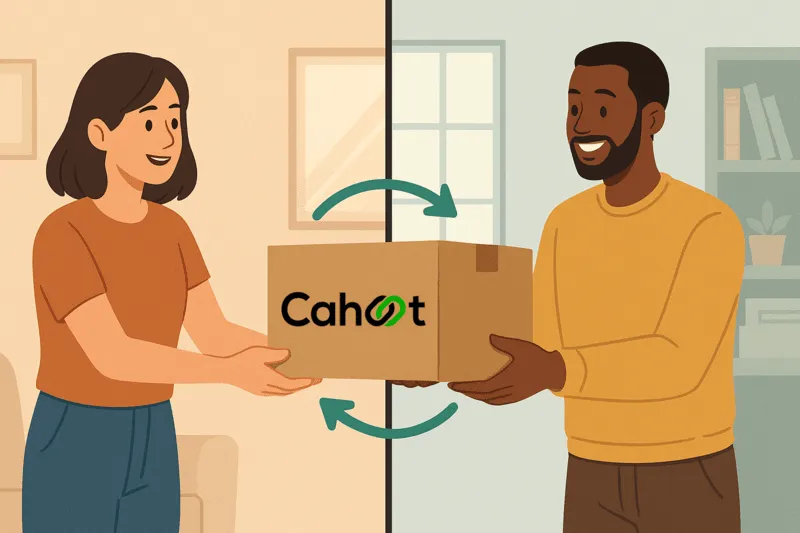
Returns are the terrible, horrible, no good, very bad part of running an ecommerce business. Not just for shoppers (waiting around for a refund) but for emerging ecommerce brands, especially DTC operations. Every return cuts into profit, eats up time, and piles up inventory no one wants to touch. But here’s the twist: what if returns didn’t go back to the warehouse at all? What if they went directly to a new buyer instead? That’s the magic behind the peer-to-peer returns platform. This model introduces key advantages for DTC brands, such as reducing costs, minimizing waste, and improving customer satisfaction.
Cahoot, known for shaking up ecommerce logistics, is leading the charge with this innovative approach in the peer-to-peer returns space. And no, it’s not a borrowing scheme like peer-to-peer lending or a financial product like personal loans. But it does borrow some DNA from those systems, distributed networks, smart matching, and skipping the middleman. Online platforms in the peer-to-peer space facilitate these direct connections, much like how they connect borrowers and lenders in financial contexts, streamlining the process for all parties involved. Think of it as the social lending of ecommerce returns, where the system connects returners directly with new buyers, just as peer-to-peer platforms connect borrowers directly with lenders.
The Real Pain of Traditional Returns
Traditional returns work like this: a customer changes their mind, prints a label, ships the item back to you, and then you have to receive, inspect, restock, maybe repackage, and eventually resell it, often at a steep discount. That burden remains material in 2025: NRF estimates total retail returns will reach $849.9 billion this year, and 19.3% of online sales will be returned. Add in return shipping costs, warehouse labor, customer service tickets, and even potential late fees for delayed processing, and it’s a recipe for negative ROI.
For a small ecommerce business or a founder running lean, this isn’t sustainable. Shipping every return back to your warehouse is like using a bank account with constant fees and zero interest. It drains your cash flow. You could compare it to funding loans with higher risk and low return, much like the challenges faced with traditional loans when penalties and late fees add up. Frankly, it’s a bad deal.
Enter Peer-to-Peer Returns
Instead of sending the returned item to your fulfillment center, Cahoot’s peer-to-peer returns platform lets the original customer ship it directly to a new buyer. Here’s how it plays out:
1. A customer initiates a return.
2. The platform asks them to upload photos, confirm the condition, and hold the item for a few days.
3. AI kicks in, verifying the item’s resale quality, analyzing the returner’s history, and scanning for fraud (risk management). The platform’s technology enables streamlined processes, making the entire experience faster and more user-friendly.
4. Meanwhile, the item is automatically relisted on your store as open-box in real-time, discounted slightly, but still your branded product. The relisting and resale process is transparent and clear, much like how peer-to-peer lending platforms provide comparable loan terms, so both buyers and sellers know exactly what to expect.
5. When a new customer buys it, the returner gets a label to ship it out directly.
6. They’re refunded once tracking confirms it’s on the way or received. In terms of risk management, the risk of a single failed return transaction can be compared to a single default event in lending, highlighting the importance of robust verification and diversification strategies.
Now, instead of a refund eating your margins, you’re reselling the item at 85–95% of retail, skipping warehouse handling and double shipping. It’s fast. It’s efficient. And yes, it saves money.
Why This Works (Especially for Small Businesses)
This isn’t just a fun gimmick. Cahoot’s peer model addresses real ecommerce challenges:
- Shipping Costs: You skip the return leg to the warehouse.
- Inventory Management: The item never clogs up your system.
- Speed: New customers get the item faster. Returners get refunded sooner.
- Customer Satisfaction: Everyone feels good helping the planet and their wallet.
For small businesses, this model is similar to how small business loans and business loans provide alternative financing options to cover major expenses, supporting growth and development when traditional funding is limited.
It’s like a micro version of peer lending. Instead of funding loans with capital, you’re moving product through customer participation. Instead of worrying about borrower defaults, you’re focused on buyer satisfaction and ensuring compliance through verified transactions. The platform also helps brands achieve their financial goals by offering accessible and flexible solutions. Other benefits of the peer-to-peer returns model include improved business insights, better payment terms, and fostering a supportive community for both buyers and sellers.
The Financial Angle
Okay, let’s talk money. The traditional return process? It’s basically like investing in traditional savings accounts, low return, high friction. With peer-to-peer returns, you’re now in the world of alternative investments. You’re getting more value, faster turnover, and lower risk.
Just as peer-to-peer (P2P lending) platforms allow individual and institutional investors to invest in loans, with returns shaped by interest rates and regular interest payments, our model lets you realize value more efficiently. On lending platforms and lending sites, loan offers are determined by factors like minimum credit score, good credit, and the borrower’s profile, much like how our platform assesses transaction eligibility and risk.
Your effective recovery rate improves. That espresso machine that used to cost you $50 to restock and repackage? Now it’s resold in 72 hours at 90% retail with no warehouse touch. That’s the kind of turnaround most lending sites or lending platforms would kill for.
Built-In Risk Management
Cahoot doesn’t wing it. Our P2P returns platform is built with risk tolerance settings, fraud detection layers, and condition verification, all using AI. That focus matters because NRF reports 9% of all returns are fraudulent, and Appriss Retail estimates fraudulent returns and claims cost retailers $103 billion in 2024. That means you’re not just trusting your customers blindly. These tools empower brands to make informed decisions about approving returns and managing risk.
It’s like when institutional investors assess borrower defaults, they don’t rely on vibes. They crunch data, assess credit risk, and build safeguards. Cahoot’s doing the same for your returns: historical data, photo analysis, shipping trends, and user history all factor into who gets approved for peer-to-peer returns.
Customer Experience
Customers like this model. It’s interactive. It feels more personal. They get to feel like part of a sustainability loop. It’s like when borrowers connect with individual lenders on lending platforms, there’s emotional value. A product gets rehomed instead of returned to some faceless warehouse.
Returners are rewarded with small credits or perks for participating. Buyers get a deal. You recover more revenue. And the planet breathes a little easier. That’s what we call attractive returns.
Wrapping It Up
Peer-to-peer returns aren’t just a clever workaround; they’re a full-on rethinking of ecommerce reverse logistics. For small business owners, they offer a practical way to save money, improve customer satisfaction, and align with sustainability goals. For larger brands, they unlock serious cost savings and scalability.
So, whether you’re selling sneakers, smart home gear, or skincare, if returns are eating your margins, it might be time to make a move.
Because unlike traditional financial institutions, this isn’t built on bureaucracy. It’s built on agility, innovation, and a willingness to rethink the rules. Sound familiar?
That’s ecommerce done smarter.
Frequently Asked Questions
What is a peer-to-peer returns platform, and how does it work?
A peer-to-peer returns platform connects the original buyer of a product with a new customer who wants to purchase it, avoiding the need to ship the item back to the brand’s warehouse. Instead of returning it to a traditional logistics hub, the returner ships the item directly to the next buyer. This innovative approach reduces return costs, speeds up resale, and supports sustainability goals for small businesses.
How is a peer-to-peer returns model different from traditional returns?
Traditional returns involve sending the product back to a brand or warehouse, where it’s inspected, restocked, and resold. A peer-to-peer system skips that step. The original buyer holds the item temporarily while the platform finds a new buyer. Once sold, the item ships directly to the new customer, eliminating an entire shipping leg and creating a more efficient, cost-saving process similar to how peer-to-peer lending eliminates middlemen in finance.
Are peer-to-peer returns safe for ecommerce businesses and customers?
Yes. Platforms like Cahoot use advanced fraud detection, data analytics, and AI verification to ensure the returned item matches quality standards before resale. Buyers can review photos, condition grades, and return policies. Just like in peer lending, where borrower defaults are managed through credit checks and risk scoring, P2P returns include safeguards to protect both original and new customers.
What types of ecommerce brands benefit most from peer-to-peer returns?
Virtually any ecommerce brand can benefit from peer-to-peer returns, but product eligibility should be set carefully. Perishable items, hazardous materials, and products with contamination, safety, or chain-of-custody concerns may require additional restrictions, specialized packaging, or exclusion based on carrier and regulatory requirements. From emerging DTC brands and small businesses to large enterprises, companies offering fast-moving consumer goods see the biggest gains. Peer-to-peer returns help reduce operating costs, improve cash flow, and increase customer satisfaction, especially for businesses without access to traditional loans, large warehouses, or institutional investor backing.
How can I start using a peer-to-peer returns platform?
To get started, ecommerce sellers can partner with a platform like Cahoot that offers peer-to-peer returns as part of its fulfillment solution. The platform handles the tech, including photo-based grading, shipping logistics, and fraud prevention. It’s as simple as integrating the system, setting product eligibility rules, and letting the platform connect returns with new buyers, streamlining processes, and unlocking attractive returns on previously lost sales.
Written By:
Indy Pereira
Indy Pereira helps ecommerce brands optimize their shipping and fulfillment with Cahoot’s technology. With a background in both sales and people operations, she bridges customer needs with strategic solutions that drive growth. Indy works closely with merchants every day and brings real-world insight into what makes logistics efficient and scalable.
Turn Returns Into New Revenue
Related Articles
The Shipping Speed Paradox: Why DTC Brands Are Slowing Down
Everyone’s talking about faster delivery.
Ecommerce Profit Leaks: The Hidden Ones That AI Is Finally Closing
Most ecommerce brands believe they understand their margins.
Why Cross-Border DTC Brands Are Moving Fulfillment Inside the US
Cross-border ecommerce fulfillment is the process of shipping ecommerce orders across national borders—often from warehouses outside the United States to U.
Rich Returns & Exchanges: Advantages and Disadvantages
Rich Returns & Exchanges is a Shopify app designed to automate returns and exchanges for merchants, with a special focus on integration with the Shop mobile app. In other words, it’s a commerce merchant’s tool to let customers initiate returns/refunds or exchanges smoothly on mobile and web. The app promises a “mobile-first experience” where customers can start returns from the Shop app within their order view, using a ‘Start a return’ button. Behind the scenes, Rich Returns provides an intuitive, self-service returns portal and label generation system, plus analytics to manage refund and exchange rules. In practice, many Shopify stores use it to centralize returns: it pulls order data directly from Shopify, simplifies refunds (even by issuing store credit), and tracks everything in a unified dashboard.
What Rich Returns Does Well
On the features side, Rich Returns covers the expected bases of a modern returns tool. It offers a custom-branded returns portal (hosted on the merchant’s site) where customers see their order, select items to return or exchange, and choose a refund method (original payment, store credit, etc.). The app automatically generates prepaid return labels from over 100 carriers worldwide; for example, FedEx, UPS, USPS, DHL, etc., so customers only need to print labels and drop off packages. Rich Returns even provides pre-filled return labels, eliminating the need for shoppers to enter address details, which users say “saves a lot of time and effort.” Email notifications are sent out at key milestones (return received, refund issued, etc.) to keep customers informed. A particularly unique advantage is the tight Shop App integration: merchants can let shoppers handle returns directly via Shopify’s mobile Shop app, creating a seamless, “mobile-first experience” in line with modern commerce. This means returns are visible to the customer just like any order, boosting transparency.
For merchants, Rich Returns provides automation rules and insights. You can set up conditional exchange suggestions (so if an item isn’t working, the system can prompt an exchange offer instead of a refund) to help “recapture lost revenue”. The app can automatically apply basic refund or exchange policies, and even offer discounted shipping labels if connected to certain apps (e.g., EasyPost). It supports data syncing with Shopify and common CRM tools (e.g., Intercom, Klaviyo) so that returns data and analytics flow into a merchant’s dashboard. According to app store details, the Standard plan ($19/mo) includes features like 10 free returns per month, a branded portal, and automated labels. Higher plans unlock multi-language support and advanced rules. Overall, many review snippets highlight responsive support and ongoing new features; one user said the team is “constantly improving and adding new features”. Rich Returns aims to improve customer satisfaction by making returns frictionless, ultimately helping brands build loyalty and scale up. In short, its strengths include a polished user interface, a built-for-Shopify architecture, and a clear focus on retaining revenue through exchanges and store credit.
Where Things Fall Apart
On the downside, a few limitations emerge. A prominent complaint is limited multi-language support. One Shopify reviewer gave low marks, saying: “App does not really support multi-language. Very poor implementation with limitations.” They noted some parts of the interface were not fully localized. In today’s global market, that can be a drawback for brands selling in multiple regions. Another issue is rich media: the same review mentioned that including photo (and video) uploads in the return form requires an extra paid add-on, and base support is lacking. In other words, if a customer needs to show a picture of a defect, Rich Returns’ basic plan doesn’t cover it; that feature must be purchased separately. A few merchants also found the app’s feature set “quite basic” for complex returns workflows: as one put it, it’s “not made as a platform, because every manual interaction has to be handled through another tool or Shopify.” This suggests that while core refund/exchange flows are covered, anything outside those (e.g., special RMA review processes) might require manual work or another system.
Some support issues have surfaced, too. Though many five-star reviews praise the team’s responsiveness, at least one user reported slow or “standard answers” that didn’t solve problems. This mirrors AfterShip’s feedback in a way: good support is not always guaranteed. Pricing can be another pain point for growing merchants. Only the Standard plan is very low cost; volume fees kick in after 10 returns per month. If a shop has hundreds of returns, the cost can climb, and some users express frustration at ongoing per-return charges. That said, Rich Returns is generally seen as affordable for what it offers.
Smaller Gaps and Missing Features
In terms of integrations, Rich Returns supports carriers through apps like EasyPost/Shippo (so effectively 100+ carriers) and connects to Shopify natively. Rich Returns remains Shopify-centric, but its current materials also highlight Shopify Plus experience and API-based connectivity for ERP, CRM, IMS, 3PL, and analytics systems. We should note, however, that as a younger app (launched in 2019, with about 80 reviews), it does not have the decades-long pedigree of older systems. Some advanced features, like returns consolidation or very granular automation, are still evolving.
Verdict: Built for Shopify Simplicity, But Light on Power Features
Rich Returns is a solid choice for Shopify merchants who want a modern, mobile-friendly returns system deeply integrated with Shopify data and the Shop app. Its advantages include a responsive interface, exchange incentives to hold onto sales, and automated return label creation from many carriers. Support and user reviews are generally positive, which is notable given some apps’ history of ignoring merchants. However, the drawbacks, such as limited languages, the need to pay extra for media uploads, and basic (non-enterprise) workflows, mean it may not suit large global brands or very complex returns needs. In practice, Rich Returns tends to be praised for ease of setup and ongoing improvements, but critics warn about the absence of deeper customization.
For U.S. ecommerce operators weighing returns solutions, Rich Returns compares favorably to standard options (like AfterShip), but alternatives exist. For example, Cahoot’s peer-to-peer returns solution can dramatically reduce shipping costs by routing returns directly from the returning customer to the next purchasing customer. In any case, Rich Returns achieves its goal of “saving time” and boosting revenue via exchanges, yet it’s important to verify that its features (multi-language, integrations, any extra fees) align with your store’s scale and customer base before committing.
Frequently Asked Questions
Is Rich Returns only for Shopify?
Yes. It’s built specifically for Shopify merchants, with deep native integration and support for the Shop App. It’s not compatible with other ecommerce platforms.
Does it support photo uploads for return claims?
Photo upload is shown in Rich Returns’ current pricing comparison as a higher-tier feature; video upload support is not clearly documented in the official materials reviewed. If your returns workflow relies on image-based verification, you’ll need to factor that into your budget.
Can Rich Returns handle exchanges automatically?
Yes, to a point. It supports exchange flows and can automatically suggest alternate items or offer store credit, helpful for saving the sale rather than losing it to a refund.
Is there multi-language support for international customers?
Sort of. Rich Returns now lists multi-language customer emails on Standard and broader multi-language portal, return-reason, and language-customization features on higher tiers, though at least one recent merchant review still reports localization limitations.
What sets Rich Returns apart from other returns apps?
Its biggest strength is simplicity, especially for Shopify users. It’s easy to install, mobile-friendly, and offers a polished UI. That said, it may not have the depth or flexibility needed by large, complex operations.
Written By:

Rinaldi Juwono
Rinaldi Juwono leads content and SEO strategy at Cahoot, crafting data-driven insights that help ecommerce brands navigate logistics challenges. He works closely with the product, sales, and operations teams to translate Cahoot’s innovations into actionable strategies merchants can use to grow smarter and leaner.
Turn Returns Into New Revenue
Related Articles
Crafting a Return Policy that Drives Customer Loyalty and Reduces Returns
Let’s talk about ecommerce returns policies.

Why Faster Refunds Made Returns More Expensive
Introduction Faster refunds feel like obvious progress.

AfterShip Returns Management Solution: Advantages and Disadvantages
AfterShip’s Returns platform (often called AfterShip Returns Center) is a post-purchase tool that lets online retailers manage all customer returns and exchanges through a branded returns management portal that centralizes all return-related activities. In theory, it streamlines the entire returns process, from customer self-service returns to automated label generation, promising to “ensure a happy post-purchase experience”. The service integrates with major carriers (FedEx, USPS, Canada Post, etc.) to automatically generate return labels (prepaid shipping labels or merchant-paid labels) and track return shipments. In practice, many merchants praise its automation and analytics, but a significant number also report pain points with workflow and support. We’ll dig into the key features and then highlight the notable drawbacks, focusing especially on the latter.
What AfterShip Does Well
One of AfterShip’s selling points is a custom-branded returns portal. Merchants can publish a returns page on their domain (using store branding and colors) where customers see the store’s return policy and submit returns requests. Shoppers just enter an order number and email on this branded returns page and initiate a return “in just a few clicks”. This self-service approach avoids the email back-and-forth of traditional returns. Customers pick items and reasons for return on-screen, then AfterShip can automatically generate RMA numbers and prepaid return labels for them. The platform even offers discounted USPS label rates and supports printless QR-code drop-offs at 300K+ locations (including Canada Post and Happy Returns drop-off kiosks) to make return shipping easier. Customers can simply print the prepaid label and attach it to the box for return shipping, following the clear shipping instructions provided by AfterShip. In short, AfterShip’s returns page and label generation aim to create a seamless returns experience: customers can “return products and exchange products via a branded returns portal”, reducing hassle and improving customer satisfaction. The ease of use means customers can simply print their return labels at home.
Importantly, AfterShip advertises strong automation and analytics. Its dashboard centralizes all returns requests, RMA requests, and shipping status updates, which in trials has cut handling time in half (“50% reduction in returns processing time”). Merchants can set routing rules and eligibility rules (for example, auto-approve returns for certain items or dates) to speed up the returns approval process. The system can automate repetitive tasks in the returns process, reducing manual effort. The system can automatically create exchange orders or process refunds based on these rules, freeing merchants from manual steps. It also tracks every return shipment’s returns status and triggers email status updates to reassure customers. All this data feeds into an analytics dashboard to gain visibility on return rates, label costs, process time, and other key metrics. The idea is that AfterShip not only “saves processing time” and “reduces costs” by automating manual tasks, but also helps “recapture revenue with product exchanges” and increase brand loyalty by treating returns as marketing opportunities. AfterShip Returns helps build brand loyalty by providing a positive post-purchase experience.
In practice, many users find AfterShip’s interface and setup quite intuitive. Merchants say the returns page looks clean and integrates well with their store, and carriers like UPS, FedEx, USPS (and even Google Shopping integration via US Postal APIs) work without extra apps. The Shopify/BigCommerce app plug-ins make installation straightforward, and AfterShip’s pre-built integrations cover most common ecommerce platforms.
AfterShip provides detailed information about each step of the returns process, including setup, tracking, and support. On the positive side, support for analytics and exchange incentives means good customers can be offered store-credit refunds (instead of a full cash refund) to “turn returns into repurchases”. The platform allows merchants to efficiently track all returns requests in one place, and each returns request is logged and processed through the portal. Refunds can be issued directly to the original payment method. All these features work together to improve customer satisfaction.
Summary: What Makes AfterShip Stand Out (When It Does)
- Branded returns pages with custom styling
- Prepaid shipping labels with carrier integrations
- Supports prepaid labels for easy customer returns
- Rules-based automation (refund/exchange approval)
- Real-time tracking and return shipment visibility
- Basic analytics dashboard and reporting
- Discounted USPS rates and printless QR return options
- Seamless setup for Shopify, BigCommerce, and similar platforms
- Happy Returns partnership for boxless returns
Where Things Fall Apart
However, numerous drawbacks have emerged in real-world use. A frequent theme is customer support issues. Several merchants on Shopify’s app store and review sites describe “terrible support” and generic, unhelpful responses. One store owner wrote that “the biggest issue is the customer service: it is terrible. Every agent is copying and pasting generic answers that have nothing to do with the issue… I would stay away from this app”. Others echo this, saying support tickets are closed without resolution and that agents lack product knowledge. A Canadian user complained, “Useless Customer Support cannot provide any help with the issue… We will switch to another tool”. These reports suggest merchants sometimes face long delays or poor communication when things go wrong.
On the feature side, AfterShip’s returns processes can be too rigid for some workflows. One merchant noted it’s not possible to skip intermediary steps (e.g., approve → refunded) without creating a “received” state first. Others have pointed out that the system’s canned email templates can have grammar errors and cannot be fully edited, which hurts the brand experience. Integration is another concern: while AfterShip works well with its own family of tools, many users say “most of its integrations only support other AfterShip products”, so if your store uses third-party warehousing or custom CRMs, you might find the returns center’s connectivity limited.
When AfterShip’s integrations fall short, merchants may face all the hassles of managing returns across multiple platforms, increasing complexity and manual work. In practice, some customers must manually upload prepaid labels if their preferred carrier isn’t supported, or use multiple platforms to process returns. In short, despite handling “all the returns requests” through one portal, a retailer may still end up juggling separate tools for complex returns flows.
Pricing and user policies have also disappointed some long-time users. AfterShip offers a free tier (a small number of returns per month) and several paid plans, but several reviews mention unexpected charges and changes. For example, one complaint said AfterShip abruptly changed to a per-user billing model and logged them out of the app without notice, calling the move “unethical and totally shameful”. Another user reported that after a recent update, “nothing is working like before”, the team couldn’t generate return labels and had to recreate accounts, effectively paying for access again. Others mention they can’t bundle all return shipping charges into a single monthly invoice, leading to confusion. These anecdotes suggest that policy changes can catch merchants off guard, adding hassles and potential “lost revenue” if returns are delayed.
Privacy concerns have even been raised: one merchant warned that AfterShip might store outdated customer emails in its database, which “violates US and EU laws”. While AfterShip responded that it respects privacy, such claims highlight merchant unease about data handling.
Finally, usability gaps remain. Some merchants find AfterShip’s portal lacking in multi-language support (despite international carrier integration) and in rich return options. A notable review said the app is “quite basic… every manual interaction has to be handled through another tool or Shopify”. Others wanted a built-in photo or video upload for returns (especially helpful for defect claims), but Rich Returns (not AfterShip) is mentioned for that. In AfterShip’s case, you can only upload photos in a limited way via the RMA management, which some users find inadequate.
Summary: Smaller Gaps and Missing Features
- No peer-to-peer returns or next-generation solutions
- No in-store returns workflows (omnichannel support is light)
- No deep integration marketplace beyond core platforms
- Photo/video documentation is not built in by default
- Limited support for multi-language/localization
- Email templates can’t be fully customized on all tiers
- Returns policy customization and related workflow/routing rules are limited
Verdict: Feature-Packed and Familiar, But Support and Flexibility Fall Short
AfterShip Returns & Exchanges provides a robust automated returns solution with branded pages, multi-carrier label support, and flexible return rules, all aimed at “improving customer satisfaction” and “saving time”. When it works well, it does reduce the hassles of returns for both merchants and shoppers. However, many merchants report frustrations: particularly poor customer support, occasional system bugs (e.g., label generation failures), and unexpected pricing changes. Integration can also be a double-edged sword: the tight AfterShip ecosystem means great performance with built-in carriers, but limited options if you rely on other services.
In summary, AfterShip Returns Center is a mature, feature-rich portal for managing returns and exchanges in ecommerce. It excels at automating routine tasks (like label generation and status updates) and can truly “save processing time” and recover revenue through exchanges. Yet its disadvantages, chiefly support headaches and some workflow inflexibility, are significant for many merchants. If you value a wide integration network and 24/7 responsive service, be prepared for trade-offs. For U.S. brand operators looking at alternatives, consider that newer solutions like Cahoot’s peer-to-peer network promise to cut shipping costs by matching returned items to new buyers in-market. In short, AfterShip delivers many powerful returns features (including branded returns pages and automated carrier label generation), but its real-world cons, notably support and integration gaps, can leave customer satisfaction hanging in the balance.
Frequently Asked Questions
Does AfterShip Returns work with all carriers?
Not all of them. AfterShip supports major carriers like USPS, FedEx, UPS, and Canada Post, but for anything beyond that, merchants may need to manually upload return labels or rely on third-party tools.
Can customers submit return requests directly from my website?
Yes! AfterShip lets you publish a branded returns page where shoppers can initiate returns “in just a few clicks” using their order number and email.
What kind of automation does AfterShip offer for returns?
AfterShip includes basic automation rules, like auto-approving returns or triggering refunds based on eligibility. It also handles label generation and sends email status updates to customers automatically.
Are there hidden fees or plan limitations I should be aware of?
Several merchants have reported unexpected billing model changes and confusion around per-user charges or return volume tiers. It’s a good idea to read the fine print and monitor invoices.
How does AfterShip handle support?
Support is a mixed bag. Some users have good experiences, but others report generic responses and unresolved tickets. If hands-on support is critical, this might be a weak spot.
Written By:
Indy Pereira
Indy Pereira helps ecommerce brands optimize their shipping and fulfillment with Cahoot’s technology. With a background in both sales and people operations, she bridges customer needs with strategic solutions that drive growth. Indy works closely with merchants every day and brings real-world insight into what makes logistics efficient and scalable.
Turn Returns Into New Revenue
Related Articles
Crafting a Return Policy that Drives Customer Loyalty and Reduces Returns
Let’s talk about ecommerce returns policies.
Why Faster Refunds Made Returns More Expensive
Introduction Faster refunds feel like obvious progress.
ZigZag Returns Management Solution: Advantages and Disadvantages

A customer on your site just wants to click “Return Item” and be greeted by a sleek, branded portal that walks them through refunds, exchanges, and tracking. That’s the promise of ZigZag, a UK-born returns management platform now serving brands worldwide. ZigZag’s mission is to transform the ecommerce returns process for companies and consumers, aiming to improve customer experience and profitability for businesses of all sizes.
In practice, ZigZag offers a fully white-labeled returns portal with rules-driven workflows, multiple return options (exchanges, store credit, paid returns, or in-store drop-offs), and global carrier integrations. As an innovative SaaS platform, ZigZag Global creates tailored solutions for businesses and retailers to streamline their returns journey and enhance operational efficiency. ZigZag Global’s international presence is further strengthened by its partnership with Global Blue, providing a comprehensive logistics network for retailers and companies worldwide.
The tool’s global footprint (1,500+ carriers and multilingual/currency support) is a big plus for cross-border sellers. In fact, ZigZag touts connections to 220 warehouses and 1,500 carriers across 170+ countries, and its European Returns Hub handles item validation, grading, and customs clearance for international returns. Through the consolidation of shipments and the automation of processes, companies can save money and improve profitability. The system also emphasizes revenue retention: for example, it enables “live exchanges” in place of refunds and even paid-return fees to recoup costs.
ZigZag’s innovative solutions and investment in technology enhance the ecommerce returns experience for both businesses and consumers. In short, ZigZag’s software does a lot, making returns easy for customers and giving brands granular control of the process.
Customers and reviewers generally praise ZigZag’s ease of use and integration. Merchants report that the returns dashboard is intuitive and everything “needed is in one place,” tracking is straightforward, and reporting is “a breeze.” ZigZag assists businesses with analytics and reporting tools to optimize performance and maximize the value of their investment.
The Shopify app for ZigZag even advertises “one-click installation” and automatically handles orders, exchanges, and refunds within Shopify’s admin. Brands appreciate that the portal can be fully branded (on your own domain) and set to multiple languages and currencies, which is crucial for international shoppers.
Another plus is customer support: ZigZag insists on in-house support, assigning a dedicated account manager to your account. In practice, users say onboarding and help have been “stress-free” and responsive, a major advantage over solutions that outsource support. ZigZag’s focus on customer satisfaction and experience benefits both consumers and retailers.
What ZigZag Does Well
In our testing and research, ZigZag shines at automating the returns front end. It offers a rich rule engine so that returns can trigger various outcomes (refund, exchange, credit, donation, etc.) without manual work. ZigZag enables retailers to automate returns and exchange processes, improving the overall functionality and efficiency of their online store. It ties deeply into Shopify (and others via API), so inventory, order data, and even apps like email or CRM can all connect cleanly.
The platform is enterprise-grade: it can scale to thousands of returns a month, and it literally handles diverse cases, everything from faulty items to “just didn’t like it” exchanges. The reporting hub surfaces why people are returning items (and which products suffer the most returns), helping brands act on trends. Tracking processed returns and analyzing the returns journey helps companies make data-driven decisions to drive growth.
Importantly for U.S. e-tailers, ZigZag does support USPS shipping labels natively (along with UK/EU carriers like DPD, Evri, and Yodel), so domestic returns via USPS can be auto-generated. There are a variety of shipping options available to consumers, enhancing convenience and customer experience. All told, ZigZag’s core feature set is robust: conditional logic, branded portal, a range of return options, and detailed analytics. The platform enhances the returns and exchanges process, supporting business growth and customer satisfaction.
Where the Returns Journey Starts to Wobble
ZigZag’s software is polished, but it leans heavily on carriers and partners for logistics, and that’s where some cracks show, especially for U.S. brands. First, no one-stop logistics: ZigZag does not operate its own drop-off network or local warehouses outside Europe. Its “Returns Hub” (in Germany) handles EU returns with grading and customs, but there’s no equivalent U.S. hub. In practice, that means returns from U.S. customers often just go through USPS (or whichever carrier you pick) back to your warehouse or ZigZag’s foreign hub. This can lead to longer transit times or an inconsistent experience. Reviewers note that carrier performance varies: “Some of the carriers can be slower than others,” one user pointed out, hinting that having 1,500 options doesn’t eliminate slow shipping.
Another wobble is carrier support on the U.S. side. ZigZag’s Shopify app explicitly lists Evri, Yodel, DPD, UPS, USPS, and Royal Mail as the supported labels. FedEx and DHL (big U.S. carriers) are notably absent from that list. The workaround is to “upload your own” label if you want another carrier, but that defeats the purpose of automation. In short, ZigZag’s current Shopify app listing addresses UPS, but merchants that rely on other carrier combinations may still need to confirm fit with ZigZag directly. This gap forces brands either to restrict returns to USPS or spend time bridging that hole themselves (or use a third-party connector).
Integration breadth is also a trade-off. Yes, ZigZag has connectors for Shopify, BigCommerce, Magento (and even mentions NetSuite, Amazon via partners). But actually hooking up a complex stack can be non-trivial. The company claims “1-hour” API integrations, but in reality, merchants tell us it often takes weeks of developer work to wire up multiple platforms or custom databases. If you’re on Shopify, you can be up and running quickly; if you’re on another system (Salesforce Commerce Cloud, a custom headless frontend, etc.), you’ll need engineers or a consulting partner. There isn’t a turnkey Zapier-like marketplace of Zap-ready connectors (beyond the prebuilt ones), so integration can stumble for non-technical teams.
User interface customization has its limits, too. Many like that the portal is simple, but a few UI snags emerged from reviews. For example, one review noted a lack of flexibility in label formats—“not much flex on the labels”—making warehouse operations slightly harder. Another mentioned the admin side: some “would prefer the admin portal to have more features” for self-service. In practice, you often have to go to ZigZag’s account team to tweak a portal detail or add a new condition. The design and functionality of the returns portal page are also important for a seamless user experience, especially when it comes to customizing fonts and the overall user interface. That’s fine once you’re live, but it can slow down the setup.
Finally, while we emphasize ZigZag’s global promise, be cautious with “international support.” It handles multi-currency and customs documentation (especially from the EU side), but for returns into the U.S., it doesn’t magically manage duties or taxes. If your U.S. shoppers are returning imports from China, ZigZag doesn’t issue refund claims for duties; you’d need to handle that yourself. In short, ZigZag is very strong as software, but it expects your logistics team to stitch together the actual flows. As one analogy from a similar review put it: “You’ll still need to stitch together parts of your reverse supply chain due to the absence of integrated services.”
What’s Missing
Beyond the issues above, several features you might expect in a modern returns solution are absent. Notably, no peer-to-peer network. ZigZag recently stated promoting access to drop-off locations, lockers, courier pickups, and local postal services, so the stronger limitation is not network absence but whether a merchant’s preferred return methods and markets are supported in practice. That’s a capability rivals like Narvar or Happy Returns offer to speed up U.S. returns. (ZigZag would need you to ship the item to a specific address instead.) Likewise, there’s no in-app product scanning or proof of condition on return. The platform doesn’t natively capture photos of returned goods or scan product barcodes to confirm authenticity; it’s purely a front-end/label solution.
There’s also limited built-in fraud prevention or advanced triage AI. Some new platforms claim to analyze returns reasons to flag possible abuse. ZigZag online material states fraud-related analytics and workflow controls is available, so the limitation is better framed as the depth of those capabilities versus specialist fraud tools. While the portal has ample reporting, its lower-tier plans may lack some advanced analytics (as in other apps), so true “deep dive” data might require exporting to another BI tool. Additionally, there is no built-in functionality for managing discounts or syncing promotional codes within the returns process, which can be important for stores that need to track or apply discounts related to returned orders.
In terms of U.S. localization, besides the carrier gap, there’s minimal U.S.-centric UI. All official docs and case studies are Euro-focused (Selfridges, Zara, Sportsshoes UK, etc.), and the support team is Europe-based. So if you need 24/7 stateside help or Spanish-language guides (for a U.S. brand), you might find ZigZag somewhat light on localized resources. (It does offer a Castilian Spanish portal language.)
In short, ZigZag lacks the physical/logistics side of returns. ZigZag now publicly promotes large-scale drop-off coverage, including lockers and local drop-off options, but brands should still confirm any required scanning workflows, domestic hub needs, and market-specific operating setup. Advanced features like same-day returns processing or plug-in 3PL fulfillment are not part of ZigZag’s offering. If you truly need an end-to-end solution, then ZigZag only covers the digital slice; everything else is up to you.
Verdict: Powerful Returns Tech, If You Bring the Logistics
ZigZag Returns is excellent software for brands that need a sophisticated digital returns portal. It earns high marks for usability, Shopify-friendly integration, and revenue-saving tactics (exchanges, store credit, paid returns). Its global reach is real, with 1,500+ carriers and multilingual, multi-currency support; it’s a solid choice for retailers shipping worldwide. The in-house support model and enterprise focus (Sportsshoes, ECCO, etc., are users) mean you get a team on your side to fine-tune workflows and handle complex rules.
But ZigZag’s Achilles’ heel is that it’s “software first, logistics second.” For U.S. brands in particular, that means think twice if you need a turn-key reverse-logistics network. If you need a peer-to-peer drop-off model, automated in-country returns hubs, or native FedEx support, ZigZag alone may not suffice. Alternatives like Cahoot are emerging to fill exactly that gap: Cahoot uses a peer-to-peer returns model with drop-off at UPS Stores and real-time product scanning, which can dramatically cut return shipping and restock time. In contrast, ZigZag leaves on-the-ground execution to your carriers or 3PLs.
Consider ZigZag if: You’re a midsize-to-large e-tail brand (especially on Shopify, BigCommerce, or Magento) that ships internationally and wants a rich, automated returns portal. Your team is comfortable managing carriers and fulfillment. You want granular control of return policies and the data that comes from returns. (Its prosperity comes from structure and software; it’s great at “tidying up” returns once they’re in the system.)
Look elsewhere if: You need a built-in U.S. network. If 90% of your returns are domestic and you want drop-off or product scanning, platforms like Cahoot or ones with carrier-partner networks might serve you better. Also, reconsider if you rely heavily on carriers or workflows not documented in ZigZag’s current app and integration materials, or if you run on a bespoke ecommerce stack that would require custom integration work.
Bottom line: ZigZag Returns is a powerful returns software; it can streamline refunds, exchanges, and customer communications much better than doing it all manually. But it doesn’t deliver logistics services out of the box. In our view, it’s best for ambitious brands that want a unified digital portal and can handle the physical bits themselves. If you seek a more self-contained US-focused logistics solution, that’s when newer “peer-to-peer” tools (like Cahoot) come into play.
Frequently Asked Questions
Is ZigZag Returns a good fit for U.S.-based ecommerce brands?
It depends. ZigZag offers strong return automation software and a branded customer portal, but its logistics network is more Europe-focused. U.S. brands may find gaps in carrier options (limited FedEx/UPS support) and no domestic drop-off or product scanning infrastructure.
Does ZigZag provide its own return logistics services?
No. ZigZag is a returns management platform, not a logistics provider. It integrates with carriers and provides labels and QR-code-based return flows, while also promoting Returns Hub operations and broad drop-off coverage; brands should still validate any U.S.-specific hub or network requirements directly. Physical fulfillment and reverse logistics are handled separately.
How easy is it to integrate ZigZag with Shopify or BigCommerce?
For Shopify, it’s a smooth experience; ZigZag has a native app that’s easy to install. BigCommerce and Magento also have connectors, but custom platforms or complex tech stacks may require API work and developer involvement.
Can ZigZag help reduce returns or just process them?
ZigZag focuses more on managing returns than preventing them. It helps brands retain revenue via store credit or exchanges, but doesn’t include fraud prevention, return reason analysis, or pre-return nudges like some newer platforms do.
What are ZigZag’s key limitations for scaling brands?
Scalability isn’t the issue; it’s more about what the platform doesn’t cover. Lack of peer-to-peer returns, limited native U.S. carrier support, and no local return hubs can leave operational gaps for large or fast-growing American brands.
Written By:
Indy Pereira
Indy Pereira helps ecommerce brands optimize their shipping and fulfillment with Cahoot’s technology. With a background in both sales and people operations, she bridges customer needs with strategic solutions that drive growth. Indy works closely with merchants every day and brings real-world insight into what makes logistics efficient and scalable.
Turn Returns Into New Revenue
Related Articles
Crafting a Return Policy that Drives Customer Loyalty and Reduces Returns
Let’s talk about ecommerce returns policies.
Why Faster Refunds Made Returns More Expensive
Introduction Faster refunds feel like obvious progress.
Return Prime Returns Management Solution: Advantages and Disadvantages
The Shopify app store is jam-packed with return tools promising smoother customer experiences and higher revenue retention. One of those players is Return Prime, a returns management platform that positions itself as simple, affordable, and merchant-friendly. Beyond just being listed in the app store, Return Prime is part of the broader Shopify ecosystem, a network of integrated platforms and services that enables merchants to leverage existing tools, expand internationally, and enhance their offerings. It’s got decent traction, a footprint in both Western and emerging markets, and a Shopify rating north of 4.8 star rating across 676 reviews. Sounds great, right?
But under the surface, things get a little more nuanced. While Return Prime checks a lot of boxes, it leans more toward a lightweight tool than a robust infrastructure partner.
Let’s break down where Return Prime delivers on its promise and where it leaves brands guessing.
What Return Prime Does Well
Return Prime is a growing returns management tool built for Shopify, WooCommerce, Magento, and other ecommerce platforms. Based in India, it’s gotten traction among DTC brands in fashion, electronics, and wellness, especially those looking for global-friendly returns tools at a budget-friendly price point. The company continues to grow and expand its reach, supporting more merchants and increasing its influence in the ecommerce ecosystem. This growth is reflected in its expanding product offerings and merchant base.
Return Prime promises to streamline return logistics and automate exchanges, refunds, and store credits, all through a branded, no-code portal. For brands operating internationally or with a physical + digital presence, it feels modern and flexible. Return Prime helps ecommerce businesses streamline their returns and exchanges, making operations more efficient.
1. Solid Shopify Integration
Return Prime was built from the ground up for Shopify and Shopify Plus, offering seamless integration with any Shopify store. Setup is quick, the portal lives on your domain, and it supports exchanges, refunds, and store credit, without needing to hop into multiple apps or dashboards. Return Prime is one of the better-behaved tools when it comes to not bloating your tech stack, and users consistently praise its lightweight UX and easy onboarding.
2. Exceptional Customer Support
If there’s one thing merchants rave about, it’s Return Prime’s customer service. The support team is known for its responsiveness and helpfulness, ensuring that merchants receive quick assistance whenever needed. Live chat, quick resolutions, and proactive outreach from the team, who are experts in their field and take a proactive approach to assisting merchants, are the norm, not the exception. Plenty of reviews mention the founder himself jumping in to help. This level of hands-on support is rare and earns the platform serious credibility with small to mid-sized brands.
3. Flexible Return Options
Return Prime lets customers request a refund, exchange, or store credit directly in the portal, and brands can customize return rules and exchange rules per product, policy, or region to streamline the returns and exchanges process. For example, you can exclude final sale items, control exchange eligibility, or configure automated store credit amounts. The portal also supports multi-language options, a plus for international brands.
4. Affordable for SMBs
Compared to big-name platforms like Loop or Happy Returns, Return Prime comes in cheaper. Paid plans start around $20/month, scaling with volume and features. That’s music to the ears of early-stage brands that need to offer a return solution without eating into margin. No fancy hardware. No add-on costs for scanning or item condition verification; these features are free for users. Just software.
5. Global Carrier Support
Return Prime plays nice with a number of shipping carriers, including Shippo, Shiprocket, EasyPost, and AfterShip. That makes it attractive for brands operating in India, APAC, Latin America, or Europe, where carrier diversity is essential and where Return Prime is expanding its international presence. Plus, Return Prime has started building a network of regional 3PL partners and offers localized RMA workflows.
Where It Gets Complicated
1. Limited Innovation in Reverse Logistics
While Return Prime is a clean solution for front-end return requests, it doesn’t offer reverse logistics infrastructure of its own. Return Prime does not appear to operate its own broad reverse-logistics network, although its current feature set does include in-store return and drop-at-store options. It’s pure-play software, and merchants are responsible for shipping, warehousing, and product disposition, a manual process that can be time-consuming and complex. For brands scaling globally, this can quickly become a bottleneck.
2. Basic Automation
Yes, you can customize policies and auto-approve certain return types, but Return Prime lacks AI-driven routing or machine-learning decision trees that power more advanced tools. It’s smart, but not intelligent in the way some enterprise-grade competitors are. If you’re managing thousands of returns a month, you’re going to want more firepower. Advanced automation could significantly improve the efficiency and effectiveness of your returns management.
3. Exchange Limitations
Product exchanges in Return Prime work well, but variant-level suggestions, AI-driven upsell logic, or in-stock alternatives are mostly missing. Without these features, you miss the opportunity to boost revenue by converting more returns into exchanges. Return Prime is doing better than most at this price point, but it’s not a conversion engine. If your CX team’s goal is to save the sale, it might leave you short.
4. Not Built for Complex Brands
Return Prime was built with ease of use in mind, but that also means tradeoffs. Enterprise users or multi-warehouse brands should evaluate Return Prime’s higher-tier integration options carefully: the product now documents WMS integrations, custom API/webhook integrations, and multiple-location support, but its official storefront support remains Shopify-centric. Some advanced API use cases will require workarounds or developer help, particularly when integrating order management systems for handling shipping, tracking, and processing returns within the overall order lifecycle.
5. Reliant on External Logistics Partners
Return Prime is increasingly partnering with 3PLs and shipping platforms, but these aren’t always native or tightly integrated. Merchants looking for a single, unified system may end up having to manage those integrations independently or via manual processes, which can complicate the overall returns process for merchants.
What’s Missing
Return Prime isn’t pretending to be everything. It’s not a 4PL. It’s not building locker networks or peer-to-peer returns. And it’s not leading the charge in AI, sustainability, or smart automation.
That’s not a dealbreaker, but it does highlight what’s missing: no built-in verification step, no way to consolidate international returns locally, and no embedded fraud prevention layer at the return source. Return Prime focuses mostly on the policy and software experience, not physical returns movement or logistics orchestration.
Other missing features include the automated generation and assignment of return labels, tracking when items are received and when customers receive refunds, determining which items are eligible for returns and exchanges, capturing detailed return reasons and reasons for returns, supporting seamless management of returns and exchanges, enabling shoppers to bring items to drop-off locations, outlining expected procedures and charges, providing performance insights for return management, offering a self-serve portal to serve shoppers, and highlighting how other platforms have helped merchants address these gaps.
Verdict: Simple, Friendly, but Not Full-Service
Return Prime is a smart choice for small and mid-sized Shopify brands looking for a clean, cost-effective way to manage returns, refunds, and exchanges. If you’re primarily selling in one region and your volume is manageable, you’ll love the speed, support, and simplicity, all of which contribute to a better customer experience.
But for brands with growing international footprints, complex reverse logistics needs, or fraud concerns, Return Prime may not go far enough. It’s not built to manage returns infrastructure, optimize cost per return, or route items dynamically across warehouses.
That’s why more advanced solutions like Cahoot’s peer-to-peer returns are stepping in to fill the gap with real-time item scanning and machine-led triage that helps brands manage returns at scale.
Return Prime is good software. But it’s not a full system.
Frequently Asked Questions
Who is Return Prime designed for?
Return Prime is ideal for budget-conscious Shopify merchants, especially in India, Southeast Asia, and emerging markets. It’s built for ease of use and quick setup rather than enterprise-grade complexity.
Does Return Prime offer a returns logistics network?
No. Return Prime provides return management software but doesn’t own or operate a logistics network. Merchants are responsible for carrier integration, warehousing, and item restocking, or must set up third-party solutions themselves.
Can Return Prime handle product exchanges automatically?
Partially. It supports more than basic exchange workflows, including same-variant exchanges, other-product exchanges, upsell during returns, and incentive-driven exchange features. Brands that need highly specialized AI decisioning should still validate those requirements directly.
What customer support options does Return Prime offer?
Return Prime has an excellent support reputation. Many merchants praise Return Prime’s responsive support, and current official materials advertise 24×7 support and live chat. Past customer reviews cited direct access to the founders in some cases. This is a strong differentiator in their favor.
How does Return Prime stack up against platforms like Cahoot?
Return Prime is software-only; it doesn’t handle physical logistics. Platforms like Cahoot integrate digital return tools with real-world logistics, including peer-to-peer item routing, scanning at return hubs, and faster resale/relist workflows. Merchants should choose the platform that best aligns with their return management and logistics requirements.
Written By:
Indy Pereira
Indy Pereira helps ecommerce brands optimize their shipping and fulfillment with Cahoot’s technology. With a background in both sales and people operations, she bridges customer needs with strategic solutions that drive growth. Indy works closely with merchants every day and brings real-world insight into what makes logistics efficient and scalable.
Turn Returns Into New Revenue
Related Articles
Crafting a Return Policy that Drives Customer Loyalty and Reduces Returns
Let’s talk about ecommerce returns policies.
Why Faster Refunds Made Returns More Expensive
Introduction Faster refunds feel like obvious progress.
ReturnGo Returns Management Solution: Advantages and Disadvantages
Returns are the double-edged sword of ecommerce. They build trust with shoppers but crush margins if mismanaged. That’s where ReturnGo aims to help, as one of the leading solutions in the returns management market, offering a customizable returns portal that promises to reduce refund rates, improve customer retention, and save brands money. But does it actually deliver? And more importantly, is it the right fit for modern ecommerce operations?
We dug into ReturnGo’s features, customer feedback, integrations, and support model to give you the full picture, not just the marketing gloss. We also evaluate whether ReturnGo offers a better way to handle the returns process. Here’s what stands out, and where the cracks start to show.
What ReturnGo Does Well
Returns are messy. ReturnGo tries to tidy them up, mostly.
ReturnGo is a self-service returns and exchange platform built for Shopify brands, aiming to keep revenue in-house by turning returns into exchanges, store credit, or warranties. It helps businesses manage returns efficiently, making the process smoother for both merchants and customers. It’s affordable, customizable, and popular with scrappy DTC teams trying to stay lean without sacrificing customer experience.
Founded in 2020 and headquartered in Israel, ReturnGo has scaled quickly in the Shopify ecosystem with over 2,700 merchants and more than 1.5 million returns processed. Their hook? Automate the returns experience, cut refund losses, and give brands a little more wiggle room without needing a developer.
ReturnGo’s solutions are designed to fit into the broader returns process landscape, supporting brands with tools that streamline and automate post-purchase management. It’s smart, but it’s not built for every brand, especially if you’re scaling fast, handling international returns, or want deeper logistics integration.
1. Self-Service Returns with Smart Automation
ReturnGo’s flagship product is its AI-powered returns portal, which automates much of the return and exchange process. Customers can initiate returns on their own without needing to reach out to support, saving brands time and resources.
But it doesn’t stop at just sending items back. ReturnGo’s platform uses condition-based logic (called “return rules”) to determine if a refund, exchange, store credit, or even donation should be offered, often in real-time. Brands can create tiered workflows that change based on product type, reason for return, order value, or customer history. ReturnGo’s logic can be customized to handle any return scenario, allowing brands to automate and tailor their workflows for even the most complex situations.
This level of conditional control is a step up from the basic return portals offered by many competitors.
2. Revenue Retention via Exchanges and Store Credit
ReturnGo places a big emphasis on retaining revenue. The platform intelligently promotes store credit or exchanges as preferred outcomes, rather than immediate refunds. That might sound small, but it adds up.
With ReturnGo’s approach, brands can achieve significant improvements in revenue retention and customer satisfaction. According to ReturnGo, brands using its platform can recover up to 40% of potential lost revenue through exchange nudges and store credit incentives. One case study shows a 25% boost in store credit adoption after switching to ReturnGo from a traditional return system.
3. Built-In Shopify Integration
ReturnGo is built for Shopify, and it shows. Their app is plug-and-play with Shopify’s checkout, order data, and product inventory systems. It supports native multilingual portals and connects with apps like Gorgias (for support), Klaviyo (for email), and Recharge (for subscription orders). In addition, ReturnGo offers API-based integrations, allowing seamless connectivity with other ecommerce tools and services beyond the standard app integrations.
For Shopify brands that don’t have the time or budget to build custom flows, this is a huge plus. You can be up and running in a few hours, not weeks.
4. Environmental and Operational Flexibility
ReturnGo is one of the few platforms that promotes non-physical returns, letting customers opt to keep an item (in cases where reselling is inefficient) or donate it locally. Brands can assign zero-waste flows to low-cost items or cases where restocking would lose money. This also improves sustainability metrics, which matters for ESG-conscious brands. By reducing unnecessary shipments and waste, these practices have a positive impact on the environment.
5. Modular Features for Scaling Up
Beyond the returns portal, ReturnGo offers warranty handling, return reasons analytics, multiple warehouse logic, and international shipping support. While some of this requires deeper setup, it’s there for brands with more complex needs. For smaller merchants, the features can be toggled off in the platform’s settings to keep things lean.
Where It Starts To Wobble
1. It’s a Returns App, Not a Reverse Logistics Network
Let’s be clear: ReturnGo is not a logistics company. It doesn’t own or operate any warehouses, drop-off locations, or consolidation centers. It’s a returns software platform. ReturnGo offers integrated shipment tracking or shipment management, but it is still primarily a software platform rather than an owned reverse-logistics network with limited post-purchase experience services. If your returns strategy depends on third-party drop-off networks, localized processing, or a broader physical returns infrastructure, you may still need partner integrations rather than relying on ReturnGO alone.
That’s fine for some brands, but it means ReturnGo lacks the physical logistics layer that competitors like Happy Returns or ReturnBear offer out of the box.
2. Shopify-Only Limits Reach
ReturnGO has deep Shopify roots, and some current integrations to platforms such as Magento 2, BigCommerce, WooCommerce, Salesforce Commerce Cloud, SAP Commerce Cloud, Wix, PrestaShop, and commercetools. That said, brands should still confirm implementation fit for their specific stack and workflow requirements, especially if they need highly customized or headless return experiences. If your ecommerce stack spans multiple platforms, ReturnGo probably won’t be your long-term solution.
3. UI/UX Customization Can Be Rigid
Multiple user reviews point out that while the portal is functional, it doesn’t offer extensive customization in terms of branding, CSS control, or layout flexibility, at least not without developer help. For DTC brands that obsess over every pixel of their post-purchase experience, this can be a limitation.
According to reviews on the Shopify App Store, some users found the interface “clunky” or “template-like,” especially when trying to match a high-end design aesthetic.
4. Some Learning Curve for Conditional Logic
While ReturnGo’s automation rules are powerful, they come with a learning curve. Setting up flows for refund eligibility, final sale exemptions, or per-product logic requires time, testing, and maintenance. It’s important to properly set automation rules to avoid confusion and ensure the system works as intended.
Smaller teams without a dedicated ops manager may find this overwhelming. As one merchant put it in a Capterra review: “You can build just about any logic, which is great, but you’ll need to document your flows or it gets confusing fast.”
5. Limited International Capabilities
Despite the platform’s flexible shipping rules and multi-currency support, ReturnGo doesn’t offer true global reverse logistics coverage. You can process international returns through the portal, but you’ll be relying on your own carriers or label providers. ReturnGO supports international return shipping workflows that can generate return labels and required customs documents through certain carrier integrations, but it still does not present itself as owning overseas return hubs or handling every tax-refund scenario natively. Additionally, there is no built-in support for generating forward shipping labels alongside return labels for international shipments.
If you’re shipping heavily into Canada, the UK, or the EU, this might mean more manual coordination or third-party tools.
What’s Missing?
ReturnGo’s platform is solid, especially for DTC Shopify brands. But it doesn’t offer peer-to-peer returns, crowd-sourced drop points, or locker-based return models like Cahoot or ReturnBear. Nor does it offer advanced tracking integrations, physical item inspection, or bulk consolidation shipping. Unlike an open post-purchase platform, ReturnGo lacks the flexibility and extensibility that some competitors provide for sustainable and efficient returns management.
That means it’s a powerful digital solution, but not a fully integrated one. You’ll still need to stitch together parts of your reverse supply chain due to the absence of integrated services, or risk margin bleed in the gaps.
ReturnGO has continued shipping product updates, including its Edge portal in 2025 and multiple release-note updates in early 2026.
Verdict: Smart Software, Meaningful Limitations
ReturnGo delivers where it counts for growing DTC brands: automated workflows, Shopify-native returns, and revenue recovery tools. The ReturnGo app is an excellent tool for companies seeking to streamline returns, improve customer support, and boost operational efficiency. If you want more control over how refunds, exchanges, and credits are handled, and you want it without building from scratch, it’s a great pick for companies aiming to enhance their sustainable ecommerce practices.
But it’s not a complete reverse logistics solution. No drop-off network. No fulfillment infrastructure.
ReturnGo works best for digital-first, North American brands and companies focused on sustainable ecommerce that want to tame returns chaos with smart software, not overhaul their operations. If you’re looking to build a truly next-gen, logistics-backed, customer-first returns experience across borders or physical channels, you’ll need more than what ReturnGo offers out of the box.
Consider ReturnGo if:
- You’re on Shopify and want automation fast
- Your team can manage logic flows
- You want to reduce refunds and increase exchanges
Look elsewhere if:
- You need physical return infrastructure
- You’re running on non-Shopify platforms
- You want seamless global coverage
Frequently Asked Questions
What type of ecommerce brands is ReturnGo best suited for?
ReturnGo works best for small to mid-sized Shopify brands that want a customer-friendly return portal with basic automation and AI-powered exchange recommendations. If your returns workflow is straightforward, ReturnGo can save time without overcomplicating things.
Does ReturnGo handle reverse logistics or just the software side?
ReturnGo focuses on return automation and front-end workflows. It doesn’t operate a return network or manage the physical movement of goods. Brands are responsible for fulfillment and logistics unless they integrate with third-party providers.
Can ReturnGo help reduce returns or just process them?
To some degree. It offers exchange incentives and intelligent product recommendations to reduce refund rates, but it doesn’t include robust return prevention tools or dynamic triage like what you’d find in logistics-first platforms.
Is ReturnGo easy to integrate with Shopify?
Yes. Setup is relatively painless, and the platform is built to work natively with Shopify. Brands can get up and running quickly without a developer, though deeper customization may still require some technical know-how.
How does ReturnGo compare to peer-to-peer return solutions?
While ReturnGo focuses on digital workflows, peer-to-peer systems like Cahoot go further by using distributed return points, real-time item scanning, and cost optimization to reduce shipping and restocking costs. ReturnGo is simpler, but not as scalable.
Written By:
Indy Pereira
Indy Pereira helps ecommerce brands optimize their shipping and fulfillment with Cahoot’s technology. With a background in both sales and people operations, she bridges customer needs with strategic solutions that drive growth. Indy works closely with merchants every day and brings real-world insight into what makes logistics efficient and scalable.
Turn Returns Into New Revenue
Related Articles
Crafting a Return Policy that Drives Customer Loyalty and Reduces Returns
Let’s talk about ecommerce returns policies.
Why Faster Refunds Made Returns More Expensive
Introduction Faster refunds feel like obvious progress.
ReturnBear Reverse Logistics Solution: Advantages and Disadvantages
Online shopping is booming globally. Great for sales. Painful for returns. Especially when those returns cross borders, rack up customs fees, and get lost in the mail. Enter ReturnBear, a clever reverse logistics player that has built its specialty on “sell globally, return locally.” ReturnBear, as a company offering ecommerce return management solutions, is making a significant impact in international markets by simplifying global ecommerce return and reducing the friction for both retailers and customers. As an innovator shaping the future of reverse logistics and ecommerce returns, the company is leading the way in sustainable and efficient return processes. It’s a smart idea, and it mostly works. ReturnBear manages the full lifecycle of returns, from initiation and verification to resale or disposal, ensuring a seamless experience for international markets. Let’s unpack the good, the not-so-good, and where ReturnBear might leave you hanging. Redo announced its acquisition of ReturnBear on February 2, 2026, a development that may affect platform roadmap and go-forward positioning for merchants evaluating the solution.
What ReturnBear Does Well
Local Drop-Off, International Coverage
ReturnBear gives your customers real convenience by providing a local return experience. Shoppers in Canada, the U.S., the U.K., and Australia have access to local return options within ReturnBear’s currently documented service footprint. No awkward customs forms or high postage, they just drop off, scan, and go. The process is label-free, making returns easy and hassle-free for customers. ReturnBear also facilitates cross-border shipping and manages returns in both domestic and international markets, ensuring seamless coverage for brands expanding globally. That’s Amazon-level convenience, but global. The result? Return costs drop 30%–60%, and customers get quick refunds or credits without friction.
Built-In Return Verification
At drop-off, staff verify that the returned items match the return case and check condition; once verification is completed, refunds or store credit can be automatically issued based on the merchant’s configured payout method. This verification step is a key part of the returns process and builds confidence for both brands and customers by ensuring secure and accurate refunds. That blocks a ton of fraud up front and helps brands avoid refund fraud or chasing merch later, while also enabling efficient processing of returned items for redistribution or restocking.
Fast Forward-Fulfillment
After verifying returns, ReturnBear inspects and preps items for resale locally or utilizes its reverse logistics services to ship them back in bulk to the brand. That means your returned hoodie might land on a rack in Canada or the U.K. fast, while avoiding global freight costs through optimized shipping and efficient reverse logistics services.
Smart Software & Analytics
Their platform is more than just a return portal; it’s a user-friendly dashboard with policy automation, RMA flows, drop-off tracking, and ever-useful return insights. The return portal simplifies customer return requests and enhances satisfaction with its easy-to-navigate interface. A Shopify integration helps automate credit issuance, triggers, and visibility.
The platform combines comprehensive returns software with specialized reverse logistics services, providing a seamless, local return experience for customers while reducing operational effort and costs for brands. This returns software with specialized reverse logistics features helps automate and optimize the entire returns process, making it ideal for both domestic and cross-border ecommerce scenarios.
Proof in Numbers
ReturnBear reports that adoption is strong: 64% usage at drop-off sites, and up to 72% of returned product value is regained through credit or exchange. ReturnBear’s newer official materials highlight different performance figures, including near 85% adoption of package-free, label-free drop-offs across Canada. Penny-wise savings and better customer experience don’t hurt either. The company says that clients consistently report that its solutions help them save on return costs and turn returns into a more profitable part of their business.
Where ReturnBear Trips Up
Limited Global Presence
ReturnBear currently operates in a limited number of countries: Canada, the U.S., the U.K., and Australia. If your brand is selling across borders and expanding into other international markets such as Germany, Latin America, or Asia, you’ll need additional solutions. The network in these international markets is still developing, so brands selling across borders may face challenges with local returns outside the supported countries. Their real drop-off network is still limited, and that breaks the “local return” promise.
Still Tough to Integrate
ReturnBear offers APIs and announced updated APIs in February 2025, which improved integration flexibility for brands with existing returns workflows, though custom portals and storefront implementations may still require technical work. While ReturnBear aims to be a platform for brands selling internationally, integration may require additional development. Right now, expect to grit your teeth and dig in if you want full platform integration.
Tighter Control = Higher Premium
ReturnBear is a 4PL, all return steps outsourced, which means less control over business operations and often a complex pricing model. For businesses, this trade-off impacts operational decision-making and cost management.
Middlemen Risks
Between drop-off, scanning, inspections and the occasional international bind, delays can happen. While refunds are fast, final settlement and inventory updates might lag, which can be tricky for high-turnover products.
Still Building Everywhere
They’re growing fast, but being young and expanding, the team, network, and support model are still evolving. Reviews highlight the ReturnBear team as highly knowledgeable and responsive, but watch out for inconsistent SLA levels across markets.
What’s Missing
ReturnBear brilliantly tackles cross-border returns, but it doesn’t offer peer-to-peer solutions, local lockers, or crowd-sourced drop points. It also lacks specialized reverse logistics services tailored for specific industries, such as fashion brands, which often require more customized solutions for their unique return needs. It’s also missing machine-learning triage. While ReturnBear manages the basic drop-off + verification + consolidation flow (a traditional solution), there is room to further optimize the processing of returns, including more efficient handling, verification, and redistribution of returned products in-country.
Verdict: Localized Power, but Not Peace of Mind Everywhere
If your brand is active in North America, the U.K., or Australia, ReturnBear’s local model is a game-changer for ecommerce returns and returns management: faster returns, less international postage, and cleaner reverse logistics with upfront fraud checks. Merchants and brands selling internationally, like True Classic, have benefited from streamlined returns, improved customer experience, and cost savings.
Considerations:
- Coverage Gaps: If you’re going global, you may outgrow it soon.
- Integration Grit: It’s not plug-and-play everywhere; some development effort is required.
- Service Premium: Customs-free convenience costs real money and control.
- Network Growing: Support and speed may vary by region.
In short, ReturnBear is smarter reverse logistics for merchants and brands selling across specific borders who are serious about optimizing ecommerce returns and returns management, but don’t expect it to magically handle the whole planet or function seamlessly out-of-the-box. For the right use cases? It’s a powerful, slick solution. Just be clear on your roadmap, regions, and return volumes before committing.
Frequently Asked Questions
How does ReturnBear reduce return costs?
By consolidating and inspecting returns locally, ReturnBear helps brands save on logistics costs by slashing international shipping, duties, and restocking delays. In fact, brands can save up to 60% on return costs through reduced logistics costs and preferred cross-border shipping rates.
Where is ReturnBear available?
ReturnBear currently provides access to convenient return locations in Canada, the U.S., the U.K., and Australia, making it easy for merchants and consumers in each country to process returns locally. With a growing presence in international markets, ReturnBear continues to expand its network to support efficient, sustainable returns and logistics solutions across more countries.
Does ReturnBear support real-time refunds?
Yes. Items are verified at drop-off as part of an efficient processing and streamlined returns process, triggering instant refunds or store credit to enhance customer satisfaction.
Can ReturnBear be fully integrated into my store?
It offers APIs and Shopify integrations, making it a platform for brands selling internationally. With comprehensive returns software and returns software with specialized features, ReturnBear supports seamless integration for efficient returns management. However, complex workflows or storefront customizations may still require developer support.
What kind of brands benefit most from ReturnBear?
Fashion brands, brands selling across borders, and retail businesses benefit significantly from ReturnBear. The solution streamlines both domestic and international returns, helping brands reduce logistics costs, carbon emissions, and processing times. By offering a seamless return experience for consumers, ReturnBear supports the needs of modern retail and fashion brands, making it easier to meet customer expectations and foster loyalty.
Written By:
Indy Pereira
Indy Pereira helps ecommerce brands optimize their shipping and fulfillment with Cahoot’s technology. With a background in both sales and people operations, she bridges customer needs with strategic solutions that drive growth. Indy works closely with merchants every day and brings real-world insight into what makes logistics efficient and scalable.
Turn Returns Into New Revenue
Related Articles
Crafting a Return Policy that Drives Customer Loyalty and Reduces Returns
Let’s talk about ecommerce returns policies.
Why Faster Refunds Made Returns More Expensive
Introduction Faster refunds feel like obvious progress.