
Happy Returns Management Solution: Advantages and Disadvantages

Online retail keeps growing, so do returns. That’s where Happy Returns, a company specializing in reverse logistics, steps in, promising hassle-free, drop-off return experiences with its brick-and-mortar Return Bar® network and software-powered portals. But while they’ve mastered convenience, the devil’s in the details. Let’s unpack what they do well, where they operate best, and how they compare to the next-gen returns standard.
What Happy Returns Does Well
1. Drop-off Simplicity
No box? No label? No problem. Shoppers can find a convenient location for drop-off at any of the thousands of Return Bars, now over 8,000 locations across the U.S., including The UPS Store. Simply bring your item and the QR code you receive via email to the location; no packaging or labels are required. Shoppers choose this method for its convenience and speed, often leaving with a fast refund or exchange within minutes.
2. Flexible Refund Experience
Refund timing is configurable — merchants can choose to issue refunds at drop-off or after inspection. This flexibility allows brands to balance customer experience with risk management depending on their return policies.
3. Streamlined Software Experience
Their online returns portal uses automation to streamline refunds and exchanges, suggesting exchanges based on inventory and reason codes. The software supports shipment consolidation, tracking, and return management, giving merchants visibility into return activity and customer behavior.
4. Verification & Fraud Controls
Happy Returns verifies items at drop-off by scanning product tags or barcodes to ensure they match the return request. Additional validation occurs during transit, where items may be inspected using imaging and risk-detection systems to flag discrepancies.
5. Branded Integrations
It integrates with major ecommerce platforms including Shopify, BigCommerce, Magento, and WooCommerce, connecting returns workflows with broader commerce and fulfillment systems.
Where Happy Returns Has Constraints
Happy Returns has evolved well beyond basic reverse logistics. With item verification, built-in fraud detection, and simplified per-RMA pricing, it’s a strong system for handling returns at scale.
But those strengths operate within a specific framework—and that framework introduces trade-offs.
Standardized Return Flows: Returns are verified, consolidated, and routed back to the merchant through a structured network. This works well for predictable, high-volume items but limits flexibility in how individual returns are handled.
Multi-Step Return Journey: Even with optimization, items still move through drop-off, consolidation, transport, and processing before becoming resale-ready inventory again.
Eligibility Constraints: The network is best suited for standard consumer goods. Oversized items, high-value goods, and restricted categories are typically excluded from the Return Bar flow.
Processing vs. Value Recovery: Happy Returns improves how returns are processed—but items still return to the merchant before they can be resold.
Built for the Return Loop: Verification and tracking reduce risk within the process, but they support a system where items still move through a reverse logistics loop.
What’s Next, and What’s Missing
Happy Returns has built a strong convenience engine, but its model still operates within a structured reverse logistics flow. Returns are verified, consolidated, and routed through a network before being returned to the merchant.
This approach improves efficiency—but it doesn’t fundamentally change where returns go or how quickly value is recovered.
Newer approaches, such as peer-to-peer returns, challenge this model by routing items directly to the next buyer instead of sending them back through a warehouse.
Verdict: Optimized Returns, Not Reimagined
Happy Returns delivers exactly what it promises: a fast, convenient, and well-structured returns experience for both shoppers and merchants.
For brands focused on improving customer experience—especially in urban markets with standardized products—it’s a compelling solution. The combination of box-free drop-off, simplified pricing, and built-in verification makes it one of the most polished returns platforms available today.
But it’s important to understand what it is—and what it isn’t.
Happy Returns optimizes how returns are processed. Items are verified, consolidated, and shipped back through a network before they can be resold. The system is efficient, but it still operates within a traditional reverse logistics model.
That distinction matters.
Because every return that follows this path still incurs handling and transport, still takes time to become resale-ready, and still loops back to the merchant before generating value again.
For many brands, that’s good enough.
But for those looking to reduce loss, accelerate resale, or rethink the economics of returns entirely, the question becomes:
Should returns be processed more efficiently—or avoided altogether?
Written By:

Indy Pereira
Indy Pereira helps ecommerce brands optimize their shipping and fulfillment with Cahoot’s technology. With a background in both sales and people operations, she bridges customer needs with strategic solutions that drive growth. Indy works closely with merchants every day and brings real-world insight into what makes logistics efficient and scalable.

Turn Returns Into New Revenue
Related Articles
Crafting a Return Policy that Drives Customer Loyalty and Reduces Returns
Let’s talk about ecommerce returns policies.

Why Faster Refunds Made Returns More Expensive
Introduction Faster refunds feel like obvious progress.
Loop Returns: Advantages and Disadvantages
Online retail marches on. Returns along with it. A seamless return experience can be a differentiator or a drain on margins, especially when it comes to aligning the return process with a brand’s identity. Enter Loop Returns, one of the buzziest post-purchase platforms, especially on Shopify. Loop Returns is helping to shape the future of ecommerce returns by providing innovative solutions that help brands deliver a return experience that supports their identity and customer loyalty. It promises sleek portals, instant exchanges, and tools to boost retention. But is it the magic fix?
Loop’s Strengths: What Its Return Portal Delivers
- Seamless Shopify Integration
Loop has nailed Shopify. Thousands of merchants install it via the Shopify App Store, where reviewers rave about easy label creation, smooth integration with WMS, and great UI flow. Users can easily find and connect Loop with other apps and partners to streamline logistics and enhance their return process.
- Smart Automation through “Workflows”
Want to batch process returns? Offer bonus credit? Route items differently based on SKU or order value? That’s Loop’s “Workflows” engine. One review highlights their ability to “get more granular with products,” especially specialty items. Users can automate steps and actions such as creating support tickets, editing return lists, and customizing workflows to save time and optimize post-purchase operations.
- Offset Plan: Zero Software Costs
Loop currently lists a free Checkout+ plan, with paid Essential and Advanced tiers available for more advanced returns and post-purchase features. It’s a consumer-paid returns solution that allows shoppers to pay a small fee during checkout for free returns later. This helps merchants cover the rising costs of returns and reverse logistics by collecting fees from shoppers, rather than absorbing the costs themselves. For high-volume Shopify brands, that’s a major allure.
- Data & Tracking via Wonderment
Loop bought Wonderment in late 2024, bringing in actionable shipping visibility tools. More tracking means fewer surprise delays. Merchants benefit from improved order tracking and access to organized data inside the return portal, making it easier to manage returns and exchanges.
- High Adoption & Positive Feedback
Merchants report big wins: 98% satisfaction, an 80% cut in tickets, and streamlined operations. The platform’s button-driven UI and clickable links help users quickly initiate returns, edit information, and access support, saving time for both merchants and customers.
Loop’s Weak Spots: Where Return Costs Hit Snags
- Shopify-Only Ecosystem
Love Shopify? Fine. Use anything else? You’re out. Multi-platform sellers must build workarounds; Loop isn’t plug-and-play for WooCommerce, BigCommerce, or headless systems.
- Tiered Tiers = Hidden Costs
Loop currently lists a free Checkout+ plan, with Essential at $155/month and Advanced at $340/month; paid tiers add more advanced workflow, exchange, and fraud-prevention capabilities. That pricing works for mid-market, not solo brands.
- Bugs in the Workflow World
Some users report glitches, bugs in returning/exchanging scenarios, slow analytics dashboards, and incorrect refunds tied to promotions. Reports by some merchant express friction with data exports, and Loop’s own help documentation says Shopify should remain the system of record for official revenue reporting. In some cases, merchants have trouble managing returned items and need to check or verify the refund status; resolving these cases efficiently can lead to fewer refunds overall.
- Can’t Do Multi-Label or Expedited Returns Easily
Loop’s portal struggles with orders shipped in multiple boxes. Bulk returns require workarounds. Loop supports Instant Exchange, Shop Now, and Advanced Exchange workflows, so merchants can offer faster exchange and replacement-style flows, though configuration and feature availability may depend on plan and setup.
- Customer Support Can Lag
While many merchants enjoy responsive CSMs, others say support can feel slow or inconsistent, especially when support teams need to handle trouble cases and verify information to resolve urgent issues.
Missing Innovation: What Loop Doesn’t (Yet) Offer
Loop has great tech and Shopify creds, but it sticks to the classic route-return-return flow (order is routed to the customer, sent back to the same warehouse, then returned to inventory to be resold). No radical solutions, such as peer-to-peer returns, that turn returns into a profit center. Sure, Loop helps retain revenue in many cases, but it doesn’t help to earn new revenue. That’s fine for 90% of brands. But for the growing class of brands eyeing hyper-innovations or that aren’t in the Shopify ecosystem, Loop hasn’t gained any traction yet.
Developers and brands are looking to create new return experiences and build deeper connections with customers both inside and outside the return portal. Learning from modern customer shopping behavior could help Loop innovate to retain more customers, increase customer lifetime value, and drive more revenue and sales. Future innovations could bring new life to the returns process, keeping customer needs and peace of mind at the center, while considering how merchants can minimize the impact of returns on the bottom line.
Verdict: Solid, but Shakeable
Loop is more than just another returns tool, it’s a polished, feature-rich platform that often feels enterprise-grade, without enterprise bureaucracy. For Shopify merchants who:
- Want automated, branded returns,
- Need instant exchanges and bonus credits,
- Crave workflow-driven control, and
- Operate at a volume that justifies paid tiers.
…Loop is remarkable. It’s a product that clearly bows to merchant needs.
That said, it is Shopify-dependent, tiered, and still evolving in analytics and global flexibility. If you’re small, platform-agnostic, or chasing the next frontier of returns innovation—think hyper-local returns or bundled expedited replacements—Loop may start to feel constrictive.
Put simply: Loop is powerful, but it’s classic. It delivers on today’s ecommerce returns playbook, but if tomorrow’s returns look different, you might start hitting friction. Choose it for its polish and efficiency. Just don’t expect Loop to break new ground; it’s built for clean, reliable returns in the Shopify universe, but not a smidge beyond it.
Frequently Asked Questions
What type of retailers is Loop best for?
Loop is ideal for DTC brands on Shopify looking for highly branded, customer-friendly return experiences.
Does Loop support exchanges or just refunds?
Yes, Loop emphasizes exchanges to retain revenue, offering dynamic options like variant swaps or store credit incentives.
Is Loop only for Shopify?
Mostly. Loop is tightly integrated with Shopify, making it less suitable for brands on other ecommerce platforms.
How customizable is Loop’s return portal?
The portal is very customizable visually, but deeper logic or rule changes may require developer help or plan upgrades.
Does Loop handle logistics or just the software side?
Loop remains primarily a software platform, but it also supports shipping services such as Ship by Loop and a range of third-party 3PL, WMS, and carrier integrations. Most merchants coordinate their own 3PLs, carriers, and warehouse operations.
Written By:
Indy Pereira
Indy Pereira helps ecommerce brands optimize their shipping and fulfillment with Cahoot’s technology. With a background in both sales and people operations, she bridges customer needs with strategic solutions that drive growth. Indy works closely with merchants every day and brings real-world insight into what makes logistics efficient and scalable.
Turn Returns Into New Revenue
Related Articles
Crafting a Return Policy that Drives Customer Loyalty and Reduces Returns
Let’s talk about ecommerce returns policies.
Why Faster Refunds Made Returns More Expensive
Introduction Faster refunds feel like obvious progress.
Shopify vs Amazon: Which Ecommerce Platform Suits Your Business Best?
In this article
 13 minutes
- Understanding Amazon FBA Prep Service Requirements
- What Are FBA Prep Services?
- The Benefits of Using FBA Prep Services
- Common Services Offered by FBA Prep Companies
- How to Choose the Right FBA Prep Service
- Understanding Amazon FBA Prep Services Pricing
- Top Amazon FBA Prep Centers for Ecommerce Fulfillment
- Amazon FBA Fulfillment Costs and Strategies
- Setting Up Your FBA Prep Service Relationship
- Potential Challenges and Solutions
- Conclusion
- Frequently Asked Questions
Deciding between Shopify vs Amazon for your ecommerce business? Shopify lets you create a custom online store, while Amazon provides instant access to millions of customers. This article will compare their differences, costs, and benefits of each to help you choose the right platform in the Shopify vs Amazon debate.
Key Takeaways
- Shopify offers greater customization and branding options, allowing you to create a unique online store, while Amazon is a marketplace with a uniform design that limits individual branding.
- Setting up a store on Shopify involves a guided process, making it beginner-friendly, whereas Amazon allows quicker product listing but requires strict adherence to selling standards.
- Shopify has a more flexible pricing model without transaction fees on its payment system, while Amazon imposes referral fees that can eat into Seller profits; understanding these costs is key to choosing the right platform.
Key Differences Between Shopify and Amazon
When it comes to selling products online, both Amazon and Shopify are giants in their own right, but they serve different purposes. Shopify is an ecommerce platform that allows you to sell online and create your own online stores, providing a blank canvas for your brand. In contrast, Amazon is a vast online marketplace where multiple Sellers list their products, akin to owning a stand at a busy market. In the debate of Shopify vs Amazon, each platform has its unique strengths.
Listing products on Amazon can be a bit more cumbersome as it requires Sellers to provide documentation for account approval, which can delay the setup process. On the other hand, Shopify offers more freedom in entering product information, making it easier to get your shop up and running quickly.
Customization is another area where Shopify shines. Amazon’s layout significantly influences a merchant’s store page design, limiting how much you can personalize your shop. Shopify, however, allows for extensive branding and customization options, letting you create a cohesive brand experience that stands out. Whether you’re a small business or a larger enterprise, Shopify provides the tools to build a unique online presence.
New Amazon merchants often face challenges such as strict requirements for product descriptions and listings, which can be daunting. In contrast, Shopify offers a more flexible and supportive environment, making it a preferred choice for many online Sellers.
Ease of Setting Up Your Online Store
Setting up an online store should be as straightforward as possible, and both Shopify and Amazon offer different experiences in this regard. Shopify’s setup process includes a comprehensive 8-step guide, ensuring users receive support while customizing their online store. This guide, combined with Shopify’s user-friendly tools like the AI assistant for writing product descriptions and the drag-and-drop website builder, makes it an excellent choice for individuals without technical skills.
Amazon allows users to start listing products almost immediately after creating an account, streamlining the process significantly compared to Shopify. This immediate access to a huge customer base can be a major advantage for Sellers looking to start selling online quickly. However, selling on Amazon resembles operating a booth in a crowded market, whereas Shopify allows you to create your own branded online storefront.
Shopify’s pricing structure allows selling an unlimited number of products without incurring additional listing fees, making it a cost-effective option for growing businesses. Whether you want to build your own online store with customizable templates or leverage Amazon’s vast marketplace, understanding these differences can help you choose the best platform for your business.
Branding and Customization Options
Branding is crucial for any business, and this is where Shopify truly excels. Shopify offers extensive brand customization, allowing you to create a unique and cohesive brand experience. From customizable themes to HTML/CSS modifications, Shopify provides the tools to personalize every aspect of your online store. This means you can build your very own brand and customer experience that stands out in the crowded ecommerce space.
In contrast, Amazon’s marketplace design emphasizes uniformity, limiting individual Seller branding opportunities. While this can ensure a consistent shopping experience for customers, it restricts Sellers from fully expressing their brand identity. Selling on Shopify allows for complete ownership of your own store, providing more control over branding and pricing.
With Shopify, Sellers can build direct relationships with customers, gaining valuable information like names and emails that can be used for personalized marketing efforts. For businesses aiming to establish a strong brand presence, Shopify’s customizable templates and extensive branding tools are a major benefit. This flexibility allows you to tailor the customer experience to align with your brand values and goals.
Marketing Tools and Capabilities
Shopify’s Winter ’26 Edition introduced Product Network, which lets merchants surface products from other Shopify brands in search, collections, emails, and post-purchase pages and earn a commission on every sale. Effective marketing is the key to driving traffic and sales, and Shopify and Amazon offer different ecommerce tools to help Sellers reach prospective customers. Shopify users can utilize a variety of marketing and SEO tools to enhance the visibility of their own website. From targeted advertising campaigns on platforms like Meta and Google to email marketing and marketing automation tools, Shopify provides a comprehensive suite of tools to help you grow your business online.
Shopify’s SEO tools guide users on improving their search engine rankings, aiding in better visibility for their online stores. Additionally, Shopify allows users to run targeted advertising campaigns across various platforms, only charging when conversions occur. This means you can reach your prospective customers more effectively and maximize your marketing budget.
Amazon Sellers must optimize for the Amazon search engine specifically, which requires a different approach to SEO. While Amazon provides immediate access to a wide range of customers, it also means Sellers need to invest in promotions to ensure visibility.
Shopify, on the other hand, requires more active marketing efforts since it does not benefit from the same built-in traffic that Amazon has. This means businesses on Shopify need to be more proactive in their marketing strategies to drive traffic and sales.
Pricing and Fees Comparison
Amazon announced that 2026 FBA fees will increase by an average of $0.08 per unit sold, following a 2025 freeze on U.S. referral and FBA fees. Understanding the pricing and fees associated with each platform is essential for making an informed decision. Different types of fees to consider when comparing Amazon and Shopify include subscription fees, transaction fees, referral fees, and fulfillment fees.
Let’s break down these fees to see how each platform stacks up.
Subscription Fees
Shopify offers four main plans: Basic Shopify at $29 per month, Shopify at $79 per month, Advanced Shopify at $299 per month, and an enterprise plan for more complex businesses called Shopify Plus, starting at $2,300 per month for 36 months. These plans cater to businesses of varying sizes, providing flexibility and scalability as your business grows. The Basic Shopify plan is perfect for new and small businesses, while the Advanced Shopify plan offers more advanced features for larger enterprises.
Amazon, on the other hand, offers a simpler pricing structure with two plans. The Individual plan is suitable for casual Sellers who don’t need advanced features, ($0.99 per item sold, separate from other fees), while the Professional plan is recommended for business owners or professional retailers ($39.99 per month). This straightforward approach can be easier for Sellers to navigate but may not provide the same level of flexibility as Shopify’s tiered pricing plans.
Transaction and Referral Fees
One of Shopify’s significant advantages is that it does not impose transaction fees when users utilize Shopify Payments; you only pay the credit card rate, which covers the cost of processing the payment. This means Sellers can keep nearly all their profits without worrying about additional costs per transaction.
Amazon’s referral fees vary by product category, with current examples including 45% for Amazon Device Accessories, 8% for Computers and Consumer Electronics, 15% for many categories, and tiered rates for some categories such as Clothing and Accessories and Baby Products. Shopify does not impose referral fees, which can lead to higher profits for sellers.
Additionally, Amazon charges a per-item fee for Sellers on the Individual plan, while Shopify allows unlimited products without additional listing fees. This can lead to substantial savings for Sellers using Shopify, making it a more cost-effective option in the long run.
Fulfillment Fees
Using Amazon FBA incurs various fulfillment fees based on the size and weight of the products, which can significantly impact overall expenses. These fees include storage and handling fees, which can add up quickly, especially for larger or heavier items.
Shopify, on the other hand, allows Sellers to manage shipping with customizable rates, weights, rules, and options to connect with third-party fulfillment services. This flexibility can help Sellers optimize their shipping process and reduce costs.
Shipping and Fulfillment Options
Shipping and fulfillment are central to any ecommerce business. Amazon FBA offers Sellers the advantage of leveraging Amazon’s extensive logistics network for handling inventory and shipping. This means businesses can benefit from Amazon’s fast and reliable shipping options, enhancing the customer experience.
Shopify provides users the flexibility to integrate with various order management systems and third-party logistics (3PL) providers for efficient fulfillment operations. Sellers on Shopify can set up shipping rates based on weight, destination, and specific conditions to customize their shipping process.
Additionally, integrating Shopify with Amazon Multi-Channel Fulfillment (MCF) can enhance the speed of order fulfillment, allowing customers to receive their orders more quickly. Shopify Buy with Prime is also an MCF solution, but adds a special buy button to Shopify checkout pages to allow customers to choose FBA fulfillment rather than Sellers deciding for them. These integrations can reduce manual labor by outsourcing the processing of customer orders and while optimizing logistics.
Payment Options
Payment options are a fundamental part of the ecommerce experience. Shopify Payments allows users to accept payments directly through their store without additional fees for credit card processing. This integrated payment gateway simplifies the checkout process and can improve conversion rates. Moreover, Shopify users can also integrate third-party payment processors, offering more flexibility in payment acceptance, and the Shop Pay app enables a quick 1-click checkout experience for shoppers.
Amazon supports various payment methods, including gift cards, bank account transfers, and mobile payments. The primary payment gateway for Amazon is Amazon Pay, which provides a seamless and secure payment experience for customers.
While both platforms offer robust payment options, Shopify’s flexibility and lack of additional fees make it a more attractive choice for many Sellers.
SEO and Organic Sales
SEO is crucial for enhancing online visibility and reaching potential customers in ecommerce. Optimizing product pages effectively can significantly improve a Shopify store’s visibility in search results, attracting more customers. Content marketing through blogging can further increase organic traffic, helping to establish authority and relevance in your category.
Sales on Amazon often require continuous promotion, as organic visibility is not guaranteed. This means Sellers need to invest in Amazon SEO and other promotional strategies to maintain a competitive edge.
While Shopify requires more active marketing efforts, the potential for building long-term organic sales through effective SEO and content marketing can be highly rewarding.
Integrating Amazon with Shopify
Integrating Amazon with Shopify can expand your reach and enhance your sales opportunities. This integration allows you to synchronize inventory and product information between Shopify and Amazon, streamlining the management of your online store. The process can involve using a built-in Amazon app, third-party applications, or custom APIs depending on your business needs.
Once integrated, users can create Amazon offers and listings directly from their Shopify store. Onboarding for integration can vary in time, with simpler setups taking as little as 15-30 minutes. This synergy between the two platforms can significantly enhance your ecommerce results, offering the best of both worlds.
Pros and Cons of Selling on Both Platforms
Selling on both Shopify and Amazon can allow businesses to maximize their reach and conversions. Amazon provides immediate access to a wide range of customers, which is crucial for driving sales. However, competition on Amazon is intense, requiring Sellers to invest in promotions to ensure visibility to sell products.
Millions of businesses in 175+ countries use Shopify, and businesses can avoid referral fees by using this platform, offering better marketing flexibility and control. Amazon’s strict policies can lead to account bans if compliance is not maintained, adding an element of risk for Sellers. ReSellers doing wholesale or retail arbitrage may find Amazon more suitable due to its vast marketplace.
A successful online business ecommerce platform presence should ideally include both an official website and a presence on platforms like Amazon for maximum impact. Balancing the strengths of both platforms can help businesses achieve their sales and branding goals more effectively by creating their own ecommerce website.
Beyond the Basics
Beyond the basics, both Shopify and Amazon offer unique features that can enhance your ecommerce experience. Shopify Capital provides merchant cash advances and loans to eligible store owners, a financial service many people don’t associate with the platform.
Amazon’s A9 Algorithm, which differs significantly from Google’s algorithm, plays a crucial role in how products are ranked on the site. Understanding these unique features can help you leverage each platform’s full potential.
Summary
Both Shopify and Amazon offer powerful tools for selling products online, but they cater to different needs and business models. Shopify provides extensive branding and customization options, making it ideal for businesses looking to build a unique online presence. Its flexible pricing plans and lack of transaction fees further enhance its appeal. Amazon, with its vast marketplace and immediate access to millions of customers, is perfect for Sellers looking to reach a large audience quickly.
Ultimately, the choice between Shopify and Amazon depends on your business goals and needs. For many Sellers, using both platforms can be the best strategy, combining the strengths of each to maximize reach and sales. By understanding the key differences and benefits of each platform, you can make an informed decision that sets your business up for success.
Frequently Asked Questions
Can I use both Shopify and Amazon to sell my products?
Absolutely, you can use both Shopify and Amazon to sell your products! By integrating them, you can sync your inventory and easily manage listings, giving your business the best of both worlds.
What are the main differences between Shopify and Amazon?
The main difference is that Shopify lets you build a customized online store where you control branding and customer relationships, while Amazon is a vast marketplace where many Sellers can reach a large audience, but have very little control. So, choose Shopify for brand control or Amazon for quick access to customers.
How do the fees compare between Shopify and Amazon?
Shopify generally offers more predictable and lower fees, especially if you use Shopify Payments and avoid additional transaction fees. In contrast, Amazon has varying referral fees by product category and additional fulfillment costs with FBA.
Which platform is easier to set up for a new business?
Shopify is generally easier to set up for a new business because it offers a comprehensive setup guide and user-friendly tools, perfect for those without technical skills. However, Amazon allows for immediate product listing, giving Sellers a quick start if speed is a priority.
What are the advantages of integrating Shopify with Amazon?
Integrating Shopify with Amazon expands your reach and boosts sales by synchronizing inventory and product information. This means you can easily manage your listings and improve your visibility across both platforms.
Written By:
Indy Pereira
Indy Pereira helps ecommerce brands optimize their shipping and fulfillment with Cahoot’s technology. With a background in both sales and people operations, she bridges customer needs with strategic solutions that drive growth. Indy works closely with merchants every day and brings real-world insight into what makes logistics efficient and scalable.
Turn Returns Into New Revenue
Related Blog Posts
How To Offer Free Shipping on Your Ecommerce Store & Still Make a Profit
In this article
3 minutes
- Top 12 Shipping Strategies For Making Free Shipping Profitable
- Top 5 Pricing Strategies For Making Free Shipping Profitable
- Top 8 Marketing Strategies For Making Free Shipping Profitable
- Top 7 Supply Chain Strategies For Making Free Shipping Profitable
- Top 7 Returns Optimization Strategies For Making Free Shipping Profitable
For any online Seller wanting to get ahead of the pack, offering fast and free shipping is a must. But shipping is not really free, is it? And it can creep into your margins. We have created THE ultimate guide on how to offer free shipping and still make a profit. Keep reading to learn nearly 40 proven ways you can offer free shipping profitably and radically improve your bottom line.
Top 12 Shipping Strategies For Making Free Shipping Profitable
Free shipping has evolved from a bonus perk to an expectation among online shoppers. But for businesses, it presents a major challenge—how do you cover shipping costs without eating into your profit margins? The answer lies in smart logistics and strategic planning. By negotiating better rates, optimizing fulfillment processes, and leveraging hybrid shipping solutions, you can offer free shipping while still protecting your bottom line. This guide explores strategic shipping best practices for turning free shipping from a costly obligation into a competitive advantage, ensuring both customer satisfaction and long-term business sustainability.
Read more.
Top 5 Pricing Strategies For Making Free Shipping Profitable
Pricing plays a critical role in both conversion rates and profitability, and when it comes to free shipping, it’s essential to strike the right balance. Simply absorbing shipping costs without adjusting your pricing model can lead to financial strain. Instead, businesses need to strategically incorporate shipping expenses into their pricing structure—whether through slight price adjustments, minimum order thresholds, or dynamic pricing models. This article breaks down five proven pricing strategies that help businesses recover shipping costs while remaining competitive, ensuring that free shipping enhances rather than erodes profitability.
Read more.
Top 8 Marketing Strategies For Making Free Shipping Profitable
Free shipping is a powerful marketing tool that can boost conversions, build customer loyalty, and increase average order value. However, if not executed strategically, it can also lead to shrinking margins. The key is to use free shipping as a lever to drive sales, whether through limited-time promotions, loyalty programs, or strategic bundling. This article explores eight marketing strategies that not only make free shipping sustainable but also turn it into a growth engine for your business. If you’re looking for ways to attract customers and keep them coming back without compromising profitability, this is the guide for you.
Read more.
Top 7 Supply Chain Strategies For Making Free Shipping Profitable
Behind every successful free shipping program is a well-optimized supply chain. Whether it’s managing inventory more efficiently, leveraging regional fulfillment centers, or adopting dropshipping as part of your operating model, businesses that refine their logistics can reduce costs and make free shipping a feasible, profitable option. This guide takes a deep dive into seven key supply chain strategies that help ecommerce sellers minimize expenses while still offering fast and affordable shipping. If you want to turn free shipping from a financial drain into a business advantage, these supply chain optimizations are a must-read.
Read more.
Top 7 Returns Optimization Strategies For Making Free Shipping Profitable
Returns are a natural part of ecommerce, but without the right strategy, they can quickly become a financial burden. The good news is that returns optimization can help businesses reduce unnecessary refunds, streamline reverse logistics, and even recover revenue. Whether it’s improving product descriptions to prevent returns, offering in-store drop-offs, or leveraging ecommerce programs, this guide outlines seven actionable strategies that make free shipping sustainable by keeping your returns program cost-effective. If returns are eating into your margins, these strategies will help you regain control.
Read more.
Written By:

Rinaldi Juwono
Rinaldi Juwono leads content and SEO strategy at Cahoot, crafting data-driven insights that help ecommerce brands navigate logistics challenges. He works closely with the product, sales, and operations teams to translate Cahoot’s innovations into actionable strategies merchants can use to grow smarter and leaner.
Turn Returns Into New Revenue
Related Blog Posts
Is Shopify Worth It?
In 2025, U.S. e-commerce sales were estimated at $1,233.7 billion and accounted for 16.4% of total retail sales, according to the Census Bureau. While on the surface this shift benefits any company with an e-commerce platform, many brands still find it challenging to compete against marketplace giants Amazon and Walmart. Even with sophisticated tools like Shopify, brands struggle to gain a foothold in their direct-to-consumer approach when larger platforms have the traffic and order fulfillment infrastructure to offer lower prices and faster shipping. In such an unlevel playing field, is it even worth it to develop a direct-to-consumer ecommerce platform? Put more simply: is Shopify worth it?
Is Building a Shopify Website Worthwhile?
In the webinar titled “Are Shopify Websites Worthwhile”, Cahoot CEO Manish Chowdhary speaks with representatives from successful direct-to-consumer brands Boogie Board and JumpOff Jo to discuss Shopify pros and cons, learning how these brands capitalize on what Shopify has to offer for direct-to-consumer marketing. This discussion uncovers three key takeaways:
- Different e-commerce platforms offer different advantages
- Letting go of the “us vs. Amazon” mentality fuels growth
- Successful brands implement platform-specific strategies
Pros That Make Shopify Worth It
In examining Shopify pros and cons, Boogie Board Marketing Director Katelyn Stiver identified a key benefit of this direct-to-consumer platform: immediate access to customer data. Amazon sellers can access a mix of order-level information for their own orders and aggregated analytics tools, including Brand Analytics, Search Terms, Demographics, and Search Query Performance, while Shopify’s analytics dashboards and customer reports provide store-level sales, visitor, and customer behavior insights. On Shopify, sellers gain much more visibility into shopper buying behavior and demographics. In October 2024, Shopify updated its Analytics framework, so older report copies may show different data displays or report names. As of July 25, 2025, Shopify Audiences requires Shopify Network Intelligence to be enabled in customer privacy settings, and Shopify says no other merchant can access your data.
Additionally, Stiver pointed out the difference in time it takes to build sales momentum for new products. On Amazon, it can take 6-8 months to see significant sales of a product. They gain the same momentum on Shopify in just 2-4 weeks. The massive difference is due largely to the highly competitive Amazon landscape, whereas a seller’s Shopify store has no immediate competition once shoppers reach it.
Companies like Boogie Board can see who is buying on their Shopify store to immediately make informed decisions for targeted marketing and direct-to-consumer advertising campaigns. “It doesn’t take long to start getting that data and using it, so it’s incredibly worth it,” explains Stiver.
Direct-to-Consumer Helps Create Winners
This direct, immediate feedback can also supercharge a brand’s product development. As Stiver explains, a lot of people still think the best way to launch a product is to go directly to Amazon. Shopify offers a better start, while launching on Amazon simultaneously ensures long term growth. “Put everything on every platform and watch how customers behave,” she says.
This gives direct-to-consumer platforms like Shopify value when testing new products, exclusive offerings, and targeted messaging for an already established brand. The customer data reveals which products have the potential to do well on Amazon long before sales in that marketplace gain traction.
Tailored Products and Messaging
Utilizing Shopify also gives brands the opportunity to feature a full catalog of products on their own website instead of relying exclusively on the handful of products that do well on Amazon. As Chowdhary points out, Amazon shoppers tend to be in “price-shopping mode,” which means lower-priced products tend to do better. By contrast, higher-priced, premium products do better on direct-to-consumer sites.
As Denise Abraham, GM of Private Label at Kaspien, points out, this means brands could promote different products and unique messaging for each e-commerce platform. “We’re pushing our consumers to targeted listings based on customer data,” she explains. “We’re even entertaining the idea of using the data to make products specific for each market.”
Developing Strategies to Stay Competitive
Shopify is growing, which means there is an appetite among customers to buy directly from brands. That said, progressive brands need to look at what will happen down the road. If the Marketplace is going to continue to dominate, strategy must reflect that. It is not possible for most brands to achieve the same low-cost, fast-shipping experience as Amazon or Walmart without help from an industry-leading Shopify 3PL.
For brands to take advantage of what different e-commerce platforms have to offer, they must let go of the “us vs. them” mentality. Price-driven customers will always gravitate toward Amazon and Walmart. If a brand is not identifying best-selling products and launching them on these marketplaces while simultaneously building a direct-to-consumer line with Shopify, they are missing out on a huge market. “If you sell on both platforms and your customer starts on your site then purchases on Amazon, it’s no biggie,” says Stiver. “You might lose the customer data, but you still get the sale.”
Using Shopify to Grow in All Markets
Tools like Shopify provide immediate data and feedback. This helps identify which products will perform better on different platforms, giving brands the option to build growth on their own website as well as Amazon. While some consumers want the best price possible, others prefer to purchase directly from a brand they trust and recognize, valuing intimacy and exclusivity over low prices. Companies like Cahoot offer an extensive US fulfillment center network to help brands match pace with the retail giants, making it easier than ever to build and maintain a direct-to-consumer platform for exclusive product lines and the intimate experience some customers crave.
Building a Better Customer Experience
Successful brands make sure the customer has the best experience possible, regardless of where they shop. Thrifty customers want the best price for a given product, while customers who prefer a premium experience want to interact directly with the brand to ask questions and gain access to exclusive products. A robust direct-to-consumer website boosts brand’s credibility and allows it to tell its story more accurately before expanding onto larger platforms.
The ability to craft a brand story that resonates with customers and offer exclusive products and an intimate shopping experience are huge benefits of Shopify. Everything from product development to brand voice and messaging can be fine-tuned before being released into the wild of the marketplace. By utilizing different strategies across multiple e-commerce platforms, brands can leverage the massive infrastructure and consumer reach of Amazon and Walmart while still maintaining a direct line to customers through Shopify.

Turn Returns Into New Revenue
Related Articles
Why Faster Refunds Made Returns More Expensive
Introduction Faster refunds feel like obvious progress.
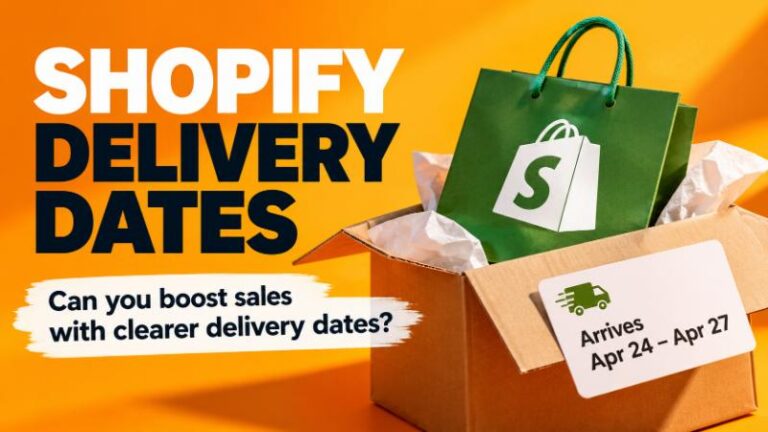
Shopify Estimated Delivery Date: A Complete Guide for Ecommerce Stores
A Shopify estimated delivery date is the specific arrival date or date range shown on a product page before purchase, so shoppers know when an order is expected to arrive.
UCP Isn’t About Checkout. It’s About Who Gets to Understand Demand
Merchants are about to transact through AI agents without learning how the decision happened.
Profitable Order Fulfillment Strategies for Shopify Ecommerce

Listen to podcast here.
Podcast: Digital Marketing Intelligence for Shopify – Ask the Experts – Episode 94 – Manish Chowdhary (E-commerce Case Study) – RSS.com
This podcast focuses on providing insights and strategies for digital marketing and eCommerce on Shopify. The topic of the episode is profitable order fulfillment strategies, and the guest is an award-winning shipping logistics entrepreneur and eCommerce expert named Manish Chowdhary. He is the founder of Cahoot, the world’s first peer-to-peer order fulfillment services network, and holds 10 US patents for his inventions. The episode discusses how the right order fulfillment strategies can lead to faster growth, particularly in times of financial stress and inventory supply chain issues. Manish shares his insights and expertise on eCommerce strategy, warehouse logistics optimization, and supply chain issues.
Marissa Morgan:
Welcome to Digital Marketing Intelligence for Shopify, Ask the Experts. Our weekly podcast and video show, offers Shopify’s ecosystem of brand owners, store developers, app providers, investors and marketing agencies, insights from case studies and discussions, with marketing and eCommerce experts, grow faster with tips, tricks, and proven strategies, and learn what’s new in eCommerce digital marketing for 2022 and beyond.
Hello everybody and welcome to our next episode of Digital Marketing Intelligence for Shopify, Ask the Experts. I’m Marissa Morgan, I’ll be your show host today, and I’m also the business development manager for Ngagge. On behalf of myself and the entire team at Ngagge, I want to welcome you to today’s show. Today’s topic is all about profitable order fulfillment strategies and why right now they are the key to faster growth, especially during crazy financial times and all of these crazy inventory supply chain issues that we’re having across the globe. Our guest is an award-winning logistics entrepreneur. He is an eCommerce expert. He is the proud owner of more than, well, let me say, he’s got 10 patents, okay, that’s pretty incredible. And he’s also the founder of Cahoot, the world’s first peer-to-peer order fulfillment services network. What is that? Well, we’ll find out more about what that means in just a moment, when I introduce you to our special guest,
Before I do, of course, a quick word from our sponsor, Ngagge, before we get started. We’re excited to share that Ngagge recently launched our first app called SMS Messaging for Shopify Stores, in May of 2022. So that app is live right now, and what that app does is make it incredibly easy for Shopify store owners to not only build their customer lists faster, increase sales, but also save time with automations and create personalized campaigns to really improve the customer shopping experience. With our SMS messaging app, there is no code support bots, so it’s very easy to install and use, even if you don’t have a tech team. And right now with open rates of email kind of sitting around 20% or maybe even less, I mean, think about it, when’s the last time you opened a business email that was maybe a marketing email that you didn’t ask for? I mean, maybe you didn’t even open it. Right now the SMS open rate is 98%, maybe even higher.
So the likelihood that if you are not using SMS marketing right now, that you’re missing out on business is very, very high. So you can check out our app, Shopify SMS, Ngagge Shopify SMS at www.ngagge.com. That is www.ngagge.com, where you can sign up for a free 30-day trial of the app. And with that trial, you’ll also get 500 free SMS messages to start using right away so you can take the app for a test drive. So if you’re not using SMS, no time like the present to take advantage of the Ngagge SMS for Shopify Store app, which is available right now, ngagge.com.
Okay, it is time for me to introduce you to our special guest. He is joining us from New York. His name is Manish Chowdhary. And Manish’s incredible career in eCommerce started in his dorm room. He actually founded multiple industry leading companies while in his dorm room at the University of Bridgeport. By the way, that’s Connecticut, that’s where I’m from originally, so we have a common tie there. He is a logistics entrepreneur who also founded Cahoot, which I mentioned is the world’s first peer-to-peer order fulfillment services network for brands and retailers. His specialties include eCommerce strategy, business methods innovation, inventory supply chain and logistics optimization. And as I mentioned, he holds 10 US patents for his inventions and has also been featured in couple small publications like the New York Times, Forbes, International Retailer, and many other leading publications. He is a 40 under 40 competition winner and holds an honorary doctorate, which is the highest honor from his alma mater. Cahoot, his company, was recently named a Spring of 2020 SourceForge Top Performer and is also a five star rated company, not only on Amazon, but also Shopify, which is impressive.
And if this wasn’t impressive enough, he’s got an active social life as well. He’s an avid traveler and he’s actually traveled to more than half of all the Caribbean islands, which I find very impressive. I’m a big island lover myself. And he’s also a big fan of an IPA and is a big fan of trying different IPAs. So much fun. Manish, thank you so much for joining us today. We’re excited to have you as our guest expert on logistics and fulfillment and what that ultimately means for companies right now in a time of crazy financial stress and inventory supply chain issues, and of course what that means for happy customers. So thank you so much for joining us today.
Manish Chowdhary:
Marissa. Thank you so much for having me, and thank you for such a generous intro. I think it is more than I would ask, and I really appreciate all your audience listening to this show today. So thank you.
Marissa Morgan:
Oh, you’re so excited to have you. And you know what, that was only half of what I could have said for an intro for you. I had to take some time and leave out some things for time’s sake. But you have a very impressive background, not only in eCommerce, but obviously right now with logistics optimization and helping companies deliver obviously their goods and their services to the end user. But I want to ask you, because this is something new to me, what exactly is peer-to-peer order fulfillment? What does that mean?
Manish Chowdhary:
Yes, Marissa, peer-to-peer order fulfillment is a term that Cahoot has coined. Essentially it is about collaboration. It is brands and retailers collaborating and working together to make free and fast delivery affordable, no matter which channel you sell on. So on the Cahoot platform, brands and retailers that have warehouses of their own, that have excellent fulfillment metrics for their own orders, and if they have excess space in their warehouse, they have the opportunity, for the very first time, to join Cahoot as a fulfillment partner. And those are the warehouses Cahoot utilizes to place our client’s inventory, the seller’s inventory. And putting them all together, Cahoot has created this large nationwide network. Maybe an analogy might be something like an Airbnb, how Airbnb helped homeowners unlock new revenue stream by renting out their spare bedroom or their spare apartment. So Cahoot is making that same opportunity available for millions of sellers that have warehouses of their own.
So this is a unique opportunity and the advantage of all this to our sellers, to our clients, is lower cost, is because we take all those savings and pass it back to our clients. So that is what peer-to-peer collaboration is all about and peer-to-peer order fulfillment services network.
Marissa Morgan:
Well, that sounds like a win-win, just like I feel, that was a great analogy, Airbnb has been a huge win for property owners because it’s true, there’s probably a lot of entrepreneurs and businesses out there that have the space and don’t use all of it. So why not go ahead and outsource that space to other retailers, other brands, other companies that are looking for space and create almost this incredible network, like a spider web of opportunity for different brands to have their product in different regions.
Manish Chowdhary:
Yes. And this is particularly more relevant in today’s economy because industrial space or warehouses, space capacity is at all-time low. In fact, you cannot find warehouse space even if you wanted to. And as a result, the rent is at an all-time high. So if you were to go to a traditional 3PL, a traditional warehouse, you’re going to pay exorbitant fees. If you’re looking to rent a new warehouse space, you cannot find, or if you do find, you would have to Ngagge in a multi-year lease at a premium pricing. So just like, again, I’ll take the Airbnb example, during the 2008 recession when Airbnb got its start, people were looking for more affordable ways to make money, to stay and live more affordably or rent a room more affordably. And that’s what Cahoot is doing in the current inventory supply chain and the fulfillment world, which is a boon for both the people that are fulfillment partners for Cahoot, but more importantly, the sellers that are looking for relief.
Marissa Morgan:
Well, I know there’s a lot of benefits and I think we’ll talk about some of those benefits during our time together today. But again, it sounds like a win-win, it sounds like great way to also, I mean, do something good for the environment, because if you have products that are within the same state as the buyer, obviously your carbon footprint in getting those products to those buyers is going to be a lot less, less potentially trucks on the road. And this is exciting to me, I just feel like there’s so many benefits all around from the obviously experience of the buyer to get that product in a shorter amount of time, which we know Amazon has really conditioned all of us to expect things within two days really, is almost the expectation now. Would you agree?
Manish Chowdhary:
Yes. In fact, two days was the expectation two years ago, Marissa. In fact, most Amazon buyers expect, if you’re living in urban areas like Manhattan or New York or Los Angeles, shoppers expect the delivery to be next day for most items. In fact, Amazon itself has been raising the bar on fulfillment. So almost 40% of Amazon’s products are being delivered in one day now. So two day was-
Marissa Morgan:
Two day’s old news?
Manish Chowdhary:
Yeah, it’s delivered. So the world is moving even faster. I know it’s crazy, but the shoppers, like if I wanted wanted soccer goalposts for my kids birthday party on Saturday and it’s Friday and I don’t want to drive and go and pick up and spend two hours. And so people will make decisions, shoppers are making decisions based on the delivery promise, and it’s so important too. And that’s where a lot of Shopify sellers, a lot of any seller, on any market, on any channel, can win big using delivery as a strategic competitive advantage.
Marissa Morgan:
I love that. I love that. And I can totally understand this must get it the next day kind of mentality because a lot of us in general, humans in general, we tend to juggle, we tend to multitask, we tend to procrastinate. And most of us are not always planning weeks in advance for the things that we think we’ll need because maybe we don’t even know we need them yet. So I think as a culture, the last minute shopping world has also increased in size and the number of people kind of acting in that space because now we know we can get things last minute. And I think just a lot of our listeners are going, “Yeah, I’ve done that before, where I’m like, shoot, I need this tomorrow.”
So let’s just, for our audience watching the video show of today’s talk, I’m going to share a quick outline, for those of you listening on the podcast, we’ve doven into this, but I’m going to read through this for you. Again, today we’re talking about profitable fulfillment strategies and really why they’re the key to faster growth, especially right now during difficult financial times. We’re going to get into why you can’t rely on platform locked services like FBA. We’ll also have Manish walk us through how one to many solutions unlock new growth opportunities, increase economies of scale, and reduce complexity as well. And I know as we work through this talk together, Manish is going to share countless examples of different clients and what they’ve done and how they’ve connected to gain that edge through especially the peer-to-peer order fulfillment opportunity. So I guess, can you help me understand this concept of FBA, this platform lock fulfillment and what FBA is? Because that’s a term I’m not super for familiar with.
Manish Chowdhary:
Sure. FBA, as lot of our audience probably know, is fulfillment by Amazon. And we’re calling it platform locked fulfillment or platform locked services because FBA, for example, would give a different treatment to orders that originate from Amazon and how they fulfill them, and I’ll break this down for you, as opposed to orders from some other channel, because they’re playing favorites. Another example would be Walmart fulfillment services that is designed to help Walmart sellers succeed on Walmart alone. But when you think about the seller, most sellers, especially the Shopify sellers are selling on their DTC site and many of them are selling on marketplaces, both Amazon, Walmart, eBay, could be Target, could be Macy’s, but they’re also doing wholesale business. So if the merchant were to select a platform locked service, which means they need to now find other services or other order fulfillment solutions for their other needs, and that creates increased complexity, increased cost, and it is punitive because FBA, as you know, if you send your products to FBA, you get access to the Prime shopper, but it’s very difficult to get access to them if you don’t use FBA services.
So there are a lot of things that are happening and there is an antitrust case that’s pending as well, it’s called coupling. And I can take a pause here if you have questions, but I can keep breaking this down further into why this is not the best choice for the sellers, what are the advantages and what are some of the disadvantages.
Marissa Morgan:
No, I’m glad you broke that down for me. So FBA is fulfillment by Amazon, and as a customer, this helps me understand why sometimes when I’m shopping on Amazon, certain products can be shipped to me within that day or two timeframe, and then others are not. Even if it’s the same exact product or just from a different company, it’s because some of these companies have this agreement or Amazon actually holds this merchandise, versus other companies that may be selling through Amazon, but shipping themselves basically. You’re just helping me understand all the things that are happening behind the scenes, especially from a consumer perspective. So sounds like there’s benefits to FBA or some of these platform locked services, but then also there’s definitely some drawbacks as well.
Manish Chowdhary:
Yes, most definitely. I mean, there are some major benefits to platform locked services. For example, FBA, you get access to the Prime shopper. The minute you send your products to FBA, they are available to the Prime shopper, which is the most affluent, the high spenders on Amazon. And these are people that are over 150 million or over 100 million members in the US alone, which is probably one out of three. If you take out the kids and the elderly, I mean-
Marissa Morgan:
By the way, I call the Prime shoppers part of AA, and that’s Amazon addicts. I am a Prime shopper, but kind of by default, my husband’s more of a shopper than I am. But yes, I can feel the money that is spent through especially these Amazon Prime accounts. And when people shop at the top, they have the option as a Prime member to say, “Hey, I just want to see the Prime options,” which are the options that are probably using FBA.
Manish Chowdhary:
And many times I think Amazon only displays the Prime offers by default or Prime offers get priority over non-Prime offers. So if you, Marissa, are a Prime member and you log in with your Prime account on Amazon, the chances are that the products that you will see will be primarily Prime eligible products before you see non-Prime eligible. So because Amazon is all about having the customers having a great shopping experience, which means not only are you finding the wide selection of products, low prices, but also amazing delivery, which is one or two day, which has been one of the top advantages that Amazon has over other retailers like Walmart, Target, Macy’s, and that they continue to drive the flywheel through that delivery experience.
Marissa Morgan:
Now, I know you wanted to get into why you can’t rely, so obviously there’s benefits, but what is the main reason or reasons that you think eCommerce brands and people who are obviously shipping to customers, can’t just rely on the platform locked services?
Manish Chowdhary:
Several stories. Just was speaking with a large seller, this is one of the top Amazon sellers, and you would think that they would have an in with Amazon, they would be given preferential treatment, and these are people who are doing nine figures on Amazon. So not seven figures, not six figures, nine figures. And they wake up one day and they find that their inventory limit or how much inventory you can send to Amazon has been slashed to less than half. And that is a huge problem because Amazon just announced the second Prime Day, which is coming up in October 11 and 12. So now how are you going to manage and how are you going to … if your inventory limits are slashed, that means you cannot send all your products to Amazon. You cannot send them in enough quantities. And on top of that, Amazon is taking very long to receive these items.
So from the time you send the items to Amazon, it could take weeks for them to be received. And during that time, you cannot send them anything new. And if your product goes out of stock, let’s say you have five days of inventory and it’s going to take Amazon 10 days to receive it, after five days, your product goes out of stock, which means your seller rank drops, which means your inventory performance index, these are all Amazon terminologies, which is the way how Amazon keeps track of how much space or how much limit to allocate to each seller because sellers do not have unlimited quotas, so as to speak, they’re limited and restricted.
So now while there are many advantages, but if you’re a seller, now you are in a jam that if Amazon is such an important sales channel, you rely on that for your sales. You bought containers and containers of inventory that you’ve paid for from overseas, now your money is locked up and you can’t sell it on Amazon because you can’t get into FBA. And if you don’t get into FBA, you don’t get access to the Prime shopper, who are the ones who make most of the sales. So one of the challenges is that. There are many more challenges, I can talk about a few more. The second is multi-channel fulfillment. So let’s say you get all your inventory into Amazon, you’re selling on Shopify and you want to fulfill Shopify orders using your Amazon fulfillment services. Guess what? You’re going to pay up to 50% more to Amazon to fulfill your Shopify order because Shopify and Amazon are at war.
So Shopify went and acquired another order fulfillment provider called Deliver. So that’s the same thing, Shopify is not there to promote Amazon sales. So now if you start using Deliver, for example, which is a more recent acquisition, so this is a prediction, that they’re going to create policies that favor Shopify. So while things are good for the shopper, it is very difficult for the merchant to make money. And if the seller does not make money, seller does not profit, they’re not going to stay in business, and therefore they cannot innovate, they cannot bring the next product. So this becomes almost a self-fulfilling prophecy, that it was good to a point, and at some point it becomes bad and the sellers have to find other alternatives that are neutral. To ship an order, whether it comes from Amazon or Shopify or eBay, it’s the same effort, same everything, why should one cost more than the other?
Marissa Morgan:
And at the end of the day, it’s so sad to think that the only people that end up happy are the huge companies like Amazon and the consumer, because the middleman, which is the creator of the product or the inventor of the product or the brand founder, it’s like these people have put in so much work to create what they’ve created. So it’s so sad to think that the one person who ultimately gets the most screwed is the person who’s got the beautiful product to offer.
Manish Chowdhary:
That’s exactly it, and that is why we created Cahoot to be platform-agnostic. Same thing with Walmart. Walmart is favoring Walmart fulfillment services. So if you want to get on the fast track to get the two-day badge to attract the Walmart shopper, Walmart is doing, but it has tons of limitations, Walmart fulfillment services will not ship products internationally. So if you get an order from overseas, now you have to figure out another solution. In case of FBA, any product that’s oversized is very expensive to ship. So if you want to get access to the Prime shopper, it’s a problem. Q4, which is the holiday season, storage fees for FBA are three times as expensive as the rest of the year. So you can imagine, one, you can’t get your product, you’re lucky if you get it in, if you get it in and if you get it in late, if you miss out on sales, you’re going to pay Amazon three times.
While there are benefits, of course, it is not all disadvantaged, but these are the limitations, these are the challenges that sellers are facing and that’s why we created Cahoot to make it a level playing field. We want to think like the seller, what’s best for the seller? And if you want to do wholesale, we know most ecommerce brands want to also partner with other independent retail stores. For example, we have a client called Cali’s Books, they sell to Barnes & Noble, they sell to Nordstrom, so they want to send pallets and cases or books to these local bookstores. And that’s not something that FBA can do, that’s not something that WFS can do. So these are the challenges with platform locked services, because they were not designed to promote the seller, they were designed to promote the revenue for the platform.
Marissa Morgan:
Gosh, at the end of the day, something that we talked about before the show too, the end of the day, you said, and I’m going to quote you, I hope that’s okay, you said half of your shopping experience is your shipping experience. So what’s crazy is everything you’re talking about, the good, bad, and the ugly, all obviously affects the business, let’s say the eCommerce business. But the eCommerce business, especially the one that understands the consumer experience, the customer experience, that business is doing its best to make the best choices and put the best options in play so that ultimately the consumer has a great experience.
So it’s all intertwined, but it’s like everybody’s got their own, selfishly they have their own interests at play. And it’s kind of crazy to think that Amazon makes money, percentages off sales already, and you think that was the original business model, they make money by selling Joe’s product, they make a little cut. But now it’s gone way above that and they’ve now monopolized the entire process of selling and shipping, so that not only are they making a profit on the products themselves, but they’re making a ton more on housing, and like you said, getting the products in. It’s just insane to me. It’s insane. But now I know why Jeff Bezos has private jets and all this stuff, I mean, he’s raking in the dough, it’s insane.
Manish Chowdhary:
Well, you’ve forgotten the most biggest cash cow that Amazon has just created, advertising. Previously it was you get paid to sell the item on Amazon, that was great. Now in order to sell the item, you need to spend an insane amount of money on advertising.
Marissa Morgan:
To be the top featured product of that specific category for this many hours of the day or whatever. It’s insane.
Manish Chowdhary:
And then where’s the next area to get a larger share of the seller’s wallet, is the order fulfillment services. Because if I can create coupling, it’s called, which is what the US Antitrust is calling it, in their proposed bill, that it’s like Google favoring Google reviews over Yelp reviews for restaurants. But because you’re using the Google Chrome browser, you don’t have much of a choice because Google makes the decision on-
Marissa Morgan:
What you see.
Manish Chowdhary:
… restaurant reviews to show, so that is where there’s a problem. And especially the ecommerce brands on Shopify are looking to create a direct relationship with their customers, the DTC brands. So I spoke with a DTC brand this morning, that is into sustainability, they have these eco-friendly bags and so on, and they’re using FBA, but FBA uses plastic for all their shipment. So it goes against the ethos of the brand, that brand wants to sell eco-friendly product, but it comes loaded with plastic packaging and plastic tape, and that’s a big problem. But then because they make a lot of sale on Amazon, it’s very hard, very difficult for them to distance or move out of Amazon, then they lose the Prime shopper. So there’s some major challenges.
Marissa Morgan:
Well, I love that Cahoot is creating, let’s say, a more fair and better and economically ad advantageous way for people who have a product or a brand or eCommerce business, to be able to give the customer a great shipping experience and ultimately kind of stay out. It kind of just sounds like an awful rat race. It sounds sadly like a dictatorship. But tell us a little bit more about why shipping and order fulfillment is such a big part of the customer experience, because I know we were talking about that right before we hit record and started our show. You said it’s not just about the website anymore and the website being beautiful, and then you said that half your shopping experience is your shipping experience. Share a few thoughts you might have on that whole idea.
Manish Chowdhary:
Exactly right, Marissa, half your shopping experience is your shipping experience. I’ll take you down the customer journey. Customer comes to your website, they find your product, they love the product, got great pricing, and on that product page they decide to add the item to cart. What’s the next thing they’re thinking about? When will this product arrive? Let’s say I have a time bound shipment or just as we as humans are, we hate uncertainty, even if it’s going to take four weeks, tell me now, in the absence of clear, concise instruction, it is left for the shopper to guess, and that guessing leads to cart abandonment. And more importantly, let’s say some Shopify and other DTC brands will display four to seven days or three to five days.
Now it’s very difficult for the shopper to figure out when does the clock start? Four to seven days, is it four to seven business days? Is it four to seven calendar days? Is it starting tomorrow? Is it starting today? So the customer cannot make those, you’re asking the shopper to do too much math and they’re not willing and cart abandoned. So now let’s say you’ve done all that great stuff, you’ve got the shopper, they’ve even went through the checkout, now they’re thinking two to three days, then start putting all those customer inquiry, where’s my order, because customer has no visibility onto when the order will arrive. And that’s where some of the app that you have even, Ngagge, would be very, very effective in customer communication, because now the order has to be shipped and the merchant has to balance the shipping cost because customers are more and more used to free shipping, free and fast shipping.
So if your product is shipping from let’s say Florida to California, you’re paying the highest shipping rate for what we call zone eight, because as the furthest distance is traveling, or from Florida to Seattle, Washington. One, it’s going to take longer for the product to arrive and it’s going to cost the seller more because everything nowadays is based on the distance the package travels, the dimension of the packaging and the weight of the item. So you need to have your products widely distributed. And then because if you don’t do that, you have less, fewer chances of getting a positive review from the customer because if the product arrived later than they expected, order cancellation rate goes up and then certainly the customer delight element goes down so that the ecommerce brand recall value suffers. So there’s several reasons why the shipping and delivery experience is so paramount to the overall customer experience.
Marissa Morgan:
Well, I would love to know a little bit more also about this idea of peer-to-peer order fulfillment, because I know people are probably listening right now going, “Huh, I’ve only been using Shopify or I’ve been looking into …” So is Deliver currently active on Shopify?
Manish Chowdhary:
Yeah, Deliver is active. I mean, Shopify acquired them a few months ago.
Marissa Morgan:
Okay. So it is a way right now for people on Shopify to be fulfilling their orders through Shopify’s own kind of in-house process. But if someone’s at home right now saying, “Oh my goodness, this is the answer I’ve been looking for.” They ship all over the United States, maybe they have been using order fulfillment by Amazon and have been incurring extra fees and extra overhead and the stresses of it, peer-to-peer or as you said, one to many solutions obviously give more growth opportunities, allow businesses to keep more money in their pockets. So what is the first step for a company, whether they’re on Shopify or they’re on another platform, or maybe they are just operating through a website and it’s kind of a smaller in-house system right now, what is the first step to becoming a part of what Cahoot has created, this peer-to-peer order fulfillment process?
Manish Chowdhary:
Yes, Cahoot is the most merchant centric and merchant inclusive order fulfillment services solution on the market. So if you have a warehouse, we’ll use the Florida example, if you’re a merchant in Florida, you need to have your inventory distributed in a few different places. Let’s say you want to start small, you’re sending a lot of orders to California, you’re sending a lot of orders to Chicago or New York. Then Cahoot has the software and the technology where you don’t have to dismantle, you don’t have to get rid of your order fulfillment operations. You can keep your order fulfillment operations and only choose to outsource a portion of the orders that would be served, let’s say by Cahoot, in those regions. And that is very unique to Cahoot because that kind of technology is not accessible because it’s very complicated for merchants to now figure out which order should I fulfill, which order should Cahoot fulfill or which orders should somebody else fulfill.
So we don’t believe in rip and replace, we believe in letting the merchants pick the path that’s most comfortable, that they’re most comfortable with. And then soon they realize, oh wow, my California customers are getting their products faster. I’ve cut my shipping costs down by 20, 30%. And the Cahoot technology also helps them improve their shipping in their own warehouse because all that great innovation that we have, the 10 patents that you mentioned and so on, we also give the seller those tools to do that efficiently in their own warehouse. And of course for the people who want 100% outsourcing or they’re using a provider that they’re not happy with or they believe that they’re not happy with, you can come to Cahoot, fill out or contact us form, we can do a free savings analysis, we can evaluate your current costs and we can tell you how much money could Cahoot save you.
And that alone is very valuable because half the battle is knowing the power of information and power of what is out there, what can help my brand. And with Cahoot, if you go full-blown and you spread your inventory to Target, let’s say two-day delivery, now you turn on and make that promise on your website, be bold and say that on your website, “Hey, two-day guaranteed delivery,” watch your conversion rate soar. And then if you combine that with an SMS solution, like Ngagge, you’ve got one-two punch, and that’s what helps the sellers and the shoppers to get that DTC promise and the brand, that is that what an Amazon like experience is on every other channel, not only on Amazon.
Marissa Morgan:
I love this and I love the passion. We are in two different parts of the world right now. You’re in New York, I’m in Minnesota. I literally, I know you guys are listening on the podcast and you can’t see Manish, but I can feel the passion coming out of the screen. He’s beaming and you’re smiling from ear to ear. And as you were talking, by the way, I was listening to you and I pulled up the website, which I had looked at earlier, but right away when you were talking and I went to your website, boom, I happened to notice, because you were talking about Cali’s Books, but I saw this great testimonial from Cali’s Books and it said, “The most impressive part of working with Cahoot is the speed at which B2C orders are fulfilled and the consistently affordable shipping rates obtained.”
And then it says, “With our peer-to-peer network, you get faster, more reliable order fulfillment, at a lower cost and you can boost your conversions with one and two-day shipping,” and that you guys integrate with Amazon, Walmart, eBay, Wish, Shopify, BigCommerce, Facebook, so many. So I think this is a great place to kind of end our talk, because not only did you share obviously the importance of order fulfillment in a shopper’s experience, half your shopping experience is your shipping experience. I think that’s a takeaway that everybody can easily understand. But you shared examples of what works okay, benefits to it, some of the struggles that come along with it. But then ultimately, and I love it, you can totally tout your company and what you guys do because really you offer a wonderful way to navigate something that is very complex, but it doesn’t have to be.
Manish Chowdhary:
Right. And last but not least, an opportunity for ecommerce brands and retailers who have warehouses, to make money. How can we forget that? Because Cahoot is the only organized option they have to make money from their warehouse, and we’ve made it super-duper simple. So for any listeners who have a decent size warehouse, you’ve got great operations and people, this is an opportunity for you to make money. Fill out the contact us form on our website, cahoot.ai, and that may be another opportunity, a way for you to defray some of your cost, not only to elevate your order fulfillment and shopping experience, but also make some extra cash that you can put back in your business.
Marissa Morgan:
I love that. So the website to visit Cahoot and find out more, whether you have a warehouse that you’d love to rent out, basically rent out, lease out some space, share some space, or you have a product that you would love some help getting to your end users in a more timely, more eco-friendly, more economically savvy fashion, you want to be in cahoots with Cahoot, it’s www.cahoot.ai, so that’s www.cahoot.ai. And Manish, if our audience would like to connect with you, do I have your permission to share your LinkedIn as well?
Manish Chowdhary:
Absolutely. I love chatting with sellers, exchanging notes, because I learn so much by speaking to brand owners, operators, because they are in this every single day. So please connect with me on LinkedIn, I’m very active and I promise I will reply.
Marissa Morgan:
You can find him very simply by typing obviously linkedin.com/in/manish, M-A-N-I-S-H, -chowdhary, C-H-O-W-D-H-A-R-Y. And again, for those of you listening on the podcast, I’ll spell his name one more time for you. Manish, M-A-N-I-S-H, Chowdhary, C-H-O-W-D-H-A-R-Y. Manish, this has been, I was going to say, this has been such a great show, but I feel like … as much as I want to say, I feel like we’re just hitting the tip of the iceberg, I do feel like we really got through a lot in a short amount of time and you really helped me, and I know our audience as well, understand more just about the order fulfillment process in general, but the different avenues that are currently available, the pros and cons to each, and a really cool alternative that I think a lot of retailers and eCommerce businesses have not thought about, which is peer-to-peer order fulfillment. So thank you so much for sharing all of your insights with me today and our audience.
Manish Chowdhary:
Thank you, Marissa. Thanks again for having me.
Marissa Morgan:
Oh, it has been a pleasure and I want to congratulate you and Cahoot as well on all of the awards you’ve been winning, on the successes. I know you and I just connected on LinkedIn, so I’m going to definitely keep my eye on you, and I’m sure there’ll be more awards, more patents, and more fortune in your future. So congratulations. And for those of you listening right now, again, you’re probably listening to a podcast, I’m sitting face-to-face through a screen with Manish, the energy and the pleasantry and the joy in this man is just palpable. So check him out on LinkedIn, Manish Chowdhary, and check out www.cahoot.ai to find out how you can benefit from his, truly something you invented, which is peer-to-peer order fulfillment. Thank you again, Manish, and have a great day.
Manish Chowdhary:
Thank you.
Marissa Morgan:
That was an awesome show. I love guests that are passionate about what they do, and when you can feel the passion through a screen, that, to me, is just the coolest thing. So I have so much credit and respect for not only the 10 patents and all the experience that Manish has. He’s clearly a very smart man, starting businesses back in his dorm room at Bridgeport. That right there alone is pretty impressive. But when you pair that with someone who has such passion and joy of life, you really get a business owner that is not only savvy, but someone who is really empathetic with helping people and wanting to really make a mark and make a difference in the world, and especially in the world of eCommerce. So go Manish, go Cahoot. You guys, make sure you check out Manish Chowdhary on LinkedIn, connect with him, let them know you heard the show through the Ngagge podcast.
And also be sure to check out cahoot.ai, and that’s C-A-H-O-O-T, .ai. Whether you are an eCommerce brand looking for help with your order fulfillment process, maybe you even want some help just deciphering what you’re doing now, he said he often helps companies kind of work through what they’re doing now and give them a little screenshot of what that means. Or if you have warehouse space and you’re looking to capitalize on that and put a little extra money in your pockets or in your business, Cahoot can also help you do that. Awesome show. I want to thank you all so much for joining me and let you know that we always welcome you to send us referrals if you have someone you know that is a guest expert in the world of eCommerce and specifically eCommerce platforms like Shopify, Wix, WooCommerce.
If you’re interested in being on this show, you can connect with me and send an email to marissa.m@nggage.com. That’s M-A-R-I-S-S-A .M@ N-G-A-G-G-E .com. And of course, you can connect with me on LinkedIn and you can also connect with our company page on LinkedIn as well. For our company page, just look for the rainbow-colored cog wheel, connect with us there, and you can see all of our past shows as well. Speaking of shows, I do want to let you know that there’s an easy way to check out our podcasts, and you can do that by going to www.ngagge.com/podcast-library. That’s where you’ll find a complete library of all of our shows, with all of the guests. It’s a great place to go to if you have any questions about digital marketing, eCommerce platforms. We love to be your trusted source for digital marketing intelligence, especially when it comes to Shopify and eCommerce platform, so check it out. It is www.ngagge.com/podcast-library.
Thank you guys so much for joining me today. As always, I hope you have a wonderful rest of your day. We’re starting to get into the holiday season. I’m not sure when you’re listening to this podcast right now, but right now it is September, this show is dropping in September. So check back with us, we’ll be having shows every single week throughout the holidays and into the new year, with lots more to come in the world of digital marketing intelligence. And don’t forget to check out ngage.com for the Ngagge SMS for Shopify App free trial available with 500 free messages. Check it out and take advantage of all the opportunities that SMS messaging has for you and your ecommerce brand. You guys have a great day, and thanks again for joining me.
Written By:

Jeremy Stewart
Jeremy Stewart leads customer success at Cahoot, helping merchants achieve high-performance logistics through smart technology and process optimization. With a background in both ecommerce operations and client services, Jeremy ensures that every merchant using Cahoot gets measurable results—whether they’re scaling from one warehouse to many or managing complex returns.
Turn Returns Into New Revenue
Related Articles

The Shipping Speed Paradox: Why DTC Brands Are Slowing Down
Everyone’s talking about faster delivery.

Why Cross-Border DTC Brands Are Moving Fulfillment Inside the US
Cross-border ecommerce fulfillment is the process of shipping ecommerce orders across national borders—often from warehouses outside the United States to U.
Why Faster Refunds Made Returns More Expensive
Introduction Faster refunds feel like obvious progress.
Your Website vs. Amazon: Win with Free & Fast Shipping & EDDs
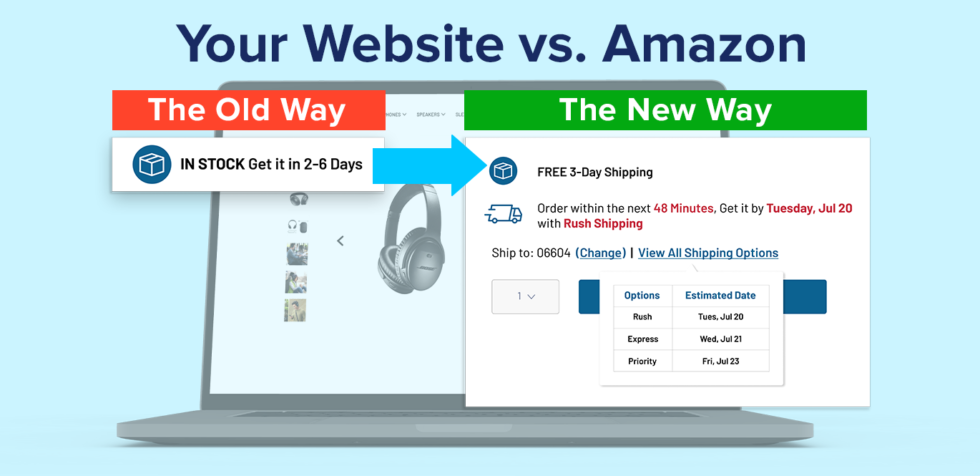
Give Your Website Customers an Amazon-Like Delivery Experience
It’s Easier and Less Expensive Than You Think

Sorry Shopify, BigCommerce, Woocommerce, and Magento store owners, Amazon still wants to eat your lunch. Shoppers won’t buy from your website – unless you give them the same fast, date-certain delivery experience they get on marketplaces like Amazon.
Today, 63% of consumers start their shopping experience on Amazon, 25% on other marketplaces, and only 21% on brand websites. And 45% of shoppers abandon their carts due to unsatisfactory shipping options. So, now is the time to level the playing field with Amazon and get a leg up on your competitors with an Amazon-like delivery experience on your website and any other channels where you sell.
The latest consumer research shows why EDDs + fast & free shipping options work:
- 75% wish more brands offered the same level of service as Amazon
- 64% look for delivery options – before putting items in the cart
- 83% said free delivery was the most important factor when ordering online
- 87% are more likely to shop your site again following a positive delivery experience
Here’s what you’ll learn:
- Why E-commerce sales on marketplaces are growing faster than brand website sales
- Rising consumer expectations of date-certain, fast and free delivery
- The impact of shipping offers on conversion rates, cart abandonment, and sales
- Implementing date-certain & fast and free delivery – it’s easier than you think
Written By:
Jeremy Stewart
Jeremy Stewart leads customer success at Cahoot, helping merchants achieve high-performance logistics through smart technology and process optimization. With a background in both ecommerce operations and client services, Jeremy ensures that every merchant using Cahoot gets measurable results—whether they’re scaling from one warehouse to many or managing complex returns.
Turn Returns Into New Revenue
Related Articles
Why Faster Refunds Made Returns More Expensive
Introduction Faster refunds feel like obvious progress.
Shopify Estimated Delivery Date: A Complete Guide for Ecommerce Stores
A Shopify estimated delivery date is the specific arrival date or date range shown on a product page before purchase, so shoppers know when an order is expected to arrive.
UCP Isn’t About Checkout. It’s About Who Gets to Understand Demand
Merchants are about to transact through AI agents without learning how the decision happened.
Shopify Order Fulfillment: Guide to Choosing the Right Order Fulfillment Option
You’ve put countless hours into creating your product, perfecting your Shopify website, and marketing to grab attention. But have you paid enough attention to your fulfillment strategy? It’s not just a cost center – the difference between poor and great fulfillment has a huge impact on your customer experience and revenue growth.
Depending on what type of product you sell, you have a lot of options for fulfillment. The pros and cons can be tough to parse, and it gets complicated in a hurry.
In this blog post, we’ll explore why fulfillment is so important for ecommerce, your options for Shopify fulfillment, and how to choose the fulfillment service that’s right for you.
Why Your Shopify Order Fulfillment Service Matters
Simply put, a great fulfillment strategy is the difference between keeping up with Amazon and getting buried by it. If you can’t deliver orders quickly, customers will immediately look for a similar product with better shipping options on a marketplace. Surveys show 83% of online shoppers compare prices to a competing product on Amazon when shopping online.
Amazon, Walmart, and eBay have set the bar high for order fulfillment, and unfortunately customers now expect the same high standards from online brands as well.
Ignore fast and free shipping at your own risk – 70% of US consumers expect free shipping even on orders under $50, and 48% of all cart abandonment is caused by unexpected shipping costs.
Having great Shopify order fulfillment will improve your cart conversion and customer satisfaction, leading to more immediate revenue as well as repeat customers.
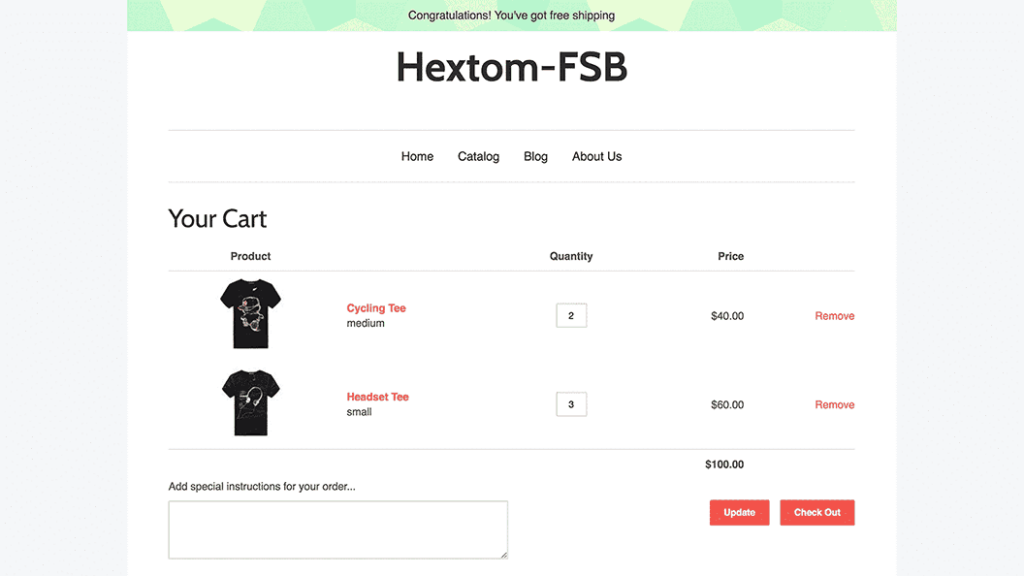
So you’re convinced – you need to offer fast & free shipping on Shopify, and it can’t break the bank. What are your options?
Fulfillment Services for Shopify Sellers
There are several main fulfillment options every Seller on Shopify can choose from:
- Self-Fulfillment
- Dropshipping
- Using a 3PL Provider
Each fulfillment strategy has its own unique pros and cons. Let’s go over these Shopify fulfillment options in detail:
Self-Fulfillment
If you’re selling small, low-cost items to a fairly local customer base, then self-fulfillment may be the best Shopify fulfillment strategy for your business.
Small items are easier to store yourself, and if your customer base is local, you won’t have to pay too much for shipping. Moreover, products will arrive relatively quickly to the customer because they don’t have too far to go.
Self-fulfillment also means you’ll have full control over product and fulfillment quality. You can choose where and how your products are stored, ensuring that they’re in the best condition possible when they get to customers. If there are errors in fulfillment, you have the power to immediately fix issues. Additionally, self-fulfillment can lead to higher storage costs, especially as your inventory grows, impacting your overall profitability.
The main drawbacks of self-fulfillment are that it’s extremely time-consuming and it isn’t cost-effective in the long run. If you’re fulfilling your own orders, your success comes with a price; more and more of your time will be consumed by managing operations. Every second spent on logistics is a second not spent on growing your top-line revenue. So most brands that start out self-fulfilling choose to outsource fulfillment as they grow.
Dropshipping
Dropshipping is a good option if you have the resources to find reliable suppliers and can successfully manage your relationships with them. With dropshipping, the entire fulfillment process is handled by the supplier or manufacturer, which means you don’t have to invest as much time in it – but you also don’t have control over it.
The key benefit of dropshipping isn’t to be underestimated; you can simplify a huge part of the logistics value chain. Instead of having to worry about shipping products from your manufacturer to a middle location, and then from that middle location to the customer, it goes straight from the manufacturer to the customer.
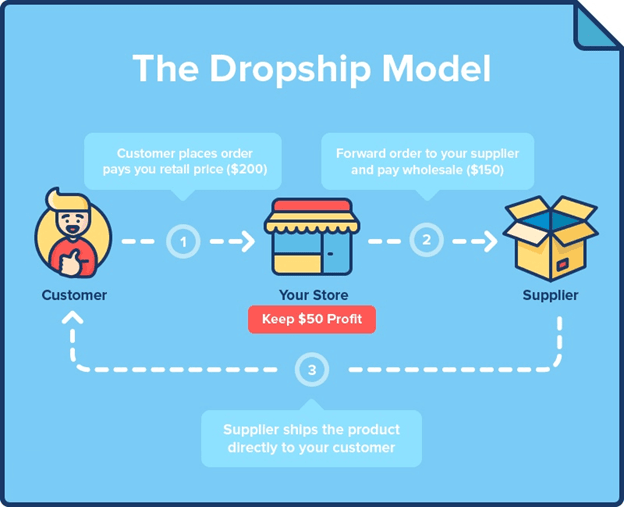
The main drawbacks of dropshipping are a lack of control over product quality and a poor delivery experience.
For quality, you don’t get to inspect the product before it gets to the customer. You have to rely entirely on the dropshipper, and when things go wrong, you’re left on the outside looking in.
Just as importantly, your customers won’t be delighted by fulfillment provided by dropshippers. Since they’re almost always shipping from one location, the delivery won’t be fast for customers across the country, which can negatively impact customer satisfaction. Since they’re often shipping long distances, shipping is also more expensive than it needs to be as well.
Using a Third-Party Fulfillment Provider
If you’re looking for a Shopify order fulfillment service that offers the benefits of self-fulfillment without all the hassle, then using a third-party provider is your best bet.
The best 3PLs will give you access to a nationwide network of warehouses and carriers, so shipping products will take less time than if you were going it alone – in most cases within one or two days. Furthermore, if a 3PL places your inventory across the country strategically, you’ll always pay ground rates for shipping, so fast delivery will come at low prices.
Third-party logistics providers also work with shipping carriers to negotiate discounted shipping costs, further improving your profitability.
In addition, some 3PLs can even support dropshipping services.
Like dropshipping, trusting a third party means giving up some control over your product before it gets to the customer. This challenge can become apparent with 3PLs that aren’t built for ecommerce, as products get damaged in their rush to fulfill orders. Modern 3PL networks that specialize in ecommerce, though, have very low defect rates and may even improve on your own delivery record.
Of the three Shopify fulfillment options, using a third-party provider is the best option for most Shopify stores. It’s a question of when, not if for most Sellers. Many assume that they need thousands of orders before they can get a good deal with a 3PL, but today’s tech-enabled fulfillment networks are built to be easy to use for merchants of all sizes.
So, if you’re looking for a 3PL, how do you choose one that’s right for you?
Shopify’s Fulfillment Network
The Shopify Fulfillment Network (SFN) is a 3PL fulfillment service designed to streamline the order fulfillment process for Shopify Sellers. With a 3PL network of warehouses across the United States (SFN no longer operates in Canada as of 2023), the Shopify Fulfillment Network allows businesses to store, manage, and ship their products efficiently. This network is built to provide fast and reliable delivery, ensuring that customers receive their orders promptly and in excellent condition. However, this service was announced in 2019 and still outsources fulfillment through Flexport.
Using the Shopify Fulfillment Network (powered by Flexport) offers several advantages for online Sellers, making it an attractive option for Shopify businesses looking to enhance their fulfillment capabilities:
- Fast and Reliable Delivery: SFN’s strategically located fulfillment centers enable businesses to offer fast and reliable delivery to their customers. This can significantly boost customer satisfaction and loyalty, as timely deliveries are a key factor in the overall shopping experience.
- Simplified Order Fulfillment Process: SFN handles the entire fulfillment process, from storage to shipping. This allows businesses to focus on other critical aspects of their operations, such as marketing and product development, without worrying about the logistics of order fulfillment. However, there are some fulfillment limitations that come with this simplified fulfillment process.
- Increased Efficiency: By utilizing SFN’s network of fulfillment centers and advanced technology, businesses can streamline their fulfillment process. This not only reduces costs but also improves operational efficiency, allowing for better resource allocation and management.
- Scalability: SFN is designed to scale with businesses as they grow. Whether you’re a small startup or an established enterprise, SFN can accommodate your needs, allowing you to expand your operations without the hassle of managing fulfillment logistics.
Choosing the Right Shopify Order Fulfillment Service for Your Store
It’s one thing to decide to work with a 3PL provider and another thing entirely to find one that has the right Shopify fulfillment network that your business needs to scale. Here are the key factors you’ll have to consider:
- Shipping speed SLAs (what shipping options will they enable?)
- Fulfillment costs and methods (how much do different options cost?)
- Inventory management options (do they help you efficiently manage inventory?)
- What other providers do they integrate with, and how?
- Customization & special services (e.g., assembly, packaging)
The best Shopify fulfillment services are built for fast & free ecommerce – that means they’ll enable fast delivery for your customers, but do so in a low-cost way. They should have pre-built integrations with Shopify and ecommerce platforms to make your life easy. Finally, you should look for a provider that helps you intelligently manage inventory to optimize capital.
For more in-depth guidance on how to choose a 3PL, use our 3PL RFP template to easily collect the information you need to make the right choice.
Cahoot – Your Best Option for Shopify Order Fulfillment
Cahoot’s fulfillment network of over a hundred warehouse locations is built for ecommerce. We’ll help you level the playing field with marketplaces and delight your customers with a stellar, Amazon-like delivery experience – right on your Shopify store.
Price: Our innovative peer-to-peer model offers low-cost, fast fulfillment by design. As a result, our pricing is typically lower than that of traditional 3PLs, 3PL networks, Shopify Fulfillment Network, and even marketplace fulfillment solutions like Amazon Multi-Channel Fulfillment.
Shipping Flexibility: Cahoot also offers the option to ship on your existing carrier accounts, allowing you to maintain your purchasing power and volume discounts.
Speed: Cahoot’s Shopify fulfillment service will enable you to turn on conversion-boosting fast and free shipping badges. We’ll strategically distribute your inventory to our warehouses locations across the country so that no matter where an order comes from, it’ll be fulfilled by a nearby warehouse. The customer gets their item in one to two days, but you pay cheap ground shipping rates.
Reliability: Our barcode scanning technology powers 99.95% on-time delivery and a 99.99% accuracy rate.
Easy Onboarding: With Cahoot, you can go from sign up to shipping in just two weeks. Our pre-built integration with Shopify makes setup a breeze.
Customer Service: You’ll have a dedicated customer support team that is always ready to help you every step of the way.
Cahoot is committed to helping Shopify Sellers grow their businesses with our fast and affordable ecommerce fulfillment service.
If you’d like to find out how Cahoot can help your business, please get in touch with us. We can’t wait to show you how Shopify fulfillment was meant to be.
Frequently Asked Questions
How can I fulfill orders on Shopify?
The main ways to fulfill Shopify Orders are directly shipping yourself, dropshipping, or using a 3PL.
Are there any limitations with Shopify Fulfillment Network?
Not all products are eligible for the SFN; you can review the list here.
Are all 3PLs the same?
No! 3PLs are different, and choosing the right 3PL for your business is an important decision.
Written By:
Indy Pereira
Indy Pereira helps ecommerce brands optimize their shipping and fulfillment with Cahoot’s technology. With a background in both sales and people operations, she bridges customer needs with strategic solutions that drive growth. Indy works closely with merchants every day and brings real-world insight into what makes logistics efficient and scalable.
Turn Returns Into New Revenue
Related Articles
The Shipping Speed Paradox: Why DTC Brands Are Slowing Down
Everyone’s talking about faster delivery.
Why Cross-Border DTC Brands Are Moving Fulfillment Inside the US
Cross-border ecommerce fulfillment is the process of shipping ecommerce orders across national borders—often from warehouses outside the United States to U.
Why Faster Refunds Made Returns More Expensive
Introduction Faster refunds feel like obvious progress.
Shopify Fulfillment Network to Cut Number of Locations
In this article
Late last week, Business Insider reported that Shopify Fulfillment Network is cutting contracts at several warehouses and fulfillment centers in the US, marking a potential shift in their strategy.
Today, they attempted to clarify the impending cuts by stating, “We will be making changes to the SFN (Shopify Fulfillment Network) to help merchants compete with big-box retailers, such as prioritizing two-day shipping at affordable prices and access to easy returns for U.S. shoppers.”
The company is expected to update sellers and the market on their strategic shift during its earnings call next month, but in the meantime, merchants are confused.
How does scaling down the number of SFN fulfillment locations in the US help merchants using SFN access affordable two-day shipping, as they attest?
Wedbush analyst Ygal Arounian sums up Shopify’s challenge well: “Shopify is nowhere close to building a type of fulfillment operation at the scale of Amazon, and investors should not expect anything like that in the near term”. Investors have taken notice of Shopify’s recent struggles – the stock is down nearly 50% from its November high of 1,690.60.
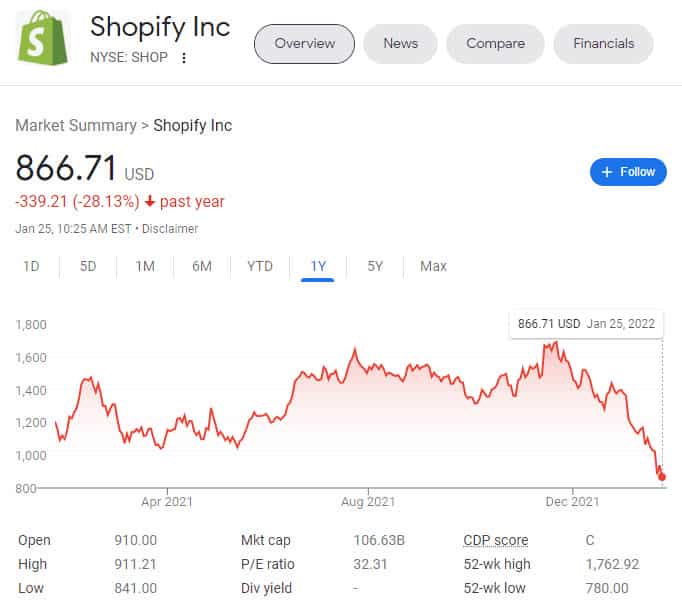
We’d assert that this change is more important for merchants than investors, as it reveals that Shopify Fulfillment Network isn’t an FBA alternative, and instead is moving in the opposite direction.
Merchants that want to power their sales with affordable, reliable fast shipping will need to look elsewhere for a fulfillment solution.
Shopify Fulfillment Network’s Pros & Cons
Like Amazon FBA, Shopify is building its own logistics solution for eCommerce sellers, Shopify Fulfillment Network.
It combines seamlessly with a merchant’s Shopify account, making it an easy way to start fulfilling eCommerce orders for someone with a new DTC store. It also comes with software that helps merchants with order and inventory management, and it boasts a dedicated customer service team that helps merchants overcome operational challenges.
Unfortunately for merchants with big growth ambitions, it’s focused on fulfilling Shopify orders and not orders from other channels. On top of that, it doesn’t offer fast shipping by default. Merchants that want to win on multiple channels will likely need an additional 3PL for their other orders. More importantly, they won’t be positioned to offer affordable fast shipping to their customers. With Amazon and other national fulfillment services setting the bar at 1- and 2-day free shipping, merchants that rely on SFN will be left at a significant disadvantage.
Cahoot: The Best Shopify 3PL
If you need a fulfillment solution that keeps up with Amazon FBA at always-affordable prices, give us a call.
Unlike Shopify Fulfillment Network, Cahoot’s fulfillment network has no trouble keeping up with FBA. We’ll help you level the playing field with marketplaces and delight your customers with a stellar, Amazon-like delivery experience – right on your Shopify store.
It sounds expensive, but our innovative peer-to-peer model offers low-cost fast fulfillment by design. As a result, our pricing is typically lower than that of other top providers, but we can beat them on fulfillment speed and reliability.
And of course, we don’t stop there. We have pre-built integrations with major marketplaces to fuel your multi-channel growth.
If you’d like to find out how Cahoot can help your business, please get in touch with us. We can’t wait to show you how Shopify fulfillment was meant to be.
Written By:
Rinaldi Juwono
Rinaldi Juwono leads content and SEO strategy at Cahoot, crafting data-driven insights that help ecommerce brands navigate logistics challenges. He works closely with the product, sales, and operations teams to translate Cahoot’s innovations into actionable strategies merchants can use to grow smarter and leaner.
Related Articles
Why Cross-Border DTC Brands Are Moving Fulfillment Inside the US
Cross-border ecommerce fulfillment is the process of shipping ecommerce orders across national borders—often from warehouses outside the United States to U.
Why Faster Refunds Made Returns More Expensive
Introduction Faster refunds feel like obvious progress.
Shopify Estimated Delivery Date: A Complete Guide for Ecommerce Stores
A Shopify estimated delivery date is the specific arrival date or date range shown on a product page before purchase, so shoppers know when an order is expected to arrive.
Shopify B2B: Your Next Growth Opportunity?
On June 21st, Shopify launched a brand-new service: B2B on Shopify. For over 15 years, Shopify has been synonymous with Direct-to-Consumer (DTC) ecommerce. Now, they see their next great growth frontier in the promise of B2B ecommerce.
When you ask the average American about ecommerce, their mind probably jumps first to Amazon Prime and their ability to get anything they want delivered to their front door. Little do they know, business-to-business shopping is already much more digitized than retail shopping!
According to Statista, 14.2% of retail sales happened online in 2021, and they expect that number to rise quickly to 21.9% in 2025. In contrast, Gartner expects that a whopping 80% of B2B sales interactions will happen on digital channels by that same date.
With numbers like those, it’s no surprise that Shopify is looking to muscle into B2B ecommerce.
In this article, we’ll cover the basis of B2B on Shopify, share our thoughts on how it will affect the broader ecommerce industry, and give a few tips on what you can do to take advantage of this new offering.
What is B2B on Shopify?
Per Shopify’s press release, B2B on Shopify is “a new set of features built specifically for B2B merchants, directly into our platform, and with access to all of Shopify’s most powerful customization features like store themes, discounts, and Functions—and it’s all included with Shopify Plus. This will allow you to manage your entire ecommerce business—whether it’s B2B, DTC, or both—all in one place.”
Business-to-business sales are significantly different from direct-to-consumer sales, so it’s only natural that Shopify needs to launch an entirely new service with a full suite of features to enable B2B ecommerce on its platform.
Shopify B2B Company Profiles
First and foremost, different business purchasers require different experiences. Almost all DTC online stores offer their customers the same experience: they see the same homepage, the same products, and the same prices. At most, customization comes down to whether the user can log into a saved profile.
In contrast, B2B purchasers need different experiences from one another. Some businesses will negotiate better prices and terms than others, so of course a seller doesn’t want the businesses paying more to see that others are paying less. Adding to that, businesses may have multiple purchasers that are in charge of procuring different items, so they need the ability to add different people to an account with varying levels of permissions.
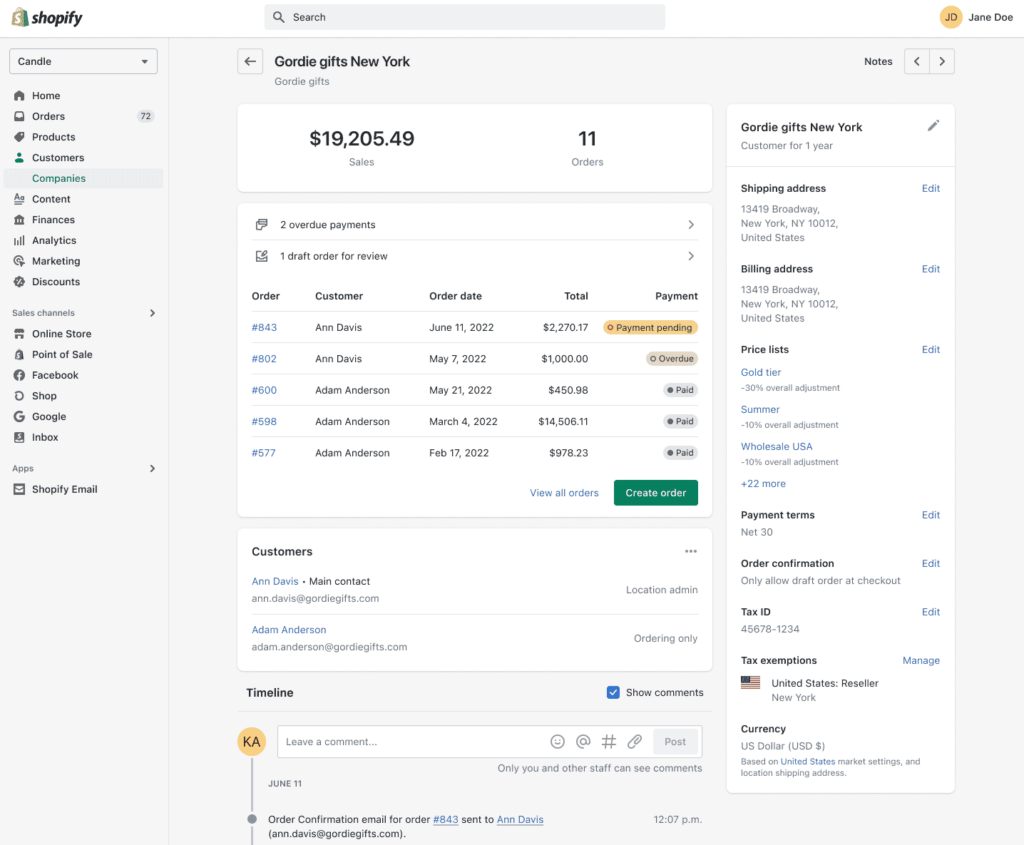
Source: Shopify.com
B2B on Shopify will enable its merchants to create company profiles that save all of this differentiation and more. With it, they overcome one of the biggest hurdles involved in moving from DTC to B2B ecommerce.
B2B Price Lists
Building on the above, prices for business-to-business commerce are multiple degrees more complex than prices for direct-to-consumer sales.
B2B on Shopify will enable merchants to create variable price lists for all of their products and product variants, and it will also enable easy currency modifications. In this way, sellers will be able to manage complex international B2B ecommerce smoothly.
B2B Payment Terms
Business-to-business transactions are resolved with up-front payments much less frequently than DTC transactions, so a feature for payment terms is absolutely essential. In addition to assigning different payment terms to different merchants, B2B on Shopify also will help its users track, sort, and collect on payments as they become due.
On the other side of the transaction, businesses will be able to see their payment terms, check out with their approved terms, and keep track of upcoming payments within their company profile.
Shopify will also provide a personal checkout experience for business purchasers pre-loaded with assigned payment terms, payment methods, and wholesale discounts. The B2B Checkout feature thus will seek to help streamline conversion and keep customers happily ordering
Why is Shopify Targeting B2B Ecommerce?
In their announcement, Shopify exhorts its users, “With an expected global market value of $7.7 trillion, now is the time to expand into wholesale.” Their logic for why their users should wholesale also succinctly explains why they’re launching B2B on Shopify: there’s a ton of money to be won!
Ecommerce merchants are used to hearing the advice that they should sell to consumers on multiple channels, and many now are pursuing multi-channel growth strategies across their DTC sites and online marketplaces. Shopify is betting that the next big growth frontier won’t be DTC at all; instead, ecommerce DTC brands are going to start trying to win shelf space in physical retail.
Shopify may be feeling the need to take some big swings as the walls of DTC ecommerce seem to be tightening.
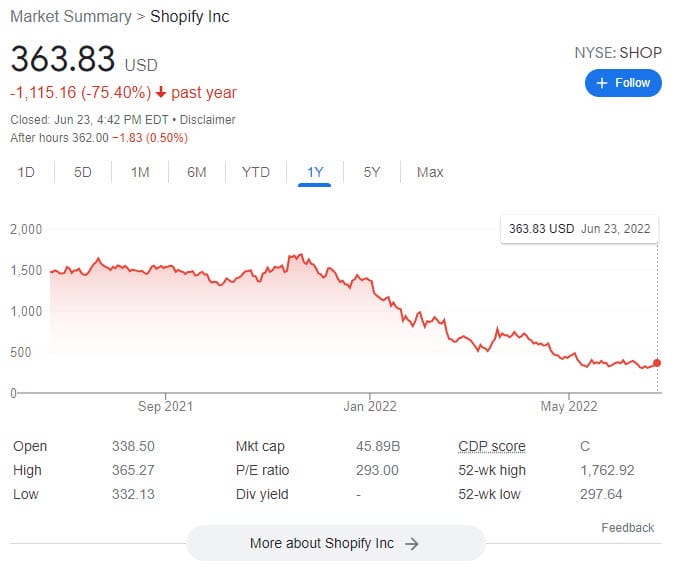
Source: Google.com
After a meteoric rise from $138 per share at the start of 2019 to $1,690 near the end of 2021, Shopify’s share price has crashed back to earth. Once tagged as the upstarts that would wrest control of ecommerce away from Amazon, they simply aren’t seeing the GMV growth that you’d expect from a giant slayer.
Moreover, Amazon is now the prime mover in the Shopify vs Amazon battle. Their new purchasing and fulfillment service, Amazon Buy with Prime, is a scary shot across Shopify’s bow. In short, Buy with Prime will allow DTC ecommerce brands to install the Prime buying and delivery process on their own website, thus offering fast and free shipping to their customers. If Shopify doesn’t allow its merchants to integrate with Buy with Prime, they’ll be at a disadvantage to all those that can use the service. If Shopify does allow the service, though, they’ll give up control of payments to Amazon. This would be devastating, as they rely on growth from merchant services like their payments solutions to drive their bottom line.
So, with DTC ecommerce only becoming more competitive, more saturated, and more difficult to win, Shopify is betting that by opening a new front with B2B ecommerce, they’ll go where others can’t and quickly grab market share.
How Can B2C Sellers Add B2B?
Shopify exhorts its users to add B2B to their growth strategy – if only it were that simple! Business-to-business sales are a completely different ballgame from direct-to-consumer. We won’t be able to teach you how to add a fundamentally different sales channel in the space of a few paragraphs, but we can at least share the basics.
First, what’s similar: you’ve learned to tell your brand’s story to win consumers, and you’ll need to do the same with business purchasers. Everyone loves a good story and a compelling brand, and it will help you stick in the mind of prospects. Moreover, a great story will help the retailer sell your product once it’s on shelves, so they need to know that your product will sell.
Next, start local. Consumers like to buy local, so retailers like to stock local products. Go door to door with samples, and talk to your local small business owners! You can connect with them as a fellow small business owner, and if your product is good, they’ll be able to find a place for it as the next best thing to come out of your town.
Once you’ve got your foot in the door and a little track record of success in business-to-business wholesaling, you can think bigger. Trade shows are a fantastic place to meet tons of retailers at once (including big regional and national ones) and to get your product into as many hands as possible. This is just the start of your sales journey, though, and where things really start to diverge from DTC ecommerce.
You’ll have to learn to love the long sales cycle: wholesale deals don’t happen overnight (or even over a month, or a year!). Retailers rarely have shelf space just lying around, waiting for someone to fill – so you have to develop relationships with them and either convince them to knock off a different product, or be ready to snap up an opening. We won’t try to teach you business-to-business sales here, but suffice to say that you’ll need to learn about how to build long-term relationships with potential buyers and to speak to their needs.
Finally, you need the right tools! This is where not only B2B on Shopify comes in, but also a whole host of other tools that make B2B hum. For instance, you’ll likely need a Customer Relationship Management (CRM) tool to manage long sales cycles with retailers. And you’ll need a fundamentally different Shopify fulfillment strategy that sends infrequent, large shipments to repeat customers instead of small orders all over.
Shopify B2B Fulfillment: Cahoot
Whether you’re just thinking about starting up B2B sales, or you’re an old pro who’s going to take advantage of Shopify’s new platform, you need a Shopify 3PL like Cahoot that has the flexibility to optimize for both DTC ecommerce and B2B replenishment.
Cahoot has created a robust ecommerce order fulfillment network that makes low cost, fast and free shipping a breeze for every eCommerce sales channel. We have built a dense network of dozens of locations that specialize in different aspects of fulfillment, so we provide affordable fast DTC shipping as easily as we can optimize low-cost, efficient replenishment for B2B.
Instead of having to contract with different 3PLs for your DTC and B2B orders, you can consolidate your inventory and your operations with us. You’ll enjoy economies of scale from being able to run leaner on inventory, and you’ll save employee time and headaches from not having to manage multiple providers. You can watch our case studies to see just how powerful consolidated operations for multi-channel ecommerce sales can be for your growth.
Contact Cahoot today to learn how we can design a custom fulfillment solution to power your profitable online growth, no matter the channel.
Written By:
Rinaldi Juwono
Rinaldi Juwono leads content and SEO strategy at Cahoot, crafting data-driven insights that help ecommerce brands navigate logistics challenges. He works closely with the product, sales, and operations teams to translate Cahoot’s innovations into actionable strategies merchants can use to grow smarter and leaner.
Turn Returns Into New Revenue
Related Articles
Why Faster Refunds Made Returns More Expensive
Introduction Faster refunds feel like obvious progress.
Shopify Estimated Delivery Date: A Complete Guide for Ecommerce Stores
A Shopify estimated delivery date is the specific arrival date or date range shown on a product page before purchase, so shoppers know when an order is expected to arrive.
UCP Isn’t About Checkout. It’s About Who Gets to Understand Demand
Merchants are about to transact through AI agents without learning how the decision happened.