
Extended Producer Responsibility (EPR): How Peer-to-Peer Returns Solve for It
In this article
 6 minutes
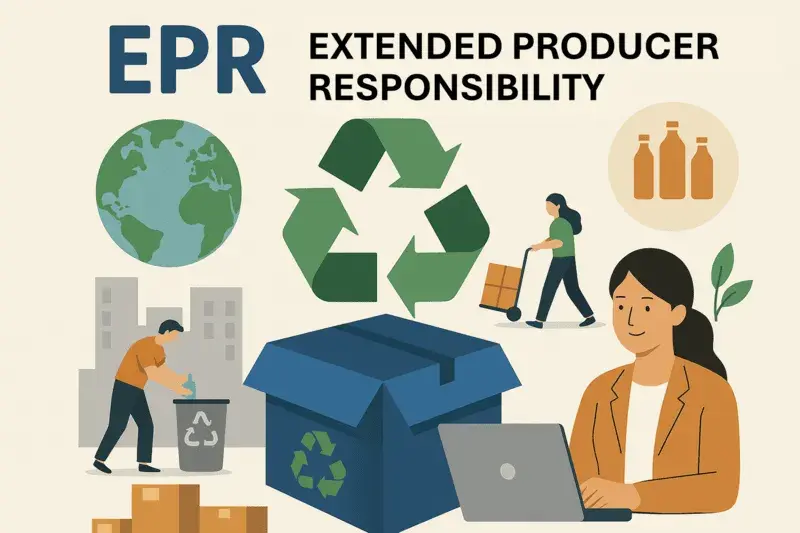
The way we deal with waste is changing fast. Governments around the world are done letting brands ship products with zero thought about what happens when they break, expire, or get returned. Enter Extended Producer Responsibility (EPR), a policy model that makes producers financially and operationally accountable for their products’ full life cycle, including after consumers are done with them.
And while most ecommerce operators are bracing for the added costs, smart brands are already asking a different question: What if we could turn EPR compliance into a competitive advantage?
Let’s dig into how EPR works, what’s shifting globally, and how Cahoot’s peer-to-peer returns program just might be the most elegant solution ecommerce sellers never saw coming.
What Is Extended Producer Responsibility?
Extended Producer Responsibility, or EPR, is a policy approach that shifts the financial responsibility and logistical burden for waste management away from governments and consumers and places it squarely on the shoulders of producers. That means brand owners, manufacturers, and importers must now manage the end-of-life of their products. Whether it’s packaging waste, electronics, beverage containers, or textiles, producers are expected to pay for or directly handle the collection, reuse, recycling, or disposal of their waste.
And it’s not optional anymore. EPR programs have already been implemented or introduced in many countries, from Canada to the EU to parts of the U.S. EPR has been widely adopted across the OECD and beyond, and the scope continues to grow. Even developing countries are starting to adopt similar policy approaches to address waste management, limited resources, and environmental impacts.
The idea is simple:
If you make it, you should figure out how to unmake it.
Why EPR Matters for Ecommerce (and Fast)
The EU’s Packaging and Packaging Waste Regulation (PPWR) generally began applying on August 12, 2026. But not every requirement started on that date. The regulation phases in major obligations through 2028 and 2030, so ecommerce brands need to distinguish what applies now from what they should prepare for next.
What Applies Now: PPWR Compliance and PFAS Restrictions
As of August 12, 2026, the PPWR applies across the EU. The most immediate product-level change is a restriction on per- and polyfluoroalkyl substances (PFAS) in food-contact packaging. Packaging placed on the EU market on or after that date cannot contain PFAS at or above the limits established by the regulation: 25 parts per billion for any individually measured PFAS, 250 parts per billion for the sum of measured PFAS, or 50 parts per million for total PFAS, including polymeric PFAS.
These restrictions can affect grease- or water-resistant packaging such as takeaway containers, fast-food wrappers, microwave popcorn bags, bakery paper, and pizza boxes. Brands, importers, and packaging suppliers should confirm material specifications and retain the technical documentation needed to demonstrate compliance. Food-contact packaging placed on the EU market before August 12, 2026 may remain on the market, but packaging manufactured earlier and first placed on the market after that date must comply. The full PFAS limits and documentation requirements are set out in Article 5 of the PPWR.
Other baseline PPWR duties also apply now. Packaging placed on the EU market must comply with the requirements currently applicable to its materials and intended use, including the regulation’s general recyclability and reusability rules. Manufacturers and importers must also meet the conformity-assessment, technical-documentation, declaration, and traceability duties that apply to their roles. That does not mean the detailed 2030 recyclability grades or the later recycled-content and waste-reduction targets have started early.
What Changes in 2028: Harmonized Packaging Labels
Beginning in 2028, packaging sold in the EU is scheduled to use a harmonized labelling system that identifies material composition and helps consumers sort packaging correctly. Corresponding labels will also appear on waste receptacles. Under the PPWR, the packaging requirement applies from August 12, 2028 or 24 months after the relevant implementing rules enter into force, whichever is later. Ecommerce brands should use the lead time to map packaging materials, collect supplier data, and prepare artwork and product-information systems for the new labels.
What Changes in 2030: Recyclability, Recycled Content, and Waste Reduction
From 2030, the PPWR begins applying several of its most consequential circular-packaging measures. Packaging will need to meet design-for-recycling criteria and qualify within the permitted recyclability grades. Minimum recycled-content requirements will begin for specified plastic packaging. The EU will also introduce limits on excessive empty space, restrictions on certain single-use plastic packaging formats, and reuse targets for selected packaging categories. Exact obligations and exemptions depend on the packaging type, business role, and secondary rules adopted by the European Commission.
Packaging Is Not the Only EPR Change
The EU’s revised Waste Framework Directive entered into force on October 16, 2025 and requires every Member State to establish an EPR scheme for textile and footwear products. Member States have 30 months from the directive’s entry into force to establish those schemes, so implementation will arrive through national laws rather than as one EU-wide obligation beginning on a single date.
Most ecommerce brands don’t manufacture the products they sell, but that doesn’t necessarily mean they’re off the hook. Depending on the law and sales model, the responsible “producer” may be the brand owner, manufacturer, importer, distributor, or a seller supplying customers across borders. If you sell to consumers in EU countries, existing national EPR schemes may already require registration, fees, and reporting even while later PPWR requirements are still being phased in.
A few examples:
- France requires REP producers to obtain a unique IDU and submit annual declarations; Germany requires registration with the LUCID Packaging Register, system participation for packaging subject to system participation, and regular volume reporting; Austria has packaging EPR schemes managed through collection and recovery systems.
- As of July 1, 2025, covered producers in Oregon must register with an approved Producer Responsibility Organization, report data to the PRO, and pay membership fees under the Recycling Modernization Act.
Bottom line: the legislation is no longer just about compliance; it’s reshaping how brands think about production, materials, costs, and returns.
The Challenge: EPR Compliance Is Complex, Costly, and Ongoing
Here’s the hard truth: complying with EPR is expensive. Brands must:
- Register in each country or state
- Report SKU-level data on materials used
- Pay eco-modulation fees based on how sustainable the product or packaging is
- Handle logistics for collection, reuse, or recycling
- Prove proper disposal through auditable documentation
- Comply with applicable marketplace EPR rules to avoid suspension or deactivation of non-compliant listings on Amazon Germany.
This is a ton of work. And worse, it’s ongoing; producers must continually track and report quantities sold, what was returned, how it was processed, and where the materials went. For ecommerce operators already dealing with slim margins and tight cash flow, EPR can feel like an existential threat.
So what’s a brand to do?
Enter Cahoot: Turning Returns into an EPR Compliance Asset
Here’s where Cahoot’s peer-to-peer ecommerce returns solution changes the game.
Returns are one of the biggest blind spots in EPR. Returned goods often fall through the cracks of reuse and recycling programs, creating waste and compliance headaches. Traditionally, a returned item is shipped back to a warehouse, inspected, and often discarded or sent to liquidation, especially in fast fashion or electronics. That’s a wasted product, wasted materials, and additional shipping, all of which hurt your EPR score.
But what if that returned product could skip the warehouse altogether and get shipped directly to the next buyer?
That’s exactly what Cahoot’s peer-to-peer returns model does.
Instead of bringing a return back into centralized inventory, Cahoot reassigns it in real-time to the next customer who wants it. The return is rerouted, minimizing extra handling, materials, and emissions. And yes, it’s fully traceable for EPR reporting.
Here’s How Cahoot Solves for EPR:
1. Reduces Waste and Increases Reuse
Returned products are resold, not discarded. That extends product life, lowers end-of-life management costs, and keeps items out of landfills, key outcomes for EPR compliance.
2. Cuts Down on Packaging Waste
Because the return never goes back to the original warehouse, the need for repackaging is eliminated. That’s less packaging waste and fewer new materials in circulation.
3. Minimizes Reverse Logistics Emissions
No second trip across the country. No return to origin. Just direct-to-new-customer fulfillment. This slashes the carbon footprint of the return journey and helps brands meet sustainability targets.
4. Enhances Product Stewardship Reporting
With Cahoot, returns are tracked from the original buyer to the next. That data visibility gives brands a documented chain of custody they can use for EPR program reporting.
5. Avoids Fees and Penalties
Many EPR shifts include eco-modulated fees, meaning the greener your product’s life cycle, the less you pay. Cahoot helps brands reduce costs by showing responsible, circular product management.
EPR and Returns: A Match Made for Reinvention
Let’s be honest, most brands aren’t thinking about returns when they think about EPR legislation. But they should be. A returned product that gets trashed is the ultimate EPR failure. One that gets rerouted and reused? That’s a policy win, an environmental win, and a cost-saving win.
What’s more, Cahoot gives ecommerce operators a rare opportunity: To not just comply with EPR, but to lead.
Final Thoughts: Don’t Just Comply, Differentiate
EPR isn’t going away. In fact, it’s spreading fast, and consumers are paying attention. Brands that embrace reuse, reduction, and responsibility will earn trust. Those who treat returns like an afterthought may face penalties, bad PR, or worse, delisting from key markets.
The good news? Cahoot’s peer-to-peer returns solution is already helping brands across categories, from apparel to electronics, cut costs, reduce environmental impacts, and prove EPR compliance in a way that scales with growth.
That’s not just smart compliance, that’s smart business.
Written By:

Manish Chowdhary
Manish Chowdhary is the founder and CEO of Cahoot, the most comprehensive post-purchase suite for ecommerce brands. A serial entrepreneur and industry thought leader, Manish has decades of experience building technologies that simplify ecommerce logistics—from order fulfillment to returns. His insights help brands stay ahead of market shifts and operational challenges.

Turn Returns Into New Revenue
Related Articles
What Is Demand Planning? How It Impacts Inventory, Forecasting, and Profitability
Demand planning is the process of estimating future customer demand so that a business can align its inventory, procurement, and operations to meet that demand without carrying mor...
Why 100% P2P Adoption Is the Wrong Goal
Peer-to-peer returns let customers send eligible returned items directly to other customers instead of routing every package back through the warehouse, cutting shipping and proces...
Walmart Officially Allows Amazon Multi-Channel Fulfillment (MCF)
Big news for multichannel sellers: Walmart now officially allows Amazon Multi-Channel Fulfillment (MCF), Amazon’s service for using its fulfillment network to ship orders from mult...
How the EU Green Deal is Shaping Ecommerce & How Peer-to-Peer Returns Help Solve It
In this article
11 minutes
The European Green Deal isn’t just a buzzword, it’s a mandate that’s reshaping how business gets done. It’s Europe’s moonshot plan to become the first climate-neutral continent by 2050, cutting emissions and pollution across every industry. For ecommerce brands, this is both a wake-up call and an opportunity. In a climate-neutral European Union, doing business as usual isn’t going to cut it. Sustainability is now a must-have, not a nice-to-have. And surprisingly, one of the secret weapons in meeting these ambitious goals might just be rethinking something as routine as product returns.
What Is the European Green Deal? (In Plain English)
In case you missed it, the European Green Deal (EGD) is the European Union’s sweeping strategy to tackle climate change and drive sustainable development. Think of it as the EU’s growth strategy for the 21st century, a plan to transform Europe into a fair, prosperous society with a modern, resource-efficient, and competitive economy that leaves no one behind. The headline goals? Cut net greenhouse gas emissions by at least 55% by 2030 and achieve climate neutrality by 2050. In other words, become a climate-neutral continent within a few decades. No pressure, right?
This Green Deal isn’t a single law but a whole portfolio of policies touching everything: clean energy, circular economy practices, sustainable agriculture (hello, Farm to Fork strategy), transportation, construction, and more. It’s backed by the European Climate Law, making these emission-cut targets legally binding, and a “Fit for 55” package of initiatives to overhaul regulations from energy taxes to carbon pricing mechanisms. The European Commission and European Parliament are all in on this, reviewing old laws and crafting new ones to align with a climate-neutral economy. We’re talking about policies like an updated EU Emissions Trading System, a Carbon Border Adjustment Mechanism (to prevent so-called carbon leakage from less-regulated countries), a circular economy action plan, and even a Nature Restoration Law to revive ecosystems. The Nature Restoration Regulation entered into force on 18 August 2024 and requires EU countries to restore at least 20% of land and sea areas by 2030 and all ecosystems in need of restoration by 2050.
The European Green Deal is massive in scope, but its essence is simple: economic growth without trashing the planet. It aims to decouple growth from resource use, meaning you can have a sustainable economy without burning through natural resources or spewing greenhouse gas emissions. It’s also about an inclusive transition; the EU’s Just Transition Mechanism is funneling billions to ensure EU member states and industries (even those hooked on fossil fuels) can go green in a fair and inclusive way. This is not just politics or altruism; it’s a growth strategy for a competitive, climate-neutral European economy.
Why Ecommerce and Retail Can’t Ignore It
So, what does this sweeping environmental policy have to do with your ecommerce operation or retail brand? In a word: everything. The Green Deal’s tentacles reach into sustainable supply chains, energy efficiency, packaging, shipping, and yes, even how you handle returns.
European regulators and civil society alike are increasingly scrutinizing the environmental impacts of products from cradle to grave. If you’re selling in the EU (or even just shipping to Europe), you’ll face new expectations about sustainable industry practices and corporate sustainability. For instance, the push for a circular economy means you’ll need to design products (and processes) for reuse, repair, or recycling instead of the landfill. The EU’s Packaging and Packaging Waste Regulation (PPWR) entered into force on 11 February 2025 and will generally apply from 12 August 2026, bringing stricter EU-wide rules on packaging, reuse, and recyclability. The EU Biodiversity Strategy and sustainable development goals embedded in the Green Deal signal that everything from your sourcing to your delivery methods should tread lighter on the planet.
And let’s not forget carbon. The EU’s climate agenda could soon touch logistics directly, think emissions trading for the transportation sector or fuel taxes for shipping. If you’re running an ecommerce fulfillment operation, those delivery vans and long-haul trucks are on the radar. The power sector that charges your warehouses is shifting to renewable energy sources, and energy-intensive data centers and industrial processes are expected to become more energy-efficient or face penalties. The bottom line: whether it’s reducing greenhouse gas pollution or minimizing waste, EU policies are going to impact how you source, make, package, and deliver goods.
The Hidden Sustainability Sinkhole: Online Returns
Okay, now for the plot twist, one area that’s often overlooked in sustainability plans is ecommerce returns. Yes, that seemingly mundane process of customers sending stuff back is actually a huge sustainability sinkhole. Online returns have exploded alongside the ecommerce boom, and with them comes a truckload (literally) of emissions and waste.
Consider this: NRF and Happy Returns estimated that 16.9% of annual retail sales were returned in 2024, and 19.3% of online sales were expected to be returned in 2025. Online apparel return rates are materially higher than the overall average; Coresight Research estimated the average return rate of online apparel orders at 24.4% for the 12 months ended March 6, 2023. Each return typically means extra shipping, additional packaging, and sometimes scrapping of perfectly good products. In 2023, Optoro reported that returns amounted to 8.4 billion pounds of landfill waste, showing that the landfill burden remains enormous. Optoro-cited materials continue to attribute roughly 24 million metric tons of CO2 emissions to returns. Let that sink in: all that back-and-forth shipping and wasted product is pumping out greenhouse gases, undermining the fight against climate change.
From a climate neutrality standpoint, returns are a big problem. One report found that the transport phase typically adds up to 30% to the emissions of the initial delivery. And if those returns end up destroyed or in a dump, it’s not just a carbon hit, it’s a failure of the circular economy model. The circular economy action plan in the EU Green Deal aims to design waste out of the system, yet here we are literally throwing away products by the ton. Global greenhouse gas emissions from freight are rising, and unnecessary return shipments are part of the story.
Then there’s packaging waste. Online shopping already uses several times more packaging per item than traditional retail. Returns often mean even more packaging, sometimes new boxes, plastic wrap, and labels, contributing to the piles of packaging waste that EU member states are under pressure to reduce. With Europe pushing initiatives to curb single-use packaging and boost recycling, the current returns status quo (which can be “one-and-done” use of packaging and product) just isn’t sustainable.
In short, ecommerce returns are a sustainability blind spot. If you’re an ecommerce pro eyeing EU markets (or just trying to run a responsible business), you can’t afford to treat returns the old way. Doing so would undermine your climate neutrality goals, rack up your carbon footprint, and possibly put you afoul of emerging regulations around waste and emissions. The climate crisis demands we find a better way to handle returns in a resource-efficient, environmentally sustainable manner.
Enter Peer-to-Peer Returns: A Game-Changer for Sustainable Ecommerce
So, how do we fix this? How can online retailers and brands slash the footprint of returns to align with the Green Deal vision of a sustainable economic model? One answer is reimagining the reverse logistics process altogether, and this is where Cahoot’s peer-to-peer ecommerce returns solution comes in. It’s a fresh approach that turns the conventional returns model on its head.
Cahoot has pioneered a peer-to-peer returns program that is cheaper, faster, and more sustainable than the status quo. Instead of shipping a return from the customer back to a distant warehouse (and then maybe to a refurb center or a new buyer), Cahoot enables customers to send that return directly to the next customer who wants the item. In essence, the returned product is instantly resold while it’s still in transit. No detour through a storage facility, no time wasted sitting on a shelf, and no extra cross-country trucking just to end up back in inventory. By skipping the warehouse and cutting out an entire leg of transportation, this model eliminates unnecessary carbon emissions and saves lots of time and money.
Here’s why this approach is a sustainability trifecta:
- Fewer Shipping Miles: Every return that goes straight to a new owner is one less trip to a centralized return center and then to a new buyer. That means burning less fossil fuel in transit. Fewer trucks on the road and planes in the air = lower carbon emissions. For a brand concerned with reducing greenhouse gas emissions, this is a big win.
- Reuse of Products (Circular Economy in Action): Instead of products being discarded or sitting idle, they get a second life immediately. This directly supports the circular economy ethos of the EU Green Deal by keeping products in use longer and out of the waste stream. It’s essentially enabling reuse and product life extension at scale, which is exactly what a sustainable supply chain should do.
- Less Packaging Waste: If the original packaging can be used to send the item to the next customer, we avoid consuming new boxes and plastic. That cuts down on packaging waste and the demand for new packing materials (which in turn saves resources and energy). It aligns with the EU’s push for packaging reuse and waste reduction.
- Energy Efficiency & Reduced Processing: No need for energy-intensive warehouse operations to check, repackage, and restock the item. Skipping the warehouse not only saves labor but also electricity and heating/cooling at facilities, contributing to overall energy efficiency in the logistics chain.
- Data & Optimization: The Cahoot system uses AI to grade and approve returned items for resale, ensuring only quality products circulate to the next buyer. This kind of smart system can eventually tie into a better industrial strategy for sustainability, using tech to minimize waste. It also provides transparency that can be reported in sustainability metrics (imagine telling your customers or regulators how many pounds of goods you kept out of landfill via direct resell!).
Crucially, this peer-to-peer model helps companies tackle both climate impact and compliance with emerging rules without sacrificing the bottom line. It’s not philanthropy; it’s a growth strategy for the sustainable era. By reselling nearly 48% of returns immediately through this network, brands can reclaim revenue that would otherwise be lost. They save on return shipping and warehousing costs, which is money back in the business, all while doing right by the planet. That financial incentive makes it easier to invest in green improvements elsewhere, too. In a way, Cahoot’s solution turns environmental sustainability into a competitive advantage rather than a cost center.
Aligning with EU Goals and Beyond
EU lawmakers postponed the application dates for parts of the CSRD and CSDDD in 2025 and then gave final approval to a broader simplification package on 24 February 2026, so companies in scope should check the updated reporting timeline before relying on earlier compliance assumptions.
It’s almost like Cahoot’s returns solution was tailor-made for the EU Green Deal’s objectives. It checks multiple boxes on the EU’s sustainability agenda:
- Climate Neutrality & GHG Reduction: Fewer transportation emissions contribute to the EU’s emissions targets (directly reducing the carbon footprint of ecommerce operations).
- Circular Economy & Waste Reduction: Immediate reuse of returned products means less waste, supporting EU targets to cut waste and increase product longevity.
- Sustainable Industry Innovation: This model exemplifies how industrial strategy and innovation can solve environmental problems, exactly the kind of private-sector initiative EU policymakers encourage to meet climate goals.
- Consumer Engagement in Sustainability: European consumers are increasingly eco-conscious. Offering a peer-to-peer returns option signals a brand’s commitment to sustainability, aligning with the European Climate Pact spirit of involving citizens and civil society in the green transition. Shoppers get to participate by buying a “like-new” product at a discount, which comes with the feel-good factor of saving an item from the dumpster.
- Corporate Sustainability Reporting: As EU institutions move toward stricter reporting on environmental impact (see: Corporate Sustainability Reporting Directive), a company using innovative returns solutions can better report reductions in emissions and waste. It’s a concrete action to show investors and regulators that the company is serious about sustainable development and not just greenwashing.
Lastly, let’s zoom out. The United Nations and the global community are watching pioneers in sustainability. If a solution like Cahoot’s can scale, it doesn’t just help meet EU mandates; it could influence best practices worldwide. The European Green Deal might be the catalyst, but the idea of a sustainable economic model for ecommerce has no borders. Cutting down carbon and waste in returns is just smart business for the planet, whether you’re in the EU, the US, or anywhere else.
Conclusion: Turning Mandates into Opportunities
The EU Green Deal is transforming the rules of the game for businesses, especially in retail and ecommerce. Rather than seeing it as a compliance headache, savvy brands see a chance to innovate. Returns, often treated as a boring afterthought, are actually a golden opportunity to boost sustainability and efficiency in one go. By embracing concepts like peer-to-peer returns, ecommerce companies can not only reduce greenhouse gas emissions and waste in line with EU goals, but also surprise themselves by improving customer loyalty (eco-conscious shoppers love green initiatives) and recovering revenue that used to be written off.
The road to a climate-neutral economy will require every tool in the toolbox. Rethinking returns is just one piece of the puzzle, but it’s a powerful one. It shows how a fair and inclusive green transition can also be good for business. So as the EU leads with ambitious climate and environmental objectives, it’s time for ecommerce operations to get creative and align with those policies. The Green Deal mandates might feel daunting, but with the right strategies (and a little ingenuity from companies like Cahoot), we can turn sustainability into a win-win: for the planet and the profit line. In the end, saving the world and running a competitive economy don’t have to be at odds; the Green Deal is nudging us to prove it, one return shipment at a time.
Written By:
Manish Chowdhary
Manish Chowdhary is the founder and CEO of Cahoot, the most comprehensive post-purchase suite for ecommerce brands. A serial entrepreneur and industry thought leader, Manish has decades of experience building technologies that simplify ecommerce logistics—from order fulfillment to returns. His insights help brands stay ahead of market shifts and operational challenges.
Turn Returns Into New Revenue
Related Articles
What Is Demand Planning? How It Impacts Inventory, Forecasting, and Profitability
Demand planning is the process of estimating future customer demand so that a business can align its inventory, procurement, and operations to meet that demand without carrying mor...
Why 100% P2P Adoption Is the Wrong Goal
Peer-to-peer returns let customers send eligible returned items directly to other customers instead of routing every package back through the warehouse, cutting shipping and proces...
Walmart Officially Allows Amazon Multi-Channel Fulfillment (MCF)
Big news for multichannel sellers: Walmart now officially allows Amazon Multi-Channel Fulfillment (MCF), Amazon’s service for using its fulfillment network to ship orders from mult...
How to Reduce UPS and FedEx Surcharges in 2026
In this article
15 minutes
- What Changed for UPS and FedEx Surcharges in 2026?
- UPS vs. FedEx 2026 Surcharge Comparison
- The 2026 Cubic-Volume Trap
- How 2026 Demand Surcharges Can Stack
- 1. Find the Surcharges That Actually Drive Your Spend
- 2. Engineer Cartons Around the Thresholds
- 3. Use Distributed Fulfillment to Reduce Zones
- 4. Rate-Shop the All-In Cost
- 5. Negotiate the Surcharges, Not Just the Base Rate
- 6. Audit Invoices and Dispute Errors Promptly
- 7. Monitor Fuel and Demand Charges Weekly
- Avoidable UPS Administrative Fees in 2026
- 2026 Peak-Season Checklist
- Final Thoughts
- Frequently Asked Questions
UPS and FedEx surcharges are no longer edge-case fees that affect only unusually long or heavy shipments. In 2026, both carriers can apply Additional Handling based on cubic volume alone, and packages can qualify for a Large Package or Oversize charge based on volume or actual weight even when their length and girth remain below the traditional limits.
That makes packaging data, carton selection, fulfillment location, and invoice auditing just as important as the base transportation rate. This guide explains the most important 2026 UPS and FedEx surcharge thresholds, shows where the two carriers differ, and lays out practical ways ecommerce brands can reduce the total landed cost of every shipment.
Quick answer: The biggest 2026 surcharge risk is cubic volume. Both UPS and FedEx can apply Additional Handling above 10,368 cubic inches and a Large Package or Oversize charge above 17,280 cubic inches or 110 pounds. Because the carriers’ triggers and list fees are increasingly similar, the best savings usually come from carton engineering, distributed inventory, all-in rate shopping, surcharge-specific contract negotiations, and invoice auditing—not simply switching from one national carrier to the other.
What Changed for UPS and FedEx Surcharges in 2026?
The headline change is that a package can trigger a major surcharge even when it does not look especially long. Under the published 2026 rules, UPS and FedEx both use cubic-volume thresholds for Additional Handling and Large Package or Oversize charges. The carriers also continue to apply zone-based fees, residential and delivery-area surcharges, weekly fuel surcharges, and demand surcharges during high-volume periods.
- Additional Handling: triggered above 10,368 cubic inches, above 50 pounds for domestic shipments, or by specified dimension and packaging conditions.
- Large Package or Oversize: triggered above 17,280 cubic inches, above 110 pounds, above 96 inches on the longest side, or above 130 inches in length plus girth.
- Demand surcharges: can stack on top of Additional Handling, Large Package or Oversize, residential, transportation, and fuel charges during peak periods.
- Fuel surcharges: change weekly and can apply to transportation charges and many accessorial fees.
Always confirm current rules in the official UPS 2026 Daily Rate guide and FedEx 2026 Service Guide. Published list charges are shown below; negotiated account pricing and service-specific rules may differ.
UPS vs. FedEx 2026 Surcharge Comparison
| Surcharge | UPS 2026 published charge | FedEx 2026 published charge |
|---|---|---|
| Additional Handling—dimension | $30.00 / $33.25 / $38.50 / $40.50 | $29.50 / $32.75 / $38.50 / $40.75 |
| Additional Handling—weight | $46.50 / $50.75 / $56.25 / $58.75 | $46.00 / $50.25 / $56.25 / $58.75 |
| Additional Handling—packaging | $26.75 / $31.00 / $33.25 / $33.75 | $26.50 / $30.75 / $33.00 / $33.75 |
| Large Package or Oversize | Commercial: $219.50 / $239.50 / $273.00 / $286.00 Residential: $254.50 / $274.50 / $320.50 / $331.00 | $255.00 / $275.00 / $320.00 / $330.00 |
| Ground residential | $6.50 | $6.45 |
| Delivery area—commercial | $4.50 | $4.45 |
| Delivery area—residential | $6.55 | $6.60 |
| Extended delivery area—commercial | $5.70 | $5.55 |
| Extended delivery area—residential | $8.85 | $8.80 |
| Remote area | Consult applicable UPS tables | $16.75 |
The comparison shows why carrier switching alone is rarely a complete strategy. For many common surcharge categories, the published UPS and FedEx amounts differ by only a few cents or dollars. The more meaningful opportunity is to eliminate the trigger, reduce the shipping zone, or negotiate the specific accessorial charges that appear most often in your parcel profile.
The 2026 Cubic-Volume Trap
Historically, many shipping teams watched only weight, longest side, and length plus girth. In 2026, that is not enough. Calculate cubic volume by multiplying the package’s outside length, width, and height:
Cubic volume = length × width × height
Consider a 35 × 18 × 17-inch carton. Its length plus girth is exactly 105 inches, so it does not exceed that Additional Handling threshold. But its cubic volume is 10,710 cubic inches, which is above 10,368. The package can therefore receive Additional Handling based on volume alone.
The same problem appears at the larger threshold. A 44 × 22 × 18-inch carton has a length plus girth of 124 inches, below 130, but a cubic volume of 17,424 cubic inches. That exceeds the 17,280-cubic-inch threshold and can trigger a UPS Large Package or FedEx Oversize charge.
Measure the finished package at its widest points, including bulges, handles, and irregular edges. Carriers may use automated dimensioning equipment and assess a billing adjustment when the submitted dimensions do not match the measured package.
How 2026 Demand Surcharges Can Stack
Demand surcharges are particularly expensive because they are added to the underlying accessorial charge rather than replacing it. At the highest published 2026 levels, UPS lists demand surcharges of up to $11.90 for Additional Handling, $117.50 for Large Package, $590.00 for Over Maximum Limits, and $0.75 for qualifying Ground Residential shipments. FedEx lists up to $11.85 for Additional Handling, $117.25 for Oversize, $595.00 for Unauthorized Package, and $0.80 for qualifying Ground Residential shipments.
For example, a FedEx Zone 7+ Oversize shipment during the highest published 2026 demand period can incur $330.00 for Oversize plus $117.25 in demand surcharge—a combined $447.25 before the transportation charge, fuel surcharge, residential or delivery-area fees, and any other adjustments.
The highest published UPS demand window runs from November 22 through December 26, 2026. FedEx’s highest window runs from November 23 through December 27, 2026. Review the current UPS Demand Surcharge table and FedEx Demand Surcharge page before peak, because dates, affected services, volume calculations, and account-specific charges can change.
1. Find the Surcharges That Actually Drive Your Spend
Start with parcel-level invoice data, not averages. Group at least 13 weeks of shipments by carrier, service, zone, destination ZIP code, billed weight, dimensions, SKU, carton, and surcharge code. Then calculate both total dollars and incidence rate for each fee.
- Which cartons repeatedly cross 10,368 or 17,280 cubic inches?
- Which SKUs generate Additional Handling because of weight, dimensions, or packaging?
- Which ZIP codes generate delivery-area, extended-area, or remote-area charges?
- Which fees are legitimate, and which appear to be measurement, address, or service errors?
This baseline turns a vague goal to “reduce shipping costs” into specific projects with measurable savings. For a broader cost model, see Cahoot’s guide to understanding shipping costs.
2. Engineer Cartons Around the Thresholds
Redesign the highest-cost cartons first. Removing one inch from a single dimension can move a frequently shipped package below a surcharge threshold and produce a much larger return than a small discount on the base rate.
- Build carton rules that check actual weight, longest side, second-longest side, length plus girth, and cubic volume before label creation.
- Use right-sized cartons and reduce void fill without weakening product protection.
- Test whether splitting a shipment is cheaper than paying one Large Package or Oversize charge, including the second transportation charge and fulfillment labor.
- Capture the packed dimensions—not just the carton manufacturer’s nominal dimensions.
Cartonization software and thoughtful packaging design can select the least-cost carton while accounting for both dimensional weight and surcharge thresholds.
3. Use Distributed Fulfillment to Reduce Zones
Shipping every order from one warehouse forces many packages into distant, expensive zones. Placing inventory closer to customers can reduce the base transportation charge, lower zone-based Additional Handling and Large Package fees, improve delivery speed, and decrease fuel surcharge exposure.
Use order history to model where a second or third fulfillment location would reduce total cost after inventory carrying expense and inbound freight. A distributed order fulfillment network is especially valuable for bulky products because the zone difference on accessorial charges can be substantial.
4. Rate-Shop the All-In Cost
Do not compare carriers using the transportation rate alone. The routing decision should include fuel, residential, delivery-area, Additional Handling, Large Package or Oversize, demand, signature, and other applicable charges. The cheapest base label can become the most expensive shipment after accessorials.
Regional carriers and postal services may be competitive for the right lanes and package profiles, but their coverage, service commitments, and fee structures require the same scrutiny. USPS is not completely insulated from price changes: a temporary 8% increase applies to Priority Mail Express, Priority Mail, USPS Ground Advantage, and Parcel Select from April 26, 2026, through January 17, 2027, according to the USPS announcement.
Multi-carrier shipping software can apply the correct rules automatically, but only if package dimensions and surcharge tables are current.
5. Negotiate the Surcharges, Not Just the Base Rate
A strong transportation discount can be wiped out by weak accessorial terms. Before a carrier negotiation, quantify your top surcharge categories, show the carrier how much volume is movable, and request concessions that match your actual shipping profile.
- Discounts or caps on Additional Handling, Large Package or Oversize, residential, and delivery-area charges
- Protection from or reductions to demand surcharges
- A favorable dimensional-weight divisor
- Minimum-charge relief and fuel-surcharge discounts
- Clear terms for measurement disputes and billing adjustments
Model the proposal against your own parcel history. A larger headline discount is not necessarily the lower-cost contract if it excludes the fees you pay most often.
6. Audit Invoices and Dispute Errors Promptly
Compare manifested data with invoice data for every shipment. Common issues include incorrect dimensions, duplicate fees, residential classification, invalid address corrections, late delivery, and charges that do not match the contract.
UPS and FedEx generally provide up to 180 days to request many billing adjustments, but the deadline depends on the claim type, and service-failure refund requests can have much shorter windows. Do not treat 180 days as a universal deadline. Build an automated weekly audit and consult the current UPS Terms and Conditions and FedEx Service Guide for the applicable procedure.
7. Monitor Fuel and Demand Charges Weekly
Fuel surcharges change weekly, not quarterly. They can also apply to more than the base transportation amount, so a small percentage change may have a larger impact than expected. Track the official UPS fuel surcharge and FedEx fuel surcharge pages, then refresh the rates in your forecasting and carrier-selection systems.
Before peak season, forecast weekly volume, identify packages near the Additional Handling and Large Package/Oversize thresholds, and confirm how each carrier calculates volume-based demand charges for your account. Cahoot’s FedEx 2026 peak surcharge guide provides additional planning context.
Avoidable UPS Administrative Fees in 2026
Transportation surcharges are only part of the invoice. UPS’s published 2026 terms and rates also include administrative fees that can often be reduced through better processes:
- Paper Commercial Invoice Services Surcharge: $40 per shipment when eligible international documentation is not submitted digitally through UPS Paperless Invoice.
- Print Invoice Fee: $5 per invoice for customers receiving printed invoices.
- Payment Processing Fee: 2% of covered invoice charges, subject to the exclusions and terms published by UPS. Do not assume that changing to ACH automatically removes this fee.
- Late Payment Fee: a one-time 9.9% charge on the past-due balance, which can include previously unpaid late fees.
Use digital commercial invoices, electronic billing, disciplined approval workflows, and on-time payment to avoid preventable charges. Confirm applicability and exclusions in the current UPS rate guide and terms rather than relying on a payment method alone.
2026 Peak-Season Checklist
- Recalculate cubic volume for every active carton and flag packages within 5% of a threshold.
- Load current UPS, FedEx, USPS, and regional-carrier fees into rate-shopping software.
- Model the full cost of demand surcharges by week, service, zone, and package type.
- Move inventory closer to demand before the highest-cost weeks.
- Test alternative cartons and split-shipment rules before order volume spikes.
- Verify invoice-audit alerts and dispute workflows.
- Set customer delivery promises and free-shipping thresholds using peak landed costs.
Final Thoughts
The 2026 UPS and FedEx surcharge landscape rewards precision. Brands that know their true packed dimensions, place inventory intelligently, compare all-in rates, negotiate the fees that matter, and audit every invoice can protect margin without sacrificing delivery performance.
Audit. Redesign. Distribute. Negotiate. Automate. Repeat.
For help modeling surcharge exposure and building a lower-cost fulfillment strategy, consult with a Cahoot expert.
Frequently Asked Questions
What triggers UPS or FedEx Additional Handling in 2026?
For domestic shipments, both carriers can apply Additional Handling when actual weight exceeds 50 pounds, the longest side exceeds 48 inches, the second-longest side exceeds 30 inches, length plus girth exceeds 105 inches, or cubic volume exceeds 10,368 cubic inches. Packaging-related triggers also apply. For many international shipments, the published weight trigger is above 55 pounds. Always check the rules for the specific service and destination.
What triggers a UPS Large Package or FedEx Oversize charge in 2026?
For domestic shipments, the key published triggers are a longest side above 96 inches, length plus girth above 130 inches, actual weight above 110 pounds, or cubic volume above 17,280 cubic inches. A 90-pound minimum billable weight applies to qualifying packages under the published rules.
Can a package receive both Additional Handling and Large Package or Oversize charges?
The carrier’s rules determine which accessorial charge is assessed when a package meets multiple conditions; Large Package or Oversize generally takes precedence over Additional Handling. However, demand, fuel, residential, delivery-area, and other applicable fees can still stack with the primary package surcharge.
Is UPS or FedEx cheaper for oversized packages in 2026?
Neither carrier is always cheaper. The answer depends on zone, residential status, service, fuel, demand charges, negotiated discounts, and other contract terms. Compare the total landed cost for each shipment rather than the base transportation rate or the Oversize fee alone.
How can smaller ecommerce brands negotiate lower surcharge costs?
Bring parcel-level data to the negotiation, request discounts on the fees you actually incur, and create credible carrier competition. Smaller brands may also gain access to stronger pricing through third-party fulfillment providers that aggregate shipping volume.
How often do UPS and FedEx fuel surcharges change?
Both carriers publish fuel surcharge updates weekly. Because the percentage and the charges to which it applies can change, ecommerce businesses should refresh forecasts and rate-shopping logic every week.
Written By:
Manish Chowdhary
Manish Chowdhary is the founder and CEO of Cahoot, the most comprehensive post-purchase suite for ecommerce brands. A serial entrepreneur and industry thought leader, Manish has decades of experience building technologies that simplify ecommerce logistics—from order fulfillment to returns. His insights help brands stay ahead of market shifts and operational challenges.
Turn Returns Into New Revenue
Related Articles
What Is Demand Planning? How It Impacts Inventory, Forecasting, and Profitability
Demand planning is the process of estimating future customer demand so that a business can align its inventory, procurement, and operations to meet that demand without carrying mor...
Why 100% P2P Adoption Is the Wrong Goal
Peer-to-peer returns let customers send eligible returned items directly to other customers instead of routing every package back through the warehouse, cutting shipping and proces...
Walmart Officially Allows Amazon Multi-Channel Fulfillment (MCF)
Big news for multichannel sellers: Walmart now officially allows Amazon Multi-Channel Fulfillment (MCF), Amazon’s service for using its fulfillment network to ship orders from mult...
New 2025 UPS Surcharges to Impact Large Bulky Packages, Fuel Fees, and More
Brace yourselves, ecommerce pros: UPS is rolling out a fresh batch of surcharges in 2025 that could make your shipping invoices feel like a game of financial Jenga. From fuel fees to oversized package penalties, here’s the lowdown on what’s changing and how you can navigate the storm without capsizing your margins.
The Surcharge Symphony: What’s New?
1. Fuel Surcharge Hike
Starting May 26, 2025, UPS increased its fuel surcharge calculations for ground, air, and Ground Saver packages. This means that as fuel prices fluctuate, so will your shipping costs, adding a layer of unpredictability to your logistics budget. Supply Chain Dive
2. Delivery Area Surcharge (DAS) Expansion
Effective June 1, 2025, UPS updated the list of ZIP codes subject to Delivery Area Surcharges. If you’re shipping to newly added areas, expect additional fees per package. Supply Chain Dive
3. Remote Area Surcharge for Ground Saver Deliveries
From June 2, 2025, Ground Saver deliveries to ZIP codes deemed as remote areas in the contiguous U.S. will incur additional fees. Supply Chain Dive
4. Additional Handling and Large Package Surcharges
Also starting June 2, 2025, higher fees for shipments in Zone 7 and above have been implemented. If you’re shipping large or heavy items over long distances, these surcharges could significantly impact your costs. Supply Chain Dive
5. Redefinition of Large Package and Additional Handling Charges
Effective August 17, 2025, UPS is changing how it calculates these surcharges. Instead of using length plus girth, the new criteria are:
- Large Package Surcharge: Applies to packages weighing over 110 pounds or with a size greater than 17,280 cubic inches.
- Additional Handling Charge: Applies to packages with a size greater than 8,640 cubic inches.
6. International Collect on Delivery (ICOD) Fee
- As of June 2, 2025, a new $12 fee applies to U.S. consignees receiving international shipments where duties and taxes aren’t prepaid or billed to a UPS account. Pre-paying duties and taxes electronically before delivery can help you avoid this fee. Supply Chain Dive
Real-World Impacts: What This Means for You
Ecommerce Retailers
If you’re selling bulky items like furniture or gym equipment, these changes could hit hard. The new dimensional thresholds mean that even if your package isn’t heavy, its size alone could trigger hefty surcharges.
SMBs (Small and Medium-sized Businesses)
With tighter margins, SMBs may feel the pinch more acutely. The expanded DAS and remote area surcharges could make shipping to certain customers less profitable, potentially forcing tough decisions about service areas.
International Shippers
The new ICOD fee adds another layer of cost to international shipments. Ensuring duties and taxes are prepaid or billed to a UPS account can help avoid this fee, but it requires diligent coordination.
Strategies to Mitigate the Impact
1. Optimize Packaging
Review your packaging to ensure it’s as compact as possible without compromising product safety. Reducing package size can help you stay below the new dimensional thresholds and avoid additional surcharges.
2. Audit Shipping Zones
Analyze your shipping destinations to identify if the updated DAS and remote area surcharges affect your common delivery areas. Consider alternative carriers or fulfillment centers closer to these zones to reduce costs. Diversifying your shipping partners can provide more flexibility and cost savings.
3. Distribute Inventory Strategically
Consider spreading your inventory across multiple fulfillment centers or 3PLs closer to where your customers live. This approach isn’t just about faster delivery, it’s about shrinking the distance a package travels in the final mile, which mitigates the impact of several of these new surcharges. Plus, you’ll be better positioned to offer faster, cheaper shipping options to your customers: win-win!
Compare rates with other carriers, especially for shipments that now incur higher UPS surcharges. Diversifying your shipping partners can provide more flexibility and cost savings.
4. Prepay Duties and Taxes
For international shipments, prepaying duties and taxes or billing them to a UPS account can help you avoid the $12 ICOD fee. Implement processes to ensure this is done consistently.
5. Leverage Technology
Use shipping software to automatically calculate the most cost-effective shipping options based on package size, weight, and destination. This can help you make informed decisions quickly.
Looking Ahead
UPS’s 2025 mid-year surcharge updates reflect the company’s response to rising operational costs and the need to manage delivery complexities. While these changes present challenges, proactive planning and strategic adjustments can help mitigate their impact. Stay informed, adapt your shipping strategies, and consider consulting with logistics experts to navigate this evolving landscape effectively.
Note: For the most current information on UPS surcharges and fees, please refer to the official UPS website or consult with your UPS account representative.
Written By:

Indy Pereira
Indy Pereira helps ecommerce brands optimize their shipping and fulfillment with Cahoot’s technology. With a background in both sales and people operations, she bridges customer needs with strategic solutions that drive growth. Indy works closely with merchants every day and brings real-world insight into what makes logistics efficient and scalable.
Turn Returns Into New Revenue
Related Articles
Walmart Officially Allows Amazon Multi-Channel Fulfillment (MCF)
Big news for multichannel sellers: Walmart now officially allows Amazon Multi-Channel Fulfillment (MCF), Amazon’s service for using its fulfillment network to ship orders from mult...
Shopify Subscription Payment Change: Why It Could Hurt Reactivation
Shopify changed how subscription payment information is handled at cancellation.
Why Small Ecommerce Brands Are Winning with AI (While Enterprises Struggle)
Conventional wisdom says large companies should dominate AI adoption.
How 3PLs Can Register for FDA-Approved Warehouse Status

In this article
7 minutes
Imagine a spotless warehouse stacked with pallets of potato chips or cases of juice. That’s what people imagine when they think of what “food-grade warehousing” often means: strict cleaning protocols, temperature controls, and temperature-controlled environments for sensitive products, plus intensive audits by certifiers to prove it. Quality control, monitoring, and tracking are indeed essential for maintaining standards in these facilities. But here’s the catch: there’s no official “FDA food-grade certificate.” In other words, no inspector from the FDA comes by and stamps a “food-grade” label on your door. Instead, the FDA regulates facilities by simply requiring them to register if they handle food.
Having food-grade certification is a voluntary, industry-driven quality label. FDA Food Facility Registration, however, is a mandatory legal listing for any business that manufactures, processes, packs, or holds food (including dietary supplements and animal feed) for U.S. consumption. To clarify, an FDA-certified warehouse goes through a more rigorous process of demonstrating a higher level of compliance with FDA regulations, which is voluntary. “Registration,” on the other hand, is a basic requirement for all facilities handling food, essentially notifying the agency about their activities.
In short, having SQF or “organic” or even SQF Level 3 qualification is great for customers and safety, and also supports brand reputation and benefits ecommerce businesses, but it doesn’t exempt you from the law. If your 3PL warehouse stores consumer foods, drinks, pet snacks, or supplements, it must be entered in the FDA’s facility registry, regardless of how clean or certified it is. Companies in various industries, such as food, beverage, and supplements, need to comply with these requirements. An FDA spokesperson bluntly reminds us: any facility holding food for U.S. humans or animals must register, unless a specific exemption applies. This is essential for public health and health protection. For example, proper registration allows for the tracking of an E. coli outbreak back through all the facilities where it was held to identify the source.
If your warehouse or fulfillment center stores food, you must register. The supply chain, logistics, and fulfillment services provided by 3PLs are all impacted by these requirements. The FDA’s own FAQ reminds us, under the act (such as the Food Safety Modernization Act) and drug administration oversight, that registration is not optional.
If you’re a manufacturer, you must register. Appropriate storage conditions and maintained standards are required to ensure compliance. If your core business is storage, the products are stored, and inventory management practices must meet regulatory expectations. If you only ship (no storage), you’re probably exempt. However, management systems and control of inventory are still important for compliance.
Different 3PLs have warehouses that offer a range of services and solutions, and choosing the right partner is important for helping you ship FDA-regulated products efficiently.
When Does a 3PL Warehouse Need to Register?
As soon as your warehouse is holding regulated food or feed for sale in the U.S., it falls under the FDA’s food facility rule. That means if your 3PL stores any packaged foods, beverages, snacks, dietary supplements, or animal feeds (even pet chews) destined for U.S. consumers, you must register with the FDA. Dietary supplements count as “foods” under the law, so a vitamin or protein powder you warehouse still triggers FFR. Same if you handle pet treats or livestock feed, animal feeds can be considered food (or drugs), and holding them for distribution requires registration. In practice, virtually all 3PLs storing consumer food or supplement products will need to register. There’s no minimum volume or frequency, even short-term “holding” qualifies. FDA guidance clarifies: “There is no timeframe associated with holding… a facility that holds food… is not exempt.”
Exemptions: The law does carve out a few narrow exceptions, but they usually don’t apply to commercial 3PLs. Common carrier transportation is exempt (trucks, ships, planes) because vehicles are not considered “facilities”. A Post Office or courier sorting center with packages is likewise viewed as transit, not as a holding facility. Retail grocery outlets and restaurants are also exempt (they’re “retail food establishments”), but an independent warehouse that isn’t part of a store chain doesn’t qualify. Importantly, storage of non-food items (like empty bottles, labels, or packaging materials) is exempt too, since the FDA defines “food” as excluding food-contact materials. In short, if your 3PL’s core business is storage of packaged food/beverage/supplement products, you’re in, otherwise, you’re probably out.
- Must register: Facilities manufacturing/processing, packing, or holding food or animal food for U.S. distribution. This includes dietary supplements, snacks, drinks, pet food, feed supplements, etc.
- Does not need to register: Pure carriers/transport trucks (no holding activity); retail stores or restaurants; farms holding their own produce; and facilities storing only packaging or non-food items.
Product Triggers: What Counts as “Food”?
The FDA’s definition of food is very broad, and it explicitly includes dietary supplements and many pet products. In practical terms, any finished food or beverage product triggers registration. That means snacks, cereals, bottled water, sodas, juice, nut butters, supplements, infant formula, spices, etc., all count. A helpful FDA Q&A spells it out: “A dietary supplement and a component of a dietary supplement are ‘foods.’ Accordingly, a facility that … holds a dietary supplement … is required to register as a food facility.” Likewise, pet foods and chews must be registered, they’re considered animal food. By contrast, cosmetics, drugs, medical devices, or chemicals do not fall under the food registration rule (they’re regulated by other FDA centers). So, if your warehouse does mixed storage, only the racks holding food/work trigger FFR.
It’s worth double-checking borderline cases. For example, a facility storing bulk sugar or starch used for food probably needs to register, because those ingredients are food. But if a warehouse only holds bottles, jars, or foam peanuts (food-contact materials), that is not “food,” and you wouldn’t register for those alone. Whenever in doubt, recall this rule of thumb: if it can be eaten (or fed to animals), the warehouse holding it likely needs to register.
How to Register (Step-by-Step)
Registering is straightforward and free. Start by getting an FDA Industry Systems (FIS) account at access (FDA calls this portal “FURLS”). Once logged in, choose the Food Facility Registration Module (FFRM) and hit “Register a Food Facility.” The online system will guide you through sections for facility info, contact data, and product categories. A handy user guide on the FDA’s site walks you through each page.
Registrants must submit electronically through FDA Industry Systems unless FDA has granted a waiver; only then may registration or renewal be submitted by mail or fax using Form FDA 3537. If you do need a paper backup (e.g., in an emergency or with a waiver), the FDA provides Form FDA 3537. This form is available on the FDA’s website and can be mailed or faxed to the FDA’s registration office. However, 99% of businesses just use the online portal; it’s faster and automatically gives you a confirmation. Tip: Add @fda.gov and @fda.hhs.gov to your safe sender list so you don’t miss FDA registration alerts.
Information You Must Provide
The registration form (online or 3537) asks for basic data about your facility and operations. In short, be ready with facility identity and contact info, product categories and activities, and key attestations. Specifically, FDA requires: name, address, phone (and emergency contact phone) of the facility; mailing address (if different); any parent company name; all trade names used at the facility. It also needs the name, address, and phone of the owner/operator/agent in charge, plus their email address (unless FDA granted a waiver).
You must also list which types of foods you handle. FDA provides a menu of “food product categories” (36 choices), just check all that apply (e.g., “beverages,” “bakery goods,” “dairy products,” “supplements,” etc.). For each category, indicate whether you manufacture/process, pack, or hold that product. If you hold multiple categories (snacks, drinks, supplements, etc.), you must list them all.
Importantly, you must also include a Unique Facility Identifier (UFI) that FDA recognizes. FDA recognizes the D-U-N-S (DUNS) number as an acceptable Unique Facility Identifier (UFI) for Food Facility Registration and uses it to verify the facility’s address information. If you have a DUNS number for your company, include it (if not, obtain a DUNS number from Dun & Bradstreet; some optional services may be paid, but the DUNS identifier itself is obtained through D&B). Just make sure it’s correct; the FDA will verify that the address matches.
Finally, the form includes a couple of statements and signature fields. You must certify that FDA may inspect the facility per law, and that all provided info is true and accurate. The owner/operator (or an authorized representative) signs off on this. If you file electronically, the system will still record your submission and display your unique registration number (FEI) and PIN on screen. In other words, once you click submit, you instantly get your FDA registration number.
(Foreign facilities note: U.S. law requires a U.S.-based agent as well. Foreign registrants must provide the name, address, phone, and email of their U.S. agent contact.)
No Fees or Fancy Licenses
Here’s a relief for ecommerce brands: The FDA does not charge any fee for food facility registration. Domestic facilities pay nothing. (Foreign facilities must hire a U.S. agent, but that’s an independent business service fee, not an FDA fee.) There’s no formal inspection or license process tied to the registration itself; you don’t need an FDA “permit.” The registration simply identifies you in the FDA’s database.
Minimum qualifications: You don’t need a food degree to register. Any business that legitimately handles food (and isn’t otherwise exempt) can register. The key requirements are simple: have a real physical facility or address, designate who the owner/operator is, and be ready to let FDA inspectors in if there’s a problem (FDA will ask for an inspection assurance on the form). Beyond that, you should follow good hygiene/CGMP practices (FDA’s Title 21 CFR Part 117), but those standards aren’t part of the registration. In short, if your 3PL warehouse fits the description above, you can (and must) register; the process doesn’t require extra credentials beyond normal business paperwork.
Timeline: Registration, Renewal, and Expiration
The registration process itself is quick. In practice, if you have all the information ready, you can complete an online registration in less than 20 minutes. Once submitted, the FDA site immediately assigns you a registration number (FEI) and PIN, which appear on-screen. There’s no waiting for mail or manual review. You can email or print your registration form right away. As soon as you’re done, your facility is officially in the system.
But don’t forget renewals! The FDA requires a biennial renewal cycle. That means every two years, you must update or resubmit your registration. In practice, the FDA opens the renewal window from October 1 through December 31 of every even-numbered year (e.g., 2026, 2028, etc.). Next renewal window: October 1 to December 31, 2026. During that period, you log back into FIS, review your info, make any changes (new address, products, contacts, etc.), and resubmit. After Dec 31, any facility that hasn’t renewed is considered expired.
So mark your calendar: the next renewal window opens October 1 of the next even year. If you register for the first time in an odd-numbered year (say June 2025), you must renew by Dec 31, 2026, to avoid lapsing. FDA will normally send reminders, but it’s best to track this yourself. (And remember: renewals are free too.) If your business goes out of scope or closes, you should also cancel your registration in FIS to avoid future reminders.
Key Requirements & Timelines: At a Glance
- Who must register: Any facility manufacturing/processing, packing, or holding food or animal feed for U.S. distribution (snacks, beverages, supplements, pet food).
- Who is exempt: Pure carriers (trucks, ships) in transit; retail stores and restaurants; farms holding their own produce; facilities storing only non-food items.
- How to register: Online via FDA’s FIS portal (FURLS Food Facility Registration Module); paper only by FDA waiver.
- Information needed: Facility/contact details; food categories and activities; Unique Facility Identifier; attestations and signature.
- Timeline: Instant registration upon online submission; biennial renewal October 1 – December 31 of even years; expiration if not renewed.
- Fees: There is no FDA fee for domestic registration or renewal. (Foreign firms only pay for their required U.S. agent service.)
- Duration: Each registration lasts until the next biennial renewal period (essentially 2 years). After renewing, you’ll receive a new registration confirmation for the next period.
Staying on top of these rules ensures your 3PL warehouse is legally compliant with the FDA’s food regulations and avoids nasty surprises like cancelled imports or penalties. When in doubt, consult the FDA’s resources (see citations below) or call their FURLS help desk. Safe storing!
Frequently Asked Questions
Do 3PL warehouses need an FDA “food-grade” certificate to store food?
No. There is no official FDA “food-grade” certificate. However, any facility that stores food products must register with the FDA as a food facility. Voluntary certifications (SQF, BRCGS) support trust and safety but do not replace the legal registration requirement.
What products trigger the need for FDA registration?
Any facility storing food, beverages, dietary supplements, or animal feed intended for U.S. consumption must register. This includes snacks, bottled drinks, pet treats, and vitamins. Even temporary “holding” triggers registration.
How does a 3PL warehouse register with the FDA?
Warehouses register through the FDA Industry Systems portal (FURLS) using the Food Facility Registration Module. Registration is free and requires facility details, product handling categories, and a Unique Facility Identifier (e.g., DUNS number).
Are there exemptions to the FDA registration rule?
Yes. Pure carriers in transit, retail stores and restaurants, farms holding their own produce, and facilities storing only packaging materials do not need to register. Most commercial 3PL warehouses handling food must register.
How often must FDA food facility registration be renewed?
Every two years during the October 1 – December 31 window of even-numbered years (2026, 2028, etc.). Registrations expire if not renewed by December 31.
Citations
- Argos Software: 7 Quick Q&As for FDA Food Facility Registration
- FDA: Food Facility Registration User Guide: Registration of Food Facilities, Step-by-Step Instructions
- FDA: Online Registration of Food Facilities
- FDA: Questions & Answers Regarding Food Facility Registration (7th Ed.)
- FDA: Registration of Food Facilities & Other Submissions
- FDA: Biennial Renewal User Guide
- FDA: Paper submission/waiver rule
- FDA: Reminder: Food Facilities Register/Renew Registration
- Smart Warehousing: Getting Certified as a Food-Grade Warehouse
- Smart Warehousing: The Role of Food-Grade Warehousing in Meeting Regulatory Requirements for Food Storage
Written By:

Jeremy Stewart
Jeremy Stewart leads customer success at Cahoot, helping merchants achieve high-performance logistics through smart technology and process optimization. With a background in both ecommerce operations and client services, Jeremy ensures that every merchant using Cahoot gets measurable results—whether they’re scaling from one warehouse to many or managing complex returns.
Turn Returns Into New Revenue
Related Articles
Walmart Officially Allows Amazon Multi-Channel Fulfillment (MCF)
Big news for multichannel sellers: Walmart now officially allows Amazon Multi-Channel Fulfillment (MCF), Amazon’s service for using its fulfillment network to ship orders from mult...
Shopify Subscription Payment Change: Why It Could Hurt Reactivation
Shopify changed how subscription payment information is handled at cancellation.

Why Cross-Border DTC Brands Are Moving Fulfillment Inside the US
Cross-border ecommerce fulfillment is the process of shipping ecommerce orders across national borders—often from warehouses outside the United States to U.
New 2025 Amazon Premium Shipping Requirements
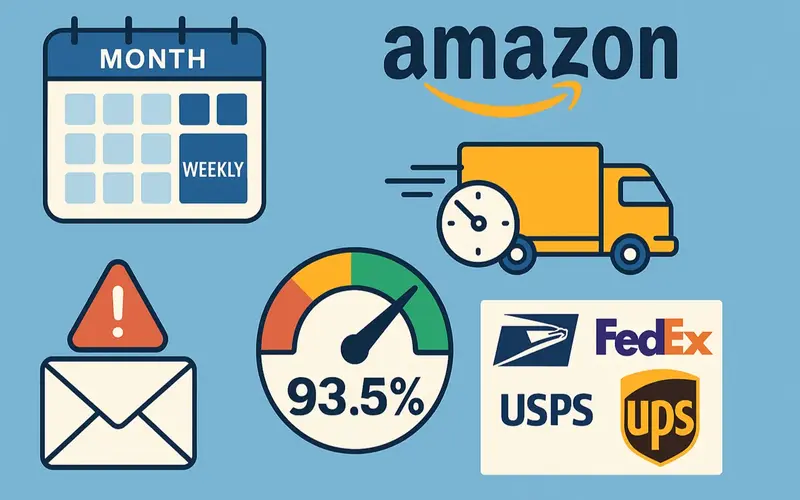
Amazon’s Premium Shipping program has always driven better conversion rates, improved Buy Box share, and happier customers. But come June 29, 2025, Amazon is rolling out sweeping changes to Premium Shipping performance requirements, and they’re not kidding around. If you’re an ecommerce pro, brand operator, logistics expert, or retail strategist, buckle up. Here’s everything you need to know, served in a conversational style, with a dash of candor, and a sprinkle of “keep-your-cool” honesty.
From Monthly Roll-Ups to Weekly Check-Ins
Let’s cut to the chase: under the old system, you needed a 97% on-time delivery rate (OTDR) over a rolling 30-day window to keep that Premium Shipping eligibility. Amazon looked at your performance once a month, sent one warning if OTDR dipped below 97%, and gave you until the next month to fix it. Easy enough—if you had a random bad week, you could smooth it out with stellar performance the rest of the month.
Starting June 29, though, those monthly buffers disappear. Amazon will track OTDR on a weekly basis, from Sunday through Saturday, and drop any Seller Fulfilled Prime (SFP) orders from that calculation. If your OTDR for Premium Shipping falls below the new minimum, 93.5%, you’ll get your first email warning. Do it again next week, and you’ll receive a second warning. Miss the same threshold three times within four consecutive weeks, and you’re out of Premium Shipping until you earn it back.
Why 93.5%? Amazon’s rationale is that they want customers to experience the same reliability they’ve come to expect from the Prime program. Dropping the requirement from 97% to 93.5% might seem like a concession, but trust me, hitting 93.5% every single week is not easy when you’re dealing with carriers that are out of your direct control.
Why This Matters (and Why It’s Tougher Than It Sounds)
No More “Average” Weeks
Under the old model, you could have one sloppy week at, say, 94%, and then three spectacular weeks at 99%, and your overall 30-day OTDR would still be above 97%. Now, if that first week is below 93.5%, you’ll get dinged immediately. A single underperforming week can trigger a warning, and you can’t “erase” it with future weeks once that four-week window closes.
Carriers Need to Be in Your Back Pocket
Amazon explicitly calls out approved carriers like UPS, FedEx, USPS, and OnTrac. If a carrier misses scans, delays pickups, or delivers late, you’re on the hook. The OTDR calculation counts the percentage of orders that arrived on or before the promised “Deliver by” date. If your package is scanned late, or not scanned at all, Amazon assumes it’s going to be late unless an on-time delivery scan is received later. That’s why it’s more important than ever to monitor each carrier’s performance, review their “Last-Mile Delivery” scorecards, and swap out underperformers.
Shipping Settings Automation & OTDR-Protected Labels
Good news: Amazon is offering tools to help you hit your weekly targets. Shipping Settings Automation (SSA) will calculate transit times automatically so your “Deliver by” promises match real-world carrier performance. You still need to set accurate handling times, but SSA can help avoid accidentally over-promising.
Then there’s OTDR protection: if you enable SSA and purchase an OTDR-Protected label through Amazon Buy Shipping, Amazon won’t penalize you for late deliveries as long as the delay is due to factors outside your control. It’s essentially a safety net—except it only applies if you do everything else right (set your handling time properly, buy the right label, and ship on time).
What Sellers Must Do Right Now
1. Audit Your Carriers
- Pull up your Carrier Scorecard in Seller Central each Monday morning.
- Look for patterns: Who’s got the slowest last-mile scans?
- Drop carriers that regularly clock in under 95% weekly on-time scans, because once you hit 93.5%, there’s zero wiggle room.
2. Enable SSA on Every Shipping Template
- Navigate to Shipping Settings → Edit Template → Toggle on Shipping Settings Automation.
- Let Amazon calculate transit times based on carrier data. If you don’t do this, you’re basically flying blind and promising delivery dates you can’t reliably meet.
3. Purchase OTDR-Protected Labels
- Go to Manage Orders → Buy Shipping and look for the shield icon indicating “OTDR Protected.”
- If you use an external tool like Cahoot, make sure it’s integrated and configured to buy the correct labels.
4. Track Your OTDR Like a Hawk
- Check your Account Health → Shipping Performance → On-Time Delivery Rate view, filtered to the “Last 7 Days.”
- Log it in a simple spreadsheet or dashboard; if you’re at 95% on Thursday but have a big FedEx hiccup on Friday, you might dip under 93.5% by Saturday.
5. Prepare an Appeal Template
- If you get that dreaded second warning email, you have two weeks to appeal.
- Your appeal should include:
- Specific orders that caused the miss (order IDs, promised vs. actual dates).
- Evidence that you used SSA and OTDR-Protected labels (screenshots help).
- Steps you’re taking to prevent a repeat (e.g., switching carriers, adjusting handling times).
The Ripple Effects on Your Business
Margin Compression vs. Service Reliability
Yes, spending more on premium carriers or buying OTDR-protected labels adds cost. But losing Premium Shipping can crater your conversion rate, tank your Buy Box percentage, and even affect organic search ranking. You have to run the numbers: maybe offering fewer SKUs with Premium Shipping is cheaper in the long run than risking weekly OTDR failures that affect your sales on your highest-performing SKUs (by being kicked out of the program).
Operations & Inventory Juggling Acts
Keeping enough stock in the “right” warehouses, so carriers aren’t shipping from the opposite coast, matters more than ever. If you sell nationally, you may need multiple fulfillment locations (a 3PL or micro-fulfillment center network). Staggering your replenishment orders (especially around holidays) can prevent stockouts that force you to oversell and then ship late.
Small Sellers vs. Big Sellers
Large brands with multi-warehouse setups and teams dedicated to carrier management can adjust more fluidly. If you’re a one-person operation fulfilling out of your garage, you’ll need to be extra strategic—maybe select just two to three proven carriers and ship as many orders as possible the same day you pick them. The bar is higher now, and patience for shipping errors is slim.
A Few FAQs to Keep You Sane
Q: What happens if a hurricane or blizzard slows down my carrier?
A: If Amazon deems it a “major disruption event,” late deliveries in that region won’t count against your OTDR. But you still need SSA + OTDR-protected labels before the delay. Don’t wait for your messages to start flooding; enable those tools now.
Q: Will this affect Seller Fulfilled Prime?
A: Sort of. SFP has its own stricter OTDR requirements, also on a weekly cadence, but it’s evaluated separately. Just remember, your SFP and Premium Shipping OTDRs are on parallel tracks; a slip in one doesn’t automatically tank the other, but it’s best to nail both.
Q: Can I regain Premium Shipping status after removal?
A: Yes, but you must meet all OTDR requirements for four consecutive weeks after your third infraction (without another miss). It’s basically a “clean slate” window: stay above 93.5% each week for four weeks, and Amazon resets your eligibility for that specific requirement.
Final Thoughts: Embrace the Change (or Get Left Behind)
Amazon’s shift from a 30-day OTDR roll-up to a 7-day weekly check is a clear message: if you want to hang with Prime-level sellers, you need rock-solid operational consistency and carrier partnerships. There’s no “coasting” on the back of a stellar month anymore; you have to nail every single week.
Yes, the change feels daunting. Your margins may squeeze, and your team (even if it’s a team of one) will need to revamp processes. But savvy ecommerce pros know adversity breeds opportunity. Rethink your shipping playbook:
- Lean into SSA and OTDR-protected labels.
- Cultivate trusted carrier relationships (and ditch underperformers ASAP).
- Monitor your weekly OTDR like your P&L depends on it (spoiler: it does).
- Build redundancy, FBA hybrid, multi-warehouse, or strategic 3PL partnerships.
Master these moves, and you won’t merely survive—you’ll thrive. Happy selling, and may your weekly OTDR always stay north of 93.5%.
Citations
- Amazon Seller Central – Upcoming changes to Premium Shipping
- Amazon Seller Central – Frequently asked questions about on-time delivery rate (OTDR)
Written By:
Jeremy Stewart
Jeremy Stewart leads customer success at Cahoot, helping merchants achieve high-performance logistics through smart technology and process optimization. With a background in both ecommerce operations and client services, Jeremy ensures that every merchant using Cahoot gets measurable results—whether they’re scaling from one warehouse to many or managing complex returns.
Turn Returns Into New Revenue
Related Articles
What Is Demand Planning? How It Impacts Inventory, Forecasting, and Profitability
Demand planning is the process of estimating future customer demand so that a business can align its inventory, procurement, and operations to meet that demand without carrying mor...
Walmart Officially Allows Amazon Multi-Channel Fulfillment (MCF)
Big news for multichannel sellers: Walmart now officially allows Amazon Multi-Channel Fulfillment (MCF), Amazon’s service for using its fulfillment network to ship orders from mult...
Shopify Subscription Payment Change: Why It Could Hurt Reactivation
Shopify changed how subscription payment information is handled at cancellation.
Fewer Sellers, Bigger Gains: Seizing Amazon’s Shrinking Competition in 2025
Amazon used to feel like a never-ending battlefield: millions of sellers duking it out for every eyeball. Fast-forward to 2025, and things have quietly shifted. Yes, a ton of new sellers keep signing up—roughly a million a year—but the number of active sellers (those getting at least one review in the past year) has actually fallen from about 2.4 million in 2021 to under 1.9 million in 2025. That’s a 20% drop, and it means there’s more traffic up for grabs per seller. In plain English, the average Amazon seller now gets nearly 31% more visits than four years ago. Cue the confetti for anyone still standing, and some serious sticker shock for those just starting out.
Why the Dip in Active Sellers Matters
Let’s unpack that number: Amazon’s overall traffic has stayed roughly level since 2021, clocking in at around 5 billion visits per month across its global network. But active sellers declined from 2.4 million to 1.9 million between 2021 and 2025. Divide the same or slightly higher traffic by fewer storefronts, and voilà, monthly visits per seller climbed from 2,162 to 2,837. In other words, if you’re still in the game, you’ve got about 31% more potential buyer eyeballs on your listings than your counterparts did a few years back.
That traffic bump isn’t just academic. With Amazon’s revenue surging 36% (from $470 billion in 2021 to $638 billion in 2024), it’s clear the pie is growing even as some sellers fall out. Third‐party sellers, who already sold 56% of units in Q4 2021, pushed their share up to 62% by Q4 2024. Translation: More of a bigger pie is yours for the taking if you can navigate the challenges.
Why Sellers Are Fading Out
Okay, so why are fewer “active sellers” sticking around? A few big reasons: rising fees, logistical headaches, and cutthroat price wars.
- Amazon’s Fees Have Ballooned
- In some categories, referral, FBA pick‐and‐pack, and storage fees now gobble up over 50% of a product’s list price.
- Monthly or seasonal storage surcharges and random “reclassification fees” can make it feel like Amazon’s charging you just for breathing.
- The result? Margin erosion that many newcomers can’t stomach.
- Inventory & Case-Management Headaches
- FBA is a blessing until your inventory gets stranded, buried under storage‐fee surcharges, or stuck in removal limbo. Solving these requires hours of back-and-forth with Seller Support.
- Switching to FBM (Fulfilled by Merchant) isn’t a slam dunk either; sourcing reliable carriers, managing returns, and weathering holiday shipping bottlenecks add a new layer of complexity.
- Regulatory & Tariff Unknowns
- Tariff rates have been fluctuating unpredictably, particularly for goods from China or certain apparel categories. A 10% hike overnight can wreck your COGS (cost of goods sold) if you’re unprepared.
- Sales tax laws and cross-border customs rules shift every few quarters. Small sellers risk penalties if they slip up.
- Chinese Seller Dominance
- Chinese merchants make up over half of the top-performing Amazon accounts, often undercutting U.S. sellers with razor-thin margins. It’s tough to compete on price when factory-direct sellers list at rock-bottom rates.
Put those together, and it explains why many hopeful sellers register, list a few products… and then disappear. In fact, more than 60% of the top 10,000 Amazon sellers launched before 2019, proving that experience and staying power are huge advantages.
Why the U.S. Marketplace Still Reigns Supreme
If you’re deciding where to list, the U.S. marketplace is still the gold standard. Sure, places like Saudi Arabia boast 8,228 visits per seller, and South Africa is close behind at 8,065. But those markets simply don’t have the total volume or category breadth of Amazon.com. In the U.S., a niche term like “sourdough starter jar” gets roughly 26,766 monthly searches, compared to 179 in Australia or zero in Saudi Arabia. In other words, niches thrive stateside in a way they can’t elsewhere.
Even better: 73% of U.S. sellers who joined in the past year hit their first sale within 12 months. That’s substantially higher than Germany (38%), the U.K. (32%), or Canada (16%). For new sellers looking for quick validation, the U.S. simply offers the best odds.
Challenges to Confront Head-On
More traffic is great, but it doesn’t magically overcome the hurdles. Here’s what you’ll face if you jump into Amazon today:
- Margin Erosion: Even with extra visits, if your fees and COGS leave you with negligible profit per unit, those extra eyeballs won’t matter. Carve out a robust pricing model, know your true landed cost—including tariffs, shipping, Amazon fees, and PPC.
- Inventory Planning: Sell-through rates matter. Overstocking triggers costly storage fees; understocking loses you the Buy Box and lets competitors swoop in. Sophisticated 3PL integrations or tools like Forecastly can help you thread the needle.
- Competitive Pricing & Buy Box Battles: Repricers can help, but they’re not magic. When Chinese sellers aggressively undercut, you risk starting a race to the bottom. Focus on unique value propositions, bundling, subscription offers, or enhanced branding to stand out.
- Regulatory Compliance: Keep up with tariff updates. For instance, electronics gear imported from Asia might incur new duties under a 2025 trade ruling—know it before it blindsides your margin.
- Account Health Vigilance: A single A-to-Z claim or policy violation can drop your seller rating. If you rely on Amazon for 80% of your sales, a suspension can be devastating. Build redundancies: own a Shopify store or diversify into Walmart Marketplace.
How to Capture Your Piece of the (Growing) Pie
1. Lean Into Niche Categories: If you’re selling something ultra-specialized—think artisan beard balm, eco-friendly pet toys, or limited-edition kitchen gadgets—your “competition” pool is smaller. Use tools like Helium 10 to spot emerging micro-niches before they catch fire.
2. Optimize Listings with SEO & Enhanced Content: Keywords matter, but so does conversion. High-res images, 360-degree product videos, and A+ content can take your listing from meh to must-buy. When you’ve got 30% more visits, conversion-rate improvement is pure gold.
3. Strategic PPC & DSP Budgets: With that extra traffic cushion, you might discover that CPCs (cost per click) in your niche are actually lower now due to lighter competition. Run a lean Sponsored Products campaign; if your listing’s solid, you can turn that paid traffic into organic momentum.
4. Leverage Prime & Subscription Models: Products eligible for Prime enjoy a higher click-through rate. If the margin allows, consider bundling or small subscription programs to lock in recurring revenue rather than one-off purchases.
5. Diversify Fulfillment Options: FBA is convenient, but a 3PL (third-party logistics company) hybrid or FBM can be more cost-effective once you hit a certain volume. Free two-day shipping is table stakes; just make sure your margins survive the shipping fees.
6. Plan for International Growth, But Don’t Rush: The data shows 69% of sellers stay confined to one marketplace. If you nail the U.S., expanding later to Canada or Mexico can be a logical next step. But don’t spread inventory too thin across 22+ marketplaces when your U.S. business still has growth levers to pull.
The Road Ahead
As Amazon’s marketplace matures, the landscape will keep shifting—new fees might pop up, algorithm tweaks could rearrange SERP rankings, and global trade winds will bring fresh tariff puzzles. But right now, a rare alignment exists: fewer active sellers, steady or growing buyer traffic, and a rising slice of third-party volume. For brands with grit, this means more opportunity if you’re willing to do the heavy lifting.
The parting advice? Amazon’s game has always been about endurance. Weather the headwinds, optimize your listings, master your costs, and don’t be afraid to lean into niche categories—and you might just ride this 30% traffic bump into the kind of scale that felt impossible a few years ago.
Is it crowded? Sure. Is it still worth it? For those who can adapt, absolutely.
Citations
- Marketplace Pulse: Amazon Is Less Competitive Than Four Years Ago
- Marketplace Pulse: U.S. Is Amazon’s Most Beginner-Friendly Marketplace
- Marketplace Pulse: 69% of Amazon Sellers Sell in Just One Marketplace
Written By:
Manish Chowdhary
Manish Chowdhary is the founder and CEO of Cahoot, the most comprehensive post-purchase suite for ecommerce brands. A serial entrepreneur and industry thought leader, Manish has decades of experience building technologies that simplify ecommerce logistics—from order fulfillment to returns. His insights help brands stay ahead of market shifts and operational challenges.
Turn Returns Into New Revenue
Related Articles
What Is Demand Planning? How It Impacts Inventory, Forecasting, and Profitability
Demand planning is the process of estimating future customer demand so that a business can align its inventory, procurement, and operations to meet that demand without carrying mor...
Walmart Officially Allows Amazon Multi-Channel Fulfillment (MCF)
Big news for multichannel sellers: Walmart now officially allows Amazon Multi-Channel Fulfillment (MCF), Amazon’s service for using its fulfillment network to ship orders from mult...
Shopify Subscription Payment Change: Why It Could Hurt Reactivation
Shopify changed how subscription payment information is handled at cancellation.
TikTok Shop’s 2024–25 Shift: From Free Viral Reach to Pay-to-Play
TikTok Shop’s U.S. launch (Sept 2023) initially promised easy viral exposure on the For You Feed. In 2024, TikTok lured merchants with low fees and promotional subsidies (free shipping, discounts) to jump-start its marketplace. However, by late 2024/early 2025, this “freebie” era faded. Industry reports and insiders confirm that TikTok is pulling back organic traffic; brands now generally must pay for views that once came for free. For example, TikTok’s U.S. launch helped sellers of quirky products (e.g., “Taco Blanket” and “Claw-Toe Socks”) rack up millions of views without ad spend, but today, unpaid view counts are “few and far between,” and small merchants report steep drops in sales.
Decline of Free Organic Reach
- Honeymoon Over. Business Insider and industry sources say TikTok Shop spent 2023 supplying free feed traffic to early U.S. sellers. That helped small brands go viral overnight, but those days are gone. “The era of free traffic on TikTok is fading,” one report bluntly states.
- Small Sellers Squeezed. Merchants who called TikTok a “cheat code” to reach customers cheaply now struggle. One case: Cell Phone Seat’s Scott McIntosh saw organic sales drop almost 95%, from ~$1,000/day to just ~$50/day, after the free-traffic era ended. Agencies note that brands once relying on lucky viral hits must now rethink strategy. Influencer marketers agree that “organic reach becomes increasingly difficult” on TikTok, forcing a shift toward deliberate paid promotion.
- Battle for Discoverability. TikTok still touts its “discovery ecommerce” model (personalized in-feed shopping), but sellers find their products no longer pop up organically unless paid. Many report having to post hundreds of videos (often via affiliates) just to get noticed. In short, viral organic drops and bonus order surges are now extremely rare.
Rise of Paid, Performance Ads
- Pay-to-Play Pivot. Multiple sources confirm that TikTok Shop has shifted to a paywall model. “TikTok is shifting away from sending traffic … for free. Instead, businesses will need to pay for TikTok ads” to get the views they previously enjoyed. TikTok partners advise brands to build as if on an ad-driven marketplace; without ad spend, “you’re destined to falter,” says Orca CEO Max Benator. In other words, paid ads are now the default way to attract buyers.
- New Ad Tools. Reflecting this strategy, TikTok is rolling out sophisticated ad products. In mid-2024 it unveiled the Smart+ AI suite for automated campaign bidding and optimization. This push toward advertising tech underscores that TikTok is focusing on advertiser ROI rather than free virality. (Embedding AI-driven performance tools into its platform is a clear signal that TikTok expects sellers to pay for reach.)
- Influencers & Creators. Because organic feed placement is harder, many sellers rely on paid influencer campaigns and TikTok’s affiliate programs. TikTok Shop merchants “typically use ads and sponsored ‘influencers’ to market their products to TikTok’s 170 million U.S. users.” Even mid-tier creators can earn commissions promoting products, but their videos now often require paid boosts or ads behind them. In practice, most sellers say they must spend steadily on Spark Ads or Shop Ads to stay visible.
Rising Costs and Competition
- Higher Fees and Shrinking Subsidies. TikTok has quietly slashed its seller subsidies. In 2023 it charged a 2% commission and paid much of sellers’ shipping costs; by April 2024 it raised the cut to 6% (then scheduled to 8% in mid-2024). Paid shipping promotions and first-order coupons also began disappearing. As one small seller notes, losing TikTok-paid shipping on a $29 item (with $5 freight) would obliterate his margins. These fee hikes mirror TikTok’s move away from “too good to be true” launch incentives.
- Ad Costs and Fatigue. Advertisers warn that running ads on TikTok is getting pricier and less efficient. TikTok ads “fatigue much faster than on other platforms”: a campaign on TikTok may deliver for only 3–4 weeks, versus months on Facebook/Instagram. In practice, sellers say they must refresh creatives frequently and pump money into ads just to hold reach. With more competitors joining TikTok Shop (Data.ai reports ~240K U.S. sellers on TikTok Shop as of 2024), bidding for FYP space is more intense and costly.
- Price-Sensitive Shoppers. The fee increases have potential side effects. TikTok’s audience skews Gen Z, who are very price-conscious; they can easily compare prices on other channels. Experts warn that passing higher costs to consumers (via slightly higher prices or new fees) could erode loyalty. In short, small brands face a squeeze: rising TikTok fees plus unbundled advertising costs are eating into margins.
Agency and Expert Reactions
- Social Commerce Pros Sound the Alarm. TikTok-focused agencies and retail analysts describe the shift as an inflection point. Orca CEO Benator (also co-host of the SoCom social commerce conference) urges clients to adopt an “ad-driven marketplace” model. William August of Outlandish agrees that moving to paid is “a sign the platform is maturing.” Retail analysts (Forrester’s Mary Pilecki) note merchants will have to absorb or pass on new fees, likely weakening consumer loyalty. One commenter wryly observes, “When TikTok gets closer to being like Amazon … the less I’m going to focus on TikTok.”
- Brands Feeling the Pinch. Some brand leaders confirm the impact: a beauty retailer told Veeqo that TikTok Shop accounted for about 23% of its DTC sales. Such companies must now consider that ¼ of revenue channel could require ads or disappear. Others (like McIntosh’s gadget business) say they may shift budgets back to Amazon or their own sites if TikTok continues winding down freebies. As RetailBoss CEO Jeanel Alvarado puts it, brands deeply invested in TikTok’s ecosystem risk losing “entire social commerce infrastructure” if they have to suddenly pivot away.
- Agency Playbook Adjusted. Marketing experts advise adapting to the new reality. Influencer strategists suggest focusing on well-targeted, purchase-ready audiences rather than broad reach. They also note user fatigue: TikTok feeds now contain so much Shop content that viewers can feel “overwhelmed by constant promotional content,” which could blunt the impact. Agencies emphasize building robust paid strategies alongside organic content: for instance, Front Row Group’s Yuriy Boykiv calculates that selling on TikTok often requires giving away 50–60% of the product’s price to ads, influencer commissions, and logistics. In practice, many merchants now send thousands of free samples to affiliates and run continual ad campaigns, essentially treating TikTok like a performance channel rather than a free showcase.
TikTok’s Ongoing Incentives & Boosts
- Selective Support Remains. TikTok hasn’t removed every perk. It still foots shipping on orders over $20, offers first-time buyer coupons, and runs frequent sale events (especially around holidays). These programs can help dampen the blow of higher fees. Internally, TikTok staff tell BI that some Shop content is still boosted organically in special cases: brands in TikTok’s strategic categories or promotional campaigns, or sellers entering new markets, can get extra exposure. Account managers also have discretionary “boosts” they can apply for clients. In short, rather than universal free reach, TikTok is now “juicing” the visibility of selected products that align with its priorities.
- New Market Focus. TikTok is actively pushing TikTok Shop in non-U.S. markets, and U.S. sellers are taking note. For example, TikTok has expanded ecommerce incentives to Mexico and Brazil, and sellers tell BI they’re exploring those markets where TikTok is still subsidizing growth. This suggests TikTok is reallocating promotional weight to regions where it can still rapidly grow its shop business.
- Live and Affiliate Programs. TikTok continues to promote its live shopping feature and creator affiliate tools as well. Live-streams remain a priority—U.S. live sessions have nearly tripled year-over-year—and TikTok offers new affiliate commissions to creators with as few as 1,000 followers. While these are organic (non-paid) avenues for discovery, sellers report that even live videos often need ad support to reach broad audiences now.
Strategic Takeaways
- Business Model Maturing. The overall signal is clear: TikTok is pivoting its U.S. shop from a growth-at-all-costs play to a more traditional commerce model that relies on advertising revenue. As one insider notes, TikTok ultimately wants its shop to look more like China’s Douyin or Amazon—platforms that make their money from paid promotion. Layoffs and cost cuts in the ecommerce team reinforce that TikTok is tightening its belt and looking for efficiency.
- Looking Ahead. For TikTok’s evolving strategy, this shift likely has multiple drivers. With a U.S. ban looming, ByteDance appears less willing to subsidize TikTok Shop long-term; forcing merchants to pay may help preserve profits if the app’s reach shrinks. The higher commissions and ad emphasis also suggest TikTok is testing how sticky its sellers truly are once incentives vanish. This may set the stage for focusing on larger brands that can afford ads, even as some smaller merchants exit or move elsewhere.
- Message to Sellers. In practical terms, U.S. Shopify brands and DTC sellers should treat TikTok Shop as a paid channel. Viral luck alone is no longer reliable. Brands must either invest substantially in TikTok ads and creative campaigns or risk being drowned out by bigger spenders. As BI concludes, companies that benefited from TikTok’s early freebies now “can’t sustain it without an ad program.” This reality check signals that TikTok is maturing into a self-sustaining marketplace, one where visibility costs money, and those costs are rising.
Citations
- Adweek: TikTok Debuts AI-Powered Smart+ Performance Tools
- Business Insider: TikTok Plays Hardball With Sellers
- Business Insider: TikTok Shop’s Era of Free Views Is Fading Fast for Sellers
- Econsultancy: TikTok Shop and social commerce trends for 2025: We ask the experts
- Modern Retail: Brands on TikTok Shop face increased fees & an uncertain future
- Newsroom – TikTok: Introducing TikTok Shop
- Reuters: U.S. spending on TikTok Shop gains as TikTok faces threat of ban, data shows
- Tubefilter: TikTok wants to turn millions of Americans into paid shopping influencers
Written By:

Rinaldi Juwono
Rinaldi Juwono leads content and SEO strategy at Cahoot, crafting data-driven insights that help ecommerce brands navigate logistics challenges. He works closely with the product, sales, and operations teams to translate Cahoot’s innovations into actionable strategies merchants can use to grow smarter and leaner.
Turn Returns Into New Revenue
Related Articles
Walmart Officially Allows Amazon Multi-Channel Fulfillment (MCF)
Big news for multichannel sellers: Walmart now officially allows Amazon Multi-Channel Fulfillment (MCF), Amazon’s service for using its fulfillment network to ship orders from mult...
Shopify Subscription Payment Change: Why It Could Hurt Reactivation
Shopify changed how subscription payment information is handled at cancellation.
Why Cross-Border DTC Brands Are Moving Fulfillment Inside the US
Cross-border ecommerce fulfillment is the process of shipping ecommerce orders across national borders—often from warehouses outside the United States to U.
Seller Fulfilled Prime (SFP) & Premium Shipping Requirements Changed June 29, 2025: A Side-by-Side Deep Dive

In this article
7 minutes
- Trial Enrollment & Graduation Windows for Seller Fulfilled Prime
- Monthly Volume & Enrollment Requirements
- Size-Tier Misclassification & Network Disruptions
- Appeals Process Overhaul
- OTDR Protection via Amazon-Managed Shipping Tools
- Premium Shipping Changes
- Putting It All Together: A Seller’s Checklist
- Final Thoughts
Effective June 29, 2025, Amazon rolled out tighter performance guardrails for two of its marquee shipping programs: Seller Fulfilled Prime (SFP) and Premium Shipping. Seller Fulfilled Prime work refers to the process by which eligible third-party Sellers can fulfill Prime orders directly from their own warehouses, provided they meet Amazon’s strict performance requirements. For Sellers, these changes aren’t mere tweaks; they reshape how you qualify, stay in, and recover from hiccups in these programs. Below, we’ll walk through each key requirement as it stands today versus what you’ll need to hit after the effective date, with real-world examples to illustrate exactly what’s at stake. For a rundown of all program requirements, see the full Seller Fulfilled Prime Program and Premium Shipping policies.
Trial Enrollment & Graduation Windows for Seller Fulfilled Prime
Before June 29:
- Sellers can request an SFP trial, but graduation is subject to restricted periods around major shopping events and a limit of three trial attempts per calendar year.
- The SFP trial period lasts for 30 days and includes specific performance metrics that must be achieved to qualify for official enrollment in the program.
- Graduation from trial depends on meeting the required performance metrics during the trial and not falling within a restricted graduation period.
After June 29:
- Three Trials Max per Year: You’ll be capped at 3 trial attempts in each calendar year. Any trial that begins before June 29, 2025 doesn’t count toward this limit.
- Quiet Periods Around Major Events: If your 30-day trial spans the 30 days leading up to Prime Days, Black Friday through Christmas, etc., you cannot graduate. This ensures Sellers are battle-tested before the busiest season.
Sellers must successfully complete the trial period by meeting specific performance requirements to gain access to Prime branding.
Why This Matters: Imagine you enroll in an SFP trial mid-October, aiming to graduate in time for Black Friday. Under the new rule, even flawless performance won’t earn you Prime status, you’ll have to re-enroll after the holidays. Plan your trials for quieter times (e.g., late January) to avoid losing a precious attempt.
Monthly Volume & Enrollment Requirements
Before June 29:
- Sellers must consistently ship Prime packages and ship at least 100 Prime packages per month to maintain SFP enrollment without reduced order limits.
- If you miss on-time metrics, Amazon sends warning emails, but your enrollment status remains until metrics severely degrade.
After June 29:
- Minimum 100 SFP Shipments/Month: You must deliver at least 100 Prime-eligible packages each calendar month, spread reasonably across weeks, to maintain the Prime badge.
- Dynamic Order Limits: Fall below 100 (or cluster all shipments in one week), and Amazon will impose a reduced daily Prime order limit until you return to consistent volume.
- Exemption for Fix-Ups: If you get a second warning for missing any metric, you can pause Prime (no shipments) for a week to get your house in order, and that period won’t count against your enrollment.
Practical Example: You shipped 15 Prime packages in the first 3 weeks of May, then scrambled to ship 90+ in the final week. In June, you’ll wake up to find your Prime orders capped at a fraction of normal volume. Better to target 25–30 SFP orders per week and build in some slack.
Size-Tier Misclassification & Network Disruptions
Before June 29:
- Listing ASINs in the wrong size tier might trigger warning emails, but rarely leads to immediate suspension. Misclassification can also result in higher storage fees, impacting overall profitability.
- Late deliveries during huge storms or carrier outages may or may not be excluded automatically.
After June 29:
- Strict Misclassification Guardrails: Repeatedly offering a product under the wrong size-tier can lead to blocking of SFP offers or Prime status suspension/revocation for those ASINs.
- Automatic OTDR Exclusions for Major Disruptions: Clearer language confirms that any late deliveries from Amazon-identified large-scale carrier or weather events are excluded from your OTDR automatically.
Scenario: If you classify a product under the wrong size tier, Amazon may block SFP offers for the ASIN or take other enforcement action until the product dimensions and size tier are corrected. You’ll need to correct the tier and appeal to restore it—costly downtime.
Appeals Process Overhaul
Before June 29:
- You have a sliding window to dispute removals, but timelines and submission limits are vague.
After June 29:
- 14-Day Filing Window: From the date you receive a notice (e.g., “Your SFP status is paused due to low OTDR”), you have 14 calendar days to open an appeal.
- 4-Day Response to Requests: If Amazon asks for more details, you have 4 days to reply, or your appeal is closed.
- Limit of 3 Appeals/Quarter: You can file up to 3 appeals per quarter (overturned appeals don’t count). Appeals require supporting data (order IDs, tracking numbers, ZIP codes, proof of carrier delays).
Why It’s Tougher: Say your OTDR dips because a regional carrier hub froze over two days. You’ll need to create a case including tracking scans, carrier advisories, and order logs quickly, or forfeit that appeal.
OTDR Protection via Amazon-Managed Shipping Tools
Before June 29:
- Seller Fulfilled Prime and Premium Shipping offers can receive OTDR protection from late deliveries when Shipping Settings Automation is enabled, you purchase labels marked ‘OTDR Protected’ through Amazon Buy Shipping or Veeqo, and you ship on time.
After June 29:
- “OTDR Protected” Labels: If you enable Shipping Settings Automation in your Prime templates and purchase “OTDR Protected” labels through Amazon Buy Shipping, any late deliveries on Standard (for SFP) or Premium shipping won’t hurt your OTDR.
- Continued Exclusion of Major Disruptions: Same carve-out for large-scale network events.
Bottom Line: Automate shipping profiles and purchase labels using Buy Shipping API, and you effectively get “insurance” against minor late-delivery slips.
Premium Shipping Changes
Amazon’s Premium Shipping program (items promised in 1–3 business days) gets its own tightening:
|
Requirement
|
Today
|
After June 29
|
|---|---|---|
|
OTDR Threshold
|
97%
|
93.5%
|
|
Measurement Window
|
Rolling 30-day period
|
Weekly (Sun–Sat)
|
|
Enforcement Steps
|
Removal upon sustained dip
|
3-strike system:
1st miss – warning email 2nd miss – warning email 3rd miss in 4 consecutive weeks – removal |
|
Warning Reset
|
None
|
4 consecutive perfect weeks clears prior infraction
|
Key Impact: Under the new cadence, a single bad week can put you on notice, and three such weeks in a month spells immediate removal from Premium Shipping. You’ll need more consistent performance throughout each month, not just a healthy 30-day aggregate. Sellers must successfully complete the new performance metrics to maintain their status in the Premium Shipping program.
Putting It All Together: A Seller’s Checklist
- Schedule Your SFP Trial Smartly: Avoid major sale seasons; plan for Q1.
- Lock Down 100+ Prime Shipments/Month: Automate your SFP orders to spread volume evenly across weeks.
- Clean Up Your ASIN Tiering: Audit listings for correct size tiers and package profiles.
- Enable Shipping Automation + Protected Labels: In Seller Central > Fulfillment Settings, turn on SFP/Premium templates and default to OTDR-protected labels.
- Monitor Weekly OTDR: Invest in an operations dashboard that can track your OTDR by week for both SFP and Premium orders.
- Prepare an Appeals Kit: Create a template for submitting an appeal with sections for order logs, tracking scans, and carrier advisories so you can file within 14 days. Cases created after 14 calendar days will not be considered.
- Build in Buffer for Disruptions: If large-scale transportation issues affect your network, monitor carrier conditions, increase handling time if pickups are delayed, or set your account inactive if you cannot ship at all. Consider outsourcing your SFP fulfillment to a distributed fulfillment network that organically solves for carrier network disruptions and ensures the highest performance metrics for continued program eligibility and enrollment.
- Understand SFP Program Requirements: Familiarize yourself with the stringent requirements of the SFP program and adapt to changing Amazon policies to maintain your SFP status.
Final Thoughts
These new Seller Fulfilled Prime (SFP) and Premium Shipping requirements underscore Amazon’s push for ultra-reliable, ultra-consistent delivery, a win for customers, and a heavier lift for Sellers. But by meeting these new standards, (whether independently or with the help of a distributed fulfillment network), Sellers can maintain access to Prime branding and the substantial customer base of Amazon Prime members, mitigating the risk to the sales opportunities afforded by the Amazon Seller Fulfilled Prime Program.
By understanding the before-and-after, planning trial timing, automating wherever possible (especially Prime shipping options), and building a rapid-response appeals process, you can not only stay enrolled in SFP and Premium Shipping programs but thrive in them.
Watch the Video
Written By:
Jeremy Stewart
Jeremy Stewart leads customer success at Cahoot, helping merchants achieve high-performance logistics through smart technology and process optimization. With a background in both ecommerce operations and client services, Jeremy ensures that every merchant using Cahoot gets measurable results—whether they’re scaling from one warehouse to many or managing complex returns.
Turn Returns Into New Revenue
Related Blog Posts
Amazon Pulls the Plug on Thousands of Vendors
In this article
2 minutes
Receive a big check every month for selling your products directly to Amazon wholesale? Get ready to change the way you do business with the e-commerce behemoth. If you own a small business that currently moves less than $10 million in sales volume through Amazon, or Amazon has not paired your company with an assigned vendor manager, the company will now require you to sell your products through its third-party marketplace by default.
Receive a big check every month for selling your products directly to Amazon wholesale? Get ready to change the way you do business with the e-commerce behemoth. If you own a small business that currently moves less than $10 million in sales volume through Amazon, or Amazon has not paired your company with an assigned vendor manager, the company will now require you to sell your products through its third-party marketplace by default.
Moving smaller vendors to its third-party platform allows Amazon to eliminate costs associated with directly supporting smaller companies that bring in less revenue. Once a business is on the third-party platform, Amazon also has the ability to charge for additional services, such as Fulfilled by Amazon and account management.
Amazon’s first-party business will focus on maintaining relationships with high value brands and companies involved in the production of Amazon’s private-label products.
The change is expected prove difficult for smaller, first-party vendors that lack the existing systems and infrastructure to support competitive third-party marketplace sales and distribution.
Written By:
Rinaldi Juwono
Rinaldi Juwono leads content and SEO strategy at Cahoot, crafting data-driven insights that help ecommerce brands navigate logistics challenges. He works closely with the product, sales, and operations teams to translate Cahoot’s innovations into actionable strategies merchants can use to grow smarter and leaner.
Turn Returns Into New Revenue
Related Articles
Walmart Officially Allows Amazon Multi-Channel Fulfillment (MCF)
Big news for multichannel sellers: Walmart now officially allows Amazon Multi-Channel Fulfillment (MCF), Amazon’s service for using its fulfillment network to ship orders from mult...
Shopify Subscription Payment Change: Why It Could Hurt Reactivation
Shopify changed how subscription payment information is handled at cancellation.
Why Cross-Border DTC Brands Are Moving Fulfillment Inside the US
Cross-border ecommerce fulfillment is the process of shipping ecommerce orders across national borders—often from warehouses outside the United States to U.