
Target Vendor Portal Explained: What Brands Actually Have to Manage

Last updated on April 02, 2026
In this article
 15 minutes
- More than purchase orders and invoices
- Where compliance requirements create financial exposure
- How chargebacks actually happen (and stack up)
- Portal failures are almost always fulfillment failures in disguise
- Integration with Other Systems
- Practical steps that reduce penalties and protect margins
- Frequently Asked Questions
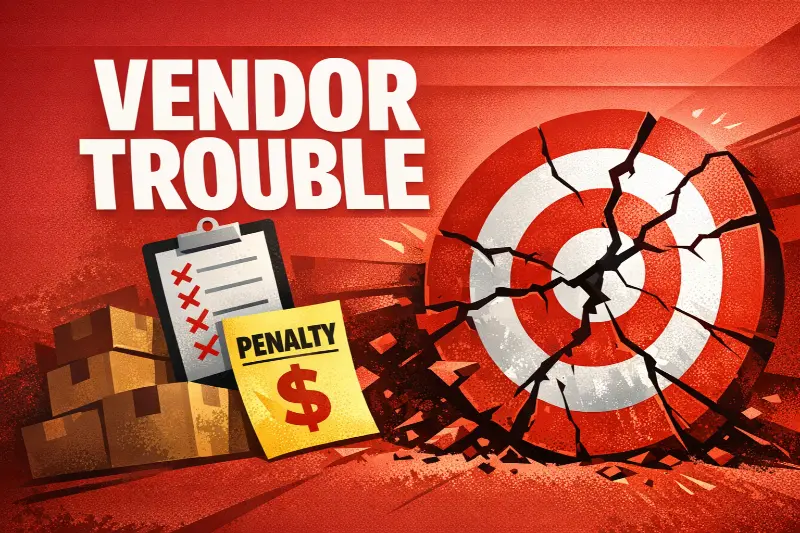
The Target vendor portal is not an admin dashboard. It is a compliance and fulfillment control system where small operational errors cascade into chargebacks, delays, and margin erosion. Target Partners Online is the web portal Target provides to support its vendors and suppliers. Brands that treat it as a place to check orders and submit invoices misunderstand what it actually demands. For any company supplying Target, the portal is where performance is measured, penalties are assessed, and the financial health of the retail partnership is determined in real time.
Known formally as Target Partners Online (accessible at partnersonline.com), the platform houses more than 40 distinct applications spanning purchase orders, shipping logistics, item management, product costing, invoicing, dispute resolution, and supplier performance tracking. Every Target supplier, from a large CPG brand seeking to secure Target as a key retail partner to emerging direct-to-consumer companies entering big-box retail for the first time, operates through this ecosystem daily. As a web portal, it serves as a centralized digital hub for vendor management and business operations, enabling vendors and suppliers to manage retail data, communication, and compliance. Sales teams pull retail sales data. Logistics teams manage routing and shipments. Accounts receivable teams track deductions. The portal touches every function, and compliance failures in any one of them carry direct financial consequences.
More than purchase orders and invoices
The core workflows inside the Target vendor portal reflect the full lifecycle of a retail order, not just the transaction itself. Understanding these workflows is essential because each one contains compliance checkpoints where errors generate chargebacks.
Purchase orders arrive via EDI 850, and Target’s POs can be substantial (500+ line items is not unusual). Vendors must review and acknowledge orders within a defined window, and the original PO quantity matters enormously because Target measures fill rate against that original number, not any revised figure. This means suppliers cannot reduce order quantities through EDI 860 change requests and then claim full compliance.
Advanced Ship Notices (ASNs) are submitted via EDI 856 and must be error-free and received before the shipment’s in-yard date and time. The ASN contains item IDs, quantities shipped, case pack information, SSCC-18 barcodes, bill of lading numbers, carrier details, and expected delivery dates. Target’s distribution centers depend on accurate ASN data for receiving, so inaccuracies do not simply create a paperwork problem. They disrupt the physical flow of goods through the supply chain.
Routing compliance is managed through ShipIQ, which replaced the legacy Vendor Ready to Ship system. ShipIQ automates shipment creation and assigns pickup dates based on product lead time rather than vendor preference. For collect shipments (where Target pays freight), suppliers must release POs in ShipIQ on a specific timeline. For prepaid shipments, appointments are scheduled through Docklink or RyderShare. Pallet heights, stretch wrap specifications, label placement, and GS1-128 carton labels all fall under routing guide requirements.
Invoicing flows through EDI 810 documents, with Electronic Funds Transfer required for all domestic vendors. The portal’s Accounts Receivable Deduction Dashboard gives suppliers visibility into deduction activity and payment trends, while the Synergy dispute portal allows vendors to submit and track chargeback disputes with supporting documentation.
Where compliance requirements create financial exposure
Target’s compliance program, built around its On Time Fill Rate (OTFR) framework, sets performance goals that are almost uniformly 100%, with one exception: fill rate, set at 95%. Every metric below target triggers percentage-based or per-carton penalties that compound quickly across shipments.
On-time shipping carries a 3% of cost-of-goods penalty on all non-compliant items, with a $150 minimum chargeback. This applies whether the vendor ships collect or prepaid, and Target penalizes shipments that arrive both too early and too late. For collect shipments, the vendor must have goods ready for pickup in the assigned window. For prepaid shipments, the Target distribution center must receive goods within the delivery window. Drop trailers receive a grace period of 12 hours before and 4 hours after the scheduled time, while live trailers must arrive within 30 minutes of the appointment.
Fill rate compliance requires shipping at least 95% of items on the original purchase order, measured at the item level. Falling below that threshold triggers a 3% COGS fine on non-compliant items. Because this is measured against the original EDI 850, suppliers who habitually short-ship or rely on PO modifications to mask inventory shortfalls face consistent penalties.
Target’s Perfect Order Program (introduced in May 2025 for domestic suppliers) added three additional compliance layers: ASN Availability, ASN Accuracy, and Physical Barcode Accuracy. Each carries a fine of $0.75 per non-compliant carton with a $100 minimum. ASN Accuracy now measures both item-level attributes (vendor case pack information) and shipment-level data (store ship information). Physical Barcode Accuracy requires that 100% of cartons arriving at Target’s distribution centers carry legible, scannable barcodes that match the retailer’s system records.
How chargebacks actually happen (and stack up)
Chargebacks at Target are not isolated penalties. They are generated by a system that evaluates every shipment against multiple compliance criteria simultaneously, meaning a single problematic shipment can trigger three or more separate chargebacks. A late shipment with an inaccurate ASN and barcode errors produces an on-time violation, an ASN accuracy fine, and a physical barcode penalty, all on the same PO.
The most common chargeback categories include invoice match deductions (carton shortages, cost differences, case pack discrepancies), vendor performance deductions (late shipments, fill rate shortfalls, ASN failures), and freight deductions (unapproved expedited freight, backorder charges, improper consolidator shipments). Third-party audit firms like PRGX and Cotiviti also generate deductions on Target’s behalf.
The financial scale is significant. Industry data indicates that vendor chargebacks can account for 2% to 10% of a manufacturer’s total revenue. A company shipping $80 million annually to Target could face up to $4 million in deductions. Violations remain active for two weeks from the creation date; if unresolved, they convert to chargebacks. Domestic PO disputes must be filed within three months, and import PO disputes within six months. Missing those windows means the losses become permanent.
Portal failures are almost always fulfillment failures in disguise
The most persistent misconception about the Target vendor portal is that compliance problems originate in the portal itself. They rarely do. The portal reports what happened in the physical world. When an ASN is inaccurate, it is almost always because the warehouse shipped different quantities than expected. When a fill rate violation appears, it reflects an inventory problem upstream, not a data entry mistake downstream.
This pattern emerges from the handoff points in a typical supply chain: the vendor’s ERP sends data to the EDI system, which connects to the 3PL’s warehouse management system, which generates the ASN. At each handoff, data can degrade. A warehouse management system that cannot track inventory at every touchpoint will produce inaccurate counts, which flow into inaccurate ASNs, which trigger compliance penalties that look like “portal errors” but are actually warehouse errors. Understanding Target’s supply chain is crucial for vendors to ensure smooth operations and avoid these common pitfalls.
Brands also face what compliance consultants call the three competing sources of truth problem: the retailer’s routing guide documentation, the portal’s automated rules (which determine what the system “sees”), and the operational checklists used by warehouse teams. When these three layers fall out of sync (for example, when a routing guide is updated but the 3PL’s checklist is not), the warehouse executes correctly against outdated instructions while the portal grades against current rules. The chargeback hits, everyone feels they did their job, and yet the penalty stands.
Rushed picking and packing operations, last-minute substitutions, label printer misconfigurations, and staging delays all manifest as portal compliance failures. Treating them as clerical problems leads to repeated violations because the root cause remains unaddressed.
Target’s vendor portal is also essential for operational communication, including updates about distribution center closures, and Target Plus sellers must pair that visibility with a 3PL optimized specifically for Target Plus requirements.
Integration with Other Systems
To truly unlock the power of Target Partners Online, brands and suppliers must look beyond standalone portal usage and embrace integration with their broader business systems. Seamless integration is the key to transforming Target Partners Online from a compliance checkpoint into a central platform for driving sales, optimizing operations, and gaining valuable insights across your entire supply chain.
By connecting Target Partners Online with other tools—such as item cost management systems, product costing platforms, and electronic funds transfer solutions—vendors can automate manual processes, reduce errors, and achieve real-time visibility into critical performance metrics. For example, integrating item cost management tools allows for more accurate product costing and pricing strategies, ensuring that every purchase order is both competitive and profitable. Linking electronic funds transfer systems streamlines payment workflows, minimizing the risk of late deliveries and improving cash flow management, while programs like the Cahoot Fulfillment Partner network can turn underutilized warehouse capacity into revenue-generating fulfillment infrastructure.
Domestic based vendors, private label suppliers, and CPG brands alike benefit from integrating Target Partners Online with their accounts payable team’s software and supply chain management platforms. This connectivity enables teams to track inventory levels, monitor purchase orders, and manage item setup with greater precision. Real-time data flow between systems means that performance metrics are always up to date, especially when supported by robust order fulfillment integrations across ecommerce partners and carriers, empowering teams to identify root causes of issues—such as invalid deductions or inventory discrepancies—before they impact the bottom line.
Leveraging Target’s packaging program and the Vendor Training Hub through integrated processes ensures that your business consistently meets the retailer’s highest standards. These integrations not only support compliance but also provide actionable insights that help vendors track performance, optimize promotional campaigns, and drive sales growth.
Practical steps that reduce penalties and protect margins
Brands that consistently maintain strong supplier performance on Target’s Supplier Performance Management Dashboard tend to share several operational disciplines. The Target vendor portal provides the ability to create visualizations, reports, and alerts, enhancing a user’s capacity to analyze, interpret, and act on retail data efficiently:
- Pre-shipment auditing and documentation. Quality checks on every outbound retail shipment, verifying label accuracy, case pack counts, pallet configurations, and documentation completeness. Photographing and logging every shipment with timestamps creates evidence for disputing erroneous chargebacks.
- EDI automation with real-time synchronization. Moving from batch processing to real-time sync between ERP, WMS, and EDI systems eliminates timing discrepancies. Automated ASN generation tied directly to warehouse management data ensures the ASN matches the physical shipment.
- Converting routing guides into actionable warehouse checklists. Distilling Target’s detailed routing documentation into concise, DC-specific checklists (covering booking steps, label placement, carton count rules, ASN timing, and documentation retention) bridges the gap between retailer requirements and warehouse execution.
- Dedicated compliance ownership. Assigning a specific person or team to monitor Target’s performance metrics weekly, attend vendor trainings, update internal systems when requirements change, and manage the dispute process through Synergy.
- Retail-experienced fulfillment partners. Working with 3PLs that specialize in big-box retail compliance and understand Target’s specific requirements for item setup, routing, labeling, and delivery windows.
Operational tools like Vendor Management and Maintenance (VMM) and Vendor Ready to Ship (VRS) enable vendors to streamline processes and reduce errors.
Beyond these operational investments, the most effective brands build a monthly compliance review cadence: tracking the top chargeback codes by dollar amount and frequency, auditing EDI and ASN timing, reviewing label templates, and updating warehouse teams on any changes to Target’s portal rules or routing guide. Every recurring chargeback should produce a corrective action, a documentation standard, and a training update. Disputing chargebacks without fixing the underlying process guarantees the same penalties will return.
The Vendor Training Hub (VTH) provides access to training and compliance guidelines for suppliers to meet Target’s standards.
Frequently Asked Questions
What is the Target vendor portal and who needs to use it?
The Target vendor portal, formally called Target Partners Online (partnersonline.com), is a web portal and compliance and fulfillment control system used by all Target suppliers. It contains over 40 applications for managing purchase orders, shipping logistics, item management, product costing, invoicing, dispute resolution, and supplier performance tracking. Every Target supplier from large CPG brands to emerging DTC companies entering big-box retail must operate through this platform daily. Sales teams access retail sales data, logistics teams manage routing and shipments, and accounts receivable teams track deductions. The portal is not optional for any vendor relationship with Target.
Access and secure logins are provided to all Target retail vendors, allowing them to share Target data and communicate within a single portal. Authentication services ensure secure user authorization, compliance, and protected data sharing within the web portal.
What are the core workflows vendors must manage in the Target portal?
Core workflows include: (1) Purchase orders via EDI 850 that must be acknowledged within defined windows; (2) Advanced Ship Notices (ASNs) via EDI 856 submitted before shipment in-yard dates with item IDs, quantities, case packs, SSCC-18 barcodes, and carrier details; (3) Routing compliance through ShipIQ (replaced Vendor Ready to Ship) for collect and prepaid shipments with specific pallet, labeling, and appointment requirements; (4) Invoicing via EDI 810 with Electronic Funds Transfer required for domestic vendors; (5) Dispute management through the Synergy portal for chargeback resolution with supporting documentation.
Vendor management is also a key workflow, supported by the Vendor Management and Maintenance (VMM) web-based app, which allows vendors to manage details such as mailing address and bank information.
The Target vendor portal includes tools for analyzing supplier business and provides access to various Target applications and systems, and Target Plus merchants can complement this with specialized Target Plus order fulfillment services to maintain fast, affordable delivery performance.
What are Target’s compliance requirements and how do chargebacks work?
Target’s On Time Fill Rate (OTFR) framework sets performance goals at nearly 100% (except fill rate at 95%). On-time shipping violations trigger 3% of COGS penalties with $150 minimum. Fill rate below 95% of original PO triggers 3% COGS fine on non-compliant items. Target’s Perfect Order Program (May 2025) added ASN Availability, ASN Accuracy, and Physical Barcode Accuracy requirements at $0.75 per non-compliant carton with $100 minimum. A single problematic shipment can trigger multiple simultaneous chargebacks (late delivery + inaccurate ASN + barcode errors all on same PO). Violations convert to chargebacks after two weeks if unresolved.
How much can Target chargebacks cost vendors annually?
Industry data indicates vendor chargebacks can account for 2% to 10% of a manufacturer’s total revenue with Target. A company shipping $80 million annually could face up to $4 million in deductions. Common categories include invoice match deductions (carton shortages, cost differences, case pack discrepancies), vendor performance deductions (late shipments, fill rate shortfalls, ASN failures), and freight deductions (unapproved expedited freight, backorder charges). Third-party audit firms like PRGX and Cotiviti also generate deductions. Domestic PO disputes must be filed within three months, import PO disputes within six months, or losses become permanent.
Why do most Target portal compliance failures actually originate in fulfillment operations?
The portal reports what happened in the physical world, not clerical errors. When an ASN is inaccurate, the warehouse almost always shipped different quantities than expected. Fill rate violations reflect upstream inventory problems, not data entry mistakes. The problem emerges from handoff points: vendor ERP sends data to EDI system, which connects to 3PL warehouse management system, which generates the ASN. At each handoff, data can degrade. Warehouse management systems that cannot track inventory at every touchpoint produce inaccurate counts that flow into inaccurate ASNs, triggering compliance penalties that look like “portal errors” but are actually warehouse errors.
What is the three competing sources of truth problem in Target compliance?
The three competing sources of truth are: (1) Target’s routing guide documentation (official requirements); (2) The portal’s automated rules that determine what the system “sees” and grades; (3) Operational checklists used by warehouse teams to execute shipments. When these three layers fall out of sync (for example, routing guide updates but 3PL checklist is not updated), the warehouse executes correctly against outdated instructions while the portal grades against current rules. The chargeback hits, everyone feels they did their job correctly, yet the penalty stands. This misalignment accounts for many recurring compliance failures.
What operational practices reduce Target chargebacks and protect margins?
Effective practices include: (1) Pre-shipment auditing with quality checks on label accuracy, case pack counts, pallet configurations, and photographic documentation with timestamps for dispute evidence. Manual processes in these steps can be time consuming and drain resources, especially for smaller teams; (2) EDI automation with real-time sync between ERP, WMS, and EDI systems to eliminate timing discrepancies. Automating retail link data-pulling and analysis helps improve efficiency for brands working with Target; (3) Converting routing guides into DC-specific warehouse checklists covering booking, labeling, carton counts, ASN timing; (4) Dedicated compliance ownership with weekly metric monitoring and Synergy dispute management; (5) Retail-experienced 3PL partners specializing in big-box compliance; (6) Monthly compliance review tracking top chargeback codes, auditing EDI/ASN timing, and updating warehouse teams on portal rule changes.
What happens if vendors ignore Target compliance requirements?
Chronic noncompliance carries consequences beyond chargebacks: degraded vendor scorecard ratings, reduced future order volumes, eroded buyer trust, and potential loss of shelf space. The Supplier Performance Management Dashboard tracks shipping reliability, on-time metrics, fill rate, and ASN compliance weekly. Target’s business intelligence platform Greenfield provides over 100 queryable metrics on sales, inventory, and performance. These visibility tools only help if underlying fulfillment operations are sound. Treating compliance as a back-office function rather than a supply chain discipline determines whether a Target retail partnership generates margin or quietly destroys it through accumulating penalties.
Written By:

Indy Pereira
Indy Pereira helps ecommerce brands optimize their shipping and fulfillment with Cahoot’s technology. With a background in both sales and people operations, she bridges customer needs with strategic solutions that drive growth. Indy works closely with merchants every day and brings real-world insight into what makes logistics efficient and scalable.

Turn Returns Into New Revenue
Related Articles
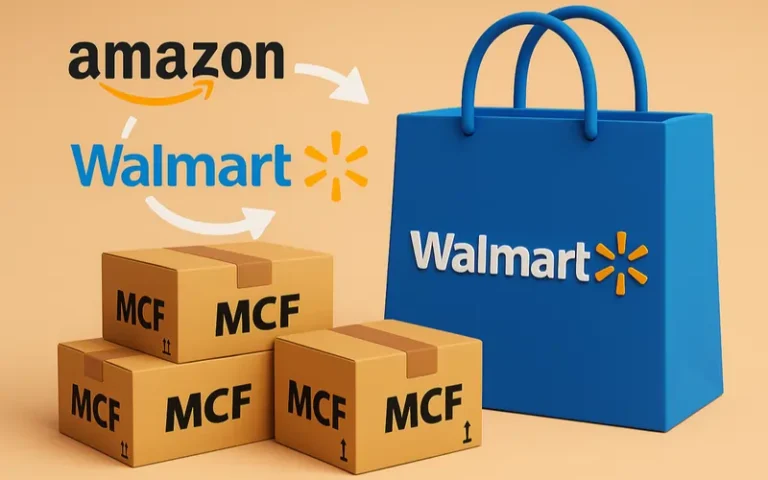
Walmart Officially Allows Amazon Multi-Channel Fulfillment (MCF)
Big news for multichannel sellers: Walmart now officially allows Amazon Multi-Channel Fulfillment (MCF), Amazon’s service for using its fulfillment network to ship orders from mult...

Why More Automation Didn’t Lower Return Costs
Returns automation does improve returns operations: it cuts manual touches, smooths intake, speeds sorting, and makes workflow execution more consistent.

Shopify Subscription Payment Change: Why It Could Hurt Reactivation
Shopify changed how subscription payment information is handled at cancellation.