
Why Cross-Border DTC Brands Are Moving Fulfillment Inside the US

Last updated on October 09, 2026
In this article
 18 minutes
- What the De Minimis Exemption Was and Why Its Removal Changes the Model
- The Aritzia Case: What Executing This Transition at Scale Looks Like
- What Relocation Operationally Requires
- This Is a Distribution Problem, Not a Manufacturing Problem
- When U.S. Domestic Fulfillment Makes Financial Sense
- Entering the U.S. Without a Long-Term Lease Commitment
- Frequently Asked Questions
Cross-border ecommerce fulfillment is the process of shipping ecommerce orders across national borders—often from warehouses outside the United States to U.S. consumers—and for brands built around direct-to-consumer parcel shipping, that model has lost its cost foundation. The elimination of the de minimis exemption has converted what was a variable, duty-free international shipping model into one that incurs import duties, customs processing fees, and brokerage costs on every single order. The rapid growth of global ecommerce and the surge in online shopping, especially during the COVID-19 pandemic, have increased both the complexity and importance of cross border ecommerce fulfillment. Rising consumer expectations for fast and affordable shipping are forcing brands, logistics managers, and ecommerce teams to rethink whether fulfilling U.S. customers from overseas still makes operational or financial sense.
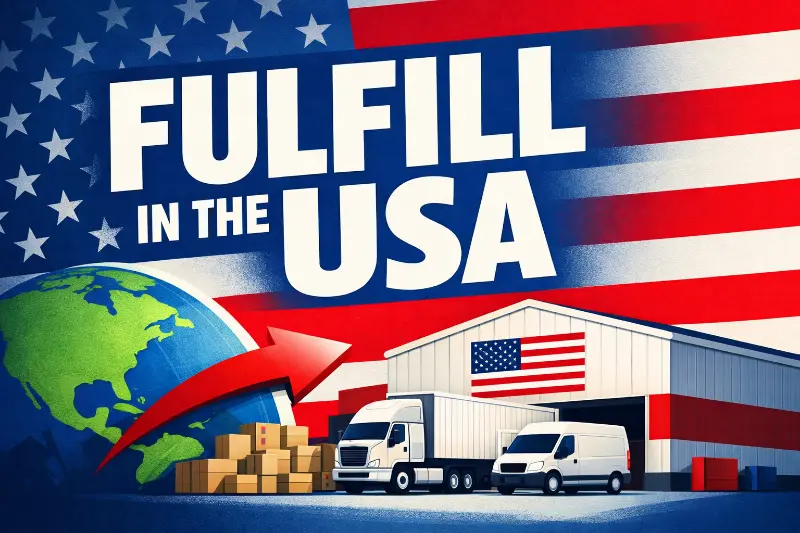
For a growing number of cross-border DTC brands, the answer is no. The operational response is relocation: moving U.S. order fulfillment inside the country, shifting from a variable international shipping cost structure to fixed domestic infrastructure. This article examines what that shift looks like in practice, including the impact of de minimis removal, examples such as brands moving fulfillment closer to U.S. demand, the cost and working-capital tradeoffs of domestic fulfillment, tax and compliance requirements, and when flexible 3PL or distributed U.S. networks start to make sense. This is not a contingency plan. It is becoming the operational baseline for any brand with meaningful U.S. volume.
What the De Minimis Exemption Was and Why Its Removal Changes the Model
The de minimis exemption, codified under Section 321 of the U.S. Tariff Act, allowed imported shipments valued at $800 or less to enter the United States duty-free with minimal customs documentation. For cross-border DTC brands, this provision was the structural logic behind shipping individual consumer orders from a Canadian, European, or Asian warehouse directly to U.S. customers. The brand paid no duties on individual parcels below the threshold, kept fulfillment consolidated in one location, and the U.S. customer received their order without customs friction.
At its peak, more than 1 billion packages annually entered the United States under de minimis. The provision has now been eliminated for shipments from China and Hong Kong, and suspended globally, with permanent legislative repeal set for July 1, 2027. Every cross-border DTC parcel that previously entered duty-free now triggers import duties, customs duties, import taxes, per-shipment customs processing fees, and brokerage charges that can add $15 to $30 or more to the landed cost of a single consumer order.
The math breaks fast at any meaningful volume. A brand shipping 2,000 U.S. orders per month from Canada that previously paid zero duties on those shipments now faces a recurring monthly import cost that did not exist before. That cost does not scale down as the brand grows. It scales up. And unlike a carrier rate that can be negotiated or a warehouse lease that can be amortized, it hits on every order, every month, with no offset. Unexpected extra fees at checkout, such as customs duties and import taxes, can also lead to increased cart abandonment rates among U.S. customers.
The Aritzia Case: What Executing This Transition at Scale Looks Like
Aritzia, the Vancouver-based fashion retailer, is the most documented example of a cross-border brand executing a proactive U.S. fulfillment transition, similar to other brands highlighted in case studies on migrating fulfillment partners. The company had been fulfilling a portion of U.S. international orders from its Canadian distribution network, leveraging de minimis to ship individual parcels across the border duty-free.
Anticipating the exemption’s removal, Aritzia expanded its existing U.S. distribution center in Groveport, Ohio from roughly 240,000 square feet to approximately 560,000 square feet, more than doubling the physical footprint. This expansion allowed Aritzia to better serve the U.S. region. The company then transitioned from third-party to in-house operation of the facility, hired additional staff, and pulled forward equipment retrofitting work before the global suspension took effect in late August 2025.
When the exemption was removed, Aritzia had already relocated all U.S. order fulfillment to the Ohio facility. The company reported operating at triple the throughput capacity compared to its pre-transition baseline, with a path to quadruple capacity through further optimization. Critically, the company stated that service levels for U.S. customers were not impacted during the transition. Maintaining high service levels helped Aritzia retain its U.S. customer base throughout this period.
The financial disclosure was direct. Aritzia reported approximately 400 basis points of gross margin pressure from trade-related headwinds, with roughly one-third of that attributable specifically to the de minimis removal rather than broader tariff exposure. That is a real cost. It is also a cost the company absorbed without degrading delivery performance or customer experience, which is the operational benchmark other cross-border brands now have to work against.
The Aritzia case illustrates the central tension in this transition: the cost of relocating is visible and immediate, while the cost of not relocating compounds quietly until it becomes structural.
What Relocation Operationally Requires
Understanding that U.S. fulfillment is necessary is not the same as being ready to execute it. The transition involves several simultaneous operational changes, each with its own lead time and capital requirement.
Inventory repositioning is the first constraint. Effective supply chain management is crucial here, as brands must coordinate the movement of goods and maintain visibility across multiple locations. A brand that has been fulfilling U.S. demand from a home-country warehouse needs inventory management discipline to determine how much U.S.-facing inventory to pre-position domestically, establish inbound replenishment flows from suppliers or the origin warehouse to the new U.S. node, and manage the transition period when both locations are active, since maintaining inventory accuracy is critical for timely deliveries and avoiding out-of-stock situations during the transition. For seasonal or trend-driven categories, this requires demand-based planning rather than simply mirroring historical stock levels. That planning also depends on a deep understanding of market demand patterns and customer behavior. Regular inventory counts and close tracking of inventory movement are essential to keep accurate inventory records and reduce delayed shipments. Leveraging the resources of a third-party logistics provider can help ensure a smooth transition by providing the necessary infrastructure and expertise, especially when brands follow a structured approach to migrating to a new 3PL successfully and apply criteria for choosing the right 3PL company.
U.S. warehouse capacity is the second. Whether the brand is signing a direct lease or engaging a third-party logistics provider, securing space in a U.S. fulfillment center to receive and store inventory in a logistics-relevant market takes time, and brands targeting the Northeast corridor often look at New York order fulfillment services with fast regional coverage. National industrial vacancy has loosened from the historic lows of 2022, but well-located, smaller-format space in dense markets remains constrained. A five-year direct lease requires volume confidence that can be difficult to hold during a period of policy uncertainty. Third-party logistics arrangements on a per-order basis avoid that commitment but carry higher unit costs at scale, which is why many brands also evaluate alternative ecommerce fulfillment models beyond traditional 3PLs.
Carrier contract changes follow from the location shift. A brand that has been negotiating international shipping rates for Canada-to-U.S. parcels needs domestic parcel agreements with USPS, UPS, FedEx, or regional carriers. Domestic rates are negotiated based on origin, volume, zone distribution, and package profile. Starting from scratch on these negotiations means paying closer to published rates in the early months, which can inflate per-order shipping costs until volume builds.
Tax and compliance obligations expand immediately when a U.S. warehouse is opened. Physical presence in a state creates sales tax nexus in that state from the first day of operation, requiring registration, collection, and filing. The United States has more than 12,000 taxing jurisdictions. For a Canadian or European brand with no prior U.S. tax compliance history, this is a meaningful administrative and cost addition that requires either in-house capability or a qualified U.S. tax advisor before the warehouse opens, not after. It is also essential to comply with U.S. regulations regarding customs, duties, licensing, and customs clearance to avoid disruptions in cross border ecommerce fulfillment, and automation in customs processes helps maintain compliance by keeping documentation and tariff-code updates current.
Working capital requirements increase because pre-positioning domestic inventory means paying for goods and duties before they sell. A brand accustomed to fulfilling U.S. orders from shared home-country inventory now needs to fund a dedicated U.S. stock position. Carrying costs for U.S. inventory typically run 20 to 30 percent of inventory value annually when accounting for capital, storage, insurance, and obsolescence risk. For high-SKU-count or seasonal businesses, this working capital demand can be significant.
During the relocation, the right tools matter: ecommerce fulfillment software with inventory management software features can provide real time visibility through advanced technology to support inventory accuracy and compliance, particularly for brands evaluating Shopify-focused ecommerce fulfillment services.
This Is a Distribution Problem, Not a Manufacturing Problem
It is worth being precise about what kind of problem this is, because the solution set depends on it.
The de minimis removal is specifically a cross border fulfillment and cross border logistics issue. It affects brands that were shipping individual consumer orders from outside the United States and relying on the exemption to avoid per-shipment duty costs. The fix is a distribution change: moving the last-mile fulfillment origin inside the country. The brand’s manufacturing geography, supplier relationships, and product cost structure are separate questions with separate answers.
For cross border ecommerce brands, adapting their cross border operations is essential to remain competitive. A Canadian apparel brand that sources from Vietnam and was fulfilling U.S. orders from Toronto is not being asked to reshore manufacturing. It is being asked to establish a U.S. distribution node so that individual consumer shipments originate domestically. Those are operationally distinct projects. Conflating them leads to analysis paralysis, because reshoring manufacturing is a multi-year, capital-intensive decision, while establishing a third-party logistics relationship in the U.S. Midwest can be operational in 60 to 90 days.
When U.S. Domestic Fulfillment Makes Financial Sense
The decision to establish U.S. fulfillment infrastructure depends on variables that are specific to each brand’s operation. Brands must evaluate cost-effective shipping options and solutions to address their ecommerce needs, ensuring that their international logistics strategies align with business goals and customer expectations.
Volume is the primary threshold. The fixed costs of domestic fulfillment, whether a direct lease or a 3PL monthly minimum, require sufficient order volume to justify. Third-party logistics minimums average around $500 per month in 2025, but the real break-even is in order throughput. The general threshold at which U.S. domestic fulfillment becomes financially superior to cross-border shipping with duties is roughly 500 to 1,000 U.S. orders per month. At that volume, per-order duty and brokerage savings of $15 to $25 more than offset the fixed cost of a 3PL relationship, often with margin to spare.
Average order value intersects with duty exposure in a non-linear way. A brand with a $200 average order value already had limited de minimis benefit on higher-ticket items. A brand with a $45 average order value was capturing maximum benefit from the exemption on nearly every order. For the latter, the duty exposure per order as a percentage of revenue is substantially higher, and the case for domestic fulfillment is correspondingly stronger at lower volume thresholds.
Product category and tariff rate determine the actual per-order duty cost. Apparel from Canada faces different rates than electronics from Europe. Brands should model their specific duty exposure against their actual product mix and origin country before assuming a generic rate applies.
The cost variables that change when moving to domestic U.S. fulfillment are worth mapping explicitly. International shipping cost with duties is replaced by domestic pick-and-pack fees and domestic parcel rates. Variable per-shipment customs costs are replaced by fixed 3PL fees and amortized inbound bulk import costs. Working capital requirements increase. Tax compliance costs appear. Net per-order landed cost typically decreases materially for brands above the volume threshold. However, brands face key challenges and other challenges during this transition, such as navigating new compliance requirements, managing fluctuating shipping rates, and optimizing logistics. Choosing cost-effective solutions and the right shipping options can help overcome these challenges and ensure a smooth shift to domestic fulfillment.
Entering the U.S. Without a Long-Term Lease Commitment
The structural challenge for cross-border brands evaluating U.S. fulfillment in the current environment is that many businesses hesitate to pursue cross border ecommerce fulfillment due to the complexities of shipping internationally and managing operations across different countries and borders. Traditional entry paths require fixed-cost commitments at a moment when policy conditions are still evolving. A five-year warehouse lease is a significant bet on volume projections and stable regulatory conditions. Most mid-market brands are not in a position to make that bet with confidence right now.
Flexible, distributed fulfillment networks offer a lower-commitment alternative. Partnering with a third-party logistics partner that provides specialized order fulfillment services for ecommerce companies offers the services, support, and resources needed for international expansion and global expansion. Third-party logistics providers operating multi-client shared warehouse networks allow brands to access U.S. fulfillment capacity without signing multi-year leases, paying only for the space and labor they actually use, and a Cahoot vs. ShipMonk comparison illustrates how different networks can impact cost and delivery speed. This model carries higher per-unit costs than a dedicated facility at high volume, but it allows a brand to establish a U.S. footprint, validate the operational model, and build volume before making a capital commitment. Distributed fulfillment networks help ecommerce businesses reach new customers and enter new markets, including emerging markets and international markets, by providing the flexibility to test and scale in different regions, much like a strategically located national fulfillment services network that accelerates shipping and reduces costs.
Distributed networks add a further advantage beyond flexibility. International fulfillment solutions are designed to meet the needs of the end customer and address high demand periods. A brand that places inventory across two or three U.S. nodes rather than a single location can reduce average shipping distance to customers, which lowers carrier costs and compresses delivery times simultaneously. For a cross-border brand accustomed to two-to-five-day transit times from Canada, a distributed domestic network can actually improve delivery performance compared to a single-node domestic model, while the per-order economics continue to improve as volume builds across the network. International ecommerce and selling internationally require tailored strategies to serve consumers in various countries and regions, ensuring compliance and optimizing the customer experience, which is easier when your fulfillment stack includes robust order fulfillment integrations with ecommerce partners across marketplaces and carriers.
Cahoot’s shared fulfillment network and Cahoot Fulfillment Partner Program are designed specifically for this kind of entry. Their US fulfillment centers and ecommerce fulfillment services support business growth by enabling efficient shipping internationally and helping brands manage cross border logistics for international orders. Brands can access U.S. fulfillment nodes without long-term lease commitments, place inventory strategically across multiple locations, and scale capacity in line with actual U.S. demand rather than projected demand.
Frequently Asked Questions
What is the de minimis exemption and why did cross-border DTC brands depend on it?
The de minimis exemption under Section 321 of the U.S. Tariff Act allowed imported shipments valued at $800 or less to enter the United States duty-free with minimal customs documentation. Cross-border DTC brands fulfilling U.S. orders from overseas warehouses relied on this provision to ship individual consumer parcels without incurring import duties on each shipment. Its removal means every cross-border parcel now triggers duty costs, customs processing fees, and brokerage charges that did not previously apply.
How did Aritzia respond to the removal of the de minimis exemption?
Aritzia relocated all U.S. ecommerce order fulfillment from its Canadian distribution network to its existing facility in Groveport, Ohio, expanding that facility from approximately 240,000 square feet to 560,000 square feet before the exemption was suspended. The company reported operating at triple its prior throughput capacity and stated that U.S. customer service levels were not affected during the transition. Aritzia disclosed approximately 400 basis points of gross margin pressure from trade-related headwinds, with roughly one-third attributable specifically to the de minimis removal.
Is relocating U.S. fulfillment the same as reshoring manufacturing?
No. These are operationally distinct decisions. The de minimis removal is a distribution problem: it affects brands shipping individual consumer orders from outside the United States. The fix is moving the U.S. order fulfillment origin inside the country. A brand’s manufacturing geography, supplier relationships, and product cost structure are separate questions. A Canadian brand sourcing from Vietnam can relocate U.S. distribution to an Ohio 3PL without changing anything about how or where its products are made.
At what U.S. order volume does domestic fulfillment become financially superior to cross-border shipping?
The general threshold is approximately 500 to 1,000 U.S. orders per month, though this depends on average order value, product category, applicable duty rates, and shipment dimensions. At that volume, per-order savings from avoided duties and brokerage fees of $15 to $25 typically exceed the fixed cost of a U.S. third-party logistics relationship. Brands with lower average order values or higher duty exposure on their specific product categories may reach this threshold at lower volumes.
What does opening a U.S. fulfillment center do to a brand’s tax obligations?
Physical presence in a U.S. state creates sales tax nexus in that state from the first day of operation, requiring registration with the state tax authority, collection of sales tax on sales to customers in that state, and regular filing and remittance. The United States has more than 12,000 taxing jurisdictions with varying rates and rules. For cross-border brands without prior U.S. physical presence, this compliance obligation requires either in-house tax capability or a qualified U.S. tax advisor before the warehouse opens. Economic nexus rules established after South Dakota v. Wayfair may also create collection obligations in additional states based on sales volume alone.
What is the working capital impact of pre-positioning inventory in a U.S. warehouse on inventory management?
Pre-positioning U.S. inventory requires funding a dedicated stock position and paying inbound duties 30 to 90 days before those goods sell. Carrying costs for U.S. inventory typically run 20 to 30 percent of inventory value annually when accounting for capital costs, storage fees, insurance, and obsolescence risk. For brands accustomed to fulfilling U.S. demand from shared home-country inventory, this represents a meaningful increase in working capital requirements that should be modeled before committing to a domestic fulfillment strategy.
Why are distributed fulfillment networks better than a single U.S. warehouse for brands entering from outside the country?
A distributed network places inventory across multiple U.S. nodes rather than concentrating it in one location. This reduces the average shipping distance between inventory and customers, which lowers carrier costs, compresses delivery times, and improves service for customers worldwide by reducing lengthy delivery times and giving shoppers better tracking visibility. For a cross-border brand whose customers are spread across the continental U.S., a single Midwest warehouse may serve central markets well but adds two to three shipping zones for coastal customers. Distributing inventory across two or three strategically placed nodes can match or beat cross-border transit times while reducing per-order shipping cost. That speed and clarity support customer satisfaction and a seamless shopping experience. Distributed networks offered by third-party providers also avoid the multi-year lease commitments that come with dedicated facilities. Inventory inaccuracies can still hurt the buying experience when stock is split across nodes, so allocation has to stay precise. Strong execution in global order fulfillment also depends on keeping customers informed from shipment through delivery.
What cost variables change when a cross-border brand moves to domestic U.S. fulfillment?
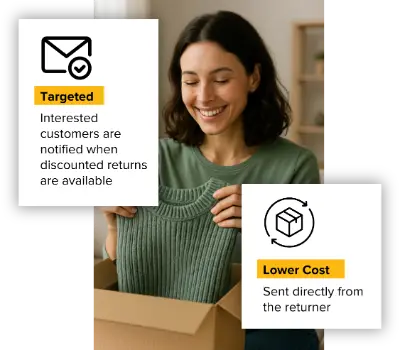
The primary shift is from variable international shipping costs with per-shipment duty and brokerage expenses to fixed domestic infrastructure costs with bulk-import duty treatment. Specific variables that change include: international carrier rates replaced by domestic parcel rates; per-shipment customs fees and duties replaced by amortized inbound bulk import costs; zero U.S. sales tax nexus replaced by multi-state compliance obligations; shared home-country inventory replaced by a dedicated U.S. stock position requiring additional working capital; and returns handling added as part of the broader domestic-fulfillment model that supports global ecommerce fulfillment. For a target market in the U.S., local return processes can reduce reverse-logistics and shipping costs compared with sending returns abroad. Returns operations should inspect items for damage before restocking and ensure customers receive prompt refunds or exchanges when appropriate. Net per-order landed cost typically decreases materially for brands operating above the volume threshold where fixed costs are absorbed, and these domestic returns capabilities also support a smoother global marketplace experience for brands selling into the U.S.
Written By:

Rinaldi Juwono
Rinaldi Juwono leads content and SEO strategy at Cahoot, crafting data-driven insights that help ecommerce brands navigate logistics challenges. He works closely with the product, sales, and operations teams to translate Cahoot’s innovations into actionable strategies merchants can use to grow smarter and leaner.

Turn Returns Into New Revenue
Related Articles
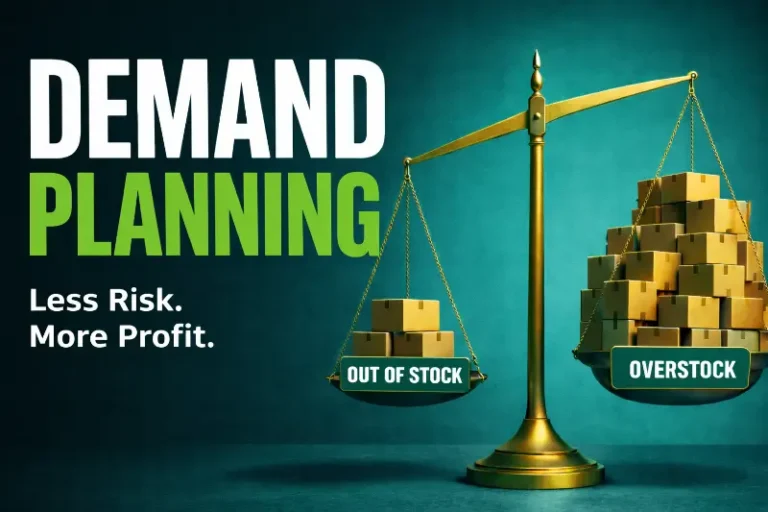
What Is Demand Planning? How It Impacts Inventory, Forecasting, and Profitability
Demand planning is the process of estimating future customer demand so that a business can align its inventory, procurement, and operations to meet that demand without carrying mor...
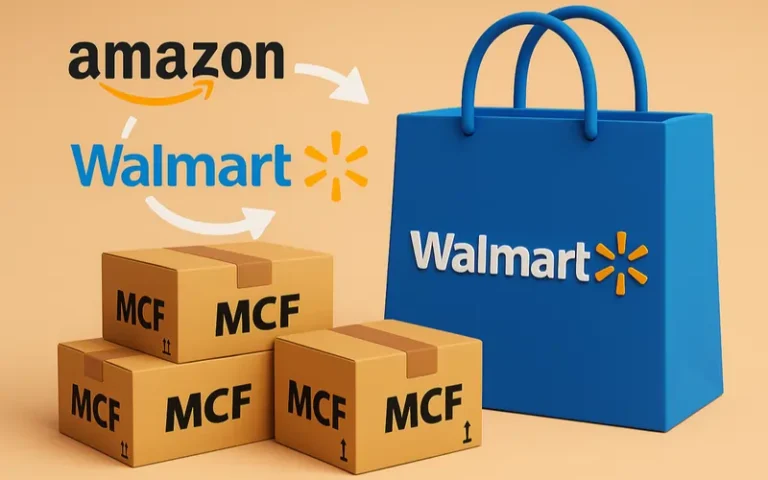
Walmart Officially Allows Amazon Multi-Channel Fulfillment (MCF)
Big news for multichannel sellers: Walmart now officially allows Amazon Multi-Channel Fulfillment (MCF), Amazon’s service for using its fulfillment network to ship orders from mult...

Shopify Subscription Payment Change: Why It Could Hurt Reactivation
Shopify changed how subscription payment information is handled at cancellation.