
Ecommerce Innovators: Exploring Cahoot, the World’s First Peer-to-Peer Order Fulfillment Network

In this article
 32 minutes
Listen to podcast here.
Podcast: The Uber of the Shipping and Delivery Industry, Manish Chowdhary, Founder and CEO at Cahoot
Ecommerce Innovators is a podcast hosted by John LeBaron, Chief Revenue Officer at Pattern, that explores innovative strategies and trends in global ecommerce by bringing together experts in the industry. The podcast features a special guest, Manish Chowdhary, Founder and CEO of Cahoot, the world’s first peer-to-peer order fulfillment services network. In the podcast, Chowdhary explains that Cahoot is an ecommerce network where ecommerce brands and retailers can join as order fulfillment partners and monetize their spare warehouse capacity, similar to Airbnb. Brands and retailers that are looking for order fulfillment services can benefit from a lower cost structure and a large scale warehouse network. Cahoot provides a fully managed order fulfillment service, much like Uber, and ensures all stakeholders are participating and being successful. Chowdhary got into this space in 2002 when he discovered a significant number of identical products crisscrossing coast-to-coast, causing shipping inefficiencies in delivery and costs. He then applied for his first patent and started Cahoot.
Speaker 1:
Welcome to Ecommerce Innovators, a podcast that brings together the brightest minds in the industry to explore innovative strategies and trends in global ecommerce. Our host is John LeBaron, chief Revenue Officer at Pattern, the premier partner for global ecommerce Acceleration.
John LeBaron:
Thank you so much for joining the show today. This is Ecommerce Innovators. I’m your host, John LeBaron, and I’m the Chief Revenue Officer at Pattern. And we have a special guest today that I’m very excited to introduce to you. Manish Chowdhary is the founder and CEO of Cahoot. And it says this is the world’s first peer-to-peer order fulfillment services network. So welcome to the show today, Manish.
Manish Chowdhary:
Thank you, John. Thanks for having me.
John LeBaron:
Yeah, you bet. So Manish, I got to meet you in person a few weeks ago at our Accelerate Summit. I don’t know when this will air, but it was really fascinating. You’re clearly very bright and you know a lot about this industry, I think you spend a lot of time studying it. And so I’m excited to introduce you to the listeners of this show and have them learn a little bit more and share some of the goodness that you have spent your whole life kind of dedicated to. So you’re a crazy serial entrepreneur and a little bit of a mad scientist. Tell us a little bit about what a peer-to-peer order fulfillment services network is.
Manish Chowdhary:
Thank you for your kind words, John. You’re giving me more credit than I deserve, but I’ll take it for now. peer-to-peer order fulfillment or peer-to-peer network is essentially brands and retailers helping other brands and other retailers. And in context of fulfillment, what Cahoot has done is created a large scale network where a brand can join Cahoot as a fulfillment partner, so if a brand or a retailer has a warehouse or multiple warehouse, and they have spare capacity, they can actually monetize their spare capacity for the very first time. Similar to if you were to put up your spare bedroom and your house on Airbnb.
And on the other side, we’ve got brands of retailers that are looking for order fulfillment services. They get to benefit from a lower cost structure and a very large scale network. That is essentially what a peer-to-peer network is, and Cahoot is the governing body so that it provides a fully managed service, and I’ll use the Uber example. So the seller or the brand that’s looking for fulfillment services doesn’t have to negotiate directly with the driver. If you are an Uber driver, Cahoot provides the entire service in a box and ensure that all the stakeholders are participating and being successful.
John LeBaron:
Yeah, that’s amazing and I think it’s so innovative. And we look at order fulfillment and logistics, crazy amounts of innovation. Every time I look at the fastest growing inc., 5,000 type companies, it feels like 50% or more of them have something to do with last mile delivery, or freight forwarding, or anything, direct import, all that sort of stuff. So I think the reason why it’s so expensive and it’s only getting more complex and more expensive, and that capacity just really comes back to bite you if you have too much because there’s so many fixed costs.
So how did you get into this space? And obviously you have to be very, very smart to figure out the world’s toughest problems, at least ecommerce’s toughest problems. How did you get into this? And tell us a little bit about your career trajectory.
Manish Chowdhary:
Thank you, John. The way this journey started, believe it or not, this was long before Amazon Prime existed, long before the consumers were ever demanding two-day or one-day free delivery. This is back in, I take you back to 2002, and I’ve been involved in ecommerce since 2000. So my other company is an ecommerce platform and we were studying consumer order fulfillment data. So if you may recall in early 2000 the transition, the industry was making transition from film cameras to digital cameras and digital cameras was the hottest thing, if you recall. So essentially what we did was we took sales data or order data from about 70 or so top ecommerce vendors, and this is back at a time when there was an incentive for people to buy out of state because you don’t have to pay sales tax.
John LeBaron:
Absolutely, yeah.
Manish Chowdhary:
So when we plotted that data off these digital cameras, I remember Canon L or one of those Nikon COOLPIX cameras, those were two popular products.
John LeBaron:
Yeah. Of course, yeah.
Manish Chowdhary:
And when we plotted that, what we saw, it was fascinating. What I saw was a 30% of the time a consumer in California was ordering that Nikon COOLPIX from a vendor in New York. And at the same day, a customer in New York or New Jersey, was ordering the same identical product from a vendor on the West Coast. And just a light bulb went off in my head is like 30% of the time, these two shipments are crisscrossing coast to coast, that makes no sense. At the time, it was taking eight days to deliver the item using UPS Ground, it was costing a lot of money, and consumers were waiting 16 extra days. And everybody, it just did not feel to me, I went back to first principles and say, “This should not happen. This is just not natural.”
And that’s where I applied for my first patent at that time, that what if I were to create an exchange where all these vendors could pull their orders and Cahoot would, at the time the word Cahoot didn’t exist, the company didn’t exist, and we would act as a clearinghouse for the orders and facilitate most optimum delivery keeping competitors and allowing competitors to collaborate in an anonymous manner. That is the origin of where the idea came from.
John LeBaron:
Oh, that’s fascinating. So really getting Cahoots with one another and try to co-mingle the inventory that they… Almost, from a blind standpoint, right?
Manish Chowdhary:
That is exactly right, because if you take an example from a parallel industry, like a stock market, you have clearing houses and stock exchanges which do settlements of trade at the end of the day or whatever the closing period is, why could we not apply the same principle to ecommerce? And fast-forward 10, 15 years, this has become a necessity now because when you think about the macro problem that how do you speed up delivery? You need to think from first principles, rather than thinking how something has been so far along and this is how we’ve done things, but true innovation is really thinking outside the box as you refer to.
John LeBaron:
Yeah. Well, and again, a parallel from a different industry, super nerdy too. But again, I spent a fair amount of my career in telecom and yeah, there was always this real big challenge of, I think about Netflix, every user trying to stream and the loading times of how long it takes. At the end of the day, it’s all zeros and ones anyway, but it’s got to get across all the way across that network. And how do you get people from Phoenix and Philadelphia and Seattle all trying to binge-watch their favorite shows and reduce the buffering? And the solution truly was push it closer to the metropolitan areas, push it what we call the edge of the network and allow that transit time to be more instantaneous and almost just again, reduce that buffering.
And technology has eased some of that just in terms of capacity in the network, but I’m with you. And it’s like, it’s so obvious, it stares you right in the face. But that’s kind of why Amazon I guess is one in a way, is because they become that centralized clearing house as a whatever, aggregate platform, but it doesn’t really work in a fragmented world of all of the different retailers trying to ship, the e-tailers trying to ship, and the brands themselves, all the D2C brands. And I think that’s, yeah, ultimately that’s probably where I would love to steer the conversation. We’ll get to some of the quote, unquote, “Canned” innovation type questions that we always kind of cover because you get a different flavor no matter what.
But going down this path, I guess, how do you as a brand or what are some of the big challenges, all these peripheral players outside of Amazon face in trying to get goods to the customer? I’ve got to think Amazon has set this standard that you talked about of same day, overnight, next day, whatever you want to call it, delivery. How can other folks, besides obviously using your service, I’m trying not to be too objective here or subjective.
Manish Chowdhary:
Yeah, of course.
John LeBaron:
Yeah. What are the biggest challenges they face in trying to keep up or compete with a behemoth like an Amazon?
Manish Chowdhary:
Frankly, John, I think a lot of ecommerce brands and retailers really are not up to speed perhaps on the solutions that already exist. If you break down the last mile fulfillment or trying to achieve Amazon-esque, Amazon-like fulfillment experience or consumer experience from the checkout all the way to getting the product in the hands of the consumer, at a high level, first and foremost, you need to… Let’s compare a DTC site, if you’re on a DTC site and in your shopping cart, you need to display when will the product arrive, what I call date-certain shipping, and technologies exist even now. Yes, it may not come all from one single player like Amazon, but I know that some of the bigger ones like Target and Best Buy have done a fabulous job.
And frankly, for a couple hundred bucks a month, you can implement this date-certain shipping. So that’s number one, because consumers do not convert when there’s uncertainty. It’s just like you can see what’s happening in the stock market. The world is not going to come to an end, but because we don’t know when the war is going to end and so on, and therefore there’s a lot of uncertainty. So the solutions exist. Step one, add date-certain shipping to your shopping cart. Number two, bring the shipping on parity with Amazon. It is easier than they think. If you’re spending 15% commission on Amazon, that’s 15% for you to play with and apply that to the shipping subsidy or whatever you want. If you want to think of that as a subsidy, I mean FBA is not free. The consumers are paying a membership fee and all of that, so that’s step one.
And then distribute order fulfillment if you break it down, you got to get your inventory closer to the consumers. So if you want to target a two-day guarantee delivery, if you place your inventory strategically in five warehouses, you can achieve that and you can provide the guarantee. Don’t worry about that one order that you need to overnight are 2% of the orders, it’s retailers and ecommerce brands get too caught up into the exceptions and the 1% to 2% problem, and they throw the baby out with the bathwater and say, “Oh, it’s not possible.”
That is the reason, if you go back to FedEx, the original of FedEx guaranteed delivery at 10:30 AM or your money back. And I can assure you that FedEx did not give a lot of money back and the day they put that guarantee, that’s when the sale just took off. And same thing with Domino’s, pizza delivery within 30 minutes or your money back. I guarantee you Domino’s is still existing, they didn’t go out of business because of the guarantee. So that guarantee is crucial, and then having the technology to ensure and execute against the lost mile delivery.
And then customer communication, that’s another place where we find brands and retailers are not totally up to par. Okay, you’re doing a great job, you’ve distributed your inventory and the order goes out. If you don’t communicate as frequently about the progress of that order fulfillment and delivery along the way, it’s like free-falling in the forest. In fact, we know from data and from anecdotal evidence, Prime does not live up to its promise. I don’t know how many orders you’ve ordered, John, that by Prime it says it’s going to arrive tomorrow, it doesn’t arrive. I would argue that at least double-digits failure in that promise exists, but they communicate with the customer through the text messaging, through the email, and they communicate frequently.
And then finally, the icing on the cake is when you get a picture of the item outside your front door and people think, “Wow, only Amazon can do it.” If you piecemeal all of these solutions together or go to a provider that can offer, I can assure you that you can offer a Prime-like experience.
John LeBaron:
Yeah, I think that’s amazing. So let’s keep going down this path because I think it’s, to your point, a lot of ecommerce brands and a lot of listeners by extension on the show may not truly understand what’s available. And if you’re the world’s first, that is kind of tricky. So I don’t know if you have a public customer you can talk about, or we can just use the example of a drone or a digital camera or whatever, but how does it work? If you are a brand… Well, we could go through both examples, the person with extra capacity or the person on the demand side of the network or the fly side of the network with a brand. Give us an example of how this works, how they use the software, what it looks like, how much of the inventory are they pushing into the quote, unquote, “Edge” versus kind of keeping consolidated? How does it work?
Manish Chowdhary:
Right, great question. So let’s talk about a real example. I’ll use one of our clients, Cali’s Books is one of our client. They’re a brand, they’ve created innovative children’s books that are audiobooks. Think about Cinderella, and you can actually play that book in different languages. So if you want to learn Spanish, your kids want to learn Spanish, it’s Cinderella in Spanish. And also, people can record. So if you were away from home, John, you could record it and you can send that as a gift to your kids or your loved ones. So it’s a very brilliant concept that they have created. So great demand, they have their manufacturing overseas, and they bring in container loads and they would, first step is to bring it into West Coast because the product comes from China and other places.
So we would first house it just like Amazon into a centralized warehouse, and then we would distribute that inventory across the, in this particular case, Cali’s Books inventory is sitting in six to seven different Cahoot warehouses, strategically located greater New York area, Southern California, Midwest, upper Midwest, the Chicago area, the Dallas region, and somewhere in the Middle North Carolina, and one more. So now you’ve strategically moved that inventory based on demand planning. What is the movement of inventory? You don’t want to send same 10 units to all locations equally because the population and demand is not equal. So that is crucial.
And then in their case, we connect directly to the sales channel, whether the order is coming from Shopify, Amazon, or Nordstrom. So they sell B2B and B2C, so they need the ability to ship both wholesale and retail. And right now with the inventory fully distributed, we are doing Seller Fulfilled Prime (SFP) for this customer so that they’re achieving the Prime target. And in fact, as you know, Amazon holds Seller Fulfilled Prime (SFP) merchants even more accountable than themselves and FBA, and they have had no issues whatsoever, they have been operating flawlessly.
And then, because that Seller Fulfilled Prime (SFP) is being offered on Amazon, they are now in the process of implementing that same guaranteed two-day, one-day delivery on Shopify, on other marketplaces like Target, Walmart, and all the others. So you can see that delivery once you’ve got the infrastructure in place, you can tackle all the sales channel very easily.
John LeBaron:
Yeah. No, I mean it’s really innovative and super fascinating. I guess going back to your comment and the way the business model works, are those actually your warehouses? Or to the other side of it they’re… When you say a Cahoot warehouse, it’s basically someone who’s partnered with you that has spare capacity and they’re doing both the fulfillment and the inbound receipt and all that other stuff, right?
Manish Chowdhary:
That’s right. The reason why we call them a Cahoot warehouse is because Cahoot takes accountability on behalf of the seller because the seller, it’s akin to Uber driver, that driver is driving for Uber. It’s very similar to these are independent warehouses that belong to other merchants that are super successful. The average tenure of these merchants is over 10 years selling online themselves, so they know what it takes to manage and maintain good standards in Amazon because many of them are doing it themselves. And in many cases, Cahoot warehouses are both an order fulfillment provider and also a client. So they have a warehouse in California that is providing fulfillment services. They also need order fulfillment services in New York, so it’s such a symbiotic relationship that they understand that they cannot let Cahoot down, they cannot let our clients down because if that happens, somebody could let them down and Cahoot acts as the governing body ensuring that that doesn’t happen.
John LeBaron:
Yeah, I love that. Well, again, this is just so great. I love your expertise, I love your passion, enthusiasm, it’s definitely coming through here. If you think about on the flip side, there is Amazon, Amazon’s been building like crazy, they definitely had their work cut out for them once COVID hit and trying to scramble and build capacity into the network as quickly as possible. And I’m sure they did not have Cahoot, they should have leaned on you guys. You guys could have given them instant capacity, but they built it out themselves, we’ve now heard in Q1 that they overbuilt capacity. What does that mean for Amazon sellers? What does it mean for other channels?
Manish Chowdhary:
So it means two things. One, the good news is Amazon is unlikely to provide to apply capacity constraints on inbound inventory as they did last year because they were struggling last year, this capacity really just opened up a lot this year. So a lot of the sellers are very concerned about not being able to send enough inventory for the holiday season, the Q4 and so on. So I don’t expect any such bottlenecks this year, so that’s the good news. The not so good news is they have very publicly stated that this over-building is what resulted or partially resulted in them making a loss the first quarter of this year. And Amazon hasn’t had that big of a loss in many, many quarters. So they attributed that to that loss.
And of course, it is safe to say that FBA is somewhat subsidized people, their shipping is very affordable, but I expect because of Amazon’s focus on profitability, sellers should brace for price increases in FBA at least once or two times between now and end of the year. So the good news is you will not have capacity constraints. The not so good news is prepare to pay more for FBA services.
John LeBaron:
Yeah, absolutely. Not only shipping fulfillment, I would say storage as well. Someone’s got to pay the piper if you’ve got too much warehouse capacity, storage fees will likely go up as well, so I think that’s a great observation. And as you look forward to, I often look toward Asia as this harbinger of things to come. I look at JD.com, they’ve got six-hour delivery across like 90% of China. So it’s I think the notion of two days now, one day to same day, to in fact we have an order fulfillment center in Salt Lake City now for Amazon. And back to your point, it’s kind of interesting to watch what Amazon is doing. I’ve lately seen, especially near the weekend, that Amazon will push Prime deliveries out to, if you order even late on a Thursday night, you may not get it until Monday, but there’s this new option that says you can pay $2.99 more and get it in four hours, or you’ll get it overnight, it’ll be on your doorstep.
So it’s kind of fascinating to look at how different things are getting subsidized, but a big piece of what Amazon is doing in many markets is they’re kind of creating their own delivery network as well, all hours of the day and night. And back to your Uber analogy, is that something your company is doing today or do you anticipate it will soon is kind of extend the order fulfillment services network or the notion of the ride-sharing or the Airbnb of storage into the delivery network itself and last mile delivery, is that on the roadmap or is that already happening today?
Manish Chowdhary:
Oh, we are certainly doing a lot more than a traditional third party logistics (3PL) company. So for example, in order to meet SFP, Seller Fulfilled Prime, or let’s just call Prime delivery expectations from Amazon, we need to be fulfilling orders six days a week at least. You need to meet at least 30% one-day delivery targets. And Cahoot is still, Amazon has two decades of lead time over Cahoot, but Cahoot is cashing up fast. So the objective with our peer-to-peer network is this network grows very rapidly and in highly densely populated urban areas, we can achieve same-day delivery using couriers. It’s just a decentralized model versus Amazon’s model is largely vertical integration, which I believe that they’re both, there’s the Apple model and there’s the Microsoft Windows model.
And we believe that we will create more opportunities for partners collectively as part of our network that there will be a large incentive for a lot of folks to participate and also gain from that experience. So when an order fulfillment partner joins Cahoot network, they’re getting a line share of the revenue that we collect, and so there’s an incentive for them to promote that. And also, it’s sort of like if you’re an Uber driver, you want to do a great job so you get a high rating because if you don’t get high rating, then Uber will not select you for the next ride. So Cahoot implements a very similar principle and model.
So I believe that both can coexist, there is room for both of them. And from our perspective, Cahoot is a more capital efficient and it’s a more cost-effective model because you can achieve any target you want, John, you can achieve 30-minute delivery if you want to send a charter plane from Salt Lake City to somewhere.
John LeBaron:
Right, absolutely. Well, that begs the question then Amazon with excess capacities is still trying to figure out how do I use this? How do I increase my strangle hold? Prime penetration is massive in the US. You just saw this announcement with Grubhub yesterday of like, how do I get either more loyalty because they’re raising Prime prices? How do you get more stickiness? How do you bring new people onto the platform? It does feel like D2C or other non-marketplace customers are one of the last few frontiers that they haven’t completely dominated. And so you see strategic initiatives starting to emerge, like buy with Prime. So now D2C brands can opt into this buy or e-tailers can opt into this thing. Is that a good idea? What’s your opinion on that?
Manish Chowdhary:
It’s a horrible idea, it is absolutely a DTC killer in my opinion. And that was the topic of my speech at the Accelerate Conference, and it’s not meant to be self-serving, because essentially this is an attempt by Amazon to infiltrate the entire consumer journey. And I know that the talk is going to be published on your website shortly for those folks that are interested in learning more, essentially the way I see this is if you allow Amazon into your DTC site, what’s the difference between selling on Amazon and selling on your DTC site? Who owns the customer? Who controls that customer journey?
And it’s actually, I’ve called it the Trojan Horse. It’s essentially a Trojan Horse that, let’s take a very simple example. If the shopping cart belongs to Amazon and Prime, for long, DTC brands have always encouraged consumers to increase their average order value, the higher cart size by putting free shipping on orders over $49, over $99, but move over to Prime, there is no minimum. So now all of a sudden, if you were Lucky Heart, the popular cosmetics company, if you have a minimum of $49 and you introduced Buy with Prime, your cart size is going to go down dramatically. Now, if people abandon the cart, that ad is going to show up on Amazon. And if you are not on Amazon, your competitor ad is going to show up.
And we know that every Prime shopper, there are about 200 million Prime shoppers in the US, they visit amazon.com once a week. 85% of them visit once a week and $45, over half of them make a purchase once a week. So the likelihood of your competitor product being targeted on amazon.com to that shopper that actually originated the journey on your site is a lot higher. So jury is still out, the program is still in its infancy, it is by invitation only, but it does not appear to be a good idea for DTC brands to take those leap right now.
John LeBaron:
Yeah, it’s definitely deal with the devil or letting the enemy come sleep in your bed or whatever crazy metaphor you want to make. I think it is eyes wide open for sure, you got to figure out how close you want to get to the potential enemy. And not really enemy, right? But it’s like your dependence, the more Amazon has dependence on you as a consumer and certainly as a brand, the less wiggling room you have to be able to chart your own destiny. And I’m with you, the true kind of gold standard of a D2C brand is owning that relationship, owning the experience, owning everything in that customer journey. And the more you kind of outsource that, the harder it is to truly maintain differentiation in the eyes of the customer and a strong brand.
So while this has been so great, I know we don’t have a ton of time left, maybe a handful of other questions just around the topic of innovation. I know we’ve been speaking about it in the periphery here and so many innovative approaches and thoughts here. What advice do you have for brands that are looking to either reduce their dependency or relationship with Amazon or really just trying to build their brand and double down on the D2C front? What advice do you have for brands that are looking to try to grow their brand via ecommerce?
Manish Chowdhary:
That’s a great question, John. I mean, the way I see it’s not so much about dependency, reduction of dependency on any one party. It’s about chartering your own path, it’s about having more independence. I know we talk about in this new world, employees want more flexibility at work and how they work and so on. So ecommerce brands should hold the keys and they should be the one that should own the customer and own the relationship because that’s the definition of a brand. Because if a middleman controls all the customer data, all the relationships, you can’t market to that customer when you want, you can’t have a direct engagement with that customer. It’s hard to say who is the brand.
And when you look at it, when people buy on Amazon, I’m sure there’s data and stats out there, nine out of 10 times the consumer does not remember or know what product they bought and which seller they bought it from. They just say, “I bought it on Amazon.” I have yet to hear, “I bought it from Acme, Inc. on Amazon.” They say, “I bought it from Amazon.” So my advice is really, if you want to succeed in DTC, DTC is a fascinating world, but it’s also full of graveyards. We know that even the likes of the darlings, like Allbirds, are struggling from a profitability standpoint, but focusing on lifetime value is so important.
Basics, going back to basics, that it’s not just about customer acquisition, it’s about customer retention and lifetime value. And that’s why you should be present wherever the customer is, including your website. You cannot have your website not be on parity with marketplaces because marketplaces are a competitive environment. It’s sort of like if you’re competing against others, against other brands, you need to achieve parity. So from an order fulfillment and logistics standpoint, it’s a mandate for brands to take their website with the same level of seriousness and from a fulfillment and logistics, they cannot throw in the towel and say, “Oh, we can’t do it.”
The reality is solutions exist. And believe it or not, in many cases they’re cheaper than FBA and can help you achieve the same outcomes. And I would say that take that really seriously, apply that date-certain shipping, live up to that promise. When you say guaranteed delivery, don’t exclude the few items because again, think about the 2% rule, think about 98% of your outcomes and not worry about the 2%, and I think that will start turning the tide. And then consortium of stores, there will be, I expect innovation where there will be new networks that will be formed. So for example, I know Shopify has been experimenting with Shopify Audiences, and Shopify Promise pay, and so on. So there will be other avenues to tap into, not only on marketplaces.
John LeBaron:
Yeah. Well, it’s so great. So I would just say maybe to close this out, you have been an entrepreneur, again, for a long time. You’ve hired a lot of people, you’ve fired a lot of people, you’ve seen probably a lot of highs and a lot of lows. I always like to ask this question, what is one leadership principle that you particularly love, do you feel like’s been a real big part of your success?
Manish Chowdhary:
I think for me personally, think big and really think and be contrarian. When I started Cahoot with the original idea that I shared competitor collaboration, that really is a highly contrarian. We are taught to compete with each other. Brands or retailers are competing, how do you collaborate? There are ways when collaboration makes sense and there are times when that doesn’t make sense and it actually leads to a greater good and also a win-win relationship. I’ll give you an example. Airlines, we have codeshare. When you want to go from here to Bali, Indonesia, you’re going to probably have to take a flight from Salt Lake City to Los Angeles, and then you’re going to take a flight from there to somewhere else. I know you’re nodding your head.
So if you just take out those constraints that why it cannot be done, and start thinking from first principles and be bold, and if you believe in it and you can prove that it can actually work, then it’s a matter of figuring out how to make it work. And most of us, or most people, and my leadership principle has been challenge your team to think big, think bold, and be contrarian and believe in that self. It’s better to be a monopoly than to be competing in a highly crowded red ocean.
John LeBaron:
Yeah, absolutely. Well, I think you’ve definitely thought big, taking on the world’s biggest logistics company, so to speak, and certainly one of the wealthiest individuals in the world is no small task, and so you’ve definitely thought big. And the good news is it sounds from everything I can see, you’re delivering on it. So where can people find you? Where can they learn more about, help our listeners understand if they want to investigate where should be their next turn?
Manish Chowdhary:
Well, check us out on our website. That’s www.cahoot.ai, that’s Cahoot with no S, C-A-H-O-O-T.ai. And I invite people to come find me on LinkedIn, follow me. I write frequently, I speak quite frequently. And John, thank you so much for having me on this show, it’s such an honor to be here.
John LeBaron:
No, thank you so much. And I’ve learned a lot personally, and that’s what I usually like to do as well. Part of the reason for doing this podcast is just to learn more and get exposure to super smart people that are innovating in this industry. And I think we can all learn a lot from what you shared with us today, so thank you so much for joining. Again, this is Ecommerce Innovators and if you’ve liked what you’ve heard today, go ahead and subscribe on your favorite podcast player and feel free to send feedback as well. Send some comments or shoot me a line at john@pattern.com and we will look forward to hearing you on the next one. Thank you so much, everyone.
Written By:

Manish Chowdhary
Manish Chowdhary is the founder and CEO of Cahoot, the most comprehensive post-purchase suite for ecommerce brands. A serial entrepreneur and industry thought leader, Manish has decades of experience building technologies that simplify ecommerce logistics—from order fulfillment to returns. His insights help brands stay ahead of market shifts and operational challenges.

Turn Returns Into New Revenue
Related Articles

The Shipping Speed Paradox: Why DTC Brands Are Slowing Down
Everyone’s talking about faster delivery.

Why Cross-Border DTC Brands Are Moving Fulfillment Inside the US
Cross-border ecommerce fulfillment is the process of shipping ecommerce orders across national borders—often from warehouses outside the United States to U.
Shopify Estimated Delivery Date: A Complete Guide for Ecommerce Stores
A Shopify estimated delivery date is the specific arrival date or date range shown on a product page before purchase, so shoppers know when an order is expected to arrive.
Revolutionizing Order Fulfillment to Compete with Amazon’s Multi Channel FBA Operations

In this article
21 minutes
Listen to podcast here.
Ecommerce Wizards Podcast – What Are the Benefits of Fulfillment Networks With Manish Chowdhary of Cahoot
The podcast episode is an interview with Manish Chowdhary, founder and CEO of Cahoot, the world’s first peer-to-peer order fulfillment services network. Cahoot provides ecommerce brands and retailers with best-in-class order fulfillment services across multiple warehouses in the US, Canada, Mexico, and others, similar to Amazon FBA, but with a unique business model. Most of the warehouses belong to other brands and sellers who join Cahoot as order fulfillment partners to monetize their excess capacity. By passing the benefits onto their clients, Cahoot is able to offer lower costs and one-day two-day delivery nationwide. The episode focuses on DTC (direct-to-consumer) versus Amazon FBA, and how to compete with Amazon’s multichannel operations. As an experienced entrepreneur with over 20 years of e-commerce experience, Chowdhary shares his insights on the challenges and opportunities of DTC, multichannel operations, and direct order fulfillment. The episode is sponsored by MageMontreal, a certified e-commerce company specialized in the Adobe Magento platform.
Guillaume Le Le Tual:
Hello, everyone. Guillaume Le Tual here, host of the Ecommerce Wizards podcast, where I feature leaders in e-commerce and business.
Today’s guest is Manish Chowdhary, who’s the founder and CEO of Cahoot, which can be found at Cahoot.ai. Today, we’re going to talk about DTC, so direct-to-consumer. So DTC versus Amazon, how to try with multichannel operations. Quite a challenge right now at Amazon, how do you compete with them? So before we get started, our sponsorship message.
Audio:
This episode is brought to you by MageMontreal. If a business wants a powerful e-commerce online store that will increase their sales, or to move piled up inventory to free up cash reserves, or to automate business processes to reduce human processing errors, our company MageMontreal can do that. We’ve been helping e-commerce stores for over a decade.
Here’s the catch. We’re specialized and only work on the Adobe Magento e-commerce platform, also known as Adobe Commerce. We’re among only a handful of certified companies in Canada. We do everything Magento related. If you know someone who needs design, support, training, maintenance, or a new e-commerce website, email our team at support@magemontreal.com or go to magemontreal.com. That’s M-A-G-E, montreal dot com.
Guillaume Le Le Tual:
All right, Manish, thanks for being here today.
Manish Chowdhary:
Well, Guillaume, thank you very much for having me.
Guillaume Le Le Tual:
All right, so before diving main topic, I like to always spend a little bit of time, so you can tell us briefly, like a minute or two, your background as an entrepreneur.
Manish Chowdhary:
Yes, thank you, and thanks again for everyone tuning in. My name is Manish Chowdhary. I’m the founder and CEO of Cahoot. I have over 20 years of e-commerce experience, involved with building one of the first e-commerce platforms. This is going back to the days before Magento, Guillaume. So I’ve been involved in e-commerce for that long. And following that, I built an order management, inventory management platform. It’s a full-service solution. So I have seen and worked with SMB merchants, even large enterprise, for nearly two decades. And now, I’m running Cahoot, which was founded in, a few years ago in 2018. I can tell a little bit about Cahoot, if you like.
Guillaume Le Le Tual:
Yeah, go for it, because it’s very unique, the product you have. I think it’s something brilliant as the idea that it really stands out. That if I’m thinking what kind of business do I want to create, is the kind of idea I hope to have. So go for it.
Manish Chowdhary:
Thank you, Guillaume. That is very kind of you. It is indeed innovation. It is very innovative what we’re doing, Cahoot is the world’s first peer-to-peer, order fulfillment services network. What that means is Cahoot has multi-dozen warehouses throughout the US right now, and soon to be global, including Canada, Mexico, and others. And essentially, we provide brands and sellers, brands and retailers, with best-in-class fulfillment services, similar to Amazon FBA.
Whether you are targeting two-day delivery nationwide, in that case, Cahoot can distribute your inventory across multiple order fulfillment centers and pick the lowest-cost carrier to get the order delivered in one day, two-day, and we support that. We do this regularly for our clients who want Amazon Seller Fulfilled Prime (SFP). Which is, essentially, an Amazon Prime-like service, but for merchants who wish to do self-fulfillment. So that is what the service is for the ecommerce brands and retailers.
But there’s a very unique business model behind that, which I’m happy to share. Which is, most of these warehouses belong to other brands and sellers that have their own warehouse that they’re operating for themselves. And if they have excess capacity in that warehouse, they join Cahoot as an order fulfillment partner and they get to monetize that excess capacity for the very first time.
So if you know of a merchant, if you know of a seller who has a warehouse, let’s say 40, 50 or any size warehouse and they have sufficient space, vacant, that is going unutilized, you can come and apply to become a Cahoot order fulfillment partner.
And that’s where our capacity comes from, that allows Cahoot to beat the rates that allows Cahoot to, and pass them onto our clients, because it’s a win-win. It’s a win for the fulfillment partner, because they’re making extra cash, and that’s, of course, a win for the brand or the retailer, because they get lower cost by design, and that’s what makes Cahoot very unique and innovative.
Guillaume Le Le Tual:
All right, well, it is a brilliant system, because you’re more or less building an Airbnb or a Uber, but on the B2B side of things, to… everybody can use their excess capacity for warehouse. Because it’s always a problem. Within time, you buy hardware regardless if it’s additional server resources or if you’re buying warehouse space, you buy a full warehouse and maybe you’ll use half of it, two-third of it or whatever, and then it’s never optimized. And you plan on running out of warehouse space and you need to buy a second warehouse, and it’s never going to be a hundred percent capacity utilization. So it is quite brilliant.
There’s a lot of operational challenges, from [inaudible 00:05:20] point of view. I don’t know your business that would need to be solved to operate this, and it’s probably why you’re the first one that I have heard of to move forward with this kind of model. And well, you’re pulling it off, you’re making it work right now. So, for sure, I’m very interested to know more about this and we’ll see how you can perhaps explain it a bit more throughout the episode here. And it is directly with our topic.
So DTC versus Amazon, so direct-to-consumer versus Amazon, how to drive multichannel operations here, in the sense that well, shipping with Amazon, if you are selling on Amazon, is extremely competitive. Amazon has warehouse all across the country. We’ll ship way faster than you for most places. With the city, you can have your package same day, next day, more or less. But if you’re a small merchant or medium-size merchant even, you have to ship across the country, there’s no way to get the goods that quickly there.
Manish Chowdhary:
Yeah, you’re right, Guillaume. Because sellers, it’s very hard to pull this off. And Amazon-like order fulfillment is not easy. There’s a lot of operational complexity and so on, but Cahoot handles all that, just like Uber, where the rider, for example, is not trying to connect with the driver, trying to negotiate the price of the ride, trying to alert the driver when to come in and all of those. So Cahoot has created a fully-managed service for the seller. It’s super-duper simple, because they send the inventory to Cahoot order fulfillment centers and Cahoot takes care of everything from that point on.
And for our order fulfillment partners on the other side, just like I’ll continue to use that Uber analogy. As a driver, we’ve made it super-duper simple for fulfillment partners to fulfill orders on behalf of Cahoot, because we take away all the decision-making, all the complexity that would be associated, so that it’s not a distraction from the core business. And that’s all leveraging our technology, which is patented. We’ve got tons of experience doing this, and that is what makes Cahoot so special. So, we’d love to chat with ecommerce brands and fulfillment partners who may be interested.
Guillaume Le Le Tual:
So let’s say, so to be as clear as possible, where are we at so far with you be building this network and how competitive can you be with Amazon, let’s say, with the Prime same-day, next-day fulfilling that Amazon has? Or, is it per region of the United States? Or, how are things shaping up right now?
Manish Chowdhary:
Oh, yeah, I mean, this is a reality. I mean, Cahoot is one of the only fulfillment services networks of its size that offers, or offers Amazon’s Seller Fulfilled Prime (SFP). So I’ll use a client example. So we have a client called Cali’s Books. They are a leading ecommerce brand. They sell personalized children’s books. These are, imagine Cinderella in Spanish that also teaches the kid to read, and you can record voices on top of that. So that maybe it’s a grandfather reading the book to the kid and so on. So it’s a very, very special brand.
And they’ve been growing, doubling year over year. And prior to Cahoot, they were using a bunch of different services. But as we know, Amazon routinely changes the storage capacity for ecommerce brands, even the ones that have been selling on Amazon for a long time. And they needed access to Amazon Seller Fulfilled Prime (SFP), because that 150 million prime shoppers, that membership, is very crucial, because Amazon shoppers love the Prime membership.
So there’s a program called Seller Fulfilled Prime (SFP), where you have to achieve two-day and one-day delivery. The metrics are super-duper high, it’s very hard to meet those standards from Amazon. So Cahoot has placed this Cali’s Books inventory in six, seven, eight different warehouses throughout the country, in the US, from Southern California to Greater New York City area, to the south, where the Texas, and then in the upper Midwest and so on, and you can imagine. And then Cahoot processes orders, retrieves the orders dynamically in real time from all the leading channels, Amazon, Walmart, Shopify, eBay, and all of the others.
And then routes the order to the fulfillment center that will be the closest and cheapest, that can get the order to the customer within the promised SLA, which includes, in many cases we need, as part of Seller Fulfilled Prime (SFP), you need to achieve at least 20% of your orders must achieve one-day delivery, not just two-day. So the bar is really high and we’ve be doing exceedingly well. This ecommerce brand is doing really a fantastic job on execution and Cahoot is their primary order fulfillment partner. So that’s just to give you, by way of an example how this all this all thing works.
Guillaume Le Le Tual:
Right, okay. And you’ve made your own study in this regard. If you have, regardless of which e-commerce platform, the Magento, a Shopify or something, versus selling on the marketplace, what the brand gives up, what the brand lose if they’re selling on the marketplace, or what they win, and how do you push back or fight back as a smaller brand versus the Amazon Marketplace.
Manish Chowdhary:
Yes, it is well understood, well known that marketplaces are growing faster than DTC sites. And I put marketplaces, Amazon, Walmart, eBay, Best Buy, Target Plus, all of these are marketplaces, because consumers love marketplaces. They trust the marketplaces, because the marketplaces offer a diversity of product. There’s a very large selection, and because it’s also competitive. Because multiple people are selling the same product, it creates a competition for the sellers to put their best foot forward, which means lower prices.
Not only do the customers get a large selection, a very competitive price. And then finally, where marketplaces really win is in shipping and order fulfillment. Because marketplaces, in order to get ranked high on, let’s say, Amazon, you not only have to offer a great price in order to win the buy box, but you also need to provide competitive shipping. Of course, if you’re using FBA, then FBA will target the Prime, one-day, two-day delivery. But if you’re shipping on your own, your shipping offer has to also be very competitive in order to rank high, which is where marketplaces shine.
And most DTC brands do not do that good of a job, and regardless of the platform that they operate, whether Magento or Shopify. We did a full study of top 50 DTC brands on Shopify and BigCommerce, and compared their offers to the ones on Marketplace. And I’m happy to share more if your audience is interested.
Guillaume Le Le Tual:
Yeah, sure. So what key findings did you have with that study?
Manish Chowdhary:
Yeah, so we actually studied the top 50 brands to our top 50 sites on Shopify and BigCommerce, and then looked for the same identical product on Amazon and Walmart marketplaces. And what we found, Guillaume, is that 60% of the time, 60% of the time, the products are found cheaper on marketplaces than the brand’s DTC site. And that is just one finding. Of course, on a marketplace there could be other sellers, resellers potentially selling.
But from a consumer perspective, if I want to buy a certain product, as long as it’s authentic, I really don’t care who’s selling it, because I want the best price and I’m protected, because Amazon ensures that my payment information, all the other personal information is safe. So, there’s a clear trend that marketplaces are performing better on prices.
Now, we also studied the shipping behavior on these marketplaces, and we found that three out of four times, you can not only get the products cheaper, but you can also get it faster on marketplaces than on the DTC site. So 73% of the time, you’ll get the product delivery faster, let’s say, on Amazon and Walmart than on the DTC sites. So clearly, the DTC sites have a lot to do in terms of catching up, if they want to compete with the Amazon and Walmarts of the world.
Guillaume Le Le Tual:
Agree with you. So more selection, cheaper, faster. And also, something that we take for more or less granted on many marketplaces and many sites, just an estimated date of arrival, there’s a lot of private website that don’t give you that option. So you’re like, okay, I’ll check out, but when do I get it? Do I get it in a week, two weeks, in one day, in two day? If you don’t offer that estimated date of arrival, I mean, that can lose your sales right there. I remember myself as a consumer sometime not placing the order, because I need to know when I get it, because I need it for a specific date for whatever, an event or something. So that does matter, for sure.
Manish Chowdhary:
Yep. You’re a hundred percent right. We call it date-certain shipping. And if you don’t, if you’re just putting up things like four- to seven-day delivery or two- to three-day delivery, the consumer cannot do that math or doesn’t want to do that math. I don’t know what that means, four- to seven-day delivery. Does it include weekends? When will the product ship? Is it counted from today? Is it counted from tomorrow? What’s your processing time? All of those.
So that’s another clear advantage, as you rightly said, that individual DTC sites, most of them do not offer that level of what we call visibility into “When will my product arrive if I pick this option?” In addition to, of course, marketplaces reward free shipping. So any seller that’s offering free shipping will have an edge on marketplaces. Of course, there’s no such body to govern on your DTC site, because you’re making the rules. But keep in mind that the winds of change are happening, and brands and retailers, they need to get serious about offering and leveling that playing field if they want to compete on their DTC sites.
Guillaume Le Le Tual:
Yeah, exactly. Okay. And the model that you propose as a solution here, say, “Hey, let’s all group together, let’s band together. Let’s create a power of distribution and network by creating alliance with people that were previously not aligned together, not coordinated together.” So you’re coordinating the uncoordinated, so to speak, building a network, that then you can even compete with Amazon’s shipping and so on. Nothing’s perfect anymore. So there’s positive and negative. So we heard a lot about positive. What’s the downside of this approach or challenges or issues that someone might face?
Manish Chowdhary:
Well, I mean, ensuring quality is always a challenge in a warehouse, even with Amazon Prime. I’m a Amazon Prime subscriber in the US, and we, my family and I, we order quite a bit of stuff. And we know that Amazon Prime routinely fails on its delivery promise, even though they say, okay, the product is going to arrive, let’s say, on a Friday or Saturday. Many times, it doesn’t show up till Monday. But I know behind the scenes, Amazon is working feverishly to ensure that those promises are met.
And so, likewise, for Cahoot, the problems are very similar, that holding our order fulfillment partners and warehouses strictly accountable, which Cahoot does a fantastic job. My team is always on top of it, ensuring that products are delivered defect free, meaning product goes to the right customer at the right time. And of course, we need to work with carriers, UPS, FedEx, USPS, and many other regional carriers. Sometimes, they screw up, and it happens. Products do get damaged in transit, for no fault of the carrier and so on.
So, those are all the things that impact customer experience. Because the customer may or may not be privy to all that information that, hey, did the UPS damage the product or was the product damaged at the warehouse? Did the product come damaged from the factory in China to begin with? Because we can’t see all that. So the problems are real, but Cahoot maintains a very, very high standard of accountability and only lets the best in the business join as order fulfillment partners. And that’s why we have a very strict vetting process to make sure that we are only bringing in the best and holding them accountable every single day.
Guillaume Le Le Tual:
Even Amazon with all their, I don’t know how many millions or billions they’ve invested in robotics, probably billions. So, for sure, actually billions. They lose packages, they lose inventory. I speak with so many merchants that are selling on Amazon, and yeah, you have to claim lost merchandise from the Amazon warehouse, that Amazon has no clue. They’ve misplaced your package. So that happens everywhere, no matter how much AI and robotic you put in place, and especially the Amazon warehouse.
It’s messy, it’s not sorted out, alphabetically or numerically. The robot knows where it is. So if the robot goes, pick the package there and it’s not there, you’re screwed. Package is lost in chaos, basically. So that happens everywhere, that that’s for sure. And the other important thing to remember when you’re talking your own shop or direct-to-consumer versus selling on marketplaces, on marketplaces, you do not own the relationship with the customer. You do not own your customer’s list.
Somebody buys from you from Amazon, but you don’t know who is buying from you. You cannot send them an email and a text message, and you cannot market to them after, do some remarketing and so on. So this is huge, because you’re losing the ability to build an asset, which is a customer base. So it’s really like a money transactional relationship with Amazon. You say, “Thank you for the transaction. Thank you for helping me grow my business,” but this could dry out and I don’t own the relationship with the customers.
And very critical point to keep in mind, to always diversify away from marketplaces so that you can own your own customer list and your own relationship with customer, that you can send texts and emails to. So, to wrap up with this topic here, anything else top of mind that you think that merchants should know about how to drive in this kind of multichannel operation and DTC versus Amazon?
Manish Chowdhary:
Yeah. In summary, on this topic, Guillaume, I would urge every seller to target an Amazon-like order fulfillment. And I know that many sellers that I speak with, sometimes they’re not fully sold on the idea, because many of them will say, “Oh, my customers don’t demand it.” No, of course they don’t. They’re not going to come and tell you that, they just going to go elsewhere. They’ll buy it on Amazon, they’ll buy it on other places.
I think, especially with… Amazon just recently launched this program called Buy With Prime, which I know we will cover later on, either in this podcast or another session. The consumer expectations are not getting any reduced or is not getting tempered. If anything, customers want their products faster and they want their products free and fast shipping. And solutions exist. I think sellers and brands and retailers should not think that they cannot do it affordably.
I would invite them to come talk to Cahoot. We can do some analysis, we can tell you. And if there are merchants who have warehouses, whether it’s Canada or in the US, that have spare capacity, that run a tight ship, I’ll encourage them to also contact us, if they’re looking to make some extra cash. So, the world is moving to distributive order fulfillment. My parting thoughts is that everybody should embrace it, because if you’re not, you’re going to find yourself in a tight spot sooner than later.
Guillaume Le Le Tual:
Right. Well, thank you for sharing all that information, Manish. If somebody wants to get in touch with you, what’s the best way?
Manish Chowdhary:
Well, hop over to cahoot.ai, that’s www dot Cahoot, singular, dot AI and fill out the contact us form. And if you want to connect with me directly, please find me on LinkedIn. I’m very active. Just search for my name and Cahoot, that’s C-A-H-O-O-T. And please connect with me, message me. I’d love to chat with you.
Guillaume Le Le Tual:
Awesome. Well, thanks for being here today, Manish.
Manish Chowdhary:
Thank you for having me.
Written By:

Indy Pereira
Indy Pereira helps ecommerce brands optimize their shipping and fulfillment with Cahoot’s technology. With a background in both sales and people operations, she bridges customer needs with strategic solutions that drive growth. Indy works closely with merchants every day and brings real-world insight into what makes logistics efficient and scalable.
Turn Returns Into New Revenue
Related Articles
The Shipping Speed Paradox: Why DTC Brands Are Slowing Down
Everyone’s talking about faster delivery.
Why Cross-Border DTC Brands Are Moving Fulfillment Inside the US
Cross-border ecommerce fulfillment is the process of shipping ecommerce orders across national borders—often from warehouses outside the United States to U.
Shopify Estimated Delivery Date: A Complete Guide for Ecommerce Stores
A Shopify estimated delivery date is the specific arrival date or date range shown on a product page before purchase, so shoppers know when an order is expected to arrive.
How to Prepare for Amazon Prime Day: Order Fulfillment Options and Beyond
In this article
12 minutes
- Understanding Amazon Prime Day
- Preparing for Prime Day
- Optimizing Your Listings
- Marketing and Promotion
- Order Fulfillment Options Offered by Amazon
- Advantages of Using Amazon for Order Fulfillment
- Drawbacks of Using Amazon for Order Fulfillment
- Advantages of Using a 3PL for Order Fulfillment
- Drawbacks of Using a 3PL for Order Fulfillment
- Conclusion
- Frequently Asked Questions
Typically, peak shopping season begins late in the year for the US – during Thanksgiving, Black Friday, Cyber Monday and the Christmas holidays that follow. Elevated order volumes during these times occur for obvious reasons; these are festive occasions, and there’s lots of shopping people need to get done. In 2025 – Amazon’s Prime Day, ran for four days in July, from July 8 to July 11, and offered Prime members 96 hours of exclusive deals.
Prime Day represents an opportunity to get in front of many buyers – but especially the young consumer whose purchasing power and influence continues to grow all the time.
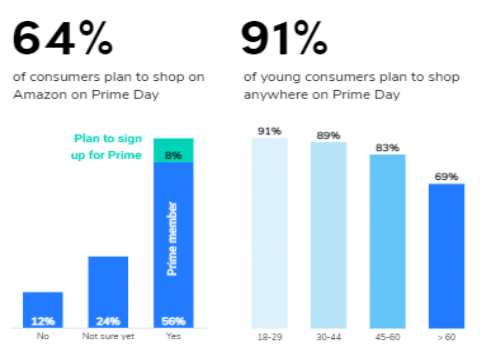
Customers do not shop on Prime Day with the intention of gifting things to their loved ones for a festive occasion – rather, it is about the thrill of the treasure hunt, where many products are available at sharp discounts and there are deals which may not come around again. Forbes reported that 48% of Prime Day shoppers make purchases they never actually planned for – largely driven by the fear of missing out on a great deal.
However, as an online merchant, if you’re expecting people to only be shopping on Amazon, you’d be wrong – Forbes goes on to say that as many as 58% of people compare prices on other websites before checking out on Amazon. And why wouldn’t they? Many of Amazon’s competitors, such as Walmart and Target, now run their own competing programs at the same time as Prime Day.
Many of these competing programs center around the premise of free and fast “Prime-style” shipping – like Walmart’s TwoDay and ThreeDay programs.
While the surge in order volumes means an opportunity to acquire new customers and boost sales, it brings with it increased order fulfillment complexity – due in large part to Amazon themselves, customers now expect free, fast same or next day shipping on nearly any online purchase they make.
In Amazon’s own words, Prime Day boosts sales both on and off their website. As an online seller, navigating the avalanche of orders flooding in from many different channels while managing to delight customers with free, ultra-fast shipping can seem overwhelming and expensive. But merchants do have a number of options that help them manage the logistical complexity and deliver on customer expectations, many offered by Amazon themselves.
Understanding Amazon Prime Day
First introduced in 2015 to celebrate Amazon’s 20th birthday, it has since evolved into one of the biggest online shopping events of the year. Prime Day offers a wide range of deals and discounts on various products, including electronics, fashion, home goods, and more. This event is designed to reward Prime members with exclusive access to exciting deals and significant savings, making it a prime opportunity for shoppers to score big on their favorite products. Whether you’re hunting for the latest tech gadgets or looking to refresh your wardrobe, Prime Day has something for everyone.
Preparing for Prime Day
To make the most of Prime Day, it’s best to prepare in advance. Here are some tips to help you get ready:
- Ensure Your Prime Membership: Make sure you have an active Amazon Prime membership or sign up for a free trial to access Prime-exclusive deals.
- Create a Wishlist: Compile a list of the products you want to purchase and check their prices in advance to ensure you’re getting the best deal.
- Download the Amazon App: The app can send you notifications about upcoming deals and allows you to shop on the go.
- Stay Informed: Follow Amazon’s social media accounts to stay updated on upcoming deals and promotions.
- Set Price Alerts: Consider setting up price alerts for your desired products to ensure you don’t miss out on any good deals.
By following these tips, you can navigate the Prime Day event with ease and make the most of the exclusive offers available to Prime members.
Optimizing Your Listings
As a seller, optimize your listings to make the most of Prime Day. Here are some tips to help you optimize your listings:
- Use Relevant Keywords: Incorporate relevant keywords in your product titles and descriptions to improve visibility.
- High-Quality Images: Use high-quality images to showcase your products and make them more appealing to customers.
- Detailed Descriptions: Ensure your product descriptions are accurate and detailed to help customers make informed purchasing decisions.
- Leverage Amazon Advertising: Utilize Amazon’s advertising options, such as Sponsored Products and Sponsored Brands, to increase visibility and drive sales.
- Monitor Inventory Levels: Keep an eye on your inventory levels and ensure you have enough stock to meet demand during Prime Day.
By optimizing your listings, you can enhance your product’s visibility and appeal, leading to increased sales and a successful Prime Day event.
Marketing and Promotion
Marketing and promotion drives sales and success during Prime Day. Here are some tips to help you promote your products:
- Social Media Engagement: Use social media to promote your products and deals, and to engage with your customers.
- Amazon Marketing Tools: Utilize Amazon’s marketing options, such as Amazon Giveaways and Amazon Coupons, to drive sales and increase visibility.
- Run Lightning Deals: Consider running a Lightning Deal or a Deal of the Day to drive sales and increase visibility.
- Email Marketing: Use email marketing to promote your products and deals to your subscribers.
- Partner with Influencers: Collaborate with influencers or other sellers to promote your products and reach a wider audience.
By implementing these marketing and promotional strategies, you can maximize your product’s exposure and drive significant sales during Prime Day, ensuring a successful and profitable event.
Order Fulfillment Options Offered by Amazon
In recent years, Amazon has become as much a logistics company as a retailer, offering merchants different options through which they can have orders fulfilled. During Prime Day, Amazon often operates with extended hours to manage the increased order volumes.
- Fulfilled By Amazon (FBA): Fulfillment by Amazon (FBA) lets merchants send products into Amazon’s global network of fulfillment centers, and Amazon picks, packs, ships, and handles customer service and returns.
- Amazon Multi Channel Fulfillment (MCF): In recent years, Amazon has expanded its reach significantly – its Multi Channel Fulfillment (MCF) offering allows merchants to have Amazon fulfill all of their orders across various channels – such as their own website or Shopify / BigCommerce storefronts.
- Buy With Prime (BWP): Prime shipping standards have become the norm for everyone, on and off the Amazon marketplace. Amazon’s most recent and noticeable step in normalizing these high standards is Buy With Prime, which enables merchants to offer the Amazon Prime shipping experience on their own website. Customers login to their Amazon accounts and checkout and orders are fulfilled by Amazon.
These options come with significant advantages and drawbacks, a few of which we outline below:
Advantages of Using Amazon for Order Fulfillment
- Picking, packing and shipping are taken off your plate as a merchant – there’s not a lot of work to be done, except sending the inventory in time to Amazon warehouses.
- FBA makes products automatically eligible for the Amazon Prime badge, which is a filter many shoppers on Amazon apply while searching for items.
- Amazon (in most cases) is able to meet the gold standard of shipping items by the next day – which can elevate customer satisfaction and prompt repeat purchases. This efficiency is particularly beneficial during holiday shopping seasons when order volumes are at their peak.
- For MCF purchases made outside Amazon, buyer confidence may be increased if they see that Amazon is fulfilling their order.
- For small D2C merchants looking to make a mark and establish themselves, Buy With Prime can provide a lot of trust in the buyer’s mind about the quality of not just their shipping, but the larger brand they’re engaging with.
While these are definitely strong positives, the programs do have a few significant drawbacks for merchants to keep in mind and weigh when making a decision.
Drawbacks of Using Amazon for Order Fulfillment
- While Amazon announced in November 2024 that it would not increase US referral or FBA fees in 2025, and would not introduce any new fee types, FBA fulfillment fees still vary by size tier, starting at $3.06 for the lightest small-standard non-apparel units..
- Research and analysis performed using Marketplace Pulse data by Cahoot shows that while the new Buy With Prime program can offer merchants savings of as much as 43% compared to Multi Channel Fulfillment, it can still be twice as expensive as FBA (where sales are restricted just to the Amazon marketplace).
- Possibly most importantly, when merchants use the Buy With Prime program, they send the customer to Amazon to checkout – where marketing or promotions may divert the buyer to an alternative (possibly cheaper) option.
- Lastly, with BWP, merchants do not have access to data about the customers on their very own website because the customer logins to their Amazon account to checkout, not through the merchant’s gateway.
Many merchants seeking to regain control of their customer data and improve their margins have tried to pivot away from Amazon FBA towards using a 3rd Party Logistics provider (3PL). 3PLs bring some of the same convenience that FBA does to merchants, but come with their own sets of limitations:
Advantages of Using a 3PL for Order Fulfillment
- Using a 3PL offers merchants a more cost-effective way to manage orders outside of Amazon, rather than using a program like MCF.
- 3PLs might offer merchants possibilities for kitting and customization, which are not possible when shipping with Amazon.
- 3PLs simply take care of shipping and stay out of the engagement between you and your customers, unlike a program like Buy With Prime.
However, the staple source of revenue for a 3PL lies in shipping, and that has unfortunately become a more and more expensive activity.
Drawbacks of Using a 3PL for Order Fulfillment
- 3PLs are in the business of shipping, and various activities of the shipping lifecycle have gotten more expensive – leasing warehouses, shipping costs and the cost of labor.
- BLS reported average hourly earnings in warehousing and storage at $26.57 in January 2026, and the 2025 annual average quits rate for transportation, warehousing, and utilities was 2.0 percent. Additionally, warehouse availability is low, driving leasing costs higher.
- All these mean that 3PLs are forced to pass on increased costs to customers, eroding margins.
Conclusion
As a merchant, you might be prompted to wonder whether there’s no solution that can both help you delight your customers while costing you less and allowing you to extract more margins. Consider order fulfillment solutions with differentiated models such as Cahoot that distribute your inventory strategically in warehouses across multiple locations in the country.
By placing your product closer to the customer, it is possible to achieve same or next day shipping, while deriving cost efficiencies. Oh, and it uses ground shipping – which is better for the environment than air cargo!
Already working with a traditional 3PL but want to switch to a better network, like our peer-to-peer model? We know migrating fulfillment partners can be an uncertain and stressful process which prevents merchants from exploring superior alternatives. To make that process simpler, check out our 3PL migration guide which provides you step-by-step details on how to make a smooth, seamless switch.
The mid-year shopping season brings with it new customers and supercharged sales but also logistical complexities to overcome. It is essential for merchants to have a solid game plan for order fulfillment across all of their channels, with a strategic order fulfillment partner that offers both savings and operational excellence. It might just be the decision that provides your ecommerce rocket ship its fuel.
Frequently Asked Questions
What are some tips for optimizing my listings for Prime Day?
Optimize your listings by using relevant keywords, high-quality images, detailed descriptions, leveraging Amazon advertising options, and monitoring inventory levels to ensure you have enough stock to meet demand during Prime Day.
What are the advantages of using Amazon for order fulfillment?
Advantages of using Amazon for order fulfillment include taking care of picking, packing, and shipping, automatic eligibility for the Amazon Prime badge, meeting the gold standard of next-day shipping, increased buyer confidence for MCF purchases, and providing trust for small D2C merchants through Buy With Prime.
What are the drawbacks of using Amazon for order fulfillment?
Drawbacks include rising FBA fees, higher costs for Buy With Prime compared to MCF, potential diversion of buyers to alternative options during checkout, and lack of access to customer data for merchants using Buy With Prime.
What are the advantages of using a 3PL for order fulfillment?
Advantages of using a 3PL include cost-effective management of orders outside of Amazon, possibilities for kitting and customization, and maintaining direct engagement between merchants and customers without interference.
What are the drawbacks of using a 3PL for order fulfillment?
Drawbacks include increased costs for shipping activities, higher leasing and labor costs, and the need to pass on increased costs to customers, eroding margins.
Written By:

Jeremy Stewart
Jeremy Stewart leads customer success at Cahoot, helping merchants achieve high-performance logistics through smart technology and process optimization. With a background in both ecommerce operations and client services, Jeremy ensures that every merchant using Cahoot gets measurable results—whether they’re scaling from one warehouse to many or managing complex returns.
Turn Returns Into New Revenue
Related Articles
The Shipping Speed Paradox: Why DTC Brands Are Slowing Down
Everyone’s talking about faster delivery.
Why Cross-Border DTC Brands Are Moving Fulfillment Inside the US
Cross-border ecommerce fulfillment is the process of shipping ecommerce orders across national borders—often from warehouses outside the United States to U.
Shopify Estimated Delivery Date: A Complete Guide for Ecommerce Stores
A Shopify estimated delivery date is the specific arrival date or date range shown on a product page before purchase, so shoppers know when an order is expected to arrive.
Overcoming Amazon’s Inventory Limits: Order Fulfillment Alternative
In this article
22 minutes
Listen to podcast here.
Podcast Episode 185 – Avoiding FBA Limits with an Alternative Order Fulfillment Network with Cahoot
The Smartest Amazon Seller Podcast discussed the issue of warehouse inventory limits, which is becoming a major challenge for all Amazon sellers. Amazon’s warehouse inventory limits are getting lower as Q4 ramps up, leading to difficulty for sellers to send everything into FBA – Fulfilled By Amazon. The problem is exacerbated by Amazon’s challenge in hiring order fulfillment workers across its warehouses. The podcast host, Scott Needham, invited Manish from Cahoot to discuss an alternative solution. Cahoot is a company that has created a peer-to-peer network for order fulfillment, allowing sellers to use its warehouses to store their products and deliver them to customers. Cahoot was first trying to do a co-mingled Fulfilled By Merchant (FBM) solution, but has now pivoted to an order fulfillment services network. Its order fulfillment services are intended to create efficiency, reduce order shipping costs and transit time, and make it easy for sellers to operate in a highly profit-challenged environment. The podcast discussed how Cahoot’s order fulfillment service can help sellers overcome the problem of Amazon’s strict inventory limits.
Scott Needham:
Welcome to the Smartest Amazon Seller Podcast, your host, Scott Needham. I am an Amazon seller for 10 years, and in my 10th year, I’m actually literally about to wrap up, hit 10 years. Something has happened again, that’s become an issue for all Amazon sellers, that if you’re really paying attention, inventory limits are, they’re getting lower as Q4 ramps up, which is kind of, it’s the opposite of what we want. Usually you want your limits to go up when you, because right now you want to spend all your money to buy inventory to bulk up for the next eight weeks. I’m recording this right before November. So a lot of people are getting challenged. They can’t send everything into FBA, and if you don’t have an alternative solution, you’re kind of stuck. So I’ve got with me someone that has an alternative solution that I actually think is quite scalable. I’ve got Manish from Cahoot. Manish, welcome.
Manish:
Scott, thank you for having me.
Scott Needham:
So let’s just chat through this. If we’re talking big picture, how I see things, Amazon, because of COVID and 2021 and 2020, they increase their capacity considerably. Actually, I’m seeing reports that they increased it too much, but they also have a different problem. If you increase your capacity, they also have to have employees to do that, and they have hired hundreds of thousands of people, but they’ve also had huge turnover, lots of turnover. So much that they do have a business challenge in that they are exhausting the number of people that are available for employment across some of the warehouses that they serve in different markets. So that leads me to think, inventory limits, they’re going to be around. It’s going to be cyclical. Who knows? We’re fighting against market forces, bigger market forces. Are there a hundred thousand people that can work in this capacity in this market? And that’s either a yes or no, and if not, then they can’t receive everything. So that’s how I would set the stage. And why, again, a year after the worst of these inventory limits, we’re seeing this again. How do you see this?
Manish:
Well, that’s a great question, Scott. And you said it right. Half of Americans of the available workforce has either applied or worked at Amazon or has worked and quit at Amazon. So Amazon is running out of order fulfillment workers to hire, and that’s no secret. I mean, everybody knows that. So you have a bit of a dichotomy. On one hand, two quarters ago, Amazon came out and blamed their excess build, they actually added more warehouses in 2020 and 2021 than they had done in the previous 18 years of their operation. So they went all in, and then of course they came back and they said, “Oh, we made less money because we overbuilt. We have tons of excess capacity. We’re going to go rent out or sublease, hundred million or so square feet of space.”
And then you as a seller, and many others that I speak with regularly, are complaining that their stock limits are down. So it’s highly confusing for the seller because they’re getting news from both sides of their mouth, and that’s not… So the reality is, what we believe and suspect, that while the facilities might have been built, they are not online. So you could count them as overbuilding, but they’re not enough. They’re not online. They don’t have enough order fulfillment workers to make those facilities work. And that’s why the sellers are continually facing strict inventory limits at FBA. So it’s a real problem.
Scott Needham:
I’ve got two selling businesses that I check in on every day. One of them does have limits, and the other one actually has the opposite of the problem, has actually more space than we need. So it affects people at different sizes in different ways. And every business model is slightly different. And some people can transition to FBM on their own and some people can’t. Just like I do think one of the benefits of E-commerce is you can work out of your house and you don’t have to ever touch inventory if you are using, if you’re being creative, if you’re aware of either prep centers or 3PLs, whatever.
I’ve been aware of Cahoot for a while, and if I get anything wrong about your background, but you guys have slightly pivoted in that Cahoot was first trying to do a co-mingled FBM solution. Where if I was selling Head & Shoulders shampoo and I had it in my warehouse, in my backyard in Utah, but the customer was in New Jersey, if someone else had that same product, that same skew in New Jersey, they could satisfy the customer for about half the price. And now you created this peer-to-peer network for order fulfillment. And that’s a really creative and interesting solution, kind of a hard problem to solve because of all the different variables. But that’s how Cahoot started, right?
Manish:
Yes, we are… We’ve been fanatically focused on optimization. And the idea is how do you reduce the shipping costs, the transit time, and make it easy for sellers to operate in a highly profit challenged environment? So all our solutions are intended to create efficiency. And yes, you’re right about our history.
Scott Needham:
You had to create a lot of tech, tech that you actually still use, but you guys now lean in a little bit more to an order fulfillment services network. So basically an alternative to FBA. And if say someone wants to sell 10,000 units of Head & Shoulders shampoo, they get to utilize your network as opposed to FBA. And I actually think there’s a few cool things that we’re going to talk about with the Cahoot network that are kind of different, never heard of before. And I was like, “Okay, this is a worthwhile conversation and worth exploring.”
Manish:
Absolutely. I mean, sellers can, we believe in supporting the sellers wherever they sell. Cahoot takes a full service approach to fulfillment. So we support, if the merchants want to send some inventory to FBA, we also support the highest standard in fulfillment, which is Seller Fulfilled Prime (SFP). Which is very, very hard to find a solution for because of the extremely stringent metrics. So if you are listening, and if you’re a seller that has Seller Fulfilled Prime (SFP), you should hang onto it.
And if you wanted to do FBM and if you were affected by FBA restock limits or you are unhappy with the receiving delays, which we know there’s a long receiving delay at FBA, or other challenges. Like returns, so that’s a big problem because your return rate is 20% generally higher with FBA than FBM or if you’re selling on other marketplaces and channels, whether Shopify, your website, on Walmart, eBay, other places, because every seller ought to be selling on multiple channels. So you can come to Cahoot and Cahoot can provide an Amazon FBA like service, and it’s an alternative to FBA so that you can continue selling regardless of whether you can get your inventory into FBA or not.
Scott Needham:
I mean, Seller Fulfilled Prime (SFP), it’s tough. I’ve done it, seen it work out, seen us get kicked off a few times as you need to get stuff out the door fast. So right now people need space, they need alternatives to FBA. And you guys, very straightforward, kind of offer your network. And you could even make some comparison to an Uber model for shipping and FBM and so much that you actually have some sellers that join the network and make their warehouse available, whether it’s space-
Manish:
That’s right.
Scott Needham:
And fulfillment.
Manish:
Right. That’s right. I mean, what’s unique about Cahoot is it’s a peer-to-peer network. So essentially it’s a peer-to-peer collaboration platform. So on one side of our network, the demand side, which is ecommerce brands and retailers that are looking for affordable fulfillment services, akin to if you were looking to outsource your fulfillment, some are part of it. So we would support that and we would place our client’s inventory at one or more warehouses in the Cahoot network. And Cahoot provides a very, a technologically advanced solution. So we connect directly with the sales channels, we have deep integrations with every popular channel out there. And then we provide a very simple pricing to our clients so that they don’t have to deal with the complexities of, “Hey, what’s the SLA in California? And what’s the storage fees at California versus New York or versus Miami?” Or what have you.
Because sellers are looking for simplicity, they’re looking for predictability, and they’re looking for one throat to choke, so as to speak, when it comes to holding people accountable. And that’s what Cahoot provides. And that’s the only reason why Cahoot is able to achieve Amazon Seller Fulfilled Prime (SFP) metrics, which is frankly very difficult to achieve through traditional 3PLs. So that’s a demand side of our network. And on the supply side, these are warehouses that belong to other ecommerce brands and retailers that have excess capacity in their warehouse. So right now, if you are running your own warehouse and you’ve got five, 10, 20,000 square feet of excess space, it’s literally sitting idle. You’re not making any money. Your rent, your mortgage, your utilities are the same. So you have the opportunity for the very first time to join the order fulfillment services network and make some extra cash.
Scott Needham:
Yeah. I’ve definitely had a facility where we’ve had tens of thousands of square feet and I’m like, if you push us, yeah, we could actually set aside 10,000 and utilize the space better. And especially… Certain parts of the season, there’s always more ways to utilize space better. We’re not always great at that. But if there’s an economic incentive, like what you guys have, to be able to rent some of the space, basically take your rental costs down, that’s very interesting. And obviously there’s some areas of the country that are just more in demand, California and the northeast coast, because that’s where most ships are coming in. So that’s really interesting. And I like seeing what solutions work for some people. People ask me frequently, and sometimes there’s just always trade-offs. What would you describe, how expensive is it to fulfill Seller Fulfilled Prime (SFP) through your network? Because I think people still want the Prime badge, but they don’t want to, we can’t pay $30 for every single shipment.
Manish:
No, nobody does, Scott. I think that is not a economically viable solution for vast majority of the sellers. So what Cahoot does is, you’re utilizing the economy ground shipping to ship the items and still meet that one-day, two-day delivery requirements of Seller Fulfilled Prime (SFP).
Scott Needham:
Is that because you guys are, because you’re distributing the inventory across the network?
Manish:
That’s right. In order to achieve two-day delivery target, Scott, you need at least four to five strategically placed warehouses. And in order to achieve one-day delivery target using economy ground like a UPS ground or FedEx ground, you need nine locations. And so what Cahoot does is places the inventory based on the demographic of your customers so that we can continue, one, meeting the SFP metrics that is needed in order to protect your account. And number two, do it affordably using the ground service. So you actually pay less than you would pay from your single warehouse.
Scott Needham:
Do you have sellers split up the shipment? Obviously that happens at the beginning, but do you ever do any transshipping yourselves or is that kind of like you’d rather replenish through having the seller replenish one at a time?
Manish:
I mean, both options are available on the Cahoot network. So essentially sellers can ship directly to the warehouses that they have been assigned based on the data. So we are very, very data driven. So that’s how we are able to minimize cost. Or in many cases, we would have a hub location that would act as your primary reservoir for inventory, and then we would trickle in the inventory across the nation as the demand warrants. So it’s the model behind the scenes is not fundamentally much different than how Amazon runs its own FBA network.
Scott Needham:
Yeah, that sounds exactly like that. You must have some pretty big warehouses.
Manish:
We have large and small because Cahoot was always designed to level the playing field. So if you had a warehouse that had 10,000 square feet, we don’t want to exclude that because there is power in numbers. There is a power in working with entrepreneurs, and some of them are absolutely top-notch. I mean, they do phenomenal job. And that’s probably the reason, or one of the very important reasons why Cahoot is able to offer the industry’s highest order fulfillment standards at a lower cost.
Scott Needham:
You know what? You make me feel like the world is just bigger. I just keep learning and just figuring out there’s this whole network going on and I haven’t even been… Keenly aware of it. I don’t know. It means there’s a ton of sellers that need this and then there’s a ton of warehouses that can meet Seller Fulfilled Prime (SFP). That’s not easy. And to make that, to get, like you said, nine different locations across the US and this was happen-
Manish:
It may look daunting to others, but it is business as usual at Cahoot. This is what we do, and we have been doing this for several years and we are the best in class when it comes to that level of accountability. Because I think there’s another big development that you may or may not be familiar with, Scott, is this Amazon Buy with Prime. So this concept of Seller Fulfilled Prime (SFP) is coming to every channel. And if your sellers are not aware, the audience is not aware, I’ve got a really awesome presentation on Buy with Prime and how that is going to affect the consumer expectation on every channel because this whole Seller Fulfilled Prime (SFP), or Prime-like delivery is going to be expected on every channel, on and off Amazon. And there’s a whole presentation, if people are interested, they can check it out on our resource library at www.cahoot.ai.
Scott Needham:
Interesting. So I mean, obviously some of your clients are multichannel, not just Amazon. Sure, there was a few different ways to go with that. What do you think someone that’s brand new, starting out, selling on anywhere, what would their experience be like? This is where I’m actually going to is you talked about accountability and that you, accountability to me means that you kind of need a web portal. You need to be able to see a view of your inventory and receiving and all things that are going on through hopefully what is on your website. Can you run me through that?
Manish:
Yeah, I mean, we have a best in class software. Everything is on the web. So the seller can pretty much access, if you’re familiar, akin to Amazon Seller Central, you know, will log in, you’ll see the movement of your orders. Orders are coming in from all the integrated channels, then your current inventory position at each of the locations where your inventory is currently situated. So you have realtime visibility into that and also realtime visibility into how orders are being picked, packed, and shipped. And additionally, you can also stay on top of the delivery to make sure that the orders are being delivered on time. In fact, we go one step further because we hold the carriers accountable as well. So if the carriers, they miss the SLA or if Cahoot misses the SLA, we like to expose that to our audience, to our sellers. Because for us, it’s a network, which is you are, we are in it together, and therefore it’s very important that we are making that information available so that all parties are holding each other accountable.
Scott Needham:
Love it. That’s awesome. And is there any part of this network? I feel like we’ve covered the very immediate need that a lot of people have. I do think that having an FBM alternative to FBA is good diversity, especially in Q4. What part of what you guys do, do you feel like we haven’t covered yet?
Manish:
Well, one, I think the whole net impact of this innovation is lower cost, higher quality. People think that if you need higher quality, you need to pay more. And Cahoot is turning that on its head that because of this peer-to-peer network, we’re able to lower cost than the traditional options that you may have available. Number two, it’s a myth that FBA is cheaper or cheapest for everything. That is a big myth that is not true. FBA fees have gone up 30% in the last two years, so you should look at your rates today, not two weeks from now, not two months from now. So you would be shocked that FBA is not cheap and certainly not for multichannel fulfillment. So if you’re using FBA to fulfill your website orders or Walmart orders, you should look at that again. And Cahoot is able to offer something very affordable. Besides that, we also have the best in class shipping software, which-
Scott Needham:
Well-
Manish:
So if you have a warehouse… sorry about that.
Scott Needham:
No, you win me over with pricing. Pricing matters. If people were to take a loan, yeah, the interest rate matters. Money is money. So 6% is a higher interest rate than 3%. But in similar, shipping is shipping. Where if you’re paying a dollar extra in one spot versus another, you can’t ignore that over time.
Manish:
And this is the benefit of the network, as you know, is it just keeps getting stronger by the day. And then our goal is to return the additional benefit back to our members, back to our, on both sides of the aisle. So we welcome anybody who is listening, who has a warehouse that is either thinking about utilizing their excess capacity, they should come check us out at www.cahoot.ai, fill out the contact us form, we’ll get in touch. And if you are a seller that is reliant exclusively on FBA, my strong advice to you would be that you should have an option, you should have a backup. It’s just like your computer hard drive. You always want a backup. You don’t want all your eggs in one basket. Even if it is the best basket in the world, you need, you must have a backup to protect your business.
Scott Needham:
In some situations, it’s not the best basket. But I mean, I do love FBA. They’ve kind of created something awesome, but it doesn’t work in every situation, especially the multichannel, like you were saying.
Manish:
And we recognize that, Scott, unlike our competition, that takes probably a hard line. I mean, we support FBA, we support the seller. For us, it’s about supporting the seller. So what’s best for the seller is how we like to empower them and how we like to support them.
Scott Needham:
Awesome. Well, Manish, tell me what is the most important tool that you use that helps you do your business? I mean, I will accept any answer other than Gmail.
Manish:
Well, Scott, we use a number of technologies and tools internally. I mean, the few things that comes to my mind is from a… We use Marketo as our email sales intelligence software. That is-
Scott Needham:
As I understand, Marketo is like, that’s enterprise grade. That’s a pretty robust tool.
Manish:
It is owned by Adobe now. It is a competitor to HubSpot. It is an enterprise grade technology that allows us to communicate with our-
Scott Needham:
I did not expect that. And you might be one of the first people I’ve ever met that’s actually used it. Why is it better than HubSpot?
Manish:
Well, I haven’t done the deep comparison with HubSpot. I think it just plays, I think Marketo existed prior to HubSpot. Certainly it has a very strong integration with salesforce.com, which is our CRM.
Scott Needham:
Okay.
Manish:
And we live in this new world where sales intelligence plays a huge role, that if I’m trying to contact you, what time would be ideal to contact you? Things like that can make or break, let’s say, depending on your routine, you may be a evening person versus somebody else may be a morning person. So if you send the wrong, even if you send the best message at the wrong time, it may not get noticed and things like that. So that’s one of the tools we use.
Scott Needham:
Awesome. Cool. All right. Well Manish, thank you so much. This is a really timely thing. If people want to learn more and maybe get pricing, figure out if this is a solution that works for them, it’s cahoot.ai, right?
Manish:
Yes. www.cahoot.ai. That’s C-A-H-O-O-T.ai. And just fill out the contact us form, and we’ll, a live human will be in touch very quickly.
Scott Needham:
Okay. Awesome. All right. Well thank you, Manish. This is very illuminating. Hopefully everyone, the quantity limits aren’t killing your business too much. They’re a little ugly at times. It’s cost us plenty of money in years past and fought some awkward situations. So figure it out, if you ever have any questions, you could reach out to Manish, you could reach out to me. It’s an interesting thing other than how to get your inventory limits higher? I don’t always know because Amazon’s not very consistent.
Manish:
And there are some tools that I’ve got a nice webinar on how to clean up your account on Amazon so that you make the most of your limits that you already have. So I encourage people to check out the resource library because many times there are many things you could do and you should be doing in order to make the most of the limits you have, rather than letting the limit be underutilized or wasted. So there are things that you could do and you should do.
Scott Needham:
Yep. Awesome. All right, well we’ll wrap up there. Manish, thank you for coming on so much.
Manish:
Scott, thank you for having me.
Scott Needham:
Okay. And to everyone else, have a good Q4. Stay listening. So happy. I’ve been doing this podcast for three years and we’re only getting… I enjoy it. It’s fun. It’s great. Okay, hopefully everyone have a great day. We’ll see you.
Written By:
Indy Pereira
Indy Pereira helps ecommerce brands optimize their shipping and fulfillment with Cahoot’s technology. With a background in both sales and people operations, she bridges customer needs with strategic solutions that drive growth. Indy works closely with merchants every day and brings real-world insight into what makes logistics efficient and scalable.
Turn Returns Into New Revenue
Related Articles
The Shipping Speed Paradox: Why DTC Brands Are Slowing Down
Everyone’s talking about faster delivery.
Why Cross-Border DTC Brands Are Moving Fulfillment Inside the US
Cross-border ecommerce fulfillment is the process of shipping ecommerce orders across national borders—often from warehouses outside the United States to U.
Shopify Estimated Delivery Date: A Complete Guide for Ecommerce Stores
A Shopify estimated delivery date is the specific arrival date or date range shown on a product page before purchase, so shoppers know when an order is expected to arrive.
The Importance of Logistics in Ecommerce Fulfillment

In this article
32 minutes
Listen to podcast here.
Podcast: Fast Ecommerce Shipping How to Offer It to Grow Your Brand – What’s Working in Ecommerce (Ep. 45)
The host of a podcast on e-commerce marketing and owner of Caravan Digital, Eagan Heath, interviewed Manish Chowdhary, an expert in logistics and ecommerce order fulfillment and the CEO of Cahoot, a full-service order fulfillment services network. They discussed the importance of warehouse logistics in the e-commerce sector, which can affect profitability and the fulfillment strategy of ecommerce brands and retailers. Chowdhary explained the complexity of order logistics with inventory supply chain issues, international shipping, inventory storage, and warehousing strategy. Cahoot offers flexible and affordable order fulfillment services for B2B, wholesale, direct-to-consumer, and Amazon’s Seller Fulfilled Prime (SFP) program. They also have the capacity to offer one-day and two-day nationwide free delivery, which is essential for e-commerce brands to remain competitive. Ecommerce brands that fail to offer fast and free shipping are at a strategic disadvantage, as consumers are accustomed to these order fulfillment services, which are associated with customer satisfaction and increased revenue.
Eagan Heath:
Welcome everyone to another episode of What’s Working in E-Commerce. I’m your host, Eagan Heath, the owner of Caravan Digital. We’re a direct to consumer e-commerce marketing agency. We help with paid search, paid social, and email automation. Today I’m very fortunate because I’m speaking with an expert in logistics and fulfillment. His name is Manish Chowdhary he is from Cahoot. Manish, welcome.
Manish Chowdhary:
Well, thank you for having, Eagan. Really excited to be here.
Eagan Heath:
Yeah. Tell us a little bit about why e-commerce merchants might want to use a third party logistics (3PL) company or a solution like that.
Manish Chowdhary:
So Eagan, if you look at what’s happening with e-commerce and logistics, I’d like to start out by saying that shipping and order fulfillment is such a crucial part of being successful online, that it is something that every merchant already knows. All your audience probably is already aware. So I’ve even coined a phrase called half your shopping experience is your shipping experience. So it is that important. And when it comes to e-commerce shipping, it can make or break once profitability. It is that crucial because if the merchants are not looking at that in a critical fashion, then they’re actually not taking a complete view of their business.
Manish Chowdhary:
And e-commerce and logistics has become a very, very complex topic with inventory supply chain issues. Getting goods from overseas, if you have manufacturers outside, the cost of moving those containers by ocean freight, getting them to the ports in the US which are choked. And then storing and housing the inventory. And then finally, your warehousing strategy because you can’t bring an inventory fast enough, and so on. So I can keep going, but I’m going to turn it back to you so you can break it down for the audience.
Eagan Heath:
Yeah, that’s great. Hearing you talk about that, it strikes me that it’s every bit as complicated as the digital marketing and probably much more. So my hat’s off to you.
Manish Chowdhary:
Well, thank you, Eagan. In fact, when merchants are not taking… I’ll give you a very simple example just to set the stage is, all the carriers implement what we call peak season surcharge, and peak season delivery surcharge. This is in addition to the fuel surcharge. And this can range anywhere from 50 cents all the way to two, $3 per package. So if you’re coming from a marketing perspective and in Q4, you’re not accounting for that $2 extra order fulfillment or the shipping surcharge, all your auto AS, all your return on advertising spend, how much money you should allocate, all of that math goes out the door. So logistics is like an iceberg. You only see one 10th of it outside and the remaining is quite deep.
Eagan Heath:
Yeah, that’s amazing. And like you said, this is really affecting your margins, which can affect whether your advertising or your marketing is profitable. And so, that’s why we’re speaking about this today. Tell us a little bit about Cahoot, of what you guys do, and just how you got into this.
Manish Chowdhary:
In the interest of time, I’ll keep it short in terms of Cahoot is a full service order fulfillment services network. So we essentially help ecommerce brands and retailers execute the most merchant centric fulfillment strategy. Which means both B2B, wholesale, direct to consumer, fulfillment for all channels from Amazon, Shopify, and also supporting their programs such as Seller Fulfilled Prime (SFP), which is a two-day nationwide free delivery, including one day delivery for 20% of the time. So Cahoot is a cutting edge, modern, what we call peer-to-peer order fulfillment services network. And I can explain that a little bit later. But essentially, we help… Think of Cahoot a bit like FBA, but a lot more flexible and a lot more affordable.
Eagan Heath:
Interesting. So I’m looking at your website here. It’s cahoot.ai, correct?
Manish Chowdhary:
That’s right.
Eagan Heath:
Yeah. I see. Why is Cahoot better than other 3PLs? You talked about lowest cost by design, scales to help you grow. And I was going to ask about this, the rigor to power the most demanding fulfillment. I said SFP is too tough for other 3PLs. And you just said what that is, that’s basically one or two-day shipping. Is that right?
Manish Chowdhary:
Yeah, SFP stands for Seller Fulfilled Prime. So is essentially Amazon’s program for certain sellers who have been pre-approved to get the prime badge and still fulfill the orders outside of FBA. So there’s a full webinar on our website if anybody’s interested in checking it out. It’s a very, very hard program to qualify and very hard to stay on top of. And Cahoot does that in addition to supporting whatever order fulfillment strategy makes the most sense for our merchants.
Eagan Heath:
That’s great. And for e-commerce brands that are listening, if they’re not doing one or two-day shipping like this now, make the case a little bit. Obviously, we’ve really gotten used to this with Amazon. How important is it to be able to fulfill it that quickly? And also what does a brand need to have in place to be able to do that?
Manish Chowdhary:
Well, I mean it’s really, really important. In fact, if you’re not offering one day, two-day free shipping on your website, you know are at a strategic disadvantage because consumers are looking for that. If you look at Amazon Prime, there are about over 200 million Amazon Prime members and they have gotten used to two-day delivery, used to be the norm, Eagan, a few years ago. I mean now Amazon is rapidly moving to one day delivery and many markets, the 10 markets where Amazon is doing same day delivery. So any brand that says that my customers are not demanding one day, two-day delivery, I will challenge you on that. And customers are not going to come and tell you, they’ll just go elsewhere.
Eagan Heath:
And in terms of is there a certain amount of inventory that sellers need to have or anything like that, how do they think about maybe the inventory and logistics side of it so that they can do this?
Manish Chowdhary:
In fact, I’ve got some visuals if you like. I can pull them up and we can go over how does Amazon-like Fulfillment work. So let’s see. All right, let’s go right into it. I mean, I want to share with the audience what you’re looking at on the screen is, there are the three top tech behemoths. You’ve got Amazon, which has about 34-35% of all e-commerce GMV in the US. Walmart is trailing behind. And then Shopify is another very popular e-commerce platform. And we are going to use Shopify as the DTC poster child or DTC representative. So Amazon, if you want to sell on Amazon, Amazon has its own fulfillment service, very popular Amazon FBA. Walmart has Walmart Fulfillment Services, which is rather new. And then Shopify originally tried to implement or launch Shopify fulfillment services network in 2019. That didn’t quite work out, wasn’t doing so well. So in April of this year, they acquired a company called Deliver, which actually competes with my company, Cahoot.
Manish Chowdhary:
But the challenge with this, Amazon of course, wants to use FBA. Walmart forces you to use WFS now. And Shopify introduced a new program called Shopify Promise, which is expected to compete with Amazon’s Amazon Prime. And the biggest challenge with these programs is they’re very self-serving. For example, Amazon has limited warehouse space, so they will limit how much inventory you can send to them. And they do that limitation by certain methods. The Q4 storage fees are three times the storage fees that Amazon would charge in the first three quarters. So by using such prohibitive high pricing, they’re trying to control the usage. And of course, FBA is great when you sell your products on Amazon and use FBA to fulfill it.
Manish Chowdhary:
However, the merchants want to sell on all different channels because shoppers are everywhere. You cannot contain yourself to selling on one channel. But if I take an order from Walmart, I’m actually prohibited by law or by rules of Walmart that I shouldn’t use FBA, because Walmart wants us to use Walmart Fulfillment Services. If I take an order on Shopify or eBay, then I’m going to pay considerably higher to Amazon for order fulfillment because Amazon, of course, wants everyone to sell on Amazon and that’s why they want to incentivize this. So what we see is siloed strategy.
Manish Chowdhary:
So when you think from a merchant’s perspective, it’s hard enough to run a business. And now if you have to send inventory to three different networks, and God prohibit, if you are selling on eBay and many other marketplaces, it becomes even more challenging. So our view is that these strategies, while they are very attractive in some cases, it tends to tie the merchant down, and it’s not the most affordable strategy from a bigger holistic standpoint. And you asked this question, Eagan, how does Amazon-like fulfillment work? How do you offer one day, two-day delivery nationwide? So I want to break this down for your audience. I can take a pause if you have a question, or I can keep going.
Eagan Heath:
No, this is great. Part of what I’m understanding is if you’re doing fulfillment by Amazon, and you’re selling on Walmart, and then you’re doing some other one, you’ve got basically your products in different fulfillment centers, and you’ve got to kind of manage that, versus this is an alternative to handle all three or more through one service. Is that right?
Manish Chowdhary:
That is exactly right. And we know, and perhaps you can attest to that, that merchants should be selling on as many channels as they possibly can because shoppers are not limited to one particular marketplace, even as popular as Amazon, it’s certainly not a hundred percent of the market. And therefore, there could be less competition on other places. So we encourage merchants to make the products visible at as many places as they can and also of course, focus on their direct to consumer website.
Eagan Heath:
Yeah, that’s excellent. All right. So what I see here on the screen of the different locations of if we have two, four, or nine locations, tell us a little bit about this.
Manish Chowdhary:
Yeah, so this is a map for those of you who are watching the screen. It’s essentially breaks it down that how do you make free and fast shipping possible? How do you make Amazon-like shipping affordable? Of course, we cannot afford to ship using the expensive overnight air or two-day air service. So the most economical is the ground service like a UPS ground or USPS first class and so on. And what this illustrates is that if you want to target two-day delivery nationwide, you need to have at least four strategically located warehouse, or four strategic fulfillment locations. And if you look at the middle column, Eagan, you’ll see these are four strategic… This is where the bulk of the US population is, and these provide the best coverage. So think about New York, think about Southern California, think about Dallas, Texas, and upper Midwest such as Chicago area.
Manish Chowdhary:
And then if you have these four strategically located warehouses four to five, you can get 99% of the US population within two days. And if you want to target one day delivery, you need many, many more, like nine locations. And why do we know that is because Cahoot supports Seller Fulfilled Prime (SFP), which is two-day delivery nationwide. And with one day at least two 20% of the population at any given time, that’s the requirement for Seller Fulfilled Prime (SFP). And furthermore, so if you were to break it down, and if you wanted to do two-day delivery nationwide, like Amazon FBA, you need to start with smart inventory placement. We talked about that previously. You need four to five strategic locations if you want to target. But of course, the amount of inventory you’re going to place in Southern California is probably not the same as what you’re going to place in the Chicago area because the volume of orders is not going to be the same.
Manish Chowdhary:
And FBA does that for you, and Cahoot does that for you as well. So we will spread the inventory proportionately based on historical data and many other factors. Once the inventory is strategically placed, and it’s ,of course, not a one-time thing because you have to constantly, as inventory gets depleted, you need to replenish the inventory. And getting this right is a very, very complex topic. However, this is where the opportunity is. And then, once you have your inventory located strategically, then you need to market this. Especially if you have a website. The marketplaces like Amazon and Walmart, of course, do it for you. They’ll promote that free two-day shipping badge on the product page, on the category page, on the shopping cart. It’s called date certain shipping, buy by X time, and you’ll get it delivered by Y time. And that is really important because that is what gives the consumer the confidence that they will get the product.
Manish Chowdhary:
We cannot say things like two-day shipping and three-day shipping because that does not account for your handling time. It does not tell me if I place an order today, will the two days counter begin tomorrow? Will it begin today if it’s a weekend, if it’s a holiday. So this is really important in order if you’re doing your own DTC site to promote this. And then once you receive the order, you need to manage your cost. So you need to now route that order to the right location that has the cheapest cost, but also will deliver the order within the promised SLA to the consumer. And then we need to monitor to ensure that the customer indeed did receive the item as promised. And if there was any issues, you need to address that. So you cannot just forget about it after you ship the order. Because if you want to be like Amazon and you want to give the same level of experience, you need to be fanatical about tracking and making sure that the customers got what they were expecting. Any comments, Eagan, before I move on?
Eagan Heath:
Pretty interesting. Are you guys using ground shipping, and Amazon, and others or not?
Manish Chowdhary:
No. I mean, Amazon FBA also uses… Most of the time they use ground shipping, so does Cahoot. However, a little bit further down in my presentation, I will cover what FBA does and what they don’t do. For example, as I said earlier, if you wish to get a Shopify order Fulfilled By Amazon (FBA) is going to cost you more, because that order is originating from outside of Amazon. So Amazon and Cahoot would utilize very similar strategy. But most brands, as we know, they also want to sell wholesale. They want to store their inventory because given the current inventory supply chain issues, you cannot predict how long things will take. So a lot of brands and retailers are stocking up for the holidays earlier. But all of these, you cannot just take all of that and send that to FBA because there are chances that Amazon may not even accept all that inventory because there are limits on how much inventory you can send to Amazon.
Eagan Heath:
Gotcha. Okay.
Manish Chowdhary:
And those are similar problems with Walmart as well. For example, right now, you cannot use Walmart fulfillment service to fulfill an order from Shopify. So from a merchant’s perspective, it becomes a nightmare because now you need to monitor some inventory sitting in Walmart, some in FBA, you need to… Now each one has different receiving times. Amazon takes excruciatingly long many times to receive inventory, especially closer to the holidays. You need to monitor your safety stock to see how much inventory do you have, how many days of inventory. If you have too much inventory, then Amazon penalizes you because your IPI score, inventory performance index goes down. Then your limits on the account can suffer, then you cannot send your inventory back to Amazon. And then the problem just goes on. I can certainly drill down on anything specific that you’d like me to cover.
Eagan Heath:
Yeah, this is great. We can keep going here, but thank you for talking about that.
Manish Chowdhary:
Cool. Cool. So our view, and this is not just my view and Cahoot’s view, but this makes sense because it’s simple physics. Because most sellers should be selling on multiple channels. And if you’re selling on multiple channels, you need a holistic order fulfillment strategy. Most sellers, if your ecommerce brand is successful, if your product is successful, you’re probably also doing some wholesale, you’re supplying to other stores, you’re selling one P to places like Nordstrom, and some of the other B2B channels. So you need a fulfillment provider that can do both B2B, B2C, all year long. And also help you deliver on one day, two-day delivery if that’s what you would like to target. So broadly speaking, there are three ways you can go about doing it. And we already covered that you need at least four warehouses, four to five strategically placed.
Manish Chowdhary:
So if you have a warehouse in Wisconsin, that’s not a great location. It might be a great warehouse for a great price. But of course, the reason why the price is great is because that’s not a strategic location that most sellers are targeting. So you can do it yourself if you have a warehouse of your own, or you can go and rent space, sign long-term leases because warehouse rent is an all-time high. So you’re unlikely to find great deals if you’re not willing to commit for a long time. Then you need to find labor, staff them, manage all of this at four or five locations on a daily basis. Carrier relationships, it can get very, very expensive and risky because you may not have the economies of scale, unless you’re doing eight, nine figures or at least seven figures in UPS spend. Your UPS rates may not be as good and so on.
Manish Chowdhary:
It’s sort of like the analogy I’d like to use is cloud. In today’s day and age, you standing up your own servers is going to be a very time-consuming process in addition to risky and expensive. But you can certainly do that and you still need software and technology. The other option is 3PLs, the traditional third party logistics or warehousing companies. Two thirds of them in the US are what we call mom and pop operators. They are the facilities that have one to three facilities nationwide. Most of them are one location. And then you have the large mega companies that target the large enterprise. And most of the time, they’re not a great fit for small businesses because they have monthly minimums, very large minimums. They want a lot of volume that you may or may not be able to commit. They want a very long-term relationship and contracts. And even then, so if you go with the 3PLs, you may have to assemble two, three, four of them, four different companies, negotiating separate agreements with them.
Manish Chowdhary:
Each one has their own service level agreement, meaning this is how long it takes to receive, this is when the orders will go out. And then furthermore, you’ll need technology on how to manage all of this. How will you route the order? Who should fulfill what? And how will you recover from exceptions? So it gets pretty challenging to manage all this, and especially if you’re trying to target one day, two-day delivery, it can get quite complex and quite expensive. And then there’s something new which is we call, order fulfillment services network. And technically, Amazon FBA would be considered a fulfillment services network. And then there are technologies and solutions like Cahoot that have… They are new age. At least Cahoot, unlike deliver supports both wholesale B2B, as well as B2C. And we can provide very cost-effective solutions to clients and run their holistic fulfillment strategy.
Manish Chowdhary:
And one thing, as I mentioned, because Cahoot supports Seller Fulfilled Prime (SFP), many of our facilities operate six days a week. Unlike traditional 3PLs that operate only Monday through Friday. We don’t have any peak surcharges and we have all the integrations. So getting started is very easy and stress-free. And for those of you who are listening, because Cahoot is what we call peer-to-peer order fulfillment services network, if you have a warehouse, you can certainly include your warehouse as part of the fulfillment node. And if you want to make money, if you have excess space in your warehouse and you would like to monetize that excess space and capacity, we invite you to come apply to become a fulfillment partner for Cahoot. So for the very first time, you have an opportunity to make money on the Cahoot network in addition to utilizing our services. I’ll take a pause here. Eagan, I’m sure you have questions for your audience.
Eagan Heath:
Yeah, that’s pretty interesting. I think this order fulfillment services network piece is curious to me where it sounds like you guys have some warehouses and things like that. But then in some cases you’re also tapping into, it could be merchants, and vendors, and things like that. Or it’s like they’ve got warehouse space and you’re utilizing that too. Am I understanding that right, where it’s kind of a mix?
Manish Chowdhary:
That’s right. I mean, Cahoot is a peer-to-peer order fulfillment services network. Which means this was the innovation that Cahoot brought to market. We have 10 issued patents that most of our supply, most of our warehouses belong to other top tier merchants that have excess capacity. And they get to monetize that for the first time. And the benefit for our clients is because it’s sort of… Think of Cahoot as an Airbnb. You’ve got your spare bedroom, you’ve got your spare apartment, a spare house. And because we are bringing that to market for the very first time, we are able to pass those savings onto our clients. And mind you, these are top tier merchants, terrifically well run facilities, the average tenure of warehouse and our network, they’ve been selling and fulfilling their own orders for over 10 years. And you can see from our rating, that five star rating on Amazon, five star rating on Shopify. So that is how Cahoot is able to offer affordable services compared to the competition.
Eagan Heath:
Very cool. Thank you. Anything else you want to share and present about here? Or anything else I should ask you about?
Manish Chowdhary:
No, I mean I think there is a new development that I’m not sure if you’ve been following that was announced by Amazon called Buy with Prime in April, just a couple of months ago. I don’t know if you’ve covered that you’re familiar with that you, if that would be of interest to your audience. So this is something that is relatively new.
Eagan Heath:
Yeah, I’ve been following this, Manish. Tell people a little bit about this and also just how this relates to what we’re talking about.
Manish Chowdhary:
Yeah, well, what this is really, Amazon announced in April of this year, what we call Buy with Prime program. It’s essentially enabling shoppers to buy with all the prime benefits, the Amazon Prime membership benefits. But on any website outside of Amazon. Until April, if you were an Amazon Prime member, you had to buy it on Amazon in order to get your two-day free delivery. But now, Amazon has launched this program that allows merchants to put the prime badge on their website and fulfill these orders through Amazon. So as a shopper, if you’re looking at the screen, you can see the Buy with Prime badge. Think of it like PayPal checkout if you’re familiar with that. It’s essentially, when you log in on, let’s say your website, you will log in using your Amazon credentials, your Amazon shopper credentials. And will pre-populate all your Amazon profile data, and the order will get shipped from Amazon within the two days.
Manish Chowdhary:
So you’ll get all the prime benefits. So let’s say if you have a Shopify big commerce, Magento commerce store, you can install this. However, it’s a loaded problem. While it may be attractive because it builds trust, but there are host of other issues that we don’t believe it’s the right solution for merchants. But it’s a call. It’s a call to action to anybody who’s selling online, that previously the shoppers expected two day, one day free shipping on Amazon. But this program is going to accelerate that need to offer that same free and fast shipping on every channel. So if you’re not doing free and fast shipping, and by that I mean at least free two-day shipping nationwide, you are going to be in a strategic disadvantage because let’s say if your competition starts offering it and you don’t, then you are at a loss. And this is a new development that I feel and we know that this is going to create waves this holiday season and certainly into 2023.
Eagan Heath:
Yeah, pretty interesting. We’ve covered on our show just the important of owned growth, and obviously, we do Klaviyo email marketing with clients, and this whole piece of you want to own your customer. And now as you’re saying, if Amazon owns this customer, that’s tricky. This could increase your conversion rate, this could increase your sales. Maybe there’s a poll if you’re using Amazon FBA. But you have to weigh the pros and cons of do we get the customer data or not? That’s really something to weigh out, but I hear what you’re saying of one in two-day shipping, coming through your Shopify site or what have you, people are going to be be expecting that. So that’s something to think about.
Manish Chowdhary:
That’s exactly right. It is a by invitation only program, so it’s not open to every merchant right now. But suffice to say that it is coming, and merchants should be planning and preparing for this in advance because this… I’m sure, Eagan, you can talk about the early days of Google AdWords. That’s the time to get on, take advantage, get positioned to beat the competition and before everything becomes widely prevalent and available.
Eagan Heath:
Yeah, that’s great. Well this is great info, Manish. Anything else we should cover before we wrap it up here?
Manish Chowdhary:
No, I mean I think most of it is just the last point here, is Buy with Prime is like a Trojan horse, because I’ll give you a very simple example. Let’s say install this button on your website. Then somebody puts a… We know that all the DTC websites, most merchants like to increase their basket size by offering free shipping on let’s say, orders over $50, or $70, or what have you. But with Amazon Prime, there is no such minimum. One can order paper paperclips and a box of paperclip, and you could get that for free. So that can also be quite challenging. And if you don’t get the customer detail, customer information, if Amazon holds that information to them, then it may not be a good idea. And finally, just using the same analogy, let’s say I go to your website and you’ve put Amazon Buy with Prime. And I put the item in the shopping cart. And I abandon that shopping cart, it’s going to be hard to re-target that customer.
Manish Chowdhary:
And we know that Prime shoppers visit Amazon at least once a week. 50%, 45% of the Prime Shop are buy from Amazon once a week. So if they abandon the item on your shopping cart, you can bet that Amazon will target competitive products and they reach Amazon. So you might actually lose that customer what you thought to be a great thing. But this program is still very new. I’d encourage sellers to keep an eye out, but the call for offering free one day, two-day shipping on your website on every channel you sell is here. Sellers should not procrastinate. If you think that your shoppers, your customers are not demanding that, I will challenge you on that again. I think because the customer behavior is quite consistent and we see the impact of that for those that offer. And I have a case study if you want me to cover that briefly with one of our clients, but I’ll let you make that call.
Eagan Heath:
Sure, yeah. I want to ask real quick, did you have a slide about the Shop Pay as well?
Manish Chowdhary:
Oh yeah. So we have a slide on Shop Pay, which is-
Eagan Heath:
Which is Shop Promise. Okay.
Manish Chowdhary:
… Shop Promise. This is again, Shopify’s answer to Amazon’s Buy with Prime. It’s still very new. You can only sign up to join the wait list. It is essentially, very similar that if you’ve shopped on the Shopify store from any one of the Shopify stores once, you will be able to check out quickly. And Shopify will handle the payment. And then there is some protection against returns similar to Amazon Prime or the FBA. So it’s still very new. But of course, Shopify’s trying. But the biggest difference between Shopify and Amazon is Amazon, you get traffic. In Shopify, you have to build your own traffic, you have to market your own. So that’s one of the key differences.
Eagan Heath:
Yeah, that makes sense. And that’s what we’re doing as an agency. So we certainly understand that base. You mentioned a case study, can you talk to us a little bit about what does the before and after look like for a client who goes this route with their fulfillment?
Manish Chowdhary:
Yeah, so we have a case study on our website, I’m going to pull that up, which is Cali’s Books. They’re a leading Amazon brand that… They’re leading DTC brand. And I’m going to go ahead and share that screen so one can see it. And so, they had a very similar problem. They were using a bunch of different providers. I mean they still do. So this is Cali’s Books. They have these very clever books that one can record is these are musical or rather recorded books that you can record your own words so they are books. But let’s say a grandparent is reading the story to the kid and it’s very popular, so it’s in their own voices. They’re doing really well. They’ve been growing like gangbusters. They sell on all popular channels. They sell on Amazon, they sell on Walmart, they have their own Shopify store.
Manish Chowdhary:
They also provide whole… They sell wholesale to Nordstrom and many other retailers around the country. So previously, they were using Amazon FBA and Seller Fulfilled Prime (SFP), then they got hit by inventory limits. They could not send the inventory to Amazon, and their bestseller would go out of stock that would lead to a lot of lost sales. And then they had a 3PL on the West Coast that was sending items to FBA. But they could not handle B2C or direct to consumer orders for Shopify. So they were using Deliver. And then when they decided that hey, they needed to have a backup to FBA Deliver, cannot do Seller Fulfilled Prime (SFP). So that wasn’t a good solution. And Deliver is not good at B2B. So there are many other challenges that they were dealing with and that was really hurting their growth. And Cahoot brought all of that under one roof and the results were outstanding.
Manish Chowdhary:
I mean, we helped them with DTC, which means all direct to consumer channels. We helped them with their Seller Fulfilled Prime (SFP), which is fulfilling Amazon orders. Cahoot also helps them sending inventory to FBA periodically. Then B2B. And we talked about strategic inventory placement. And the impact is Cali’s Books is growing 90% year over year, with near zero defect. And that’s something. And there’s a video of the Cali’s Books’ COO, Michael, on our website if somebody wants to check it out. So for those of brands that are looking for a holistic provider, and Cahoot always works in the best interest of the merchant and the best interest of the seller. So we don’t try to put a square peg in a round hole. But I’d encourage folks to check it out. It could be a game changer for some.
Eagan Heath:
That’s great. Yeah, I think the last question for me, Manish, is just how big does a company need to be for this to make sense? Is it a revenue number, is it a number of orders?
Manish Chowdhary:
Yeah, so Cahoot is a network similar to Amazon FBA. So it’s very flexible, it’s highly scalable. So you don’t need to be a huge brand. As long as you’re doing at least a hundred orders per month direct to consumer, that’s when Cahoot will begin to make sense. I think that’s probably when the business begins to… When you can’t do this out of your garage. So Cahoot is quite flexible. So if you have that need, come check us out, learn about it. Even if we are not the right fit immediately, because these fulfillment and logistics decisions can take weeks, and months, and sometimes years to decide. But it is certainly a very unique, and innovative, and affordable option.
Eagan Heath:
All right. That’s all right. And yeah, again, the website is cahoot.ai. Manish, thank you for coming on and sharing What’s working in e-commerce fulfillment.
Manish Chowdhary:
Eagan, thank you again for having me. And all of the ones who are listening, thank you for listening to me. And thank you for the opportunity. I’m really excited that I had a chance to talk to your audience.
Written By:
Jeremy Stewart
Jeremy Stewart leads customer success at Cahoot, helping merchants achieve high-performance logistics through smart technology and process optimization. With a background in both ecommerce operations and client services, Jeremy ensures that every merchant using Cahoot gets measurable results—whether they’re scaling from one warehouse to many or managing complex returns.
Turn Returns Into New Revenue
Related Articles
The Shipping Speed Paradox: Why DTC Brands Are Slowing Down
Everyone’s talking about faster delivery.
Why Cross-Border DTC Brands Are Moving Fulfillment Inside the US
Cross-border ecommerce fulfillment is the process of shipping ecommerce orders across national borders—often from warehouses outside the United States to U.
Shopify Estimated Delivery Date: A Complete Guide for Ecommerce Stores
A Shopify estimated delivery date is the specific arrival date or date range shown on a product page before purchase, so shoppers know when an order is expected to arrive.
Amazon’s One-Day Shipping: The Real Story for Retailers
In this article
If Amazon owns nearly half of the $513 billion U.S. ecommerce market, why the need to offer one-day free delivery? The key to this decision is Amazon’s singular obsession with customer centricity and an appreciation for indirect results that don’t even register on the radar of some competitors.
If Amazon owns nearly half of the $513 billion U.S. ecommerce market, why the need to offer one-day free delivery? The key to this decision is Amazon’s singular obsession with customer centricity and an appreciation for indirect results that don’t even register on the radar of some competitors.
Insights abound for those able to get past the headlines. Here are three of the most important takeaways that were either overlooked or under-covered in the media frenzy.
- Rock the Customer Experience or Die
- ROI Needs a Radical Rethink
- Double Down on Innovation, Play to Your Strengths
With the expenses involved in offering free shipping, it’s not hard to see why Amazon’s annual shipping bill is set to exceed $7 billion dollars according to the latest estimates. Retailers often opt to pass these costs on to their customers or offer ecommerce order fulfillment options that won’t leave them substantially in the red, but they’re missing the point.
Written By:
Manish Chowdhary
Manish Chowdhary is the founder and CEO of Cahoot, the most comprehensive post-purchase suite for ecommerce brands. A serial entrepreneur and industry thought leader, Manish has decades of experience building technologies that simplify ecommerce logistics—from order fulfillment to returns. His insights help brands stay ahead of market shifts and operational challenges.
Related Articles
The Shipping Speed Paradox: Why DTC Brands Are Slowing Down
Everyone’s talking about faster delivery.
Why Cross-Border DTC Brands Are Moving Fulfillment Inside the US
Cross-border ecommerce fulfillment is the process of shipping ecommerce orders across national borders—often from warehouses outside the United States to U.
Shopify Estimated Delivery Date: A Complete Guide for Ecommerce Stores
A Shopify estimated delivery date is the specific arrival date or date range shown on a product page before purchase, so shoppers know when an order is expected to arrive.
Overcoming FBA Restrictions with Agile Fulfillment
In this article
10 minutes
Agile ecommerce order fulfillment alternatives to make the switch to FBM
Amazon Sellers are Awash with Disruptions
Back in 2020, the Amazon FBA (Fulfilled by Amazon) community was shaken by Amazon’s decision to restrict the kinds of inventory it’s receiving until April 5, 2020. Shipments of inventory turned away, and many FBA sellers left to fend for themselves amid the crisis. Many sellers who still have FBA inventory are panicking after seeing delivery dates pushed to April, and some items would even take a month to deliver. Many voiced concerns about losing an entire month of sales.
Update: To learn about the latest FBA restrictions and to discover how to mitigate risk and maximize Amazon sales in Q4 and beyond, check our article and on-demand webinar on How To Improve Your IPI Score & Maximize Amazon Sales
Amazon SFP Sellers are Also Hitting Bumps
As merchants rush to convert their listings to Fulfilled by Merchant (FBM), some merchants on the Cahoot Order Fulfillment Network have reported that Amazon has started assigning weekend delivery dates to some Seller Fulfilled Prime (SFP) orders. It’s unclear at this time as to the reasons or which orders or merchants are impacted. One example is a medical supply Cahoot merchant in California. The merchant received several prime orders with a Saturday delivery deadline. Unfortunately, the only delivery option available through Amazon for the deadline was a $120 one-day air service for a $40 item. This is most likely a glitch in Amazon systems. Still, Sellers enrolled in Seller Fulfilled Prime must meet Amazon’s current performance requirements, and ongoing failure to meet them may lead to Prime offers being disabled and disenrollment from the program.
Agile Ecommerce Order Fulfillment is the Present and the Future
COVID-19 situation has exposed a fundamental flaw of over-reliance on a single fulfillment channel. Just like an investor would diversify its portfolio between multiple asset classes, Amazon Sellers should not rely exclusively on FBA for their order fulfillment. A 2025 McKinsey survey found that 90% of consumers are willing to wait two or three days for delivery when shipping is free. There are order fulfillment options that are within your reach, and some of them can even be set up and running in a matter of days.
At Cahoot, we believe in agile order fulfillment that can quickly adapt to changes. Agile fulfillment requires three parts: (1) Flexibility, (2) Resilience, and (3) Scalability. Flexibility implies fulfillment that follows the money, so you can quickly adapt and make changes—for example, quickly adding order fulfillment capabilities in regions where demand is concentrated. If you get a surge of orders from California, having a fulfillment option regional or local to in California would help you lower shipping costs while speeding up deliveries. Flexibility also means the ability to shift fulfillment locations when demand patterns change naturally or as a result of new sales channels or marketing campaigns.
Resilience in ecommerce order fulfillment means making sure your pick, pack, and ship operations continue during disruptions. Major events like the Amazon FBA restriction won’t bring your business down if you have redundant fulfillment capabilities.
Scalability means ensuring your order fulfillment capacity can scale to support your business’ growth and downturn. Having multiple fulfillment options and the technologies that tie them all together can minimize disruptions as your business grow. The aim here is to right-size your operations to suit your business demands while optimizing costs
4 Order Fulfillment Alternatives for Amazon Sellers
Below are 4 popular agile order fulfillment options for sellers to consider.
Own Warehouse
Setting up order fulfillment operations within your own warehouse could be a reasonable stop-gap measure if you have the systems, supplies, and staff. This is a good redundancy strategy to continue selling if FBA goods ever go out of stock.
However, continuing to do order fulfillment using a single fulfillment center is unsustainable when compared to the cost and speed of FBA. Fulfilling 1-day or 2-day delivery prime orders from a single location is very costly. A guaranteed next-day express shipping service is four times the cost of an economical ground shipping.
Pros:
- Suitable for a temporary back-up option for FBA
- At full capacity utilization, order fulfillment can be very economical
- Complete control over your operations and full flexibility in how you package your items
Cons:
- Requires considerable time and resources to find, train and manage staff and day-to-day operations
- Limited coverage via Ground service to deliver orders within 1-Day and 2-Day
- Reaching and maintaining full capacity utilization year-round is very hard
- May not be suitable for Amazon orders if the Operations are brand new which can lead to unacceptance fulfillment defect rates
3PL (Third Party Logistics)
3PLs can provide flexibility by allowing you to add order fulfillment locations faster than building your own warehouses. Smaller 3PLs may be willing to offer lower prices to compensate for their limited coverage.
Smaller 3PLs are a good choice if you already have your own order fulfillment operations and are only looking for a new location to have better two-day ground coverage. Smaller 3PLs are often mom-and-pop operations with limited technology and capacity. Hence, limited in scalability. If you’re looking to offer free one- or two-day shipping across the U.S., working strictly with small 3PLs can be complicated. It may require working with multiple companies, integrating all of their systems to yours, and maintaining them regularly. Plus, you will not have the flexibility to re-calibrate your fulfillment in response to changing customer demand patterns. And, you will be impacted if your single 3PL site has to shut down or downsize their operations for whatever reason.
Pros:
- Add new locations to complement your own order fulfillment
- Access to discounted freight and parcel shipping rates negotiated by the 3PL
- Supports multichannel order fulfillment
Cons:
- Limited capacity and flexibility. They often require long-term contracts with a minimum volume commitment for favorable pricing.
- Limited technology to provide real-time visibility and intelligence into the orders and fulfillment
- Difficult to reliably achieve economical 1 or 2-day delivery nationwide.
- Support for Seller-Fulfilled Prime orders may be limited due to demanding SLAs and special requirements. In 2025, Amazon updated Seller Fulfilled Prime so performance metrics are evaluated separately for standard size, oversize, and extra-large tiers, and the trial now runs four full weeks under weekly performance tracking.
On-Demand Warehousing
On-demand warehousing or 4PLs (Fourth Party Logistic Model) are services that manage multiple 3PLs so merchants can quickly add warehouses as needed. They help merchants find new warehouses that fit their location, timing, or special handling needs (e.g., hazmat, temperature-controlled, perishables, to name a few). Companies such as Flexe, Flowspace, and Ware2Go are platforms that connect 3PLs who have excess storage space with sellers who need them. 4PLs make it simpler for merchants to work with multiple 3PLs because merchants only need to integrate with the 4PL and have the flexibility of short-term space rentals (instead of the long-term commitment typically required by 3PLs).
4PLs generally provide customer support and additional services such as receiving inbound shipments, storage, pick-and-pack, and outbound shipping. But through multiple facilities in distributed geography instead of just one.
Like 3PLs above, merchants need to make sure the 3PLs they are working with are capable of offering 1-day or 2-day delivery nationwide. Not all 4PLs are geared toward fast and cost-effective B2C e-commerce order fulfillment as some tend to specialize in services such as bulk store replenishments, short-term storage facilities, or FBA inventory prep. Because 4PLs are primarily selling 3PL storage and fulfillment services, sellers have to figure out how to optimize their overall costs and business operations by themselves.
Pros:
- Only pay for warehouse space you need without the long-term commitment.
- Minimize complexity from integrating with multiple 3PLs to just one 4PL
- Storage fees may be cheaper than conventional 3PL models because warehouses on the platform mostly list their unused space.
- Supports multichannel orders
Cons:
- Does not specialize in Amazon eCommerce order fulfillment.
- Support for nationwide Amazon Seller-Fulfilled Prime (SFP) fulfillment could be unpredictable, where the performance metrics are very demanding and there is little to no room for errors.
- Space availability varies frequently and dependent on the 3PL partners who are simultaneously servicing their own clients and other platforms.
- Potentially more expensive than a traditional 3PL for eCommerce order fulfillment because both the warehouse and the platform need to make money.
Peer-to-Peer Order FulfillmentTM
Services like Cahoot offer Peer-to-Peer eCommerce Order fulfillmentTM, which is a hybrid between in-house fulfillment and 3PLs. It combines the flexibility and reach of a 4PL with the cost efficiency of in-house fulfillment. In the peer-to-peer model, ecommerce sellers exchange warehouse space and fulfillment services. Under this model, merchants who currently do their own order fulfillment can now work together in a coalition and offer free and fast shipping to each others’ customers wherever they may be located.
Peer–to–peer model offers the most agile order fulfillment because it connects ecommerce sellers to a network of trusted peers, thereby creating a very large network.
First, it provides unparalleled flexibility because online retailers can quickly and easily re-calibrate their fulfillment strategy and locations in response to their inventory demand graph as opposed to serving all customer orders from a fixed fulfillment configuration. This enables Amazon sellers to win the buy box more often and without undue compromise to their margins.
Second, it provides resilience because online sellers collaborate with multiple geographically distributed fulfillment nodes simultaneously on a large-scale global network. So if one partner falters, the merchant can still continue their operations without any business disruption.
Third, peer-to-peer order fulfillment provides high scalability due to the sheer number of high-performing members on the network who each has varying scales of warehouse capacity and resources.
Peer-to-peer’s workshare model allows for the lowest overall storage and order fulfillment costs compared to other options.It takes mere days to start having your stuff fulfilled through Cahoot, and you can get shipping in no time. To learn more or get started, contact us today.
Pros:
- Peer-to-peer gives brands and retailers access to the widest range of ecommerce order fulfillment locations, both domestic and international.
- Overall storage and fulfillment fees are the lowest because of its unique “workshare” model.
- Works with other merchants of repute who have a proven record of handling fast same-day SFP orders and defect-free operations.
- Scales easily and cost-effectively to support the most demanding SLAs
Cons:
- Not always a solution for newer merchants as acceptance into the network requires a proven track record of high-performance fulfillment that can be verified
- Does not offer custom branding or packaging inserts currently.
- Merchants may need to arrange for inbound freight to the receiving warehouses.
- Not suitable for drop-ship merchants or ones who carry just-in-time inventory.
Written By:
Manish Chowdhary
Manish Chowdhary is the founder and CEO of Cahoot, the most comprehensive post-purchase suite for ecommerce brands. A serial entrepreneur and industry thought leader, Manish has decades of experience building technologies that simplify ecommerce logistics—from order fulfillment to returns. His insights help brands stay ahead of market shifts and operational challenges.
Turn Returns Into New Revenue
Related Articles
The Shipping Speed Paradox: Why DTC Brands Are Slowing Down
Everyone’s talking about faster delivery.
Why Cross-Border DTC Brands Are Moving Fulfillment Inside the US
Cross-border ecommerce fulfillment is the process of shipping ecommerce orders across national borders—often from warehouses outside the United States to U.
Shopify Estimated Delivery Date: A Complete Guide for Ecommerce Stores
A Shopify estimated delivery date is the specific arrival date or date range shown on a product page before purchase, so shoppers know when an order is expected to arrive.
Packaging Design That Will Make Fulfillment Easy and Cut Costs
Like anyone in the ecommerce world, small business owners are always looking for ways to streamline their operations and enhance the customer experience. A critical aspect that often gets overlooked is packaging design. It’s not just about making products look attractive; it’s about making smart, cost-effective choices that simplify the order fulfillment process and reduce packaging costs. This article will delve into innovative strategies that ecommerce businesses can employ to revolutionize their packaging approach, ultimately cutting down on supply chain expenses and boosting customer satisfaction.
Understanding the Impact of Packaging Materials Choices
The type of packaging chosen plays a pivotal role in the overall success of any ecommerce business. Whether it’s a sturdy cardboard box, a sleek mailer, or eco-friendly packaging, each element contributes significantly to the brand identity and customer unboxing experience. However, beyond the aesthetics, smart packaging design is about optimization and cost savings. It’s about selecting box sizes and packaging materials that not only protect products but also reduce shipping costs and carbon footprint, while shipping safely and efficiently.
What is Dunnage?
Dunnage is a crucial component in the shipping and logistics industry, playing a vital role in ensuring the safe transportation of goods. Dunnage materials come in various forms, including common dunnage materials like bubble wrap, kraft paper, corrugated paper, crisscrossed dunnage, and kit packs. These materials are essential in the shipping process as they provide a protective barrier that absorbs shocks and vibrations, ensuring that products reach their destination in perfect condition.
The type of dunnage used can vary depending on the specific needs of the shipment, such as wood, plastic, or custom designs. Understanding the different types of dunnage, from lightweight to heavy-duty options, is crucial for optimizing shipping safety and maintaining the integrity of shipments across industries.
Benefits of Using Dunnage Materials
Dunnage offers numerous benefits to businesses and individuals involved in shipping and logistics. Some key advantages include:
- Damage Protection: Dunnage materials help prevent damage to goods during transit by absorbing shocks, vibrations, and impacts, which is particularly important for fragile items that are susceptible to breakage.
- Moisture Protection: Certain dunnage materials, such as corrugated paper, can protect goods from moisture damage during shipping. For products that are sensitive to humidity and water exposure, such as cosmetics, this is necessary to ensure successful delivery.
- Shock Absorption: Dunnage materials like bubble wrap and air pillows can absorb shocks and vibrations, reducing the risk of damage to fragile items and ensuring that products remain intact even when subjected to rough handling.
- Easy Handling of Heavy Items: Dunnage materials can make it easier to handle heavy items by filling gaps and preventing them from shifting during transport. This standard practice not only protects the goods but also simplifies the loading and unloading process.
- Air Circulation: Dunnage materials can improve air circulation in tightly packed shipping containers, reducing the risk of mold and mildew.
By incorporating dunnage materials into the shipping process, businesses can protect goods, reduce the risk of damage, and ensure that products arrive in excellent condition.
Optimizing Packaging Solutions
While packaging is often thought of as a cost center, innovative packaging solutions can minimize overall costs while also turning a necessary expense into an effective marketing tool.
Leveraging Sales Data for Efficient Packaging
One of the most effective ways to optimize packaging needs is by analyzing sales data. This can reveal the most common purchase combinations, allowing the opportunity to streamline inventory management and reduce the number of different shipping boxes required. By consolidating packaging options based on popular orders, simplifying the packing process while minimizing warehousing space and labor costs involved in handling too many packaging supplies.
Double-Sided Printing: A Packaging Game-Changer
Incorporating double-sided printing in packaging solutions can have a surprisingly significant impact on the bottom line. By printing product instructions or disclaimers on the inside of mailer boxes, sellers can eliminate the need for additional inserts. That not only saves on the cost of packaging materials like custom inserts and bubble wrap but also reduces the time-consuming task of including these extras during the packing process. It even enhances the customer experience by presenting all necessary information in a clear and convenient manner.
The Role of Custom Packaging and Damage Protection Dunnage
Custom packaging, while seemingly a luxury, can be a practical choice for ecommerce businesses focused on cost savings and sustainability. By choosing the right type of packaging, such as corrugated options or sustainable filler materials, significant reductions can be made in the dimensional weight of shipments. This directly impacts shipping rates, leading to substantial cost savings. Furthermore, custom dunnage tailored to specific product packaging needs can minimize product damage, thereby reducing the costs associated with returns and replacements.
Using Product Returns Data to Optimize Packaging
Analyzing product returns data can be a game-changer for improving packaging design. Start by digging into the reasons customers list for returns—especially damage-related ones. Look for patterns: Are certain products being returned more often due to damage? Is there a specific packaging style linked to these returns? Sometimes, it’s as simple as noticing that fragile items packed in thin boxes are more prone to breakage, or that certain shapes of packaging don’t hold up well during shipping. Categorizing returns by product type, packaging material, and type of damage can help you pinpoint weak spots.
Once recurring issues are identified, test alternative packaging solutions. For example, if glass items are cracking despite bubble wrap, consider using molded foam inserts or sturdier boxes. Don’t forget to factor in shipping methods—if certain carriers handle packages more roughly, you might need to beef up protection even more. Over time, track if changes reduce damage-related returns. The goal is to strike a balance between cost-effective packaging and product safety, ultimately boosting customer satisfaction and cutting down on return-related losses.
Prioritizing Sustainability in Packaging Strategy
If you sell into the EU, packaging choices should also account for the Packaging and Packaging Waste Regulation (PPWR), Regulation (EU) 2025/40, which updates EU rules on packaging placed on the market and packaging waste prevention and management. Opting for sustainable packaging not only aligns with the growing environmental consciousness of consumers but also contributes to cost-effectiveness. Materials like eco-friendly packaging, void fill, and recycled cardboard boxes reduce carbon footprint and often come with the added benefit of being lighter and less expensive. Alignment between business practices, social media trends, and consumer values also enhances brand identity and can lead to increased customer satisfaction and loyalty.

Reusable Packing Materials
Reusable packing materials are an essential aspect of dunnage, offering a cost-effective and environmentally friendly solution for businesses and individuals. Some common types of reusable packing materials include:
- Bubble Wrap: A popular choice for protecting fragile items, bubble wrap can be reused multiple times. Its cushioning properties make it ideal for safeguarding delicate products during transit.
- Kraft Paper: A versatile and affordable option, kraft paper can be crumpled, torn, or wrapped around items to provide medium protection. It is also biodegradable, making it an eco-friendly choice.
- Corrugated Paper: A high-tech option, corrugated paper can carry a wide range of weights and provide sustainable packaging solutions. Its strength and durability make it suitable for various applications.
- Dunnage Bags: Large, inflatable bags used to keep cargo from shifting or colliding with other cargo during shipping. These bags are reusable and can be easily inflated and deflated as needed.
- Packing Peanuts: An eco-friendly and versatile dunnage material that can be packed around irregularly-shaped goods. They provide excellent cushioning and can be reused multiple times.
By using reusable packing materials, businesses and individuals can reduce waste, save costs, and minimize their environmental impact. These materials not only offer effective protection for goods but also contribute to a more sustainable shipping process.
Automation and Optimization: The Future of Packaging
The future of packaging in ecommerce lies in the intelligent use of automation and optimization techniques. By automating certain aspects of the packaging process, such as filler placement or box sealing within a shipping container, ecommerce businesses can achieve faster fulfillment services and reduce labor costs. Additionally, ongoing optimization of packaging strategies, informed by data analytics and customer feedback, ensures that all packaging solutions evolve with any business, always meeting the changing demands of the market and the seller’s specific packaging needs.
In Conclusion
Effective packaging design is a multi-faceted strategy that goes beyond mere aesthetics. It’s a combination of data-driven decision-making, custom solutions, sustainability considerations, and the smart use of technology. By focusing on these areas, small ecommerce brands can significantly reduce their packaging and shipping costs while enhancing the overall customer experience. The result is bigger margins, faster growth, and new opportunities.
Phillip Akhzar, Founder & CEO, Arka
Frequently Asked Questions
How do I know what kind of dunnage to use?
Choosing the right dunnage for your packaging comes down to balancing product protection, cost-efficiency, and sustainability. Here’s a simple framework to guide your decision:
- Assess Product Fragility and Weight: Fragile items (like glass or electronics) need cushioning materials such as bubble wrap, foam inserts, or molded pulp to absorb shocks, while heavy products require sturdy dunnage like corrugated inserts or molded foam that won’t collapse under weight. Light, non-fragile items can use simpler void-fill materials like kraft paper or air pillows.
- Factor in Packaging Efficiency: Space matters! In small packages, use dunnage that minimizes movement without wasting space—custom inserts or snug-fitting foam work well. For multi-item shipments, dividers or molded trays keep products separated and secure.
- Weigh Cost vs. Sustainability: Air pillows and bubble wrap are affordable but less eco-friendly unless you opt for recyclable versions. Kraft paper and molded pulp are biodegradable and a solid choice for eco-conscious brands. If you’re shipping high-value goods regularly, investing in reusable dunnage like foam inserts or corrugated plastic dividers can cut costs over time.
In short, the right dunnage keeps your product safe, controls shipping costs, and aligns with your brand’s sustainability goals.
What is the best dunnage for small packages?
The best dunnage for small packages depends on the product’s fragility, weight, and shipping conditions. For the best results, match the dunnage to the product’s needs. Fragile items benefit from cushioning materials like foam or bubble wrap, while sturdier items might only need air pillows or paper to prevent movement. Always ensure there’s minimal empty space in the box to reduce the risk of damage.
How can I keep track of my shipping supplies, such as dunnage?
To effectively track shipping supplies like dunnage, use an inventory management system (whether robust software or a simple spreadsheet) for monitoring stock levels, usage rates, and reorder points. Categorize dunnage types (e.g., bubble wrap, air pillows, kraft paper) and create standard “recipes” for each product to predict material needs. Integrate tracking with your order management system to align usage with sales volume and set minimum stock thresholds to trigger reorders. Regular physical audits help catch discrepancies, while analyzing usage trends over time can reveal seasonal patterns or inefficiencies. For larger operations, using barcodes or QR codes streamlines tracking and reduces manual errors, ultimately helping control costs and improve packaging efficiency.
Written By:

Phillip Akhzar
Phillip Akhzar is the Founder and CEO of Arka with 16 years experience in packaging and supply chain logistics. Phil is a San Francisco native, attending Cal Poly SLO as an Industrial Engineer before graduating from both Y Combinator W15 and 500 Startups (Batch 16). From Boeing Aerospace to Silicon Valley startups like iCracked, Phil has brought his core competencies at the biggest of companies to businesses just getting their start. He’s also the host of Shopify’s course on packaging and shipping your product sustainably.
Turn Returns Into New Revenue
Related Articles
The Shipping Speed Paradox: Why DTC Brands Are Slowing Down
Everyone’s talking about faster delivery.
Why Cross-Border DTC Brands Are Moving Fulfillment Inside the US
Cross-border ecommerce fulfillment is the process of shipping ecommerce orders across national borders—often from warehouses outside the United States to U.
Shopify Estimated Delivery Date: A Complete Guide for Ecommerce Stores
A Shopify estimated delivery date is the specific arrival date or date range shown on a product page before purchase, so shoppers know when an order is expected to arrive.
Amazon Buy With Prime: A Game-Changer for Customers, But a Trojan Horse for Merchants

In this article
20 minutes
Podcast: Ecommerce Wizards Podcast – What is Amazon’s Buy With Prime Button?
Guillaume Le Tual, host of the E-Commerce Wizards Podcast, interviews Manish Chowdhary, CEO of Cahoot, about Amazon Buy With Prime. The service allows merchants to install the Amazon Prime button on their product page, shopping cart, and checkout. Customers can then log in to their Amazon Prime account to check out and receive one or two-day free shipping, free returns, and no minimums. For customers, it’s a great service, but for ecommerce merchants, it’s a Trojan Horse. Amazon Prime circumvents the entire order checkout process from the merchant’s platform, and payment processing goes through Amazon, which also collects data about the customer and charges the seller for order fulfillment. While Amazon FBA can be a benefit for merchants who lack a strong shipping distribution system, there’s also a cost of 15% that some merchants say is too high to make a profit. Amazon Prime service is a big deal for merchants because it can replace their whole checkout experience and be a disadvantage for them.
Guillaume:
Hello, everyone. Guillaume Le Tual here, host of the E-Commerce Wizards Podcast, where I feature leaders in e-commerce and business.
Today, for a second time, our guest is Manish Chowdhary, who’s the CEO of Cahoot. And we’re going to have a chat together about what is Amazon Buy With Prime.
Speaker 3:
This episode is brought to you by MageMontreal. If a business wants a powerful e-commerce online store that will increase their sales, or to move piled up inventory to free up cash reserves, or to automate business processes to reduce human processing errors, our company, MageMontreal, can do that. We’ve been helping e-commerce stores for over a decade.
Here’s the catch. We’re specialized and only work on the Adobe Magento e-commerce platform, also known as Adobe Commerce. We’re among only a handful of certified companies in Canada. We do everything Magento-related.
If you know someone who needs design, support, training, maintenance, or a new e-commerce website, email our team at support@magemontreal.com, or go to magemontreal.com. That’s M-A-G-E montreal.com.
Guillaume:
So Manish, thanks for being here for a second recording.
Manish:
Thank you for having me, Guillaume. Thank you very much.
Guillaume:
All right, can you enlighten us? What is, first of all, Amazon Buy With Prime?
Manish:
Amazon Buy With Prime is the Amazon’s mission to dominate the world, as it always does. But let’s break it down.
What Amazon Buy With Prime is, it’s essentially an option for websites outside of Amazon to install the familiar Amazon Prime button on the product page, in their shopping cart and checkout. So the user, instead of checking out through your native platform’s shopping cart and checkout, you can check out by logging into your Amazon Prime account, as you would on your Amazon.com website.
And as a result of that, you will get all the benefits of Amazon Prime, which is one or two-day free shipping, free returns, and also there’s no minimum and so on. So you log in, and you check out using Amazon, and then Amazon will ship the item to you from its FBA, Fulfillment by Amazon Warehouse, and you’ll get it in one or two days.
So great service for the consumer, but of course, not so great for the sellers, which I can talk about further.
Guillaume:
Yes, exactly. From an entrepreneurship and business point of view, it’s like, oh, big red flags here showing up. So, okay, what do you see as a red flag for merchants here?
Manish:
Right. So for the merchants, for the sellers, I call Amazon Buy With Prime a Trojan Horse. It’s essentially, what Amazon did with its AWS, the web services or the hosting division, they started using the web hosting for themselves. And then they converted that into a mass service that we all, many of us use, Amazon’s Web Hosting Services.
So this is Amazon’s attempt to basically get into the 3PL, the order fulfillment world. They built the Amazon FBA for themselves, for products that are sold on Amazon, and now they’re opening this up to the larger internet. So if you are selling on your own website, how can Amazon participate and get a share of that wallet from your website, because they have 150 million subscribers? But essentially, what Buy With Prime is doing is essentially encapsulating three different Amazon services into one, which is Amazon Advertising, Amazon FBA, Fulfillment by Amazon, and Amazon Payment.
So essentially, when the user checks out using the Buy With Prime, it completely circumvents the entire checkout process from the platform, and it basically puts payment processing with Amazon. And then, of course, Amazon collects all the rich data about the customer. What are you buying? When are you buying? And also, Amazon gets to charge the sellers for order fulfillment.
And so, this is a very, very attractive service for the consumer. But of course, for the seller, it creates a lot of challenges. And I can continue to elaborate, but basically, it’s a Trojan Horse and there are lots of disadvantages for the sellers, and there are some advantages as well, to be fair.
Guillaume:
Yeah. I like your term, Trojan Horse, and it is a powerful move from Amazon. You can see, for example, Shopify CEO, that will slip up about this at first and say, “Yeah, yeah, we’ll do it.” And then they will backtrack on this, and say, “No way,” because it would replace Shop Pay, which is one of the competitive advantage of Shopify.
So, it is a big deal for a merchant to have your whole checkout experience totally replaced by Amazon. So yes, on the positive side, if you don’t have a strong distribution system already in place, having Amazon FBA, Fulfilled by Amazon, can be a strong benefit. But also, there’s a cost to this, and the cost is not always the best.
I know some merchants that say, “If I sell myself and I fulfill myself, I make money. If I use FBA, well, it’s not worth the trouble anymore. I don’t make much money anymore.” You know? So there’s that aspect, about the extra 15%, it can make a difference. For the merchant, cost will not be zero to fulfill themself, obviously. But that 15% sometimes is too much for merchant, that it doesn’t make it worth it for them to run the business if all the sales will come into that channel, with FBA.
Also, you give up a lot of your control. That order is going to go into Amazon. How much control do you retain personally as a merchant over this transaction? How much information do you have about the customer? How much customer service do you need to do? And so on. Perhaps you can elaborate a little bit on that aspect.
Manish:
Absolutely. All good points, Guillaume. But even beyond that, Buy With Prime infiltrates the entire customer journey from discovery, conversion, post purchase, which includes fulfillment as you said, and the repeat purchase. And I’ll give you some example for each one.
Discovery is essentially, Amazon, you would install a familiar Buy With Prime, the blue Amazon Prime, with the swoosh, the very familiar icon that we know. So now, that will get installed, say, right below your Add to Cart button, if you’re on a Magento site, for example. And so, just imagine the button itself on your site is a reminder for the customer to go check out Amazon, because you’re putting Amazon branding on your product details page and so on. So the Amazon, even if you acquired this traffic and brought it to your website, now the customer is being potentially invited to go, reminded of their Prime membership, so that they can possibly go on Amazon and compare prices and so on. So that could lead to siphoning of traffic. That’s one.
On the conversion side, most ecommerce brands, most websites, retailers, like to encourage larger shopping carts. We know that on your DTC website, most brands have free shipping on orders over, say, $49. So, it’s not free-free for buying a toothpick or buying a toothbrush, but that’s what you get with Amazon Prime.
Amazon Prime does not have those limits. So if you’re a Prime member, the people could actually, this could lead to lower cart size on your DTC site, as opposed to encouraging a larger cart. That’s the conversion part.
And then, let’s say you add the item to the shopping cart and you abandon the cart. We know that 85% of the Amazon Prime members visit Amazon.com at least once a week, and 45% of them make a purchase, a transaction, once a week. That’s a very high repeat loyalty that these Amazon Prime subscribers have to Amazon. And part of it is because they’ve paid $139, $140 annual membership, so they want to exploit that.
But imagine somebody added the item to the shopping cart and they didn’t check out. Now, it’ll be very difficult for the brand to re-market to this customer. And if they hop over to Amazon once a week, they might be targeted with the ads of another product that competes with this product. And you are the one who helped add that item to the cart in the first place.
So, those are some of the challenges on the order fulfillment side to continue with that school of thought. The product is going to come in an Amazon branded box. We’ve all seen the familiar Prime tape that goes on the brown box, with Amazon advertising. So, you bought the item from this DTC brand that’s looking to promote its ecommerce brand, its value proposition to the customer. But the customer is being reminded of Amazon every step of the way. And so, that is not very good.
And then finally, on the repeat purchase, the customers are more likely to go back to Amazon. And if you are selling on Amazon, you’ll have to not pay anywhere between that eight to 20% commission. So there are many aspects of it is not so enticing for the seller. And of course, there are some advantages which I can cover as well, Guillaume, to be fair.
Guillaume:
We’ll cover after. I think we’re not done with the downsides, quite frankly, which to me is way larger than the upside. Because if you want to use Amazon’s email, FBA or whatever, fulfillment services and so on, well, you can just list your product on the marketplace.
Also, Amazon’s fees, the normal fees plus the fees for fulfillment, they are fair when Amazon is bringing you the customer. And it’s the reason why you want to put your products on the marketplace in the first place, because Amazon is going to bring you traffic, going to bring new customers there.
But if you paid for the customers yourself separately, maybe with your own Google Ads, your own marketing efforts and so on, and then you’re still going to pay all those costs and send over the customer to Amazon, and then you sort of lose traction. And I really like your other point. What if the customer does not buy right away? It happens. You add stuff to cart, you don’t finish, get interrupted, kids calling you, whatever. You come back, and then you’re going to see ads and similar product, maybe cheaper on Amazon. It is really a Trojan Horse. From my point of view, it is a really big mistake from business point of view.
I am all for selling on marketplaces like Amazon. Do it. Go for it if it makes sense for your business. It’s a good idea. But your own website, your own .com or whatever, is a separate thing, is a way to diversify. So, you do not want to tie it even more to Amazon. And Amazon is just trying to take buys more and more into what it currently does not control.
It would prefer that all transaction worldwide goes on Amazon, and they don’t currently control all those independent websites. Now, that’s one way to sort of control them, to a great extent. So, I see more negative than positive. But let’s go with the positive. Let’s be fair. So, what’s the positive?
Manish:
Well, positive is, if you have a website, an ecommerce brand that’s not very well-known, and you don’t have a lot of customer trust, Amazon Prime button can install that trust. It’s sort of like many websites that I don’t want to check out and provide my credit card information to that website, because maybe I don’t have trust.
And that is how PayPal gained prominence in the first place. People love checking out through PayPal. And consumers, of course, we all want that free one-day, two-day delivery. So, if the brand does not have the ability, if the seller’s not utilizing services like Cahoot, it would be very difficult for them to offer that level of service.
So, this would be a great way for them to get traction, if they don’t want to take any hassle with fulfillment, operations and logistics, and even customer care. Because remember, as part of the Prime purchase, you’re also delegating a lot of your customer service to Amazon. So, whether it’s a good thing or a bad thing. But that’s certainly like, I’ll give you an example, and we actually did the study.
So the Skullcandy, you’re probably familiar, it’s a very popular headphones brand, very popular with gamers. And they’re selling a product that, let’s say they’re offering four to seven-day delivery, which is what we found when we checked their website, when we did the study about a few months ago, in the summer.
And then another company called Razer, which is an up and coming brand, and if they installed Buy With Prime, and both the products are priced equally, as a consumer you might be motivated to check out through Buy With Prime on Razer.
So in the absence of date certain shipping, let’s say I have a birthday party, I need to buy a gift and I need to have it arrive by Saturday. Today is Thursday. So, my options are very limited. So it can be quite advantageous in those cases for the people who don’t want to fully outsource fulfillment to FBA.
And just to add to that, by the way, the cost of fulfilling orders with Amazon through Buy With Prime is not the same as if the order arrived on Amazon.com. Because Amazon makes the 15, whatever, 15% commission on those, they will not make that commission on these orders. And therefore, these orders will be classified as multichannel order fulfillment.
And we know that if you try to get a Magento order Fulfilled By Amazon (FBA), you pay more. So it’s not the same low price that if the order originated on Amazon. And we’ve done some calculation, in many cases, it works out to be 51% more expensive to do multichannel fulfillment. And of course, if you want the map, there’s tons of webinars on our Cahoot.ai, on the Resources section. Check out or contact us, we’ll be happy to elaborate on that multichannel fulfillment.
Guillaume:
And just to clarify it, so you’re saying that 51%, just to be sure I understood it well. So 51% more expensive from multichannel fulfillment if you send the order then to Amazon, so if it came from your on e-commerce store, is that what you’re saying?
Manish:
That’s right. Because, let’s say, you’re selling socks. I have black socks and I have red socks. And Amazon FBA, routine FBA will cost you $4 and 22 cents. But if I send Amazon that order from Magento to fulfill, it’ll cost me $6 and 31 cents to ship the same identical item. The only difference is this is a Magento order versus an Amazon.com order.
Now further, let’s say a customer buys a pair of black socks and a pair of red socks. Amazon treats them as two unique items. They don’t put them all together. What’s the composite weight? The weight of the items, the two pairs of socks, is not going to be different. You’ll pay double because you’re paying 4.22 for one pair, you’ll pay $8 and 44 cents for two pairs of socks. And if it was a multichannel, if it was a Magento order, it’ll be $12 and 74 cents. That’s how we arrived at the 51% more expensive amount.
Guillaume:
Okay. So, it is not optimized in the merchant’s favor for cost saving and bundling boxes and so on, because actually Amazon will typically ship to you in all separate boxes as fast as it can. But somebody’s paying for all this, this, quote, unquote, free shipping. The merchant’s paying for it.
Manish:
Well, that is just the way Amazon’s pricing model. So the product may still arrive in the same box, but the way how FBA prices its services, it does not. It simply looks at a price, flat price per item. Per item. Now it does not take the weight into consideration.
So FBA, especially multichannel fulfillment through FBA, becomes quite pricey when you have larger number of units per order. So, if you’re a apparel ecommerce brand, if they try to do multichannel order fulfillment, let’s say you have a Magento store or a Shopify store, and you want to get those orders fulfilled through FBA, the cost will add up and it becomes quite expensive. Because apparel, and certain product categories, lend themselves for larger number of units, average number of units per order.
Guillaume:
Okay. All right. Okay, thanks for that clarification. Is there anything else that people should know about the Amazon Buy With Prime?
Manish:
I think you covered it. Shopify has banned it. Shopify, they’ve openly come out and say that this is against the Terms of Service, and you’ll get a big warning if you’re a Shopify merchant.
It’s still a By-invitation Only program. We know a little about it so far. So, I think merchants should… Essentially, this is a call to action for brands and retailers, that faster shipping, the two-day shipping, it used to be an Amazon thing. Now it’s going to be an internet thing. It is what’s expected from you.
So I would encourage brands and retailers to look at their order fulfillment strategy, their operation strategy. You don’t need to go build tens of warehouses. That’s very expensive. In fact, right now, the warehouse rents are at all-time high, Guillaume, all-time high. And the vacancy is an all-time low. So even if you wanted to go and look for warehouses in California, or the West Coast of the US, you can’t find them.
If you find them, you’re going to have to sign a multi-year lease. You’re going to have to make a very large capital investment. It’s like the days of, you know, we no longer see competitive advantage in owning servers in the age of cloud computing.
So order fulfillment is going through a similar transition, that services like Cahoot are democratizing that service. And in fact, if you have excess capacity in your warehouse, we encourage you to come apply at Cahoot.ai, to join as a fulfillment partner.
So this is my recommendation for brands and retailers, to not take delivery and shipping lightly. In fact, we have a saying internally in our circles, that half your shopping experience is now your shipping experience. So, you got to really think of it from a customer experience standpoint.
Guillaume:
Yes. Okay. And I think this is pretty good coverage for Amazon Buy With Prime. It can be seductive for some consumers to check out at equal price point and so on. I’m going to benefit from that checkout experience. But you can compete with it, no matter the size of the merchant. It’s more a question of, can you deliver quickly? Can you write the date of arrival on your own website?
And of course, inviting Amazon on your own .com is, generally speaking, a very bad idea as a business move. It should be a diversification, unless it’s sort of a mini site that you more or less don’t care about. That is just a marketing site that is there to drive traffic, a bit like some brands have a lot of mini sites, and blogs, and so on that just drive traffic to a store. Then, if that’s the role of your small e-commerce store, that would be perfectly fine.
But if it’s your real, branded e-commerce store that you care to build a brand and brand value, I would not invite Amazon, as much as possible, on that site. I think it’s a bad business move.
So, that’s it. Well, Manish, thank you for this discussion. If people want to get in touch with you, what’s the best way?
Manish:
Well, hop over to www.cahoot.ai. That’s singular. And fill out the Contact Us form. I would love to chat with you.
And you can also find me on LinkedIn. Just Google, well LinkedIn, my name. Search my name on LinkedIn, with Cahoot, and I will personally respond to you.
So I’d love to chat with merchants, brands, retailers. Because there’s much to learn from practitioners, as much as we know about logistics, and share stories and try to find a better way to do business, that puts more money in the pockets of the business owners.
Guillaume:
All right. Well, Manish, thank you for being here today.
Manish:
Thank you for having me.
Written By:
Jeremy Stewart
Jeremy Stewart leads customer success at Cahoot, helping merchants achieve high-performance logistics through smart technology and process optimization. With a background in both ecommerce operations and client services, Jeremy ensures that every merchant using Cahoot gets measurable results—whether they’re scaling from one warehouse to many or managing complex returns.
Turn Returns Into New Revenue
Related Articles
The Shipping Speed Paradox: Why DTC Brands Are Slowing Down
Everyone’s talking about faster delivery.
Why Cross-Border DTC Brands Are Moving Fulfillment Inside the US
Cross-border ecommerce fulfillment is the process of shipping ecommerce orders across national borders—often from warehouses outside the United States to U.
Shopify Estimated Delivery Date: A Complete Guide for Ecommerce Stores
A Shopify estimated delivery date is the specific arrival date or date range shown on a product page before purchase, so shoppers know when an order is expected to arrive.
Sellercloud Partners with Cahoot to Power Amazon-like Fulfillment
Cahoot has just announced a partnership and integration with Sellercloud so that users of the two solutions can enjoy seamless information sharing and complete data visibility across both platforms. Sellercloud and Cahoot together make multichannel selling easier for merchants by helping brands and retailers convert better by enabling Amazon-like free and fast delivery for shoppers across all channels. With the new native integration, sellers will enjoy powerful listing, products, order and inventory management from Sellercloud along with fast, efficient fulfillment and logistics from Cahoot.
Cahoot Founder and CEO, Manish Chowdhary explained the power of the partnership: “Brands and retailers are finding it increasingly hard to compete and grow profitably on marketplaces because consumers want an Amazon-like experience. However, achieving this is really hard for merchants who operate in slim margins. Together, Cahoot and Sellercloud make the task easier for sellers. With our integration, sellers can now optimize their strategy everywhere they sell, from product listings, pricing, inventory to next-level fulfillment and logistics. Sellers now have all of the data and insights they need to make fast and smart data-driven decisions.”
Moving Fulfillment from Cost Center to Profitable Growth Opportunity
Cahoot offers fulfillment services to online sellers who want to turn their operations from a cost center to a profitable growth lever. With its large and rapidly growing network of facilities nationwide, Cahoot is a preferred choice of sellers on marketplaces such as Amazon, Walmart, and eBay and ecommerce platforms such as Shopify, Magento, and BigCommerce. Cahoot transforms ecommerce order fulfillment from a headache into a fast, reliable, and affordable growth lever. Merchants win more customers with fast shipping, all while paying less for fulfillment thanks to Cahoot’s patented business model and innovative technology.
“Sellercloud is always looking for ways to help our sellers improve their customer experience, so we’re excited to partner with Cahoot. Cahoot’s innovative technology and proven ability to power affordable, fast fulfillment across all channels will help our sellers grow faster.” said Shelly Boisvert, VAR Partner Development Manager of Sellercloud
Sellercloud’s mission is to provide merchants with tools that empower them to compete and win in today’s highly competitive landscape. Its products span a comprehensive range of features to help multi-channel sellers manage their ecommerce business in one streamlined and powerful tool. With Sellercloud, merchants can consolidate catalog and inventory management, push changes from one place out to multiple channels, make smarter purchasing decisions, and more.
Growing Fearlessly Without Adding Complexity
Sellers that enjoy success on one channel often find themselves challenged to replicate that success on new ones due to the exponential increase in business complexity. Solutions like Cahoot and Sellercloud are designed to keep the back-office simple so merchants can easily expand and grow on new sales channels.
For most sellers, adding channels increases managerial complexity and puts additional strain on operations. Unlike other fulfillment providers, Cahoot is built specifically to enable sellers to scale fearlessly across channels as diverse as Seller Fulfilled Prime and B2B retail replenishment. No other 3PL can handle such a wide variety of use cases or do so at the high level that Cahoot does.
Sellercloud and Cahoot teamed up to enable a joint customer, Healthyline, to exploit many growth opportunities at once without being overwhelmed.
“We have ambitious growth goals for our own DTC site and in physical retail all at the same time. Using Cahoot and Sellercloud together gives us a powerful solution for managing all our channels” said Kristof Hommonai of Healthyline. He continued, “Before Cahoot, we were considering signing contracts with multiple 3PLs to put together a comprehensive nationwide solution for Amazon SFP. It was extremely complicated, expensive and we would have had to still find new technology to glue them all together. Consolidating with Cahoot helped us grow triple digits last holiday season and they’ve saved us money. We are now ready to offer the same Prime-like guaranteed fast delivery on all our channels.”
Cahoot is available for merchants looking to increase their online sales with affordable, fast delivery services across all popular selling channels, including Amazon, Walmart, eBay, Shopify, BigCommerce, and more.
ABOUT CAHOOT
Cahoot is the world’s first peer-to-peer eCommerce fulfillment network. The innovative Cahoot network enables online merchants to offer nationwide 1-day and 2-day deliveries at costs lower than what they’re paying for standard shipping today. Its best-in-class fulfillment software and highly vetted fulfillment partners combine to offer one of the highest SLAs in the industry, including late order cutoffs, fast receiving, and >99.95% on-time shipping. Through Cahoot, merchants help other merchants grow with the power of Amazon-like fulfillment on all channels.
ABOUT SELLERCLOUD
Sellercloud provides robust tools that can meet all of your operational needs – inventory and warehouse management, publishing listings to marketplaces, order processing, shipping, and even reporting. Sellercloud help e-commerce merchants optimize their operational workflow and focus on efficiency and growth. Founded in 2010, Sellercloud has 600+ clients, 2000+ Amazon and eBay accounts, employs 90 staff and is headquartered in Lakewood, New Jersey.
Written By:
Jeremy Stewart
Jeremy Stewart leads customer success at Cahoot, helping merchants achieve high-performance logistics through smart technology and process optimization. With a background in both ecommerce operations and client services, Jeremy ensures that every merchant using Cahoot gets measurable results—whether they’re scaling from one warehouse to many or managing complex returns.
Turn Returns Into New Revenue
Related Articles
Walmart Officially Allows Amazon Multi-Channel Fulfillment (MCF)
Big news for multichannel sellers: Walmart now officially allows Amazon Multi-Channel Fulfillment (MCF), Amazon’s service for using its fulfillment network to ship orders from mult...
The Shipping Speed Paradox: Why DTC Brands Are Slowing Down
Everyone’s talking about faster delivery.
Why Cross-Border DTC Brands Are Moving Fulfillment Inside the US
Cross-border ecommerce fulfillment is the process of shipping ecommerce orders across national borders—often from warehouses outside the United States to U.