
What Is Cross Docking? How It Works and When to Use It
In this article
 16 minutes
- How Cross Docking Works: Step by Step
- Pre-Distribution vs. Post-Distribution Cross Docking
- The Impact on Inventory Holding Costs
- Supply Chain Efficiency with Cross Docking
- When Cross Docking Makes Sense vs. Traditional Warehousing
- The Real Coordination Risk in Cross Docking
- Cross Docking in Ecommerce Contexts
- Frequently Asked Questions
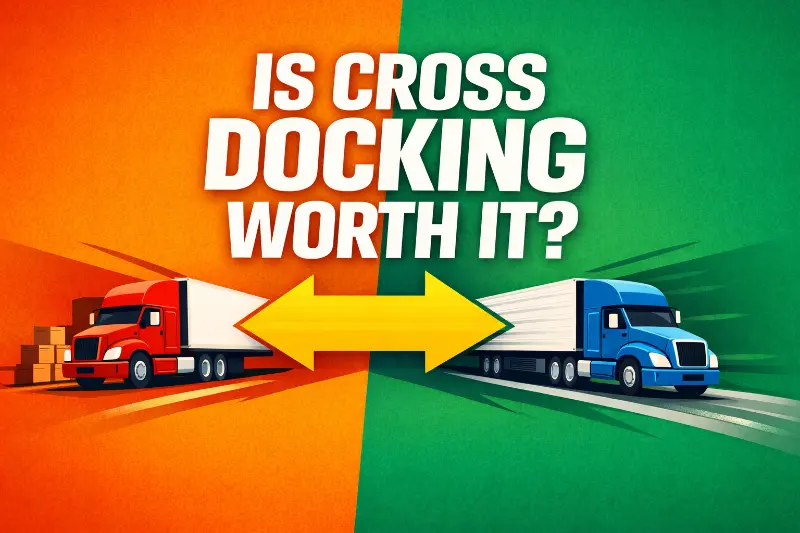
Cross docking is a logistics strategy where inbound shipments are unloaded at a facility, sorted, and immediately reloaded onto outbound vehicles with little or no time spent in storage. The goods cross from one dock door to another, hence the name, and the facility functions as a transfer point rather than a storage location.
The advantages of cross docking include increased supply chain efficiency, cost and time savings, and streamlined operations.
For operations teams and ecommerce brands evaluating their distribution network, the cross docking system is worth understanding not just as a definition but as a structural choice with real tradeoffs, often discussed at major logistics and fulfillment industry events. As a logistics strategy, it streamlines the movement of goods through centralized handling. It reduces inventory holding costs and accelerates delivery when conditions support it. When those conditions are not met, the absence of a storage buffer makes the entire network brittle.
Cross-docking typically requires less space and fewer resources for storage compared to traditional warehousing.
Additionally, cross-docking reduces the risk of product damage by minimizing manual handling compared to traditional warehousing operations.
How Cross Docking Works: Step by Step
A cross docking operation follows a compressed sequence where timing and coordination matter more than in traditional warehousing.
Inbound arrival. Trucks, containers, or other transport vehicles arrive at the cross docking terminal from suppliers, manufacturers, or upstream distribution centers. The physical layout of the facility is designed to handle simultaneous inbound and outbound activity, with separate inbound docks for receiving goods and a dedicated shipping dock for dispatching outbound shipments. This design helps prevent cross-traffic and streamlines the flow of goods.
Unloading and verification. Goods are unloaded at the receiving dock and immediately checked for accuracy and condition. This step involves scanning, labeling, and confirming quantities against the purchase order or advance shipping notice. In food and pharmaceutical supply chains, this is also where temperature compliance and shelf life are assessed. The verification step has to be fast, but it cannot be skipped. Errors caught here cost minutes. Errors that pass through undetected cost far more downstream.
Sorting and allocation. Items are sorted by destination. In pre-distribution cross docking, the destination of each item is already known before the truck arrives. Labels or documentation from the supplier designate where each unit is going, and the receiving team simply routes accordingly. In post-distribution cross docking, allocation decisions are made at the facility after arrival, which requires real-time demand data and routing logic to work correctly.
Staging and consolidation. Sorted goods move to staging areas near the outbound dock doors. Where multiple suppliers are contributing to the same outbound route, consolidation happens here. Shipments headed to the same retail outlet, distribution center, or region are grouped into outbound loads. By consolidating shipments, cross docking enables the use of fewer vehicles for outbound transport, reducing transportation costs and improving efficiency. This is where cross docking delivers one of its most significant cost advantages: outbound vehicles leave with full or near-full loads rather than partially loaded trucks making fragmented deliveries.
Outbound loading and departure. Consolidated shipments are loaded onto outbound vehicles and dispatched as part of outbound transport to their next destination. In a true cross docking operation, this entire sequence from inbound arrival to outbound departure completes within hours. Some operations target a maximum dwell time of under four hours. Others operate on a continuous flow basis where inbound and outbound vehicles are synchronized so goods essentially never stop moving.
This process enables a seamless inbound to outbound transfer of goods, with efficient management of incoming and outgoing vehicles through strategic dock placement and facility layout. The primary difference between cross-docking and traditional warehousing is the length of time products are stored in the facility—cross docking minimizes or eliminates storage time, while traditional warehousing involves longer-term storage.
Pre-Distribution vs. Post-Distribution Cross Docking
The distinction between these two approaches has meaningful operational implications.
In pre-distribution cross docking, the supplier or manufacturer assigns final destinations before the goods ship. When the truck arrives at the cross dock facility, the routing work is already done. This approach works best when demand is stable and predictable, and when the supplier relationship is tight enough to support coordinated labeling and documentation. It minimizes decision-making time at the facility and supports the fastest possible throughput.
In post-distribution cross docking, goods arrive at the facility without pre-assigned destinations. The allocation decision is made on-site, based on current inventory levels, store demand, or order data. This approach offers more flexibility but demands more from the facility’s technology and staff. Without a warehouse management system feeding real-time routing instructions, post-distribution cross docking quickly becomes a coordination problem.
Most ecommerce operations that adopt cross docking gravitate toward pre-distribution models because they offer more predictability, which is especially important for Amazon-focused 3PL shipping companies. Post-distribution is more common in large retail supply chains where demand signals are continuously updated and the technology infrastructure exists to act on them in real time.
The Impact on Inventory Holding Costs
The most straightforward financial case for cross docking is the reduction in inventory carrying costs and reducing inventory costs. When goods do not sit in storage, you are not paying for the space, labor, insurance, or capital tied up in that inventory.
Inventory holding costs in traditional warehousing typically run between 20 and 30 percent of inventory value annually, depending on the product category and the cost of warehouse space in your market. For high-velocity, predictable products, those holding costs add up without generating any operational value. The goods are simply waiting, leading to higher storage costs. Cross docking benefits include reducing storage costs, especially in industries like food, retail, automotive, chemicals, and pharmaceuticals, by minimizing storage time and enhancing efficiency.
Cross docking eliminates most of that wait time. Goods that transit a cross dock facility within hours rather than sitting in racked storage for days or weeks generate dramatically lower carrying costs per unit. For operations managing large volumes of consistent, fast-moving products, this difference has a material impact on gross margins. Cross docking benefits also include improved product handling by reducing the need for manual handling, which minimizes the risk of damage.
There is also an indirect benefit in capital efficiency. Inventory held in storage is capital that is not available for other uses. Faster throughput means faster inventory turns, which means the same working capital supports more revenue over a given period. Additionally, cross docking allows companies to optimize shipments, ensuring full truckloads and reducing environmental impact through fewer emissions, while careful management of carrier shipment exceptions prevents delays from undermining those gains.
Supply Chain Efficiency with Cross Docking
Cross docking is a powerful logistics strategy that can dramatically enhance supply chain efficiency for businesses of all sizes. By enabling the direct transfer of goods from inbound delivery vehicles to outbound vehicles with little or no storage time, cross docking reduces the need for traditional warehousing and associated warehousing services and the associated storage costs, labor costs, and inventory carrying costs. This streamlined approach allows companies to move products quickly and efficiently from suppliers to their final destination, supporting rapid delivery and better inventory management when combined with robust ecommerce fulfillment software.
One of the key ways cross docking boosts supply chain efficiency is by minimizing storage time and handling. Instead of goods sitting idle in a warehouse, they are sorted and consolidated at a cross docking facility and then shipped directly to retail stores, distribution centers, or customers. This direct transfer reduces operational costs and helps businesses respond swiftly to changes in demand, making it especially valuable for products with steady demand or short shelf lives.
There are several types of cross docking that support different supply chain needs. Pre-distribution cross docking involves sorting and allocating goods to their final destination before they arrive at the cross docking terminal, which is ideal for high-volume, predictable shipments and supports efficient inventory management. Post-distribution cross docking, on the other hand, allows allocation decisions to be made after goods arrive at the facility, providing flexibility for businesses that need to adapt to real-time demand fluctuations. Continuous cross docking takes efficiency a step further by maintaining a constant flow of goods through the cross dock warehouse, ensuring that products spend minimal time in the facility and are quickly loaded onto outbound vehicles.
The physical layout of a cross docking facility is designed to maximize efficiency, with multiple dock doors for simultaneous inbound and outbound shipments, ample staging areas for sorting, and optimized workflows that minimize handling. By reducing the number of touchpoints and storage time, cross docking reduces inventory costs, lowers the risk of product damage or obsolescence, and frees up capital that would otherwise be tied up in excess inventory.
Cross docking offers significant cost savings by reducing the need for warehouse storage and the labor required for inventory handling. It also helps businesses reduce transportation costs by consolidating shipments and ensuring outbound vehicles leave fully loaded, especially when leveraging innovative peer-to-peer order fulfillment services. This not only improves supply chain efficiency but also supports timely delivery and higher customer satisfaction—key factors in today’s competitive market for sellers using tools like Amazon Buy Shipping-integrated fulfillment.
In summary, cross docking is a logistics strategy that enables businesses to streamline their supply chain operations, reduce operational and inventory costs, and achieve faster, more reliable delivery. Whether using pre-distribution, post-distribution, or continuous cross docking, companies can leverage this approach to gain a competitive edge, optimize warehouse space, and meet evolving customer expectations with greater agility and efficiency.
When Cross Docking Makes Sense vs. Traditional Warehousing
Cross docking is not a universal improvement over traditional warehousing. It is a deliberate tradeoff that works well in specific conditions and creates fragility in others.
Cross docking performs best when:
- Demand is high-volume and predictable. Cross docking eliminates the buffer stock that absorbs demand variability. If you cannot forecast with confidence, the absence of safety stock becomes a liability rather than a cost saving.
- Products have short shelf lives or time-sensitivity. Perishable goods, seasonal items, and trend-sensitive products with a short shelf life all benefit from the faster throughput that cross docking enables. Reducing storage time preserves product quality and extends the effective selling window.
- Inbound shipments are already sorted or pre-labeled. Pre-distribution cross docking runs most efficiently when the supplier has done the allocation work upstream. If every inbound shipment requires extensive sorting at the facility, the labor savings from eliminating storage may be partially offset by increased handling time at the dock.
- Outbound routes are consolidated and consistent. Cross docking creates the most cost efficiency when outbound loads can be consolidated from multiple suppliers heading to the same destination. Fragmented outbound routes with small drops reduce the consolidation benefit.
- Industries such as department stores, retail, e-commerce, and manufacturing use cross docking to efficiently move goods through the supply chain and reduce costs. In manufacturing, cross docking supports just-in-time workflows by delivering components directly to production lines, reducing storage needs and waste.
You should use cross docking when you have fast-moving, time-sensitive shipments, reliable suppliers, and the ability to consolidate outbound routes. Specialized facilities are often used for efficient goods transfer in these scenarios.
Traditional warehousing is the better choice when:
- Demand is irregular or unpredictable. Safety stock exists specifically to absorb variability. Removing it in favor of cross docking eliminates your operational buffer and exposes the network to stockouts when demand spikes or supplier deliveries run late.
- Products have long shelf lives and slow velocity. The holding cost savings from cross docking are most significant for high-turn products. For slow-moving inventory, the coordination overhead of cross docking may not justify the cost reduction.
- Your supplier base is unreliable or fragmented. Cross docking depends on inbound shipments arriving on schedule. A supplier network with inconsistent lead times and frequent delays will regularly create situations where outbound vehicles are ready and waiting, but the inbound freight has not arrived.
- Traditional warehousing focuses on storage and inventory management, catering to longer-term stockholding needs.
It is important to note that a high initial investment is necessary to design and implement a functional cross-docking terminal, requiring specialized infrastructure.
The Real Coordination Risk in Cross Docking
Cross docking is sometimes described as a “lean” approach to distribution, and that framing is accurate in both the positive and negative sense of the word. Lean systems are efficient when operating as designed and fragile when a variable falls out of alignment.
The fundamental operational risk is timing. Cross docking requires inbound and outbound vehicles to be synchronized. Outbound trucks cannot load if inbound freight has not arrived. Inbound freight cannot unload efficiently if outbound capacity is not ready. When either side of that equation is disrupted, goods pile up in the staging area, and the cross dock facility starts behaving like an unplanned warehouse with none of the infrastructure for organized storage.
Demand forecasting errors compound this problem. Because cross docking operates with minimal buffer stock, any significant deviation between forecasted and actual demand has no inventory cushion to absorb it. An unexpected demand surge at a retail destination cannot be satisfied by pulling from safety stock at the cross dock. The problem travels upstream to procurement, which is a longer resolution path than simply releasing units from a reserve.
Labor and system dependencies are also concentrated risk points. A cross docking operation relies on warehouse management systems, carrier scheduling platforms, and supplier advance shipping notices functioning accurately in near-real time. A system outage, a missed ASN, or a carrier showing up outside their scheduled window introduces disruption that ripples through the entire flow for the duration of the shift.
For operations leaders evaluating cross docking, the question is not whether the cost savings are real. They are. The question is whether your supply chain has the predictability, supplier reliability, and technology infrastructure to sustain the coordination requirements consistently.
Cross Docking in Ecommerce Contexts
In ecommerce, cross docking appears in several practical scenarios that differ from traditional retail distribution.
One common application is inbound freight consolidation. An ecommerce brand sourcing from multiple suppliers can direct all inbound shipments to a cross docking facility where they are consolidated into optimized outbound loads to fulfillment centers or third-party logistics (3PL) locations. This reduces the number of inbound shipments each fulfillment location has to receive and process, cutting receiving labor costs and improving throughput at the destination.
Another application is commerce cross docking as a logistics strategy for online retailers. Products arriving in bulk from a manufacturer transit a cross dock facility where they are counted, labeled for Amazon or Walmart requirements, repackaged if necessary, and dispatched within 48 to 72 hours. The facility adds value during the brief dwell time rather than simply passing goods through, which is sometimes called a value-added cross dock model.
A third scenario is seasonal or promotional surge management. Rather than holding peak-season inventory in a primary fulfillment location at full storage cost, brands can stage inventory at a cross dock facility closer to the peak window and move it through into fulfillment centers rapidly as demand activates. This compresses the period during which peak inventory is accumulating holding costs at the more expensive fulfillment location.
One of the key benefits of cross docking for ecommerce brands is faster, expedited shipping options. By moving goods quickly from suppliers through cross dock facilities to fulfillment centers, brands can reduce delivery times and better meet customer expectations for rapid order fulfillment.
Overall, cross docking supports supply chain management in ecommerce by optimizing the flow of goods, reducing costs, and improving delivery speed throughout the logistics process, especially when paired with specialized order fulfillment services for ecommerce companies.
Frequently Asked Questions
What is cross docking in simple terms?
Cross docking is a logistics method where goods arrive at a facility, are sorted, and are immediately loaded onto outbound vehicles without being placed into storage. The facility acts as a transfer point rather than a warehouse. The goal is to reduce handling time, eliminate storage costs, and accelerate delivery to the final destination.
What is the difference between pre-distribution and post-distribution cross docking?
In pre-distribution cross docking, the final destination of each item is determined before the goods arrive at the facility, typically by the supplier. In post-distribution cross docking, allocation decisions are made at the cross dock after arrival, based on current demand data. Pre-distribution is faster and simpler to execute. Post-distribution offers more flexibility but requires better technology and real-time data.
What are the biggest risks of cross docking?
The primary risks are timing failures and demand forecasting errors. Cross docking eliminates buffer stock, so any disruption to inbound supply or unexpected demand variability has no inventory cushion to absorb it. Carrier delays, supplier timing failures, and system outages can all cause goods to pile up at the facility and disrupt outbound schedules.
Is cross docking suitable for ecommerce operations?
It depends on the product and demand profile. Cross docking works well for high-velocity, predictable SKUs and products with short shelf lives. It is less suitable for brands with irregular demand, a fragmented supplier base, or limited technology infrastructure to manage real-time coordination between inbound and outbound schedules.
How does cross docking reduce inventory holding costs?
By eliminating or minimizing the time goods spend in storage, cross docking removes the space, labor, insurance, and capital costs associated with holding inventory. Goods that transit a cross dock facility in hours instead of sitting in racked storage for days or weeks generate substantially lower carrying costs per unit, which directly improves margin on high-volume products.
What infrastructure is required to run a cross docking operation?
A cross docking facility needs a physical layout with separate inbound and outbound dock doors, staging areas between them, and sufficient floor space to sort and consolidate goods without creating bottlenecks. On the technology side, a warehouse management system, carrier scheduling integration, and reliable advance shipping notices from suppliers are all necessary to maintain the timing coordination that cross docking depends on.
Written By:

Indy Pereira
Indy Pereira helps ecommerce brands optimize their shipping and fulfillment with Cahoot’s technology. With a background in both sales and people operations, she bridges customer needs with strategic solutions that drive growth. Indy works closely with merchants every day and brings real-world insight into what makes logistics efficient and scalable.

Turn Returns Into New Revenue
Related Articles
Walmart Officially Allows Amazon Multi-Channel Fulfillment (MCF)
Big news for multichannel sellers: Walmart now officially allows Amazon Multi-Channel Fulfillment (MCF), Amazon’s service for using its fulfillment network to ship orders from mult...
Why Small Ecommerce Brands Are Winning with AI (While Enterprises Struggle)
Conventional wisdom says large companies should dominate AI adoption.
Top 12 Shipping Strategies For Making Free Shipping Profitable
For ecommerce sellers, shipping is more than just getting a package from point A to point B — it’s the invisible backbone, quietly shaping customer satisfaction, operational costs,...
FCA Incoterms Explained: Responsibilities, Risks, and Real-World Use

In this article
19 minutes
- Introduction to Incoterms
- What FCA Free Carrier Actually Means
- When Risk Actually Transfers Under FCA
- Seller Responsibilities Under FCA
- Buyer Responsibilities Under FCA
- Modes of Transportation Under FCA
- FCA vs. FOB: A Comparison That Matters
- Choosing the Right Incoterm for Your Shipment
- A Real-World Ecommerce Import Example
- Where FCA Goes Wrong in Practice
- Benefits and Challenges of Using FCA
- Best Practices for Success with FCA
- Frequently Asked Questions
FCA Incoterms, short for Free Carrier, is one of eleven standardized trade terms published by the International Chamber of Commerce that define exactly when risk and cost transfer from seller to buyer in an international shipment. For ecommerce founders and operations teams sourcing inventory overseas, FCA is increasingly the term they will encounter on supplier quotes, and the one most likely to be misapplied. FCA means the seller delivers goods to a carrier at a named place of delivery, and this delivery condition is a key point of the Incoterm, as it marks the transfer of risk and responsibility from seller to buyer.
The practical stakes are real. Get the named place of delivery wrong, misread who is responsible for loading, or assume FCA works the same way as FOB, and you can end up with uninsured liability exposure in transit, unexpected origin charges on your invoices, or customs complications that hold your freight at port. Free carrier FCA can be used across all modes of transport, including sea, air, road, and rail. FCA allows parties to specify exactly where the handover of goods will occur, providing flexibility in complex supply chains. This guide breaks down how FCA actually works, where the handoff happens, and what it means for your landed costs and risk profile.
Introduction to Incoterms
In the world of international trade, clear communication is essential to avoid costly misunderstandings. That’s where Incoterms—short for International Commercial Terms—come into play. These internationally recognized trade terms, published by the International Chamber of Commerce, define the responsibilities of buyers and sellers for the delivery of goods under sales contracts. One of the most widely used Incoterms is FCA, or Free Carrier, which specifies exactly when the seller’s responsibility for the goods ends and the buyer’s begins. By establishing who arranges transport, who handles export clearance, and at what point risk transfers to the buyer or their carrier, Incoterms like FCA help streamline the shipping process and reduce disputes. For any business involved in international trade, understanding the meaning and implications of terms such as free carrier is crucial for ensuring smooth, efficient, and secure delivery of goods.
What FCA Free Carrier Actually Means
Under FCA, the seller delivers goods to a carrier or another party nominated by the buyer at a named place of delivery. Once delivery is made at that named place, risk and cost transfer to the buyer completely. From this point, the buyer is responsible for all activities and costs, including main carriage, import clearance, destination charges, and final delivery. This highlights the buyer’s responsibility for the goods after delivery at the named place.
The seller retains responsibility for two things before the handoff: completing export formalities and getting the goods to the named place. The seller’s responsibilities under FCA include export clearance and delivering the goods to the carrier at the specified location, known as the seller’s place. That includes obtaining any required export licenses, preparing the commercial invoice and packing documentation, and ensuring the goods are cleared for export in the country of origin. The seller does not arrange or pay for main carriage.
The named place is where the specific details matter. If the named place is the seller’s premises or warehouse, the seller is responsible for loading the goods onto the buyer’s collecting vehicle. The seller’s premises can be a designated export terminal, warehouse, or other location within the seller’s country where the goods are handed over to the carrier, and where risks transfer from seller to buyer. If the named place is anywhere else, such as a freight forwarder’s facility, a container terminal, or an airport cargo depot, the seller delivers the goods there but is not responsible for loading. The buyer, through their nominated carrier, takes possession and bears any unloading or reloading costs at that location. Under FCA terms, the buyer must specify the precise point of delivery in the contract of sale or carriage, allowing both parties to clearly define where the handover of goods will occur.
This distinction is not a footnote. It directly affects cost allocation and, more critically, when your liability clock starts running. Understanding these shipping terms is essential, as they define the responsibilities and transfer of risk between buyer and seller in international trade.
When Risk Actually Transfers Under FCA
Risk transfers the moment the seller makes delivery at the named place. This means that risk passes to the buyer when the goods are handed over to the first carrier at the specified location. If the goods are damaged, lost, or destroyed after that point, the loss belongs to the buyer.
In a containerized ocean freight scenario, this typically means risk transfers from the seller to the buyer when the goods are loaded onto the buyer’s chosen transport at the origin terminal or freight forwarder’s warehouse, not when the container is loaded on the vessel. That is a meaningful difference from FOB, where risk transfers when goods cross the ship’s rail. Under FCA, by the time your cargo is physically on a vessel heading across the Pacific, you have already owned the risk for days or potentially weeks.
This is why cargo insurance is not optional under FCA, even though neither the Incoterms rules nor the sales contract technically requires it. The buyer takes on risk at an early point in the journey and carries it through the entire main carriage. Without insurance coverage starting at the named place, any incident during ocean or air transit creates an unhedged loss.
Clear communication and thorough planning are essential for successfully implementing FCA terms in shipping processes and for minimizing costly carrier shipment exceptions that can delay delivery and increase operational risk, especially for ecommerce brands managing Amazon orders where Amazon Buy Shipping integration for streamlined order fulfillment can help automate labels and improve tracking.
Seller Responsibilities Under FCA
The seller’s obligations under FCA Incoterms are defined and limited. They include:
- Preparing the goods as described in the sales contract and providing a commercial invoice
- Providing all necessary documentation for export, including invoices and export licenses
- Packaging and marking the goods appropriately for international transport
- Ensuring goods are properly packed for export, complying with legal requirements of the exporting country and buyer specifications
- Obtaining all required export licenses and completing export clearance in the country of origin
- Managing export customs clearance, including obtaining necessary licenses or permits
- Delivering the goods to the named place of delivery by the agreed date
- Loading the goods if the named place is the seller’s own premises
- Providing proof of delivery to the buyer confirming handoff to the nominated carrier
The seller must ensure the goods are properly packaged and meet all export requirements before delivery under FCA terms.
Once those obligations are met, the seller has fulfilled their responsibilities entirely. They have no further obligation for transport costs, insurance, import duties, or what happens to the goods in transit.
Buyer Responsibilities Under FCA
The buyer carries the heavier operational load under FCA. Their responsibilities begin at the named place and extend through the entire remainder of the journey. The buyer is responsible for arranging collection, paying for onward transport, and handling all import procedures once the goods reach the specified location:
- Nominating a carrier and providing the seller with sufficient notice so the handoff can be arranged
- Arranging and paying for main carriage from the named place to the final destination
- Bearing all risk from the moment of delivery at the named place
- Handling import clearance in the destination country, including paying applicable import duties, taxes, and fees
- Arranging insurance coverage for the main carriage and destination leg
- Paying for any unloading, storage, or terminal charges at the destination
- Under FCA, the buyer assumes responsibility for transport costs beyond the delivery point
- The buyer must arrange for transport and is responsible for all import procedures once the goods reach the specified location under FCA terms
For ecommerce brands importing from overseas manufacturers, this is significant. Under FCA, you are not just receiving a shipment. You are managing the freight from the point of origin export, which means you need a reliable freight forwarder in place, a clear carrier arrangement, multi-carrier shipping software for ecommerce to orchestrate labels and routing across providers, and insurance that activates at the correct moment.
Modes of Transportation Under FCA
One of the key strengths of FCA (Free Carrier) is its adaptability across different modes of transport. Whether your goods are moving by road, rail, air, or sea, FCA can be applied to suit the logistics process. This flexibility is especially valuable for multimodal shipments, where cargo may be transferred between several types of carriers before reaching its final destination. Under FCA, the seller is responsible for delivering the goods to the carrier at the agreed location—this could be the seller’s premises, a forwarder’s warehouse, an airport cargo terminal, or a seaport. The choice of the named place depends on the transport mode and the agreement between buyer and seller. Once the goods are delivered to the carrier at the specified location, the buyer assumes responsibility for the shipment, including all subsequent transportation costs and risks. Understanding how FCA works with different carriers and transport modes allows both parties to plan effectively and avoid unexpected complications in international trade.
FCA vs. FOB: A Comparison That Matters
FOB, or Free On Board, is the Incoterm that FCA is most frequently confused with and most frequently replaced. Understanding the difference has real operational and financial consequences.
FCA and FOB differ in that FOB applies only to sea shipments and requires the seller to load goods onto a vessel, while FCA can be used for multiple transport modes and the buyer is responsible for loading. Under FOB, risk transfers when goods are loaded on board the nominated vessel at the port of export. The seller handles delivery to the port and loading onto the ship. The buyer takes over once the goods are on board.
Under FCA, risk can transfer well before the vessel is involved. If the named place is a container terminal, risk shifts when the goods arrive at the terminal, which may be days before the ship departs. If the named place is the seller’s factory, risk shifts even earlier. In this case, the buyer may be responsible for loading the goods onto the buyer’s vehicle at the seller’s premises, and risk transfers at that point.
The International Chamber of Commerce now explicitly recommends FCA over FOB for containerized cargo. The reasoning is practical: in modern container shipping, goods often sit in a terminal or are handled by a freight forwarder before they are ever loaded on a vessel. FOB creates a gap where neither party clearly owns the risk during that intermediate period. FCA eliminates that ambiguity by tying the risk transfer to the actual delivery event, whatever that is, rather than to the vessel loading.
Despite this guidance, many importers and exporters, particularly those sourcing from China, still default to FOB out of habit. Using FOB on containerized shipments introduces contractual ambiguity that FCA was specifically designed to resolve. If your supplier quotes FOB and you are shipping in containers, it is worth understanding whether FCA on the same named location would actually serve you better.
The other term worth knowing in comparison is EXW, or Ex Works. Under EXW, the seller’s only obligation is to make goods available at their own premises. The buyer handles everything from that point, including export clearance. EXW places the maximum responsibility on the buyer. FCA allows parties to specify exactly where the handover of goods will occur, unlike EXW, which typically requires the seller to deliver at their own premises. FCA is more flexible than EXW because it can be used for various transport modes, while EXW is primarily used for domestic sales. FCA requires the seller to deliver goods to a location specified by the buyer, while EXW transfers risk to the buyer as soon as the goods are ready for loading at the seller’s premises. FCA is often recommended over EXW for international transactions due to the complexities involved in export clearance and logistics.
Other Incoterms are also relevant for comparison. Under “carriage paid” (CPT), the seller is responsible for transportation costs up to a specified destination, but risk transfers to the buyer once the goods are handed over to the carrier, unlike FCA where the seller transports the goods to the named place but does not arrange main carriage. “Delivered duty paid” (DDP) means the seller bears all costs and risks, including import duties, until the goods reach the buyer’s premises, which is a much greater responsibility than under FCA. “Free alongside ship” (FAS) requires the seller to place goods alongside the vessel at the port of shipment, with risk transferring at that point, while FCA allows for more flexibility in the delivery location. Under “insurance paid” terms like CIP or CIF, the seller must provide insurance coverage for the goods during transit, whereas FCA does not require the seller to provide insurance. “Place unloaded” (DPU) means the seller is responsible for delivering and unloading the goods at the named destination, while under FCA, unloading is not the seller’s responsibility.
When using FCA, both parties need to agree on specific details like timing, documentation requirements, and how the transfer will take place under FCA terms. It is essential that the parties agree on these contractual arrangements to avoid misunderstandings and ensure smooth transactions.
Choosing the Right Incoterm for Your Shipment
Selecting the right Incoterm is a critical decision in any international transaction, as it determines how risk, costs, and responsibilities are divided between the buyer and seller. FCA (Free Carrier) is often chosen when the seller wants to deliver goods to a carrier at a specified location, allowing risk to transfer to the buyer at that point. When deciding which Incoterm to use, consider factors such as the mode of transport, the level of control each party wants over the shipping process, and the point at which risk and costs shift from seller to buyer. For example, FCA free carrier terms are ideal when the buyer wants to manage the main carriage and handle import clearance, while the seller is responsible for export clearance and delivering goods to the agreed location. By understanding how risk transfers and costs are allocated under each Incoterm, businesses can structure their contracts to protect their interests and ensure a smooth, efficient delivery process in international trade.
A Real-World Ecommerce Import Example
An ecommerce brand based in the US is sourcing a private-label product from a manufacturer in Shenzhen. The purchase order is written under FCA terms, with the named place specified as the freight forwarder’s warehouse in Shenzhen.
Here is how the responsibilities play out:
The manufacturer prepares the goods, obtains the necessary export declarations, and delivers the shipment to the named freight forwarder’s facility in Shenzhen. At the moment the goods are checked in at that warehouse, risk transfers to the US brand. The manufacturer’s obligation is complete.
From that point, the US brand’s freight forwarder takes over. They arrange consolidation or full container load booking, coordinate ocean freight to the destination port, and handle the origin terminal charges at the port of departure. The US brand’s customs broker then manages import clearance when the container arrives in the US, paying any applicable duties and taxes.
If the container sustains damage during the Pacific crossing, that is entirely the US brand’s loss, because risk transferred in Shenzhen before the ship ever left port. If the brand did not arrange cargo insurance starting at the Shenzhen freight forwarder facility, they have no coverage for the transit loss.
The practical implication: the moment you agree to FCA terms, your logistics chain needs to be operational before the goods even leave the seller’s country. That means a freight forwarder relationship in the origin country or at least at the named place, a confirmed carrier booking, and cargo insurance with the right activation point.
Where FCA Goes Wrong in Practice
Most FCA problems stem from two sources: an imprecise named place and a buyer who is not operationally ready to take control at the handoff.
An imprecise named place, “Shenzhen” rather than a specific terminal address or forwarder facility, creates immediate ambiguity. If the contract does not specify the exact delivery point, disputes arise over whether the seller fulfilled their obligation and exactly when risk transferred. This is not hypothetical. Freight claims and payment disputes in international trade frequently trace back to a vague named place in the original contract.
A buyer who is not ready at handoff creates a different class of problem. Under FCA, if the buyer fails to nominate a carrier or fails to give the seller timely notice of the carrier details, risk can pass to the buyer anyway, from the agreed delivery date. Being unprepared does not protect you from the risk transfer.
For operations teams managing multiple suppliers under FCA terms, the operational checklist before any shipment should confirm: the exact named place is in the contract with a full address, the freight forwarder is confirmed and has the booking details, cargo insurance is in place from the named place forward, and the commercial invoice reflects the correct Incoterm and delivery point.
Benefits and Challenges of Using FCA
FCA offers several advantages for both buyers and sellers in international trade. Its flexibility allows it to be used with any mode of transport, making it ideal for multimodal shipments and complex logistics chains. By clearly defining the point where the seller delivers goods and the buyer assumes responsibility, FCA reduces ambiguity and helps prevent disputes over risk and cost allocation. Sellers benefit from a minimum obligation, as their responsibilities end once the goods are delivered to the carrier at the named place, with export clearance completed. Buyers, on the other hand, gain greater control over the main carriage and can choose their preferred carrier and insurance coverage.
However, FCA also presents challenges. The need for precise contract terms—especially the exact named place of delivery—is critical, as any vagueness can lead to confusion about when risk transfers. Buyers must be operationally ready to take over at the handoff point, including arranging transportation, handling import clearance, and securing insurance from the moment risk passes. If these details are overlooked, the buyer may face unexpected costs or liability for loss or damage. Understanding both the benefits and potential pitfalls of FCA is essential for leveraging this Incoterm effectively in international transactions.
Best Practices for Success with FCA
To maximize the advantages of FCA and avoid common pitfalls, both buyers and sellers should follow a set of best practices. First, always specify the named place of delivery with complete accuracy in the sales contract—include the full address or facility name, not just a city or region. Sellers should ensure all export formalities, including obtaining export licenses and completing customs documentation, are handled before delivery. Buyers must nominate their carrier in advance and provide clear instructions to the seller to ensure a smooth handoff. It’s also essential for buyers to arrange insurance coverage that starts from the named place, as risk transfers at that point. Both parties should confirm that all responsibilities—such as loading charges, transportation costs, and customs formalities—are clearly understood and reflected in the contract. By following these best practices, businesses can use FCA free carrier terms to streamline their international trade operations, minimize risk, and ensure successful delivery of goods to their final destination.
Frequently Asked Questions
What does FCA mean in shipping?
FCA stands for Free Carrier. It is an Incoterm under which the seller delivers goods, cleared for export, to a carrier or other party nominated by the buyer at a specified named place. Risk and cost transfer to the buyer at that delivery point.
When does risk transfer under FCA Incoterms?
Risk transfers the moment the seller delivers the goods to the buyer’s nominated carrier at the named place of delivery. If the named place is the seller’s premises, risk transfers on loading. If it is any other location, risk transfers when the goods are made available to the carrier at that location.
What is the difference between FCA and FOB?
FOB transfers risk when goods are loaded on board a vessel at the port of export. FCA transfers risk at the named place of delivery, which is typically earlier in the process and does not depend on vessel loading. The International Chamber of Commerce recommends FCA over FOB for containerized cargo because it eliminates ambiguity during the pre-vessel handling period.
Who handles export clearance under FCA?
The seller is responsible for export clearance under FCA. This includes obtaining any required export licenses and completing customs formalities in the country of origin. This is one of the key differences between FCA and EXW, where the buyer handles export formalities.
Does FCA require cargo insurance?
Neither party is required to carry insurance under FCA Incoterms. However, because risk transfers to the buyer at an early stage in the journey, typically before main carriage begins, buyers are strongly advised to arrange cargo insurance covering the goods from the named place of delivery onward.
Is FCA suitable for ocean freight and container shipments?
Yes. FCA is the ICC’s recommended term for containerized cargo and multimodal shipments. Unlike FOB, which is a maritime-only term, FCA applies to all modes of transport and is specifically designed to handle scenarios where goods pass through a terminal, freight forwarder facility, or inland hub before being loaded on a vessel.
What happens if the named place is not specified precisely in the contract?
An imprecise named place creates contractual ambiguity over when risk transfers and whether the seller has fulfilled their delivery obligation. This is one of the most common sources of disputes under FCA. The contract should always specify the full address or facility name of the named place, not just a city or region.
Written By:
Indy Pereira
Indy Pereira helps ecommerce brands optimize their shipping and fulfillment with Cahoot’s technology. With a background in both sales and people operations, she bridges customer needs with strategic solutions that drive growth. Indy works closely with merchants every day and brings real-world insight into what makes logistics efficient and scalable.
Turn Returns Into New Revenue
Related Articles
Walmart Officially Allows Amazon Multi-Channel Fulfillment (MCF)
Big news for multichannel sellers: Walmart now officially allows Amazon Multi-Channel Fulfillment (MCF), Amazon’s service for using its fulfillment network to ship orders from mult...
Why Small Ecommerce Brands Are Winning with AI (While Enterprises Struggle)
Conventional wisdom says large companies should dominate AI adoption.
Top 12 Shipping Strategies For Making Free Shipping Profitable
For ecommerce sellers, shipping is more than just getting a package from point A to point B — it’s the invisible backbone, quietly shaping customer satisfaction, operational costs,...
Consignee Meaning: What It Is and Why It Matters in Shipping

The consignee is the person or entity named on a shipping document as the designated recipient of a shipment. The consignee is also called the receiver, client, or customer in different contexts. It sounds simple, but in practice the consignee field is one of the most error-prone data points in shipping, and mistakes here do not stay contained. They ripple outward into delivery failures, customs holds, reshipment costs, and frustrated customers.
For ecommerce operations and logistics teams managing high shipment volumes, getting consignee details right is not a documentation formality. It is a core operational discipline. It is important to correctly identify the consignee in shipping documents, as errors can lead to significant legal and logistical issues. This article explains what consignee meaning covers in real shipping contexts, how it differs from related parties, and where things tend to go wrong.
In consignment shipping, the consignee is the party to whom goods are consigned, and ownership may be transferred depending on the contract terms; for example, furniture and home brands selling on Wayfair often rely on Wayfair-focused 3PL order fulfillment partners to manage these consignee relationships at scale.
Bills of lading and other shipping bills are essential documents that specify the consignee’s identity and legal rights. The consignee’s identity is specified in the shipping documents, and the Bill of Lading (BOL) is a crucial document signifying the consignee’s right to receive the goods.
What Consignee Means in Shipping
The consignee is the party named on the bill of lading or other shipping documents to receive the goods at the destination. They are the endpoint of the shipment. The consignee is the person receiving the goods or commodities being shipped to them, sometimes called the receiver. Depending on the terms of the sale and the shipping contract, the consignee may also be the legal owner of the goods once they are delivered and payment is completed. The consignee may be the importer of record, but that is not always the case. The consignee can also be an agent, a warehouse, or a bank acting on behalf of the buyer.
In most ecommerce transactions, the consignee is the customer. In B2B freight, the consignee might be a warehouse, a distribution center, or a retail buyer. Many merchants rely on external partners for storage and delivery, choosing between traditional 3PLs and peer-to-peer ecommerce fulfillment networks to ensure the right consignee data flows through every handoff. In some supply chain arrangements, the consignee is an intermediary, such as a freight forwarder, who then arranges the final leg of delivery to the actual end recipient. For example, in a typical transaction, goods are sold by the consignor to the consignee, who is usually the buyer. The ownership of the goods is transferred to the consignee only when they have paid the consignor in full. Until payment is made, the consignee is only a receiver and not the owner of the goods.
The consignor is the person or entity sending the goods, while the consignee is the one receiving them. A company can be both the consignor and consignee during internal inventory transfers between different warehouses. What matters operationally is this: the consignee listed on the shipping document is the entity the carrier is authorized to deliver to. If that information is wrong, incomplete, or outdated, the carrier cannot complete the delivery as instructed. Everything downstream from that point becomes a problem to resolve, usually at cost.
Consignee vs. Shipper vs. Notify Party
These three terms appear together across shipping documents, and they are often confused. Understanding how they differ prevents errors at the documentation stage before a shipment ever moves, especially when data is flowing across multiple ecommerce platforms, OMS tools, and shipping integrations. The term ‘consignee’ is subject to specific legal definitions in shipping contracts and bills of lading, which set out the contractual conditions and obligations for each party.
The shipper is the party that sends the goods. In most ecommerce and wholesale contexts, this is the seller, supplier, or manufacturer. The shipper prepares the shipment, arranges the carrier, generates the bill of lading, and is responsible for export documentation. The shipper is the origin party.
The consignee is the destination party. They receive the goods, inspect the shipment, and in international shipping, are often responsible for customs clearance and payment of applicable duties. The consignee’s identity is specified in the shipping documents, which is essential for the delivery process. Only the named consignee or their authorized agent can legally claim the goods from the carrier. The consignee can also be an agent, warehouse, or bank acting on behalf of the buyer. Once the consignee accepts delivery and signs the bill of lading, responsibility for the goods transfers to them. The consignee’s rights and responsibilities are subject to the terms and conditions outlined in the bill of lading and other shipping documents. For example, straight bills of lading do not confer title to the goods but require delivery to the named consignee. Documentation, especially bills of lading, is key to resolving disputes in consignment shipping, as it establishes the legal basis for claims and delivery.
The notify party is a third entity listed on shipping documents who should be informed when the shipment arrives, but who is not necessarily authorized to claim the goods. The notify party is often a customs broker, freight forwarder, or buying agent. They play a coordination role, helping ensure the consignee is ready to receive and that customs paperwork is in order.
A key distinction: only the consignee can legally claim the shipment from the carrier. The notify party has no claim to the goods. When these roles get mixed up in documentation, it creates situations where the right party cannot access the shipment and the wrong party is being contacted for clearance.
Where Consignee Errors Actually Happen
The consignee field seems like a simple data entry point, which is exactly why it gets treated carelessly. In high-volume shipping environments, consignee errors are more common than most teams realize, and they tend to cluster in predictable places.
Outdated address records are the most frequent source of failure. A customer moves, a warehouse relocates, or a business changes its delivery address, and the update does not propagate consistently across order management systems, carrier accounts, and shipping templates. The shipment goes to the old address. If no one is there to receive it, it gets returned or held.
Name mismatches in commercial or customs documents create clearance issues on international shipments. If the consignee name on the bill of lading does not match the name on the commercial invoice or import license, customs authorities at the destination can flag or hold the shipment pending clarification. What should have been a routine clearance becomes a multi-day delay with broker fees attached. Accurate documentation is also essential to prevent fraudulent individuals from attempting to claim goods in place of the legitimate consignee, as the consignee’s identity is specified in the shipping documents.
Dropshipping and multi-party order flows introduce structural confusion. When a brand sells through a marketplace or uses Shopify dropshipping and other fulfillment options or partners with Shopify-focused fulfillment services that streamline nationwide shipping, the order is fulfilled by a supplier, and the end customer is someone the supplier has never interacted with, the consignee information has to pass accurately through multiple handoffs. Each handoff is a point where the data can get corrupted, truncated, or simply lost.
B2B deliveries to large facilities create a different class of problem. A warehouse or distribution center receiving hundreds of shipments daily typically requires a specific contact name, dock number, or purchase order reference on the delivery. When the consignee record only has a company name and street address, carriers attempt delivery and fail because there is no one to direct them. Specifying the correct place for delivery in shipping documents is crucial to ensure the goods reach the intended recipient without unnecessary delays. Redelivery attempts cost money, and missed delivery windows in B2B contexts can trigger penalty clauses, which is why Nordstrom vendors using specialized 3PLs for its Direct Drop Ship program pay close attention to consignee data and routing guides.
The Last-Mile Consequences of Bad Consignee Data
Last-mile delivery is where consignee errors become visible and expensive. It is important for the consignee to be correctly identified, as they are financially responsible for the receipt of a shipment as per the contract of carriage. A shipment can move through an entire international supply chain without issue and then fail at the final step because the delivery address is wrong or the recipient is unreachable, which is why many ecommerce brands lean on peer-to-peer order fulfillment networks that improve last-mile performance.
Failed first-attempt deliveries have direct cost implications and often show up as carrier shipment exceptions that must be resolved quickly. Carriers charge redelivery fees. For parcel shipping at scale, those fees accumulate quickly. Beyond the direct cost, each failed delivery generates a customer service interaction, a potential refund or replacement request, and a hit to the customer experience that affects repeat purchase likelihood.
For international shipments, the consequences of consignee errors extend further. The consignee typically serves as the Importer of Record, responsible for customs clearance and regulatory compliance, and is often responsible for paying freight charges, import duties, and taxes. In international shipping, the consignee acts as the ‘importer of record’ and must manage customs compliance. A shipment held at customs because the consignee name is inconsistent across documents incurs storage fees at the port or airport facility while the discrepancy is being resolved. In some cases, if the issue is not resolved within a defined window, goods can be seized or returned at the shipper’s expense.
In ecommerce, where delivery speed and reliability are part of the product promise, any systemic failure in consignee data accuracy shows up in reviews, chargeback rates, and customer lifetime value metrics. Many Shopify brands address this by choosing 3PL partners tailored to their store’s fulfillment needs so that address, contact, and order data stay synchronized. It is rarely attributed to “bad data,” but that is frequently the root cause.
How to Reduce Consignee Errors in Practice
The fix for most consignee-related delivery failures is not sophisticated. It is consistent data hygiene and process discipline applied at the right points.
- Validate address data at the point of entry. Address validation tools integrated into checkout or order management systems catch formatting errors and undeliverable addresses before a shipment is created, not after a failed delivery.
- Standardize consignee fields across systems. If your order management system, warehouse management system, and carrier portal each hold a version of customer address data, establish a single source of record and enforce synchronization. Discrepancies between systems are where errors hide.
- Include contact information on every shipment. A phone number or email for the consignee gives carriers a path to resolve delivery issues in real time rather than defaulting to a failed attempt and a return scan.
- Audit international shipping documents for consistency. The consignee name and address should match exactly across the bill of lading, commercial invoice, and packing list. Even minor differences, abbreviated company names, missing suite numbers, or inconsistent entity names, can trigger customs holds.
- Review consignee records on B2B accounts periodically. Warehouse addresses, dock contacts, and delivery instructions change. A quarterly review of consignee records for high-volume B2B customers prevents the compounding effect of delivering to outdated information across hundreds of shipments.
In addition to maintaining accurate records, the consignee plays a crucial role in accepting and inspecting goods upon receipt. The consignee is responsible for inspecting the goods to ensure they are in good condition and must sign the bill of lading to legally receive them. By signing the Bill of Lading, the consignee officially accepts the shipment and confirms it arrived in good condition. If the consignee refuses to accept the goods, the shipment may be returned to the seller or incur storage charges. Once the goods arrive, the consignee assumes responsibility for them, including arranging further handling or distribution.
Frequently Asked Questions
What does consignee mean in shipping?
The consignee is the person or entity named on a shipping document as the designated recipient of a shipment. The consignee is the person receiving the goods, authorized to accept delivery and, depending on contract terms, becomes the legal owner of the goods upon receipt.
What is the difference between a consignee and a shipper?
The shipper is the party that sends the goods, typically the seller or supplier. The consignee is the party that receives them. They represent opposite ends of the shipment transaction, with the carrier moving goods between them.
For example, if Company A in China sells electronics to Company B in the USA, Company A is the shipper and Company B is the consignee. Company A arranges for the goods to be shipped, and Company B receives the goods upon arrival, much like Amazon sellers that partner with specialized Amazon 3PL shipping companies for reliable fulfillment so the right consignee gets the shipment on time.
What is the difference between a consignee and a notify party?
The consignee is the party authorized to claim and receive the goods. The notify party is an additional contact listed on shipping documents who receives updates about the shipment, such as arrival notifications, but has no legal right to claim the cargo.
Can a consignee be different from the buyer?
Yes. In many logistics arrangements, the consignee is a warehouse, freight forwarder, or distribution center rather than the end buyer. The buyer and the consignee can be the same entity, but they do not have to be.
What happens if consignee information is incorrect on a shipment?
Incorrect consignee details can result in failed delivery attempts, redelivery fees, customs holds on international shipments, and shipments being returned to the sender. The specific consequence depends on how far into the delivery process the error is caught.
Why does consignee accuracy matter for last-mile delivery?
Last-mile delivery relies entirely on the consignee record to route and complete the shipment. An incorrect name, address, or contact number means the carrier cannot complete delivery as instructed. At scale, even a small error rate in consignee data generates meaningful costs through failed deliveries, reshipments, and customer service volume.
Written By:
Indy Pereira
Indy Pereira helps ecommerce brands optimize their shipping and fulfillment with Cahoot’s technology. With a background in both sales and people operations, she bridges customer needs with strategic solutions that drive growth. Indy works closely with merchants every day and brings real-world insight into what makes logistics efficient and scalable.
Turn Returns Into New Revenue
Related Articles
Walmart Officially Allows Amazon Multi-Channel Fulfillment (MCF)
Big news for multichannel sellers: Walmart now officially allows Amazon Multi-Channel Fulfillment (MCF), Amazon’s service for using its fulfillment network to ship orders from mult...
Why Small Ecommerce Brands Are Winning with AI (While Enterprises Struggle)
Conventional wisdom says large companies should dominate AI adoption.
Top 12 Shipping Strategies For Making Free Shipping Profitable
For ecommerce sellers, shipping is more than just getting a package from point A to point B — it’s the invisible backbone, quietly shaping customer satisfaction, operational costs,...
How eBay Shipping Really Works: Local Pickup, Guaranteed Delivery, and Advanced Shipping Rules
In this article
24 minutes
- How eBay determines estimated delivery dates (and why it matters)
- The difference between shipping service and delivery promise
- How eBay Guaranteed Delivery works operationally
- Local pickup rules, eligibility, and common mistakes
- Understanding international shipping on eBay
- Advanced shipping rules and how sellers misconfigure them
- Handling exceptions, delays, and buyer expectations
- Why automation and rule discipline matter at scale
- Frequently Asked Questions
eBay shipping performance is governed less by carrier speed and more by how sellers configure shipping rules, delivery promises, and fulfillment options. When a seller experiences late deliveries, defects, or buyer complaints about shipping, the root cause is almost always upstream of the carrier. It traces back to handling time settings, misconfigured shipping service selections, incorrect package dimensions, or advanced shipping rules that create delivery promises the seller cannot meet. Understanding how eBay calculates estimated delivery dates and enforces shipping performance is essential for any seller operating at scale, because the platform’s defect system penalizes sellers whose shipments arrive after the promised date regardless of whose fault the delay actually was.
How does shipping work on eBay? Shipping costs are calculated based on item weight and dimensions, often using eBay’s shipping calculator or flat-rate options. Sellers can use these tools and offer competitive shipping prices to attract more buyers.
For mid-market eBay sellers, ecommerce founders expanding into marketplaces, and operations leaders managing fulfillment teams, the complexity of eBay’s shipping infrastructure is often underestimated. Resources focused on eBay fulfillment and fast shipping for growth highlight how shipping configuration directly affects conversion and seller performance. eBay works by offering various delivery methods, including in-person delivery, standard shipping services, and freight shipping for large or heavy items. Understanding how to work on eBay and leverage these delivery options is crucial for optimizing sales and logistics. The platform supports domestic and international shipping across multiple carrier integrations, offers Guaranteed Delivery programs with financial incentives and penalties, allows local pickup as an alternative to shipping entirely, and provides advanced shipping rules that can automate service selection based on buyer location. Each of these components interacts with the others, and small configuration errors cascade into operational problems that damage seller performance metrics and increase costs.
How eBay determines estimated delivery dates (and why it matters)
When a buyer views an eBay listing, the platform displays an estimated delivery date range. This estimate is not a suggestion. It is a performance commitment. If the item arrives after the latest date in that range, eBay records a late delivery against the seller’s account, which feeds into the seller’s defect rate and can lead to seller-level restrictions or removal from search visibility.
eBay calculates the estimated delivery date by combining three variables: the seller’s handling time, the carrier’s transit time, and the current date. Handling time is the number of business days between when the buyer pays and when the seller ships the item (not when the carrier picks it up, but when the tracking shows the first carrier scan). Transit time is the carrier’s published delivery window for the selected shipping service to the buyer’s ZIP code. If a seller sets a handling time of 2 business days and selects USPS Priority Mail (typically 1 to 3 business days transit), eBay will promise delivery 3 to 5 business days from the order date. The shipping cost and method can also vary depending on the buyer’s shipping address, whether domestic or international, making the shipping address critical for calculating costs and ensuring timely delivery.
The critical insight is that the delivery promise is set at the moment the buyer completes checkout. It does not adjust retroactively if the seller experiences a warehouse delay, runs out of packing materials, or encounters a carrier pickup issue. The promise is locked in based on the shipping rules the seller configured in the listing. If the seller set a 1-day handling time to make the listing more competitive but consistently needs 2 days to fulfill orders, every shipment will be late according to eBay’s measurement. Shipping work on eBay involves using various tools and strategies for managing shipping, including cost calculation and understanding shipping policies to stay competitive.
Handling time is often the variable sellers misconfigure most frequently. A seller who ships Monday through Friday but sets a 1-day handling time will fail to meet delivery promises on orders placed Thursday evening or Friday, because the next business day is Monday (2 calendar days later). Sellers who use 3PLs or dropshippers often set handling times based on their own internal workflow without confirming what the actual fulfillment partner can deliver. The result is a structural mismatch between the promise eBay makes to buyers and the operational reality of the fulfillment process.
The difference between shipping service and delivery promise
eBay sellers choose a shipping service when creating a listing (USPS Priority Mail, FedEx Ground, UPS Second Day Air, and similar). The shipping service determines the carrier and the transit time eBay uses in its delivery date calculation. Sellers select shipping options based on the size and weight of eBay items to efficiently ship items and ship packages to buyers. But the shipping service is not the same as the delivery promise.
A seller can select USPS Priority Mail (1 to 3 day transit) and set a 5-day handling time, which results in a delivery promise of 6 to 8 business days. The buyer sees “Delivery by March 15” at checkout, not “ships via USPS Priority Mail.” If the package ships on day 5 (meeting the handling time commitment) and arrives on day 7 (within Priority Mail’s 1 to 3 day window), the delivery is on time according to the promise. But if the seller ships on day 6 (one day late on handling time), the package may still arrive within Priority Mail’s transit window yet be recorded as late because it missed the delivery date eBay calculated.
This distinction becomes operationally important when sellers attempt to “fix” late delivery problems by upgrading to faster shipping services. A seller experiencing late deliveries who switches from USPS Ground Advantage to Priority Mail may see no improvement if the problem is actually caused by handling time exceeding the configured setting. The faster carrier service compresses transit time but does not address the upstream delay in getting packages out the door.
Conversely, sellers who set conservative handling times (3 to 5 business days) and use economy shipping services can maintain excellent on-time performance because the delivery promise already accounts for the slower fulfillment and transit. The trade-off is that longer delivery windows reduce conversion rates and make listings less competitive in search results, but the seller avoids defects.
How eBay Guaranteed Delivery works operationally
eBay Guaranteed Delivery is a program that displays “Guaranteed Delivery” badges on listings that meet specific performance and configuration criteria. For buyers, the guarantee means the item will arrive by the promised date or eBay will refund the purchase price (not including shipping). For sellers, participation is automatic if the listing qualifies, and there is no opt-out.
To qualify for Guaranteed Delivery, sellers must meet several requirements: Top Rated Seller status, same-day or 1-day handling time, use of eBay’s shipping label services with tracking uploaded automatically, and domestic shipping within the contiguous United States. Uploading the tracking number ensures buyers can track their shipment once the order has been shipped. The shipping service must be USPS Priority Mail, FedEx or UPS expedited services, or other carriers with comparable transit times. Economy services like USPS Ground Advantage do not qualify.
The operational impact of Guaranteed Delivery is that it tightens the seller’s performance window. A seller with 1-day handling using Priority Mail might promise delivery in 2 to 4 business days. If the package ships on day 1 (meeting handling time) but arrives on day 5 due to carrier delays, the shipment is late under Guaranteed Delivery even though the seller did everything correctly. eBay refunds the buyer and charges the seller a defect. After an item is sold, sellers must manage orders by handling payments, shipping the sold item, and processing refunds if necessary, while deciding when to use expedited shipping options for faster delivery to protect their on-time performance.
Sellers cannot selectively enable or disable Guaranteed Delivery on individual listings. If a seller meets the qualification criteria, all eligible listings automatically display the badge. The only way to avoid Guaranteed Delivery is to increase handling time to 2+ days (which disqualifies the listing) or drop below Top Rated Seller status (which is not a viable strategy). This creates a structural tension: the same configurations that make a seller competitive (fast handling, expedited shipping) also expose the seller to carrier performance risk that is outside the seller’s control.
Some sellers manage this risk by building buffer into their operations. Instead of shipping exactly at the handling time deadline, they ship earlier in the handling window whenever possible. A seller with 1-day handling who ships same-day on 80% of orders and next-day on the remaining 20% builds margin against carrier variability. Others avoid Guaranteed Delivery entirely by setting 2-day handling times and accepting the conversion rate trade-off.
Local pickup rules, eligibility, and common mistakes
Local pickup is an alternative to shipping where the buyer collects the item directly from the seller’s location. It eliminates shipping costs and carrier dependencies, making it attractive for high-value items, oversized items, or fragile goods that ship poorly and may otherwise require specialized strategies for shipping heavy items profitably. eBay allows sellers to offer local pickup either exclusively or in combination with shipping options.
When local pickup is enabled, the listing displays the seller’s ZIP code and allows buyers within a certain radius to select pickup at checkout. The seller sets the pickup location (which must be the address on file in the eBay account), specifies pickup instructions, and defines available pickup hours. After the buyer pays, eBay generates a QR code or pickup confirmation that the buyer presents when collecting the item.
The most common local pickup mistakes involve fulfillment process and performance measurement. Sellers sometimes offer local pickup on items stored at a 3PL or warehouse different from their registered eBay business address. When a buyer selects local pickup and arrives at the registered address, the item is not there. eBay records this as a fulfillment failure and the seller absorbs a defect.
Another frequent error is handling time configuration for local pickup. Sellers assume handling time only applies to shipped items, but eBay measures it for local pickup as well. If a seller sets 1-day handling and a buyer selects local pickup on Thursday evening, the seller must have the item ready for pickup by end of business Friday. If the seller does not make the item available until Monday, eBay records a late fulfillment even though no carrier was involved.
Sellers also misconfigure combined shipping and local pickup offerings. When a listing offers both options, the buyer chooses at checkout. If the seller has already created a shipping label assuming the item will ship, and the buyer selects local pickup, the seller has paid for a label that cannot be used and must process a refund if the label was purchased through eBay. Automation tools that auto-purchase shipping labels based on order volume can generate significant waste when local pickup is enabled without proper conditional logic.
Understanding international shipping on eBay
Expanding your eBay store to serve international buyers can unlock new markets and drive significant growth in online sales. However, eBay international shipping comes with its own set of challenges, from calculating shipping costs to navigating customs regulations. For eBay sellers looking to scale, understanding when to keep fulfillment in-house versus using specialized order fulfillment services for ecommerce companies is essential to maintain profitability and deliver a positive buyer experience.
Setting up international shipping on your eBay account is the first step. In your listing settings, select the “international shipping” option to make your items available to buyers worldwide. eBay offers a variety of shipping services and shipping methods, ranging from economy shipping (typically 11–23 business days) to expedited options that can deliver within 10 business days. Choosing the right shipping service depends on your product type, buyer expectations, and your ability to manage shipping fees and delivery times.
Calculating shipping costs accurately is critical. Use the eBay shipping calculator to determine the total shipping charge based on package dimensions, weight, and destination country. This tool helps you set competitive shipping prices and avoid undercharging, which can erode your margins. For sellers offering multiple items to the same buyer, the combined shipping feature allows you to combine shipping fees, reducing overall shipping costs and increasing buyer satisfaction.
Printing shipping labels efficiently saves time and reduces errors. eBay labels let you print shipping labels directly from your seller hub, with tracking numbers uploaded automatically to your eBay account. Alternatively, you can use PayPal to print shipping labels and pay for postage. Integrations similar to Amazon Buy Shipping–ready fulfillment workflows illustrate how automating label creation and tracking across marketplaces can further reduce errors and protect on-time delivery metrics. For valuable items or high-value shipments, select a preferred shipping service that includes insurance coverage and reliable tracking. Remember, certain items like lithium batteries require special handling and may incur extra cost—always check carrier restrictions before shipping.
Offering shipping discounts and free shipping can boost your sales. Many successful eBay sellers offer shipping discounts or even free shipping to attract more international buyers. If you choose to offer free shipping, be sure to factor the shipping costs into your item price to maintain profitability. Shipping discounts can be set up in your eBay store settings, and combined shipping can further reduce costs for both you and your buyers.
Compliance with international regulations is non-negotiable. Always declare package contents, value, and country of origin accurately on customs forms. Be aware of restrictions on certain goods—hazardous materials, counterfeit items, and some electronics may be prohibited or require special documentation. Failing to comply can result in delays, fines, or confiscated shipments.
Packaging matters for international shipments. Use sturdy empty boxes and quality packing materials like bubble wrap to protect items during long transits. Many shipping carriers and the post office offer free boxes and supplies designed for international shipping, helping you save money on packing materials. Proper packaging not only reduces the risk of damage but also helps you avoid extra shipping fees due to oversized or overweight packages.
Don’t forget about eBay fees. In addition to shipping costs, eBay charges fees on international sales, typically ranging from 8% to 12.5% of the sale price. Use the eBay fee calculator to estimate your total costs and set your prices accordingly, and consider how ecommerce fulfillment software with smart inventory placement can lower your per-order shipping cost enough to offset marketplace fees.
To get started with international shipping on eBay:
- Enable international shipping in your eBay account settings.
- Research and select the most cost-effective shipping method and carrier for your products.
- Use the shipping calculator to set accurate shipping prices.
- Print shipping labels using eBay labels or PayPal for streamlined order fulfillment.
- Ensure all shipments comply with international regulations and customs requirements.
- Use proper packing materials to protect your items and minimize shipping damage.
- Offer shipping discounts or free shipping to increase buyer interest.
- Take advantage of combined shipping to reduce costs and improve buyer satisfaction.
By mastering the essentials of eBay international shipping, sellers can confidently expand their reach, offer buyers more shipping options, and build a thriving eBay store that stands out in the global marketplace.
Advanced shipping rules and how sellers misconfigure them
Advanced shipping rules allow sellers to set different shipping services, costs, and handling times based on the buyer’s location. A seller might offer free USPS Priority Mail to buyers within 500 miles, USPS Ground Advantage at $5 for buyers 500 to 1,500 miles away, and FedEx Ground at $10 for buyers over 1,500 miles. This geographic tiering reduces shipping costs by matching service level to distance.
The most common misconfiguration is creating delivery promises the seller cannot meet. A seller sets up rules offering 1-day handling and free Priority Mail to local buyers (promising 2 to 4 day delivery), but the warehouse cannot consistently ship same-day or next-day. The seller’s on-time rate drops, and the “free Priority Mail” savings are consumed by defects and search ranking penalties.
Another frequent error is incorrect package dimensions and weight settings. eBay’s calculated shipping feature uses the package weight and dimensions entered in the listing to estimate carrier costs and transit times. If a seller underestimates package size (entering 12x10x6 when the actual box is 16x12x8), eBay calculates shipping costs and transit times for the smaller package. When the actual package ships, the carrier charges the seller more (due to dimensional weight pricing), and the transit time may be longer than eBay promised the buyer. The buyer sees a late delivery, and the seller pays extra shipping costs that better ecommerce shipping software for warehouse automation can often prevent through accurate data and rules-based checks.
Advanced shipping rules also create maintenance overhead. When carriers change rate schedules or service levels (which happens annually and sometimes mid-year), sellers must update their rules to reflect new costs and transit times. Sellers who configure complex rule sets in January and do not revisit them until the following year often discover in November that their rules are charging buyers based on outdated carrier pricing, costing the seller money on every shipment.
Flat-rate shipping is frequently misconfigured in combination with advanced rules. A seller offers flat-rate $5 shipping as the default but adds an advanced rule for Alaska and Hawaii charging $15. If the advanced rule is set incorrectly (for example, targeting the wrong ZIP code ranges), Alaska buyers see $5 at checkout, pay $5, and receive the item. The seller pays $15 to ship the package and absorbs a $10 loss per order. At scale, these misconfigurations erode margins invisibly. If a buyer has already paid and qualifies for a combined shipping discount, the seller can issue a partial refund of shipping fees through eBay’s sold items management system.
Efficiently printing labels and using automation tools can help sellers save time and reduce errors when managing advanced shipping rules.
Handling exceptions, delays, and buyer expectations
Carrier delays, weather events, and fulfillment disruptions happen. eBay’s late delivery defect system does not automatically account for these exceptions. If a package is late, the seller receives a defect regardless of whether a hurricane delayed flights or USPS experienced service disruptions. The seller must proactively manage exceptions to minimize performance impact, applying best practices from broader guides to carrier shipment exceptions and resolutions to their eBay workflows.
The most effective strategy is preemptive communication. If a seller knows that a shipment will be late (due to inventory issues, warehouse delays, or carrier notifications), messaging the buyer before the delivery deadline reduces the likelihood of negative feedback and cases opened. eBay’s messaging system allows sellers to send tracking updates and delivery estimate revisions, and buyers who receive proactive communication are statistically less likely to escalate issues.
Sellers can also request late delivery defect removal in specific circumstances. If the carrier confirms a delay due to weather, natural disaster, or carrier network failure, eBay may remove the defect upon appeal. The seller must provide carrier documentation (service alerts, tracking event timelines, official notifications) and file the appeal within 30 days. However, eBay does not automatically grant these removals. Sellers should assume that defects will stick and build operational processes to avoid them rather than relying on appeals.
For international shipments, delays are more common and less predictable. Customs processing, international carrier handoffs, and destination country delivery networks introduce variability that domestic shipping does not face. Sellers who offer eBay international shipping through eBay’s Global Shipping Program transfer fulfillment risk to eBay (the seller ships to a domestic hub, and eBay handles international delivery), but sellers who ship internationally themselves must set conservative handling times and use tracked services to minimize defects—especially as marketplaces like Amazon tighten shipping and delivery performance policies, raising the bar across ecommerce.
Why automation and rule discipline matter at scale
Mid-market eBay sellers processing hundreds or thousands of orders monthly cannot manually configure shipping for each transaction. Automation tools (eBay’s Seller Hub, third-party shipping software, and warehouse management systems) handle shipping label creation, tracking upload, and rule application. Lessons from evaluating top Amazon 3PL shipping companies and their capabilities apply here: automation only works correctly if the underlying rules are accurate.
A common failure pattern is automated label generation using incorrect service levels. A seller configures their shipping software to auto-purchase USPS Ground Advantage labels for all orders under $50 and Priority Mail for orders over $50. If the eBay listing promises Priority Mail for all orders but the automation applies Ground Advantage to low-value orders, the delivery promise is broken. The automation is working as configured, but the configuration conflicts with the eBay listing settings.
Another frequent issue is handling time drift. A seller sets 1-day handling in their eBay listings and configures automation to create labels same-day. Over time, warehouse volume increases, staff turnover occurs, or the seller switches 3PLs. The new fulfillment process requires 2 days, but the eBay listings still promise 1-day handling. The automation continues to create labels efficiently, but every shipment is now late because the operational reality no longer matches the configured promise.
Rule discipline at scale requires monthly audits. Sellers should review their top 10 shipping configurations (by order volume), compare the promised delivery dates to actual delivery performance, and identify patterns. If a particular ZIP code range consistently experiences late deliveries, the advanced shipping rule for that range may be using an incorrect transit time estimate. If a specific product category has high defect rates, the package dimensions may be wrong. Automation surfaces these patterns quickly if the seller is monitoring the right metrics.
Frequently Asked Questions
How does eBay calculate estimated delivery dates for buyers?
eBay calculates estimated delivery dates by combining the seller’s handling time (business days between buyer payment and shipment), the carrier’s published transit time for the selected shipping service to the buyer’s ZIP code, and the current date. If a seller sets 2-day handling and selects USPS Priority Mail (1 to 3 day transit), eBay promises delivery 3 to 5 business days from order date. This delivery promise is locked in at checkout and does not adjust retroactively if the seller experiences delays. The promise is based on the shipping rules configured in the listing, not the seller’s actual fulfillment performance.
What is the difference between shipping service and delivery promise on eBay?
The shipping service is the carrier method selected in the listing (USPS Priority Mail, FedEx Ground, UPS Second Day Air). The delivery promise is the date eBay displays to buyers at checkout, calculated from handling time plus transit time. A seller can select USPS Priority Mail (1 to 3 day transit) with 5-day handling, resulting in a 6 to 8 business day delivery promise. If the package ships on day 5 (meeting handling time) and arrives on day 7 (within Priority Mail’s window), delivery is on time according to the promise. Upgrading to faster shipping services does not fix late delivery problems caused by handling time exceeding the configured setting.
How does eBay Guaranteed Delivery work and what are the risks for sellers?
eBay Guaranteed Delivery displays “Guaranteed Delivery” badges on listings meeting specific criteria: Top Rated Seller status, same-day or 1-day handling time, eBay shipping labels with automatic tracking upload, and domestic shipping via USPS Priority Mail or FedEx/UPS expedited services. Buyers receive full refunds if items arrive late. Sellers cannot opt out; qualification is automatic. The operational risk is that seller performance windows tighten. If a package ships on day 1 (meeting handling time) but arrives on day 5 due to carrier delays, the shipment is late under Guaranteed Delivery. eBay refunds the buyer and charges the seller a defect even though the seller fulfilled correctly.
What are the most common local pickup mistakes eBay sellers make?
Common local pickup mistakes include: (1) Offering pickup on items stored at a 3PL or warehouse different from the registered eBay business address, causing fulfillment failures when buyers arrive; (2) Misunderstanding that handling time applies to local pickup (1-day handling means item must be ready for pickup within 1 business day, not just shipped items); (3) Auto-purchasing shipping labels before confirming whether the buyer selected pickup or shipping, generating label waste and refund overhead; (4) Not updating pickup hours or location instructions when business operations change, leading to buyer arrival issues and defects.
How do advanced shipping rules get misconfigured and cause problems?
Common advanced shipping rule misconfigurations include: (1) Creating delivery promises sellers cannot meet (offering 1-day handling with free Priority Mail locally but warehouse cannot ship same-day); (2) Incorrect package dimensions and weight causing eBay to calculate wrong carrier costs and transit times (seller enters 12x10x6 but actual box is 16x12x8, resulting in higher carrier charges and longer transit than promised); (3) Not updating rules after annual carrier rate changes, causing outdated pricing that costs sellers money; (4) Incorrectly targeting ZIP code ranges for regional pricing (Alaska buyers see $5 flat-rate but the seller pays $15 to ship, absorbing a $10 loss per order).
Why do eBay shipping performance problems happen even when sellers use fast carriers?
Shipping performance problems trace back to configuration mismatches between promised delivery dates and operational reality. Fast carriers do not fix problems caused by: (1) Handling time settings exceeding actual fulfillment speed (1-day handling promised but warehouse needs 2 days); (2) Incorrect package dimensions causing eBay to calculate wrong transit times; (3) Advanced shipping rules that promise faster delivery than the seller’s process can deliver; (4) Automation tools configured to purchase wrong service levels; (5) Handling time drift where operations slow down but eBay listings still promise original speed. The delivery promise is set by configuration choices at listing creation, and carrier speed only affects one variable (transit time) in that calculation.
How should eBay sellers handle carrier delays and late delivery defects?
Sellers should proactively message buyers before delivery deadlines when delays are known (inventory issues, warehouse delays, carrier notifications), as preemptive communication reduces negative feedback and case escalations. Sellers can request late delivery defect removal if carriers confirm delays due to weather, natural disasters, or network failures, but must provide carrier documentation (service alerts, tracking timelines, official notifications) and file appeals within 30 days. eBay does not automatically grant removals. Sellers should assume defects will stick and build operational processes to avoid them: conservative handling times, buffer in fulfillment workflows, and monthly audits comparing promised delivery dates to actual performance to identify configuration issues before they accumulate into defect penalties.
Why does automation require rule discipline to work correctly at scale?
Automation (Seller Hub, third-party shipping software, warehouse management systems) only works correctly if underlying rules match operational reality. Common failure patterns include: (1) Auto-purchasing labels with incorrect service levels (software applies Ground Advantage to all orders under $50 but eBay listing promises Priority Mail for all orders); (2) Handling time drift where warehouse volume increases or 3PL changes but eBay listings still promise original 1-day handling while the new process needs 2 days; (3) Package dimension errors in automation causing wrong label costs and transit calculations. Rule discipline requires monthly audits of the top 10 shipping configurations by order volume, comparing promised delivery dates to actual performance, and identifying patterns (specific ZIP code ranges with consistent late deliveries indicate incorrect transit time estimates in advanced shipping rules).
Written By:

Rinaldi Juwono
Rinaldi Juwono leads content and SEO strategy at Cahoot, crafting data-driven insights that help ecommerce brands navigate logistics challenges. He works closely with the product, sales, and operations teams to translate Cahoot’s innovations into actionable strategies merchants can use to grow smarter and leaner.
Turn Returns Into New Revenue
Related Articles
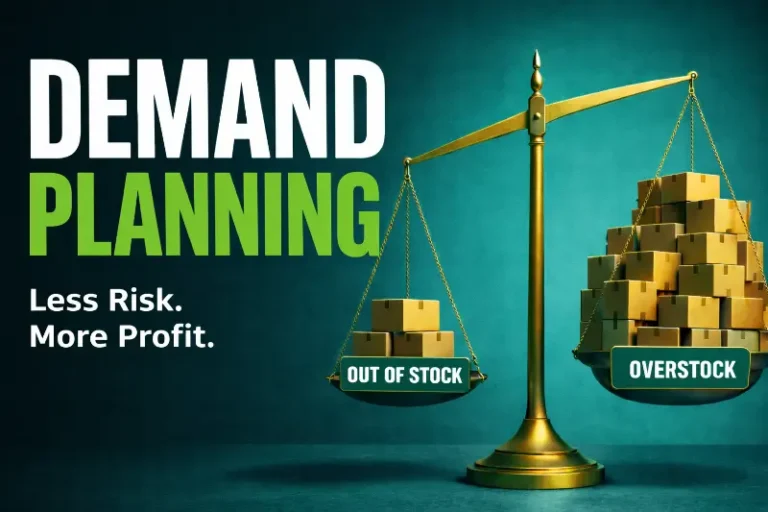
What Is Demand Planning? How It Impacts Inventory, Forecasting, and Profitability
Demand planning is the process of estimating future customer demand so that a business can align its inventory, procurement, and operations to meet that demand without carrying mor...

Why 100% P2P Adoption Is the Wrong Goal
Peer-to-peer returns let customers send eligible returned items directly to other customers instead of routing every package back through the warehouse, cutting shipping and proces...
Walmart Officially Allows Amazon Multi-Channel Fulfillment (MCF)
Big news for multichannel sellers: Walmart now officially allows Amazon Multi-Channel Fulfillment (MCF), Amazon’s service for using its fulfillment network to ship orders from mult...
Amazon’s 7% Slower-Delivery Discount Signals a Bigger Shift in Ecommerce
In this article
7 minutes
- The Industry Is Rewriting the Rules of Delivery
- Fast Shipping Was Always Subsidized
- The Pullback Is Industry-Wide, Not Just Amazon
- Consumers Have Already Moved On
- Speed Was Never the Real Driver
- Slower Shipping Creates Better Customers
- The Real Shift: From Speed to Control
- What Ecommerce Operators Should Do Now
- Fast Shipping Isn’t Going Away. But It’s No Longer the Default
- Frequently Asked Questions
Amazon offering discounts for slower delivery is not a feature update. It is a signal that ecommerce is being forced to correct a long-standing assumption about speed and cost.
For years, fast and free shipping was treated as a requirement. What is becoming clear now is that it was never a sustainable one. As costs rise and consumer behavior shifts, delivery is being redefined from a competitive perk into a lever for profitability and customer quality.
The Industry Is Rewriting the Rules of Delivery
The narrative often starts with Amazon offering a 7% discount to customers who choose a later delivery date. But focusing only on Amazon misses the bigger picture.
Retailers across the market are expanding “no-rush” or economy delivery options. Brands like Gap now offer multiple shipping speeds, with the slowest options often being the cheapest or free. Other merchants are pushing delivery windows out to one or even two weeks.
This is not experimentation at the margins. It is a coordinated shift in how delivery is positioned.
For years, the industry competed on speed because it believed faster delivery created better customer experiences and higher conversion. That belief is now being challenged by both economics and data.
Fast Shipping Was Always Subsidized
Fast delivery did not become standard because it was efficient. It became standard because it was subsidized.
Retailers absorbed the cost of expedited shipping as a customer acquisition strategy. Carriers expanded their networks to support higher volumes. The entire system was built around the idea that speed would drive growth.
That model is now under pressure.
Since 2020, major carriers like UPS and FedEx have raised base rates annually while adding surcharges for fuel, residential delivery, and package dimensions. Even the lowest-tier services can start at price points that make free two-day shipping difficult to justify for many products.
At the same time, carriers are becoming more selective. FedEx has been explicit that it wants to focus on higher-value shipments and is less interested in low-margin ecommerce volume.
What used to be a growth engine is now a cost center.
The Pullback Is Industry-Wide, Not Just Amazon
Amazon is not alone in adjusting its approach. In many ways, it is following a broader shift that has already taken hold across ecommerce.
Retailers are introducing slower delivery tiers, encouraging customers to choose flexible delivery windows, and experimenting with pricing incentives tied to timing.
Logistics providers are doing the same. Wider delivery windows allow carriers to consolidate shipments, improve truck utilization, and reduce per-package costs. Even small extensions in delivery timelines can meaningfully lower operating costs across a network.
The result is a system that increasingly rewards flexibility rather than speed.
Consumers Have Already Moved On
The most important shift is not happening inside logistics networks. It is happening with consumers.
Shipping cost has overtaken delivery speed as the top priority for online shoppers. A large majority of consumers now prefer free standard shipping over paying for expedited delivery, even if it means waiting several extra days.
This is a significant reversal from just a few years ago, when speed was often the deciding factor.
The rise of companies like Shein and Temu accelerated this change by normalizing longer delivery times in exchange for lower prices. Once customers experienced that tradeoff, expectations began to reset.
The market moved first. Retailers are now catching up.
Speed Was Never the Real Driver
One of the more revealing insights from recent ecommerce data is that speed was not the primary driver of conversion in the first place.
Uncertainty was.
When customers abandon carts, it is often not because delivery is too slow. It is because delivery expectations are unclear or unreliable. When timelines are communicated clearly and consistently, customers are far more willing to wait.
This distinction matters.
It means that faster shipping is not always the solution. In many cases, better communication and more predictable delivery windows can achieve the same or better outcomes at a lower cost.
Slower Shipping Creates Better Customers
There is another effect that is easy to overlook.
Slower delivery can improve customer quality.
Retailers that have extended delivery timelines are seeing lower return rates, sometimes by 20% to 30%. The reason is simple. Customers who are willing to wait tend to be more intentional in their purchases.
They are less driven by impulse. They are more aligned with the value of the product. And they are less likely to return items after receiving them.
Fast shipping, on the other hand, can encourage low-commitment buying behavior. When products arrive quickly and returns are easy, the cost of making a poor decision is low.
Slowing down the process introduces friction in a way that can actually improve profitability.
The Real Shift: From Speed to Control
What is happening is not a move toward slower shipping for its own sake. It is a shift toward control.
Delivery is becoming a lever that operators can use to manage cost, shape demand, and influence customer behavior.
Flexible delivery windows allow for smarter routing decisions. Multi-warehouse strategies can balance speed and cost depending on the order. Incentives can be used to shift demand toward less expensive fulfillment paths.
In this context, delivery is no longer just a service level decision. It is part of the pricing and margin strategy.
This is where many ecommerce operators need to rethink their approach.
Optimizing for speed alone is no longer sufficient. The goal is to optimize for outcomes, balancing cost, customer experience, and operational efficiency.
What Ecommerce Operators Should Do Now
This shift creates both risk and opportunity.
Operators who continue to treat fast shipping as a default requirement will find themselves absorbing rising costs without a corresponding increase in value.
Those who adapt can use delivery as a strategic tool.
That starts with re-evaluating shipping promises. Not every product needs to arrive in two days. In many cases, offering a slower, cheaper option can improve both margins and customer alignment.
It also requires better visibility and control over fulfillment decisions. Routing logic, carrier selection, and delivery timing should be actively managed rather than treated as fixed rules.
Finally, communication becomes critical. Customers are willing to wait, but only if expectations are clear. Transparency around delivery windows can do more for conversion than incremental speed improvements.
Fast Shipping Isn’t Going Away. But It’s No Longer the Default
There will always be cases where speed matters.
Urgent purchases, high-value items, and certain customer segments will continue to demand fast delivery. Amazon, Walmart, and others will keep investing in same-day and next-day capabilities.
But fast shipping is no longer the baseline expectation for every order.
What we are seeing is a rebalancing.
Speed is becoming one option among many, rather than the defining feature of ecommerce. Cost, flexibility, and predictability are taking on a larger role in how delivery is designed and communicated.
Amazon’s 7% discount is a visible signal of that shift. The deeper change is already underway.
Frequently Asked Questions
Why is Amazon offering a discount for slower delivery?
Amazon is incentivizing customers to choose delivery options that are less expensive to fulfill. Slower delivery allows for better route optimization and lower per-package costs.
Are consumers really willing to wait longer for delivery?
Yes. Recent data shows that most consumers prefer free standard shipping over paid expedited options, even if it means waiting several additional days.
Does slower shipping hurt conversion rates?
Not necessarily. Clear and reliable delivery expectations often matter more than speed. Many customers are willing to wait if timelines are communicated effectively.
How does slower delivery reduce returns?
Customers who choose slower delivery tend to be more intentional in their purchases. This leads to fewer impulse buys and lower return rates.
Is fast shipping becoming less important in ecommerce?
Fast shipping is still important in certain cases, but it is no longer the primary driver of customer decisions. Cost and predictability are becoming more influential.
Written By:
Rinaldi Juwono
Rinaldi Juwono leads content and SEO strategy at Cahoot, crafting data-driven insights that help ecommerce brands navigate logistics challenges. He works closely with the product, sales, and operations teams to translate Cahoot’s innovations into actionable strategies merchants can use to grow smarter and leaner.
Turn Returns Into New Revenue
Related Articles
What Is Demand Planning? How It Impacts Inventory, Forecasting, and Profitability
Demand planning is the process of estimating future customer demand so that a business can align its inventory, procurement, and operations to meet that demand without carrying mor...
Why 100% P2P Adoption Is the Wrong Goal
Peer-to-peer returns let customers send eligible returned items directly to other customers instead of routing every package back through the warehouse, cutting shipping and proces...
Walmart Officially Allows Amazon Multi-Channel Fulfillment (MCF)
Big news for multichannel sellers: Walmart now officially allows Amazon Multi-Channel Fulfillment (MCF), Amazon’s service for using its fulfillment network to ship orders from mult...
USPS Price Increase 2026: Why “Temporary” Shipping Costs Don’t Stay Temporary
In this article
12 minutes
- Introduction to USPS Price Increase 2026
- Background
- The USPS Price Increase Is Being Called “Temporary”
- “Temporary” Pricing Is Often Permanent in Disguise
- The Bigger Shift: Shipping Costs Are Becoming Structural
- What This Breaks for Ecommerce Brands
- The Shift From Rate Optimization to Operational Optimization
- Why USPS Matters More Than It Seems
- What Ecommerce Brands Should Do Next
- Expect More “Temporary” Adjustments Ahead
- Frequently Asked Questions
Introduction to USPS Price Increase 2026
USPS is proposing an 8% price increase on key shipping services starting April 2026. While it is being framed as temporary, the underlying signal is much bigger: shipping costs are becoming structurally higher across the industry.
For ecommerce brands, this is not just a pricing update. It is a shift in how logistics works. The strategies that once kept shipping costs under control are becoming less effective, and the consequences are starting to show up in margins.
Background
The United States Postal Service (USPS) has long been a cornerstone of American commerce and communication, providing a nationwide integrated network for the delivery of mail and packages at least six days a week. However, in recent years, the postal service has faced mounting challenges, including rising transportation costs, higher fuel prices, and a steady decline in traditional mail volume. These pressures have made it increasingly difficult for the USPS to fulfill its universal service obligation in a cost-effective and financially sustainable manner.
To support its public service mission—ensuring affordable and reliable delivery of mail and packages to every address in the country—the USPS is seeking a temporary price adjustment. This time-limited price change, pending approval from the Postal Regulatory Commission (PRC), would apply to key competitive products such as Priority Mail, Priority Mail Express, USPS Ground Advantage, and Parcel Select. The adjustment is designed to help offset the impact of rising transportation costs and higher insurance expenses, while maintaining the postal service’s ability to continue achieving its public service goals.
Unlike many competitors who routinely add surcharges or raise prices to reflect fuel costs, the USPS has steadfastly avoided such measures. Instead, it is proposing a temporary price increase as a bridge to a more permanent mechanism that better reflects current market conditions and industry practices. Even with this adjustment, USPS shipping services continue to offer great value, with prices that are often less than one third of what competitors charge for fuel alone.
The proposed price change is not just about covering costs—it is about ensuring the USPS can continue providing a cost-effective and financially sustainable network for the delivery of mail and packages, supporting ecommerce, mail-in ballots, and essential communications across the country. The postal service continues to adapt its pricing structure to meet the needs of its customers and the requirements of its universal service obligation, all while maintaining its commitment to delivering mail and packages at least six days a week.
As the USPS awaits pending approval from the Postal Regulatory Commission, it remains focused on its public service mission, providing a nationwide integrated network that millions of Americans and businesses rely on. The temporary price adjustment is a necessary step to support the postal service’s ability to continue achieving its mission in the face of rising transportation costs and evolving market conditions.
The USPS Price Increase Is Being Called “Temporary”
The U.S. Postal Service has filed for a time-limited 8% increase across services like Priority Mail, Priority Mail Express, USPS Ground Advantage, and Parcel Select, with the price change set to go into effect at midnight Central Time on April 26, 2026, and remain in place until midnight Central Time on January 17, 2027, pending approval from the Postal Regulatory Commission.
This planned price increase will specifically affect base postage prices for Priority Mail Express, Priority Mail, USPS Ground Advantage, and Parcel Select, as well as related mailing services and priority mail prices. Extra service options such as signature confirmation or certified mail may also see adjustments if they are tied to these affected services. No other products or services, including first class, first class mail, and first class stamps, will be impacted by this change.
The price increase is described as a time-limited adjustment to help cover rising transportation costs and is part of a broader plan to achieve financial sustainability and modernize the USPS network. Ecommerce brands using Ground Advantage may face higher operational costs due to these changes.
USPS also made a point to position this move within a broader industry context. Other carriers have already introduced fuel-related surcharges and pricing adjustments, and this change brings USPS closer to that same model.
On the surface, this looks like a temporary correction. In practice, it rarely works that way.
“Temporary” Pricing Is Often Permanent in Disguise
Shipping carriers do not typically introduce large, permanent price increases all at once. Instead, they phase them in under the label of temporary adjustments.
The logic is simple. If the market absorbs the increase without a significant drop in volume, the higher price becomes the new baseline.
USPS is following a pattern that has already been established across the industry. A targeted adjustment is introduced, customer behavior is observed, and over time the pricing structure evolves to reflect what the market is willing to accept.
The Postal Service’s time-limited price change is designed to help cover operational costs and serve as a bridge toward a permanent mechanism to reflect market conditions and operational costs. USPS and other carriers are also considering a different long-term approach to pricing, aiming for a sustainable solution that supports financial stability.
Even in its own announcement, USPS signals this direction. The temporary increase is described as a bridge toward a more durable pricing mechanism that aligns with market conditions.
What appears temporary is often just the first step in a longer transition, highlighting the importance of managing pricing in a manner over the long term to ensure the Postal Service’s ongoing viability.
The Bigger Shift: Shipping Costs Are Becoming Structural
For years, ecommerce brands operated under the assumption that shipping costs could be actively managed through negotiation and tactical decisions. Switching carriers, securing better rates, or leveraging promotional pricing were all viable ways to control expenses.
That assumption is breaking down.
Transportation costs are rising due to a combination of factors, including fuel volatility, labor pressures, and the growing complexity of delivery networks. Rising gas prices and higher insurance costs are major contributors to the increase in transportation expenses. At the same time, carriers are becoming less willing to absorb those costs in order to win business.
Instead, they are passing them through as higher prices.
USPS adopting this approach is particularly important. It has historically served as a lower-cost alternative in the market. When even USPS begins adjusting prices in response to transportation costs, it signals that the entire system is moving in the same direction. USPS still maintains some of the lowest shipping rates in the industrialized world, even after the price increase.
This is not about one carrier raising prices. It is about the cost structure of shipping changing across the board.
What This Breaks for Ecommerce Brands
As shipping costs become more uniform and less negotiable, some of the traditional levers ecommerce brands relied on begin to lose effectiveness, putting more emphasis on understanding and reducing overall order fulfillment costs.
Rate shopping, for example, becomes less impactful when all carriers are increasing prices in parallel. The differences between providers narrow, and the savings from switching diminish. What used to be a meaningful optimization starts to feel incremental.
The same applies to carrier arbitrage. Moving volume between carriers in search of better pricing becomes harder when each provider is responding to the same underlying cost pressures, which is why many brands compare Cahoot vs. ShipMonk fulfillment solutions to gain structural shipping advantages instead of chasing short-term rate differences.
At the same time, costs that were once secondary become more visible. Shipping from a distant warehouse increases zone distance and drives up transportation expense. Leveraging national fulfillment services with a distributed warehouse network can significantly shorten average shipping distances and reduce these transportation costs. Inefficient routing decisions create unnecessary movement across the network. Returns that require multiple handling steps introduce additional cost layers that are often overlooked.
These are not issues that can be solved at the pricing level. They are embedded in how the operation itself is structured.
The Shift From Rate Optimization to Operational Optimization
As pricing becomes less flexible, the focus shifts away from the label and toward the system behind it.
Instead of asking how to secure a cheaper shipping rate, brands need to look at how shipping costs are generated in the first place. The answer is often found in turning ecommerce order fulfillment into a profit driver through smarter fulfillment decisions rather than carrier contracts.
Inventory placement becomes more important because it determines how far each order needs to travel. Advanced ecommerce shipping software and warehouse automation can optimize routing logic because it dictates which location fulfills each shipment. Service level selection influences whether a package is shipped faster than necessary, adding cost without improving the customer experience.
Consider a simple example. Shipping a package across the country at a discounted rate may still cost more than shipping it locally at a higher nominal rate. The difference is not in the price of the label. It is in the distance the package travels, which is why leveraging nwide fulfillment coverage is so powerful for cost control.
This is where meaningful cost control now lives.
Why USPS Matters More Than It Seems
An 8% increase on its own is not unprecedented. Ecommerce brands have seen similar adjustments before.
What makes this moment different is who is making the move. The post office has long played a crucial role in providing affordable mailing options and supporting a nationwide delivery network, ensuring access to reliable mail and package delivery for all Americans.
USPS has traditionally positioned itself as a stable, affordable option in a market where private carriers frequently adjust pricing. By introducing a transportation-related increase, it is signaling alignment with the same cost-recovery approach used elsewhere in the industry. The postal service’s ability to continue achieving its public service mission depends on maintaining a financially sustainable network that delivers mail and packages at least six days a week. USPS has steadfastly avoided surcharges in the past, but the current price increase is necessary to support the postal service’s mission in light of market conditions.
That reduces the number of pricing alternatives available to merchants. It also reinforces the idea that shipping costs are no longer a competitive differentiator between carriers. The proposed price increase is a time-limited adjustment designed to support the public service’s ability to continue providing reliable delivery and support the postal service’s long-term operational stability. They are a reflection of underlying economic realities.
What Ecommerce Brands Should Do Next
The takeaway is not that shipping costs are uncontrollable. It is that they must be controlled differently.
Brands that continue to focus primarily on negotiating rates will see diminishing returns. The more effective approach is to examine how fulfillment decisions impact cost at a system level.
That means looking closely at where inventory is stored relative to demand, how orders are routed across available locations, and whether service levels align with actual delivery expectations. It also means identifying where unnecessary movement is happening, whether in outbound shipping or returns.
The goal is not to eliminate cost increases. It is to reduce how often those costs are triggered.
Expect More “Temporary” Adjustments Ahead
USPS is not leading this shift. It is catching up to it.
More temporary adjustments are likely across the industry as carriers continue to respond to changing cost conditions. Some will be tied to fuel, others to capacity or demand, such as peak season surcharges from major carriers or dimensional weight changes like UPS matching FedEx’s DIM weight policy, but the pattern will remain consistent.
Each adjustment will be positioned as temporary. Over time, they will collectively reshape the baseline cost of shipping.
Frequently Asked Questions
What is the USPS price increase in 2026?
USPS plans to implement an 8% price increase for its core package and shipping services, specifically affecting Priority Mail Express, Priority Mail (including priority mail prices), USPS Ground Advantage, and Parcel Select. This price change will go into effect at midnight Central Time on April 26, 2026, and will remain in place until midnight Central Time on January 17, 2027.
No other products or services will be affected by this increase, including First-Class Stamps, First-Class Mail, extra service options such as signature confirmation or certified mail, and other mailing services.
Why is USPS increasing shipping prices?
The primary driver for the USPS price increase 2026 is the escalating cost of transporting mail, largely due to high gas prices. In addition to fuel, higher insurance costs, vehicle maintenance, and logistics expenses have also contributed to higher prices for USPS shipping services. USPS is seeking to offset these increased operational costs through a temporary pricing adjustment.
Are shipping cost increases becoming permanent?
Many temporary adjustments become permanent over time if the market absorbs them, making shipping costs structurally higher. The Postal Service’s time-limited price change is designed to help cover operational costs and serve as a bridge toward a more permanent mechanism to reflect market conditions and operational costs. USPS and other carriers are considering a different long-term approach to pricing to ensure financial sustainability. Additionally, the price of a First-Class Mail Forever stamp is projected to potentially rise to $0.90–$0.95 later in 2026 to address a potential cash shortage.
How does this impact ecommerce businesses?
It reduces the effectiveness of rate shopping and increases the importance of operational efficiency in fulfillment and routing.
What is the best way to reduce shipping costs now?
Focusing on fulfillment strategy, such as inventory placement and order routing, is more effective than relying solely on negotiating lower carrier rates. Pairing this with smart pricing strategies that keep free shipping profitable helps brands protect margins even as carrier rates rise. Brands should not rely solely on carrier negotiations; instead, they should prioritize optimizing their fulfillment strategy and operational efficiency to reduce shipping costs.
Written By:
Rinaldi Juwono
Rinaldi Juwono leads content and SEO strategy at Cahoot, crafting data-driven insights that help ecommerce brands navigate logistics challenges. He works closely with the product, sales, and operations teams to translate Cahoot’s innovations into actionable strategies merchants can use to grow smarter and leaner.
Turn Returns Into New Revenue
Related Articles
What Is Demand Planning? How It Impacts Inventory, Forecasting, and Profitability
Demand planning is the process of estimating future customer demand so that a business can align its inventory, procurement, and operations to meet that demand without carrying mor...
Why 100% P2P Adoption Is the Wrong Goal
Peer-to-peer returns let customers send eligible returned items directly to other customers instead of routing every package back through the warehouse, cutting shipping and proces...
Walmart Officially Allows Amazon Multi-Channel Fulfillment (MCF)
Big news for multichannel sellers: Walmart now officially allows Amazon Multi-Channel Fulfillment (MCF), Amazon’s service for using its fulfillment network to ship orders from mult...
ShipStation Automation Rules Explained: Where Shipping Automation Breaks Down

Shipping automation rules look like a solved problem until your order mix shifts, your catalog grows, or your carrier contracts change. At that point, rules you wrote six months ago start quietly costing you money or degrading service in ways that are hard to trace. This article explains how ShipStation automation rules work at a functional level, where the logic tends to break under real operating conditions, and what a more adaptive approach to shipping automation actually looks like.
What ShipStation Automation Rules Actually Do
At their core, ShipStation automation rules are conditional logic statements managed within your account settings. To create and manage automation rules, navigate to your account, click the Settings gear icon, select Automation, and choose Automation Rules from the dropdown menu. Each rule follows the same structure: if an order matches specific criteria, then apply a defined action. Automation rules in ShipStation are actions that you want to apply to a set of orders that meet certain criteria, helping save time and improve efficiency.
The criteria side can draw on a wide range of order attributes: weight, dimensions, destination address type (residential vs. commercial), store of origin, product SKU, order tags, customer location, shipping service requested at checkout, and more. When setting up an automation rule, you must define the conditions (criteria) and actions for the rule, and you can set criteria based on order weight, address type, order tags, and other factors. Users must enter specific information into fields to define order criteria, such as weight, address type, or order tags. You can stack multiple criteria within a single rule, requiring that all conditions be met or that any one of them triggers the action.
To create a rule in ShipStation:
- Click ‘Create a Rule’ in the Automation Rules section of your account.
- Enter the rule name.
- Select the field and order criteria (such as weight, address type, or tags).
- Define the actions that should be applied when orders match the criteria.
The rules you can create include those that match specific order criteria, such as weight or destination, and the rule will apply when orders match those criteria.
The action side covers the most operationally significant shipping decisions. Common actions include:
- Assigning a carrier and service level, for example routing all orders under one pound to USPS Ground Advantage instead of USPS Priority Mail
- Setting a package type, such as applying a flat-rate envelope to orders matching specific weight and dimension thresholds
- Setting carrier, service, and package type (service and package type) combinations based on order attributes (set carrier service package)
- Adding or removing order tags to flag orders for manual review, holding, or downstream workflow steps
- Placing orders on hold, which pauses them from progressing to label creation
- Combining or splitting shipments when multiple orders share the same address
- Applying a shipping preset that bundles carrier, service, package type, and special service selections together
Shipping options can be automated based on things like order weight, address type, and tags, and automation rules can help select the cheapest shipping option for each order. Automation rules can automate actions based on specific criteria to streamline the shipping process and can automate almost any shipping-related task for online stores.
Rules execute in a defined sequence and can be ordered by priority, so rule conflicts get resolved by whichever rule has higher precedence in the stack.
This is functional, well-understood logic for routine operations. The problem is not the mechanism. The problem is what happens to that mechanism when the operating environment changes and the rules do not, which is why many ecommerce brands are turning to next-generation ecommerce shipping software for warehouse automation that can adapt to changing conditions without constant manual reconfiguration.
Where Static Rules Break Down
Order weight and dimension drift
Most automation rules that determine carrier and service selection are weight-based. For example, a rule might say: orders under 15 ounces go via USPS Ground Advantage; orders between 15 ounces and 2 pounds go via USPS Priority Mail; orders above 2 pounds go via a regional carrier. Using USPS First Class Mail for shipments under one pound is a common automation rule to save on shipping costs. Automation rules can be set to apply different shipping services for specific weight ranges, such as USPS Ground Advantage for orders under 16 oz and Priority Mail for heavier shipments. Automation rules can apply a specific shipping service based on the weight of the order, and weight-based shipping rules automatically assign carriers based on item weight.
That logic works until your supplier changes packaging, you add a bundle SKU, or a promotional period drives a different order mix than what the original thresholds were built around. Suddenly a meaningful share of orders that qualified as “lightweight” no longer do, and they get routed to Priority Mail at a cost 40% to 60% higher than necessary. No one gets an alert. The rule fires as designed. The bill just grows.
Address type misclassification
Residential and commercial address surcharges are significant cost variables with UPS and FedEx. Address type fields are used within shipstation automation rules to determine whether an address is residential or commercial, and this field can directly impact the shipping rate applied. Some shipping carriers offer different rates based on whether an address is residential or commercial, making accurate classification in the address type field critical. Rules that rely on address type fields often fire on the address classification as entered by the customer or pulled from the store, not on verified carrier data. When a customer enters a business address without the suite number, or enters a home address that was never verified against a carrier database, the surcharge applied at shipping can contradict the rule that was written to prevent it.
The rule creates false confidence. The actual charge on the carrier invoice reflects reality, not what the rule assumed.
Service level overspend as orders scale
A common configuration pattern is to default to a faster or more expensive service level as a fallback when no other rule matches. In these cases, this rule will apply, leading to potential overspend as orders are routed to the default option. The fallback rate is the percentage of orders that route to a catch-all or default rule rather than a specifically defined rule. ShipStation automation rules can be reordered to ensure the most important rules take precedence and reduce the fallback rate.
For a brand doing 200 orders a month, overspending on 15 fallback orders is a rounding error. For a brand doing 5,000 orders a month, that same failure rate in the rule stack might mean 375 orders per month routing to USPS Priority Mail when USPS Ground Advantage or a regional carrier would have delivered on time at a lower cost. At $2 to $4 of avoidable cost per order, that is $750 to $1,500 per month of silent waste that never shows up as a line item anywhere, which makes understanding your ecommerce order fulfillment costs and pricing structure critical when evaluating the true impact of automation decisions.
Rule conflicts and ordering problems
As rule stacks grow, conflicts between rules become more likely. A rule that applies a specific carrier to all orders over 5 pounds may conflict with a rule that applies a different service to all orders destined for a specific state. Depending on rule ordering, one wins and the other becomes irrelevant for that order segment, which may or may not be the intended behavior.
To efficiently manage complex rule sets, ShipStation allows you to create a copy of an existing automation rule. This makes it easy to build a series of similar automation rules by copying and then modifying specific criteria, helping you tailor each rule to different conditions or requirements.
Operators who inherited a rule stack from a predecessor, or who accumulated rules over many months without documentation, often cannot confidently explain what every combination of order attributes will produce at runtime. The rule stack becomes a black box that mostly works, which is exactly the condition that allows silent errors to persist.
Tagging and holds as manual work amplifiers
Tags and holds are genuinely useful when they are well-defined and actively maintained. Automation rules can use order tags as criteria to determine shipping services, and tags like ‘VIP’, ‘Fragile’, or ‘Gift’ can trigger further rules for handling orders based on customer history or item type. You can use tags to create automation rules that apply to specific products or customer orders in ShipStation. For example, if an order includes a specific tag such as ‘Rush’ or ‘Fragile’, a rule can be set so that the order is shipped using a particular method, like upgrading to Priority Mail. Order tagging for priority can assign tags like ‘Rush’ to ensure specific orders are processed first, and tags can be used in automation rules to determine shipping methods based on product types or customer preferences.
A rule that tags all international orders for manual review is helpful when the team has a clear process for what to do with that tag. But as the business changes, some holds become orphaned. Tags accumulate without clear meaning. The team reviews flagged orders as a habit without asking whether the tag still represents a real decision point.
In practice, many ecommerce operations teams using rules-based holds and tagging systems spend meaningful time each week processing flags that exist because no one audited the rule that created them after the underlying condition it was meant to address was resolved.
The Edge Case Problem
Rules are written for the expected. Real orders surface the unexpected.
Common edge cases that create exceptions and rework in rules-based shipping automation include:
- Multi-item orders where individual items qualify for different service rules but the combined weight or dimensions push the shipment into a different category
- Orders containing a mix of in-stock and backordered items where the split shipment logic was not anticipated by the rule set. As a step to handle complex orders, the Auto-Split feature can automatically create separate shipments for orders containing both warehouse-stocked and drop-shipped items.
- Address corrections that happen after a rule has already fired and assigned a service, requiring manual override
- Carrier-specific restrictions that are not encoded into the rule, such as USPS restrictions on certain product categories, service availability gaps by zip code, or size limits that the rule does not check
- PO Box and military address routing that requires USPS but conflicts with a weight-based rule that would otherwise send the order to a regional carrier that cannot serve those addresses
- Saturday or holiday delivery scenarios where the selected service does not actually provide the delivery date the rule was designed to guarantee
As another step to optimize shipping, orders can be routed to the closest warehouse based on the customer’s state or zip code to reduce shipping costs and transit time.
In the context of exception handling, you can automate the addition of a tax identifier number to orders based on destination requirements.
Each of these edge cases requires either a human to catch it in review, an additional rule to handle it, or an automation system capable of evaluating more context than a static rule set can hold. Many of these exceptions mirror broader carrier shipment exceptions and how to fix them fast, where address issues, delivery failures, or customs holds create downstream rework and customer friction. To improve your shipstation automation rules, always test your automation rules with sample orders to identify edge cases and update your rules accordingly.
The more SKUs and order types an operation manages, the higher the edge case rate. Operations leaders running multi-SKU catalogs across multiple sales channels frequently find that their rule stacks require ongoing attention just to maintain baseline performance, let alone improve it.
Why Auditing and Rule Governance Matter
The operational discipline most commonly missing from ecommerce shipping automation is not rule-writing. It is rule review—and the use of multi-carrier shipping software for ecommerce that can automatically validate addresses, compare rates, and reduce the number of brittle, manually maintained rules you rely on.
A rule that was correct when written can become incorrect as the business changes. Carrier rates change. Product weights change. Customer geography shifts. Promotional periods alter the typical order composition. None of these changes automatically invalidate a rule or generate an alert that the rule may now be producing suboptimal outcomes.
Effective rule governance means treating the automation rule stack as a living document, not a one-time configuration. In practice, this involves:
- Reviewing rule performance at defined intervals, at minimum quarterly, against actual shipping cost data
- Tracking the fallback rate, meaning the percentage of orders that route to a catch-all or default rule rather than a specific defined rule, and investigating when that rate rises
- Comparing the carrier and service distribution the rule stack produces against what an optimal routing decision would have produced given actual order attributes and carrier rates at the time
- Documenting the intent behind each rule, not just its logic, so that future changes can be evaluated against whether the original condition still applies
- Assigning ownership of the rule stack to a specific person or team so audits actually happen
When creating a new rule, you can also create a copy of an existing automation rule to make a series of similar rules, which can then be saved and updated as your business needs change. Whenever you make changes to rules, it is important to save and update the rule stack to ensure that each new rule is applied correctly and that your shipping automation remains effective.
Without this governance structure, most rule stacks drift. They become increasingly accurate for the order profile that existed when they were written and increasingly inaccurate for the order profile that exists today.
How More Adaptive Automation Reduces Cost and Errors
Static rules are limited because they encode logic once. The operating environment changes continuously. The gap between those two facts is where cost leaks and service failures live, especially when carriers introduce changes like UPS and FedEx dimensional weight policy updates that instantly alter the real cost of many packages.
More adaptive shipping automation approaches the problem differently. Instead of encoding fixed thresholds that apply regardless of current conditions, adaptive systems evaluate each order against live inputs: current carrier rates, actual delivery performance data by zone and service level, available inventory locations, and SKU-level cost-to-serve targets. Solutions like Cahoot’s ecommerce order fulfillment services that outclass traditional 3PLs pair this kind of cost-aware routing with fast 1–2 day delivery from a distributed network. Shipping automation rules can help adjust shipping settings based on order criteria such as weight and destination, ensuring that actions are only triggered when orders match specific parameters.
The practical difference shows up in a few specific ways.
Service selection based on actual rate cards, not fixed tiers. A static rule assigns USPS Ground Advantage to orders under 15 ounces. An adaptive system checks the actual rate for that specific weight, destination zip, and package dimensions and compares it across available services before selecting the lowest-cost option that meets the delivery commitment. As carrier rates change mid-contract or as dimensional weight calculations shift, the selection adjusts automatically. Adaptive systems can update order information with real-time rates to optimize shipping costs.
Routing decisions that incorporate inventory location. A rule-based system typically assigns a carrier and service based on order attributes alone, without knowing where inventory actually sits. When a brand operates multiple warehouse nodes, the fulfillment location changes the shipping zone and therefore the cost and transit time of any given carrier service. An order that should route to USPS Ground Advantage from a Chicago node might need USPS Priority Mail from a Los Angeles node to hit the same delivery date. Static rules cannot hold that context. Multi-node automation that connects fulfillment location to routing decisions can, as seen in order fulfillment services built for ecommerce companies that leverage distributed inventory to keep transit times short and costs low.
Exception handling without manual review queues. Rather than tagging orders with edge case attributes and routing them to a human, more capable automation systems can evaluate a broader set of conditions at decision time and resolve many exceptions programmatically. The hold queue shrinks because fewer orders need human judgment to proceed, similar to how Cahoot’s Amazon Buy Shipping integration for ecommerce order fulfillment automates label creation and tracking updates to reduce error-prone manual steps.
Ongoing cost-to-serve visibility. Adaptive systems generate audit trails that let operators see, at the order level, why a specific routing decision was made and what it cost relative to alternatives that were considered. This makes both auditing and optimization practical rather than aspirational, particularly when combined with a peer-to-peer order fulfillment service that outperforms legacy 3PLs by enforcing consistent operational standards across a distributed network.
Automation rules can help streamline the shipping process by applying specific actions to orders that match defined criteria, reducing manual intervention and improving efficiency. This kind of automation also makes it easier to adapt when marketplaces tighten expectations, such as Amazon’s new shipping and delivery policies for sellers that demand higher on-time performance and shorter transit commitments.
This is where Cahoot’s approach to shipping automation differs from a rules stack maintained by an operator. Cahoot applies cost-aware routing logic across network nodes, adjusting decisions as carrier rates, inventory positions, and order attributes change, without requiring operators to manually maintain the rules that govern those decisions. The goal is to eliminate the operational overhead of rule governance while keeping the cost and service outcomes that good automation is supposed to produce in the first place.
Frequently Asked Questions
What are ShipStation automation rules?
ShipStation automation rules are conditional logic configurations that automatically apply shipping decisions to orders based on defined criteria. When an order matches the conditions in a rule, ShipStation executes the corresponding action, such as assigning a carrier and service level, adding a tag, setting a package type, or placing the order on hold. Rules can be stacked and prioritized to handle different order scenarios without manual intervention on each order.
What types of actions can ShipStation automation rules perform?
The most common actions include assigning a specific carrier and service such as USPS Ground Advantage or USPS Priority Mail, setting a package type, adding or removing order tags, placing orders on hold for manual review, applying a preset configuration that bundles multiple settings, and combining or splitting shipments that share a destination address.
Why do ShipStation automation rules break down over time?
Static rules are written to reflect the order mix, carrier rates, and product weights that exist at a specific point in time. As any of those inputs change, the rules can produce suboptimal or incorrect routing decisions without generating any visible error. Common causes of rule degradation include changes in product weights or packaging, catalog expansion that introduces SKUs with different shipping profiles, shifts in customer geography that alter the typical destination zone, and carrier rate changes that make a previously correct service selection more expensive than alternatives.
How does automation overspend on shipping service levels?
Overspend typically occurs when a default or fallback rule assigns a faster, more expensive service level to orders that no other rule specifically addressed. At low order volumes this cost is minimal. At scale, even a 5% to 10% fallback rate across thousands of orders per month can produce significant unnecessary spend, particularly when the fallback is USPS Priority Mail for orders that would have arrived on time via USPS Ground Advantage or a regional carrier.
What is a shipping rule fallback rate and why does it matter?
The fallback rate is the percentage of orders that route to a catch-all or default rule rather than a specifically defined rule. A rising fallback rate typically signals that the rule stack has not kept pace with changes in order composition. Monitoring fallback rate as a regular metric helps operators identify when their rule stack needs review before the cost impact accumulates.
What are the most common edge cases that break automation rules?
Common edge cases include multi-item orders where combined weight or dimensions push the shipment into a different category than individual item rules anticipated, orders with backordered items that create split shipment scenarios, PO Box and military addresses that require USPS but conflict with weight-based rules favoring other carriers, address corrections that happen after a rule has already fired, and carrier-specific restrictions on product categories or destination zip codes that the rule set does not check.
How often should shipping automation rules be audited?
At minimum, a rule stack review should happen quarterly. More frequent reviews, monthly or after any significant catalog, carrier contract, or promotional change, reduce the window during which degraded rules can accumulate cost. Audits should compare the carrier and service distribution the rule stack actually produced against what optimal routing would have produced for the same order set, not just check whether rules fired correctly.
What does adaptive shipping automation do differently than static rules?
Adaptive shipping automation evaluates each order against live inputs including current carrier rates, actual delivery performance data, and available inventory locations, rather than fixed thresholds encoded at a point in time. This allows routing decisions to adjust as carrier rates change, as inventory positions shift across warehouse nodes, and as order attributes fall outside the scenarios that static rules were written to handle. The result is lower ongoing cost-to-serve and fewer exceptions requiring manual resolution.
How does multi-node fulfillment change shipping automation requirements?
When inventory is held at multiple warehouse locations, the optimal carrier and service selection for a given order depends on which node will fulfill it, because the shipping zone from that node to the destination address determines both cost and transit time. Static rules that assign a service without knowing fulfillment location can produce accurate-looking decisions that are actually wrong once inventory position is factored in. Automation that connects fulfillment routing to carrier selection can capture the cost savings available from distributing inventory closer to demand concentrations.
Written By:
Rinaldi Juwono
Rinaldi Juwono leads content and SEO strategy at Cahoot, crafting data-driven insights that help ecommerce brands navigate logistics challenges. He works closely with the product, sales, and operations teams to translate Cahoot’s innovations into actionable strategies merchants can use to grow smarter and leaner.
Turn Returns Into New Revenue
Related Articles
Why 100% P2P Adoption Is the Wrong Goal
Peer-to-peer returns let customers send eligible returned items directly to other customers instead of routing every package back through the warehouse, cutting shipping and proces...
Walmart Officially Allows Amazon Multi-Channel Fulfillment (MCF)
Big news for multichannel sellers: Walmart now officially allows Amazon Multi-Channel Fulfillment (MCF), Amazon’s service for using its fulfillment network to ship orders from mult...

Why More Automation Didn’t Lower Return Costs
Returns automation does improve returns operations: it cuts manual touches, smooths intake, speeds sorting, and makes workflow execution more consistent.
China Tariff Refunds in 2026: What’s Real, What’s Not, and What to Do Next

In this article
11 minutes
- Introduction
- What Actually Happened With IEEPA Tariffs
- The Biggest Misunderstanding: Not All China Tariffs Are Included
- Who Actually Gets the Refund
- Refund Process and Guidance
- Court Proceedings and Litigation
- What Ecommerce Brands Need to Do Right Now
- Why Most Brands Will Still Miss This Opportunity
- Practical Examples
- What This Means for Ecommerce Operators
- Frequently Asked Questions
Introduction
China tariff refunds are dominating ecommerce conversations right now, but most of what is being shared is incomplete or misleading. The reality is that refunds are possible in some cases, but only for specific tariffs, specific importers, and only if the right steps are taken quickly.
Most ecommerce brands will not miss this opportunity because they were unaware of it. They will miss it because they misunderstand eligibility, assume refunds are automatic, or lack the data needed to prove their claim.
What Actually Happened With IEEPA Tariffs
The current refund conversation stems from a Supreme Court decision that struck down certain tariffs imposed under the International Emergency Economic Powers Act (IEEPA) by the Trump administration. The Supreme Court ruled that the IEEPA does not provide the legal authority for the president to impose tariffs, invalidating the IEEPA tariffs.
As a result, U.S. Customs and Border Protection has been directed to begin building a process to issue tariff refunds on those IEEPA tariffs. The Supreme Court’s ruling allows all importers of record whose entries were subject to IEEPA duties to claim refunds.
However, that process is still being developed. The Supreme Court’s decision did not affect other tariffs such as Section 232 tariffs and Section 301 tariffs, which remain in effect.
At the time of writing, the refund system is not fully operational. The government has proposed a timeline to get systems ready, but that timeline is not guaranteed and may change as implementation progresses. The federal government has collected over $130 billion in tariffs through IEEPA and could ultimately pay refunds worth $175 billion. The Supreme Court’s ruling was a setback for the Trump administration, which had sought to maintain the tariffs. The decision invalidated the legal foundation for the IEEPA tariffs but did not specify a mechanism or timeline for issuing refunds.
This is not a situation where refunds are already flowing cleanly. The Supreme Court’s ruling offers guidance for the tariff refund process but leaves some operational questions unresolved. It is a developing process that will likely involve delays, reconciliation issues, and continued legal complexity.
The Biggest Misunderstanding: Not All China Tariffs Are Included
The most common mistake is assuming that all China tariffs are eligible for refunds.
They are not.
Only tariffs imposed under IEEPA are affected by the ruling.
That means:
- IEEPA-based tariffs may be refundable
- Section 301 tariffs are not part of this ruling
- Section 232 tariffs are not part of this ruling
The refund process for IEEPA tariffs requires importers to identify which HTS Chapter 99 classifications are subject to IEEPA duties versus other tariffs. Only entries subject to IEEPA-related tariffs are eligible for refunds, while those subject to antidumping, countervailing, or other orders are excluded.
For ecommerce brands importing from China, this distinction is critical. Most of the long-standing China tariffs that operators are familiar with fall under Section 301, which is unaffected by the current ruling.
If you do not identify which tariff authority applied to your imports, you cannot determine eligibility.
Who Actually Gets the Refund
Another major source of confusion is who receives the refund.
Refunds are issued to the importer of record, not to sellers as a category. The importer of record (IOR) is the entity that receives the IEEPA tariff refund from Customs and Border Protection (CBP), and CBP will issue refunds to the IOR listed on the entry.
In many ecommerce setups, the seller is not the importer of record.
Common scenarios include:
- A supplier or trading company acting as importer
- A logistics provider or customs broker filing under a different entity
- Marketplace-driven import structures
In these cases, even if the seller ultimately paid for the goods, they may not be the party eligible to receive the refund directly.
Before taking any action, brands need to confirm:
- Which entity is listed as importer of record on the entry
- Whether that entity is controlled by the brand
Importers of record whose entries were subject to IEEPA duties are entitled to refunds following the Supreme Court’s ruling. Without this clarity, refund expectations can be completely misaligned with reality.
Refund Process and Guidance
The refund process for IEEPA tariffs is anything but automatic. Following the Supreme Court’s ruling that struck down certain IEEPA tariffs, the federal government has committed to issuing refunds to eligible importers, but the path to actually receiving those funds requires careful preparation and proactive steps.
Importers who paid IEEPA tariffs must file claims with the Court of International Trade (CIT) to initiate the refund process. Treasury Secretary Scott Bessent has stated that the government will release detailed guidance, but waiting for official instructions could mean missing critical deadlines. Instead, importers should begin assembling all necessary documentation now—this includes entry summaries, commercial invoices, and proof of payment for the IEEPA duties.
The Automated Commercial Environment (ACE) will be the primary platform for submitting and tracking refund claims. Importers should ensure they have active ACE accounts and are familiar with its processes, as this system will be central to managing the refund workflow. Staying organized and having digital access to all relevant records will streamline the process and reduce the risk of delays.
Court Proceedings and Litigation
The legal landscape surrounding IEEPA tariff refunds is evolving rapidly, with the Court of International Trade (CIT) at the center of the action. Judge Richard Eaton’s recent ruling has compelled the federal government to issue refunds to importers who paid IEEPA tariffs, setting a significant precedent for international trade litigation.
Importers who have already filed suit with the CIT are first in line to recover their IEEPA duties. The court’s decision not only opens the door for thousands of refund claims but also clarifies that the Trump administration’s authority to impose tariffs under the International Emergency Economic Powers Act (IEEPA) is now limited by the Supreme Court’s ruling. While the administration has announced intentions to impose new tariffs under the Trade Act, these may also face legal challenges, adding another layer of complexity for businesses engaged in international trade.
For importers, this means that legal strategy is as important as operational readiness. Consulting with experienced trade attorneys is essential to understand eligibility for IEEPA refund claims, navigate the refund process, and stay compliant with evolving regulations, much like retailers must proactively address returns fraud and refund fraud risks to protect margins. The CIT will continue to be the primary venue for resolving disputes related to IEEPA tariffs, and staying informed about ongoing court proceedings is critical.
What Ecommerce Brands Need to Do Right Now
The brands that benefit from this situation will not be the ones reacting later. They will be the ones that organize their data and verify eligibility now.
Start by getting clarity on your import records. Pull your entry summaries, typically CBP Form 7501, and review how duties were assessed across shipments. This is the foundation for everything that follows. Importers should set up an ACE portal account to access their customs data for the IEEPA refund process.
From there, validate the key variables that determine eligibility:
- Identify the tariff type applied to each entry and confirm whether duties were assessed under IEEPA or another authority
- Confirm the importer of record and ensure you know which entity actually paid the duties
- Check the status of each entry to determine whether it has been liquidated and whether administrative actions are still possible
Once eligibility is understood, shift to execution readiness:
- Ensure ACH enrollment is in place so refunds can be received electronically without payment issues
- Prepare duty refund calculations using the dates when IEEPA tariffs were paid
- Coordinate with your customs broker, who will handle filings, corrections, and reconciliation as the process unfolds
This is not a passive process. It requires active verification and coordination across systems, partners, and internal teams, similar to the diligence required to detect and prevent ecommerce returns fraud that can quietly erode profitability. The tariff refund process requires organized documentation and adherence to specific deadlines, and submitting a refund request will trigger a review by CBP, which may include scrutiny of classification, valuation, or compliance issues.
Why Most Brands Will Still Miss This Opportunity
Even with widespread awareness, most ecommerce brands will not successfully recover tariff refunds.
The problem is not awareness. It is execution, particularly when it comes to building a structured, data-driven ecommerce returns program that supports these complex processes.
The first issue is data fragmentation. Import records sit with brokers, inventory data sits in ecommerce platforms, and financial records sit in accounting systems. Without connecting these, it is difficult to validate what was paid and what may be refundable.
The second issue is ownership. Many teams assume someone else is handling it. Operations assumes finance owns it. Finance assumes the broker is handling it. In reality, no one is actively driving the process.
The third issue is incorrect assumptions. Brands assume that importing from China automatically makes them eligible. They assume refunds will be issued automatically. They assume marketplaces or logistics partners will handle everything.
All of these assumptions are wrong.
Refund eligibility is specific. Documentation requirements are strict. Execution windows matter.
Practical Examples
Consider a brand importing goods from China through a third-party supplier that acts as importer of record.
In this case, even if the brand paid for the goods, the supplier may be the entity eligible for the refund. The brand would need to coordinate directly with that supplier to recover any funds. Importers of Chinese goods face complications in the IEEPA tariff refund process that importers from other countries do not encounter, much like global brands must navigate added complexity when implementing cross-border returns management solutions such as ZigZag.
Another example is a brand that imports under its own entity but does not maintain clean entry records. Even if eligible, the lack of organized documentation slows down or prevents reconciliation when refunds are issued, just as poor systems can limit the value of a dedicated Shopify-focused returns platform like Return Prime.
A third example is a brand that assumes all China tariffs qualify. After reviewing their entries, they discover that most duties were assessed under Section 301, which is not affected by the current ruling.
In each case, the limiting factor is not awareness of the refund. It is the ability to verify and act on the details. The same is true for building an exceptional ecommerce returns program that turns operational complexity into a loyalty advantage. Many companies, including those importing from China, have faced unique challenges in pursuing tariff refunds compared to importers from other countries.
What This Means for Ecommerce Operators
This situation highlights a broader operational reality. Financial outcomes in ecommerce are increasingly tied to data visibility and system control, not just top-line growth, whether you are tracking tariff payments or optimizing core workflows like return shipping labels and processing.
The Supreme Court’s ruling invalidated the IEEPA tariffs, which fundamentally changed the economics of importing from China for many businesses, just as evolving return and refund practices — including exposure to ecommerce return and refund fraud — have reshaped the broader economics of online retail.
Tariffs, shipping costs, free returns and their true cost, and fulfillment decisions all depend on understanding how products move through your system and how costs are applied at each step. When that visibility is missing, opportunities like tariff refunds become difficult to capture because you cannot confidently verify what was paid or what qualifies. Recovering tariff refunds can have a significant impact on a business’s cash flow, and understanding where the money is credited is essential for financial planning.
On the other hand, when that visibility exists, operators can move quickly, validate claims, and recover value that others leave behind. The difference is not awareness. It is the ability to connect data across systems and act on it with confidence.
This is not just about one refund event. It is a reflection of how well your operation is structured to respond to change, whether that change comes from tariffs, carrier pricing, or shifts in returns behavior.
Frequently Asked Questions
Are all China tariffs eligible for refunds right now?
No. Only tariffs imposed under IEEPA are affected by the current ruling. Section 301 and Section 232 tariffs are not included.
Do Amazon sellers automatically qualify for tariff refunds?
No. Refunds are issued to the importer of record. Many sellers are not the importer of record and may not receive refunds directly.
Are tariff refunds being issued already?
The refund process is still being developed. While refunds are expected, the system is not fully operational and timelines may change.
Does registering for ACH guarantee faster refunds?
No. ACH enrollment helps ensure funds are received electronically, but it does not determine eligibility or guarantee faster payment.
What is the first step I should take?
Start by pulling your entry summaries, identifying the tariff type applied, and confirming your importer of record.
Written By:
Rinaldi Juwono
Rinaldi Juwono leads content and SEO strategy at Cahoot, crafting data-driven insights that help ecommerce brands navigate logistics challenges. He works closely with the product, sales, and operations teams to translate Cahoot’s innovations into actionable strategies merchants can use to grow smarter and leaner.
Turn Returns Into New Revenue
Related Articles
What Is Demand Planning? How It Impacts Inventory, Forecasting, and Profitability
Demand planning is the process of estimating future customer demand so that a business can align its inventory, procurement, and operations to meet that demand without carrying mor...
Why 100% P2P Adoption Is the Wrong Goal
Peer-to-peer returns let customers send eligible returned items directly to other customers instead of routing every package back through the warehouse, cutting shipping and proces...
Walmart Officially Allows Amazon Multi-Channel Fulfillment (MCF)
Big news for multichannel sellers: Walmart now officially allows Amazon Multi-Channel Fulfillment (MCF), Amazon’s service for using its fulfillment network to ship orders from mult...
What Is Expedited Shipping on Amazon (And Why It’s Often Misunderstood)
In this article
21 minutes
- What Expedited Shipping Means on Amazon
- The Operational Mechanics Behind Expedited Shipping
- Expedited Shipping Versus Standard and Two-Day Delivery
- The Cost Structure Behind Faster Delivery Promises
- Inventory Placement Determines Whether Expedited Shipping Works
- When Expedited Shipping Improves Conversion and When It Hurts Margin
- Operational Risks of Promising Faster Delivery
- Frequently Asked Questions
Expedited shipping on Amazon is one of the most frequently misunderstood mechanics in ecommerce fulfillment. Expedited shipping is a method of shipping that ensures goods reach their destination faster than standard delivery, typically guaranteeing delivery within one or two days—often as overnight or 2-day delivery. In contrast, standard delivery is a more conventional, cost-effective shipping option that can take anywhere from 3 to 10 days, and is generally less expensive than expedited shipping. Expedited shipping is generally more expensive due to its faster delivery times, but it is one of several delivery methods available to customers. Customers expect fast and reliable shipping options, so offering an affordable expedited delivery option can help online stores meet customer expectations and reduce cart abandonment.
Sellers assume that selecting a faster carrier service at the shipping label stage will result in faster delivery to the customer. In most cases, it will not. The delivery speed promise Amazon displays to shoppers is determined by inventory location, fulfillment node proximity to the destination, cutoff times, and order processing latency long before a shipping service is selected. By the time a seller chooses between standard ground and expedited shipping, the delivery outcome has already been locked in by upstream operational decisions the seller may not even be aware of.
This distinction matters because sellers routinely overspend on expedited carrier services, believing they are improving customer experience, when in reality they are paying for speed that inventory placement already made impossible to deliver. Understanding what expedited shipping actually controls versus what it cannot change is the difference between strategic shipping spend and wasted margin.
Amazon’s delivery promise is not the same as your shipping service
When a customer places an order on Amazon, the product listing displays an estimated delivery date range. This estimate is Amazon’s delivery promise to the shopper. It is calculated based on the customer’s location, the item’s inventory location, historical delivery performance data, carrier transit times, and current network capacity. The delivery promise is what the customer sees and expects.
The shipping service is the carrier method used to transport the package from the fulfillment center to the customer’s address (UPS Ground, USPS Priority Mail, FedEx Express, and similar). For Fulfillment by Amazon (FBA) sellers, Amazon selects the shipping service automatically based on internal fulfillment optimization logic. For seller-fulfilled orders, the seller chooses the shipping service when purchasing the shipping label. Expedited shipping is a delivery option that promises faster shipping speeds compared to standard shipping options, and is one of several delivery methods available.
The critical insight is that Amazon’s delivery promise is not derived from the shipping service. It is derived from the fulfillment node’s distance to the customer. If the inventory is located in a fulfillment center 200 miles from the customer, Amazon will promise delivery in 1 to 2 days using standard ground shipping. If the same item is stored 2,000 miles away, Amazon might promise delivery in 3 to 5 days even if the seller uses expedited shipping, because the transit time required exceeds what expedited services can compress. Expedited shipping cost is generally higher than standard shipping due to faster delivery times and priority handling.
This is why sellers often pay for two-day or overnight shipping only to see the delivery promise remain unchanged. The delivery window was already set by where the inventory lives relative to where the customer is, and upgrading the carrier service cannot overcome that distance. Clear communication about the cost of expedited shipping helps build trust and reduces cart abandonment.
Inventory placement determines speed before shipping service matters
Amazon’s fulfillment network operates on proximity-driven fulfillment logic. When a customer places an order, Amazon’s system identifies which fulfillment center holds that SKU and is closest to the delivery address. The order is routed to that node for picking, packing, and shipping. If the seller uses FBA and has distributed inventory across multiple fulfillment centers through Amazon’s Inbound Placement Service, Amazon can route the order to a nearby node and deliver quickly using ground shipping. Distributing inventory across multiple fulfillment centers can reduce shipping times and costs for domestic deliveries, making it easier to offer expedited shipping options like same-day, next-day, or two-day guarantees.
If the seller only has inventory in a single fulfillment center on the opposite coast, every order to the distant half of the country requires long-haul transit. No expedited carrier service can reduce a 2,500-mile shipment to same-day delivery. The physics of distance set a floor on delivery time that carrier speed cannot bypass.
For seller-fulfilled orders, the constraint is even tighter. The seller’s warehouse location is fixed. If a California-based seller ships to a New York customer, the package must travel approximately 2,800 miles. Standard ground takes 5 to 7 business days. Upgrading to expedited two-day service might cut that to 3 days, but it will not match the 1 to 2 day delivery promise that an FBA seller with East Coast inventory can offer using ground shipping at a fraction of the cost. Outsourcing order fulfillment to a third-party logistics provider (3PL) can be a cost-effective solution for optimizing shipping methods and reducing delivery times, as 3PLs can leverage multiple locations and carrier discounts to improve order fulfillment efficiency.
The operational takeaway is that inventory placement is the primary lever for delivery speed. Shipping service selection is a secondary lever that only matters within the transit time window that geography has already established. Choosing the right shipping methods and fulfillment strategies is key to meeting customer expectations for fast domestic deliveries.
Cutoff times and order processing latency eat into delivery windows
Even when inventory is located close to the customer, delivery speed is constrained by when the order is processed and when the carrier picks up the package. Timely order pickup is crucial for expedited orders, as it ensures that the fast shipping options, such as two-day or next-day delivery, can be met. Amazon enforces strict cutoff times for same-day and next-day delivery promises. An order placed after the cutoff time, even by minutes, typically shifts the delivery promise by a full day.
For FBA sellers, Amazon handles order processing and generally achieves same-day shipment for orders placed before the cutoff (usually between 12 PM and 2 PM local time depending on the fulfillment center). For seller-fulfilled orders, the seller is responsible for processing the order, picking and packing the item, and handing it to the carrier within the handling time window specified in the seller’s settings. If the seller’s handling time is set to 2 business days, Amazon’s delivery promise automatically adds 2 days before transit time is even calculated.
This is where many sellers lose delivery speed without realizing it. A seller-fulfilled merchant who sets a 2-day handling time and uses standard ground shipping will show a delivery promise of 5 to 8 days for a cross-country order (2 days handling plus 3 to 6 days transit). Upgrading to expedited shipping might reduce transit time to 2 days, but the delivery promise still shows 4 to 6 days (2 days handling plus 2 days transit). The seller paid extra for expedited shipping but only compressed the delivery window by 1 to 2 days because handling time consumed the advantage.
Failing to optimize order processing and order pickup can result in a negative delivery experience, which may impact customer loyalty and increase cart abandonment rates. Expedited shipping can help reduce cart abandonment rates and build customer loyalty by providing a fast and reliable delivery experience.
Reducing handling time to 0 or 1 day has a larger impact on delivery speed than upgrading shipping service, and it costs nothing.
FBA versus seller-fulfilled creates different expedited shipping dynamics
For FBA sellers, expedited shipping is largely irrelevant as a cost decision because Amazon controls shipping service selection. Amazon’s algorithm chooses the cheapest carrier service that meets the delivery promise. If ground shipping from a nearby fulfillment center delivers in 2 days, Amazon uses ground shipping. If the nearest inventory is far from the customer and ground shipping would miss the delivery promise, Amazon upgrades to expedited or express shipping automatically and absorbs the cost difference.
FBA sellers do not pay per-shipment carrier costs. They pay fulfillment fees that are tiered by size and weight, and those fees are the same regardless of which carrier service Amazon uses. Expedited shipping is usually the most expensive delivery option retailers offer, and expedited shipping cost is influenced by factors such as package weight. The seller’s only leverage over delivery speed is influencing where Amazon places inventory through the Inbound Placement Service and maintaining adequate stock levels so Amazon can distribute inventory closer to demand centers.
For seller-fulfilled orders, the seller pays the actual carrier shipping cost per label. This creates a direct tradeoff between shipping cost and delivery promise. A seller who consistently uses expedited shipping to meet aggressive delivery promises will spend significantly more per order than a seller who uses standard shipping with strategically located inventory or shorter handling times. There is an extra cost associated with expedited shipping, and requiring a minimum spend threshold can help offset these costs. Offering free expedited shipping for orders above a minimum spend can incentivize customers to increase their order size, raising the average order value.
The faster you want something delivered, the more your carrier is going to charge you, making expedited shipping typically more expensive than standard shipping.
The cost difference is substantial. A 5-pound package shipped from Los Angeles to New York costs approximately $8 to $12 via USPS Priority Mail (2 to 3 day service) versus $30 to $45 via FedEx or UPS expedited two-day service. Sellers who rely on carrier speed instead of operational speed are often spending three to four times more per shipment than necessary.
When expedited shipping does not improve delivery speed
There are specific scenarios where paying for expedited shipping produces no improvement in the delivery promise Amazon shows to the customer. Expedited shipping often comes with more guarantees than standard shipping options, such as dedicated delivery times. Recognizing these scenarios prevents wasted shipping spend.
If the order is placed after the daily cutoff time, expedited shipping cannot move the delivery date earlier because the package will not ship until the next business day regardless of carrier service. The delivery promise already accounts for this delay.
If the seller’s handling time setting is 2 days or more, the delivery promise is dominated by processing time, not transit time. Upgrading from 5-day ground transit to 2-day expedited transit reduces total delivery time by only 3 days, but the customer still waits 2 additional days for the seller to process the order. The marginal benefit of expedited shipping is diluted by handling time.
If the item is located in a fulfillment center very close to the customer (same metro area, within 100 to 150 miles), standard ground already delivers in 1 to 2 days. Expedited shipping offers no additional speed because ground transit is already fast enough to meet or exceed the delivery promise.
If the destination is rural or remote and subject to extended delivery area surcharges, expedited shipping may still take longer than expected because the carrier’s service level commitments do not apply to those areas. A two-day expedited service might take three to four days to a rural address, and the seller has paid a premium for a service level the carrier did not deliver. The shipping speed and delivery options available to customers can vary based on the carrier and the specific expedited service used.
Benefits of Expedited Shipping Options
Expedited shipping options deliver significant advantages for both ecommerce businesses and their customers. By offering expedited delivery, online retailers can meet rising customer expectations for faster delivery times, which is crucial in today’s competitive ecommerce landscape. When customers know they can receive their orders sooner, they’re less likely to abandon their carts, leading to higher conversion rates and reduced cart abandonment.
For customers, expedited shipping means access to delivery options like priority mail express, overnight delivery, and two-day shipping. These expedited shipping services are especially valuable for time-sensitive purchases, such as gifts or urgent supplies, and can transform a standard shopping experience into one that builds customer loyalty.
Offering a range of expedited shipping options, including same-day delivery, next-day delivery, and two-day delivery, allows businesses to tailor their delivery method to different customer needs and budgets. For online retailers, this flexibility can be a key differentiator, especially when competing with larger marketplaces or brands that already offer fast shipping.
Expedited shipping options can also help businesses manage customer expectations more effectively. By clearly presenting delivery estimates and shipping costs at checkout, retailers can build trust and give shoppers confidence in their purchase. In many cases, the availability of expedited shipping can be the deciding factor that turns a browsing customer into a buyer, making it an essential part of a modern ecommerce shipping strategy.
How sellers can reduce delivery time without paying for expedited shipping
The operational solution to faster Amazon delivery is not paying for faster carrier services. It is optimizing the variables Amazon uses to calculate delivery promises in the first place.
For seller-fulfilled orders, the biggest levers are: (1) Reducing handling time to 0 or 1 day through same-day order processing and carrier pickups; (2) Using regional fulfillment centers or 3PLs to position inventory closer to customers (West Coast and East Coast facilities cover most U.S. customers within 1 to 3 days ground); (3) Multi-carrier rate shopping to identify which carrier delivers fastest to each zone at the lowest cost; (4) Ensuring orders placed before cutoff time ship the same day.
Sellers can also ship expedited orders by partnering with multiple carriers such as FedEx, UPS, and USPS, and by optimizing order fulfillment processes to offer same-day, two-day, or next-day shipping options that meet customer expectations and stay competitive while still complying with Amazon Seller Fulfilled Prime (SFP) guidelines.
These operational changes deliver 1 to 3 day ground shipping nationwide at $8 to $12 per package versus $30 to $45 for expedited services.
For FBA sellers, the levers are different because Amazon controls shipping service selection. Amazon’s Inbound Placement Service, Amazon AWD, and inventory distribution recommendations exist to position inventory closer to customers. Sellers who send all inventory to a single fulfillment center force Amazon to ship long distances, which increases the delivery promise and increases the likelihood Amazon will upgrade to expedited shipping at the seller’s indirect cost through higher fulfillment fees.
Using regional carriers or regional fulfillment partners can also compress delivery windows without paying for national expedited services. A seller with West Coast customers might partner with a 3PL in California and an East Coast 3PL in New Jersey, splitting inventory between the two. Orders route to the nearest facility and ship via ground, achieving 1 to 3 day delivery nationwide without expedited carrier costs, making third-party logistics ecommerce fulfillment a compelling alternative to relying solely on Amazon FBA.
Multi-carrier rate shopping compares the actual cost and transit time across carriers for each destination and selects the best option per shipment. Some USPS services deliver faster than UPS Ground to certain zones at lower cost. Without rate shopping, sellers default to a single carrier and miss these opportunities. Understanding 3PL ecommerce fulfillment costs and selecting the best 3PL partner for platforms like Shopify are key steps in building a cost-effective multi-node, multi-carrier strategy.
The operational reality of Amazon expedited shipping
Expedited shipping on Amazon is a service-level upgrade at the carrier layer. It is not a delivery speed upgrade at the customer promise layer unless all upstream variables (inventory location, handling time, cutoff time, carrier pickup schedule) are already optimized. Sellers who treat expedited shipping as the primary tool for faster delivery are solving the wrong problem.
The correct framing is that delivery speed is an operational outcome determined by fulfillment geography and process efficiency. Shipping service selection is a cost-optimization decision within the constraints that geography and process have already established. A seller with same-day handling and inventory positioned in two or three regional fulfillment nodes can deliver faster using standard ground than a seller with two-day handling and single-location inventory can deliver using expedited shipping, and the former will spend 40 to 60 percent less per shipment doing it. Using multiple carriers can help offer the fastest domestic service and a cost-effective solution, especially for customers who shop online and expect rapid, affordable delivery options.
Frequently Asked Questions
What does expedited shipping mean on Amazon?
Expedited shipping on Amazon refers to faster carrier services (USPS Priority Mail, FedEx Two-Day, UPS Second Day Air) that reduce transit time compared to standard ground shipping. Expedited shipping is often used interchangeably with express delivery, but express delivery is typically faster and considered a premium service. Expedited shipping can also include package tracking, allowing customers to monitor their shipment’s progress. However, the delivery promise Amazon shows customers is determined by inventory location, fulfillment center proximity to the destination, handling time, and cutoff times before the shipping service is selected. For programs like Amazon Seller Fulfilled Prime (SFP), these dynamics are even more critical because sellers must meet Prime-level delivery promises through their own operations. For FBA sellers, Amazon chooses the shipping service automatically. For seller-fulfilled orders, sellers choose the service when purchasing labels. Expedited shipping only improves delivery speed when inventory placement and handling time are already optimized.
Why does upgrading to expedited shipping not always make Amazon delivery faster?
Amazon’s delivery promise is calculated based on where inventory is stored relative to the customer’s location, not the shipping service used. Expedited shipping cost is generally higher than standard shipping due to the need for faster delivery and priority handling. If inventory is 2,000+ miles from the customer, upgrading from 5-day ground to 2-day expedited only compresses transit by 3 days, but the delivery promise may still be 4-6 days due to distance. Additionally, if handling time is set to 2 days, the seller loses 2 days before the package even ships, diluting the benefit of faster transit. When inventory is nearby (within 100-150 miles), ground already delivers in 1-2 days, making expedited shipping unnecessary.
How do FBA sellers control expedited shipping costs on Amazon?
FBA sellers do not pay per-shipment carrier costs because Amazon selects shipping services automatically and absorbs the cost difference. FBA sellers pay fixed fulfillment fees based on size and weight regardless of carrier service used. The only way FBA sellers influence delivery speed and indirectly control shipping costs is by using Amazon’s Inbound Placement Service to distribute inventory across multiple fulfillment centers closer to customers. When inventory is positioned regionally, Amazon uses cheaper ground shipping to meet delivery promises instead of upgrading to expensive expedited services.
Additionally, outsourcing order fulfillment to a third-party logistics provider (3PL) for small businesses can help FBA sellers leverage better shipping options and discounts, further optimizing logistics and shipping strategies for expedited services.
What is the difference between handling time and shipping time on Amazon?
Handling time is the number of business days between when a customer places an order and when the seller ships the package to the carrier. Shipping time (transit time) is how long the carrier takes to deliver the package after pickup. Amazon’s delivery promise includes both. Different shipping methods, such as standard, expedited, and express, impact the overall delivery time by offering varying speeds and costs.
For seller-fulfilled orders, if handling time is set to 2 days and ground shipping takes 5 days, the total delivery promise is 7 days. Reducing handling time to 0 or 1 day has a larger impact on delivery speed than upgrading shipping service, and it costs nothing.
When does expedited shipping actually improve Amazon delivery times?
Expedited shipping improves delivery times only when: (1) Inventory is located far from the customer (forcing long transit) and standard ground would miss the delivery promise; (2) Handling time is already optimized to 0-1 days so transit time is the remaining variable; (3) The order is placed well before the daily cutoff time so the package ships the same day; (4) The destination is not rural or remote where expedited service level commitments don’t apply. In these scenarios, upgrading from 5-day ground to 2-day expedited can compress the delivery promise by 2-3 days, but at 3-4x the shipping cost.
How can seller-fulfilled Amazon merchants reduce delivery times without paying for expedited shipping?
Seller-fulfilled merchants can reduce delivery times by: (1) Reducing handling time to 0 or 1 business day through same-day order processing and daily carrier pickups; (2) Using regional fulfillment centers or 3PLs to position inventory closer to customers (West Coast and East Coast facilities cover most U.S. customers within 1-3 days ground); (3) Multi-carrier rate shopping to identify which carrier delivers fastest to each zone at the lowest cost; (4) Ensuring orders placed before cutoff time ship the same day.
Sellers can also ship expedited orders by partnering with multiple carriers such as FedEx, UPS, and USPS, and by optimizing order fulfillment processes to offer same-day, two-day, or next-day shipping options that meet customer expectations and stay competitive while still complying with Amazon Seller Fulfilled Prime (SFP) guidelines.
These operational changes deliver 1-3 day ground shipping nationwide at $8-12 per package versus $30-45 for expedited services.
Does Amazon Prime require expedited shipping for sellers?
Amazon Prime does not require sellers to use expedited carrier services. Prime’s two-day delivery promise is achieved through inventory placement in fulfillment centers near customers and same-day order processing, not through expedited shipping.
Prime does not require priority delivery or express shipping; instead, it relies on operational efficiency and strategic inventory placement to meet delivery promises, and programs like the updated Seller Fulfilled Prime requirements make these operational standards explicit for merchants.
FBA sellers automatically qualify for Prime because Amazon positions their inventory across the fulfillment network and uses ground shipping for most deliveries. Seller-fulfilled Prime (SFP) requires sellers to meet delivery promises through their own operations (0-day handling, regional inventory, ground shipping), not by paying for expedited services. Prime delivery speed is an operational outcome, not a carrier service requirement.
What shipping services count as expedited on Amazon for seller-fulfilled orders?
For seller-fulfilled orders, expedited shipping typically includes: USPS Priority Mail (2-3 days), USPS Priority Mail Express (1-2 days overnight), FedEx Two Day, FedEx Express Saver (3 days), UPS Second Day Air, and UPS Next Day Air. Standard shipping includes USPS Ground Advantage, UPS Ground, and FedEx Ground (3-7 days depending on distance). Expedited shipping can also include package tracking, allowing products customers to monitor their shipment’s progress. The key distinction is transit time: expedited services deliver in 1-3 days regardless of distance, while standard ground varies by zone. However, Amazon’s delivery promise is based on total time (handling plus transit), so expedited transit only helps if handling time is already minimized.
Written By:
Rinaldi Juwono
Rinaldi Juwono leads content and SEO strategy at Cahoot, crafting data-driven insights that help ecommerce brands navigate logistics challenges. He works closely with the product, sales, and operations teams to translate Cahoot’s innovations into actionable strategies merchants can use to grow smarter and leaner.
Turn Returns Into New Revenue
Related Articles
What Is Demand Planning? How It Impacts Inventory, Forecasting, and Profitability
Demand planning is the process of estimating future customer demand so that a business can align its inventory, procurement, and operations to meet that demand without carrying mor...
Walmart Officially Allows Amazon Multi-Channel Fulfillment (MCF)
Big news for multichannel sellers: Walmart now officially allows Amazon Multi-Channel Fulfillment (MCF), Amazon’s service for using its fulfillment network to ship orders from mult...
Why Small Ecommerce Brands Are Winning with AI (While Enterprises Struggle)
Conventional wisdom says large companies should dominate AI adoption.
Discovery, Conversion, and AI: The New Ecommerce Optimization Stack

During Cahoot’s Ugly Talk: Selling in a World Run by Algorithms panel in New York, the conversation kept circling back to a simple but powerful observation: ecommerce operators today are optimizing for more systems than ever before.
For years, the playbook was relatively straightforward. If a brand wanted customers to find its products online, the focus was on visibility. Traditional product discovery relied on manual research, interviews, and fragmented workflows that often slowed down the process.
Product pages needed to appear in search results when shoppers were looking for something specific.
But as the discussion unfolded during the panel, it became clear that modern ecommerce optimization has grown more complicated than that.
Today, brands are effectively balancing three different optimization layers at once. In the past, teams often used separate tools for research, feedback, and analysis, which led to silos and inefficiencies.
First, they need to be discovered. Then they need to convince a human shopper to buy. And increasingly, they may also need to be understood by AI systems that interpret and recommend products.
Each of these layers evaluates product information differently.
And sometimes, optimizing for one layer can make another harder.
This article is part of a series inspired by Ugly Talk: Selling in a World Run by Algorithms, a live panel hosted by Cahoot in New York. The discussion brought together operators and technology leaders including Manish Chowdhary of Cahoot, Nihar Kulkarni of Roswell NYC, Frank Pacheco of Nearly Natural, and YiQi Wu of Aimerce.
Throughout the conversation, the panel explored how artificial intelligence, recommendation systems, and platform algorithms are changing how ecommerce brands compete for visibility and customers. Endless alignment meetings were a common pain point in traditional product discovery processes, often stalling progress and delaying decisions.
These ideas are part of a broader framework for understanding how AI is reshaping ecommerce. Modern teams are adopting new workflows and AI-driven approaches to overcome the limitations of traditional methods. For a complete breakdown of how discovery systems, product pages, brand authority, behavioral data, and fulfillment infrastructure interact, see The AI Commerce Playbook for Ecommerce Brands.
Layer One: Product Discovery Process
The first layer of ecommerce optimization is discovery.
Search engines and marketplace search systems determine which products appear when customers look for something online. Whether a shopper searches on Google, Amazon, or another marketplace, the underlying process is similar: algorithms analyze product data and match it to search queries, which makes disciplined keyword research and seasonal optimization of Amazon product listings increasingly important. “Structured data is the necessary first step. It’s similar to traditional SEO — you have to index for the term before anything else matters.” — Frank Pacheco
For years, brands have optimized their listings around this system. Product titles, descriptions, and attributes are structured to match the phrases customers are likely to search for, especially on marketplaces like Amazon where investing in marketplace and product research can dramatically improve performance. Using high quality images is also crucial, as they improve visibility in visual search and AI-powered shopping platforms.
This approach has proven incredibly effective. Strong keyword optimization can dramatically improve visibility and drive significant traffic.
But discovery is only the first step in the buying process.
Appearing in search results does not guarantee that a shopper will actually purchase the product.
Layer Two: Conversion and Customer Behavior
Once a customer lands on a product page, a completely different challenge begins.
The goal is no longer simply to match keywords. The goal is to help a human shopper understand what the product is, why it matters, and whether it solves their problem.
During the panel discussion, one theme that surfaced repeatedly was the tension between discovery optimization and conversion clarity.
Product pages optimized heavily for search algorithms can sometimes become long lists of keywords and feature descriptions designed primarily to improve ranking. But when a human shopper arrives on that page, the information may not actually help them make a decision.
Customers rarely read product pages the way algorithms do. They look for signals of trust, clarity, and relevance. They want to understand quickly whether a product fits their needs.
To deliver real value to shoppers, brands must prioritize which features and content are truly worth building, ensuring that every element on the product page addresses genuine user needs rather than just boosting search visibility, a theme explored in depth across Cahoot’s educational ecommerce strategy webinars.
That means successful ecommerce content must often balance two competing goals: satisfying discovery algorithms while still telling a clear story to the human reading the page.
Layer Three: AI Interpretation and Human Judgment
A third layer is now beginning to emerge.
AI-driven discovery systems are starting to interpret product information in new ways. Instead of simply returning lists of search results, conversational interfaces can generate recommendations based on context and intent, further blurring the line between owned channels like Shopify and dominant marketplaces such as Amazon that DTC brands must learn to compete with strategically.
A shopper might ask an AI assistant for the best suitcase for international travel, or for a comfortable chair for working long hours at a desk. AI assistants now leverage large language models to simulate customer queries and provide highly personalized recommendations, enhancing the overall product discovery experience.
Rather than providing links alone, the AI may summarize reviews, compare features, and recommend specific products. “Research has shown that the exact same AI query produces the same result less than one percent of the time. The system is trying to produce a unique answer based on context.” — Nihar Kulkarni, Roswell NYC
In this environment, product visibility may depend less on matching exact keywords and more on how well the system understands the context of the product. “What you’re optimizing for now is the probability of visibility, not necessarily a fixed ranking.” — Nihar Kulkarni
Descriptions, reviews, and product data all become signals that help the AI determine whether an item is relevant to the shopper’s request. AI product discovery tools and product discovery AI platforms are enabling faster, smarter, and more autonomous product recommendations by integrating with existing workflows and learning from vast amounts of data, especially when they plug into robust ecommerce fulfillment and integration partners.
For ecommerce brands, this introduces yet another dimension to optimization. AI discovery allows brands to rapidly test ideas and validate concepts before investing significant resources, giving them a competitive edge in the market.
While AI product discovery and AI product platforms can automate and enhance many aspects of the process, they cannot fully replace humans or the need for human judgment. AI is best used to support rather than replace human judgment, surfacing insights and patterns that empower product teams to make smarter, faster decisions.
Customer and Competitive Intelligence
In today’s fast-moving ecommerce landscape, customer and competitive intelligence have become foundational to a successful product discovery process. Modern brands can no longer rely solely on intuition or manual research—AI tools are now essential for surfacing the insights that drive smarter decisions.
AI-driven product discovery tools can analyze massive volumes of data from multiple sources, including customer feedback, usage data, and real-time market signals. This enables product teams to gain a nuanced understanding of customer behavior, preferences, and pain points, while also keeping a close eye on competitor moves and emerging trends, which is critical when designing a resilient multichannel fulfillment and sales strategy.
Generative AI and advanced analytics platforms can sift through customer research, support tickets, app reviews, and even social media chatter to identify patterns and themes that might be buried in the noise. By leveraging AI-powered product discovery, brands can spot unmet customer needs, validate ideas, and prioritize opportunities with far greater speed and accuracy than traditional methods allow.
AI-powered shopping assistants and chatbots also play a key role in capturing customer intelligence. By analyzing interactions throughout the shopping journey, these systems provide valuable insights into user intent, preferences, and friction points—helping product teams refine offerings and optimize the customer experience.
However, while AI can surface patterns and provide recommendations, human judgment remains irreplaceable. Product managers and teams must use their expertise to validate assumptions, make strategic calls, and ensure that AI-driven insights align with broader business goals. The most effective discovery process combines the efficiency of AI with the critical thinking and creativity of human analysis.
When it comes to competitive intelligence, AI can monitor competitor moves, track shifts in market signals, and analyze customer feedback at scale. This empowers brands to identify areas of opportunity, anticipate market changes, and stay ahead of the competition, especially when paired with fulfillment innovations from Cahoot’s ecommerce logistics network.
Balancing Three Different Audiences in Product Discovery
The challenge for modern ecommerce operators is that none of these layers are disappearing.
Search algorithms still determine whether a product is discovered.
Human shoppers still decide whether to purchase.
And AI systems may increasingly influence which products are recommended during the discovery process.
In practice, that means ecommerce product pages are now being interpreted by three different audiences at the same time:
search engines
human shoppers
and AI systems
Each audience evaluates information differently. Making the right judgment calls is essential for balancing the needs of search engines, shoppers, and AI systems.
Understanding how to balance those signals may become one of the most important strategic challenges for ecommerce brands in the coming years. Meeting the table stakes of visibility, clarity, and AI-readiness is necessary but not sufficient for success.
Ultimately, great discovery is what differentiates leading ecommerce brands in a crowded market. Next, learn how AI systems become more capable of interpreting context, which means increasingly relying on signals that reflect brand credibility.
Written By:

Manish Chowdhary
Manish Chowdhary is the founder and CEO of Cahoot, the most comprehensive post-purchase suite for ecommerce brands. A serial entrepreneur and industry thought leader, Manish has decades of experience building technologies that simplify ecommerce logistics—from order fulfillment to returns. His insights help brands stay ahead of market shifts and operational challenges.
Turn Returns Into New Revenue
Related Articles
What Is Demand Planning? How It Impacts Inventory, Forecasting, and Profitability
Demand planning is the process of estimating future customer demand so that a business can align its inventory, procurement, and operations to meet that demand without carrying mor...
Why 100% P2P Adoption Is the Wrong Goal
Peer-to-peer returns let customers send eligible returned items directly to other customers instead of routing every package back through the warehouse, cutting shipping and proces...
Walmart Officially Allows Amazon Multi-Channel Fulfillment (MCF)
Big news for multichannel sellers: Walmart now officially allows Amazon Multi-Channel Fulfillment (MCF), Amazon’s service for using its fulfillment network to ship orders from mult...