
How To Choose The Best Chewy 3PL For Your Orders

In this article
 16 minutes
- Why Selling on Chewy Is Great for Ecommerce Merchants
- Chewy Case Studies (Brand Success Stories)
- Chewy Seller Onboarding (Step-by-Step)
- Common Pitfalls & Pro Tips for Chewy Sellers
- Chewy Program Growth & Updates
- What to Look for in a Chewy 3PL
- The Role of Logistics in Customer Satisfaction
- Responsive, Reliable Customer Support
- Top Chewy 3PL Companies
- Summary
- Frequently Asked Questions
Chewy is a leading online pet retailer that recently launched a curated marketplace allowing select third-party brands to sell via drop-shipping. Under this program, vendors list products on Chewy.com but fulfill orders from their own warehouse or a 3PL, shipping directly to consumers. 3PLs play a crucial role in managing order fulfillment as part of the overall supply chain for Chewy Sellers, handling everything from receiving goods to delivering finished products and managing returns. Chewy partners with a commerce platform (Rithum Commerce Suite) to manage these unowned-inventory sales. In mid-2023, Chewy reported working with over 3,500 brands (110,000+ products) through this model. Chewy operates a curated vendor model. Brands typically engage through Chewy’s category management team and complete onboarding via the Vendor Partner Portal (VPP), where they must be vetted and approved before activation. Once approved, Sellers integrate via EDI/API with Chewy’s system (commonly using Rithum’s DSCO platform), which is compatible with various ecommerce and ERP platforms, to synchronize inventory, orders, shipping, and invoicing.
Why Selling on Chewy Is Great for Ecommerce Merchants
Chewy has emerged as a leading pet supply retailer, offering a vast platform for merchants to reach dedicated pet owners. One key benefit for merchants is the ability to connect with customers who are ready to spend money on pet food, food, and other pet products, driving increased sales and revenue. With its user-friendly interface and loyal customer base, Chewy provides an excellent opportunity for businesses to increase sales and expand into new markets. Chewy’s platform is especially effective for brands selling pet food and related food products, as customers are eager to spend money on these essentials.
Chewy Case Studies (Brand Success Stories)
Although still relatively new, Chewy’s marketplace has attracted prominent pet brands. For example, BARK, Inc. announced in August 2024 that it had launched its bestselling toy collections on Chewy, expanding its product lines available to over 20 million Chewy customers. This partnership is described as the first time Chewy carries BARK toys, indicating Chewy’s effort to broaden its assortment with popular brands. Other pet companies have begun testing Chewy’s platform; for instance, BARK’s entry underscores rapid adoption by leading pet vendors. These brands have scaled their operations to handle the increased order volume generated by Chewy’s large customer base, demonstrating their ability to manage high volume efficiently. Chewy’s Pet Vet “Practice Hub” program, launched in 2021, also illustrates the company’s move to partner with third-party Sellers, though that program is targeted to veterinary clinics rather than general consumer brands. These examples suggest Chewy’s third-party channel is actively expanding, though detailed performance metrics per brand are not yet public.
Chewy Seller Onboarding (Step-by-Step)
1. Invitation/Account Creation: Chewy invites you via email to register on the Vendor Partner Portal. Click the link and create a VPP account.
2. Company & Contact Info: Log in to VPP and complete the Company Information and primary contact fields. This data is often prefilled by Chewy’s merchant team, but you must review and complete any missing details.
3. Skip Ordering (Drop-Ship): In “Ordering Information,” you would normally enter your warehouse locations and lead times, but drop-ship vendors skip this step (Chewy handles orders without requiring vendor stock in Chewy’s DCs).
4. Banking & Tax: Provide banking details (voided check or bank letter) for payments, plus contacts for Accounts Payable and Receivable. Fill out tax forms (W-9, etc.) as prompted.
5. Product Catalog (PAF): Download Chewy’s Product Addition Form (PAF) template from VPP. Enter your catalog data (item names, UPCs, dimensions, pricing, etc.) into the appropriate category sheet, then upload the completed PAF back to VPP.
6. E-Sign Documents: VPP integrates with DocuSign. Review and electronically sign all required vendor agreements and compliance documents.
7. Submit for Review: Once all forms are complete, click “Submit” in VPP. The screen will confirm receipt. Chewy’s team will then review your submission.
8. Integration Testing: After approval, you’ll work with Chewy (via DSCO/EDI or API) to test order flow. Chewy may send sample orders and require successful acknowledgment, shipment, and invoicing.
9. Go Live: After passing tests, Chewy grants you live selling access. Your products will appear on Chewy.com, and actual consumer orders will begin.
Note: Throughout onboarding, focus on building a strong relationship with Chewy’s merchant team. A positive relationship helps ensure smooth onboarding, ongoing support, and long-term operational success.
Common Pitfalls & Pro Tips for Chewy Sellers
While Chewy offers significant advantages, merchants may encounter challenges such as strict fulfillment requirements, managing inventory across multiple channels, and ensuring timely deliveries to maintain customer satisfaction. Third-party logistics providers can help Chewy Sellers by managing the entire logistics process, including storage, fulfillment, and distribution, to streamline operations and meet Chewy’s high standards.
- Missed Integration/EDI Errors: Failing to set up correct EDI/API connections can delay orders. Many retailers rely on robust integration to streamline order processing and maintain efficient B2B exchanges. Tip: Use a middleware or work closely with Rithum/DSCO support to ensure your EDI maps (850/856/810) meet Chewy’s specs. Test end-to-end early.
- Packaging Slip Confusion: Including a generic pack slip can confuse Chewy’s system. Tip: Follow Chewy’s packaging and labeling guidelines in the Vendor Partner Portal. Pack slip and insert requirements vary by program and should be confirmed in the current compliance documentation.
- Unsupported Addresses: Shipments to P.O. boxes or military APO/FPO addresses will be rejected. Tip: Validate all customer addresses before shipping; use commercial addresses.
- Slow Fulfillment: Late shipments hurt your vendor rating. Tip: Chewy demands fast fulfillment (often same-day pick, 1–3 days transit for essentials such as pet food, and 1–5 days transit for non-essential, heavy, or specialized items). Keep inventory ready and use overnight/2-day carriers when needed to meet Chewy’s SLA.
- Inventory Sync Errors: Selling out-of-stock items causes cancellations. Effective warehousing is crucial for maintaining accurate stock levels and preventing overselling. Tip: Update your inventory feed or buffer stock to maintain 98–99% in-stock rates. Have a system to quickly edit or cancel orders if you genuinely can’t supply an item.
- Quality/Image Issues: Chewy may reject listings with poor images or missing data. Tip: Provide high-resolution product images and complete descriptions per Chewy’s photo and content guidelines (detailed in VPP playbook).
- Communication Gaps: Delayed responses to Chewy inquiries can stall your onboarding. Tip: Monitor the VPP “Inbox” for Chewy messages and respond promptly. Build a point of contact on Chewy’s merchandising team.
- Pricing Missteps: Avoid setting retail prices too low; Chewy expects competitive but realistic pricing. Tip: Factor in Chewy’s customer base when pricing, and negotiate any MAP policies directly with Chewy’s buyer if needed.
- Return Confusion: Unlike consumer marketplaces, Chewy processes returns centrally. Tip: Understand that Chewy’s customer return handling differs from traditional wholesale models. Vendor return disposition varies by agreement and should be clarified directly with Chewy during onboarding.
Chewy Program Growth & Updates
Chewy’s third-party marketplace is rapidly developing. Rising customer demand has driven Chewy’s investment in expanding its fulfillment capacity, with a focus on increasing shipping capacity and improving delivery performance through automation and transportation initiatives. In 2023, Chewy extended its Rithum partnership to expand drop-ship capabilities. According to Rithum, Chewy’s partner network already included 3,500+ brands and 110,000+ products as of mid-2023. Chewy’s logistics infrastructure, including Chewy Freight Services, supports these scaling efforts and helps handle higher order volumes efficiently. Press coverage (e.g., BARK’s August 2024 announcement) and trade articles highlight new brand launches on Chewy, indicating the program is active. Chewy’s financial filings do not break out marketplace revenue, but analysts note Chewy is emphasizing third-party growth alongside its core retail business. Future validation may come from Seller testimonials or Chewy statements; for now, the launch of flagship brands on the platform is a key indicator of momentum.
What to Look for in a Chewy 3PL
When selecting a 3PL for Chewy orders, consider the following:
- Seamless Integration: Ensure the 3PL can integrate smoothly with Chewy’s platform for real-time inventory management and order fulfillment.
- Automated Fulfillment Center: Look for partners with an automated fulfillment center that uses advanced automation to handle high order volumes efficiently. Automation reduces the need for manual heavy lifts, improving safety and boosting productivity.
- Customized Packaging and Value-Added Services: Choose a 3PL that offers value-added services such as customized packaging solutions, aligning with Chewy’s standards and enhancing the customer experience.
The Role of Logistics in Customer Satisfaction
Efficient logistics are crucial in maintaining customer satisfaction. Accurate order fulfillment, timely deliveries, and responsive customer service contribute to a positive customer experience, fostering loyalty and repeat business.
Benefits of Working with a 3PL
Partnering with a 3PL offers numerous benefits:
- Operational Efficiency: Streamlined processes and advanced technologies improve order accuracy and reduce shipping times.
- Cost Savings: Outsourcing fulfillment can lower fixed costs associated with maintaining your own warehouse and staff.
- Scalability: A reliable 3PL can adapt to your business’s growth, handling increased order volumes seamlessly.
- Comprehensive Fulfillment Package: Leveraging a complete fulfillment package from a 3PL can further streamline operations and improve scalability.
Responsive, Reliable Customer Support

Order fulfillment is a complex operation, involving multiple, intricate steps in the process from click to delivery. Things don’t always go as planned, but what is crucial is ensuring that your 3PL has a responsive, reliable customer support team that you can rely on to fix problems fast, with minimal disruption to your business operations.
Experience Working with Chewy Sellers
Most traditional 3PLs may not have personnel with the experience and expertise working with Chewy to troubleshoot and fix problems fast, costing you precious time and sales. It is important to identify a Chewy fulfillment partner with a reliable, responsive customer support team who will be ready to dive in and solve problems quickly, so that you’re always selling and keeping your customers happy.
Here’s what one of our customers had to say about Cahoot’s Support team:
“Cahoot’s support is prompt and personal, not monolithic and apathetic as some large companies tend to be. Cahoot is not only a great 3PL provider but also a strategic partner that goes above and beyond for its clients. They are a 5-star team of people who make it their business to care about yours.”
~ VERSACART
Speak to a fulfillment expert
So now that we’ve taken a look at the important criteria that guide your choice of a 3PL to support your Chewy orders, let’s look at the options that are actually available to you, and the pros and cons of each of them.
Top Chewy 3PL Companies
Amazon Multi-Channel Fulfillment
Amazon Multi-Channel Fulfillment (MCF) is Amazon’s outsourced fulfillment service for merchants selling on non-Amazon sales channels, such as Chewy, whereby Amazon handles the picking, packing, and shipping of the orders coming from those sales channels.
Ecommerce Sellers can store their inventory at Amazon’s warehouses, and MCF will fulfill the non-Amazon orders from select channels. MCF deploys the same infrastructure and resources that power Amazon’s in-house Fulfilled By Amazon (FBA) logistics network.
ShipBob
ShipBob is a 3PL that focuses on serving ecommerce merchants. They have a nationwide network of order fulfillment centers that enable fast shipping, but they charge extra for guaranteed 2-day shipping. Built for ecommerce, they have an easy-to-use shipping software platform and a large set of pre-built integrations.
Cahoot: The Best Chewy 3PL
Selling on Chewy offers ecommerce businesses a powerful opportunity to reach millions of pet owners and expand into new markets. However, fulfilling Chewy orders comes with unique challenges, from meeting strict shipping expectations to navigating complex packaging and returns rules. Choosing the right Chewy 3PL partner is essential to ensure the channel contributes meaningful revenue growth with minimal babysitting.
Cahoot stands out as an ideal 3PL partner for Chewy merchants. With a large network of fulfillment centers and a focus on operational and cost efficiency (e.g., placing inventory closer to customers and using intelligent cartonization to keep shipping costs as low as possible), Cahoot ensures accurate order fulfillment and timely deliveries. Their commitment to customer satisfaction makes them a top choice for ecommerce businesses aiming to scale and succeed in the pet supply market. More specifically, their specialized Chewy 3PL services and deep understanding of the pet supply retailer’s platform make them the ideal partner to support your growth and profitability.
Summary
Table 1. Summary of the Chewy Marketplace Requirements
|
Requirement
|
Chewy Marketplace Drop-Ship Program Details
|
|---|---|
|
Access/Application
|
Curated vendor program. Brands engage through Chewy’s category management team and complete onboarding through the Vendor Partner Portal (VPP). Activation requires review and approval.
|
|
Fees & Commission
|
Chewy does not publicly disclose marketplace commission or fee rates. Fees and commercial terms vary by vendor agreement and category and should be confirmed directly during onboarding. (Anecdotal sources report vendors often face an ~18–19% “damage/compliance/marketing” fee on purchase orders, but official terms are not published.)
|
|
Payment Terms
|
Vendors are paid according to the payment terms defined in their Chewy vendor agreement. Payment timing and method should be confirmed during onboarding. (Unofficial reports suggest Chewy pays ~60–90 days after receipt of goods, but official payment terms are not public.) Sellers can connect via ACH/bank account.
|
|
Integration/EDI/API
|
Mandatory integration via EDI or API. Chewy uses Rithum/DSCO for purchase orders (850), ship notices (856), and invoicing (810). Exact technical specifications are provided through Chewy’s integration platform. Sellers may also use API connections to sync orders, inventory, and shipments.
|
|
Product Requirements
|
Sellers must provide complete product data (images, descriptions, UPCs) per Chewy’s specs. Drop-ship vendors skip Chewy’s “ordering info” steps (no warehouse addresses needed). Chewy publishes a “Drop-Ship Vendor Playbook” (via VPP) detailing SLAs, photo requirements, and packaging guidelines.
|
|
Shipping Expectations
|
Vendors ship orders directly to customers using premium carriers (typically FedEx, UPS, etc.). Chewy’s customer FAQ notes it does not ship to P.O. boxes or APO/FPO addresses, so sellers must ensure valid street addresses. Chewy pays customer shipping costs; vendors include shipping costs on their invoice. Vendors must meet Chewy’s fast-fulfillment SLAs (e.g., same/next-day pick, 1–3 or 1–5 days transit depending on category) as specified in the VPP playbook.
|
|
Packaging & Labels
|
Chewy has specific packaging and labeling requirements detailed in the Vendor Playbook within VPP. Vendors should follow current compliance documentation for pack slips, inserts, labeling, and presentation standards.
|
|
Returns/Customer Service
|
Chewy offers a very generous return policy to customers (365-day free returns/refunds, per Chewy’s FAQs). In practice, Chewy only takes ownership of returned items once they reach Chewy’s fulfillment center. For drop-ship orders, Chewy typically processes refunds without requiring returned merchandise (unless Chewy requests it). Sellers should coordinate with their Chewy rep for any required return shipments. Chewy handles all customer support; vendors have a vendor support ticket system in VPP for disputes or product issues.
|
|
Shipping/Label Integration
|
Sellers must upload tracking info (often via EDI or VPP) when orders ship. Chewy provides shipping labels via its systems or integrations. Packages must meet dimensional and weight requirements (Chewy’s FAQ states a standard weight limit for FedEx Ground is 150 lbs) and include Chewy’s order ID on the carton.
|
|
Other Compliance
|
Sellers must follow Chewy’s policies (no extraneous marketing in boxes, no price tags). Chewy may require sellers to participate in marketing programs or advertising. Detailed compliance guidelines (including packaging barcodes, polybag requirements, etc.) are available in the Vendor Playbook on VPP.
|
If you’d like to find out how Cahoot can help your ecommerce business, please get in touch with us. We can’t wait to show you how Chewy order fulfillment was meant to be.

If you are selling on multiple sales channels and are interested in 3PLs that can help you with fulfillment, check out our other articles:
1. How to Choose the Best 3PL for Your Shopify Store
2. How to Choose the Best 3PL for Your Macy’s Orders
3. How to Choose the Best 3PL for Target Plus
4. How to Choose the Best 3PL for Wayfair
5. How to Choose the Best 3PL for Nordstrom
This guide reflects Chewy vendor onboarding and compliance requirements as of 2026.
Frequently Asked Questions
Why is Chewy a good platform for ecommerce retailers?
Chewy provides access to a large, loyal audience of pet owners who value convenience and fast shipping. This opens up new revenue streams and markets for ecommerce businesses.
What are the key challenges of fulfilling Chewy orders?
Sellers face strict packaging and shipping SLAs, complex returns processes, and the need for accurate inventory management to maintain customer satisfaction.
What should I look for in a 3PL for Chewy?
Look for expert knowledge of Chewy’s systems and requirements, efficient and ultra-fast fulfillment while containing costs, and proven capabilities in real-time inventory and order accuracy.
Why does logistics matter so much for Chewy orders?
Chewy’s customer experience hinges on fast, accurate deliveries. Logistics is critical to boosting customer satisfaction, loyalty, and long-term sales.
How can Cahoot help me fulfill Chewy orders?
Cahoot offers robust Chewy 3PL services, blending cutting-edge automation and transportation initiatives with real-time order fulfillment and responsive support, ensuring that your customers (and their pets!) are always happy.
Written By:

Indy Pereira
Indy Pereira helps ecommerce brands optimize their shipping and fulfillment with Cahoot’s technology. With a background in both sales and people operations, she bridges customer needs with strategic solutions that drive growth. Indy works closely with merchants every day and brings real-world insight into what makes logistics efficient and scalable.
Turn Returns Into New Revenue
Related Articles
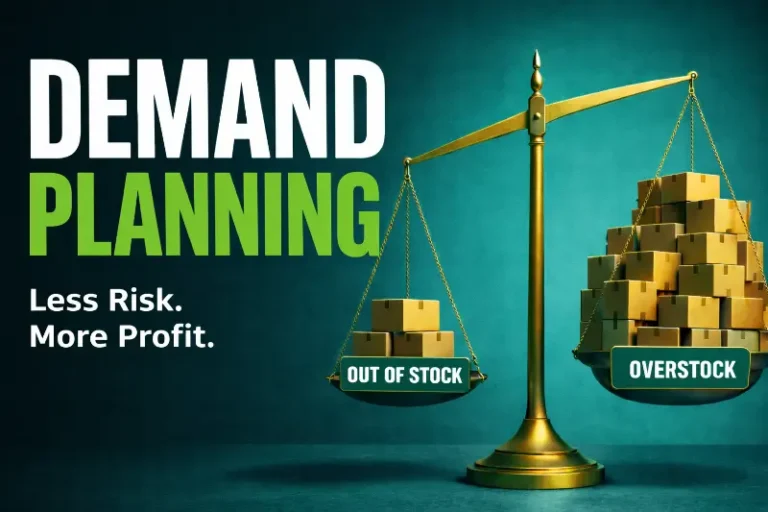
What Is Demand Planning? How It Impacts Inventory, Forecasting, and Profitability
Demand planning is the process of estimating future customer demand so that a business can align its inventory, procurement, and operations to meet that demand without carrying mor...

The Shipping Speed Paradox: Why DTC Brands Are Slowing Down
Everyone’s talking about faster delivery.

Why Cross-Border DTC Brands Are Moving Fulfillment Inside the US
Cross-border ecommerce fulfillment is the process of shipping ecommerce orders across national borders—often from warehouses outside the United States to U.
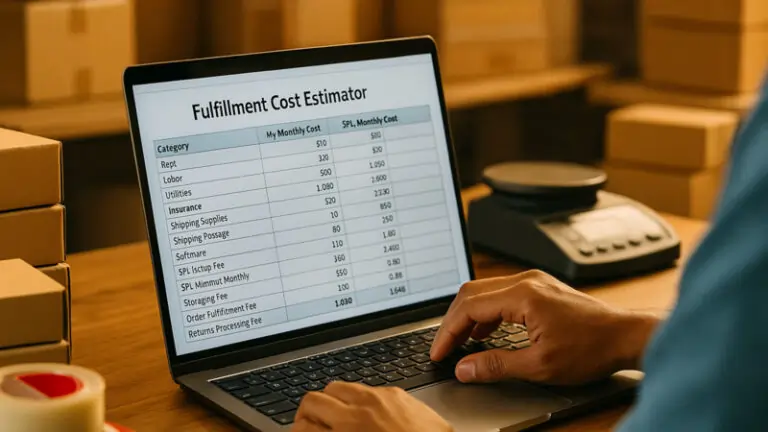
How to Use a Fulfillment Cost Calculator for DIY Estimates
In this article
13 minutes
- Introduction to Fulfillment
- Fulfillment Centers and Costs
- Why 3PLs Can Offer a Cost-Effective Solution
- Understanding Fulfillment Fees
- Factors Affecting Fulfillment Costs
- Strategic Advantages of Partnering with a 3PL
- Comparing Costs and Potential Savings
- Best Practices for Fulfillment
- Why Partnering with a 3PL Makes Sense
- Final Thoughts
- Frequently Asked Questions
Handling ecommerce order fulfillment in-house (DIY) often seems like the logical choice for businesses that want control over their operations. However, the true costs of a do-it-yourself (DIY) approach can quickly add up, and many of the expenses are not immediately obvious.
The most common in-house fulfillment costs include warehouse space, labor, packaging, shipping, and general operational overhead. Leasing or buying a warehouse, outfitting it with equipment like shelving, forklifts, pallet jacks, packing stations with computers and printers, plus covering utility bills, is just the beginning. On top of that, hiring, training, and managing employees to handle picking, packing, and shipping orders is a continuous commitment. Seasonal spikes in demand can make staffing both challenging and costly. Other factors, such as purchasing packaging materials and paying carrier fees, further contribute to the overall liability. Specific fees are often calculated based on estimates and rates applied by fulfillment companies.
Take a simple example: an ecommerce business processes 10,000 orders each month and spends $20,000 on rent, labor, and supplies. This puts the cost per order at $2. Adding an average shipping fee of $10 per package brings the total fulfillment cost to $12. If the average order value is $60, the cost of fulfillment alone eats up 20% of the sale price. These figures don’t even account for the cost of fulfillment defects, reverse logistics, software and technology investments, insurance, equipment maintenance, in-house or outsourced accounting staff, or the opportunity cost of time spent managing logistics rather than growing the business. Additionally, it’s important to estimate storage costs based on cubic feet for determining monthly expenses. Storage fees are typically applied monthly by 3PLs per cubic foot.
Introduction to Fulfillment
Fulfillment refers to the process of getting products from a warehouse to a customer’s doorstep, involving inventory management, packing, and shipping. It is a central aspect of ecommerce businesses, as it directly affects customer satisfaction and loyalty. Fulfillment costs, including warehousing, packaging, and shipping expenses, can significantly impact a business’s bottom line. Understanding fulfillment costs and fees is essential for businesses to make informed decisions about their logistics and supply chain management. A cost calculator can be a useful tool for estimating fulfillment costs and comparing prices among different fulfillment services.
Fulfillment Centers and Costs
Fulfillment centers are warehouses where products are stored, packed, and shipped to customers, and they can be operated by businesses themselves or outsourced to third-party logistics (3PL) providers. The costs of operating a fulfillment center can be significant, including expenses such as labor, equipment, and rent. Businesses should consider the costs and benefits of operating their own fulfillment center versus outsourcing to a 3PL provider. A fulfillment center can provide businesses with more control over their inventory and shipping, but it may also require significant investments in equipment, staff, and technology. The cost of shipping and handling can also vary depending on the location and capacity of the fulfillment center.
Why 3PLs Can Offer a Cost-Effective Solution
Third-party logistics (3PL) providers often outperform in-house fulfillment when it comes to cost-effectiveness. By working with many brands and retailers, 3PLs achieve economies of scale that most businesses can’t match. And while additional fees may apply for specific services such as protective packaging for fragile items and fees related to hazmat storage and peak season storage, they can be lower than your own costs, and may not even apply to you.
One key reason for their cost advantage is their strategically located warehouses. By positioning fulfillment centers near major cities, 3PLs can reduce shipping distances and “final mile” shipping costs. These providers also negotiate bulk shipping discounts with carriers, which aren’t typically available to smaller businesses shipping lower volumes. Savings also extend to shipping supplies, as 3PLs purchase mass quantities of boxes, mailers, and void fill in bulk and pass those lower costs on to their clients. Their pricing models provide a clear breakdown of core costs. There are no hidden fees in 3PL pricing, ensuring customers pay only for the services they use. Actual 3PL invoices can still include accessorial charges, carrier surcharges, and service-specific fees depending on the provider and shipment profile.
Another benefit of 3PL partnerships is the advanced technology they typically use. Their systems are designed to streamline operations, from inventory management and order tracking to automated shipping processes that ensure fulfillment accuracy. For businesses managing fulfillment in-house, replicating these technologies would require a significant investment, not to mention the expertise needed to run them effectively.
For instance, let’s say an ecommerce business transitions from in-house fulfillment to a 3PL. If their DIY fulfillment cost per order was $12, a 3PL might offer the same service for $8 per order, thanks to better shipping rates and operational efficiencies. Over time, these savings add up substantially, and they only get better as businesses grow. Saving $4 per order across an average 10,000 orders per month is half a million dollars per year!
Understanding Fulfillment Fees
Fulfillment fees are charges associated with the processing and shipping of orders, and they can vary among different fulfillment service providers. These fees may include costs such as receiving, storing, picking, packing, and shipping, as well as additional services like returns processing and customer support. Businesses should carefully review the fulfillment fees and terms of their service provider to ensure they understand all the costs involved. A cost calculator can help businesses estimate their fulfillment fees and compare prices among different providers. It is essential to consider all the factors that affect fulfillment fees, including the type and weight of products, packaging materials, and shipping destinations.
Factors Affecting Fulfillment Costs
Fulfillment costs can vary depending on several factors, including the type and weight of products, packaging materials, and shipping destinations. Additional fees may apply for services such as gift wrapping, express shipping, or storage during peak seasons. The number of orders, units, and pallets can also impact fulfillment costs, as well as the level of customization required for packaging and shipping. Businesses should consider these factors when calculating their fulfillment costs and choosing a fulfillment service provider. A fulfillment fee is typically charged per unit or order, and it may include costs such as labor, materials, and shipping expenses.
Strategic Advantages of Partnering with a 3PL
Outsourcing fulfillment doesn’t just save money; it also provides strategic benefits that can help businesses expand and grow. One of the most significant advantages is the ability to scale fulfillment capacity up and down as volume changes. As an ecommerce business expands, for example, managing fulfillment in-house often requires more warehouse space, additional staff, and higher overhead costs. A 3PL, however, is already equipped to handle growth organically. Whether it’s a seasonal surge or a long-term increase in orders, 3PLs can adjust seamlessly to meet an ecommerce business’s needs.
Another advantage is faster and more efficient shipping, leading to faster and cheaper delivery to customers. Many 3PLs operate a nationwide network of fulfillment centers, allowing their clients to store inventory closer to their customers. This reduces transit times and shipping costs while improving customer satisfaction and encouraging loyalty and repeat business. Offering two-day delivery (or better) becomes much more feasible when orders are shipped from regional warehouses rather than a single central location. Additionally, 3PLs can cater to specific requirements, such as special storage conditions and packaging materials, ensuring customized services tailored for individual businesses.
Advanced technology integration is one more area where 3PLs excel. They make it easy to connect to, and support, omni-channel Sellers, automating order routing, distributed inventory management, tracking notifications, and even shipment exception visibility and handling. The risk of errors is diminished and visibility is enhanced with these technologies, saving businesses from having to manage customer service WISMO messages (“Where Is My Order?”), and decreasing the number of returned orders, letting them focus on other areas of their operation.
Comparing Costs and Potential Savings
To decide whether outsourcing to a 3PL is the right move, businesses need to conduct a detailed review of their current costs and compare them to the estimates of what a 3PL would charge. This means tallying up all in-house expenses, including facilities, labor, storage, shipping supplies, and shipping postage, and then factoring in indirect costs such as time spent managing logistics, customer service, equipment costs (one-time and ongoing maintenance and supplies), and software.
Most 3PLs charge for receiving inventory, storage, picking and packing, materials, and shipping costs. Shipping spend should be refreshed against current USPS, UPS, and FedEx pricing because base rates, surcharges, and peak fees change regularly. While these fees might seem high at first glance, the savings they offer in carrier rates, packaging, and operational efficiencies often more than offset them. Businesses should also consider indirect savings like freeing up internal resources to focus on product development or marketing instead of logistics.
For example, a business spending $20,000 a month on in-house fulfillment might find that outsourcing to a 3PL reduces that figure to $14,000, saving $6,000. These savings can then be reinvested into growing the business or improving the customer experience (or taking a vacation). Over time, the reduced stress and increased operational efficiency that come with outsourcing ecommerce order fulfillment can have a big impact on the overall health of the business.
Use the table below to enter your monthly DIY order fulfillment costs and compare them to illustrative 3PL estimate ranges. These figures are directional only and should be validated against live quotes and current carrier rate tables. Make some assumptions, such as the number of hours spent on inventory prep, time spent on B2B operations, whether inventory will be shipped to a 3PL directly from suppliers or processed locally first, the cost of order fulfillment defects and subsequent returns, ergonomics, worker injuries, etc. The 3PL average costs below assume that products are standard size, as defined by Amazon FBA. Be sure to include all relevant details to get an accurate comparison.
|
Category
|
My Monthly Cost
|
3PLs Monthly Cost
|
|---|---|---|
|
Rent
|
|
NA
|
|
Labor
|
|
NA
|
|
Utilities
|
|
NA
|
|
Insurance
|
|
NA
|
|
Labor (Inventory Prep, Special Projects)
*3PL average: $42/hr |
|
|
|
Shipping Supplies
*3PL average: $0.40 – $1.25 per piece |
|
|
|
Shipping Postage
*3PL average: $8/shipment |
|
|
|
Customer Service
|
|
NA
|
|
Operations Management Time
|
|
NA
|
|
Equipment, Maintenance, & Supplies
|
|
NA
|
|
Software
*3PL average: $99/mo |
|
|
|
3PL Setup Fee
*3PL average: $0 – $999 |
NA
|
|
|
3PL Minimum Monthly
*3PL average: $49 – $499/mo |
NA
|
|
|
Receiving Fee
*3PL average: $42/hr |
|
|
|
Storage Fee
*3PL average: $0.56 – $0.89/ft3 |
|
|
|
Order Fulfillment Fee
*3PL average: $1.80 – $3.00/unit |
|
|
|
Returns Processing Fee
*3PL average: $2.99/unit |
|
|
|
Indirect Costs
|
|
NA
|
|
Total Costs:
|
|
|
Note: These figures are directional planning inputs, not current industry-wide averages. Actual quotes vary by product dimensions, weight, order profile, packaging requirements, provider fee structure, carrier contracts, seasonality, and applicable surcharges.
Best Practices for Fulfillment
To optimize their fulfillment operations, businesses should consider implementing best practices such as streamlining their inventory management, using efficient packaging materials, and providing clear shipping instructions. It is also essential to monitor and analyze fulfillment costs and performance regularly to identify areas for improvement. Businesses should consider using a cost calculator to estimate their fulfillment costs and compare prices among different service providers. Providing excellent customer service and support is also crucial for building customer loyalty and trust. By following these best practices, businesses can improve their fulfillment operations, reduce costs, and increase customer satisfaction.
Why Partnering with a 3PL Makes Sense
The decision to outsource fulfillment to a 3PL goes beyond cutting costs. It’s about positioning the business for long-term success. By working with a 3PL, businesses gain access to resources and expertise that would be expensive or impossible to build in-house. From advanced technology and strategic warehouse locations to robust carrier relationships, 3PLs provide the tools needed to compete in a complex ecommerce environment, with financial feasibility universally covered.
Outsourcing also allows businesses to focus on what they do best. Rather than worrying about packing boxes or negotiating with carriers, they can direct their energy toward areas that drive revenue, like creating new products or improving customer engagement and loyalty, which leads to increased customer lifetime value. In today’s interconnected world, partnering with a 3PL ensures that businesses can scale their operations globally, leveraging international logistical solutions and real-world data.
Final Thoughts
Choosing between in-house (DIY) fulfillment and outsourcing to a 3PL requires careful thought. While managing fulfillment internally offers control, it often comes with hidden costs and challenges that can limit growth. On the other hand, 3PLs may limit control, but they provide cost efficiencies that often reduce the overall cost of fulfillment operations while also supporting the ability to scale effortlessly with a pay-as-you-go model.
Ultimately, the best choice depends on a brand or retailer’s unique needs and goals. A wide range of services offered by 3PLs allows for customization and transparency in pricing based on specific business requirements. For many, partnering with a 3PL is the smarter move because it eliminates the mundane, routine work by offloading it to professionals at a predictable cost. By outsourcing fulfillment, businesses can save money, improve efficiency, and focus on what really matters: delivering exceptional value to their customers and boosting their ability to sell more effectively.
Frequently Asked Questions
What expenses should I include when estimating DIY fulfillment costs?
When calculating in-house fulfillment costs, account for warehouse rent or mortgage; utilities; shelving, forklifts, and packing-station equipment; labor for picking, packing, and management; packaging materials; carrier fees; software subscriptions; insurance; and maintenance. Don’t forget indirect costs like returns processing, fulfillment errors, and the opportunity cost of time spent on logistics.
How do I calculate my cost per order for DIY fulfillment?
Tally your total monthly fulfillment expenses—rent, labor, supplies, and shipping postage—and divide by total orders processed. For example, $20,000 in monthly costs for 10,000 orders yields a $2 cost per order before shipping. Adding an average $10 shipping fee brings total fulfillment cost to $12 per order.
How can a 3PL provider lower my fulfillment costs?
3PLs leverage economies of scale: they negotiate bulk shipping discounts, purchase packaging in volume, and deploy strategically located warehouses to cut final-mile fees. Their advanced fulfillment technology automates inventory management and shipping, driving down per-order costs compared to a small-to-mid-sized business handling fulfillment internally.
What strategic advantages do 3PL partnerships offer beyond cost savings?
Outsourcing to a 3PL provides scalable capacity—seamlessly handling seasonal spikes without extra facility leases or staffing. A distributed network of fulfillment centers shortens transit times, enabling faster delivery and boosting customer satisfaction. Plus, integrated order-management systems reduce errors and free your team to focus on growth activities like marketing and product development.
How do I compare my DIY fulfillment costs to 3PL quotes?
Create a comprehensive cost model listing all in-house expenses: facilities, labor, supplies, software, and overhead. Then gather 3PL pricing for receiving, storage, pick & pack, materials, and shipping. Compare total monthly DIY vs. 3PL costs side by side—factoring in hidden savings like reduced WISMO customer inquiries and fewer returns—to determine the best fit for your business.
Written By:
Indy Pereira
Indy Pereira helps ecommerce brands optimize their shipping and fulfillment with Cahoot’s technology. With a background in both sales and people operations, she bridges customer needs with strategic solutions that drive growth. Indy works closely with merchants every day and brings real-world insight into what makes logistics efficient and scalable.
Turn Returns Into New Revenue
Related Articles
What Is Demand Planning? How It Impacts Inventory, Forecasting, and Profitability
Demand planning is the process of estimating future customer demand so that a business can align its inventory, procurement, and operations to meet that demand without carrying mor...
The Shipping Speed Paradox: Why DTC Brands Are Slowing Down
Everyone’s talking about faster delivery.
Why Cross-Border DTC Brands Are Moving Fulfillment Inside the US
Cross-border ecommerce fulfillment is the process of shipping ecommerce orders across national borders—often from warehouses outside the United States to U.
Top 3PL Software Solutions for Your Warehouse Operations
Running a warehouse isn’t just about stacking shelves and moving boxes, it’s about precision, efficiency, and keeping up with the fast-paced demands of modern commerce; which means having the right tools in place. That’s where 3PL software comes in. Whether you’re managing multiple clients, juggling inventory across warehouses, or optimizing shipping routes, a powerful 3PL solution can make all the difference. But not all software is created equal. The right 3PL software doesn’t just automate tasks it must optimize workflows, reduce errors, and seamlessly integrate with your entire supply chain. In this guide, we’ll break down the key features, benefits, and must-have integrations to help you find the perfect solution for your logistics operations. Let’s dive in!
Key Takeaways
- 3PL software boosts efficiency by automating warehouse operations, providing real-time tracking, and enhancing inventory management to reduce costs and errors.
- Key features of 3PL software include client management tools, real-time tracking, and user-friendly interfaces, which streamline logistics processes and improve customer satisfaction.
- Choosing the right 3PL software involves analyzing specific operational challenges, ensuring scalability, and verifying ease of use for employees to maximize efficiency and ROI.
Understanding 3PL Software
Third-party logistics (3PL) involves outsourcing logistics processes for ecommerce fulfillment, including inventory management, warehousing, and shipping. With the rise of ecommerce, the demand for efficient and reliable logistics solutions has skyrocketed. This is where 3PL software comes into play. This specialized software, also known as a 3PL warehouse management system (WMS), is designed to manage various aspects of logistics, including sales, marketing, operations, fulfillment, and finance.
A Warehouse Management System (WMS) is utilized to effectively manage and track nearly all activities inside the warehouse, including inventory management, shipping, receiving, picking, packing, and processing returns. Accurate data and insights from 3PL software enhance decision-making for clients, boosting productivity and efficiency in warehouse operations.
Cloud-based 3PL solutions offer scalability and flexibility, enabling logistics businesses to adapt their software usage as needed. This adaptability is crucial for managing multiple clients with different inventory, order, and reporting requirements. Overall, 3PL software streamlines logistics operations, cuts down manual effort, and minimizes errors, becoming essential for modern warehouse management.
Key Features of 3PL Software
The key features of 3PL software are designed to enhance the efficiency and effectiveness of logistics operations, providing stakeholders with full visibility into operational progress and challenges at any given point in time. These include client management tools, customer portals for monitoring inventory and order progress, and various inventory and warehouse management tools. Real-time tracking is vital, as it allows providers to monitor the location and condition of goods, significantly reducing delivery delays.
The key features of 3PL software include:
- Client management tools
- Customer portals for monitoring inventory and order progress
- Various inventory and warehouse management tools
- Real-time tracking, which allows providers to monitor the location and condition of goods, significantly reducing delivery delays.
Efficient inventory management in 3PL software is widely known to reduce warehousing expenses by up to 30% and enhance inventory accuracy by 20%. A robust 3PL WMS should include functionalities such as inventory management and control, picking, packing, and shipping, as well as advanced reporting tools. These functionalities streamline operations, boost accuracy, and reduce errors.
Integrated 3PL fulfillment software provides fast onboarding, real-time warehouse management, and billing automation. Automated route optimization reduces shipping costs, enhancing overall delivery efficiency while protecting margins. Additionally, Warehouse Management Systems (WMS) can enhance picking accuracy by 30-40%, resulting in fewer errors and improved operational efficiency. Oracle states warehouse management can raise picking accuracy to as high as 99.9% in barcode-driven environments.
A user-friendly interface ensures employees can easily navigate and use the software. An integrated Order Management System (OMS) can reduce order processing times by up to 60%, boosting service reliability. These key features collectively contribute to making 3PL software a powerful tool for managing logistics operations effectively.
Benefits of Using 3PL Software
A major benefit of using 3PL software is its cost-saving potential. Using a 3PL can lower order fulfillment costs compared to managing logistics in-house. Additionally, using 3PLs allows companies to avoid large capital investments in technology and warehouse facilities. This not only makes logistics more cost-effective but also converts fixed costs into variable costs based on transaction volumes.
Another crucial benefit of 3PL software is its time-saving capability. Automation of tasks such as billing and invoicing enhances accuracy and speed, facilitating the collection of timely payments and reducing manual efforts. Advanced reporting and analytics features help logistics providers make data-driven decisions, improving operational efficiencies by 10-15%. This allows logistics teams to concentrate on business growth instead of daily operational tasks.
Improved customer service is another advantage. 3PL software improves customer service by streamlining communications and keeping client costs down by minimizing mistakes during fulfillment and enabling faster returns (which accelerates turnaround to resale). Insights on sales trends provided by the software help optimize inventory levels and reduce overstock situations, which Sellers appreciate. Overall, the benefits of using 3PL software are many-fold, contributing to greater efficiency, cost savings, and improved customer satisfaction.
How to Choose the Right 3PL Software
Choosing the right 3PL software is a crucial decision that can significantly impact your warehouse operations. The first step is to identify specific operational challenges and tailor your software selection to address these needs. Understanding client needs is also necessary when selecting 3PL software. Research and shortlist software options that offer the necessary features and evaluate them based on their capabilities.
Conducting a pilot test with a small subset of data can help assess the usability and performance of the software. It is also important to analyze the return on investment by comparing software costs with expected efficiency improvements. Verify that the software is user-friendly and easy for employees to learn.
Scalability is another vital factor. The software should be able to scale with your business growth. Select a vendor that provides reliable customer support and stays up-to-date with technology and logistics industry trends. By considering these factors, you can choose a 3PL software solution that aligns with your business goals and enhances your warehouse operations.
Real-Time Inventory Management
Real-time inventory management is fundamental to efficient warehouse operations. 3PL software provides real-time updates on inventory levels and stock movements, supporting timely decision-making. This real-time visibility helps logistics providers streamline operations and improve overall efficiency. The ability to monitor inventory levels in real-time helps prevent stockouts, ensuring better product availability. By automating inventory management, 3PL software reduces manual entry and error rates.
Integrating artificial intelligence and machine learning in 3PL software further enhances operational efficiency by optimizing inventory management and demand forecasting. These technologies enable logistics providers to make data-driven decisions, enhancing inventory accuracy and customer satisfaction. Overall, real-time inventory management is key to maintaining efficiency and reducing operational costs in warehouse operations.
Enhancing Client Relationships with 3PL Software
Strong client relationships are essential for any logistics provider’s success. 3PL software allows the tracking of product flow, order management, and cost monitoring, providing clients with transparency and confidence in their outsourced logistics operations. Real-time shipment tracking builds trust by allowing clients to monitor their deliveries at any time, from anywhere. Such visibility and control boost client satisfaction and loyalty.
Proactive issue resolution through real-time tracking enhances the client experience by quickly allowing customers to address potential shipping problems. Timely communication about order tracking status helps manage client expectations and reduces anxiety related to delays. A strong Customer Relationship Management (CRM) system should be included for managing client interactions and boosting satisfaction and retention.
Tailored logistics solutions allow 3PL providers to meet differing client needs, appealing to a broader market of prospects. Automated customer service systems improve response times to client inquiries, boosting overall customer satisfaction. Combining advanced technology with personalized service, 3PL software helps providers cultivate strong, lasting client relationships.
Automation in 3PL Software
Automation is revolutionizing warehouse operations, boosting efficiency and reducing dependency on manual processes. 3PL software helps logistics managers concentrate on their main strengths by automating numerous repetitive supply chain functions. It covers tasks like generating and receiving documents, managing quality checks, and optimizing delivery routes.
Implementing automation in transportation management can optimize delivery routes, thereby lowering transportation expenses. 3PL software also boosts efficiency by automating tasks and streamlining processes, resulting in significant operational gains. These enhancements increase productivity and reduce operational costs.
Seamless integrations and optimized processes further enhance overall logistics performance. By automating various aspects of warehouse management, 3PL software allows logistics providers to focus on strategic initiatives and business growth. The impact of automation on logistics operations is profound, offering a competitive edge to those that embrace it.
Integrating 3PL Software with Existing Systems
Integrating 3PL software with your existing systems doesn’t have to be complicated, but it’s definitely something worth getting right. A smooth connection between different platforms helps keep data accurate and up to date while making everything run more efficiently. APIs play a big role here, allowing different systems to communicate and share information without a hitch.
If there’s no pre-built connection available, middleware solutions can step in to bridge the gap, offering a flexible way to link multiple applications. For businesses with very specific needs, custom integrations are an option, though they can be pricier. On the flip side, pre-built connections can save time and costs, but they might not offer as much flexibility.
For ecommerce businesses, integrating with 3PL software can speed up order processing by as much as 30%, which means happier customers and a more efficient workflow. Most shopping platforms already support these integrations, making the process easier than you might think. When everything works together seamlessly, your operations run smoother, and you get the most out of your 3PL software.
The Future of 3PL Software
The future of 3PL software looks promising as ecommerce demand remains high: the U.S. Census Bureau estimated 2025 U.S. retail ecommerce sales at $1.2337 trillion, representing 16.4% of total retail sales. Technology is advancing fast, and innovations like warehouse robotics—think automated guided vehicles and robotic picking systems—are set to make logistics operations even more efficient. Artificial intelligence is also playing a bigger role, helping businesses fine-tune order batching and demand forecasting for better accuracy and smoother workflows.
Advanced analytics and reporting tools are making it easier to scale operations by offering valuable insights into performance metrics and future trends. Meanwhile, blockchain technology is enhancing transparency and security, giving companies real-time tracking capabilities while reducing fraud risks.
We’re also seeing a rise in micro-fulfillment centers, which are helping speed up last-mile delivery and shorten processing times, especially in urban areas. Plus, many 3PL providers are simplifying international shipping by streamlining customs and compliance. As logistics continues to evolve, staying ahead of the curve with cutting-edge technology and smart 3PL solutions will be key to staying competitive.
Summary
In the end, 3PL software is a game-changer for warehouse operations, helping businesses work smarter by improving efficiency, cutting costs, and keeping customers happy. Features like real-time tracking, automation, and seamless integrations make a huge difference in streamlining logistics and reducing errors. Finding the right 3PL software means understanding your business’s unique needs, comparing options, and ensuring it’s easy to use, scalable, and backed by solid customer support.
Looking ahead, the future of 3PL software is exciting, with AI, blockchain, and robotics leading the way. By embracing these technologies, logistics providers can stay competitive and keep up with the fast-paced world of e-commerce fulfillment. Choosing the right 3PL software isn’t just a smart move—it’s a key investment that can boost efficiency and fuel long-term business growth.
Frequently Asked Questions
What is third-party logistics (3PL)?
Third-party logistics (3PL) is all about outsourcing logistics tasks like inventory management and shipping to specialized providers. This way, businesses can concentrate on what they do best, while experts handle the complexities of logistics for them.
What are the key features to look for in 3PL software?
When choosing 3PL software, focus on client management tools, real-time tracking, inventory management, and integrated order systems to boost your logistics efficiency. A user-friendly interface is also crucial for seamless operations!
How does 3PL software enhance client relationships?
3PL software really boosts client relationships by offering real-time shipment tracking and timely communication, which builds trust and keeps everyone in the loop. Plus, with proactive issue resolution and tailored solutions, your customers feel valued and satisfied.
Why is real-time inventory management important in 3PL operations?
Real-time inventory management is vital in 3PL operations because it ensures visibility into stock levels and movements, helping avoid stockouts and overstock issues. This leads to better decision-making and improved efficiency overall.
What should be considered when choosing the right 3PL software?
When choosing 3PL software, it’s crucial to focus on your specific operational needs, essential features, and how well it can grow with your business. Don’t forget to test it out first and evaluate the potential ROI to ensure it’s the right fit for you.
How does mobile functionality benefit warehouse staff?
Mobile functionality helps warehouse staff by offering real-time inventory tracking and quick access to order processing, making operations smoother and less dependent on manual work. This ultimately boosts efficiency and saves time!
Written By:

Rinaldi Juwono
Rinaldi Juwono leads content and SEO strategy at Cahoot, crafting data-driven insights that help ecommerce brands navigate logistics challenges. He works closely with the product, sales, and operations teams to translate Cahoot’s innovations into actionable strategies merchants can use to grow smarter and leaner.
Turn Returns Into New Revenue
Related Articles
Next-Gen Warehouse Automation Software for Ecommerce: Fulfillment Efficiency
Ecommerce order fulfillment is more than just packing and shipping — it’s about precision, speed, and cost efficiency.

DSCO Fulfillment Explained: What Sellers Still Get Wrong
DSCO fulfillment is the order-communication layer in a retailer drop ship program: it standardizes how retailers and suppliers exchange orders, inventory, shipment confirmations, a...

Order Picker Software: How Pick Path Optimization Impacts Warehouse Throughput
Order picker software is a warehouse execution layer that improves how warehouse workers pick orders by directing them through efficient pick paths, batching work, coordinating mul...
Constructing a Strong 3PL Contract: Key Elements and Best Practices

Third-Party Logistics companies (3PLs) regularly solve absurdly complex problems, navigating the intricacies of fulfillment, inventory management, inventory preparation or modification, and freight shipping for dozens or even hundreds of clients, each with their own line of products and customization requirements. Successfully managing an operation with so many moving parts requires agility and attention to detail, but there is an overlooked aspect to maintaining regularity within such a complicated operation: a well-constructed contract and service level agreement.
Understanding the Purpose of a 3PL Contract
For those operating or just getting started with a 3PL company, understanding the key components of such contracts is critical. A solid 3PL contract establishes clear expectations and ensures that any services required by a client can be provided promptly as a part of a coherent, ordered process. A well-structured agreement not only delineates the scope of services but also safeguards the interests of both parties, ensuring smooth operations and minimizing potential disputes.
At its core, a 3PL contract serves as a legal framework that outlines the responsibilities, services, and financial arrangements between a logistics provider and its client. It sets the foundation for the business relationship, ensuring that both parties have a mutual understanding of their obligations and expectations. A comprehensive contract helps prevent misunderstandings and provides a reference point in case of disagreements. By clearly defining the roles and responsibilities of both parties, the agreement helps maintain operational efficiency while reducing risks associated with logistics services.
Key Elements of a 3PL Contract
Because no two sellers and no two 3PLs are exactly alike, 3PL contracts can differ widely in terms of pricing and degree of services offered. However, there are elements that should be present in every 3PL contract, to provide the clarity and transparency necessary for building a lasting client relationship.
Scope of Services
A contract should clearly define the services the 3PL will provide, as this serves as the foundation of the entire agreement. This may include warehousing, transportation, order fulfillment, inventory management, and value-added services like packaging or assembly. Specifying these services in detail ensures that both parties have a mutual understanding of expectations, reducing the likelihood of disputes over unfulfilled obligations or availability of services.
Performance Metrics and Service Level Agreements (SLAs)
Every 3PL agreement should establish measurable performance standards to assess the 3PL’s effectiveness, ensuring they meet the required service levels. Common metrics include order accuracy rates, on-time delivery rates, inventory accuracy, and overall error rates. For instance, many fulfillment providers aim for a picking accuracy of 99.5% (1 error per 200 units) or higher. Including SLAs with defined consequences for non-compliance ensures accountability and provides a mechanism to promptly make things right with a client without losing valuable trust.
Confidentiality and Intellectual Property
Handling of sensitive information and intellectual property needs to be addressed explicitly, as logistics providers often have access to proprietary data. Both parties should agree on how trade secrets, customer information, and business strategies will be protected during and after the contract term. A well-defined confidentiality clause safeguards critical business information and prevents unauthorized disclosure or misuse. If the 3PL will process customer personal data on the client’s behalf, the contract should also define data-processing instructions, confidentiality obligations, security controls, and breach-notification responsibilities, because state privacy laws increasingly require processor responsibilities to be set by contract.
Contract Duration and Termination Clauses
The length of the agreement should be clearly specified, as well as the conditions under which either party can terminate it. Contracts may range from month-to-month arrangements to multi-year commitments, depending on the nature of the business relationship. Including provisions for early termination, renewal terms, and notice periods provides both parties with flexibility and clarity, ensuring a structured approach to ending or extending the contract when needed.
Pricing and Payment Terms
The fee structure for the services provided should be clearly stated, to avoid financial disputes and ensure smooth transactions. This should cover storage fees, handling charges, transportation costs, and any additional services that may be required over time. Clearly state payment terms, such as invoicing frequency, payment deadlines, and penalties for late payments, to establish a transparent and predictable financial arrangement for both parties.
Monthly fulfillment and storage minimum fees are inconvenient for sellers, but they represent an important part of the pricing structure for a 3PL. They smooth income, to ensure that a warehouse is able to meet its necessary costs regardless of the volume of fulfillments at a given time. They also encourage sellers to be more efficient with the storage space used and maximize their volume of fulfillments.
Above all, because payment is such a sensitive point of contact between clients and 3PLs, 3PL service providers should strive for maximum transparency and consistency in billing policies to maintain client satisfaction and increase lifetime value from each.
Liability, Insurance, and Indemnification
The contract should define the extent of the 3PL’s liability in cases of loss, damage, or delays, as this helps mitigate financial risks. Specify the types and amounts of insurance coverage required, including cargo insurance, general liability, and workers’ compensation. Establishing clear liability limits ensures that both parties understand their level of financial responsibility in case of unforeseen incidents, protecting their respective interests.
It should also detail precisely the conditions under which one party will indemnify the other for losses arising from negligence, misconduct, or breach of contract. This section is crucial for protecting both parties against financial liabilities caused by errors or failures. By specifying indemnification terms, companies can ensure that damages and losses are handled fairly and that responsible parties are held accountable. If the 3PL operates as a broker or freight forwarder, confirm that the agreement aligns with current FMCSA financial-responsibility rules, including the applicable surety bond or trust requirements.
Dispute Resolution
Clear mechanisms for resolving disputes efficiently, such as mediation or arbitration, are indispensable. By defining a structured dispute resolution process, both parties can avoid costly and time-consuming legal battles. Specifying the governing law and jurisdiction ensures that both parties know how and where disputes will be settled and removes the potential for additional conflict around resolution mechanisms.
Force Majeure
Incorporate clauses that outline the responsibilities of each party in the event of unforeseen circumstances that may disrupt operations. Events such as natural disasters, strikes, pandemics, or government actions should be covered in this section. Clearly defining how such events impact the contract ensures that both parties are prepared for unexpected disruptions and can adjust their obligations accordingly.
Amendments and Modifications
Specify the process for making changes to the contract, ensuring that any modifications are mutually agreed upon and documented. Requiring written consent from both parties for amendments prevents misunderstandings and ensures that contract changes are implemented transparently. This section is particularly important for long-term agreements that may require periodic adjustments as business needs evolve.
Best Practices for Constructing a 3PL Contract
When constructing a 3PL contract, customization is crucial to ensuring the agreement aligns with the unique needs of the partnership. A well-tailored contract reflects the specific services, operational requirements, and business goals of both parties. Relying on generic templates may overlook critical industry nuances or fail to account for specialized logistics services, leading to ambiguities and potential disputes.
Clarity and precision in language are equally important in preventing misinterpretations and misunderstandings. Contracts should be written in straightforward, unambiguous terms, leaving no room for conflicting interpretations. Defining technical terms ensures that all parties, including those without extensive logistics experience, clearly understand their roles and obligations. Avoiding excessive jargon also enhances readability, making the contract more accessible to all stakeholders.
Engaging legal professionals with expertise in logistics and contract law is a necessity. Their knowledge helps ensure that the contract is compliant with all relevant laws and regulations while safeguarding the interests of both parties. Legal review can also identify potential risks and liabilities that may not be immediately apparent.
In addition, regularly reviewing and updating the contract allows for adjustments as business needs evolve. A contract that was effective at the start of the relationship may become outdated due to operational changes, regulatory shifts, or market fluctuations. Keeping the agreement current ensures that it remains a reliable framework for managing the partnership and addressing new challenges effectively.
A Better Way: The Cahoot Fulfillment Network
Managing all of these contractual variables for dozens or hundreds of clients creates a mountain of administrative headaches. Fortunately, Cahoot is here to help. Our distributed fulfillment network frees 3PLs from the need to create, haggle over, or monitor the terms of a stack of contracts. By signing one simple, straightforward agreement with Cahoot, our fulfillment partners have the ability to provide fulfillment services for dozens of sellers already within the Cahoot network.
Cahoot manages the contractual specifics, allowing our partners to focus on doing what they do best and improving their core operations. Cahoot partners are paid competitive rates for order fulfillment, storage, receiving, inventory prep, and special projects, all conveniently coordinated and monitored via the Cahoot app. Whether you are seeking a significant new revenue stream or simply to optimize some additional warehouse space, the Cahoot network makes too much sense for warehouses to ignore.
Conclusion
A well-constructed 3PL contract is the cornerstone of a successful partnership between a logistics provider and its client. By meticulously outlining the scope of services, performance expectations, financial arrangements, and legal protections, both parties can foster a collaborative relationship built on transparency and trust. Investing time and resources into drafting a comprehensive agreement not only mitigates risks but also paves the way for operational excellence and long-term success in the dynamic world of logistics. Tapping into the Cahoot network represents a way to avoid the costs, stress, and high-stakes negotiations involved in preparing contracts for a prospective new client. 3PLs of all sizes and capabilities can use it as a way to supplement business as well as maximize unused space and increase overall efficiency. Contact us today to talk with a solutions expert about what the Cahoot network can do for you!
Written By:
Indy Pereira
Indy Pereira helps ecommerce brands optimize their shipping and fulfillment with Cahoot’s technology. With a background in both sales and people operations, she bridges customer needs with strategic solutions that drive growth. Indy works closely with merchants every day and brings real-world insight into what makes logistics efficient and scalable.
Turn Returns Into New Revenue
Related Articles
DSCO Fulfillment Explained: What Sellers Still Get Wrong
DSCO fulfillment is the order-communication layer in a retailer drop ship program: it standardizes how retailers and suppliers exchange orders, inventory, shipment confirmations, a...
Apparel Returns Are Getting Harder to Avoid. Brands Need to Make Them Cheaper to Handle
Apparel returns are climbing again, and a meaningful share of the increase is tied to customers whose bodies are changing faster than their wardrobes can keep up.
Amazon’s July 2026 Seller Fulfilled Prime Speed Changes: What Sellers Need to Know
Amazon is raising the minimum delivery-speed requirements for Seller Fulfilled Prime, effective July 6, 2026.
Top 8 Amazon 3PL Shipping Companies for Reliable Fulfillment
In this article
12 minutes
- Key Takeaways
- Cahoot: Leading Amazon Fulfillment Partner
- ShipBob: Well-Rounded
- Red Stag Fulfillment: Precision and Reliability
- ShipMonk: Full-Service Fulfillment Solutions
- ShipNetwork: Flexible Logistics Options
- Shipfusion: Tech-Driven Fulfillment Services
- MyFBAPrep: Enterprise-Level Fulfillment
- AMZ Prep: Comprehensive Fulfillment Solutions
- Choosing the Right 3PL Provider for Your Amazon Business
- The Role of Technology in Modern 3PL Services
- Benefits of Using Third-Party Logistics for Amazon Sellers
- How 3PL Providers Enhance Customer Experience
- Cost Management with 3PL Services
- Ensuring Data Security and Privacy with 3PLs
- Summary
- Frequently Asked Questions
If you’re an Amazon seller looking to improve your logistics, whether by fully outsourcing fulfillment or keeping some of it in-house, finding the right 3PL provider is essential. This article reviews the top 8 Amazon 3PL shipping companies. You’ll learn about providers that offer faster shipping, reduced costs, and specialized services to meet your fulfillment needs.
Amazon’s US FBA prep and item labeling services ended on January 1, 2026, making third-party FBA prep partners more important for sellers that do not want to handle prep in-house.
Key Takeaways
- Cahoot’s peer-to-peer order fulfillment model allows for faster and more cost-effective logistics, making it ideal for small businesses competing with larger retailers.
- Advanced technology plays a crucial role in optimizing 3PL services, enhancing order accuracy and efficiency while allowing for real-time tracking and management.
- Partnering with a 3PL provider offers significant cost management benefits, as businesses can convert fixed costs to scalable expenses and access transparent pricing models.
Cahoot: Leading Amazon Fulfillment Partner
Cahoot stands out with its innovative peer-to-peer order fulfillment model that leverages merchant-operated warehouses. This approach not only offers faster and more cost-effective fulfillment compared to traditional 3PLs but also allows businesses to tap into unused space at merchant warehouses across the country. This unique model enables Cahoot to provide ultrafast order fulfillment services, making it a game-changer for ecommerce companies. And Cahoot has demonstrated that fulfillment accuracy is unmatched when Sellers fulfill for other Sellers because they care, they “get it”, they understand the complexities and importance of performance metrics and how they impact the livelihoods of online businesses.
Small businesses benefit from Cahoot’s scalable logistics support, allowing them to compete with larger retailers. The platform integrates seamlessly with major ecommerce marketplaces and shopping carts such as Amazon, eBay, Shopify, and BigCommerce, making order fulfillment more efficient. Cahoot also provides nationwide 1-day and 2-day shipping through its network of over 100 fulfillment centers, enabling merchants to meet high consumer expectations.
Furthermore, Cahoot’s participation in Amazon’s Seller Fulfilled Prime (SFP) Program sets it apart. Partnering with Cahoot allows merchants to meet Amazon’s stringent SFP requirements, such as same-day fulfillment and weekend shipping. The advanced fulfillment technology and software provided by Cahoot enhance order accuracy, provide real-time visibility, and reduce operational costs, ensuring a smoother and more efficient fulfillment process. And with Cahoot, merchants can participate as a fulfillment warehouse from their own location, adding and removing Cahoot locations as needs change; not the case with any other 3PL.
Cahoot also supports all the expected additional services such as FBA prep, inventory barcoding and bundling, B2B fulfillment, returns management, and distribution services, among others. With exceptional customer support ratings and awards and hundreds of 5-star reviews across all the major customer confidence sites like G2, Google, Trustpilot, even Shopify and Amazon app stores, Cahoot is one of the leaders in warehousing and streamlined fulfillment services.
ShipBob: Well-Rounded
ShipBob is a solid choice for Amazon fulfillment, providing a range of services tailored for Amazon Sellers. They offer FBA prep services, which help businesses navigate Amazon’s specific requirements. Their pricing model is flexible enough to accommodate the diverse needs of Amazon businesses.
ShipBob employs advanced technology to support efficient order fulfillment and inventory management, making logistics operations straightforward. Their customer service is accessible through phone, email, and chat, providing support for logistical needs.
Overall, ShipBob is a dependable fulfillment partner for Amazon Sellers, focusing on customer satisfaction and operational efficiency without overpromising. They offer reliable services that can help streamline your logistics processes.
Red Stag Fulfillment: Precision and Reliability
Red Stag Fulfillment is a reputable choice known for its dedication to delivering precise and reliable order fulfillment, warehousing, and shipping solutions. Their pricing structure is designed to be straightforward, ensuring clients only pay for the services they actually use, which makes it a sensible option for businesses conscious of costs. While their promise of 100% order accuracy and zero loss or damage is commendable, it’s important to remember that no system is entirely foolproof.
A notable aspect of Red Stag Fulfillment is their capability to handle bulky or oversized items, which can be a significant advantage for businesses with unique logistical challenges. They offer a supportive onboarding process, helping new clients transition smoothly and establishing a fulfillment process that aligns with their specific needs.
Red Stag Fulfillment’s emphasis on precision and reliability contributes to a positive customer experience and helps streamline the fulfillment process at their centers. While they set high standards in logistics, businesses should evaluate whether their specific offerings align with their unique requirements and expectations.
ShipMonk: Full-Service Fulfillment Solutions
ShipMonk brings a variety of fulfillment services to the table, including order fulfillment, FBA prep services, and support for the Seller Fulfilled Prime program. Their pricing model is designed with Amazon Sellers in mind, aiming to provide cost-effective solutions that align with business operations.
A notable feature of ShipMonk is its swift order processing. This efficiency helps in getting orders to customers promptly, which can enhance the shopping experience. This efficiency, combined with its comprehensive fulfillment solutions, makes ShipMonk a formidable partner for ecommerce businesses looking to streamline their logistics operations.
ShipNetwork: Flexible Logistics Options
ShipNetwork offers logistics options that are adaptable to the specific needs of Amazon Sellers. Their services, which include inventory management and order shipment, are a good choice for maintaining smooth logistics and fulfillment operations. They provide customer support through various channels like phone, email, and online case submission, which can be handy when you need assistance.
One of ShipNetwork’s interesting offerings is their customized packaging solutions. These can help maintain brand identity during fulfillment, adding a personalized touch to orders. With such flexible and customer-focused services, ShipNetwork stands out as a versatile logistics partner.
Shipfusion: Tech-Driven Fulfillment Services
Shipfusion is a tech-oriented 3PL provider offering end-to-end fulfillment services for ecommerce brands. Its current warehouse network includes Chicago, Las Vegas, York (Pennsylvania), and Toronto, and its platform supports real-time tracking and inventory management.
MyFBAPrep: Enterprise-Level Fulfillment
MyFBAPrep caters to large brands with its enterprise-level logistics services. Their extensive network of warehouses facilitates efficient distribution, aiming to position inventory for quick delivery. This setup can help reduce shipping times and costs, a crucial factor in maintaining strong margins.
Their integration with Amazon’s FBA program is a plus, as it allows Sellers to leverage Amazon’s extensive fulfillment network while maintaining control over their inventory and logistics processes through an FBA prep service and consolidated inventory visibility.
AMZ Prep: Comprehensive Fulfillment Solutions
AMZ Prep is a tech-enabled 3PL provider offering services like inventory management, warehousing, order processing, and shipping. Their solutions are crafted to be efficient and affordable while providing comprehensive solutions that cater to the diverse needs of ecommerce businesses. Their reliability makes them a valuable partner for brands aiming to optimize logistics strategies.
Choosing the Right 3PL Provider for Your Amazon Business
Selecting the right 3PL provider is a critical decision for any Amazon business. Choosing a provider with a long-term vision is crucial for overcoming current logistics challenges and preparing for future growth. Ecommerce companies should begin by analyzing their reasons for needing a 3PL, such as operational challenges or business structure changes.
Cost-efficiency plays a significant role in this decision. Businesses should seek providers offering efficient operations without hidden fees that could inflate costs. Evaluating the global reach of a 3PL is also important for powering international expansion, making advanced technology a central consideration. Providers using state-of-the-art technology can optimize logistics operations through automation, offering scalable solutions that grow with your business. This blend of cost-efficiency, global reach, and advanced technology will ensure that your chosen 3PL provider can meet your evolving needs.
The Role of Technology in Modern 3PL Services
In the modern 3PL, technology plays a pivotal role in 3PL services. Quality 3PL providers invest in advanced technology systems, and the best are proprietary warehouse management systems (WMS) and transportation management systems (TMS), that improve their competitive edge. These systems enhance order accuracy, optimize resource use, and reduce operational costs through automation and data capabilities. The savings get passed onto their clients.
Cloud-based WMS integrates with existing technologies, offering comprehensive visibility across the supply chain. This integration enables real-time data tracking, minimizes errors, and accelerates processes, allowing teams to focus on core tasks. Employing technology for warehousing and inventory management helps businesses reduce overstocking and related costs, boosting overall efficiency.
AI and ML are transforming 3PL operations by enabling smarter inventory management and route optimization. These technologies allow for predictive analytics, helping businesses anticipate demand and streamline their logistics operations. Technology’s role in 3PL services drives efficiency and innovation in the industry.
Benefits of Using Third-Party Logistics for Amazon Sellers
Collaborating with a third-party logistics provider offers numerous benefits for Amazon Sellers. Optimizing logistics operations leads to significant cost savings and improved customer service. Cahoot and ShipBob, for instance, use a nationwide network of fulfillment centers to minimize shipping times and costs, creating an exceptional customer experience.
Quick preparation times are another advantage, with some providers ensuring items are ready for fulfillment within 24 to 72 hours, and more modern solutions providing same-day fulfillment late into the day. This speed is crucial in supporting high customer satisfaction and loyalty. Likewise, automation in the picking, packing, and shipping workflow improves delivery speed and accuracy.
3PL providers also offer specialized services like kitting, subscription box fulfillment, and comprehensive returns management. These value-added services enable businesses to focus on core competencies while the 3PL manages logistics complexities, making them indispensable to ecommerce Sellers.
How 3PL Providers Enhance Customer Experience
Enhancing customer experience is a primary goal for any ecommerce business, and 3PL providers play a crucial role in achieving this. Reliable logistics providers can achieve on-time delivery rates above 97%, significantly improving customer trust and satisfaction. High order accuracy rates of 99.9%+ ensure customers receive exactly what they ordered, reducing returns and complaints.
Personalized and dedicated support from account specialists enhances customer service, making it easier to resolve issues efficiently. Effective returns management simplifies the process for customers, encouraging repeat business and loyalty. Real-time tracking and automated notifications keep customers informed about their order status, enhancing their overall shopping experience.
3PL providers also offer customized fulfillment service options, including a variety of shipping methods, ensuring that customer expectations are not just met but exceeded. By focusing on these elements, 3PL providers don’t just improve customer satisfaction – they build lasting relationships that turn shoppers into loyal fans.
Cost Management with 3PL Services
Running a successful Amazon business means keeping a keen eye on costs, and partnering with a 3PL provider can be a game-changer in this area. Amazon also implemented 2026 US fee changes, including higher inbound placement service fees for some shipment plans created on or after January 15, 2026, which can change the cost comparison between FBA and third-party logistics providers. These providers offer a flexible cost model, allowing you to pay only for the services and space you actually use. This means you can turn fixed costs into scalable expenses, giving you the agility to adapt to changing demands effortlessly.
When it comes to shipping, negotiating costs with your 3PL can lead to significant savings, as shipping often takes a big bite out of your logistics budget. Ask for discounts on inbound container shipping, and make sure there are no hidden fees lurking in the shadows, allowing you to plan your budget with confidence.
Regular performance reviews with your 3PL ensure they are hitting those efficiency and cost-saving targets. Plus, consolidating orders into fewer shipments can further lower your shipping costs. By leveraging these cost management strategies, you can optimize your logistics operations and boost your financial performance.
Ensuring Data Security and Privacy with 3PLs
Data security and privacy are paramount when working with third-party logistics providers. Defining clear data access limits and implementing robust security measures is vital when negotiating 3PL contracts to protect sensitive information. Contract clauses should specify data ownership, access rights, and security measures such as encryption and incident response protocols.
Regular audits and compliance checks ensure 3PL providers adhere to agreed-upon data security practices. Cahoot, for instance, protects consumer data by ensuring that fulfillment partners only see the minimum information required to fulfill orders, unlike traditional logistics companies.
By prioritizing data security and privacy, businesses can maintain customer trust and protect their valuable information.
Summary
Navigating the world of third-party logistics can be challenging, but selecting the right 3PL provider is essential for the success of your business. From Cahoot’s innovative and high-quality peer-to-peer model to ShipBob’s comprehensive fulfillment services and Red Stag Fulfillment’s precision and reliability, each provider offers unique benefits tailored to different business needs. By understanding the specific strengths and offerings of these top 3PL companies, you can make informed decisions that enhance your logistics operations and drive growth.
Remember, the right 3PL provider not only streamlines your fulfillment process but also significantly impacts customer satisfaction and cost management. Partnering with a reliable and technologically advanced 3PL will be essential to staying competitive and meeting the ever-growing expectations of your customers.
Frequently Asked Questions
What are the benefits of using Cahoot for Amazon fulfillment?
Using Cahoot for Amazon fulfillment provides a cost-effective and reliable solution through its peer-to-peer model, enabling low-cost 1-day and 2-day shipping nationwide, as well as easy integration with major ecommerce platforms and access to Amazon’s Seller Fulfilled Prime program. This positions your business for optimal efficiency and exceptional customer satisfaction.
How does ShipBob support Amazon Sellers?
ShipBob supports Amazon Sellers by offering fulfillment services such as FBA prep, advanced technology for efficient order processing, and dedicated customer support, all aimed at enhancing the logistics experience.
What makes Red Stag Fulfillment unique?
Red Stag Fulfillment stands out due to its expertise in managing bulky or oversized items, its commitment to 100% order accuracy with no shrinkage, and the dedicated onboarding support it provides, catering effectively to businesses with specific logistical demands.
How does technology enhance 3PL services?
Technology significantly enhances 3PL services by improving order accuracy, optimizing resource utilization, and reducing operational costs. Utilizing advanced systems such as WMS and TMS, alongside AI and machine learning, facilitates real-time data tracking and smarter inventory management.
What should businesses consider when choosing a 3PL provider?
When choosing a 3PL provider, businesses must prioritize the provider’s long-term vision, cost-efficiency, global reach, advanced technology, and scalable solutions. These factors are essential for meeting evolving logistics needs effectively.
Written By:
Indy Pereira
Indy Pereira helps ecommerce brands optimize their shipping and fulfillment with Cahoot’s technology. With a background in both sales and people operations, she bridges customer needs with strategic solutions that drive growth. Indy works closely with merchants every day and brings real-world insight into what makes logistics efficient and scalable.
Turn Returns Into New Revenue
Related Blog Posts
Understanding the Relationship of 3PLs and Dropship Services

In this article
17 minutes
- Understanding 3PL (Third-Party Logistics)
- Advantages of 3PLs
- Disadvantages of 3PLs
- Understanding Dropshipping
- Advantages of Dropshipping
- Disadvantages of Dropshipping
- Key Differences Between 3PL and Dropshipping
- How Dropshipping and 3PLs Interact
- Full Service Automation Integrations (Dynamic Fulfillment)
- Challenges of Managing Inventory in Dropshipping
- Future Outlook
- Conclusion
- Frequently Asked Questions
In today’s rapidly evolving ecommerce landscape, entrepreneurs are constantly seeking efficient ways to manage inventory, fulfill orders, and scale their businesses. Two popular models that frequently intersect are third-party logistics (3PL) and dropshipping. While these terms are sometimes used interchangeably, they represent distinct approaches to supply chain management, each with unique advantages and considerations.
Understanding 3PL (Third-Party Logistics)
What is 3PL?
A third-party logistics provider (3PL) is a company that offers outsourced logistics services, including fulfillment services, handling various aspects of the supply chain on behalf of another business. 3PL providers essentially function as extensions of a business’s operations, taking over the physical aspects of inventory management and order fulfillment while the business focuses on product development, marketing, and customer relationships.
How 3PLs Work
The typical 3PL relationship begins when a business sends its inventory to the 3PL’s warehouse facilities. The 3PL then:
- Receives and catalogs inventory
- Stores products in organized warehouse spaces
- Integrates with the business’s ecommerce platform
- Processes incoming orders automatically
- Picks, packs, and ships orders to end customers
- Provides tracking information and delivery updates
- Handles returns and exchanges as needed, ensuring efficient order fulfillment throughout the entire process
Advantages of 3PLs
Using a 3PL provider can bring numerous benefits to a business, including:
- Expertise and Infrastructure: 3PLs offer specialized logistics knowledge and advanced infrastructure (warehouse systems, equipment) that would be costly for businesses to develop independently.
- Scalability: Businesses can rapidly scale operations during peak periods (handling 5-10x normal volume) without investing in additional resources, and avoid excess capacity costs during slower periods.
- Focus on Core Competencies: By outsourcing logistics, businesses can redirect energy toward strategic activities like product innovation, marketing, and customer relationships.
- Geographic Expansion: 3PLs with networks of fulfillment centers enable businesses to reduce shipping times and costs, offer competitive delivery options, and expand internationally with minimal risk.
- Cost Efficiency: 3PLs negotiate lower shipping rates (25-50% less), convert fixed costs to variable expenses, and can reduce total fulfillment costs by 15-30% compared to in-house operations.
Disadvantages of 3PLs
3PL providers also have disadvantages:
- Loss of Control: Businesses surrender direct oversight of fulfillment operations, creating accountability challenges when problems arise and limiting ability to make real-time adjustments.
- Setup Costs and Minimums: Initial onboarding fees ($500-$5,000) and monthly minimums ($500-$2,000) create financial barriers, especially for startups or businesses with fewer than 100-200 monthly orders.
- Integration Challenges: Connecting ecommerce platforms with 3PL systems can be technically complex, requiring substantial development work and ongoing maintenance.
- Reduced Branding Opportunities: Standard 3PL procedures prioritize efficiency over customization, limiting opportunities for distinctive packaging and unboxing experiences.
- Additional Fees: Ancillary charges for long-term storage, special handling, returns processing, and other services can increase fulfillment costs by 20-40% above base rates.
Understanding Dropshipping
What is Dropshipping?
Dropshipping is a retail fulfillment model where online stores don’t keep products in stock. Instead, when a customer places an order, the store purchases the item from a third party (usually a manufacturer or wholesaler) who ships the product directly to the customer. The seller never handles the product physically but acts as a middleman between supplier and customer. Dropshipping fulfillment services play a crucial role in this model by partnering with third-party logistics providers (3PLs) to manage order fulfillment, scale operations, and enhance customer experience.
How Dropshipping Works
- A customer places an order on the seller’s ecommerce store
- The seller automatically or manually forwards the order details to the supplier
- The supplier processes the order, packages the product, and ships it directly to the customer
- The seller keeps the margin between their retail price and the supplier’s wholesale price
Advantages of Dropshipping
Low Startup Costs
Dropshipping fundamentally transforms the economics of launching an ecommerce business by virtually eliminating upfront inventory investment. Traditional retail models typically require $10,000-$100,000+ in initial inventory purchases before selling a single product, creating significant financial barriers to entry. With dropshipping, entrepreneurs can establish fully operational online stores with investments as low as $100-$500, primarily covering website hosting, ecommerce platform subscriptions, and basic marketing expenses.
Reduced Overhead
The operational simplicity of dropshipping eliminates numerous fixed costs that typically burden traditional ecommerce businesses. Without physical inventory, entrepreneurs avoid warehouse leases ($2,000-$10,000+ monthly depending on location and size), utilities, insurance, security systems, and maintenance expenses. The absence of inventory handling eliminates the need for forklifts, shelving systems, packaging stations, and other warehouse equipment—investments that typically cost $25,000-$100,000 for even modest operations.
Perhaps most significantly, dropshipping businesses avoid the substantial personnel costs associated with traditional fulfillment: no warehouse managers ($50,000-$80,000 annually), pickers and packers ($15-$20/hour), receiving staff, or inventory control specialists.
Location Independence
Dropshipping liberates entrepreneurs from geographic constraints. Since the business operates entirely through digital interfaces; ecommerce platforms, supplier portals, marketing tools, and communication systems, owners can manage operations from anywhere with reliable internet connectivity.
This location independence enables diverse business scenarios impossible in traditional retail: digital nomads running seven-figure stores while traveling continuously, entrepreneurs accessing global markets from rural areas with limited local opportunities, expatriates building businesses serving their home countries while living abroad, or parents operating substantial enterprises around family responsibilities from home offices.
Wide Product Selection
Dropshipping fundamentally transforms inventory economics, enabling businesses to offer expansive product catalogs that would be financially impossible under traditional inventory models. While conventional retailers might stock 500-2,000 SKUs based on capital constraints and warehouse space, dropshipping stores routinely offer 10,000+ products without incremental investment or operational complexity.
This catalog flexibility creates multiple strategic advantages: the ability to function as comprehensive category destinations rather than specialized boutiques, opportunities to capture long-tail search traffic across thousands of specific product queries, and the capacity to rapidly adapt to emerging trends without inventory liquidation concerns. The breadth of selection enables sophisticated merchandising strategies like “good-better-best” pricing tiers, complementary product ecosystems, and comprehensive solution selling across related categories.
Easy to Test Products
The ability to rapidly test new products with minimal financial risk represents one of dropshipping’s most powerful strategic advantages, enabling an iterative, data-driven approach to product selection impossible in traditional retail.
With conventional inventory models, adding a new product typically requires committing to minimum order quantities (often 100+ units), investing $500-$5,000 before knowing if the item will resonate with customers.
Dropshipping transforms this equation—entrepreneurs can add dozens or hundreds of products to their stores in days, investing only the time required for product research and listing creation.
Disadvantages of Dropshipping
Lower Profit Margins
While traditional retailers typically achieve 50-80% gross margins through direct manufacturer relationships and volume purchasing, dropshipping businesses generally operate with 15-30% margins due to working through intermediaries who capture significant value in the supply chain.
This margin pressure intensifies in highly visible product categories where price competition is transparent and fierce. The competitive landscape exacerbates these challenges—the low barriers to entry create saturated markets where numerous sellers offer identical products, frequently triggering price wars that further erode margins.
Expensive Shipping
Unlike traditional ecommerce where orders are fulfilled from a single warehouse, dropshipping frequently involves multiple suppliers shipping independently to the same customer. When customers purchase multiple products in a single order that source from different suppliers, they receive multiple shipments — a three-item order from three suppliers typically generates shipping charges 200-300% higher than consolidated fulfillment, substantially eroding profitability or forcing difficult decisions about shipping subsidies.
Inventory Issues
The absence of direct inventory control creates persistent operational vulnerabilities for dropshipping businesses, particularly regarding stock availability and accuracy. Unlike traditional retail where inventory is physically on-hand and continuously monitored, dropshippers rely entirely on supplier inventory systems that vary dramatically in sophistication and reliability. Inventory data typically refreshes only periodically (every few hours or daily), creating windows where items showing as available may actually be depleted.
This inventory opacity produces the dropshipping model’s most dreaded scenario: processing customer orders for products that prove to be unavailable, necessitating cancellations, backorders, or substitutions that damage customer trust and generate negative reviews.
Quality Control Challenges
The inability to physically inspect products before they reach customers creates fundamental quality assurance challenges unique to the dropshipping model. Traditional retailers implement multiple quality checkpoints; receiving inspections, periodic inventory audits, and final verification during picking, to ensure customers receive merchandise matching expected specifications and in good condition.
Dropshippers, however, rely entirely on suppliers’ quality processes, effectively outsourcing this critical aspect of customer experience with limited oversight capability. This quality control gap manifests in several problematic scenarios: products arriving with manufacturing defects that would have been caught in standard inspections, packaging damage during extended storage at supplier facilities, outdated or previous-generation products shipped without notification, and incorrect items due to supplier picking errors.
Supplier Dependency
The extreme reliance on suppliers as operational partners rather than merely product sources creates unique vulnerability for dropshipping businesses compared to inventory-based models. Traditional retailers maintain buffer inventory that insulates them from temporary supplier disruptions and provides negotiating leverage. Dropshippers, however, connect customer expectations directly to supplier performance without intermediary control points, creating existential dependency.
This dependency manifests across multiple business dimensions: any supplier fulfillment delay instantly becomes the dropshipper’s customer service problem, supplier stock maintenance directly determines product availability, supplier shipping methods define delivery timeframes, and supplier packaging represents the customer’s unboxing experience.
The relationship asymmetry often creates challenging power dynamics—suppliers typically prioritize their direct B2C operations and large wholesale accounts over dropshipping partners, creating service disparities during capacity constraints.
Key Differences Between 3PL and Dropshipping
Dropshipping: No Inventory Costs
The financial model of dropshipping centers on eliminating upfront inventory investment, creating a distinctive cash flow profile and cost structure. This capital efficiency extends throughout the business lifecycle, as product catalog expansions require no additional investment beyond digital assets and marketing. The tradeoff for this capital efficiency comes in unit economics—dropshipped products typically cost 30-50% more than equivalent items purchased in wholesale quantities, significantly compressing gross margins.
The 3PL fulfillment model creates a hybrid cost structure combining significant upfront inventory investment with professional fulfillment economics. Businesses must first purchase inventory at wholesale; this inventory ownership creates working capital requirements, carrying costs, and obsolescence risks absent in dropshipping, but enables wholesale pricing typically 30-50% lower than dropshipping sources.
3PLs allow Order Fulfillment Customization
Unlike inventory models where businesses control each fulfillment step, dropshippers must accept suppliers’ existing quality standards, packaging approaches, and shipping methods with minimal customization opportunity.
The 3PL fulfillment model creates a structured framework where businesses maintain significant control over critical customer experience elements while outsourcing operational execution.
3PL relationships operate as directed partnerships where the business establishes specifications, standards, and protocols executed by the 3PL. Businesses specify packaging materials, inserts, and presentation elements the 3PL implements.
Scalability
The dropshipping model offers unparalleled product catalog scalability while introducing distinctive operational scaling challenges as order volume increases. The model’s most significant scaling advantage lies in inventory breadth; businesses can expand from dozens to thousands of products without additional capital investment or operational complexity.
The 3PL model creates a structured framework for predictable operational scaling while requiring proportional capital investment to support growth.
Professional 3PLs maintain excess capacity designed to accommodate client growth and seasonal fluctuations, with sophisticated warehouse management systems, staffing models, and physical infrastructure capable of handling 5-10x volume increases during peak periods.
How Dropshipping and 3PLs Interact
3PL Warehouse for Dropshipping (Hybrid Inventory Model)
This hybrid approach balances owned inventory with dropshipped products to optimize both customer experience and business operations. Implementation typically begins with inventory segmentation analysis, where businesses analyze sales data to identify the top 20% of products that generate 80% of revenue (following the Pareto principle). Companies then employ demand forecasting techniques, using historical data and seasonality trends to predict which products should be stocked versus dropshipped. To manage this dual approach effectively, businesses implement specialized inventory management software such as Skubana, Linnworks, or InventorySource that can track both owned and dropshipped inventory in a unified dashboard. Many also set up automatic reordering systems, establishing par levels for 3PL-stored items with automatic purchase orders triggered when inventory reaches predetermined threshold levels.
The benefits of this hybrid model are substantial and multifaceted. Reduced stockouts ensure core products are always available for immediate shipment, while better cash flow management keeps capital tied up only in proven sellers. Customer satisfaction improves with faster delivery for the most common purchases. The approach also provides excellent risk mitigation, as new product lines can be tested via dropshipping before committing to inventory purchase. Seasonal flexibility allows businesses to expand offerings during peak seasons without warehouse expansion.
As a real-world example, a home goods retailer might stock their bestselling bedding collections with a 3PL while dropshipping decorative accessories, seasonal items, and furniture. This strategy allows them to ship core products quickly while offering an extensive catalog without the associated inventory costs.
Shipping 3PL for Dropshipping (2-Step Dropshipping)
This model creates a buffer between suppliers and customers, addressing many traditional dropshipping challenges. The process flow begins when a customer places an order on the merchant’s website. The order is then sent to the dropship supplier, who ships products to the merchant’s 3PL facility rather than directly to the customer. The 3PL receives, processes, repackages, and ships to the end customer, creating a more controlled fulfillment experience.
The infrastructure requirements for this approach include cross-docking facilities with dedicated areas within the 3PL warehouse for quickly processing incoming dropship orders. Quality control protocols establish standardized inspection procedures for all incoming dropshipped products. Custom packaging materials such as branded boxes, inserts, and marketing materials are stored at the 3PL. An order management system provides the software backbone that can track items from multiple suppliers through the consolidation process.
Additional advantages of this model include quality assurance, offering the opportunity to inspect products before they reach customers. Value-added services become possible, including personalization, gift wrapping, or custom inserts. Returns management is centralized, with potential for restocking suitable items. Shipping carrier optimization allows 3PLs to choose the most cost-effective shipping method for each package. Multi-channel fulfillment enables orders from various sales channels to be consolidated and fulfilled consistently.
Cost considerations should not be overlooked, as this approach typically incurs higher operational costs than direct dropshipping. These include an additional shipping leg from supplier to 3PL, 3PL handling and processing fees, potential storage fees for items awaiting consolidation, and often minimum monthly order volume requirements to be cost-effective.
Full Service Automation Integrations (Dynamic Fulfillment)
This sophisticated approach creates a unified ecosystem where fulfillment decisions are automated and optimized. Technical components include API-based integrations providing direct connections between ecommerce platforms, supplier networks, 3PL systems, and shipping carriers. Decision logic engines contain algorithms that determine the optimal fulfillment path based on multiple variables. Real-time inventory visibility offers live inventory feeds from both owned warehouse stock and dropship supplier availability. Shipping time calculators estimate delivery dates based on fulfillment method, carrier options, and destination. Middleware solutions such as Convictional, Fabric, or ChannelApe facilitate communication between disparate systems.
The advanced capabilities of this approach are significant. Split order fulfillment automatically divides orders for optimal processing, with some items coming from 3PL and others dropshipped. Geographic routing sends orders to the fulfillment option closest to the end customer. Margin-based routing chooses fulfillment methods that preserve profitability on each order. Dynamic supplier selection automatically chooses between multiple dropship suppliers based on availability, price, and performance. Predictive stocking uses AI to identify which dropshipped items should be converted to stocked inventory.
Challenges and considerations for this model include system complexity, which requires a sophisticated technology stack and often custom development work. Integration maintenance demands ongoing technical resources to maintain connections as platforms evolve. Exception handling processes must be established for managing orders when automated decisions encounter problems. Data synchronization ensures consistent information across all platforms in near real-time. Training requirements mean staff need understanding of complex systems and troubleshooting capabilities.
The implementation timeline typically requires 6-12 months for full deployment. Many businesses implement in phases, starting with core integrations and gradually expanding functionality. Extensive testing is necessary before full deployment to ensure all systems work seamlessly together and can handle various edge cases and exceptions.
Challenges of Managing Inventory in Dropshipping
Inventory management is a critical component of any dropshipping business, directly impacting customer satisfaction and profitability. However, managing inventory in a dropshipping model presents unique challenges. Unlike traditional retail, where businesses hold their own stock, dropshipping relies on third-party suppliers to maintain inventory levels.
- Stockouts: Running out of stock can lead to lost sales and disappointed customers. Without direct control over inventory, dropshipping businesses must rely on suppliers to keep stock levels updated, which can be unpredictable.
- Inventory Tracking: Keeping track of inventory levels across multiple suppliers can be complex. Accurate inventory tracking is essential to avoid stockouts and overstocking, but it can be challenging without the right systems in place.
- Supplier Management: Managing relationships with multiple suppliers can be difficult, especially when dealing with different lead times, shipping costs, and quality standards. Effective supplier management is crucial to ensure a reliable supply chain.
By outsourcing inventory management to a 3PL provider, dropshipping businesses can overcome these challenges. A 3PL provider can handle tasks such as inventory tracking, supplier management, and order fulfillment, ensuring that products are delivered to customers quickly and efficiently. This not only improves customer satisfaction but also enhances the overall efficiency and profitability of the dropshipping business.
Future Outlook
The next few years will likely see the emergence of hyperlocal fulfillment networks revolutionizing delivery expectations. These ultra-fast delivery systems will operate at the neighborhood level through micro-fulfillment centers, bringing products even closer to consumers and enabling delivery windows measured in hours rather than days.
Sustainability-driven distribution is rapidly transitioning from a marketing advantage to a competitive necessity. As consumers increasingly factor environmental impact into purchasing decisions, carbon-neutral fulfillment options will become standard offerings.
Automated decision optimization represents another major shift, with AI systems increasingly handling complex fulfillment decisions without human intervention. These sophisticated systems will analyze thousands of variables simultaneously—including inventory positions, carrier capacity, weather patterns, and customer preferences—to make optimal routing and fulfillment decisions in milliseconds.
The shopping experience itself will transform through AR/VR enhanced customer experiences, allowing virtual product interaction before purchase decisions. These technologies will bridge the gap between online convenience and in-store tactile experiences, reducing return rates by setting accurate expectations and increasing conversion rates by building purchase confidence.
These evolving models represent the cutting edge of ecommerce operations, blending the flexibility of dropshipping with the control and reliability of 3PL fulfillment to create resilient, scalable businesses that can compete effectively in today’s demanding market.
Conclusion
Both 3PL and dropshipping offer valuable approaches to ecommerce fulfillment, each with distinct advantages and challenges. While dropshipping provides a low-risk entry point for new entrepreneurs, 3PL services offer more control and potentially better economics at scale. Increasingly, successful ecommerce businesses are finding ways to leverage both models, using dropshipping to test products and expand their catalog while utilizing 3PL services for their proven best-sellers.
As competition in ecommerce intensifies, the businesses that will thrive are those that strategically employ the right fulfillment approach for each product and stage of growth, creating a seamless customer experience regardless of the back-end logistics involved. Understanding the nuances of both dropshipping and 3PL services, and how they can work together, provides a significant competitive advantage in today’s dynamic ecommerce landscape.
Frequently Asked Questions
What is Dropshipping?
Selling products without physical inventory. When an order is placed, the seller creates a Purchase Order for the supplier to ship to the customer directly.
What is a 3PL?
3PLs, (third-party logistics) are warehouses that do not belong to the seller, but the seller uses to store and distribute inventory.
What are the differences between dropshipping and using a 3PL?
Dropshipping means taking orders with no inventory, which can have issues if the supplier has inventory issues. Dropshipping comes from the supplier, which can lead to further distances, and thusly, more costly shipping. 3PLs process orders quickly and effectively.
Written By:
Indy Pereira
Indy Pereira helps ecommerce brands optimize their shipping and fulfillment with Cahoot’s technology. With a background in both sales and people operations, she bridges customer needs with strategic solutions that drive growth. Indy works closely with merchants every day and brings real-world insight into what makes logistics efficient and scalable.
Turn Returns Into New Revenue
Related Articles
DSCO Fulfillment Explained: What Sellers Still Get Wrong
DSCO fulfillment is the order-communication layer in a retailer drop ship program: it standardizes how retailers and suppliers exchange orders, inventory, shipment confirmations, a...
Apparel Returns Are Getting Harder to Avoid. Brands Need to Make Them Cheaper to Handle
Apparel returns are climbing again, and a meaningful share of the increase is tied to customers whose bodies are changing faster than their wardrobes can keep up.
Amazon’s July 2026 Seller Fulfilled Prime Speed Changes: What Sellers Need to Know
Amazon is raising the minimum delivery-speed requirements for Seller Fulfilled Prime, effective July 6, 2026.
Cold Storage Warehouse 3PLs: Specialized Solutions for Temperature-Sensitive Supply Chains
In this article
16 minutes
- Understanding Cold Storage 3PLs
- Definition and Purpose of Cold Storage Warehousing
- Advantages of Cold Storage Solutions
- Comprehensive Cold Chain Services
- Comprehensive International Cold Chain Integrity Shipping
- Addressing Cold Storage Challenges
- Choosing the Right Cold Storage 3PL Partner
- Conclusion
- Frequently Asked Questions
In today’s global supply chain landscape, specialized third-party logistics (3PL) providers offering cold storage capabilities have become essential partners for businesses dealing with temperature-sensitive products. The cold storage market is expected to expand at a CAGR of 11.8% from 2022 to 2030, highlighting its growing significance and popularity. From pharmaceuticals and biologics to fresh produce and frozen foods, these specialized 3PLs ensure product integrity throughout the storage and distribution process.
Understanding Cold Storage 3PLs
Cold storage 3PLs provide specialized warehouse and logistics services designed specifically for temperature-controlled products. Unlike traditional warehousing, cold storage facilities maintain precise temperature ranges to preserve product quality, extend shelf life, and comply with regulatory requirements. Cold storage construction involves creating specialized storage solutions required for temperature-sensitive products, highlighting its significance in the supply chain with unique design considerations and costs that differentiate it from conventional structures.
Definition and Purpose of Cold Storage Warehousing
Cold storage warehousing refers to the specialized storage of perishable goods at controlled temperatures to maintain their quality and extend their shelf life. This type of warehousing is crucial for products that are sensitive to temperature fluctuations, such as food, pharmaceuticals, and certain chemicals. The primary purpose of cold storage warehousing is to provide a consistent and reliable environment that prevents spoilage and damage, ensuring that temperature-sensitive products remain safe and effective throughout their storage period. By maintaining specific temperature conditions, cold storage facilities help businesses comply with regulatory requirements and meet the high standards expected by consumers and industry stakeholders.
Advantages of Cold Storage Solutions
Cold storage solutions offer numerous advantages that are vital for the efficient management of temperature-sensitive supply chains. One of the most significant benefits is the extended shelf life of perishable goods, which reduces the risk of spoilage and waste. This not only improves product quality and safety but also leads to cost savings by minimizing losses. Additionally, cold storage solutions enhance supply chain efficiency by ensuring that products are stored under optimal conditions, which facilitates better inventory management and reduces the likelihood of stockouts or overstocking. Compliance with regulatory requirements is another critical advantage, as cold storage facilities are designed to meet stringent standards for temperature-sensitive products, ensuring that businesses remain compliant and avoid potential penalties.
Comprehensive Cold Chain Services
Modern cold storage 3PLs have evolved well beyond basic refrigerated warehousing to offer sophisticated end-to-end solutions that address every aspect of temperature-sensitive supply chains. They provide extensive cold storage services, leveraging a vast network and advanced capabilities to ensure temperature-controlled warehousing globally. These integrated services ensure product integrity throughout the entire logistics process.
Types of Cold Storage Facilities
Cold storage facilities come in various types, each designed to meet specific temperature requirements for different products:
- Refrigerated Cold Storage Facilities: These facilities maintain temperatures between 32°F and 50°F (0°C and 10°C) and are ideal for storing products that require refrigeration, such as meat, dairy, and fresh produce. The controlled environment helps preserve the freshness and quality of these items.
- Frozen Cold Storage Facilities: Maintaining temperatures below 0°F (-18°C), these facilities are used for storing products that need to be kept frozen, such as frozen foods and certain pharmaceuticals. The ultra-cold environment prevents microbial growth and preserves the integrity of the products.
- Ultra-Low Temperature Cold Storage Facilities: These facilities maintain temperatures below -20°F (-29°C) and are essential for storing products that require extremely low temperatures, such as specific pharmaceuticals and biological samples. The precise temperature control in these facilities ensures the stability and efficacy of highly sensitive products.
Temperature-Controlled Warehousing with Multiple Climate Zones
Today’s advanced cold storage facilities feature precisely engineered environments tailored to specific product requirements:
- Zone Segregation Technology: Modern facilities utilize high efficiency insulated walls, specialized air locks, and positive/negative pressure controls to maintain distinct temperature boundaries between adjacent storage areas while minimizing energy loss during transitions.
- Redundant Cooling Systems: Critical storage zones feature N+1 or N+2 redundancy in refrigeration equipment, with automatic failover capabilities and backup power generation that activates within seconds of utility power loss.
- Microclimate Mapping: Advanced facilities conduct comprehensive thermal mapping studies that identify temperature variations throughout storage spaces, allowing for strategic product placement based on sensitivity. These maps are updated seasonally to account for changing external conditions.
- Customizable Environments: Beyond standard frozen, refrigerated, and ambient zones, leading 3PLs now offer customizable environments with precise control over temperature, humidity, air exchange rates, and even light exposure for especially sensitive products like certain pharmaceuticals, biotechnology materials, and specialty foods. Cold air is essential in these environments to maintain product integrity, and evaporators play a crucial role in circulating this cold air, effectively chilling the environment and the goods within.
- High-Density Storage Solutions: Mobile racking systems designed specifically for cold environments maximize storage capacity while maintaining proper air circulation, reducing the refrigerated footprint and associated energy costs.
Specialized Transportation with Refrigerated Vehicles
Cold chain logistics presents unique challenges that require specialized equipment and expertise. Quality cold chain transportation has advanced significantly to maintain unbroken temperature control:
- Refrigerated Transport Fleets: Modern cold chain 3PLs operate specialized vehicle fleets including multi-temperature trailers capable of maintaining different zones within a single trailer (e.g., frozen, chilled, and ambient sections simultaneously). These vehicles incorporate redundant cooling systems, GPS tracking, and remote temperature monitoring. Many fleets now include hybrid or electric options for last-mile delivery in urban environments.
- Advanced Insulation Technology: Next-generation transport units utilize vacuum-insulated panels and phase-change materials that maintain stable temperatures longer, even during power outages or equipment failure.
- Continuous Temperature Monitoring: Advanced systems now employ multiple sensor points throughout cargo areas, transmitting data at 2-15 minute intervals via cellular or satellite connections. These systems integrate with blockchain platforms to create immutable temperature history records, and AI algorithms analyze patterns to predict and prevent potential excursions before they occur.
- Temperature Validation Procedures: Before loading begins, vehicles undergo pre-cooling to reach the target temperature. Products are equipped with calibrated temperature sensors during loading, and thermal imaging technology verifies proper temperature at critical handoff points. Loading docks feature air curtains and insulated dock seals to prevent temperature excursions during the transfer process.
- Immutable Temperature History Records: AI algorithms analyze patterns to predict and prevent potential excursions before they occur.
- Route Optimization for Temperature Integrity: Specialized routing algorithms account for ambient temperature forecasts, traffic patterns, and delivery time windows to minimize the risk of temperature excursions while optimizing fuel efficiency.
- Last-Mile Solutions: For final delivery, providers now offer options ranging from temperature-controlled vans with compartmentalized storage to specialized thermal packaging designed to maintain temperature for specific delivery window durations.
- Cross-Docking Infrastructure: Purpose-built temperature-controlled cross-docking facilities enable efficient transfer between long-haul and local delivery while maintaining the cold chain, featuring air curtains, rapid-roll doors, and thermal seals for loading docks.
The seamless integration between warehousing and transportation is critical. Modern systems allow for real-time visibility, enabling stakeholders to track both location and temperature conditions throughout the journey. This transparency has become increasingly important as regulatory requirements grow more stringent and consumers demand greater accountability.
Comprehensive International Cold Chain Integrity Shipping
The global movement of temperature-sensitive products presents unique challenges that modern cold storage 3PLs have developed sophisticated solutions to address. International cold chain logistics requires seamless temperature control across multiple transportation modes, handling points, and regulatory environments.
Specialized container technologies include active temperature-controlled containers with autonomous cooling, passive thermal packaging using vacuum-insulated panels and phase-change materials, and hybrid solutions that combine passive insulation with selective active cooling. Multi-modal transport coordination ensures seamless transfers between modes, temperature-mapped trade lanes for seasonal adjustments, and pre-conditioning protocols to stabilize shipments before transit.
Cold storage items require rigorous proof of proper handling and compliance with safety standards. Hence quality assurance and documentation is almost as important as the product itself. Quality assurance needs rigorous temperature mapping validation and clear chain-of-responsibility documentation at each handling point. Compliance with pre-clearance programs, temperature-controlled customs inspections, and global standards such as GDP, IATA, and industry best practices ensures regulatory alignment.
Advanced inventory management uses real-time shelf-life tracking, batch segregation, and temperature-based storage assignments to optimize efficiency and minimize waste. GPS monitoring provides real-time tracking, predictive risk management, and emergency intervention networks to prevent temperature excursions.
These are all unique storage and shipping complications for cold storage items not normally relevant for normal good storage.
Addressing Cold Storage Challenges
Cold storage warehousing presents several challenges that must be addressed to ensure the integrity and safety of temperature-sensitive products. Maintaining consistent temperatures, managing humidity levels, and ensuring proper inventory management are critical aspects of cold storage operations. Additionally, energy efficiency and regulatory compliance are significant concerns that impact both operational costs and the ability to meet industry standards. By understanding and addressing these challenges, businesses can optimize their cold storage processes and maintain the quality of their products.
Common Issues and Concerns in Cold Storage
Cold storage facilities face several common issues and concerns that can impact the quality and safety of temperature-sensitive products. Temperature fluctuations can cause damage to products, compromising their quality and safety. Proper humidity levels are crucial in cold storage to prevent moisture accumulation and condensation, which can lead to product damage and spoilage. Cold storage facilities require significant energy to maintain consistent temperatures, which can increase operating costs and environmental impact.
Efficient inventory management is critical in cold storage to ensure that products are stored and retrieved promptly, preventing overstocking, understocking, and spoilage. Cold storage facilities must comply with various regulatory requirements for temperature-sensitive products, including food safety and pharmaceutical storage standards. Adhering to these regulations is essential to avoid penalties and ensure product safety.
Value-Added Services for Temperature-Sensitive Products
Cold storage 3PLs now offer specialized shipping and handling services that extend well beyond basic storage; temperature-controlled processing areas for product manipulation maintained at appropriate temperatures, eliminating the need to move products to ambient conditions, cold packaging custom packaging services using materials validated for specific temperature ranges, including insulated containers, phase-change materials, and temperature-indicating devices, and cold-rated labeling materials and adhesives designed to maintain integrity in freezer environments, with condensation-resistant properties for items transitioning between temperature zones.
Compliance Management for Regulated Industries
There are many complex regulatory requirements for temperature-sensitive products; confirm your 3PL has the appropriate certifications and compliance controls for your sector, such as HACCP, SQF, BRCGS, or GDP, and that it meets applicable FDA, EMA, and other regulatory requirements.
Beyond certifications, cold storage 3PLs need validation of monitoring systems according to industry standards, with documented calibration procedures and traceability to national standards and 21 CFR Part 11 compliant systems for industries requiring secure, tamper-evident electronic records with appropriate audit trails and electronic signature capabilities.
Automated generation of compliance documentation in industry-standard formats for submission to regulatory agencies, streamlining reporting processes while ensuring complete data inclusion is highly recommended.
Choosing the Right Cold Storage 3PL Partner
Selecting the optimal cold storage logistics partner represents a critical strategic decision that directly impacts product quality, regulatory compliance, operational efficiency, and customer satisfaction. Being part of professional associations like the American Frozen Food Institute (AFFI) and adhering to industry regulations is essential for ensuring a facility’s trustworthiness and compliance with food safety standards. Here’s a comprehensive framework for evaluating potential cold chain 3PL partners:
1. Temperature Range Capabilities and Stability
Beyond basic temperature classifications, businesses should conduct detailed evaluations of 3PL’s Temperature Mapping Documentation. Request comprehensive temperature mapping studies of potential facilities, including seasonal variations, recovery times after door openings, and identification of any hot/cold spots within storage areas to ensure the 3PL meets your cold storage requirements.
Evaluate historical temperature excursion data over multiple years, including duration, magnitude, and resolution response times. Leading providers maintain excursion rates below 0.1% of total monitored hours. Assess the provider’s approach to regular stability testing, including frequency of recalibration for monitoring systems and validation procedures for new storage areas or equipment.
Determine whether the provider can accommodate specialized temperature requirements outside standard ranges, such as ultra-low temperature storage (-80°C) for certain biologics or precise temperature control for pharmaceutical stability testing if needed.
Examine data on temperature recovery times following routine operations like loading/unloading or maintenance activities, which indicates the robustness of cooling systems.
2. Regulatory Compliance History and Certifications
A provider’s compliance history offers critical insights into their operational discipline. Verify relevant certifications appropriate to your industry, which might include BRC Global Standard for Storage and Distribution, ISO 9001, HACCP certification, FDA registration, or pharmaceutical-specific certifications like GDP (Good Distribution Practice).
Request summaries of recent regulatory inspections and third-party audits, including any observations or findings and, crucially, the corrective actions implemented in response. Evaluate the structure and effectiveness of the provider’s internal compliance department, including staffing ratios, qualification requirements, and authority within the organization. Assess the maturity of quality management systems, including change control procedures, deviation management, and documentation practices that would support your compliance requirements.
Finally, review the frequency and depth of regulatory training provided to staff, including how training effectiveness is measured and verified.
3. Technology Infrastructure and Monitoring Systems
Modern cold chain logistics requires sophisticated technological capabilities. Evaluate the design of temperature monitoring systems, including sensor redundancy, backup power supplies, and alert escalation protocols. Leading providers employ multiple independent monitoring systems as a safeguard against single-point failures.
Assess how monitoring data is made available to clients, including real-time dashboard capabilities, API integration options with client systems, and historical data retrieval functionality. Review security protocols protecting monitoring systems and client data, including penetration testing history, access controls, and security incident response procedures.
For regulated industries, verify the existence of computer system validation according to GAMP 5 or similar standards, ensuring that monitoring systems are demonstrably reliable for regulatory purposes.
4. Geographic Coverage and Transportation Network
Logistics network capabilities significantly impact service levels and risk profiles. Unlike standard products, 3PL locations need to be evaluated against your manufacturing sites, key suppliers, and customer destinations to minimize transit times and handoff points. Confirm whether the provider operates their own temperature-controlled transportation fleet or relies on partners; directly controlled assets often provide more consistent temperature management.
Review performance data for final delivery operations, including on-time delivery rates, temperature compliance during the critical last mile, and customer satisfaction scores. Evaluate the provider’s ability to reroute shipments or relocate inventory in response to facility issues, weather events, or other disruptions that might impact a single location.
5. Industry-Specific Experience and Expertise
Specialized knowledge significantly enhances operational performance. Identify the percentage of the provider’s business dedicated to your specific industry, as this often correlates with their depth of relevant expertise and processes tailored to your needs.
Assess whether the provider has established handling procedures specific to your product types, such as specialized procedures for vaccines, cell therapies, or delicate food products. Review the provider’s involvement in industry-specific organizations and standards committees, which often indicates commitment to best practices and awareness of emerging trends.
Request detailed case studies and client references specific to your industry, including examples of how they’ve solved challenges similar to those you might face.
6. Contingency Planning and Backup Systems
Robust backup systems and emergency preparedness are essential for cold chain integrity. Evaluate backup power generation capacity, including regular testing protocols, fuel supply agreements, and automatic transfer switch testing. Leading providers maintain generator capacity to power 100% of critical systems indefinitely.
Review the structure and training of emergency response teams, including 24/7 availability, decision-making authority, and regular drill frequency. Assess redundancy in cooling infrastructure, including N+1 or N+2 redundancy planning, preventive maintenance programs, and mean time to repair metrics for critical equipment.
Evaluate procedures for responding to temperature excursions, including product rescue capabilities, alternative storage arrangements, and transportation contingencies. Review notification procedures for emergencies, including escalation pathways, client communication templates, and service level agreements for different types of incidents.
7. Sustainability Practices and Energy Efficiency
Environmental performance increasingly impacts both cost structure and corporate sustainability goals. Compare energy usage per cubic foot of cold storage space against industry benchmarks, as well as trends showing improvement over time.
Assess the provider’s transition status to low-global warming potential refrigerants and leak detection/prevention programs, which impacts both environmental footprint and regulatory compliance. Evaluate the percentage of operations powered by renewable energy sources, including on-site generation and renewable energy credits.
Review water usage for cooling towers and other systems, including recycling programs and efficiency improvements and assess programs for reducing packaging waste, managing product obsolescence, and diverting operational waste from landfills.
Conclusion
As supply chains grow increasingly complex and consumer expectations for quality continue to rise, specialized cold storage 3PLs have become essential partners for businesses handling temperature-sensitive products. Beyond basic warehousing and transportation, networks like Cahoot offer expertise, technology, and purpose-built infrastructure that can support and ensure product integrity throughout the distribution lifecycle regardless of your specialized needs, be it cold storage, electronics, cosmetics, or anything else.
By leveraging the specialized capabilities of cold storage 3PLs, organizations can focus on their core competencies while gaining access to best-in-class cold chain management. The result is enhanced product quality, reduced waste, stronger compliance, and ultimately, greater customer satisfaction.
For businesses dealing with temperature-sensitive products, the right cold storage 3PL isn’t merely a service provider; they’re a strategic partner in delivering quality, compliance, and competitive advantage in an increasingly demanding marketplace.
Frequently Asked Questions
What Types of Products Need to be Stored in a Cold Storage Facility?
Fresh produce, meat, seafood, dairy products, frozen foods, pharmaceuticals commonly require specific temperature control.
How Do You Ensure Product Quality During Cold Storage?
Continuous temperature monitoring systems, regular quality checks, proper handling procedures, and adherence to industry standards maintains product quality during storage.
What Certifications are Needed to Ensure Cold Storage Food Safety and Quality?
Depending on the industry, certifications like BRCGS, FDA, or GMP may be required.
Written By:
Indy Pereira
Indy Pereira helps ecommerce brands optimize their shipping and fulfillment with Cahoot’s technology. With a background in both sales and people operations, she bridges customer needs with strategic solutions that drive growth. Indy works closely with merchants every day and brings real-world insight into what makes logistics efficient and scalable.
Turn Returns Into New Revenue
Related Articles
Next-Gen Warehouse Automation Software for Ecommerce: Fulfillment Efficiency
Ecommerce order fulfillment is more than just packing and shipping — it’s about precision, speed, and cost efficiency.
DSCO Fulfillment Explained: What Sellers Still Get Wrong
DSCO fulfillment is the order-communication layer in a retailer drop ship program: it standardizes how retailers and suppliers exchange orders, inventory, shipment confirmations, a...
Order Picker Software: How Pick Path Optimization Impacts Warehouse Throughput
Order picker software is a warehouse execution layer that improves how warehouse workers pick orders by directing them through efficient pick paths, batching work, coordinating mul...
Finding the Right 3PL Partner for Consumer Electronics Fulfillment | Cahoot

In this article
9 minutes
- Understanding the Complexities of Consumer Electronics Fulfillment
- Why Choose a 3PL Partner for Consumer Electronics Fulfillment?
- Key Services Provided by 3PLs in the Electronics Industry
- Opportunities Created by Outsourcing Fulfillment
- Potential Drawbacks of 3PL Partnerships
- Choosing the Right 3PL Partner for Your Business
- Conclusion
- Frequently Asked Questions
In the fast-paced world of consumer electronics, businesses face a unique set of logistical challenges. High-value products, fluctuating demand, rapid product cycles, and complex global regulations create a landscape where efficient supply chain management isn’t just an advantage—it’s essential. Third-party logistics (3PL) providers offer a strategic solution, helping businesses navigate these complexities while unlocking new levels of efficiency, scalability, and customer satisfaction.
Outsourcing fulfillment to a 3PL can transform operational challenges into growth opportunities, but it also comes with challenges. In this article, we’ll explore the benefits, potential drawbacks, and strategic opportunities that 3PL partnerships bring to the table for consumer electronics sellers.
Understanding the Complexities of Consumer Electronics Fulfillment
The logistical requirements for fulfilling consumer electronics are complex. Products vary widely in size, fragility, and value—from compact smartphones to large home entertainment systems—each requiring specialized handling and secure packaging. Additionally, the sector is marked by unpredictable demand spikes, often driven by seasonal trends, new product launches, or market fluctuations.
One major challenge is inventory management. Overstocking ties up capital and increases warehousing costs, while understocking risks missed sales and dissatisfied customers. Accurate demand forecasting is difficult but critical, especially when navigating global supply chains prone to disruptions. Delays in shipments, whether from natural disasters or geopolitical events, can have costly ripple effects.
Returns management further complicates operations. Electronics have higher return rates than many other products due to defects, compatibility issues, or customer dissatisfaction. Handling returns efficiently—while minimizing costs and maintaining customer satisfaction—requires a refined reverse logistics process.
Aside from pure returns, electronics products involve hundreds or thousands of interlocking components, which need to be tracked for the purpose of recalling defective products or verifying products covered by warranty. Effective serial number tracking for each product is essential for effectively handling such issues when they inevitably arise, and has the added benefit of being useful for detecting counterfeit products as well.
With high-value products in transit and storage, the risk of theft or damage is significant. Last-mile delivery also presents challenges, as customers expect fast, reliable, and damage-free delivery, with any delays or mishandling potentially damaging brand reputation.
Complying with various regulations adds another layer of complexity. Consumer electronics often cross international borders, making them subject to diverse regulations, tariffs, and environmental guidelines. Failure to comply can result in fines, delays, or product recalls.
Why Choose a 3PL Partner for Consumer Electronics Fulfillment?
Partnering with a 3PL provider offers consumer electronics businesses a way to streamline their operations, reduce costs, and focus on core competencies like product development and marketing. Specialized 3PLs bring industry-specific expertise and the infrastructure needed to manage the unique challenges of electronics logistics.
One of the most significant benefits is cost efficiency. 3PL providers operate at scale, allowing businesses to tap into negotiated shipping rates, shared warehousing spaces, and optimized logistics networks. This not only reduces operational costs but also provides access to advanced technologies and automation without the need for heavy capital investment.
Efficiency is another major advantage. 3PLs offer end-to-end solutions—from inventory management and order fulfillment to packaging, kitting, and returns processing. Their experience in handling fragile and high-value products ensures that electronics are packaged securely and delivered intact. Moreover, advanced inventory management systems provide real-time tracking and data-driven insights, helping businesses maintain optimal stock levels and avoid costly stockouts or overstocks.
In the dynamic consumer electronics market, scalability is a critical factor. Demand can spike suddenly during product launches, sales events, or holiday seasons. A reliable 3PL can quickly scale operations to accommodate these fluctuations, ensuring that fulfillment remains smooth even during peak periods.
Customer satisfaction can also see a boost. Timely, accurate deliveries, combined with efficient returns management, help build trust and loyalty. Many 3PLs also offer value-added services like customized packaging, product bundling, and eco-friendly shipping options, enhancing the overall customer experience.
Key Services Provided by 3PLs in the Electronics Industry
A quality 3PL partner offers a range of services tailored to the specific needs of consumer electronics businesses. These services go beyond basic warehousing and transportation to provide comprehensive supply chain solutions.
Inventory Management is at the core of 3PL services. With advanced systems, businesses gain real-time visibility into stock levels, allowing for accurate forecasting, efficient replenishment, and reduced carrying costs. This level of transparency is crucial in managing the wide range of SKUs common in electronics.
Along with inventory management, order fulfillment represents the core service provided by a 3PL. 3PLs handle everything from picking and packing to shipping and last-mile delivery. They ensure that each product is securely packaged to prevent damage during transit, particularly important for fragile electronics.
3PLs can also provide valuable services outside of their core fulfillment and storage operations, however. Transportation and freight management is another area where they often excel. By leveraging their networks and expertise, they optimize shipping routes, manage freight costs, and ensure regulatory compliance across borders.
Returns management or reverse logistics is an area where many electronics companies struggle. 3PL providers streamline this process, managing everything from product inspections and refurbishments to restocking or manufacturer returns. Efficient returns handling not only reduces costs but also improves the customer experience.
Consumer electronics frequently have special packaging and kitting requirements, and many 3PLs offer such services to further increase their potential value to sellers. Electronics may require special packaging to prevent damage, and bundling related items is an even more common practice with electronics than with other goods. 3PLs handle these tasks with precision, ensuring that all components reach the customer in perfect condition.
Opportunities Created by Outsourcing Fulfillment
Outsourcing fulfillment to a 3PL opens doors to growth and innovation. One key opportunity is the ability to focus more on core business activities. By handing over logistics management, businesses can dedicate more resources to product development, marketing, and customer engagement.
Access to advanced technology is another major advantage. Many 3PLs invest heavily in automation, robotics, and AI-driven analytics, allowing their clients to benefit from these innovations without direct investment. This can lead to improved forecasting, smarter inventory management, and more efficient order processing.
As a result, global expansion becomes more attainable with the help of a 3PL. Many providers offer international shipping and have fulfillment centers across different regions, enabling businesses to reach new markets without the complexities of managing overseas logistics.
Sustainability efforts can also be enhanced through a 3PL partnership. Many providers prioritize eco-friendly practices, from optimized shipping routes that reduce carbon emissions to recyclable packaging options. For electronics companies looking to appeal to environmentally conscious consumers, this can be a significant selling point.
Potential Drawbacks of 3PL Partnerships
While the benefits of partnering with a 3PL are substantial, there are potential drawbacks to consider. One of the primary concerns is the loss of direct control over the fulfillment process. When a third party handles logistics, there’s an inherent reliance on their systems and processes, which can lead to issues if the 3PL fails to meet performance expectations.
Costs can also be a double-edged sword. While 3PLs offer economies of scale and negotiated rates, fees can add up, particularly if the partnership isn’t carefully managed. Businesses must thoroughly understand a provider’s pricing structure to avoid unexpected costs.
Additionally, integration challenges can arise—especially when aligning the 3PL’s systems with existing business operations. Ensuring seamless communication between platforms is essential for real-time tracking, inventory management, and customer service.
In short, not all 3PLs are created equal. Choosing the wrong partner can lead to delays, inventory mismanagement, or damage to high-value products. It’s crucial to select a provider with experience in the consumer electronics sector and a proven track record of success.
Choosing the Right 3PL Partner for Your Business
Selecting the right 3PL partner is a strategic decision that requires careful consideration. Start by evaluating your business’s specific needs. Are you looking for global reach or regional fulfillment? Do you need specialized services like kitting or returns management? Understanding your priorities will help narrow down potential partners.
Look for a provider with industry experience. Consumer electronics require careful handling, secure storage, and efficient reverse logistics. A 3PL with a history of success in this sector will better understand these demands.
Location and scalability are also key factors. A provider with fulfillment centers near your target markets can reduce shipping times and costs. Scalability ensures that the 3PL can grow with your business, accommodating spikes in demand during product launches or holiday seasons.
Finally, assess the provider’s technology capabilities. Real-time tracking, inventory visibility, and data analytics are critical for optimizing your supply chain and maintaining customer satisfaction.
Cahoot’s distributed fulfillment network provides an innovative solution to many of the problems encountered by electronics sellers seeking fulfillment partners. Our large warehouse network guarantees nationwide coverage and helps accommodate rapid growth or sudden volume spikes, removing much of the hassle from adapting to fluctuating market conditions. Our rigorous and selective vetting process for warehouse partners keeps defect rates low, while ensuring that electronics are handled with the specialized care and attention they demand.
Conclusion
In the competitive world of consumer electronics, efficient logistics can make or break a business. Partnering with a 3PL provider offers a pathway to streamlined operations, cost savings, and enhanced customer satisfaction. While there are potential risks, careful selection and strategic collaboration can turn logistics from a challenge into a competitive advantage.
By leveraging the expertise, technology, and global networks of specialized 3PL providers, electronics businesses can focus on what they do best—innovating and delivering cutting-edge products—while leaving the complexities of fulfillment in expert hands.
Outsourcing fulfillment isn’t just about simplifying logistics—it’s about positioning your brand for sustainable growth in an ever-evolving market. With the right 3PL partner, the possibilities are endless.
Frequently Asked Questions
How can a 3PL help protect high-value electronics from theft or damage?
Reputable 3PLs employ advanced security measures, such as surveillance cameras, restricted access zones, and tamper-proof packaging to prevent theft. They also implement specialized storage conditions, shock-resistant packaging, and quality control checks to protect delicate electronics from damage during handling and shipping, reducing costly returns due to damaged units.
Can a 3PL handle returns and refurbishments for consumer electronics?
Yes, many 3PL providers offer reverse logistics services, including returns processing, product inspection, refurbishment, and restocking. Some 3PLs can even integrate with manufacturers to facilitate repairs or certified refurbishments, helping businesses recover value from returned products.
Written By:
Indy Pereira
Indy Pereira helps ecommerce brands optimize their shipping and fulfillment with Cahoot’s technology. With a background in both sales and people operations, she bridges customer needs with strategic solutions that drive growth. Indy works closely with merchants every day and brings real-world insight into what makes logistics efficient and scalable.
Turn Returns Into New Revenue
Related Articles
What Is Demand Planning? How It Impacts Inventory, Forecasting, and Profitability
Demand planning is the process of estimating future customer demand so that a business can align its inventory, procurement, and operations to meet that demand without carrying mor...
The Shipping Speed Paradox: Why DTC Brands Are Slowing Down
Everyone’s talking about faster delivery.
Why Cross-Border DTC Brands Are Moving Fulfillment Inside the US
Cross-border ecommerce fulfillment is the process of shipping ecommerce orders across national borders—often from warehouses outside the United States to U.
Best 3PL for Small Business: A Complete Guide to Third-Party Logistics

In this article
25 minutes
- What is 3PL?
- Why Small Businesses Should Consider 3PL Services
- Key 3PL Services for Small Businesses
- Selecting the Right 3PL Partner
- Implementation Best Practices
- Types of 3PL Services
- Tailored Approach vs. One-Size-Fits-All
- Common Challenges and Solutions in 3PL Partnerships
- The Future of 3PL for Small Business
- Conclusion
- Frequently Asked Questions
Third-party logistics (3PL) providers have become vital partners for small businesses looking to compete in today’s market. Utilizing 3PL for small businesses can alleviate resource constraints and optimize supply chain management. As consumer expectations for fast shipping continue to rise and supply chain complexities increase, 3PL services offer small businesses the infrastructure and expertise needed to deliver exceptional customer experiences without massive capital investments.
What is 3PL?
Third-party logistics (3PL) refers to outsourcing logistics and fulfillment operations to a specialized company. These providers, often referred to as fulfillment companies, handle various aspects of the supply chain, including warehousing, inventory management, order fulfillment, shipping, and returns processing. Essentially, 3PLs enable small businesses to focus on their core competencies while experts manage the complex logistics of getting products to customers.
Why Small Businesses Should Consider 3PL Services
Cost Efficiency
For small businesses, building and maintaining in-house logistics operations requires significant capital investment, which can be mitigated by partially or fully partnering with fulfillment companies. Warehousing space, equipment, technology, and staff all represent fixed costs that can strain limited resources. 3PLs often offer a more variable cost model, although pricing may still include minimums, onboarding fees, and project-based charges.
This model is particularly advantageous during seasonal fluctuations when order volumes may spike temporarily. Rather than investing in year-round capacity to handle peak periods, businesses can leverage 3PL resources that expand and contract with demand.
Geographical Expansion
Small businesses often start by serving local markets but eventually seek growth through geographical expansion. Building fulfillment infrastructure across multiple regions is prohibitively expensive for most small operations. 3PLs with established networks allow businesses to position inventory strategically across the country or even globally, reducing shipping times and costs.
This distributed inventory model enables small businesses to offer competitive shipping options like two-day or next-day delivery that would otherwise be impossible without multiple warehouses.
Technology Access
Modern logistics requires sophisticated technology systems, including warehouse management systems (WMS), transportation management systems (TMS), and order management platforms. Quality 3PLs invest in advanced technology and integrate with popular ecommerce platforms and marketplaces.
These integrations provide small businesses with real-time visibility into inventory levels, order status, and shipping information; capabilities that would require substantial investment to develop independently. This also enables data-driven decisions about inventory placement, stock levels, and shipping methods.
Expertise and Best Practices
Logistics specialists at 3PLs bring valuable expertise that can help small businesses optimize their supply chain. From warehouse layout and pick-and-pack procedures to carrier selection and route optimization, 3PLs implement best practices developed across numerous clients and industries.
This knowledge can be particularly valuable when navigating complex shipping regulations, customs requirements, or specialized handling needs for certain products.
Key 3PL Services for Small Businesses
Warehousing and Inventory Management
3PLs provide secure warehousing with organized inventory systems, which are crucial for effective supply chain management. Professional warehouse staff manage receiving, storage, and inventory counting, while technology solutions track stock levels and locations. This visibility helps prevent stockouts and overstock situations.
Order Fulfillment
When customers place orders, 3PLs handle the entire fulfillment process:
- Picking items from warehouse shelves
- Packing orders securely with appropriate materials
- Preparing shipping labels and documentation
- Handing off to carriers for final delivery
Many 3PLs also offer value-added services like custom packaging, promotional inserts, gift wrapping, or product kitting.
Shipping Optimization
Fulfillment providers typically maintain relationships with multiple carriers and can negotiate better rates based on their aggregate shipping volume than a small business can compel. They can help small businesses select the optimal shipping method for each order based on cost, transit time, and service requirements.
Returns Management
Processing returns efficiently is crucial for customer satisfaction, and a quality fulfillment service can manage the entire returns process. 3PLs can manage the entire returns process, including:
- Receiving returned items
- Inspecting products for damage
- Restocking sellable items
- Processing refunds or exchanges
- Disposing of or refurbishing damaged goods
Reporting and Analytics
Quality 3PLs provide detailed reporting on key performance indicators (KPIs) like order accuracy, shipping times, inventory levels, and return rates. These insights help small businesses identify improvement opportunities and make data-driven decisions.
Selecting the Right 3PL Partner
Choosing the right third-party logistics provider is a critical decision that can significantly impact your small business’s operational efficiency, customer satisfaction, and bottom line. The selection process should be approached methodically, with careful consideration of both your current requirements and future growth plans.
Assess Your Needs
Before approaching potential 3PL partners, small businesses should conduct a thorough internal assessment of their logistics requirements. Start by analyzing your order volume and patterns, including daily averages, weekly fluctuations, and seasonal peaks. Understanding these patterns helps identify a 3PL with the capacity to handle your business during both normal operations and peak periods without service degradation.
Handling Requirements: Examine your product characteristics in detail, considering dimensions, weight, fragility, and any special handling requirements. Products that require climate control, have hazardous materials classifications, or need special security measures will narrow your field of potential partners to those with appropriate capabilities. Take inventory of items requiring batch tracking, expiration date management, or serial number tracking, as these needs will influence your technology requirements.
Geographic Distribution: The geographic distribution of your customer base plays a crucial role in 3PL selection. Map out where your customers are located and analyze what percentage fall within various shipping zones. This analysis will help determine whether you need a single fulfillment center or multiple locations to meet customer delivery expectations. Consider both your current market footprint and areas where you plan to expand in the near future.
Technology Integration: Technology integration capabilities are increasingly important in the modern supply chain. Document your current technology ecosystem, including ecommerce platforms, inventory management systems, and order processing software. The right 3PL partner should offer seamless integration with these systems to provide real-time inventory visibility, order status updates, and comprehensive reporting. Consider whether you need customer-facing features like branded tracking pages or specialized reporting for your business analytics.
Budget: Budget constraints inevitably influence your 3PL selection. Beyond comparing basic rate cards, consider the complete financial picture, including implementation costs, minimum monthly commitments, peak season surcharges, and potential hidden fees. Evaluate your preferences for fixed versus variable costs and determine what cost-per-order metrics would make outsourcing to a 3PL financially advantageous compared to in-house fulfillment.
Growth Projections: Finally, factor in your growth projections when selecting a 3PL partner. Consider not just order volume increases but also how your business might evolve; whether through new product lines, additional sales channels, or expansion into new geographic markets. The ideal 3PL partner should be able to accommodate your growth without requiring you to switch providers as your business scales, which can be disruptive and costly.
Evaluate Provider Capabilities
When researching potential 3PL partners, begin by examining their warehouse network relative to your customer base. The strategic location of fulfillment centers can dramatically impact shipping costs and delivery times. Evaluate not just the geographic positioning but also the facilities themselves; their size, security measures, cleanliness, and technological sophistication. Ask about operational hours, including weekend processing capabilities and cut-off times for same-day shipping, which can be critical for meeting customer expectations.
Technology systems and integration capabilities have become differentiating factors among 3PL providers. Beyond basic warehouse management systems, look for advanced features like automated inventory alerts, exception management, and comprehensive reporting dashboards. Discuss integration methods, whether through APIs, EDI connections, or pre-built integrations with popular ecommerce platforms. Request demonstrations of their technology and ask about implementation timelines and support during the onboarding process.
Experience with similar products or businesses should weigh heavily in your decision. A 3PL that understands the unique requirements of your industry will anticipate challenges and implement appropriate solutions without extensive guidance. Ask for client references within your industry and inquire about their retention rates for businesses similar to yours. A provider with relevant expertise can offer valuable insights and best practices specific to your product category.
Carrier relationships and shipping options directly impact your ability to meet customer delivery expectations. Evaluate the breadth of a 3PL’s carrier network, including major national carriers, regional options, and specialized services. Ask about their negotiated rates and how these discounts are passed along to clients. Consider whether they offer strategic services like zone skipping or consolidation programs that could reduce your shipping expenses. Their approach to carrier management, including performance monitoring and contingency planning for service disruptions, reveals much about their operational sophistication.
Scalability is essential for growing businesses. Discuss how the 3PL handles volume fluctuations, both predicted (like holiday seasons) and unexpected (such as viral product success). Inquire about their capacity planning process and staffing model for peak periods. Review their contractual flexibility, including minimum commitments, storage space adjustments, and expansion possibilities. The right partner will offer room to grow without overly restrictive terms that penalize growth or changing business needs.
Value-added services can differentiate 3PL providers and offer convenience beyond basic pick, pack, and ship operations. These might include kitting and assembly, custom packaging, gift wrapping, monogramming, or product customization. Returns management capabilities are increasingly important in ecommerce, so evaluate their reverse logistics processes, including inspection procedures, disposition options, and restocking efficiency. For specialized products, confirm they have appropriate certifications or handling protocols, whether for hazardous materials, temperature-sensitive items, or high-value merchandise requiring enhanced security.
By thoroughly assessing your needs and methodically evaluating potential partners against these criteria, you’ll be positioned to select a 3PL provider that can support both your current requirements and future growth. Remember that the relationship with your 3PL is a partnership, not just a vendor arrangement. The right cultural fit, communication style, and mutual commitment to success are just as important as the technical capabilities and pricing structure.
Technology Compatibility
Ensure the 3PL’s systems can integrate smoothly with your ecommerce platform, inventory management software, and other business systems. Real-time data exchange between systems is essential for maintaining accurate inventory counts and order status information.
Pricing Structure
Understand how the 3PL charges for services. Common pricing components include:
- Storage fees (typically per pallet, bin, or square foot)
- Order fulfillment fees (per order or per item)
- Special project fees (receiving, returns processing)
- Minimum monthly charges
- Onboarding or setup fees
Compare total costs rather than individual line items, as pricing structures vary widely between providers.
Implementation Best Practices
Starting with a new 3PL is particularly harrowing for a small business. Here are some best practices to help make the transition as smooth and pain-free as possible.
Start With a Pilot
Rather than transferring all fulfillment operations immediately, consider starting with a subset of products or a specific geographic region. This approach allows you to test processes and integration points before full-scale implementation.
Develop Clear SOPs
Work with your 3PL to develop standard operating procedures (SOPs) that define responsibilities, communication protocols, and performance expectations. Document handling requirements for different products, quality control procedures, and exception management processes.
Plan for Seasonal Variations
Discuss how your 3PL will handle peak periods well in advance. Understand their capacity limitations and additional costs that may apply during high-volume periods like Black Friday or holiday seasons.
Establish KPIs and Regular Reviews
Define key performance indicators (KPIs) that align with your business objectives, such as order accuracy, on-time shipping, inventory accuracy, and returns processing time. Schedule regular reviews to evaluate performance against these metrics.
Types of 3PL Services
Third-party logistics (3PL) companies offer a wide range of services to help businesses manage their supply chain and logistics operations. These services are designed to streamline processes, reduce costs, and enhance customer satisfaction. Here are some common types of 3PL services:
- Order Fulfillment Services: 3PL providers handle the entire order fulfillment process, from receiving and storing inventory to picking, packing, and shipping orders to customers. This comprehensive service ensures that orders are processed efficiently and accurately, leading to timely deliveries and happy customers.
- Inventory Management: Effective inventory management is crucial for avoiding stockouts and overstock situations. 3PL companies manage inventory levels, track stock movements, and provide real-time inventory reports. This helps businesses optimize their inventory levels, reduce carrying costs, and ensure that products are always available when customers need them.
- Fulfillment Centers: 3PL providers operate fulfillment centers, which are specialized warehouses that store inventory and handle order fulfillment operations. These centers are strategically located to reduce shipping times and costs, ensuring that products reach customers quickly and efficiently.
- International Shipping: Expanding into global markets can be challenging due to complex customs regulations and logistics requirements. 3PL companies provide international shipping services, including customs clearance, freight forwarding, and logistics management. This expertise helps businesses navigate international shipping complexities and reach customers worldwide.
- Returns Management: Handling returns efficiently is essential for maintaining customer satisfaction. 3PL providers manage the entire returns process, including inspecting and restocking returned items, and providing refunds or replacements to customers. This streamlined process ensures that returns are processed quickly and accurately.
- Freight Management: Managing freight operations can be complex and time-consuming. 3PL companies handle various freight services, including truckload, less-than-truckload, and intermodal shipping. They optimize routes, negotiate rates, and ensure that shipments are delivered on time and within budget.
- Warehouse Management: Efficient warehouse management is critical for smooth logistics operations. 3PL providers manage warehouse operations, including receiving, storing, and shipping inventory. They use advanced technology and best practices to ensure that warehouses operate efficiently and accurately.
By leveraging these 3PL services, small businesses can focus on their core competencies while experts handle the logistics, leading to improved operational efficiency and customer satisfaction.
Tailored Approach vs. One-Size-Fits-All
When it comes to 3PL services, a tailored approach is often more effective than a one-size-fits-all approach. A tailored approach involves working with a 3PL provider that understands the unique needs and requirements of your business and provides customized solutions to meet those needs.
A one-size-fits-all approach, on the other hand, involves working with a 3PL provider that offers a standardized set of services that may not be tailored to your specific business needs. This approach can lead to inefficiencies, increased costs, and decreased customer satisfaction.
Common Challenges and Solutions in 3PL Partnerships
Even the most carefully selected third-party logistics partnerships encounter obstacles. Understanding common challenges and implementing proactive solutions can help small businesses maintain productive relationships with their 3PL providers and ensure seamless operations for their customers.
Inventory Discrepancies
Inventory discrepancies between your internal records and your 3PL’s warehouse management system can create significant operational issues, from overselling products to unnecessary reordering. These mismatches typically stem from several root causes. Receiving errors may occur when shipments arrive at the warehouse with quantities that don’t match purchase orders or packing slips. Picking errors can happen when warehouse staff select incorrect items or quantities for orders. System synchronization delays between your ecommerce platform and the 3PL’s inventory management system can temporarily create discrepant records. Additionally, theft, damage, or misplacement within the warehouse can lead to physical inventory counts that don’t match digital records.
To mitigate these challenges, establish a comprehensive inventory management protocol with your 3PL partner. Implement regular cycle counting programs where portions of inventory are counted on a rotating basis rather than relying solely on annual physical inventories. This approach allows discrepancies to be identified and resolved before they become significant problems. Develop a formal reconciliation process that includes comparing your system’s inventory levels with the 3PL’s records on a weekly or monthly basis, investigating variances above an established threshold, and documenting adjustments with root cause analysis.
Consider implementing advanced inventory tracking technologies such as barcode scanning or RFID systems that reduce human error in the receiving and picking processes. Establish clear protocols for handling damaged or unsellable inventory, including immediate notification and documentation requirements. Finally, negotiate inventory accuracy guarantees in your service level agreement (SLA), with specific remediation steps if accuracy falls below agreed-upon thresholds.
Communication Gaps
Communication breakdowns between small businesses and their 3PL providers can lead to misaligned expectations, unresolved issues, and deteriorating service quality. These gaps often emerge during periods of high volume or staff changes, when regular communication patterns may be disrupted. Cultural differences between organizations, including communication styles and problem-solving approaches, can exacerbate these challenges. Additionally, unclear escalation paths can leave urgent issues unaddressed while they work through standard communication channels.
To establish effective communication, begin by creating a comprehensive contact matrix that identifies primary and backup contacts for various functions at both organizations, including operations, customer service, IT, and executive leadership. Document preferred communication methods for different scenarios and expected response times. Schedule regular performance review meetings, typically monthly or quarterly, to discuss key metrics, address recurring issues, and align on upcoming initiatives or volume forecasts.
Implement a shared digital workspace or portal where both teams can access real-time information, track ongoing issues, and document operational decisions. Define clear escalation procedures for urgent situations, including criteria for escalation, communication channels for different severity levels, and resolution timeframes. Consider embedding team members at each other’s locations during critical periods like new product launches or peak seasons to facilitate direct communication and rapid problem-solving.
Technology can bridge many communication gaps through automated alerts for exceptions, shared dashboards for performance metrics, and integrated ticketing systems for issue tracking. However, remember that technology should complement, not replace, human relationships. Invest time in building personal connections between team members at both organizations, possibly through periodic in-person meetings or virtual team-building activities.
Customer Experience Control
Many small businesses hesitate to outsource fulfillment operations due to concerns about losing control over the customer unboxing experience, which has become increasingly important in the ecommerce landscape. This apprehension is understandable; the moment a customer opens a package represents a critical touchpoint for brand impression and customer satisfaction. When fulfillment moves to a 3PL warehouse, business owners no longer personally oversee each package’s preparation, potentially leading to inconsistent presentation or missed opportunities for brand reinforcement.
To maintain control over the customer experience while leveraging 3PL efficiencies, develop detailed packing instructions that specify every aspect of order preparation. Create visual guides with photographs showing proper product orientation, tissue paper folding techniques, insert placement, and final package appearance. Document specific requirements for different order types, such as gift orders versus standard purchases. Review and update these instructions regularly based on seasonal changes, new products, or evolving brand standards.
Invest in high-quality branded packaging materials that elevate the unboxing experience. Custom boxes, tissue paper, tape, thank-you cards, and product information inserts all contribute to a cohesive brand presentation. Consider including unexpected delights like product samples, discount codes for future purchases, or personalized notes for repeat customers. While these materials increase costs slightly, they significantly enhance perceived value and brand loyalty.
Implement a quality assurance program with your 3PL that includes random sampling of packed orders before shipment. Some businesses arrange for photos of randomly selected packages to be shared daily, while others conduct periodic on-site audits at the warehouse to observe packing procedures firsthand. Mystery shopper programs, where you or team members place occasional orders through normal channels, can provide valuable insight into the actual customer experience.
Closely monitor customer feedback related to packaging and presentation through reviews, social media mentions, and direct customer service inquiries. Establish specific metrics for packaging-related issues and review these regularly with your 3PL partner. Create a dedicated feedback loop where packaging concerns can be quickly addressed through operational adjustments.
Remember that customer experience extends beyond the physical unboxing to include accurate shipping estimates, proactive communication about delays, and seamless returns processes. Work with your 3PL to ensure these elements are aligned with your brand standards and customer expectations. By treating packaging specifications as non-negotiable brand requirements rather than optional guidelines, you can maintain a consistent customer experience while benefiting from 3PL operational efficiencies.
The Future of 3PL for Small Business
The third-party logistics landscape is evolving rapidly, driven by technological advances, changing consumer expectations, and competitive pressures. Forward-thinking small businesses can gain significant advantages by partnering with 3PLs that are embracing innovative approaches to fulfillment and logistics management.
Micro-fulfillment Centers and Urban Logistics
Traditional warehouse networks with large, centralized facilities in suburban or rural areas are being supplemented by strategically placed micro-fulfillment centers in densely populated urban locations. These smaller facilities, often 10,000-30,000 square feet compared to traditional warehouses of 100,000+ square feet, position inventory closer to end consumers in metropolitan areas. By utilizing underused real estate like vacant retail spaces or basement areas of existing buildings, 3PLs can offer same-day or even two-hour delivery windows for small businesses that previously couldn’t compete with major retailers.
The micro-fulfillment model particularly benefits small businesses selling time-sensitive products like perishable goods, premium consumer electronics, or fashion items where immediate gratification drives purchasing decisions. These centers typically stock high-velocity SKUs rather than complete inventories, using sophisticated algorithms to predict which products should be positioned in each urban location based on local demand patterns. For small businesses, this creates opportunities to offer Amazon-like delivery speeds without the massive infrastructure investment that would otherwise be required.
As this trend accelerates, expect to see 3PLs offering tiered delivery options with corresponding pricing models, allowing your customers to choose between same-day, next-day, or standard shipping based on their urgency and willingness to pay. This flexibility enables small businesses to capture sales from both convenience-oriented and price-sensitive customer segments.
Robotics and Automation Advancements
Warehousing automation, once accessible only to large enterprises with massive volumes, is increasingly becoming available to smaller merchants through their 3PL partners. Collaborative robots (cobots) that work alongside human warehouse staff are being deployed for repetitive tasks like inventory movement, picking, and packing. Unlike earlier industrial robots that required segregated operation areas, these newer systems integrate safely into existing workflow patterns, enhancing productivity without requiring complete warehouse redesigns.
Autonomous mobile robots (AMRs) that transport items between picking stations and packing areas are reducing human walking time within warehouses, which traditionally accounts for up to 60% of the picking process. Pick-to-light systems guide warehouse workers to the correct locations and quantities using LED indicators, dramatically improving accuracy and speed. Automated storage and retrieval systems (AS/RS) maximize vertical space utilization, increasing storage density while improving picking efficiency.
For small businesses, these technological advances translate to faster order processing, higher accuracy rates, and ultimately, lower per-order fulfillment costs as their 3PL partners pass along efficiency gains. Additionally, these systems generate rich operational data that can inform inventory planning, product slotting, and warehouse layout optimizations. As labor costs continue to rise and skilled warehouse workers become harder to find, automation allows 3PLs to maintain service levels without proportional cost increases.
The coming years will likely see increasing personalization capabilities within automated environments, allowing for custom packaging, inserts, and even product configurations to be executed efficiently at scale. This development will be particularly valuable for small businesses seeking to maintain brand distinctiveness while leveraging standardized fulfillment infrastructure.
Sustainability Initiatives
Environmental consciousness is rapidly shifting from a nice-to-have feature to a business imperative as consumers increasingly factor sustainability into their purchasing decisions. Progressive 3PLs are implementing comprehensive sustainability programs that go beyond basic recycling to include carbon-neutral shipping options, energy-efficient facilities, and eco-friendly packaging alternatives.
Carbon-neutral shipping programs typically involve calculating the carbon footprint of transportation activities and then purchasing verified carbon offsets to counterbalance these emissions. Some 3PLs are transitioning their delivery fleets to electric vehicles for last-mile delivery or partnering with carriers that use alternative fuels for longer routes. At the warehouse level, investments in solar panels, LED lighting, motion sensors, and high-efficiency HVAC systems are reducing energy consumption and associated carbon emissions.
Packaging sustainability represents a particularly visible area of innovation. Biodegradable void fill materials, right-sized packaging that eliminates unnecessary space, and reusable shipping containers are becoming more common. Some 3PLs now offer packaging made from post-consumer recycled materials or innovative alternatives like mushroom-based packaging for cushioning products during transit.
For small businesses, aligning with environmentally conscious 3PLs offers multiple benefits. Eco-friendly practices can be highlighted in marketing materials and on product packaging, appealing to environmentally conscious consumers. Sustainable packaging often reduces dimensional weight charges from carriers, potentially lowering shipping costs. Additionally, as environmental regulations continue to evolve, working with compliant 3PLs helps insulate small businesses from potential regulatory challenges or consumer backlash.
Enhanced Returns Solutions
The returns process has evolved from an operational afterthought to a critical component of the customer experience and a significant driver of customer loyalty. Innovative 3PLs are developing comprehensive reverse logistics solutions that transform returns from a necessary cost center into a strategic advantage for small businesses.
At-home pickup services eliminate the need for customers to bring returns to shipping locations, significantly improving convenience. Some 3PLs have established partnerships with gig economy platforms or local courier services to provide scheduled pickup windows, mirroring the convenience of the original delivery experience. Mobile return processing, where drivers can inspect items and process refunds at the point of pickup, accelerates the customer’s financial resolution while reducing return shipping costs for items that don’t need to go back to the warehouse.
Instant refund capabilities, enabled by integration between 3PL systems and merchant payment platforms, allow customers to receive immediate credit upon initiating a return rather than waiting for the item to be received and processed at the warehouse. While this approach carries some fraud risk, advanced algorithms can assess return history and purchase patterns to determine eligibility for instant refunds.
Sophisticated 3PLs now offer multiple disposition paths for returned items based on condition, value, and restocking costs. These might include returning to available inventory, routing to refurbishment, donating to charity, liquidating through secondary markets, or environmentally responsible disposal. This triage approach maximizes recovery value while minimizing unnecessary handling.
For small businesses, these enhanced returns capabilities can transform a traditional pain point into a competitive advantage. Businesses can advertise hassle-free returns as a selling point, potentially increasing conversion rates for first-time buyers who may be hesitant to purchase without seeing products in person. The faster inventory recapture from efficient returns processing improves cash flow and reduces the risk of seasonal merchandise losing value before it can be restocked.
Data Analytics and Predictive Intelligence
The next frontier in 3PL evolution centers on transforming operational data into actionable business intelligence. Advanced 3PLs are developing sophisticated analytics platforms that provide small businesses with insights previously available only to large enterprises with dedicated data science teams.
Predictive inventory models analyze historical sales patterns, upcoming promotions, seasonal factors, and even external data like weather forecasts or social media trends to recommend optimal inventory levels across warehouse locations. These systems can identify slow-moving products before they become problematic and suggest redistribution of inventory to locations with higher demand.
Shipping optimization algorithms analyze delivery performance across carriers, routes, and service levels to recommend the most cost-effective shipping methods that still meet customer expectations. These systems can identify opportunities for zone skipping, carrier consolidation, or service level adjustments that reduce costs without impacting delivery timelines.
Customer behavior analytics examine purchase patterns, return frequencies, and geographic distributions to help small businesses better understand their customer base. These insights can inform product development, marketing strategies, and even website design to better serve customer preferences.
For small businesses, these analytical capabilities provide a significant competitive advantage without requiring in-house data expertise. By partnering with analytically sophisticated 3PLs, small merchants can make data-driven decisions about inventory investments, marketing initiatives, and product development. This intelligence-driven approach minimizes costly inventory mistakes and maximizes return on limited resources.
As these trends continue to develop, small businesses that partner with forward-thinking 3PLs will gain access to capabilities previously reserved for large enterprises with substantial resources. The democratization of advanced logistics capabilities through 3PL partnerships is effectively leveling the playing field, allowing smaller merchants to compete on service and experience rather than simply on price or product.
Conclusion
For small businesses facing logistics challenges, 3PL partnerships offer a compelling solution. By outsourcing warehousing, fulfillment, and shipping operations, small businesses can achieve operational efficiencies, geographic reach, and service levels previously available only to larger enterprises.
The key to success lies in careful partner selection, clear communication, and ongoing performance management. With the right 3PL relationship, small businesses can focus on product development, marketing, and customer relationships while their logistics partner ensures products reach customers efficiently and cost-effectively.
As you evaluate whether 3PL is right for your small business, consider not just your current needs but your growth trajectory. The scalability and flexibility of 3PL services make them particularly valuable for businesses with ambitious expansion plans or those navigating the unpredictable early stages of development.
Frequently Asked Questions
What is a 3PL?
A 3PL (3rd Party Logistics) is a company that can handle warehousing and shipping on your behalf.
What is the Main Benefit of a 3PL for a Small Business?
Savings and scalability. 3PLs are a way for a small business to expand without having to shoulder the costs of new warehouses solely on their shoulders.
Do 3PLs Work Well for Small Businesses with Low Order Volumes?
Depending on the contract, 3PL outsourcing can still be worth it for small order volumes.
Written By:
Indy Pereira
Indy Pereira helps ecommerce brands optimize their shipping and fulfillment with Cahoot’s technology. With a background in both sales and people operations, she bridges customer needs with strategic solutions that drive growth. Indy works closely with merchants every day and brings real-world insight into what makes logistics efficient and scalable.
Turn Returns Into New Revenue
Related Articles
What Is Demand Planning? How It Impacts Inventory, Forecasting, and Profitability
Demand planning is the process of estimating future customer demand so that a business can align its inventory, procurement, and operations to meet that demand without carrying mor...
The Shipping Speed Paradox: Why DTC Brands Are Slowing Down
Everyone’s talking about faster delivery.
Why Cross-Border DTC Brands Are Moving Fulfillment Inside the US
Cross-border ecommerce fulfillment is the process of shipping ecommerce orders across national borders—often from warehouses outside the United States to U.
Understanding 3PL Costs for ECommerce Fulfillment

Third-party logistics (3PL) providers play a crucial role in helping ecommerce businesses manage order fulfillment efficiently. By outsourcing warehousing, inventory management, picking, packing, and shipping to a 3PL, businesses can save time and resources while providing a consistent and reliable customer experience, but ecommerce fulfillment costs can vary based on order volume, storage needs, and service requirements.
Therefore, understanding the cost structure of third-party logistics (3PL) services is essential for ecommerce businesses looking to budget for logistics. Identifying the different cost components that will apply to the particular situation and calculating the estimated fulfillment expenses associated with using each 3PL being considered should be done well before deciding which one to partner with.
What is a 3PL and How Does it Work?
A 3PL, or third-party logistics provider, is a company that offers comprehensive logistics and supply chain management services to ecommerce businesses. These services can encompass warehousing, inventory management, picking and packing, shipping, and more. By outsourcing these critical tasks to a 3PL, ecommerce businesses can save time and money, allowing them to focus on scaling their operations and enhancing customer satisfaction.
Here’s how it typically works:
- An ecommerce business partners with a 3PL provider.
- The 3PL provider receives and stores the business’s inventory in their fulfillment center(s).
- When a customer places an order, the 3PL provider picks and packs the order.
- The 3PL provider ships the order to the customer.
- The 3PL provider handles any returns or issues that may arise with the shipment.
By leveraging the expertise and infrastructure of a 3PL, ecommerce businesses can benefit from significant cost savings, increased operational efficiency, and improved customer satisfaction. This partnership allows businesses to streamline their logistics processes and focus on growth and innovation.
3PL Pricing Models
3PL pricing models can vary widely depending on the provider and the specific services offered. Here are some common pricing models used by 3PLs:
- Per-Order Pricing: This model charges a flat fee per order, which typically includes picking, packing, and shipping. It’s straightforward and easy to predict, making it ideal for businesses with consistent order volumes.
- Per-Unit Pricing: This model charges a fee per unit of inventory stored or shipped. It’s beneficial for businesses with varying order sizes, as costs are directly tied to the number of units handled.
- Tiered Pricing: This model offers different rates based on the volume of orders or inventory stored. Higher volumes often qualify for lower rates, providing cost savings for businesses with large or growing order volumes.
- Custom Pricing: This model provides customized pricing based on the specific needs of the ecommerce business. It’s tailored to accommodate unique requirements, such as specialized handling or custom packaging.
Understanding the pricing model used by a 3PL provider is crucial to ensure it aligns with your business needs and budget. By selecting the right pricing model, ecommerce businesses can optimize their fulfillment costs and improve their bottom line.
Breakdown of 3PL Costs
The pricing structure of 3PL providers typically involves multiple cost components, including one-time setup fees, ongoing warehousing costs, fulfillment costs, variable shipping fees, and returns processing. Each cost should be carefully considered to determine the total cost of outsourced logistics and its impact on profitability.
Onboarding and Setup Fees
Getting started with a 3PL often involves onboarding and setup costs. These fees cover onboarding, training, integrating systems, configuring product catalog, and aligning workflows with Seller expectations. Businesses might pay anywhere from $100 to over $1,000 for these services depending on the complexity of the requirements, number of SKUs, number of fulfillment centers (for distributed inventory), etc. While this is a one-time cost, it is an essential consideration when switching to a new provider.
Receiving and Inventory Storage Fees
Once inventory is delivered to a 3PL’s facilities, it must be received, inspected, and put away for storage. Fees for receiving are often charged per pallet, per item, or by the hour, and these can include specialized labor costs, especially for items requiring special handling. For example, a provider may charge $5 – $15 per pallet containing 1 or 2 SKUs, or time and materials at an hourly rate of $40 – $50 for inbound processing of mixed cases, containers, and full truckloads. The hourly rate is the most fair for both parties because it’s based on time and materials actually spent on receiving and putting away the inventory.
Storage fees depend on how much space inventory occupies and the pricing model used by the 3PL. Some providers charge per pallet, while others calculate storage fees per cubic foot, per bin, or per shelf. Monthly costs can range from $5 per bin to $40 per pallet, and long-term storage fees (LTSFs) will often apply if inventory remains in storage for extended periods. So it’s wise to ‘right-size’ inbound shipments to minimize storage costs.
Pick and Pack Fees
The foremost task in the 3PLs daily fulfillment workflow is picking and packing orders as they are placed by customers. Fulfillment companies often utilize a pick-and-pack pricing model that charges based on the number of items handled per order. These fees are typically structured per order or per item. A standard pick and pack fee might start at around $2.49 per item, with additional charges for custom packaging, kitting services, or adding inserts (e.g., coupons or thank you messages). If an order contains multiple items, additional picks may be charged at $0.49 – $0.99 per unit or more depending on the size, weight, or complexity of the additional units.
3PLs are pretty split when it comes to charging monthly minimum fulfillment fees. That is, if the pick/pack fee is $2.49 per order (using a single unit in this example), then a $499 monthly minimum fulfillment fee means that the business will pay this minimum whether the 3PL fulfills the 200 units that add up to $499 or not.
Packaging Costs
Many 3PL providers include basic packaging materials as part of their fulfillment services, which can help businesses manage their order volume and shipping requirements effectively. Others pass the actual cost per order directly to the merchant, which benefits those that only need a $0.30 bubble mailer and don’t want to be charged an average price per order (for example, $1.50 per order baked into the fulfillment fee, which is ultimately what’s happening when a 3PL ‘includes’ the cost of shipping supplies). In either case, custom packaging, branded boxes, and eco-friendly options most often cost extra and can add $0.25 – $2.00 per shipment, plus the cost to store the custom supplies.
Shipping Fees
Shipping costs depend on factors like package weight, dimensions, distance traveled, shipping speed, and carrier rates. Oversized-package surcharge rules can materially affect total landed cost; for example, FedEx updated its 2026 criteria for Additional Handling Surcharge — Dimension and Oversize Charge based on cubic volume and, for Oversize Charge, actual weight. Some 3PLs pass carrier fees directly to merchants, while others apply a markup. In some rare cases, some 3PLs will allow you to ‘Bring Your Own’ (BYO) negotiated carrier accounts, but more times than not, the aggregation of very large shipping volume means the provider’s rates will be better and save more money as a whole.
Beware 3PLs that give a one-size-fits-all fulfillment price that includes shipping cost. The only way to do that profitably is to use low-cost and less reliable shipping carriers and averaging the shipping cost across all merchants; not charging for just what they use. Shipping price transparency is best. And since shipping is often one of the largest expenses in order fulfillment, businesses should analyze their historical shipping distribution and work with the 3PL to pick the best warehouse location (or locations) to minimize final mile shipping costs to their customers.
Returns Processing
Handling product returns involves additional labor and logistics. Many 3PLs charge fees for receiving, inspecting, restocking, or disposing of returned items. These fees vary but may include per-item charges, such as $3.99 per unit, or time and materials labor rates in the $40 – $50 range. Efficient returns processing can enhance customer satisfaction while minimizing additional costs.
*Shipments that are returned to sender by the carrier (not a return intentionally initiated by a customer) may also fall into this category, and storage fees will resume when the item is delivered back to the fulfillment center.*
Platform Fee
Some 3PLs charge a platform or technology fee for the continuous improvement and development of the software and services. It might run anywhere from $49 – $999 per month depending on the complexity of the software and services that are being provided.
Account Management and Support
Some 3PLs charge monthly account management fees, especially for businesses requiring dedicated support, quarterly business reviews, or advanced reporting. Fees can range from $75 – $250 per month or $40 – $60 per hour for support services. These costs ensure smooth and reliable communication and speedy issue resolution.
How to Calculate Total Fulfillment Cost Per Order
To determine the total cost per order, businesses must factor in all relevant expenses. A simplified formula for calculating fulfillment costs (less shipping cost which is highly variable) looks like this:
Total Warehouse Storage Fee = Number of pallets × Storage Fee per pallet
Total Pick & Pack Fee = (Number of orders per month, first unit × Pick & Pack Fee per first unit) + (Number of additional units per month × Pick & Pack Fee per additional unit)
Total Receiving Fee = Number of units received every month × Receiving Fee per unit, OR, Time and Materials spent receiving every month × Receiving Fee per hour
Total Monthly Fulfillment Cost = Storage Fee + Pick & Pack Fee + Receiving Fee
Cost Per Order = Total monthly fulfillment cost ÷ Number of orders per month
This calculation helps businesses estimate their fulfillment expenses and assess the cost-effectiveness of outsourcing logistics. Note that while shipping cost is not included in these calculations, many 3PLs should be able to analyze shipment history and provide a fairly accurate forward-looking shipping cost estimate.
Factors That Affect 3PL Pricing
Pricing can fluctuate based on several factors, including:
- Order Volume or Order Volume Commitments: Higher volumes may qualify for bulk discounts.
- Product Characteristics: Heavy, oversized, and fragile items often require additional handling, more substantial shipping supplies, and higher storage fees.
- Warehouse Location: Proximity to customers can impact shipping costs and delivery times. It’s best to partner with a 3PL that can manage distributed inventory across a minimum of 2 strategically located warehouses, but 4 or more locations might be warranted if expedited shipping options are being offered to customers.
- Seasonal Demand: Increased storage or expedited services during peak sales periods may add surcharges.
Choosing the Right 3PL for Your Ecommerce Business
Selecting the right 3PL for your ecommerce business can be a complex decision. Here are some key factors to consider:
- Services Offered: Ensure that the 3PL provider offers the services you need, such as inventory preparation (e.g. barcoding, polybagging), FBA forwarding, and/or support for hazardous materials. Comprehensive services can streamline your operations and reduce the need for multiple vendors.
- Pricing: Compare pricing models and rates among different 3PL providers to ensure you’re getting the best deal. Look for transparent pricing structures that align with your budget and business model.
- Reputation: Research the 3PL provider’s reputation online and ask for references from other ecommerce businesses. A provider with a strong track record of reliability and customer satisfaction is essential.
- Technology: Ensure that the 3PL provider has the technology and systems in place to efficiently manage your inventory and orders. Advanced technology can enhance accuracy, speed, and overall efficiency, which keeps cost down by design.
- Scalability: Choose a 3PL provider that can scale with your business as it grows. The ability to handle increased order volumes and expand services is crucial for long-term success.
By carefully considering these factors, you can select a 3PL provider that meets your business needs and helps you achieve cost savings and improved customer satisfaction.
Hidden Costs to Watch Out For
When partnering with a 3PL provider, it’s important to be aware of potential non-obvious costs that can impact your budget. Here are some examples:
- Handling Fees: Additional handling fees may be charged for tasks such as kitting, assembly, or special packaging. These fees can add up, especially for businesses with complex product requirements.
- Storage Fees: Storage fees for inventory stored in the fulfillment center can add up if too much space is being occupied compared to the order volume, or if too many warehouses are storing inventory unnecessarily. Long-term storage fees may apply if inventory remains in storage for extended periods, and some 3PLs charge fees for each warehouse where stock is stored, so it’s wise to optimize inventory storage through strategic and active management.
- Account Management Fees: Some 3PL providers charge extra for account management services and let merchants self-manage their operations to minimize overall cost. It’s important to first know if they are needed, and therefore included, or if charges will only apply to account management or consulting services actually rendered.
- Credit Card Fees: Business credit card transaction fees charged by banks can be passed on to fulfillment services clients. The cheapest option is to pay invoices by ACH or wire transfer to eliminate or reduce bank fees.
By understanding and anticipating these non-obvious costs, you can better manage your budget and ensure that you’re getting the best value from your 3PL provider. Careful planning and regular reviews of your 3PL partnership can help you avoid unexpected expenses and maintain cost-effective operations.
Making an Informed Decision
While cost is a significant factor in selecting a 3PL, businesses should also evaluate service quality, fulfillment speed, technology capabilities, and scalability. The cheapest provider may not always offer the best long-term value if inefficiencies or delays lead to fulfillment defects and dissatisfied customers.
Outsourcing fulfillment to a reliable 3PL can streamline operations, reduce overhead, and allow ecommerce businesses to focus on growth. However, understanding the full scope of costs and conducting thorough comparisons will ensure that the partnership aligns with financial and operational goals.
Frequently Asked Questions
What does 3PL stand for?
Third-party logistics company. A third-party logistics company (3PL) is a service provider that either arranges or handles a variety of supply chain functions for a business. These functions can include brokering, shipping, storing, or packing a company’s freight, as well as supply chain strategy and access to technology.
Who needs 3PL?
Typically used by larger ecommerce companies, 3PLs optimize your company’s logistics network by providing services ranging from accounting and cost control to freight forwarding, inventory tracking and management, and similar functions. Some larger 3PLs offer services in all of the above areas for their clients.
Is it cheaper to use a 3PL?
3PLs can provide lower costs on order fulfillment by leveraging economies of scale to offer better rates for shipping, packaging supplies, warehousing services, etc. A 3PL may reduce transportation and operating costs for some businesses through scale, network design, and negotiated carrier rates, but savings vary by provider, product mix, and order profile.
Is a 3PL worth it?
One of the key advantages of using a 3PL is its ability to maximize speed and efficiency. As your business grows, a 3PL can handle increased order volume without the need for additional staff. They also leverage their network to negotiate lower shipping rates and expedite delivery times.
Is Amazon a 3PL or 4PL?
Two of Amazon’s businesses, Fulfillment by Amazon (FBA) and Amazon Multi-Channel Fulfillment (MCF), can be classified as 3PL providers. FBA is a warehousing and fulfillment service for orders placed on Amazon.com only.
Written By:
Indy Pereira
Indy Pereira helps ecommerce brands optimize their shipping and fulfillment with Cahoot’s technology. With a background in both sales and people operations, she bridges customer needs with strategic solutions that drive growth. Indy works closely with merchants every day and brings real-world insight into what makes logistics efficient and scalable.
Turn Returns Into New Revenue
Related Articles
What Is Demand Planning? How It Impacts Inventory, Forecasting, and Profitability
Demand planning is the process of estimating future customer demand so that a business can align its inventory, procurement, and operations to meet that demand without carrying mor...
The Shipping Speed Paradox: Why DTC Brands Are Slowing Down
Everyone’s talking about faster delivery.
Why Cross-Border DTC Brands Are Moving Fulfillment Inside the US
Cross-border ecommerce fulfillment is the process of shipping ecommerce orders across national borders—often from warehouses outside the United States to U.