
Amazon FBA vs 3PL Cost: Which Is More Affordable for Your Business?
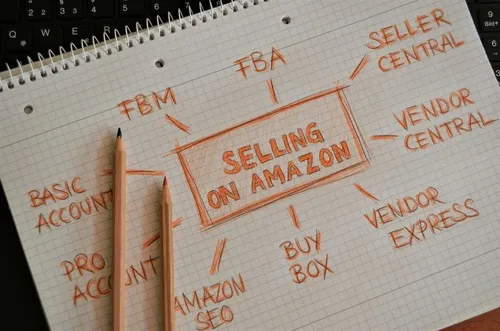
Understanding whether Fulfillment by Amazon (FBA) or a 3PL is more affordable can help inform how you run your ecommerce business. By examining the cost structures of Amazon FBA vs a 3PL using the real-life situation puts the pros and cons of each in context. This article provides a straightforward cost comparison of both options, breaking down key expenses to help you make an informed decision.
Key Takeaways
- Amazon FBA offers convenience but comes with various fees, including fulfillment, storage, and additional costs that can be challenging to manage for small businesses, especially in the critical peak holiday season.
- 3PL providers offer flexible pricing and storage solutions, allowing for better cost management and customization, which can lead to significant savings and reduced operational costs.
- The choice between Amazon FBA and 3PL depends on business size, control over branding and the customer relationship, international shipping needs, and the specific demands of the marketplace.
Understanding Amazon FBA Costs
Amazon FBA (Fulfillment by Amazon) is a popular choice for many ecommerce businesses, offering a comprehensive suite of services that includes storage, picking, packing, shipping, and even customer service. However, these conveniences come with a variety of fees that can be challenging to predict, particularly for small businesses or those with low-margin products. Understanding the key cost components (separate from the referral fees that are paid regardless of who is fulfilling the order) is essential for making an informed decision.
Editor’s note: Amazon announced additional U.S. FBA fee changes effective January 15, 2026, so sellers should confirm current fulfillment, inbound placement, and low-inventory-related fees before modeling margins.
Fulfillment Fees
Fulfillment fees are one of the primary costs associated with Amazon FBA. These fees are calculated based on the size and weight of each product, with tiered pricing. This means that larger or heavier items will incur higher fees, which can impact your profit margins as they change through the tiers, especially if you’re selling bulky goods. The ability to manage costs effectively is job numero uno for any business owner, so many Sellers use Amazon’s Revenue Calculator to predict their expenses and plan accordingly.
One advantage of Amazon FBA’s fulfillment service is its low level of accessibility that allows even brand new businesses to compete. Outsourcing fulfillment to Amazon allows businesses to concentrate on startup operations, expanding sales channels, and improving customer satisfaction, with the assurance that orders are managed efficiently.
Despite the higher fees in some cases, the potential for quick and efficient shipping costs can be a strong motivator for many ecommerce businesses.
Storage Fees
Storage fees for Amazon FBA are another critical cost to consider. These fees are charged monthly based on the volume of inventory stored at Amazon’s fulfillment centers at the end of each month. These fees are charged monthly based on the volume of inventory stored at Amazon fulfillment centers, and rates vary by product size tier, season, and Amazon’s current fee schedule.
It’s also essential to monitor aged inventory surcharges, which apply to inventory stored for more than 181 days, with charges varying by inventory age and Amazon’s current fee schedule. The typical storage fees can range from $0.50 to $6.90 per cubic foot, depending on the age of the inventory.
Additionally, Amazon imposes storage limits and surcharges for aged inventory to encourage timely turnover. For businesses with slow-moving products, these additional charges can add up quickly, making it crucial to manage inventory levels very carefully.
Additional Fees
In addition to basic fulfillment and storage fees, Amazon FBA has several extra costs that can surprise businesses. Examples include removal fees for unsold inventory, disposal fees per unit, and returns processing fees. These additional fees can vary based on the weight and size of the products, as well as the specific services required.
Amazon also imposes other fees that sellers should monitor, including inbound placement fees, inbound defect fees, removal or disposal fees, and certain returns-related processing fees; sellers should verify current fee applicability in Seller Central because Amazon ended U.S. FBA prep and item labeling services on January 1, 2026. Also check for fees such as labeling items that arrive without the required FNSKUs, distributing inventory across multiple warehouses (placement fees) to ensure high probability of on-time delivery to customers, inbound defect fees, among others.
By being mindful of these potential fees and ensuring that they are only billed for necessary services and storage space, businesses can better control their overall fulfillment costs.
Analyzing 3PL Cost Structure
Third-party logistics (3PL) providers offer an alternative to Amazon FBA, with a different approach to cost structures and services. A primary advantage of 3PL providers is their increased flexibility and control over the supply chain. These providers often offer competitive pricing and flexible terms, which can help businesses manage their fulfillment costs more effectively.
Examining Transparent Pricing, Flexible Storage Fees, and Value-Added Services reveals how 3PLs can benefit your ecommerce business.
Transparent Pricing
One of the significant benefits of working with 3PL providers is their transparent pricing models. Unlike Amazon FBA’s fixed costs, 3PLs typically offer customizable logistics solutions that can be tailored to a business’s specific needs. This flexibility allows businesses to negotiate contracts and optimize costs based on their unique requirements.
Specialized 3PL providers often offer even more transparent and flexible pricing structures, resulting in significant cost savings for businesses that need them.
Flexible Storage Fees
When it comes to storage fees, 3PL providers often have an edge over Amazon FBA due to their flexibility. They can offer personalized services that accommodate varying business sizes and seasonal demands, making it easier for businesses to manage their inventory effectively. 3PL providers can offer lower storage fees that are not punitive like FBA’s, which is particularly beneficial for long-term warehousing. This flexibility can lead to cost savings, especially for businesses with large or slow-moving inventory.
Moreover, similar to FBA, 3PLs utilize advanced technology and analytics to enhance inventory control, which helps in predicting inventory needs and preventing overstocking. This can significantly reduce storage expenses and improve overall cost management.
Offering real-time visibility into stock levels and specialty storage solutions such as climate-controlled storage, and storage for fragile items, 3PLs help businesses maintain optimal inventory levels in their ideal environments without excessive costs.
Value-Added Services
3PL providers also offer numerous value-added services that can enhance the overall efficiency of a business’s supply chain. These services include things like custom packaging, custom inserts such as thank you notes or requests for customer reviews, and supply chain management solutions. These customizable services enable 3PLs to optimize logistics operations and create significant value for businesses.
Additionally, 3PL providers support business scalability by allowing flexibility and adaptability during periods of growth.
Comparing Fulfillment Costs: Amazon FBA vs. 3PL
Having a clear understanding of the cost structures of Amazon FBA and 3PL providers allows for a direct comparison of these two options. The comparison will focus on Order Fulfillment Costs, Inventory Storage Costs, and Hidden Costs, helping you determine which option is more affordable for your business.
Order Fulfillment Costs
When it comes to order fulfillment costs, Amazon FBA offers a cost estimator tool that helps Sellers forecast their expenses based on usage. The predictable nature of the fixed pricing model can benefit small businesses in particular by allowing them to manage costs with some level of certainty. Leveraging Amazon’s vast network of warehouses, businesses can achieve quick and efficient shipping, which is crucial for Prime customer satisfaction.
On the other hand, 3PL providers offer various pricing models, including all-in rates and transactional pricing, to suit different client needs. These flexible pricing structures can be more cost-effective for businesses with fluctuating order volumes, diverse product catalogs, or items with complex fulfillment requirements.
A company handling peak season orders efficiently can easily manage a 15-fold increase in volume using 3PL services, especially when taking advantage of Amazon’s Order Handling Capacity automations. This flexibility enables businesses at any stage to scale operations and fulfillment processes without prohibitive costs, making 3PL a viable option for many types of Sellers.
Inventory Storage Costs
Inventory storage costs can vary significantly between Amazon FBA and 3PL providers. Amazon’s storage fees vary based on inventory volume and time of year, with higher rates during peak seasons. Additionally, an aged inventory surcharge is applied if items are stored for over 180 days, which can wildly impact margins and profitability. Watch out if your products are big and bulky which are penalized and accrue at an even higher rate.
In contrast, 3PL providers often offer more flexible and lower storage fees, particularly beneficial for businesses with large or long-term inventory needs. Advanced analytics and real-time visibility into stock levels allow 3PLs to help businesses manage inventory more efficiently and reduce storage expenses. In addition, the ability to procure more inventory at more favorable prices and not be penalized with aged inventory surcharges can mean a stronger bottom line.
Hidden Costs
Hidden costs can naturally impact the overall affordability of using Amazon FBA. FBA Sellers may face unplanned costs for inventory removal, automatic approval of returns and the resulting processing fees, and other unplanned service fees, which Amazon determines at their discretion and can add up over time. These unexpected fees can make it challenging for businesses to maintain profitability, especially those with lower margins.
In contrast, 3PL providers often offer clearer communication of pricing structures and flexible opt-in operational solutions, helping businesses avoid hidden costs and ensuring they understand potential expenses upfront. Sellers using 3PLs also control their customer service experience and define their own returns policies (within Amazon’s well-known guidelines). This transparency can lead to better cost management and improved profit margins.
Cost Savings Strategies with 3PL Providers
Choosing the right fulfillment partner can lead to substantial cost savings and enhanced profit margins. Fulfillment providers offer several strategies to help businesses reduce operational expenses, including negotiating contracts, optimizing inventory management, and leveraging multi-channel fulfillment.
Implementing these strategies enables businesses to optimize their supply chain, enhance customer satisfaction, and achieve significant cost savings.
Negotiating Contracts
Negotiating 3PL contract terms can help businesses secure better pricing and service standards aligned with their objectives. Regular discussions with your 3PL partner can uncover new cost-saving opportunities and ensure favorable contract terms.
This proactive approach can lead to substantial cost savings and more effective fulfillment services, ultimately enhancing overall profitability.
Optimizing Inventory Management
Effective and flexible inventory management is key to containing costs and growing market share. Outsourcing fulfillment to a 3PL provider allows businesses to streamline the process, reducing operational costs and enhancing efficiency. For example, 3PLs that offer deeper supply chain support can put more of the end-to-end work under one roof, allowing for improved inventory procurement and management. High-quality and efficient fulfillment strategies can drive repeat purchases and increase revenue.
Leveraging Multi-Channel Fulfillment
Amazon’s Multi-Channel Fulfillment (MCF) service uses the FBA network and inventory to fulfill orders from non-Amazon channels. There are several tradeoffs to the MCF program: fulfillment fees use a separate fee schedule from FBA and can be materially higher depending on product size, weight, units per order, and delivery speed, while sellers also need to manage shared inventory across channels. Amazon’s Capacity Manager enables Sellers to essentially bid for extra storage space. Sellers can tell Amazon how much extra space you need and when, and how much you’re willing to pay for it (this “reservation fee” is separate from standard storage fees). So, you can get more space to cover both your FBA and MCF orders, but you’re competing with other Sellers for the space, and you have no idea what the going rate is at any given time. So if you need it, you’re going to have to bid high or it will go to someone else.
3PL capabilities for multi-channel fulfillment are much more flexible and encourage businesses to support and manage operations across various ecommerce platforms, marketplaces, B2B channels, etc., enhancing reach and flexibility. Integrating with multiple sales channels, including custom platforms, allows 3PL providers to maintain high order fulfillment efficiency, (treating all orders as important), and facilitate returns processing. This leads to improved customer satisfaction and better overall business performance, ultimately driving long-term revenue growth.
Impact on Profit Margins
Fulfillment costs (including shipping) are central to determining a business’s operational profit margin. Higher costs can significantly reduce profitability, so choosing the right fulfillment process and strategy is essential.
Both Amazon FBA and 3PL providers offer unique advantages that can impact cost efficiency and revenue growth, depending on the specific needs of the business.
Cost Efficiency
Cost efficiency is a significant factor in maintaining healthy profit margins. Optimizing supply chain processes and ensuring quick and efficient shipping help businesses achieve significant cost savings and improve overall profitability. By way of example, one Cahoot client reported a 30% reduction in fulfillment costs after transitioning to the fulfillment provider, from streamlined shipping expenses.
Revenue Growth
Effective fulfillment strategies can greatly influence revenue growth by enhancing customer satisfaction. A notable case involved a Cahoot client that grew 90% year over year in their first year with the new provider, AND saved 40 labor hours per week. Focusing on quick and efficient shipping drives repeat purchases and fosters long-term revenue growth.
Key Factors Influencing Your Decision
The choice between Amazon FBA and 3PL hinges on a business’s specific needs and objectives. Factors such as Business Size and Order Volume, Brand Control and Customization, and International Shipping Needs all play a unique role in making this decision.
Considering these factors helps businesses select the fulfillment strategy that best aligns with their goals and resources.
Business Size and Order Volume
Higher sales volumes often make Amazon FBA a more appealing choice due to its efficiency in handling large orders. However, 3PL providers offer more tailored solutions for businesses with unique inventory management requirements or seasonal fluctuations in sales.
Considering their specific needs allows businesses to choose the fulfillment center option that best suits their order volume and operational demands.
Brand Control and Customization
Brand control and customization are critical for businesses looking to establish a unique identity and enhance the customer experience. Unlike Amazon FBA, which limits branding options, 3PL providers offer extensive customization capabilities, including branded packaging and personalized unboxing experiences. This control can significantly impact customer relationships and loyalty, with over 50% of online shoppers likely to return due to positive packaging experiences.
Businesses prioritizing brand experience may find choosing a 3PL provider advantageous. 3PLs allow the use of custom packaging, inserts (e.g. handwritten notes, coupons for future purchases), and shipping materials, providing greater control over customer interactions and enhancing the overall brand experience. This emphasis on brand customization not only improves brand recognition but also fosters customer loyalty.
International Shipping Needs
International shipping is essential for businesses looking to expand their reach and serve customers globally. Amazon FBA provides integrated international shipping options, making it easier for Sellers to manage shipments and comply with customs regulations.
However, 3PL providers offer customizable international shipping solutions, (e.g. delivered with duties paid or unpaid, wider carrier selection, etc.), that can provide greater flexibility and might be more cost-effective based on specific shipping needs. Evaluating international shipping requirements helps businesses choose the fulfillment option that best supports their global expansion goals.
Summary
Both Amazon FBA and 3PL providers offer unique advantages and cost structures that can benefit ecommerce businesses in different ways. Amazon FBA provides seamless integration with Amazon’s vast customer base, quick and efficient shipping, and comprehensive (overly customer-centric) customer service. On the other hand, 3PL providers offer flexible pricing, customizable services, and greater control over the supply chain and the customer relationship. By carefully considering factors such as business size, order volume, brand control, and international shipping needs, businesses can make an informed decision that aligns with their goals and resources. Choose the fulfillment strategy that best supports your growth and profitability, and watch your business thrive.
Frequently Asked Questions
What are the main costs associated with Amazon FBA?
The main costs associated with Amazon FBA are fulfillment fees, storage fees (including aged inventory surcharges), and any extra charges for removal or disposal of inventory, inventory prep such as barcoding, placement fees, inbound defect fees, and possibly others. Make sure to factor these into your pricing strategy!
How do 3PL providers offer transparent pricing?
3PL providers ensure transparent pricing by offering customizable logistics solutions and engaging in contract negotiations, which allows for clear and flexible pricing options. This way, you know exactly what you’re paying for and can budget accordingly.
What strategies can businesses use to save costs with 3PL providers?
To save costs with 3PL providers, focus on negotiating better contracts and optimizing your inventory management. Also, consider leveraging multi-channel fulfillment and inventory sourcing to streamline operations and reduce expenses by putting everything under one roof.
How do fulfillment costs impact profit margins?
Fulfillment costs (including shipping) can really eat into your profit margins, so keeping them low is essential for maintaining profitability. The more you spend on fulfillment, the less you ultimately make.
What factors should businesses consider when choosing between Amazon FBA and 3PL?
When deciding between Amazon FBA and 3PL, think about your business size, order volume, and how much control you want over your brand and shipping process. These factors will help you choose the best option for your needs.
Written By:

Indy Pereira
Indy Pereira helps ecommerce brands optimize their shipping and fulfillment with Cahoot’s technology. With a background in both sales and people operations, she bridges customer needs with strategic solutions that drive growth. Indy works closely with merchants every day and brings real-world insight into what makes logistics efficient and scalable.
Turn Returns Into New Revenue
Related Blog Posts
Best 3PL Companies for Amazon Seller Fulfilled Prime in 2025
In this article
 21 minutes
- Key Takeaways
- Understanding Amazon Seller Fulfilled Prime
- Leading 3PL Companies for Seller Fulfilled Prime
- Our 2025 SFP Provider Comparison
- Key Features to Look for in a 3PL Company
- The Role of Customer Service in 3PLs
- Advanced Fulfillment Solutions
- Overcoming Challenges and Ensuring Success
- Summary
- Frequently Asked Questions
This article contains our 2025 review of third-party logistics providers associated with Amazon Seller Fulfilled Prime. It remains available as a historical comparison, but provider capabilities, Amazon requirements, ownership structures, and public SFP offerings can change.
For our current research and updated provider shortlist, read our evergreen guide to Seller Fulfilled Prime 3PL providers .
This is our 2025 provider comparison
We have since completed a new review of the U.S. Seller Fulfilled Prime 3PL market. The updated guide uses current SFP requirements, provider evidence, network limitations, and use-case fit to identify which providers are presently worth evaluating.
Key Takeaways
- This article reflects the SFP provider market as it was evaluated in 2025. It should not be treated as our current provider shortlist.
- Seller Fulfilled Prime requires more than ordinary Amazon fulfillment or two-day shipping. Sellers must evaluate delivery-promise coverage, same-day execution, weekend operations, tracking, carrier performance, inventory placement, and exception recovery.
- A provider that supported SFP in the past may have changed its service offering, fulfillment network, ownership, or public positioning.
- Our current provider research is available in the updated Seller Fulfilled Prime 3PL guide.
- Sellers preparing for the program should also use the Seller Fulfilled Prime Trial Checklist before selecting a fulfillment partner.
Understanding Amazon Seller Fulfilled Prime
Amazon’s Seller Fulfilled Prime (SFP) program gives businesses a chance to combine the perks of Prime eligibility with the freedom to handle their own shipping. Introduced in the mid-2010s and revamped in 2023, SFP allows Sellers to ship directly from their warehouses or through trusted third-party logistics (3PL) providers, all while showcasing the coveted Prime badge.
This program is an excellent fit for Sellers who can meet Amazon’s tough delivery standards and want to avoid some of the restrictions and costs of Fulfillment by Amazon (FBA). By joining SFP, businesses gain access to millions of loyal Prime members, making it a potentially game-changing opportunity.
How Seller Fulfilled Prime Works
At its core, SFP puts Sellers in charge of the entire fulfillment process—from storage to shipping. This control comes with significant responsibilities, particularly when it comes to delivery speed. Sellers are expected to:
- Meet Amazon’s current one-day and two-day delivery-promise coverage requirements for each applicable product size tier.
- Maintain an on-time delivery rate of at least 93.5%.
- Maintain a valid tracking rate of at least 99%.
- Keep the seller-initiated cancellation rate at or below 0.5%.
- Operate in accordance with Amazon’s current cutoff, weekend, carrier, shipping-template, trial, and program requirements.
Amazon changes SFP requirements over time. For the latest thresholds and operational interpretation, see our current Seller Fulfilled Prime guide and July 2026 SFP speed-requirement update.
Note that page view metrics must be met regardless of whether or not a purchase was made, and this simply means that the estimated delivery date displayed to the customer on your listing page was either 1 or 2 days from today if the view was before 2pm local time, or 1 or 2 days from tomorrow if the view was after 2pm local time. Amazon fully controls page views, it is out of a Seller’s hands.
To meet these expectations profitably, businesses need a well-oiled logistics setup, often involving multiple warehouses and a streamlined shipping process that ensures same-day shipping including carrier origin scans.
Program Requirements and Performance Metrics
Amazon holds SFP participants to high standards. The key metrics that Sellers must consistently meet include:
- On-Time Delivery Rate: At least 93.5% of orders should arrive as promised.
- Valid Tracking Rate: A minimum of 99% of shipments must include accurate tracking numbers using authorized carriers.
- Cancellation Rate: Sellers need to keep pre-fulfillment cancellations below 0.5%. This means no overselling which Amazon considers a bad experience.
Sellers must first prequalify for Seller Fulfilled Prime, then complete a 30-day trial while meeting Amazon’s performance requirements before enrollment. Falling short can lead to warnings, suspension of Prime eligibility, or even removal from the program. If a seller is removed from the program, Amazon allows reenrollment by prequalifying again and starting a new trial, subject to current program policies and trial-attempt limits.
Pros and Cons of Seller Fulfilled Prime
The SFP program offers compelling advantages. Products with the Prime badge often see a boost in visibility and sales, with some businesses reporting significant growth. Sellers also have more control over their inventory and branding, which allows for custom packaging and better alignment with their overall business strategy. Compared with FBA, Seller Fulfilled Prime may reduce some storage-related costs for certain sellers, but the cost tradeoff depends on current Amazon fees, shipping mix, and the seller’s own warehouse network.
However, SFP is not without its challenges. Sellers must invest heavily in logistics infrastructure and technology, especially if they need to cover nationwide delivery. Meeting Amazon’s high standards consistently requires operational excellence, and shipping costs can add up, particularly for larger or expedited orders.
The Role of 3PLs in Supporting SFP
Third-party logistics providers play a critical role in helping businesses succeed with SFP. The right 3PL partner offers the expertise, tools, and infrastructure necessary to meet Amazon’s stringent requirements. Important traits of a reliable 3PL include:
- Cutting-edge technology: Systems that support real-time inventory tracking, multi-warehouse management, and seamless integration with Amazon’s platform.
- Tailored solutions: Customized fulfillment strategies for unique products like oversized items or goods that need special handling.
- Strong shipping partnerships: Relationships with reliable carriers to ensure timely pickups origin scans, and deliveries.
- Deep understanding of Amazon policies: Knowledgeable support to help Sellers stay compliant with SFP requirements.
Provider capabilities should be verified directly before entering a sales process. A company may support Amazon FBM, FBA prep, marketplace fulfillment, or fast delivery without currently supporting the operational requirements of Seller Fulfilled Prime.
Our current review found that the U.S. SFP provider market is narrower than broad Amazon-fulfillment marketing suggests. See the current SFP 3PL shortlist for the providers we presently consider worth evaluating and the caveats attached to each one.
Leading 3PL Companies for Seller Fulfilled Prime
A third-party logistics provider can be transformative for growing ecommerce businesses. These 3PL companies offer a myriad of benefits, including time, energy, and cost savings. Moreover, they provide access to shipping discounts, data analytics, and affordable warehousing solutions, which are indispensable for scaling operations. Ecommerce businesses can focus more on their core activities while ensuring seamless logistics management by tapping into the infrastructure and expertise of a third-party logistics company.
However, with numerous third-party logistics companies in the market, ecommerce businesses often grapple with determining the best fit for their specific needs. 3PL companies provide a range of services such as order fulfillment, inventory management, picking, packing, and shipping, making them an integral part of the ecommerce ecosystem.
A 3PL partnership allows merchants to automate fulfillment processes, enhance efficiency, and deliver a superior customer experience.
Historical provider information
The provider descriptions below reflect our 2025 assessment. They have not all been revalidated as current recommendations. Before contacting a provider, confirm its present SFP support, eligible facilities, size-tier coverage, weekend operations, carrier model, trial support, and delivery-promise coverage.
Our 2025 SFP Provider Comparison
Selecting the right 3PL provider necessitates a thorough comparison of their capabilities, services, and network reach. The providers in this 2025 comparison were selected based on their ability to meet stringent SFP requirements, provide efficient logistics services, and support business growth.
These top providers leverage a global network of fulfillment centers and supply chains, enabling strategic inventory placement for faster and cost-effective shipping. Having multiple warehouses allows inventory to be stored closer to customers, significantly enhancing delivery speed and reducing shipping costs. In practice, many sellers rely on distributed inventory and efficient ground-shipping coverage to make Seller Fulfilled Prime work economically at scale, although Amazon does not prescribe a specific warehouse-network model. A minimum of 4 locations is required to support SFP, but realistically, 6 locations is what will achieve > 90% of 1 and 2-day shipping using Ground. There will always be some expensive air shipping required to deliver orders on time, but above 6 locations, we start to see diminishing returns on the additional investment in inventory (capital) and inventory management (time).
This section will dig into the unique offerings of each provider, helping you understand which third-party logistics company aligns best with your business needs.
Cahoot
2026 status: Included in our current evergreen SFP provider shortlist.
Cahoot operates a peer-to-peer fulfillment network, specifically designed to meet the rigorous requirements of Amazon Seller Fulfilled Prime. This innovative model allows for efficient sharing of fulfillment resources among partners within the network, optimizing logistics operations and reducing costs. Cahoot ensures compliance with Amazon SFP standards, making it a reliable choice for ecommerce businesses seeking to enhance their fulfillment processes. And, if you already have a trusted 3PL that can support SFP but just doesn’t have enough locations to support it profitably using Ground shipping, Cahoot is the only solution that will allow you to BYO3PL (Bring Your Own 3PL). We can onboard your 3PL seamlessly into the network to fulfill orders in the regions that they can support.
Partnering with Cahoot not only guarantees adherence to Amazon’s stringent criteria but also provides ecommerce merchants with the tools and infrastructure needed to streamline their logistics operations across all sales channels under one roof, so to speak. And flexible features, such as supporting branded packaging, are attractive benefits. This makes Cahoot an attractive option for businesses of just about any size.
Fulfillment by Amazon Is an Alternative to SFP, Not an SFP 3PL
Fulfillment by Amazon and Seller Fulfilled Prime are separate fulfillment models. With FBA, Amazon stores and fulfills the inventory. With SFP, a qualified seller earns the Prime badge while fulfilling eligible orders through its own operation or an outside fulfillment partner.
Sellers may use FBA for some products and SFP for others, but FBA should not be evaluated as a third-party logistics provider for SFP orders. The relevant question is whether a seller should use FBA, SFP, or a SKU-level combination of the two.
For a more useful comparison, read: Seller Fulfilled Prime vs. FBA.
Ware2Go
2026 status: Evaluated in our current evergreen SFP provider guide as part of the combined STORD / Ware2Go offering.
Ware2Go offers a flexible and scalable fulfillment network designed to adapt to changing market demands. This agility makes it an excellent choice for ecommerce businesses looking to efficiently manage their logistics operations and meet customer expectations in a dynamic market environment. As a UPS company, Ware2Go emphasizes a UPS-connected network; sellers should confirm carrier flexibility and service-level options directly with Ware2Go during evaluation.
Staci Americas
2026 status: Not included in the current main shortlist because its public positioning did not provide enough modern SFP operating detail for our evaluation criteria.
Staci Americas supports Amazon Seller Fulfilled Prime, providing real-time success insights through an easy-to-use web portal that displays order status, inventory, trend reports, and metrics. This transparency helps ecommerce businesses track their fulfillment performance and make data-driven decisions. Additionally, Staci Americas allows items to be shipped in the Seller’s branded box, enhancing brand visibility and customer experience.
One significant advantage of Staci Americas is the ability to control costs by paying predictable rates for only the space and services used, unlike FBA, which has high storage costs that can rise during the holidays. Their knowledgeable customer service is available whenever needed, offering a level of support that FBA may not provide.
Red Stag Fulfillment
2026 status: Included in our current shortlist for extra-large, bulky, heavy, and specialized-product use cases, subject to validating coverage from its limited warehouse footprint.
Red Stag Fulfillment specializes in shipping heavy items that require special handling, catering primarily to small businesses that ship such products. With two warehouse locations in the US, Red Stag ensures efficient logistics operations for its clients, providing targeted support to American ecommerce businesses.
The company utilizes a cloud-based system and integrates with various ecommerce platforms like Shopify, Amazon, and eBay. Custom integrations are also available via an API, enhancing their service offerings.
This combination of specialized services and advanced technology makes Red Stag Fulfillment a valuable partner for businesses with unique shipping needs. However, only having 2 locations limits RSF’s ability to support Seller Fulfilled Prime. Sellers must either only sell items in the Oversize and Extra Large size tiers in those two regions (regional fulfillment), or they must absorb 1 and 2-day air shipping costs to deliver orders for Standard size products to nationwide customers.
Fulfyld
2026 status: Not included in the current main shortlist because its SFP messaging appeared broad and outdated relative to newer program requirements.
Fulfyld is recognized for its cost-effective ecommerce fulfillment solutions tailored for online merchants. Founded in 2014, Fulfyld has established 8 fulfillment locations in the Southeast United States and integrates with popular platforms like Shopify, Adobe Commerce (formerly Magento), and BigCommerce. Fulfyld meets Amazon Seller Fulfilled Prime (SFP) requirements, however, only having warehouses in the Southeast creates the same problem that Red Stag has. Sellers considering Fulfyld for Amazon Seller Fulfilled Prime should verify current SFP support, network coverage, and shipping economics directly with the provider Regardless of how fast and accurately orders can be shipped, Sellers are either limited to selling large and bulky items in the Southeast only (regional fulfillment), or they must absorb 1 and 2-day air shipping costs to deliver Standard size products to nationwide customers.
In addition to its fulfillment services, Fulfyld offers FBA prep services, including quality assurance checks, barcode labeling, bundling and kitting, and various packaging options like poly-bagging and shrink wrapping. These comprehensive fulfillment service options make Fulfyld a good choice for ecommerce businesses looking for efficiency and cost savings.
ShipMonk
ShipMonk was included in our 2025 review based on the SFP-related information available at the time. Our newer market review did not include ShipMonk in the current shortlist because visible SFP support had been removed from its primary page copy and we could not find enough current public evidence to treat it as an active U.S. SFP provider.
ShipMonk may still be relevant for broader ecommerce fulfillment, Amazon FBM, or other marketplace use cases. Sellers specifically evaluating Seller Fulfilled Prime should confirm current program support directly before assuming that ShipMonk can operate an SFP account.
See our current provider exclusions and validation notes for the latest assessment.
Key Features to Look for in a 3PL Company
Identifying the right 3PL provider is essential for ecommerce success, as each company offers unique capabilities tailored to business needs. Most outsourced fulfillment partners can help streamline logistics processes enhancing delivery speed and accuracy, but top 3PL companies offer high-quality customer service, advanced software, and transparent pricing, avoiding hidden fees to allow for better management of your logistics costs.
Benefits of Distributed Inventory and Multi-Warehouse Fulfillment
Utilizing multiple distribution centers can significantly lower shipping expenses and enhance delivery speed to customers. Distributing inventory allows businesses to manage risks better, as alternative fulfillment options are available during emergencies. Amazon doesn’t care if an order is shipped and delivered late because of a snowstorm or other type of weather event. So, distributing inventory ensures that orders can be rerouted and fulfilled from the nearest operating distribution center to the customer.
Faster shipment through distributed inventory also leads to higher customer satisfaction and potentially increased sales. Just because Amazon says an order needs to be delivered in 2 days, doesn’t mean that it can’t be delivered in 1-day with Ground shipping. Shipping and delivering early will delight your customers and keep them coming back.
Intuitive Software and Technology
Intuitive software and technology play a vital role within the logistics industry to aid in the successful management of inventory including placement and replenishment. To support Seller Fulfilled Prime using distributed inventory, advanced order routing is required to ensure that all orders are assigned to the cheapest warehouse to fulfill and ship based on real-time rate shopping across all carriers and services. Also, easy-to-use software that natively integrates with leading ecommerce platforms and marketplaces ensures that products are correctly listed across channels and that orders make it into the fulfillment queue so they can be fulfilled accurately and on time, every time. Features like real-time updates to and from sales channels allow businesses to respond promptly to changes in inventory, shipping status, cancellations, and returns, and enable shipping and delivery confirmation messaging which adds to the overall user experience.
Advanced 3PL software makes it easy to create inbound work orders, create discounted parcel shipping labels for the inbounds, or schedule LTL or FTL pickups, container drop-offs, etc. They also provide in-depth management, data analytics, and an easy-to-understand interface for effective order management. Automated inventory management systems help reduce manual errors and enhance operational efficiency, making them indispensable tools for ecommerce businesses.
Strong Partner Network
A robust partner network enhances logistics flexibility and efficiency, enabling 3PLs to provide specialized services and innovative solutions tailored to client requirements. This network allows 3PL providers to offer a wide range of services, from warehousing solutions to freight forwarding (import/export), ensuring comprehensive logistics support.
Cahoot and Staci Americas, for instance, provide tailored solutions for Seller Fulfilled Prime, enhancing support for merchants engaged in Amazon’s fulfillment program. This kind of specialized support is a testament to the value of a strong partner network in meeting the diverse needs of ecommerce businesses.
Competitive Shipping Discounts
3PL companies often negotiate much better shipping rates than an ecommerce business can by aggregating their volume, sometimes including freight volume. This allows them to pass on the benefits of reduced costs to merchants, enhancing overall logistics cost efficiency. These negotiated shipping discounts can improve margins substantially, making these top 3PLs attractive ecommerce partners.
For example, Red Stag Fulfillment offers shipping discounts for various carriers, particularly for oversized items. Cahoot has multiple rate cards across carriers and services to optimize shipping cost for certain sizes going to certain zones at various speeds. So whether you’re shipping small and light, bulky and light, large and heavy, or somewhere in between, there’s a solution for minimizing parcel shipping cost.
It’s worth noting that Cahoot is the only fulfillment solution in this list that allows you to bring your own negotiated carrier accounts. So for example, if you only want to outsource your SFP volume to Cahoot and keep non-SFP volume in-house, you can keep all your shipping postage on your carrier accounts to maintain your rates for all seller-fulfilled orders.
The Role of Customer Service in 3PLs
Customer service is a critical component of any successful logistics partnership. A reputable 3PL provider should adapt to evolving business needs and support growth effectively. High-quality exceptional customer service ensures smooth operations, quick issue resolution, and proactive communication, positively influencing business outcomes.
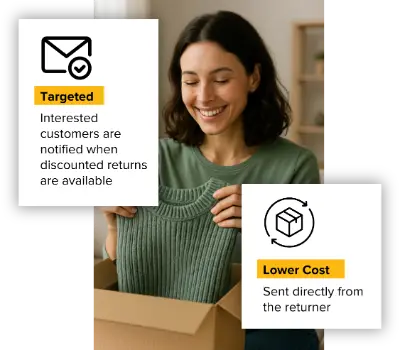
Automated solutions for returns, offered by many 3PLs, streamline the process and improve customer satisfaction. A well-structured returns process can enhance customer retention and drive brand growth. Pre-vetted recommendations from a 3PL also help ecommerce businesses by providing solutions that have worked for other customers. Modern 3PLs can support newer and more profitable returns business models such as peer-to-peer solutions. Once a return is approved, it’s automatically relisted as an open-box item at a pre-determined discount. You never have to touch the return or pay for the reverse logistics. Everybody either saves money or gets a reward for their participation.
Dedicated Account Management
Having a dedicated account manager stimulates personalized communication and promotes deep understanding of a business’s specific needs. This personalized support is particularly beneficial for high-volume shippers, or those with large or complex product catalogs, or those with specialty project needs such as selling on Good Morning America or The View where advanced planning and rapid execution are required, or for those with specialized needs such as assembly of custom shipping containers for exceptionally fragile products. A dedicated account manager tailors customized services for businesses with unique needs, and Cahoot is well-known to support all of these types of clients and more.
Multi-Channel Support
Multi-channel customer support, (primarily email, live chat, and phone support), is essential for ensuring effective communication and problem resolution between businesses and their 3PL providers. Responsiveness and availability of support across different channels can positively impact customer satisfaction through efficient use of time for issue resolution.
Advanced Fulfillment Solutions
As the ecommerce fulfillment landscape becomes increasingly competitive, innovative fulfillment solutions are essential for delivering positive customer experiences. Advanced fulfillment capabilities such as fast same-day processing and disciplined returns management can improve operational performance for SFP sellers, even though Amazon’s program requirements are ultimately defined by its current policy and performance standards. So make sure your fulfillment partner can accommodate.
Many 3PL providers offer additional services like inventory refurbishment and refreshing damaged retail packaging so units are sellable in new condition, which increases resale opportunities, increases margins, and reduces waste. Implementing these advanced solutions allows ecommerce businesses to stay ahead of the competition.
Automated Order Fulfillment
Automation in order fulfillment operations can streamline processes and improve overall productivity within logistics operations, but more importantly, it reduces fulfillment defects which leads to increased customer satisfaction and loyalty, and reduces return rates which increases profitability and helps to retain what could have been lost revenue.
Strategically locating inventory in multiple warehouses is crucial for achieving 1 and 2-day shipping coverage. For instance, merchants need to strategically locate inventory in four warehouses to ensure 2-day shipping coverage across the continental U.S. Achieving 1-day delivery necessitates positioning inventory in at least 6 fulfillment centers, but as many as 9 may be needed depending on the size and weight of your products.
Real-Time Inventory Management
Real-time inventory tracking enables businesses to more easily manage the supply chain and fulfill customer expectations effectively. Real-time tracking automatically updates stock levels as inventory moves, enhancing visibility and aiding in effective decision-making regarding fulfillment and procurement. Consistent and regular inventory cycle counts ensures that the accurate available quantity is known at all times.
Technology that automatically synchronizes inventory counts and prices across multiple sales channels helps eliminate listing issues that lead to overselling and pre-fulfillment cancellations (which is one of the SFP performance metrics that is closely monitored by Amazon).
Reverse Logistics and Returns Management
3PLs streamline ecommerce returns by offering an easier process, including prepaid return labels and return tracking. Effective customer support for returns includes real-time communication and transparency, enhancing engagement and satisfaction.
Utilizing peer-to-peer returns can lead to significant savings on shipping expenses and a decrease in the time needed for warehouse processing. The immediate restocking of returned products upon request can drastically reduce the processing time typically required at warehouses, and thus, reduces the time to resale. This approach helps businesses manage returns efficiently and improve overall customer experience.
Overcoming Challenges and Ensuring Success
Thriving in the SFP program requires a combination of smart planning and solid execution. Sellers need to position warehouses strategically, ideally near major population hubs, to optimize delivery speeds, (for example, states located in the Northeast, Southeast, North Central, South Central, Northwest, and Southwest regions of the US). Monitoring performance metrics regularly and making real-time changes to promotions to drive eyeballs (page views) is another key to success. This allows sellers to identify and address any issues or dips in metrics before they escalate. Partnering with a capable 3PL provider that offers SFP consulting is also a wise move, as their expertise can help businesses navigate challenges and adapt to Amazon’s unforgiving requirements.
Summary
This article documents how we evaluated the Seller Fulfilled Prime provider market in 2025. It remains useful for historical comparison, but it should not be used as Cahoot’s current provider recommendation list.
Since this article was published, Amazon’s requirements have evolved, providers have changed their public offerings, and the market has consolidated. Our newer research also uses stricter criteria, including current SFP evidence, delivery-promise coverage, size-tier fit, weekend operations, carrier risk, trial support, inventory placement, exception management, and SKU-level economics.
Continue with the current resources:
- Best Seller Fulfilled Prime 3PLs: Current Provider Shortlist
- Seller Fulfilled Prime Trial Checklist
- Complete Seller Fulfilled Prime Guide
Frequently Asked Questions
Is this still Cahoot’s current list of Seller Fulfilled Prime 3PLs?
No. This page contains Cahoot’s 2025 provider comparison. For the latest provider research, use our current Seller Fulfilled Prime 3PL guide.
Why did the provider shortlist change?
Provider services, warehouse networks, company ownership, Amazon requirements, and publicly documented SFP capabilities can change. Our current shortlist uses updated evidence and more demanding criteria around delivery-promise coverage, weekend operations, carrier performance, trial support, exception management, and SFP-specific operating knowledge.
Is Fulfillment by Amazon an SFP 3PL?
No. FBA and Seller Fulfilled Prime are separate fulfillment models. FBA inventory is fulfilled by Amazon. SFP orders are fulfilled by the qualified seller or its chosen fulfillment partner while the seller remains responsible for meeting Amazon’s SFP requirements.
Compare Current Seller Fulfilled Prime 3PL Options
See our updated shortlist, provider caveats, use-case recommendations, and questions to ask before choosing an SFP fulfillment partner.
View the Current SFP 3PL GuideWritten By:

Jeremy Stewart
Jeremy Stewart leads customer success at Cahoot, helping merchants achieve high-performance logistics through smart technology and process optimization. With a background in both ecommerce operations and client services, Jeremy ensures that every merchant using Cahoot gets measurable results—whether they’re scaling from one warehouse to many or managing complex returns.
Turn Returns Into New Revenue
Related Articles
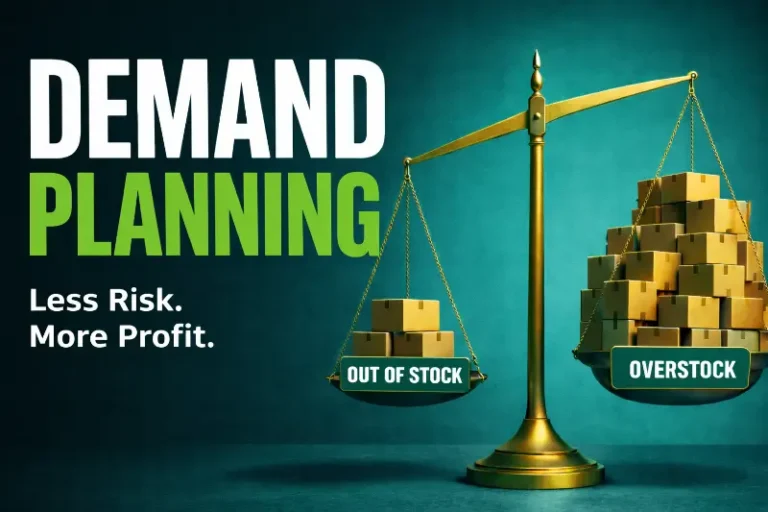
What Is Demand Planning? How It Impacts Inventory, Forecasting, and Profitability
Demand planning is the process of estimating future customer demand so that a business can align its inventory, procurement, and operations to meet that demand without carrying mor...
The Shipping Speed Paradox: Why DTC Brands Are Slowing Down
Everyone’s talking about faster delivery.

Why Cross-Border DTC Brands Are Moving Fulfillment Inside the US
Cross-border ecommerce fulfillment is the process of shipping ecommerce orders across national borders—often from warehouses outside the United States to U.
Preparing for Peak Holiday Shipping Season [Guide for 3PLs]
In this article
8 minutes
- 2024 Important Dates
- Strategic Demand Analysis, Forecasting, and Marketing Execution
- Optimizing Fulfillment and Logistics
- Transparency and Communication
- Leveraging Technology
- Elevating the Customer Experience
- Preparing Customer Support Teams
- Managing Returns Effectively
- Contingency Planning for Unforeseen Challenges
- Converting Challenges into Strategic Wins
- Frequently Asked Questions
The peak holiday season is the most critical time for e-commerce businesses due to spikes in order volumes, high consumer expectations, and operational complexities. Proactively forecasting with clients, planning logistics needs, and supporting technologies are essential for effectively navigating this high-stakes period. The risk of losing clients due to operational issues that lead to late shipments, late deliveries, and damaged shipments is high.
2024 Important Dates
With Thanksgiving falling on November 28th this year (which is the latest it can fall relative to Christmas), the 2024 holiday shopping season is the shortest that it can be for shoppers who don’t start browsing or buying until November 29th.
Daily shipment volumes can increase by 1,000% or more in ‘normal’ years, placing significant strain on fulfillment operations. However, some will see even higher spikes in demand this year due to the unusually late Thanksgiving Day. So, the shipping deadlines below will feel tighter this year as carrier network capacity is constrained to fewer days. Thus, 3PLs will want to be more proactive in preparing for fulfillment this year (i.e., advancing ship dates as early as possible).
Carrier Published Shipping Deadlines to Ensure Delivery on or Before Christmas Eve
|
Carrier / Service
|
Contiguous U.S. (lower 48 states)
|
Alaska, Hawaii, International, Military
|
|---|---|---|
|
USPS Ground Advantage
|
December 18
|
|
|
USPS Priority Mail
|
December 19
|
|
|
USPS Priority Mail Express
|
December 21
|
|
|
UPS 3 Day Select
|
December 19
|
|
|
UPS 2nd Day Air
|
December 20
|
|
|
UPS Next Day Air
|
December 23
|
|
|
FedEx Ground Economy
|
December 13
|
|
|
FedEx Express Saver
|
December 19
|
|
|
FedEx 2Day & 2Day AM
|
December 20
|
|
|
FedEx SameDay
|
December 24
|
Strategic Demand Analysis, Forecasting, and Marketing Execution
Accurate forecasting is the foundation of successful holiday operations. Working with clients proactively to assess year-over-year sales increase expectations will be key (especially if any big spikes are expected from special promotions or sales such as Good Morning America Deals & Steals). Collaborating with clients well in advance to secure early inbound shipment creation and delivery, including any specialty items such as inserts or branded packaging materials, is critical to prevent stockouts and canceled orders, which impact all three parties negatively (Sellers, Customers, and 3PLs).
Investing the time (well in advance) to learn about the timing of client promotions and the configuration and accurate put away of new SKUs, new bundles and/or kits SKUs, multi-packs, etc., can help increase fulfillment workflow efficiency.
Optimizing Fulfillment and Logistics
Meeting increased demand during the holiday season requires a well-structured fulfillment strategy. Partnering with third parties such as Cahoot can augment a 3PL’s existing operational capacity and benefit their clients by offering distributed inventory options that reduce transit times, lower transportation costs, and increase nationwide on-time delivery reliability. Cahoot’s advanced tools and infrastructure enable 3PLs to rapidly increase scalability to support their growth targets while taking advantage of shipping carrier discounts that can become new profit centers. Likewise, 3PLs can join the Cahoot fulfillment network and create a new revenue stream by fulfilling orders for Cahoot clients.
Transparency and Communication
3PLs should transparently communicate inbound receiving deadlines and blackout dates, including inventory prep and work order (e.g., FBA Prep), and plan to have the staff available to get new inventory inbounded and fulfillment ready by Monday, November 25th. Get containers, FTL, and LTL tracking info, and ensure clients send updates on estimated delivery dates on time. Communicate emergency contact info expectations clearly and well in advance.
Leveraging Technology
Leveling up tech stacks is critical to maintaining efficiency during peak periods and earning customer trust, which can lead to long-term mutual success. Warehouse Management Systems streamline and optimize the movement of goods within a warehouse, ensuring efficient and cost-effective inventory management by tracking its location, quantity, and movement throughout the receiving, storage, picking, packing, and shipping workflows, ultimately enabling overall warehouse productivity and fulfillment accuracy.
Scalable solutions are essential to handle the dramatic increase in holiday orders. Investments in automation, such as robotic picking systems or conveyor technologies, improve efficiency and accuracy. Implementing simple scan verification and next-generation shipping software into the fulfillment workflow achieves a similar result without considerable capital expense.
Elevating the Customer Experience
Third-party logistics providers work for the merchants but ultimately answer to the end customer. It’s the customer experience that the merchants are paying for. Beyond just retention of the client, providing an exceptional on-time shipping and delivery experience can result in growth for merchants, which benefits their fulfillment providers by way of volume growth. Offering real-time order tracking and flexible shipping options results in a high degree of transparency that decreases the customer support burden. Lastly, supporting personalized packaging, including eco-friendly options, branded unboxing experiences, and thoughtful details like gift notes and/or sample products during the fulfillment workflow can leave a lasting impression on customers that increases their lifetime value, which again, trickles down to the fulfillment partner in the form of increased revenue.
A bad experience related to a time-sensitive order can push customers away. Include enough dunnage (void fill) to prevent damage in transit. Ship with the proper hazmat designation so orders are not returned to the sender (and this also ensures that carrier accounts are kept in good standing). Create international shipments for validated addresses using the correct HTS Code, goods description, and compliance with each destination country’s regulatory requirements. Get organized and hand over packages to the correct carriers, another source for potential delays, not to mention the reputation risk for the client/brand.
Preparing Customer Support Teams
The holiday season places heightened demands on 3PL customer service. Merchants are busy supporting their customers, increasing the support required by the fulfillment partner. Expanding support teams and equipping them with the tools and training needed enables quicker, more accurate resolution of inquiries. Comprehensive Help Center self-service content and automated chat solutions provide additional support layers, ensuring seamless communication using the customer’s desired outreach method.
Managing Returns Effectively
Returns rates during the holiday season can approach 30%, a revenue opportunity for fulfillment partners. Establishing an efficient returns processing workflow with clear and easily understandable guidelines is critical to the overall strategy as it reduces client frustration and customer support inquiries. Advanced returns processing and restocking inventory systems minimize revenue losses and improve operational efficiency.
Contingency Planning for Unforeseen Challenges
Even with thorough preparation, unexpected challenges such as extreme weather or carrier delays can arise, negatively impacting a client’s performance metrics and/or customer experience. Flexible contingency plans, including diversified carrier options and alternative fulfillment strategies (such as partnering with a solution provider that supports distributed fulfillment as discussed above), ensure continued operations during local disruptions.
Prepare hardware, such as shipping label printers, well in advance by cleaning printer heads to avoid blurry barcodes that will be returned to sender or delay delivery. Stock plenty of label paper, thermal transfer ribbon, and the like. Consider procuring backup printers, barcode scanners, and packing slip pouches for international customs documents.
Converting Challenges into Strategic Wins
Peak season preparation should begin months in advance. Early steps include finalizing demand forecasts with clients, optimizing inventory positioning, hiring seasonal labor to match the anticipated demand, and testing technical solutions for peak performance. Training teams and conducting trial runs of fulfillment processes help identify and address potential issues before order volumes surge. Maintaining clear communication with all stakeholders and monitoring performance metrics ensures a smooth operation.
The holiday season presents a unique opportunity to demonstrate operational excellence and build lasting client relationships. By focusing on strategic planning, leveraging technology, and prioritizing the customer experience, third-party fulfillment partners can transform the challenges of peak season into a powerful growth opportunity. The most successful organizations approach this period with adaptability, innovation, and a commitment to excellence.
Frequently Asked Questions
How should 3PLs adjust their operations to prepare for the compressed 2024 holiday season?
Start planning earlier than usual due to the shortened season. Inbound inventory should be received and ready for fulfillment by November 25. Collaborate closely with clients to forecast demand spikes and secure labor, storage, and tech capacity early.
What’s the risk if a 3PL fails to deliver during peak season?
Failure to meet service levels during peak season can result in lost merchant clients, negative end-customer experiences, and reputational damage. Clients rely on their 3PLs to preserve brand trust, especially during time-sensitive periods.
How can partnering with Cahoot benefit 3PLs during peak periods?
Cahoot offers distributed fulfillment capabilities that 3PLs can use to reduce delivery times and costs. 3PLs can also join the Cahoot network to monetize excess capacity by fulfilling orders for other sellers, creating new revenue streams.
What tech investments should 3PLs prioritize for peak season readiness?
WMS upgrades, scan verification systems, and autonomous shipping software like Cahoot can dramatically reduce errors. These systems improve picking accuracy, reduce misshipments, and generate compliant shipping labels without human intervention.
How should 3PLs prepare for returns during the holiday season?
Returns may reach up to 30% post-holiday. Establish a clear returns workflow now, including restocking SOPs and communication guidelines for clients. Offering return handling as a value-added service can improve margins and client satisfaction.
Written By:
Indy Pereira
Indy Pereira helps ecommerce brands optimize their shipping and fulfillment with Cahoot’s technology. With a background in both sales and people operations, she bridges customer needs with strategic solutions that drive growth. Indy works closely with merchants every day and brings real-world insight into what makes logistics efficient and scalable.
Turn Returns Into New Revenue
Related Articles

DSCO Fulfillment Explained: What Sellers Still Get Wrong
DSCO fulfillment is the order-communication layer in a retailer drop ship program: it standardizes how retailers and suppliers exchange orders, inventory, shipment confirmations, a...
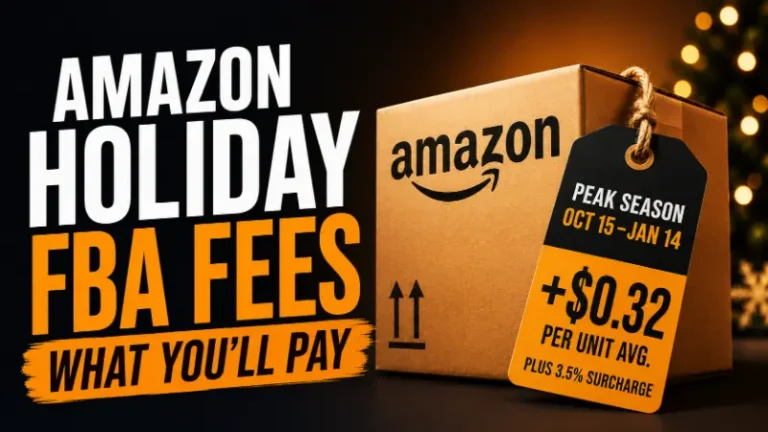
Amazon FBA Peak Season Fees: A Deep Dive
Amazon’s 2026 holiday peak fulfillment fees run from October 15, 2026 through January 14, 2027 and apply to FBA, Remote Fulfillment with FBA, Multi-Channel Fulfillment (MCF),...
Apparel Returns Are Getting Harder to Avoid. Brands Need to Make Them Cheaper to Handle
Apparel returns are climbing again, and a meaningful share of the increase is tied to customers whose bodies are changing faster than their wardrobes can keep up.
How to Choose the Right 3PL Company
The thrill of growing your own ecommerce business can quickly give way to backaches as you personally store and fulfill tens or hundreds of orders per day. And that’s not even mentioning the garage-full of inventory that you can hardly navigate!
On the other end of the spectrum, large businesses can also easily see their logistics overwhelmed by growth. They may need additional warehouse space, or find it challenging to expand their own warehouse, new fulfillment capabilities, or a better footprint across the country to reduce final mile shipping distances.
Both of these types of sellers need the same thing: a third-party logistics (3PL) partner.
In this article, we’ll provide a quick rundown of what a 3PL does before providing an in-depth guide to what you should look for in a 3PL when you need to outsource fulfillment.
What is a Third-party Logistics (3PL) Company?
A third party logistics (3PL) provider, broadly speaking, is a company that handles inventory management, warehousing, and fulfillment for retailers. The industry has undergone a massive transformation over the past two decades as retail growth has shifted online, but the basic principles have remained the same. Logistics management is fundamental to 3PL services, which focus on executing logistical tasks efficiently.
3PLs receive inventory from their customers, and then they safely store it in the manner required to support efficient outbounds. They integrate with their customers’ sales channels, so that when an order comes in, the 3PL fulfills it without intervention from the seller. Within that broad characterization, there’s as much variety in the 3PL industry as there is in retail.
Some 3PLs focus exclusively on retail replenishment, while others take the opposite approach and only work with ecommerce sellers. Some will specialize based on the type of goods fulfilled, as many require special handling or conditions in the warehouse (such as oversized items or refrigeration). Others will focus on creating dense networks in certain regions of the country, while many now compete with Amazon to create robust nationwide networks.
Definition of 3PL
A 3PL, or Third-Party Logistics provider, is a company that offers outsourced logistics services to manage one or more aspects of a business’s supply chain operations. This can include inventory management, warehousing, transportation, and distribution. By partnering with a 3PL provider, businesses can streamline their logistics operations, reduce costs, and improve efficiency. Third party logistics providers bring specialized expertise and technology to the table, allowing businesses to focus on their core competencies while leaving the complexities of logistics operations to the experts. Whether it’s managing inventory, optimizing warehouse space, or coordinating transportation services, a 3PL provider can significantly enhance the overall performance of a supply chain.
Benefits Of Using A 3PL Provider
Using a 3PL provider can bring numerous benefits to a business, including:
- Cost Savings: Third party logistics providers can help businesses reduce their logistics costs by leveraging their expertise, technology, and economies of scale. By outsourcing logistics operations, businesses can avoid the investments required for infrastructure and personnel.
- Improved Efficiency: 3PL providers can help businesses streamline their logistics operations, reducing the time and effort required to manage inventory, transportation, and distribution. With advanced warehouse management software and transportation management systems, 3PLs can optimize every step of the logistics process.
- Increased Scalability: As businesses grow, their logistics needs become more complex. A 3PL provider can help businesses scale their logistics operations quickly and efficiently, without the need for significant investments in infrastructure or personnel. This flexibility allows businesses to adapt to changing market demands with ease.
- Enhanced Customer Service: 3PL providers can help businesses improve their customer service by providing fast, reliable, and flexible logistics solutions. With efficient logistics operations, businesses can ensure timely deliveries and accurate order fulfillment, leading to higher customer satisfaction.
- Access to Specialized Expertise: 3PL providers offer access to specialized expertise and technology, such as warehouse management software and transportation management systems. This allows businesses to benefit from the latest advancements in logistics without having to develop these capabilities in-house.
How Do 3PLs Work?
Generally speaking, a 3PL owns two critical aspects of the ecommerce logistics chain: inventory storage and pick & pack fulfillment. As reverse logistics become more prominent, many 3PLs are also building out the ability to operate “in reverse” to help their clients manage returns.
In this section, we’ll provide a run-down of standard 3PL processes that make the operation hum.
Technical Integration
To start, ecommerce 3PLs need to be able to see orders received by their clients in real time in order to be able to fulfill them quickly. Before the rise of ecommerce, and even in the early days of the ecommerce revolution, speed was not a priority for order fulfillment. Many clients would manually send their 3PLs orders in Excel spreadsheets (or even in Word docs) at the end of each day or week, and then the 3PL would get to work fulfilling the orders.
You don’t need us to tell you that the world works a bit differently these days.
Today, any 3PL set up for ecommerce insists on building a direct integration between their systems and a customers’ sales channels. Without an instantaneous feed of orders from ecommerce channels like Amazon or Shopify, orders wouldn’t be shipped on time, and sellers would be faced with a deluge of unhappy customers asking why their shipments are delayed. The best 3PLs have pre-built integrations with major marketplaces, shopping carts, and ecommerce platforms, so integrations are as simple as a few clicks for their customers. They also have open APIs that support more custom integrations to reflect the diversity of tech stacks that modern sellers have built.
Inventory Receiving
Next in the process is receiving – after all, a 3PL can’t fulfill orders with inventory that it doesn’t have. Sellers can send their inventory via freight directly from their manufacturer to their 3PL, while giving the manufacturer any receiving specifications the 3PL might have. This minimizes the number of intermediary stops for inventory, which reduces cost and the potential for inventory to get stuck inaccessible in the wrong location.
Generally speaking, 3PLs prefer to receive pallets with as few SKUs as possible, prepped for shipping, and pre-labeled. This “platonic ideal” of receiving, though, is rarely fully true, and so many 3PLs offer inventory prep services to get items ready for shipping. This enables the seller to still ship directly from the manufacturer to the 3PL, even if the manufacturer isn’t well versed in how to prepare items for ecommerce.
Long receiving times are a big problem in the eCommerce world – Amazon FBA receiving timelines can vary significantly by shipment type, season, and fulfillment-center workflow, so sellers should review Amazon’s current inbound and peak-readiness guidance rather than assume a fixed receiving window. For instance, many seller complain of Amazon FBA taking 14 days to get inventory that is at their fulfillment centers ready to ship. A two week wait is unacceptable for sellers who could see their best sellers go out of stock while waiting. That’s why Cahoot’s fulfillment services offer an industry-leading receiving SLA.
Inventory Storage
Much of the floorspace in a warehouse is dedicated to inventory storage, but the way in which 3PLs store inventory has changed dramatically thanks to the shift towards ecommerce order fulfillment. A cloud-based warehouse management system (WMS) can enhance visibility and streamline inventory management across multiple fulfillment centers.
Warehousing services that focus on B2B replenishment store their inventory efficiently in large bundles – think of a full pallet of goods, or a pallet of goods off of which multiple cases can quickly be picked.
Inventory storage at a warehouse that fulfills ecommerce orders is instead optimized so that orders can easily be picked in “eaches” (or single quantities). The speed with which a warehouse picker can get to items and pull one or more out is vital to operations because they have to repeat the process hundreds of times per day.
Warehouse Fulfillment
Pick and pack fulfillment is the term for the process by which 3PL personnel select the items that a customer ordered and put them in boxes ready to ship. This is the most vital part of the process for ecommerce sellers, because speed and accuracy underpin a positive customer post-purchase experience.
Amazon Prime’s continual push to cut delivery times shorter means that warehouses can’t wait to fulfill orders; each customer that presses “buy” needs to have their item picked, packed, and dropped off with the carrier that same day. Anything less will result in a delivery delay, and delivery delays lead to negative customer reviews.
Next-gen 3PLs like Cahoot have developed intelligent software controls to maximize the speed and accuracy of picking and packing in their warehouses. Cahoot software, for instance, intelligently directs warehouse personnel to maximum speed and efficiency with pick lists of products. The pickers then use barcode scanners to ensure that the right product is picked every single time. In this way, Cahoot achieves both speed and accuracy, ensuring the zero-defect, fast fulfillment that customers demand.
Returns Processing And Reverse Logistics
eCommerce warehouses must be able to handle returns – those that don’t leave their customers unable to provide a critical service to the end customer. Marketplaces again have led the market with super-easy no-fault returns policies, so online merchants of all stripes are under heavy pressure to offer the same on their DTC sites. So, warehouses have to be able to receive returns, assess whether they’re damaged or not, and process them back into available stock whenever possible to minimize loss.
Signs that Your Organization Needs a 3PL Provider
If your business is experiencing any of the following signs, it may be time to consider partnering with a 3PL provider:
- Rapid Growth: If your business is growing rapidly, a 3PL provider can help you scale your logistics operations quickly and efficiently. They can provide the necessary infrastructure and expertise to handle increased order volumes and complex logistics requirements.
- Complex Logistics Needs: If your business has complex logistics needs, such as multiple warehouses, transportation modes, or inventory management requirements, a 3PL provider can help you manage these needs effectively. Their experience and technology can streamline logistics operations, ensuring smooth and efficient processes.
- High Logistics Costs: If your business is experiencing high logistics costs, a 3PL provider can help you reduce these costs by leveraging their expertise, technology, and economies of scale. They can identify inefficiencies and implement cost-saving measures to optimize your logistics operations.
- Limited Logistics Expertise: If your business lacks logistics expertise, a 3PL provider can provide you with access to specialized knowledge and technology. Their experience in managing complex logistics operations can help you overcome challenges and improve overall efficiency.
What Should You Look for in 3PL Companies?
If you’re an ambitious seller looking to boost your growth, you should know that the right 3PL can be a revenue driver, and not just a cost center. The best 3PLs will improve your delivery experience, which makes for happy customers that buy again and again. They can also help you control and reduce shipping costs by leveraging partnerships with various carriers.
Here are the most important things to look for in your 3PL:
Nationwide Warehouses
Even if you’re small now, you can still strategically distribute your inventory to unlock affordable fast shipping. That is, if your 3PL has nationwide USA fulfillment centers. A third party logistics company can enable businesses to expand their operational reach into new sales channels and regions.
A McKinsey study found that a whopping 90% of US online shoppers expect free two- to three-day shipping, and Amazon metrics show that turning on the Prime badge can net 50% growth for a product. If you or your current 3PL only have one or two locations to ship from, though, two-day shipping to customers halfway across the country requires eye-watering expedited shipping rates. That’s where strategic inventory distribution comes into play.
The best 3PLs offer true national fulfillment services by placing inventory in 4+ locations strategically across the country. The benefit to you is that these networks will cover 99%+ of US consumers with 2-day shipping at economy shipping rates. No matter where your customer wants their product shipped, you’ll have inventory nearby. They get their item lightning-fast, and you pay the cheapest possible rate.
User-Friendly Warehouse Management Software
If you can’t get real-time updates on the status of your orders, your inventory levels, and shipping and fulfillment costs, then you’re not working with a cutting-edge 3PL.
Older (and even some of the new) 3PLs can feel like a black box into which sellers send their inventory, and then they have no idea how much of what product they have left due to inconsistent communication.
The best 3PLs, on the other hand, have software that proactively notifies customers with critical information. Unfortunately, things go wrong all the time in the logistics world. It can be as simple as an undeliverable address input by a customer, and as complex as a worldwide shipping crunch. Your 3PL shouldn’t leave it up to you to find issues in fulfillment – for instance, the software should alert you when a customer places an order with an undeliverable address. You can then fix the issue with the address before it turns into a late shipment, and you’ll keep the customer happy.
Top-Tier Reliability
Reviews are your lifeblood, and a happy customer is a repeat customer. You probably can recall poor reviews and lost customers that were due to errors from your 3PL that you couldn’t control!
The best 3PLs almost never make mistakes thanks to the technology they use to ensure accurate and fast picking. Look for an on-time fulfillment rate of 99.9% or higher – anything less signals a 3PL that isn’t built for the rigorous demands of modern eCommerce.
“I was struggling to find even a handful of orders that we’ve had issues with… I can’t even remember a single order that was shipped out late.”
~ Michael Pursey, COO of Cali’s Books
Speak to a fulfillment expert
Cahoot achieves zero-defect fulfillment with a mix of top-tier professionals and top-tier software. Our commitment to high standards starts with the warehouses that we accept into our network: we turn away many more than we accept, and we demand that they have a long track record of demanding ecommerce fulfillment environments like executing Seller Fulfilled Prime. Then, they install our rigorous software on top of their already excellent operations, and the result is a 3PL that leads the way with over 99.9% on-time fulfillment and 99.95% order accuracy.
Flexibility and Scalability
It shouldn’t be hard to connect your Amazon account and Shopify store to your 3PL – the best ones have pre-built integrations that will do it with a few clicks.
Ecommerce merchants are pushing into multiple sales channels to maximize growth, and your 3PL should be able to easily integrate with all of them. Their integrations make it easy to switch fulfillment and get up-and-running with the new service in no time.
Scalability goes past just easy integrations, though. Many 3PLs, and especially many of the newer “tech enabled 3PL networks”, are optimizing narrowly for only certain types of products. Certain 3PLs, for instance, specialize in the highly specific needs of merchants who sell and ship food products or electronics, both of which require more care and attention to detail than other goods.
The flexible Cahoot peer-to-peer fulfillment network, in contrast, can handle efficient retail replenishment as easily as it handles low-cost fast ecommerce fulfillment. We handle challenging beauty products’ fulfillment as readily as we excel in consumer packaged goods. Unlike others that have built or partnered one type of warehouse over and over across the country, we install our flexible software in warehouses with diverse specialties. The only common thread they have is their excellence. The result is that we scale our customers’ operations no matter their selling channel; for instance, some of our most successful customers are winning growth on Amazon, Shopify, and with retail stores like Nordstrom all at the same time.
Responsive Customer Service
Finally, you should be able to get in touch with your 3PL easily to troubleshoot challenges and come up with fixes. Look for a 3PL that offers you a real person to work with your account, and multiple ways to get in touch with them. If it’s a small issue, live chat will do. Thornier challenges, on the other hand, should be governed by a detailed ticket system. And of course, you need a phone line for critical issues.
Cahoot clients agree that our service team is the lifeblood of our 3PL. Our detailed but user-friendly onboarding process ensures that our merchants are able to smoothly transition from their previous fulfillment solutions, while also enabling us to get to know your business in detail to better fit your needs. With other big 3PLs, you’ll have to re-explain your business and its requirements every time you submit a ticket. With Cahoot, our US-based team takes the time to learn who you are and what you need to succeed, so that if an issue arises, they can get right down to fixing it immediately.
3PL vs. 4PL: What’s the Difference?
A 3PL provider manages a specific aspect of a business’s supply chain operations, such as inventory management or transportation. They focus on optimizing individual components of the supply chain to improve efficiency and reduce costs. On the other hand, a 4PL provider manages the entire supply chain, including multiple 3PL providers. Acting as a single point of contact for all logistics needs, a 4PL provider offers a more comprehensive and integrated logistics solution. They oversee the entire supply chain, from procurement to distribution, ensuring seamless coordination and optimization of all logistics operations. By managing the entire supply chain, a 4PL provider can provide businesses with a holistic approach to supply chain management, enhancing overall performance and efficiency.
Top 3PL Companies
Now that you know what to look for, how do a few of the top players in the industry stack up? We’ve provided a primer to help jump-start your research.
Fulfillment by Amazon (FBA)
FBA, the elephant in the room, is Amazon’s fulfillment solution for 3rd party merchants selling on their marketplace.
Amazon Buy with Prime
You can also use Amazon’s fulfillment network, FBA, to fulfill direct-to-consumer (DTC) orders from your own website. Buy with Prime is an extension of their existing service, Amazon Multi-Channel Fulfillment (MCF).
Walmart Fulfillment Services
Walmart Fulfillment Services (WFS) is Walmart’s fulfillment network for Marketplace sellers. In addition to fulfilling Walmart.com orders, Walmart now offers Multichannel Solutions so eligible WFS sellers can fulfill orders from other ecommerce channels as well.
ShipBob
ShipBob is a 3PL that focuses on serving eCommerce merchants. They have a nationwide network of fulfillment centers that enable fast shipping, but they charge extra for guaranteed 2-day shipping.
Red Stag Fulfillment
Red Stag Fulfillment is a more traditional 3PL, with only a few locations in the United States. They offer B2B fulfillment in addition to B2C, as they have a wider focus than eCommerce.
Cahoot: The Next Gen 3PL
Cahoot’s fulfillment network is built for eCommerce. We’ll help you delight your customers with a stellar, Amazon-like delivery experience while reducing the amount of time your team spends on operations. We support your growth, no matter where you sell – we have pre-built integrations with major marketplaces and shopping carts and we power efficient B2B fulfillment. Our tailored solutions help streamline supply chains, reduce costs, and improve customer satisfaction.
Our innovative peer-to-peer model offers low-cost, fast fulfillment by design. We’re “peer to peer” because our fulfillment network is made up of ecommerce sellers with excess capacity in their own, excellent operations. We help them fully utilize their capacity by fulfilling for other sellers like you, and as a result, our pricing is typically lower than that of other top providers listed above. Because we only add the best of the best warehouses to our network, we also beat the competition on fulfillment speed and reliability.
If you’d like to find out how Cahoot can help your business, please get in touch with us. We can’t wait to show you how easy operations can be.
Written By:
Indy Pereira
Indy Pereira helps ecommerce brands optimize their shipping and fulfillment with Cahoot’s technology. With a background in both sales and people operations, she bridges customer needs with strategic solutions that drive growth. Indy works closely with merchants every day and brings real-world insight into what makes logistics efficient and scalable.
Turn Returns Into New Revenue
Related Articles
DSCO Fulfillment Explained: What Sellers Still Get Wrong
DSCO fulfillment is the order-communication layer in a retailer drop ship program: it standardizes how retailers and suppliers exchange orders, inventory, shipment confirmations, a...
Apparel Returns Are Getting Harder to Avoid. Brands Need to Make Them Cheaper to Handle
Apparel returns are climbing again, and a meaningful share of the increase is tied to customers whose bodies are changing faster than their wardrobes can keep up.
Amazon’s July 2026 Seller Fulfilled Prime Speed Changes: What Sellers Need to Know
Amazon is raising the minimum delivery-speed requirements for Seller Fulfilled Prime, effective July 6, 2026.
3PL Warehouse Food Grade: How To Choose | Cahoot Fulfillment
As more grocery sellers move to add online channels, they’re quickly discovering that the third party logistics industry hasn’t yet built up the specialized muscle needed to store and ship their products with the care they need. The growth of grocery online has caught logistics professionals off guard. After all, very few people bought food online as recently as 2019.
Just two years before the COVID pandemic, eCommerce made up only 2.7% of US grocery sales. Now, market forecasters expect it to make up a full 20% of the grocery market in 2026, an astounding growth rate.
Explosive growth can come with deep challenges, and many grocers that have added online channels have seen the promise of ecommerce turn sour due to high damage rates and inefficient shipping from their fulfillment partners. Unfortunately, many 3PL warehouses simply don’t know what it takes to offer top-notch services and manage food supply logistics effectively.
In this article, we’ll provide you with an inside look into what you need to look for in a 3PL that will support your profitable growth as an online food seller with food-grade warehouses.
What is Food Grade Warehousing?
Food grade warehousing refers to the specialized storage and handling of food products in facilities that meet stringent standards for cleanliness, sanitation, and safety. These warehouses are designed to protect the integrity and quality of food products, ensuring they remain safe for consumption throughout the storage period. Equipped with specialized equipment and staffed by trained personnel, food grade warehouses handle a variety of food products, including dry goods, frozen items, refrigerated products, and perishables.
In the food supply chain, food grade warehousing plays a critical role by preventing contamination, spoilage, and damage to food products. This ensures that the food reaching consumers is both safe and high-quality. By adhering to rigorous standards, food grade warehouses help maintain the trust and confidence of food manufacturers and consumers.
Importance of Food Safety in Warehousing
Food safety is paramount in food grade warehousing. Given the susceptibility of food products to contamination, spoilage, and damage, stringent food safety protocols are essential. These protocols include rigorous sanitation practices, effective pest control measures, and precise temperature control to inhibit the growth of harmful bacteria, mold, and other microorganisms.
Food grade warehouses must comply with regulations and standards set by authoritative bodies such as the Global Food Safety Initiative (GFSI) as well as legislation like the Food Safety Modernization Act (FSMA). These regulations ensure that food products are handled and stored in a manner that protects public health. By prioritizing food safety, food grade warehouses not only safeguard consumers but also uphold the reputation and reliability of the food supply chain.
What You Need From Your Food 3PL
While there are many similarities between fulfilling online orders for the food industry and general consumer packaged goods, food products have special needs that many third party logistics warehouses (3PLs) aren’t equipped to handle. Proper food handling practices are crucial to prevent contamination and ensure safety during storage and processing, with certifications like SQF and AIB validating adherence to these standards.
In this section, we’ll break down the added requirements that 3PLs need to excel in to provide excellent food grade order fulfillment.
FDA Approved Food Grade Warehouses
In 2011, the Food Safety Modernization Act (FSMA) raised the standards for manufacturing, processing, and storing food. An FDA-certified warehouse is a storage facility, food manufacturing plant, or order fulfillment center that is officially registered with the FDA to safely store food in accordance with the FSMA and food industry regulations. Facilities subject to FDA food facility registration must also renew that registration every other year, and current FDA renewal guidance requires a unique facility identifier recognized as acceptable to FDA.
The certification process ensures that the warehouse has a host of plans and procedures designed for the safe storage and handling of food products. FDA registration does not itself certify a warehouse’s practices. Applicable FSMA requirements, current good manufacturing practices, customer standards, and third-party audits are what typically govern the warehouse’s food safety procedures. Some elements include sanitation and cleaning procedures, glass and clear plastic policies, and pest control.
Relying on an FDA-approved warehouse as your food 3PL gives you the peace of mind that comes from knowing that your food products are stored safely, minimizing the chance of spoilage or contamination that could hurt customers and your ecommerce business.
In addition to FDA certifications, food-grade warehouses can acquire a number of other certifications from government and industry groups that indicate they are following up-to-date best practices for food handling and storage:
- Global Food Safety Initiative (GFSI) Recognized Certifications
- BRCGS (Brand Reputation Compliance Global Standards) Storage & Distribution – Ensures proper storage and transportation of food and packaging materials.
- SQF (Safe Quality Food) Storage & Distribution – A globally recognized standard that verifies food safety and quality management.
- IFS Logistics – Covers food and non-food storage and transportation requirements.
- FSSC 22000 (Food Safety System Certification) – Based on ISO 22000 and recognized by GFSI.
- ISO Certifications
- ISO 22000 – International standard for food safety management systems.
- ISO 9001 – Quality management system certification that ensures consistent service quality.
- Organic and Specialty Certifications
- USDA Organic Certification – For warehouses handling organic products, ensuring compliance with National Organic Program (NOP) standards.
- Non-GMO Project Verified – For warehouses storing non-GMO products.
- Gluten-Free Certification – Ensures compliance with gluten-free handling requirements.
- American Institute of Baking (AIB) – evaluates the safety, cleanliness, and compliance of food processing and storage facilities.
- Hazard Analysis & Critical Control Points (HACCP) Certification
- A preventive approach to food safety, identifying and managing potential hazards in food storage and handling.
Thanks to Cahoot’s unique peer-to-peer ecommerce model, we have warehouses that don’t just occasionally work with food products but instead have specialized in food order fulfillment for decades.
Climate Controls
One of the most important considerations when choosing an ecommerce fulfillment company is the type of climate conditions that your products will require. More than most other products, many foods have strict temperature limitations that must be followed, or products will be damaged. Many sellers assume that if they don’t need refrigeration, then any 3PL warehouse will do, but they learn the hard way that isn’t true.
Unfortunately, many 3PLs maintain warehouses at warmer temperatures in order to save money on air conditioning, which makes them too warm for many food items. Especially in summer months – and in the southern US – many warehouse temperatures rise into the 80s or even 90s Fahrenheit, which can irreversibly damage many food items and lead to a big write-down.
And product loss in the warehouse isn’t where the problem ends. Your outsourced warehouse team may not realize that products are damaged before they ship them out. Suppose you sell chocolates, and you have a product line that ships in opaque boxes. The warehouse team wouldn’t be able to see the damage, and if the warehouse temperature rose to melt the chocolate, shipments would continue without pause. That leads to a mass of customers all receiving damaged products at once, and when they take to social media to complain, it will create a lasting negative impression of your brand.
Therefore, it’s critical that the 3PL warehouse that you choose is equipped to handle, store, and ship your food items in optimal climate conditions so that your customers are able to receive the very best version of your product.
A good rule of thumb is to ask your 3PL warehouse whether they guarantee their warehouses at or close to room temperature. Since the most commonly shipped food items are designed to be stored in cool, dry conditions in a cupboard, they’re usually safe at 72 degrees. That being said, know your product! Refrigerated items will obviously require lower temperature ranges, and some other products don’t need refrigeration but do need more careful heat regulation than simply sitting at room temperature.
Careful Packaging For Safe And Efficient Shipping
One metric defines online seller profitability more than any other: customer lifetime value. With digital advertising becoming increasingly expensive, most sellers lose money on new customers. They’re only able to earn a positive bottom line through long-time repeat customers.
Proper food grade storage is essential before shipping to ensure food safety and compliance with regulations. Unfortunately for online food merchants, it’s more difficult to safely ship fragile foods and glass than it is to ship other goods. Without a food 3PL that knows how to treat such delicate items, your margins will quickly be overwhelmed by unhappy customers demanding refunds for damaged goods.
In addition to limiting damage, a 3PL warehouse that knows food logistics inside and out also knows that orders come in many more shapes and sizes than they often do for other merchants. Grocery orders tend to consist of many different items and many different quantities. This introduces significant packaging uncertainty for untrained order fulfillment personnel, and it can lead to inefficiently packed boxes that inflate shipping costs.
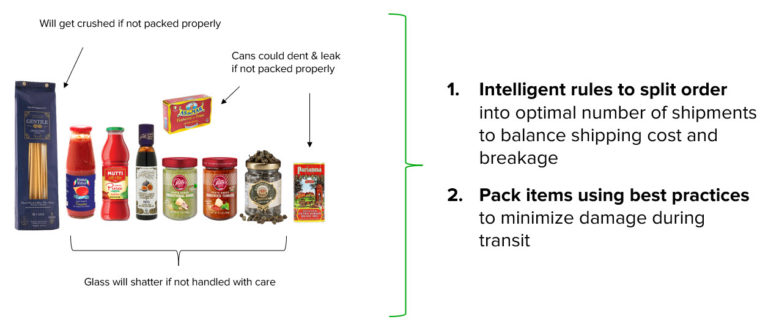
Cahoot uses a combination of intelligent packing software and responsive customer service to get the packaging right for the toughest goods to ship. We optimize for two things: we keep the package as small as possible to minimize shipping cost while also getting damage rates as close to 0% as possible.
Our warehouses that specialize in food have a direct line to discuss tricky packing challenges with our control team, and this leads to a process of continuous improvement. Our software is constantly learning new ways to reduce damage rates and costs. In this way, you save money on shipping while also ensuring that your customers are delighted when they open up their products every time.
Responsive Customer Service
Though responsive customer service is important for all online sellers, it’s especially important for a food 3PL, given the additional attention that is needed. You need to be able to get in touch with your customer service team quickly to feel confident that they know how to excel with your products and troubleshoot solutions for tricky challenges.
You need a 3PL company that offers you a real person to work with your account and multiple ways to get in touch with them. Cahoot clients love our easy-to-reach and proactive customer service team. Our team is based in the USA, and they take the time to get to know your ecommerce business, so you don’t have to start at square one with a new person every time you submit a ticket. The close relationship we forge with our sellers is foundational to our ability to go above and beyond as a food 3PL.
Evaluating a Food Grade Warehouse
When evaluating a food grade warehouse, it’s crucial to assess its ability to meet high standards for cleanliness, sanitation, and safety. Here are key factors to consider:
- Certifications: Look for certifications such as SQF, AIB, and Organic. These certifications indicate that the warehouse adheres to specific standards for food safety and quality.
- Sanitation and Pest Control: Ensure the warehouse has a robust sanitation and pest control program to prevent contamination and infestation. This includes regular cleaning schedules and effective pest management strategies.
- Temperature Control: Verify that the warehouse has adequate temperature control measures to prevent spoilage and damage to food products. This is especially important for perishable and temperature-sensitive items.
- Inventory Management: Assess the warehouse’s inventory management system to ensure it can effectively track and manage food products. Efficient inventory management helps in maintaining product quality and reducing waste.
- Staff Training: Ensure that warehouse staff are well-trained in food safety and handling procedures. Proper training minimizes the risk of contamination and damage to food products.
- Regulatory Compliance: Verify that the warehouse complies with relevant regulations and standards, such as the Food Safety Modernization Act (FSMA). Compliance ensures that the warehouse operates within legal and safety guidelines.
By thoroughly evaluating these factors, you can ensure that a food grade warehouse meets the necessary standards for safely and efficiently storing and handling food products. This not only protects consumer health but also enhances the reliability and efficiency of the entire supply chain.
Cahoot: Experienced Food Grade Warehouses
Cahoot is different from other 3PLs. Our innovative peer-to-peer model sets us apart by enabling us to offer low-cost, fast order fulfillment by design for a huge variety of specialized industries.
So, how do peer-to-peer ecommerce services work better than old order fulfillment networks?
We recruit top-tier ecommerce merchants with their own warehouses to join our network as fulfillment partners, and then our intelligent shipping software and control team keeps the whole system connected and running efficiently. Since we’re unlocking excess order fulfillment capacity that was lying idle, we’re able to offer lower costs. And crucially for online grocers, we’re able to recruit merchant-operated warehouses that already specialize in fulfilling their own food – and thus are already up to speed as food grade warehouses.
Unlike other 3PL warehouses that are building cookie-cutter warehouses designed to store easy-to-fulfill goods, we have specialists in temperature-controlled fulfillment, hazmat, and more. Our flexibility is part of what distinguishes us and makes us the best choice for sellers seeking a reliable food-quality 3PL partner.
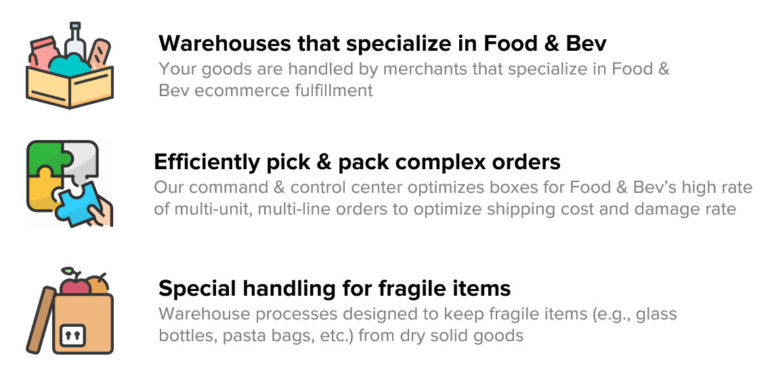
Our technology further improves our ability to power food-grade logistics by constantly optimizing how we pack orders. The shipping software partners with human judgment to learn the best packing combinations for tricky food orders, so we’re able to minimize damage rates and use small packages to limit shipping costs. And, of course, since our merchant-operated warehouses know how important special handling is for food products, they take extra pride in ensuring that your products are safely stored and moved.
If you’d like to find out how Cahoot can help your ecommerce business, please get in touch with us. We’ll design a custom order fulfillment service for you that will meet your exact food-grade needs.
Frequently Asked Questions
What is 3PL cold storage?
3PL cold storage refers to temperature-controlled warehousing and distribution services for perishable goods offered by many 3PLs. These facilities specialize in storing and handling products that require refrigeration or freezing, such as dairy, meat, seafood, frozen meals, pharmaceuticals, and certain chemicals.
What regulations must a food-grade 3PL provider follow?
Food-grade third-party logistics (3PL) providers must comply with several regulations to ensure food products are stored and handled safely. Key requirements include:
- FDA Registration: Facilities that manufacture/process, pack, or hold food for U.S. consumption generally must register with the FDA unless an exemption applies. FDA inspections are risk-based, with domestic food facilities inspected at frequencies tied to their risk level.
- FSMA Compliance: Some facilities must implement a food safety plan developed or overseen by a Preventive Controls Qualified Individual (PCQI), but warehouses solely engaged in storing unexposed packaged food may be exempt from preventive controls requirements or subject only to modified requirements for refrigerated foods requiring time/temperature control for safety.
- GMPs & HACCP Plans: Good Manufacturing Practices (GMPs) and Hazard Analysis Critical Control Points (HACCP) ensure food safety and risk mitigation.
- Third-Party Audits: Many food-grade warehouses are subject to independent audits by organizations such as ASI Food Safety or the Safe Quality Food Institute (SQFI).
- Pest Control & Sanitation: Strict pest control, sanitation, and hygiene protocols must be followed to prevent contamination.
What factors should businesses consider when choosing a food-grade 3PL provider?
When selecting a food-grade 3PL provider, businesses should consider several factors to ensure compliance and efficiency, including experience & certifications, temperature integrity, lot traceability, prevention of cross-contamination, and GMP audit readiness.
What can disqualify a warehouse from being considered food-grade?
A warehouse may lose its food-grade status if it fails to maintain sanitation, temperature control, and compliance with regulatory standards. Common disqualifications include:
- Structural Issues
- Poor Sanitation Practices
- Improper Storage
- Lack of Temperature Control
- Regulatory Non-Compliance
Written By:
Indy Pereira
Indy Pereira helps ecommerce brands optimize their shipping and fulfillment with Cahoot’s technology. With a background in both sales and people operations, she bridges customer needs with strategic solutions that drive growth. Indy works closely with merchants every day and brings real-world insight into what makes logistics efficient and scalable.
Turn Returns Into New Revenue
Related Blog Posts
3PL vs In-House Logistics: How to Shift From In-House Warehouse to a 3PL | Cahoot

In this article
14 minutes
- Understanding In-House Logistics and 3PL
- Definition of In-House Logistics
- Definition of Third-Party Logistics (3PL)
- Advantages and Disadvantages of In-House Logistics
- 5 Signs It’s Time to Switch to an Outsourced Third-Party Logistics Company
- How to Shift From In-House Warehouses to an Outsourced 3PL
- In-House or Outsourced? Cahoot Lets You Do Both
- Frequently Asked Questions
As your ecommerce business grows, the operations behind it become more complex. One of the most significant is warehousing and order fulfillment, which must scale alongside sales and customer growth to remain profitable.
While in-house order fulfillment may be cost-effective initially, those expenses can skyrocket as you need more warehousing space, on-demand workers, and closer relationships with shipping providers. The decision-making process of 3pl vs. in-house becomes critical as you weigh factors like control, scalability, cost, and business needs to determine the most suitable fulfillment method for your company.
For most growing ecommerce businesses, handling order fulfillment is a large and time-consuming role that they didn’t sign up for. Instead, many merchants are outsourcing this task to reliable third-party logistics (3PL) providers. In this article, we’ll discuss the benefits of working with an order fulfillment partner and quick steps on how to outsource your logistics.
Understanding In-House Logistics and 3PL
As ecommerce businesses grow, understanding the logistics options available becomes crucial. Two primary approaches are in-house logistics and third-party logistics (3PL). Each has its unique benefits and challenges, and choosing the right one can significantly impact your business’s efficiency and customer satisfaction.
Definition of In-House Logistics
In-house logistics refers to the management and execution of logistics operations within a company’s own facilities and resource constraints. This approach involves handling all aspects of the supply chain internally, including inventory management, order fulfillment, warehousing, and transportation. By keeping these operations in-house, businesses maintain complete control over their logistics processes, allowing them to tailor their operations to meet specific customer needs and expectations. This level of control can lead to more personalized service and potentially higher customer satisfaction, as businesses can directly oversee every step of the order fulfillment process. But it’s inherently more expensive.
Definition of Third-Party Logistics (3PL)
Third-party logistics (3PL) involves outsourcing logistics operations to a specialized provider. A 3PL provider manages and executes logistics functions on behalf of a business, including warehousing, inventory management, order fulfillment, and transportation. By leveraging the expertise and resources of a 3PL provider, businesses can optimize their supply chain operations and improve customer satisfaction through improved fulfillment reliability. This approach allows companies to benefit from the advanced technology, infrastructure, and industry knowledge that 3PL providers offer, often resulting in more efficient and cost-effective logistics operations. These benefits extend to the use of “Micro-Fulfillment Centers” strategically located to enable even faster, more localized delivery. Cahoot’s massive nationwide local reach can be considered the top option in this category.
Advantages and Disadvantages of In-House Logistics
When deciding between in-house logistics and outsourcing to a 3PL provider, it’s essential to consider the pros and cons of each approach. In-house logistics offers certain advantages but also comes with its own set of challenges.
Pros of In-House Logistics:
- Complete Control: Businesses have full control over their logistics processes, allowing for customization and direct oversight.
- Tailored Operations: Companies can tailor their logistics operations to meet specific customer needs and expectations, potentially enhancing customer satisfaction.
- Direct Management: In-house logistics enables direct management of inventory and warehouse operations, which can lead to more efficient order fulfillment, but more importantly, inventory accountability.
Cons of In-House Logistics:
- Higher Costs: Managing logistics in-house can be expensive, requiring significant investment in warehouse space, technology, and staff (which can be unpredictable).
- Resource Intensive: In-house logistics demands substantial resources, including time, personnel, and capital, which can strain a growing business.
- Scalability Issues: As order volumes increase, scaling in-house logistics operations can be challenging and may lead to inefficiencies or delays.
By weighing these pros and cons, businesses can make an informed decision about whether to keep logistics operations in-house or outsource to a 3PL provider.
5 Signs It’s Time to Switch to an Outsourced Third-Party Logistics Company
If you face logistics and shipping issues, reexamine how you ship. Aligning logistics strategies with evolving customer expectations is crucial for business growth. As you analyze your operations, keep the following five indicators in mind to determine if you should outsource order fulfillment.
1) Your Logistics are Hindering Your Growth
Today’s consumers place significant demands on logistics. For many small ecommerce businesses, that means scaling at the pace of your fulfillment. If you’re canceling orders because you can’t keep up with the logistics, or your sales are limited by your order fulfillment capacities, it’s time to invest in an outsourced 3PL company.
Similarly, if your organization’s in-house logistics management is bottlenecking and you’re slowing the growth of your ecommerce company to invest in internal fulfillment services, consider whether a 3PL is a better and ultimately cheaper solution.
2) Items are Getting Lost
As order volume rises, so do the chances of mistakes, especially if you’re unable to expand your warehousing capacity quickly enough. Orders get missed or lost, items get delivered late, and tasks fall through the cracks.
Outsourcing logistics operations to a third-party logistics provider (3PL) can mitigate these issues. A 3PL company typically uses some form of distributed order management software to monitor inventory and shipments, which greatly reduces the occurrence of order errors.
Beyond that, packages have a higher tendency of getting lost or stolen when shipped to big city addresses, so hiring a 3PL provider with consistent shipping insurance options and Shipment Insights will avoid the expenses associated with missing items and help your customer service team offer better resolutions.
3) You’re Relying on Manual Order Tracking
Many ecommerce stores start out processing orders manually: You place an incoming order into a spreadsheet, pack it, and manually update shipping. From there, you write down the actual cost of packaging, postage, and other details.
This process is slow, requires significant human effort, and introduces human error. It also fails to provide the metrics and insights obtained with automation. Additionally, managing in-house operations involves substantial investment in advanced fulfillment technology, which can be a significant challenge and cost for businesses. A modern 3PL company may use shipping software and real-time tracking tools to improve supply chain visibility and package status updates. Intelligent software also automatically collates costs, expenses, and revenue to better project profitability, increasing trust and collaboration between businesses and their fulfillment partners, leading to more efficient and reliable operations.
4) Deliveries are Late
Ninety percent of consumers are now willing to wait at least two or three days for a delivery. However, if your warehousing and shipping network is overburdened, you’ll likely be unable to keep up with projected shipping deadlines.
Rising shipping costs can significantly impact profitability, but a 3PL can help mitigate these costs through efficient distribution centers and optimized shipping methods. USPS also announced a temporary 2025 holiday shipping-season price increase for Priority Mail Express, Priority Mail, USPS Ground Advantage, and Parcel Select, effective October 5, 2025 through January 18, 2026. FedEx updated the ZIP code lists used for Delivery Area Surcharges on U.S. package services effective June 2, 2025, which can change the cost of residential and remote deliveries. USPS also announced a transportation-related, time-limited price change that would raise base postage prices by 8% for Priority Mail Express, Priority Mail, USPS Ground Advantage, and Parcel Select, effective July 13, 2026.
If your shipments are increasingly falling behind, that’s a good indication you lack the infrastructure to keep up with current demand. A 3PL, on the other hand, will have that infrastructure in place for accurate tracking and delivery projection timelines so customers won’t be disappointed due to poor order fulfillment.
5) Order Fulfillment Costs are Too High
Handling order fulfillment in-house means negotiating your own contracts and potentially missing out on savings that come from large volumes. By collaborating with 3PL providers that specialize in supply chain management, businesses can improve their efficiency and reduce costs. When you work with a 3PL that can leverage economies of scale, they often can negotiate more favorable pricing on packaging, storage, as well as shipping.
In addition to better rates, working with a 3PL may help eliminate other overhead expenses, such as the need to hire, train, and manage warehouse staff, as well as rent your own prep and storage locations.
Finally, if you ship from a single location—as is common with many in-house order fulfillment setups—you may be overspending on expensive shipping for orders far away from your warehouse. Working with a fulfillment partner that has locations on both the West and East Coasts, for example, can help shorten the distance items need to travel and allow for more ground shipping while meeting shipping speed service level agreements.
How to Shift From In-House Warehouses to an Outsourced 3PL
Partnering with a 3PL provider can remove the burden of warehousing overhead and infrastructure, freeing your organization to focus on sales, production, and growth.
While there are numerous benefits, including potential cost savings, reduced carbon footprint, and faster, more reliable shipping, keep in mind that outsourcing order fulfillment is a complex process.
Below are our suggestions for making the switch.
1) Pick a Reliable 3PL Company
Knowledge is power, and researching the best 3PL company for your unique brand is half the battle in making a smart, strategic switch.
Outsourcing logistics to third-party logistics providers offers significant advantages, including their expertise, scalability, and cost-effectiveness, which can enhance operational efficiency and customer satisfaction compared to managing logistics in-house.
There are tens of thousands of 3PL providers on the market, but finding a good fit for your ecommerce business requires effort. Choose a 3PL partner that matches your business growth, technology needs, and distribution needs.
Ask yourself:
- Does the 3PL provider have geolocations that match your customer base?
- Can you scale with this 3PL provider, or will you quickly outgrow them?
- Are they small enough to be a partner?
- Do they offer customization or services like packing slips, marketing material, etc.?
- Do they support all of your channels?
- Do they support the circular economy (growing emphasis on sustainability and reverse logistics, product repair, and remanufacturing)?
- Do they have a history of operation and a stable client base?
- Does their software integrate with yours?
- Does the 3PL provider meet all of your needs (fulfillment, reverse logistics, kitting, subscription boxes, etc.)?
- Do they have security in place? What about certifications like FDA or DEA? Do you need HAZMAT?
- What’s their customer service like?
Order fulfillment is a critical component of your success, so take your time choosing the right 3PL for your business.
2) Do a Test Run
Generally, it’s smart to try out the 3PL with a small amount of inventory or a few products. This gives you the chance to get to know the 3PL provider before committing all of your inventory to their care. For this test run, it’s helpful to choose a fast-moving product that you know will sell quickly. (You may also want to order a few products yourself to see how they arrive.)
Route a few orders to the 3PL warehouse and monitor their performance to decide if they’re a good fit for your ecommerce business.
For example, do orders arrive on time? Are customers happy with how orders arrive? How is their tracking system? Is inventory management complicated or easy to use? Do they employ order routing?
Make the most of this hands-on trial run so you know what you’re getting into and feel confident you’ve chosen the right 3PL partner.
3) Send in Your Inventory for Inventory Management
Arrange distribution with your 3PL company. You may have existing warehoused inventory you want to ship directly to the 3PL. Other times, you’ll want to keep that inventory and simply route all new deliveries from your suppliers or manufacturers directly to the 3PL warehouse.
The option you choose will depend on total inventory, its movement speed, and how much inventory you want to send to the 3PL.
Tip: Don’t send in aged or deadstock. If you don’t foresee the items selling in the future, it will just cost you more to send into your order fulfillment center and you’ll end up having to pay long-term storage fees.
4) Decide How to Split Inventory
A recommended best practice is to keep some inventory on hand. This is important whether you handle returns yourself or outsource to a 3PL.
Maintaining a small amount of inventory allows you to take care of emergencies and provides a safety net in case problems arise with distribution. Often, an 80/20 split (with 80% of inventory at the 3PL) is a safe bet, but it’s important to do the math yourself to decide if you need to split inventory and how much.
You might want to retain more inventory in certain situations. For example, if you have stock that’s large and slow moving, you may decide to keep it in house. This will alleviate most of the pressure from your own warehousing without incurring extra storage costs with slow-moving products.
Leverage a distributed order management system when splitting inventory between your own internal warehouses and 3PL warehouses. This tool will help ensure accurate counts across different inventory locations and strategic order routing depending on availability, location, sales channel, and more.
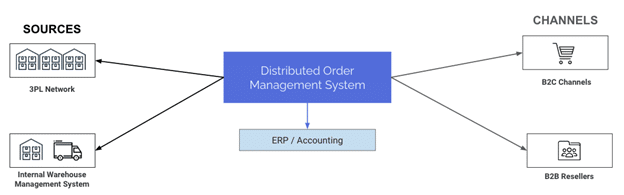
5) Monitor and Refine
Your 3PL must be able to adapt to your growing ecommerce business. Partnering with a 3PL company is a long-term commitment, which means keeping an eye on data, communicating with your 3PL provider, and growing together.
In turn, your partner has to adjust to your expansion, add capabilities to meet your growing needs and offer the data you require to track stock and order performance.
In-House or Outsourced? Cahoot Lets You Do Both
What if you already have invested significant time and energy into your own operations, and don’t want to give up on that entirely when moving to an outsourced partner? Most 3PLs aren’t optimized to work alongside merchant-owned order fulfillment, but Cahoot has rewritten the rules with a flexible fulfillment network and shipping software.
Cahoot enables merchants with in-house ecommerce order fulfillment to strategically add Cahoot locations across the country as they expand while retaining their existing operations.
Deploy inventory in Cahoot locations along with your own facility, and then let the intelligent, automated Cahoot shipping software rate shop for labels and choose the best facility to fulfill each order as it comes in. If the order comes in near your facility, you’ll fulfill it. If it’s near a Cahoot location that you’re using, they’ll fulfill it. You get the benefits of nationwide USA order fulfillment centers while still making the most of the investment you’ve put into your existing facility.
Of course, if this article has convinced you that it’s time to move on from managing your own order fulfillment entirely, Cahoot will happily work with you to take all of your inventory and power your online channels with low cost and fast delivery.Want to learn more? Contact Cahoot to access affordable, flexible order fulfillment for merchants of all sizes.
Frequently Asked Questions
What is in-house logistics?
In-house fulfillment refers to the management and execution of logistics activities or operations within an organization’s facilities or infrastructure, rather than outsourcing these functions to external third-party logistics (3PL) providers or logistics companies. With in-house storage, you as an entrepreneur have full control over your goods and store your items in your own company building instead of having them stored by an external service provider.
What are the disadvantages of in-house fulfillment?
While outsourcing critical activities might lead to a loss of operational control, in-house fulfillment faces the risk of over-reliance on internal resources, which may not always be sufficient or optimal.
What is the difference between logistics and third-party logistics?
While contract logistics companies typically help arrange transportation and routes, a 3PL company handles much more than just transportation; 3PLs provide a full suite of logistics services, from warehousing and order fulfillment, to inventory management and automated shipping.
Written By:

Rachel Go
This is a guest post from Rachel Go. Rachel is a content marketer and strategist at Flxpoint, an enterprise ecommerce operations platform. Flxpoint enables merchants and brands to unify and automate every aspect of your ecommerce operations and scale without manual processes or custom development slowing you down.
Turn Returns Into New Revenue
Related Blog Posts
Peer-to-Peer Order Fulfillment for Efficient and Affordable Shipping

In this article
24 minutes
Listen to podcast here.
Podcast: ProShip ParcelCast Episode 23: What is a Peer-to-Peer Order Fulfillment Network?
Cahoot AI founder Manish Chowdhary discusses the need for distributed order fulfillment and the benefits of a peer-to-peer order fulfillment services network on a podcast. The network is a platform where eommerce brands and retailers collaborate to speed up order fulfillment and distribute inventory closer to the customer. The objective is to reduce shipping costs and improve customer experience with better and faster shipping. Distributed order fulfillment is the process of making free and fast shipping feasible and affordable for the retailer by placing inventory closer to the customer so that items can be shipped using affordable and inexpensive ground services rather than long-distance air that can be two to four times more expensive. An ecommerce brand or a retailer just needs four to five strategically located warehouses throughout the US to achieve two-day nationwide delivery guaranteed and nine warehouses to achieve one-day delivery like Amazon. Retailers have the option to build their own warehouses, lease them, sign up with multiple third party logistics (3PL) companies, or join an order fulfillment services network like Cahoot.
Justin Kramer:
Welcome to the 23rd episode of ParcelCast, what is a peer-to-peer order fulfillment services network. I’m your host, Justin Kramer, co-founder of ProShip. And with me is my special guest, Manish Chowdhary, founder of Cahoot AI, a distributed shipping software and peer-to-peer order fulfillment services network. Manish, could you take a second to introduce yourself and your company?
Manish Chowdhary:
Absolutely, Justin. Thank you for having me. First of all, my name is Manish Chowdhary, I’m the founder and CEO of Cahoot. Cahoot is the world’s first peer-to-peer order fulfillment services network. In simple words, it’s a collaboration platform where brands and retailers collaborate to speed up fulfillment and distribute inventory closer to the customer so that we reduce the shipping cost and also improve the customer experience with regards to better and faster shipping for the end consumer.
Justin Kramer:
You know what, let’s take that further. Let’s go ahead and talk about the need for distributed order fulfillment. We hear about it a lot. Can you explain to us what it is, and what our retailers’ options are nowadays?
Manish Chowdhary:
That’s a great question, Justin. Distributed order fulfillment is nothing but a methodology on making the free and fast shipping feasible and affordable for the retailer. When the consumers order stuff online, especially on sites like Amazon, they are conditioned now to expect free two-day delivery. In fact, Amazon has raised the bar on making it free one day delivery with Prime. Almost one-third of all Amazon Prime items get delivered in one business day, which is astounding. And for Amazon, business day is Monday through Sunday, so it’s not even business day anymore. And that’s the expectation that the consumers have with every ecommerce brand, every retailer. And for the brand or the retailer to make that affordably happen is bring the inventory closer to where the consumer is located so that item can be shipped using affordable, inexpensive ground service. As opposed to the long distance air, which is in on average two to four times more expensive than the economy ground shipping. So distributed order fulfillment is basically placing your inventory smartly closer to your customer so you can achieve one-day, two-day delivery without breaking the bank.
Justin Kramer:
Awesome, awesome. What kind of tools, technologies, and SLAs should we expect from something like this if I’m a mid-size retailer looking to get into something like this?
Manish Chowdhary:
You essentially have three options. One, you can go and build additional warehouses, and these are warehouses that need to exist at strategic locations. Meaning, having a warehouse in Wisconsin, for example, is not going to be very effective because that’s not where the large population lives. Of course, tri-state area, New York, New Jersey, closer to the port, that’s where a lot of the inventory from overseas come in. But also it’s a very densely populated region. And so is Southern California like Los Angeles, Long Beach, Orange County. And then of course the upper Midwest like Chicago and so on. In order to achieve two-day nationwide delivery guaranteed, a brand or a retailer needs four to five strategic warehouses throughout the nation. And if you wish to achieve one-day delivery like Amazon, you need nine warehouses strategically located in the US. And I mean strategic.
If you had a warehouse that is not in a strategic location, you’ll need many more. And so you have options. Your options are you’re going to go build these warehouses, which is very capital intensive, and you don’t know what the market is going to look like. And then also it’s getting the permits, getting all of this takes a very long time. Second option is to lease it. Again, same problem, you’ll need to enter into long-term leases because warehouse spaces in such short supply, which also is a pretty large commitment and investment. The third option is you have to go and sign up with multiple 3PLs. Because two-thirds of the 3PL, or third party logistics companies, the companies that professionally provide order fulfillment services to brands of retailers in the US are mom and pop, two-thirds. The remaining one-third are the largest of the world.
Those are the people that become the landlord to Amazon and Macy’s and others, which are largely out of reach for most mid-sized sellers. So now you need to go and negotiate and acquire these multiple 3PL with different agreements, different contracts, and then you need the technology to glue it all together because there is no [inaudible 00:05:05] to choke, so as to speak, if there’s a problem. And so all of this creates a huge burden, a huge investment for the brand or the retailer to achieve. Or the fourth option, which is really a more newer and emerging option, is to join a contract with an order fulfillment services network such as Cahoot. And there are a few others that has nationwide footprint, that has multi dozen warehouses that can achieve that delivery target, that SLA seamlessly. So that’s another option.
Justin Kramer:
You talk a lot about Amazon. Is Amazon Prime a distributed order fulfillment services network? Is that something that people are looking at at the… Or should I say, is that something that is the high end of what we’re talking about?
Manish Chowdhary:
Amazon FBA, which powers the Amazon Prime program, fulfillment by Amazon, is by far the largest distributed order fulfillment services network in the world. Not only the US. They have over 120 warehouses, not to count the sortation facilities and other cross stock facilities in the US. Amazon invested more during the pandemic in building out their fulfillment services network than they had invested in the previous 18 years. So the amount of money and resources that Amazon poured in 2020 and 2021, and also part of 2022, dwarfs the investment… Almost, they increased their footprint three times, and that’s why we heard some headlines about Amazon over building and they needed to rent out. Those were some headlines. And then trying to optimize their cost, laying off workers, closing down facilities. Amazon, like many of the other brands and retailers had overbuilt. But Amazon is by far the largest distributed order fulfillment services network in the world.
Justin Kramer:
If I’m a growing retailer and I’m looking to get into something, how is all this power that Amazon has, how does that impact me?
Manish Chowdhary:
Absolutely. Suffice to say that nearly every brand, every retailer should have an Amazon strategy. It’s hard to ignore Amazon is a sales channel when 60% of all e-commerce searches begin on Amazon, not on Google. Even whether you like Amazon or you don’t like Amazon, the reality is millions and millions of consumers go to Amazon every single day. And if they can’t find your products there, then that’s a problem, because you may be missing out on a big opportunity. A big, large segment of your target audience and population. Amazon does many things really, really well. And Amazon being the largest order fulfillment services network, but also Amazon Prime is the largest loyalty program in the world. By a long shot, you’ve got over 130 million, I don’t even have the real numbers as of now, but over 100 million subscribers that pay $120 a year to Amazon, and they get a whole host of benefits.
And the biggest benefit of it all is the free one-day, two-day delivery with no minimum. So you could literally order paperclips on Amazon, have it delivered the next day, and not pay anything for delivery because you’ve already paid into the membership program. So that is what consumers love. And while Amazon FBA is great at many things, and I can cover this if you like, I can elaborate on it. It’s not the be all and end all. It is good for many times, however, it has its own set of challenges that the retailers and ecommerce brands must be aware of.
Justin Kramer:
Let’s go ahead and ask one last question. Let’s talk about Buy With Prime. Can you tell me what the larger impact is of this program on e-commerce as a whole?
Manish Chowdhary:
That’s an excellent question, Justin. Buy With Prime launched in April of this year, this is something that has been a long time coming. As you and others listening may be familiar with, Amazon does everything at very large scale. They perfect a service first for themselves, and then they look to monetize that across the entire business ecosystem. And that’s exactly what Buy With Prime is. Buy With Prime is Amazon’s initiative to become even larger third party logistics company where Amazon will extend its Prime membership to other channels other than Amazon. Let’s say you have a website that is hosted on Shopify or on Magenta, or any website, you could install a Buy With Prime logo, a button, and you can send that inventory to Amazon FBA, and the consumer can now check out using the familiar Amazon account and get that product in one or two days.
Buy With Prime essentially extends all of the Prime benefits to websites other than Amazon. And we already seeing many, many sites that have adopted and embraced this because Amazon makes it so easy for the brands and retailers to fulfill their orders. And if brands and retailers that are heavy into FBA that sell a lot on Amazon for them, it’s a no-brainer. And so what the term or the phrase that I like to use here is, gradually and then suddenly. Up until now, consumers have been expecting the Prime benefits or one-day two-day delivery only on Amazon. But now let’s take an example. If you are a shoe retailer, and there are two of them, Acme Inc and ABC Inc. Acme Inc starts providing Buy With Prime on their website, and ABC Inc does not. Now as a consumer, I’m more likely to go check out from here, if all things being equal. So this is going to lead to this massive adoption and even acceleration of delivery expectation among consumers, because they now expect that same Prime-like experience on every channel they shop on.
Justin Kramer:
Interesting, interesting. Okay, let’s go ahead and switch topics here. Let’s talk about this new fulfillment economy and the workshare model. To the average logistics persons, companies like Gap, American Eagle, Quiet Logistics, Airterra, they were offering something very similar to what it sounds like the Cahoot network is offering. Can you talk to us a little bit about the similarities and the differences?
Manish Chowdhary:
Yeah, this is a new development that’s happening in the e-commerce and retail logistics space. Cahoot was of course the pioneer in peer-to-peer collaboration. And essentially, Cahoot acts as a neutral third party where there are plenty of merchants. There are about three million online merchants in the US compared to about 20,000 3PL companies. So these are third party logistics companies that will provide fulfillment as a service. By sheer comparison, and the analogy I’d like to make is Airbnb versus Hilton. There are many more homes with spare bedroom and a spare wing than there are hotel rooms in the US. Rather than building more warehouses where rooms are going empty, or the space is going empty in these millions of warehouses. Cahoot is aiming to bring these surplus capacity into the market so as to reduce the cost and improve utilization. This goes hand in hand with trying to make the most or more of what resources we already have, as opposed to trying to spend more capital expense, which essentially increases the cost one way or the other for the brand or the retailer.
What Cahoot has done is created a network of very highly qualified, highly vetted brands and retailers that do a spectacular job of order fulfillment for themselves, but that have extra capacity, let’s say 5, 10, 50, 20, 100,000 square feet of excess capacity. For the very first time, they can join the Cahoot network and monetize that excess capacity by fulfilling orders for other brands. And Cahoot acts as the independent governing body with the technology, the software, so that it is not a distraction for them. It is simple, it’s easy, and it’s effective. And it also gives the seller, the brand, our customer, the assurance that we are holding everybody accountable. And there is harmony and there’s SLA being delivered. And so it’s very exciting to see other retailers like Gap and American Eagle finally come to embrace the model that we’ve been preaching for a long time.
And the one difference, there’s not a lot we know about these models because there’s not a lot published on them because it’s still a closed system. But one thing, suffice to say that most brands, most retailers would prefer an independent body to audit the service provider. And that’s the advantage that Cahoot provides, because Cahoot is not representing just the buyer or just the warehouse. Cahoot is the independent body that keeps everybody organized and creates a common rule and level playing field for all the participants, and provides the visibility. That’s the one thing that I personally believe that having that independent body is a very crucial, it provides trust, it provides visibility, and it provides the assurance and it provides accountability. We would very much welcome Gap and American Eagle to join Cahoot so that we can give that assurance to small and large size retailers.
Justin Kramer:
And it also sounds like if I’m a Cahoot member I can now more easily expand to those five to nine distribution points so I can have two-day or next day delivery for most of the country.
Manish Chowdhary:
Absolutely. The whole idea is, how do we create a Prime-like network and Amazon FBA-like network without the challenges that FBA faces? FBA is great at many things, but it does not… Even to this day, many, many sellers could not get their inventory into FBA on time for the holidays. They had limits placed on their account that they could only send so many units, and they rely on other networks like Cahoot to fulfill even their orders on Amazon. While Amazon is growing, they’re launching all these services, it has its own set of challenges. Amazon is not geared for all things to everyone at all time because Amazon only wants fast moving inventory. But from a retailer’s perspective, they also need to fulfill their wholesale orders, they need to fulfill orders from Walmart. Which, you cannot use FBA to fulfill, it’s against Walmart’s rules and policies that you cannot have a Amazon branded box being delivered to the Walmart customer that bought the item on the Walmart marketplace. And rightfully so.
Justin Kramer:
Let’s switch over to some other networks that sound like they’re similar. I know that the carriers, some of the airlines, and other particular merchant groups have some stuff similar to this. Can you talk about that and compare and contrast a little bit for us?
Manish Chowdhary:
Absolutely, Justin. The idea of coopetition has existed for a long time, where seemingly retailers may consider themselves to be competitors, but not necessarily. Because a retailer who has a warehouse in New York is really not competing with the retailer of a different product with a warehouse in California. It is in their interest to collaborate so that both of them win because they are not competing. And so we know of many, many very successful networks of this kind, going back to the, let’s take airline co-share. Not every airline flies to Maui, Hawaii. But if you want to get from Chicago to Maui, you might have to go from Chicago to Dallas, or Chicago to LA, and then LA to Maui, for example. For example, Delta, as part of the Sky team has many other airlines that share the code and so on.
So this is very, very common. It makes the airlines be profitable and able to service the needs of the customer. Because ultimately about getting to Maui, not about how many websites and tickets you need to buy separately. Likewise, we also know for examples in the flower delivery space, the FTD. Which is if I want to send flowers, I’m in New York and I need to send flowers to my sister-in-law in Palo Alto in California. Of course the local florist is not going to be the one delivering, but as part of the network, they can easily arrange for someone locally to deliver. And we’ve always known about the workshare model in the carrier space, which we know that USPS has long had workshare programs with UPS, FedEx. Programs like UPS Mail Innovation, FedEx Smart Post. Cahoot is simply extending the same concept to the world of order fulfillment and warehouses. Because ultimately, when there is greater utilization of resources that we have, that leads to a better experience and lower cost for all the participants involved.
Justin Kramer:
Very interesting, very interesting. Manish, can you tell our audience, what is a peer-to-peer order fulfillment services network?
Manish Chowdhary:
A peer-to-peer order fulfillment services network is a large scale nationwide network of warehouses that allows a ecommerce brand or retailer to compete at the level of Amazon Prime, which is one-day, two-day free delivery. Every brand, every retailer should be offering the service on all channels that they serve. And they can easily achieve that by joining Cahoot, because Cahoot has the number of locations and the diversity to place the inventory closer to the customer so that the items can be delivered inexpensively and fast without incurring additional cost. And on the fulfillment provider side, if you are a brand or retailer that has, owns, or operates a warehouse and has spare capacity, be it 5,000 square feet or 50,000 square feet, and you would like to monetize that excess capacity, excess space, please come check out Cahoot.ai and fill out a contact us form so you can apply to become a Cahoot fulfillment partner.
And we would love to speak with you, because we would love to add more warehouses to our network. So you benefit not just by providing faster and cheaper delivery to your customers, but also by monetizing your spare capacity so you make more out of your existing fixed investments.
Justin Kramer:
Excellent. Let’s go ahead and let’s move on to the changing base of reverse logistics. Let’s face it, over the last several years we’ve seen companies try to return everything. We’ve seen companies try to return nothing, just ask the customer to throw it away. But one way or another, we all know that reverse logistics is a huge part of the customer satisfaction story when it comes to e-commerce. Can you tell us a little bit more about it?
Manish Chowdhary:
Yes, Justin, this is of course when e-commerce was only 1% of total retail. Brands and retailers were motivating customers to shop online because it was, so-called it was a channel shift. It was giving customers more self-service option. It is akin to motivating customers in the grocery stores to do self-checkout now, you try to encourage them. And of course consumers got very, very much used to… And in order to do that, they offered free shipping on the way in, and they also offered free returns. Because it was one of those taking away the friction in online shopping that if you didn’t like something you could return it for free and no questions asked. Of course, that was intended to be simply an encouragement for the consumers to shop online, and which quickly changed into the concept of showrooming. It’s essentially consumers, especially in the apparel space, buying three items with the intention of only keeping one.
And because items are free to return, you could simply return it back. This went on for over a decade now, and sites like Amazon, or when the products are rather inexpensive, it costs more to ship them back and process that item that is returned than to let the customer keep the item. However, we are entering a new phase and we can see that with the brands like Zara and Gap and others that are cramping down and they’re saying enough is enough. There have been chronic people that constantly return items that is playing a havoc on the profitability of these companies. Essentially, the movement has already started, and some of the top brands and retailers have taken a lead that now if you want to return the item back to Zara, you’re going to have to pay a return fee, or you have to pay cover the cost of shipping. I think they’re going through a natural leveling of consumer expectations. And I don’t expect free returns to loss for most items in the next couple of years, that’s going to change quite dramatically.
Justin Kramer:
That will be very interesting, no more free returns. I know companies like Zappos, that’s exactly how they made their name in the market was you could bracket, by the size above, the size below, and get to choose what you wanted. Very interesting. Are you seeing this anywhere yet, or is this an expected 2023 trend?
Manish Chowdhary:
No, we heard from folks like Zara and others that they are already beginning to charge for returns. This is already in play now. It’s just not an idea or a thought. And of course, it takes a little bit of the top leaders to take a position and then others will follow. I expect of course, Amazon being the big bellwether, it remains to be seen what Amazon Prime is going to do because I think they constantly set the bar, so we’ll see. But also from a sustainability standpoint, Justin, this is not just about the cost. But if we encourage people to return, we are adding more carbon emissions. I think there will be brands that would take a stance that it is not just good for e-commerce, but it’s good for the planet. I do expect that the scales to be tilting in this direction not too long from now.
Justin Kramer:
Yeah. And I have to say, I think you’re right. Because you do see even Amazon in their partnership with stores like Kohl’s wanting you to just take it to that store where you’re already going to be, rather than putting it in its own, usually oversized box, sticking a label on it, and having it take up space on a truck or a trailer somewhere. All right, let’s move on to final thoughts. Question for you, is there any takeaways you want to make sure that our listeners have heard today and that they action against?
Manish Chowdhary:
My recommendation to all the listeners is that free and fast delivery, free one-day, two-day delivery is here to stay. And it’s not just on Amazon. Any channel that you’re selling on, you’ve got to embrace distributed order fulfillment. How you do it, there are four options as we covered earlier in the podcast. It is crucial in order to maintain your competitive positioning and also maintaining the consumer expectation, which is changing very rapidly. And especially with Buy With Prime program, which is going to launch, or rather, get rolled out quite aggressively in 2023. You want to get ahead of that. I would very strongly encourage to get a head start in 2023 and test this out, and make sure you have this systems and technology and your fulfillment and your providers figured out. And if you have spare capacity, why not put that to good use? Energy costs are all time high. So if you can make an extra income from your existing investments, that’s good for you, but it’s also good for the planet.
Justin Kramer:
Agreed. The one thing I took away from this, I’m going to try to narrow it down to a sentence. In the past we’ve always had buy, lease, or outsource. Right? But with a peer-to-peer network, we now have a fourth option. We can buy, we can lease, we can outsource two or 3PL, or we can collaborate with other like retailers. Is that correct?
Manish Chowdhary:
That is absolutely correct, Justin. I think we are all in this together, and that’s why our tagline, Cahoot’s tagline is Power of Many. It’s brands of retailers helping each other.
Justin Kramer:
All right. If you’d like to learn more, please visit us at proship.com or cahoot.ai. Thank you for joining us today. If you have any questions, just a reminder, you can reach ProShip at sales@proshipinc.com, or (800)-353-7774. We hope you join us for our next ParcelCast. Thank you for tuning in.
Written By:

Manish Chowdhary
Manish Chowdhary is the founder and CEO of Cahoot, the most comprehensive post-purchase suite for ecommerce brands. A serial entrepreneur and industry thought leader, Manish has decades of experience building technologies that simplify ecommerce logistics—from order fulfillment to returns. His insights help brands stay ahead of market shifts and operational challenges.
Turn Returns Into New Revenue
Related Articles
What Is Demand Planning? How It Impacts Inventory, Forecasting, and Profitability
Demand planning is the process of estimating future customer demand so that a business can align its inventory, procurement, and operations to meet that demand without carrying mor...
The Shipping Speed Paradox: Why DTC Brands Are Slowing Down
Everyone’s talking about faster delivery.
Why Cross-Border DTC Brands Are Moving Fulfillment Inside the US
Cross-border ecommerce fulfillment is the process of shipping ecommerce orders across national borders—often from warehouses outside the United States to U.
Ecommerce Fulfillment with Buy With Prime
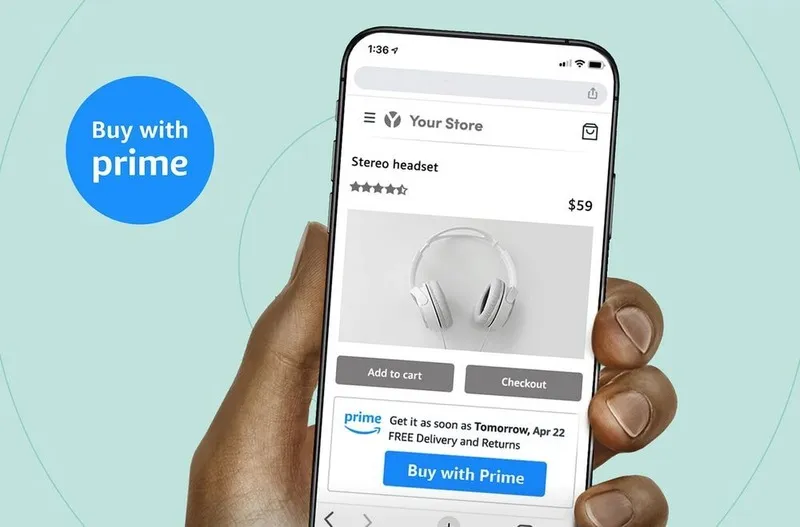
Consumer expectations today are higher than they’ve ever been before. Many observers might put this down to rising incomes or things that shoppers visibly see every day, such as great marketing campaigns, innovative products, or competitive pricing. However, sellers have a secret weapon in the competition to acquire happy, loyal customers – fast, free shipping and order fulfillment.
The elevated customer expectations that online retailers face due to fast shipping times have been created by the “Amazon Prime Effect”. What is this effect, and what implications does it have for merchants selling online?
Constantly Increasing Consumer Expectations
Let’s go back to 2005, when Amazon introduced free two-day shipping on orders over $35, a move that many found puzzling – even illogical – at the time. Later in the same year, they introduced Prime, with its annual fee that allowed customers to get as many items as they wanted, with no shipping fees.
By the time of the Covid-19 pandemic, same-day shipping arrived on Prime. While Amazon continuing to raise the fulfillment bar has been great for them and their customers, competitors large and small have been scrambling to catch up. For example, it took Walmart 12 years to catch up and offer free 2-day shipping! As Amazon has gotten faster and faster at shipping, even their biggest competitors have taken a long time to reach the elevated shipping standards that Amazon makes table stakes.
On every channel today, the sellers winning are those offering shipping that can compete with Amazon. For example, Walmart listings (inspired by Amazon’s approach) offering 2-day delivery rank higher in search results, win the buy box more often, and see conversion lifts as high as 50%.
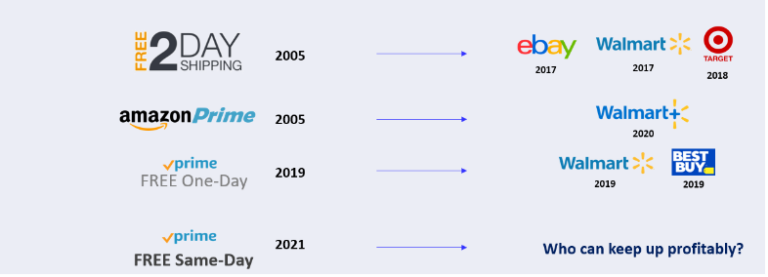
While pressures to provide ever-faster free shipping continue to increase, the pressures of intensifying competition are making it harder than ever for sellers to win. Costs at each step of the fulfillment chain (shipping, warehousing, and labor) are on the rise:
- Shipping: General Rate Increases have surged upward, remaining significantly higher than the prevailing inflation rate, making it harder and harder for merchants to absorb the last-mile costs involved in meeting the expectations of free same-day shipping.
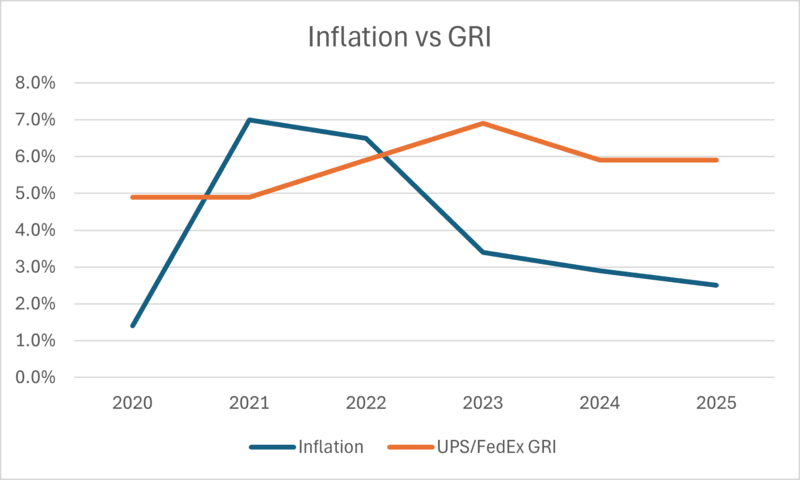
- Warehousing: To get orders fulfilled faster, you need to distribute your inventory in warehouses closer to the customer. But online merchants face the challenge of dealing with both elevated rent costs and limited vacant space in warehouses.
- Labor: As they continue to face significant staff turnover at fulfillment centers, Amazon has had to increase the wage they pay their workers several times in recent years. Most recently in 2024, they announced a new 7% increase in base pay for warehouse workers, bringing average base pay for such workers above $22/hr.
With shipping companies raising prices, warehouses becoming tougher to rent, and people becoming more expensive to hire, merchants face the daunting task of overcoming these challenges and meeting customer expectations.
What is Buy with Prime?
In 2022, Amazon raised the stakes yet again, making fast, free shipping available standard for every e-commerce brand and retailer through their Buy with Prime (BWP) program. This program allows any online merchant – not only those with Amazon stores – to offer order fulfillment using the elevated standard set by Prime. The program has already made a splash in a short time, with support from major brands such as Adidas and Fossil.
Amazon Buy with Prime is a program that allows third-party merchants to offer Prime shopping benefits—like fast, free shipping, a seamless checkout experience, and easy returns—on their own e-commerce websites. It integrates with a merchant’s online store, enabling Amazon Prime members to shop with confidence outside of Amazon.com while still receiving the perks they expect.
To start using Buy with Prime, Amazon currently requires a U.S.-based entity, an ecommerce site, and either a Professional Seller Central account or an Amazon Supply Chain account. Merchants simply add the “Buy with Prime” button to their product pages on their own website, and customers then check out using their Amazon credentials, making the process faster and more convenient.
Amazon handles fulfillment and shipping, ensuring fast delivery through its logistics network, and also manages customer service and returns, simplifying post-purchase interactions.
Benefits of Buy With Prime
Amazon’s Buy with Prime program offers significant advantages for sellers looking to boost sales and improve their customer experience. By enabling merchants to offer the Prime shopping experience directly on their own websites, the program increases trust and boosts consumer spending – by 16% on average according to Amazon! With fast, free shipping and a seamless checkout experience backed by Amazon’s fulfillment network, sellers can attract high-value Prime members who are accustomed to quick delivery and hassle-free returns.
Additionally, Buy with Prime helps sellers leverage Amazon’s logistics expertise without being limited to selling only on Amazon’s marketplace. They maintain control over their branding and customer relationships while benefiting from Amazon’s fulfillment and payment processing capabilities. Eligible merchants can display Reviews from Amazon on active Buy with Prime product pages, and Amazon also offers Amazon DSP for Buy with Prime to help merchants drive traffic from Amazon audiences to their own ecommerce sites. The program can also reduce cart abandonment rates, as shoppers are more likely to complete a purchase when they recognize the reliability of Prime.
Limitations and Problems of Buy With Prime
Buy with Prime orders must be fulfilled from inventory sent to Amazon fulfillment centers using Amazon Multi-Channel Fulfillment (MCF), and participating products must follow Fulfillment by Amazon eligibility requirements and product restrictions. While FBA works well, the Buy with Prime button disappears from the product listing on your website if there is no more inventory available in Amazon warehouses, and standard FBA fees and regulations apply to all inventory in an Amazon fulfillment center. FBA is not ideal for SKUs that do not move quickly – the costs associated with stocking inventory with Amazon that does not turn over frequently can become very large.
The most imposing drawback to the Buy with Prime program, however, is the fee structure: Amazon currently lists payment processing at 2.4% of each Buy with Prime order value plus $0.30 per transaction, plus a Prime service fee equal to 3% of order value with a $0.30 minimum per order. For merchants using the Shopify app integrations, Amazon states Amazon Pay payment processing fees do not apply, but Shopify may still charge its own applicable payment service fees. That being said, sellers should remember that other applicable FBA fees (storage, etc.) will also apply to orders fulfilled from Shopify stores.
Alternatives to Buy with Prime
For sellers seeking to aggressively minimize the costs associated with fulfillment, Amazon’s FBA and Multi-Channel Fulfillment (MCF) programs are, on average, cheaper than utilizing Buy with Prime (although there are specific product types for which Buy with Prime may be more efficient than MCF). But what about merchants who want to meet the modern standard for fast, cost-effective shipping without losing control of their fulfillment processes or submitting to the rigid requirements for which Amazon has become infamous?
Usually, merchants look to 3rd Party Logistics Providers (3PLs) for solutions. However, 3PLs can often come with significant costs and limitations, as fulfillment is their primary revenue stream.
That’s where a solution like Cahoot comes in – we’re unlocking the potential of over 2 million e-commerce retailers in the US that have their own warehouse space, who perform complete order fulfillment.
For the first time ever, merchants, brands, and e-commerce retailers will be able to monetize excess capacity available in their warehouses through Cahoot’s peer-to-peer order fulfillment network, which delivers fast, free 1-2 day shipping while also lowering costs. We offer the industry’s leading Service Level Agreement (SLA) and we help our Amazon sellers by offering Seller Fulfilled Prime (SFP) services. If you’d like us to take over all aspects of order fulfillment, we can do that too!
Conclusion
In an era where fast, free shipping is no longer a luxury but an expectation, sellers must carefully weigh their fulfillment options. Buy with Prime offers a compelling way to boost conversion rates and leverage Amazon’s logistics, but it comes with added costs and limitations that may not work for every merchant. While some sellers may find Amazon’s fulfillment solutions ideal, others may prefer alternative strategies that provide more control over operations and costs.
As competition intensifies and fulfillment challenges grow, innovative solutions like Cahoot’s peer-to-peer fulfillment network are emerging as viable alternatives. By leveraging existing warehouse capacity and a decentralized fulfillment model, sellers can meet the demand for fast, cost-effective shipping without the constraints of Amazon’s ecosystem. The key to success in today’s e-commerce landscape lies in choosing the right fulfillment strategy—one that balances speed, cost, and control to drive long-term growth.
Frequently Asked Questions
How does Buy with Prime benefit merchants?
Buy with Prime helps sellers leverage Amazon’s logistics expertise without being limited to selling only on Amazon’s marketplace. They maintain control over their branding and customer relationships while benefiting from Amazon’s fulfillment and payment processing capabilities. Eligible merchants can display Reviews from Amazon on active Buy with Prime product pages, and Amazon also offers Amazon DSP for Buy with Prime to help merchants drive traffic to their own ecommerce sites.
What are the limitations of Buy with Prime?
Buy with Prime orders must be fulfilled from inventory sent to Amazon fulfillment centers using Amazon Multi-Channel Fulfillment (MCF), subject to Fulfillment by Amazon eligibility requirements and product restrictions. The Buy with Prime button disappears from the product listing on your website if there is no more inventory available in Amazon warehouses, and standard FBA fees and regulations apply to all inventory in an Amazon fulfillment center. Additionally, significant payment processing fees often apply.
This is why it’s important for sellers seeking to aggressively reduce the costs associated with fulfillment, to research alternatives to Buy with Prime.
Written By:
Manish Chowdhary
Manish Chowdhary is the founder and CEO of Cahoot, the most comprehensive post-purchase suite for ecommerce brands. A serial entrepreneur and industry thought leader, Manish has decades of experience building technologies that simplify ecommerce logistics—from order fulfillment to returns. His insights help brands stay ahead of market shifts and operational challenges.
Turn Returns Into New Revenue
Related Blog Posts
3PL Fulfillment: Amazon’s Inventory Limitations & Impact on Ecommerce Sellers
In this article
28 minutes
Listen to podcast here.
Podcast: The Future of 3PL Fulfillment in the Face of Amazon Warehouse Distribution (AWD)
In a conversation between Manish Chowdhary, founder and CEO of Cahoot and Neil Twa, host of the High Voltage Business Builders podcast, the two discuss Amazon’s inventory limitations and the impact it has on ecommerce sellers. Amazon has different teams with different priorities, causing confusion among sellers who cannot rely on any one order fulfillment solution. The company has cut down on inventory shelving space for some ecommerce sellers while launching new services, such as Buy with Prime, which could pose a threat to marketplace delivery services like Shopify. Shopify recently banned Buy with Prime, which Manish argues cuts into the heart of revenue. To avoid being beholden to any order fulfillment service, sellers must have a backup that is not Amazon. The experts caution against putting all your eggs in one basket and encourage ecommerce sellers to move beyond Amazon if they want to grow their ecommerce brand.
Below is the transcript of their conversation, edited for clarity:
Neil Twa:
Welcome to the High Voltage Business Builders, a show where we interview entrepreneurs growing and scaling their income through e-Commerce and showing you the path to make your first or next million.
All right, Manish, thanks for joining the call, my friend, from Connecticut today. How is things out there on the East Coast for you?
Manish Chowdhary:
Things are a bit cloudy here, but it’s still a great day, and thank you for having me, Neil.
Neil Twa:
Yeah, it’s great to have you here, man. So, we’re talking a little bit about things that are obviously relevant to E-comm, but in different channels, not just Amazon. I know you handle multi-channel fulfillment.
Let’s talk a little bit about that, because I know it’s a big piece of what you do in your business model. Tell us what are you seeing, what’s most relevant right now. If someone’s listening to this and they’ve got a Dropshipping or an Amazon store or some other thing else, what’s something they should know right now that you feel is important for them to hear?
Manish Chowdhary:
Well, one of the things that… I just got back from Search Summit last week, you hear conflicting sets of information, right? I mean, Amazon is rolling out new services. You brought up a little while earlier, Amazon warehouse and distribution. So they’re ready to take on everything. Then I hear from a very large seller, very successful seller, just two days ago that their inventory limit has been cut to 1/3rd (of what it is presently).
Yeah, one side, Amazon is ready to take on everything you’ve got, and the second side is the people that are in need of that inventory today don’t have that. So Amazon has different teams working. You really can’t believe one thing or the other, because they’re all just simply trying to get in the limelight. So, it’s a lot of confusion out there for sellers.
Neil Twa:
Yeah, there is definitely, because they said, “We’re going to do 5% of you only (whom they said they would reduce inventory for). We’re going to have to make some holiday changes, we got inventory issue.” Now if I just look at our group, our businesses and we come back, there was more than 5% of the people in our group who got that notification just within our group. So I’m like, “Well, I don’t think that was quite 5%.” I think they kind of just placated those numbers just a little bit.
So they killed it on one end by halving down the shelving space we had on one side of the house, and then they’d say, “Hey, well, we got this new Amazon warehouse distribution (AWD) thing, and you could have unlimited storage over here all of a sudden.” It’s kind of like, “Well, I mean, were you playing the shifting shelves game here?” What do you think is going on?
Manish Chowdhary:
Well, I mean, again, Amazon is a very large company. There are different product owners, each one has their own agenda, so they may have gotten certain amount of space allocated. There’s also Amazon launched Buy with Prime service that is probably also run by a separate group, that they’re ready to take on order fulfillment for Shopify merchants or just about anyone.
So, it is very unnerving if you are a seller like yourself or people in your group, that if you see your inventory limits cut down, what confidence, what trust would you have in other services? So one thing that we at Cahoot like to educate our sellers or give them advice on is that you’ve got to have a backup, and it cannot be Amazon.
Amazon cannot be Amazon’s backup. You’ve got to have an independent third party that has your interest in mind, that is going to help you navigate the turbulent Amazon waters, and that’s not going to end anytime soon. It’s not a Q4 issue, it’s not a Q1 issue.
As long as you play in the Amazon ecosystem, that will continue to remain a challenge no matter how large, how many services they roll out.
Neil Twa:
Yeah, it’s a very valid point, and I love the way you speak Manish, because you’re a very pragmatic guy. I can tell in the way you look at these things. Because obviously with adding the Buy with Prime button, it’s added on a whole additional line of sellers from Shopify and other stuff, which I don’t know if they were aware maybe of what that would do. I know a lot of people have suddenly implemented that. I know for sure they’re going to take over a lot of Shopify’s opportunity for marketplace delivery they were trying to bring up.
Manish Chowdhary:
Well, but Shopify just came out last week I think, and banned it. So Shopify has publicly gone on record to say that installing the Buy with Prime button is against Shopify’s terms of service. So there you have it. Shopify wants to ban Buy with Prime, Buy with Prime wants to get on Shopify. Nobody wants to take FBA forwarding. It’s a big challenge if you’re a seller, you just cannot be beholden to any platform centric order fulfillment option.
Neil Twa:
And there it is. So we talk about pros and cons, and we’re very open about both of those things with Amazon, we don’t want people to be Amazon channel locked. So you need to move a brand beyond Amazon if you start there and incubate it or if you’re off Amazon, obviously you need the combination of the multi-channel aspect really for E-comm today. But like you said, you can’t put all your eggs in one basket, and as soon as you have the opportunity to split out profits, you should move another channel, another opportunity. I didn’t actually hear that update on Shopify, so that’s interesting news. I can see why they would do it. The marketplace is getting extremely competitive, and that opportunity was going to cut into their delivery systems, they were trying to ramp up.
Manish Chowdhary:
Well, it’s not even delivery system. It cuts into the heart of their revenue.
Neil Twa:
Well, for sure, for sure. I mean, you can see why we do these kinds of things and have these kind of conversations. If you’re out here just trying to flounder around on your own. For us, having the experience levels we do, and you too it’s even confusing at times to try to rationalize this stuff in the middle of all the experience we have versus people who are just trying to get going. So if you’re new and you’re just like, “Okay, I got an Amazon channel, I don’t necessarily have a 3PL yet, or I’m looking to get one.” What are the top three things you want people to know when they’re looking for a 3PL company that they should consider? What are the things they should know about it?
Manish Chowdhary:
First and foremost, I think it’s very important to make data-driven decisions. A lot of sellers just simply reach out to 3PLs and we get many of those inquiries. “Give me a price rate card.” Most 3PLs specialize in something. Not everyone specializes in everything. There’s micro – What we call mom-and-pop 3PLs. These are one location, two location, 3PLs, and then there are chains, and then you have networks like Cahoot. So it’s very important for the 3PLs to understand what kind of products are they going to deal with, what’s the inbound and outbound frequency, what kind of services you’re expecting, what is most important to you if you’re simply looking for an FBA forwarding service, or are you looking for DTC fulfillment? What kind of products, because there’s the shipping cost.
I’ll give you a very simple example. You can get dirt cheap order fulfillment, let’s just say even in the hottest market, Southern California, let’s say dirt cheap storage. But if most of your orders are going to New York or the East Coast, you are going to pay Zone 8 shipping prices for moving that item from California to New York on an individual basis. So net net, you actually will lose money even though you thought you got a great deal. Those things are very important. If this 3PL is going to take one or two days extra to ship from a lead time or if they’re going to use downgraded services, that will take longer for the consumer to receive. All of those things are very important to understand upfront as to what are you trying to solve for. And that is one thing that is very important. At least at Cahoot, we don’t blindly hand our pricing because we don’t know if we are going to be the best fit and only information and data tells us whether we are going to be the right fit.
So I would encourage sellers to really think about – how many SKUs? What kind of orders are you fulfilling? The count of orders? Let’s do averages over the last six to 12 months to make sure what’s the typical inventory storage requirement? How long do you store that inventory for? And having all that information and what the shipping cost is going to be, because many 3PLs do not do that. They charge the shipping cost, so you could lose a lot of money on that front. And how does it compare to FBA trying to make any comparison with FBA? So you know exactly for what products you’re going to come out ahead, what products are going to cost more. Because we going to admit FBA is very competitive for Small and Light, very attractive. So anybody who tells you they’re going to beat FBA prices across the board, they’re most likely lying.
Neil Twa:
Yeah. Because of this infrastructure, their multi-channel services usually can win to some degree. You just have to look at it from a strategic perspective and not the lowest race to the bottom pricing. Because I know that’s what happens to a lot of those people with rate cards is they’re selling $10, $12 products and they’ve got razor thin margins and it’s hard to beat Amazon’s FBA pricing at that level because they’re already at razor thin and Amazon’s trying to beat all the competition for pricing. So you got to be smart about your numbers. And usually people who are just asking for rate cards don’t really know what their numbers are. And they may not even know what Zone 8 means if they’re listening to this. But guys by the way, that’s the farthest distance from one location to another at shipping costs.
If you’ve ever tried to ship something and like US Postal Service go down and look, they have a Zone card and you’ll notice some of the locations are some of the farthest away, and you got to be smart about where your sales are coming from. If you’re on DTC, it’s a little easier. You can do a quick analysis and see where’s the majority of my orders going to from people who are buying. On Amazon, you got to wait a little bit and figure out where Amazon’s distribution is sending all your products into which areas you’re getting the most sales from, which may take a little bit of time from the system. But obviously, Manish, you know your stuff. I mean, just listening to you for the last five minutes. You clearly understand this. What is your background in this business model?
Manish Chowdhary:
So I was involved with building the e-commerce platform before the word e-commerce platform was invented. This is going back to early 2000. I was involved with building one of the first Turnkey Shopping Cart Software long before Shopify existed. Magento wasn’t on the market at that time. So built a very successful Shopping Cart Software, Turnkey e-commerce platform as we see now. So I’ve seen e-commerce evolve from its infancy. And then went on to build another similar product, but it’s a full service mid market e-commerce order management system, inventory management system. So I’ve been dealing with online retailers, technologies God, for 22 plus years. So I’ve seen everything and just about anything. I’ve got deep experience with now logistics. I’ve got 10 US patents on business process, orchestration and collaboration. So a lot of experience in anything and everything to do with e-commerce and operations.
Neil Twa:
Yeah, no, that’s a very historic background. I mean, back to 2000, is post dot-com bubble. Did you get out of the bubble somehow into this or did you ride that out okay or what happened there?
Manish Chowdhary:
Yeah, I mean, I think we did phenomenally well because that was the time when e-commerce was just taking off. And I think some of the large, the eToys of the world, they pretty much laid the foundation for the SMBs. SMBs were getting on for the very first time, just like the pandemic did, brought in a ton of people who started to sell online. But in this case, there were businesses that were offline, the brick-and-mortar that suddenly saw themselves as an opportunity to sell online. And this is actually, I think this was before Amazon opened itself up as a marketplace. Amazon marketplace did not exist. Yahoo Shopping used to be the marketplace. May or may not remember that.
Neil Twa:
No, I do. But the eToys thing is taking me back in my brain for a second. I haven’t heard eToys in a long time.
Manish Chowdhary:
Yeah, so those were the early days. So I’ve seen the evolution of that. So I mean every time there’s a crisis as they say, or there’s a challenge, there’s an opportunity. I mean, right now we are going through some historic black swan event with the pandemic and so on, but I think there’s some great businesses that are going to emerge out of this. I mean, yes, for my own business, which is Cahoot, it’s an innovative peer-to-peer order fulfillment services network. For the very first time, if you are a merchant who has a warehouse, you have an opportunity to make money if you have excess space in your warehouse. This is something that did not exist. Similar to what Uber and Airbnb did in 2008 when the financial crisis hit. All of a sudden people were without jobs. So they were going and signing up to become drivers for Uber, which allowed Uber to offer low prices for short-term transportation, which really helped them take off.
Similarly, Airbnb also emerged during that time when people were trying to save on short-term stays. They don’t want to pay large, heavy amounts to the Hiltons and the Marriott’s of the world, and there was a great opportunity for them to monetize their spare bedroom. And so Cahoot is doing something very similar in the order fulfillment and logistics space. So if you have a warehouse and you have your act together and you’ve got spare capacity, for the very first time you can come to Cahoot, join our network and apply to become an order fulfillment partner and make some money.
Neil Twa:
So peer-to-peer order fulfillment services network, that’s new, that’s very innovative.
Manish Chowdhary:
Thank you. Thank you.

Neil Twa:
Yeah. Obviously your innovations and patents and other things have led you to some really new concepts. Where do you see that moving in the next year with some of the challenges around order fulfillment, longer shipping times? Where do you see that going?
Manish Chowdhary:
Yeah, I mean, I think that the order fulfillment companies should be embracing what I call merchant inclusive fulfillment. If you think about a merchant’s needs, a merchant wants to bring in inventory, whether it’s domestically or international. The inventory is going to come into one of the bigger ports. There are some of the less popular ports that I recommend right now. If you’re having trouble getting inventory to Long Beach or Oakland at New York, New Jersey, you can look into Charleston, you can look into Miami, you can look into some of the other ports that are less congested. I mean, I think merchants want a single provider that can handle their B2B, that they can stage their inventory and then drip it to FBA as needed for the items that make sense. They can do the order fulfillment for other channels, Shopify, Walmart, others, I know Walmart launched its Walmart fulfillment services.
Lot of sellers are not super excited about that. They still find that to be in early stages and infancy in its technology evolution. People are going and rushing to build new warehouses. But we believe that there are 2 million merchants in the US. Many of them do order fulfillment on their own, that there’s plenty of capacity available, just like how Airbnb helped unlock millions of rooms as opposed to going out and building new hotels in an already crowded space. When somebody builds a very expensive warehouse, they’re going to charge you something very expensive for their services because they got to recover their expenses. So Cahoot is very unique in that way to leverage existing assets so that we can get higher utilization for what already exists.
Neil Twa:
Fantastic man. And if I’m not wrong, it’s cahoot.ai, is that correct?
Manish Chowdhary:
Cahoot.ai, yes.
Neil Twa:
Okay. And when they show up, what should they expect to give you to get the right information necessary? And we’re talking about sellers who are already in the marketplace in one capacity channel or another, but we’re also talking about those who have additional warehouse space, maybe even other 3PLs who might want to utilize that space, if I’m hearing you correctly, can connect with you as well. Is that right?
Manish Chowdhary:
That’s right. We have two parts of our network. The sellers that are looking to outsource order fulfillment, they can come to Cahoot. If you have a great deal, come out to Cahoot, let us reconfirm that you still have a great deal, no harm done. It’s something to be aware of. Or if you have one location, you want to add a second location because you’re getting orders from nationwide. We have the technology, the software that can make that happen seamlessly. And if you’re super happy with your existing provider, we are not looking to replace them or displace them. That’s just not the way how Cahoot operates. We would invite them to come join the Cahoot network so they can participate and they can stay part of it. Because if you have got a good thing going, we know we have the technology to glue it all together.
And on the supply side, if you are a warehouse that has excess capacity that you want to monetize, then you come join and apply to become an order fulfillment partner. And we invite 3PLs as well to come join as a fulfillment partner. Because let’s face it, let’s say you are an East Coast based 3PL, your customers, your merchants are demanding a location on the West coast. So rather than losing that client entirely, you can come and partner with somebody so you can keep that client and meet that client’s needs. Because if you choose to ignore that client’s needs, because to your point, Neil, Zone 8 shipping from New York to California Zone 8, that’s very expensive however you slice it. And even if your fulfillment providers rates are the cheapest, you are still going to come out in the red because shipping orders cross-country has two problems, higher shipping cost, and longer transit time.
It takes five days for the item to be delivered, sometimes could be up to six, seven days. So we invite both 3PLs and warehouses of capacity to come check us out, apply to become an order fulfillment partner, and for the sellers to look out and find a merchant inclusive fulfillment solution. You got to have a backup. And I’m talking about the seller, Neil, that I spoke with last week. Sellers in the Amazon space – they are plugged in, they’re super smart, you would know them, even they don’t have a backup. And it’s appalling to me that how can you put all the eggs in one basket?
Neil Twa:
Once you get to be a certain size – Risk management needs to be a big part of your operational component. I would be surprised that they didn’t have some of that in place, but I’m sure they could help you. You’re obviously got an innovative, unique idea for both seller and 3PL. And folks, if you’re listening to this, I would encourage you to check it out. The link will be in the show notes, go to cahoot.ai, check out what Manish is doing. Obviously, you can hear he’s a super smart guy who’s figured something out that’s really cool. It will benefit both you and the 3PL provider you might be using at this point. Guys, I would encourage you to go check it out and take a look at that if both, again, you’re a seller and a 3PL. Manish, any other final words of wisdom you want to leave on us today?
.
Manish Chowdhary:
Thank you, Neil. I mean, there’s one more thing in the words of Steve Jobs.
Cahoot has the industry-leading shipping software. So if you are not ready to outsource fulfillment and you have a warehouse, you do order fulfillment or shipping yourself, Cahoot can save you a lot of time in rate shopping. We did a side-by-side comparison between ShipStation and Cahoot, which is a leading product on the market. And of course, as they say, Cahoot came out 21 times faster, that’s just the technology that Cahoot has built that reduces human error. It reduces a human trying to compare UPS, FedEx, USPS rates, figuring out which one to pick. And rather than doing it one order at a time or applying any kind of crude rules, Cahoot’s technology automates all of it. So if you want many hours back in your day, and I kid you not, we have a client that was spending four hours on a Sunday away from their family printing labels so that they could ship those orders out on Monday and they could not fulfill Monday’s orders until Tuesday because they just did not have the capacity.
And so there’s some unique technology even on the shipping software front. If you can save three hours, four hours of labor a day that’s money back in your pocket to do some other things that are more revenue producing.
Neil Twa:
Very smart and interesting angle on that. Definitely. So a shipping station comparison is a very good analogy for what your software does and obviously it’s very powerful. We may have to check that out ourselves, for some of the projects we’re working on. Thanks for bringing that up, man. I appreciate your time today, sir.
Manish Chowdhary:
Thank you. Neil, anything else you’d like to cover?
Neil Twa:
Look, that’s good for me at this point, unless you have something else you would like us to know.
Manish Chowdhary:
No, I mean, I think just merchants should be aware that Amazon FBA has added peak fulfillment surcharge of 6 to 8% for the very first time. That’s I think getting rolled out on October 15th. That’s a fourth increase in FBA fees this year. I think in the first quarter they revamped the Small and Light pricing. April 28th they added 5% inflation surcharge. And then of course the storage triples in Q4, as you know. So I would encourage sellers to go check out their bills and to make sure that nothing in the Amazon FBA world remains as is. So be mindful of that as you’re calculating your profitability, how much you’re allocating to your advertising, return on advertising spend and all that good stuff. And some other big news, I mean, Pharmapacks the number one Amazon seller going out of business –
Neil Twa:
Yeah. Their margins were too thin. And I was just going to cover a little bit of that actually, because on the antithesis side of that, one of the third largest native acquisitions just occurred for a cosmetics company in a $630 million acquisition. So on the other side, you got to look at the differences between the two. Why did one go out of business, and why did one have such a tremendous exit? And then how to deal with the rising costs of obviously inflation or fees, obviously, as you mentioned are going up.
And that’s a good topic because I mean, you got to look at the value of the brand and the value of the products you’re putting into it. That’s one of the things we always drive out here. If you’re going to sell something for $30 or less on Amazon, you better have a very high margin on it or not sell anything less than $30, or you’re going to run into these kinds of really razor thinned margins where you might be making it great or it cost is good, and the product is growing, but all of a sudden that 5% surcharge or changes at this fourth quarter of the year slice your margins down to a dollar in profit, which is really no for a business model.
So we want to encourage everybody on the back of that to remember, keep your product profitability above $10, if not higher to $15 in that profit per unit for your products. If you can’t achieve that on your products currently, you need to get products in the market that will do that. That will raise with price, can raise retail price against inflation and market hedges or of course increasing costs and operations and logistics as we just spoke about, won’t impact you as greatly. Yes, they’ll impact you, but it won’t be devastating. And I know there’s a lot of sellers in the market right now that are going to face that coming into fourth quarter.
As you mentioned earlier, there’s opportunity in everything. For some of us, there’s going to be great opportunity priced correctly and in the profit margins we need, whose fourth quarter this year is going to be great. But I think there’re going to be a lot of sellers who are coming off of a COVID bump who still haven’t right sized their metrics or expectations and rising cost of inflations are going to hurt them in this coming quarter. And many of them may not be able to make it through the end of the fourth quarter, even though they should be doing really well.

Manish Chowdhary:
Right. And business metrics have changed. I mean, if you’re looking to get acquired, that brings massive challenges of its own. Profitability is going to be key. The other advice that we are giving sellers is don’t wait for the last minute. Holiday shopping is going to happen earlier. There’s of course, a lot of talk about a second Prime Day. I mean, just think about it, why is Amazon considering a second Prime Day? It is because they want to push holiday forward. They want to push spending forward because they’ve got tons of excess inventory. We’ve heard from Walmart, lots of inventory challenges, aggressive discounting happening at Target. Their profit plummeted 89.9% year on year.
Neil Twa:
Yeah. Target is taking big hit, no doubt.
Yeah. And you mentioned Walmart – literally yesterday, I saw an article that said Walmart removed some of the major restrictions. It was making it very difficult for third party sellers to get approved on their platform. And in one day they had the largest spike in signups they’ve had to date since they opened the Walmart ecommerce platform. Because now you can actually get over there and open up your business, which is your name and your business in a few other details now. Whereas before it was highly restrictive. So there may be some additional opportunity for folks looking at Walmart because it has a market potential opportunity.
But you’re right, there are others that they’re suffering for a lot of different reasons. You bring up Target, but Target’s isn’t just operational or profitability. They’ve got other geo and political problems hitting them due to some policies and stuff that affected them, I believe. Just look at the market and the trends, and you can see what I’m talking about. But in terms of market share and stuff, the latest studies show that the even Walmart and Target combined still don’t make up Amazon’s 38% of market share. So if you’re going to play in the market, go with the juggernaut. Right?
Manish Chowdhary:
Certainly, certainly, but also diversify because if you’re successful at one marketplace, you want to dip your toe in the other.
Neil Twa:
Yeah, hints the Walmart point. You can get into Walmart a lot easier now due to those restrictions being lifted. Yep. So you should definitely consider it.
Manish Chowdhary:
That’s right. That’s right.
Neil Twa:
Yeah. Manish, thank you so much for your time, sir.
Manish Chowdhary:
Neil, thank you again for having me and pleasure speaking to your audience and if I can be of any help, please go check us out at www.cahoot.ai.
Neil Twa:
If you like this episode, please share it with people you think will enjoy it as well. Thank you for listening and be sure to tune in next week for a brand new episode of High Voltage Business Builders.
Written By:
Indy Pereira
Indy Pereira helps ecommerce brands optimize their shipping and fulfillment with Cahoot’s technology. With a background in both sales and people operations, she bridges customer needs with strategic solutions that drive growth. Indy works closely with merchants every day and brings real-world insight into what makes logistics efficient and scalable.
Turn Returns Into New Revenue
Related Articles
How Much Does Seller Fulfilled Prime Cost? Calculate It for Your SKU
Seller Fulfilled Prime sounds attractive until you start thinking about the bill.
Amazon AWD Size Limits Changed: What Bulky Sellers Must Do Before Q4 2026
Beginning July 31, 2026, Amazon AWD stopped accepting new sortable sellable units at or above 18x14x8 inches or 20 lb, so any unit that meets or exceeds those thresholds is no long...
Why Even a 4:30 PM Cutoff Cannot Solve Amazon’s 40% One-Day SFP Rule
An established ecommerce merchant shipping more than 20,000 monthly orders from Pennsylvania had already pushed its cutoff to 4:30 PM Eastern Time and was willing to use Next Day A...
Beauty Fulfillment & Cosmetics Services 3PL

The Health & Beauty industry is currently the fourth-largest retail category in the US and one of the fastest-growing consumer markets on the planet. Led by the Cosmetics and Skin Care categories, the industry has proven resilient, offering products that consumers just can’t get enough of.
Despite difficulties for brick-and-mortar retailers during the height of the COVID-19 pandemic, the beauty sector has remained resilient. McKinsey reported in 2024 that the global beauty market is expected to reach $590 billion by 2028, with projected annual growth of 6%. According to a McKinsey report, the market for beauty products is expected to reach $580 billion in 2027, up from $430 billion in 2022, with that growth coming almost entirely from the online market. In fact, it’s growing more quickly than the overall ecommerce market, showing great promise as a place where sellers can earn big returns if they get things right.
That being said, getting things right in beauty products fulfillment is no easy task. From climate controls to hazardous goods to high damage rates, cosmetics (and other beauty products) present significant challenges.
In this article, we’ll provide an inside look into what you need to look for in a 3PL warehouse that will support your profitable growth as a Health & Beauty seller.
What is Cosmetics Fulfillment?
Cosmetics fulfillment refers to the process of storing, managing, and shipping beauty and cosmetics products to customers. This critical aspect of the beauty industry encompasses a range of services, including receiving and storing inventory, processing orders, picking and packing products, and shipping them to customers. Effective cosmetics fulfillment is essential for maintaining customer satisfaction and fostering brand loyalty. In an industry where product quality and timely delivery are paramount, a well-executed fulfillment process ensures that beauty and cosmetics products reach customers in perfect condition, enhancing their overall experience and trust in the brand.
Definition of Cosmetics Fulfillment Services
Cosmetics fulfillment services are specialized logistics solutions tailored to meet the unique needs of beauty and cosmetics products. These services typically include:
- Climate-Controlled Storage: Ensuring that products are stored in optimal conditions to maintain their quality and freshness.
- Secure Packaging: Using robust packaging methods to prevent damage and leakage during transit.
- Expedited Shipping: Offering fast shipping options to meet customer expectations for timely delivery.
- Inventory Management: Implementing precise tracking and timely restocking to ensure product availability.
- Order Fulfillment: Efficiently processing and shipping orders to customers.
These services are designed to handle the specific requirements of beauty and cosmetics products, ensuring that they arrive in perfect condition and delight customers.
Importance of Efficient Fulfillment in the Beauty Industry
Efficient fulfillment is crucial in the beauty industry, as it directly impacts customer satisfaction and brand loyalty. Beauty brands that can deliver high-quality products quickly and efficiently are more likely to build trust and loyalty with their customers. In contrast, delayed or damaged shipments can lead to negative reviews and lost sales. By prioritizing efficient fulfillment, beauty brands can enhance their reputation, increase customer satisfaction, and foster long-term brand loyalty.
Benefits of Outsourcing Cosmetics Fulfillment
Outsourcing cosmetics fulfillment can bring numerous benefits to beauty brands, including:
- Cost Savings: Outsourcing fulfillment can help reduce labor and overhead costs associated with managing inventory and shipping products.
- Increased Efficiency: Specialized fulfillment providers can process orders and ship products more quickly and accurately than in-house teams.
- Scalability: Outsourcing fulfillment allows beauty brands to scale their business more easily, without having to invest in additional infrastructure and personnel.
By leveraging the expertise of specialized fulfillment providers, beauty brands can focus on their core business activities, such as product development and marketing, while ensuring that their logistics operations are handled efficiently and cost-effectively.
Scalable Services to Support Business Growth
Scalable fulfillment services are designed to support business growth by providing flexible and adaptable solutions that can adjust to changing demands. These services typically include:
- Flexible Inventory Management: Accommodating fluctuating demand to ensure product availability.
- Adjustable Shipping Options: Meeting changing customer expectations with a variety of shipping choices.
- Real-Time Tracking and Reporting: Monitoring inventory levels and shipping status to maintain transparency and control.
- Customized Packaging and Labeling: Enhancing brand image and customer experience with tailored packaging solutions.
- Reverse Logistics Handling: Facilitating a seamless returns process to minimize waste and optimize the consumer experience.
By outsourcing cosmetics fulfillment to a specialized provider, beauty brands can focus on their core business and leave the logistics to the experts. This can help improve customer satisfaction, increase brand loyalty, and drive business growth.
What You Need From Your Cosmetics 3PL
While there are many similarities between fulfilling online orders for Health & Beauty products and general consumer packaged goods, beauty products have special needs that many 3PL warehouses aren’t equipped to handle.
In this section, we’ll break down the added requirements that 3PLs need to excel in providing excellent beauty product order fulfillment.
Climate Controls For Beauty Product Fulfillment
One of the most important considerations when choosing an order fulfillment company is the type of climate conditions that your products will require. Certain types of cosmetics become damaged when they are stored in conditions that are too hot, cold, wet, or dry. Lipstick, some blushes, mascaras, cream-based shadows, and more can all melt when exposed to warm temperatures. Once these products reach a certain temperature, their consistency begins to change and may render the products unusable altogether.
Unfortunately, many 3PLs maintain warehouses at warmer temperatures in order to save money on air conditioning – which makes them too warm for cosmetics. And product loss in the warehouse isn’t even your biggest concern (though it’s enough to destroy an ecommerce business on its own). Even worse, your outsourced warehouse team likely won’t realize that products are damaged before they ship them out. That leads to a mass of customers all receiving damaged products at once, and when they take to social media to complain it will create a lasting negative impression of your brand.
Therefore, it’s critical that any 3PL warehouse that you choose is equipped to handle, store, and ship cosmetics in optimal climate conditions so that your customers are able to receive the very best version of your product.
A good rule of thumb is to ask your 3PL company whether they guarantee their warehouses at or close to room temperature. Since most cosmetics are designed to be stored in cool, dry conditions in a user’s vanity, they’re usually safe at 72 degrees. That being said, know your product! If it requires more precise heat regulation, then you need to be even more careful up-front with your 3PL.
Cahoot has a wide variety of temperature-controlled warehouses, perfect for storing sensitive goods such as cosmetics.
Hazardous Goods Storage & Handling
Certain beauty products also have special requirements when it comes to safety and proper handling. In particular, some fragrance products may require special handling because alcohol-based formulations can meet DOT flammable-liquid criteria, including Class 3 classification, depending on flash point, composition, packaging, and transportation mode.
Many 3PL warehouses avoid goods in hazard categories, as they either don’t want to take on extra risk or don’t have proper certifications for handling dangerous goods. Make sure that you’re up-front with the order fulfillment partners about the hazard classes that your goods fall into, or you risk wasting precious time and money sending them inventory that they legally can’t take.
We know that it can be hard to find a warehouse that not only accepts hazard class goods, but is built specifically for them. Cahoot ecommerce order fulfillment has intentionally curated warehouses with different specialties, including handling dangerous goods. We can go above and beyond to enable sellers with goods that have special handling needs.
Careful Packaging for Safe Shipping
One metric defines online seller profitability more than any other: customer lifetime value. With digital advertising becoming increasingly expensive, most sellers lose money on new customers. They’re only able to earn a positive bottom line through long-time repeat customers.
In Health & Beauty – perhaps more so than in any other industry – a fantastic post-purchase customer experience is critical to building repeat rates. Unfortunately, it’s more difficult to safely ship glass and fragile bottles than it is to ship other goods. So, the industry that most needs to minimize damage rates often has the hardest time doing so.
Unfortunately, many 3PLs that claim they can handle cosmetics and other beauty products treat them like any other good when it comes time to package them for shipping. This is insufficient: fragile items need extra time and care during packing.
Cahoot uses a combination of intelligent packing software and responsive customer service to get packaging right for the toughest goods to ship. We optimize for two things: we keep the package as small as possible to minimize shipping cost while also getting damage rates as close to 0% as possible. In this way, you save money on shipping while also ensuring that your customers are delighted when they open up their products every time.
Responsive Customer Service
Though responsive customer service is important for all online sellers, it’s especially important for a cosmetics 3PL given the above additional needs. As we’ve seen, Beauty & Health products have more unique shipping and handling needs, so you need to be able to get in touch with your 3PL’s customer service team quickly to feel confident that they know how to excel with your products.
Look for a 3PL company that offers you a real person to work with your account and multiple ways to get in touch with them. If it’s a small issue, live chat will do. Thornier challenges, on the other hand, should be governed by a detailed ticket system. And, of course, you need a phone line for critical issues.
Cahoot clients love our easy-to-reach and proactive customer service team. Our team is based in the USA, and they take the time to get to know your ecommerce business, so you don’t have to start at square one with a new person every time you submit a ticket. The close relationship we forge with our sellers is foundational to our ability to go above and beyond as a cosmetics 3PL.
Cahoot: The Best Cosmetics 3PL
Cahoot’s order fulfillment service network is built for the rigors of modern ecommerce. We’ll help you level the playing field with marketplaces and delight your customers with a stellar, Amazon-like delivery experience – no matter where you sell. We have pre-built integrations with major marketplaces, shopping carts, and ecommerce platforms to fuel your multi-channel growth.
Our innovative peer-to-peer model sets us apart by enabling us to offer low-cost, fast fulfillment by design. We recruit top-tier ecommerce merchants with their own warehouses to join our network as order fulfillment partners, and then our intelligent shipping software and control team keeps the whole system connected and running efficiently. Since we’re unlocking excess fulfillment capacity that was lying idle, we’re able to offer lower costs.
Critically for Health & Beauty sellers with the special handling needs we outlined above, we have a wide variety of merchants fulfilling for others as part of our network. Unlike other 3PLs that are building cookie-cutter warehouses designed to store easy-to-fulfill goods, we have specialists in temperature-controlled fulfillment, hazmat, and more. Our flexibility is part of what distinguishes us and makes us the best choice for sellers seeking a reliable cosmetics 3PL.
If you’d like to find out how Cahoot can help your ecommerce business, please get in touch with us. We can’t wait to show you how beauty products order fulfillment was meant to be.
Frequently Asked Questions
How much do cosmetics and beauty fulfillment services cost?
Costs for cosmetics fulfillment vary, and depend on a number of factors. Package size and the specific packaging and storage requirements of a given product will influence fulfillment costs, whether fulfillment is handled in-house or utilizing 3PL services. Pricing for 3PLs will also depend on factors like order volume and the capacity and policies of the 3PL in question. For detailed, custom pricing options, it is best to engage directly with 3PLs to determine what solutions and savings they can provide.
What kinds of regulations govern cosmetics products in the United States?
Under MoCRA, responsible persons must report serious adverse events to FDA within 15 business days, and FDA now has mandatory recall authority for certain noncompliant cosmetic products. While cosmetics products do not require approval from the Food and Drug Administration (FDA), they are regulated by that body. Ingredients, labeling, effective dates, and product warning labels are all regulated by the FDA. For information about regulations that may impact your products, consult the FDA website.
What factors should I consider when picking a 3PL partner for my cosmetics fulfillment?
Finding the best fulfillment partner for you requires balancing general and cosmetic-specific needs for your product. Pricing, specialized storage and packaging solutions, order volume, and available locations for fulfillment centers are all important considerations. To find out if Cahoot can help you optimize your fulfillment strategy, speak to a representative about our custom fulfillment solutions.
Written By:
Indy Pereira
Indy Pereira helps ecommerce brands optimize their shipping and fulfillment with Cahoot’s technology. With a background in both sales and people operations, she bridges customer needs with strategic solutions that drive growth. Indy works closely with merchants every day and brings real-world insight into what makes logistics efficient and scalable.
Turn Returns Into New Revenue