
How To Find A Freight Forwarder: Importing Into The U.S. 101
In this article
 8 minutes
- Tip 1. Verify Licenses And Bonds Before You Compare Rates
- Tip 2. Ask Who Files Your ISF 10+2 And When
- Tip 3. Choose Incoterms That Match Your Risk Tolerance
- Tip 4. Ask About CTPAT And Trusted Trader Programs
- Tip 5. Demand Mode And Lane Options Up Front
- Tip 6. Plan The Handoff To Your 3PL Before The Ship Sails
- What A Great Forwarder Looks Like
- Common Pitfalls That Kill Margin
- The Cahoot Angle
- Frequently Asked Questions
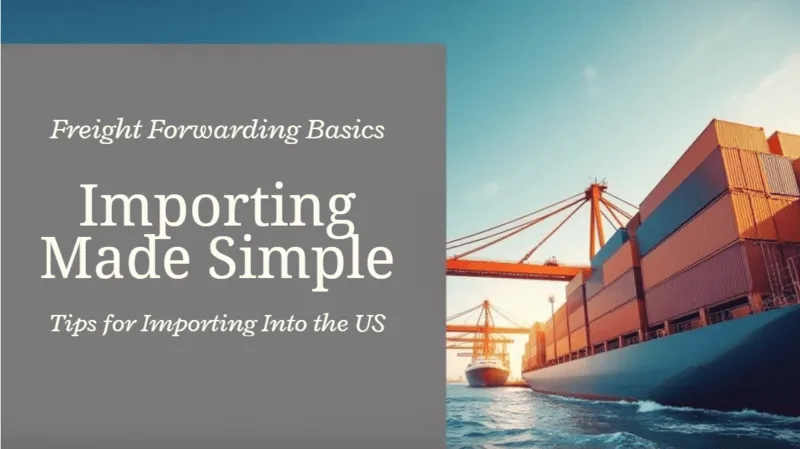
You can absolutely import inventory into the U.S. without losing sleep or margin. Freight forwarding companies play a key role in facilitating the import process for businesses of all sizes. The trick is picking a freight forwarder who treats compliance like oxygen and hands your cargo cleanly to your fulfillment partner. Here is the practical playbook I use with sellers who are new to international shipments.
Tip 1. Verify Licenses And Bonds Before You Compare Rates
Ocean forwarders and NVOCCs (Non-Vessel Operating Common Carrier) that move your containers must be properly licensed by the Federal Maritime Commission. You can verify an Ocean Transportation Intermediary’s license status in the FMC’s public database, and you can confirm their bond. When reviewing a forwarder, make sure to check all paperwork, including permits and insurance, to ensure full compliance. For example, a hazardous materials permit may be required if your cargo includes dangerous goods. If your forwarder cannot provide a license number, the necessary permits, or shows up as non-compliant, walk away.
Air forwarders should maintain TSA cargo-security compliance where applicable; IATA Cargo Agent accreditation is an industry credential that can help with airline recognition and settlement, but it is not a legal requirement. Trade associations like NCBFAA (National Customs Brokers & Forwarders Association of America) outline the basics. Additionally, air forwarders should hold any required permits for handling specific cargo types, such as perishable or restricted items. The point is simple. Compliance first, quotes second.
Tip 2. Ask Who Files Your ISF 10+2 And When
CBP’s current help article says inaccurate, incomplete, or untimely ISF filings can trigger liquidated damages of $5,000 per violation.
For ocean freight, U.S. Customs requires an Importer Security Filing 24 hours before the cargo is laden at the foreign port. The ISF filing process involves several steps, including gathering shipment details, submitting accurate information, and confirming receipt by Customs; following each step carefully is crucial to avoid penalties. Late or missing filings can trigger holds, inspections, and monetary penalties. Your forwarder or customs broker should own the data flow and the deadline, not your intern. Put it in writing. Clear communication between the importer and the forwarder is essential to ensure all deadlines are met and responsibilities are understood.
Tip 3. Choose Incoterms That Match Your Risk Tolerance
Incoterms define who pays for what and when risk transfers. If you pick DDP, the seller handles import clearance and duties. If you pick DAP, you, the buyer, handle import clearance. Pick wrong and you inherit surprise costs at the final destination. The ICC and reputable logistics providers publish clear differences between DDP and DAP. Read them, then decide.
Understanding how Incoterms affect the shipping process is crucial for importers, as these terms determine responsibilities and costs at each stage. A freight forwarder’s ability to advise on and manage various Incoterms can help importers avoid unexpected costs and ensure a smooth shipping process.
Tip 4. Ask About CTPAT And Trusted Trader Programs
CBP’s current CTPAT page says partners may receive front-of-the-line inspections, possible exemption from Stratified Exams, and shorter wait times at the border.
CTPAT-validated partners (Customs-Trade Partnership Against Terrorism) can see reduced CBP (Customs and Border Protection) examinations and faster processing. Participation in CTPAT is a critical factor for importers in industries with high compliance requirements, as it can significantly impact shipping efficiency and reduce overall costs. Certain industry sectors, such as pharmaceuticals and electronics, benefit more from trusted trader programs due to the sensitive nature of their goods. The Trade Compliance program is voluntary, but for high-velocity importers, the benefits are real. If your forwarder participates or can align with your importer status, you can shave days of unpredictability off lead times.
Tip 5. Demand Mode And Lane Options Up Front
Do not let a forwarder sell you a single route. For many SKUs, the right forwarder offers a full range of logistics solutions, including ocean freight for base flow and air freight for exceptions, with clear guidance on when to switch. Access to trucks is essential for domestic transportation, ensuring goods move efficiently from warehouses to final destinations. A reliable forwarder will arrange all aspects of the shipment, including scheduling trucks and coordinating with carriers. You want at least two carriers per lane, transit time options, and visibility tools that show where the container is, not just when it left. Forwarders offering integrated logistics solutions can provide more flexibility and efficiency. Reputable guides from carriers and platforms explain how forwarders aggregate volumes to get better routes and rates.
Tip 6. Plan The Handoff To Your 3PL Before The Ship Sails
Your forwarder is not your 3PL. Make sure the arrival notice, customs clearance status, and delivery orders are shared with your fulfillment partner early. That includes documentation, lading details, and any hazardous materials or perishable goods flags. Coordinate with your suppliers to ensure all necessary information and documentation are provided for a smooth handoff. Proper packaging is essential to ensure goods arrive safely and meet fulfillment requirements. If your fulfillment partner requires appointments at their distribution centers, your forwarder should book trucking in time to meet your launch date. Warehouses play a crucial role in ensuring efficient inventory management and smooth coordination between shipping parties. This is where Cahoot’s partner list helps. We match import lanes with the right last mile and warehousing so your inventory hits the shelf quickly.
What A Great Forwarder Looks Like
- Licensed and insured with transparent bonds and a clean FMC entry.
- Strong customs brokerage, either in-house or via a close partner.
- Clear SOP for ISF and entry filing with named owners and backups.
- Incoterms coaching before you sign the PO with your supplier.
- Multiple modes and carrier options with time-definite transparency.
- Comprehensive service and solutions, including excellent customer service, responsive communication, and value-added offerings to ensure smooth shipping operations.
- Expertise in specific industries or routes, ensuring the forwarder understands your market, regulatory requirements, and can navigate local nuances effectively.
- Proven handling capabilities for various types of cargo, including hazardous materials and perishable goods, to guarantee compliance and safety throughout the logistics process.
- Ability to provide all the services required for your supply chain, such as multimodal transportation, warehousing, and integrated logistics solutions, so there are no gaps in coverage.
- Selecting the right freight forwarder means choosing a partner who meets all these criteria and can fully support your shipping needs.
Common Pitfalls That Kill Margin
- “DDP included” without a real broker. You pay twice when surprise duties appear on arrival.
- Late ISF filings. Your cargo sits. You pay storage. Your launch slips. CBP is unsentimental about deadlines.
- No appointment at the final destination. The forwarder blames the warehouse. Warehouse blames forwarder. Customers do not care.
- Choosing based on price only. The cheapest quote often hides documentation, delivery, or demurrage risk you will learn about later. Trying to save money upfront can actually cost your business more in the long run if important factors like reliability, customer service, and specialty needs are ignored.
Selecting the right freight forwarder is an important factor for business success. A good forwarder can help streamline your shipping process, reduce risks, and ensure your money is managed properly, supporting your business growth and efficiency.
The Cahoot Angle
Cahoot does not pretend to be your forwarder. We partner with licensed, audited forwarders and customs brokers, then make the U.S. handoff painless. Our fulfillment network receives, checks, and slots your goods into the right nodes so you can start selling faster. From the ocean vessel to the customer’s doorstep, the supply chain only works if every handoff is clean. Contact Cahoot to learn how you can save shipping time and money, even if you don’t require order fulfillment services.
Freight forwarding companies play a crucial role in the global market by helping businesses, exporters, and shippers manage complex international shipping logistics. In a country like China, which is the world’s largest exporter, the freight forwarding market is highly developed, and exporters rely on intermediaries to navigate regulations and ensure goods are delivered efficiently. Companies such as UPS and DHL provide international shipping, freight forwarding, and ocean freight services, supporting the movement of goods across borders. Maintaining regular contact with your forwarder is essential to confirm shipments are delivered on time and users receive a positive experience. Businesses should search for a company with a proven track record in managing shipments and providing reliable delivery to stay competitive in the international shipping market.
Frequently Asked Questions
Do I Need A Freight Forwarder Or Just A Customs Broker?
Most importers use both. The forwarder manages transportation door to door and offers a range of services—such as warehousing, customs clearance, and logistics solutions to meet different shipping needs. The customs broker files entries with CBP and coordinates PGA requirements. Many firms provide both. Verify roles in your contract.
What Happens If My ISF Is Late?
CBP can assess penalties, increase inspections, or delay release. Your container may sit while fees accrue. Assign ISF responsibility to your forwarder or broker in writing and audit the workflow.
Should I Choose DDP Or DAP?
If you want control and transparency on duties and taxes, DAP is safer. If you want simplicity and are willing to pay a premium, DDP shifts import clearance to the seller. Align the choice with your compliance capability.
How Do I Check If A Forwarder Is Legitimate?
Use the Federal Maritime Commission’s OTI (Ocean Transportation Intermediaries) and NVOCC (Non-Vessel Operating Common Carrier) databases to confirm license and bond status. In February 2026, the FMC temporarily suspended online OTI filings, license updates, foreign NVOCC registrations, tariff registrations, and eAgreements filings during a federal shutdown, so license checks should be repeated after any filing interruption. Ask for proof of insurance and recent reference letters.
Can A Forwarder Reduce My Lead Time?
Yes. CTPAT-aligned partners and multi-carrier routing often reduce holds and improve reliability. The right forwarder is a logistics provider that designs options, not a single price.
Written By:

Jeremy Stewart
Jeremy Stewart leads customer success at Cahoot, helping merchants achieve high-performance logistics through smart technology and process optimization. With a background in both ecommerce operations and client services, Jeremy ensures that every merchant using Cahoot gets measurable results—whether they’re scaling from one warehouse to many or managing complex returns.

Turn Returns Into New Revenue
Related Articles
What Is Demand Planning? How It Impacts Inventory, Forecasting, and Profitability
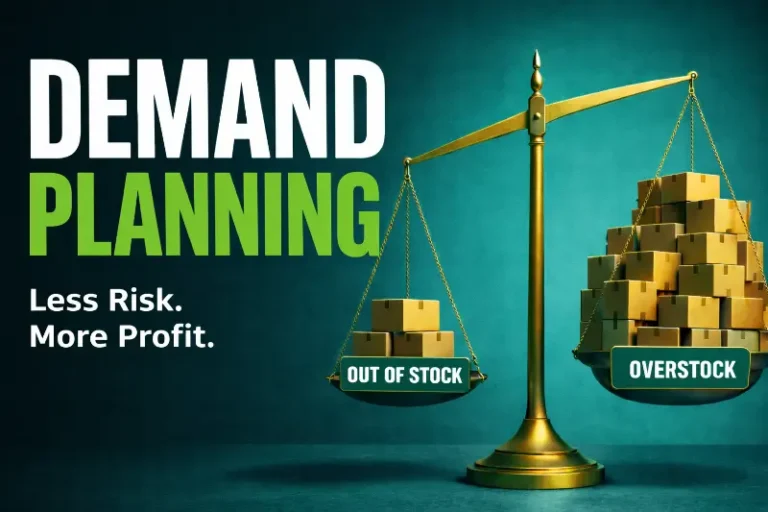
Demand planning is the process of estimating future customer demand so that a business can align its inventory, procurement, and operations to meet that demand without carrying mor...
Why 100% P2P Adoption Is the Wrong Goal
Peer-to-peer returns let customers send eligible returned items directly to other customers instead of routing every package back through the warehouse, cutting shipping and proces...
Walmart Officially Allows Amazon Multi-Channel Fulfillment (MCF)
Big news for multichannel sellers: Walmart now officially allows Amazon Multi-Channel Fulfillment (MCF), Amazon’s service for using its fulfillment network to ship orders from mult...
Best 3PL For Startups: Horror Stories From Small Brands And How To Avoid Them
There is a special place in logistics hell reserved for start…rketplace” right after go-live. Let’s keep you out of there.
Why Startups Struggle With 3PLs
First, the market keeps shifting under your feet. Shopify exited its owned fulfillment bet and sold logis…which can trap small businesses in plans that no longer fit.
Second, carriers keep tinkering with fees. UPS, FedEx and USPS have confirmed 2025 holiday demand surcharges and USPS seasonal hikes. If your 3PL does not proactively mitigate these surcharges with smarter routing and regional carriers, your shipping costs will eat into customer satisfaction and margin. Outsourcing logistics to a 3PL can help startups reduce overhead costs and achieve operational efficiencies by leveraging third-party expertise and technology.
Third, smaller industrial assets remain tighter than big-box warehouses. Cushman & Wakefield reported Q4 2025 vacancy of 4.8% for smaller industrial assets versus 9.8% for big-box warehouses over 300,000 square feet. Finding a six to twenty-thousand-square-foot site near your customers is harder than it looks, which is why multiple fulfillment centers inside a partner’s network matter for timely delivery at startup scale. Outsourcing logistics can also lead to significant labor savings by reducing the need for in-house staff to manage logistics needs, allowing startups to focus on growth.
Real World “Horror Stories” You Can Learn From
- A founder signs a slick proposal and discovers a monthly minimum that jumps two quarters later. For example, We watched a major provider announce a $5,000 monthly minimum starting in 2026. If you are a startup, that can be a deal breaker. Make minimums and their review dates explicit in the MSA (Master Services Agreement). Also, ensure the provider has a proven track record working with startups.
- Another brand chooses a one-size-fits-all provider optimized for low SKU, high volume. Complexity spikes, errors soar, and support becomes a ticket loop. Even 3PL owners warn publicly that some large providers fit only specific profiles. Validate with reference calls from merchants like you. It’s crucial to select the right fulfillment service and a reliable fulfillment partner who can support your business as it grows.
The Startup 3PL Checklist I Use
1. Fit To Sales Channels And Customer Expectations
Does the provider natively support your sales channels today? Amazon, Walmart, TikTok Shop, Shopify, wholesale EDI. If they plan to “add it later,” assume you will be the beta tester. Fast and free is not enough. Consistency and reliable delivery matter more for improved customer satisfaction and repeat sales. The right 3PL can improve the overall customer experience by tailoring order fulfillment to customer preferences and enhancing customer satisfaction.
2. Transparent Pricing With Caps On Peak Fees
Ask for a single page that shows storage fees, pick and pack, packaging materials, account management fees, and any peak season surcharges passed through. Cross-check with public carrier announcements to see if the line items make sense. Avoid hidden fees by insisting on an all-in, effective rate card for your realistic order volume. Competitive pricing is also crucial for startups, as it ensures you receive cost-effective solutions that support your business growth and help establish long-term partnerships.
3. Multiple Fulfillment Centers And Real-Time Routing
Startups need timely delivery without air. A 3PL with multiple fulfillment centers and regional carriers can cut shipping costs and delivery times. Distribution centers and reliable shipping are essential for an efficient delivery process, ensuring that orders are fulfilled quickly and consistently to meet customer expectations. Distribution services and fulfillment centers play a crucial role in supporting startups’ logistics needs by managing inventory, coordinating shipments, and streamlining the overall delivery process. Ask for a shipping simulation across your last twelve months of orders. If they cannot run it, they are guessing.
4. Inventory Management System That You Actually See
You need real-time tracking, low stock alerts, and simple inventory management, not a black box. If the portal cannot show inventory accuracy by location and order processing exceptions in one dashboard, your day-to-day operations will slow down.
Efficient inventory storage and managing inventory are essential for startups to streamline fulfillment and reduce costs. Leveraging technology and robust warehousing and inventory management practices helps maintain optimal inventory levels, preventing excess stock and minimizing storage expenses. For example, the Cahoot Network enables inventory distribution across multiple warehouses, making it easier for ecommerce businesses to reach more customers and reduce shipping costs. By focusing on optimal inventory levels, you can ensure your inventory management system supports both cost efficiency and fast order fulfillment.
5. Dedicated Customer Support With Escalation Paths
Startups underestimate the value of a named human who resolves issues. Excellent customer service, provided by key personnel with logistics expertise, is essential for startups to receive responsive support and effective problem-solving as they grow. Make the contract list the escalation chain and response SLAs. Ask for a sample “warehouse exception” report and how it is handled inside their logistics operations.
6. Returns, Kitting, And Value-Added Services
Your business growth can stall if your 3PL cannot handle light assembly, kitting, or returns at scale. Robust fulfillment operations and effective fulfillment strategies are essential for startups to remain competitive and meet customer expectations. Many ecommerce startups discover too late that their “best fulfillment service” will not relabel or bundle without lead time. Fulfillment services for startups can provide customized solutions to support business operations, ensuring flexibility and scalability as you grow. Confirm support for seasonality and value-added services in writing. Startup fulfillment and ecommerce fulfillment should be key considerations for growing brands seeking to optimize logistics and enhance customer satisfaction.
The Cahoot Fit For Startups
Cahoot was built for ecommerce startups that need cost savings without losing control. As a 3PL provider, Cahoot delivers comprehensive logistics services tailored for startups. As a fulfillment company, Cahoot supports business operations by streamlining order fulfillment, warehousing, and inventory management, resulting in significant labor savings and operational efficiencies.
Cahoot enables startups to expand into international markets by providing reliable international shipping solutions that simplify global logistics and ensure timely delivery. By offering expert supply chain management, Cahoot allows you to focus on your core business activities while improving supply chain efficiency and customer satisfaction.
Multi-node coverage for reliable delivery, clear pricing to avoid hidden fees, and a fulfillment process you can see. We are opinionated about inventory management and day one integrations, so you can scale operations across sales channels without a significant capital investment up front.
Frequently Asked Questions
What Is The Number One Mistake Startups Make With 3PLs?
Choosing based on price alone. Selecting the right fulfillment solution and fulfillment company is crucial to ensure your logistics needs are met as your business grows. The cheapest proposal usually hides storage costs, minimums, or limited carrier options that inflate your shipping costs later. Verify the total cost of ownership against your order volume, and consider cost-effective packaging strategies to further optimize your fulfillment process.
Do I Need Multiple Fulfillment Centers From Day One?
Not always. But you should pick a partner with the ability to add nodes as your ecommerce business grows. Having access to multiple distribution centers and fulfillment centers can improve inventory storage and scalability, allowing for more efficient order processing and faster shipping as your business expands. A two-node network often cuts zone-based costs dramatically compared with one node.
How Do Peak Season Surcharges Affect Startups?
Seasonal “demand” fees can swing your unit economics. Efficient order fulfillment and a streamlined delivery process are essential for reliable shipping during peak seasons, helping to manage surges in demand and maintain customer satisfaction. Confirm how your 3PL mitigates or passes through FedEx, UPS, and USPS surcharges and how that impacts timely delivery.
What Proof Should I Ask for From A 3PL Before Signing?
We recommend at least 2 customer references that match your SKU count and seasonality, a shipping simulation, and a demo of their inventory management system. If any are missing, wait. It’s also crucial to choose a provider with a proven track record in the industry to ensure reliability and expertise.
Written By:
Jeremy Stewart
Jeremy Stewart leads customer success at Cahoot, helping merchants achieve high-performance logistics through smart technology and process optimization. With a background in both ecommerce operations and client services, Jeremy ensures that every merchant using Cahoot gets measurable results—whether they’re scaling from one warehouse to many or managing complex returns.
Turn Returns Into New Revenue
Related Articles
Walmart Officially Allows Amazon Multi-Channel Fulfillment (MCF)
Big news for multichannel sellers: Walmart now officially allows Amazon Multi-Channel Fulfillment (MCF), Amazon’s service for using its fulfillment network to ship orders from mult...
Why Small Ecommerce Brands Are Winning with AI (While Enterprises Struggle)
Conventional wisdom says large companies should dominate AI adoption.
Top 12 Shipping Strategies For Making Free Shipping Profitable
For ecommerce sellers, shipping is more than just getting a package from point A to point B — it’s the invisible backbone, quietly shaping customer satisfaction, operational costs,...
Are You Overpaying for Fulfillment? 5 Hidden Fees to Watch

If your 3PL pricing looks fine on the sales deck but ugly on the invoice, you are not alone. Fulfillment fees hide in packing tables, DIM math, “miscellaneous” surcharges, and account management fees that quietly grow. An additional fee for large items, custom packaging, or international shipping can also appear unexpectedly on invoices. Here’s a practical breakdown of the five most common hidden costs in ecommerce fulfillment in 2025, how to spot them, and how to negotiate them out.
1) DIM weight and oversize surprises
Carriers increasingly bill by dimensional weight. UPS’s 2026 Daily Rates took effect January 26, 2026, so any UPS-based DIM-weight benchmark should be checked against the current UPS rate guide. UPS lists a divisor of 139 for Daily Rates, and FedEx uses similar guidance; whichever is greater, DIM or actual weight, wins. If your 3PL’s cartonization drifts, you pay more shipping fees than planned. Review carton libraries and require periodic cube audits.
2) Peak and demand surcharges you didn’t model
Expect time-limited holiday price changes and peak surcharges across USPS, UPS, and FedEx this Q4. USPS has already posted its 2025 holiday adjustments, with specific per-package increases by service and zone. FedEx continues to adjust surcharges and recently increased late payment fees to 9.9% of overdue balances. Your 3PL should forecast these into your fulfillment cost model and update your pricing models ahead of peak season. On March 25, 2026, USPS announced a transportation-related time-limited price change that would increase base postage prices for Priority Mail Express, Priority Mail, USPS Ground Advantage, and Parcel Select by 8 percent from April 26, 2026 through January 17, 2027.
3) Inbound receiving and special projects that balloon
“Standard receiving” might sound simple, but many third-party logistics providers bill by the hour for complex inbounds, relabeling, or inventory inspection. Setup fees may also apply during the onboarding process, covering initial integration and service setup, and these one-time charges can vary depending on the complexity of your requirements. Typical ranges vary widely, and container handling can also add fees. Insist on service level agreements that define when hourly rates kick in and cap spend per container or inbound receipt.
4) Account management and “program” fees
Some fulfillment providers add a monthly account management line or a “program fee” that doesn’t correlate to measurable value, no SLA, no deliverables. If the fee funds actual logistics operations (dedicated analyst, weekly optimization, custom reporting, support, technology upgrades), great. If not, move to custom pricing where the monthly cost ties to volume or outcomes.
5) Packaging and special handling multipliers
Pick and pack is only part of the story. The packing process, including kitting and assembly, can involve additional steps to meet specific client requirements and may impact overall costs. Boxes, mailers, poly, dunnage, and inserts can add real dollars per order. Ask for pack fees by material type, whether you can bring your own custom-branded packaging, and how “oversize handling” triggers. Publish a packaging bill of materials in your RFP so quotes are comparable. Reference tables from reputable 3PL pricing explainers to benchmark.
Flat Rate Pricing: Is It the Solution to Hidden Fees?
Flat rate pricing has become an attractive option for many ecommerce businesses aiming to simplify their fulfillment costs and avoid the headache of hidden fees. With this pricing model, your fulfillment provider charges a single, fixed shipping cost per order, regardless of the package’s actual weight, dimensions, or destination. For online stores juggling multiple SKUs and fluctuating order volumes, this can make budgeting and cost analysis much more straightforward.
The biggest advantage of flat rate pricing is predictability. Instead of worrying about surprise surcharges, fluctuating shipping rates, or unexpected account management fees, you know exactly what your shipping cost will be for each order. This transparency helps ecommerce businesses avoid hidden costs that often sneak into invoices, like fuel surcharges, residential delivery fees, or delivery area surcharges. By rolling these into a single flat rate, fulfillment providers make it easier to calculate your total fulfillment cost and plan your logistics operations with confidence.
Flat rate pricing can also drive cost savings by streamlining your fulfillment process. With fewer variables to track, your team spends less time calculating shipping costs and more time focusing on inventory management, optimizing storage space, and improving customer experience. Many fulfillment services that offer flat rate pricing also bundle in warehousing fees, packaging materials, and even custom packaging options, further reducing the risk of additional fees cropping up later.
However, flat rate pricing isn’t a one-size-fits-all solution. If your ecommerce business regularly ships large, heavy, or unusually shaped items, a flat rate may not reflect your actual shipping cost, and you could end up paying more than you would with a customized pricing model. Flat rate pricing also tends to be less flexible than tiered or weight-based pricing models, which can be adjusted as your order volume or shipping needs change. For some businesses, especially those with highly variable shipments, a more tailored fulfillment strategy may deliver better cost savings.
When evaluating flat rate pricing, consider how it impacts your warehousing costs and inventory management. Some fulfillment providers include storage fees in their flat rate, while others charge separately based on the amount of storage space your inventory occupies. Make sure you understand exactly what’s included in the flat rate and how it aligns with your business operations.
How To Calculate Your Total Fulfillment Cost
- Order fulfillment: The order fulfillment process includes receiving inventory, storage, picking, packing, and shipping, with each stage contributing to the overall cost.
- All-in per order: pick fee + additional picks + packaging + shipping label + surcharges + storage amortized + returns share + account management fees + pick and pack fee + labor costs.
- Storage: rate per storage space unit (bin, shelf, pallet, cubic foot) plus any long-term or specialized storage lines; model seasonal inventory peaks. Storage costs can be calculated as a fixed fee or flat rate, and storage fees may vary depending on space utilization and duration.
- Inbound: receiving method (per pallet, per carton, hourly), labeling, and non-compliance penalties. Inbound shipping is also a cost factor when sending inventory to fulfillment centers.
- Reverse logistics: expected return rate and per-unit processing cost.
- Shipping rates: lane-level quotes for your top SKUs and destinations; ensure major carriers and regionals are included with negotiated shipping rates. Shipping carriers and pick and pack fees can vary depending on the provider and order volume.
Cost structures for fulfillment companies and fulfillment partners can vary depending on the provider, and many fulfillment providers offer customized solutions for online stores to achieve lower costs and total cost transparency. FedEx package standard list rates for U.S., U.S. export, and U.S. import services increased an average of 5.9% effective January 19, 2026, so 3PL quote comparisons should be refreshed against the 2026 rate book.
Fulfillment centers and fulfillment companies may use standard packing materials, but higher costs can result from special handling or hazardous materials.
Outsourcing logistics to a third-party logistics (3PL) provider can help achieve cost savings and optimize the supply chain.
It is important to compare total costs, including all fulfillment costs across providers, and all fees, to avoid surprises.
Negotiation Scripts That Work
- “Cap my hourly.” If hourly receiving is unavoidable, cap hours per inbound and include auto-approval thresholds.
- “Publish the pack BOM.” Fix the unit price of each packaging material item for 6 – 12 months.
- “Show me DIM control.” Quarterly cartonization audit with sample orders and photos, or fee credits.
- “Outcome-based account management.” Tie the monthly fee to specific deliverables and SLA improvements, not a vague “program.”
Where Cahoot Saves Money By Design
- Bulk purchasing power on materials across our network reduces pack fees.
- Cartonization and rate-shop automation curb DIM surprises.
- Multi-node placement reduces zones, so you pay ground, not air.
- Transparent invoices with line-item detail keep you in control.
Frequently Asked Questions
What is the right DIM divisor to use in 2025?
UPS lists 139 for Daily Rates, and FedEx applies dimensional weight rules with similar divisors. Always check current carrier guides; your divisor may vary by service.
Will there be 2025 holiday surcharges?
Yes. USPS has posted time-limited holiday increases for October 2025 – January 2026, and FedEx/UPS maintains demand surcharge frameworks. Model these in your fulfillment pricing now.
Are account management fees normal?
They exist, but should buy value, analytics, continuous improvement, and SLA oversight. If you cannot tie the line to outcomes, negotiate it out, or convert to custom pricing.
How do I compare 3PL quotes apples to apples?
Normalize to an all-in fulfillment cost per top SKU and destination: storage, picks, pack materials, label, surcharges, and returns. Use an identical packaging bill of materials for all bidders.
How does Cahoot help me avoid hidden costs?
We quote transparently, automate rate-shopping and cartonization, and place inventory near demand to lower logistics costs while meeting customer expectations on shipping speed.
Written By:
Jeremy Stewart
Jeremy Stewart leads customer success at Cahoot, helping merchants achieve high-performance logistics through smart technology and process optimization. With a background in both ecommerce operations and client services, Jeremy ensures that every merchant using Cahoot gets measurable results—whether they’re scaling from one warehouse to many or managing complex returns.
Turn Returns Into New Revenue
Related Articles
What Is Demand Planning? How It Impacts Inventory, Forecasting, and Profitability
Demand planning is the process of estimating future customer demand so that a business can align its inventory, procurement, and operations to meet that demand without carrying mor...
Walmart Officially Allows Amazon Multi-Channel Fulfillment (MCF)
Big news for multichannel sellers: Walmart now officially allows Amazon Multi-Channel Fulfillment (MCF), Amazon’s service for using its fulfillment network to ship orders from mult...

The Shipping Speed Paradox: Why DTC Brands Are Slowing Down
Everyone’s talking about faster delivery.
How to Choose a 3PL for Pet Products: Temperature, Turnaround, and Trust
In this article
9 minutes
- Why Pet Is Different
- The Three T’s: Temperature, Turnaround, Trust
- Sustainability and Environmental Responsibility
- Technology And Innovation In Pet Product Fulfillment
- Risk Management And Mitigation
- The Pet 3PL Checklist (Copy/Paste To Your RFP)
- Inventory Management Strategy For Pet Brands
- How Cahoot Helps Pet Brands Win
- Frequently Asked Questions
Pet customers are loyal, vocal, and absolutely unforgiving when order fulfillment goes sideways. If the food arrives warm, the treats crumble, or the litter leaks, they do not reorder. That is why choosing a 3PL for pet products is less about cheap storage and more about temperature control, effective inventory management, and spotless compliance. The pet industry sets unique standards for logistics, requiring specialized solutions to meet regulatory requirements and the growing demands of pet owners. A pet products business must also ensure that high-quality products reach customers, maintaining quality assurance and safety throughout the supply chain. You also need to make sure your 3PL can meet the demanding performance metrics for your channels, such as Chewy Marketplace, for example.
Why Pet Is Different
Pet isn’t “just another CPG.” Dry pet food needs cool, dry storage, typically under 80°F; moisture swings and heat degrade nutrients and oil stability. Wet food and fresh formulas add temperature-controlled storage and stricter handling. These aren’t nice-to-haves; they’re FDA-anchored realities under the Food Safety Modernization Act’s (FSMA) Preventive Controls for Animal Food and related guidance.
Beyond the FDA, labels and handling instructions often follow the Association of American Feed Control Officials (AAFCO) model guidance, storage directions, ingredient statements, and clarity on life-stage. Your 3PL must respect those labels and keep documentation on hand for audits. To ensure compliance with all relevant regulations, it is essential to follow proper procedures throughout the supply chain. Careful handling and precise handling of pet products are critical to maintain product quality and safety during storage, packing, and transportation.
Meanwhile, demand is resilient. U.S. pet spending reached about $152 billion in 2024 and is projected to hit roughly $157 billion in 2025. That means opportunity for brands that safeguard product safety and customer loyalty with reliable shipping and delivery speed.
The Three T’s: Temperature, Turnaround, Trust
Temperature. Your 3PL should provide documented temperature and humidity controls for dry, canned, and fresh categories, with sensor logs you can audit. For fresh and refrigerated diets, verify the cold chain plan, from dock to reliable carriers to the final destination.
Turnaround. Pet shoppers reorder frequently, often on a weekly cadence. That means consistent same-day pick, accurate inventory management strategies, and backup labels when carriers miss pickups. Efficient order processing and expertise in fulfilling orders are essential to achieve accurate delivery and meet customer expectations. The metric that matters is SLA adherence across seasonal demand, not the one perfect day.
Trust. Trust equals compliance plus transparency. You need FSMA Part 507 awareness (sanitation, pest control, recall readiness) and clean warehouse management system records. Ask for mock recall drill results and how quickly they can isolate lots by stock levels and real-time inventory tracking. Real-time visibility in pet care fulfillment ensures customers can track their orders and builds trust in your brand.
Sustainability and Environmental Responsibility
Sustainability is no longer optional in the pet products industry; it’s a core expectation from both pet owners and retail partners. The environmental impact of pet supplies fulfillment, from packaging waste to carbon emissions, is under increasing scrutiny. Leading 3PLs are stepping up by offering eco-friendly packaging options, such as biodegradable bags and recyclable materials, that help reduce landfill waste without compromising product safety. Optimizing shipping routes and consolidating orders can further cut down on carbon emissions, making the entire supply chain more efficient and environmentally responsible.
Energy-efficient warehouse operations, like LED lighting and smart climate controls, not only lower the carbon footprint but also contribute to cost savings for pet products businesses. Waste reduction programs, including recycling initiatives and responsible disposal of damaged goods, help ensure that every step of the fulfillment process aligns with sustainability goals. By choosing a 3PL that prioritizes environmental responsibility, pet products businesses can strengthen their brand reputation, meet evolving market demands, and deliver the level of customer satisfaction today’s eco-conscious consumers expect.
Technology And Innovation In Pet Product Fulfillment
Technology is transforming the way pet products businesses manage inventory, fulfill orders, and meet customer expectations. A modern warehouse management system (WMS) is the backbone of efficient pet products fulfillment, providing real-time tracking of inventory, optimizing stock levels, and ensuring accurate order fulfillment. Automated packaging and labeling systems streamline the fulfillment process, reducing errors and speeding up operations, key to meeting the fast turnaround times pet owners demand.
Advanced solutions like AI-powered inventory forecasting and predictive analytics allow pet products businesses to anticipate seasonal demands and unexpected market changes, minimizing missed sales opportunities and excess stock. These tailored solutions not only improve inventory accuracy but also drive cost savings and timely delivery across every sales channel. By leveraging the latest technology, 3PL providers can offer scalable, efficient operations that keep pet products businesses ahead of the curve and ensure a positive customer experience from click to doorstep.
Risk Management And Mitigation
Risk is a constant in the pet products industry, whether it’s a product recall, supply chain disruption, or regulatory change. Effective risk management is essential for protecting your brand and maintaining customer loyalty. A 3PL with deep experience in the pet products industry will proactively identify potential risks, from inventory shortages to compliance gaps, and develop contingency plans to keep your supply chain resilient.
This means implementing strict quality control measures, maintaining transparent pricing, and ensuring regulatory compliance at every stage of the fulfillment process. Real-time inventory tracking and regular audits help prevent missed sales opportunities and reduce unnecessary labor or capital expenditures. Ongoing training and inspections ensure that every team member is prepared to handle unexpected challenges, safeguarding both product integrity and customer experience. By partnering with a 3PL that prioritizes risk management, pet products businesses can confidently scale operations, protect their reputation, and deliver the reliable service that keeps pet owners coming back.
The Pet 3PL Checklist (Copy/Paste To Your RFP)
- Storage specs per SKU: dry kibble below 80°F, moisture control, separation from cleaners and chemicals.
- Lot and expiration control with FEFO (First Expired, First Out), plus expired inventory quarantine procedures.
- Pest management plan aligned to Part 507 GMPs, with logs.
- Dock-to-door cold chain validation for refrigerated or frozen lines.
- Carrier matrix that matches the weight and cube of bulk pet food and grooming supplies; not every lane is UPS Ground.
- Packaging SOPs: protective packaging for cans and glass, poly-in-box for oils, liners for dusty litter SKUs.
- Returns triage: when to destroy vs restock to protect pet health.
- Transparent pricing: no mystery “food handling” fee; itemized fulfillment services, hidden fees called out.
- Recall readiness: mock recall completed in the last 12 months; time to isolate all affected lots.
- Data access: real-time inventory, aging, and real-time tracking through your OMS.
- Customized solutions: ensure the 3PL can provide customized solutions for different pet products, including specialized warehousing and packaging as needed.
- Pet products fulfillment strategy: confirm there is a robust pet products fulfillment strategy in place to address product handling, inventory accuracy, and timely delivery.
- Managing inventory: prioritize effective systems for managing inventory, including forecasting and coordination to avoid stockouts or overstock.
- Outsourced pet products fulfillment: consider the benefits of outsourced pet products fulfillment for efficiency, scalability, and proper handling of industry-specific requirements.
Inventory Management Strategy For Pet Brands
- Pet brands often experience seasonal demands, requiring them to adapt their inventory strategies to handle fluctuations in order volume and product mix.
- Segment storage by risk and velocity. Keep fast movers close to carriers, slow movers deeper in the building to save warehouse space.
- Efficient management of pet supply, including pet food, treats, and health items, is crucial, especially when segmenting inventory to ensure timely fulfillment and compliance.
- Forecast by reorder cadence. Autoship means steady rhythm with occasional spikes; tune labor and slots accordingly.
- Leveraging outsourced pet products services can help brands handle inventory fluctuations and scale operations up or down as needed.
- Smaller shipments to test new flavors or bag sizes, then ramp. This reduces missed sales opportunities and obsolescence.
- Dual-node setup for national coverage, so your customers expect 1 – 2 day delivery without air. That is pure cost savings.
- Risk management: diversify suppliers, pre-approve alternates, and lock in packaging conversions well before unexpected market changes.
How Cahoot Helps Pet Brands Win
We run pet-friendly SOPs: temp monitoring for dry zones, FEFO allocations, protective pack recipes for cans and fragile jars, and scalable solutions across our network of distribution centers. We provide personalized service and tailored fulfillment solutions for pet brands, ensuring expert handling of diverse products like pet beds and other pet essentials. Add multi-node routing to keep timely delivery and on-time delivery consistent without paying for air. And because we operate as a transparent fulfillment partner, our transparent pricing lets you see the true landed cost per order.
Frequently Asked Questions
What regulations apply to pet food storage in 3PLs?
FSMA’s Preventive Controls for Animal Food and 21 CFR Part 507 require GMPs, sanitation, pest control, and records for facilities that manufacture, process, pack, or hold animal food. Your 3PL must comply.
Do dry kibble products really need temperature control?
Yes. FDA and AAFCO guidance recommend keeping dry food under about 80°F, away from moisture and heat, to maintain nutrient integrity and shelf life.
How fast should a pet 3PL ship?
Same-day fulfillment for orders before cutoff and predictable 1–3 day ground delivery for most ZIPs. Reliability matters more than a single headline speed.
How do pet products 3PLs handle recalls and lot tracking?
Insist on lot-level granularity, FEFO, and a proven mock recall. The 3PL should be able to locate, quarantine, and report affected inventory within hours.
How does Cahoot reduce pet fulfillment costs?
By placing inventory near demand, optimizing cartons, and using regional carriers for heavy items, we cut shipping costs while maintaining customer satisfaction and brand loyalty.
Written By:

Indy Pereira
Indy Pereira helps ecommerce brands optimize their shipping and fulfillment with Cahoot’s technology. With a background in both sales and people operations, she bridges customer needs with strategic solutions that drive growth. Indy works closely with merchants every day and brings real-world insight into what makes logistics efficient and scalable.
Turn Returns Into New Revenue
Related Articles
What Is Demand Planning? How It Impacts Inventory, Forecasting, and Profitability
Demand planning is the process of estimating future customer demand so that a business can align its inventory, procurement, and operations to meet that demand without carrying mor...
Walmart Officially Allows Amazon Multi-Channel Fulfillment (MCF)
Big news for multichannel sellers: Walmart now officially allows Amazon Multi-Channel Fulfillment (MCF), Amazon’s service for using its fulfillment network to ship orders from mult...
The Shipping Speed Paradox: Why DTC Brands Are Slowing Down
Everyone’s talking about faster delivery.
Amazon SFP: Profit Math, Pitfalls, and the Smarter Alternative
In this article
7 minutes
- What SFP Actually Demands For The Prime Badge In 2025
- The Hidden SFP Shipping Costs Stack
- SFP vs FBM vs Cahoot: The Margin View
- A Simple Seller Fulfilled Prime Program Decision Tree
- Three Operational Truths Nobody Tells You
- How To Win With Prime Customers, Whether You Choose SFP Or Not
- Frequently Asked Questions
Short answer, yes, Seller Fulfilled Prime can work in 2025. As part of the broader Amazon Prime program, Seller Fulfilled Prime (SFP) is a fulfillment option that allows third-party sellers to fulfill Prime orders directly from their own warehouses. Here’s how Seller Fulfilled Prime works: sellers manage their own inventory and shipping, but still offer customers the Prime badge, fast free delivery, and a premium experience, without using Amazon’s FBA warehouses. This approach can help sellers reach Prime customers, control storage costs, and enhance brand recognition.
Longer answer, it depends on whether you can hit strict speed, coverage, and quality metrics while keeping shipping costs from eating your margin. The 2025 refresh tightened rules again, added weekend coverage checks, and introduced volume floors. Ultimately, the decision to use SFP should be based on your business model and your ability to meet the program’s requirements.
What SFP Actually Demands For The Prime Badge In 2025
To join SFP, sellers must have a professional selling account to enroll in Seller Fulfilled Prime. Sellers must pre-qualify, then pass a 30-day seller fulfilled prime trial, also referred to as the prime trial, trial period, or prime trial period. During this phase, sellers must fulfill a certain number of prime trial orders and meet strict performance metrics: at least 93.5% on-time delivery, 99% valid tracking, ≤0.5% seller-initiated cancellations, and a steady baseline of 100 Prime packages per month after enrollment. Sellers must also have a default shipping address in the US to enroll in seller fulfilled prime. Weekend operations are monitored, and Prime offers must cover the contiguous U.S. with competitive two-day delivery speeds where feasible.
Sellers must meet all seller fulfilled prime requirements and prime requirements to maintain eligibility in the program. As part of the enrollment and management process, sellers configure shipping settings in Seller Central to ensure compliance with Prime standards. Successful completion of the trial allows sellers to gain access to Prime customers and the Prime badge, increasing product visibility and sales potential.
Amazon has also announced 2025 program updates (effective late June) impacting SFP and Premium Shipping, including policy clarifications and protections when Amazon sets promises and you ship on time using eligible labels. Great when it applies, but you still own the ops.
The Hidden SFP Shipping Costs Stack
SFP’s trap is simple. You keep inventory in your own warehouse or with a third-party logistics provider, you display the Prime badge, and you own the fulfillment process. Having sufficient fulfillment capacity is crucial for meeting the strict requirements of the Seller Fulfilled Prime program. Amazon sellers and third-party sellers can fulfill orders themselves or partner with third-party logistics providers to handle shipping and storage. Miss a weekend pickup, mis-estimate a lane, or under-optimize cartons, and your Prime orders get expensive fast. Fulfilling orders efficiently is critical for maintaining Prime status and being a successful Prime seller. Enrolled in Seller Fulfilled Prime, sellers can make Seller Fulfilled Prime offers and must ensure they are offering free shipping, which is a key benefit for customers and a requirement for SFP. Maintaining Prime status requires ongoing compliance with program standards.
- Weekend staffing: You must operate at least one weekend day and use shipping services with weekend pickup/delivery coverage.
- Nationwide promise pressure: Standard nationwide shipping for all Prime offers, plus competitive 1–2 day promise exposure in many ZIPs.
- Order-limit throttling: If you don’t maintain volume and speed, Amazon can clamp your daily Prime order limit until you recover. (Commonly cited by program trackers.)
In other words, SFP is feasible when you have multi-node coverage, tight inventory management, and smart routing. Both third-party Amazon sellers and Amazon sellers can choose between FBA, FBM, and the Seller Fulfilled Prime program depending on their business needs. If not, Fulfillment by Amazon (FBA) or FBM + Cahoot may deliver better customer satisfaction and profit.
SFP vs FBM vs Cahoot: The Margin View
FBM vs FBA gives you control and lower platform fees, but you lose the Prime badge and must maintain reliable delivery standards for your sales channels. FBM operates through the merchant fulfilled network, where sellers handle storage, packing, and shipping themselves, taking on full responsibility for logistics and customer service. FBA buys you Prime eligibility and leverages Amazon’s fulfillment centers, large warehouses where Amazon stores your inventory, manages packing, shipping, and customer service, streamlining the process and boosting sales potential, though storage and handling fees can be painful for slow-moving or oversized SKUs. SFP sits in the middle, delivering the Prime badge with your own ops, but only if you can truly run a Prime-class network. Market watchers note that overall Amazon competition has eased from 2021 highs, which helps conversion if you can deliver fast and free shipping reliably.
Where Cahoot fits: we turn FBM into something closer to SFP economics by routing to the best node and carrier for each order, including weekends, so your on-time delivery and valid tracking rate can match SFP expectations without carrying SFP’s strict nationwide promise liability yourself.
A Simple Seller Fulfilled Prime Program Decision Tree
- Under 2 lb, high-velocity, small parcel, steady volume ≥100 Prime orders/month? Consider SFP, but only with multi-node and weekend ops.
- Oversize, seasonal, or irregular demand? FBA or FBM + Cahoot.
- Multi-channel beyond Amazon (Walmart, Shopify, eBay)? SFP adds complexity with thin payoff; FBM + Cahoot preserves control.
Three Operational Truths Nobody Tells You
1. Weekend promise math is unforgiving. Your shipping template, carrier weekend capabilities, and pickup windows must align. If the template shows Saturday pickup, non-Prime orders in that template often inherit weekend obligations too, and some orders may require same-day shipping to meet Prime and SFP requirements. Plan staffing and cutoffs accordingly.
2. Prime shipping templates are critical for SFP. Setting up a Prime shipping template in Seller Central is essential to qualify for Prime orders and optimize costs. Configuring shipping templates properly enables Prime shipping and ensures you meet required shipping speed and delivery speed metrics for Seller Fulfilled Prime. When fulfilling orders, use shipping labels purchased through Amazon Buy Shipping Services to streamline order fulfillment, shipment tracking, and reliable delivery through Amazon’s trusted network.
3. Nationwide coverage isn’t optional. Even for standard shipping, SFP requires contiguous U.S. coverage. If your single node sits on the coast, your cost to keep 1 and 2-day exposure jumps.
How To Win With Prime Customers, Whether You Choose SFP Or Not
- Build weekend operating muscle with clear cutoffs and carrier mix.
- Add nodes or enable peer-to-peer fulfillment to collapse zones.
- Automate cartonization and rate-shop every label.
- Set conservative daily caps so you don’t over-promise on major sales events.
- Optimize your Prime listings to increase visibility, display the Prime badge, and boost conversions.
- Align your operations to reflect Prime customers expectations, ensuring your service levels and delivery quality meet what Prime customers anticipate.
- Leverage SFP to deliver directly to domestic Prime customers from your own warehouse, enhancing brand recognition and customer satisfaction.
- Use Cahoot to meet Prime customers’ expectations without locking into SFP for every SKU.
Frequently Asked Questions
What are the 2025 SFP performance requirements?
Expect 93.5% on-time delivery, 99% valid tracking, ≤0.5 percent seller-initiated cancellations, weekend operations, and steady volume of at least 100 Prime packages per month post-enrollment.
Do I have to ship on weekends for SFP?
Yes. SFP policies require weekend operations, plus carriers that support weekend pickup and delivery. Templates and coverage must match your actual capability.
Is SFP cheaper than FBA?
Depends on your cube, weight, and geography. SFP can be cheaper for compact, fast-moving SKUs when you run multi-node fulfillment. For bulky or slow movers, FBM + Cahoot or selective FBA often wins.
What’s new in the 2025 SFP rules?
Amazon issued program updates and clarified protections when promises are Amazon-set and you ship on time with eligible labels. There are also policy refreshes effective June 29, 2025.
How does Cahoot help with SFP, FBM, and FBA?
We route every order to the fastest, cheapest compliant path, maintain weekend coverage with regional carriers, and provide the inventory management and fulfillment partner capabilities you need to protect metrics and margin.
Written By:
Jeremy Stewart
Jeremy Stewart leads customer success at Cahoot, helping merchants achieve high-performance logistics through smart technology and process optimization. With a background in both ecommerce operations and client services, Jeremy ensures that every merchant using Cahoot gets measurable results—whether they’re scaling from one warehouse to many or managing complex returns.
Turn Returns Into New Revenue
Related Articles
What Is Demand Planning? How It Impacts Inventory, Forecasting, and Profitability
Demand planning is the process of estimating future customer demand so that a business can align its inventory, procurement, and operations to meet that demand without carrying mor...
The Shipping Speed Paradox: Why DTC Brands Are Slowing Down
Everyone’s talking about faster delivery.

Why Cross-Border DTC Brands Are Moving Fulfillment Inside the US
Cross-border ecommerce fulfillment is the process of shipping ecommerce orders across national borders—often from warehouses outside the United States to U.
Walmart 3PL Success: Why Most 3PLs Don’t Support Walmart Properly (And How to Vet Them)
If you sell on Walmart Marketplace, your 3PL can make or break your growth. Selling on Walmart Marketplace gives you the opportunity to reach millions of customers, expanding your potential audience significantly. The platform is surging, the buyers are trained on fast delivery, and Walmart’s physical stores quietly turbocharge the last mile. Most third-party logistics providers still operate with an “Amazon-only” mindset. That’s why so many Walmart orders get stuck, misrated, or delayed.
Here’s the playbook I use to evaluate a Walmart 3PL, so you get the upside of Walmart Fulfillment Services, cost savings on shipping, and a better customer experience without surprise hidden fees.
Walmart Marketplace Is A Different Animal
Walmart’s Marketplace isn’t a niche anymore. Seller count and volume have accelerated through 2025, with Marketplace Pulse tracking a 30 percent increase in sellers in the first five months alone and a rapid influx of international sellers. Translation, more competition, and a higher bar for fast delivery and customer expectations.
And Walmart keeps leaning into its superpower, stores. The company extended delivery coverage to 12 million more households in 2025 using geospatial routing, letting multiple Walmart stores fulfill a single order. That store network, rebranded as Accelerated Pickup and Delivery (APD), turns physical stores into fulfillment centers for real-time speed. Walmart fulfillment centers and warehouses are strategically located to enable fast delivery and efficient inventory management. These Walmart fulfillment centers and warehouses play a key role in storing products and supporting the fulfillment center network. Effective warehousing and storing inventory are essential for meeting Walmart’s delivery expectations and ensuring accurate, timely order fulfillment.
If your 3PL can’t plug into that ecosystem, or at least align to its service levels, your Walmart orders will lag.
Why Most 3PLs Miss The Mark On Walmart
1. They copy-paste Amazon SOPs. Routing rules, order management systems, and fulfillment process logic often assume Amazon’s cutoffs and zones. Walmart’s promise logic is different, and Walmart fulfillment windows require different carriers, shipping costs math, and cubic foot handling. If your 3PL doesn’t tune templates for Walmart, you eat hidden costs and miss same-day shipping promises. Understanding Walmart’s requirements is essential for 3PL success, as optimizing your supply chain and ensuring compliance are key to smooth operations. When evaluating a third-party logistics (3PL) provider, consider key factors like lead times, return processes, and pricing to ensure efficient order management and customer satisfaction. Choosing the right fulfillment partner can be a game-changer for Walmart sellers, enabling you to deliver products reliably and on time, and taking advantage of advanced 3PL services and technology can further optimize your operations.
2. They don’t model store-adjacent speed. Walmart’s network reduces zones for last-mile lanes. Your 3PL should steer Walmart Marketplace sellers toward regional carriers or local injection that mirrors APD pace, not default to national major carriers every time. Recent data shows Walmart customers leaned heavily into same-day during summer deal weeks, because stores are everywhere. When it comes to delivering orders quickly, fulfillment speed is critical; your 3PL must be capable of delivering orders quickly to meet customer expectations and ensure they are delivered accurately.
3. They skip WFS knowledge. Even if you don’t use Walmart Fulfillment Services (WFS), your 3PL should know the program’s fulfillment fees, storage rules, hazmat items policies, and routing guide, because those benchmarks anchor buyer expectations, and they’re often cheaper than you think. As of April–July 2025, Walmart publicized that WFS averages about 15 percent less than “the competition” with clear storage/optional fee tables and peak windows. Testing shipments with your 3PL before full rollout is important for quality and compliance, and helps ensure smooth scaling of your operations.
4. They don’t support Walmart-specific data flows. You need real-time tracking in Seller Center, clean inbound receiving for fulfillment centers, and order processing events that match Walmart’s performance scorecards. A 3PL that can’t expose these events reliably will ding your customer satisfaction and rank. It is also important to promptly mark orders as shipped once they are dispatched, maintaining transparency and trust with your customers.
5. They hide fees. Watch for “Walmart handling” surcharges, unexpected packaging materials fees, and shipping weight upcharges for large cube items. If you can’t audit fulfillment fees per order, you can’t scale. For large or bulk items, having freight options is essential to ensure efficient and cost-effective shipping.
The 12-Point Walmart 3pl Vetting Checklist
1. Native Walmart integration, not a connector-of-a-connector. Test order create, cancel, ship confirm, returns, and real-time tracking.
2. Walmart promises parity. Can they meet WFS-like SLAs on 1 – 2 days to core zip clusters, and do they simulate Walmart’s promise windows before you publish offers?
3. Regional carrier bench. Ask for their on-time performance across Zones 5 – 8 for your top five lanes. If they only quote national carriers, expect higher shipping costs.
4. Store-adjacent injection. Do they support scheduled late pickups or local injection to mirror APD speed near key Walmart stores?
5. Dim and cube handling. Walmart’s heavy and oversize rules differ; ensure cartonization and cubic foot billing are transparent.
6. Peak season plan. Can they surge headcount and dock space for peak season without “capacity caps”? Get last Q4’s throughput.
7. Hazmat and temperature control. If you sell aerosols or meltables, confirm temperature control zones and hazmat credentialing.
8. Returns and reverse logistics. How fast can they receive, grade, and restock?
9. Value-added services. Kitting, relabels, packaging materials swaps, and order management exceptions.
10. Inventory management maturity. Cycle counting, shrink reporting, and slotting tuned for your top SKUs.
11. Transparent pricing. Line-item fulfillment services by pick, pack, dunnage, storage; no “Walmart” surcharge.
12. Case studies on Walmart. Ask for references from marketplace sellers with your weight and cube profile.
When To Mix WFS And A 3PL
WFS is compelling, especially for fast movers that fit the fee table. You still need a third-party logistics partner for multichannel work, oversized items, or SKUs that perform better outside WFS. WFS publishes current pricing, optional services, and routing guides. Use those to set target service levels for your 3PL.
A hybrid model works: let WFS carry your highest-velocity Walmart SKUs, and use a vetted Walmart 3PL for the long tail and multi-channel orders (Shopify, DTC, marketplaces). Walmart has also been investing in seller services and embedded finance to speed payouts, another reason volume is migrating. Your 3PL should be ready to ride that wave, not fight it.
Practical Takeaways
- Treat Walmart like Walmart, not Amazon. Different promise logic, different network, different fulfillment solutions.
- Build a carrier mix that prefers short zones and regional speed.
- Benchmark against WFS fees and SLAs, even if you don’t use them.
- Demand transparency on hidden costs and fulfillment operations.
- Use Walmart’s store network to your advantage; shorter delivery equals happier customers, higher sales, better rank.
Cahoot supports Walmart out of the box: multi-node routing, regional carriers, WFS-aware promise modeling, and transparent order fulfillment costs you can audit down to the SKU.
Frequently Asked Questions
What makes a Walmart 3PL different from an Amazon-only 3PL?
Walmart’s promise logic, store-adjacent fulfillment, and WFS benchmarks require different routing, carrier selection, and service windows. A Walmart-ready 3PL maps to APD coverage and WFS-like SLAs rather than cloning Amazon rules.
Should I use Walmart Fulfillment Services or a 3PL?
Use WFS for fast movers that fit the fee table. Pair a 3PL for oversized items, bundles, and multi-channel work. Many brands run both to balance cost savings, fast delivery, and control.
How fast is Walmart really growing in 2025?
Marketplace seller growth has accelerated through 2025, and Walmart reported strong ecommerce momentum into FY25. That means more competition and higher expectations on speed and price.
What hidden fees should I watch for in Walmart fulfillment?
Look for cartonization upcharges, “Walmart handling” adders, hazmat surcharges, peak storage, and mis-billed shipping weight on large cube items. Compare against WFS’s public rate card to catch anomalies.
How does Cahoot help Walmart Marketplace sellers?
We tune routing to Walmart’s speed map, leverage regional carriers to shorten zones, expose granular cost lines, and support hybrid WFS + 3PL strategies so you can fulfill orders faster, at lower total cost.
Written By:
Jeremy Stewart
Jeremy Stewart leads customer success at Cahoot, helping merchants achieve high-performance logistics through smart technology and process optimization. With a background in both ecommerce operations and client services, Jeremy ensures that every merchant using Cahoot gets measurable results—whether they’re scaling from one warehouse to many or managing complex returns.
Turn Returns Into New Revenue
Related Articles
What Is Demand Planning? How It Impacts Inventory, Forecasting, and Profitability
Demand planning is the process of estimating future customer demand so that a business can align its inventory, procurement, and operations to meet that demand without carrying mor...
Walmart Officially Allows Amazon Multi-Channel Fulfillment (MCF)
Big news for multichannel sellers: Walmart now officially allows Amazon Multi-Channel Fulfillment (MCF), Amazon’s service for using its fulfillment network to ship orders from mult...
The Shipping Speed Paradox: Why DTC Brands Are Slowing Down
Everyone’s talking about faster delivery.
Single-Location 3PL Service Providers Are Dead
In this article
9 minutes
- The False Promise of Simplicity: An Unforgiving Supply Chain Reality
- Reverse Logistics and Returns Management Woes
- Machine Learning and Advanced Technology Are Game Changers
- The Cost of Ignoring the Multi-Location Advantage
- "But Isn't One Location Easier?" Nope. It’s Dangerous.
- Brands Need Tailored Solutions, Not One-Size-Fits-All
- The Brand Death Spiral: A 3-Year Lifecycle of Regret
- Bold Prediction: The End of Single-Location 3PLs
- Why Cahoot Was Built for This Future
- Bottom Line: Adapt or Fade Away
- Frequently Asked Questions
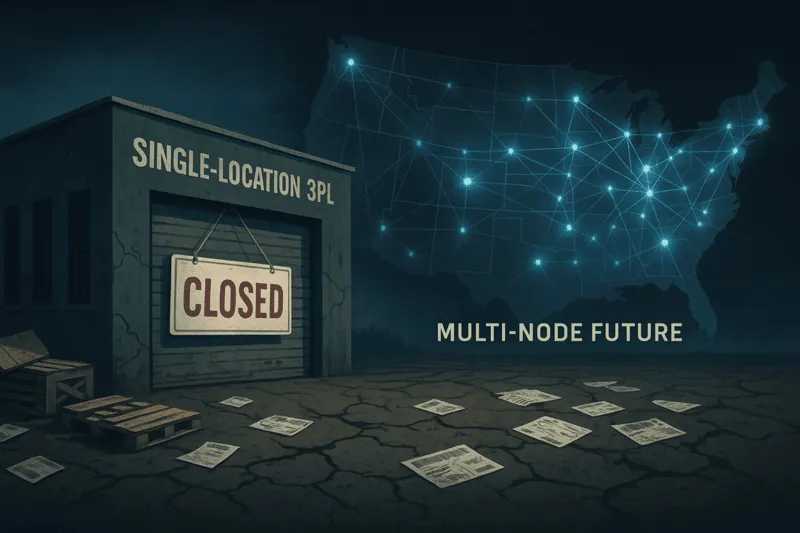
Here’s an unpopular opinion for ecommerce professionals and logistics experts: single-location 3PL service providers are officially obsolete. Yes, dead, done, over. Like MySpace and dial-up internet. If your brand still uses a third-party logistics company that operates from just one warehouse, you’re not just “behind the curve.” You’re actively lighting your margin on fire. Let’s walk through the realities that no one talks about, but everyone feels.
The False Promise of Simplicity: An Unforgiving Supply Chain Reality
At face value, single-location warehousing services seem harmless enough. They promise simplicity, one point of contact, straightforward inventory management, and easy oversight of logistics operations. But beneath this veneer of simplicity lies a costly nightmare that impacts your transportation management, shipping process, and ultimately, your brand reputation.
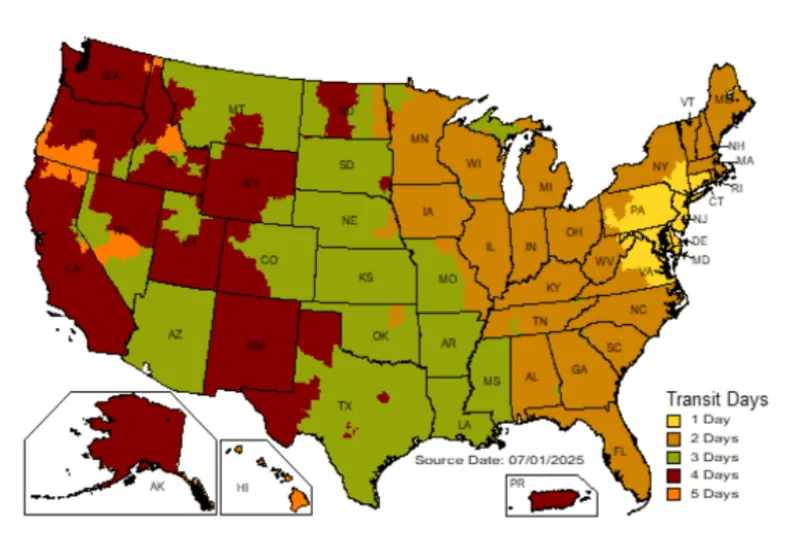
Think shipping zones don’t matter much? Think again. This kind of setup assumes your customers all live within a few hundred miles of your warehouse. But they don’t. Shipping costs explode exponentially as delivery distances stretch across multiple zones. A single-location warehouse in North Dakota, for instance, might seem like a cost-effective transportation hub until you’re shipping to Florida, Texas, or California. Suddenly, those competitive rates vanish, leaving you holding a massive freight bill.
Real example: Everlane, the popular consumer goods brand known for transparency, learned this the hard way. When their primary 3PL provider operated out of a single West Coast facility, they faced increased logistics costs shipping to customers in the Eastern U.S., ultimately hitting their bottom line. Lesson learned: multi-location logistics services aren’t optional; they’re essential.
Reverse Logistics and Returns Management Woes
Single-location providers also magnify reverse logistics challenges. Returns management isn’t just about getting products back on shelves; it’s about speed and efficiency. Imagine you’re a New York customer sending returns to a facility based in California. That slow, cumbersome shipping process not only irritates customers but also inflates your costs.
By contrast, comprehensive services from multi-location providers enable efficient deliveries and quick turnarounds on returns. Brands like Zappos have excelled precisely because their reverse logistics and inventory management processes are supported by strategically placed distribution services across North America.
Machine Learning and Advanced Technology Are Game Changers
Here’s another one: advanced technology and artificial intelligence are transforming logistics. Multi-location 3PL providers are adopting sophisticated machine learning tools and real-time tracking to enhance efficiency, something a single-location operator struggles to replicate.
That gap gets wider every year. Take Uber Freight, for example, leveraging data points and AI-driven transportation management systems to optimize routes, manage inventory, and predict logistics bottlenecks. Single-location warehouses? They’re largely stuck still using spreadsheets. Still calling carriers to schedule pickups. Still guessing. If your provider isn’t riding that wave, you’re drowning.
The Cost of Ignoring the Multi-Location Advantage
Let’s make this concrete with some hypothetical (yet highly realistic) numbers. Suppose your ecommerce fulfillment provider operates solely from a warehouse in Philadelphia, fulfilling orders nationwide. You might pay $6 per shipment within Zone 2, but shipping to Zone 8, that cost easily jumps to $15 or more. Average blended cost: ~$10. Multiply by 500 orders/day = $5,000/day. Now imagine you could fulfill half those orders from a second or third location closer to your customers, cutting them back to $6. That’s a $2,250/day savings, or $675,000/year.
You’re not just wasting money. You’re tanking your CAC:LTV ratio and crippling your ability to scale.
Brands embracing multi-location third-party logistics providers, like Robinson’s Services, known for tailored solutions across an extensive network, reduce these zone-related costs dramatically. They keep stock levels optimized and customers satisfied.
“But Isn’t One Location Easier?” Nope. It’s Dangerous.
This is the most common pushback we hear.
“A single warehouse is easier to manage. It keeps my ops team sane.”
“Sure, until you:”
- Lose a day of shipping due to weather or staffing
- Run out of stock in peak season
- Watch competitors deliver in 2 days while you take 6
Operational simplicity at the cost of competitiveness is not simplicity, it’s slow-motion suicide.
Brands Need Tailored Solutions, Not One-Size-Fits-All
Third-party logistics services should offer tailored solutions to meet unique business needs. Asset-based or non-asset-based providers offering comprehensive services like freight forwarding, customs clearance, intermodal transport, and cross-docking have a massive advantage. Single-location providers simply can’t compete with these comprehensive solutions.
Even consumer brands like Peloton, Casper, and Glossier have shifted from relying on singular distribution centers to embracing sophisticated logistics expertise across multiple locations, because it’s more effective and ultimately more profitable. As they scaled, they shifted away from single-node fulfillment to multi-location strategies that:
- Decreased zone-related costs
- Improved delivery speed
- Boosted post-purchase satisfaction
- Reduced returns friction
They invested early in supply chain design and reaped long-term loyalty because of it.
The Brand Death Spiral: A 3-Year Lifecycle of Regret
Let’s break this down.
Year 1: You launch. Orders trickle in. A single-location 3PL seems fine. You’re lean, you’re scrappy, and delivery speed isn’t a crisis… yet.
Year 2: You scale. TikTok hits, ad ROAS spikes, and now you’re shipping 1,000+ orders a day, nationwide. Delivery times stretch to 6–8 days for half of your customers. Negative reviews start stacking up. Your product rating goes from 4.2 stars to 3.9 on Amazon.
Year 3: The dip in reviews becomes a conversion problem. Organic sales slow. You’re forced to crank up the advertising wheel and throw discounts at unhappy customers just to keep revenue steady. Now your margins are gone. And worse? Those customers may never come back.
End of Year 3: You scramble. You finally start looking into a multi-node logistics provider like Cahoot, but by now, recovery is uncertain. Rebuilding trust with customers you lost is hard. Winning back ROAS is expensive. You’re bleeding out and hoping it’s not too late.
Bold Prediction: The End of Single-Location 3PLs
By 2027, single-location 3PLs won’t just be outdated, they’ll be absorbed, shut down, or relegated to hyper-local niche markets like hyper-local delivery or bulky item storage. Why? Because the economics just don’t work anymore. Logistics has become a national sport, and the players without reach won’t survive.
In a world with 2-day shipping expectations, AI logistics, labor shortages, and tariff volatility, geography is strategy. And single-location providers can’t compete.
Why Cahoot Was Built for This Future
At Cahoot, we saw this coming years ago. We didn’t build a shipping label tool. We built a fulfillment cost optimization platform powered by a nationwide network of high-performing nodes with intelligent orchestration.
What does that mean for you?
- Orders get shipped from the right location
- Return labels are smart, not manual
- Zone math works in your favor
- Fulfillment cost becomes a lever, not a burden
This isn’t just about surviving Q4 or shaving pennies off your shipping rates. It’s about building a logistics backbone that actually grows with your business.
We firmly believe single-location 3PL service providers no longer serve the rapidly evolving needs of ecommerce brands. Our solution is designed for today’s realities, offering extensive network reach across North America, machine learning-driven transportation management and freight brokerage, and cost-effective transportation. We fulfill orders quickly, streamline logistics operations, and reduce overall shipping costs. The result? Improved customer satisfaction, stronger supply chain management, and scalable growth.
Bottom Line: Adapt or Fade Away
So here’s the blunt truth: if you’re still relying on a single-location 3PL, you’re not being conservative. You’re being reckless. You’re betting your future on a fragile supply chain, slower delivery windows, and rising transportation costs in the middle of a macroeconomic hurricane.
This isn’t alarmism. It’s logistics truth.
You don’t need more warehouse space. You need smarter fulfillment. And it starts with a multi-node mindset.
The future is clear: multi-location logistics is the only viable path forward. Embrace this reality now, or watch your competitors speed past you.
Frequently Asked Questions
What exactly is a single-location 3PL provider?
A single-location third-party logistics (3PL) provider operates from only one warehouse facility, handling all inventory management, order fulfillment, and logistics services from that single point, as opposed to multi-location providers who operate several strategically placed warehouses.
Why are shipping zones so critical to fulfillment cost?
Shipping zones directly affect the total cost of delivery: the further the shipment travels from a warehouse, the higher the shipping costs. Single-location 3PL providers often face higher average shipping costs because their warehouses can’t be geographically optimized, whereas multi-location providers reduce costs through shorter delivery distances.
Can single-location logistics services effectively manage reverse logistics?
Generally, no. Reverse logistics is about speed, efficiency, and minimizing transportation costs. Single-location 3PL providers, due to their limited geographic coverage, typically struggle with timely and cost-effective handling of returns, negatively impacting customer satisfaction and operational efficiency.
What advantages do multi-location 3PL providers offer over single-location providers?
Multi-location third-party logistics providers offer reduced shipping times, lower shipping costs, better scalability, enhanced customer satisfaction, advanced technology such as machine learning, and the ability to strategically manage inventory across diverse regions, providing brands a strong competitive edge.
How can a multi-location logistics strategy increase customer satisfaction?
A multi-location strategy ensures faster and more reliable final-mile deliveries by positioning inventory closer to customers. Faster delivery speeds translate to better customer experiences, fewer returns, and stronger brand loyalty, all contributing to higher overall customer satisfaction.
Written By:
Jeremy Stewart
Jeremy Stewart leads customer success at Cahoot, helping merchants achieve high-performance logistics through smart technology and process optimization. With a background in both ecommerce operations and client services, Jeremy ensures that every merchant using Cahoot gets measurable results—whether they’re scaling from one warehouse to many or managing complex returns.
Turn Returns Into New Revenue
Related Articles
What Is Demand Planning? How It Impacts Inventory, Forecasting, and Profitability
Demand planning is the process of estimating future customer demand so that a business can align its inventory, procurement, and operations to meet that demand without carrying mor...
The Shipping Speed Paradox: Why DTC Brands Are Slowing Down
Everyone’s talking about faster delivery.
Why Cross-Border DTC Brands Are Moving Fulfillment Inside the US
Cross-border ecommerce fulfillment is the process of shipping ecommerce orders across national borders—often from warehouses outside the United States to U.
How 3PLs Can Register for FDA-Approved Warehouse Status

In this article
7 minutes
Imagine a spotless warehouse stacked with pallets of potato chips or cases of juice. That’s what people imagine when they think of what “food-grade warehousing” often means: strict cleaning protocols, temperature controls, and temperature-controlled environments for sensitive products, plus intensive audits by certifiers to prove it. Quality control, monitoring, and tracking are indeed essential for maintaining standards in these facilities. But here’s the catch: there’s no official “FDA food-grade certificate.” In other words, no inspector from the FDA comes by and stamps a “food-grade” label on your door. Instead, the FDA regulates facilities by simply requiring them to register if they handle food.
Having food-grade certification is a voluntary, industry-driven quality label. FDA Food Facility Registration, however, is a mandatory legal listing for any business that manufactures, processes, packs, or holds food (including dietary supplements and animal feed) for U.S. consumption. To clarify, an FDA-certified warehouse goes through a more rigorous process of demonstrating a higher level of compliance with FDA regulations, which is voluntary. “Registration,” on the other hand, is a basic requirement for all facilities handling food, essentially notifying the agency about their activities.
In short, having SQF or “organic” or even SQF Level 3 qualification is great for customers and safety, and also supports brand reputation and benefits ecommerce businesses, but it doesn’t exempt you from the law. If your 3PL warehouse stores consumer foods, drinks, pet snacks, or supplements, it must be entered in the FDA’s facility registry, regardless of how clean or certified it is. Companies in various industries, such as food, beverage, and supplements, need to comply with these requirements. An FDA spokesperson bluntly reminds us: any facility holding food for U.S. humans or animals must register, unless a specific exemption applies. This is essential for public health and health protection. For example, proper registration allows for the tracking of an E. coli outbreak back through all the facilities where it was held to identify the source.
If your warehouse or fulfillment center stores food, you must register. The supply chain, logistics, and fulfillment services provided by 3PLs are all impacted by these requirements. The FDA’s own FAQ reminds us, under the act (such as the Food Safety Modernization Act) and drug administration oversight, that registration is not optional.
If you’re a manufacturer, you must register. Appropriate storage conditions and maintained standards are required to ensure compliance. If your core business is storage, the products are stored, and inventory management practices must meet regulatory expectations. If you only ship (no storage), you’re probably exempt. However, management systems and control of inventory are still important for compliance.
Different 3PLs have warehouses that offer a range of services and solutions, and choosing the right partner is important for helping you ship FDA-regulated products efficiently.
When Does a 3PL Warehouse Need to Register?
As soon as your warehouse is holding regulated food or feed for sale in the U.S., it falls under the FDA’s food facility rule. That means if your 3PL stores any packaged foods, beverages, snacks, dietary supplements, or animal feeds (even pet chews) destined for U.S. consumers, you must register with the FDA. Dietary supplements count as “foods” under the law, so a vitamin or protein powder you warehouse still triggers FFR. Same if you handle pet treats or livestock feed, animal feeds can be considered food (or drugs), and holding them for distribution requires registration. In practice, virtually all 3PLs storing consumer food or supplement products will need to register. There’s no minimum volume or frequency, even short-term “holding” qualifies. FDA guidance clarifies: “There is no timeframe associated with holding… a facility that holds food… is not exempt.”
Exemptions: The law does carve out a few narrow exceptions, but they usually don’t apply to commercial 3PLs. Common carrier transportation is exempt (trucks, ships, planes) because vehicles are not considered “facilities”. A Post Office or courier sorting center with packages is likewise viewed as transit, not as a holding facility. Retail grocery outlets and restaurants are also exempt (they’re “retail food establishments”), but an independent warehouse that isn’t part of a store chain doesn’t qualify. Importantly, storage of non-food items (like empty bottles, labels, or packaging materials) is exempt too, since the FDA defines “food” as excluding food-contact materials. In short, if your 3PL’s core business is storage of packaged food/beverage/supplement products, you’re in, otherwise, you’re probably out.
- Must register: Facilities manufacturing/processing, packing, or holding food or animal food for U.S. distribution. This includes dietary supplements, snacks, drinks, pet food, feed supplements, etc.
- Does not need to register: Pure carriers/transport trucks (no holding activity); retail stores or restaurants; farms holding their own produce; and facilities storing only packaging or non-food items.
Product Triggers: What Counts as “Food”?
The FDA’s definition of food is very broad, and it explicitly includes dietary supplements and many pet products. In practical terms, any finished food or beverage product triggers registration. That means snacks, cereals, bottled water, sodas, juice, nut butters, supplements, infant formula, spices, etc., all count. A helpful FDA Q&A spells it out: “A dietary supplement and a component of a dietary supplement are ‘foods.’ Accordingly, a facility that … holds a dietary supplement … is required to register as a food facility.” Likewise, pet foods and chews must be registered, they’re considered animal food. By contrast, cosmetics, drugs, medical devices, or chemicals do not fall under the food registration rule (they’re regulated by other FDA centers). So, if your warehouse does mixed storage, only the racks holding food/work trigger FFR.
It’s worth double-checking borderline cases. For example, a facility storing bulk sugar or starch used for food probably needs to register, because those ingredients are food. But if a warehouse only holds bottles, jars, or foam peanuts (food-contact materials), that is not “food,” and you wouldn’t register for those alone. Whenever in doubt, recall this rule of thumb: if it can be eaten (or fed to animals), the warehouse holding it likely needs to register.
How to Register (Step-by-Step)
Registering is straightforward and free. Start by getting an FDA Industry Systems (FIS) account at access (FDA calls this portal “FURLS”). Once logged in, choose the Food Facility Registration Module (FFRM) and hit “Register a Food Facility.” The online system will guide you through sections for facility info, contact data, and product categories. A handy user guide on the FDA’s site walks you through each page.
Registrants must submit electronically through FDA Industry Systems unless FDA has granted a waiver; only then may registration or renewal be submitted by mail or fax using Form FDA 3537. If you do need a paper backup (e.g., in an emergency or with a waiver), the FDA provides Form FDA 3537. This form is available on the FDA’s website and can be mailed or faxed to the FDA’s registration office. However, 99% of businesses just use the online portal; it’s faster and automatically gives you a confirmation. Tip: Add @fda.gov and @fda.hhs.gov to your safe sender list so you don’t miss FDA registration alerts.
Information You Must Provide
The registration form (online or 3537) asks for basic data about your facility and operations. In short, be ready with facility identity and contact info, product categories and activities, and key attestations. Specifically, FDA requires: name, address, phone (and emergency contact phone) of the facility; mailing address (if different); any parent company name; all trade names used at the facility. It also needs the name, address, and phone of the owner/operator/agent in charge, plus their email address (unless FDA granted a waiver).
You must also list which types of foods you handle. FDA provides a menu of “food product categories” (36 choices), just check all that apply (e.g., “beverages,” “bakery goods,” “dairy products,” “supplements,” etc.). For each category, indicate whether you manufacture/process, pack, or hold that product. If you hold multiple categories (snacks, drinks, supplements, etc.), you must list them all.
Importantly, you must also include a Unique Facility Identifier (UFI) that FDA recognizes. FDA recognizes the D-U-N-S (DUNS) number as an acceptable Unique Facility Identifier (UFI) for Food Facility Registration and uses it to verify the facility’s address information. If you have a DUNS number for your company, include it (if not, obtain a DUNS number from Dun & Bradstreet; some optional services may be paid, but the DUNS identifier itself is obtained through D&B). Just make sure it’s correct; the FDA will verify that the address matches.
Finally, the form includes a couple of statements and signature fields. You must certify that FDA may inspect the facility per law, and that all provided info is true and accurate. The owner/operator (or an authorized representative) signs off on this. If you file electronically, the system will still record your submission and display your unique registration number (FEI) and PIN on screen. In other words, once you click submit, you instantly get your FDA registration number.
(Foreign facilities note: U.S. law requires a U.S.-based agent as well. Foreign registrants must provide the name, address, phone, and email of their U.S. agent contact.)
No Fees or Fancy Licenses
Here’s a relief for ecommerce brands: The FDA does not charge any fee for food facility registration. Domestic facilities pay nothing. (Foreign facilities must hire a U.S. agent, but that’s an independent business service fee, not an FDA fee.) There’s no formal inspection or license process tied to the registration itself; you don’t need an FDA “permit.” The registration simply identifies you in the FDA’s database.
Minimum qualifications: You don’t need a food degree to register. Any business that legitimately handles food (and isn’t otherwise exempt) can register. The key requirements are simple: have a real physical facility or address, designate who the owner/operator is, and be ready to let FDA inspectors in if there’s a problem (FDA will ask for an inspection assurance on the form). Beyond that, you should follow good hygiene/CGMP practices (FDA’s Title 21 CFR Part 117), but those standards aren’t part of the registration. In short, if your 3PL warehouse fits the description above, you can (and must) register; the process doesn’t require extra credentials beyond normal business paperwork.
Timeline: Registration, Renewal, and Expiration
The registration process itself is quick. In practice, if you have all the information ready, you can complete an online registration in less than 20 minutes. Once submitted, the FDA site immediately assigns you a registration number (FEI) and PIN, which appear on-screen. There’s no waiting for mail or manual review. You can email or print your registration form right away. As soon as you’re done, your facility is officially in the system.
But don’t forget renewals! The FDA requires a biennial renewal cycle. That means every two years, you must update or resubmit your registration. In practice, the FDA opens the renewal window from October 1 through December 31 of every even-numbered year (e.g., 2026, 2028, etc.). Next renewal window: October 1 to December 31, 2026. During that period, you log back into FIS, review your info, make any changes (new address, products, contacts, etc.), and resubmit. After Dec 31, any facility that hasn’t renewed is considered expired.
So mark your calendar: the next renewal window opens October 1 of the next even year. If you register for the first time in an odd-numbered year (say June 2025), you must renew by Dec 31, 2026, to avoid lapsing. FDA will normally send reminders, but it’s best to track this yourself. (And remember: renewals are free too.) If your business goes out of scope or closes, you should also cancel your registration in FIS to avoid future reminders.
Key Requirements & Timelines: At a Glance
- Who must register: Any facility manufacturing/processing, packing, or holding food or animal feed for U.S. distribution (snacks, beverages, supplements, pet food).
- Who is exempt: Pure carriers (trucks, ships) in transit; retail stores and restaurants; farms holding their own produce; facilities storing only non-food items.
- How to register: Online via FDA’s FIS portal (FURLS Food Facility Registration Module); paper only by FDA waiver.
- Information needed: Facility/contact details; food categories and activities; Unique Facility Identifier; attestations and signature.
- Timeline: Instant registration upon online submission; biennial renewal October 1 – December 31 of even years; expiration if not renewed.
- Fees: There is no FDA fee for domestic registration or renewal. (Foreign firms only pay for their required U.S. agent service.)
- Duration: Each registration lasts until the next biennial renewal period (essentially 2 years). After renewing, you’ll receive a new registration confirmation for the next period.
Staying on top of these rules ensures your 3PL warehouse is legally compliant with the FDA’s food regulations and avoids nasty surprises like cancelled imports or penalties. When in doubt, consult the FDA’s resources (see citations below) or call their FURLS help desk. Safe storing!
Frequently Asked Questions
Do 3PL warehouses need an FDA “food-grade” certificate to store food?
No. There is no official FDA “food-grade” certificate. However, any facility that stores food products must register with the FDA as a food facility. Voluntary certifications (SQF, BRCGS) support trust and safety but do not replace the legal registration requirement.
What products trigger the need for FDA registration?
Any facility storing food, beverages, dietary supplements, or animal feed intended for U.S. consumption must register. This includes snacks, bottled drinks, pet treats, and vitamins. Even temporary “holding” triggers registration.
How does a 3PL warehouse register with the FDA?
Warehouses register through the FDA Industry Systems portal (FURLS) using the Food Facility Registration Module. Registration is free and requires facility details, product handling categories, and a Unique Facility Identifier (e.g., DUNS number).
Are there exemptions to the FDA registration rule?
Yes. Pure carriers in transit, retail stores and restaurants, farms holding their own produce, and facilities storing only packaging materials do not need to register. Most commercial 3PL warehouses handling food must register.
How often must FDA food facility registration be renewed?
Every two years during the October 1 – December 31 window of even-numbered years (2026, 2028, etc.). Registrations expire if not renewed by December 31.
Citations
- Argos Software: 7 Quick Q&As for FDA Food Facility Registration
- FDA: Food Facility Registration User Guide: Registration of Food Facilities, Step-by-Step Instructions
- FDA: Online Registration of Food Facilities
- FDA: Questions & Answers Regarding Food Facility Registration (7th Ed.)
- FDA: Registration of Food Facilities & Other Submissions
- FDA: Biennial Renewal User Guide
- FDA: Paper submission/waiver rule
- FDA: Reminder: Food Facilities Register/Renew Registration
- Smart Warehousing: Getting Certified as a Food-Grade Warehouse
- Smart Warehousing: The Role of Food-Grade Warehousing in Meeting Regulatory Requirements for Food Storage
Written By:
Jeremy Stewart
Jeremy Stewart leads customer success at Cahoot, helping merchants achieve high-performance logistics through smart technology and process optimization. With a background in both ecommerce operations and client services, Jeremy ensures that every merchant using Cahoot gets measurable results—whether they’re scaling from one warehouse to many or managing complex returns.
Turn Returns Into New Revenue
Related Articles
Walmart Officially Allows Amazon Multi-Channel Fulfillment (MCF)
Big news for multichannel sellers: Walmart now officially allows Amazon Multi-Channel Fulfillment (MCF), Amazon’s service for using its fulfillment network to ship orders from mult...
Shopify Subscription Payment Change: Why It Could Hurt Reactivation
Shopify changed how subscription payment information is handled at cancellation.
Why Cross-Border DTC Brands Are Moving Fulfillment Inside the US
Cross-border ecommerce fulfillment is the process of shipping ecommerce orders across national borders—often from warehouses outside the United States to U.
Best 3PL Companies: Why Hiring a Traditional 3PL for Fulfillment Is a Mistake

In this article
27 minutes
- The Traditional Third-Party Logistics (3PL) Model: How It Works & Why It Falls Short
- Cahoot’s Peer-to-Peer Fulfillment Network: Key Differentiators
- Side-by-Side Comparison: Traditional 3PL vs. Cahoot
- Product Categories Most Vulnerable to Traditional 3PL Limitations
- Risk Analysis & Mitigation for Each Model
- How Sellers Should Evaluate Fulfillment Options
- Conclusion & Next Steps
- Frequently Asked Questions
Rapidly evolving customer expectations, such as next‐day delivery, free shipping, and impeccable order accuracy, have put immense pressure on ecommerce businesses to optimize their supply chain and fulfillment operations. For years, the conventional wisdom held that outsourcing to one of the best 3PL companies (third-party logistics providers) was the gold standard for reliable delivery services. Yet today, many merchants are discovering that traditional 3PL companies carry hidden costs, limited flexibility, and operational inefficiencies that hinder business growth. In many cases, partnering with a 3PL company is seen as a way to support a business’s growth by streamlining logistics and enabling scalability, but these benefits are not always realized with traditional providers. In contrast, peer-to-peer fulfillment networks, like Cahoot, leverage existing ecommerce expertise, distributed inventory management, and advanced logistics technology to deliver seamless, technology-driven fulfillment services. This article explains why partnering with a traditional 3PL for logistics operations can be a mistake and offers actionable advice on how to evaluate alternatives, with a focus on Cahoot’s assetless, peer-to-peer model.
The Traditional Third-Party Logistics (3PL) Model: How It Works & Why It Falls Short
Third-party logistics companies (3PL) have historically provided comprehensive supply chain solutions: warehouse storage, pick-pack-ship, freight forwarding, reverse logistics, and value-added services such as kitting or custom packaging solutions. These services are part of the broader supply chain management functions that 3PLs handle for their clients, including activities like warehousing, transportation, inventory management, and order fulfillment. 3PLs also offer logistics management as a core service, encompassing warehousing, transportation, and inventory control to streamline and optimize supply chain operations. They often own or lease large fulfillment centers, invest heavily in robust logistics infrastructure, and tout their extensive global network. The logistics capabilities of 3PLs support ecommerce business operations by enabling companies to scale, improve efficiency, and meet customer demands effectively. While these supply chain management services sound appealing in theory, promising operational efficiency and cost savings through economies of scale, in practice, many merchants discover that traditional 3PLs introduce new challenges.
Centralized Warehousing & Fixed Asset Overhead
Traditional 3PL providers typically own or lease multiple fulfillment centers across regions, relying on a robust network of facilities to support their operations. Their extensive network enables broad geographic reach and scale, investing in forklifts, racking, and extensive staffing for supply chain operations. This means they carry significant fixed asset costs, warehouse rent, utilities, labor, and equipment depreciation that must be recouped through minimum-volume contracts and storage fees. During slow seasons, those costs remain constant, leading 3PL companies to impose strict minimum-monthly invoices or chargeback penalties when order volumes dip.
Actionable Takeaway: Request a fully itemized quote from your 3PL, asking specifically about storage minimums, seasonal surcharges, and long-term lease obligations. If their base overhead drives your logistics costs up regardless of your sales volume, consider alternative models with usage-based pricing.
Standard Operating Culture vs. Seller-Mindset
Employees at a legacy fulfillment center often fulfill orders for dozens or hundreds of different ecommerce businesses. While service-level agreements (SLAs) and performance metrics exist, many 3PL staff “punch a clock” under broad policies rather than taking ownership over specific brands. This lack of ownership can negatively impact the delivery of quality service, leading to less attention to detail and lower customer satisfaction. As a result, packaging may be generic, void fill may be minimal, and handling may prioritize speed over customer satisfaction. In contrast, partner sellers in a peer-to-peer network like Cahoot are ecommerce experts who ship their own orders all day, every day. They treat Cahoot orders with the same care they give their own, using right-size packaging, quality dunnage, and ensuring precise pick-pack accuracy to enhance customer satisfaction and maintain brand reputation.
Actionable Takeaway: Ask your current 3PL to provide photos or video walkthroughs of their order fulfillment workflow, including how they pick, pack, and palletize your merchandise. Compare that to Cahoot’s model, where partner sellers share their own fulfillment processes and quality control protocols. If your 3PL’s service quality feels generic, it’s time to reevaluate.
Contractual Rigidity & Onboarding Timelines
Signing a multi-year contract with one of the best 3PL companies can lock merchants into rigid rate cards, annual volume commitments, and early-termination penalties. These rigid contracts often prevent businesses from accessing scalable solutions that can adapt to changing demand, such as seasonal spikes or rapid growth, and may also limit the availability of tailored solutions for businesses with unique or evolving logistics needs. Moreover, onboarding a new account at a 3PL often takes 4–8 weeks: mapping SKUs into the warehouse management system (WMS), negotiating carrier contracts, and configuring inventory management integrations with your ecommerce platform. Slow ramp-up times delay your time-to-market, making it nearly impossible to pivot quickly for seasonal promotions or unexpected demand spikes.
Actionable Takeaway: Compare your current 3PL’s onboarding timeline to Cahoot’s plug-and-play setup. Cahoot can typically be ready to fulfill orders within a few days without long-term commitments. If your business requires faster time-to-market, a flexible network model will better support supply chain optimization.
Cahoot’s Peer-to-Peer Fulfillment Network: Key Differentiators
Cahoot’s peer-to-peer model transforms traditional logistics by partnering with established ecommerce sellers, businesses that are already shipping their own orders to end customers every day. This cooperative design creates a distributed network of fulfillment centers without the burden of fixed assets, delivering tailored logistics solutions and tailored services that address the specific needs of different businesses. Cahoot’s advanced technology enables optimized logistics processes, enhancing operational efficiency and delivery accuracy while reducing logistics costs and supporting scalable growth.
Assetless, Cooperative Design vs. Legacy Overhead
Unlike traditional 3PL providers that own or lease expensive real estate, Cahoot operates an assetless model: it leverages partner sellers’ excess storage space and fulfillment capacity. These partner sellers maintain their own robust logistics infrastructure for their own brands, temperature-controlled rooms for supplements, secure areas for electronics, and specialized racks for apparel. By tapping into this existing network, Cahoot eliminates the need for merchants to pay for underutilized warehouse space or fixed labor costs. This approach delivers efficient logistics solutions by reducing overhead and maximizing resource utilization. Pricing becomes purely usage-based, reflecting only the actual pick-pack-ship labor and shipping costs without hidden overhead.
Actionable Takeaway: Run a direct cost comparison: request a quote from your 3PL that includes all overhead fees, minimum storage fees, cross-dock charges, and dedicated labor costs. Then request Cahoot’s usage-based rates, which show exactly what you’ll pay per order. Clients routinely confirm that the predicted ROI is indeed achieved. You’ll likely discover 20%–30% cost savings of your own.
Expertise & Quality Mindset of Partner Sellers
Cahoot’s partner sellers are ecommerce experts who ship thousands of orders per week for their own businesses. They care deeply about customer experience and loyalty, continuously optimizing their logistics operations to maximize customer satisfaction and reduce returns. In addition to their expertise, partner sellers can provide specialized services tailored to specific product types or unique business requirements, ensuring custom fulfillment and supply chain solutions. When these same sellers fulfill Cahoot orders, they apply identical rigor: right-size packaging, high-quality void-fill, and precise SKU handling. This level of specialized expertise, combined with Cahoot’s Fulfillment Verification technology, makes it nearly impossible to ship the wrong item to the wrong customer, thus allowing them to claim a 100% fulfillment accuracy rate. The resulting high quality helps merchants qualify for programs such as Amazon Seller-Fulfilled Prime (SFP), which now operates under Amazon’s updated eligibility, performance, and OTDR rules effective June 29, 2025. As of June 29, 2025, Amazon updated Seller Fulfilled Prime and Premium Shipping policies, so sellers should recheck eligibility, shipping templates, and OTDR protections before relying on those programs.
Actionable Takeaway: Identify two high-volume SKUs you currently ship via a third-party. Ask the 3PL how they pack and ship those exact SKUs, review box dimensions and dimensional weight, dunnage materials, and packing checklists. Compare that to the size and weight of your SKUs and confirm that you’re not overpaying for shipping using a too-large box vs. using a right-sized box.
Distributed Network for Supply Chain Optimization, Speed & Reliability
Traditional 3PL fulfillment centers typically rely on regional warehouses. If your end customer falls outside the core distribution zone, standard ground shipping can take 3–5 days. In contrast, Cahoot’s distributed network places inventory at partner nodes strategically located near population centers. This enables next-day or two-day delivery to over 95% of U.S. zip codes, even for merchants based in only a few regions. By leveraging this distributed network, Cahoot provides seamless logistics solutions that ensure fast and reliable delivery. Additionally, Cahoot ships six days a week, unlike many 3PLs that only operate Monday through Friday, and offers a later same-day fulfillment cutoff. This flexibility reduces weekend order backlogs, enhances customer experience, and ensures that ecommerce businesses can meet high customer expectations for fast, reliable delivery.
Actionable Takeaway: Map your top 10 zip codes by sales volume and calculate current transit times from your 3PL’s central warehouse(s). Then ask Cahoot to provide average transit times from its nearest location to those same zip codes. If Cahoot offers a two-day improvement on average, you’ll boost customer satisfaction and reduce cart abandonment related to slow shipping.
Plug-and-Play Technology & Real-Time Visibility
Leading 3PL companies offer logistics software that integrates with ecommerce platforms, but many suffer from delayed data (24–48 hour lags) or clunky user interfaces. Cahoot’s technology-driven fulfillment services are built for real-time integration: native connectors for Shopify, WooCommerce, Amazon Seller Central, BigCommerce, and more. As soon as an order is placed, the Cahoot dashboard updates inventory levels, routes the order to the optimal node, and displays carrier tracking in real time. This real-time integration enables businesses to address their unique logistics needs more effectively, ensuring that specific requirements and complexities are managed with greater precision. Built-in analytics and supply chain consulting tools help merchants proactively identify stockouts, detect inventory shrinkage, and optimize reorder points, all within a single, intuitive interface.
Actionable Takeaway: Request demo access to both your current 3PL’s portal and Cahoot’s dashboard. Place a sample order and track how quickly each platform updates order status, inventory levels, and shipping confirmations. If Cahoot’s live updates reduce latency and improve decision-making, you’ll gain a competitive advantage.
Side-by-Side Comparison: Traditional 3PL vs. Cahoot
A direct comparison between industry-leading 3PL providers and Cahoot’s peer-to-peer network makes it clear why many merchants choose to switch. While traditional 3PLs offer standard order fulfillment services, Cahoot provides a more innovative and distributed approach, allowing for greater flexibility and efficiency in handling diverse ecommerce needs.
When it comes to shipping and delivery, flexible transportation solutions are crucial for meeting customer expectations and ensuring timely, reliable order fulfillment.
Cost Structure & Overhead
- Traditional 3PL Companies:
- Monthly storage fees based on reserved cubic footage or pallet positions; surcharges during peak seasons.
- High minimum monthly invoice requirements.
- Fixed labor costs for pick, pack, and ship; potential overtime fees during surges.
- Additional value-added services (kitting, returns processing, custom packaging) are often billed at premium rates.
- Fulfillment costs can be significant, as traditional 3PLs may charge extra for tailored ecommerce logistics and fulfillment solutions.
- Cahoot’s Peer-to-Peer Network:
- No fixed storage minimums, uses partner sellers’ excess capacity, so monthly invoicing matches actual usage.
- Every order is rate-shopped across all carriers and services supported from every location that has inventory in stock and is assigned to ship for the lowest cost identified, eliminating dimensional-weight surprises.
- Value-added services are billed strictly as time and materials, at transparent, market-competitive rates, reflecting actual usage.
- Fulfillment is optimized for ecommerce businesses, reducing costs by streamlining warehousing, distribution, and fulfillment through a flexible (“elastic”) network.
Actionable Takeaway: Build a simple spreadsheet comparing the cost per order (storage + pick/pack + shipping) for both models over a 30-day period. Include any one-time onboarding fees and account management. If Cahoot’s total landed cost per order is at least 15% lower, you stand to save tens of thousands of dollars annually. Note: Cahoot will do the calculations for you.
Fulfillment Speed & Geographic Reach
- Traditional 3PL Providers:
- Centralized fulfillment often results in 3–5 day ground shipping to certain regions, especially if orders ship from a single warehouse.
- Limited weekend operations; orders placed on Fridays may not ship until Monday, delaying delivery and impacting customer satisfaction.
- Peak-season capacity constraints can force overflow to slower carriers or result in shipping delays.
- Cahoot’s Distributed Network:
- Inventory is placed at multiple fulfillment centers (partner nodes) close to end customers, enabling next-day or two-day delivery to 95% of U.S. zip codes.
- Six-day shipping and later same-day shipping cutoff times ensure weekend orders are processed promptly, delivering to your customers faster.
- During peak seasons and when weather negatively impacts the ability for a carrier to move packages through their shipping network, Cahoot dynamically routes orders to partner sellers with available capacity, mitigating bottlenecks and ensuring high on-time delivery rates.
Actionable Takeaway: Identify your top five high-volume zip codes by sales. Compare average transit days from your 3PL’s warehouse(s) to those zip codes versus Cahoot’s nearest nodes. If Cahoot promises a two-day improvement, you’ll decrease order-related support tickets and boost repeat purchase rates.
Scalability & Flexibility
- Traditional 3PL Companies:
- Staffing levels are fixed; adding labor during surges often comes at a high premium.
- Forecasting must be done months in advance; inaccurate forecasts lead to overstock fees or stockouts.
- Cahoot’s Peer-to-Peer Model:
- Scales dynamically with demand, and partner sellers adjust capacity in real time.
- Flexible inventory allocation: Merchants can move stock between partner nodes quickly and easily, reducing excess inventory and stockouts in key regions.
Actionable Takeaway: Analyze your last two Black Friday/Cyber Monday seasons. Document the percentage of orders your 3PL delayed or rerouted due to capacity limits. Then request Cahoot’s peak-season performance metrics for similar volumes. If Cahoot processed 100% of orders on time compared to your 3PL’s 90%, the flexibility is clear.
Quality Control & Accuracy
- Traditional 3PL Providers:
- Large warehouses lacking the robust technology to handle tens of thousands of SKUs can yield mis-pick rates exceeding 1%.
- Generic packaging solutions may not meet brand standards, resulting in higher damage rates and customer returns.
- Reverse logistics and returns processing may be siloed, leading to delayed refund issuance and negative customer experiences.
- Cahoot’s Partner-Seller Expertise:
- They apply the same high standards, checklists, barcode scanning, and dual verification to Cahoot orders as they do their own, delivering efficient fulfillment services with high accuracy and low error rates. Plus, partner sellers can ONLY ship Cahoot orders using the Cahoot technology. There’s no option otherwise. The technology literally prevents fulfillment defects.
- Specialized partner sellers offer custom solutions such as cold storage, cold pack shipping, food grade storage, FDA registration, FBA Forwarding, oversized SKUs, hazmat, fragile…you name it.
- Integrated reverse logistics network streamlines returns, orders are inspected locally, restocked quickly, and refunds are issued promptly, enhancing customer satisfaction. Plus, Cahoot’s Peer-to-Peer Returns solution virtually eliminates returns altogether.
Actionable Takeaway: Request fulfillment accuracy reports (mis-pick and damage rates) from your current 3PL for the past six months. Then ask Cahoot for average accuracy metrics across partner nodes. If Cahoot outperforms by at least 0.5%, you’ll see fewer costly re-shipments and better customer reviews.
Product Categories Most Vulnerable to Traditional 3PL Limitations
While every business has unique supply chain requirements, certain product categories tend to suffer disproportionately under the traditional 3PL model. Limitations in traditional 3PLs can disrupt supply chains, leading to inefficiencies and reduced visibility for these products. Cahoot’s peer-to-peer network, with its specialized expertise and distributed infrastructure, addresses these vulnerabilities directly.
Perishable Goods (Food, Supplements)
- Challenges with Traditional 3PL:
- Centralized fulfillment centers may be geographically distant from end customers, increasing transit times and risking spoilage.
- Limited temperature-controlled capacity, 3PL inventory is stored in shared cold rooms, potentially compromising compliance with food safety regulations.
- Ineffective transportation management can further jeopardize the timely and safe delivery of perishable goods, increasing the risk of spoilage.
- Returns or damaged goods due to spoilage create logistical headaches and erode profit margins.
- Cahoot’s Peer-to-Peer Advantage:
- Local partner sellers often maintain temperature-controlled facilities near high-demand markets, ensuring same-day or next-day delivery that preserves freshness.
- Specialized sellers follow strict inventory management processes, FIFO (first in, first out), batch tracking, and FDA-compliant storage protocols.
- Reverse logistics for perishable returns are handled promptly, minimizing disposal costs.
Actionable Takeaway: Select two SKUs of perishable goods; compare spoilage or damage rates between your 3PL and Cahoot’s local nodes over a 30-day testing period. The difference in product integrity will be stark.
“Cahoot has amazing technology in addition to their large warehouse network, sort of like Amazon FBA but without the hefty fees or restrictions. Cahoot saved our peak-selling ecommerce season!”
~ Joel Frankel, Fames Chocolates
Speak to a fulfillment expert
Bulky/Oversized Items (Furniture, Fitness Equipment, Home Décor)
- Challenges with Traditional 3PL:
- Central warehouses often rely on national LTL (less-than-truckload) carriers, incurring high dimensional-weight fees and extended transit times.
- Packaging materials may not be optimized for oversized items, leading to damage or higher freight forwarding surcharges.
- Lack of specialized handling can result in higher return rates and frustrated customers.
- Cahoot’s Peer-to-Peer Advantage:
- Partner sellers network with regional LTL or white-glove specialists, reducing freight costs and offering more reliable and faster delivery for bulky items.
- Custom packaging solutions, reinforced boxes, corner protectors, and void fill ensure safe transport.
- Flexibility to route orders to the nearest node with capacity, minimizing transit distance and shipping costs.
Actionable Takeaway: Calculate your average dimensional-weight fee for bulky SKUs under your 3PL model. Then request Cahoot’s negotiated regional LTL rates for those same items. If Cahoot reduces freight costs by 20% or more, you’ll see immediate improvement in operational efficiency.
Seasonal Apparel & Flash-Sale Merchandise
- Challenges with Traditional 3PL:
- Requires forecasting inventory levels 3–6 months in advance; inevitable inaccuracies lead to overstock charges or costly stockouts.
- Peak-season storage fees skyrocket, and underutilized space during off-season remains a sunk cost.
- Limited ability to quickly redistribute merchandise across multiple fulfillment centers.
- Cahoot’s Peer-to-Peer Advantage:
- No storage minimums; merchants pay only for what they store and ship, eliminating off-season overhead.
- Ability to quickly shift inventory between partner nodes based on real-time demand analytics.
- Network flexibility ensures that flash-sale items are placed close to buyers as soon as sales data emerges, reducing lead times and lowering return rates.
Actionable Takeaway: Analyze your previous two seasonal peaks, quantify days of stockouts and overstock costs under a 3PL model. Then compare to Cahoot’s pilot performance over the same period. If Cahoot reduced stockouts by 30% and eliminated off-season fees, seasonality becomes a strategic advantage.
High-Value Electronics & Luxury Goods
- Challenges with Traditional 3PL:
- Longer transit times increase the risk of theft or damage; generic packaging may not meet premium-brand quality standards.
- Many 3PLs treat high-value SKUs the same as everyday commodity items, leading to higher insurance claims.
- Standard returns processing can be slow, frustrating customers when expensive items need repair or replacement.
- Cahoot’s Peer-to-Peer Advantage:
- Specialized partner sellers can offer dedicated white-glove service and custom secure shipping, ensuring better tracking and handling for luxury items.
- Custom packaging solutions, anti-static bags for electronics, and reinforced packaging for fragile components reflect a brand’s commitment to quality.
- Integrated reverse logistics allow expedited returns, enhancing customer loyalty and reducing potential chargebacks or disputes.
Actionable Takeaway: Track your shrinkage or damage claim rates for high-value SKUs over six months with a traditional 3PL. Then run a small pilot with Cahoot for those same items. If Cahoot’s damage rates decrease significantly, perhaps by over 50%, you’ll safeguard both profit margins and customer satisfaction.
Risk Analysis & Mitigation for Each Model
Every fulfillment decision carries risks. By understanding and quantifying those risks, merchants can make informed choices aligned with supply chain performance goals.
Hidden Fees & Contract Penalties (Traditional 3PL)
- Risks:
- Automatic rate escalators tied to fuel surcharges or annual inflation adjustments.
- Excessive storage charges when inventory dips below or exceeds contract expectations.
- Early termination penalties that can amount to thousands of dollars if you switch providers mid-contract.
- Cahoot’s Mitigation:
- Transparent, usage-based invoicing with no hidden surcharges; each line item (pick/pack, packaging, shipping) is clearly detailed.
- No long-term commitments.
- Dynamic pricing that reflects current market rates for shipping carriers, reducing the risk of unexpected cost spikes.
Actionable Takeaway: Ask your 3PL rep to provide a full 12-month cost breakdown, including all surcharges, storage minimums, and penalty clauses. Then request Cahoot’s itemized quote. If Cahoot’s transparency reduces your logistics costs by 15% or more, the assetless model is clearly superior.
Inventory Management: Shrinkage & Mis-Picks
- Risks (Traditional 3PL):
- Large fulfillment centers handling thousands of SKUs often exhibit mis-pick rates above 1%, leading to returns (lost sales) and re-shipments (lost inventory and lower overall margins).
- Generic security protocols may not deter employee collusion or theft.
- Limited fraud detection software within legacy warehouse management systems (WMS).
- Cahoot’s Mitigation:
- Partner sellers use barcode scanning, dual verification, and built-in fraud detection software to maintain mis-pick rates near 0%.
- Inventory is treated as if it’s their own; partner sellers have a vested interest in reducing shrink, since they rely on the same processes to ship their own products.
- A distributed network reduces the impact of a single node’s shrinkage; issues are localized and resolved quickly.
Actionable Takeaway: Review your 3PL’s last inventory shrinkage report. Then request Cahoot’s average shrinkage metrics. If Cahoot’s partner network consistently demonstrates lower shrink and mis-pick rates, you’ll reduce costly re-shipments and improve customer trust.
Peak-Season Capacity Constraints
- Risks (Traditional 3PL):
- Limited storage and labor capacity during Black Friday/Cyber Monday and other major sale events often leads to delayed orders, oversell situations, or surcharges.
- Forecasting must be done months in advance; inaccurate projections result in expensive last-minute labor or off-site warehousing.
- Manual rerouting may be required when capacity thresholds are breached.
- Cahoot’s Mitigation:
- Dynamic, distributed network with partner sellers that can onboard additional capacity within days, no long-term forecasting required.
- Automated order routing ensures that orders flow to nodes with available capacity, avoiding bottlenecks.
- Real-time analytics highlight potential constraints hours before they occur, allowing preemptive adjustments.
Actionable Takeaway: Compile data on how many orders your 3PL delayed or rerouted during your last two peak seasons. Compare that to Cahoot’s performance metrics for similar volumes. If Cahoot processes over 99% of orders on time versus your 3PL’s 90%, the distributed model mitigates peak risks effectively.
Lack of Customer-Centric Focus
- Risks (Traditional 3PL):
- Employees may lack brand-level context, leading to packing errors or suboptimal customer experiences.
- Generic customer service tools and slow resolution of order issues can harm brand reputation.
- Limited ability to create tailored logistics solutions, returns, custom packaging, or premium unboxing experiences.
- Cahoot’s Mitigation:
- Partner sellers have skin in the game; they ship their own products, so they protect brand reputation, customer loyalty, and lifetime value.
- Cahoot’s integrated customer service tools enable real-time chat and immediate escalation for order issues, reducing resolution time.
- Custom packaging solutions, print-on-demand boxes, branded inserts, or kitting are offered by specialized sellers with experience enhancing the unboxing experience.
Actionable Takeaway: Learn about how Cahoot partner sellers prioritize order quality and customer satisfaction. Compare that cultural mindset to feedback from your existing 3PL’s account manager. If Cahoot’s partner sellers demonstrate deeper brand alignment, you’ll foster stronger customer loyalty.
How Sellers Should Evaluate Fulfillment Options
Choosing the right fulfillment partner requires objective metrics, targeted questions, and a thorough pilot test. For ecommerce businesses, it is crucial to select a partner that understands the unique challenges and requirements of online sellers, offering solutions that support growth and operational efficiency. When evaluating providers, be sure to consider their expertise in ecommerce fulfillment, ensuring they can deliver tailored logistics and warehousing solutions that meet your business needs. Below is a step-by-step guide.
Define Core Metrics Up Front
1. Total Landed Cost Per Order (pick/pack + packaging + shipping + storage)
2. On-Time Delivery Rate (aim for ≥ 99% two-day or next-day success)
3. Order Accuracy (target ≥ 99.7% pick/pack accuracy)
4. Customer Satisfaction (returns rate, net promoter score post-delivery)
5. Supply Chain Performance (inventory turnover, shrinkage, stockout events)
Actionable Takeaway: Create a weighted scorecard with these metrics (e.g., cost 40%, speed 30%, accuracy 20%, satisfaction 10%) to compare providers objectively.
Ask the Right Questions in Your RFP
- “What is your average onboarding time for a midsize merchant (5,000 orders/month)?”
- “Can you guarantee two-day delivery to our top 10 metros six days a week, and what are your cutoff restrictions?”
- “How do you handle specialized logistics services, custom packaging, kitting, or temperature-controlled storage?”
- “What is your mis-pick rate and inventory shrinkage percentage over the past 12 months?”
- “Describe your technology integration: how often is my dashboard updated, and how do you handle returns or reverse logistics?”
- “What are your fees for dimensional-weight shipments, peak-season surcharges, and storage minimums?”
Actionable Takeaway: Compile these questions into an RFP spreadsheet. Assign each answer a score (1–5) to ensure apples-to-apples comparison between prospective 3PL providers and Cahoot.
Run a Two-Week, 10-SKU Pilot
1. Select 10 Representative SKUs: Choose a mix of high volume, high value, bulky, perishable, and seasonal products. This step is especially important for an ecommerce business aiming to optimize its logistics and ensure that fulfillment solutions can support growth and operational needs.
2. Split Shipments: Ship half of those SKUs through your incumbent 3PL and half through Cahoot for 14 days.
3. Measure Key Metrics:
- Total cost per order (including any hidden fees)
- Fulfillment speed (order cutoff to delivery)
- Return handling efficiency (time to refund, restocking accuracy)
- Customer feedback (surveys or NPS scores post-delivery)
- Carrier claim incidents (damages, lost packages, mis-picks)
4. Analyze Results Side-by-Side: Document pilot results in a side-by-side table.
5. Make an Informed Decision: If Cahoot saves ≥ 20% on total cost per order or improves on-time delivery by ≥ 2 days, plan to transition fully within 60 days.
Actionable Takeaway: Schedule your pilot as soon as possible, ideally spanning a weekend, to test Cahoot’s six-day shipping and late cutoff capabilities. Use actual order data to ensure an accurate comparison.
Conclusion & Next Steps
Outsourcing logistics to one of the best 3PL companies once seemed like an easy path to supply chain optimization. Yet traditional 3PLs, with fixed asset overhead, rigid contracts, and a cookie-cutter approach to fulfillment, often burden merchants with hidden fees, slower speeds, and lower service quality. Cahoot’s peer-to-peer fulfillment network, on the other hand, leverages partner sellers’ existing logistics infrastructure, advanced technology integration, and specialized expertise to deliver scalable, tailored logistics solutions that enhance customer satisfaction, reduce logistics costs, and drive business growth.
Immediate Actions for Merchants
1. Build Your RFP Scorecard: Include metrics for cost, speed, accuracy, and customer satisfaction, and use it to evaluate your current 3PL and Cahoot side-by-side.
2. Schedule a Two-Week Pilot: Select 10 representative SKUs and ship through both providers to gather real data on costs and performance.
3. Negotiate Exit Clauses: If you’re under contract with a 3PL, review your termination penalties and create a transition plan to minimize fees.
Long-Term Fulfillment Strategy
- Annual Review of Fulfillment Partners: Market dynamics, shipping costs, customer expectations, and technology evolve rapidly. Revisit your fulfillment strategy every 12 months to ensure you remain agile.
- Invest in Technology-Driven Fulfillment Services: Embrace platforms that offer real-time inventory management, automated supply chain optimization, and integrated customer service tools.
- Leverage a Robust Logistics Network: Whether you choose a peer-to-peer model like Cahoot or another 3PL provider, prioritize a distributed, scalable network with specialized expertise in your product category.
By proactively evaluating fulfillment options, considering both traditional 3PL companies and innovative networks like Cahoot, merchants can optimize logistics processes, enhance supply chain performance, and ultimately deliver the best possible customer experience.
Frequently Asked Questions
What are the main differences between traditional 3PL companies and Cahoot’s peer-to-peer fulfillment network?
Traditional 3PLs operate large, centralized fulfillment centers they own or lease, carrying significant fixed-asset overhead and often requiring long-term contracts with minimum-volume commitments. Staffing in these warehouses typically fulfills dozens of brands, which can lead to generic packaging, higher mis-pick rates, and slower response times. In contrast, Cahoot partners with established ecommerce sellers who ship their own orders daily. Because these partner sellers treat Cahoot orders like their own, using right-size packaging, quality dunnage, and rigorous inventory management, order accuracy is higher, and customer satisfaction improves. Cahoot’s assetless, distributed model leverages excess capacity across multiple fulfillment centers, resulting in usage-based pricing without hidden storage fees, six-day shipping with a later cutoff, and real-time, technology-driven visibility.
How do logistics costs compare between a traditional 3PL and Cahoot’s model?
With traditional 3PLs, merchants often face minimum monthly storage fees, peak-season surcharges, and dimensional-weight penalties, even when order volumes dip. They also pay a markup on labor for pick/pack services. Cahoot’s peer-to-peer network eliminates fixed storage minimums by using partner sellers’ excess space, so you pay only for what you store and ship. Cahoot’s blended per-order rates include negotiated carrier discounts, reducing transportation costs. In practice, many merchants see 15%–30% lower total landed cost per order with Cahoot because there are no hidden surcharges, and pick/pack labor comes from existing ecommerce experts rather than centralized warehouses with fixed overhead.
Which product categories benefit most from switching away from a traditional 3PL?
Certain categories suffer most under a centralized model:
- Perishable Goods (Food, Supplements): Traditional 3PL warehouses can be far from end customers, increasing transit times and spoilage risk. Cahoot’s local nodes often include partner sellers with temperature-controlled facilities near key markets, ensuring same- or next-day delivery and reducing waste.
- Bulky/Oversized Items (Furniture, Fitness Equipment): Centralized LTL freight lanes incur high dimensional-weight fees and longer transit. Cahoot dynamically matches orders to regional LTL or white-glove carriers, lowering freight costs and improving reliability.
- Seasonal Apparel & Flash-Sale Merchandise: Traditional 3PLs require months of forecasting and charge steep peak-season storage fees. Cahoot can adapt to real-time changes swiftly and redistribute inventory between nodes, avoiding both overstock and stockout situations.
- High-Value Electronics & Luxury Goods: Central fulfillment delays increase theft/damage risk; generic packaging may not meet premium standards. Cahoot’s specialized partner sellers provide custom packaging and secure carrier options, leading to lower damage rates and higher customer satisfaction.
How should I evaluate fulfillment options to decide between a traditional 3PL and Cahoot?
Start by defining core metrics such as total landed cost per order (storage + pick/pack + shipping), on-time delivery rate, order accuracy, and customer satisfaction (returns rate or NPS). Build an RFP scorecard where you score each provider on these weighted metrics. Ask targeted questions: onboarding timeline for a midsize merchant, two-day delivery capabilities six days a week, mis-pick and shrinkage rates, technology integration, and real-time reporting, and fees for dimensional-weight or peak-season surcharges. Finally, run a two-week, 10-SKU pilot, splitting those SKUs between your incumbent 3PL and Cahoot, to compare actual costs, delivery speed, return handling, and customer feedback. If Cahoot outperforms on cost or speed, it’s likely the better choice.
What technology and customer-centric features set Cahoot apart from traditional 3PL logistics services?
Many legacy 3PLs offer a portal for inventory management and order tracking, but data often lags 24–48 hours, and interfaces can be clunky. Cahoot’s technology-driven fulfillment services integrate natively with major ecommerce platforms, Shopify, Amazon Seller Central, BigCommerce, and more, providing real-time updates on inventory levels, order routing, and carrier tracking. Cahoot’s dashboard also includes built-in reverse logistics workflows to streamline returns. Because partner sellers are also merchants, they apply a customer-first mindset: they use premium packaging, rigorous quality control, and responsive customer service tools, ensuring every order meets high expectations and enhances brand loyalty.
Written By:

Manish Chowdhary
Manish Chowdhary is the founder and CEO of Cahoot, the most comprehensive post-purchase suite for ecommerce brands. A serial entrepreneur and industry thought leader, Manish has decades of experience building technologies that simplify ecommerce logistics—from order fulfillment to returns. His insights help brands stay ahead of market shifts and operational challenges.
Turn Returns Into New Revenue
Related Articles
What Is Demand Planning? How It Impacts Inventory, Forecasting, and Profitability
Demand planning is the process of estimating future customer demand so that a business can align its inventory, procurement, and operations to meet that demand without carrying mor...
The Shipping Speed Paradox: Why DTC Brands Are Slowing Down
Everyone’s talking about faster delivery.
Why Cross-Border DTC Brands Are Moving Fulfillment Inside the US
Cross-border ecommerce fulfillment is the process of shipping ecommerce orders across national borders—often from warehouses outside the United States to U.
How To Choose The Best Faire 3PL For Your Orders

In this article
17 minutes
- Why Selling on Chewy Is Great for Ecommerce Merchants
- Chewy Case Studies (Brand Success Stories)
- Chewy Seller Onboarding (Step-by-Step)
- Common Pitfalls & Pro Tips for Chewy Sellers
- Faire Program Growth & Updates
- What to Look for in a Faire 3PL
- The Role of Logistics in Customer Satisfaction
- Responsive, Reliable Customer Support
- Experience Working with Faire Sellers
- Top Faire 3PL Companies
- Cahoot: The Best Faire 3PL
- Summary
- Frequently Asked Questions
Faire.com is a global B2B wholesale marketplace that connects independent brands (makers/artisans) with retail store buyers. In Faire’s model, Sellers list products at wholesale prices and fulfill orders themselves from their own warehouse or a 3PL. Orders are usually placed in bulk by retailers (often 1–100 units or more) and shipped via standard freight or parcel carriers to store locations. Faire fulfillment is a specialized service tailored to the needs of brands and retailers on Faire, supporting efficient and reliable wholesale operations.
Faire handles order discovery, promotions, and payments, and provides buyers 60-day net terms and (commonly) free first-order shipping. Sellers can join Faire by application; no invite is strictly required, and they maintain full control of inventory.
To fulfill orders efficiently, many Faire Sellers partner with third-party logistics (3PL) fulfillment providers; these companies specialize in various aspects of order fulfillment, including warehousing, shipping, and inventory management. These 3PL companies integrate with Faire’s API to automatically sync orders, inventory levels, and tracking. As such, the Faire integration streamlines the fulfillment process and ensures accurate order syncing between the Seller’s Faire account and the logistics provider.
Why Selling on Faire Is Great for Ecommerce Merchants
Faire offers a unique platform connecting independent brands with retailers, providing an avenue for ecommerce businesses to expand their wholesale operations. The platform’s user-friendly interface and extensive retailer network make it an attractive option for merchants seeking to grow their customer base. Faire enables ecommerce businesses to efficiently meet increased demand, especially during seasonal peaks or periods of rapid growth. Its features are designed to enhance operational efficiency and deliver a seamless customer experience, helping merchants build loyalty and satisfaction.
Faire Case Studies (Brand Success Stories)
Faire’s own “Stories” highlight numerous brands that grew via the marketplace. Jordan’s Skinny Mixes (specialty beverage brand) launched on Faire in 2020 and saw rapid growth: its first year on Faire brought in over $250,000 in wholesale orders, and by late 2023 it had crossed $10 million in lifetime order volume on the platform. Similarly, Audrey’s Home Decor joined Faire in March 2023 and outpaced expectations: nine months in, their sales on Faire were already 10× their original first-year target. Audrey’s reported that Faire accounted for over 50% of its new customers that year, and enabled them to ship to six different countries (compared to only serving local regions before). These cases illustrate Faire’s ability to connect Sellers with a vast pool of retailers (Faire cites over 50,000 cities globally on its platform) and accelerate brand growth.
Faire Seller Onboarding (Step-by-Step)
1. Create Faire Account: Go to Faire.com and select “Sell on Faire”. Complete the application with your business details. There is no selection committee beyond standard vetting.
2. Submit Product Catalog: Once approved, upload your product catalog. Sellers often fill out a template spreadsheet or use Faire’s web tools to add each SKU (title, wholesale price, retail price, description, category, etc.).
3. Set Terms: In your shop settings, specify minimum order quantities, shipping fees (if any), and country availability. Faire offers retailer shipping benefits through programs such as Insider, but free shipping eligibility depends on the retailer program and the order/brand’s eligibility rather than applying to all first orders or all orders.
4. Inventory & Banking: Connect your bank account for payouts. Enter SKU inventory levels. Faire immediately lists your items on the platform.
5. Begin Receiving Orders: Faire will notify you by email when a retailer places an order. According to reports, most new Sellers receive an order within about a week of going live.
6. Process & Ship Orders: Log into Faire to see the order. You have options to accept the order (and choose a ship date), edit it to backorder some items, or cancel if needed. Usually, you will accept and ship. Package the order, upload tracking in Faire, and mark it shipped. Faire states that brand payments are guaranteed either 30 days after the order or, for a small fee, the next day.
Common Pitfalls & Pro Tips for Faire Sellers
Despite its advantages, selling on Faire may present challenges such as managing bulk orders, ensuring timely fulfillment, and maintaining accurate inventory levels to meet retailer expectations and enhance customer satisfaction.
- Underestimating Returns: Faire’s liberal return policy can surprise new Sellers. Retailers can return unsold goods within 60 days, and Faire absorbs this cost. Pitfall: Treating every sale as final. Tip: Anticipate ~10–20% returns, price or package products accordingly, and keep some buffer stock. (Faire will even redistribute returns through its “Maker Market”).
- Shipping Cost Mismanagement: Retailers often expect free or very low shipping, due to Faire’s programs. Tip: If shipping costs are high, consider joining Faire Insider (monthly fee) so you subsidize free shipping, or negotiate lower carrier rates via a 3PL. Understanding shipping rates is crucial, as 3PLs can help negotiate better rates and offer cost savings through consolidated shipments and expert management. For heavy or fragile items, charge a reasonable shipping fee through Faire’s checkout instead of absorbing all costs.
- Slow Turnaround: Late shipments can frustrate retailers. Pitfall: Taking longer than promised. Tip: Set realistic lead times (e.g., “Ships in 2 days”), and ship on time or early. Many Sellers find using a 3PL (which processes orders quickly) improves speed and accuracy.
- Inventory Errors: Overselling due to inventory lag leads to cancellations. Tip: Integrate inventory in real time (Faire’s API or 3PL integration). Maintaining order accuracy is essential to avoid cancellations and ensure retailer satisfaction. If an order comes in that you can’t fully supply, use Faire’s “Edit” feature to backorder specific items or quantities instead of canceling the entire order. That way, you still capture part of the sale.
- Poor Packaging: Because orders ship in bulk, insufficient packaging can cause damage. Pitfall: Reusing light consumer boxes. Tip: Use sturdy cartons or pallets for bulk orders. Shipping products in bulk to retailers has unique requirements, so ensure packaging meets wholesale standards. Include a clear packing list and your invoice in each carton. Branding or thank-you notes (allowed by Faire) can impress retailers.
- Ignoring Faire Tools: Faire offers promotions (free shipping codes, newsletter features) and integration tools. Tip: Link your ecommerce site via “Open with Faire” to drive additional sales, and respond to Faire’s periodic buying events or discount opportunities to boost visibility.
- Not Leveraging Data: Retailers value reviews and sales rank on Faire. Pitfall: Listing products and never optimizing. Tip: Refresh products seasonally, add new SKUs often, and encourage retailers to leave reviews (Faire automatically surveys buyers). Sellers may have unique requirements for analytics and reporting to optimize their operations. Engaging in Faire’s marketing (e.g., ads, “New Maker” features) can accelerate growth.
Faire Program Growth & Updates
Faire has grown into a very large ecosystem. Faire reports ~700,000 retail buyers and over 100,000 independent brands active on their platform, and the business is valued at nearly $13 billion. Major publishers like Simon & Schuster have noted selling to ~5,000 stores via Faire, demonstrating its scale. Faire itself has launched new initiatives (e.g., “Faire Insider” buyer program, educational content for retailers) to increase order volume. As order volume grows, managing fluctuations in demand requires robust supply chain management to ensure efficient fulfillment and delivery. The case studies above (e.g., Audrey’s international sales expansion) reflect Faire’s broad reach: the platform serves retailers in “more than 50,000 global cities”. To support global expansion and efficient fulfillment, Faire’s platform and its partners must meet specific requirements, such as adequate warehouse space and experience with various product types. In sum, Faire’s continual fundraising and technology rollouts (API integrations, fulfillment partners, global expansion) underscore that its 3PL-friendly marketplace is active and scaling rapidly, with a focus on supply chain optimization.
Faire also announced in August 2025 that it expanded to New Zealand and 14 additional European countries, bringing the platform to nearly 35 countries worldwide. In July 2025, Faire reported that its Insider program surpassed 100,000 members.
What to Look for in a Faire 3PL
Key considerations when choosing a 3PL for Faire orders include:
- Advanced Inventory Management Systems: Ensure the 3PL offers real-time inventory tracking to prevent stockouts and overselling.
- Seamless Order Fulfillment: The ability to process and ship orders efficiently is crucial for maintaining retailer relationships.
- Transparent Pricing: Look for partners with clear pricing structures to avoid hidden fees that can impact your profit margins.
- Qualities of an Ideal Partner: Select a partner with experience in Faire fulfillment, strong technology integration, and excellent customer service to meet your business needs.
- Value-Added Services: Consider 3PLs that provide value-added services such as kitting, custom packaging, or other specialized solutions to enhance supply chain efficiency.
- Greater Customer Satisfaction: Choosing the right 3PL can lead to greater customer satisfaction by improving order accuracy, reducing errors, and enhancing the overall customer experience.
The Role of Logistics in Customer Satisfaction
Effective logistics play a pivotal role in enhancing customer satisfaction by directly impacting the overall customer experience. Efficient handling of orders, timely deliveries, and responsive support contribute to a positive experience for retailers, encouraging repeat business and fostering long-term partnerships. Additionally, efficiency in logistics operations leads to improved outcomes for both retailers and brands, supporting business growth and higher levels of customer satisfaction.
Benefits of Working with a 3PL
Working with a 3PL offers several advantages:
- Scalable Solutions: A capable 3PL works closely with its clients to address various aspects of logistics and fulfillment, adapting to your business’s growth and managing increased order volumes without compromising service quality. They also work closely with shipping carriers to ensure timely deliveries and reduce delays.
- Operational Excellence: Expertise in fulfillment operations ensures accurate order processing and efficient shipping.
- Focus on Core Competencies: Outsourcing logistics allows you to concentrate on product development and marketing strategies.
Responsive, Reliable Customer Support

Order fulfillment is a complex operation, involving multiple, intricate steps in the process from click to delivery. Things don’t always go as planned, but what is crucial is ensuring that your 3PL has a responsive, reliable customer support team that you can rely on to fix problems fast, with minimal disruption to your business operations.
Experience Working with Faire Sellers
Most traditional 3PLs may not have personnel with the experience and expertise working with Faire to troubleshoot and fix problems fast, costing you precious time and sales. It is important to identify a Faire fulfillment partner with a reliable, responsive customer support team who will be ready to dive in and solve problems quickly, so that you’re always selling and keeping your customers happy.
Here’s what one of our customers had to say about Cahoot’s Support team:
“Cahoot is very responsive and organized in all aspects. Everything is prepared to give anyone the best experience ever. They’re the right partner to help you accomplish your business purpose.”
~ Italian Food Online Store
Speak to a fulfillment expert
So now that we’ve taken a look at the important criteria that guide your choice of a 3PL to support your Faire orders, let’s look at the options that are actually available to you, and the pros and cons of each of them.
Top Faire 3PL Companies
Amazon Multi-Channel Fulfillment
Amazon Multi-Channel Fulfillment (MCF) is Amazon’s outsourced fulfillment service for merchants selling on non-Amazon sales channels, such as Faire, whereby Amazon handles the picking, packing, and shipping of the orders coming from those sales channels.
Ecommerce Sellers can store their inventory at Amazon’s warehouses, and MCF will fulfill the non-Amazon orders from select channels. MCF deploys the same infrastructure and resources that power Amazon’s in-house Fulfilled By Amazon (FBA) logistics network. Sellers seeking FBA alternatives may explore other fulfillment providers.
ShipBob
ShipBob is a 3PL that focuses on serving ecommerce merchants. They have a nationwide network of order order fulfillment centers that enable fast shipping, but they charge extra for guaranteed 2-day shipping. Built for ecommerce, they have an easy-to-use shipping shipping software and a large set of pre-built integrations.
Cahoot: The Best Faire 3PL
Cahoot emerges as a leading 3PL provider for Faire merchants, supporting its clients with specialized Faire fulfillment services tailored to the unique requirements of the Faire marketplace. Their advanced technology integration, real-time inventory management, and commitment to operational excellence ensure seamless and efficient Faire order fulfillment. Cahoot’s Faire fulfillment services are designed for efficiency and accuracy, helping brands meet the unique needs of the Faire marketplace. By partnering with Cahoot, ecommerce businesses can enhance customer satisfaction, streamline their fulfillment processes, and focus on scaling their operations effectively.
Summary
Faire’s wholesale marketplace connects independent retailers with creative brands, offering huge growth opportunities for ecommerce businesses. But with that growth comes new demands for inventory management, order fulfillment, and consistent customer satisfaction. Integrating with Faire’s platform streamlines the supply chain and improves efficiency by enabling seamless order processing, inventory synchronization, and optimized fulfillment workflows tailored to Faire’s requirements. Choosing the right 3PL for Faire orders, one that ensures advanced inventory management systems, seamless order fulfillment, and transparent pricing, can make all the difference in meeting retailer expectations and driving repeat business. Cahoot’s Faire 3PL fulfillment services combine the best of technology and human expertise to help you stand out on Faire’s platform and grow sustainably.
Table 1. Summary of the Faire Marketplace Requirements
|
Requirement
|
Faire Wholesale Marketplace Details
|
|---|---|
|
Access/Application
|
Applications are accepted on Faire.com for brands (makers, artisans, distributors). Faire reviews new Seller applications in the order received. Once approved, Sellers set up a Faire shop by uploading their catalog. There is no listing fee to join.
|
|
Fees & Commission
|
Commission: Faire’s current help materials say the standard commission rate is 15%, and in applicable regions/orders a $10 new customer fee applies on a retailer’s first order with a brand. (These fees are automatically deducted from Seller payouts.)
|
|
Payment Terms
|
Faire funds sales on net-30 terms by default. Eligible retailers may receive Net 60 payment terms from Faire. For brands, Faire states that payment is guaranteed either 30 days after the order or, for a small fee, the next day. Faire guarantees payment to the Seller even if the buyer defaults.
|
|
Integration/API
|
Optional but recommended: Many Sellers integrate their systems or 3PL with Faire’s API. Third-party 3PLs (e.g., Cahoot) offer seamless integration, automatically syncing orders, inventory, and tracking with Faire. Otherwise, Sellers can manually manage orders via Faire’s web interface. Faire also offers a Shopify integration app for online Sellers.
|
|
Product Requirements
|
Sellers must upload product listings with high-quality images and descriptions. Faire’s listing interface guides Sellers on categories and tagging. Inventory must be updated promptly. Faire has automated “Maker Tools,” but no strict image/size rules are publicly enforced beyond general ecommerce best practices.
|
|
Shipping Expectations
|
Sellers ship accepted orders within the promised lead time (often 1–3 business days to pick/pack). Retailers expect standard ground or LTL freight shipping (Faire covers free shipping to retailers for “Insider” members, otherwise, Sellers can charge a shipping fee via Faire’s checkout). Shipping carriers commonly include UPS, FedEx, USPS, etc. (the key is reliability). Sellers must upload tracking numbers in the Faire portal for each shipment. 3PL partners typically automate this via API.
|
|
Packing & Labels
|
Each wholesale shipment should include: a packing slip (detailing SKUs and quantities), Seller’s branding (optional), and any required documentation (e.g., invoices, MSDS if applicable). Faire buyers appreciate bulk packaging (e.g., shipping cases with inner-packed units). Sellers should ensure products are well-protected for freight transit.
|
|
Returns/Customer Service
|
Faire offers free returns for retailers up to 60 days after delivery (first return window for each order). Faire handles the return logistics on behalf of Sellers (returns are either credited or redistributed via Faire’s Maker Market). Sellers generally do not pay return shipping and do not take back inventory unless Faire explicitly notifies them. Customer service (order cancellations, questions) is conducted through Faire’s platform; Faire mediates disputes, crediting Sellers or buyers as needed.
|
|
Fulfillment SLAs
|
Faire’s official SLAs encourage fast turnaround (often shipping within 1–2 days for in-stock items). 3PLs serving Faire Sellers advertise “fast & accurate” processing to meet retailer expectations. Sellers must honor lead times set on their Faire profile, or order cancellations may occur.
|
|
Seller Support/Tools
|
Faire provides a dedicated brand dashboard (orders, sales analytics, messaging). Sellers can edit orders (e.g., backorder or cancel items) as needed through the portal. Faire also offers optional services like the “Open with Faire” widget (for DTC sales) and promotions via newsletters or ads, though participation is optional.
|
If you’d like to find out how Cahoot can help your ecommerce business, please get in touch with us. We can’t wait to show you how Faire order fulfillment was meant to be.

If you are selling on multiple sales channels and are interested in 3PLs that can help you with fulfillment, check out our other articles:
1. How to Choose the Best 3PL for Your Shopify Store
2. How to Choose the Best 3PL for Your Macy’s Orders
3. How to Choose the Best 3PL for Target Plus
4. How to Choose the Best 3PL for Wayfair
5. How to Choose the Best 3PL for Nordstrom
Frequently Asked Questions
Why is Faire a great opportunity for wholesale ecommerce?
Faire’s massive retailer network and curated marketplace help brands quickly scale their wholesale business and reach new markets.
What challenges do Sellers face when fulfilling Faire orders?
Faire Sellers must manage bulk orders, maintain accurate inventory, and ensure timely shipping to keep independent retailers happy and coming back for more.
What should I look for in a Faire 3PL?
Prioritize advanced inventory management systems, seamless order processing, transparent pricing (no hidden fees!), and proven experience with wholesale fulfillment.
Why is logistics so critical for Faire?
Retailer trust and repeat business hinge on smooth, accurate fulfillment—if orders arrive late or incomplete, retailers won’t hesitate to find a new supplier.
How does Cahoot support Faire businesses?
Cahoot offers Faire-specific 3PL services that ensure operational excellence, real-time inventory tracking, and seamless integration with Faire’s platform, empowering brands to keep retailers delighted and orders flowing smoothly.
Written By:
Indy Pereira
Indy Pereira helps ecommerce brands optimize their shipping and fulfillment with Cahoot’s technology. With a background in both sales and people operations, she bridges customer needs with strategic solutions that drive growth. Indy works closely with merchants every day and brings real-world insight into what makes logistics efficient and scalable.
Turn Returns Into New Revenue
Related Articles
What Is Demand Planning? How It Impacts Inventory, Forecasting, and Profitability
Demand planning is the process of estimating future customer demand so that a business can align its inventory, procurement, and operations to meet that demand without carrying mor...
The Shipping Speed Paradox: Why DTC Brands Are Slowing Down
Everyone’s talking about faster delivery.
Why Cross-Border DTC Brands Are Moving Fulfillment Inside the US
Cross-border ecommerce fulfillment is the process of shipping ecommerce orders across national borders—often from warehouses outside the United States to U.