
Warehousing Services: How to Choose the Right Provider
In this article
 8 minutes
- Warehousing Isn’t Just Storage Anymore
- Types of Warehouses: Finding the Right Fit
- What You Should Really Look For
- Technology and Automation in Modern Warehousing
- Cold Storage, Cross Docking & Specialized Services
- Returns and Reverse Logistics: Managing the Flow Back
- How Cahoot Approaches Warehousing
- Wrapping It Up
- Frequently Asked Questions
When you oversee a nationwide warehouse network like I do, you get a front-row seat to what works, and what definitely doesn’t, in modern warehousing services. The right provider can deliver a competitive advantage by streamlining logistics and reducing costs.
I’ve spent years watching ecommerce brands scale up (or burn out) based on warehouse choices. The right warehousing solutions for ecommerce businesses can boost margins and CX. The wrong one? That’ll tank both.
So, how do you choose the right provider when every one of them promises to cut costs, improve service, and handle your inventory management? Choosing wisely is the smart way to optimize warehousing services for business growth.
Warehousing Isn’t Just Storage Anymore
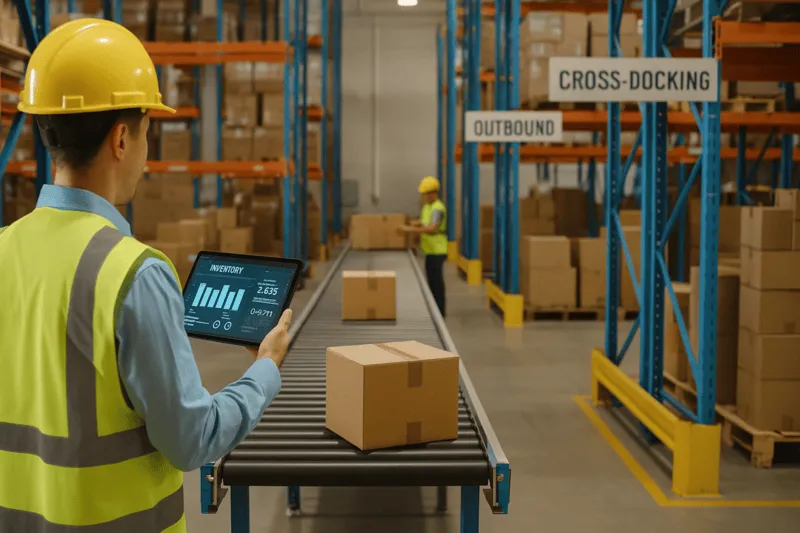
Ten years ago, a warehouse space was just a place to store goods, serving as a storage facility within the supply chain. Today, it’s the beating heart of your supply chain.
Smart warehouses now offer:
- Real-time inventory tracking
- Warehouse automation
- Cross-docking services
- Fast order fulfillment
- Seamless reverse logistics
- Efficient order processing
A well-organized shipping dock is also crucial for ensuring smooth inbound and outbound logistics.
But not every provider can deliver all of this with consistency. I’ve seen too many 3PLs overpromise and underdeliver.
Types of Warehouses: Finding the Right Fit
When it comes to optimizing your supply chain, not all warehouses are created equal. The right warehousing solutions depend on your business model, inventory management needs, and growth plans. Here’s a quick breakdown of the most common types of warehouses and how they can help you maximize efficiency:
- Private Warehouses: Owned and operated by a single company, these facilities offer complete control over warehouse operations, inventory management, and security. They’re ideal for businesses with high-volume, consistent storage needs and a desire for tailored solutions.
- Public Warehouses: These storage spaces are shared among multiple businesses, making them a cost-effective option for companies looking to reduce warehousing costs. Public warehouses provide flexible storage space and shared resources, which are perfect for businesses with fluctuating inventory levels or seasonal spikes.
- Bonded Warehouses: Specializing in imported goods, bonded warehouses allow businesses to store imported dutiable merchandise under customs supervision before duties are paid or the goods are entered for U.S. consumption. This has become more relevant for importers after the U.S. reciprocal tariff actions and subsequent 2025 tariff modifications, which increased the importance of duty-deferral and customs-controlled storage strategies. This can help businesses manage cash flow and compliance while keeping inventory secure until duties are paid.
- Distribution Warehouses: Focused on aggregating stock from various suppliers, distribution warehouses streamline wholesale deliveries and help businesses improve efficiency in their supply chain.
- Fulfillment Warehouses (3PLs): Third-party logistics providers offer a full suite of services, including inventory management, order fulfillment, and shipping. These solutions are designed for businesses that want to outsource warehouse operations and focus on scaling their core business.
By understanding the strengths of each warehouse type, you can select the solution that best fits your warehousing needs, reduce costs, and deliver a higher level of customer satisfaction.
What You Should Really Look For
From my seat, the top-performing fulfillment centers I’ve worked with share a few traits. Choosing a reliable fulfillment partner is crucial for optimizing your storage solutions, reducing costs, and improving overall supply chain efficiency.
- Operational excellence: Processes are clean, predictable, and built for continuous improvement.
- Technology-driven: If they’re not offering a warehouse management system with visibility, move on. Make sure their systems and automation are implemented correctly to ensure seamless operations and maximum efficiency.
- Strategic warehouse locations: Coverage matters more than you think, especially for fast delivery.
- Value-added services: Think kitting, bundling, or returns processing. Reliable delivery is also a critical component of customer satisfaction.
- Transparent pricing: Avoid black-box pricing models. They always cost more.
Technology and Automation in Modern Warehousing
Modern warehousing is driven by technology and automation, transforming how businesses manage inventory, order fulfillment, and warehouse operations. Today’s smart warehouses leverage advanced warehouse management systems (WMS) to provide real-time inventory tracking and complete visibility across the supply chain. This means you can monitor inventory levels, storage space, and outbound orders from anywhere, at any time.
Warehouse automation, like robotic picking, automated conveyors, and AI-powered sorting, boosts operational excellence by reducing manual errors and labor costs. Proprietary systems, such as RyderShip and RyderShare, take it a step further by integrating real-time data, enabling businesses to make informed decisions and respond quickly to market changes.
Technologies like RFID, GPS, and IoT sensors offer real-time visibility into inventory movement and storage conditions, ensuring products are appropriately packed and stored. These innovations help businesses drive efficiencies, cut costs, and gain a competitive edge in a fast-moving market.
By embracing smart warehouses and advanced technology, businesses can optimize warehouse management, improve order fulfillment speed, and maintain complete control over their operations, no matter how complex their supply chain becomes.
Cold Storage, Cross Docking & Specialized Services
More and more brands I work with need cold storage, bonded warehouse options, or cross-dock facilities. For cold storage providers, regulatory readiness now matters more than ever: EPA restrictions for new cold storage warehouse refrigeration systems took effect starting January 1, 2026, and EPA later proposed a near-term adjustment that would raise the allowable GWP limit to 700 before a tighter step-down in 2032. Brands evaluating cold-chain partners should confirm refrigerant strategy, equipment compliance, and retrofit plans. But finding providers that can scale specialized services and still offer a competitive edge? That’s tough. In certain industries, there is also a need for dedicated storage of raw materials to support manufacturing and production processes.
This is why tailored solutions and shared resources matter. Especially if your brand has excess inventory or seasonal spikes, effective inventory control is crucial for maintaining accuracy and optimizing operations.
These specialized services not only improve efficiency but also play a key role in reducing costs for businesses.
Returns and Reverse Logistics: Managing the Flow Back
Returns and reverse logistics are no longer an afterthought; they’re a critical part of the modern supply chain. Efficient returns processing can make or break customer satisfaction, especially in ecommerce, where expectations for fast refunds and exchanges are high.
A leading provider of warehousing solutions will offer specialized services for reverse logistics, using advanced technology to streamline the flow of returned goods. Cross-docking services can minimize storage time by quickly sorting and redirecting returns, while distribution services ensure products are processed and restocked or disposed of efficiently.
By implementing robust reverse logistics systems, businesses can reduce warehousing costs, improve service levels, and gain valuable insights into product quality and customer preferences. This data-driven approach not only helps cut costs but also drives your business forward by identifying opportunities for continuous improvement.
Partnering with a provider that excels in returns management means you can maintain high customer satisfaction, optimize your supply chain management, and stay ahead in a competitive market.
How Cahoot Approaches Warehousing
At Cahoot, we operate an extensive network of fulfillment centers with high standards across every node. We’re not just brokering space. We govern how that space operates, with standard SOPs, system integrations, and SLA accountability.
Our warehousing approach includes:
- Advanced technology for tracking and routing
- Support for cold storage and specialty goods
- Strategic locations near key metro hubs
- Reliable service, even during peak season
- Flexible storage solutions for different business needs
I collaborate daily with our operators to ensure everything runs like a system, not a collection of parts. Cahoot provides comprehensive warehouse solutions to address diverse supply chain challenges.
Wrapping It Up
Choosing a warehousing provider is less about how many square feet they have and more about whether they can support your long-term business’s success.
It’s also crucial to select a provider that prioritizes the needs and satisfaction of your customers, ensuring their experience is seamless and positive.
Ask hard questions. Demand transparency. And choose a partner that helps you scale smart, not just fast.
Frequently Asked Questions
What are warehousing services, and how do they support ecommerce businesses?
Warehousing services include inventory storage, order fulfillment, returns processing, and value-added services like kitting or labeling, all essential for ecommerce scalability.
What’s the difference between a shared warehouse and a dedicated warehouse?
A shared warehouse serves multiple businesses using shared resources, while a dedicated warehouse is reserved for one client, offering more control but at a higher cost.
What are the most important features to look for in a warehousing partner?
Key features include real-time inventory tracking, automation, cross-docking capabilities, temperature control, and flexible storage options.
How do warehousing services help reduce costs?
By streamlining inventory management, improving order accuracy, and using strategically located warehouses, businesses can cut transportation and storage costs.
Why choose Cahoot for warehousing services?
Cahoot’s nationwide network of fulfillment centers offers advanced tech, real-time tracking, and flexible storage, all optimized to meet ecommerce warehousing needs efficiently.
Written By:

Jeremy Stewart
Jeremy Stewart leads customer success at Cahoot, helping merchants achieve high-performance logistics through smart technology and process optimization. With a background in both ecommerce operations and client services, Jeremy ensures that every merchant using Cahoot gets measurable results—whether they’re scaling from one warehouse to many or managing complex returns.

Turn Returns Into New Revenue
Related Articles
Walmart Officially Allows Amazon Multi-Channel Fulfillment (MCF)
Big news for multichannel sellers: Walmart now officially allows Amazon Multi-Channel Fulfillment (MCF), Amazon’s service for using its fulfillment network to ship orders from mult...
Why More Automation Didn’t Lower Return Costs
Returns automation does improve returns operations: it cuts manual touches, smooths intake, speeds sorting, and makes workflow execution more consistent.
Shopify Subscription Payment Change: Why It Could Hurt Reactivation
Shopify changed how subscription payment information is handled at cancellation.
The Importance of Logistics in Ecommerce Fulfillment

In this article
32 minutes
Listen to podcast here.
Podcast: Fast Ecommerce Shipping How to Offer It to Grow Your Brand – What’s Working in Ecommerce (Ep. 45)
The host of a podcast on e-commerce marketing and owner of Caravan Digital, Eagan Heath, interviewed Manish Chowdhary, an expert in logistics and ecommerce order fulfillment and the CEO of Cahoot, a full-service order fulfillment services network. They discussed the importance of warehouse logistics in the e-commerce sector, which can affect profitability and the fulfillment strategy of ecommerce brands and retailers. Chowdhary explained the complexity of order logistics with inventory supply chain issues, international shipping, inventory storage, and warehousing strategy. Cahoot offers flexible and affordable order fulfillment services for B2B, wholesale, direct-to-consumer, and Amazon’s Seller Fulfilled Prime (SFP) program. They also have the capacity to offer one-day and two-day nationwide free delivery, which is essential for e-commerce brands to remain competitive. Ecommerce brands that fail to offer fast and free shipping are at a strategic disadvantage, as consumers are accustomed to these order fulfillment services, which are associated with customer satisfaction and increased revenue.
Eagan Heath:
Welcome everyone to another episode of What’s Working in E-Commerce. I’m your host, Eagan Heath, the owner of Caravan Digital. We’re a direct to consumer e-commerce marketing agency. We help with paid search, paid social, and email automation. Today I’m very fortunate because I’m speaking with an expert in logistics and fulfillment. His name is Manish Chowdhary he is from Cahoot. Manish, welcome.
Manish Chowdhary:
Well, thank you for having, Eagan. Really excited to be here.
Eagan Heath:
Yeah. Tell us a little bit about why e-commerce merchants might want to use a third party logistics (3PL) company or a solution like that.
Manish Chowdhary:
So Eagan, if you look at what’s happening with e-commerce and logistics, I’d like to start out by saying that shipping and order fulfillment is such a crucial part of being successful online, that it is something that every merchant already knows. All your audience probably is already aware. So I’ve even coined a phrase called half your shopping experience is your shipping experience. So it is that important. And when it comes to e-commerce shipping, it can make or break once profitability. It is that crucial because if the merchants are not looking at that in a critical fashion, then they’re actually not taking a complete view of their business.
Manish Chowdhary:
And e-commerce and logistics has become a very, very complex topic with inventory supply chain issues. Getting goods from overseas, if you have manufacturers outside, the cost of moving those containers by ocean freight, getting them to the ports in the US which are choked. And then storing and housing the inventory. And then finally, your warehousing strategy because you can’t bring an inventory fast enough, and so on. So I can keep going, but I’m going to turn it back to you so you can break it down for the audience.
Eagan Heath:
Yeah, that’s great. Hearing you talk about that, it strikes me that it’s every bit as complicated as the digital marketing and probably much more. So my hat’s off to you.
Manish Chowdhary:
Well, thank you, Eagan. In fact, when merchants are not taking… I’ll give you a very simple example just to set the stage is, all the carriers implement what we call peak season surcharge, and peak season delivery surcharge. This is in addition to the fuel surcharge. And this can range anywhere from 50 cents all the way to two, $3 per package. So if you’re coming from a marketing perspective and in Q4, you’re not accounting for that $2 extra order fulfillment or the shipping surcharge, all your auto AS, all your return on advertising spend, how much money you should allocate, all of that math goes out the door. So logistics is like an iceberg. You only see one 10th of it outside and the remaining is quite deep.
Eagan Heath:
Yeah, that’s amazing. And like you said, this is really affecting your margins, which can affect whether your advertising or your marketing is profitable. And so, that’s why we’re speaking about this today. Tell us a little bit about Cahoot, of what you guys do, and just how you got into this.
Manish Chowdhary:
In the interest of time, I’ll keep it short in terms of Cahoot is a full service order fulfillment services network. So we essentially help ecommerce brands and retailers execute the most merchant centric fulfillment strategy. Which means both B2B, wholesale, direct to consumer, fulfillment for all channels from Amazon, Shopify, and also supporting their programs such as Seller Fulfilled Prime (SFP), which is a two-day nationwide free delivery, including one day delivery for 20% of the time. So Cahoot is a cutting edge, modern, what we call peer-to-peer order fulfillment services network. And I can explain that a little bit later. But essentially, we help… Think of Cahoot a bit like FBA, but a lot more flexible and a lot more affordable.
Eagan Heath:
Interesting. So I’m looking at your website here. It’s cahoot.ai, correct?
Manish Chowdhary:
That’s right.
Eagan Heath:
Yeah. I see. Why is Cahoot better than other 3PLs? You talked about lowest cost by design, scales to help you grow. And I was going to ask about this, the rigor to power the most demanding fulfillment. I said SFP is too tough for other 3PLs. And you just said what that is, that’s basically one or two-day shipping. Is that right?
Manish Chowdhary:
Yeah, SFP stands for Seller Fulfilled Prime. So is essentially Amazon’s program for certain sellers who have been pre-approved to get the prime badge and still fulfill the orders outside of FBA. So there’s a full webinar on our website if anybody’s interested in checking it out. It’s a very, very hard program to qualify and very hard to stay on top of. And Cahoot does that in addition to supporting whatever order fulfillment strategy makes the most sense for our merchants.
Eagan Heath:
That’s great. And for e-commerce brands that are listening, if they’re not doing one or two-day shipping like this now, make the case a little bit. Obviously, we’ve really gotten used to this with Amazon. How important is it to be able to fulfill it that quickly? And also what does a brand need to have in place to be able to do that?
Manish Chowdhary:
Well, I mean it’s really, really important. In fact, if you’re not offering one day, two-day free shipping on your website, you know are at a strategic disadvantage because consumers are looking for that. If you look at Amazon Prime, there are about over 200 million Amazon Prime members and they have gotten used to two-day delivery, used to be the norm, Eagan, a few years ago. I mean now Amazon is rapidly moving to one day delivery and many markets, the 10 markets where Amazon is doing same day delivery. So any brand that says that my customers are not demanding one day, two-day delivery, I will challenge you on that. And customers are not going to come and tell you, they’ll just go elsewhere.
Eagan Heath:
And in terms of is there a certain amount of inventory that sellers need to have or anything like that, how do they think about maybe the inventory and logistics side of it so that they can do this?
Manish Chowdhary:
In fact, I’ve got some visuals if you like. I can pull them up and we can go over how does Amazon-like Fulfillment work. So let’s see. All right, let’s go right into it. I mean, I want to share with the audience what you’re looking at on the screen is, there are the three top tech behemoths. You’ve got Amazon, which has about 34-35% of all e-commerce GMV in the US. Walmart is trailing behind. And then Shopify is another very popular e-commerce platform. And we are going to use Shopify as the DTC poster child or DTC representative. So Amazon, if you want to sell on Amazon, Amazon has its own fulfillment service, very popular Amazon FBA. Walmart has Walmart Fulfillment Services, which is rather new. And then Shopify originally tried to implement or launch Shopify fulfillment services network in 2019. That didn’t quite work out, wasn’t doing so well. So in April of this year, they acquired a company called Deliver, which actually competes with my company, Cahoot.
Manish Chowdhary:
But the challenge with this, Amazon of course, wants to use FBA. Walmart forces you to use WFS now. And Shopify introduced a new program called Shopify Promise, which is expected to compete with Amazon’s Amazon Prime. And the biggest challenge with these programs is they’re very self-serving. For example, Amazon has limited warehouse space, so they will limit how much inventory you can send to them. And they do that limitation by certain methods. The Q4 storage fees are three times the storage fees that Amazon would charge in the first three quarters. So by using such prohibitive high pricing, they’re trying to control the usage. And of course, FBA is great when you sell your products on Amazon and use FBA to fulfill it.
Manish Chowdhary:
However, the merchants want to sell on all different channels because shoppers are everywhere. You cannot contain yourself to selling on one channel. But if I take an order from Walmart, I’m actually prohibited by law or by rules of Walmart that I shouldn’t use FBA, because Walmart wants us to use Walmart Fulfillment Services. If I take an order on Shopify or eBay, then I’m going to pay considerably higher to Amazon for order fulfillment because Amazon, of course, wants everyone to sell on Amazon and that’s why they want to incentivize this. So what we see is siloed strategy.
Manish Chowdhary:
So when you think from a merchant’s perspective, it’s hard enough to run a business. And now if you have to send inventory to three different networks, and God prohibit, if you are selling on eBay and many other marketplaces, it becomes even more challenging. So our view is that these strategies, while they are very attractive in some cases, it tends to tie the merchant down, and it’s not the most affordable strategy from a bigger holistic standpoint. And you asked this question, Eagan, how does Amazon-like fulfillment work? How do you offer one day, two-day delivery nationwide? So I want to break this down for your audience. I can take a pause if you have a question, or I can keep going.
Eagan Heath:
No, this is great. Part of what I’m understanding is if you’re doing fulfillment by Amazon, and you’re selling on Walmart, and then you’re doing some other one, you’ve got basically your products in different fulfillment centers, and you’ve got to kind of manage that, versus this is an alternative to handle all three or more through one service. Is that right?
Manish Chowdhary:
That is exactly right. And we know, and perhaps you can attest to that, that merchants should be selling on as many channels as they possibly can because shoppers are not limited to one particular marketplace, even as popular as Amazon, it’s certainly not a hundred percent of the market. And therefore, there could be less competition on other places. So we encourage merchants to make the products visible at as many places as they can and also of course, focus on their direct to consumer website.
Eagan Heath:
Yeah, that’s excellent. All right. So what I see here on the screen of the different locations of if we have two, four, or nine locations, tell us a little bit about this.
Manish Chowdhary:
Yeah, so this is a map for those of you who are watching the screen. It’s essentially breaks it down that how do you make free and fast shipping possible? How do you make Amazon-like shipping affordable? Of course, we cannot afford to ship using the expensive overnight air or two-day air service. So the most economical is the ground service like a UPS ground or USPS first class and so on. And what this illustrates is that if you want to target two-day delivery nationwide, you need to have at least four strategically located warehouse, or four strategic fulfillment locations. And if you look at the middle column, Eagan, you’ll see these are four strategic… This is where the bulk of the US population is, and these provide the best coverage. So think about New York, think about Southern California, think about Dallas, Texas, and upper Midwest such as Chicago area.
Manish Chowdhary:
And then if you have these four strategically located warehouses four to five, you can get 99% of the US population within two days. And if you want to target one day delivery, you need many, many more, like nine locations. And why do we know that is because Cahoot supports Seller Fulfilled Prime (SFP), which is two-day delivery nationwide. And with one day at least two 20% of the population at any given time, that’s the requirement for Seller Fulfilled Prime (SFP). And furthermore, so if you were to break it down, and if you wanted to do two-day delivery nationwide, like Amazon FBA, you need to start with smart inventory placement. We talked about that previously. You need four to five strategic locations if you want to target. But of course, the amount of inventory you’re going to place in Southern California is probably not the same as what you’re going to place in the Chicago area because the volume of orders is not going to be the same.
Manish Chowdhary:
And FBA does that for you, and Cahoot does that for you as well. So we will spread the inventory proportionately based on historical data and many other factors. Once the inventory is strategically placed, and it’s ,of course, not a one-time thing because you have to constantly, as inventory gets depleted, you need to replenish the inventory. And getting this right is a very, very complex topic. However, this is where the opportunity is. And then, once you have your inventory located strategically, then you need to market this. Especially if you have a website. The marketplaces like Amazon and Walmart, of course, do it for you. They’ll promote that free two-day shipping badge on the product page, on the category page, on the shopping cart. It’s called date certain shipping, buy by X time, and you’ll get it delivered by Y time. And that is really important because that is what gives the consumer the confidence that they will get the product.
Manish Chowdhary:
We cannot say things like two-day shipping and three-day shipping because that does not account for your handling time. It does not tell me if I place an order today, will the two days counter begin tomorrow? Will it begin today if it’s a weekend, if it’s a holiday. So this is really important in order if you’re doing your own DTC site to promote this. And then once you receive the order, you need to manage your cost. So you need to now route that order to the right location that has the cheapest cost, but also will deliver the order within the promised SLA to the consumer. And then we need to monitor to ensure that the customer indeed did receive the item as promised. And if there was any issues, you need to address that. So you cannot just forget about it after you ship the order. Because if you want to be like Amazon and you want to give the same level of experience, you need to be fanatical about tracking and making sure that the customers got what they were expecting. Any comments, Eagan, before I move on?
Eagan Heath:
Pretty interesting. Are you guys using ground shipping, and Amazon, and others or not?
Manish Chowdhary:
No. I mean, Amazon FBA also uses… Most of the time they use ground shipping, so does Cahoot. However, a little bit further down in my presentation, I will cover what FBA does and what they don’t do. For example, as I said earlier, if you wish to get a Shopify order Fulfilled By Amazon (FBA) is going to cost you more, because that order is originating from outside of Amazon. So Amazon and Cahoot would utilize very similar strategy. But most brands, as we know, they also want to sell wholesale. They want to store their inventory because given the current inventory supply chain issues, you cannot predict how long things will take. So a lot of brands and retailers are stocking up for the holidays earlier. But all of these, you cannot just take all of that and send that to FBA because there are chances that Amazon may not even accept all that inventory because there are limits on how much inventory you can send to Amazon.
Eagan Heath:
Gotcha. Okay.
Manish Chowdhary:
And those are similar problems with Walmart as well. For example, right now, you cannot use Walmart fulfillment service to fulfill an order from Shopify. So from a merchant’s perspective, it becomes a nightmare because now you need to monitor some inventory sitting in Walmart, some in FBA, you need to… Now each one has different receiving times. Amazon takes excruciatingly long many times to receive inventory, especially closer to the holidays. You need to monitor your safety stock to see how much inventory do you have, how many days of inventory. If you have too much inventory, then Amazon penalizes you because your IPI score, inventory performance index goes down. Then your limits on the account can suffer, then you cannot send your inventory back to Amazon. And then the problem just goes on. I can certainly drill down on anything specific that you’d like me to cover.
Eagan Heath:
Yeah, this is great. We can keep going here, but thank you for talking about that.
Manish Chowdhary:
Cool. Cool. So our view, and this is not just my view and Cahoot’s view, but this makes sense because it’s simple physics. Because most sellers should be selling on multiple channels. And if you’re selling on multiple channels, you need a holistic order fulfillment strategy. Most sellers, if your ecommerce brand is successful, if your product is successful, you’re probably also doing some wholesale, you’re supplying to other stores, you’re selling one P to places like Nordstrom, and some of the other B2B channels. So you need a fulfillment provider that can do both B2B, B2C, all year long. And also help you deliver on one day, two-day delivery if that’s what you would like to target. So broadly speaking, there are three ways you can go about doing it. And we already covered that you need at least four warehouses, four to five strategically placed.
Manish Chowdhary:
So if you have a warehouse in Wisconsin, that’s not a great location. It might be a great warehouse for a great price. But of course, the reason why the price is great is because that’s not a strategic location that most sellers are targeting. So you can do it yourself if you have a warehouse of your own, or you can go and rent space, sign long-term leases because warehouse rent is an all-time high. So you’re unlikely to find great deals if you’re not willing to commit for a long time. Then you need to find labor, staff them, manage all of this at four or five locations on a daily basis. Carrier relationships, it can get very, very expensive and risky because you may not have the economies of scale, unless you’re doing eight, nine figures or at least seven figures in UPS spend. Your UPS rates may not be as good and so on.
Manish Chowdhary:
It’s sort of like the analogy I’d like to use is cloud. In today’s day and age, you standing up your own servers is going to be a very time-consuming process in addition to risky and expensive. But you can certainly do that and you still need software and technology. The other option is 3PLs, the traditional third party logistics or warehousing companies. Two thirds of them in the US are what we call mom and pop operators. They are the facilities that have one to three facilities nationwide. Most of them are one location. And then you have the large mega companies that target the large enterprise. And most of the time, they’re not a great fit for small businesses because they have monthly minimums, very large minimums. They want a lot of volume that you may or may not be able to commit. They want a very long-term relationship and contracts. And even then, so if you go with the 3PLs, you may have to assemble two, three, four of them, four different companies, negotiating separate agreements with them.
Manish Chowdhary:
Each one has their own service level agreement, meaning this is how long it takes to receive, this is when the orders will go out. And then furthermore, you’ll need technology on how to manage all of this. How will you route the order? Who should fulfill what? And how will you recover from exceptions? So it gets pretty challenging to manage all this, and especially if you’re trying to target one day, two-day delivery, it can get quite complex and quite expensive. And then there’s something new which is we call, order fulfillment services network. And technically, Amazon FBA would be considered a fulfillment services network. And then there are technologies and solutions like Cahoot that have… They are new age. At least Cahoot, unlike deliver supports both wholesale B2B, as well as B2C. And we can provide very cost-effective solutions to clients and run their holistic fulfillment strategy.
Manish Chowdhary:
And one thing, as I mentioned, because Cahoot supports Seller Fulfilled Prime (SFP), many of our facilities operate six days a week. Unlike traditional 3PLs that operate only Monday through Friday. We don’t have any peak surcharges and we have all the integrations. So getting started is very easy and stress-free. And for those of you who are listening, because Cahoot is what we call peer-to-peer order fulfillment services network, if you have a warehouse, you can certainly include your warehouse as part of the fulfillment node. And if you want to make money, if you have excess space in your warehouse and you would like to monetize that excess space and capacity, we invite you to come apply to become a fulfillment partner for Cahoot. So for the very first time, you have an opportunity to make money on the Cahoot network in addition to utilizing our services. I’ll take a pause here. Eagan, I’m sure you have questions for your audience.
Eagan Heath:
Yeah, that’s pretty interesting. I think this order fulfillment services network piece is curious to me where it sounds like you guys have some warehouses and things like that. But then in some cases you’re also tapping into, it could be merchants, and vendors, and things like that. Or it’s like they’ve got warehouse space and you’re utilizing that too. Am I understanding that right, where it’s kind of a mix?
Manish Chowdhary:
That’s right. I mean, Cahoot is a peer-to-peer order fulfillment services network. Which means this was the innovation that Cahoot brought to market. We have 10 issued patents that most of our supply, most of our warehouses belong to other top tier merchants that have excess capacity. And they get to monetize that for the first time. And the benefit for our clients is because it’s sort of… Think of Cahoot as an Airbnb. You’ve got your spare bedroom, you’ve got your spare apartment, a spare house. And because we are bringing that to market for the very first time, we are able to pass those savings onto our clients. And mind you, these are top tier merchants, terrifically well run facilities, the average tenure of warehouse and our network, they’ve been selling and fulfilling their own orders for over 10 years. And you can see from our rating, that five star rating on Amazon, five star rating on Shopify. So that is how Cahoot is able to offer affordable services compared to the competition.
Eagan Heath:
Very cool. Thank you. Anything else you want to share and present about here? Or anything else I should ask you about?
Manish Chowdhary:
No, I mean I think there is a new development that I’m not sure if you’ve been following that was announced by Amazon called Buy with Prime in April, just a couple of months ago. I don’t know if you’ve covered that you’re familiar with that you, if that would be of interest to your audience. So this is something that is relatively new.
Eagan Heath:
Yeah, I’ve been following this, Manish. Tell people a little bit about this and also just how this relates to what we’re talking about.
Manish Chowdhary:
Yeah, well, what this is really, Amazon announced in April of this year, what we call Buy with Prime program. It’s essentially enabling shoppers to buy with all the prime benefits, the Amazon Prime membership benefits. But on any website outside of Amazon. Until April, if you were an Amazon Prime member, you had to buy it on Amazon in order to get your two-day free delivery. But now, Amazon has launched this program that allows merchants to put the prime badge on their website and fulfill these orders through Amazon. So as a shopper, if you’re looking at the screen, you can see the Buy with Prime badge. Think of it like PayPal checkout if you’re familiar with that. It’s essentially, when you log in on, let’s say your website, you will log in using your Amazon credentials, your Amazon shopper credentials. And will pre-populate all your Amazon profile data, and the order will get shipped from Amazon within the two days.
Manish Chowdhary:
So you’ll get all the prime benefits. So let’s say if you have a Shopify big commerce, Magento commerce store, you can install this. However, it’s a loaded problem. While it may be attractive because it builds trust, but there are host of other issues that we don’t believe it’s the right solution for merchants. But it’s a call. It’s a call to action to anybody who’s selling online, that previously the shoppers expected two day, one day free shipping on Amazon. But this program is going to accelerate that need to offer that same free and fast shipping on every channel. So if you’re not doing free and fast shipping, and by that I mean at least free two-day shipping nationwide, you are going to be in a strategic disadvantage because let’s say if your competition starts offering it and you don’t, then you are at a loss. And this is a new development that I feel and we know that this is going to create waves this holiday season and certainly into 2023.
Eagan Heath:
Yeah, pretty interesting. We’ve covered on our show just the important of owned growth, and obviously, we do Klaviyo email marketing with clients, and this whole piece of you want to own your customer. And now as you’re saying, if Amazon owns this customer, that’s tricky. This could increase your conversion rate, this could increase your sales. Maybe there’s a poll if you’re using Amazon FBA. But you have to weigh the pros and cons of do we get the customer data or not? That’s really something to weigh out, but I hear what you’re saying of one in two-day shipping, coming through your Shopify site or what have you, people are going to be be expecting that. So that’s something to think about.
Manish Chowdhary:
That’s exactly right. It is a by invitation only program, so it’s not open to every merchant right now. But suffice to say that it is coming, and merchants should be planning and preparing for this in advance because this… I’m sure, Eagan, you can talk about the early days of Google AdWords. That’s the time to get on, take advantage, get positioned to beat the competition and before everything becomes widely prevalent and available.
Eagan Heath:
Yeah, that’s great. Well this is great info, Manish. Anything else we should cover before we wrap it up here?
Manish Chowdhary:
No, I mean I think most of it is just the last point here, is Buy with Prime is like a Trojan horse, because I’ll give you a very simple example. Let’s say install this button on your website. Then somebody puts a… We know that all the DTC websites, most merchants like to increase their basket size by offering free shipping on let’s say, orders over $50, or $70, or what have you. But with Amazon Prime, there is no such minimum. One can order paper paperclips and a box of paperclip, and you could get that for free. So that can also be quite challenging. And if you don’t get the customer detail, customer information, if Amazon holds that information to them, then it may not be a good idea. And finally, just using the same analogy, let’s say I go to your website and you’ve put Amazon Buy with Prime. And I put the item in the shopping cart. And I abandon that shopping cart, it’s going to be hard to re-target that customer.
Manish Chowdhary:
And we know that Prime shoppers visit Amazon at least once a week. 50%, 45% of the Prime Shop are buy from Amazon once a week. So if they abandon the item on your shopping cart, you can bet that Amazon will target competitive products and they reach Amazon. So you might actually lose that customer what you thought to be a great thing. But this program is still very new. I’d encourage sellers to keep an eye out, but the call for offering free one day, two-day shipping on your website on every channel you sell is here. Sellers should not procrastinate. If you think that your shoppers, your customers are not demanding that, I will challenge you on that again. I think because the customer behavior is quite consistent and we see the impact of that for those that offer. And I have a case study if you want me to cover that briefly with one of our clients, but I’ll let you make that call.
Eagan Heath:
Sure, yeah. I want to ask real quick, did you have a slide about the Shop Pay as well?
Manish Chowdhary:
Oh yeah. So we have a slide on Shop Pay, which is-
Eagan Heath:
Which is Shop Promise. Okay.
Manish Chowdhary:
… Shop Promise. This is again, Shopify’s answer to Amazon’s Buy with Prime. It’s still very new. You can only sign up to join the wait list. It is essentially, very similar that if you’ve shopped on the Shopify store from any one of the Shopify stores once, you will be able to check out quickly. And Shopify will handle the payment. And then there is some protection against returns similar to Amazon Prime or the FBA. So it’s still very new. But of course, Shopify’s trying. But the biggest difference between Shopify and Amazon is Amazon, you get traffic. In Shopify, you have to build your own traffic, you have to market your own. So that’s one of the key differences.
Eagan Heath:
Yeah, that makes sense. And that’s what we’re doing as an agency. So we certainly understand that base. You mentioned a case study, can you talk to us a little bit about what does the before and after look like for a client who goes this route with their fulfillment?
Manish Chowdhary:
Yeah, so we have a case study on our website, I’m going to pull that up, which is Cali’s Books. They’re a leading Amazon brand that… They’re leading DTC brand. And I’m going to go ahead and share that screen so one can see it. And so, they had a very similar problem. They were using a bunch of different providers. I mean they still do. So this is Cali’s Books. They have these very clever books that one can record is these are musical or rather recorded books that you can record your own words so they are books. But let’s say a grandparent is reading the story to the kid and it’s very popular, so it’s in their own voices. They’re doing really well. They’ve been growing like gangbusters. They sell on all popular channels. They sell on Amazon, they sell on Walmart, they have their own Shopify store.
Manish Chowdhary:
They also provide whole… They sell wholesale to Nordstrom and many other retailers around the country. So previously, they were using Amazon FBA and Seller Fulfilled Prime (SFP), then they got hit by inventory limits. They could not send the inventory to Amazon, and their bestseller would go out of stock that would lead to a lot of lost sales. And then they had a 3PL on the West Coast that was sending items to FBA. But they could not handle B2C or direct to consumer orders for Shopify. So they were using Deliver. And then when they decided that hey, they needed to have a backup to FBA Deliver, cannot do Seller Fulfilled Prime (SFP). So that wasn’t a good solution. And Deliver is not good at B2B. So there are many other challenges that they were dealing with and that was really hurting their growth. And Cahoot brought all of that under one roof and the results were outstanding.
Manish Chowdhary:
I mean, we helped them with DTC, which means all direct to consumer channels. We helped them with their Seller Fulfilled Prime (SFP), which is fulfilling Amazon orders. Cahoot also helps them sending inventory to FBA periodically. Then B2B. And we talked about strategic inventory placement. And the impact is Cali’s Books is growing 90% year over year, with near zero defect. And that’s something. And there’s a video of the Cali’s Books’ COO, Michael, on our website if somebody wants to check it out. So for those of brands that are looking for a holistic provider, and Cahoot always works in the best interest of the merchant and the best interest of the seller. So we don’t try to put a square peg in a round hole. But I’d encourage folks to check it out. It could be a game changer for some.
Eagan Heath:
That’s great. Yeah, I think the last question for me, Manish, is just how big does a company need to be for this to make sense? Is it a revenue number, is it a number of orders?
Manish Chowdhary:
Yeah, so Cahoot is a network similar to Amazon FBA. So it’s very flexible, it’s highly scalable. So you don’t need to be a huge brand. As long as you’re doing at least a hundred orders per month direct to consumer, that’s when Cahoot will begin to make sense. I think that’s probably when the business begins to… When you can’t do this out of your garage. So Cahoot is quite flexible. So if you have that need, come check us out, learn about it. Even if we are not the right fit immediately, because these fulfillment and logistics decisions can take weeks, and months, and sometimes years to decide. But it is certainly a very unique, and innovative, and affordable option.
Eagan Heath:
All right. That’s all right. And yeah, again, the website is cahoot.ai. Manish, thank you for coming on and sharing What’s working in e-commerce fulfillment.
Manish Chowdhary:
Eagan, thank you again for having me. And all of the ones who are listening, thank you for listening to me. And thank you for the opportunity. I’m really excited that I had a chance to talk to your audience.
Written By:
Jeremy Stewart
Jeremy Stewart leads customer success at Cahoot, helping merchants achieve high-performance logistics through smart technology and process optimization. With a background in both ecommerce operations and client services, Jeremy ensures that every merchant using Cahoot gets measurable results—whether they’re scaling from one warehouse to many or managing complex returns.
Turn Returns Into New Revenue
Related Articles
The Shipping Speed Paradox: Why DTC Brands Are Slowing Down
Everyone’s talking about faster delivery.

Why Cross-Border DTC Brands Are Moving Fulfillment Inside the US
Cross-border ecommerce fulfillment is the process of shipping ecommerce orders across national borders—often from warehouses outside the United States to U.
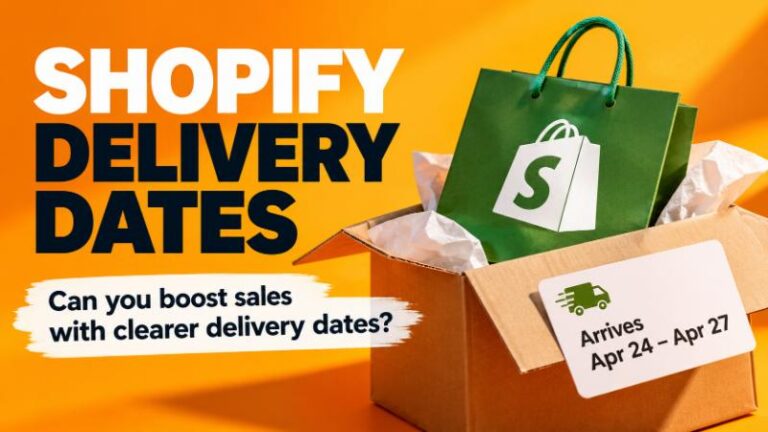
Shopify Estimated Delivery Date: A Complete Guide for Ecommerce Stores
A Shopify estimated delivery date is the specific arrival date or date range shown on a product page before purchase, so shoppers know when an order is expected to arrive.
3PL Warehouse Food Grade: How To Choose | Cahoot Fulfillment
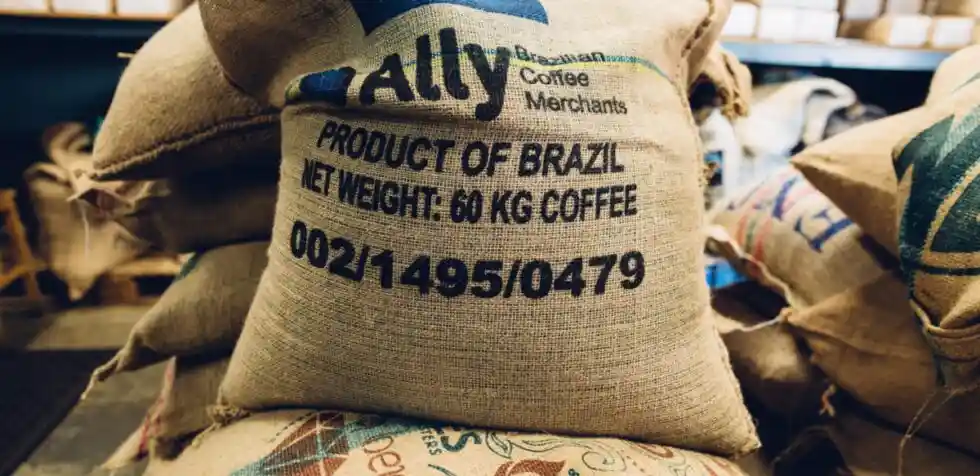
As more grocery sellers move to add online channels, they’re quickly discovering that the third party logistics industry hasn’t yet built up the specialized muscle needed to store and ship their products with the care they need. The growth of grocery online has caught logistics professionals off guard. After all, very few people bought food online as recently as 2019.
Just two years before the COVID pandemic, eCommerce made up only 2.7% of US grocery sales. Now, market forecasters expect it to make up a full 20% of the grocery market in 2026, an astounding growth rate.
Explosive growth can come with deep challenges, and many grocers that have added online channels have seen the promise of ecommerce turn sour due to high damage rates and inefficient shipping from their fulfillment partners. Unfortunately, many 3PL warehouses simply don’t know what it takes to offer top-notch services and manage food supply logistics effectively.
In this article, we’ll provide you with an inside look into what you need to look for in a 3PL that will support your profitable growth as an online food seller with food-grade warehouses.
What is Food Grade Warehousing?
Food grade warehousing refers to the specialized storage and handling of food products in facilities that meet stringent standards for cleanliness, sanitation, and safety. These warehouses are designed to protect the integrity and quality of food products, ensuring they remain safe for consumption throughout the storage period. Equipped with specialized equipment and staffed by trained personnel, food grade warehouses handle a variety of food products, including dry goods, frozen items, refrigerated products, and perishables.
In the food supply chain, food grade warehousing plays a critical role by preventing contamination, spoilage, and damage to food products. This ensures that the food reaching consumers is both safe and high-quality. By adhering to rigorous standards, food grade warehouses help maintain the trust and confidence of food manufacturers and consumers.
Importance of Food Safety in Warehousing
Food safety is paramount in food grade warehousing. Given the susceptibility of food products to contamination, spoilage, and damage, stringent food safety protocols are essential. These protocols include rigorous sanitation practices, effective pest control measures, and precise temperature control to inhibit the growth of harmful bacteria, mold, and other microorganisms.
Food grade warehouses must comply with regulations and standards set by authoritative bodies such as the Global Food Safety Initiative (GFSI) as well as legislation like the Food Safety Modernization Act (FSMA). These regulations ensure that food products are handled and stored in a manner that protects public health. By prioritizing food safety, food grade warehouses not only safeguard consumers but also uphold the reputation and reliability of the food supply chain.
What You Need From Your Food 3PL
While there are many similarities between fulfilling online orders for the food industry and general consumer packaged goods, food products have special needs that many third party logistics warehouses (3PLs) aren’t equipped to handle. Proper food handling practices are crucial to prevent contamination and ensure safety during storage and processing, with certifications like SQF and AIB validating adherence to these standards.
In this section, we’ll break down the added requirements that 3PLs need to excel in to provide excellent food grade order fulfillment.
FDA Approved Food Grade Warehouses
In 2011, the Food Safety Modernization Act (FSMA) raised the standards for manufacturing, processing, and storing food. An FDA-certified warehouse is a storage facility, food manufacturing plant, or order fulfillment center that is officially registered with the FDA to safely store food in accordance with the FSMA and food industry regulations. Facilities subject to FDA food facility registration must also renew that registration every other year, and current FDA renewal guidance requires a unique facility identifier recognized as acceptable to FDA.
The certification process ensures that the warehouse has a host of plans and procedures designed for the safe storage and handling of food products. FDA registration does not itself certify a warehouse’s practices. Applicable FSMA requirements, current good manufacturing practices, customer standards, and third-party audits are what typically govern the warehouse’s food safety procedures. Some elements include sanitation and cleaning procedures, glass and clear plastic policies, and pest control.
Relying on an FDA-approved warehouse as your food 3PL gives you the peace of mind that comes from knowing that your food products are stored safely, minimizing the chance of spoilage or contamination that could hurt customers and your ecommerce business.
In addition to FDA certifications, food-grade warehouses can acquire a number of other certifications from government and industry groups that indicate they are following up-to-date best practices for food handling and storage:
- Global Food Safety Initiative (GFSI) Recognized Certifications
- BRCGS (Brand Reputation Compliance Global Standards) Storage & Distribution – Ensures proper storage and transportation of food and packaging materials.
- SQF (Safe Quality Food) Storage & Distribution – A globally recognized standard that verifies food safety and quality management.
- IFS Logistics – Covers food and non-food storage and transportation requirements.
- FSSC 22000 (Food Safety System Certification) – Based on ISO 22000 and recognized by GFSI.
- ISO Certifications
- ISO 22000 – International standard for food safety management systems.
- ISO 9001 – Quality management system certification that ensures consistent service quality.
- Organic and Specialty Certifications
- USDA Organic Certification – For warehouses handling organic products, ensuring compliance with National Organic Program (NOP) standards.
- Non-GMO Project Verified – For warehouses storing non-GMO products.
- Gluten-Free Certification – Ensures compliance with gluten-free handling requirements.
- American Institute of Baking (AIB) – evaluates the safety, cleanliness, and compliance of food processing and storage facilities.
- Hazard Analysis & Critical Control Points (HACCP) Certification
- A preventive approach to food safety, identifying and managing potential hazards in food storage and handling.
Thanks to Cahoot’s unique peer-to-peer ecommerce model, we have warehouses that don’t just occasionally work with food products but instead have specialized in food order fulfillment for decades.
Climate Controls
One of the most important considerations when choosing an ecommerce fulfillment company is the type of climate conditions that your products will require. More than most other products, many foods have strict temperature limitations that must be followed, or products will be damaged. Many sellers assume that if they don’t need refrigeration, then any 3PL warehouse will do, but they learn the hard way that isn’t true.
Unfortunately, many 3PLs maintain warehouses at warmer temperatures in order to save money on air conditioning, which makes them too warm for many food items. Especially in summer months – and in the southern US – many warehouse temperatures rise into the 80s or even 90s Fahrenheit, which can irreversibly damage many food items and lead to a big write-down.
And product loss in the warehouse isn’t where the problem ends. Your outsourced warehouse team may not realize that products are damaged before they ship them out. Suppose you sell chocolates, and you have a product line that ships in opaque boxes. The warehouse team wouldn’t be able to see the damage, and if the warehouse temperature rose to melt the chocolate, shipments would continue without pause. That leads to a mass of customers all receiving damaged products at once, and when they take to social media to complain, it will create a lasting negative impression of your brand.
Therefore, it’s critical that the 3PL warehouse that you choose is equipped to handle, store, and ship your food items in optimal climate conditions so that your customers are able to receive the very best version of your product.
A good rule of thumb is to ask your 3PL warehouse whether they guarantee their warehouses at or close to room temperature. Since the most commonly shipped food items are designed to be stored in cool, dry conditions in a cupboard, they’re usually safe at 72 degrees. That being said, know your product! Refrigerated items will obviously require lower temperature ranges, and some other products don’t need refrigeration but do need more careful heat regulation than simply sitting at room temperature.
Careful Packaging For Safe And Efficient Shipping
One metric defines online seller profitability more than any other: customer lifetime value. With digital advertising becoming increasingly expensive, most sellers lose money on new customers. They’re only able to earn a positive bottom line through long-time repeat customers.
Proper food grade storage is essential before shipping to ensure food safety and compliance with regulations. Unfortunately for online food merchants, it’s more difficult to safely ship fragile foods and glass than it is to ship other goods. Without a food 3PL that knows how to treat such delicate items, your margins will quickly be overwhelmed by unhappy customers demanding refunds for damaged goods.
In addition to limiting damage, a 3PL warehouse that knows food logistics inside and out also knows that orders come in many more shapes and sizes than they often do for other merchants. Grocery orders tend to consist of many different items and many different quantities. This introduces significant packaging uncertainty for untrained order fulfillment personnel, and it can lead to inefficiently packed boxes that inflate shipping costs.
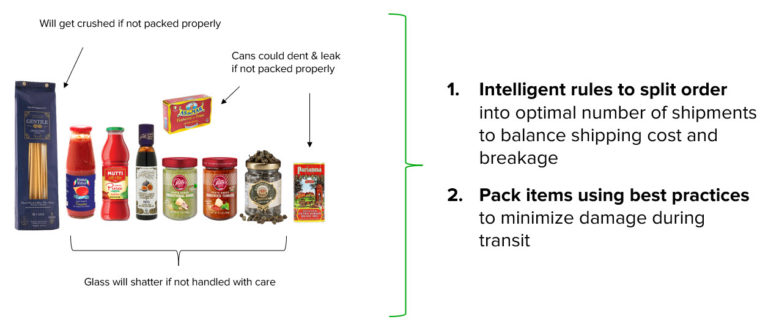
Cahoot uses a combination of intelligent packing software and responsive customer service to get the packaging right for the toughest goods to ship. We optimize for two things: we keep the package as small as possible to minimize shipping cost while also getting damage rates as close to 0% as possible.
Our warehouses that specialize in food have a direct line to discuss tricky packing challenges with our control team, and this leads to a process of continuous improvement. Our software is constantly learning new ways to reduce damage rates and costs. In this way, you save money on shipping while also ensuring that your customers are delighted when they open up their products every time.
Responsive Customer Service
Though responsive customer service is important for all online sellers, it’s especially important for a food 3PL, given the additional attention that is needed. You need to be able to get in touch with your customer service team quickly to feel confident that they know how to excel with your products and troubleshoot solutions for tricky challenges.
You need a 3PL company that offers you a real person to work with your account and multiple ways to get in touch with them. Cahoot clients love our easy-to-reach and proactive customer service team. Our team is based in the USA, and they take the time to get to know your ecommerce business, so you don’t have to start at square one with a new person every time you submit a ticket. The close relationship we forge with our sellers is foundational to our ability to go above and beyond as a food 3PL.
Evaluating a Food Grade Warehouse
When evaluating a food grade warehouse, it’s crucial to assess its ability to meet high standards for cleanliness, sanitation, and safety. Here are key factors to consider:
- Certifications: Look for certifications such as SQF, AIB, and Organic. These certifications indicate that the warehouse adheres to specific standards for food safety and quality.
- Sanitation and Pest Control: Ensure the warehouse has a robust sanitation and pest control program to prevent contamination and infestation. This includes regular cleaning schedules and effective pest management strategies.
- Temperature Control: Verify that the warehouse has adequate temperature control measures to prevent spoilage and damage to food products. This is especially important for perishable and temperature-sensitive items.
- Inventory Management: Assess the warehouse’s inventory management system to ensure it can effectively track and manage food products. Efficient inventory management helps in maintaining product quality and reducing waste.
- Staff Training: Ensure that warehouse staff are well-trained in food safety and handling procedures. Proper training minimizes the risk of contamination and damage to food products.
- Regulatory Compliance: Verify that the warehouse complies with relevant regulations and standards, such as the Food Safety Modernization Act (FSMA). Compliance ensures that the warehouse operates within legal and safety guidelines.
By thoroughly evaluating these factors, you can ensure that a food grade warehouse meets the necessary standards for safely and efficiently storing and handling food products. This not only protects consumer health but also enhances the reliability and efficiency of the entire supply chain.
Cahoot: Experienced Food Grade Warehouses
Cahoot is different from other 3PLs. Our innovative peer-to-peer model sets us apart by enabling us to offer low-cost, fast order fulfillment by design for a huge variety of specialized industries.
So, how do peer-to-peer ecommerce services work better than old order fulfillment networks?
We recruit top-tier ecommerce merchants with their own warehouses to join our network as fulfillment partners, and then our intelligent shipping software and control team keeps the whole system connected and running efficiently. Since we’re unlocking excess order fulfillment capacity that was lying idle, we’re able to offer lower costs. And crucially for online grocers, we’re able to recruit merchant-operated warehouses that already specialize in fulfilling their own food – and thus are already up to speed as food grade warehouses.
Unlike other 3PL warehouses that are building cookie-cutter warehouses designed to store easy-to-fulfill goods, we have specialists in temperature-controlled fulfillment, hazmat, and more. Our flexibility is part of what distinguishes us and makes us the best choice for sellers seeking a reliable food-quality 3PL partner.
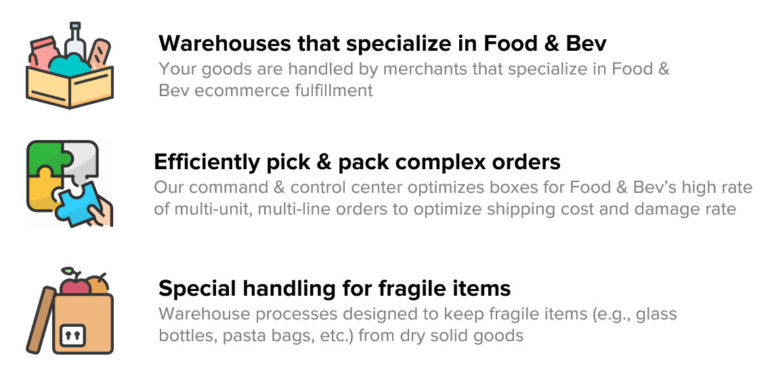
Our technology further improves our ability to power food-grade logistics by constantly optimizing how we pack orders. The shipping software partners with human judgment to learn the best packing combinations for tricky food orders, so we’re able to minimize damage rates and use small packages to limit shipping costs. And, of course, since our merchant-operated warehouses know how important special handling is for food products, they take extra pride in ensuring that your products are safely stored and moved.
If you’d like to find out how Cahoot can help your ecommerce business, please get in touch with us. We’ll design a custom order fulfillment service for you that will meet your exact food-grade needs.
Frequently Asked Questions
What is 3PL cold storage?
3PL cold storage refers to temperature-controlled warehousing and distribution services for perishable goods offered by many 3PLs. These facilities specialize in storing and handling products that require refrigeration or freezing, such as dairy, meat, seafood, frozen meals, pharmaceuticals, and certain chemicals.
What regulations must a food-grade 3PL provider follow?
Food-grade third-party logistics (3PL) providers must comply with several regulations to ensure food products are stored and handled safely. Key requirements include:
- FDA Registration: Facilities that manufacture/process, pack, or hold food for U.S. consumption generally must register with the FDA unless an exemption applies. FDA inspections are risk-based, with domestic food facilities inspected at frequencies tied to their risk level.
- FSMA Compliance: Some facilities must implement a food safety plan developed or overseen by a Preventive Controls Qualified Individual (PCQI), but warehouses solely engaged in storing unexposed packaged food may be exempt from preventive controls requirements or subject only to modified requirements for refrigerated foods requiring time/temperature control for safety.
- GMPs & HACCP Plans: Good Manufacturing Practices (GMPs) and Hazard Analysis Critical Control Points (HACCP) ensure food safety and risk mitigation.
- Third-Party Audits: Many food-grade warehouses are subject to independent audits by organizations such as ASI Food Safety or the Safe Quality Food Institute (SQFI).
- Pest Control & Sanitation: Strict pest control, sanitation, and hygiene protocols must be followed to prevent contamination.
What factors should businesses consider when choosing a food-grade 3PL provider?
When selecting a food-grade 3PL provider, businesses should consider several factors to ensure compliance and efficiency, including experience & certifications, temperature integrity, lot traceability, prevention of cross-contamination, and GMP audit readiness.
What can disqualify a warehouse from being considered food-grade?
A warehouse may lose its food-grade status if it fails to maintain sanitation, temperature control, and compliance with regulatory standards. Common disqualifications include:
- Structural Issues
- Poor Sanitation Practices
- Improper Storage
- Lack of Temperature Control
- Regulatory Non-Compliance
Written By:

Indy Pereira
Indy Pereira helps ecommerce brands optimize their shipping and fulfillment with Cahoot’s technology. With a background in both sales and people operations, she bridges customer needs with strategic solutions that drive growth. Indy works closely with merchants every day and brings real-world insight into what makes logistics efficient and scalable.
Turn Returns Into New Revenue
Related Blog Posts
3PL vs In-House Logistics: How to Shift From In-House Warehouse to a 3PL | Cahoot
In this article
14 minutes
- Understanding In-House Logistics and 3PL
- Definition of In-House Logistics
- Definition of Third-Party Logistics (3PL)
- Advantages and Disadvantages of In-House Logistics
- 5 Signs It’s Time to Switch to an Outsourced Third-Party Logistics Company
- How to Shift From In-House Warehouses to an Outsourced 3PL
- In-House or Outsourced? Cahoot Lets You Do Both
- Frequently Asked Questions
As your ecommerce business grows, the operations behind it become more complex. One of the most significant is warehousing and order fulfillment, which must scale alongside sales and customer growth to remain profitable.
While in-house order fulfillment may be cost-effective initially, those expenses can skyrocket as you need more warehousing space, on-demand workers, and closer relationships with shipping providers. The decision-making process of 3pl vs. in-house becomes critical as you weigh factors like control, scalability, cost, and business needs to determine the most suitable fulfillment method for your company.
For most growing ecommerce businesses, handling order fulfillment is a large and time-consuming role that they didn’t sign up for. Instead, many merchants are outsourcing this task to reliable third-party logistics (3PL) providers. In this article, we’ll discuss the benefits of working with an order fulfillment partner and quick steps on how to outsource your logistics.
Understanding In-House Logistics and 3PL
As ecommerce businesses grow, understanding the logistics options available becomes crucial. Two primary approaches are in-house logistics and third-party logistics (3PL). Each has its unique benefits and challenges, and choosing the right one can significantly impact your business’s efficiency and customer satisfaction.
Definition of In-House Logistics
In-house logistics refers to the management and execution of logistics operations within a company’s own facilities and resource constraints. This approach involves handling all aspects of the supply chain internally, including inventory management, order fulfillment, warehousing, and transportation. By keeping these operations in-house, businesses maintain complete control over their logistics processes, allowing them to tailor their operations to meet specific customer needs and expectations. This level of control can lead to more personalized service and potentially higher customer satisfaction, as businesses can directly oversee every step of the order fulfillment process. But it’s inherently more expensive.
Definition of Third-Party Logistics (3PL)
Third-party logistics (3PL) involves outsourcing logistics operations to a specialized provider. A 3PL provider manages and executes logistics functions on behalf of a business, including warehousing, inventory management, order fulfillment, and transportation. By leveraging the expertise and resources of a 3PL provider, businesses can optimize their supply chain operations and improve customer satisfaction through improved fulfillment reliability. This approach allows companies to benefit from the advanced technology, infrastructure, and industry knowledge that 3PL providers offer, often resulting in more efficient and cost-effective logistics operations. These benefits extend to the use of “Micro-Fulfillment Centers” strategically located to enable even faster, more localized delivery. Cahoot’s massive nationwide local reach can be considered the top option in this category.
Advantages and Disadvantages of In-House Logistics
When deciding between in-house logistics and outsourcing to a 3PL provider, it’s essential to consider the pros and cons of each approach. In-house logistics offers certain advantages but also comes with its own set of challenges.
Pros of In-House Logistics:
- Complete Control: Businesses have full control over their logistics processes, allowing for customization and direct oversight.
- Tailored Operations: Companies can tailor their logistics operations to meet specific customer needs and expectations, potentially enhancing customer satisfaction.
- Direct Management: In-house logistics enables direct management of inventory and warehouse operations, which can lead to more efficient order fulfillment, but more importantly, inventory accountability.
Cons of In-House Logistics:
- Higher Costs: Managing logistics in-house can be expensive, requiring significant investment in warehouse space, technology, and staff (which can be unpredictable).
- Resource Intensive: In-house logistics demands substantial resources, including time, personnel, and capital, which can strain a growing business.
- Scalability Issues: As order volumes increase, scaling in-house logistics operations can be challenging and may lead to inefficiencies or delays.
By weighing these pros and cons, businesses can make an informed decision about whether to keep logistics operations in-house or outsource to a 3PL provider.
5 Signs It’s Time to Switch to an Outsourced Third-Party Logistics Company
If you face logistics and shipping issues, reexamine how you ship. Aligning logistics strategies with evolving customer expectations is crucial for business growth. As you analyze your operations, keep the following five indicators in mind to determine if you should outsource order fulfillment.
1) Your Logistics are Hindering Your Growth
Today’s consumers place significant demands on logistics. For many small ecommerce businesses, that means scaling at the pace of your fulfillment. If you’re canceling orders because you can’t keep up with the logistics, or your sales are limited by your order fulfillment capacities, it’s time to invest in an outsourced 3PL company.
Similarly, if your organization’s in-house logistics management is bottlenecking and you’re slowing the growth of your ecommerce company to invest in internal fulfillment services, consider whether a 3PL is a better and ultimately cheaper solution.
2) Items are Getting Lost
As order volume rises, so do the chances of mistakes, especially if you’re unable to expand your warehousing capacity quickly enough. Orders get missed or lost, items get delivered late, and tasks fall through the cracks.
Outsourcing logistics operations to a third-party logistics provider (3PL) can mitigate these issues. A 3PL company typically uses some form of distributed order management software to monitor inventory and shipments, which greatly reduces the occurrence of order errors.
Beyond that, packages have a higher tendency of getting lost or stolen when shipped to big city addresses, so hiring a 3PL provider with consistent shipping insurance options and Shipment Insights will avoid the expenses associated with missing items and help your customer service team offer better resolutions.
3) You’re Relying on Manual Order Tracking
Many ecommerce stores start out processing orders manually: You place an incoming order into a spreadsheet, pack it, and manually update shipping. From there, you write down the actual cost of packaging, postage, and other details.
This process is slow, requires significant human effort, and introduces human error. It also fails to provide the metrics and insights obtained with automation. Additionally, managing in-house operations involves substantial investment in advanced fulfillment technology, which can be a significant challenge and cost for businesses. A modern 3PL company may use shipping software and real-time tracking tools to improve supply chain visibility and package status updates. Intelligent software also automatically collates costs, expenses, and revenue to better project profitability, increasing trust and collaboration between businesses and their fulfillment partners, leading to more efficient and reliable operations.
4) Deliveries are Late
Ninety percent of consumers are now willing to wait at least two or three days for a delivery. However, if your warehousing and shipping network is overburdened, you’ll likely be unable to keep up with projected shipping deadlines.
Rising shipping costs can significantly impact profitability, but a 3PL can help mitigate these costs through efficient distribution centers and optimized shipping methods. USPS also announced a temporary 2025 holiday shipping-season price increase for Priority Mail Express, Priority Mail, USPS Ground Advantage, and Parcel Select, effective October 5, 2025 through January 18, 2026. FedEx updated the ZIP code lists used for Delivery Area Surcharges on U.S. package services effective June 2, 2025, which can change the cost of residential and remote deliveries. USPS also announced a transportation-related, time-limited price change that would raise base postage prices by 8% for Priority Mail Express, Priority Mail, USPS Ground Advantage, and Parcel Select, effective July 13, 2026.
If your shipments are increasingly falling behind, that’s a good indication you lack the infrastructure to keep up with current demand. A 3PL, on the other hand, will have that infrastructure in place for accurate tracking and delivery projection timelines so customers won’t be disappointed due to poor order fulfillment.
5) Order Fulfillment Costs are Too High
Handling order fulfillment in-house means negotiating your own contracts and potentially missing out on savings that come from large volumes. By collaborating with 3PL providers that specialize in supply chain management, businesses can improve their efficiency and reduce costs. When you work with a 3PL that can leverage economies of scale, they often can negotiate more favorable pricing on packaging, storage, as well as shipping.
In addition to better rates, working with a 3PL may help eliminate other overhead expenses, such as the need to hire, train, and manage warehouse staff, as well as rent your own prep and storage locations.
Finally, if you ship from a single location—as is common with many in-house order fulfillment setups—you may be overspending on expensive shipping for orders far away from your warehouse. Working with a fulfillment partner that has locations on both the West and East Coasts, for example, can help shorten the distance items need to travel and allow for more ground shipping while meeting shipping speed service level agreements.
How to Shift From In-House Warehouses to an Outsourced 3PL
Partnering with a 3PL provider can remove the burden of warehousing overhead and infrastructure, freeing your organization to focus on sales, production, and growth.
While there are numerous benefits, including potential cost savings, reduced carbon footprint, and faster, more reliable shipping, keep in mind that outsourcing order fulfillment is a complex process.
Below are our suggestions for making the switch.
1) Pick a Reliable 3PL Company
Knowledge is power, and researching the best 3PL company for your unique brand is half the battle in making a smart, strategic switch.
Outsourcing logistics to third-party logistics providers offers significant advantages, including their expertise, scalability, and cost-effectiveness, which can enhance operational efficiency and customer satisfaction compared to managing logistics in-house.
There are tens of thousands of 3PL providers on the market, but finding a good fit for your ecommerce business requires effort. Choose a 3PL partner that matches your business growth, technology needs, and distribution needs.
Ask yourself:
- Does the 3PL provider have geolocations that match your customer base?
- Can you scale with this 3PL provider, or will you quickly outgrow them?
- Are they small enough to be a partner?
- Do they offer customization or services like packing slips, marketing material, etc.?
- Do they support all of your channels?
- Do they support the circular economy (growing emphasis on sustainability and reverse logistics, product repair, and remanufacturing)?
- Do they have a history of operation and a stable client base?
- Does their software integrate with yours?
- Does the 3PL provider meet all of your needs (fulfillment, reverse logistics, kitting, subscription boxes, etc.)?
- Do they have security in place? What about certifications like FDA or DEA? Do you need HAZMAT?
- What’s their customer service like?
Order fulfillment is a critical component of your success, so take your time choosing the right 3PL for your business.
2) Do a Test Run
Generally, it’s smart to try out the 3PL with a small amount of inventory or a few products. This gives you the chance to get to know the 3PL provider before committing all of your inventory to their care. For this test run, it’s helpful to choose a fast-moving product that you know will sell quickly. (You may also want to order a few products yourself to see how they arrive.)
Route a few orders to the 3PL warehouse and monitor their performance to decide if they’re a good fit for your ecommerce business.
For example, do orders arrive on time? Are customers happy with how orders arrive? How is their tracking system? Is inventory management complicated or easy to use? Do they employ order routing?
Make the most of this hands-on trial run so you know what you’re getting into and feel confident you’ve chosen the right 3PL partner.
3) Send in Your Inventory for Inventory Management
Arrange distribution with your 3PL company. You may have existing warehoused inventory you want to ship directly to the 3PL. Other times, you’ll want to keep that inventory and simply route all new deliveries from your suppliers or manufacturers directly to the 3PL warehouse.
The option you choose will depend on total inventory, its movement speed, and how much inventory you want to send to the 3PL.
Tip: Don’t send in aged or deadstock. If you don’t foresee the items selling in the future, it will just cost you more to send into your order fulfillment center and you’ll end up having to pay long-term storage fees.
4) Decide How to Split Inventory
A recommended best practice is to keep some inventory on hand. This is important whether you handle returns yourself or outsource to a 3PL.
Maintaining a small amount of inventory allows you to take care of emergencies and provides a safety net in case problems arise with distribution. Often, an 80/20 split (with 80% of inventory at the 3PL) is a safe bet, but it’s important to do the math yourself to decide if you need to split inventory and how much.
You might want to retain more inventory in certain situations. For example, if you have stock that’s large and slow moving, you may decide to keep it in house. This will alleviate most of the pressure from your own warehousing without incurring extra storage costs with slow-moving products.
Leverage a distributed order management system when splitting inventory between your own internal warehouses and 3PL warehouses. This tool will help ensure accurate counts across different inventory locations and strategic order routing depending on availability, location, sales channel, and more.
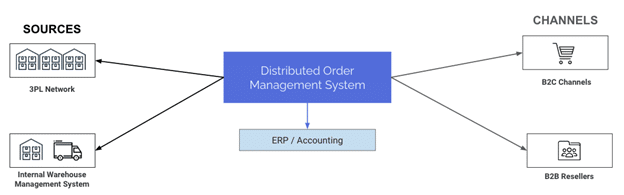
5) Monitor and Refine
Your 3PL must be able to adapt to your growing ecommerce business. Partnering with a 3PL company is a long-term commitment, which means keeping an eye on data, communicating with your 3PL provider, and growing together.
In turn, your partner has to adjust to your expansion, add capabilities to meet your growing needs and offer the data you require to track stock and order performance.
In-House or Outsourced? Cahoot Lets You Do Both
What if you already have invested significant time and energy into your own operations, and don’t want to give up on that entirely when moving to an outsourced partner? Most 3PLs aren’t optimized to work alongside merchant-owned order fulfillment, but Cahoot has rewritten the rules with a flexible fulfillment network and shipping software.
Cahoot enables merchants with in-house ecommerce order fulfillment to strategically add Cahoot locations across the country as they expand while retaining their existing operations.
Deploy inventory in Cahoot locations along with your own facility, and then let the intelligent, automated Cahoot shipping software rate shop for labels and choose the best facility to fulfill each order as it comes in. If the order comes in near your facility, you’ll fulfill it. If it’s near a Cahoot location that you’re using, they’ll fulfill it. You get the benefits of nationwide USA order fulfillment centers while still making the most of the investment you’ve put into your existing facility.
Of course, if this article has convinced you that it’s time to move on from managing your own order fulfillment entirely, Cahoot will happily work with you to take all of your inventory and power your online channels with low cost and fast delivery.Want to learn more? Contact Cahoot to access affordable, flexible order fulfillment for merchants of all sizes.
Frequently Asked Questions
What is in-house logistics?
In-house fulfillment refers to the management and execution of logistics activities or operations within an organization’s facilities or infrastructure, rather than outsourcing these functions to external third-party logistics (3PL) providers or logistics companies. With in-house storage, you as an entrepreneur have full control over your goods and store your items in your own company building instead of having them stored by an external service provider.
What are the disadvantages of in-house fulfillment?
While outsourcing critical activities might lead to a loss of operational control, in-house fulfillment faces the risk of over-reliance on internal resources, which may not always be sufficient or optimal.
What is the difference between logistics and third-party logistics?
While contract logistics companies typically help arrange transportation and routes, a 3PL company handles much more than just transportation; 3PLs provide a full suite of logistics services, from warehousing and order fulfillment, to inventory management and automated shipping.
Written By:

Rachel Go
This is a guest post from Rachel Go. Rachel is a content marketer and strategist at Flxpoint, an enterprise ecommerce operations platform. Flxpoint enables merchants and brands to unify and automate every aspect of your ecommerce operations and scale without manual processes or custom development slowing you down.
Turn Returns Into New Revenue
Related Blog Posts
What are National Fulfillment Services?
In this article
12 minutes
What are national fulfillment services?
In theory, any fulfillment provider can offer national fulfillment services – after all, carriers like FedEx and UPS will happily ship parcels across the entire United States (and charge a boatload for it). However, fulfilling nationally from one or two locations is costly and slow due to inefficient fulfillment processes and exorbitant shipping costs. So businesses are left with smaller margins and disgruntled customers waiting too long for packages.
A truly nationwide fulfillment solution has warehouses strategically placed across the entire United States, and it will distribute inventory across those multiple locations. With this strategy, there’s inventory close to all customers, so no matter where in the country the order comes from, it ships quickly and cheaply. In this article, we’ll cover when growing ecommerce businesses should switch to a nationwide network and provide advice on how to choose the right provider.
Defining Order Fulfillment
Order fulfillment is the backbone of any successful ecommerce operation. It encompasses the entire process of receiving, processing, and shipping customer orders in a timely and efficient manner. This multifaceted process includes several critical activities: managing inventory to ensure products are in stock, processing orders accurately, packaging items securely, and shipping them promptly. Each step is vital to ensuring that customer orders are fulfilled correctly and on time, which in turn drives customer satisfaction and loyalty. Effective order fulfillment is not just about moving products from point A to point B; it’s about creating a seamless experience that meets or exceeds customer expectations.
Importance of Order Fulfillment in Ecommerce
In the fast-paced world of ecommerce, order fulfillment is a key determinant of customer satisfaction and business success. When orders are fulfilled quickly and accurately, customers are more likely to have a positive experience, leading to repeat business and word-of-mouth referrals. On the other hand, delays, errors, or damaged goods can result in negative reviews and lost customers. Clear customer communication can help mitigate this, but that’s just a delaying action; improving the fulfillment process and increasing prompt delivery is the foundation of success. Therefore, ecommerce businesses must prioritize efficient and reliable order fulfillment processes. Investing in robust order fulfillment systems and partnering with reliable fulfillment centers can significantly enhance customer satisfaction, build a positive reputation, and ultimately drive business growth.
How National Fulfillment Services Work
National fulfillment services are designed to route and ship orders quickly, with actual ship speed depending on cutoff times, carrier service, and network design.
Here’s an overview of how national fulfillment services work:
Order Receipt and Processing
When a customer places an order on an ecommerce platform, it is sent to the fulfillment center’s system, which then triggers the processing of the order. The order is reviewed for accuracy and any discrepancies or issues are addressed promptly. The fulfillment center’s team then picks and packs the ordered items, ensuring that they are properly packaged and labeled for shipping. This meticulous order fulfillment process ensures that customer orders are handled with care and precision, minimizing errors and enhancing customer satisfaction.
Inventory Management and Storage
National fulfillment services also involve the management and storage of inventory at each warehouse location. The fulfillment center stores the business’s products in a secure and climate-controlled environment, ensuring that they are protected from damage and deterioration. The fulfillment center’s inventory management system tracks the levels of inventory, ensuring that the business is notified when stock levels are low, and reordering should be initiated. This proactive approach to managing inventory helps businesses maintain optimal stock levels and avoid stockouts, which can disrupt the fulfillment process and negatively impact customer satisfaction, while at the same time minimizing costs of storing heaps of items in long-term storage.
Shipping and Delivery
Once the order is processed and packaged, it is shipped to the customer via a reliable shipping carrier. National fulfillment services often have partnerships with multiple shipping carriers, ensuring that the best rates and delivery times are secured. The fulfillment center’s system tracks the shipment, providing real-time updates on the status of the order. This comprehensive shipping service ensures that customer orders are delivered promptly and accurately, further enhancing the overall customer experience.
Warehouse Management System (WMS)
A Warehouse Management System (WMS) is a software application that manages and controls the day-to-day operations of a warehouse or fulfillment center. The WMS tracks inventory levels, monitors order processing, and optimizes warehouse operations. National fulfillment services use a WMS to ensure that orders are processed efficiently and accurately, and that inventory levels are always up-to-date.
The WMS is integrated with the business’s ecommerce platform, ensuring that orders are received and processed in real-time. The WMS also integrates with shipping carriers, ensuring that shipments are tracked and updated in real-time. This integration enables national fulfillment services to provide real-time updates on order status, ensuring that customers are always informed. By leveraging advanced technology and integration, national fulfillment services can provide businesses with a scalable and efficient order fulfillment solution, enabling them to focus on growth and customer satisfaction.
By incorporating these features, national fulfillment services can streamline logistics operations, reduce errors, and enhance overall efficiency. A national fulfillment service is a crucial edge for businesses looking to stay competitive in the fast-paced world of ecommerce.
When Should a Business Upgrade to a National Fulfillment Solution?
Businesses that start out on Amazon usually have a ready-made option for national fulfillment in Fulfillment By Amazon (FBA). Amazon updated Seller Fulfilled Prime requirements effective June 29, 2025, and later noted on November 5, 2025, that Seller Fulfilled Prime performance requirements are now evaluated differently. Amazon says its fulfillment network includes hundreds of fulfillment centers worldwide, and Amazon MCF says it has 150 fulfillment centers in the US and over 200 globally. For all non-FBA orders, the business is likely shipping out of either their own small warehouse, a small single 3PL, or even just a garage. Small, single operations like these don’t have the scale to match larger networks for efficiency.
It’s surprising how easy it is to gain value from a nationwide network – and how soon it can be done. At just a few hundred orders per month, businesses reach the point of enough scale to distribute inventory to multiple locations across the country. The benefits of national fulfillment will far outweigh the small increase in inventory needed to supply multiple locations.
The one caveat to this guidance is that if a business has very high SKU diversity, they’ll benefit most from outsourcing their high volume SKUs only. Low volume, “long tail” SKUs benefit much less from distributed fulfillment.
Benefits of National Fulfillment Services
At Walmart’s 2025 Marketplace Seller Summit, Walmart said sellers using WFS see, on average, a 50% lift in GMV on items tagged Walmart Fulfilled and 2-Day Shipping.
National fulfillment services are vital for ecommerce businesses that want to boost revenue growth and protect margins. Fulfillment companies play a crucial role in providing order fulfillment services, especially for international sellers entering the U.S. market.
Utilizing a network of fulfillment centers across various countries allows businesses to reach a worldwide customer base quickly and economically. Global fulfillment enhances shipping efficiency and reduces costs for ecommerce businesses.
1. Nationwide Fulfillment Boosts Revenue Growth
“Fast and free” shipping badges are one of the single most effective growth tools in the ecommerce industry. Amazon says the Prime badge can increase sales potential and visibility, but its public pages do not support a universal 50% conversion-lift claim, and Walmart says products with TwoDay and ThreeDay delivery options can see a 30–50% lift in conversion on Walmart.com, and its WFS pages also report a 50% GMV lift on items tagged Fulfilled by Walmart and 2-day shipping. Every major marketplace and shopping cart now has their own version of the Prime badge, and each finds a big revenue boost from using the badge.
If a business is shipping out of one or two locations, it can qualify for fast and free shipping badges simply by paying express carrier rates – but what’s the point of revenue growth if shipping costs more than the product itself? Nationwide fulfillment networks unlock profitable revenue growth through fast shipping by placing inventory across the country. By leveraging nationwide fulfillment locations, every order will be fulfilled by a nearby location, so the cheap shipping options still deliver within 1 or 2 days. Turn on those badges across all channels and reap the rewards of better search rankings and higher conversion while still saving money on shipping.
2. Minimize Shipping Costs
Businesses shipping from just one or two locations will often see half or more of their orders shipping to Zone 5 and up. Compared to shipping out of a single location, national fulfillment distributes inventory more efficiently across the country through multiple warehouse locations, so orders are shipped from a starting point much closer to their destination.
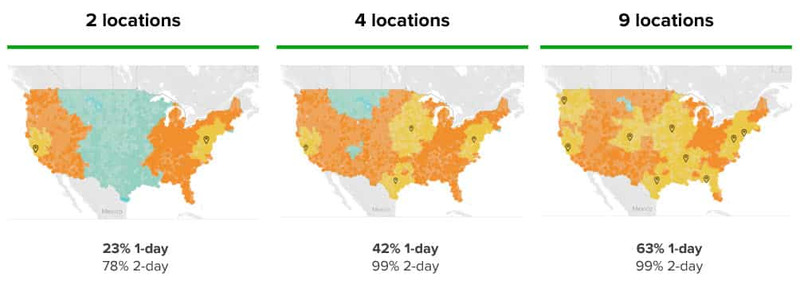
Placing inventory in 3-5 locations all but eliminates the need to ship above Zone 4, cutting a business’s average zone profile by multiple zones. Every one of those shipping dollars saved goes straight to the bottom line; saving a few shipping zones on every order means saving a few dollars on every order. Imagine $2.00 more profit on every order.
3. Reduce Supply Chain Risk
Capacity is strained at every point of the supply chain, from international shipping to last mile delivery. Capacity isn’t crunched equally across the country though, which means that a nationwide network can significantly reduce the risk that all available inventory will be stuck in the same massive delay.
If there’s a delay in the supply chain affecting a region, inventory located at warehouses in other regions can pick up the slack. With only one or two small warehouses that might not be an option. Inclement weather is another common cause of regional disruption. If the only warehouse is closed due to hurricanes, snow, fire, or other natural cause then fulfillment may be completely frozen.
If that happens then selling because they had no way to fulfill orders. If they had a nationwide network, they would have kept on selling even as one part of the country shut down.
Additionally, a nationwide network allows inventory management across multiple locations through a single dashboard, enhancing operation scaling and improving customer service.

Cahoot National Fulfillment Services
Amazon launched MCF Fast Badges for Google on June 20, 2025, letting sellers showcase Amazon MCF delivery speeds on Google Shopping ads and their product pages.
Cahoot’s nationwide network of over a hundred warehouses provides affordable national fulfillment solutions for ecommerce business. Businesses with just one or two locations need to ship express to cover 99% of Americans with 1- and 2-day shipping, so fulfillment across the US is surprisingly expensive with two-coast providers. On the other hand, Cahoot will strategically distribute inventory to a truly national footprint so that a business can ship to 99% of the country in 1- and 2-days but always pay lower cost, ground shipping, rates.
Unlike other providers, Cahoot has the flexibility to upgrade a business’s existing warehousing and fulfillment services. If a business is fulfilling out of one or two warehouses, Cahoot can add a few fulfillment locations to seamlessly extend the network into a nationwide footprint. With this approach, businesses can continue to get value out of existing assets while enjoying the benefits of a nationwide network.
Getting started with Cahoot is surprisingly easy – with pre-built integrations for major ecommerce channels like Amazon, Walmart, Shopify, and BigCommerce, businesses can boost growth with fast shipping badges in under two weeks.
Contact Cahoot today to learn more about how our nationwide fulfillment network can be the key that unlocks profitable ecommerce growth.
Conclusion
Selecting the right fulfillment company is a critical decision for any ecommerce business. A comprehensive national fulfillment center offers a wide range of services, including warehousing, packaging, and shipping, which can streamline logistics operations and improve overall efficiency. When evaluating potential fulfillment centers, it’s important to consider the breadth of services they provide. A center that can handle everything from inventory management to last-mile delivery can be a valuable partner in ensuring smooth operations and high customer satisfaction.
Location is another crucial factor. A fulfillment center with multiple strategically placed facilities across the USA can significantly reduce transit times and shipping costs. This geographic advantage ensures that customer orders are shipped from the nearest location, leading to faster delivery times and lower shipping expenses. Additionally, a fulfillment center with a robust network of warehouses and distribution centers can offer more flexible and responsive logistics operations, allowing businesses to adapt quickly to changing market conditions.
Advanced technology is also a key consideration. Fulfillment centers equipped with automated sorting and packing systems can enhance efficiency and accuracy, reducing the likelihood of errors and delays. By leveraging technology, fulfillment centers can provide faster and more reliable service, which is essential for maintaining high levels of customer satisfaction.
Ultimately, the right fulfillment center for an ecommerce business will depend on its specific needs and requirements. By carefully evaluating the range of services, locations, and technology offered by different fulfillment centers, businesses can make an informed decision and choose a fulfillment partner that aligns with their goals and helps them achieve operational excellence.
Frequently Asked Questions
What is order fulfillment?
Order Fulfillment is the part of ecommerce relating to shipping products to customers. This starts with inventory management, going through processing orders at shipping locations, until products arrive at the customer’s doorstep.
What are nation-wide fulfillment centers?
Technically a fulfillment center is only a single location, so a fulfillment service needs multiple centers/warehouses to be considered nation-wide.
How many fulfillment centers are needed to provide 2 day ground shipping nation-wide?
This depends on several factors, but with 4+ fulfillment locations, 99% of the US population can be reached in 2 days via ground shipping. Cahoot has over 100 fulfillment locations to help deliver to US customers across the country.
Are nationwide fulfillment centers 3PL or 4PL?
A 3PL can support nationwide fulfillment, but the more locations a 3PL has, the closer they are to becoming a 4PL.
Written By:
Indy Pereira
Indy Pereira helps ecommerce brands optimize their shipping and fulfillment with Cahoot’s technology. With a background in both sales and people operations, she bridges customer needs with strategic solutions that drive growth. Indy works closely with merchants every day and brings real-world insight into what makes logistics efficient and scalable.
Turn Returns Into New Revenue
Related Articles
The Shipping Speed Paradox: Why DTC Brands Are Slowing Down
Everyone’s talking about faster delivery.
Why Cross-Border DTC Brands Are Moving Fulfillment Inside the US
Cross-border ecommerce fulfillment is the process of shipping ecommerce orders across national borders—often from warehouses outside the United States to U.
Shopify Estimated Delivery Date: A Complete Guide for Ecommerce Stores
A Shopify estimated delivery date is the specific arrival date or date range shown on a product page before purchase, so shoppers know when an order is expected to arrive.