
Apparel Returns Are Getting Harder to Avoid. Brands Need to Make Them Cheaper to Handle
In this article
 19 minutes
- GLP-1s Are Accelerating an Apparel Problem That Already Existed
- The Real Issue Is Fit Volatility
- Size Guides Help, but They Cannot Eliminate Body-Change Uncertainty
- Adjusting Size Curves Is Not as Simple as Ordering More Small Sizes
- Raising Prices or Charging Return Fees Can Backfire
- Apparel Brands Need a Returns Survival Strategy
- 7 Start With the Low-Hanging Fruit: Cheaper Return Shipping Labels and Faster Restocking
- 8 Make Store Credit Exchanges Easier Than Refunds
- 9 Treat Damaged Returns Data as Operational Intelligence
- Peer-to-Peer Returns Could Be the Bigger Long-Term Opportunity
- 11 The Brands That Win Will Recover More Resale Value From Returns
- Frequently Asked Questions
Apparel returns are climbing again, and a meaningful share of the increase is tied to customers whose bodies are changing faster than their wardrobes can keep up. According to Narvar data cited by the Wall Street Journal, apparel exchanges involving customers sizing down hit a record 14.6% in 2025, and retailers are increasingly attributing the shift to the rapid adoption of GLP-1 weight-loss drugs.
But the GLP-1 story is only the latest pressure on a system that was already strained. Apparel has always carried fit uncertainty, and fit uncertainty has always driven bracketing, exchanges, and refunds. What is changing is the speed of body change among a growing slice of customers, which makes sizing demand harder to predict and return volume harder to absorb. The smart response is not to chase the perfect prevention strategy. It is to make the returns that do happen cheaper, faster, and less destructive to margin.
GLP-1s Are Accelerating an Apparel Problem That Already Existed
Apparel returns have always been the highest-friction category in ecommerce. Shoppers cannot try the product before it arrives, so they hedge. They order two sizes. They order the same dress in three colors. They keep what fits and ship the rest back. Bracketing is not a flaw in customer behavior. It is a rational response to the gap between a product page and a fitting room.
GLP-1 medications add a new layer to that uncertainty. Customers actively losing weight may move through one, two, or three sizes within a single buying cycle. A shopper who ordered a medium in March may need a small by July, then need to repurchase the same wardrobe staple a few months later. Some of those purchases will be returns. Some will be exchanges. Some will be brand new orders placed before the previous garment has even been worn.
This is not a story about careless shoppers. It is a story about a category whose fundamental friction (you cannot try it on) is now compounding with a customer base whose fundamental measurements are in motion. That legitimate friction exists alongside edge cases like wardrobing and other return abuse, but it is not the primary driver of the current spike. The Wall Street Journal has reported that several apparel retailers are now seeing return pressure they directly attribute to GLP-1-driven size changes, and the trend appears to be widening rather than fading.
The Real Issue Is Fit Volatility
Retail Dive and other industry observers have started using the term “fit volatility” to describe what is happening. The phrase is useful because it points past any single cause. GLP-1s are part of it. So are pandemic-era body composition changes, the rise of athleisure cuts that fit unpredictably across brands, inconsistent vanity sizing, and the broader collapse of standardized size charts across global manufacturing.
Fit volatility means the same customer may move across sizes faster than a brand’s merchandising and planning cycle can react. A buyer who plans size curves a year in advance, based on last year’s sell-through, is working with data that may already be stale by the time the season hits. That mismatch shows up in two places: inventory imbalance at the SKU level and returns at the customer level.
For ecommerce operators, fit volatility is less a marketing problem and more a forecasting problem. It puts pressure on size-curve planning, reorder timing, markdown discipline, and reverse logistics capacity all at once. And because ecommerce returns were never designed for scale and high ecommerce return rates can erode profit margins, the systems most brands rely on tend to bend under that pressure rather than absorb it cleanly.
Size Guides Help, but They Cannot Eliminate Body-Change Uncertainty
The first instinct for most apparel brands is to fix the front end. Better size charts. More detailed product descriptions. Model measurements on every page. Fabric composition and stretch percentages. AI-driven fit quizzes. User-uploaded reviews with height, weight, and usual size. All of this helps, and brands that have invested in it generally see lower return rates than brands that have not.
But these tools share a common limitation. They assume the customer knows their current size. For a shopper whose body has not changed in years, that assumption usually holds. For a shopper actively losing weight, gaining muscle, recovering from pregnancy, or transitioning through any other period of body change, the assumption breaks. No size chart can tell a customer what size they will be in six weeks. No fit quiz can predict the rate at which a GLP-1 user will move from a large to a medium.
Front-end tools reduce returns from confusion. They do not reduce returns from change. Brands that overinvest in fit prevention without also investing in returns operations end up with a polished website and a backed-up returns dock.
Adjusting Size Curves Is Not as Simple as Ordering More Small Sizes
A reasonable next instinct is to shift the size curve. If more customers are sizing down, order more smalls. This is partially correct and operationally dangerous if applied too aggressively.
Demand may shift, but it rarely shifts cleanly. Consider what is actually happening across a typical apparel customer base:
- Some long-time customers are sizing down by one or two sizes and staying there.
- Some customers who were previously outside the brand’s size range are now entering it, often at the upper end of the brand’s smaller sizes.
- Some customers who were previously inside the brand’s range are now leaving it, either because they sized down below the brand’s smallest offering or because their proportions changed in ways that do not match the brand’s fit block.
- Some customers are moving through multiple sizes within a single season and buying intermittently at each one.
These movements partially offset each other in ways that are hard to see in aggregate sales data until after the season is over. A brand that responds by simply doubling its small allocation may end up overstocked on smalls and stocked out of mediums by midseason. The size curve question deserves a careful, SKU-level look, not a blanket adjustment.
Raising Prices or Charging Return Fees Can Backfire
When returns get expensive, the temptation is to charge for them. Raise prices to absorb the cost. Add a return shipping fee or restocking fee. Restrict free exchanges. Tighten the return window. Each of these levers has its place, and each has real downsides.
Blanket price increases punish every customer for the behavior of some customers. The shopper who orders one item in their correct size and keeps it pays the same surcharge as the shopper who brackets three sizes and returns two. Over time, that erodes loyalty among exactly the customers a brand most wants to retain, undermining the goal of using an exceptional returns program to encourage customer loyalty.
Return fees can reduce frivolous returns, but they cut differently when the underlying cause is legitimate fit uncertainty. A customer who is actively losing weight is not abusing the system by returning a pair of jeans that no longer fits. Charging that customer a fee may recover a few dollars of label cost while sending a message that erodes their willingness to buy again. Free returns can also lift conversion rates by roughly 8-12%, because they increase shopper confidence, which is why the tradeoff is difficult and why many marketplaces publish detailed returns policy standards for sellers. There is no free returns such thing in practice, and the right answer is rarely a flat policy applied to every customer and every SKU.
Stricter return windows have the cleanest case, particularly for seasonal apparel where late returns destroy resale value. But even here, the gain is small compared to what better operations can deliver on the back end.
Apparel Brands Need a Returns Survival Strategy
The more durable answer is operational. If fit volatility means more returns are coming, the goal is to make those returns survivable. That means lowering the cost per return, which in many cases can exceed $20 per return, shortening the cycle time, and recovering more of the original value from each returned unit.
This is a different mental model than most apparel brands operate with today. Returns are usually treated as a cost center to minimize. A returns survival strategy treats them as an inventory recovery flow to optimize, with fast intake as the key operational lever for companies managing reverse logistics and optimizing reverse logistics end-to-end. The hidden cost of returns is rarely just the return shipping label. It is the label plus the inbound transit time plus the inspection labor plus the restocking delay plus the markdown that gets applied because the item came back too late to sell at full price, and those delays can reduce resale value by 1-2% per day. Each of those is operationally addressable.
Many apparel returns still take 5-7 days to process on average, while industry best practice is 24-48 hours for intake processing.
The brands that pull this off tend to share a common framing: they think about returns as a margin lever, not as an unavoidable tax on ecommerce. The full solution stack has four parts, and it mirrors what it takes to craft an effective ecommerce returns program:
- Reduce unnecessary returns where the front end can help.
- Make unavoidable returns cheaper and faster to process.
- Recover more value from each returned unit through resale, exchange, or rerouting.
- Explore advanced models such as peer-to-peer returns where the operational complexity is manageable.
The first lever has the most attention and the lowest ceiling. The next three are where the durable margin lives and can transform performance.
7 Start With the Low-Hanging Fruit: Cheaper Return Shipping Labels and Faster Restocking
Most apparel brands are overpaying on return shipping. The return label is often generated through the same carrier and service level used for outbound shipping, even though returns are almost never time-sensitive in the same way. Switching to the cheapest acceptable service for return shipping is one of the fastest wins available, and it requires no change to customer-facing policy.
A few operational levers that consistently move the cost-per-return number:
- Route return labels to the lowest-cost carrier service that meets the brand’s acceptable transit window, rather than defaulting to expedited service.
- Consolidate returns at regional processing points before sending them deeper into the network, instead of shipping every package all the way back to a central warehouse.
- Inspect and restock returned items within a defined service-level target; best practice is to process intake within 24-48 hours so seasonal merchandise rejoins available inventory before its sell-through value collapses.
- Reduce the number of warehouse touches per return. Every additional handling step adds labor cost and delays restocking.
- Capture damaged returns and items not in new condition into a separate workflow before they contaminate sellable inventory.
Fast intake and routing decisions matter because seasonal apparel loses margin quickly, whether goods arrive in a box, enter through a box-free drop model such as Happy Returns-style drop-off networks, or depend on access to the right processing workflow used by many brands.
For seasonal apparel, restocking speed is often more valuable than shipping cost. A swimsuit returned in July that gets back on the shelf in August is worth significantly more than the same swimsuit restocked in October. The difference is pure margin recovery, and it is entirely a function of how fast the operations team can move.
8 Make Store Credit Exchanges Easier Than Refunds
When a customer returns an item because it does not fit, the brand has two possible outcomes, and making a return or exchange easier than a refund usually leads to the better one. The customer gets their money back and may or may not buy again. Or the customer gets a different size, color, or item, and the original transaction is preserved.
Online apparel returns usually start with an online request and securely packing the item.
Exchange-first workflows nudge that second outcome. They are not about denying refunds. They are about making the exchange path easier to find, faster to complete, and more rewarding than the refund path. Common tactics include offering exchanges with no shipping fee while charging a small fee for refunds, sending the replacement size before the original return arrives, or giving store credit at a slight premium to the refund amount. When a refund is chosen, it is typically issued after the returned order is received and processed within 7 business days.
The economics are clear. A successful exchange preserves the gross sale, avoids the payment processing fee on a refund, and keeps the customer in the brand’s ecosystem. A refund does the opposite. For apparel specifically, where the underlying reason for return is usually fit rather than dissatisfaction with the product, the exchange path is often what the customer actually wanted in the first place.
Returns management software has gotten genuinely good at facilitating these workflows on the customer-facing side, whether through broad platforms or focused tools like a Shopify-oriented returns solution such as Return Prime. Customer-facing software often lets shoppers create an exchange request through their account. The harder part is operational: making sure the inventory is actually available at the exchange location, making sure the replacement ships fast enough to feel like a same-day decision, and making sure the original item gets processed quickly enough to support the next exchange. Software improves the workflow. It does not by itself change where the inventory physically lives.
9 Treat Damaged Returns Data as Operational Intelligence
Every return carries information. Why was it returned? Was it the size, the fit, the fabric, the color, the photo accuracy, or the delivery timing? Discrepancies in color, fabric quality, or style account for 11% of apparel returns. Was the customer in a region with unusual return rates? Was the SKU one that consistently runs small or large compared to the size chart?
Most brands collect this data in a basic form through return reason codes, including where consumers saw one thing on the product page and received another. Far fewer use it as planning input. A returns data set that is actually wired into merchandising and operations can answer questions that change buying decisions:
- Which SKUs have return rates more than two times the brand average, and what do those SKUs have in common?
- Which size in which silhouette has the highest size-down exchange rate, and how should next season’s size curve respond?
- Which fabrics or constructions correlate with higher fit complaints, regardless of size?
- Which customer segments are exchanging into smaller sizes most rapidly, and how should marketing communicate with them?
The signal is there in the data. Most brands just do not have the workflow to surface it in time to act on it. Building that capability is one of the highest-leverage investments an apparel operations team can make, because it improves both prevention and recovery at the same time.
Peer-to-Peer Returns Could Be the Bigger Long-Term Opportunity
The deepest inefficiency in apparel reverse logistics is the assumption that every returned item must travel back to a central warehouse before it can be sold again. That assumption made sense when ecommerce returns were a fraction of forward shipments. It makes less sense when return rates in apparel routinely cross 20%, 30%, or more for certain categories.
Peer-to-peer returns propose a different model. When a customer returns an item, the brand identifies another customer who has just ordered the same SKU, and routes the returned item directly from the first customer to the second. The brand still controls the transaction, the customer experience, and the financial reconciliation. What changes is the physical path of the inventory. Instead of two long-haul shipments and a warehouse touch, there is one shorter shipment and no warehouse touch at all.
The contrast with traditional warehouse returns is structural. Warehouse returns optimize for centralized control and standardized inspection. Peer-to-peer returns optimize for speed and reduced handling cost. Both have a place, and for apparel the right answer is probably a blend.
Apparel adds real complexity that other categories do not face. Garments need condition checks. Tags need to be present. Hygiene standards matter, particularly for intimates, swimwear, and certain athletic categories. Fraud controls have to be tight enough that a customer cannot ship a damaged item to another buyer. Brand-specific rules about repackaging, presentation, and customer experience have to be honored. These are solvable problems, but they are not trivial, and any brand exploring peer-to-peer returns for apparel should plan carefully for the specific SKUs and conditions where the model fits.
The opportunity, though, is significant. Even a partial peer-to-peer flow that captures the easiest 10% or 20% of eligible returns can meaningfully reduce reverse logistics costs and improve inventory turnover on fast-moving SKUs.
11 The Brands That Win Will Recover More Resale Value From Returns
Apparel returns are not going back to pre-2020 levels. GLP-1 adoption is one reason, but it is not the only reason and it will not be the last reason. Fit volatility is a structural condition of the category now, and any brand operating in apparel ecommerce should plan for it as a permanent feature rather than a passing trend.
The brands that handle this well will share a few characteristics. They will keep investing in fit tools and size guides without expecting those tools to solve the problem alone. They will be careful with blunt instruments like return fees and price increases. They will treat their returns process as an inventory recovery operation, not a reverse shipping pipeline. They will measure cost per return, cycle time, and resale value recovered the same way they measure outbound fulfillment performance. And they will keep looking at structural changes, including peer-to-peer flows, that change what returns actually cost.
GLP-1s are the current stress test. There will be another one. The brands that build the operational muscle to make returns survivable now will be the ones still expanding margin when the next shift in customer behavior arrives.
Frequently Asked Questions
Are GLP-1 drugs increasing apparel returns?
Yes, and the evidence is becoming clearer. Wall Street Journal reporting on Narvar data shows apparel exchanges involving customers sizing down reached a record 14.6% in 2025, and multiple retailers attribute part of that shift to GLP-1 adoption. The drugs are not the only driver of higher apparel returns, but they are accelerating an underlying fit-volatility trend that was already in motion.
Why do apparel customers return so many items?
Fit uncertainty is the dominant reason. Customers cannot try clothing before it arrives during online shopping, and over 52% of apparel returns are due to size confusion, so many order multiple sizes or styles intending to keep only what fits. This is called bracketing, and it is a rational response to the gap between a product page and a fitting room. Body changes, inconsistent sizing across brands, and fabric or cut differences from what the customer expected also contribute.
Can better size guides reduce apparel returns?
They help, but they have limits. Detailed size charts, model measurements, fabric composition, fit quizzes, and customer reviews can all lower return rates by reducing confusion. What they cannot solve is body-change uncertainty. When a customer is actively moving across sizes, no size guide can predict where they will be by the time the package arrives.
Should apparel brands charge return fees?
Cautiously, if at all. Return fees can reduce some abusive behavior, but they often punish customers whose returns are caused by legitimate fit issues outside their control, and when refunds are chosen, some retailers deduct return shipping costs from the refund amount, leaving the shopper responsible for part of the loss. The brands that have introduced return fees have seen mixed results, with some reporting reduced bracketing and others reporting lost loyalty and lower repeat purchase rates. A blanket fee is usually worse than a more targeted policy combined with better operations on the back end, because there is no such thing as a truly costless return even when a policy appears generous.
How can apparel brands reduce the cost of returns?
The biggest gains come from operational changes rather than policy changes. Many retailers allow 30 to 90 days for returns, with returns accepted within 30 days of purchase being a common standard. Apparel usually must be unworn, unwashed, and include original tags and any accessories. For online returns, customers often cover return shipping costs. Lower-cost return shipping services, faster inspection and restocking, exchange-first workflows, smarter routing of returns to regional processing points, and reducing the number of warehouse touches per return all compound into significant savings. Treating returns as an inventory recovery flow rather than a cost center is the broader mindset shift that supports all of these tactics.
What are peer-to-peer returns?
Peer-to-peer returns route a returned item directly from the returning customer to a new customer who has just purchased the same SKU, instead of sending it back to a central warehouse for inspection and restocking. The brand still controls the transaction and customer experience, including confirming the item was delivered before any refund is issued. The model can significantly reduce reverse logistics costs and speed up inventory turnover, though apparel adds complexity around condition checks, tags, hygiene, and fraud controls that brands need to plan for carefully. Standard returns processing often takes 5-7 days. Refunds are commonly processed within 7 business days of receipt once that workflow is completed.
Written By:

Indy Pereira
Indy Pereira helps ecommerce brands optimize their shipping and fulfillment with Cahoot’s technology. With a background in both sales and people operations, she bridges customer needs with strategic solutions that drive growth. Indy works closely with merchants every day and brings real-world insight into what makes logistics efficient and scalable.

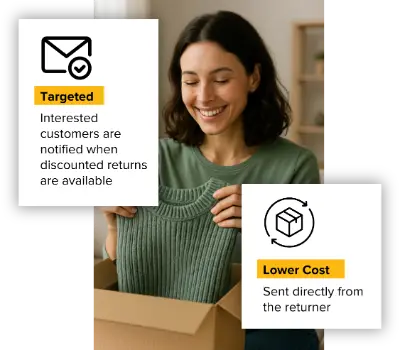
Turn Returns Into New Revenue
Related Articles

How Much Does Seller Fulfilled Prime Cost? Calculate It for Your SKU
Seller Fulfilled Prime sounds attractive until you start thinking about the bill.
Amazon AWD Size Limits Changed: What Bulky Sellers Must Do Before Q4 2026
Beginning July 31, 2026, Amazon AWD stopped accepting new sortable sellable units at or above 18x14x8 inches or 20 lb, so any unit that meets or exceeds those thresholds is no long...
Why Even a 4:30 PM Cutoff Cannot Solve Amazon’s 40% One-Day SFP Rule
An established ecommerce merchant shipping more than 20,000 monthly orders from Pennsylvania had already pushed its cutoff to 4:30 PM Eastern Time and was willing to use Next Day A...
Amazon’s Handling Time Crackdown Rewards Sellers That Can Ship Fast Reliably

In this article
15 minutes
- Amazon Is Tightening SKU Specific Handling Time Accuracy for Seller-Fulfilled SKUs
- Why Amazon Needed to Fix Handling Time Promises
- What Sellers Need to Check Before Amazon Updates Their SKUs
- This Is Bigger Than a Settings Update
- Faster Handling Times Can Become a Sales Advantage
- Sellers That Cannot Ship Fast Consistently Risk Falling Behind
- The Real Requirement Is Reliable Same-Day or Next-Day Fulfillment
- How Better Fulfillment Infrastructure Helps Sellers Compete
- Seller Fulfilled Prime Is the Bigger Opportunity for Strong Operators
- Accurate Delivery Promises Are Becoming the New Marketplace Baseline
- Frequently Asked Questions
Starting June 29, 2026, Amazon will begin monitoring seller-fulfilled SKUs for handling time accuracy and may adjust handling times on listings that consistently ship faster than stated. The change is designed to make promised delivery dates reflect real shipping behavior rather than padded settings, and it creates a clear advantage for sellers whose fulfillment operation can support faster promises consistently.
That last part is the point most operators are missing. This is not a Seller Central housekeeping task. Amazon is repositioning handling time from a static seller preference to a performance signal that shapes the delivery promise customers see at the offer level. For sellers that already ship quickly and reliably, that is good news. For sellers that rely on padded handling times to absorb operational variability, it exposes a gap that will only get more expensive as the marketplace gets faster.
Amazon Is Tightening SKU Specific Handling Time Accuracy for Seller-Fulfilled SKUs
The new requirement applies to seller-fulfilled SKUs, not FBA inventory. Amazon will track SKU-level handling time accuracy, comparing what sellers have set against how those SKUs actually ship. When a SKU consistently ships at least one day faster than its stated handling time, Amazon may flag it.
Sellers will have 30 days to update flagged SKUs. If they do not update within that window, Amazon may manage handling time on those SKUs directly. To reduce risk during the transition, Amazon will provide late shipment rate protection for 180 days on SKUs it manages.
Amazon recommends enabling amazon’s automated handling time, a feature meant to reduce late shipments and improve OTDR by setting automated handling time AHT and aligning handling times based on a SKU’s recent shipping performance. Manual SKU-specific handling times are still allowed as long as they accurately reflect actual fulfillment. Three categories are explicitly excluded: custom products, handmade products, and Heavy and Bulky less-than-truckload shipments. Those exclusions exist because the underlying fulfillment process is variable in ways automated tracking cannot fairly evaluate.
For most standard seller-fulfilled SKUs, however, the message is direct. Handling time should match shipping reality, and Amazon is willing to enforce that if sellers do not. Many merchants use specialized Amazon FBM shipping and order fulfillment services to keep those promises achievable at scale.
Why Amazon Needed to Fix Handling Time Promises
Two-day handling has been the comfortable default for a long time. It was the historical norm, it gave sellers buffer when fulfillment hit a slow day, and once it was set on a SKU, most sellers never went back to revisit it. Operations improved over the years, but the settings did not always catch up.
The result is a marketplace where many delivery promises are slower than the actual fulfillment can support. Amazon has stated that more than 87% of U.S. seller-fulfilled orders are handled within one day, while many sellers continue to display SKU-specific handling times that overestimate how long it actually takes to ship. Those promised delivery dates are calculated by adding handling time to estimated transit time, so an overstated day handling time pushes the expected ship window later than necessary. That gap costs Amazon and sellers in the same place: at the offer.
Total delivery time is the sum of handling time and transit time, which is why inflated settings make offers look slower by extending the lead time shown to buyers.
When a buyer sees a delivery date two or three days later than necessary, the offer looks less competitive than it really is. That is a customer experience problem before it is a compliance problem. The buyer either waits longer than they needed to, or they pick a faster offer from someone else. Amazon’s interest is making sure the promise on the page reflects what the operation can do. Sellers that benefit from that alignment are the ones already shipping fast.
What Sellers Need to Check Before Amazon Updates Their SKUs
The practical work for sellers between now and June 29 is straightforward, but it requires segmentation rather than a blanket change.
Start by reviewing active seller-fulfilled SKUs and identifying which ones have manually set handling times in Amazon Seller Central under shipping settings. For each Amazon seller, compare the stated handling time against actual recent shipping performance. Many SKUs that were set to two-day handling years ago are now reliably shipping in one day or same day. Those are the listings most likely to be flagged, and they are also the ones most likely to gain competitiveness from an update.
For SKUs with stable, predictable fulfillment, the automated handling time feature can be enabled as the simplest path forward. Amazon will base the handling time on actual performance, which keeps the setting aligned without requiring ongoing manual review. If sellers need more control, they can disable it and manually set handling time.
Manual handling times still make sense for SKUs with legitimate prep complexity. A few examples where a longer handling time may be appropriate:
- Custom products built to order
- Handmade products with variable production time
- Heavy and Bulky LTL shipments, where pallet delivery can add extra prep time beyond the default handling time
- Fragile items requiring extra packaging or inspection
- Kitted or bundled items assembled per order
- Inspection-heavy products such as electronics requiring QC
- Seasonal or low-velocity products with irregular fulfillment cadence
- Products fulfilled from a slower warehouse or supplier location
SKU-specific settings can override the baseline when product details justify it.
The mistake to avoid is treating every SKU the same. Some products genuinely need more time, and shortening their handling time will create late shipments rather than competitive advantage. Segment the catalog by fulfillment profile, then make the right call for each segment. For multi-node operations, this is also a good moment to revisit automated order routing so that fast-handling SKUs are routed to the warehouses that can actually support faster handling.
This Is Bigger Than a Settings Update
The temptation is to treat this as a checkbox exercise in Seller Central. That misreads the direction Amazon is heading.
Delivery promises are becoming more performance-based. Handling time is shifting from a static seller preference to a reflection of actual fulfillment behavior. The promise customers see at the offer level is increasingly a function of what the seller’s operation has actually been doing, not what the seller would prefer to commit to.
That shift is positive for sellers with strong operations because their real speed will start showing up in the delivery promise. It is uncomfortable for sellers that depend on padded handling times to hide operational variability, because the buffer is being removed. Amazon’s framing is customer experience, but the structural change is the same either way: real speed is going to matter more than declared speed.
Faster Handling Times Can Become a Sales Advantage
Amazon has stated that every one-day improvement in promised delivery time can lead to an average 5% increase in sales. That number is an Amazon claim and an average, not a guaranteed result for any individual seller. The underlying logic is what matters.
Faster promised delivery makes offers more attractive at the moment of decision. Buyers hesitate less. Comparison against competing offers tips toward the faster option. On products where the buyer is choosing between similar listings, the delivery date often does the deciding. When promises get more accurate across the marketplace, the lift has to come from somewhere. In many categories, that demand will move from sellers with slower, padded promises to sellers whose listings now display faster delivery dates because their operation supports them.
This is the broader pattern of fulfillment as a demand accelerator. Operational capability is no longer just a cost center or a compliance line. It directly shapes the offer customers see and the conversion that follows.
Sellers That Cannot Ship Fast Consistently Risk Falling Behind
For standard seller-fulfilled SKUs, same-day and next-day handling are becoming less of a bonus and more of a competitive baseline. That is not a guess about where the marketplace is heading. It is the direct implication of Amazon tightening the link between actual shipping behavior and the delivery promise shown to customers.
The risk is not that Amazon punishes sellers. The risk is that competing offers start showing faster delivery dates while a seller’s own listings continue to display slower ones. Buyers do not always know which seller is faster. They see the date on the page and choose accordingly.
This does not mean every SKU should be forced into one-day handling. Some products legitimately need more time, and the exclusions Amazon built into the rule reflect that reality. The question is narrower: on SKUs that should be able to ship quickly, is the operation actually supporting it, or is the handling time padded because the fulfillment is inconsistent, making it harder to meet shipping deadlines and maintain performance? Sellers in the second category will increasingly find themselves at a conversion disadvantage relative to operators that can promise speed and deliver on it.
The Real Requirement Is Reliable Same-Day or Next-Day Fulfillment
Updating handling time in Seller Central does not create operational capacity. It only changes what the seller has committed to. Whether the operation can hit that commitment consistently is a separate question, and it is the one that matters for late shipment rate, account health, and customer experience over time.
Reliable fast handling requires several pieces working together, often coordinated through robust ecommerce fulfillment software:
- Pick, pack, and ship processes that perform consistently under volume
- Clear carrier pickup cutoffs that match the handling time promise
- Inventory accuracy so orders do not stall on stock issues
- Warehouse coverage close enough to customers to support fast transit
- Labor and fulfillment support that absorbs volume spikes without slipping
- Order routing technology that sends each order to the node that can ship it on time
- SKU-level visibility into whether a given product can actually support a faster promise
Faster promises only help when the fulfillment operation can repeatedly hit them. A SKU that ships in one day eight times out of ten is not ready for a one-day handling commitment. The cost of a missed promise shows up in late shipment rate, in account health, and in customer trust, and those costs compound. Sellers building toward this should think of it as a reliable one-day shipping capability, not just a settings change.
How Better Fulfillment Infrastructure Helps Sellers Compete
The durable answer to Amazon’s handling time tightening is not a quick toggle in Seller Central. It is fulfillment infrastructure that makes fast, accurate promises safe to offer.
Better infrastructure helps sellers navigate Amazon’s system and maintain more accurate handling times as volume grows. It helps ship more orders same day or next day without scrambling. It distributes inventory closer to customers, which improves delivery speed without leaning entirely on expensive expedited shipping. Purpose-built ecommerce order fulfillment services that outclass traditional 3PLs support more accurate handling time settings because the underlying behavior is more predictable. And it protects customer experience as volume grows, which is the point at which most operations start to slip.
Cahoot helps ecommerce sellers and Amazon merchants support faster, more reliable fulfillment through its fulfillment network and technology. Its order fulfillment services for ecommerce companies are built to improve delivery speed and cost simultaneously. Cahoot has years of experience supporting same-day fulfillment for brands running Seller Fulfilled Prime and can help sellers build the operational foundation behind faster delivery promises. The objective is not just hitting a handling time number on paper. It is having an operation reliable enough that the faster number becomes safe to promise.
Seller Fulfilled Prime Is the Bigger Opportunity for Strong Operators
Amazon’s handling time update matters for all seller-fulfilled sellers, but it is especially relevant for sellers thinking about Seller Fulfilled Prime. Faster handling time is part of the foundation for SFP, but it is not the whole picture, and sellers weighing the program should understand what it takes to win on Amazon Seller Fulfilled Prime.
SFP requires broader operational discipline. Sellers evaluating it need to look at SKU fit, warehouse coverage, carrier performance, cost structure, inventory readiness, and the risk of the trial period itself. Failing the trial has consequences for relisting, and the requirements are stricter than what most standard seller-fulfilled accounts deal with day to day.
For sellers that can already support reliable same-day or next-day fulfillment, SFP becomes a larger opportunity to improve offer competitiveness with the Prime badge. For sellers still working to get standard seller-fulfilled handling consistent, SFP is a step further out. Either way, reviewing the latest Amazon Seller Fulfilled Prime requirements alongside the SFP trial checklist is worth doing before committing to the trial, because the readiness assessment matters more than the application itself.
Accurate Delivery Promises Are Becoming the New Marketplace Baseline
Amazon’s handling time crackdown should be read as good news for sellers that can ship fast reliably. It helps turn real operational speed into better customer-facing delivery promises, which is the direct path to more competitive offers. Sellers leveraging a peer-to-peer order fulfillment service that beats old 3PLs are often better positioned to meet these faster standards. It also exposes sellers whose fulfillment operation is slower or less consistent than the marketplace increasingly expects, because the buffer that used to hide that gap is going away.
The right response is not to simply shorten handling times in Seller Central and hope the operation holds. The right response is to build fulfillment that makes fast, accurate promises safe to offer in the first place. That is operational work, not a settings change, and the sellers who do it now will be positioned for whatever Amazon tightens next.
The sellers that win will not be the ones with the most padded handling times. They will be the ones that can promise speed because their fulfillment operation can actually deliver it.
Frequently Asked Questions
What is Amazon’s new handling time requirement?
Amazon will begin monitoring seller-fulfilled SKUs for handling time accuracy. If a SKU consistently ships at least one day faster than its stated handling time, Amazon may flag the listing and ask the seller to update the setting. If the seller does not update within 30 days, Amazon may manage the handling time on that SKU directly.
When does Amazon’s handling time requirement start?
June 29, 2026.
What happens if I ship faster than my stated Amazon handling time?
Amazon may flag the SKU. Sellers then have 30 days to update the handling time to reflect actual performance. If the seller does not update, Amazon may manage the handling time on that SKU and will provide late shipment rate protection for 180 days during the transition.
Should Amazon sellers use Automated Handling Time?
For SKUs with stable, predictable fulfillment, Amazon’s automated handling time is a reasonable option because it keeps the setting aligned with actual performance without manual review. Sellers can disable it if they need more control, and SKU-specific settings can override the default when appropriate. For SKUs with seasonal patterns, prep complexity, or variable fulfillment requirements, manual SKU-level settings may still be the better choice as long as they are accurate.
Why does Amazon care about handling time accuracy?
Handling time directly affects the delivery date customers see on the listing. When stated handling time is slower than actual shipping performance, the delivery promise is slower than it needs to be, which hurts customer experience and purchase decisions. Amazon wants the promise on the page to reflect what sellers actually do. Accurate handling times help maintain better delivery promises and reduce avoidable performance issues for the business.
Can faster handling times increase Amazon sales?
Amazon has stated that every one-day improvement in promised delivery time can lead to an average 5% increase in sales. That is an Amazon average, not a guaranteed result for any specific seller. The underlying logic is that faster delivery promises make offers more competitive at the moment of decision.
Does this rule apply to FBA orders?
No. The requirement applies to seller-fulfilled SKUs. FBA orders are handled by Amazon’s fulfillment network and are not affected by this update.
How can sellers support faster handling times reliably?
Reliable fast handling depends on consistent pick, pack, and ship processes, clear carrier pickup cutoffs, accurate inventory, warehouse coverage close to customers, intelligent order routing, and enough labor capacity to absorb volume spikes. Many sellers work with fulfillment partners to build this capability without taking on the full operational footprint themselves. Those partners become especially important around peak events like Prime Day, when preparation for Amazon and beyond this Prime Day can strain in-house operations. Larger catalogs may use an inventory loader to update SKU-specific handling settings at scale.
How does Seller Fulfilled Prime relate to faster handling times?
Faster handling can be part of the operational foundation for SFP, but SFP requires broader readiness across warehouse coverage, carrier performance, SKU fit, and trial readiness. Sellers thinking about SFP should evaluate the full picture before applying, not just handling time settings. When unusual operational constraints arise, sellers preparing for SFP may also need to submit a request through Amazon for an exception or extension.
Written By:

Rinaldi Juwono
Rinaldi Juwono leads content and SEO strategy at Cahoot, crafting data-driven insights that help ecommerce brands navigate logistics challenges. He works closely with the product, sales, and operations teams to translate Cahoot’s innovations into actionable strategies merchants can use to grow smarter and leaner.
Turn Returns Into New Revenue
Related Articles
How Much Does Seller Fulfilled Prime Cost? Calculate It for Your SKU
Seller Fulfilled Prime sounds attractive until you start thinking about the bill.
Amazon AWD Size Limits Changed: What Bulky Sellers Must Do Before Q4 2026
Beginning July 31, 2026, Amazon AWD stopped accepting new sortable sellable units at or above 18x14x8 inches or 20 lb, so any unit that meets or exceeds those thresholds is no long...
Why Even a 4:30 PM Cutoff Cannot Solve Amazon’s 40% One-Day SFP Rule
An established ecommerce merchant shipping more than 20,000 monthly orders from Pennsylvania had already pushed its cutoff to 4:30 PM Eastern Time and was willing to use Next Day A...
Amazon Is Ending Review Sharing Across Variations — Here’s What It Really Means
In this article
29 minutes
- Introduction
- Understanding Amazon Variations
- Parent Child Relationship
- What Is Changing on February 12, 2026?
- Why Is Amazon Making This Change?
- Review Sharing and SEO
- Why This Is a Big Deal for Sellers and Conversion Rates
- Common Mistakes to Avoid
- Embracing the Change – A New Mindset for Sellers
- Troubleshooting and Support
- Frequently Asked Questions
Introduction
Nearly all shoppers read product reviews before buying – up to 98% of consumers check reviews and take star ratings at face value. On Amazon, those stars heavily influence purchase decisions. Amazon product variations are the system for grouping related products – such as different sizes, colors, or styles – under a single listing, which has traditionally benefited both customers and sellers by improving the shopping experience and boosting sales and search ranking. That’s why Amazon’s latest policy update is such a game-changer: starting February 12, 2026, Amazon will no longer broadly share reviews across all variations of a product. When this change takes effect, each variation (size, color, flavor, model, etc.) will increasingly stand on its own merits and reviews. The implementation of the new policy will be gradual, and sellers will receive 30 days’ notice before their products are affected. This marks one of the biggest shifts in Amazon’s approach to customer trust and conversion in years. Amazon’s update is designed to reward brands that have built variation families correctly and to penalize those who used variations as a shortcut to scale social proof.
For sellers who relied on pooled reviews – where a strong “hero” variation’s 5-star rating lifted the weaker variants – this change could sting. A child ASIN that used to show hundreds of shared reviews might suddenly display only a handful of its own reviews, potentially dropping its conversion rate overnight. But Amazon’s goal isn’t to hurt sellers; it’s to make reviews more accurate for customers. In the long run, this review transparency could reduce returns and reward sellers who maintain honest, precise product listings. In this article, we’ll break down exactly what’s changing, why Amazon is doing it, which variations will (and won’t) still share reviews, and how you can adapt to avoid conversion loss.
Understanding Amazon Variations
Amazon variations are a cornerstone of successful selling on the platform, offering both sellers and customers a streamlined way to navigate multiple options of the same core product. By grouping similar items – such as a t-shirt available in different sizes or colors – under a single parent listing, sellers create what’s known as a variation family. This approach is part of Amazon’s listing variations system, a structured method for organizing similar products under a parent-child relationship. This not only enhances the customer experience by making it easier to compare and select the right product, but also helps boost sales and visibility in search results.
To set up variation relationships, sellers must first determine if their products qualify based on Amazon’s guidelines for the relevant product category. Eligible products typically differ only in minor, non-functional ways – think color, pattern, or size – while maintaining the same product type and core functionality. For example, a set of phone cases in multiple colors or a t-shirt offered in various sizes are perfect candidates for a variation listing. However, products that differ in model, design, or features should be listed separately to avoid confusing customers and risking policy violations.
Creating a variation listing in Seller Central involves establishing a parent-child relationship. The parent ASIN acts as the umbrella listing, containing the main product details, while each child ASIN (also referred to as a child item in Amazon’s system) represents a specific variation, such as a particular size or color. Variation attributes must be used accurately to reflect the true product differences, ensuring that customers can easily compare options without feeling overwhelmed or misled. Consistency in product data across all child listings is crucial for maintaining customer confidence and a seamless shopping experience.
Sellers can add a new variation to an existing listing or create new variation families, and this can be done one at a time or in bulk using Amazon’s product templates or the Variation Wizard.
One of the key advantages of variation listings is the ability to share reviews across child ASINs – provided the variations are truly similar. This means that positive or negative reviews can impact all variations within the family, making it essential for sellers to monitor review counts and star ratings closely. Addressing customer feedback promptly and ensuring product quality across all variations can help maintain strong ratings and drive purchase decisions.
To optimize your variation listings, regularly review your product data to ensure it accurately reflects the differences between each child ASIN. Keep an eye on review sharing, as negative reviews for one variation can affect the entire family. Staying fully compliant with Amazon’s policies is also vital – avoid grouping unrelated products, and make sure each child ASIN is correctly linked to the parent ASIN. Non-compliance can lead to listing suppression or other penalties, which can hurt sales and visibility.
Mastering Amazon variations is about more than just creating one listing for multiple products – it’s about leveraging the right variation attributes, maintaining accurate product details, and fostering customer confidence through transparency. Whether you’re selling clothing, phone cases, or any product with multiple sizes or colors, understanding how to create and manage variation relationships can give you a competitive edge. By staying compliant and proactive, you’ll not only improve the customer experience but also unlock greater sales potential and long-term growth on Amazon.
Parent Child Relationship
On Amazon, the parent-child relationship is the backbone of how product variations are organized and presented to customers. This structure allows sellers to group similar products – like a t-shirt available in different sizes or colors – under one parent listing, with each specific option represented as a child product. The parent product acts as the main listing that customers see in search results, while the child listings offer the various choices, such as different sizes, colors, or even patterns.
Creating a parent-child relationship not only streamlines the shopping experience for customers but also helps sellers boost sales by consolidating all variations into one listing. For example, instead of creating separate listings for a t-shirt in small, medium, and large, a seller can create a single parent listing and add each size as a child product. This makes it easier for customers to find the exact variation they want without having to sift through multiple listings. It also means that all the traffic and sales are funneled through one parent product, increasing visibility and improving the chances of winning the Buy Box.
For sellers, leveraging the parent-child relationship is a powerful way to showcase a full range of options, keep inventory organized, and provide a better customer experience. When customers can easily compare and select from different sizes or colors on one page, they’re more likely to make a purchase. Ultimately, creating well-structured parent-child relationships is essential for maximizing sales and ensuring your products stand out in Amazon’s crowded marketplace.
What Is Changing on February 12, 2026?
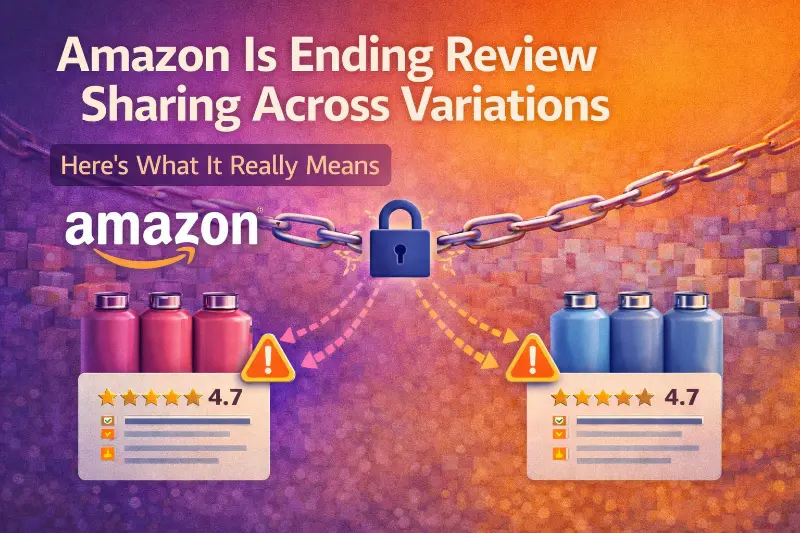
On Feb 12, 2026, Amazon is fundamentally changing how reviews are displayed on variation listings. Currently, if you have a parent product with multiple variations (for example, a shirt in 5 colors or a gadget in two different models), all reviews are pooled together on the product page regardless of which variation the review was for. That means a review written for the blue variant of a product also appears under the red variant, and vice versa. Amazon has acknowledged this leads to reviews that “don’t accurately reflect the specific variation a customer is considering.” In other words, shoppers might be reading feedback about a different size, flavor, or version than the one they’re actually looking to buy.
Starting February 12, that changes. Reviews will only be shared between variations that have very minor, non-functional differences. If the differences between variations affect functionality, performance, formulation, or intended use, reviews will no longer be shared across those variations. Amazon will continue sharing reviews for variations where the differences are purely cosmetic or structural, not functional. Each child ASIN will primarily display the reviews relevant to that specific variation. This could affect overall star ratings and review counts on some listings, since many products will lose the boost (or drag) from reviews of their siblings. Amazon is rolling out the change gradually on a category-by-category basis from Feb 12 through May 31, 2026. Sellers will get a 30-day advance email notice before their category is affected, so you’ll have some warning to prepare. By June 1, 2026, the new review display rules should be in effect across virtually all categories on Amazon.
Variations That Will Continue to Share Reviews
Not every kind of variation is losing shared reviews. Amazon will continue to aggregate reviews for variations that are essentially the same core product with only superficial differences. According to Amazon’s announcement, reviews will still be shared in cases of minor, non-functional variation types:
- Color or pattern differences of the same product (e.g. a t-shirt offered in blue, red, and green). A blue shirt and a red shirt that are otherwise identical will still pool their reviews, since the only difference is the color.
- Size variations with the same function, such as a product available in small, medium, and large, or queen vs. king bedding in the same style. As long as the size change doesn’t introduce new features or uses (it just changes dimensions), Amazon treats it as the same item.
- Pack size or quantity variations (e.g. a 2-pack vs. 6-pack of the exact same item). Customers expect a multi-pack to be the same product, just more of it, so those reviews remain relevant across those quantity options.
- Secondary scent or flavor variations when scent/flavor is not the primary product feature. For example, a household cleaner that comes in “unscented” and “lemon scent” will share reviews – the cleaning function is the same, and scent is a secondary preference. (In contrast, if scent or flavor is the main point of the product, that’s treated differently, as we’ll see below.)
- Different model fitments for the same product type, like a phone case sold in variations to fit different phone models. If you sell a single phone case design with versions for iPhone vs. Samsung, those can still share reviews because the only difference is the device compatibility – the product’s purpose and quality are effectively the same.
In summary, if your variations only differ in cosmetic or non-functional ways (color, pattern), in purely proportional ways (size or quantity), or in device-specific fit while the product is otherwise identical, then they will retain shared reviews. Amazon considers these differences minor enough that a review of one variant is still perfectly relevant to another.
Variations That Will No Longer Share Reviews
The big change is that variations with any substantive differences will no longer share reviews. Amazon wants to isolate reviews whenever a variant’s attributes could affect the customer’s experience or the product’s functionality. Here are the types of variation differences that will not have shared reviews going forward, with examples:
- Performance or power variations: If one version of a product has different performance specs or power capacity than another, their reviews will be separated. Example: A laptop model with an 8GB RAM/256GB SSD configuration and another with 16GB RAM/512GB SSD will no longer pool reviews, since their performance differs significantly. Similarly, an appliance offered in a 500-Watt vs. 1000-Watt option should have distinct review sets. These kinds of differences directly impact functionality.
- Different models or generations: A product line that has newer vs. older generation models (with feature changes) can’t share reviews now. Example: If you sold a 2025 edition of a gadget and a redesigned 2026 edition as two variations under one listing, each model’s reviews will stand alone. Reviews for the older model won’t carry over to the new model, and vice versa, because they are essentially different products.
- Bundle vs. standalone: Variations where one is a bundle or kit and another is the base product will not share reviews. Example: A camera sold alone versus a “camera + accessories bundle” were sometimes listed as variations to share reviews. Under the new policy, that bundle’s reviews won’t mix with the single product’s reviews, since the purchase contents differ.
- Flavor as a primary factor: When flavor or taste is a core product attribute (common with food, drinks, supplements, etc.), those variations get separated reviews. Example: A protein powder in Chocolate flavor versus Vanilla flavor will not share reviews. Customer satisfaction can vary greatly by flavor – a review saying “tastes terrible” for chocolate might not apply to vanilla at all. Amazon explicitly gave the chocolate vs. vanilla protein powder case as not eligible for review sharing because flavor directly impacts the user’s experience.
- Primary scent differences: Similarly, if a product’s scent is a primary feature (think perfumes, scented candles, or flavored consumables), each scent variant will have its own reviews. Example: A candle offered in “Lavender” vs. “Vanilla Bean” scents should not share reviews, since someone who loves the lavender scent might hate the vanilla – reviews aren’t one-size-fits-all in this case.
- Material or construction differences: Variations made of different materials or with distinct build qualities will have separated reviews. Example: A water bottle available in plastic vs. stainless steel, or a sofa sold in genuine leather vs. fabric upholstery, will not share reviews. The durability, feel, and quality can differ with material, so each version needs its own feedback.
- Fit or design variations that alter the product’s use or fit: If two variations have different fit, cut, or design that affects how the product works or fits the user, their reviews won’t mix. Example: A shirt sold in “Slim Fit” vs “Relaxed Fit” or a shoe available in two different designs (one with laces, one slip-on) should be evaluated separately by customers. A review complaining that the slip-on shoe’s elastic is too tight shouldn’t influence the laced version’s rating.
- Intended use or functionality differences: Any variation that serves a different use-case or has a different feature set is no longer eligible for shared reviews. Example: A kitchen mixer that comes in two variants – one that includes additional attachments for pasta making and one that doesn’t – should not share reviews, because the presence/absence of those attachments significantly changes the product experience. Essentially, if one variation could deliver a different outcome or solve a different problem than another, Amazon will treat them as separate products for review purposes.
In short, if a variation changes anything fundamental about the product’s performance, flavor/scent, functionality, or package contents, Amazon will isolate its reviews to that specific ASIN. This is a hard break from the old approach where even very different versions could ride on the coattails of the top variation’s rating. Amazon is drawing a clear line: only truly equivalent products can share in the same pool of social proof. Everything else must earn its own reputation.
Why Is Amazon Making This Change?
Amazon’s decision to stop broad review sharing is rooted in one major goal: increasing the accuracy of reviews and customer trust in those reviews. When reviews are shared across dissimilar variations, it can mislead shoppers. They might read glowing reviews that actually refer to a different model or flavor, or see criticisms that don’t apply to the variation they’re viewing. Amazon recognized that this undermines the reliability of the review system. The official announcement states the intent clearly: it’s meant “to improve accuracy and help customers make more informed purchasing decisions,” giving shoppers product-specific feedback that increases trust and potentially decreases returns.
In essence, Amazon wants each product variation’s star rating and review list to reflect that exact item – nothing more, nothing less. By doing so, customers will know exactly what they’re getting, and won’t be swayed by reviews about a different version. This aligns with Amazon’s long-standing focus on customer experience. Irrelevant or misleading reviews don’t just confuse buyers; they lead to disappointment, bad reviews, and ultimately higher return rates when a product doesn’t meet expectations. By ensuring reviews match the precise item, Amazon expects fewer unhappy surprises (“Oh, this red version is made of a different material than the blue one I read reviews for!”) and thus fewer returns due to unmet expectations.
There’s also a crack-down element here on certain seller tactics. In the past, some sellers abused variation listings by grouping unrelated products together just to consolidate reviews (a practice against Amazon policy, often called “variation abuse”). This update effectively kills the incentive for that: if the products aren’t truly similar, they won’t share reviews anymore, eliminating the benefit of creating artificial variation families. Amazon’s broader trend in recent years has been stricter enforcement of listing quality and variation rules. The new policy is an extension of that – making sure each review is relevant to the product it’s attached to, and stopping any misleading aggregation that could boost sales unfairly. As one Amazon strategist noted, it’s hard to argue the change “isn’t beneficial to customers… [it] could also fight against variation abuse patterns.”
Ultimately, Amazon is prioritizing long-term customer trust over short-term convenience. By forcing honesty in how reviews are attributed, the platform aims to maintain credibility. From Amazon’s perspective, a more transparent review system means shoppers can buy with confidence, which is good for the ecosystem in the long run – even if it means some sellers have to adjust their tactics.
Review Sharing and SEO
Review sharing is a key feature of Amazon’s variation relationships, especially when products within a variation family are essentially the same item with only minor differences – like color or size. When a customer leaves a review for one child product, such as a blue t-shirt, that review is shared across all other child products in the same parent-child relationship, like the red, green, or yellow versions. This approach helps build customer confidence, as shoppers can see a larger pool of feedback for the same product, making it easier to trust the quality and make a purchase decision.
From an SEO perspective, review sharing can significantly improve the visibility of your products in Amazon’s search results. Listings with higher review counts and better star ratings tend to rank higher, attracting more clicks and conversions. To maximize these benefits, it’s crucial that your variation attributes – such as size, color, or pattern – accurately reflect the minor differences between child products. This ensures that reviews remain relevant and helpful, and prevents customer confusion.
Sellers can further optimize their variation listings for SEO by incorporating relevant keywords into the product title, description, and variation attributes. For example, including terms like “men’s t-shirt, multiple colors, all sizes” can help your parent listing appear in more search queries. By maintaining accurate variation relationships and leveraging review sharing, you not only enhance the customer experience but also improve your chances of standing out in Amazon’s competitive marketplace.
Why This Is a Big Deal for Sellers and Conversion Rates
For many Amazon sellers, this policy change might feel like the rug is being pulled out from under some of your listings. That’s because shared review pools have been a major conversion driver on Amazon. If you had one top-selling variant with lots of positive reviews, it effectively bolstered the credibility of every variant under that parent ASIN. A weaker variation could still display a 4.5-star rating with hundreds of reviews, borrowing social proof from its siblings. Now, those weaker variants will be exposed – they’ll show only the reviews they actually earned. Some child products that enjoyed a high star rating may see it plummet (or their review count drop to near-zero) once the unrelated reviews are stripped away.
In the short term, sellers should brace for some turbulence in conversion metrics. Lower visible review counts on certain variations are likely, and with fewer reviews comes lower buyer confidence. Shoppers often use review volume and rating as a quick trust signal. Suddenly seeing, say, “5 reviews” where there used to be “105 reviews” on a given variant can give buyers pause. Conversion rates on those variants may dip until they gather more of their own reviews. Newer or previously low-traffic variations that piggybacked on a top variation’s reviews will feel this the most – they’ll need to build up credibility from scratch. Additionally, any negative reviews that were drowned out in a big pool will now be highly visible on the specific product they apply to. For example, if one color of a product had a manufacturing flaw and got a bunch of 1-star reviews, those used to be diluted by positive reviews of the other colors. Not anymore – that variant might show an honestly lower rating, which could hurt its sales (while arguably protecting customers from buying a subpar option).
However, it’s not all downside. In the long run, this change can benefit both customers and diligent sellers. For one, good variations won’t be dragged down by issues from other versions. If you have one variant that’s truly excellent and another that had problems, the problematic one’s reviews won’t tank the rating of the good one. Each product stands on its own merit, which is more fair for sellers who maintain quality. Also, customer trust in reviews will likely improve when buyers realize the reviews they’re reading are specific to the exact item they’re interested in. Greater trust can mean more conversions overall, even if each ASIN has to work harder to earn it. And importantly, fewer customers will end up feeling “tricked” by a product page, so over time you could see a reduction in returns and negative feedback. When expectations match reality, customer satisfaction goes up. Some sellers are even optimistic about this shift: one forum commenter gave the example that now if a dog food comes in wild rabbit vs. chicken flavor, dog owners can clearly see which flavor dogs preferred, instead of seeing an aggregate rating that masks those differences – “that doesn’t give me a clue,” they noted, but now I could see what taste other dogs really prefer.”
Think of it this way: previously, Amazon’s variation system often masked the truth of which specific product a customer was evaluating. Now, the truth is coming to the surface for each variation. In the short run that truth might hurt (as shortcomings can no longer hide), but in the long run it rewards accuracy and quality. Sellers who have been bundling semi-different products under one listing will no longer get a free ride on reviews – they’ll need to ensure every variation is up to par and attract its own positive reviews. On the upside, if you’ve done a great job with one version of your product, its reputation won’t be tarnished by an underperforming sibling. Conversion rates might dip initially, but as each ASIN builds its own social proof and as shoppers trust what they see, the playing field evens out. We may also see improved conversion in cases where previously hesitant customers held off purchase due to irrelevant negative reviews (now those irrelevant reviews won’t be on the page to scare them off).
Common Mistakes to Avoid
When setting up variation relationships on Amazon, it’s easy to make mistakes that can hurt your sales and customer satisfaction. One common error is not accurately reflecting product differences in the variation attributes. For instance, if you create a variation family for phone cases in different colors but fail to specify the correct color for each child listing, customers may receive the wrong product, leading to confusion and negative reviews.
Another frequent mistake is creating separate listings for products that should be grouped together as a variation family. This can fragment your sales, reduce visibility, and even lead to listing suppression if Amazon’s systems flag your listings as duplicates. On the flip side, some sellers try to group unrelated products under one parent listing – such as combining a phone case and a screen protector – just to share reviews. This overwhelms customers, makes it harder for them to find what they want, and violates Amazon’s policies.
To avoid these pitfalls, always ensure your variation relationships accurately reflect the real product differences and that your products qualify for variation listings. Carefully review Amazon’s guidelines, use the correct variation attributes, and never group unrelated products together. By following best practices, you’ll create a smoother shopping experience for customers, reduce the risk of negative reviews, and protect your listings from suppression or removal.
Embracing the Change – A New Mindset for Sellers
This review policy update calls for a fundamental mindset shift in how sellers approach Amazon listings. Many sellers face significant challenges with Amazon’s complex variation policies, which can make compliance and adaptation difficult. Rather than viewing it as a punishment or a loss, savvy sellers should view it as Amazon forcing a dose of transparency and truth into the marketplace. Going forward, you can’t rely on a one-star variation hiding in a five-star family, nor can a mediocre product hitch a ride on the acclaim of a superior variant. Each child ASIN needs to earn trust on its own. Here’s how to adapt:
First, ensure your variation groupings are truly logical and compliant. Amazon itself advises reviewing your catalog now to confirm that every variation is an appropriate one. Use the correct variation themes for genuine product differences (e.g. don’t misuse a “color” variation to cover up a version that actually has a different feature set). If some of your products were variated incorrectly or in ways that will no longer share reviews, consider reworking those listings. In some cases, it might make sense to split a variation family apart into separate listings if the products are substantially different – especially if one variant has been overshadowing others. Remember, Amazon will re-share reviews for eligible products if you update the variation themes later to a valid format. That means if you correct an improper variation grouping (for example, separating a bundle from a single product, or moving a flavor into its own listing), any reviews that should be shared under the new structure will be, and the ones that shouldn’t will stay with their product. Essentially, fixing your variation structure can help you salvage the correct reviews where they belong.
Next, treat each variation like its own product when it comes to marketing and review generation. Going forward, your strategy can’t be “launch one variant and let it accumulate 100 reviews, then just add new variants to piggyback on those.” If you’re launching a new color or a new flavor, you might need to invest in programs like Amazon Vine for that specific ASIN, ramp up requests for reviews from buyers of that variant, or provide stellar customer service to encourage positive feedback. Each child item’s review count will start to matter much more for its success. This is a good time to bolster the content on each variant’s detail page as well – make sure descriptions and images highlight what’s unique about that variant and set correct expectations (since you can’t rely on generic reviews to do that job). If one variation historically had higher return rates or more complaints, address those issues head-on or consider discontinuing it, because its reviews will now broadcast those issues loud and clear just for that item.
Importantly, don’t panic. While you should prepare for some short-term adjustment, this change isn’t the end of your Amazon business. Your existing reviews aren’t being deleted; they’re simply being allocated to the right products. Amazon isn’t “out to get sellers” here or to strip away hard-earned social proof arbitrarily – it’s trying to ensure accurate social proof. Sellers who focus on product quality, proper listing practices, and customer satisfaction will still thrive. In fact, those who have been truly listening to their reviews and improving each variation accordingly might find themselves in a stronger position once the dust settles. Sellers are often left feeling unsupported and unheard when navigating the complex process of listing variations. You’ll finally see which of your variations are truly winners in the eyes of customers, and which were perhaps coasting by. Use that information. Double down on the products that customers love (now clearly evidenced by their standalone reviews) and re-work or reconsider the ones that aren’t up to snuff.
In the big picture, Amazon’s move could usher in a healthier marketplace. It encourages accurate listings, honest reviews, and better products. Sellers who adapt will be aligning with what Amazon has always wanted: a great experience for shoppers. By embracing this mindset – that each product must stand on its own merit – you not only comply with the new rules, but you also set your brand up for more sustainable success. Trust built on authenticity tends to last. So, take a deep breath, audit your product variations, and commit to making each one as review-worthy as the next. In a world where “review sharing was masking product truth,” it’s time to let the truth speak for each item you sell. Your future customers (and your honest competition) will thank you.
Troubleshooting and Support
If you encounter issues with your Amazon variation relationships – such as child listings not appearing on the detail page, reviews not being shared correctly, or listings being suppressed – there are several steps you can take to resolve them. First, check your product data for accuracy and consistency across all child listings. Using flat files to manage your inventory can help you spot and correct discrepancies in variation attributes or parent-child relationships.
Sometimes, Amazon’s automated systems may flag your variation relationships as invalid, leading to listing suppression or removal from the detail page. In these cases, you can contact Amazon seller support for assistance. Be prepared to provide evidence that your variation relationships are valid and fully compliant with Amazon’s guidelines. If necessary, you can appeal the decision and submit updated product data to restore your listings.
To streamline the process, consider using Amazon’s Variation Wizard or third-party software tools to help create and manage your variation relationships. These tools can help ensure your listings are set up correctly, optimize your product data for SEO, and improve your overall sales performance. By staying proactive and following Amazon’s best practices, you can troubleshoot issues quickly, maintain healthy listings, and deliver a seamless shopping experience for your customers.
Frequently Asked Questions
When does Amazon stop sharing reviews across variations?
Amazon’s new policy takes effect on February 12, 2026, and rolls out gradually by category through May 31, 2026. After your category’s rollout date, reviews will only be shared between very similar variations (minor differences) and not across fundamentally different product variations.
Will my existing reviews disappear?
No, Amazon is not deleting your reviews. However, each review will only show on the specific variation it was written for. This means some variations on your listing may suddenly display fewer reviews (only the ones they actually earned). Reviews that were previously pooled from other variants will no longer appear on those variant pages, but they remain visible on the appropriate product’s page. Essentially, your total review count per variant may drop, but the reviews still exist on their respective products.
Can reviews be re-shared if I change variation themes?
Yes. If you update or correct your variation themes (the way your products are grouped) after the change, Amazon will re-share reviews for products that become eligible under the new grouping. In practice, this means if you regroup products into proper variation families (or split out ones that shouldn’t be together), any reviews that qualify to be shared in the new arrangement will start showing up again. It’s important that your variations use only valid themes (e.g. don’t group a flavor as a “color” just to share reviews) – only eligible variations will share reviews going forward.
Does this apply to all categories on Amazon?
Yes, the new review sharing rules are Amazon-wide, but the implementation is staggered by category. Between February and May 2026, Amazon will phase in the change across all product categories that use variations. Every category that allows variation listings (from electronics to apparel to grocery and beyond) is slated to be included. Amazon will notify sellers 30 days before their specific category is affected, so you can expect to be informed ahead of time. By the end of May 2026, all categories should be under the new policy.
Are variation listings being split up or removed?
No, Amazon is not eliminating variation listings themselves. Your parent-child variation structure will remain intact – customers will still see one product page with options for different variations (size, color, etc.). The change is only in how reviews are displayed. Each child ASIN in the variation will show its own rating and review count, rather than all sharing one aggregated set of reviews. So your variations stay linked as a family, but their social proof will be variation-specific going forward.
Written By:

Manish Chowdhary
Manish Chowdhary is the founder and CEO of Cahoot, the most comprehensive post-purchase suite for ecommerce brands. A serial entrepreneur and industry thought leader, Manish has decades of experience building technologies that simplify ecommerce logistics—from order fulfillment to returns. His insights help brands stay ahead of market shifts and operational challenges.
Turn Returns Into New Revenue
Related Articles

Why Returns Look Manageable Until They Suddenly Aren’t
Returns management is the retail process of handling customer returns across reverse logistics, cost control, and customer experience—and it rarely fails the way leadership expects...

The Economics of Peer-to-Peer Returns
Traditional returns management has one fundamental flaw: it optimizes a process that should not exist in its current form.

The Myth of “Efficient” Reverse Logistics
Efficient reverse logistics is treated as a goal worth chasing.