
The Hidden Costs of Disconnected Operations
In this article
 14 minutes
- The Patchwork Trap: How We Got Here
- 1. Productivity Black Holes
- 2. Customer Experience Clunks (and the Revenue Hits You Don’t See)
- 3. Higher Operational Costs (Death by a Thousand Apps)
- 4. Stunted Growth and Agility
- So, What’s the Fix? (The Light at the End of the Silo)
- Final Thoughts
- Frequently Asked Questions
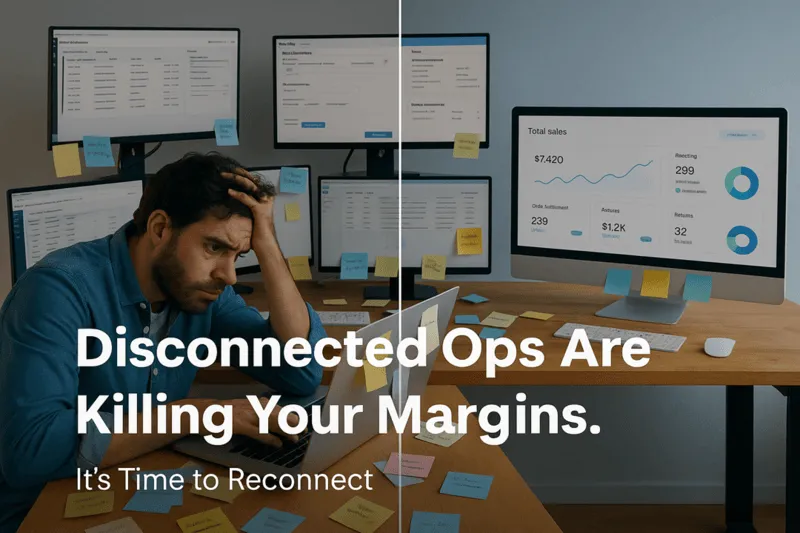
Most brands don’t set out intending to build a convoluted operations stack; it just happens. You start selling online and add a tool here, and a platform there: one for order fulfillment, another for shipping labels, yet another for returns processing. Each piece might work fine on its own, so you assume all is well. Spoiler alert: It’s not. Those disconnected operations are quietly draining your resources and choking your growth. The fragmentation is sneaky; the costs show up in ways you might not immediately tie back to your patchwork of systems. Today, let’s pull back the curtain on the hidden costs of disconnected operations in ecommerce and logistics. If you’re an ecommerce operator, brand owner, or logistics manager, this one’s for you, because running your business shouldn’t feel like herding cats across five different software platforms.
The Patchwork Trap: How We Got Here
First, a little empathy, you’re not dumb if your ops are disconnected; you’re normal. Most brands evolve this way: you pick the “best” tool for each job as it arises. A shipping app here, a warehouse management system there, and a returns portal later on. Each promises to solve one specific pain point. And individually, they often do. The problem is what happens between those tools, or rather, what doesn’t happen. They don’t talk to each other well (if at all). You end up with data silos and manual processes to bridge gaps. It’s like having a team where each member speaks a different language and there’s no translator. Inevitably, stuff gets lost in translation.
On the surface, you might not notice the cracks immediately. Orders still get out the door, customers still get tracking numbers, and returns still get processed eventually. But behind the scenes, you’re working harder and spending more to compensate for the disconnection. Let’s dig into those hidden costs one by one; you might recognize a few in your own operation.
1. Productivity Black Holes
One of the first casualties of disjointed systems is your team’s productivity. Think about how much time is wasted on tasks that should be automated or at least streamlined:
- Duplicate Data Entry: Your warehouse team prints orders from System A, then manually types them into Shipping System B to get labels. Later, they might update an inventory count in System C. It’s 2025, why are we still playing secretary between systems? This double or triple work not only eats up hours, but it also introduces errors. Humans aren’t great at mindless copy-paste jobs; inevitably, a “10” becomes a “100” somewhere, or an address gets misspelled.
- Swivel Chair Operations: Ever feel like your day is Alt-Tab, Alt-Tab, Alt-Tab? That’s the “swivel chair” effect, moving between screens because info lives in different places. Need to answer a simple customer question like “Hey, did my return get processed?” You have to check the ecommerce platform for the order, the returns system for the RMA status, and the warehouse system to see if the item is in stock. Three logins later, you have an answer (hopefully). Multiply that by dozens of inquiries and tasks, and it’s death by a thousand clicks.
- Training and Onboarding Overhead: Each additional system is an additional skill set that new employees must learn. Your SOP document starts to look like a phone book. Onboarding a new hire to your ops team becomes a month-long saga (“First, learn Tool X. Then Tool Y. Don’t mix them up. Here’s how to export from X to import to Y…”). And every system has its quirks; your poor Ops Manager has to become the in-house expert on 5 different UIs and workflows. That’s mentally draining and frankly not what they signed up for.
These productivity hits are often unmeasured. No one writes “spent 2 hours reconciling spreadsheets between systems” on a timesheet. But it’s happening. Fragmented workflows = friction = slower operations. And in ecommerce, slow is deadly. Which brings us to the next cost…
2. Customer Experience Clunks (and the Revenue Hits You Don’t See)
Your customers experience the results of your operations, whether you like it or not. When systems aren’t in sync, customers feel it:
- Shipping Delays & Surprises: Say your inventory system and your website aren’t perfectly synced (not a far-fetched scenario in disconnected land). A customer orders an item that shows in stock online, but in reality, it’s out of stock in the warehouse because the update lagged. Now you have to scramble to either rush stock or notify the customer. Either way, the customer’s confidence in you just took a hit. Or perhaps you shipped from the wrong location because your order system didn’t communicate that the East Coast warehouse was out of units, but the West Coast had plenty. Now the delivery takes a week longer and the shipping costs you twice what it should have.
- Returns Black Box: From the customer’s side, returns can be the most anxiety-inducing part of ecommerce. They send the item back and then… wait. If your returns system isn’t integrated with your customer communication, the customer might be left in the dark (“Did they get my package? When will I see the refund?”). I’ve seen cases where the left hand (returns dept) processed a refund, but the right hand (customer support) didn’t know because the systems were separate, so support gave incorrect info or failed to reassure the customer in a timely way. A confused, unhappy customer = lost future sales. Maybe they’ll forgive a one-off glitch, but if every interaction with your brand feels a bit clunky, they won’t stick around.
- Omnichannel Oops: These days, customers might interact with you on multiple channels (marketplaces, your own site, maybe even brick-and-mortar). If each channel’s operations are siloed, customers can’t get a unified experience. For example, they bought on your Shopify site but want to return to your store. Can your systems handle that seamlessly? Or a customer calls customer service about an Amazon order, can your rep see that order in the same system as DTC orders? If not, cue the awkward “Uh, hold on while I look that up in another system…” Not professional. Disconnected ops often lead to disconnected customer experiences, and customers can sense when your left hand doesn’t know what the right is doing. It erodes trust and loyalty.
The scary thing is, the revenue impact of these CX issues is hard to quantify, but very real. NRF’s 2025 Retail Returns Landscape reports that 19.3% of online sales are expected to be returned in 2025, and that 9% of all returns are fraudulent. Maybe it’s increased cart abandonment (because your delivery estimates are slow or stockouts frequent). Maybe it’s higher return rates (because, say, product info wasn’t consistent across channels). Or it’s simply lost lifetime value when customers quietly slip away to competitors who offer a smoother ride. You might not see an immediate bill for these costs, but they show up in softer metrics like customer lifetime value, repeat purchase rate, and even your ad spend efficiency (if you’re having to reacquire lapsed customers). In short, fragmentation can make your brand look bigger (in a bad way) or less competent than you actually are.
3. Higher Operational Costs (Death by a Thousand Apps)
Now let’s talk dollars and cents on the ops side. Running multiple disconnected tools often means you’re paying for overlapping functionality or not leveraging economies of scale:
- Multiple Subscriptions & Vendors: Obviously, more tools = more subscriptions or licenses. You might be paying for 3 different platforms where a single integrated platform could do it all (or at least a big chunk) for a better-bundled rate. Or perhaps you started on a bunch of cheap apps, but as volume grew, you had to upgrade each one to higher tiers. Suddenly your monthly SaaS bill is looking scary. I’ve seen small brands where the combined cost of all their point solutions was higher than if they had just invested in one robust system from the get-go.
- Maintenance and IT Overhead: With separate systems, you either live with minimal integration or you bolt things together with custom code, plugins, zaps, etc. Maintaining those connectors can become a nightmare. Every update to one system risks breaking the link. Maybe you even hire a developer or IT consultant to set up APIs between systems, that’s an added cost and complexity. And what if something breaks? Pinpointing where an error occurred in a daisy chain of software is not fun (everyone points fingers: “Must be the API”, “No, our system is fine, it’s the other one”). Meanwhile, orders might be stuck in limbo while troubleshooting happens, yikes.
- Inventory and Stock Inefficiencies: This one’s a bit more subtle, but disconnected ops often mean poorer inventory visibility. You might err on the side of caution and hold more safety stock because you aren’t confident in the numbers you see from system A vs system B. Or you don’t reposition inventory to the optimal location because you lack a unified view. That ties up capital in excess stock or leads to missed sales on out-of-stocks. Both are costly. Better integration tends to enable leaner inventory management, something all retailers crave.
- Human Firefighting = $$: All those productivity black holes and manual fixes we mentioned? That often translates to needing more staff than otherwise. If one integrated system could handle the workload of two disconnected ones, you might avoid hiring an extra ops coordinator whose main job becomes babysitting the gaps. Or your current team could focus on value-add activities (like negotiating better shipping rates, analyzing sales trends, and improving processes) instead of playing human middleware. People’s time is money. You’re either directly paying more salaries, or you’re paying in opportunity cost because your talented team is stuck in the weeds.
4. Stunted Growth and Agility
Perhaps the most pernicious cost is the opportunity cost of what you can’t do because your operations are too fragmented to support it. In a fast-moving ecommerce market, agility is gold. Disconnected systems make you less agile:
- Expanding to New Channels or Markets: Amazon updated Seller Fulfilled Prime and Premium Shipping policies effective June 29, 2025, and eligible sellers can protect on-time delivery rate performance by using Shipping Settings Automation with Automated Handling Time and OTDR-protected labels. Want to start selling on a new marketplace or launch a pop-up store? With an integrated ops platform, it might be as simple as flipping a switch or adding a module. But if your systems are separate, each new channel might need its own parallel process. I’ve seen businesses hold off on launching on, say, Walmart Marketplace or international expansion because it would “mess up our workflow” or require a whole new set of tools. That’s growth stifled by tech debt.
- Scaling Volume: When you’re small, manual workarounds are manageable. But if you double order volume, those cracks widen. If your operations are glued together with spreadsheets and heroics, the scale will break them. Then you’re in a crisis, trying to re-platform or integrate under pressure, which usually means downtime and mistakes. The cost here could be failing to capitalize on demand or, worse, imploding under success (not fulfilling on time, angering customers, getting bad reviews, etc., because your ops buckled).
- Data-Driven Decision Making: In the era of Big Data, disconnected ops leave you with fragmented data. NRF’s 2025 retail forecast says 2025 is the year of the AI agent, but it also warns that fragmented data across channels makes AI harder to train and optimize. It’s hard to get a single source of truth when sales are in one system, fulfillment in another, and returns in a third. So, you either don’t do robust analysis or you spend a lot of analyst hours piecing together CSV exports. That means you might miss trends like “Hey, product X has a high return rate in the Northeast, maybe it’s a shipping issue or a sizing issue specific to that region.” Or you can’t easily calculate your true customer acquisition cost vs lifetime value because the data lives in silos. Without integrated data, you’re essentially flying partially blind. The strategic missteps that can result (ordering too much stock, mispricing shipping, not noticing a surge in return fraud, etc.) have real financial impacts.
So, What’s the Fix? (The Light at the End of the Silo)
Alright, enough doom and gloom. The whole point of exposing these hidden costs is so that we can tackle them. The obvious antidote is integration, ideally, a unified platform or at least a well-connected stack for fulfillment, shipping, and returns (and maybe more, like inventory and customer data).
Imagine a world where one system (or a tightly knit system) handles your order from the moment it’s placed to the moment the customer is satisfied (either keeping the product or completing a return). No more jumping between screens to update status. The inventory updates in real-time across all channels. The customer gets consistent communications. Your reports come from one database, so they’re always in sync. Sounds dreamy, right?
This isn’t just theoretical. Modern solutions (yes, including our team at Cahoot, shameless plug) are tackling exactly this problem. The philosophy is: modularity with unity. For instance, Cahoot offers fulfillment, shipping, and returns in one platform. You can start with what you need (maybe you just use the shipping software at first), but because it’s one ecosystem, adding the other pieces later is seamless. It’s like having individual puzzle pieces that perfectly snap together because they’re made as one set. You don’t have to rip out your whole tech stack on day one (“no rip-and-replace” as we say); you can gradually migrate into a unified system, alleviating pain points step by step.
The results? Those hidden costs we talked about start melting away:
- Teams reclaim the hours lost to copy-paste and platform switching, which can be refocused on growth projects or simply mean you can handle more orders with the same staff.
- Fewer errors and faster processes mean happier customers, you’ll see that in better reviews, fewer support tickets, and maybe even higher repeat purchases since everything just works smoothly.
- Operational costs come down as redundancies are eliminated (one system vs five, fewer mis-ships, lower inventory buffers, etc.).
- When opportunity knocks, a big BFCM spike, a new sales channel, whatever, you can answer with confidence because your house is in order. Your unified system scales with you; you’re not scrambling to patch up leaks.
Final Thoughts
In summary, the hidden costs of disconnected operations are very real, but they’re also avoidable. It requires an honest look at your current setup and the courage to change it. That might mean consolidating tools, investing in integration, or switching to a unified platform that’s built for modern ecommerce needs. Yes, there’s effort involved in that transition, but think of it like cleaning up a messy warehouse; once it’s done, everything flows with ease, and you wonder why you didn’t do it sooner.
At the end of the day, an ecommerce or retail brand succeeds by delivering great products and great experiences efficiently. You can’t do that when your own internal systems are fighting each other. So, don’t let disconnected operations be the silent killer of your profits and reputation. Break down those silos, connect the dots, and watch the benefits ripple through every corner of your business. Your team will thank you, your customers will thank you, and future-you (with a thriving, scalable business) will definitely thank you.
Now, over to you: Have you experienced any of these pains? Are you stuck in spreadsheet hell or juggling a few too many apps? Share your war stories or victories in integrating ops, I’d love to hear how others are navigating this journey. After all, we’re all trying to build something great without going crazy in the process. Here’s to more cohesion and less chaos!
Frequently Asked Questions
Why are disconnected operations so common in ecommerce?
Because most brands grow organically, adding new tools as problems arise. It starts with good intentions, but without a plan to integrate systems, the tech stack turns into a disjointed mess.
What are the most overlooked costs of a fragmented operations stack?
Productivity losses, training inefficiencies, higher customer service burdens, and missed revenue opportunities are the big ones. These don’t show up on a P&L, but they quietly erode profitability.
How do disconnected systems impact customer experience?
They cause slower fulfillment, inconsistent communication, and higher error rates. Customers notice when your left hand doesn’t know what the right is doing, and they often don’t come back.
What’s the ROI of consolidating ecommerce operations?
Brands that consolidate save money on software, reduce labor inefficiencies, and improve customer satisfaction. The real ROI is operational agility, being able to scale, expand, or adapt without imploding.
Do I need to rip out all my systems to fix this?
Not necessarily. Look for platforms that allow phased adoption, so you can start with one component (like shipping) and expand into a unified system over time. Think modular, but made to connect.
Written By:

Jeremy Stewart
Jeremy Stewart leads customer success at Cahoot, helping merchants achieve high-performance logistics through smart technology and process optimization. With a background in both ecommerce operations and client services, Jeremy ensures that every merchant using Cahoot gets measurable results—whether they’re scaling from one warehouse to many or managing complex returns.

Turn Returns Into New Revenue
Related Articles
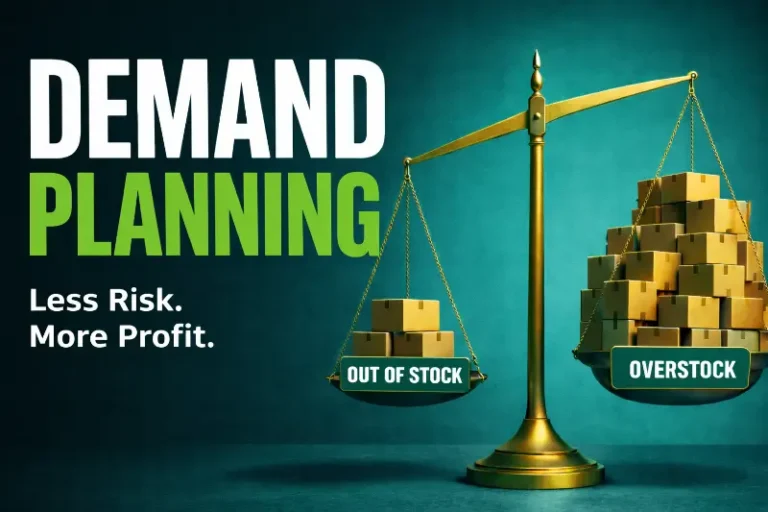
What Is Demand Planning? How It Impacts Inventory, Forecasting, and Profitability
Demand planning is the process of estimating future customer demand so that a business can align its inventory, procurement, and operations to meet that demand without carrying mor...
Why 100% P2P Adoption Is the Wrong Goal
Peer-to-peer returns let customers send eligible returned items directly to other customers instead of routing every package back through the warehouse, cutting shipping and proces...
Walmart Officially Allows Amazon Multi-Channel Fulfillment (MCF)
Big news for multichannel sellers: Walmart now officially allows Amazon Multi-Channel Fulfillment (MCF), Amazon’s service for using its fulfillment network to ship orders from mult...
Using Rithum to Optimize Multi-Channel Fulfillment and Dropshipping

In this article
9 minutes
- What Is Rithum?
- Rithum at a Glance
- Core Capabilities: Rithum Modules Explained
- Why Rithum Matters for Modern Commerce
- Use Case: A Dropshipping Brand Using Rithum
- Brands and Retailers Benefiting from Rithum
- Challenges to Be Aware Of
- How Rithum Compares to Other Platforms
- Where Cahoot Fits In
- Final Thoughts
- Frequently Asked Questions
Rithum isn’t just a rebrand, it’s a reinvention. Born from the merger of ChannelAdvisor, CommerceHub, and DSCO, Rithum is now one of the most powerful platforms for brands, retailers, and suppliers navigating the connected ecommerce world. According to Rithum’s CEO, the rebrand marks the beginning of a new era focused on innovation, growth, and supporting customers at every stage of their journey. With over $50 billion in GMV flowing through its pipelines annually, Rithum is quietly powering some of the world’s greatest brands, and making optimized consumer shopping journeys feel seamless.
If your ecommerce strategy includes multi-channel order fulfillment, dropshipping, and scalable growth, Rithum might be the platform you didn’t know you needed. Rithum supports businesses from the very beginning of their ecommerce journey, streamlining onboarding and initial setup to ensure a smooth start.
What Is Rithum?
Rithum is a multi-module platform focused on creating connected ecommerce experiences. It brings together marketing, commerce, delivery, and discovery into one scalable solution, helping brands and retailers operate more efficiently across marketplaces, DTC sites, retail media networks, and fulfillment channels. Rithum is designed to help launch, manage, and grow any type of ecommerce business, supporting the entire commerce operation from inventory management to multi-channel sales.
In other words, Rithum gives you the tools to grow sales, manage inventory, expand fulfillment, automate operations, and scale, all from a centralized command center. It’s built for the brands, retailers, and suppliers who want to stop juggling disconnected systems and finally integrate everything, supporting users every step of the way as they integrate their systems.
Rithum at a Glance
- Annual GMV: $50+ billion
- Activity volume: More than 2.4 billion ecommerce product updates per year; Channels: 420+ marketplaces and retail channels; Customer base: More than 40,000 companies; GMV: More than $50 billion.
- Products Listed: 2.4 billion+ SKUs across 420+ channels
- Customer Base: 40,000+ companies, including major global retailers and niche DTC brands
- Trusted by the industry’s leading retailers and brands: Rithum supports the growth and profitability of retailers and brands across the ecommerce ecosystem.
- Legacy: Combines the capabilities of ChannelAdvisor, CommerceHub, DSCO, Cadeera, and more
That’s not just a lot of scale, it’s a lot of trust. Rithum powers commerce infrastructure for companies ranging from Fortune 500 retailers to fast-growing ecommerce entrepreneurs. As the industry’s most trusted commerce platform, Rithum delivers comprehensive solutions for retailers and brands navigating today’s market challenges.
Core Capabilities: Rithum Modules Explained
Rithum’s strength lies in its modular architecture. Businesses can tap into one, two, or all four of the core modules depending on their needs. Rithum supports businesses at every step, whether they choose a single module or implement the full suite, ensuring a smooth progression through each stage of their journey.
1. Commerce Solutions
This is the backbone. Rithum enables sellers to list products across hundreds of marketplaces, websites, social platforms, and retail sites, streamlining data sync, inventory updates, and pricing strategies.
Whether it’s Amazon, Walmart, Target Plus, Zalando, or your own Shopify site, Rithum’s software lets you manage product listings from one place. In August 2025, Rithum launched a Temu integration, starting with Temu US and planning expansion to Temu UK and EU locales. You can push updates to every sales channel instantly and reduce the lag that costs time, money, and customers.
2. Marketing Solutions
Rithum helps brands drive performance across paid search, social ads, and retail media networks. Think: Google Shopping, Meta Ads, Instacart, Criteo, Roundel, CitrusAd, you name it.
You can create optimized campaigns directly inside Rithum’s platform and integrate with leading analytics tools to tie ad spend to order fulfillment and margin impact. This means tighter control over ROAS, and faster decisions on what’s working and what isn’t.
3. Delivery Solutions
Order fulfillment isn’t just about speed, it’s about flexibility. Rithum’s delivery solutions automate routing based on inventory availability, warehouse proximity, shipping method, and cost-efficiency. This includes direct-to-consumer fulfillment, third-party logistics (3PL), and dropshipping.
Even better, Rithum integrates with Amazon MCF (Multi-Channel Fulfillment), letting brands use Amazon’s fulfillment infrastructure for non-Amazon orders. This creates margin advantages without the overhead of managing your own warehouses (though it’s quite a bit more expensive than outsourcing to 3PLs).
4. Discovery Solutions
Using AI and behavioral data, Rithum identifies top-performing suppliers, curates catalogs for buyers, and matches brands with new retail partners. This is especially powerful for B2B marketplaces and dropship networks looking to expand their assortments strategically.
The goal? Help suppliers work smarter, not harder, and give buyers access to high-margin, in-demand products without wasting time.
Why Rithum Matters for Modern Commerce
In September 2025, Rithum launched RithumIQ, its commerce AI engine, and said it is powered by more than $50 billion in annual GMV and 2.4 billion+ transactions daily.
Let’s face it: managing ecommerce operations across 10+ sales channels is chaos without a platform like Rithum. The industry’s top brands use Rithum to automate, integrate, and grow. Here’s how:
1. Unified Inventory Management
Forget spreadsheets. Rithum provides real-time inventory visibility across all your selling channels. This helps reduce stockouts, improve fill rates, and prevent costly overselling.
2. Streamlined Order Fulfillment
Orders from Amazon, Shopify, Walmart, and your DTC site all route through a single order management system. Rithum auto-selects the best fulfillment method, be it internal warehouse, dropship partner, or Amazon MCF.
3. Data-Driven Marketing
Tie your product data to your ad performance. Rithum’s platform ensures that your marketing campaigns reflect inventory levels, promotions, seasonal trends, and shipping timelines.
4. Optimized Margins at Scale
One of the most underrated advantages of using Rithum is margin optimization. By automating fulfillment and identifying cost-saving delivery solutions, you increase profit per unit while maintaining fast delivery speeds.
5. Powerful Integrations
Rithum offers prebuilt connections with all major ecommerce platforms, marketplaces, and ERPs. In June 2025, Rithum said its managed integrations now connect directly to systems like SAP, NetSuite, Microsoft Dynamics, and CGS BlueCherry without requiring custom development. Whether you’re using NetSuite, BigCommerce, Adobe Commerce, or Salesforce Commerce Cloud, Rithum plays nicely in the sandbox.
Use Case: A Dropshipping Brand Using Rithum
Let’s walk through a simplified scenario:
1. A brand lists 10,000 SKUs using Rithum’s commerce solution.
2. Rithum syndicates those listings to Amazon, Walmart, and a DTC site.
3. Inventory levels sync across platforms in real-time.
4. Orders start coming in from all channels.
5. Rithum routes the orders to a mix of 3PL warehouses and dropship suppliers based on margin and speed.
6. The marketing team uses Rithum’s tools to launch ad campaigns based on best-sellers and restock timelines.
7. The operations team reviews delivery metrics and margin performance using Rithum’s dashboard.
8. The brand expands to a European marketplace, using Rithum’s localization features and supplier discovery module.
Rithum enables brands, retailers, and suppliers to work together seamlessly throughout the dropshipping process, ensuring efficient collaboration and smooth order fulfillment.
From listing to delivery, everything flows through one platform, Rithum, acting as the heartbeat of your dropshipping operation and keeping every part running smoothly.
Brands and Retailers Benefiting from Rithum
In September 2025, Rithum highlighted customer outcomes showing DSW and Marks & Spencer expanding assortments through partner networks without stocking more inventory.
Retailers like Belk used Rithum to onboard over 500,000 SKUs in under 90 days, resulting in a 36% YoY increase in GMV. Similarly, brands like Superdry and Marks & Spencer have leaned on Rithum’s marketing automation and fulfillment capabilities to grow international sales and reduce channel friction.
For smaller companies, the appeal is just as strong. Rithum lets lean ecommerce teams punch above their weight, automating order fulfillment, syncing inventory, and scaling ad campaigns without adding headcount.
Challenges to Be Aware Of
No platform is perfect. Here are a few potential drawbacks:
- Complex Onboarding: Rithum’s capabilities are powerful, but not plug-and-play. Implementation often requires a dedicated team or integration partner.
- Cost Structure: After the ChannelAdvisor/CommerceHub merger, some users reported pricing increases of 4–7x. Smaller businesses may need to weigh the ROI carefully.
- Support Transition: With consolidation comes some turbulence. Support quality can vary depending on your plan, region, and internal rep.
Still, these challenges are manageable if you’re serious about long-term scale.
How Rithum Compares to Other Platforms
|
Platform
|
Strengths
|
Weaknesses
|
|---|---|---|
|
Rithum
|
Unified commerce, delivery, marketing
|
Complex onboarding, premium cost
|
|
Zentail
|
Easy setup, automation
|
Fewer marketplaces supported
|
|
Feedonomics
|
Robust product feed optimization
|
Limited fulfillment capabilities
|
|
Skubana
|
Inventory automation
|
Light on marketing tools
|
|
Cahoot
|
Fastest fulfillment via P2P network, most profitable reverse logistics
|
Primarily focused on shipping/logistics
|
Rithum is ideal for businesses seeking an end-to-end platform that supports everything from product discovery to last-mile delivery, especially if those businesses operate across multiple sales channels and want to optimize every piece of the puzzle.
To see how Rithum can help your business, schedule a demo to view the platform in action and learn more about its features and benefits.
Where Cahoot Fits In
For ecommerce sellers using Rithum but seeking faster, more cost-efficient fulfillment, Cahoot can be a perfect complement. While Rithum automates order routing and marketplace connections, Cahoot offers peer-to-peer fulfillment with 1-day ground delivery coverage across the U.S., at rates that beat most traditional 3PLs.
By integrating Cahoot into the Rithum workflow, brands can unlock smarter delivery solutions that drive higher margins and better customer experiences.
Final Thoughts
Rithum is more than just a new name; it’s a new rhythm for ecommerce. By merging legacy giants like ChannelAdvisor and CommerceHub, the Rithum platform is enabling connected ecommerce experiences at scale. With modules for commerce, marketing, delivery, and supplier discovery, it empowers brands, retailers, and suppliers to build lasting commerce businesses. Rithum also offers valuable resources to support teams and foster community within the ecommerce ecosystem.
It’s not for the faint of heart. Implementation takes planning. Costs can add up. But for ecommerce teams aiming to automate, scale, and integrate across channels, Rithum delivers.
Whether you’re launching a DTC brand, scaling a supplier network, or operating as one of the world’s greatest brands, Rithum helps create the infrastructure needed to move at speed, sell with confidence, and thrive in a fragmented retail world. Users love the seamless experience and impressive results they achieve with Rithum.
Frequently Asked Questions
What is Rithum, and what companies is it built from?
Rithum is a connected ecommerce platform formed by merging ChannelAdvisor, CommerceHub, DSCO, and other technology providers. It supports global brands, retailers, and suppliers.
How does Rithum improve order fulfillment and delivery solutions?
Rithum automates order routing across warehouses, dropship suppliers, and Amazon MCF, helping companies optimize shipping speed, cost, and customer satisfaction.
Which types of businesses should use Rithum?
Rithum is best suited for ecommerce brands, retailers, and suppliers managing sales across multiple marketplaces who need scalable software for fulfillment, marketing, and inventory.
Does Rithum offer tools for marketing and retail media?
Yes, Rithum’s marketing solutions connect directly to platforms like Google, Meta, Instacart, and retail media networks, helping businesses drive optimized consumer shopping journeys.
How does Rithum help brands expand globally?
Rithum’s commerce and discovery modules allow brands to manage listings across 420+ channels, onboard new suppliers, and localize product data to grow into new markets efficiently.
Written By:
Jeremy Stewart
Jeremy Stewart leads customer success at Cahoot, helping merchants achieve high-performance logistics through smart technology and process optimization. With a background in both ecommerce operations and client services, Jeremy ensures that every merchant using Cahoot gets measurable results—whether they’re scaling from one warehouse to many or managing complex returns.
Turn Returns Into New Revenue
Related Articles
What Is Demand Planning? How It Impacts Inventory, Forecasting, and Profitability
Demand planning is the process of estimating future customer demand so that a business can align its inventory, procurement, and operations to meet that demand without carrying mor...
Why 100% P2P Adoption Is the Wrong Goal
Peer-to-peer returns let customers send eligible returned items directly to other customers instead of routing every package back through the warehouse, cutting shipping and proces...
Walmart Officially Allows Amazon Multi-Channel Fulfillment (MCF)
Big news for multichannel sellers: Walmart now officially allows Amazon Multi-Channel Fulfillment (MCF), Amazon’s service for using its fulfillment network to ship orders from mult...
Cahoot vs Veeqo: A Value-Driven Comparison for Modern Ecommerce Sellers
In this article
9 minutes
- At a Glance: Cahoot vs Veeqo
- Pricing Models & Carrier Rates
- Order Routing & Workflow Automation
- Multi-Channel Capabilities
- Inventory & Warehouse Management
- Support & Learning Curve
- Amazon Buy Shipping & SFP
- Data You Can Actually Use
- Built for Amazon Sellers, but Not Owned by Amazon
- Pros & Cons
- Cahoot vs. Veeqo: What Sellers Are Saying
- Final Verdict
- Frequently Asked Questions
When ecommerce sellers start scaling across marketplaces like Amazon, eBay, Walmart, and Shopify, their shipping software can either accelerate that growth or slow them down. Two platforms built to handle multi-channel shipping are Veeqo and Cahoot. Both offer discounted shipping labels and order management tools, but the similarities end there. This in-depth comparison will explore what each software delivers, what it lacks, and which one ultimately supports fast-moving ecommerce teams better.
At a Glance: Cahoot vs Veeqo
|
Feature
|
Cahoot
|
Veeqo
|
|---|---|---|
|
Multi-Channel Order Import
|
Yes
|
Yes
|
|
Discounted Carrier Rates
|
Yes
|
Yes
|
|
Rate Shopping Across Carriers
|
Yes
(Autonomous) |
Yes
(Basic) |
|
Bulk Label Printing
|
Yes
(Autonomous) |
Yes
(Traditional) |
|
Support for Own Carrier Accounts
|
Yes
|
Yes
|
|
Automation Rules & Order Routing
|
Yes
(Highly Configurable) |
Limited to Presets
|
|
Intelligent Package Selection (Cartonization)
|
Yes (AI-powered)
|
No
|
|
WMS Features
|
Yes
|
Partial
|
|
Inventory Visibility
|
Yes
(real-time) |
Yes
(limited granularity) |
|
Returns Workflow Integration
|
Optional Peer-to-Peer Returns
|
Basic RMA
|
|
Live Customer Support
|
Yes
(Help Desk, Phone) |
No phone support
|
|
Amazon Buy Shipping API Certified
|
Yes
|
Yes
|
|
Supports Amazon SFP
|
Yes
|
No
|
|
Open to 3PLs
|
Yes
|
No
|
Pricing Models & Carrier Rates
Both Cahoot and Veeqo offer access to discounted shipping rates from major carriers like UPS, FedEx, and USPS. Veeqo highlights its access to Amazon-negotiated carrier rates, especially beneficial for FBM sellers. However, it’s worth noting that Cahoot also offers deeply discounted rates through its aggregated carrier network, and unlike Veeqo, sellers aren’t required to be Amazon merchants to access them.
Users have praised Veeqo’s rates in particular, though some feel that the real-world savings depend on volume and location. One user on Trustpilot noted, “Veeqo offers good rates, but it doesn’t always beat what I negotiated directly with FedEx.” That said, having an option for both Veeqo and using your own account provides flexibility.
Cahoot lets sellers compare real-time rates across carriers, or even better: automate all the rate shipping and bulk shipping label generation based on the desired logic (cheapest, fastest, delivery promise, signature-required, etc.). This level of autonomous support (removing the human) goes a step further than Veeqo’s more manual workflows.
Order Routing & Workflow Automation
This is where the gap between the two platforms widens. Cahoot excels at automation.
Cahoot’s rule engine lets sellers automatically assign orders to specific warehouses, select packaging based on product dimensions, and pick carriers based on dynamic rules. It includes AI-powered cartonization, reducing overpackaging and optimizing label selection at scale. This feature alone can save high-volume shippers thousands per month.
Veeqo supports some automation, but according to multiple reviews, the rules engine lacks flexibility. As one user put it: “You can automate some parts of the shipping process, but complex routing logic just isn’t possible.” Another noted on G2, “Our warehouse team constantly has to manually override presets in Veeqo to get the right shipping option.”
Cahoot also offers the option to import product master data, assign SKUs to multiple warehouses, and automate routing for distributed fulfillment. These features are especially helpful for sellers managing multiple sales channels and warehouse locations.
Multi-Channel Capabilities
Both platforms support multi-channel order import from Amazon, eBay, Shopify, Walmart, Etsy, and more. Veeqo is tightly integrated with Amazon (it’s owned by Amazon), which brings advantages for FBM sellers, like access to Buy Shipping and automated order syncing.
However, some sellers note that Veeqo prioritizes Amazon workflows and that the support for non-Amazon channels lacks depth. A Trustpilot reviewer stated, “It’s clearly built with Amazon in mind. Shopify orders don’t always sync correctly, and the custom mapping is limited.”
Cahoot offers native integrations with all major ecommerce platforms, with equal priority across sales channels. That neutrality is useful for brands expanding beyond Amazon and looking to centralize operations across multiple storefronts.
It also means Cahoot isn’t limited by Amazon policy shifts or ecosystem changes. For businesses hoping to grow a multi-platform brand, that independence matters.
Inventory & Warehouse Management
Veeqo includes basic inventory tracking tools but doesn’t offer a full warehouse management system (WMS). Its UI shows available stock and syncs between platforms, and Veeqo also offers pick/pack workflows, barcode-scanner support, bin locations, and stock transfers, though its warehouse capabilities are still lighter than a full enterprise WMS.
Cahoot includes WMS features as part of the platform, with no need for third-party plugins. Sellers can assign bin locations, manage cycle counts, and generate pick lists automatically. One Cahoot user shared, “We reduced picking errors by 60% after switching from ShipStation to Cahoot because the WMS features are built in.”
For growing brands with even modest warehouse operations, this difference is key. It consolidates tech stack complexity and reduces reliance on disconnected tools.
Support & Learning Curve
Cahoot provides live onboarding, in-platform chat, and phone support. Multiple users note how responsive the support team is. One review on G2 says, “Every time I had an issue, Cahoot got back to me within minutes. I never felt like I was waiting around.”
Veeqo offers phone, email, live chat, and AI-assisted support, though priority support and account management are reserved for higher-tier plans; third-party reviews still report mixed support experiences. Several users on Trustpilot and Reddit cite frustrating Veeqo support delays. One review read, “You submit a ticket and wait… sometimes for days. It’s not great when your entire shipping flow is paused.”
Veeqo also has a steeper learning curve for non-Amazon users. The dashboard is robust but not intuitive for sellers focused on Shopify or direct-to-consumer models.
Amazon Buy Shipping & SFP
Both platforms are certified for Amazon Buy Shipping, meaning they help sellers remain compliant with Amazon’s policies and tracking requirements. However, only Cahoot supports Seller Fulfilled Prime (SFP) as a core operational capability.
For Amazon SFP sellers, this is a major differentiator. Cahoot’s compliance engine ensures same-day label printing, cut-off time enforcement, and late-delivery prevention. Veeqo can be used for SFP-related OTDR-protected label workflows for sellers who ensure their Amazon settings and shipping workflow meet the current program requirements.
Data You Can Actually Use
With Veeqo, many sellers are flying blind. Sales data is fragmented. Shipping costs aren’t always transparent. And pulling that data often means wrangling spreadsheets with missing headers or running into failed exports.
Cahoot makes it easy to analyze profits, understand shipping costs, and track eligible shipments in one dashboard. You get full access to real performance data without needing to bounce between platforms.
Built for Amazon Sellers, but Not Owned by Amazon
Veeqo is owned by Amazon. That means anything you do on the Amazon platform is potentially visible. For Amazon sellers trying to protect their strategy or operate across other channels, that’s a problem.
Cahoot is fully compatible with Amazon FBM, FBA, and Buy Shipping, but stays independent. You get the lowest rates available, without locking yourself in deeper with Amazon or giving up your leverage.
Pros & Cons
Cahoot vs. Veeqo: What Sellers Are Saying
“Using Veeqo costed us so much time. Exports kept failing, inventory didn’t match, and the UI was just confusing. Cahoot gave us back control.”
~ Multichannel seller, apparel industry
Speak to a fulfillment expert
“The only reason I stuck with Veeqo was because it was free. But once our shipping volume increased, we needed more, and Cahoot delivered.”
~ Electronics brand owner
Speak to a fulfillment expert
Final Verdict
Veeqo is a solid, free tool for Amazon-first sellers who want to print shipping labels and access decent rates with minimal setup. But it lacks depth in automation, support, and warehouse operations.
Cahoot, by contrast, is built for scale. It’s ideal for ecommerce brands that are serious about operational efficiency and growth. From smart automation to robust warehouse tools and superior customer support, Cahoot is the better long-term investment for sellers looking to streamline operations across multiple platforms.
If you’re running a high-volume ecommerce business that ships across multiple sales channels, handles inventory in multiple locations, or simply wants to reduce costs and errors at scale, Cahoot is the clear winner.
Don’t settle for free if it slows your business down.
Choose smarter. Explore how Cahoot can simplify your shipping and scale with your brand.
Frequently Asked Questions
Is Veeqo really free, and what’s the catch?
Veeqo’s Shipping plan is free, but advanced features such as automated inventory management, digital picking, ERP integrations, and priority support now sit in paid tiers; reporting remains available in the Shipping plan. You may still need your own carrier accounts, and support can be slow.
How does Cahoot’s shipping software help reduce shipping costs?
Cahoot gives sellers access to discounted rates across major carriers like UPS, FedEx, and USPS, with no Veeqo credits or software bugs required. Plus, bulk shipping tools and data-driven insights help optimize your entire shipping process.
Can I use Cahoot if I sell on Amazon and other ecommerce channels?
Absolutely. Cahoot supports multiple sales channels, including Amazon, Walmart, eBay, and Shopify, while keeping inventory levels synced across all platforms. Unlike Veeqo’s integration, Cahoot’s system is fast, clean, and flexible.
What makes Cahoot better for inventory management than Veeqo?
Cahoot simplifies multi-channel inventory with real-time stock tracking, automated syncing, and alerts to prevent overselling. Veeqo users often struggle with managing inventory across platforms due to sync lags and poor data visibility.
Why do sellers leave Veeqo for Cahoot?
Many sellers switch when they realize Veeqo’s free model comes with trade-offs: limited support, Amazon ownership, clunky UI, and frustrating data export issues. Cahoot offers a full-featured, seller-first solution that saves time and drives smarter decisions.
Written By:

Indy Pereira
Indy Pereira helps ecommerce brands optimize their shipping and fulfillment with Cahoot’s technology. With a background in both sales and people operations, she bridges customer needs with strategic solutions that drive growth. Indy works closely with merchants every day and brings real-world insight into what makes logistics efficient and scalable.
Turn Returns Into New Revenue
Related Articles
What Is Demand Planning? How It Impacts Inventory, Forecasting, and Profitability
Demand planning is the process of estimating future customer demand so that a business can align its inventory, procurement, and operations to meet that demand without carrying mor...
Why 100% P2P Adoption Is the Wrong Goal
Peer-to-peer returns let customers send eligible returned items directly to other customers instead of routing every package back through the warehouse, cutting shipping and proces...
Walmart Officially Allows Amazon Multi-Channel Fulfillment (MCF)
Big news for multichannel sellers: Walmart now officially allows Amazon Multi-Channel Fulfillment (MCF), Amazon’s service for using its fulfillment network to ship orders from mult...
Peer-to-Peer Returns Platform: How It Benefits Emerging DTC Brands
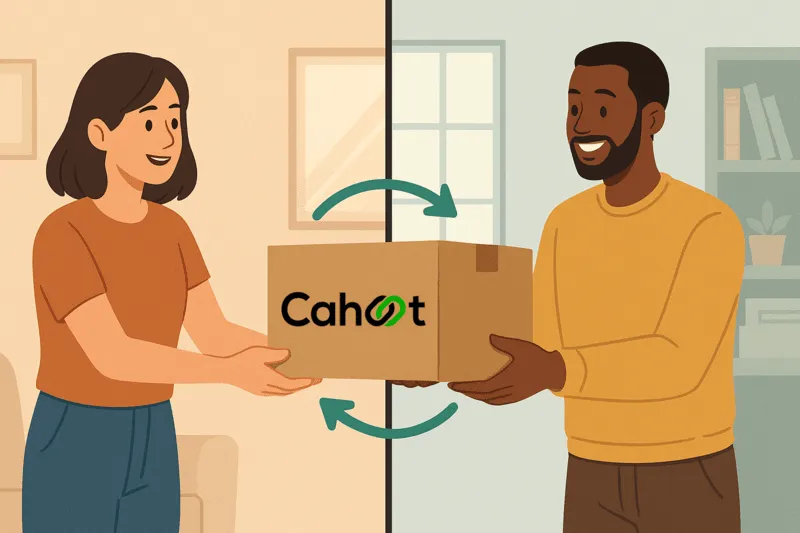
Returns are the terrible, horrible, no good, very bad part of running an ecommerce business. Not just for shoppers (waiting around for a refund) but for emerging ecommerce brands, especially DTC operations. Every return cuts into profit, eats up time, and piles up inventory no one wants to touch. But here’s the twist: what if returns didn’t go back to the warehouse at all? What if they went directly to a new buyer instead? That’s the magic behind the peer-to-peer returns platform. This model introduces key advantages for DTC brands, such as reducing costs, minimizing waste, and improving customer satisfaction.
Cahoot, known for shaking up ecommerce logistics, is leading the charge with this innovative approach in the peer-to-peer returns space. And no, it’s not a borrowing scheme like peer-to-peer lending or a financial product like personal loans. But it does borrow some DNA from those systems, distributed networks, smart matching, and skipping the middleman. Online platforms in the peer-to-peer space facilitate these direct connections, much like how they connect borrowers and lenders in financial contexts, streamlining the process for all parties involved. Think of it as the social lending of ecommerce returns, where the system connects returners directly with new buyers, just as peer-to-peer platforms connect borrowers directly with lenders.
The Real Pain of Traditional Returns
Traditional returns work like this: a customer changes their mind, prints a label, ships the item back to you, and then you have to receive, inspect, restock, maybe repackage, and eventually resell it, often at a steep discount. That burden remains material in 2025: NRF estimates total retail returns will reach $849.9 billion this year, and 19.3% of online sales will be returned. Add in return shipping costs, warehouse labor, customer service tickets, and even potential late fees for delayed processing, and it’s a recipe for negative ROI.
For a small ecommerce business or a founder running lean, this isn’t sustainable. Shipping every return back to your warehouse is like using a bank account with constant fees and zero interest. It drains your cash flow. You could compare it to funding loans with higher risk and low return, much like the challenges faced with traditional loans when penalties and late fees add up. Frankly, it’s a bad deal.
Enter Peer-to-Peer Returns
Instead of sending the returned item to your fulfillment center, Cahoot’s peer-to-peer returns platform lets the original customer ship it directly to a new buyer. Here’s how it plays out:
1. A customer initiates a return.
2. The platform asks them to upload photos, confirm the condition, and hold the item for a few days.
3. AI kicks in, verifying the item’s resale quality, analyzing the returner’s history, and scanning for fraud (risk management). The platform’s technology enables streamlined processes, making the entire experience faster and more user-friendly.
4. Meanwhile, the item is automatically relisted on your store as open-box in real-time, discounted slightly, but still your branded product. The relisting and resale process is transparent and clear, much like how peer-to-peer lending platforms provide comparable loan terms, so both buyers and sellers know exactly what to expect.
5. When a new customer buys it, the returner gets a label to ship it out directly.
6. They’re refunded once tracking confirms it’s on the way or received. In terms of risk management, the risk of a single failed return transaction can be compared to a single default event in lending, highlighting the importance of robust verification and diversification strategies.
Now, instead of a refund eating your margins, you’re reselling the item at 85–95% of retail, skipping warehouse handling and double shipping. It’s fast. It’s efficient. And yes, it saves money.
Why This Works (Especially for Small Businesses)
This isn’t just a fun gimmick. Cahoot’s peer model addresses real ecommerce challenges:
- Shipping Costs: You skip the return leg to the warehouse.
- Inventory Management: The item never clogs up your system.
- Speed: New customers get the item faster. Returners get refunded sooner.
- Customer Satisfaction: Everyone feels good helping the planet and their wallet.
For small businesses, this model is similar to how small business loans and business loans provide alternative financing options to cover major expenses, supporting growth and development when traditional funding is limited.
It’s like a micro version of peer lending. Instead of funding loans with capital, you’re moving product through customer participation. Instead of worrying about borrower defaults, you’re focused on buyer satisfaction and ensuring compliance through verified transactions. The platform also helps brands achieve their financial goals by offering accessible and flexible solutions. Other benefits of the peer-to-peer returns model include improved business insights, better payment terms, and fostering a supportive community for both buyers and sellers.
The Financial Angle
Okay, let’s talk money. The traditional return process? It’s basically like investing in traditional savings accounts, low return, high friction. With peer-to-peer returns, you’re now in the world of alternative investments. You’re getting more value, faster turnover, and lower risk.
Just as peer-to-peer (P2P lending) platforms allow individual and institutional investors to invest in loans, with returns shaped by interest rates and regular interest payments, our model lets you realize value more efficiently. On lending platforms and lending sites, loan offers are determined by factors like minimum credit score, good credit, and the borrower’s profile, much like how our platform assesses transaction eligibility and risk.
Your effective recovery rate improves. That espresso machine that used to cost you $50 to restock and repackage? Now it’s resold in 72 hours at 90% retail with no warehouse touch. That’s the kind of turnaround most lending sites or lending platforms would kill for.
Built-In Risk Management
Cahoot doesn’t wing it. Our P2P returns platform is built with risk tolerance settings, fraud detection layers, and condition verification, all using AI. That focus matters because NRF reports 9% of all returns are fraudulent, and Appriss Retail estimates fraudulent returns and claims cost retailers $103 billion in 2024. That means you’re not just trusting your customers blindly. These tools empower brands to make informed decisions about approving returns and managing risk.
It’s like when institutional investors assess borrower defaults, they don’t rely on vibes. They crunch data, assess credit risk, and build safeguards. Cahoot’s doing the same for your returns: historical data, photo analysis, shipping trends, and user history all factor into who gets approved for peer-to-peer returns.
Customer Experience
Customers like this model. It’s interactive. It feels more personal. They get to feel like part of a sustainability loop. It’s like when borrowers connect with individual lenders on lending platforms, there’s emotional value. A product gets rehomed instead of returned to some faceless warehouse.
Returners are rewarded with small credits or perks for participating. Buyers get a deal. You recover more revenue. And the planet breathes a little easier. That’s what we call attractive returns.
Wrapping It Up
Peer-to-peer returns aren’t just a clever workaround; they’re a full-on rethinking of ecommerce reverse logistics. For small business owners, they offer a practical way to save money, improve customer satisfaction, and align with sustainability goals. For larger brands, they unlock serious cost savings and scalability.
So, whether you’re selling sneakers, smart home gear, or skincare, if returns are eating your margins, it might be time to make a move.
Because unlike traditional financial institutions, this isn’t built on bureaucracy. It’s built on agility, innovation, and a willingness to rethink the rules. Sound familiar?
That’s ecommerce done smarter.
Frequently Asked Questions
What is a peer-to-peer returns platform, and how does it work?
A peer-to-peer returns platform connects the original buyer of a product with a new customer who wants to purchase it, avoiding the need to ship the item back to the brand’s warehouse. Instead of returning it to a traditional logistics hub, the returner ships the item directly to the next buyer. This innovative approach reduces return costs, speeds up resale, and supports sustainability goals for small businesses.
How is a peer-to-peer returns model different from traditional returns?
Traditional returns involve sending the product back to a brand or warehouse, where it’s inspected, restocked, and resold. A peer-to-peer system skips that step. The original buyer holds the item temporarily while the platform finds a new buyer. Once sold, the item ships directly to the new customer, eliminating an entire shipping leg and creating a more efficient, cost-saving process similar to how peer-to-peer lending eliminates middlemen in finance.
Are peer-to-peer returns safe for ecommerce businesses and customers?
Yes. Platforms like Cahoot use advanced fraud detection, data analytics, and AI verification to ensure the returned item matches quality standards before resale. Buyers can review photos, condition grades, and return policies. Just like in peer lending, where borrower defaults are managed through credit checks and risk scoring, P2P returns include safeguards to protect both original and new customers.
What types of ecommerce brands benefit most from peer-to-peer returns?
Virtually any ecommerce brand can benefit from peer-to-peer returns, but product eligibility should be set carefully. Perishable items, hazardous materials, and products with contamination, safety, or chain-of-custody concerns may require additional restrictions, specialized packaging, or exclusion based on carrier and regulatory requirements. From emerging DTC brands and small businesses to large enterprises, companies offering fast-moving consumer goods see the biggest gains. Peer-to-peer returns help reduce operating costs, improve cash flow, and increase customer satisfaction, especially for businesses without access to traditional loans, large warehouses, or institutional investor backing.
How can I start using a peer-to-peer returns platform?
To get started, ecommerce sellers can partner with a platform like Cahoot that offers peer-to-peer returns as part of its fulfillment solution. The platform handles the tech, including photo-based grading, shipping logistics, and fraud prevention. It’s as simple as integrating the system, setting product eligibility rules, and letting the platform connect returns with new buyers, streamlining processes, and unlocking attractive returns on previously lost sales.
Written By:
Indy Pereira
Indy Pereira helps ecommerce brands optimize their shipping and fulfillment with Cahoot’s technology. With a background in both sales and people operations, she bridges customer needs with strategic solutions that drive growth. Indy works closely with merchants every day and brings real-world insight into what makes logistics efficient and scalable.
Turn Returns Into New Revenue
Related Articles
What Is Demand Planning? How It Impacts Inventory, Forecasting, and Profitability
Demand planning is the process of estimating future customer demand so that a business can align its inventory, procurement, and operations to meet that demand without carrying mor...
Why 100% P2P Adoption Is the Wrong Goal
Peer-to-peer returns let customers send eligible returned items directly to other customers instead of routing every package back through the warehouse, cutting shipping and proces...
Walmart Officially Allows Amazon Multi-Channel Fulfillment (MCF)
Big news for multichannel sellers: Walmart now officially allows Amazon Multi-Channel Fulfillment (MCF), Amazon’s service for using its fulfillment network to ship orders from mult...
Why Temperature-Controlled 3PL Fulfillment Services Is Hot

In this article
6 minutes
- Why Brands Are Getting Serious About Temperature-Controlled Warehousing
- Four Ranges, Endless Requirements
- The Cold Storage Supply Chain Is Booming
- When Is Controlled Warehousing the Right Move?
- Key Benefits of Temperature-Controlled 3PL Fulfillment
- What to Look for in a Temperature-Controlled Facility
- Final Thoughts
- Frequently Asked Questions
So here’s the deal: not all products like to chill the same way. Some want crisp air. Others prefer it mild. And then there are the divas, like cheese, chocolate, and pharmaceuticals, that absolutely must stay within a consistent temperature range or things go sideways fast. Enter the world of temperature-controlled 3PL fulfillment services, where warehouses become climate whisperers and storage becomes science.
And let’s be honest, if you’re shipping temperature-sensitive products without the right temperature control setup, you’re flirting with spoilage, recalls, and angry emails. No one wants that.
Why Brands Are Getting Serious About Temperature-Controlled Warehousing
Blame it on the rise of DTC food, supplements, skincare, and all those perishable goods showing up on doorsteps. Ecommerce has exploded into categories that used to be strictly brick-and-mortar. Now everyone’s shipping salsa, serum, and medicinal products, and they all demand different temperature ranges and humidity levels.
That’s where temperature-controlled warehousing steps up. It’s not just about slapping an AC unit in the corner and calling it a day. A true climate-controlled warehouse is a carefully calibrated environment, with everything from refrigeration equipment to humidity control, air conditioning, and yes, even sandwich panels to regulate insulation.
Think of it like this: the temperature-controlled warehouse maintains product integrity the way a museum maintains art. It’s protection. It’s preservation. It’s essential.
Four Ranges, Endless Requirements
Let’s talk numbers. Most temperature-controlled facilities operate within four different temperature ranges:
1. Frozen (-10°F to 0°F): For ice cream, frozen meats, and products that prefer sub-zero vibes.
2. Refrigerated (33°F to 40°F): Think produce, pharmaceutical products, food grade items, and alcoholic beverages that demand cool-but-not-frozen conditions.
3. Ambient storage (50°F to 70°F): This is your standard controlled environment, great for supplements, makeup, or dry snacks.
4. Room temperature with humidity control: Often overlooked but critical for chocolate, electronics, and other temperature-sensitive goods.
Without proper temperature monitoring, one spike in heat or dip in cold air, and your stored goods could be toast. Literally. Improper storage doesn’t just shorten shelf life, it can lead to product quality issues, regulatory compliance headaches, and, worst-case scenario, a full-blown recall.
The Cold Storage Supply Chain Is Booming
We’ve all heard of the cold chain, but the spotlight on cold storage really intensified during the pandemic. Vaccines, fresh produce, and meal kits made everyone realize how fragile product integrity can be when temps aren’t dialed in just right.
Now that ecommerce has leaned hard into consumables, the need for temperature-controlled warehouse facilities isn’t just for Big Pharma or Big Food. Even indie brands selling elderberry syrup or adaptogen smoothies need safe storage that meets safety standards.
And that’s where 3PLs with temperature-controlled warehousing solutions come in hot (and cold). They’re building out storage space with energy consumption top of mind, balancing optimal storage with sustainability. It’s a delicate dance, keeping products stored safely while not blowing up the power bill.
When Is Controlled Warehousing the Right Move?
If you’re shipping anything that falls under sensitive products, perishable products, or items with “store below 72°F” on the label, yes, it’s time. That includes:
- Food products (fresh, frozen, or fancy)
- Pharmaceutical products
- Alcoholic beverages (yes, some spoil)
- Temperature sensitive goods like vitamins, probiotics, and CBD
- High-end cosmetics and skincare with active ingredients
- Specialty beverages, dairy alternatives, etc.
Look, there’s no one-size-fits-all in fulfillment. But if your goods don’t like high temperatures, or they melt, separate, rot, or grow fur in transit, temperature controlled storage isn’t optional. It’s critical.
Key Benefits of Temperature-Controlled 3PL Fulfillment
Here’s what a solid temperature controlled warehousing partner brings to the table:
- Consistency. A climate-controlled setup isn’t just cool sometimes. A good 3PL keeps a consistent temperature 24/7 using smart sensors, alarms, and responsive temperature monitoring systems.
- Flexibility. Need 1,000 square feet today and 10,000 next month? The right provider scales storage units and square footage with your seasonal swings.
- Regulatory compliance. Whether you’re dealing with FDA, USDA, or international guidelines, these folks help ensure compliance so you don’t get flagged or fined.
- Product quality. When your stored goods arrive fresh, intact, and ready to use, your customers notice. And so do your reviews.
- Lower risk. No more worrying about improper storage, spoiled batches, or losing a pallet because someone didn’t close the fridge door right.
What to Look for in a Temperature-Controlled Facility
Not all warehousing solutions are created equal. If you’re shopping for a 3PL, ask the awkward questions:
- What temperature ranges do they support?
- Can they offer different temperature zones in the same facility?
- Do they offer cold chain tracking or just ambient delivery?
- How often do they inspect and recalibrate their refrigeration equipment?
- What’s their backup power situation if temperatures rise unexpectedly?
Oh, and don’t forget the nerdy stuff, like expansion valves, airflow testing, and environmental conditions reporting. It’s not sexy, but it matters.
Final Thoughts
As ecommerce keeps moving into categories like wellness, food, and pharma, temperature-controlled warehousing needs are becoming the norm, not the niche. A few degrees can make or break a customer experience. A few missed requirements can sink a whole product launch.
So if you’re scaling a brand that relies on product integrity, get serious about your controlled warehousing strategy. Because when it comes to sensitive goods, the wrong warehouse is worse than no warehouse at all.
And if you’re still storing collagen gummies in your garage, well, it’s time to upgrade.
Frequently Asked Questions
What is temperature-controlled warehousing, and why does it matter?
Temperature-controlled warehousing is a storage solution that keeps goods within specific temperature and humidity ranges. It protects temperature-sensitive products from spoilage, ensuring quality, safety, and compliance across the supply chain.
Which products require temperature-controlled storage?
Items like perishable food, pharmaceutical products, skincare, supplements, and alcoholic beverages often need controlled temperatures to maintain product integrity and shelf life.
What temperature ranges are used in temperature-controlled warehouse facilities?
Most facilities operate within four different temperature ranges: frozen (-10°F to 0°F), refrigerated (33°F to 40°F), ambient (50°F to 70°F), and room temp with humidity control.
How does temperature-controlled warehousing support regulatory compliance?
By maintaining a consistent temperature range and offering detailed temperature monitoring, controlled facilities help brands meet FDA, USDA, and food safety standards.
Can a 3PL offer both ambient storage and cold chain solutions?
Yes. Many modern 3PLs provide flexible temperature-controlled warehousing solutions that include cold storage, ambient zones, and climate-controlled spaces, all under one roof.
Written By:
Indy Pereira
Indy Pereira helps ecommerce brands optimize their shipping and fulfillment with Cahoot’s technology. With a background in both sales and people operations, she bridges customer needs with strategic solutions that drive growth. Indy works closely with merchants every day and brings real-world insight into what makes logistics efficient and scalable.
Turn Returns Into New Revenue
Related Articles
What Is Demand Planning? How It Impacts Inventory, Forecasting, and Profitability
Demand planning is the process of estimating future customer demand so that a business can align its inventory, procurement, and operations to meet that demand without carrying mor...
Why 100% P2P Adoption Is the Wrong Goal
Peer-to-peer returns let customers send eligible returned items directly to other customers instead of routing every package back through the warehouse, cutting shipping and proces...
Walmart Officially Allows Amazon Multi-Channel Fulfillment (MCF)
Big news for multichannel sellers: Walmart now officially allows Amazon Multi-Channel Fulfillment (MCF), Amazon’s service for using its fulfillment network to ship orders from mult...
New 2025 Amazon Premium Shipping Requirements
Amazon’s Premium Shipping program has always driven better conversion rates, improved Buy Box share, and happier customers. But come June 29, 2025, Amazon is rolling out sweeping changes to Premium Shipping performance requirements, and they’re not kidding around. If you’re an ecommerce pro, brand operator, logistics expert, or retail strategist, buckle up. Here’s everything you need to know, served in a conversational style, with a dash of candor, and a sprinkle of “keep-your-cool” honesty.
From Monthly Roll-Ups to Weekly Check-Ins
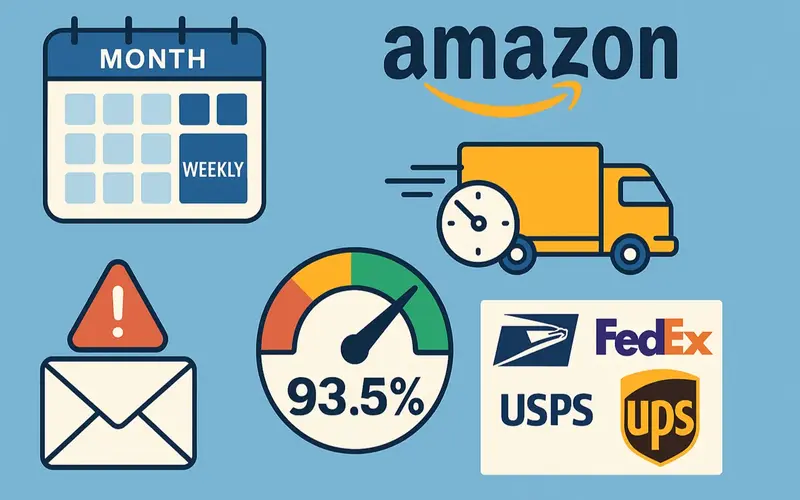
Let’s cut to the chase: under the old system, you needed a 97% on-time delivery rate (OTDR) over a rolling 30-day window to keep that Premium Shipping eligibility. Amazon looked at your performance once a month, sent one warning if OTDR dipped below 97%, and gave you until the next month to fix it. Easy enough—if you had a random bad week, you could smooth it out with stellar performance the rest of the month.
Starting June 29, though, those monthly buffers disappear. Amazon will track OTDR on a weekly basis, from Sunday through Saturday, and drop any Seller Fulfilled Prime (SFP) orders from that calculation. If your OTDR for Premium Shipping falls below the new minimum, 93.5%, you’ll get your first email warning. Do it again next week, and you’ll receive a second warning. Miss the same threshold three times within four consecutive weeks, and you’re out of Premium Shipping until you earn it back.
Why 93.5%? Amazon’s rationale is that they want customers to experience the same reliability they’ve come to expect from the Prime program. Dropping the requirement from 97% to 93.5% might seem like a concession, but trust me, hitting 93.5% every single week is not easy when you’re dealing with carriers that are out of your direct control.
Why This Matters (and Why It’s Tougher Than It Sounds)
No More “Average” Weeks
Under the old model, you could have one sloppy week at, say, 94%, and then three spectacular weeks at 99%, and your overall 30-day OTDR would still be above 97%. Now, if that first week is below 93.5%, you’ll get dinged immediately. A single underperforming week can trigger a warning, and you can’t “erase” it with future weeks once that four-week window closes.
Carriers Need to Be in Your Back Pocket
Amazon explicitly calls out approved carriers like UPS, FedEx, USPS, and OnTrac. If a carrier misses scans, delays pickups, or delivers late, you’re on the hook. The OTDR calculation counts the percentage of orders that arrived on or before the promised “Deliver by” date. If your package is scanned late, or not scanned at all, Amazon assumes it’s going to be late unless an on-time delivery scan is received later. That’s why it’s more important than ever to monitor each carrier’s performance, review their “Last-Mile Delivery” scorecards, and swap out underperformers.
Shipping Settings Automation & OTDR-Protected Labels
Good news: Amazon is offering tools to help you hit your weekly targets. Shipping Settings Automation (SSA) will calculate transit times automatically so your “Deliver by” promises match real-world carrier performance. You still need to set accurate handling times, but SSA can help avoid accidentally over-promising.
Then there’s OTDR protection: if you enable SSA and purchase an OTDR-Protected label through Amazon Buy Shipping, Amazon won’t penalize you for late deliveries as long as the delay is due to factors outside your control. It’s essentially a safety net—except it only applies if you do everything else right (set your handling time properly, buy the right label, and ship on time).
What Sellers Must Do Right Now
1. Audit Your Carriers
- Pull up your Carrier Scorecard in Seller Central each Monday morning.
- Look for patterns: Who’s got the slowest last-mile scans?
- Drop carriers that regularly clock in under 95% weekly on-time scans, because once you hit 93.5%, there’s zero wiggle room.
2. Enable SSA on Every Shipping Template
- Navigate to Shipping Settings → Edit Template → Toggle on Shipping Settings Automation.
- Let Amazon calculate transit times based on carrier data. If you don’t do this, you’re basically flying blind and promising delivery dates you can’t reliably meet.
3. Purchase OTDR-Protected Labels
- Go to Manage Orders → Buy Shipping and look for the shield icon indicating “OTDR Protected.”
- If you use an external tool like Cahoot, make sure it’s integrated and configured to buy the correct labels.
4. Track Your OTDR Like a Hawk
- Check your Account Health → Shipping Performance → On-Time Delivery Rate view, filtered to the “Last 7 Days.”
- Log it in a simple spreadsheet or dashboard; if you’re at 95% on Thursday but have a big FedEx hiccup on Friday, you might dip under 93.5% by Saturday.
5. Prepare an Appeal Template
- If you get that dreaded second warning email, you have two weeks to appeal.
- Your appeal should include:
- Specific orders that caused the miss (order IDs, promised vs. actual dates).
- Evidence that you used SSA and OTDR-Protected labels (screenshots help).
- Steps you’re taking to prevent a repeat (e.g., switching carriers, adjusting handling times).
The Ripple Effects on Your Business
Margin Compression vs. Service Reliability
Yes, spending more on premium carriers or buying OTDR-protected labels adds cost. But losing Premium Shipping can crater your conversion rate, tank your Buy Box percentage, and even affect organic search ranking. You have to run the numbers: maybe offering fewer SKUs with Premium Shipping is cheaper in the long run than risking weekly OTDR failures that affect your sales on your highest-performing SKUs (by being kicked out of the program).
Operations & Inventory Juggling Acts
Keeping enough stock in the “right” warehouses, so carriers aren’t shipping from the opposite coast, matters more than ever. If you sell nationally, you may need multiple fulfillment locations (a 3PL or micro-fulfillment center network). Staggering your replenishment orders (especially around holidays) can prevent stockouts that force you to oversell and then ship late.
Small Sellers vs. Big Sellers
Large brands with multi-warehouse setups and teams dedicated to carrier management can adjust more fluidly. If you’re a one-person operation fulfilling out of your garage, you’ll need to be extra strategic—maybe select just two to three proven carriers and ship as many orders as possible the same day you pick them. The bar is higher now, and patience for shipping errors is slim.
A Few FAQs to Keep You Sane
Q: What happens if a hurricane or blizzard slows down my carrier?
A: If Amazon deems it a “major disruption event,” late deliveries in that region won’t count against your OTDR. But you still need SSA + OTDR-protected labels before the delay. Don’t wait for your messages to start flooding; enable those tools now.
Q: Will this affect Seller Fulfilled Prime?
A: Sort of. SFP has its own stricter OTDR requirements, also on a weekly cadence, but it’s evaluated separately. Just remember, your SFP and Premium Shipping OTDRs are on parallel tracks; a slip in one doesn’t automatically tank the other, but it’s best to nail both.
Q: Can I regain Premium Shipping status after removal?
A: Yes, but you must meet all OTDR requirements for four consecutive weeks after your third infraction (without another miss). It’s basically a “clean slate” window: stay above 93.5% each week for four weeks, and Amazon resets your eligibility for that specific requirement.
Final Thoughts: Embrace the Change (or Get Left Behind)
Amazon’s shift from a 30-day OTDR roll-up to a 7-day weekly check is a clear message: if you want to hang with Prime-level sellers, you need rock-solid operational consistency and carrier partnerships. There’s no “coasting” on the back of a stellar month anymore; you have to nail every single week.
Yes, the change feels daunting. Your margins may squeeze, and your team (even if it’s a team of one) will need to revamp processes. But savvy ecommerce pros know adversity breeds opportunity. Rethink your shipping playbook:
- Lean into SSA and OTDR-protected labels.
- Cultivate trusted carrier relationships (and ditch underperformers ASAP).
- Monitor your weekly OTDR like your P&L depends on it (spoiler: it does).
- Build redundancy, FBA hybrid, multi-warehouse, or strategic 3PL partnerships.
Master these moves, and you won’t merely survive—you’ll thrive. Happy selling, and may your weekly OTDR always stay north of 93.5%.
Citations
- Amazon Seller Central – Upcoming changes to Premium Shipping
- Amazon Seller Central – Frequently asked questions about on-time delivery rate (OTDR)
Written By:
Jeremy Stewart
Jeremy Stewart leads customer success at Cahoot, helping merchants achieve high-performance logistics through smart technology and process optimization. With a background in both ecommerce operations and client services, Jeremy ensures that every merchant using Cahoot gets measurable results—whether they’re scaling from one warehouse to many or managing complex returns.
Turn Returns Into New Revenue
Related Articles
What Is Demand Planning? How It Impacts Inventory, Forecasting, and Profitability
Demand planning is the process of estimating future customer demand so that a business can align its inventory, procurement, and operations to meet that demand without carrying mor...
Walmart Officially Allows Amazon Multi-Channel Fulfillment (MCF)
Big news for multichannel sellers: Walmart now officially allows Amazon Multi-Channel Fulfillment (MCF), Amazon’s service for using its fulfillment network to ship orders from mult...

Shopify Subscription Payment Change: Why It Could Hurt Reactivation
Shopify changed how subscription payment information is handled at cancellation.
Fewer Sellers, Bigger Gains: Seizing Amazon’s Shrinking Competition in 2025
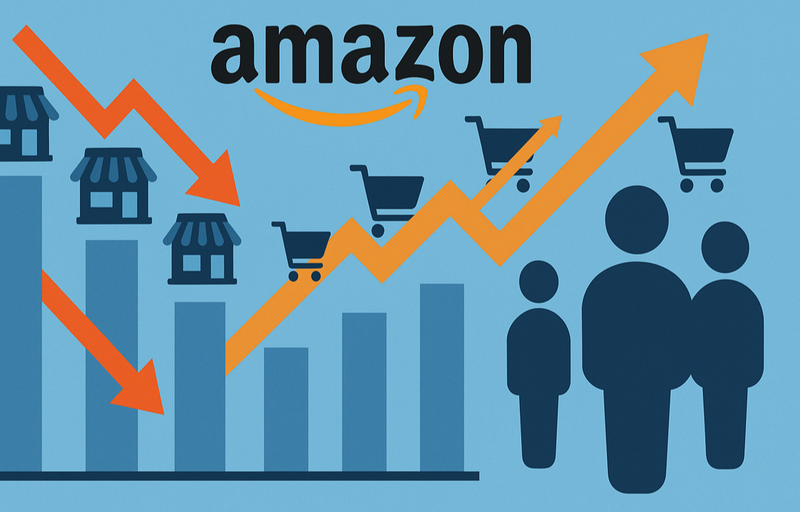
Amazon used to feel like a never-ending battlefield: millions of sellers duking it out for every eyeball. Fast-forward to 2025, and things have quietly shifted. Yes, a ton of new sellers keep signing up—roughly a million a year—but the number of active sellers (those getting at least one review in the past year) has actually fallen from about 2.4 million in 2021 to under 1.9 million in 2025. That’s a 20% drop, and it means there’s more traffic up for grabs per seller. In plain English, the average Amazon seller now gets nearly 31% more visits than four years ago. Cue the confetti for anyone still standing, and some serious sticker shock for those just starting out.
Why the Dip in Active Sellers Matters
Let’s unpack that number: Amazon’s overall traffic has stayed roughly level since 2021, clocking in at around 5 billion visits per month across its global network. But active sellers declined from 2.4 million to 1.9 million between 2021 and 2025. Divide the same or slightly higher traffic by fewer storefronts, and voilà, monthly visits per seller climbed from 2,162 to 2,837. In other words, if you’re still in the game, you’ve got about 31% more potential buyer eyeballs on your listings than your counterparts did a few years back.
That traffic bump isn’t just academic. With Amazon’s revenue surging 36% (from $470 billion in 2021 to $638 billion in 2024), it’s clear the pie is growing even as some sellers fall out. Third‐party sellers, who already sold 56% of units in Q4 2021, pushed their share up to 62% by Q4 2024. Translation: More of a bigger pie is yours for the taking if you can navigate the challenges.
Why Sellers Are Fading Out
Okay, so why are fewer “active sellers” sticking around? A few big reasons: rising fees, logistical headaches, and cutthroat price wars.
- Amazon’s Fees Have Ballooned
- In some categories, referral, FBA pick‐and‐pack, and storage fees now gobble up over 50% of a product’s list price.
- Monthly or seasonal storage surcharges and random “reclassification fees” can make it feel like Amazon’s charging you just for breathing.
- The result? Margin erosion that many newcomers can’t stomach.
- Inventory & Case-Management Headaches
- FBA is a blessing until your inventory gets stranded, buried under storage‐fee surcharges, or stuck in removal limbo. Solving these requires hours of back-and-forth with Seller Support.
- Switching to FBM (Fulfilled by Merchant) isn’t a slam dunk either; sourcing reliable carriers, managing returns, and weathering holiday shipping bottlenecks add a new layer of complexity.
- Regulatory & Tariff Unknowns
- Tariff rates have been fluctuating unpredictably, particularly for goods from China or certain apparel categories. A 10% hike overnight can wreck your COGS (cost of goods sold) if you’re unprepared.
- Sales tax laws and cross-border customs rules shift every few quarters. Small sellers risk penalties if they slip up.
- Chinese Seller Dominance
- Chinese merchants make up over half of the top-performing Amazon accounts, often undercutting U.S. sellers with razor-thin margins. It’s tough to compete on price when factory-direct sellers list at rock-bottom rates.
Put those together, and it explains why many hopeful sellers register, list a few products… and then disappear. In fact, more than 60% of the top 10,000 Amazon sellers launched before 2019, proving that experience and staying power are huge advantages.
Why the U.S. Marketplace Still Reigns Supreme
If you’re deciding where to list, the U.S. marketplace is still the gold standard. Sure, places like Saudi Arabia boast 8,228 visits per seller, and South Africa is close behind at 8,065. But those markets simply don’t have the total volume or category breadth of Amazon.com. In the U.S., a niche term like “sourdough starter jar” gets roughly 26,766 monthly searches, compared to 179 in Australia or zero in Saudi Arabia. In other words, niches thrive stateside in a way they can’t elsewhere.
Even better: 73% of U.S. sellers who joined in the past year hit their first sale within 12 months. That’s substantially higher than Germany (38%), the U.K. (32%), or Canada (16%). For new sellers looking for quick validation, the U.S. simply offers the best odds.
Challenges to Confront Head-On
More traffic is great, but it doesn’t magically overcome the hurdles. Here’s what you’ll face if you jump into Amazon today:
- Margin Erosion: Even with extra visits, if your fees and COGS leave you with negligible profit per unit, those extra eyeballs won’t matter. Carve out a robust pricing model, know your true landed cost—including tariffs, shipping, Amazon fees, and PPC.
- Inventory Planning: Sell-through rates matter. Overstocking triggers costly storage fees; understocking loses you the Buy Box and lets competitors swoop in. Sophisticated 3PL integrations or tools like Forecastly can help you thread the needle.
- Competitive Pricing & Buy Box Battles: Repricers can help, but they’re not magic. When Chinese sellers aggressively undercut, you risk starting a race to the bottom. Focus on unique value propositions, bundling, subscription offers, or enhanced branding to stand out.
- Regulatory Compliance: Keep up with tariff updates. For instance, electronics gear imported from Asia might incur new duties under a 2025 trade ruling—know it before it blindsides your margin.
- Account Health Vigilance: A single A-to-Z claim or policy violation can drop your seller rating. If you rely on Amazon for 80% of your sales, a suspension can be devastating. Build redundancies: own a Shopify store or diversify into Walmart Marketplace.
How to Capture Your Piece of the (Growing) Pie
1. Lean Into Niche Categories: If you’re selling something ultra-specialized—think artisan beard balm, eco-friendly pet toys, or limited-edition kitchen gadgets—your “competition” pool is smaller. Use tools like Helium 10 to spot emerging micro-niches before they catch fire.
2. Optimize Listings with SEO & Enhanced Content: Keywords matter, but so does conversion. High-res images, 360-degree product videos, and A+ content can take your listing from meh to must-buy. When you’ve got 30% more visits, conversion-rate improvement is pure gold.
3. Strategic PPC & DSP Budgets: With that extra traffic cushion, you might discover that CPCs (cost per click) in your niche are actually lower now due to lighter competition. Run a lean Sponsored Products campaign; if your listing’s solid, you can turn that paid traffic into organic momentum.
4. Leverage Prime & Subscription Models: Products eligible for Prime enjoy a higher click-through rate. If the margin allows, consider bundling or small subscription programs to lock in recurring revenue rather than one-off purchases.
5. Diversify Fulfillment Options: FBA is convenient, but a 3PL (third-party logistics company) hybrid or FBM can be more cost-effective once you hit a certain volume. Free two-day shipping is table stakes; just make sure your margins survive the shipping fees.
6. Plan for International Growth, But Don’t Rush: The data shows 69% of sellers stay confined to one marketplace. If you nail the U.S., expanding later to Canada or Mexico can be a logical next step. But don’t spread inventory too thin across 22+ marketplaces when your U.S. business still has growth levers to pull.
The Road Ahead
As Amazon’s marketplace matures, the landscape will keep shifting—new fees might pop up, algorithm tweaks could rearrange SERP rankings, and global trade winds will bring fresh tariff puzzles. But right now, a rare alignment exists: fewer active sellers, steady or growing buyer traffic, and a rising slice of third-party volume. For brands with grit, this means more opportunity if you’re willing to do the heavy lifting.
The parting advice? Amazon’s game has always been about endurance. Weather the headwinds, optimize your listings, master your costs, and don’t be afraid to lean into niche categories—and you might just ride this 30% traffic bump into the kind of scale that felt impossible a few years ago.
Is it crowded? Sure. Is it still worth it? For those who can adapt, absolutely.
Citations
- Marketplace Pulse: Amazon Is Less Competitive Than Four Years Ago
- Marketplace Pulse: U.S. Is Amazon’s Most Beginner-Friendly Marketplace
- Marketplace Pulse: 69% of Amazon Sellers Sell in Just One Marketplace
Written By:

Manish Chowdhary
Manish Chowdhary is the founder and CEO of Cahoot, the most comprehensive post-purchase suite for ecommerce brands. A serial entrepreneur and industry thought leader, Manish has decades of experience building technologies that simplify ecommerce logistics—from order fulfillment to returns. His insights help brands stay ahead of market shifts and operational challenges.
Turn Returns Into New Revenue
Related Articles
What Is Demand Planning? How It Impacts Inventory, Forecasting, and Profitability
Demand planning is the process of estimating future customer demand so that a business can align its inventory, procurement, and operations to meet that demand without carrying mor...
Walmart Officially Allows Amazon Multi-Channel Fulfillment (MCF)
Big news for multichannel sellers: Walmart now officially allows Amazon Multi-Channel Fulfillment (MCF), Amazon’s service for using its fulfillment network to ship orders from mult...
Shopify Subscription Payment Change: Why It Could Hurt Reactivation
Shopify changed how subscription payment information is handled at cancellation.
Best 3PL Companies: Why Hiring a Traditional 3PL for Fulfillment Is a Mistake

In this article
27 minutes
- The Traditional Third-Party Logistics (3PL) Model: How It Works & Why It Falls Short
- Cahoot’s Peer-to-Peer Fulfillment Network: Key Differentiators
- Side-by-Side Comparison: Traditional 3PL vs. Cahoot
- Product Categories Most Vulnerable to Traditional 3PL Limitations
- Risk Analysis & Mitigation for Each Model
- How Sellers Should Evaluate Fulfillment Options
- Conclusion & Next Steps
- Frequently Asked Questions
Rapidly evolving customer expectations, such as next‐day delivery, free shipping, and impeccable order accuracy, have put immense pressure on ecommerce businesses to optimize their supply chain and fulfillment operations. For years, the conventional wisdom held that outsourcing to one of the best 3PL companies (third-party logistics providers) was the gold standard for reliable delivery services. Yet today, many merchants are discovering that traditional 3PL companies carry hidden costs, limited flexibility, and operational inefficiencies that hinder business growth. In many cases, partnering with a 3PL company is seen as a way to support a business’s growth by streamlining logistics and enabling scalability, but these benefits are not always realized with traditional providers. In contrast, peer-to-peer fulfillment networks, like Cahoot, leverage existing ecommerce expertise, distributed inventory management, and advanced logistics technology to deliver seamless, technology-driven fulfillment services. This article explains why partnering with a traditional 3PL for logistics operations can be a mistake and offers actionable advice on how to evaluate alternatives, with a focus on Cahoot’s assetless, peer-to-peer model.
The Traditional Third-Party Logistics (3PL) Model: How It Works & Why It Falls Short
Third-party logistics companies (3PL) have historically provided comprehensive supply chain solutions: warehouse storage, pick-pack-ship, freight forwarding, reverse logistics, and value-added services such as kitting or custom packaging solutions. These services are part of the broader supply chain management functions that 3PLs handle for their clients, including activities like warehousing, transportation, inventory management, and order fulfillment. 3PLs also offer logistics management as a core service, encompassing warehousing, transportation, and inventory control to streamline and optimize supply chain operations. They often own or lease large fulfillment centers, invest heavily in robust logistics infrastructure, and tout their extensive global network. The logistics capabilities of 3PLs support ecommerce business operations by enabling companies to scale, improve efficiency, and meet customer demands effectively. While these supply chain management services sound appealing in theory, promising operational efficiency and cost savings through economies of scale, in practice, many merchants discover that traditional 3PLs introduce new challenges.
Centralized Warehousing & Fixed Asset Overhead
Traditional 3PL providers typically own or lease multiple fulfillment centers across regions, relying on a robust network of facilities to support their operations. Their extensive network enables broad geographic reach and scale, investing in forklifts, racking, and extensive staffing for supply chain operations. This means they carry significant fixed asset costs, warehouse rent, utilities, labor, and equipment depreciation that must be recouped through minimum-volume contracts and storage fees. During slow seasons, those costs remain constant, leading 3PL companies to impose strict minimum-monthly invoices or chargeback penalties when order volumes dip.
Actionable Takeaway: Request a fully itemized quote from your 3PL, asking specifically about storage minimums, seasonal surcharges, and long-term lease obligations. If their base overhead drives your logistics costs up regardless of your sales volume, consider alternative models with usage-based pricing.
Standard Operating Culture vs. Seller-Mindset
Employees at a legacy fulfillment center often fulfill orders for dozens or hundreds of different ecommerce businesses. While service-level agreements (SLAs) and performance metrics exist, many 3PL staff “punch a clock” under broad policies rather than taking ownership over specific brands. This lack of ownership can negatively impact the delivery of quality service, leading to less attention to detail and lower customer satisfaction. As a result, packaging may be generic, void fill may be minimal, and handling may prioritize speed over customer satisfaction. In contrast, partner sellers in a peer-to-peer network like Cahoot are ecommerce experts who ship their own orders all day, every day. They treat Cahoot orders with the same care they give their own, using right-size packaging, quality dunnage, and ensuring precise pick-pack accuracy to enhance customer satisfaction and maintain brand reputation.
Actionable Takeaway: Ask your current 3PL to provide photos or video walkthroughs of their order fulfillment workflow, including how they pick, pack, and palletize your merchandise. Compare that to Cahoot’s model, where partner sellers share their own fulfillment processes and quality control protocols. If your 3PL’s service quality feels generic, it’s time to reevaluate.
Contractual Rigidity & Onboarding Timelines
Signing a multi-year contract with one of the best 3PL companies can lock merchants into rigid rate cards, annual volume commitments, and early-termination penalties. These rigid contracts often prevent businesses from accessing scalable solutions that can adapt to changing demand, such as seasonal spikes or rapid growth, and may also limit the availability of tailored solutions for businesses with unique or evolving logistics needs. Moreover, onboarding a new account at a 3PL often takes 4–8 weeks: mapping SKUs into the warehouse management system (WMS), negotiating carrier contracts, and configuring inventory management integrations with your ecommerce platform. Slow ramp-up times delay your time-to-market, making it nearly impossible to pivot quickly for seasonal promotions or unexpected demand spikes.
Actionable Takeaway: Compare your current 3PL’s onboarding timeline to Cahoot’s plug-and-play setup. Cahoot can typically be ready to fulfill orders within a few days without long-term commitments. If your business requires faster time-to-market, a flexible network model will better support supply chain optimization.
Cahoot’s Peer-to-Peer Fulfillment Network: Key Differentiators
Cahoot’s peer-to-peer model transforms traditional logistics by partnering with established ecommerce sellers, businesses that are already shipping their own orders to end customers every day. This cooperative design creates a distributed network of fulfillment centers without the burden of fixed assets, delivering tailored logistics solutions and tailored services that address the specific needs of different businesses. Cahoot’s advanced technology enables optimized logistics processes, enhancing operational efficiency and delivery accuracy while reducing logistics costs and supporting scalable growth.
Assetless, Cooperative Design vs. Legacy Overhead
Unlike traditional 3PL providers that own or lease expensive real estate, Cahoot operates an assetless model: it leverages partner sellers’ excess storage space and fulfillment capacity. These partner sellers maintain their own robust logistics infrastructure for their own brands, temperature-controlled rooms for supplements, secure areas for electronics, and specialized racks for apparel. By tapping into this existing network, Cahoot eliminates the need for merchants to pay for underutilized warehouse space or fixed labor costs. This approach delivers efficient logistics solutions by reducing overhead and maximizing resource utilization. Pricing becomes purely usage-based, reflecting only the actual pick-pack-ship labor and shipping costs without hidden overhead.
Actionable Takeaway: Run a direct cost comparison: request a quote from your 3PL that includes all overhead fees, minimum storage fees, cross-dock charges, and dedicated labor costs. Then request Cahoot’s usage-based rates, which show exactly what you’ll pay per order. Clients routinely confirm that the predicted ROI is indeed achieved. You’ll likely discover 20%–30% cost savings of your own.
Expertise & Quality Mindset of Partner Sellers
Cahoot’s partner sellers are ecommerce experts who ship thousands of orders per week for their own businesses. They care deeply about customer experience and loyalty, continuously optimizing their logistics operations to maximize customer satisfaction and reduce returns. In addition to their expertise, partner sellers can provide specialized services tailored to specific product types or unique business requirements, ensuring custom fulfillment and supply chain solutions. When these same sellers fulfill Cahoot orders, they apply identical rigor: right-size packaging, high-quality void-fill, and precise SKU handling. This level of specialized expertise, combined with Cahoot’s Fulfillment Verification technology, makes it nearly impossible to ship the wrong item to the wrong customer, thus allowing them to claim a 100% fulfillment accuracy rate. The resulting high quality helps merchants qualify for programs such as Amazon Seller-Fulfilled Prime (SFP), which now operates under Amazon’s updated eligibility, performance, and OTDR rules effective June 29, 2025. As of June 29, 2025, Amazon updated Seller Fulfilled Prime and Premium Shipping policies, so sellers should recheck eligibility, shipping templates, and OTDR protections before relying on those programs.
Actionable Takeaway: Identify two high-volume SKUs you currently ship via a third-party. Ask the 3PL how they pack and ship those exact SKUs, review box dimensions and dimensional weight, dunnage materials, and packing checklists. Compare that to the size and weight of your SKUs and confirm that you’re not overpaying for shipping using a too-large box vs. using a right-sized box.
Distributed Network for Supply Chain Optimization, Speed & Reliability
Traditional 3PL fulfillment centers typically rely on regional warehouses. If your end customer falls outside the core distribution zone, standard ground shipping can take 3–5 days. In contrast, Cahoot’s distributed network places inventory at partner nodes strategically located near population centers. This enables next-day or two-day delivery to over 95% of U.S. zip codes, even for merchants based in only a few regions. By leveraging this distributed network, Cahoot provides seamless logistics solutions that ensure fast and reliable delivery. Additionally, Cahoot ships six days a week, unlike many 3PLs that only operate Monday through Friday, and offers a later same-day fulfillment cutoff. This flexibility reduces weekend order backlogs, enhances customer experience, and ensures that ecommerce businesses can meet high customer expectations for fast, reliable delivery.
Actionable Takeaway: Map your top 10 zip codes by sales volume and calculate current transit times from your 3PL’s central warehouse(s). Then ask Cahoot to provide average transit times from its nearest location to those same zip codes. If Cahoot offers a two-day improvement on average, you’ll boost customer satisfaction and reduce cart abandonment related to slow shipping.
Plug-and-Play Technology & Real-Time Visibility
Leading 3PL companies offer logistics software that integrates with ecommerce platforms, but many suffer from delayed data (24–48 hour lags) or clunky user interfaces. Cahoot’s technology-driven fulfillment services are built for real-time integration: native connectors for Shopify, WooCommerce, Amazon Seller Central, BigCommerce, and more. As soon as an order is placed, the Cahoot dashboard updates inventory levels, routes the order to the optimal node, and displays carrier tracking in real time. This real-time integration enables businesses to address their unique logistics needs more effectively, ensuring that specific requirements and complexities are managed with greater precision. Built-in analytics and supply chain consulting tools help merchants proactively identify stockouts, detect inventory shrinkage, and optimize reorder points, all within a single, intuitive interface.
Actionable Takeaway: Request demo access to both your current 3PL’s portal and Cahoot’s dashboard. Place a sample order and track how quickly each platform updates order status, inventory levels, and shipping confirmations. If Cahoot’s live updates reduce latency and improve decision-making, you’ll gain a competitive advantage.
Side-by-Side Comparison: Traditional 3PL vs. Cahoot
A direct comparison between industry-leading 3PL providers and Cahoot’s peer-to-peer network makes it clear why many merchants choose to switch. While traditional 3PLs offer standard order fulfillment services, Cahoot provides a more innovative and distributed approach, allowing for greater flexibility and efficiency in handling diverse ecommerce needs.
When it comes to shipping and delivery, flexible transportation solutions are crucial for meeting customer expectations and ensuring timely, reliable order fulfillment.
Cost Structure & Overhead
- Traditional 3PL Companies:
- Monthly storage fees based on reserved cubic footage or pallet positions; surcharges during peak seasons.
- High minimum monthly invoice requirements.
- Fixed labor costs for pick, pack, and ship; potential overtime fees during surges.
- Additional value-added services (kitting, returns processing, custom packaging) are often billed at premium rates.
- Fulfillment costs can be significant, as traditional 3PLs may charge extra for tailored ecommerce logistics and fulfillment solutions.
- Cahoot’s Peer-to-Peer Network:
- No fixed storage minimums, uses partner sellers’ excess capacity, so monthly invoicing matches actual usage.
- Every order is rate-shopped across all carriers and services supported from every location that has inventory in stock and is assigned to ship for the lowest cost identified, eliminating dimensional-weight surprises.
- Value-added services are billed strictly as time and materials, at transparent, market-competitive rates, reflecting actual usage.
- Fulfillment is optimized for ecommerce businesses, reducing costs by streamlining warehousing, distribution, and fulfillment through a flexible (“elastic”) network.
Actionable Takeaway: Build a simple spreadsheet comparing the cost per order (storage + pick/pack + shipping) for both models over a 30-day period. Include any one-time onboarding fees and account management. If Cahoot’s total landed cost per order is at least 15% lower, you stand to save tens of thousands of dollars annually. Note: Cahoot will do the calculations for you.
Fulfillment Speed & Geographic Reach
- Traditional 3PL Providers:
- Centralized fulfillment often results in 3–5 day ground shipping to certain regions, especially if orders ship from a single warehouse.
- Limited weekend operations; orders placed on Fridays may not ship until Monday, delaying delivery and impacting customer satisfaction.
- Peak-season capacity constraints can force overflow to slower carriers or result in shipping delays.
- Cahoot’s Distributed Network:
- Inventory is placed at multiple fulfillment centers (partner nodes) close to end customers, enabling next-day or two-day delivery to 95% of U.S. zip codes.
- Six-day shipping and later same-day shipping cutoff times ensure weekend orders are processed promptly, delivering to your customers faster.
- During peak seasons and when weather negatively impacts the ability for a carrier to move packages through their shipping network, Cahoot dynamically routes orders to partner sellers with available capacity, mitigating bottlenecks and ensuring high on-time delivery rates.
Actionable Takeaway: Identify your top five high-volume zip codes by sales. Compare average transit days from your 3PL’s warehouse(s) to those zip codes versus Cahoot’s nearest nodes. If Cahoot promises a two-day improvement, you’ll decrease order-related support tickets and boost repeat purchase rates.
Scalability & Flexibility
- Traditional 3PL Companies:
- Staffing levels are fixed; adding labor during surges often comes at a high premium.
- Forecasting must be done months in advance; inaccurate forecasts lead to overstock fees or stockouts.
- Cahoot’s Peer-to-Peer Model:
- Scales dynamically with demand, and partner sellers adjust capacity in real time.
- Flexible inventory allocation: Merchants can move stock between partner nodes quickly and easily, reducing excess inventory and stockouts in key regions.
Actionable Takeaway: Analyze your last two Black Friday/Cyber Monday seasons. Document the percentage of orders your 3PL delayed or rerouted due to capacity limits. Then request Cahoot’s peak-season performance metrics for similar volumes. If Cahoot processed 100% of orders on time compared to your 3PL’s 90%, the flexibility is clear.
Quality Control & Accuracy
- Traditional 3PL Providers:
- Large warehouses lacking the robust technology to handle tens of thousands of SKUs can yield mis-pick rates exceeding 1%.
- Generic packaging solutions may not meet brand standards, resulting in higher damage rates and customer returns.
- Reverse logistics and returns processing may be siloed, leading to delayed refund issuance and negative customer experiences.
- Cahoot’s Partner-Seller Expertise:
- They apply the same high standards, checklists, barcode scanning, and dual verification to Cahoot orders as they do their own, delivering efficient fulfillment services with high accuracy and low error rates. Plus, partner sellers can ONLY ship Cahoot orders using the Cahoot technology. There’s no option otherwise. The technology literally prevents fulfillment defects.
- Specialized partner sellers offer custom solutions such as cold storage, cold pack shipping, food grade storage, FDA registration, FBA Forwarding, oversized SKUs, hazmat, fragile…you name it.
- Integrated reverse logistics network streamlines returns, orders are inspected locally, restocked quickly, and refunds are issued promptly, enhancing customer satisfaction. Plus, Cahoot’s Peer-to-Peer Returns solution virtually eliminates returns altogether.
Actionable Takeaway: Request fulfillment accuracy reports (mis-pick and damage rates) from your current 3PL for the past six months. Then ask Cahoot for average accuracy metrics across partner nodes. If Cahoot outperforms by at least 0.5%, you’ll see fewer costly re-shipments and better customer reviews.
Product Categories Most Vulnerable to Traditional 3PL Limitations
While every business has unique supply chain requirements, certain product categories tend to suffer disproportionately under the traditional 3PL model. Limitations in traditional 3PLs can disrupt supply chains, leading to inefficiencies and reduced visibility for these products. Cahoot’s peer-to-peer network, with its specialized expertise and distributed infrastructure, addresses these vulnerabilities directly.
Perishable Goods (Food, Supplements)
- Challenges with Traditional 3PL:
- Centralized fulfillment centers may be geographically distant from end customers, increasing transit times and risking spoilage.
- Limited temperature-controlled capacity, 3PL inventory is stored in shared cold rooms, potentially compromising compliance with food safety regulations.
- Ineffective transportation management can further jeopardize the timely and safe delivery of perishable goods, increasing the risk of spoilage.
- Returns or damaged goods due to spoilage create logistical headaches and erode profit margins.
- Cahoot’s Peer-to-Peer Advantage:
- Local partner sellers often maintain temperature-controlled facilities near high-demand markets, ensuring same-day or next-day delivery that preserves freshness.
- Specialized sellers follow strict inventory management processes, FIFO (first in, first out), batch tracking, and FDA-compliant storage protocols.
- Reverse logistics for perishable returns are handled promptly, minimizing disposal costs.
Actionable Takeaway: Select two SKUs of perishable goods; compare spoilage or damage rates between your 3PL and Cahoot’s local nodes over a 30-day testing period. The difference in product integrity will be stark.
“Cahoot has amazing technology in addition to their large warehouse network, sort of like Amazon FBA but without the hefty fees or restrictions. Cahoot saved our peak-selling ecommerce season!”
~ Joel Frankel, Fames Chocolates
Speak to a fulfillment expert
Bulky/Oversized Items (Furniture, Fitness Equipment, Home Décor)
- Challenges with Traditional 3PL:
- Central warehouses often rely on national LTL (less-than-truckload) carriers, incurring high dimensional-weight fees and extended transit times.
- Packaging materials may not be optimized for oversized items, leading to damage or higher freight forwarding surcharges.
- Lack of specialized handling can result in higher return rates and frustrated customers.
- Cahoot’s Peer-to-Peer Advantage:
- Partner sellers network with regional LTL or white-glove specialists, reducing freight costs and offering more reliable and faster delivery for bulky items.
- Custom packaging solutions, reinforced boxes, corner protectors, and void fill ensure safe transport.
- Flexibility to route orders to the nearest node with capacity, minimizing transit distance and shipping costs.
Actionable Takeaway: Calculate your average dimensional-weight fee for bulky SKUs under your 3PL model. Then request Cahoot’s negotiated regional LTL rates for those same items. If Cahoot reduces freight costs by 20% or more, you’ll see immediate improvement in operational efficiency.
Seasonal Apparel & Flash-Sale Merchandise
- Challenges with Traditional 3PL:
- Requires forecasting inventory levels 3–6 months in advance; inevitable inaccuracies lead to overstock charges or costly stockouts.
- Peak-season storage fees skyrocket, and underutilized space during off-season remains a sunk cost.
- Limited ability to quickly redistribute merchandise across multiple fulfillment centers.
- Cahoot’s Peer-to-Peer Advantage:
- No storage minimums; merchants pay only for what they store and ship, eliminating off-season overhead.
- Ability to quickly shift inventory between partner nodes based on real-time demand analytics.
- Network flexibility ensures that flash-sale items are placed close to buyers as soon as sales data emerges, reducing lead times and lowering return rates.
Actionable Takeaway: Analyze your previous two seasonal peaks, quantify days of stockouts and overstock costs under a 3PL model. Then compare to Cahoot’s pilot performance over the same period. If Cahoot reduced stockouts by 30% and eliminated off-season fees, seasonality becomes a strategic advantage.
High-Value Electronics & Luxury Goods
- Challenges with Traditional 3PL:
- Longer transit times increase the risk of theft or damage; generic packaging may not meet premium-brand quality standards.
- Many 3PLs treat high-value SKUs the same as everyday commodity items, leading to higher insurance claims.
- Standard returns processing can be slow, frustrating customers when expensive items need repair or replacement.
- Cahoot’s Peer-to-Peer Advantage:
- Specialized partner sellers can offer dedicated white-glove service and custom secure shipping, ensuring better tracking and handling for luxury items.
- Custom packaging solutions, anti-static bags for electronics, and reinforced packaging for fragile components reflect a brand’s commitment to quality.
- Integrated reverse logistics allow expedited returns, enhancing customer loyalty and reducing potential chargebacks or disputes.
Actionable Takeaway: Track your shrinkage or damage claim rates for high-value SKUs over six months with a traditional 3PL. Then run a small pilot with Cahoot for those same items. If Cahoot’s damage rates decrease significantly, perhaps by over 50%, you’ll safeguard both profit margins and customer satisfaction.
Risk Analysis & Mitigation for Each Model
Every fulfillment decision carries risks. By understanding and quantifying those risks, merchants can make informed choices aligned with supply chain performance goals.
Hidden Fees & Contract Penalties (Traditional 3PL)
- Risks:
- Automatic rate escalators tied to fuel surcharges or annual inflation adjustments.
- Excessive storage charges when inventory dips below or exceeds contract expectations.
- Early termination penalties that can amount to thousands of dollars if you switch providers mid-contract.
- Cahoot’s Mitigation:
- Transparent, usage-based invoicing with no hidden surcharges; each line item (pick/pack, packaging, shipping) is clearly detailed.
- No long-term commitments.
- Dynamic pricing that reflects current market rates for shipping carriers, reducing the risk of unexpected cost spikes.
Actionable Takeaway: Ask your 3PL rep to provide a full 12-month cost breakdown, including all surcharges, storage minimums, and penalty clauses. Then request Cahoot’s itemized quote. If Cahoot’s transparency reduces your logistics costs by 15% or more, the assetless model is clearly superior.
Inventory Management: Shrinkage & Mis-Picks
- Risks (Traditional 3PL):
- Large fulfillment centers handling thousands of SKUs often exhibit mis-pick rates above 1%, leading to returns (lost sales) and re-shipments (lost inventory and lower overall margins).
- Generic security protocols may not deter employee collusion or theft.
- Limited fraud detection software within legacy warehouse management systems (WMS).
- Cahoot’s Mitigation:
- Partner sellers use barcode scanning, dual verification, and built-in fraud detection software to maintain mis-pick rates near 0%.
- Inventory is treated as if it’s their own; partner sellers have a vested interest in reducing shrink, since they rely on the same processes to ship their own products.
- A distributed network reduces the impact of a single node’s shrinkage; issues are localized and resolved quickly.
Actionable Takeaway: Review your 3PL’s last inventory shrinkage report. Then request Cahoot’s average shrinkage metrics. If Cahoot’s partner network consistently demonstrates lower shrink and mis-pick rates, you’ll reduce costly re-shipments and improve customer trust.
Peak-Season Capacity Constraints
- Risks (Traditional 3PL):
- Limited storage and labor capacity during Black Friday/Cyber Monday and other major sale events often leads to delayed orders, oversell situations, or surcharges.
- Forecasting must be done months in advance; inaccurate projections result in expensive last-minute labor or off-site warehousing.
- Manual rerouting may be required when capacity thresholds are breached.
- Cahoot’s Mitigation:
- Dynamic, distributed network with partner sellers that can onboard additional capacity within days, no long-term forecasting required.
- Automated order routing ensures that orders flow to nodes with available capacity, avoiding bottlenecks.
- Real-time analytics highlight potential constraints hours before they occur, allowing preemptive adjustments.
Actionable Takeaway: Compile data on how many orders your 3PL delayed or rerouted during your last two peak seasons. Compare that to Cahoot’s performance metrics for similar volumes. If Cahoot processes over 99% of orders on time versus your 3PL’s 90%, the distributed model mitigates peak risks effectively.
Lack of Customer-Centric Focus
- Risks (Traditional 3PL):
- Employees may lack brand-level context, leading to packing errors or suboptimal customer experiences.
- Generic customer service tools and slow resolution of order issues can harm brand reputation.
- Limited ability to create tailored logistics solutions, returns, custom packaging, or premium unboxing experiences.
- Cahoot’s Mitigation:
- Partner sellers have skin in the game; they ship their own products, so they protect brand reputation, customer loyalty, and lifetime value.
- Cahoot’s integrated customer service tools enable real-time chat and immediate escalation for order issues, reducing resolution time.
- Custom packaging solutions, print-on-demand boxes, branded inserts, or kitting are offered by specialized sellers with experience enhancing the unboxing experience.
Actionable Takeaway: Learn about how Cahoot partner sellers prioritize order quality and customer satisfaction. Compare that cultural mindset to feedback from your existing 3PL’s account manager. If Cahoot’s partner sellers demonstrate deeper brand alignment, you’ll foster stronger customer loyalty.
How Sellers Should Evaluate Fulfillment Options
Choosing the right fulfillment partner requires objective metrics, targeted questions, and a thorough pilot test. For ecommerce businesses, it is crucial to select a partner that understands the unique challenges and requirements of online sellers, offering solutions that support growth and operational efficiency. When evaluating providers, be sure to consider their expertise in ecommerce fulfillment, ensuring they can deliver tailored logistics and warehousing solutions that meet your business needs. Below is a step-by-step guide.
Define Core Metrics Up Front
1. Total Landed Cost Per Order (pick/pack + packaging + shipping + storage)
2. On-Time Delivery Rate (aim for ≥ 99% two-day or next-day success)
3. Order Accuracy (target ≥ 99.7% pick/pack accuracy)
4. Customer Satisfaction (returns rate, net promoter score post-delivery)
5. Supply Chain Performance (inventory turnover, shrinkage, stockout events)
Actionable Takeaway: Create a weighted scorecard with these metrics (e.g., cost 40%, speed 30%, accuracy 20%, satisfaction 10%) to compare providers objectively.
Ask the Right Questions in Your RFP
- “What is your average onboarding time for a midsize merchant (5,000 orders/month)?”
- “Can you guarantee two-day delivery to our top 10 metros six days a week, and what are your cutoff restrictions?”
- “How do you handle specialized logistics services, custom packaging, kitting, or temperature-controlled storage?”
- “What is your mis-pick rate and inventory shrinkage percentage over the past 12 months?”
- “Describe your technology integration: how often is my dashboard updated, and how do you handle returns or reverse logistics?”
- “What are your fees for dimensional-weight shipments, peak-season surcharges, and storage minimums?”
Actionable Takeaway: Compile these questions into an RFP spreadsheet. Assign each answer a score (1–5) to ensure apples-to-apples comparison between prospective 3PL providers and Cahoot.
Run a Two-Week, 10-SKU Pilot
1. Select 10 Representative SKUs: Choose a mix of high volume, high value, bulky, perishable, and seasonal products. This step is especially important for an ecommerce business aiming to optimize its logistics and ensure that fulfillment solutions can support growth and operational needs.
2. Split Shipments: Ship half of those SKUs through your incumbent 3PL and half through Cahoot for 14 days.
3. Measure Key Metrics:
- Total cost per order (including any hidden fees)
- Fulfillment speed (order cutoff to delivery)
- Return handling efficiency (time to refund, restocking accuracy)
- Customer feedback (surveys or NPS scores post-delivery)
- Carrier claim incidents (damages, lost packages, mis-picks)
4. Analyze Results Side-by-Side: Document pilot results in a side-by-side table.
5. Make an Informed Decision: If Cahoot saves ≥ 20% on total cost per order or improves on-time delivery by ≥ 2 days, plan to transition fully within 60 days.
Actionable Takeaway: Schedule your pilot as soon as possible, ideally spanning a weekend, to test Cahoot’s six-day shipping and late cutoff capabilities. Use actual order data to ensure an accurate comparison.
Conclusion & Next Steps
Outsourcing logistics to one of the best 3PL companies once seemed like an easy path to supply chain optimization. Yet traditional 3PLs, with fixed asset overhead, rigid contracts, and a cookie-cutter approach to fulfillment, often burden merchants with hidden fees, slower speeds, and lower service quality. Cahoot’s peer-to-peer fulfillment network, on the other hand, leverages partner sellers’ existing logistics infrastructure, advanced technology integration, and specialized expertise to deliver scalable, tailored logistics solutions that enhance customer satisfaction, reduce logistics costs, and drive business growth.
Immediate Actions for Merchants
1. Build Your RFP Scorecard: Include metrics for cost, speed, accuracy, and customer satisfaction, and use it to evaluate your current 3PL and Cahoot side-by-side.
2. Schedule a Two-Week Pilot: Select 10 representative SKUs and ship through both providers to gather real data on costs and performance.
3. Negotiate Exit Clauses: If you’re under contract with a 3PL, review your termination penalties and create a transition plan to minimize fees.
Long-Term Fulfillment Strategy
- Annual Review of Fulfillment Partners: Market dynamics, shipping costs, customer expectations, and technology evolve rapidly. Revisit your fulfillment strategy every 12 months to ensure you remain agile.
- Invest in Technology-Driven Fulfillment Services: Embrace platforms that offer real-time inventory management, automated supply chain optimization, and integrated customer service tools.
- Leverage a Robust Logistics Network: Whether you choose a peer-to-peer model like Cahoot or another 3PL provider, prioritize a distributed, scalable network with specialized expertise in your product category.
By proactively evaluating fulfillment options, considering both traditional 3PL companies and innovative networks like Cahoot, merchants can optimize logistics processes, enhance supply chain performance, and ultimately deliver the best possible customer experience.
Frequently Asked Questions
What are the main differences between traditional 3PL companies and Cahoot’s peer-to-peer fulfillment network?
Traditional 3PLs operate large, centralized fulfillment centers they own or lease, carrying significant fixed-asset overhead and often requiring long-term contracts with minimum-volume commitments. Staffing in these warehouses typically fulfills dozens of brands, which can lead to generic packaging, higher mis-pick rates, and slower response times. In contrast, Cahoot partners with established ecommerce sellers who ship their own orders daily. Because these partner sellers treat Cahoot orders like their own, using right-size packaging, quality dunnage, and rigorous inventory management, order accuracy is higher, and customer satisfaction improves. Cahoot’s assetless, distributed model leverages excess capacity across multiple fulfillment centers, resulting in usage-based pricing without hidden storage fees, six-day shipping with a later cutoff, and real-time, technology-driven visibility.
How do logistics costs compare between a traditional 3PL and Cahoot’s model?
With traditional 3PLs, merchants often face minimum monthly storage fees, peak-season surcharges, and dimensional-weight penalties, even when order volumes dip. They also pay a markup on labor for pick/pack services. Cahoot’s peer-to-peer network eliminates fixed storage minimums by using partner sellers’ excess space, so you pay only for what you store and ship. Cahoot’s blended per-order rates include negotiated carrier discounts, reducing transportation costs. In practice, many merchants see 15%–30% lower total landed cost per order with Cahoot because there are no hidden surcharges, and pick/pack labor comes from existing ecommerce experts rather than centralized warehouses with fixed overhead.
Which product categories benefit most from switching away from a traditional 3PL?
Certain categories suffer most under a centralized model:
- Perishable Goods (Food, Supplements): Traditional 3PL warehouses can be far from end customers, increasing transit times and spoilage risk. Cahoot’s local nodes often include partner sellers with temperature-controlled facilities near key markets, ensuring same- or next-day delivery and reducing waste.
- Bulky/Oversized Items (Furniture, Fitness Equipment): Centralized LTL freight lanes incur high dimensional-weight fees and longer transit. Cahoot dynamically matches orders to regional LTL or white-glove carriers, lowering freight costs and improving reliability.
- Seasonal Apparel & Flash-Sale Merchandise: Traditional 3PLs require months of forecasting and charge steep peak-season storage fees. Cahoot can adapt to real-time changes swiftly and redistribute inventory between nodes, avoiding both overstock and stockout situations.
- High-Value Electronics & Luxury Goods: Central fulfillment delays increase theft/damage risk; generic packaging may not meet premium standards. Cahoot’s specialized partner sellers provide custom packaging and secure carrier options, leading to lower damage rates and higher customer satisfaction.
How should I evaluate fulfillment options to decide between a traditional 3PL and Cahoot?
Start by defining core metrics such as total landed cost per order (storage + pick/pack + shipping), on-time delivery rate, order accuracy, and customer satisfaction (returns rate or NPS). Build an RFP scorecard where you score each provider on these weighted metrics. Ask targeted questions: onboarding timeline for a midsize merchant, two-day delivery capabilities six days a week, mis-pick and shrinkage rates, technology integration, and real-time reporting, and fees for dimensional-weight or peak-season surcharges. Finally, run a two-week, 10-SKU pilot, splitting those SKUs between your incumbent 3PL and Cahoot, to compare actual costs, delivery speed, return handling, and customer feedback. If Cahoot outperforms on cost or speed, it’s likely the better choice.
What technology and customer-centric features set Cahoot apart from traditional 3PL logistics services?
Many legacy 3PLs offer a portal for inventory management and order tracking, but data often lags 24–48 hours, and interfaces can be clunky. Cahoot’s technology-driven fulfillment services integrate natively with major ecommerce platforms, Shopify, Amazon Seller Central, BigCommerce, and more, providing real-time updates on inventory levels, order routing, and carrier tracking. Cahoot’s dashboard also includes built-in reverse logistics workflows to streamline returns. Because partner sellers are also merchants, they apply a customer-first mindset: they use premium packaging, rigorous quality control, and responsive customer service tools, ensuring every order meets high expectations and enhances brand loyalty.
Written By:
Manish Chowdhary
Manish Chowdhary is the founder and CEO of Cahoot, the most comprehensive post-purchase suite for ecommerce brands. A serial entrepreneur and industry thought leader, Manish has decades of experience building technologies that simplify ecommerce logistics—from order fulfillment to returns. His insights help brands stay ahead of market shifts and operational challenges.
Turn Returns Into New Revenue
Related Articles
What Is Demand Planning? How It Impacts Inventory, Forecasting, and Profitability
Demand planning is the process of estimating future customer demand so that a business can align its inventory, procurement, and operations to meet that demand without carrying mor...

The Shipping Speed Paradox: Why DTC Brands Are Slowing Down
Everyone’s talking about faster delivery.

Why Cross-Border DTC Brands Are Moving Fulfillment Inside the US
Cross-border ecommerce fulfillment is the process of shipping ecommerce orders across national borders—often from warehouses outside the United States to U.
How To Choose The Best Faire 3PL For Your Orders

In this article
17 minutes
- Why Selling on Chewy Is Great for Ecommerce Merchants
- Chewy Case Studies (Brand Success Stories)
- Chewy Seller Onboarding (Step-by-Step)
- Common Pitfalls & Pro Tips for Chewy Sellers
- Faire Program Growth & Updates
- What to Look for in a Faire 3PL
- The Role of Logistics in Customer Satisfaction
- Responsive, Reliable Customer Support
- Experience Working with Faire Sellers
- Top Faire 3PL Companies
- Cahoot: The Best Faire 3PL
- Summary
- Frequently Asked Questions
Faire.com is a global B2B wholesale marketplace that connects independent brands (makers/artisans) with retail store buyers. In Faire’s model, Sellers list products at wholesale prices and fulfill orders themselves from their own warehouse or a 3PL. Orders are usually placed in bulk by retailers (often 1–100 units or more) and shipped via standard freight or parcel carriers to store locations. Faire fulfillment is a specialized service tailored to the needs of brands and retailers on Faire, supporting efficient and reliable wholesale operations.
Faire handles order discovery, promotions, and payments, and provides buyers 60-day net terms and (commonly) free first-order shipping. Sellers can join Faire by application; no invite is strictly required, and they maintain full control of inventory.
To fulfill orders efficiently, many Faire Sellers partner with third-party logistics (3PL) fulfillment providers; these companies specialize in various aspects of order fulfillment, including warehousing, shipping, and inventory management. These 3PL companies integrate with Faire’s API to automatically sync orders, inventory levels, and tracking. As such, the Faire integration streamlines the fulfillment process and ensures accurate order syncing between the Seller’s Faire account and the logistics provider.
Why Selling on Faire Is Great for Ecommerce Merchants
Faire offers a unique platform connecting independent brands with retailers, providing an avenue for ecommerce businesses to expand their wholesale operations. The platform’s user-friendly interface and extensive retailer network make it an attractive option for merchants seeking to grow their customer base. Faire enables ecommerce businesses to efficiently meet increased demand, especially during seasonal peaks or periods of rapid growth. Its features are designed to enhance operational efficiency and deliver a seamless customer experience, helping merchants build loyalty and satisfaction.
Faire Case Studies (Brand Success Stories)
Faire’s own “Stories” highlight numerous brands that grew via the marketplace. Jordan’s Skinny Mixes (specialty beverage brand) launched on Faire in 2020 and saw rapid growth: its first year on Faire brought in over $250,000 in wholesale orders, and by late 2023 it had crossed $10 million in lifetime order volume on the platform. Similarly, Audrey’s Home Decor joined Faire in March 2023 and outpaced expectations: nine months in, their sales on Faire were already 10× their original first-year target. Audrey’s reported that Faire accounted for over 50% of its new customers that year, and enabled them to ship to six different countries (compared to only serving local regions before). These cases illustrate Faire’s ability to connect Sellers with a vast pool of retailers (Faire cites over 50,000 cities globally on its platform) and accelerate brand growth.
Faire Seller Onboarding (Step-by-Step)
1. Create Faire Account: Go to Faire.com and select “Sell on Faire”. Complete the application with your business details. There is no selection committee beyond standard vetting.
2. Submit Product Catalog: Once approved, upload your product catalog. Sellers often fill out a template spreadsheet or use Faire’s web tools to add each SKU (title, wholesale price, retail price, description, category, etc.).
3. Set Terms: In your shop settings, specify minimum order quantities, shipping fees (if any), and country availability. Faire offers retailer shipping benefits through programs such as Insider, but free shipping eligibility depends on the retailer program and the order/brand’s eligibility rather than applying to all first orders or all orders.
4. Inventory & Banking: Connect your bank account for payouts. Enter SKU inventory levels. Faire immediately lists your items on the platform.
5. Begin Receiving Orders: Faire will notify you by email when a retailer places an order. According to reports, most new Sellers receive an order within about a week of going live.
6. Process & Ship Orders: Log into Faire to see the order. You have options to accept the order (and choose a ship date), edit it to backorder some items, or cancel if needed. Usually, you will accept and ship. Package the order, upload tracking in Faire, and mark it shipped. Faire states that brand payments are guaranteed either 30 days after the order or, for a small fee, the next day.
Common Pitfalls & Pro Tips for Faire Sellers
Despite its advantages, selling on Faire may present challenges such as managing bulk orders, ensuring timely fulfillment, and maintaining accurate inventory levels to meet retailer expectations and enhance customer satisfaction.
- Underestimating Returns: Faire’s liberal return policy can surprise new Sellers. Retailers can return unsold goods within 60 days, and Faire absorbs this cost. Pitfall: Treating every sale as final. Tip: Anticipate ~10–20% returns, price or package products accordingly, and keep some buffer stock. (Faire will even redistribute returns through its “Maker Market”).
- Shipping Cost Mismanagement: Retailers often expect free or very low shipping, due to Faire’s programs. Tip: If shipping costs are high, consider joining Faire Insider (monthly fee) so you subsidize free shipping, or negotiate lower carrier rates via a 3PL. Understanding shipping rates is crucial, as 3PLs can help negotiate better rates and offer cost savings through consolidated shipments and expert management. For heavy or fragile items, charge a reasonable shipping fee through Faire’s checkout instead of absorbing all costs.
- Slow Turnaround: Late shipments can frustrate retailers. Pitfall: Taking longer than promised. Tip: Set realistic lead times (e.g., “Ships in 2 days”), and ship on time or early. Many Sellers find using a 3PL (which processes orders quickly) improves speed and accuracy.
- Inventory Errors: Overselling due to inventory lag leads to cancellations. Tip: Integrate inventory in real time (Faire’s API or 3PL integration). Maintaining order accuracy is essential to avoid cancellations and ensure retailer satisfaction. If an order comes in that you can’t fully supply, use Faire’s “Edit” feature to backorder specific items or quantities instead of canceling the entire order. That way, you still capture part of the sale.
- Poor Packaging: Because orders ship in bulk, insufficient packaging can cause damage. Pitfall: Reusing light consumer boxes. Tip: Use sturdy cartons or pallets for bulk orders. Shipping products in bulk to retailers has unique requirements, so ensure packaging meets wholesale standards. Include a clear packing list and your invoice in each carton. Branding or thank-you notes (allowed by Faire) can impress retailers.
- Ignoring Faire Tools: Faire offers promotions (free shipping codes, newsletter features) and integration tools. Tip: Link your ecommerce site via “Open with Faire” to drive additional sales, and respond to Faire’s periodic buying events or discount opportunities to boost visibility.
- Not Leveraging Data: Retailers value reviews and sales rank on Faire. Pitfall: Listing products and never optimizing. Tip: Refresh products seasonally, add new SKUs often, and encourage retailers to leave reviews (Faire automatically surveys buyers). Sellers may have unique requirements for analytics and reporting to optimize their operations. Engaging in Faire’s marketing (e.g., ads, “New Maker” features) can accelerate growth.
Faire Program Growth & Updates
Faire has grown into a very large ecosystem. Faire reports ~700,000 retail buyers and over 100,000 independent brands active on their platform, and the business is valued at nearly $13 billion. Major publishers like Simon & Schuster have noted selling to ~5,000 stores via Faire, demonstrating its scale. Faire itself has launched new initiatives (e.g., “Faire Insider” buyer program, educational content for retailers) to increase order volume. As order volume grows, managing fluctuations in demand requires robust supply chain management to ensure efficient fulfillment and delivery. The case studies above (e.g., Audrey’s international sales expansion) reflect Faire’s broad reach: the platform serves retailers in “more than 50,000 global cities”. To support global expansion and efficient fulfillment, Faire’s platform and its partners must meet specific requirements, such as adequate warehouse space and experience with various product types. In sum, Faire’s continual fundraising and technology rollouts (API integrations, fulfillment partners, global expansion) underscore that its 3PL-friendly marketplace is active and scaling rapidly, with a focus on supply chain optimization.
Faire also announced in August 2025 that it expanded to New Zealand and 14 additional European countries, bringing the platform to nearly 35 countries worldwide. In July 2025, Faire reported that its Insider program surpassed 100,000 members.
What to Look for in a Faire 3PL
Key considerations when choosing a 3PL for Faire orders include:
- Advanced Inventory Management Systems: Ensure the 3PL offers real-time inventory tracking to prevent stockouts and overselling.
- Seamless Order Fulfillment: The ability to process and ship orders efficiently is crucial for maintaining retailer relationships.
- Transparent Pricing: Look for partners with clear pricing structures to avoid hidden fees that can impact your profit margins.
- Qualities of an Ideal Partner: Select a partner with experience in Faire fulfillment, strong technology integration, and excellent customer service to meet your business needs.
- Value-Added Services: Consider 3PLs that provide value-added services such as kitting, custom packaging, or other specialized solutions to enhance supply chain efficiency.
- Greater Customer Satisfaction: Choosing the right 3PL can lead to greater customer satisfaction by improving order accuracy, reducing errors, and enhancing the overall customer experience.
The Role of Logistics in Customer Satisfaction
Effective logistics play a pivotal role in enhancing customer satisfaction by directly impacting the overall customer experience. Efficient handling of orders, timely deliveries, and responsive support contribute to a positive experience for retailers, encouraging repeat business and fostering long-term partnerships. Additionally, efficiency in logistics operations leads to improved outcomes for both retailers and brands, supporting business growth and higher levels of customer satisfaction.
Benefits of Working with a 3PL
Working with a 3PL offers several advantages:
- Scalable Solutions: A capable 3PL works closely with its clients to address various aspects of logistics and fulfillment, adapting to your business’s growth and managing increased order volumes without compromising service quality. They also work closely with shipping carriers to ensure timely deliveries and reduce delays.
- Operational Excellence: Expertise in fulfillment operations ensures accurate order processing and efficient shipping.
- Focus on Core Competencies: Outsourcing logistics allows you to concentrate on product development and marketing strategies.
Responsive, Reliable Customer Support

Order fulfillment is a complex operation, involving multiple, intricate steps in the process from click to delivery. Things don’t always go as planned, but what is crucial is ensuring that your 3PL has a responsive, reliable customer support team that you can rely on to fix problems fast, with minimal disruption to your business operations.
Experience Working with Faire Sellers
Most traditional 3PLs may not have personnel with the experience and expertise working with Faire to troubleshoot and fix problems fast, costing you precious time and sales. It is important to identify a Faire fulfillment partner with a reliable, responsive customer support team who will be ready to dive in and solve problems quickly, so that you’re always selling and keeping your customers happy.
Here’s what one of our customers had to say about Cahoot’s Support team:
“Cahoot is very responsive and organized in all aspects. Everything is prepared to give anyone the best experience ever. They’re the right partner to help you accomplish your business purpose.”
~ Italian Food Online Store
Speak to a fulfillment expert
So now that we’ve taken a look at the important criteria that guide your choice of a 3PL to support your Faire orders, let’s look at the options that are actually available to you, and the pros and cons of each of them.
Top Faire 3PL Companies
Amazon Multi-Channel Fulfillment
Amazon Multi-Channel Fulfillment (MCF) is Amazon’s outsourced fulfillment service for merchants selling on non-Amazon sales channels, such as Faire, whereby Amazon handles the picking, packing, and shipping of the orders coming from those sales channels.
Ecommerce Sellers can store their inventory at Amazon’s warehouses, and MCF will fulfill the non-Amazon orders from select channels. MCF deploys the same infrastructure and resources that power Amazon’s in-house Fulfilled By Amazon (FBA) logistics network. Sellers seeking FBA alternatives may explore other fulfillment providers.
ShipBob
ShipBob is a 3PL that focuses on serving ecommerce merchants. They have a nationwide network of order order fulfillment centers that enable fast shipping, but they charge extra for guaranteed 2-day shipping. Built for ecommerce, they have an easy-to-use shipping shipping software and a large set of pre-built integrations.
Cahoot: The Best Faire 3PL
Cahoot emerges as a leading 3PL provider for Faire merchants, supporting its clients with specialized Faire fulfillment services tailored to the unique requirements of the Faire marketplace. Their advanced technology integration, real-time inventory management, and commitment to operational excellence ensure seamless and efficient Faire order fulfillment. Cahoot’s Faire fulfillment services are designed for efficiency and accuracy, helping brands meet the unique needs of the Faire marketplace. By partnering with Cahoot, ecommerce businesses can enhance customer satisfaction, streamline their fulfillment processes, and focus on scaling their operations effectively.
Summary
Faire’s wholesale marketplace connects independent retailers with creative brands, offering huge growth opportunities for ecommerce businesses. But with that growth comes new demands for inventory management, order fulfillment, and consistent customer satisfaction. Integrating with Faire’s platform streamlines the supply chain and improves efficiency by enabling seamless order processing, inventory synchronization, and optimized fulfillment workflows tailored to Faire’s requirements. Choosing the right 3PL for Faire orders, one that ensures advanced inventory management systems, seamless order fulfillment, and transparent pricing, can make all the difference in meeting retailer expectations and driving repeat business. Cahoot’s Faire 3PL fulfillment services combine the best of technology and human expertise to help you stand out on Faire’s platform and grow sustainably.
Table 1. Summary of the Faire Marketplace Requirements
|
Requirement
|
Faire Wholesale Marketplace Details
|
|---|---|
|
Access/Application
|
Applications are accepted on Faire.com for brands (makers, artisans, distributors). Faire reviews new Seller applications in the order received. Once approved, Sellers set up a Faire shop by uploading their catalog. There is no listing fee to join.
|
|
Fees & Commission
|
Commission: Faire’s current help materials say the standard commission rate is 15%, and in applicable regions/orders a $10 new customer fee applies on a retailer’s first order with a brand. (These fees are automatically deducted from Seller payouts.)
|
|
Payment Terms
|
Faire funds sales on net-30 terms by default. Eligible retailers may receive Net 60 payment terms from Faire. For brands, Faire states that payment is guaranteed either 30 days after the order or, for a small fee, the next day. Faire guarantees payment to the Seller even if the buyer defaults.
|
|
Integration/API
|
Optional but recommended: Many Sellers integrate their systems or 3PL with Faire’s API. Third-party 3PLs (e.g., Cahoot) offer seamless integration, automatically syncing orders, inventory, and tracking with Faire. Otherwise, Sellers can manually manage orders via Faire’s web interface. Faire also offers a Shopify integration app for online Sellers.
|
|
Product Requirements
|
Sellers must upload product listings with high-quality images and descriptions. Faire’s listing interface guides Sellers on categories and tagging. Inventory must be updated promptly. Faire has automated “Maker Tools,” but no strict image/size rules are publicly enforced beyond general ecommerce best practices.
|
|
Shipping Expectations
|
Sellers ship accepted orders within the promised lead time (often 1–3 business days to pick/pack). Retailers expect standard ground or LTL freight shipping (Faire covers free shipping to retailers for “Insider” members, otherwise, Sellers can charge a shipping fee via Faire’s checkout). Shipping carriers commonly include UPS, FedEx, USPS, etc. (the key is reliability). Sellers must upload tracking numbers in the Faire portal for each shipment. 3PL partners typically automate this via API.
|
|
Packing & Labels
|
Each wholesale shipment should include: a packing slip (detailing SKUs and quantities), Seller’s branding (optional), and any required documentation (e.g., invoices, MSDS if applicable). Faire buyers appreciate bulk packaging (e.g., shipping cases with inner-packed units). Sellers should ensure products are well-protected for freight transit.
|
|
Returns/Customer Service
|
Faire offers free returns for retailers up to 60 days after delivery (first return window for each order). Faire handles the return logistics on behalf of Sellers (returns are either credited or redistributed via Faire’s Maker Market). Sellers generally do not pay return shipping and do not take back inventory unless Faire explicitly notifies them. Customer service (order cancellations, questions) is conducted through Faire’s platform; Faire mediates disputes, crediting Sellers or buyers as needed.
|
|
Fulfillment SLAs
|
Faire’s official SLAs encourage fast turnaround (often shipping within 1–2 days for in-stock items). 3PLs serving Faire Sellers advertise “fast & accurate” processing to meet retailer expectations. Sellers must honor lead times set on their Faire profile, or order cancellations may occur.
|
|
Seller Support/Tools
|
Faire provides a dedicated brand dashboard (orders, sales analytics, messaging). Sellers can edit orders (e.g., backorder or cancel items) as needed through the portal. Faire also offers optional services like the “Open with Faire” widget (for DTC sales) and promotions via newsletters or ads, though participation is optional.
|
If you’d like to find out how Cahoot can help your ecommerce business, please get in touch with us. We can’t wait to show you how Faire order fulfillment was meant to be.

If you are selling on multiple sales channels and are interested in 3PLs that can help you with fulfillment, check out our other articles:
1. How to Choose the Best 3PL for Your Shopify Store
2. How to Choose the Best 3PL for Your Macy’s Orders
3. How to Choose the Best 3PL for Target Plus
4. How to Choose the Best 3PL for Wayfair
5. How to Choose the Best 3PL for Nordstrom
Frequently Asked Questions
Why is Faire a great opportunity for wholesale ecommerce?
Faire’s massive retailer network and curated marketplace help brands quickly scale their wholesale business and reach new markets.
What challenges do Sellers face when fulfilling Faire orders?
Faire Sellers must manage bulk orders, maintain accurate inventory, and ensure timely shipping to keep independent retailers happy and coming back for more.
What should I look for in a Faire 3PL?
Prioritize advanced inventory management systems, seamless order processing, transparent pricing (no hidden fees!), and proven experience with wholesale fulfillment.
Why is logistics so critical for Faire?
Retailer trust and repeat business hinge on smooth, accurate fulfillment—if orders arrive late or incomplete, retailers won’t hesitate to find a new supplier.
How does Cahoot support Faire businesses?
Cahoot offers Faire-specific 3PL services that ensure operational excellence, real-time inventory tracking, and seamless integration with Faire’s platform, empowering brands to keep retailers delighted and orders flowing smoothly.
Written By:
Indy Pereira
Indy Pereira helps ecommerce brands optimize their shipping and fulfillment with Cahoot’s technology. With a background in both sales and people operations, she bridges customer needs with strategic solutions that drive growth. Indy works closely with merchants every day and brings real-world insight into what makes logistics efficient and scalable.
Turn Returns Into New Revenue
Related Articles
What Is Demand Planning? How It Impacts Inventory, Forecasting, and Profitability
Demand planning is the process of estimating future customer demand so that a business can align its inventory, procurement, and operations to meet that demand without carrying mor...
The Shipping Speed Paradox: Why DTC Brands Are Slowing Down
Everyone’s talking about faster delivery.
Why Cross-Border DTC Brands Are Moving Fulfillment Inside the US
Cross-border ecommerce fulfillment is the process of shipping ecommerce orders across national borders—often from warehouses outside the United States to U.
How To Choose The Best Chewy 3PL For Your Orders
In this article
16 minutes
- Why Selling on Chewy Is Great for Ecommerce Merchants
- Chewy Case Studies (Brand Success Stories)
- Chewy Seller Onboarding (Step-by-Step)
- Common Pitfalls & Pro Tips for Chewy Sellers
- Chewy Program Growth & Updates
- What to Look for in a Chewy 3PL
- The Role of Logistics in Customer Satisfaction
- Responsive, Reliable Customer Support
- Top Chewy 3PL Companies
- Summary
- Frequently Asked Questions
Chewy is a leading online pet retailer that recently launched a curated marketplace allowing select third-party brands to sell via drop-shipping. Under this program, vendors list products on Chewy.com but fulfill orders from their own warehouse or a 3PL, shipping directly to consumers. 3PLs play a crucial role in managing order fulfillment as part of the overall supply chain for Chewy Sellers, handling everything from receiving goods to delivering finished products and managing returns. Chewy partners with a commerce platform (Rithum Commerce Suite) to manage these unowned-inventory sales. In mid-2023, Chewy reported working with over 3,500 brands (110,000+ products) through this model. Chewy operates a curated vendor model. Brands typically engage through Chewy’s category management team and complete onboarding via the Vendor Partner Portal (VPP), where they must be vetted and approved before activation. Once approved, Sellers integrate via EDI/API with Chewy’s system (commonly using Rithum’s DSCO platform), which is compatible with various ecommerce and ERP platforms, to synchronize inventory, orders, shipping, and invoicing.
Why Selling on Chewy Is Great for Ecommerce Merchants
Chewy has emerged as a leading pet supply retailer, offering a vast platform for merchants to reach dedicated pet owners. One key benefit for merchants is the ability to connect with customers who are ready to spend money on pet food, food, and other pet products, driving increased sales and revenue. With its user-friendly interface and loyal customer base, Chewy provides an excellent opportunity for businesses to increase sales and expand into new markets. Chewy’s platform is especially effective for brands selling pet food and related food products, as customers are eager to spend money on these essentials.
Chewy Case Studies (Brand Success Stories)
Although still relatively new, Chewy’s marketplace has attracted prominent pet brands. For example, BARK, Inc. announced in August 2024 that it had launched its bestselling toy collections on Chewy, expanding its product lines available to over 20 million Chewy customers. This partnership is described as the first time Chewy carries BARK toys, indicating Chewy’s effort to broaden its assortment with popular brands. Other pet companies have begun testing Chewy’s platform; for instance, BARK’s entry underscores rapid adoption by leading pet vendors. These brands have scaled their operations to handle the increased order volume generated by Chewy’s large customer base, demonstrating their ability to manage high volume efficiently. Chewy’s Pet Vet “Practice Hub” program, launched in 2021, also illustrates the company’s move to partner with third-party Sellers, though that program is targeted to veterinary clinics rather than general consumer brands. These examples suggest Chewy’s third-party channel is actively expanding, though detailed performance metrics per brand are not yet public.
Chewy Seller Onboarding (Step-by-Step)
1. Invitation/Account Creation: Chewy invites you via email to register on the Vendor Partner Portal. Click the link and create a VPP account.
2. Company & Contact Info: Log in to VPP and complete the Company Information and primary contact fields. This data is often prefilled by Chewy’s merchant team, but you must review and complete any missing details.
3. Skip Ordering (Drop-Ship): In “Ordering Information,” you would normally enter your warehouse locations and lead times, but drop-ship vendors skip this step (Chewy handles orders without requiring vendor stock in Chewy’s DCs).
4. Banking & Tax: Provide banking details (voided check or bank letter) for payments, plus contacts for Accounts Payable and Receivable. Fill out tax forms (W-9, etc.) as prompted.
5. Product Catalog (PAF): Download Chewy’s Product Addition Form (PAF) template from VPP. Enter your catalog data (item names, UPCs, dimensions, pricing, etc.) into the appropriate category sheet, then upload the completed PAF back to VPP.
6. E-Sign Documents: VPP integrates with DocuSign. Review and electronically sign all required vendor agreements and compliance documents.
7. Submit for Review: Once all forms are complete, click “Submit” in VPP. The screen will confirm receipt. Chewy’s team will then review your submission.
8. Integration Testing: After approval, you’ll work with Chewy (via DSCO/EDI or API) to test order flow. Chewy may send sample orders and require successful acknowledgment, shipment, and invoicing.
9. Go Live: After passing tests, Chewy grants you live selling access. Your products will appear on Chewy.com, and actual consumer orders will begin.
Note: Throughout onboarding, focus on building a strong relationship with Chewy’s merchant team. A positive relationship helps ensure smooth onboarding, ongoing support, and long-term operational success.
Common Pitfalls & Pro Tips for Chewy Sellers
While Chewy offers significant advantages, merchants may encounter challenges such as strict fulfillment requirements, managing inventory across multiple channels, and ensuring timely deliveries to maintain customer satisfaction. Third-party logistics providers can help Chewy Sellers by managing the entire logistics process, including storage, fulfillment, and distribution, to streamline operations and meet Chewy’s high standards.
- Missed Integration/EDI Errors: Failing to set up correct EDI/API connections can delay orders. Many retailers rely on robust integration to streamline order processing and maintain efficient B2B exchanges. Tip: Use a middleware or work closely with Rithum/DSCO support to ensure your EDI maps (850/856/810) meet Chewy’s specs. Test end-to-end early.
- Packaging Slip Confusion: Including a generic pack slip can confuse Chewy’s system. Tip: Follow Chewy’s packaging and labeling guidelines in the Vendor Partner Portal. Pack slip and insert requirements vary by program and should be confirmed in the current compliance documentation.
- Unsupported Addresses: Shipments to P.O. boxes or military APO/FPO addresses will be rejected. Tip: Validate all customer addresses before shipping; use commercial addresses.
- Slow Fulfillment: Late shipments hurt your vendor rating. Tip: Chewy demands fast fulfillment (often same-day pick, 1–3 days transit for essentials such as pet food, and 1–5 days transit for non-essential, heavy, or specialized items). Keep inventory ready and use overnight/2-day carriers when needed to meet Chewy’s SLA.
- Inventory Sync Errors: Selling out-of-stock items causes cancellations. Effective warehousing is crucial for maintaining accurate stock levels and preventing overselling. Tip: Update your inventory feed or buffer stock to maintain 98–99% in-stock rates. Have a system to quickly edit or cancel orders if you genuinely can’t supply an item.
- Quality/Image Issues: Chewy may reject listings with poor images or missing data. Tip: Provide high-resolution product images and complete descriptions per Chewy’s photo and content guidelines (detailed in VPP playbook).
- Communication Gaps: Delayed responses to Chewy inquiries can stall your onboarding. Tip: Monitor the VPP “Inbox” for Chewy messages and respond promptly. Build a point of contact on Chewy’s merchandising team.
- Pricing Missteps: Avoid setting retail prices too low; Chewy expects competitive but realistic pricing. Tip: Factor in Chewy’s customer base when pricing, and negotiate any MAP policies directly with Chewy’s buyer if needed.
- Return Confusion: Unlike consumer marketplaces, Chewy processes returns centrally. Tip: Understand that Chewy’s customer return handling differs from traditional wholesale models. Vendor return disposition varies by agreement and should be clarified directly with Chewy during onboarding.
Chewy Program Growth & Updates
Chewy’s third-party marketplace is rapidly developing. Rising customer demand has driven Chewy’s investment in expanding its fulfillment capacity, with a focus on increasing shipping capacity and improving delivery performance through automation and transportation initiatives. In 2023, Chewy extended its Rithum partnership to expand drop-ship capabilities. According to Rithum, Chewy’s partner network already included 3,500+ brands and 110,000+ products as of mid-2023. Chewy’s logistics infrastructure, including Chewy Freight Services, supports these scaling efforts and helps handle higher order volumes efficiently. Press coverage (e.g., BARK’s August 2024 announcement) and trade articles highlight new brand launches on Chewy, indicating the program is active. Chewy’s financial filings do not break out marketplace revenue, but analysts note Chewy is emphasizing third-party growth alongside its core retail business. Future validation may come from Seller testimonials or Chewy statements; for now, the launch of flagship brands on the platform is a key indicator of momentum.
What to Look for in a Chewy 3PL
When selecting a 3PL for Chewy orders, consider the following:
- Seamless Integration: Ensure the 3PL can integrate smoothly with Chewy’s platform for real-time inventory management and order fulfillment.
- Automated Fulfillment Center: Look for partners with an automated fulfillment center that uses advanced automation to handle high order volumes efficiently. Automation reduces the need for manual heavy lifts, improving safety and boosting productivity.
- Customized Packaging and Value-Added Services: Choose a 3PL that offers value-added services such as customized packaging solutions, aligning with Chewy’s standards and enhancing the customer experience.
The Role of Logistics in Customer Satisfaction
Efficient logistics are crucial in maintaining customer satisfaction. Accurate order fulfillment, timely deliveries, and responsive customer service contribute to a positive customer experience, fostering loyalty and repeat business.
Benefits of Working with a 3PL
Partnering with a 3PL offers numerous benefits:
- Operational Efficiency: Streamlined processes and advanced technologies improve order accuracy and reduce shipping times.
- Cost Savings: Outsourcing fulfillment can lower fixed costs associated with maintaining your own warehouse and staff.
- Scalability: A reliable 3PL can adapt to your business’s growth, handling increased order volumes seamlessly.
- Comprehensive Fulfillment Package: Leveraging a complete fulfillment package from a 3PL can further streamline operations and improve scalability.
Responsive, Reliable Customer Support
Order fulfillment is a complex operation, involving multiple, intricate steps in the process from click to delivery. Things don’t always go as planned, but what is crucial is ensuring that your 3PL has a responsive, reliable customer support team that you can rely on to fix problems fast, with minimal disruption to your business operations.
Experience Working with Chewy Sellers
Most traditional 3PLs may not have personnel with the experience and expertise working with Chewy to troubleshoot and fix problems fast, costing you precious time and sales. It is important to identify a Chewy fulfillment partner with a reliable, responsive customer support team who will be ready to dive in and solve problems quickly, so that you’re always selling and keeping your customers happy.
Here’s what one of our customers had to say about Cahoot’s Support team:
“Cahoot’s support is prompt and personal, not monolithic and apathetic as some large companies tend to be. Cahoot is not only a great 3PL provider but also a strategic partner that goes above and beyond for its clients. They are a 5-star team of people who make it their business to care about yours.”
~ VERSACART
Speak to a fulfillment expert
So now that we’ve taken a look at the important criteria that guide your choice of a 3PL to support your Chewy orders, let’s look at the options that are actually available to you, and the pros and cons of each of them.
Top Chewy 3PL Companies
Amazon Multi-Channel Fulfillment
Amazon Multi-Channel Fulfillment (MCF) is Amazon’s outsourced fulfillment service for merchants selling on non-Amazon sales channels, such as Chewy, whereby Amazon handles the picking, packing, and shipping of the orders coming from those sales channels.
Ecommerce Sellers can store their inventory at Amazon’s warehouses, and MCF will fulfill the non-Amazon orders from select channels. MCF deploys the same infrastructure and resources that power Amazon’s in-house Fulfilled By Amazon (FBA) logistics network.
ShipBob
ShipBob is a 3PL that focuses on serving ecommerce merchants. They have a nationwide network of order fulfillment centers that enable fast shipping, but they charge extra for guaranteed 2-day shipping. Built for ecommerce, they have an easy-to-use shipping software platform and a large set of pre-built integrations.
Cahoot: The Best Chewy 3PL
Selling on Chewy offers ecommerce businesses a powerful opportunity to reach millions of pet owners and expand into new markets. However, fulfilling Chewy orders comes with unique challenges, from meeting strict shipping expectations to navigating complex packaging and returns rules. Choosing the right Chewy 3PL partner is essential to ensure the channel contributes meaningful revenue growth with minimal babysitting.
Cahoot stands out as an ideal 3PL partner for Chewy merchants. With a large network of fulfillment centers and a focus on operational and cost efficiency (e.g., placing inventory closer to customers and using intelligent cartonization to keep shipping costs as low as possible), Cahoot ensures accurate order fulfillment and timely deliveries. Their commitment to customer satisfaction makes them a top choice for ecommerce businesses aiming to scale and succeed in the pet supply market. More specifically, their specialized Chewy 3PL services and deep understanding of the pet supply retailer’s platform make them the ideal partner to support your growth and profitability.
Summary
Table 1. Summary of the Chewy Marketplace Requirements
|
Requirement
|
Chewy Marketplace Drop-Ship Program Details
|
|---|---|
|
Access/Application
|
Curated vendor program. Brands engage through Chewy’s category management team and complete onboarding through the Vendor Partner Portal (VPP). Activation requires review and approval.
|
|
Fees & Commission
|
Chewy does not publicly disclose marketplace commission or fee rates. Fees and commercial terms vary by vendor agreement and category and should be confirmed directly during onboarding. (Anecdotal sources report vendors often face an ~18–19% “damage/compliance/marketing” fee on purchase orders, but official terms are not published.)
|
|
Payment Terms
|
Vendors are paid according to the payment terms defined in their Chewy vendor agreement. Payment timing and method should be confirmed during onboarding. (Unofficial reports suggest Chewy pays ~60–90 days after receipt of goods, but official payment terms are not public.) Sellers can connect via ACH/bank account.
|
|
Integration/EDI/API
|
Mandatory integration via EDI or API. Chewy uses Rithum/DSCO for purchase orders (850), ship notices (856), and invoicing (810). Exact technical specifications are provided through Chewy’s integration platform. Sellers may also use API connections to sync orders, inventory, and shipments.
|
|
Product Requirements
|
Sellers must provide complete product data (images, descriptions, UPCs) per Chewy’s specs. Drop-ship vendors skip Chewy’s “ordering info” steps (no warehouse addresses needed). Chewy publishes a “Drop-Ship Vendor Playbook” (via VPP) detailing SLAs, photo requirements, and packaging guidelines.
|
|
Shipping Expectations
|
Vendors ship orders directly to customers using premium carriers (typically FedEx, UPS, etc.). Chewy’s customer FAQ notes it does not ship to P.O. boxes or APO/FPO addresses, so sellers must ensure valid street addresses. Chewy pays customer shipping costs; vendors include shipping costs on their invoice. Vendors must meet Chewy’s fast-fulfillment SLAs (e.g., same/next-day pick, 1–3 or 1–5 days transit depending on category) as specified in the VPP playbook.
|
|
Packaging & Labels
|
Chewy has specific packaging and labeling requirements detailed in the Vendor Playbook within VPP. Vendors should follow current compliance documentation for pack slips, inserts, labeling, and presentation standards.
|
|
Returns/Customer Service
|
Chewy offers a very generous return policy to customers (365-day free returns/refunds, per Chewy’s FAQs). In practice, Chewy only takes ownership of returned items once they reach Chewy’s fulfillment center. For drop-ship orders, Chewy typically processes refunds without requiring returned merchandise (unless Chewy requests it). Sellers should coordinate with their Chewy rep for any required return shipments. Chewy handles all customer support; vendors have a vendor support ticket system in VPP for disputes or product issues.
|
|
Shipping/Label Integration
|
Sellers must upload tracking info (often via EDI or VPP) when orders ship. Chewy provides shipping labels via its systems or integrations. Packages must meet dimensional and weight requirements (Chewy’s FAQ states a standard weight limit for FedEx Ground is 150 lbs) and include Chewy’s order ID on the carton.
|
|
Other Compliance
|
Sellers must follow Chewy’s policies (no extraneous marketing in boxes, no price tags). Chewy may require sellers to participate in marketing programs or advertising. Detailed compliance guidelines (including packaging barcodes, polybag requirements, etc.) are available in the Vendor Playbook on VPP.
|
If you’d like to find out how Cahoot can help your ecommerce business, please get in touch with us. We can’t wait to show you how Chewy order fulfillment was meant to be.
If you are selling on multiple sales channels and are interested in 3PLs that can help you with fulfillment, check out our other articles:
1. How to Choose the Best 3PL for Your Shopify Store
2. How to Choose the Best 3PL for Your Macy’s Orders
3. How to Choose the Best 3PL for Target Plus
4. How to Choose the Best 3PL for Wayfair
5. How to Choose the Best 3PL for Nordstrom
This guide reflects Chewy vendor onboarding and compliance requirements as of 2026.
Frequently Asked Questions
Why is Chewy a good platform for ecommerce retailers?
Chewy provides access to a large, loyal audience of pet owners who value convenience and fast shipping. This opens up new revenue streams and markets for ecommerce businesses.
What are the key challenges of fulfilling Chewy orders?
Sellers face strict packaging and shipping SLAs, complex returns processes, and the need for accurate inventory management to maintain customer satisfaction.
What should I look for in a 3PL for Chewy?
Look for expert knowledge of Chewy’s systems and requirements, efficient and ultra-fast fulfillment while containing costs, and proven capabilities in real-time inventory and order accuracy.
Why does logistics matter so much for Chewy orders?
Chewy’s customer experience hinges on fast, accurate deliveries. Logistics is critical to boosting customer satisfaction, loyalty, and long-term sales.
How can Cahoot help me fulfill Chewy orders?
Cahoot offers robust Chewy 3PL services, blending cutting-edge automation and transportation initiatives with real-time order fulfillment and responsive support, ensuring that your customers (and their pets!) are always happy.
Written By:
Indy Pereira
Indy Pereira helps ecommerce brands optimize their shipping and fulfillment with Cahoot’s technology. With a background in both sales and people operations, she bridges customer needs with strategic solutions that drive growth. Indy works closely with merchants every day and brings real-world insight into what makes logistics efficient and scalable.
Turn Returns Into New Revenue
Related Articles
What Is Demand Planning? How It Impacts Inventory, Forecasting, and Profitability
Demand planning is the process of estimating future customer demand so that a business can align its inventory, procurement, and operations to meet that demand without carrying mor...
The Shipping Speed Paradox: Why DTC Brands Are Slowing Down
Everyone’s talking about faster delivery.
Why Cross-Border DTC Brands Are Moving Fulfillment Inside the US
Cross-border ecommerce fulfillment is the process of shipping ecommerce orders across national borders—often from warehouses outside the United States to U.