
AI Shopping Won’t Reward the Best Brands. It Will Reward the Most Honest Ones

In this article
 15 minutes
- Agentic Commerce Is No Longer Theoretical
- What Is Agentic Commerce?
- The Agentic Ecosystem
- The Funnel Collapses into a Single AI Shopping Agents Conversation
- Execution of Agentic Transactions Has Become a Selection Filter
- Brand Storytelling Doesn’t Offset Fulfillment Failure
- What Breaks for Sellers Who Overpromise?
- Universal Checkout Protocol: A Glimpse of Agentic Commerce in Action
- Infrastructure and Security in Agentic Commerce
- Fulfillment Accuracy and Fraud Detection Become Ranking Constraints
- What Merchants Still Control - And What Agents Take Over
- The Operational Shift Ahead
- Frequently Asked Questions
Agentic Commerce Is No Longer Theoretical
The age of AI-powered shopping isn’t on the horizon – it’s already unfolding. With Shopify’s release of native checkout inside AI interfaces like ChatGPT (via Universal Checkout Protocol), agentic commerce has entered live environments where AI agents not only assist shoppers but actively complete transactions on their behalf. We are at an inflection point in AI adoption, as these technologies transition from assisted to autonomous systems, marking a pivotal change in the industry. Shopify merchants are among those benefiting from these new AI-powered shopping features and integrations. AI Mode is emerging as a new interface paradigm for shopping, expanding capabilities beyond traditional browsing to include autonomous checkout and purchase confirmation.
Unlike past AI applications limited to search or recommendations, agentic commerce introduces AI agents that move beyond suggestion. They execute. This shift is transforming online shopping, as global retailers are exploring and implementing agentic commerce to stay competitive in the evolving online shopping landscape. Widespread adoption of AI-enabled conversational interfaces and agentic commerce is rapidly transforming business models, customer engagement, and market dynamics across industries. That distinction reshapes not only how discovery happens, but how retailers are selected – and which are excluded. This represents a paradigm shift in commerce, fundamentally changing how businesses and consumers interact in the digital ecosystem. More than half of consumers anticipate using AI assistants for shopping by the end of 2025, indicating a significant shift in consumer behavior and underscoring the need for retailers to adapt rapidly. Traffic to US retail sites from GenAI browsers and chat services increased 4,700% year-over-year in July 2025, showing rapid adoption of AI-driven shopping.
In the near future, AI-driven shopping platforms will extend current browsing and comparison functions to include features like price tracking, purchase confirmation, and fully autonomous checkout, further accelerating the transformation of commerce.
What Is Agentic Commerce?
Agentic commerce refers to a shopping model where autonomous agents-AI-driven systems-manage the entire buying journey: from discovery to evaluation to checkout. These agents are not passive helpers; they act on behalf of the shopper. To do that, they must interpret product data, validate transaction logic, and ensure fulfillment promises can be honored. Agentic AI is the underlying technology enabling these autonomous, goal-driven systems, allowing them to initiate, learn from, and complete complex, multi-step tasks independently. AI agents act as digital proxies, interpreting needs, goals, and constraints for consumers or businesses.
Agentic shopping is transforming online retail by automating and personalizing the process, fundamentally changing consumer behavior and purchasing decisions. Traditional consumer journeys are being redefined as digital proxies and AI-powered agents now navigate and influence the entire shopping process, requiring a fundamental rethinking of engagement strategies. Consumer purchasing decisions are increasingly shaped by AI agents, shifting the focus from traditional marketing to AI-driven decision-making processes that proactively respond to consumer intent. For example, 61 percent of Gen Z consumers now start their product research with AI tools rather than traditional search engines. Half of all consumers now use AI when searching the internet, reflecting a significant shift in how consumers interact with digital platforms.
This evolution reframes ecommerce infrastructure. Retailers are no longer building experiences only for human eyes. The focus is shifting from designing for human shoppers to designing for machines, as AI agents become the primary audience for product data and digital experiences. They must expose structured truth that machines can read, verify, and act upon. Generative AI is a key enabler of agentic commerce, automating tasks, creating content, and enhancing customer interactions to improve efficiency and user experience.
AI shopping agents could drive roughly a quarter of all e-commerce, amounting to around $10 to $12 trillion in annual online sales by 2030.
The Agentic Ecosystem
The agentic ecosystem is rapidly emerging as the backbone of next-generation online shopping, connecting AI agents, AI platforms, payment providers, and retailers in a seamless digital network. At the heart of this ecosystem lies the Agentic Commerce Protocol (ACP), a universal commerce protocol that establishes a common language for secure, transparent, and efficient AI commerce.
AI shopping agents, empowered by the ACP, can autonomously navigate the entire shopping journey-from product discovery and evaluation to instant checkout-across multiple retailers and platforms. These shopping agents interact directly with commerce protocols, accessing real-time inventory, pricing, and fulfillment data to make informed purchasing decisions on behalf of consumers, all with minimal human intervention.
AI platforms and payment providers play a crucial role in this ecosystem, ensuring that agentic transactions are not only fast and frictionless but also secure and compliant with industry standards. By leveraging the universal commerce protocol, these stakeholders enable shopping agents to complete purchases, process payments, and manage sensitive payment credentials without exposing consumers to unnecessary risk.
For retailers, participating in the agentic ecosystem means making their product data, policies, and inventory accessible and verifiable by AI agents. This shift allows businesses to reach consumers through new AI-powered channels, while also benefiting from streamlined operations and enhanced fraud detection.
As the agentic ecosystem continues to evolve, it is redefining the way people shop online-ushering in a new era of digital commerce where AI agents, supported by robust protocols and infrastructure, deliver personalized, efficient, and trustworthy shopping experiences from start to finish.
The Funnel Collapses into a Single AI Shopping Agents Conversation
Traditional ecommerce unfolds over multiple touchpoints: search, comparison, cart, checkout. But AI collapses that funnel into a single moment. In a conversation like “Find me a 48-inch desk that ships by Friday and is returnable for free,” the agent must: AI powered search enables agents to instantly process and act on shopper requests, leveraging real time insights and a deep understanding of preferences and product data. Natural language interfaces allow shoppers to interact with agents seamlessly, making the shopping experience more conversational and personalized.
- Search eligible inventory
- Validate fulfillment timelines
- Confirm return terms
- Check price and payment methods
- Complete the transaction
- Earn extra revenue by fulfilling eCommerce orders for other merchants
AI agents can scan several platforms, filter results against individual preferences, compare features and prices, and make context-aware recommendations. These agents can also interact and collaborate with other agents to fulfill complex requests.
All of this happens mid-conversation, not across five browser tabs. Peak intent is no longer nudged down the funnel – it either converts instantly or disappears.
Execution of Agentic Transactions Has Become a Selection Filter
In agentic commerce, execution quality is not a post-purchase variable. It’s a selection filter upstream in the buying decision.
AI agents require structured inputs to verify fulfillment feasibility. If a retailer’s shipping time is ambiguous, returns unclear, or inventory inaccurate, the agent cannot confidently recommend or transact with them. To enable this, agentic commerce requires retailers to update their technology stack and existing systems to ensure data is structured and accessible for AI agents. The Model Context Protocol (MCP) is emerging as a standard for secure and seamless AI integration, acting as a universal adaptor for interactions between AI agents and back-end systems, and enabling interoperability and scalable deployment. As a result, the seller is skipped – not out of malice, but out of logic.
This means things that previously fell under “ops” – like accurate stock, timely delivery, and policy transparency – now determine visibility and eligibility in AI-led shopping environments. Agentic commerce automates tasks in marketing, inventory, and customer service, boosting operational efficiency.
Businesses can implement the Agentic Commerce Protocol (ACP) to transact with any AI agent or payment processor.
Brand Storytelling Doesn’t Offset Fulfillment Failure
Brand still matters in agentic commerce. A brand signals trust, identity, and aspiration. But the days of brand storytelling papering over operational shortfalls are ending. As AI agents increasingly influence purchasing decisions, brand loyalty and customer relationships are being redefined-AI agents now prioritize operational truth and real-time data over traditional marketing, shifting the focus from emotional connection to utility and trust built through AI interactions. Ethical considerations in AI governance are critical here, as responsible AI practices, regulatory compliance, and the integration of ethical standards into daily operations ensure trustworthy and fair AI deployment.
AI agents do not forgive missed promises. If a brand’s delivery estimate fails or the return process contradicts what was structured in its protocol, the agent will learn – and avoid the merchant in future queries. In this paradigm, operational honesty becomes the brand. This shift also transforms customer engagement, as retailers must leverage AI-driven personalization and seamless, autonomous shopping experiences to maintain relevance and loyalty.
Retailers that used to rely on slick marketing while tolerating backend chaos will find themselves deprioritized. Not because they’re disliked – but because they’re unreliable in structured logic.
Additionally, the emergence of agentic commerce threatens traditional revenue streams, particularly from advertising, as consumers shift towards AI-driven experiences. To remain competitive, businesses must ensure discoverability by enhancing earned visibility and capitalizing on emerging paid advertising opportunities.
What Breaks for Sellers Who Overpromise?
Overpromising introduces ambiguity that agents cannot resolve. Specific breaking points include:
- Late delivery: If fulfillment timelines are untrustworthy, agents cannot offer the product for date-sensitive requests.
- Unclear returns: Ambiguity around return fees or timeframes results in agents skipping the listing altogether.
- Inaccurate inventory: If availability can’t be guaranteed, agents avoid the risk of transaction failure.
- Hidden costs: Surprise fees (e.g., handling charges) are incompatible with agentic transparency, and are therefore filtered out.
Agentic commerce introduces new risks such as Bot Takeovers (BTOs), where authorized shopping agents can be compromised, making advanced fraud detection essential. The rise of agentic payments-autonomous payment methods executed by AI agents-brings new risks and accountability challenges, as these systems must ensure secure, verifiable transactions. Traditional fraud prevention tools must evolve to verify agent identities and establish protocol-level trust, ensuring secure, autonomous payments. Payment networks are rapidly evolving to support agentic payments, implementing delegated-auth tokens, dispute artifacts, and standard protocols to facilitate secure, autonomous transactions in this AI-driven environment. Additionally, concerns regarding data privacy and data ownership are heightened, as vast user data influences agent decisions and compliance with local regulations becomes critical. Businesses need to build the capabilities to differentiate between benign agents and malicious bots. Trust in AI agents is a significant challenge, since consumers may hesitate to share sensitive information with them. The ambiguity of accountability in agentic commerce complicates determining who is responsible for errors made by AI agents. Systemic risk also arises from the interconnectedness of AI agents, where a single error can have widespread consequences across multiple systems. The emergence of agentic payments is supported by collaborative standards like AP2, which involve players across North America, Europe, and Asia Pacific.
Importantly, agents don’t negotiate or rationalize – they calculate. Retailers who haven’t structured their policies in machine-readable formats (like UCP) will be invisible in these conversations, no matter how persuasive their branding.
Universal Checkout Protocol: A Glimpse of Agentic Commerce in Action
Google and Shopify’s Universal Checkout Protocol offers a clear glimpse into how this system works. It allows AI interfaces like ChatGPT to access product catalogs, confirm shipping and return policies, and execute purchases without redirecting users to traditional ecommerce pages. Shopify’s announcement framed this as “AI commerce at scale”. Platforms like Google Pay are also being integrated to facilitate seamless, in-platform agent-led transactions.
This model demonstrates how discovery, evaluation, and transaction are converging. It’s not just conversational UI – it’s protocol-enforced integrity. Agent-led transactions require new trust, accountability, and governance frameworks to ensure secure and verifiable payments. The existing payments infrastructure will encounter significant structural challenges as commerce transitions from direct user interactions to agent-initiated transactions.
Infrastructure and Security in Agentic Commerce
As agentic commerce becomes the new standard, the importance of robust infrastructure and airtight security cannot be overstated. The Agentic Commerce Protocol (ACP) is at the heart of this transformation, providing a common language that enables AI agents and businesses to interact seamlessly and securely throughout the entire shopping journey.
With AI shopping agents now responsible for everything from product discovery to instant checkout, retailers must ensure their systems can handle secure, real-time exchanges of payment credentials and transaction data. The ACP standardizes these interactions, allowing shopping agents to verify details, process payments, and complete purchases with minimal human input-while maintaining the highest levels of trust and data protection.
For retailers, this means investing in scalable, resilient infrastructure that can support agentic transactions at scale. As more consumers rely on AI shopping agents to navigate the digital world, only those businesses that prioritize security and interoperability will stay ahead in the next era of commerce. Adopting a universal commerce protocol isn’t just about compliance-it’s about enabling agents to deliver a seamless, secure customer experience from start to finish.
Fulfillment Accuracy and Fraud Detection Become Ranking Constraints
In agentic environments, fulfillment truth is not optional. It is part of the ranking algorithm that determines whether a product is even presented.
Agents pre-filter based on:
- In-stock status
- Delivery windows
- Return rules
- Total cost (including shipping and taxes)
- Overcoming Amazon’s inventory limits and order fulfillment alternatives
Actionable insights from fulfillment data enable agents to dynamically adapt and make better recommendations. By enabling agents to autonomously process and act on these insights, businesses can streamline operations and enhance personalization. If those values are undefined or misleading, the agent cannot include the product in results. Success for businesses in agentic commerce depends on data quality; messy product data leads to missed offers. This creates a new standard: operational execution becomes table stakes for being surfaced at all.
What Merchants Still Control – And What Agents Take Over
In this emerging architecture, merchants retain control over:
- Pricing
- Inventory availability
- Shipping policies and speed
- Returns terms
- Product content and taxonomy
- Merchants can also develop and utilize their own agents to enhance automation and customer interaction.
What shifts to the agent includes:
- Selection logic (based on shopper intent)
- Feasibility checks (can this product be delivered as promised?)
- Purchase execution (payment, confirmation)
Agents often operate across multiple systems, which introduces the need for careful management of risk and accountability. While agents function with minimal human intervention, users delegate authority by setting parameters within which the agents execute tasks.
Merchants don’t lose ownership of customers – but they do lose the ability to fudge details during the funnel. The agent sees and verifies everything upfront.
The Operational Shift Ahead
Agentic commerce doesn’t punish bad actors. It excludes unreliable ones – mechanically, quietly, and without appeal.
For retailers, this isn’t a marketing challenge. It’s an execution mandate. Business development, new business models, and changes to the operating model are essential for success in agentic commerce. Upgrading technology infrastructure and focusing on faster time to market are key for retail businesses to stay competitive. Industry leaders are actively shaping standards and best practices for agentic commerce, influencing the direction of payment solutions and interoperability. Fulfillment precision, delivery truth, and policy clarity are no longer operations problems. They’re discoverability problems. In the new AI shopping paradigm, the most honest brands win – not because of narrative, but because of math.
Companies need to rethink their existing business models to adapt to the emerging reality of agentic commerce. Retailers must make their platforms discoverable by agents to avoid becoming invisible in agentic commerce. Businesses must optimize product directories for agent readability to thrive in the agentic commerce era. Retailers must invest in AI technologies to reclaim relevance and assert their presence within AI ecosystems. Businesses should focus on building an efficient, intuitive API infrastructure tailored to agentic needs. Companies that move first to adapt to agentic commerce will help shape the future of consumer engagement.
Frequently Asked Questions
What Is the Universal Commerce Protocol (UCP)?
The Universal Commerce Protocol (UCP) is an open standard co-developed by Google in collaboration with industry leaders including Shopify, Etsy, Wayfair, Target, and Walmart, and is co-developed and endorsed by more than 20 partners across the ecosystem.
Is this live or still in development?
It’s live. Shopify, Google, and others have begun implementing UCP-enabled agentic commerce through tools like Copilot Checkout. This is no longer hypothetical.
Do merchants lose access to customers?
No. Orders are still routed through merchant systems. However, visibility is increasingly mediated by agents, not search engines.
Does this mean websites go away?
Not at all. Websites remain important, especially for brand and merchandising. But transactions will increasingly happen off-site via embedded AI interfaces.
Do I need to be on Shopify to participate?
No. While Shopify is a leading UCP contributor, the protocol is designed to be open. Any platform can adopt it to support agentic commerce.
Written By:

Rinaldi Juwono
Rinaldi Juwono leads content and SEO strategy at Cahoot, crafting data-driven insights that help ecommerce brands navigate logistics challenges. He works closely with the product, sales, and operations teams to translate Cahoot’s innovations into actionable strategies merchants can use to grow smarter and leaner.

Turn Returns Into New Revenue
Related Articles
Top 12 Shipping Strategies For Making Free Shipping Profitable
For ecommerce sellers, shipping is more than just getting a package from point A to point B — it’s the invisible backbone, quietly shaping customer satisfaction, operational costs,...

The Shipping Speed Paradox: Why DTC Brands Are Slowing Down
Everyone’s talking about faster delivery.
Ecommerce Profit Leaks: The Hidden Ones That AI Is Finally Closing
Most ecommerce brands believe they understand their margins.
Universal Commerce Protocol (UCP) Explained: How Agentic Commerce Works

In this article
17 minutes
- Introduction to Universal Commerce
- Technical Overview of UCP
- Agentic Commerce: Action-Taking AI Agents
- How UCP Checkout Differs from a Traditional Checkout
- AI Commerce Today: Where It’s Happening
- How Agentic Checkout Looks in Practice
- Merchant Control vs. Agent Actions
- UCP Roadmap and Future Development
- Frequently Asked Questions
The Universal Commerce Protocol (UCP) is an open standard co-developed by Google in collaboration with industry leaders including Shopify, Etsy, Wayfair, Target, and Walmart, and is co-developed and endorsed by more than 20 partners across the ecosystem. UCP is an open-source project that invites developers, businesses, and platform architects to contribute. In plain terms, UCP lets an AI “agent” treat any store like a programmable service rather than a website. The protocol defines how agents can discover products, understand checkout requirements, and complete purchases on behalf of a shopper in a structured way.
Merchants expose a machine-readable manifest (via APIs) of their catalog and checkout capabilities, and AI agents query that manifest to drive the sale. UCP was built to solve fragmented commerce journeys that lead to abandoned carts and frustrated shoppers. In practice, UCP allows an agent to:
- Discover products: AI assistants use UCP to query a merchant’s inventory and retrieve up-to-date product details, prices, availability, variants, images and descriptions via standard API calls.
- Handle checkout logic: UCP provides the agent with all the rules and inputs needed for checkout. This includes shipping methods, taxes, return policies, discount or promo codes, loyalty points, recurring subscription terms, etc. These are delivered in a structured data format, so the agent knows exactly what options to present or apply. For example, loyalty rewards or a special “guest checkout” rule are encoded in the protocol rather than hidden in a page UI. UCP uses reverse-domain naming for extensions, allowing merchants and agents to define their capabilities without needing approval.
- Complete transactions: UCP lets the agent assemble a cart and submit the order. It negotiates payment via the user’s preferred method (credit card, digital wallet, etc.) in a standard way. The protocol is payment-agnostic (it can work with any processor) and preserves the merchant’s checkout flow. UCP supports complex cart logic, dynamic pricing, tax calculations, and more across millions of businesses through unified checkout sessions. UCP features a modular payment architecture that separates payment instruments from payment handlers, promoting interoperability and payment method choice. Payment handlers are published by providers and selected during transactions, enabling flexible and dynamic payments. UCP uses OAuth 2.0 for secure account linking and AP2 for secure payment processing, and it uses tokenized payments, verifiable credentials, and cryptographic proof of user consent for every transaction to protect sensitive user information. UCP creates a transparent accountability trail between merchants, credential providers, and payment services, helping to ensure each transaction is secure. In short, the AI can finalize the purchase without manual page browsing, because it follows the machine-readable steps defined by the merchant.
These core capabilities – product discovery, checkout negotiation, and transaction completion – are what make UCP a “universal language” for e-commerce. The protocol is not a marketplace or app; it’s an industry standard supported by major partners such as American Express, Best Buy, Home Depot, Mastercard, and Stripe, demonstrating broad support across the ecosystem. It acts like an abstraction layer that translates between different store systems and AI interfaces. The result is that agents (whether built by Google, Microsoft, or others) can plug into any UCP-enabled store with minimal custom integration. UCP allows merchants to define their own bespoke functionality and capabilities, while maintaining security through proven standards for account linking, payment processing, and protecting customer data.
Introduction to Universal Commerce
The Universal Commerce Protocol (UCP) is ushering in a new era of digital shopping by redefining how businesses and consumers connect across the online ecosystem. As a groundbreaking commerce protocol, UCP is designed to create a seamless, unified shopping journey for everyone – no matter where they shop or which device they use. Developed as an open standard through the collaboration of industry leaders like Google, Shopify, and major retailers, UCP establishes a universal language for commerce that works across platforms, including Google’s AI Mode and the Gemini app.
By adopting the Universal Commerce Protocol, merchants can tap into the full potential of agentic commerce, where AI-powered agents handle everything from product discovery to checkout. This means shoppers enjoy a more intuitive, personalized experience, while retailers can reach consumers wherever they are – whether in search, chat, or voice interfaces. UCP is designed to break down barriers between different commerce systems, making it easier for businesses to participate in universal commerce and for shoppers to get what they need, when and where they want it. As the protocol gains traction, it’s set to become the new standard for digital commerce, benefiting both industry and consumers alike.
Technical Overview of UCP
UCP is built with flexibility and scalability at its core, enabling it to support a diverse range of commerce capabilities and extensions. The protocol’s architecture is designed to facilitate smooth, secure interactions between consumer-facing surfaces, businesses, and payment providers, ensuring a frictionless shopping experience from discovery to checkout. Thanks to its layered protocol design, UCP can be easily integrated with existing commerce infrastructure, allowing merchants to adopt the protocol without overhauling their current systems.
One of UCP’s standout features is its support for customizable capabilities and extensions. Merchants can define their own business logic, add new features, and tailor the protocol to fit their unique needs – whether that means supporting subscriptions, loyalty programs, or special promotions. UCP also accommodates a wide variety of payment methods, including Google Pay, PayPal, and other popular providers, making it easy for shoppers to pay however they prefer. This extensibility ensures that as new commerce trends and technologies emerge, UCP can evolve to support them, keeping the shopping experience fresh and relevant across all surfaces and platforms.
Agentic Commerce: Action-Taking AI Agents
UCP is the backbone of agentic commerce – a new mode of shopping where AI does the heavy lifting of the transaction. Unlike a simple chatbot or recommendation engine, an agentic shopping assistant acts. It can autonomously plan and carry out a purchase under user guidance. For example, imagine telling an AI: “Find me a lightweight suitcase under $200 and buy it.” An agentic commerce system could search multiple stores, compare options, handle any questions (“Should it be black or grey?”), and complete the checkout – all within the same flow. This is different from a traditional AI assistant that only suggests products or answers questions. AI platforms provide the foundational technology that enables streamlined business onboarding, integration with APIs, and enhanced user experiences through compatible frameworks.
In the agentic commerce model, the AI agent behaves like a diligent digital personal shopper. It follows the user’s instructions (and even proactively asks clarifying questions), then executes the purchase when the customer is ready. For instance, Microsoft’s Copilot example illustrates this: a shopper asks for a dress recommendation, the AI compares options, answers follow-ups, and the user decides – all in one conversation. Copilot Checkout can then finalize the order without the customer leaving the chat. The agent handles the multi-step process from intent to purchase seamlessly. These AI-powered tools and standards are designed to help retailers and consumers by simplifying connections, improving discovery, and enabling smarter shopping experiences. In short, agentic commerce goes “beyond chat” by converting conversation into action.
How UCP Checkout Differs from a Traditional Checkout
UCP-enabled checkouts are fundamentally different from the web pages shoppers see today. The key difference is machine-readable logic instead of visual UI. A traditional checkout page is designed for humans, often requiring form-filling and clicking through dialogs. UCP, by contrast, encodes those steps in a standardized data format. This means:
- No scraping or browser simulation. AI agents don’t need to interpret HTML or navigate webpages. Instead, they query UCP endpoints directly. A merchant’s server publishes a UCP manifest (at a well-known URL) that tells the agent what actions are supported (product search, add-to-cart, apply-discount, etc.) and how to call them. This removes the fragile, one-off integrations that come with screen-scraping or custom bots.
- Structured inputs and negotiation. Information like shipping options, tax rules, return window, subscription details, and available discounts are all included as structured data. For example, UCP can represent a merchant’s entire loyalty program or subscription terms in JSON, so an agent can automatically apply earned points or set up recurring orders. This ensures the agent respects all business rules: “Your discount codes, shipping rules, taxes, and loyalty settings still apply – even if the purchase happens through an AI interface”. In other words, nothing “disappears” just because the agent is handling the sale. When the agent negotiates payment, payment handlers are published by providers, selected during transactions, and integrated into profiles to facilitate seamless and dynamic payment negotiations between merchants and consumers.
- Embedded commerce flows. With UCP, the checkout is often embedded in the AI interface rather than redirecting to a website. When a customer goes to buy, the agent will push all required data (address, payment, items) through UCP, and the order is recorded on the merchant’s side just as if the customer filled a cart on the site. The shopping experience stays within the conversation window, giving a seamless feel without sacrificing merchant control.
In summary, protocol-based checkout means the AI and merchant talk the same “language,” so the exchange is transparent and reliable for machines. This is unlike brittle scripts that try to click through a generic checkout page – UCP provides a clear, versioned protocol that can evolve with new commerce features (like loyalty or subscriptions) without breaking agents.
AI Commerce Today: Where It’s Happening
Agents are already starting to sell. UCP-powered shopping is rolling out on several platforms and surfaces:
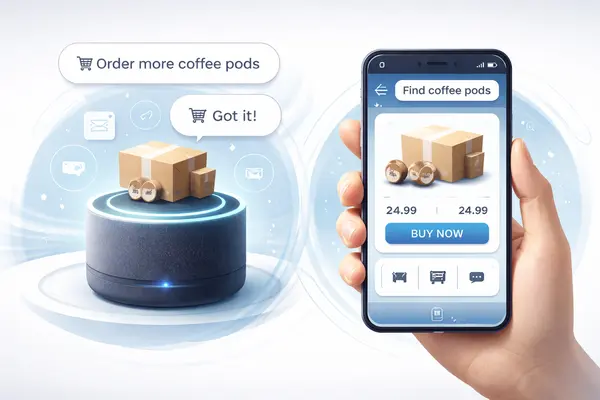
- AI Search & Smart Assistants: Google is launching UCP-powered shopping in its new AI search mode and Gemini app. Soon, when you search for a product in Google AI Mode, you can buy directly in the chat window. (For example, Target announced that shoppers will soon be able to browse and buy Target products right inside the Google Gemini app and Search AI Mode.) Google’s AI integrates with the Universal Commerce Protocol to enable seamless, agentic commerce actions across Google’s AI surfaces and shopping platforms, facilitating direct purchases and post-purchase support within AI-enhanced search environments. Similarly, Microsoft Copilot (in Bing and Windows) has enabled Copilot Checkout, an in-chat purchase feature for select retailers.
- Conversational Surfaces: Any app or device that can chat can also become a storefront. For instance, Google’s Business Agent lets users ask questions in Search and buy from a brand’s inventory without leaving the results page. The same could happen in messaging apps, voice assistants (like Alexa/Siri with shopping features), social media chatbots, or even productivity tools with AI assistants. The broad idea is that every place you can converse with an AI might one day handle commerce.
- Embedded E-commerce Tools: Companies are integrating shopping into tools people already use. Shopify’s “Agentic Storefront” concept means a brand can use Shopify’s backend to sell on AI channels even if it doesn’t have a Shopify website. That way, a retailer’s products and checkout live in Shopify but can be accessed by agents anywhere. Other commerce platforms (and payment partners like Stripe, PayPal, etc.) are also building UCP support so that AI agents have lots of stores to connect to.
In practice, this means AI commerce isn’t limited to one app. We’ll see it in search engines, voice assistants, chat apps, social media feeds – essentially any interface where people are asking questions or browsing interactively. For example, Google mentions “discovering and buying to post-purchase support” on any channel (search, shopping graph, etc.) and partners like Walmart, Etsy, Wayfair and Visa are involved. Major retailers such as Best Buy and Home Depot are also supporting or endorsing UCP, further expanding the protocol’s reach. Additionally, leading payment providers including American Express, Mastercard, and Stripe are collaborating with UCP to enable secure and efficient agentic commerce solutions across platforms and retail ecosystems. The key point: UCP is already being used by major players (Google, Shopify, Microsoft, retailers) to turn AI UIs into shopping surfaces.
How Agentic Checkout Looks in Practice
One concrete example of UCP in action is Microsoft’s Copilot Checkout. This feature lets customers buy products directly inside the Copilot chat (e.g. in Bing or Windows) without redirecting to the store’s site. Under the hood, Copilot Checkout uses a protocol like UCP to communicate with the retailer’s system. When you choose to pay, the agent calls the merchant’s checkout endpoint (via UCP) to submit the order. Importantly, this happens in an embedded frame in Copilot, so the entire experience stays in the conversation window.
From the merchant’s perspective, nothing magical happens: the sale is processed by their own checkout logic, and they remain the merchant of record. Microsoft states that “you stay the merchant of record. You own the transaction, the customer data, and the relationship” with customers who buy via Copilot. This means the merchant still sets the price, payment acceptance, shipping rules, and so on – the AI is simply filling in and submitting the order. For example, Urban Outfitters and Ashley Furniture announced they will use Copilot Checkout to sell in Bing. Shopify says: “If you’re on Shopify, you’ll automatically be able to sell in Copilot Checkout – no integration needed”.
Another example is coming from Google: Shopify merchants will soon be able to sell directly in Google Search’s AI Mode and the Gemini app using UCP. This “direct shopping” feature will use Google Pay behind the scenes, and again retailers remain the seller of record. (Customers will tap or click to buy in the Google interface, but the order will be owned by the original retailer.)
The pattern is consistent: the AI interface invokes the merchant’s checkout without losing any store-specific logic. The agent acts like a friendly front-end, but fulfillment, inventory, pricing, and post-sale support stay under the merchant’s control. This model – embedded checkout with UCP – is the opposite of third-party marketplaces. The brand does not hand off its customers to a new platform; it simply enables the agent to carry out its own checkout flow as if it were another channel.
Merchant Control vs. Agent Actions
UCP explicitly preserves merchant control over core business rules. In an agentic purchase:
- Merchants keep control of products and policies. The merchant decides what to sell, at what price, and under what conditions. All product data (images, descriptions, variants, pricing) still comes from the merchant. Likewise, shipping options, return policies, tax calculations, loyalty programs, subscriptions and discount codes are defined by the merchant’s backend. These rules are passed to the agent in UCP messages, but the merchant authored them. For example, “your discount codes, shipping rules, taxes, and loyalty settings still apply – even if the purchase happens through an AI interface”.
- Merchants remain merchant of record. The agent never replaces the checkout host. The retailer still processes the payment (via their payment gateway) and delivers the product. As noted earlier, with Copilot Checkout the retailer “owns the transaction, the customer data, and the relationship”. This also means the retailer is responsible for packing, shipping, and support. The AI agent simply initiates the order; fulfillment happens on the merchant’s side just like any normal order.
- Agents control selection and timing. The AI agent’s job is to find the right products and execute the purchase when the customer wants. The agent chooses the items (based on the conversation), decides when to hit “checkout,” and can even submit multiple payment attempts with the user’s saved methods if needed. However, the agent cannot override merchant constraints. It cannot, for example, promise a faster ship date than the merchant allows, or apply a discount that is not valid. It simply reads those constraints from UCP data and respects them. If a step requires human input – say the store requires the customer to pick a delivery date or upload a custom print file – the protocol includes a “continue” URL. The agent hands control back to the customer at exactly the right step in the merchant’s original interface. The customer finishes those steps, and UCP is designed so the agent can rejoin or complete the order afterward.
In short, UCP lets agents do the shopping work, but merchants keep the business logic. Pricing, inventory, branding, shipping options and after-sale service all stay with the merchant. The agent handles searching, decision support, and pushing through the checkout in the background, under the merchant’s pre-set terms.
The Universal Commerce Protocol is a new way for AI and stores to work together. It turns AI assistants into active shopping agents while keeping merchants fully in control of their business. As this standard rolls out, expect to see AI-powered checkout in many places – but always with the merchant managing pricing, shipping, and fulfillment on the backend.
UCP Roadmap and Future Development
The Universal Commerce Protocol is not a static solution – it’s a living, evolving standard designed to keep pace with the rapidly changing world of commerce. The UCP roadmap is packed with innovative features aimed at enhancing both the merchant and consumer experience. Upcoming developments include support for multi-item carts, seamless account linking for loyalty and rewards programs, and advanced post-purchase support, all of which will make the shopping journey even more streamlined and personalized.
As UCP continues to grow, its open-source foundation and collaborative development process ensure that it remains responsive to the needs of the entire commerce ecosystem. Industry leaders, merchants, and technology partners are all contributing to the protocol’s evolution, helping to shape the next generation of universal commerce. By joining the UCP ecosystem, businesses can future-proof their operations, offer cutting-edge shopping experiences, and ensure they’re never left behind as the industry moves forward. For consumers, this means more choice, convenience, and support at every stage of the purchase journey – heralding a new era in the future of commerce.
Frequently Asked Questions
Is this live yet?
UCP itself was announced in January 2026 and the first agentic shopping features are just rolling out. Google has said UCP will power “native shopping on Google Search and Gemini” soon. Microsoft’s Copilot Checkout is in limited US rollout for Shopify merchants. In practice, expect pilot programs and staged launches in 2026. It’s not fully widespread yet, but it’s already real – major players are integrating it now.
Do merchants lose customer ownership?
Not at all. UCP is designed so that the merchant stays the seller. In every agentic purchase, the retailer remains the merchant of record. This means the store gets the money, owns the order data, and keeps the customer for marketing/loyalty. The AI is only a guided interface, not a third-party middleman. Shopify’s announcement explicitly notes that merchants “retain sovereignty” and continue to own the checkout experience.
Does this replace my website or store?
No. Agentic commerce is an additional channel, not a substitute for your site. Customers will still visit the merchant’s website for trust, content, and richer experience. UCP is more like SEO or advertising: it helps your store appear in new places (AI chats, searches) but it doesn’t eliminate your own store. The Shopify team emphasizes that websites will remain important for branding and customer education. Think of UCP as letting more doors open to your store via AI, but you still need your storefront.
Is Shopify required to participate?
No. UCP is an open industry standard. Any merchant or platform can adopt it. Shopify is one founder and provides tools (even letting any brand use Shopify’s backend to get agentic exposure), but it’s not mandatory. In fact, by design “UCP isn’t locked to Shopify” – the whole e-commerce ecosystem can adopt it. Google, Mastercard, Visa, Stripe and others are already on board too. You don’t have to use Shopify; you just need your platform or an app/plugin to speak the UCP.
Written By:

Indy Pereira
Indy Pereira helps ecommerce brands optimize their shipping and fulfillment with Cahoot’s technology. With a background in both sales and people operations, she bridges customer needs with strategic solutions that drive growth. Indy works closely with merchants every day and brings real-world insight into what makes logistics efficient and scalable.
Turn Returns Into New Revenue
Related Articles
Top 12 Shipping Strategies For Making Free Shipping Profitable
For ecommerce sellers, shipping is more than just getting a package from point A to point B — it’s the invisible backbone, quietly shaping customer satisfaction, operational costs,...
The Shipping Speed Paradox: Why DTC Brands Are Slowing Down
Everyone’s talking about faster delivery.
Ecommerce Profit Leaks: The Hidden Ones That AI Is Finally Closing
Most ecommerce brands believe they understand their margins.
What Is FTL Delivery? Full Truckload Shipping Explained
E-commerce and logistics leaders often face the question: should I send freight as full truckload (FTL) or share space with other shipments? FTL shipping means the entire trailer is dedicated to one customer’s cargo, giving the shipper access to the entire space of the trailer. In practice, a shipper hires a whole tractor-trailer even if it’s not completely full. This dedicated truck typically goes straight from the shipper to the delivery point without picking up extra freight. In other words, one order fills the truck and the rest of the space can’t be booked by others.
By contrast, Less-Than-Truckload (LTL) shipping consolidates multiple customers’ smaller shipments into one truck, so the truck space is shared among other shippers. Each shipper pays only for the space used. LTL freight makes several stops to load and unload along the way, which generally adds time and handling to the route. The way freight moving is handled differs: FTL involves direct, single-customer freight moving, while LTL involves multiple stops and multiple shippers’ freight moving together. Knowing how FTL works – and how it differs from LTL – helps supply chain managers choose the right mode for each shipment.
What Is Full Truckload (FTL) Shipping?
Full Truckload (FTL) shipping is a freight mode where one shipment occupies an entire truck. No other cargo is added. This means your goods get exclusive use of the trailer and power unit. FTL freight shipping, FTL transportation, and full truckload freight are ideal for large shipments that require the full capacity of a truck, offering simplified rate calculations based on weight, volume, and distance. FTL carriers generally accept larger or heavier loads than LTL, since weight and size limits are easier to manage when the truck has one shipper. For example, Freightos notes that full-truck shipments are “much less encumbered by size and weight restrictions”. In practice, you might use FTL when your order fills most of a 48’ or 53’ trailer or when the total weight is near or at the allowed capacity. FTL is especially efficient for shipping large quantities, making truckload freight a cost-effective solution for high-volume loads.
With FTL, the truck travels from pickup to delivery directly, rather than stopping at intermediate terminals. This direct route often results in faster delivery. As FedEx explains, an FTL shipment “moves directly to its destination without stops,” which usually means faster transit. Likewise, Freightos highlights that FTL hauls “get to the destination sooner, as the truck is making no other pickups or drop-offs along the way”. Reduced handling is another key feature: because the freight stays on the same trailer throughout the truckload shipment, there’s less transfer risk. In fact, Freightos points out that FTL transport “means less handling (there is no transferring between trucks mid-transit),” lowering the chance of damage or loss. FTL also allows for the use of specialized equipment, such as refrigerated trucks, to accommodate temperature-sensitive or unique cargo. In short, an FTL delivery is a dedicated shipment, directly hauled, with minimal stops or handling.
When it comes to size and weight, the average weight an FTL truck can haul is typically between 42,000 and 44,000 pounds, and FTL shipments can accommodate up to 30 standard pallets, depending on the truck’s capacity. FTL ensures a higher level of freight security, as shipments are rarely unsealed or moved once loaded at their pickup location.
Understanding Freight Shipping
Freight shipping is the backbone of modern commerce, enabling businesses to move goods efficiently across cities, states, and countries. At its core, freight shipping refers to the process of transporting large shipments—often palletized or containerized—using various modes, with truckload shipping being one of the most common. Within truckload shipping, there are two primary options: full truckload (FTL) and less-than-truckload (LTL) shipping. Businesses looking to stay updated on the latest logistics, fulfillment, and supply chain trends can follow leading industry events for valuable insights and networking opportunities.
FTL shipping means reserving an entire truck for a single shipment, ensuring that your freight is the only cargo on board. This approach is ideal for businesses with enough goods to fill an entire truck or when a shipment requires special handling. In contrast, LTL shipping, or less than truckload, combines shipments from multiple companies in one truck, making it a cost-effective solution for smaller loads. Understanding these distinctions is essential for businesses to select the right shipping method for their needs—whether that means booking an entire truck for a single shipment or sharing space with other freight. By evaluating shipment size, urgency, and handling requirements, companies can optimize their shipping strategies and ensure their goods move efficiently through the supply chain.
FTL vs LTL: Key Differences
Choosing between FTL and LTL involves comparing several factors: shipment size, delivery speed, handling, and cost. The table below summarizes major differences:
- Space and loading: FTL dedicates a whole trailer to one shipper, while LTL trailers hold freight from multiple shippers. In FTL, you pay for an entire truck whether you use all its space or not. In LTL, you only pay for the portion of space your cargo fills. When planning FTL shipments, consider that larger or different types of pallets (other pallets) can impact loading efficiency and space utilization.
- Transit speed: FTL usually delivers faster because the truck goes point-to-point. LTL shipments make additional stops to consolidate and deconsolidate freight, so transit times are longer. For time-sensitive orders, the direct route of FTL is a big advantage.
- Handling and reliability: FTL freight is loaded once at origin and stays on one truck until delivery at the final destination, minimizing handling and reducing the risk of damage. LTL freight is typically moved between terminal hubs and trailers en route, increasing handling. LTL loads often involve multiple pickups, transfers, and stops, which can lead to longer transit times and a higher risk of damage compared to FTL. As a result, FTL tends to be more reliable for fragile or high-value items.
- Cost structure: FTL pricing usually involves a flat rate (often per mile or per truck) and does not vary with weight beyond minimums. You pay for unused space if the trailer isn’t full. LTL pricing is more granular: it’s based on weight, distance, freight class, and dimensions. LTL is more cost-effective for smaller shipments because you share costs. However, FTL becomes cheaper per pallet when the truck is full (economies of scale).
LTL routing often involves a hub-and-spoke model where freight is routed through regional terminals. LTL also includes specialized options like liftgate service, residential delivery, and inside pickup, which are less common in FTL. LTL shipping is ideal for shipments that are between one and six pallets or less than 14 linear feet, while FTL is used for larger shipments.
In addition to FTL and LTL, there are alternative shipping options such as partial truckload and shared truckload. Partial truckload (PTL) allows shippers to share truck space without filling the entire trailer, offering cost-sharing benefits and regional flexibility. Shared truckload (STL) combines elements of FTL and LTL by transporting cargo from multiple shippers together in the same trailer, with optimized routes that avoid terminals and stops, and without offloading until reaching the final destination.
In practice, space and speed often drive the decision. If you have enough product to fill most of a trailer, FTL typically yields a lower cost per unit. If your shipment is small and you’re willing to wait, LTL can save money by only billing the space you use.
When to Use FTL Shipping
Full Truckload is the right choice in several common situations for transporting freight efficiently, especially for large, urgent, or sensitive shipments:
- Large or dense shipments: If a single order fills (or nearly fills) the truck, FTL usually offers the best shipping cost per unit. For example, manufacturers, wholesalers, or large retailers often have enough volume to justify a dedicated trailer.
- Time-sensitive delivery: When you need a shipment delivered quickly, FTL’s direct route minimizes stops and delays. This makes FTL ideal for time sensitive shipments, such as perishable or urgent goods, where timely delivery is critical to maintain product quality and meet customer demands. Direct point-to-point transport helps ensure the order arrives as fast as possible, which is critical for rush orders.
- Fragile, high-value, or specialized goods: FTL involves fewer handling steps, reducing damage risk. For fragile, perishable, or very expensive cargo, the security of a single trailer is advantageous. Likewise, if your shipment requires special equipment (liftgates, refrigeration, etc.) or multi-stop delivery coordination, a dedicated truck provides more control.
In short, FTL “is ideal for businesses shipping large volumes that justify renting an entire truck,” as one logistics provider notes. It’s also favored when reliability and speed are priorities – for example, when shipping complex orders to retail outlets or fulfilling a time-critical restock. Conversely, if none of these conditions applies, and shipments are smaller, LTL might be more efficient and cost-effective.
Cost and Speed Trade-offs
FTL and LTL involve clear trade-offs between cost and speed:
- Cost efficiency: With FTL, you pay for the entire truck regardless of how full it is. This gives economies of scale when you have enough freight to fill the truck. Industry analysis shows that FTL becomes very cost-efficient for large loads (since the per-pallet cost drops when the truck is full). But if your shipment is small, you’re effectively paying for empty space – making FTL relatively expensive. In contrast, LTL charges based on weight and space used, so small shipments can save money. You only pay for the portion of the trailer you occupy. This means LTL is generally cheaper for light or partial loads. However, LTL pricing is more complex (freight class, dimensions, etc.) and can rise quickly if your shipment is heavy or unusual.
- Transit time and reliability: FTL usually offers faster transit. Because the truck goes straight to the destination, FTL shipments are less likely to face delays. For example, one freight guide notes that the streamlined, point-to-point process of FTL “avoids delays,” which is crucial for time-sensitive deliveries. On the other hand, LTL shipments take longer because they join other freight in hubs and make extra stops. You trade speed for cost: LTL may save money, but delivery times are generally slower.
Carrier selection is a critical step in optimizing FTL delivery. Choose carriers with a proven track record of on-time delivery and a low incidence of damage or loss during transit. Compare freight quotes from different carriers to secure a competitive rate. Look for providers with a nationwide network for broader coverage and reliability. It’s also important to ask for references from previous customers to assess the carrier’s reliability and service quality. Select a carrier that offers clear and consistent communication throughout the shipping process, including updates on load status and any potential delays. In today’s environment, the technology carriers use is essential—look for providers with technology to track shipments, optimize routes, and ensure continual improvement. A robust tracking system enhances real-time shipment visibility and simplifies logistics planning. Using technology to track shipments can significantly improve visibility and efficiency in your shipping operations. Additionally, working with a dedicated team and dedicated account managers ensures you receive personalized support and reliable freight management. Strong customer support is crucial in case any issues arise during transit.
In summary, if your priority is speed and you have enough cargo, FTL can justify its cost. If your priority is saving money on a smaller load, LTL might be the better choice. Each mode has benefits, so logistics planners weigh these trade-offs based on shipment needs.
Choosing the Right Carrier
Selecting the right carrier is a critical step in the freight shipping process, especially when it comes to FTL shipping. The right FTL carrier can make all the difference in ensuring your entire shipment arrives safely, on time, and at a competitive rate. When evaluating carriers, businesses should prioritize those with a reputation for reliable service, a proven track record in handling similar freight, and access to specialized equipment if needed.
For FTL shipping, it’s important to partner with a carrier that can dedicate a truck to your shipment, minimizing handling and reducing the risk of delays or damage. Leading providers like Uber Freight and Amazon Freight offer extensive networks and advanced technology to support a wide range of shipping needs, from standard freight to specialized or time-sensitive loads. Look for carriers that offer transparent pricing, flexible scheduling, and the ability to accommodate unique requirements—such as temperature control or liftgate service. By focusing on reliability, competitive rates, and the right equipment, businesses can ensure their freight shipping experience is smooth and successful from pickup to delivery.
Dry Van Shipping
Dry van shipping is one of the most popular forms of FTL shipping, offering a secure and versatile solution for transporting large quantities of goods. A dry van is an enclosed trailer designed to protect cargo from the elements, making it ideal for products that need to stay dry and secure during transit. This type of shipping is commonly used for items like electronics, furniture, packaged foods, and machinery—essentially any freight that doesn’t require refrigeration but does need protection from weather and road debris.
Dry van trailers often come equipped with specialized equipment such as climate control options and advanced cargo securement systems, ensuring that goods remain in optimal condition throughout the journey. For businesses shipping FTL, dry van shipping provides peace of mind, knowing that their large quantities of freight are shielded from moisture, dust, and theft. Whether you’re moving a single large shipment or recurring loads, dry van shipping is a reliable and cost-effective choice for a wide range of industries.
Optimizing Shipping Operations
Efficient shipping operations are essential for businesses looking to reduce costs and improve overall supply chain management. Leveraging FTL shipping for large quantities of goods can streamline logistics by consolidating freight into fewer, larger shipments—reducing the number of trucks on the road and lowering per-unit shipping costs. This approach not only saves money but also simplifies scheduling and tracking.
To further optimize shipping, many companies implement transportation management systems (TMS) that provide real-time visibility into shipments, automate load planning, and enhance route optimization. These tools help businesses make data-driven decisions, improve delivery times, and minimize disruptions. Additionally, partnering with a third-party logistics (3PL) provider can bring expertise and resources to manage complex shipping needs, negotiate better rates, and ensure compliance with industry regulations. By focusing on FTL shipping for large loads and integrating advanced technology, businesses can achieve greater efficiency and control across their entire supply chain.
Conclusion
In summary, FTL shipping stands out as a reliable and efficient solution for transporting large quantities of goods. By understanding the key differences between truckload shipping options—FTL and LTL—businesses can make informed decisions that align with their logistics needs and budget. Choosing the right carrier, utilizing dry van shipping for added protection, and optimizing shipping operations with technology and expert partners are all essential steps in ensuring successful freight shipping.
Whether your business requires the dedicated space of a full truckload or the flexibility of less-than-truckload, knowing when and how to use each method is crucial. By leveraging truckload shipping, FTL shipping, and LTL shipping strategically, companies can navigate the complexities of freight shipping, meet customer expectations, and drive long-term success in their supply chain operations.
Frequently Asked Questions
What is FTL shipping?
FTL stands for Full Truckload. It means an entire truck is reserved for one customer’s freight. No other shipments are on that trailer. The truck goes straight from pickup to delivery. This dedicated service often results in faster transit and less handling. FTL is typically used for large shipments or those requiring special care.
How is FTL different from LTL?
With FTL, you pay for a whole truck and fill it with a single shipment. In Less-Than-Truckload (LTL) shipping, your goods share a trailer with other customers’ freight. FTL trailers travel point-to-point (directly to destination) and involve fewer stops, making transit faster. LTL trailers make multiple stops to load and unload, so delivery takes longer. Also, FTL cargo is handled only once, whereas LTL freight is transferred between trucks and terminals, increasing handling.
When should I use FTL for my shipments?
FTL makes sense when your order volume is large enough to nearly fill a truck, and when speed or low handling is important. For example, retailers or manufacturers shipping entire pallets of goods often use FTL. It’s also preferred for fragile, perishable, or high-value items that shouldn’t be transferred between trucks. If you need fast delivery with minimal stops (such as for a tight deadline), FTL’s direct route is the better choice.
Does FTL shipping cost more than LTL?
FTL isn’t inherently more expensive; it depends on your shipment size. If you have enough freight to fill a truck, FTL can cost less per unit than LTL. However, if your load is small, FTL costs more because you pay for unused space. LTL lets you pay only for the space you use, which saves money on light or partial loads. The trade-off is that LTL is slower. In general, FTL yields lower per-item costs at high volumes, while LTL is cheaper for smaller shipments.
Is FTL shipping faster and more reliable?
Yes. FTL shipments typically arrive faster because the truck goes directly to the destination without stops. There’s also less handling since the cargo isn’t transferred en route. This reduces the risk of damage or delay. LTL shipments, by contrast, take longer on average because they stop at hubs to consolidate freight. Many carriers note that FTL has fewer delays and damage claims for these reasons.
How do I decide between FTL and LTL?
Consider your shipment’s size, timing, and budget. If you need speed and have a large load (or specialized freight), FTL is often worth it. If cost savings on a small shipment matters more than speed, LTL is likely the better fit. Evaluate how much space you need, how quickly you need the goods, and what you can afford. In some cases, a hybrid approach (like combining multiple LTL shipments or using a 3PL with volume discounts) can be considered. The key is balancing cost vs. speed – FTL tends to be faster but can cost more if not full, while LTL is slower but charges only for the space used.
Written By:
Indy Pereira
Indy Pereira helps ecommerce brands optimize their shipping and fulfillment with Cahoot’s technology. With a background in both sales and people operations, she bridges customer needs with strategic solutions that drive growth. Indy works closely with merchants every day and brings real-world insight into what makes logistics efficient and scalable.
Turn Returns Into New Revenue
Related Articles
Top 12 Shipping Strategies For Making Free Shipping Profitable
For ecommerce sellers, shipping is more than just getting a package from point A to point B — it’s the invisible backbone, quietly shaping customer satisfaction, operational costs,...
Ecommerce Profit Leaks: The Hidden Ones That AI Is Finally Closing
Most ecommerce brands believe they understand their margins.

Why Cross-Border DTC Brands Are Moving Fulfillment Inside the US
Cross-border ecommerce fulfillment is the process of shipping ecommerce orders across national borders—often from warehouses outside the United States to U.
What Is Post-Purchase Experience in Ecommerce?
After a customer clicks “buy,” the post-purchase experience begins – it’s all the steps and interactions a shopper encounters from checkout through delivery and beyond. In other words, it covers every interaction after a sale. This includes the initial order confirmation email, regular shipping updates with tracking, the actual delivery and unboxing of the product, and any returns or customer support that follow. A positive post-purchase experience can cement trust and loyalty: one study notes it leads to “repeat business, increased customer loyalty, and positive word-of-mouth”. In practical terms, managing this experience well can turn a one-time buyer into a long-term, loyal customer; getting it wrong often means losing future sales and brand reputation.
Key Components of the Post-Purchase Experience
The post-purchase journey has several critical touchpoints. Leading experts break it down into steps like order confirmation, shipping updates, delivery reliability, packaging (unboxing), returns, and support. In practice, the key components include:
- Order confirmation and notifications: Send a clear confirmation email as soon as the order is placed, with an itemized receipt and next steps. For example, an automated shipping confirmation email (with order and address details) immediately reassures the customer that their purchase went through. This one email can also include a tracking link so customers know when to expect their package. The order confirmation page is a key touchpoint for engaging customers post-purchase, offering opportunities for customization, collecting feedback, and encouraging repeat business. Order confirmation emails have a high open rate and can alleviate customer anxiety after a purchase. Post-purchase emails also have higher open rates than promotional emails, making them especially valuable for marketing.
- Real-time tracking updates: Provide live tracking or status emails/SMS as the order moves. Allow customers to see where their package is in transit. Timely updates (e.g. “Shipped – expected delivery Friday”) cut uncertainty and reduce “Where is my order?” support calls. Delivery speed is a top factor for 63% of buyers, while 52% would wait up to two days for accurate tracking.
- Reliable delivery & branded packaging: Partner with dependable carriers to ensure on-time delivery. The packaging itself matters: secure, well-branded boxes or nice unboxing touches can turn receiving a package into a positive surprise. An enjoyable unboxing experience (branded tissue paper, thank-you note, protective wrapping) can reinforce a good impression of your brand. A seamless checkout experience and a positive customer experience are reinforced by thoughtful packaging and presentation.
Proper packaging not only protects the item but also reinforces brand quality. A professional-looking package and a well-organized unboxing moment can delight customers and make them more likely to shop again.
- Easy returns and exchanges: Clearly explain your return policy and make returns hassle-free. A customer-friendly system (pre-paid return labels, a self-service return portal, or store credit options) encourages customers to buy with confidence. Complex or opaque return processes frustrate buyers and hurt trust. For example, if a clothing retailer offers instant refunds or exchanges, shoppers know they can easily swap sizes, which boosts their confidence to purchase. In fact, 95% of satisfied returners will shop again with a merchant that offers a hassle-free returns experience, and 92% of customers will buy again if the return process is easy.
- Accessible customer support: Ensure customers can quickly reach out (via email, chat, phone, or social media) if they have questions or issues. Even with great systems, questions may arise, so a responsive support team is part of the journey. Having a knowledgeable support team ready to assist keeps customers happy and can turn a potentially negative situation (like a delayed shipment) into a positive one by handling it promptly.
The thank you page is a strategic touchpoint in the post purchase experience. It can be optimized for upselling and cross-selling complementary products to customers right after their purchase, increasing average order value and revenue. Collecting customer birthdays on the thank you page can enhance personalization and lead to targeted marketing opportunities. Including product recommendations in post-purchase emails can also increase average order value and encourage repeat purchases.
Collecting customer feedback and encouraging positive reviews after the purchase is essential, as positive reviews serve as social proof and help build trust with future buyers. Inviting customers to leave positive reviews and feedback can be integrated into post-purchase emails and the thank you page, further enhancing the overall post purchase experience.
These elements together form the post-purchase journey. For instance, a well-known ecommerce store might automatically email shipping confirmations with tracking links and follow up with a delivery notification. Other brands might include small thank-you cards or discount codes in the package to encourage another order. Each step provides an opportunity to reassure the buyer and build brand loyalty.
Why Post-Purchase Experience Matters (Beyond Marketing)
A strong post-purchase experience goes far beyond simple marketing – it directly impacts customer satisfaction, trust, and your bottom line. In 2025, 83% of customers expect regular communication from brands after purchase, and customer expectations have risen due to innovations from major ecommerce brands. Research consistently shows that shoppers care deeply about what happens after they buy. In one survey, over 93% of consumers said the post-purchase phase is important, yet 83% believe retailers have room to improve. Another report found that nearly 80% of customers expect a positive post-purchase experience, but only about 1% of companies always deliver on that. Retail brands and ecommerce brands are now prioritizing the post-purchase experience as a key marketing strategy to drive customer loyalty and engagement.
- Higher customer lifetime value (CLV): Improving the post-purchase journey keeps customers coming back. Retailers that address gaps in post-purchase care see higher CLV. For example, parcelLab notes that by “addressing PPX loopholes and enhancing the post-purchase journey, retailers can boost CLV”. In short, each customer generates more revenue over their lifetime. In fact, a mere 5% increase in retention can boost profits by 25% to 95%, and it is cheaper to retain existing customers than to acquire new ones.
- More repeat purchases and loyalty: A smooth experience after the first sale encourages people to buy again. According to parcelLab, delivering a positive post-purchase experience is “crucial for customer retention and future brand loyalty”. Gorgias (a helpdesk provider) likewise reports that post-purchase care “nurtures customers to make repeat purchases”. Repeat customers are 60-70% likely to make a repeat purchase, while new customers are only 5-20% likely to make an initial purchase. Additionally, 89% of customers are likely to make a repeat purchase after a positive experience. The longer a customer stays with a brand, the more their average order value increases with subsequent purchases. Simply put, customers who feel well-treated after buying are more likely to stick with the brand. Engaging with existing customers and past customers through proactive post-purchase communication strengthens the customer relationship and encourages repeat business.
- Increased customer satisfaction and trust: Timely updates and clear communication make customers feel respected and informed. Package tracking alone is cited as “one of the easiest ways to boost your post-purchase customer satisfaction”. When customers know what’s happening with their order, anxiety drops. In contrast, a lack of information breeds frustration. Gorgias emphasizes that the post-purchase phase “affects customer retention” and offers a chance to set your brand apart. Surveys show that if the post-purchase experience is poor, customers lose trust – for instance, over 70% of customers said they would not return after a bad delivery experience.
- Positive word-of-mouth and referrals: Happy post-purchase customers often share their experience. ParcelLab notes that better post-purchase care leads to more word-of-mouth referrals. Conversely, an unhappy customer is “three times more likely to tell their friends” about a bad experience. Good updates and surprise delights (like free samples or thoughtful packaging) give shoppers something to talk about.
- Operational efficiency and cost savings: Behind the scenes, a well-designed post-purchase flow streamlines operations. Clear tracking and automated notifications mean fewer “Where’s my order?” calls to your customer support team. According to industry experts, automating these steps “saves time and resources on customer service” and reduces support tickets. It also cuts down return-related workload: easy self-service returns mean fewer manual interventions. In short, efficient post-purchase processes free up staff to focus on growth, not basic status inquiries.
In summary, investing in post-purchase experience builds customer satisfaction and loyalty – which in turn drives more repeat purchases and higher CLV. In 2025, the post-purchase experience is a critical driver of sustainable growth, with businesses prioritizing proactive engagement. It also reduces churn and operational costs. By contrast, neglecting this phase wastes marketing money (acquiring new customers to replace those lost) and hurts your brand’s reputation.
Post-Purchase Communication
Effective post-purchase communication is the backbone of a powerful post purchase customer experience. Once a customer completes their initial purchase, the way your ecommerce business continues the conversation can determine whether they become a one-time buyer or a loyal, repeat customer. A well-crafted post purchase communication strategy keeps your brand top-of-mind, nurtures trust, and encourages repeat business—key drivers of customer lifetime value.
Beyond basic order updates, post-purchase communication should focus on building a relationship throughout the entire customer journey. This can include sending personalized thank you messages, sharing helpful tips for using the product, or offering exclusive discounts for future purchases. Thoughtful post purchase email flows—such as invitations to join a loyalty program, reminders about items left in a wishlist, or tailored product recommendations—help keep customers engaged and coming back for more.
Encouraging customers to provide feedback or leave a review not only shows that you value their opinion, but also helps you improve your service and attract new customers. Inviting satisfied customers to share their experience on social media or within online communities can amplify positive word of mouth and strengthen your brand’s reputation.
For ecommerce businesses, a proactive post purchase communication strategy is essential for customer retention. By consistently reaching out with relevant, timely, and valuable information, you demonstrate that you care about the customer’s experience long after the sale. This ongoing engagement is what transforms first-time buyers into loyal customers, increases repeat purchases, and maximizes the customer lifetime. In today’s competitive landscape, brands that prioritize post-purchase communication gain a significant advantage in building lasting customer relationships and driving sustainable growth.
Operational Implications for Your E-commerce Store
The impact of post-purchase experience is not just theoretical – it has clear operational consequences. A strong post-purchase process means fewer manual tasks and lower costs. For example, automating shipping updates and simplifying returns can drastically cut the number of support tickets your team handles. Collecting customer feedback and valuable feedback during these stages helps identify pain points and improve operational processes. Instead of spending hours answering “Where is my order?” emails, your customer support team can focus on higher-value work. Using email templates for customer support can save time and ensure high-quality responses. A well-designed post purchase email flow can streamline customer interactions and improve efficiency. This improved efficiency directly reduces operational expenses. Acting on customer feedback also leads to continuous improvement in the post-purchase process.
Conversely, a weak post-purchase system can blow up costs. If customers don’t get timely updates or find returns confusing, they flood support channels and abandon your brand. Industry data warns that customers “anxiously awaiting their package” are greatly reassured by small details like confirmation emails and tracking notifications. Without those, you often see more refunds, more complaints, and a higher return rate. More than 70% of shoppers report they won’t return after a single bad delivery. Losing those buyers means spending extra on marketing and promotions to replace them. In short, a poor post-purchase experience increases churn and drives up your customer acquisition costs.
In practical terms for a Shopify store, this means: streamline your fulfillment and communications. Use integrated tools to send order status emails/SMS automatically. Provide tracking links on your site. Implement an easy-to-use returns portal. These steps not only make customers happier but also lighten the load on your staff and systems. When done right, the post-purchase process becomes a source of operational efficiency, not overhead.
Frequently Asked Questions
What is the post-purchase experience in ecommerce?
It’s the series of steps a customer goes through after completing an online purchase. This includes the order confirmation message, shipment and tracking updates, the delivery and unboxing of the product, and any follow-up like returns or customer support. Each interaction during the post-purchase phase shapes the customer’s experience and can significantly impact their perception of your brand. Understanding customers’ post purchase behavior is key to optimizing these steps and ensuring a seamless process.
Optimizing the customer’s post purchase experience can lead to higher satisfaction, increased loyalty, and positive word-of-mouth. A smooth post-purchase experience builds trust and satisfaction by keeping the buyer informed and supported throughout the entire post-sale journey.
Why is a good post-purchase experience important for my online store?
A positive post-purchase process helps turn first-time buyers into repeat customers. Shoppers who feel well taken care of after a sale are more likely to return and spend more over time. A positive customer experience after purchase not only encourages customers to return but also invites customers to engage further with your brand. Sending a welcome email makes customers feel like part of a community and can offer them key resources. Studies show that satisfied customers spend significantly more in their lifetime than new customers. Good post-purchase communication (like timely shipping notifications and easy returns) also increases customer satisfaction and brand trust. In contrast, a bad experience (late delivery, confusing returns, no updates) can cause customers to abandon the brand – one survey found over 70% won’t buy again after a single poor delivery experience.
What are common elements of the post-purchase journey?Typical elements include:
- Order confirmation email: An immediate email or SMS confirming the order details and payment. This is also a great opportunity to invite customers to leave feedback or make repeat purchases.
- Shipping notification: A second message when the item ships, often with a tracking link (a shipping confirmation email).
- Order tracking: The ability for customers to track their package in real time on a tracking page or through notifications.
- Delivery and unboxing: The actual handover of the product. How the item is packaged and presented can delight the customer (branded packaging or freebies) or disappoint if it arrives damaged.
- Returns and exchanges: A straightforward returns process and clear policy if the customer needs to send the item back. Fast refunds or exchanges are important.
- Customer support: Accessible support channels (email, chat, phone, social media) to answer any questions after purchase.
- Loyalty and reviews: Remind customers about your loyalty program and encourage customers to participate by offering special offers or rewards. Invite customers to leave positive reviews, which can influence potential customers and build trust in your brand.
Together, these steps – often called the post-purchase journey – shape the customer’s overall impression of your store’s service.
How can a poor post-purchase experience affect my ecommerce store?
It can have serious consequences. If customers don’t get order updates or find returns difficult, they become frustrated. Many will abandon the store for future purchases, which lowers customer lifetime value and hurts revenues. Increased customer complaints also burden your customer support team with repetitive inquiries (like “where is my order?”), raising operational costs. Negative word-of-mouth may spread: unhappy customers are far more likely to tell friends about a bad experience than share a positive one. Poor post-purchase experiences can damage customer relationships and hinder word of mouth marketing, making it harder to attract new customers through recommendations. However, providing stellar customer service post-purchase can help recover trust and encourage positive word of mouth. In short, a weak post-purchase process wastes marketing spend (losing customers you worked hard to acquire) and erodes trust in your brand.
How can I improve the post-purchase experience in my ecommerce store?
Start by automating and communicating clearly. Send an immediate order confirmation and a follow-up shipping confirmation email with a tracking link. Include a review request in your post-purchase email flow to encourage feedback and generate social proof. Update customers proactively if delays occur.
Optimize your ecommerce site to engage customers right after a customer buys—use the thank you page to offer a free gift or incentive for their next purchase, or present strategic upsell offers. Building an online community and encouraging user-generated content can further strengthen customers’ connection to your brand and foster loyalty.
Make your delivery fast and reliable, and package items securely with a branded touch if possible. Simplify returns: provide easy instructions, prepaid return labels, or a portal so customers aren’t left guessing. Lastly, ensure your customer support team can quickly answer questions post-sale (for example, via live chat or prompt email replies).
A coordinated marketing strategy that integrates post-purchase engagement with logistics and customer service is essential for meeting customer expectations and building long-term loyalty. These practical steps boost customer satisfaction and loyalty by making the post-purchase phase hassle-free and informative.
Written By:
Indy Pereira
Indy Pereira helps ecommerce brands optimize their shipping and fulfillment with Cahoot’s technology. With a background in both sales and people operations, she bridges customer needs with strategic solutions that drive growth. Indy works closely with merchants every day and brings real-world insight into what makes logistics efficient and scalable.
Turn Returns Into New Revenue
Related Articles
Top 12 Shipping Strategies For Making Free Shipping Profitable
For ecommerce sellers, shipping is more than just getting a package from point A to point B — it’s the invisible backbone, quietly shaping customer satisfaction, operational costs,...
Ecommerce Profit Leaks: The Hidden Ones That AI Is Finally Closing
Most ecommerce brands believe they understand their margins.
Why Cross-Border DTC Brands Are Moving Fulfillment Inside the US
Cross-border ecommerce fulfillment is the process of shipping ecommerce orders across national borders—often from warehouses outside the United States to U.
TikTok’s USPS Label Requirement Is Not a Carrier Change. It’s a Control Shift

In this article
26 minutes
- TikTok USPS Shipping: New Label Rule (Effective Jan 1, 2026)
- Introduction to TikTok Shipping
- TikTok Shop Overview
- Why Is TikTok Forcing In-Platform USPS Labels?
- How Different Players Are Affected: An Ecosystem Vibe Check
- Shipping Label Options Under the New Rule
- Order Management and Compliance Under TikTok’s New Label Rule
- The Bigger Picture: Marketplace Control and the Future of Shipping Software
- Implications for Ecommerce Operators
- Managing Shipping Services Under TikTok’s New Constraints
- Preparing for the Change Before January 1, 2026
- Conclusion: This Is Not a USPS Change. It Is a Marketplace Control Shift.
- Frequently Asked Questions
TikTok Shop is ending an era of seller-controlled shipping, at least for USPS. Starting January 1, 2026, any order shipped via the U.S. Postal Service on TikTok’s marketplace must use a postage label purchased through TikTok Shipping. If a seller attempts to use a USPS label generated outside TikTok, for example through Shopify, ShipStation, a 3PL’s postage account, or a direct USPS account, TikTok can reject that shipment as non-compliant. This is not a USPS policy change. It is a TikTok enforcement change that moves a core part of fulfillment from a seller-owned workflow into platform-owned infrastructure.
That distinction matters because the operational blast radius is larger than “broken integrations.” Shipping labels sit at the intersection of cost control, SLA compliance, fraud prevention, and data visibility. By forcing USPS label purchase inside TikTok Shipping, TikTok is not just altering a carrier preference. It is asserting control over how sellers execute fulfillment on-platform and making external tooling, negotiated rates, and flexible routing conditional. This article breaks down what is changing on January 1, why TikTok is implementing it, how the ecosystem is reacting, and what it signals about the future of shipping software inside closed commerce ecosystems.
TikTok USPS Shipping: New Label Rule (Effective Jan 1, 2026)
TikTok Shop communicated to sellers that USPS shipping labels must be purchased and printed through TikTok Shipping starting January 2026, with sellers expected to be ready by December 31, 2025 to avoid fulfillment disruptions. Starting January 2026, all USPS shipping labels must be purchased and printed through TikTok Shipping, and sellers must complete all necessary adjustments by December 31, 2025, to avoid disruption in order fulfillment. In practical terms, if USPS is selected as the carrier under a seller-shipping workflow and the label is not generated through TikTok’s system, the shipment can fail or be rejected at the platform layer.
It is important to keep causality straight. This is not USPS changing label requirements for ecommerce sellers. TikTok’s policy is the gating mechanism. Retail coverage notes that TikTok did not provide a detailed reason for the change and that USPS declined to comment when asked. That silence is part of why operators should treat this as a platform control move rather than a carrier-driven shift.
To understand why this breaks so many existing workflows, look at how most multichannel stacks are built. TikTok order data flows into an OMS, Shopify, or shipping platform. Labels are generated in a single console for all channels, often using negotiated rates tied to aggregate volume. That consolidated model reduces cost and error. TikTok’s new rule unbundles it for USPS specifically by forcing label generation back into TikTok Shipping for that carrier lane, even if every other channel still runs through a unified shipping tool. Stores will need to adjust their order fulfillment processes to ensure they ship orders using USPS labels purchased through TikTok Shipping, in compliance with the new requirements. If sellers use third-party services like Shopify or ShipStation, they should confirm whether those services support TikTok Shipping to ensure seamless order fulfillment. Sellers must now ship orders using USPS labels purchased directly through TikTok Shipping, which impacts how stores manage their shipping workflows.
Sellers can reach out to their account manager or seller support for assistance with setup and troubleshooting during the transition from in-house warehouse to a 3PL or onboarding process transition.
Let AI Optimize Your Shipping and Boost Profits
Cahoot.ai software selects the best shipping option for every order—saving you time and money automatically. No Human Required. Learn more about our Amazon Buy Shipping integration.
Introduction to TikTok Shipping
TikTok Shipping is TikTok Shop’s dedicated logistics solution, designed to simplify and optimize the shipping process for sellers on the platform. By leveraging TikTok Shipping, sellers can purchase and print USPS labels directly from the TikTok Shop Seller Center, ensuring full compliance with the latest USPS label requirements. This integrated shipping service streamlines fulfillment, helping sellers cut shipping costs and reduce manual errors while improving delivery speed and reliability.
For TikTok Shop sellers, TikTok Shipping offers exclusive discounted shipping rates, making it an affordable option for businesses of all sizes. The platform’s logistics tools are built to support seamless order fulfillment, from label creation to package tracking, all within the Seller Center. Sellers can easily access step-by-step instructions and support resources in the TikTok Shop Seller Center to get started with TikTok Shipping and ensure their shipping process is both efficient and compliant.
By centralizing label creation and shipping management, TikTok Shipping empowers sellers to focus on growing their shop while maintaining high standards of fulfillment and customer satisfaction. For more information on setting up TikTok Shipping, please refer to the TikTok Shop Seller Center.
TikTok Shop Overview
TikTok Shop is a global ecommerce marketplace that enables sellers to list, promote, and sell products directly to customers through the TikTok platform. With the upcoming changes effective January 2026, TikTok Shop now requires all USPS shipping labels for shop orders to be purchased and printed exclusively through TikTok Shipping. This ensures that every shipment is properly verified and meets carrier compliance standards.
Sellers can manage their entire shipping process within the TikTok Shop Seller Center, where they can generate USPS shipping labels, track shipments, and monitor order status. TikTok Shop offers a range of shipping options—including USPS, FedEx, and UPS—allowing sellers to select the most cost-effective and reliable carrier for each order. By integrating with TikTok Shop’s fulfillment logistics tools, sellers can streamline their shipping operations, reduce shipping costs, and deliver a better experience to their customers.
The platform’s robust logistics and shipping features are designed to help sellers scale their business, maintain compliance, and keep fulfillment running smoothly. Whether you’re shipping with USPS, FedEx, or UPS, TikTok Shop provides the tools and support needed to manage shipping labels, track packages, and ensure timely delivery—all from a single, centralized platform.
Why Is TikTok Forcing In-Platform USPS Labels?
On the surface, the rule looks like a technical integration change. Operationally, it is a structural shift in who “owns” shipping. Marketplaces increasingly treat shipping as platform infrastructure because shipping is where marketplaces can enforce service levels, reduce fraud, standardize tracking, and capture operational data. TikTok’s new requirement is consistent with that trajectory. Retail coverage frames it as TikTok tightening shipping options and increasing control over the shipping process for orders made on-platform.
For any business aiming to succeed and scale on TikTok Shop, understanding and utilizing TikTok Shop’s shipping solutions is essential. Leveraging these services can help businesses improve logistics efficiency and reduce costs, making them crucial for growth on the platform.
There are several plausible motivations supported by how marketplaces operate and by signals in community discussions and TikTok’s own documentation. None require assuming USPS forced anything. Instead, they align with platform incentives.
1) Control and compliance at the label layer
Labels are where compliance becomes enforceable. If TikTok controls label purchase, it can enforce that shipping method, service level, postage payment, and tracking format meet its requirements. This reduces ambiguity around whether postage was paid correctly and whether tracking numbers are valid for the carrier selected. Community discussions around the change repeatedly point to “verification failures” and workflow breaks when USPS labels originate outside TikTok. The key point is that TikTok is not merely reading tracking data. It is validating how that tracking was created.
2) Data ownership and performance measurement
When labels are generated externally, the marketplace receives tracking after the fact. When labels are generated internally, the marketplace captures more complete metadata at creation time, including service selection, expected transit profile, origin location, and timing. That data enables tighter measurement of seller performance and can support automated enforcement for late shipments, scanning delays, and delivery exceptions. TikTok’s shipping documentation emphasizes standardized shipping options and built-in label creation across carriers, which is consistent with a desire to instrument shipping performance inside the platform.
3) SLA enforcement and buyer experience
TikTok is still scaling its marketplace trust layer. Standardized tracking and consistent label origination help reduce cases where orders show “shipped” but never progress, or where tracking numbers do not match the carrier used. Providing consistent tracking updates helps build trust and satisfaction among buyers, as they can reliably monitor their orders. When TikTok controls USPS shipping labels, it enables better service to buyers through more reliable delivery and timely tracking updates. Operators often treat these as edge cases, but at marketplace scale they become reputational risk. Centralizing label creation is a way to reduce variability and make SLA enforcement more consistent, even if the operational burden shifts onto sellers and fulfillment partners.
4) Platform economics and leverage over shipping cost
This is where many sellers jump too quickly into conclusions. It is possible for marketplaces to capture economic value in the shipping layer through negotiated rates, program fees, or behavioral steering. But the more defensible operator interpretation is simpler: the platform gains leverage. Once label purchase is inside the platform, the platform can change allowed services, eligibility, and enforcement rules without waiting for third-party tooling to catch up. That leverage is the strategic asset. By controlling label purchase, the platform can also influence shipping costs, and sellers may benefit from TikTok’s negotiated USPS rates, which can be more competitive than standard retail postage prices. The postage margin, if any exists, is secondary to control.
How Different Players Are Affected: An Ecosystem Vibe Check
To understand why this change matters, it helps to run a quick “vibe check” across the ecosystem. Not in the social sense, but in the operational sense: who gains control, who loses flexibility, and who has to rebuild workflows. The impact of the policy change varies across other regions, affecting both international imports and domestic distribution, which can influence fulfillment processes and compliance requirements.
For more details on regional impacts and compliance, refer to the official TikTok Shop Seller Center documentation.
TikTok Shop
TikTok is positioning itself as a logistics orchestrator rather than a passive order source. Retail coverage notes that TikTok did not give a detailed explanation, but the action itself is explanatory: TikTok is tightening the set of permissible workflows. This is how marketplaces mature. They start as permissive demand engines, then become rule engines once volume and risk justify standardization.
There is also a timing signal. TikTok communicated readiness expectations by the end of 2025, which indicates TikTok anticipates disruption and is willing to accept short-term friction to gain long-term control. That willingness is a tell. Platforms do not impose workflow-breaking requirements unless they believe the ecosystem will adapt because the demand is valuable enough.
USPS
USPS is not the actor driving this policy. USPS still delivers packages and still provides labels through its normal channels. But USPS becomes “gated” behind TikTok’s shipping interface for TikTok Shop orders. Retail reporting highlights that USPS declined to comment when asked, which reinforces the view that this is a marketplace enforcement decision, not a Postal Service mandate.
The operational consequence is that USPS becomes less directly accessible as a cost lever for TikTok sellers. Sellers who relied on their own commercial pricing, third-party postage accounts, or pooled 3PL rates now have to compare those against whatever TikTok Shipping offers and decide whether to keep USPS on TikTok at all. USPS is often considered the most affordable option for small and light products, and many TikTok Shop sellers find it to be the only affordable shipping option for these items.
ShipStation vs. Cahoot: 21x Faster, Real Results
Get the inside scoop on how a leading merchant switched from ShipStation to Cahoot—and what happened next. See it to believe it!
Shipping software providers and integrations
This is where the “broken integrations” story is real, but incomplete. The deeper issue is that shipping software becomes a conditional participant. In the ShipStation community thread discussing TikTok’s notice, sellers focus on what happens when USPS is selected under seller shipping and labels are not TikTok-generated, and the thread references TikTok directing partners to an “ERP docking solution” contact for integration pathways. New restrictions on USPS label generation directly impact seller shipping orders, especially for those using third-party platforms. That framing matters: the platform is positioning external software as an allowed integration, not the system of record.
For operators, the risk is not only that a feature breaks. The risk is that shipping software loses its role as the unified label layer across channels. If each marketplace starts asserting ownership over labels for a subset of carriers, the “single pane of glass” model fragments. Teams either accept fragmentation or rebuild orchestration logic that can handle marketplace-owned label flows without losing internal cost visibility.
For detailed integration steps and support, please refer to the TikTok Shop Seller Center or official integration guides.
3PLs and fulfillment operators
3PLs feel this immediately because they operate at the workflow layer. A 3PL typically prints labels in its own WMS or shipping system, often consolidated across many clients. TikTok’s policy can force a carve-out where TikTok-USPS labels must originate inside TikTok Shipping, which introduces operational complexity: another label source, another failure mode, another reconciliation path. However, sellers can still work with non-USPS carriers outside of the TikTok Shipping system after the new policy takes effect, allowing for more flexible order fulfillment options.
Retail coverage includes an example of a 3PL opting not to use TikTok Shop labels because it adds complexity and pressures margins, and instead considering shifting TikTok orders to other carriers while acknowledging the cost tradeoff for lightweight items where USPS is often the cheapest option. This is a pragmatic response: operators will route around constraints or explore 3PL options if the constraint increases error rate or labor cost, even if postage is higher.
US-based sellers
US sellers have the most options, but also the most decisions to make. If your TikTok catalog skews small and light, USPS is often the margin-preserving carrier. If TikTok Shipping USPS rates are competitive and the label workflow is stable, many sellers will keep USPS and adapt. If rates are worse or workflows create failure risk, sellers may shift to UPS or FedEx for TikTok orders and accept higher cost as the price of operational consistency.
The most common operational mistake is treating this as a one-time switch. In reality, sellers will likely end up with a hybrid model: USPS via TikTok Shipping when economics justify it, and other carriers through existing systems when control and automation matter more. If sellers wish to continue to work directly with logistics service providers, they will need to choose carriers other than USPS. That hybrid increases complexity, which is exactly why this policy is a control shift. It forces sellers to reorganize around TikTok’s preferred infrastructure.
International sellers
International sellers face a sharper edge. A key reason many cross-border sellers compete in the US is the ability to use postal networks and cost-effective handoffs. For sellers importing goods from China, reliable logistics partners are essential to manage cross-border shipping and comply with TikTok Shop’s shipping label regulations. The Courier Mail coverage (Australia) signals that the rule could price some Australian sellers out of the US market by restricting the use of standard international post pathways, effectively forcing more expensive shipping alternatives for reaching US customers. The exact operational impact will vary by seller setup, but the direction is clear: when a marketplace gates access to a low-cost carrier option, cross-border economics change fast.
This also highlights why it is inaccurate to frame the change as “TikTok switching carriers.” TikTok is not replacing USPS. TikTok is changing the governance model for how USPS can be used on TikTok orders. That governance model disproportionately impacts sellers whose competitive advantage depends on flexible, low-cost postal access.
Additionally, TikTok Shop operates as a ‘fourth-party logistics provider’ (4PL), purchasing postage directly from USPS and selling the labels to creators.
Shipping Label Options Under the New Rule
With the new requirement taking effect January 1, 2026, TikTok Shop sellers must adapt their shipping process to ensure all USPS shipping labels for TikTok Shop orders are purchased and printed directly through TikTok Shipping. This change means that traditional methods—such as generating USPS labels via third-party shipping software, direct USPS accounts, or external fulfillment platforms—are no longer accepted for TikTok Shop shipments using USPS. Instead, TikTok Shipping becomes the single source of truth for USPS label creation on the platform.
For sellers, this narrows the shipping label options for TikTok Shop orders to two main paths:
- USPS Labels via TikTok Shipping: If you choose USPS as your carrier for TikTok Shop orders, you must generate and print your shipping labels using TikTok Shipping. This is managed through the TikTok Shop Seller Center, where you can access TikTok Shipping labels, track shipments, and ensure your fulfillment process aligns with the platform’s new requirement. This integration is essential for compliance—any USPS label not created through TikTok Shipping risks shipment rejection or fulfillment disruption.
- Other Carriers via Existing Systems: For non-USPS carriers (such as UPS or FedEx), sellers can continue to use their preferred shipping software or fulfillment solutions to generate shipping labels, as long as those carriers remain label-flexible within TikTok Shop’s seller shipping workflow. However, USPS is now gated behind TikTok’s system, so this flexibility does not apply to USPS shipments.
To stay compliant and avoid fulfillment issues, sellers should review their current shipping process and ensure that TikTok Shipping is fully integrated for USPS label creation. This may involve updating order management workflows, training fulfillment teams on the new label generation steps, and confirming that all TikTok Shop orders using USPS are processed through the TikTok Shop Seller Center. By proactively adapting to this new requirement, sellers can maintain smooth fulfillment, accurate tracking, and a positive customer experience on TikTok Shop.
Ultimately, the new rule centralizes USPS label creation within TikTok’s ecosystem, making it critical for sellers to align their shipping operations with TikTok Shipping. This shift not only ensures compliance but also supports a more streamlined and platform-approved fulfillment process for all TikTok Shop orders shipped via USPS.
Order Management and Compliance Under TikTok’s New Label Rule
With TikTok’s new USPS label rule taking effect, order management and compliance are more important than ever for TikTok Shop sellers. To remain compliant, sellers must use TikTok Shipping for all USPS shipments—meaning USPS labels must be purchased and printed directly through the TikTok Shop Seller Center. Using external shipping tools or platforms for USPS labels is no longer permitted for TikTok Shop orders, and non-compliance can result in delivery issues, tracking problems, or even order cancellations.
To avoid these risks, sellers should review the TikTok Shop Seller Center for detailed guidance on setting up and using TikTok Shipping. The Seller Center provides resources for managing shop orders, generating shipping labels, and tracking shipments, making it easier to stay organized and compliant. If you encounter any challenges during the transition, Seller Support and your Account Manager are available to assist with troubleshooting and best practices.
By following the new label rule and managing all USPS shipments through TikTok Shipping, sellers can ensure their orders are verified, compliant, and delivered efficiently. This not only reduces costs and fulfillment headaches but also helps maintain high customer satisfaction and account health. For ongoing support and updates, please refer to the TikTok Shop Seller Center and stay connected with your Seller Support team.
The Bigger Picture: Marketplace Control and the Future of Shipping Software
Zoom out and this looks less like a TikTok-specific update and more like a marketplace maturity pattern. Marketplaces want to own the fulfillment experience because fulfillment is where customer trust is won or lost. Owning labels is a direct way to own fulfillment because labels are the starting point for tracking truth, on-time metrics, claims, and dispute resolution.
TikTok’s own Seller University documentation positions TikTok Shipping as a built-in system offering label creation across carriers. TikTok’s shipping service provides integrated shipping label creation and several shipping options from FedEx, UPS, and USPS, making it essential for sellers to use the approved shipping service for compliance, cost savings, and reliable logistics. When a marketplace documents shipping as a platform-native workflow rather than a seller-owned workflow, it is signaling how it intends the ecosystem to operate. The USPS requirement is an enforcement step that makes that intention real.
The contrarian insight is that this is not primarily a “carrier” story. It is a software boundary story. Shipping software historically sat outside marketplaces as the orchestration layer. This change moves the boundary inward. If other marketplaces follow, external shipping tools will still matter, but more as routing and reporting systems that integrate into platform-owned label endpoints, rather than as the origin point for every label across every channel.
That shift has second-order consequences: pricing visibility gets harder, reconciliation becomes multi-source, and operational teams have to manage exceptions across platforms rather than inside a single tool. In other words, platform control increases, and operator workload can increase with it unless internal processes adapt.
Implications for Ecommerce Operators
If you run fulfillment, this policy forces a set of tactical decisions and a strategic reframe. The tactical decisions are about compliance by January 1. The strategic reframe is about how much of your shipping stack is truly “yours” when marketplaces can change label governance with a policy update.
1) Audit your TikTok shipping decision tree, not just your carrier mix
Many teams will ask, “Should we keep using USPS?” The better question is, “What routing logic do we want for TikTok orders given that USPS labels must originate in TikTok Shipping?” For some catalogs, keeping USPS makes sense. For others, forcing a separate label source creates error risk that outweighs postage savings. You need to model both cost and workflow reliability.
2) Stress test failure modes before peak volume hits
The hidden cost of marketplace-owned shipping flows is exception handling. What happens if TikTok Shipping label creation is down? What happens if a label is voided and needs to be reissued? What happens if your WMS expects label creation inside your existing system for scan-to-pack? These are not edge cases for a warehouse. They are daily realities. Delivery issues can arise from tracking discrepancies, non-compliance, or improper label attachment, especially under new shipping policies. Proper label attachment is critical; labels must be flat on the largest surface of the package to avoid scanning failures. Seller community threads show sellers already anticipating workflow breaks tied to USPS selection under seller shipping. Use that as a warning signal to test early and document workarounds.
3) Align with your 3PL on who owns the label step
If you use a 3PL, this change can force contract-level and process-level alignment. Some 3PLs may refuse to operate inside TikTok Shipping because it adds tooling overhead and complicates margin. Others may accept it but charge for the additional complexity. Either way, you need a clear operating model: does the 3PL generate TikTok Shipping labels on your behalf, or do you route TikTok orders to carriers that remain label-flexible?
4) Prepare finance for multi-source postage and reconciliation
When label purchase is split across systems, invoice and cost attribution can drift. TikTok Shipping labels may be billed differently than your normal postage accounts. If you are used to pulling all postage spend into a single reporting view, that view will fragment. Build a reconciliation plan now so that the first month of 2026 does not become a “we cannot explain shipping margin” month.
Managing Shipping Services Under TikTok’s New Constraints
This is not a recommendation to use any particular tool. It is an operational reality: if you sell on TikTok Shop and want to use USPS for those orders, you have to treat TikTok Shipping as the source of truth for that USPS label flow. TikTok’s Seller University shipping overview frames TikTok Shipping as a built-in pathway for label creation and carrier options, which signals how TikTok expects sellers to operate. Upgraded TikTok Shipping is also available as an advanced logistics solution, offering integrated carrier management, automated shipping label issuance, and streamlined operations for sellers.
That means operators should formalize a policy for TikTok orders, similar to how they formalize policies for other channels: which SKUs qualify for USPS, which qualify for alternative carriers, and which require stricter delivery control. The difference is that the governing platform now owns one of the core levers, label origination, for a major carrier option. For non-urgent deliveries of lightweight items, USPS Ground Advantage is the primary budget-friendly option.
For many teams, the cleanest operational approach will be to segment TikTok fulfillment into one of two lanes:
- Lane A: USPS shipments where TikTok Shipping label creation is used intentionally and integrated into pack workflows.
- Lane B: Non-USPS shipments where existing shipping systems remain the label origin point, preserving negotiated rates and automation.
The goal is to make the complexity explicit rather than letting it leak into daily operations as ad hoc exceptions.
Preparing for the Change Before January 1, 2026
Preparation is less about flipping a switch and more about making sure your operation does not get trapped between systems on day one. Retail coverage notes TikTok told sellers to be ready by December 31 to avoid disruptions. Treat that as a minimum bar.
To ensure a smooth transition, follow the following steps:
- Review your current shipping process and identify any dependencies on previous carriers.
- Update your shipping software or platform settings to integrate TikTok USPS shipping.
- Verify package weight and dimensions accurately to avoid disputes and fees with USPS.
- Train your staff on new label printing and package drop-off procedures.
- Monitor your first shipments closely for any issues or delays.
A practical readiness checklist operators actually use
- Run a controlled test batch: generate TikTok Shipping USPS labels for a small set of real orders and validate scan-to-pack, tracking sync, and customer notifications.
- Document your exception paths: voids, reprints, address corrections, label creation downtime, and carrier swaps.
- Train fulfillment staff: the people printing labels need a stable workflow and clear escalation paths.
- Confirm 3PL capabilities: verify whether your partner will operate inside TikTok Shipping for USPS or requires you to route away from USPS for TikTok orders.
- Update your cost model: compare TikTok Shipping USPS pricing versus your existing USPS rate structure, especially for lightweight SKUs where USPS is the primary margin lever.
Notice what is not on this list: “wait and see.” Marketplace enforcement dates tend to arrive exactly when promised. The operational risk of waiting is not theoretical. It shows up as canceled orders, late shipment defects, and customer support volume when labels fail validation.
Conclusion: This Is Not a USPS Change. It Is a Marketplace Control Shift.
TikTok’s USPS label requirement is best understood as a governance shift in how marketplaces assert control over fulfillment. TikTok is moving USPS label origination into TikTok Shipping, which makes external shipping tools and negotiated postal workflows conditional rather than default. Retail reporting frames the move as TikTok tightening shipping options and increasing control over shipping processes. Seller and software communities are already signaling operational concern about workflow failures when USPS is selected under seller shipping. TikTok’s own shipping documentation positions platform-native label creation as the intended operating model.
The actionable takeaway for operators is not “pick a new carrier.” It is “assume marketplaces will continue to pull logistics infrastructure inward.” If you want to avoid being surprised by the next control shift, build fulfillment processes that can tolerate platform-owned label flows while preserving internal cost visibility, reconciliation discipline, and exception management.
Frequently Asked Questions
What exactly is TikTok’s USPS shipping requirement starting January 1, 2026?
Starting January 1, 2026, TikTok Shop requires that USPS shipping labels for TikTok orders be purchased and printed through TikTok Shipping. USPS labels generated outside TikTok, such as through Shopify, ShipStation, a 3PL postage account, or a direct USPS account, can be rejected for TikTok Shop orders.
Is this a USPS policy change?
No. This is a TikTok Shop enforcement change. Retail coverage notes USPS declined to comment, and the policy is communicated as a TikTok platform requirement rather than a Postal Service rule update.
Why would TikTok force sellers to buy labels inside TikTok Shipping?
The most supported operational reasons are control and compliance, better data visibility at label creation, tighter SLA enforcement through standardized workflows, and reduced tracking and label fraud risk. The change also increases TikTok’s leverage over fulfillment rules because label origination becomes platform-owned infrastructure.
What breaks for sellers using Shopify or shipping software tools?
If your workflow relies on generating USPS labels in an external system, TikTok orders using USPS can fail validation because TikTok expects the USPS label to originate inside TikTok Shipping. Community threads in ShipStation and seller forums focus on this exact failure mode and the resulting integration pressure.
How does this affect 3PLs and fulfillment centers?
3PLs may need to add TikTok Shipping as a separate label source for USPS, which increases tooling complexity, exception handling, and reconciliation work. Some fulfillment operators may shift TikTok orders to other carriers to avoid the operational overhead, even if that raises postage cost for lightweight shipments where USPS is typically cheapest.
Why is this especially disruptive for international sellers?
International sellers often depend on low-cost postal pathways to compete in the US. Coverage of the policy change signals that restricting how USPS can be used on TikTok orders may force some international sellers into higher-cost shipping options, altering unit economics quickly.
Written By:
Rinaldi Juwono
Rinaldi Juwono leads content and SEO strategy at Cahoot, crafting data-driven insights that help ecommerce brands navigate logistics challenges. He works closely with the product, sales, and operations teams to translate Cahoot’s innovations into actionable strategies merchants can use to grow smarter and leaner.
Turn Returns Into New Revenue
Related Articles
Top 12 Shipping Strategies For Making Free Shipping Profitable
For ecommerce sellers, shipping is more than just getting a package from point A to point B — it’s the invisible backbone, quietly shaping customer satisfaction, operational costs,...
The Shipping Speed Paradox: Why DTC Brands Are Slowing Down
Everyone’s talking about faster delivery.
Ecommerce Profit Leaks: The Hidden Ones That AI Is Finally Closing
Most ecommerce brands believe they understand their margins.
BFCM 2025 Exposed the Gap Between Brands Built for Growth and Brands Built for Scale

In this article
8 minutes
- Introduction
- Growth vs. Scale: What’s the Difference in Ecommerce?
- Why BFCM Exposes the Difference
- The Growth Trap: What Happens When Volume Outpaces Operations
- What Scalable Ecommerce Operations Look Like During BFCM
- The Metrics That Reveal Whether You’re Built for Scale
- How to Prepare for BFCM 2025 Without Breaking Your Business
- Conclusion: BFCM 2025 Will Reward Scale, Not Just Growth
- Frequently Asked Questions
Introduction
Black Friday Cyber Monday (BFCM) is no longer simply a seasonal sales spike—it has become a stress test for whether an ecommerce business is built for real growth or sustainable scale. Many ecommerce brands drove unprecedented sales through paid acquisition and promotional volume in 2020–2024, only to discover that scaling demand without scalable fulfillment, inventory, and shipping infrastructure produces customer friction, operational chaos, and margin destruction.
BFCM 2025 is expected to amplify this divide. Some brands will win not because they sell more, but because they can fulfill more profitably, reliably, and without breaking. Others will chase top-line growth only to experience out-of-stocks, carrier failures, late deliveries, refund requests, and return waves that erase their gains.
This article explains the fundamental difference between growth and scale in ecommerce, and how BFCM exposes which companies have truly built a scalable operation. We’ll break down common failure modes, key scaling metrics, and the operational strategies that allow brands to win the biggest shopping weekend of the year—without sacrificing customer experience or margins.
Growth vs. Scale: What’s the Difference in Ecommerce?
In ecommerce, growth means increasing demand—more orders, more customers, more revenue. Growth is typically fueled by marketing: paid ads, promotions, affiliate traffic, influencer campaigns, email blasts, and marketplace expansion. Growth is a top-line outcome.
Scale is different. Scale means your operation can handle more volume without a proportional increase in cost, complexity, or risk. Scaling is an operational outcome: it depends on fulfillment processes, inventory positioning, shipping strategy, systems integration, warehouse capacity, and return handling. Scale is the ability to grow profitably and consistently.
Many brands confuse the two. They assume that revenue growth equals business maturity. But BFCM reveals the truth: growth is easy to buy; scale must be built.
A simple way to think about it:
- Growth = more demand
- Scale = more volume with fewer problems
A business that grows without scaling becomes fragile. BFCM is when fragility turns into failure.
Why BFCM Exposes the Difference
BFCM creates a convergence of pressure points:
- Order volume spikes in 72 hours
- Carrier networks become congested
- Inventory accuracy matters more than ever
- Customer expectations for fast shipping increase
- Returns volume accelerates immediately after delivery
These conditions do not simply test marketing. They test the entire business system. If fulfillment is underbuilt, BFCM will overwhelm it. If inventory is mis-positioned, shipping becomes expensive and slow. If carrier strategy is weak, delivery promises collapse. If returns workflows are immature, the post-BFCM return wave becomes operational debt that drags into Q1.
Brands that are built for scale experience BFCM differently. They still feel the pressure, but they have designed systems to absorb it. Their operations do not break when demand spikes. They ship reliably. They protect margins. They deliver a customer experience that strengthens loyalty instead of damaging trust.
The Growth Trap: What Happens When Volume Outpaces Operations
Many ecommerce brands enter BFCM with a “growth-first” mindset. They focus heavily on driving demand and assume fulfillment will “figure it out.” This often produces predictable failure modes:
1. Stockouts and Inventory Inaccuracy
High-velocity demand exposes weak inventory controls. If your inventory system is not real-time and accurate, BFCM will cause:
- Overselling products that are not actually available
- Cancellations that harm marketplace performance and customer trust
- Backorders that create support tickets and refund requests
Brands built for scale use distributed inventory, tight sync, and demand forecasting. Brands built for growth alone often rely on a single node or manual inventory updates that fail under pressure.
2. Fulfillment Backlogs and Late Shipments
BFCM exposes whether your warehouse operations can handle surge throughput. Growth-first brands often face:
- Picking bottlenecks and packing shortages
- Staffing gaps and overtime cost explosions
- Orders that ship days late, missing marketplace SLAs
Late fulfillment does not just cost money—it destroys customer experience during the most visible moment of the year.
3. Margin Erosion from Panic Shipping
When orders are late or inventory is mis-positioned, brands often respond by upgrading shipping services to “save” delivery dates. This results in:
- Expedited shipping costs that wipe out promotional margins
- Zone 7/8 shipments from a single warehouse that drive cost inflation
- High surcharge exposure during peak carrier pricing windows
Brands that scale intentionally design fulfillment networks to avoid panic shipping. They route orders dynamically and position inventory closer to demand.
4. Customer Support Overload
Late shipments, stockouts, and unclear delivery promises generate customer contact volume. Growth-first brands often underestimate how fast support costs rise when operations break. The result is:
- Escalating ticket volume and response delays
- Negative reviews that permanently impact conversion
- Refund requests and chargebacks that compound margin loss
During BFCM, customer expectations are high. Failure is amplified, and damage lasts beyond the weekend.
What Scalable Ecommerce Operations Look Like During BFCM
Brands built for scale do not rely on heroics. They rely on systems. During BFCM, scalable operations show up in predictable ways:
1. Distributed Inventory and Smart Order Routing
Scalable brands avoid single-node fulfillment. They position inventory across multiple locations and use intelligent routing to ship from the best node based on:
- Customer location
- Inventory availability
- Carrier cost and performance
- Delivery promise requirements
This reduces shipping zones, lowers cost, and increases delivery speed without upgrading services.
2. Throughput-Ready Warehouse Processes
Scalable brands engineer fulfillment workflows so that doubling volume does not double complexity. They invest in:
- Batch picking and wave planning
- Pre-built kits and standardized packaging
- Labor planning and surge staffing readiness
- Automation where it matters (shipping, labeling, routing)
They do not wait until BFCM to discover bottlenecks.
3. Carrier Strategy Built for Peak Season
Scalable brands plan for peak pricing and congestion. They diversify carriers, monitor surcharge exposure, and avoid last-minute upgrades. Their shipping strategy includes:
- Multi-carrier rate shopping
- Fallback services when one network slows down
- Clear customer delivery promises that match reality
Scale means shipping remains predictable even when carrier networks are not.
The Metrics That Reveal Whether You’re Built for Scale
BFCM is when ecommerce metrics stop being theoretical and become real. The brands that scale are the ones that can maintain performance under pressure. Key indicators include:
- On-time shipment rate (did orders ship within promised windows?)
- On-time delivery rate (did customers receive orders when promised?)
- Cost per order shipped (did shipping costs spike under pressure?)
- Out-of-stock rate (did inventory accuracy survive demand spikes?)
- Customer contact rate (did support load stay stable?)
- Return processing time (did reverse logistics create post-BFCM operational debt?)
Brands built for growth alone often see these metrics collapse during BFCM. Brands built for scale stabilize them, even under high volume.
How to Prepare for BFCM 2025 Without Breaking Your Business
Preparing for BFCM is not just about launching a promotion. It is about ensuring the business system can survive the demand you create. Key preparation strategies include:
1. Forecast Demand and Stress Test Capacity
Forecast volume based on last year’s performance, growth rate, and planned marketing spend. Then compare forecast demand to:
- Warehouse throughput capacity
- Carrier pickup and transit capacity
- Inventory availability and replenishment lead times
If forecast demand exceeds capacity, growth will produce failure. Adjust accordingly.
2. Strengthen Inventory Positioning
Inventory that is positioned poorly becomes expensive and slow to ship. Prepare by:
- Splitting inventory closer to demand regions
- Using networked fulfillment to avoid zone inflation
- Improving inventory accuracy and real-time sync
BFCM is not the time to discover your inventory counts are wrong.
3. Build a Carrier Playbook
Carrier performance and peak surcharges shift quickly during BFCM. Build a playbook that includes:
- Primary and backup carriers by service level
- Surcharge exposure monitoring
- Rate shopping and dynamic carrier selection
- Customer messaging when networks slow down
Scale requires redundancy. Growth-only operations often have none.
Conclusion: BFCM 2025 Will Reward Scale, Not Just Growth
BFCM is not just a revenue event. It is an operational truth test. Brands that chase growth without scaling will generate volume they cannot fulfill profitably. Brands that have built scalable systems will win not only with revenue, but with customer loyalty, stronger margins, and repeat demand into Q1.
The difference is not marketing. It is operational maturity. BFCM 2025 will amplify this divide between ecommerce businesses built for growth and those built for scale—and the brands that invest in scalable fulfillment, inventory positioning, and shipping strategy will be the ones that emerge stronger.
Frequently Asked Questions
What is the difference between growth and scale in ecommerce?
Growth is increasing demand and revenue, often through marketing and promotions. Scale is the ability to handle increased volume without proportional increases in cost, complexity, or operational risk.
Why does BFCM expose operational weakness?
BFCM concentrates high volume, tight delivery expectations, carrier congestion, and inventory volatility into a short time window. Weak fulfillment, inventory, and shipping systems break under that pressure, leading to late shipments, margin loss, and customer dissatisfaction.
What metrics should ecommerce brands track during BFCM?
Key metrics include on-time shipment rate, on-time delivery rate, cost per order shipped, out-of-stock rate, customer contact rate, and return processing time.
How can ecommerce brands prepare for BFCM without destroying margins?
Brands can prepare by forecasting demand, stress testing fulfillment capacity, distributing inventory closer to demand, improving inventory accuracy, building a multi-carrier shipping strategy, and developing an operational playbook for surge conditions.
What sources were leveraged for BFCM 2025 metrics?
The Black Friday Cyber Monday 2025 metrics referenced in this article were sourced from publicly available Shopify disclosures, including Shopify’s official Newsroom recap and Shopify’s Investor Relations press release. A syndicated version of the same release distributed via Nasdaq was used for cross-verification.
- Shopify Newsroom BFCM 2025 recap: https://www.shopify.com/news/bfcm-data-2025
- Shopify Investor Relations press release: https://shopifyinvestors.com/media-center/news-details/2025/Shopify-Merchants-Achieve-Record-Breaking-14-6-Billion-in-Black-Friday-Cyber-Monday-Sales/default.aspx
- Nasdaq syndicated press release: https://www.nasdaq.com/press-release/shopify-merchants-achieve-record-breaking-146-billion-black-friday-cyber-monday-sales
Written By:
Rinaldi Juwono
Rinaldi Juwono leads content and SEO strategy at Cahoot, crafting data-driven insights that help ecommerce brands navigate logistics challenges. He works closely with the product, sales, and operations teams to translate Cahoot’s innovations into actionable strategies merchants can use to grow smarter and leaner.
Turn Returns Into New Revenue
Related Articles
Top 12 Shipping Strategies For Making Free Shipping Profitable
For ecommerce sellers, shipping is more than just getting a package from point A to point B — it’s the invisible backbone, quietly shaping customer satisfaction, operational costs,...
The Shipping Speed Paradox: Why DTC Brands Are Slowing Down
Everyone’s talking about faster delivery.
Ecommerce Profit Leaks: The Hidden Ones That AI Is Finally Closing
Most ecommerce brands believe they understand their margins.
Why the Auctane-WWEX Merger Redefines the Future of Ecommerce Logistics
Introduction
The $12 billion merger of Auctane and WWEX Group is poised to reshape how ecommerce brands manage shipping and logistics. By combining a leading shipping software platform with a major third-party logistics provider, this deal signals that software alone is no longer sufficient to stay competitive in the evolving fulfillment landscape. The Auctane–WWEX merger isn’t about adding warehouse space or trucks for the sake of scale—it’s about software moving closer to physical operations. As shipping profit margins shrink and every provider offers similar basic tools, Auctane’s union with WWEX hints at a new strategy: integrate technology with logistics services to gain an edge. This article will explore who these companies are, why private equity is driving this convergence now, how the buzz around AI fits in, and what it all means for ecommerce brands choosing their shipping solutions.
Meet the Players: Auctane and WWEX
Before diving into the implications, it’s important to understand the two companies involved. Auctane (formerly Stamps.com) is a leading provider of ecommerce shipping software solutions. If you’ve printed USPS or UPS labels online for your business, there’s a good chance you’ve used an Auctane product. Auctane operates a family of well-known platforms including ShipStation, Stamps.com, ShippingEasy, ShipEngine, ShipWorks, Endicia, Metapack, and others. These tools help online sellers manage orders, compare carrier rates, print labels, and track shipments across multiple sales channels. In fact, Auctane’s software powers billions of shipments each year for businesses around the globe. Thoma Bravo, a private equity firm, took Auctane private in 2021 by acquiring Stamps.com for about $6.6 billion, reflecting the high value of these shipping software platforms during the ecommerce boom.
WWEX Group, on the other hand, is a logistics powerhouse built from the merger of Worldwide Express, GlobalTranz, and Unishippers. WWEX isn’t a warehouse operator in the traditional sense—it’s a third-party logistics (3PL) services platform that specializes in parcel and freight shipping solutions. Worldwide Express (together with its franchise network Unishippers) has long been one of the largest authorized UPS resellers for small and mid-size businesses, while GlobalTranz brought strength in freight brokerage (LTL and truckload) for larger shippers. Today, under the WWEX Group banner, the company serves over 121,000 customers with a broad suite of shipping options: small package delivery via UPS, LTL freight, full truckload brokerage, and more. WWEX Group is the second-largest privately held logistics company in the U.S., with an annual system-wide revenue nearing $5 billion. It’s also the largest non-retail UPS Authorized Reseller in the country, meaning it leverages huge volume to secure discounted shipping rates for clients. WWEX Group is headquartered in Tempe, Arizona. In short, WWEX is a major 3PL intermediary that uses technology (like its SpeedShip platform) and a network of carrier relationships to help businesses ship smarter. By late 2025, WWEX Group reported roughly $4.4 billion in revenue for 2024, highlighting its significant scale in logistics.
Bringing these two players together means uniting Auctane’s software capabilities with WWEX’s physical carrier network and operational know-how. Auctane excels in the “digital” side of shipping—order data, label generation, and automation—while WWEX excels in the “physical” side—getting packages picked up, consolidated, and delivered via carrier partners. Each on their own is a leader in its niche; together, they form a more vertically integrated shipping solution. The merger will result in the formation of a new company, with strategic investors including Ridgemont Equity Partners and Providence Equity Partners. As we’ll see, this marriage is being driven by forces that are reshaping the logistics industry.
Private Equity’s Push for Software–Logistics Convergence
It’s no coincidence that this merger is happening under the guidance of private equity investors. Thoma Bravo, which owns Auctane, is spearheading the plan to merge Auctane with WWEX Group into a single company valued around $12 billion, creating what competitors are calling a 12 billion shipping technology powerhouse. Talks to merge the two companies began as early as December, with ongoing discussions and a formal proposal being considered as of 12 2025. This matter is significant, as the transaction is worth billions and will result in the merging of software and logistics units. In doing so, Thoma Bravo isn’t just merging two companies—it’s merging two historically separate parts of the ecommerce supply chain (software and logistics) under one roof. The combined company will leverage Auctane’s cloud-based software and WWEX Group’s extensive agent network for enhanced supply chain visibility and analytics. The merger aims to create a vertically integrated supply chain entity linking e-commerce shipping with a large agent-based brokerage network. This kind of convergence has a clear financial logic. By combining Auctane’s high-margin software business with WWEX’s extensive logistics volume, the new entity can offer a one-stop solution and potentially unlock cost efficiencies that neither could achieve alone. Thoma Bravo has signaled its commitment by planning a $500 million new equity investment into the combined company and intends to raise a direct loan of $5 billion to finance the merger. Thoma Bravo’s plan includes refinancing Auctane and WWEX’s existing debt with this $5 billion direct loan, utilizing private credit as a flexible alternative to traditional bank loans. In other words, the private equity firm is literally betting half a billion dollars of its own capital (and leveraging private credit markets for more) on the idea that an integrated shipping-tech company will be more valuable than the sum of its parts. The deal is expected to be completed following the finalization of ongoing talks and approval of the proposal.
Why are investors pushing this now? Private equity firms like Thoma Bravo specialize in accelerating growth and creating value, often through strategic mergers. In this case, they see operational synergies in uniting a software provider with a logistics provider. The goal is to create a vertically integrated platform capable of optimizing end-to-end supply chain operations. Instead of Auctane just providing the software that prints a shipping label and then handing off to a third party, the merged company can potentially handle the entire shipping process from order through delivery. This could mean streamlined services for customers (e.g. automatic selection of the best carrier or service for each order, guaranteed capacity during peak seasons, integrated parcel and freight solutions) that a standalone software firm couldn’t easily offer. It also means the combined company can capture more of the economic value of each shipment—software fees and a slice of the shipping spend—rather than each business taking only one piece.
Private equity’s playbook here also reflects a broader trend of consolidation in a fragmented market. The shipping software space has many competing tools, and the third-party logistics space has many regional players; both arenas have been ripe for roll-ups. By merging Auctane and WWEX, investors aim to create a dominant one-stop shop. This isn’t a growth-at-all-cost tech merger of two unprofitable startups—it’s a calculated combination of mature businesses to squeeze out inefficiencies and boost margins. Notably, the financing structure (heavily using private credit from firms like Blackstone) indicates confidence that the merged entity will generate strong, stable cash flows to service debt. In a high interest rate environment, private credit has become a key enabler for such large PE-driven deals, offering more flexible terms than traditional banks. The willingness of lenders to back a $5B direct loan for this merger underscores an expectation that together, Auctane and WWEX will be financially stronger than they were separately. Private equity firms share resources and relationships to achieve these ambitious investment goals.
Post this strategic and financial rationale, we’ll examine the market realities driving this convergence. The timing of this merger is a response to mounting pressures on standalone shipping businesses.
Why Now? Shrinking Margins and the End of the “Standalone” Moat
Several industry pressures have set the stage for why this merger is happening in late 2025. The merger talks and deal announcement occurred in December, highlighting the immediacy and strategic timing of the move. One major factor is margin pressure in shipping and fulfillment. Over the past few years, carriers like UPS, FedEx, and USPS have steadily raised rates and surcharges. Ecommerce merchants, in turn, are extremely sensitive to shipping costs and transit times. This squeeze means that intermediaries – whether shipping software providers or 3PL resellers – have less room to take a cut. Auctane’s platforms historically earned revenue through subscriptions and by facilitating discounted postage (for example, Stamps.com resells USPS postage at a small margin). As carriers tighten discount programs and more merchants demand lowest-cost shipping, the profit margins on simply providing labels or API access have been compressing. In short, printing postage has become a commodity service; everyone expects cheap labels and good rates. The differentiation that standalone shipping software once had (like a nicer user interface or easier integrations) has narrowed as well. Competing platforms now offer very similar features – rate shopping, order management, bulk label printing, returns processing, etc. It’s hard to stand out on software features alone in 2025, because even ecommerce platforms like Shopify and marketplaces like Amazon offer built-in shipping tools to sellers.
WWEX faces a similar commoditization challenge on the logistics side. As a UPS reseller and freight broker, WWEX’s value to customers is to negotiate better rates and provide service. But digitalization in freight and small parcel is bringing more transparency. Small businesses can get instant shipping quotes online from multiple sources. UPS itself launched digital access programs that give platforms like Shopify and WooCommerce negotiated rates, which can bypass traditional resellers. To stay relevant, a 3PL like WWEX needs more than just a salesforce – it needs unique tech and data offerings.
This is why combining software with logistics is a timely defensive move. By merging, Auctane and WWEX can create proprietary advantages that neither could alone. For instance, the combined entity could use WWEX’s massive shipping volume data to feed into Auctane’s software, giving merchants smarter recommendations (like flagging the cheapest or fastest option across carriers based on real-time network conditions). It could also leverage Auctane’s integration into shopping carts and marketplaces to funnel more shipping business directly into WWEX’s network. Essentially, they want to move up the value chain from just providing labels or rates to actually controlling the shipping flow. This deeper operational involvement is harder for a new startup or a single-feature tool to replicate, thus rebuilding a “moat” against competition.
Another reason this is happening now is the pervasive narrative around AI and automation in logistics. 2023–2025 has been an era where every logistics tech company is touting AI-driven optimization, predictive analytics, and end-to-end visibility. To be sure, there are real gains to be had here: automated decision-making can route packages more efficiently, and machine learning can help predict shipping delays or choose optimal warehouse locations. Thoma Bravo itself has pointed to the importance of tech – the firm noted that logistics is undergoing a “tech-led transformation” with an emphasis on automation, real-time tracking, and predictive analytics to reduce costs and improve efficiency. In pitching the Auctane-WWEX deal, there’s been talk of creating data-driven logistics solutions and leveraging AI to disrupt old-school shipping processes.
However, it’s important to separate the AI hype from the core drivers in this merger. The reality is that AI alone isn’t a silver bullet for what ails shipping software companies. Yes, the combined Auctane/WWEX entity will surely use AI for things like dynamic pricing, delivery route optimization, or customer analytics. But those features are increasingly expected in modern software – competitors can often implement similar algorithms or use third-party AI services. What truly sets the stage for this merger is not a fancy new AI model, but the old-fashioned economics of scale and integration. When shipping volumes are high and margins per package are slim, controlling more of the supply chain is the surest way to squeeze out cost savings. For example, by integrating operations, the merged company might reduce duplicate overhead (one IT system instead of two, one support team, etc.) and negotiate even better carrier contracts by combining volume.
AI is thus part of the story, but it’s more of an enhancer than the foundation. Think of AI as the icing on the cake: it can make the combined platform smarter and more attractive, but it’s not the cake itself. The real “cake” here is the merging of physical logistics capabilities with software, creating a platform that can actually execute on the insights that AI might provide. Without trucks, planes, and carrier contracts, even the best shipping algorithm is just advice on a screen. Competitors in shipping tech can copy each other’s software features and AI tools relatively quickly, but they can’t overnight replicate a nationwide logistics network or a base of 100,000+ shipping customers. This is why Thoma Bravo is betting on a strategy that goes beyond software. As one analysis noted, the success of this deal will hinge on integrating systems and realizing cost synergies in operations, not just on any single technology trick.
In summary, the timing of the Auctane-WWEX merger comes as: (a) shipping software is becoming commoditized and needs a new edge, (b) logistics providers are seeking tech integration to stay competitive, (c) economic pressures (inflation, high interest rates) reward those who can cut costs via scale, and (d) the industry is buzzing about AI, providing a convenient narrative to package the deal as forward-looking. The next question is what this all means in practice for ecommerce businesses that rely on these kinds of services.
What the Auctane–WWEX Merger Means for Ecommerce Brands
If you’re an operations or logistics leader at an ecommerce brand, you might be wondering how this big merger in the shipping world will trickle down to you. On the surface, it might not cause any immediate changes—after all, it’s a merger of two vendors behind the scenes. But over time, a combined Auctane-WWEX could impact the options and value you get when choosing shipping software or services.
For one, expect more “all-in-one” shipping solutions to be offered. Traditionally, an online seller might use Auctane’s ShipStation (software) to manage orders and print labels, and separately use a 3PL or carriers for fulfillment and transport. Going forward, those lines will blur. The merged company will likely pitch ecommerce brands a unified package: use our platform to manage orders and access discounted shipping rates and get logistics support like pick-ups or freight quotes. For some brands, this could be very convenient. You might get a single point of contact and a single bill for software + shipping. There could be cost incentives too. For example, the combined firm could afford to offer the software at a low cost (or even free) if you commit to shipping volume through their logistics network – effectively bundling the service. This model is already seen in other areas (e.g. Amazon’s Seller Central provides free tools but makes money on fulfillment fees). Ecommerce companies should evaluate these bundles carefully: you could save money and hassle with an integrated solution, but you’ll want to ensure the shipping rates and service quality remain competitive.
The new entity aims to provide a premier customer experience with digital platforms and local agent support. People with knowledge of the deal expect these improvements in customer experience to be a key outcome of the merger.
The merger also means there may be fewer independent software choices over time. If shipping software alone isn’t a sustainable business, we might see more consolidation or partnerships in this space. Smaller shipping app providers could get acquired by logistics companies or shut down if they can’t differentiate. For brands, this consolidation can be a double-edged sword. On one hand, the remaining platforms will be more robust and feature-rich (since they’re backed by larger organizations). On the other hand, reduced competition can sometimes lead to higher prices or less flexibility. Brands should keep an eye on whether the merged Auctane-WWEX entity changes its pricing structure or pushes users into long-term agreements. Competition from alternatives (like Shopify’s native shipping features, or other 3PLs with tech platforms) will act as a check, but if the whole industry moves towards a few big integrated players, negotiating power may shift away from small customers.
Importantly, ecommerce leaders will need to consider how neutral their shipping software is. One advantage of using a standalone tool was that it was carrier-agnostic – the software would show you rates from USPS, UPS, FedEx, etc., and you choose what’s best for you. With a 3PL-owned platform, there could be a tilt. For instance, WWEX has a strategic relationship with UPS. If you’re on their platform, will it favor UPS services in the interface or offer better incentives for using UPS over FedEx or USPS? It’s possible. The merged company will of course claim to remain objective and give customers choices, but naturally they’ll want to steer volume to their preferred partners (that’s how they maximize their margins). As a brand, you should stay savvy: continue to compare offers and performance across carriers periodically, even if you’re getting comfortable with one integrated solution. The good news is that WWEX’s business model is built on offering multi-carrier options (UPS for parcel, a whole roster of LTL carriers for freight), so a tool like ShipStation under WWEX would likely still support many carriers – but the depth of integration or discounts might differ.
Another implication is the potential for improved support and innovation. A larger combined company can invest more in R&D. Ecommerce brands might see faster feature development in the shipping platforms – for example, more advanced analytics (combining operational data with your order data) to give insights like “ship-from locations that could save you time and cost” or proactive alerts about supply chain disruptions. The merger press releases talk about “data-driven logistics solutions” – if that materializes, merchants could benefit from smarter recommendations (like automatically splitting an order to ship from two warehouses because it’s cheaper, or suggesting switching carriers due to a service delay). Also, WWEX’s army of shipping consultants and agents could be at your disposal alongside the software. Some growing brands may appreciate having a human logistics expert who can help optimize their shipping strategy – something that pure software companies typically don’t provide. On the flip side, very small sellers who just want a self-serve app might feel a big organization is less personal or flexible than a niche software vendor was.
Finally, consider the resilience and roadmap of your shipping solution. The fact that Auctane felt the need to merge might indicate that the standalone software model has limitations in the long run. If you’re using an independent platform today (not Auctane’s), ask whether that provider has a path to stay competitive – will they partner with carriers or 3PLs, or could they be left behind? This doesn’t mean you should abandon ship immediately, but it’s wise to ensure any critical software you use is financially healthy or has strong backing. The last thing you want is your shipping software provider going under or being acquired suddenly without a plan, potentially disrupting your operations. In the coming years, we may see a tighter ecosystem where shipping tech and logistics services are intertwined. Brands should be prepared for that and focus on partners that offer real operational leverage, not just fancy tech demos. The Auctane-WWEX merger is a bellwether: it tells us that to truly reduce shipping costs and improve reliability, providers are willing to fundamentally change their business models and unite forces.
In conclusion, the Auctane–WWEX deal marks a shift in ecommerce logistics from siloed software or services toward integrated platforms. It highlights that as an ecommerce business, you should look for solutions that not only have sleek software features but also the physical network and leverage to back those features up. While we watch how effectively Auctane and WWEX execute this integration (and it’s by no means guaranteed success—combining two big companies is always tricky), the rationale behind it is clear. Shipping software on its own isn’t a moat anymore, and logistics services without top-tier software leave value on the table. The future belongs to those who can blend the two seamlessly.
FAQ
Who is Auctane and what do they do?
Auctane is the parent company of several popular ecommerce shipping software brands, including ShipStation, Stamps.com, ShipEngine, ShippingEasy, Cahoot, and others. Formerly known as Stamps.com, Auctane’s platforms help online businesses compare carrier rates, print shipping labels, and manage order fulfillment across marketplaces and websites. In 2021, private equity firm Thoma Bravo acquired Stamps.com (Auctane) for about $6.6 billion, underlining Auctane’s status as a leader in shipping software.
Who is WWEX Group?
WWEX Group (Worldwide Express group) is a large third-party logistics provider that encompasses Worldwide Express, GlobalTranz, and Unishippers. It specializes in small-parcel shipping (especially through UPS) and freight services (LTL and full truckload) for over 121,000 customers ranging from small businesses to enterprises. WWEX Group is the second-largest privately held logistics company in the U.S., with annual revenue around $4–5 billion. Essentially, WWEX acts as an intermediary that gives businesses access to discounted shipping rates, logistics expertise, and a technology platform (SpeedShip) to manage shipments.
Why are Auctane and WWEX merging?
The merger is driven by a need to combine strengths as the market changes. Auctane brings best-in-class shipping software, while WWEX brings physical logistics networks and carrier relationships. Standalone shipping software tools are facing margin pressures and competition – many offer similar features and carriers have tightened discounts – so software companies like Auctane seek deeper integration with operations to stay competitive. Meanwhile, logistics providers like WWEX see value in offering a superior tech platform to their clients. By merging, they aim to create a one-stop shipping solution that can handle everything from order management to delivery. Private equity backer Thoma Bravo is facilitating the $12 billion deal, investing new equity and leveraging private financing to combine the companies. The expectation is that the merged firm can reduce costs, improve service via integration, and capture more of each transaction’s value than the two could separately.
What role does AI play in the Auctane-WWEX merger?
AI is a consideration but not the primary reason for the merger. Thoma Bravo and the companies have mentioned using data analytics and AI to optimize supply chains – for example, using predictive algorithms to choose the best shipping method or to streamline routes. However, the core motivator is operational synergy, not any specific AI technology. In other words, Auctane and WWEX are merging to combine software and logistics capabilities; AI will be a tool they use within that combined platform (to enhance automation, forecasting, etc.). It’s part of the broader industry trend of tech-enabled logistics, but the merger would likely be happening even without the AI hype. The real differentiator they seek is owning both the digital and physical aspects of shipping, which AI can help improve but cannot replace.
How will this merger affect ecommerce brands that use shipping software?
In the near term, brands using Auctane’s tools (like ShipStation) or WWEX’s services shouldn’t see immediate changes – you can continue shipping as usual. Over time, though, ecommerce sellers might be offered more integrated services. For example, you might get an option to use a unified platform that handles your order shipping and gives you WWEX-negotiated rates on UPS or freight, all in one place. This could simplify operations and possibly reduce costs if the combined company passes on savings. On the flip side, there may be fewer standalone software choices in the market as consolidation increases. Brands should remain vigilant about service quality and pricing. If you prefer a neutral multi-carrier approach, ensure that any platform you use continues to support all the carriers and methods you need. The merger is a sign that the industry is shifting toward consolidated solutions, so ecommerce companies should evaluate offers based on both software capabilities and the underlying logistics support. Always consider whether a provider has the network reach and leverage to truly help you save on shipping, beyond just providing a user-friendly interface.
Written By:
Rinaldi Juwono
Rinaldi Juwono leads content and SEO strategy at Cahoot, crafting data-driven insights that help ecommerce brands navigate logistics challenges. He works closely with the product, sales, and operations teams to translate Cahoot’s innovations into actionable strategies merchants can use to grow smarter and leaner.
Turn Returns Into New Revenue
Related Articles
Top 12 Shipping Strategies For Making Free Shipping Profitable
For ecommerce sellers, shipping is more than just getting a package from point A to point B — it’s the invisible backbone, quietly shaping customer satisfaction, operational costs,...
The Shipping Speed Paradox: Why DTC Brands Are Slowing Down
Everyone’s talking about faster delivery.
Ecommerce Profit Leaks: The Hidden Ones That AI Is Finally Closing
Most ecommerce brands believe they understand their margins.
How Walmart Simplified Shipping Settings Increase GMV and Lower Shipping Costs
In this article
23 minutes
- What Are Walmart Simplified Shipping Settings?
- Replacing Manual Shipping Rules with Platform Automation
- Optimizing for Speed or Cost (Outcome-Based Shipping Preferences)
- More Accurate Delivery Promises = Higher Conversion and GMV
- Lower Shipping Costs Through Smarter Carrier Selection
- Centralized Shipping Decisions Build Consistency and Trust
- FAQ: Walmart Simplified Shipping Settings
Walmart’s Simplified Shipping Settings (SSS) is an automated shipping configuration system for Walmart Marketplace. It replaces the old manual shipping templates with a platform-driven approach that optimizes shipping choices for each order. Instead of requiring sellers to set static transit times and rules, SSS automatically calculates accurate delivery times based on real-time data like the fulfillment location, delivery destination, and carrier performance. This shift isn’t just a minor convenience or UI update – it’s a strategic move by Walmart to centralize and streamline shipping. By prioritizing outcomes such as faster delivery or lower cost (rather than rigid preset rules), SSS improves delivery promise accuracy, reduces shipping expenses, and has been shown to boost seller sales (GMV) by around 10% on average. In this article, we’ll explore what Walmart Simplified Shipping Settings are, how they work, and why they’re driving higher conversion and lower fulfillment costs for Marketplace sellers.
What Are Walmart Simplified Shipping Settings?
Walmart Simplified Shipping Settings is a new seller fulfillment feature introduced to Walmart Marketplace in 2024–2025 as a replacement for traditional shipping templates. Under the old system, sellers had to create shipping templates – predefined sets of shipping rules defining which carrier service to use, what regions they ship to, and how many days delivery would take for each region. These templates were static: a seller might specify, for example, “Standard Shipping: 3–5 days transit” for the entire contiguous U.S., regardless of whether the customer lived one state away or across the country. While templates brought some consistency, they required manual setup and constant updates to reflect carrier changes, and they often forced sellers to pad delivery times to avoid late shipments. This manual approach could lead to either overestimation of delivery times (making offers look slow) or underestimation (resulting in late deliveries and customer disappointment).
Simplified Shipping Settings (SSS) fundamentally changes this paradigm. Instead of the seller defining all transit times upfront, Walmart’s platform takes over the heavy lifting of estimating delivery dates. Sellers using SSS configure their shipping preferences and capabilities in Seller Center (or via API) – they input their warehouse locations, enable the carriers and services they can ship with (e.g. UPS, FedEx, USPS), and set their shipping priority (whether they want to optimize for fastest speed or lowest cost). Once these preferences are in place, Walmart’s system automatically calculates the transit time for each order in real time, based on factors like the distance between the seller’s fulfillment center and the customer, the chosen carrier’s transit data, and service levels. In short, SSS turns shipping into a platform-managed function: Walmart generates the delivery promise shown to the customer, rather than the seller defining it manually. This automation and use of live carrier data is why Walmart often refers to SSS as an “automated shipping platform” for marketplace sellers.
Replacing Manual Shipping Rules with Platform Automation
One of the most important distinctions of Simplified Shipping Settings is that it eliminates seller-defined transit time rules. Traditionally, a seller’s shipping template might have dozens of granular rules – for example, separate transit times for different states or weight classes, cut-off times for same-day handling, etc. Managing these rules can be complex and error-prone, especially as a seller’s operations grow or carriers experience delays. Walmart’s SSS replaces those manual rules with algorithm-driven decisions. Sellers no longer need to specify “Delivery in X days” for each region; instead, Walmart’s system computes an accurate delivery date for each customer order based on the actual situation. As GeekSeller (an official Walmart partner) summarizes: “Instead of setting manual transit times, this feature automatically calculates them based on your fulfillment center location, delivery destination, and carrier choice.”. In other words, SSS automates the carrier selection and transit time calculation that sellers used to do by hand.
This move away from manual templates is deliberate. Walmart is effectively centralizing the logic of shipping promises at the platform level. Every seller who opts into SSS is trusting Walmart’s system to set the right customer expectations. The benefit is twofold: consistency for customers and simplicity for sellers. Customers get a more uniform experience – delivery dates are calculated with the same logic across the marketplace – which builds trust that a “2-day delivery” promise means the same thing no matter which third-party seller is fulfilling the item. And sellers get to streamline their operations, since they no longer need to micromanage shipping zones or update transit times for every little carrier change. As Walmart’s own materials put it, SSS allows sellers to “streamline your shipping process” and “offer more accurate delivery promises” to customers.
Crucially, Walmart has required some key conditions for using Simplified Shipping Settings that illustrate how it’s a shift from the old method. SSS initially required sellers to offer free shipping nationwide for at least one shipping method – meaning the default expectation is fast, free delivery (similar to Walmart’s stance of being competitive with Amazon Prime). Recently, Walmart added options to configure paid shipping in SSS for certain cases (for example, charging a shipping fee for heavy items or expedited speeds). But even with those options, the ethos is that Walmart’s system is in control: sellers set up their carriers and regions, but they “simplify the setup by selecting preferred carriers and shipping speeds without templates.” All the intricate mapping of which carrier to use for which state or how many days to promise is handled behind the scenes by Walmart’s algorithms.
In effect, Simplified Shipping Settings is Walmart’s answer to the complexity of manual shipping rules. By removing static templates, Walmart is acknowledging that those static rules often broke down in practice due to real-world variability. Carrier transit times aren’t fixed – they depend on distance, service levels, weather, and network fluctuations. A static template might say “3 days” transit, but some orders will actually arrive in 2 days and others might take 4. With SSS, Walmart uses real-time carrier transit data to adjust promises, “closing the gap between your actual and promised delivery times”. The result is fewer surprises: sellers are less likely to have late deliveries (since promises are more realistic for far-flung shipments), and customers might even see faster quoted delivery on nearby shipments that don’t actually need the full transit time that a blanket rule would have given. This dynamic optimization is only possible because Walmart moved the decisioning to a centralized system rather than leaving it to hundreds of sellers to guesstimate transit times.
Optimizing for Speed or Cost (Outcome-Based Shipping Preferences)
A key feature of Walmart’s Simplified Shipping Settings is that sellers choose an outcome preference – either fastest delivery speed or lowest cost – instead of choosing specific shipping services for each order. In the SSS setup, once you add your carriers and regions, Walmart asks you to “select cost or shipping speed as your priority.”. This is a fundamental shift from the traditional approach where a seller might say “I will ship everything via UPS Ground” or “use FedEx 2-Day for West Coast orders.” With SSS, the seller is basically telling Walmart’s algorithm what goal to optimize: deliver as fast as possible, or deliver as economically as possible (while still meeting marketplace standards).
If you choose “Optimize for Speed,” Walmart’s system will favor the quickest transit options among the carriers/services you’ve enabled. For example, if you have both USPS and FedEx enabled to ship nationwide and you prioritize speed, the system might promise a shorter delivery time by assuming you’ll use the faster service (perhaps FedEx 2Day or USPS Priority) for distant orders. On the other hand, if you choose “Optimize for Cost,” the system will be more conservative about using costlier expedited services – it might choose a ground service that is cheaper for you, as long as it can still meet a reasonable delivery date for the customer. In effect, Walmart is automating the trade-off decision that operations managers used to make on a per-shipment basis. Instead of hard-coding a particular carrier for each region, you let Walmart’s algorithms decide order-by-order which carrier or service best meets your chosen priority.
From an operational perspective, this outcome-based model can lower shipping costs significantly for sellers who don’t need ultrafast shipping on every order. For instance, imagine a seller in New Jersey shipping to a customer in New York. A static rule might have defaulted to a 3-day promise and maybe the seller would have used a 2-day air service unnecessarily just to be safe. Under SSS with cost optimization, Walmart’s system might recognize that even a low-cost ground service will get the package there overnight due to proximity – so it can promise a quick delivery without requiring an expensive shipping method. Multiply such optimizations across many orders, and the savings on shipping labels can add up (Walmart has highlighted up to 30% in shipping cost savings in some cases). While individual results vary, Walmart has been confident enough in SSS’s cost benefits to offer promotions around it – for example, they temporarily offered 30% off referral fees for sellers who switched from manual templates to SSS, underscoring the expected cost reduction and encouraging adoption. The overall message: by letting the platform optimize carrier selection, sellers can avoid overpaying for shipping while still meeting customer expectations.
On the flip side, sellers who prioritize speed with SSS gain the ability to offer faster delivery promises to customers site-wide without manually managing expedited shipping settings for each listing. Walmart notes that using SSS helps sellers “offer faster shipping and attract more customers” – because many shoppers filter or prefer items with quick delivery. By automating the speed optimization, Walmart ensures that if there’s a way to get the order delivered sooner (using the carriers the seller set up), the customer will see that faster promise. This can improve conversion on those offers because today’s e-commerce customers often choose the item that arrives the soonest, all else being equal. The seller doesn’t have to figure out the fastest method each time; SSS effectively does it for them based on real-time calculations.
More Accurate Delivery Promises = Higher Conversion and GMV
For Marketplace sellers, one of the most immediate benefits of Simplified Shipping Settings is the improvement in delivery promise accuracy – and this has a direct impact on conversion rates and sales. Delivery promise accuracy means the estimated delivery date shown to the customer closely matches the actual delivery time customers experience. When promises are accurate and as fast as feasibly possible, customers are more likely to place orders, and they are more satisfied with their purchase experience. Walmart explicitly states that SSS enables sellers to “deliver on your promises with precise shipping estimates that build reliability.” In practical terms, this reliability translates to customer trust: a shopper seeing a “2-day delivery” tag on Walmart.com can trust that it’s based on real data, not an optimistic guess that might fall through.
Accurate and faster delivery promises drive higher conversion on listings. Items that can arrive sooner naturally tend to get more clicks and orders – especially in an era where customers compare shipping times across platforms. Walmart has noted that sellers offering faster shipping options see increased visibility in search results and buy box wins, which leads to more sales. With SSS, even sellers who previously might have been cautious and set long delivery windows can now safely offer competitive shipping times. For example, a seller who used to promise 5-7 days (to avoid any chance of lateness) might, under SSS, be able to show many customers a 2-day or 3-day delivery promise because the system knows those customers are nearby or the carriers are quick for that route. Those shorter promises make the listing more appealing, similar to how Amazon Prime items often convert better due to the fast shipping tag.
The data speaks to this conversion lift. According to Walmart’s internal analyses, marketplace sellers who use the SSS automated platform see an average sales increase of around 10–12% in GMV. This is a significant boost, considering it comes from the same products and prices – the difference is simply better shipping propositions. Higher conversion is a big part of that GMV lift, driven by more customers choosing SSS-enabled offers. Additionally, by offering free shipping and faster delivery, SSS sellers may win over customers who would otherwise abandon their carts due to added shipping fees or long waits. It’s worth noting that Walmart’s search algorithms and merchandising also likely favor listings with fast and free shipping; thus, SSS can indirectly improve a seller’s visibility on the marketplace, further contributing to sales growth.
Another aspect of delivery promise accuracy is the reduction of negative customer experiences. Late deliveries can lead to order cancellations, refunds, or poor reviews – all of which hurt conversion in the long run. Because SSS uses real transit data and continually updates estimates, it helps “reduce late deliveries” by aligning promises with what carriers can actually achieve. Fewer late deliveries mean higher on-time delivery rates and happier customers who receive their orders when expected. Happy customers are more likely to buy again, leave positive feedback, and trust the platform for future purchases. All of this reinforces the conversion flywheel: precise, trustworthy delivery promises bring more shoppers to buy, thereby lifting GMV for SSS adopters.
Lower Shipping Costs Through Smarter Carrier Selection
Beyond boosting sales, Simplified Shipping Settings can also lower operational costs for sellers – particularly shipping costs. Shipping is often one of the biggest expenses for marketplace sellers fulfilling their own orders. Inefficient shipping choices (like using an overnight service when ground would suffice, or shipping from a distant warehouse when inventory is closer to the customer) can erode profit margins. SSS helps prevent these situations by intelligently matching orders with the most cost-effective shipping method that still meets the delivery promise. Sellers set up multiple carrier options in SSS – for example, you might configure UPS Ground, FedEx 2Day, and USPS Priority as available methods. You also input all your warehouse or fulfillment center addresses. With this information, Walmart’s system can do something a static human-made template cannot: choose the optimal ship-from location and carrier for each order automatically.
If you have more than one warehouse, SSS will pick the recommended fulfillment center closest to the customer to minimize transit distance. This reduces shipping zones and often allows cheaper services to be used. Similarly, between the carriers you’ve allowed, SSS can prioritize the cheaper service if it still meets the delivery timeframe. For example, suppose an order could either go FedEx 2Day or USPS Priority 2-Day; if your preference is cost, the system might decide USPS Priority is less expensive for that route and use that in the promise. Over time, these optimizations can yield substantial savings on freight. Sellers have reported that by using SSS (especially with a cost-first strategy), they’re able to save up to 20–30% on their shipping costs because they’re no longer defaulting to expensive methods or eating the cost of unnecessary upgrades (these figures align with Walmart’s promotional incentives suggesting ~30% potential savings).
It’s also noteworthy that Walmart’s push for free shipping in SSS (the requirement that one nationwide free method is offered) might sound like it increases seller costs, but in practice SSS provides tools to mitigate those costs. With the November 2025 update, Walmart now allows configuring paid shipping rates for certain scenarios within SSS. Sellers can, for instance, set a rule where orders over a certain weight or to certain remote regions incur a shipping fee – all while still leveraging the automated transit calculations. This means sellers maintain some flexibility to recoup shipping expenses where it really matters (like heavy or large items) but still benefit from the automation and accuracy of SSS for the majority of orders. Additionally, by reducing the incidence of late deliveries and improving on-time performance, SSS indirectly saves costs associated with customer service and compensations for delays.
Walmart’s broader ecosystem also complements these cost savings. For example, SSS can be used in tandem with Ship with Walmart (SWW), Walmart’s discounted label purchasing program. A seller using SSS for decision-making can then buy the actual shipping label through Walmart at a negotiated discount rate for carriers. This stack of optimizations – intelligent carrier selection plus discounted rates – can dramatically lower a seller’s fulfillment costs. Walmart has been emphasizing how its fulfillment programs (Walmart Fulfillment Services (WFS) for storage or SWW for shipping labels) along with SSS can help sellers achieve the “fast shipping at 15% less cost” kind of advantage that Walmart touts as a competitive edge. The clear intent is to make marketplace sellers more efficient and cost-competitive, which in turn should encourage them to offer fast/free shipping without fear of breaking the bank.
In summary, Simplified Shipping Settings enables smarter spending on shipping: you spend where it matters (to get that 2-day delivery for a far-away customer when needed) and save wherever possible (using economical methods when they’ll do the job). Walmart’s centralized approach essentially turns shipping cost optimization into a science, rather than an art each seller must master on their own.
Centralized Shipping Decisions Build Consistency and Trust
By moving shipping settings to a centralized, automated system, Walmart is not only making life easier for sellers – it’s also aiming to improve marketplace consistency and customer trust. When every seller uses their own shipping templates, customers shopping on Walmart.com might see a wide array of delivery promises for similar items. One seller might promise delivery in 2 days, another in 5 days for the same product, simply because they configured their templates differently or have different operational efficiencies. This inconsistency can confuse customers and weaken trust: Will the item really arrive when it says? Why is this seller so much slower? By adopting SSS broadly, Walmart can ensure a more uniform standard. Delivery estimates are based on data and realistic capabilities, not guesswork or overly optimistic promises. As a result, customers learn to trust Walmart’s delivery dates across marketplace orders, much like they trust shipping timeframes for Walmart’s own inventory.
Another factor is that Walmart provides seller performance protections when SSS is used correctly, which further enforces consistency. If a seller follows the platform’s recommendations – ships on time using the carrier method and ship-from location that Walmart’s system suggests – Walmart will not penalize the seller for carrier delays outside their control. This policy means that Walmart is effectively standing behind its automated recommendations. Sellers who play by the rules get a form of insurance: their On-Time Delivery (OTD) metric is protected if, say, a carrier has an unexpected network issue, as long as the seller did everything according to the SSS plan. This not only gives sellers peace of mind, but it also guarantees customers that Walmart is monitoring and ensuring quality of service. A more consistent on-time delivery performance across the board makes the marketplace as a whole more reliable.
Walmart has also tied participation in programs like SSS to other quality badges and benefits. For instance, offering fast/free shipping with high accuracy can help sellers become eligible for the Pro Seller Badge, which signals trustworthiness and excellent service. Simplified Shipping Settings directly contribute to the criteria needed for such badges by improving on-time shipment rates and accurate delivery. In Walmart’s words, SSS helps “increase your visibility and conversion” and “improve your On-Time Delivery rate”, which ultimately builds a better customer experience. The centralization of shipping decisioning also means Walmart can innovate and update the delivery algorithms universally – if carriers change transit times or new services become available, Walmart can adjust SSS logic in one stroke, and all sellers benefit immediately. This agility ensures that the marketplace keeps promises aligned with reality, maintaining customer trust even as logistics conditions evolve.
From the customer’s perspective, Walmart’s move here is similar to Amazon’s approach with Prime and guaranteed delivery dates: the marketplace is taking ownership of the delivery promise. A customer doesn’t have to know or care that a third-party seller is fulfilling the item; Walmart’s platform gives a promise, and Walmart will make sure it’s kept (or make it right if not). This centralized, promise-driven approach is increasingly important to meeting customer expectations in e-commerce. It’s not just about speed, but about confidence. By simplifying and standardizing shipping settings through SSS, Walmart is boosting that confidence, which in turn encourages more customers to buy from Marketplace sellers. Consistency breeds trust, and trust breeds higher sales – benefiting both Walmart and the sellers who embrace these new settings.
FAQ: Walmart Simplified Shipping Settings
What exactly are Walmart’s Simplified Shipping Settings?
Simplified Shipping Settings (SSS) are Walmart Marketplace’s automated shipping configuration tool that replaces manual shipping templates. Instead of a seller defining fixed shipping rules (transit days, regions, carriers) for their products, SSS lets the seller input their warehouse locations and available carriers, and then Walmart’s system automatically calculates delivery promises for each order using real-time transit data. It’s essentially an algorithm-driven shipping setup designed to make delivery estimates more accurate and management easier.
How do Simplified Shipping Settings differ from traditional shipping templates?
Traditional shipping templates required the seller to manually set transit times and shipping methods for each region or shipping option – they were static rules the seller had to maintain. With SSS, those manual rules are eliminated. The seller doesn’t specify “this shipping method takes X days”; instead, Walmart’s platform determines the transit time based on actual distance and carrier performance. SSS also introduces an outcome-based approach (speed vs. cost priority) rather than the seller pre-selecting one carrier or service for all situations. In short, shipping templates = manual and static, whereas SSS = automated and dynamic.
What does it mean to prioritize “speed” or “cost” in SSS?
When setting up SSS, a seller chooses a priority: Optimize for Shipping Speed or Optimize for Cost. Prioritizing speed means Walmart’s system will aim to show the fastest possible delivery time to customers (using the quickest carrier service available that the seller supports). Prioritizing cost means the system will favor more economical shipping methods (ground services, etc.) as long as they can deliver in a reasonable time frame. Essentially, you’re telling Walmart what’s more important for your business – cutting delivery time or minimizing shipping expense – and the algorithm will make trade-off decisions per order based on that preference.
How do more accurate delivery promises increase sales?
Accurate, faster delivery promises tend to attract more customers, leading to higher conversion rates. When shoppers see a closer delivery date (e.g. 2-day or 3-day delivery) and trust that it’s reliable, they’re more likely to buy. Walmart’s data shows that sellers using SSS (which improves promise accuracy and often enables faster shown delivery) see an average ~10% boost in GMV/sales. Moreover, accurate promises reduce late deliveries, which improves customer satisfaction and repeat business. In summary, SSS helps ensure the customer gets a realistic delivery date – not overly padded nor overly optimistic – which builds trust and drives more purchases.
Can Simplified Shipping Settings help reduce my shipping costs?
Yes. SSS can lower shipping costs by automatically choosing the most cost-effective shipping option that will still meet the delivery promise. By prioritizing cost, for example, the system might use ground shipping for closer destinations instead of expensive air shipping. This optimization prevents overspending on faster shipping when it’s not necessary. Walmart has indicated that sellers can save a significant amount on fulfillment costs (they even offered a 30% referral fee discount as an incentive to switch to SSS, highlighting the potential savings). Additionally, SSS now supports configuring paid shipping for certain cases (like heavy items or specific regions), which helps sellers recoup costs while still benefiting from the automated accuracy. Overall, smarter carrier selection and routing means you only pay for the shipping service level truly needed for each order.
Does using Simplified Shipping Settings affect my seller performance metrics?
It can affect them positively. SSS is designed to improve On-Time Delivery (OTD) rates by giving more accurate ship-by and delivery-by dates. If you ship orders on time according to the SSS plan, Walmart will protect your OTD metric even if the carrier has delays beyond your control. In other words, Walmart doesn’t penalize SSS users for late deliveries due to carrier issues, as long as the seller followed the recommended settings (shipped by the estimated ship date, used the selected carrier, and shipped from the set origin). This protection helps sellers maintain high performance scores. Plus, by reducing late shipments and cancellations, SSS can improve your overall customer service metrics. Just be sure to always use the carrier and ship-from location that the order details in Seller Center recommend for SSS orders, so you qualify for these performance safeguards.
How do I switch from my current shipping templates to Simplified Shipping Settings?
To migrate to SSS, go to your Seller Center Account Settings > Shipping Profile > Simplified Shipping Settings. There, you can click “Get Started” and follow the steps: add your carrier methods (and assign regions to each), choose your priority (speed or cost), and enter your fulfillment center address(es). You’ll need at least one free shipping method covering the 48 contiguous states to enable SSS. Once set up, you can apply the Simplified Shipping Settings to your existing listings (Walmart provides a one-click bulk update or tools via API). After switching, all new orders will use SSS for delivery promises. It’s wise to monitor the first few days of orders to familiarize yourself with the carrier choices and ensure you’re prepared to ship as the system expects. Overall, Walmart has made the transition straightforward, and many sellers can complete the setup in just a few minutes.
Is Walmart Simplified Shipping Settings worth it for my business?
If you are selling on Walmart Marketplace and managing your own shipping (not using WFS), SSS is generally very beneficial. It removes a lot of manual work and guesswork from shipping configurations, likely provides customers with better (faster/more reliable) delivery promises, and has proven results in boosting sales. Sellers who have adopted SSS often report smoother operations – you only need to worry about fulfilling orders on time, not calculating transit ETAs for every region. It’s especially worthwhile if you want to offer competitive delivery times or free shipping but were hesitant about the complexity or cost – SSS helps optimize those factors for you. That said, you should ensure you can fulfill orders using the carriers and speeds you configure (staying on top of your inventory in the specified warehouses, for instance). In sum, Walmart Simplified Shipping Settings align the marketplace’s logistics best practices with your business, which can lead to cost savings, performance protections, and increased revenue, making it a smart choice for most marketplace sellers looking to scale.
Written By:
Indy Pereira
Indy Pereira helps ecommerce brands optimize their shipping and fulfillment with Cahoot’s technology. With a background in both sales and people operations, she bridges customer needs with strategic solutions that drive growth. Indy works closely with merchants every day and brings real-world insight into what makes logistics efficient and scalable.
Turn Returns Into New Revenue
Related Articles
Top 12 Shipping Strategies For Making Free Shipping Profitable
For ecommerce sellers, shipping is more than just getting a package from point A to point B — it’s the invisible backbone, quietly shaping customer satisfaction, operational costs,...
Ecommerce Profit Leaks: The Hidden Ones That AI Is Finally Closing
Most ecommerce brands believe they understand their margins.
Why Cross-Border DTC Brands Are Moving Fulfillment Inside the US
Cross-border ecommerce fulfillment is the process of shipping ecommerce orders across national borders—often from warehouses outside the United States to U.
Shipping Surcharges Ecommerce: Why Rising Carrier Surcharges Are Quietly Rewriting Margins in 2026
In this article
6 minutes
- The Rise of Shipping Surcharges as a “Margin Tax”
- Common Carrier Surcharges and Their Impact on Ecommerce Shipping
- Why Carrier Surcharges Keep Climbing – And Aren’t Going Away
- The Quiet Impact on Ecommerce Margins (Hidden Fees Eroding Profit)
- The Visibility Gap: Why Many Brands Are Flying Blind on Surcharges
- Shipping Companies and Their Role in the Surcharge Landscape
- Ecommerce Business Models: Who Gets Hit Hardest by Surcharges?
- Strategies to Mitigate the Surcharge Squeeze
- Frequently Asked Questions
Introduction: In 2026, shipping surcharges are emerging as a permanent “margin tax” on ecommerce operations, quietly eroding online retailers’ profit margins. Once considered edge-case fees, carrier surcharges like fuel, residential delivery, and seasonal peak charges have become routine, and many brands lacking real-time visibility are blindsided by these extra costs.
Operations and logistics leaders can no longer treat surcharges as a minor nuisance; they now demand strategic attention. This article frames how rising carrier surcharges are rewriting ecommerce margins in 2026 and why it’s crucial to detect, forecast, and control these fees. We’ll dive into the types of surcharges impacting shipping costs, explain why they keep climbing, show the hidden impact on profit, and provide practical strategies (from packaging tweaks to carrier negotiations) that experienced operators use to defend their margins.
The Rise of Shipping Surcharges as a “Margin Tax”
Carrier surcharges have shifted from occasional add-ons to a significant, permanent cost factor in ecommerce shipping. In practice, accessorial fees and surcharges have become the real engines of parcel cost inflation, often outpacing the well-publicized annual rate increases. The base shipping cost, meaning the standard fee charged by carriers before any surcharges or additional fees, still matters, but it is no longer the number that determines profitability. Surcharges are now layered on top, and they are increasingly where carriers “find” revenue growth when base rates and volumes are constrained.
This is why operations teams feel like shipping costs are rising faster than their carrier contracts suggest. A published general rate increase might be a single digit percentage, but the actual invoice impact can be meaningfully higher once large package logic, residential fees, delivery area coverage, and fuel tables are applied across a real order mix. Surcharges have effectively become a margin tax because they attach to the shipment after the customer has already paid, and they are often discovered only at audit time, which is too late to recover the margin.
From the carrier’s perspective, surcharges serve three purposes: (1) offset costs that fluctuate or concentrate in specific lanes, (2) segment pricing by package characteristics and geography, and (3) reduce reliance on base rate increases that are easier for shippers to benchmark and negotiate against. For ecommerce brands, that adds up to an uncomfortable operational reality: you can “win” a rate negotiation and still lose margin if you are not controlling the surcharge surface area that sits downstream of the base rate.
Common Carrier Surcharges and Their Impact on Ecommerce Shipping
To grasp why surcharges are rewriting margins, it’s important to understand the common shipping surcharges and how they drive up shipping costs. These fees cover scenarios beyond the basic transport of a package, and each comes with a price tag that can erode profit if not managed. Here are some of the key surcharges hitting ecommerce shippers in 2026:
- Fuel Surcharges: Percentage-based or table-driven add-ons that change with fuel indexes and carrier formulas.
- Residential Delivery Surcharges: Flat fees for delivery to a home address, often increased annually and sometimes reclassified by address type.
- Delivery Area & Extended Area Surcharges: ZIP-based fees for remote, rural, or low-density delivery zones.
- Additional Handling Surcharges: Fees for heavy packages, unusual packaging, or dimensions that create handling friction inside carrier networks.
- Oversize / Large Package Surcharges: High-cost penalties for packages exceeding size thresholds or crossing cubic triggers.
- Address Correction Surcharge: Fees when carriers correct or complete invalid addresses, often tied to compliance rules.
- Peak Season and Demand Surcharges: Temporary surcharges during high-volume shipping periods that can become recurring programmatic costs.
- Other Accessorial Fees: Including signature, Saturday delivery, declared value, special pickup, and invoice-related fees.
As we can see, surcharges cover a wide range of scenarios, and they are no longer trivial. For many ecommerce shipments, one or several of these fees will apply, adding meaningful cost beyond the base rate. The operational mistake is treating these as “exceptions.” At scale, they become a predictable part of the shipping bill that needs to be measured, forecasted, and controlled with the same seriousness as COGS.
Why Carrier Surcharges Keep Climbing and Why They Stick
It’s reasonable to ask why carriers charge so many surcharges and why those fees keep rising. The answer is not one single factor. It is a combination of cost structure, network optimization, and pricing strategy that has matured over the last several years. The key shift is that surcharges are no longer treated as rare “special situations.” They are now a standardized pricing layer that lets carriers monetize complexity.
Fuel is the clearest example. Fuel surcharges are not just a pass-through of fuel prices. They are defined by carrier tables and formulas that can be updated independent of the underlying fuel trend. When carriers change the calculation method, the impact can show up even if diesel is stable. That is why operators track both the market index and the carrier’s table changes, because the invoice outcome is driven by the carrier’s math, not your intuition.
Large package and handling fees are the second major driver. Carriers have invested heavily in automation, but big, awkward, and heavy parcels still create mechanical friction. These shipments consume conveyor capacity, require more manual touches, increase damage risk, and reduce route density. Instead of raising base rates across all shipments, carriers increasingly target the packages that stress the network. That is rational pricing, and it is exactly why ecommerce brands with bulky SKUs feel like they are subsidizing the entire parcel system.
Geography-based fees are the third layer. Delivery Area and Extended Area surcharges are designed to price in route inefficiency. Low-density ZIPs mean longer drive time per stop, lower drop density, and higher cost per delivered package. As carriers refine ZIP code lists and classification rules, more addresses get captured by these programs. If your brand ships nationally and you have meaningful rural exposure, geography-based surcharges become a structural margin issue, not a rounding error.
The operational takeaway is simple: once a surcharge becomes normalized, it rarely disappears. It might change names, shift thresholds, or move between categories, but it stays because it is a reliable pricing lever for carriers. Brands that treat surcharge escalation as “temporary noise” end up planning with false assumptions.
The Quiet Impact on Ecommerce Margins
Surcharges do the most damage when they arrive after the commercial decision has already been made. The customer has checked out. The shipping promise has been set. The order routing decision has been executed. Then the invoice lands with unexpected accessorials that turn what looked like a profitable order into a margin loss.
This is why surcharges “quietly” rewrite margins. The loss is distributed across thousands of orders and shows up as a gradual decline in contribution margin, not a single visible event. Teams often notice it as “shipping seems higher lately” rather than as a specific root cause. By the time finance reconciles the invoices, the brand has already shipped the orders and cannot retroactively fix packaging, address quality, or carrier selection.
Three patterns tend to create the biggest surprise:
- Pricing assumes average cost, but invoices reflect distribution tails. A small percentage of oversize orders can account for a disproportionate share of surcharge spend.
- Operational decisions create surcharge triggers indirectly. A packaging change, a new kitting process, or a warehouse carton shortage can push packages over dimensional thresholds.
- Geography shifts without anyone noticing. A new paid channel, marketplace expansion, or campaign can change your destination mix and increase delivery area exposure.
When you combine those patterns with free shipping offers or tight shipping subsidies, surcharges become a direct threat to your CAC payback model. This is not a carrier problem. It is an operational measurement problem. If you cannot see surcharge drivers in near real time, you cannot control them at the pace the business is moving.
The Visibility Gap: Why Brands Fly Blind on Shipping Surcharges
Most mid-market ecommerce brands are not flying blind because they are careless. They are flying blind because surcharge data is fragmented across systems and arrives late. Labels are created in the shipping tool. Addresses live in the ecommerce platform. Cartons and weights live in WMS workflows. Surcharges live on invoices that show up days or weeks later. Without instrumentation, you cannot connect the invoice outcome to the operational decision that caused it.
This creates three common failure modes:
- Invoice-only detection. Teams discover surcharges only after reconciliation, which means the learnings apply to last month’s shipments, not today’s.
- Spreadsheet forecasting. Finance attempts to model surcharges using static assumptions even as carrier tables, thresholds, and ZIP lists change.
- No trigger-level attribution. Even when teams know surcharge totals, they cannot attribute them to specific SKUs, cartons, lanes, or warehouses.
Closing the visibility gap requires more than “better reporting.” It requires a feedback loop that ties surcharge outcomes to shipment-level signals like dimensional weight, packaging selection, address type, service level, zone, and delivery geography. If you can attribute surcharge spend to the drivers, you can change the drivers.
If your team regularly fights late deliveries and billing surprises, it is worth tightening your exception workflows as well. This guide is useful context: shipment exception management for ecommerce shipping.
Shipping Companies and Their Role in the Surcharge Landscape
Shipping companies define surcharge structures as a way to price operational variability. Fuel volatility, labor cost swings, peak capacity constraints, and the rise of residential delivery all create network stress. Surcharges are the mechanism carriers use to price that stress without rewriting base rates every time conditions change.
For ecommerce operators, the key is to understand that carriers are optimizing their networks for cost and service reliability. Surcharges are used to discourage certain shipment profiles, such as very large parcels or low-density deliveries, or to ensure those profiles are priced high enough to remain economically viable.
This matters because it reframes how you respond. The goal is not to argue with the existence of surcharges. The goal is to control your exposure by designing shipping operations that reduce surcharge triggers. That is a solvable operational problem, but only if you treat surcharges as measurable inputs rather than unpredictable penalties.
Which Ecommerce Business Models Get Hit Hardest
Not every ecommerce model experiences surcharge pressure equally. The hardest-hit brands tend to share one of the following characteristics:
- Free shipping or flat-rate shipping baked into merchandising. When shipping is subsidized, surcharge growth directly compresses margin unless pricing is adjusted.
- Bulky catalog or high dimensional weight exposure. Home goods, wellness equipment, large apparel bundles, and subscription kits often drift into oversize triggers as assortments change.
- High residential percentage. Most DTC brands ship primarily residential, so residential and delivery area programs land on a large share of shipments.
- Long-tail geographic exposure. If your customer base is widely distributed, a meaningful percentage of shipments will fall into extended delivery areas.
- High returns and reships. Each extra label creates another opportunity for address correction, residential add-ons, or peak fees to attach.
The operational consequence is that “shipping cost per order” averages are misleading. Two brands with the same AOV can have radically different margin outcomes based on package profile and destination distribution. That is why surcharge tooling is a competitive advantage in 2026. It lets you segment the portfolio and make decisions SKU-by-SKU and lane-by-lane.
For brands exposed to rising ground costs, this related breakdown is useful: how ecommerce teams combat higher ground shipping costs.
Strategies to Mitigate the Surcharge Squeeze
Surcharges cannot be eliminated entirely, but they can be controlled. The strongest operators treat surcharge mitigation as a systems problem, not a one-time carrier conversation. The right mix is usually (1) reduce triggers, (2) improve detection, and (3) renegotiate from a position of data.
1) Packaging and cartonization discipline
Large package and additional handling fees are often driven by a small number of carton choices that push parcels across thresholds. Tightening packaging discipline usually yields the fastest payoff because it changes the physics of the shipment. Practical moves include using more carton sizes, enforcing carton selection rules in WMS, reducing void fill that inflates dimensions, and auditing “emergency cartons” that warehouses use when preferred boxes run out.
The important operator insight is that surcharge exposure often comes from inconsistency. A single SKU can ship in three different cartons depending on location, packer habit, or inventory constraints. That variability turns surcharge forecasting into guesswork. Standardize the pack plan first, then optimize it.
2) Address quality and classification control
Address correction fees are the most avoidable surcharge category, and they often mask upstream issues like poor form validation, missing apartment numbers, or customer autofill errors. Implementing strict address validation at checkout and re-validating before label creation can reduce both correction fees and delivery exceptions.
Residential and delivery area exposure also benefits from better classification. If your systems cannot reliably categorize address type and destination geography before label purchase, you are choosing carriers and services with incomplete information. That is a solvable problem with the right data enrichment.
3) Carrier mix and service-level optimization
Carrier diversification is not about chasing the cheapest label. It is about matching shipment profiles to the carrier best suited for them. Some carriers price oversize more aggressively. Others have different delivery area coverage. Regional carriers can reduce delivery area fees in certain lanes. Postal consolidators can lower residential exposure for lightweight parcels. The win comes from routing logic that selects a service based on total expected cost, not just base rate.
4) Contract negotiation using surcharge reality, not averages
Negotiation outcomes improve when you bring evidence of surcharge distribution and the operational steps you are taking to control it. Carriers respond to shipper maturity. If you can show that you understand your large package mix, your rural exposure, and your actual billed weight patterns, you can negotiate more targeted concessions. This is where many mid-market brands underperform because they negotiate on volume tiers without quantifying the accessorial layer that actually drives invoice totals.
This negotiation guide is helpful background for building that posture: shipping rate negotiation for small and mid-sized businesses.
5) Automation as the core mitigation lever
The biggest structural advantage in 2026 is automation that detects and controls surcharges in near real time. Specifically, automation should do four things:
- Detect: flag shipments likely to trigger large package, additional handling, residential, or delivery area fees before label purchase.
- Forecast: estimate total landed shipping cost using the correct carrier tables, not static averages.
- Route: select carrier and service based on total cost and SLA, including expected accessorial exposure.
- Audit: compare billed surcharges to expected surcharges to catch misapplied fees and recurring root causes.
Without that loop, surcharge management becomes reactive. You find the problem in the invoice, then you try to fix it operationally weeks later, and the business has already moved on. Automation closes the time gap between cause and effect, which is what makes it the most durable mitigation lever.
Frequently Asked Questions
What are shipping surcharges and why do carriers charge them?
Shipping surcharges are additional fees applied on top of base shipping rates to cover specific operational conditions or shipment attributes, such as fuel volatility, residential delivery, remote locations, special handling, or oversized packages. Carriers use them to price variability and network friction without applying one blanket increase to every shipment.
What are the most common shipping surcharges ecommerce brands should monitor?
The most common surcharge categories that consistently impact ecommerce shipments are fuel surcharges, residential delivery fees, delivery area and extended area surcharges, additional handling fees, large package or oversize surcharges, and address correction fees. Peak and demand surcharges can also become material during high-volume periods.
Why do surcharges impact profit margins more than base rate increases?
Base rates are typically modeled in shipping budgets and pricing decisions, but surcharges often show up after the shipment decision is already made. They also concentrate on the most expensive shipment profiles, such as oversized cartons or rural lanes, which means a relatively small share of orders can create a disproportionate share of total shipping cost inflation.
How can ecommerce businesses manage carrier surcharges?
Businesses can manage surcharges by reducing trigger conditions (packaging and cartonization discipline), improving address quality and validation, diversifying carriers and services by shipment profile, negotiating contracts with surcharge distribution data, and implementing automation that detects and forecasts surcharge exposure before label purchase.
What does “real-time surcharge visibility” actually mean?
Real-time visibility means you can identify which shipments are likely to trigger specific surcharges before you buy the label, and you can attribute billed surcharges back to the operational drivers that caused them (SKU, carton, warehouse, lane, service, address type). That lets teams fix root causes quickly instead of discovering issues only during invoice reconciliation.
What is the first operational change that typically reduces surcharge spend?
For most brands, the fastest initial win is tightening packaging consistency and carton selection rules. A small reduction in dimensional weight exposure and large-package triggers often produces outsized savings because those surcharges are high and attach to the most expensive shipments.
Written By:

Manish Chowdhary
Manish Chowdhary is the founder and CEO of Cahoot, the most comprehensive post-purchase suite for ecommerce brands. A serial entrepreneur and industry thought leader, Manish has decades of experience building technologies that simplify ecommerce logistics—from order fulfillment to returns. His insights help brands stay ahead of market shifts and operational challenges.
Turn Returns Into New Revenue
Related Articles
Top 12 Shipping Strategies For Making Free Shipping Profitable
For ecommerce sellers, shipping is more than just getting a package from point A to point B — it’s the invisible backbone, quietly shaping customer satisfaction, operational costs,...
Ecommerce Profit Leaks: The Hidden Ones That AI Is Finally Closing
Most ecommerce brands believe they understand their margins.
Why Cross-Border DTC Brands Are Moving Fulfillment Inside the US
Cross-border ecommerce fulfillment is the process of shipping ecommerce orders across national borders—often from warehouses outside the United States to U.
What Is a Shipping Surcharge? A Clear Explanation for Ecommerce Brands
Shipping surcharges are not random “gotcha” fees – they’re predictable charges tied to specific shipping conditions. In ecommerce, a shipping surcharge refers to any additional fee added on top of the base shipping rate, which is the base cost before any surcharges or additional costs are applied, for extra services or special handling. Carriers impose these fees to offset real cost factors like fuel price spikes, residential or remote deliveries, oversized packages, or weekend delivery requests. The problem is many brands treat surcharges as inevitable, passively paying them without analysis. As a result, these additional costs quietly erode profit margins and drive up shipping costs, often accounting for 20–30% of total shipping expenses for a business. These are additional costs on top of the base shipping price, so understanding both the base cost and additional costs is crucial for accurate budgeting. The good news is that surcharges can be anticipated – and managed – with the right operational and logistics strategies, which can help control both base shipping prices and surcharges. This article explains in clear terms what shipping surcharges are, common types to watch for, and how ecommerce operators can minimize these extra costs to protect their bottom line.
Understanding Shipping Surcharges
A shipping surcharge is essentially an extra charge for when a shipment requires something beyond standard service. Unlike flat-rate shipping fees, surcharges are dynamic and tied to specific scenarios. Carriers impose these fees to compensate for operational complexities – for example, delivering to a rural farmhouse takes more time/fuel than a city delivery, or handling a 70-pound odd-shaped box requires special attention. Shipping companies apply surcharges to cover specific operational costs such as fuel, remote locations, and specialized delivery requirements. The way that each carrier applies surcharges varies, which adds to the amount of information logistics managers need to keep in mind when reviewing invoices. Rather than being arbitrary, surcharges follow predictable triggers based on how a package is sized, shipped, and delivered. Key factors that commonly trigger surcharges include:
- Package dimensions & weight – Oversized, bulky, or very heavy parcels often incur additional handling or oversized package fees. In parcel shipping, surcharges are frequently applied when packages exceed certain size or weight thresholds. Carriers sometimes use dimensional weight pricing, so large-but-light boxes cost more even if actual weight is low.
- Delivery address type – Shipping to a home (residential address) instead of a business adds a residential delivery surcharge with major carriers. Shipping needs such as remote or rural destinations likewise carry delivery area surcharges due to extra distance and effort.
- Timing and speed – Urgent or off-hour deliveries can lead to fees. For instance, requiring a package delivery on a Saturday often incurs a weekend delivery surcharge. During peak holiday periods, shipping companies impose seasonal surcharges to manage high demand. Shipping processes may need to be adjusted to avoid unnecessary surcharges.
- Fuel costs – Nearly every shipment from UPS, FedEx, etc., has a floating fuel surcharge baked in, adjusted regularly to reflect current fuel prices. When fuel prices rise, these surcharges increase, affecting all shipments’ costs.
- Address accuracy or special handling – If the provided address is incorrect, carriers charge an address correction fee to fix it. Unusual packaging (like cylindrical tubes or non-conveyable items) can also trigger special handling surcharges.
In short, shipping surcharges aren’t mysterious at all – they’re cost mechanisms carriers use to cover specific extra expenses in transportation. These charges cover a range of extra services and conditions, such as return labels, oversized packages, and special handling. Understanding what these charges cover is key to managing shipping expenses. The first step to controlling them is simply understanding what they are and why they’re charged. By auditing your shipping profile (package sizes, weights, destinations, shipping volume and timing), you can predict which surcharges you’re likely paying most often and start formulating a plan to reduce them.
Common Types of Shipping Surcharges
Shipping carriers each maintain a menu of surcharge fees. While names and exact rates vary by carrier, most surcharges fall into a few common categories. Many of these surcharges are related to additional services or specific delivery requirements that go beyond standard delivery, such as liftgate service, remote area delivery, or signature confirmation. Below we break down the most common shipping surcharges, why they are applied, and how they impact ecommerce operations.
Fuel Surcharge
Fuel surcharges cover the fluctuating cost of fuel for trucks, planes, and delivery vehicles. This surcharge is typically calculated as a percentage of the base shipping cost and is adjusted weekly or monthly based on fuel price indices. These are fuel adjustments that are adjusted weekly based on the average price of diesel fuel by carriers like UPS and FedEx. Rising fuel prices directly lead to higher fuel surcharges, which means as fuel prices rise, so do your shipping costs. For example, in mid-2024 UPS and FedEx both had international fuel surcharges around 30% of the base rate. While you can’t avoid fuel surcharges (they apply universally to shipments), you can anticipate them and factor them into your pricing. Large-volume shippers may even negotiate lower fuel surcharge percentages by leveraging volume with carriers. The key is to treat fuel surcharges as a predictable cost component of transportation expenses, not a surprise fee.
Residential Delivery Surcharge
Residential surcharges are applied when a package is delivered to a home or residential address (including home-based businesses). Carriers like UPS and FedEx add this fee to each residential delivery because homes are less efficient to deliver to – fewer packages per stop, more distance between stops, and often no receiving staff. This surcharge typically adds a flat amount per shipment (often in the $4–$6 range per package for ground services). For ecommerce brands shipping direct-to-consumer, these fees can significantly add up. In fact, seemingly minor surcharges can account for 20–30% of total shipping costs when most customers are residential. Operationally, that means thinner margins or pressure to increase product prices/shipping charges. How to manage it: Some brands encourage customers to use commercial addresses or pickup locations when possible. Notably, the U.S. Postal Service does not charge a residential delivery fee, so services that hand off last-mile delivery to USPS can eliminate this surcharge.
Delivery Area (Remote) Surcharge
A Delivery Area Surcharge (DAS), sometimes called a remote area surcharge, is an extra fee for delivering packages to locations that are outside the carrier’s standard service zones. These tend to be rural towns, outlying islands, distant areas, remote locations, or rural or remote locations far from distribution hubs. The DAS exists to offset the additional mileage, fuel, and time required to reach sparse or hard-to-access areas. For example, UPS and FedEx apply delivery area surcharges to certain ZIP codes classified as extended or remote, often adding a few dollars per package. If your ecommerce business has customers in rural or remote regions, you’ll see these fees on your invoices – which can quietly eat into profitability on those orders. Shortening shipping routes can help cut down on surcharges for rural or remote locations. To soften the impact, you might partner with regional carriers or USPS for those deliveries, as they sometimes offer lower or no remote delivery fees. At the very least, knowing which orders will incur a DAS helps you budget accordingly (or consider sharing that cost with the customer when appropriate).
Additional Handling Surcharge
The Additional Handling surcharge is charged for packages that require special handling due to their size, weight, or packaging. Each carrier sets its own rules, but common triggers include: exceeding certain weight limits set by carriers (e.g. over 50 lbs), using outsized packaging (e.g. longer than 48 inches on one side), or having non-standard packaging that can’t be conveyor-belt processed. Unlike oversize fees (which we discuss next), additional handling charges often apply to moderately heavy or large parcels that are just beyond normal limits. For instance, FedEx and UPS levy a flat additional handling fee (which might range around $15 per package, depending on context) when a box is over 48″ in length or over 50 lbs, among other criteria. For an ecommerce operator, these fees directly hit orders containing bulkier products – raising the shipping cost on those items significantly. To manage this, optimize your packaging: use standard-sized cartons when possible, avoid excessive empty space, and keep package weight under common thresholds (if splitting an order into two smaller boxes eliminates a handling fee, it may save money). Carriers publish their additional handling rules, so design your packing process with those in mind to avoid paying extra.
Oversize Package Surcharge
Oversize or Large Package surcharges are hefty fees for shipments that exceed the carrier’s maximum size or weight guidelines. These are applied to very large packages – for example, UPS charges a large package surcharge when a parcel’s length + girth exceeds 130 inches, or when weight is over a certain limit, often alongside an automatic bump to billable “oversize” weight. Such surcharges can be quite steep (sometimes $100 or more per package), especially during peak season. Even USPS, which traditionally avoids many private carrier fees, will add a large package surcharge of around $4–$7 for boxes over certain dimensions (e.g. over 22″ or 30″ on a side). Oversize fees can drastically raise the cost of fulfilling large product orders – potentially wiping out your profit on a big, bulky item if you didn’t account for it. To mitigate oversize charges, redesign packaging or fulfillment where possible: could the product be shipped in two smaller boxes? Is there a way to fold or disassemble the item to ship more compactly? Also, always double-check the actual package dimensions you input – even an inch over a threshold can trigger a surcharge. Knowing carrier size limits and planning accordingly is crucial.
Address Correction Surcharge
An Address Correction fee (or address correction surcharge) is charged when the carrier has to correct or complete an address due to an error. If a customer types “123 Maple Stret” instead of “Street” or leaves off an apartment number, the parcel may be held up and require manual intervention. UPS, for instance, charges around $16+ for each address correction on ground shipments. These fees are pure waste – they don’t enhance the delivery in any way, but you pay for the mistake. Operationally, address errors can seriously add cost volatility to your shipping: a burst of bad addresses in a given week means dozens or hundreds of dollars in unforeseen fees on your carrier bill. The solution is straightforward: validate addresses upfront. Implement an address verification tool at checkout so customers can catch mistakes, or use shipping software that auto-formats and validates addresses against postal databases. Investing in clean address data prevents annoying fees and ensures packages reach the right place on time.
Weekend Delivery Surcharge
Many carriers offer limited weekend delivery services (e.g. Saturday delivery for express shipments), but they come with weekend delivery surcharges. If you or your customer requests a delivery on a Saturday or Sunday, expect an extra fee per shipment for that convenience. During peak season, even standard ground shipments delivered on weekends might incur a surcharge as carriers expand delivery days. These fees tend to be a dollar or two per package for ground services, and slightly higher for air/expedited services. While a few dollars may sound trivial, consider an ecommerce brand shipping thousands of orders during a holiday weekend – those charges add up quickly. To avoid unnecessary weekend fees, plan shipments around business days. Communicate realistic delivery timelines to customers so they aren’t expecting weekend arrival, and schedule fulfillment such that orders ship by Thursday/Friday to arrive by end of week or wait to ship on Monday if possible. By aligning operations with carrier schedules, you can often steer clear of paying for weekend delivery except when truly needed for customer satisfaction.
Signature Required Surcharge
When a shipment requires the recipient’s signature upon delivery, carriers charge a signature service surcharge. Signature requirement surcharges are applied when a delivery requires the recipient’s signature, increasing the overall shipping cost. There are variations – adult signature required (21+ years old must sign), direct signature (someone at the address must sign), or indirect (a neighbor or doorman can sign) – each with its own fee. These surcharges cover the extra handling to ensure a package isn’t just dropped off without confirmation. Signature fees are usually a few dollars per package. Ecommerce businesses typically use this service for high-value or sensitive items to protect against loss. While it adds cost, it can save money in the long run by preventing fraud and lost shipments on expensive orders. The key is to use signature requirements strategically: for a $20 item, you probably don’t want to pay $5 extra for a signature, but for a $500 item, it’s worth it. Some brands offer signature-on-delivery as an optional add-on for customers at checkout – letting those who truly want the extra security cover the surcharge themselves.
Declared Value (Insurance) Surcharge
Carriers automatically include minimal insurance (often $100 coverage) for shipments, but if your package is worth more, you can declare a higher value – incurring an insurance surcharge (also known as a declared value fee). This surcharge scales with the item’s value, covering the carrier’s liability in case of loss or damage. For example, if you ship a $1000 laptop and declare its value, the carrier will charge an additional fee (perhaps a percentage of the excess value) to insure it beyond the standard $100 coverage. Declared value surcharges ensure you can be reimbursed if something goes wrong, but they can significantly increase shipping costs for luxury or high-ticket products. The operative question for an ecommerce operator is when to buy this extra coverage. Often, it makes sense to purchase it for very expensive shipments (or use third-party insurance if cheaper) while skipping it for lower-value goods. Also, be aware of each carrier’s default coverage – as noted, many cover the first $100 by default, so you’re only paying extra if you need more protection.
Peak Season Surcharges
Peak season surcharges are temporary fees major carriers impose during periods of high demand—also known as peak periods—typically the holiday shopping season (November through late December) and other surge periods in e-commerce. During these times, shipping companies face capacity strains and increased labor/overtime costs, so they add surcharges per package (or per pound for oversized items, or even volume-based fees for very high-volume shippers) to manage capacity and offset increased operational costs. For example, during the 2024 holiday peak, FedEx and UPS tacked on additional fees ranging from $0.30 up to several dollars per package for residential deliveries and high-volume senders. These seasonal fees directly affect ecommerce shipping budgets: you might notice your shipping bills jump in Q4 even if your rates didn’t technically change. To navigate peak surcharges, plan ahead. Begin holiday fulfillment early if possible to move shipments before the peak surcharges kick in. Optimize your carrier mix – some carriers’ peak fees may be lower than others for certain services, so compare options. You can also communicate with customers about order deadlines (encouraging early orders) to flatten the last-minute surge. While you likely can’t avoid all peak season fees, anticipating them means you can budget accordingly and adjust your pricing or promotions to compensate for the higher shipping expense.
How Shipping Surcharges Impact Ecommerce Costs
Surcharges might sound small on paper, but their cumulative impact on an ecommerce operation is significant. These extra fees directly increase your transportation costs and can erode profit margins if left unchecked. For example, a $5 residential surcharge or a $15 handling fee on certain orders may not seem like much, but if thousands of your shipments incur these, the total surcharge spend can reach tens or hundreds of thousands of dollars over a year. Many growing brands discover that hidden surcharges were quietly eating up a large chunk of their shipping budget. In fact, it’s not uncommon for surcharges to make up 20–30% of an ecommerce company’s total shipping costs, which is a massive hit to your margins. Carriers often require additional resources—such as extra labor, equipment, or transportation efforts—to handle specific surcharges like remote area, weekend delivery, or peak season surcharges, which contributes to higher shipping prices.
Unpredictable or unplanned surcharges also complicate financial forecasting. If you’re not aware of them, you might underprice your shipping or products. Suddenly, a peak season or a new carrier rule change can spike your costs without warning. This volatility makes it harder to set reliable shipping-inclusive prices or offer “free shipping” promotions – you risk those promotions becoming unprofitable if surcharges pile up. Surcharges directly influence the pricing strategies of ecommerce businesses, requiring careful adjustment of pricing tactics to offset variable shipping expenses and maintain profit margins. Understanding both base shipping prices and surcharges is essential for setting effective pricing strategies. Moreover, if you choose to pass surcharges on to customers (for instance, adding a surcharge at checkout for remote delivery or fuel), you risk customer frustration or cart abandonment. Online shoppers are price-sensitive; surprise extra shipping fees have been known to increase cart abandonment rates and harm conversion. Lack of transparency around shipping surcharges can also diminish trust, especially if a customer only sees the extra fee at the final step of checkout.
In short, shipping surcharges affect more than just your carrier invoice – they influence your pricing strategy, customer experience, and competitiveness. Brands that ignore these fees often either overpay (sacrificing profit) or inadvertently overcharge customers, hurting satisfaction. The operational consequence is clear: to maintain healthy margins and happy customers, you need to actively manage and mitigate shipping surcharges rather than accepting them as a cost of doing business. The next section explores exactly how to do that.
Strategies to Minimize Shipping Surcharges
While some surcharges may be unavoidable, savvy ecommerce operators treat them as controllable costs. By making strategic adjustments to how you pack, ship, and negotiate, and by optimizing your logistics strategies and shipping processes, you can substantially reduce extra fees. Here are several proven strategies to help minimize shipping surcharges:
- Optimize Package Size and Weight: Review your product packaging and eliminate wasted space. Oversized boxes or unnecessarily heavy packaging lead to higher dimensional weight charges and additional handling fees. By right-sizing packages to fit products snugly (and staying under carrier size/weight thresholds), you can avoid many surcharges for large or heavy items. Consider packaging redesigns for bulky items and break down orders into multiple boxes only if it avoids an oversized package fee.
- Verify Addresses Upfront: Typos and incomplete addresses cost real money in correction fees. Implement address validation at checkout or in your order management system. This software cross-checks the entered address against postal databases, ensuring it’s deliverable. Correcting addresses beforehand means you won’t be paying ~$16 per mistake to UPS later. It also improves delivery success, which keeps customers happy.
- Plan Around Peak and Weekend Deliveries: Whenever possible, schedule shipments to go out early enough that they’ll arrive with standard transit times. Rushing orders out last-minute can force you into expensive next-day or Saturday delivery options (with surcharges attached), including expedited delivery surcharges for express, overnight, or weekend deliveries. Instead, communicate clearly about order cut-off times and delivery expectations. For holiday peaks, prepare well in advance – run promotions earlier and encourage customers not to wait until the last minute. Smoothing out your shipping volume can help dodge the brunt of seasonal surcharges and avoid paying extra for urgent weekend transit.
- Leverage Carrier Choices: All major carriers have surcharges, but they don’t all charge them equally. Do your research and choose carriers wisely based on your shipment profile. For instance, USPS has no residential surcharge and no fuel surcharge for domestic shipments, which could save you money if most customers are residential delivery. Regional carriers might offer cheaper delivery area fees for local zones. Internationally, some carriers might have lower remote area surcharges than others. By diversifying carriers or using a hybrid shipping strategy, you can route shipments in a cost-effective way to minimize extra fees.
- Negotiate and Re-negotiate: If your shipping volume is significant, don’t be afraid to negotiate with your carriers on surcharge costs. Understanding how carriers apply surcharges—such as for fuel, remote locations, or special delivery requirements—can help you identify areas for negotiation. Some surcharges (like fuel) may be non-negotiable for small shippers, but high-volume brands have leverage – carriers want your business and may offer discounts or cap certain surcharges in your contract. Even if you negotiated a year ago, re-evaluate your agreement regularly, especially if surcharges increase. Carriers sometimes introduce new surcharges or raise fees; pushing back and seeking concessions can yield savings. The key is to come armed with data on how those fees impact your spend (e.g., “Residential surcharges cost us $X last quarter – what can we do about that?”).
- Audit Your Shipping Invoices: Don’t just blindly pay carrier bills. Perform line-by-line audits of your invoices (or use a parcel audit service) to catch errors or unexpected surcharges. Carriers occasionally make mistakes in applying surcharges, or you might find a pattern of fees you weren’t aware of. Auditing helps in two ways: you can claim refunds for mistakes, and you gain insight into which surcharges hit you most. That data informs where to focus your reduction efforts. For example, an audit might reveal you spent hundreds on address corrections – a clear sign to improve address validation.
- Use Shipping Software for Transparency: Consider using multi-carrier shipping software or calculators that display all applicable surcharges when you get a rate quote. These tools can automatically compare carriers including surcharges so you can truly find the cheapest option for each package. They also help you set customer shipping fees appropriately. If your checkout only charges a customer the base rate, you’ll lose money – instead, use tools that incorporate average surcharge costs into what the customer pays (or at least into your cost calculations). This ensures you maintain margin on shipping. In addition, many platforms can alert you to unusual fees or help enforce rules (e.g., flag a shipment if it’s going to a remote area or is oversized, so you can adjust before it ships).
By implementing these practices, you transform surcharges from an uncontrollable headache into a manageable part of your shipping strategy. The overarching principle is proactivity – analyze your shipping data, understand where extra fees are coming from, and take action to mitigate them. Brands that treat shipping surcharges as a strategic factor (not just a necessary evil) often turn shipping into a competitive advantage, offering reliable delivery costs without constantly eating unexpected fees. In the end, controlling surcharges means more predictable shipping expenses, healthier profit margins, and often better customer satisfaction, since you’re able to keep delivery costs reasonable and transparent.
Best Practices for Shipping
Minimizing shipping surcharges and controlling shipping costs starts with adopting smart, proactive shipping practices. Here are some best practices ecommerce brands can implement to keep additional fees in check and improve their bottom line:
- Optimize Package Size and Weight: Carefully select packaging that fits your products snugly to avoid unnecessary dimensional weight charges, oversize package surcharges, and additional handling fees. Reducing excess packaging not only lowers shipping expenses but also helps you stay under carrier thresholds that trigger extra costs.
- Choose the Right Shipping Service and Carrier: Not all carriers and shipping services are created equal when it comes to surcharges. Compare options based on your typical shipment profile—if most of your orders are residential delivery, look for carriers with lower or no residential delivery surcharges. For weekend delivery needs, evaluate which carriers offer the best rates and service levels for your customers.
- Leverage Shipping Software and Tools: Use shipping software to compare rates, factor in all types of shipping surcharges imposed by carriers, and select the most cost-effective shipping strategies for each order. These tools can also alert you to changes in carrier policies or new delivery surcharges, helping you stay ahead of rising shipping expenses.
- Track and Analyze Shipping Data: Implement a system to monitor your shipping data, including which surcharges you’re paying most often. This insight allows you to identify patterns, spot opportunities to minimize shipping surcharges, and make data-driven decisions to reduce costs.
- Consolidate Shipments When Possible: Combining multiple orders into a single shipment can help reduce transportation costs and avoid repeated residential delivery surcharges or weekend delivery surcharges. Just be mindful of weight and size limits to prevent triggering oversize package surcharges or additional handling fees.
- Plan Ahead for High Demand Periods: Anticipate peak seasons and high demand periods by adjusting your shipping strategies in advance. Early planning can help you avoid last-minute expedited shipping and weekend delivery surcharges, keeping your shipping costs predictable.
- Renegotiate Carrier Contracts Regularly: As your shipping volume grows or your business needs change, revisit your carrier agreements. Renegotiating contracts can help you secure better rates on fuel surcharges, delivery surcharges, and other additional fees, especially if you can demonstrate your value as a customer.
By following these best practices, ecommerce businesses can minimize shipping surcharges, reduce overall shipping expenses, and deliver a better experience for their customers. Proactive planning, data analysis, and ongoing negotiation are key to keeping transportation costs under control and maintaining healthy profit margins.
Conclusion
Shipping surcharges are a reality for any ecommerce business, but they don’t have to be a profit drain. By understanding the different types of shipping surcharges—such as fuel surcharges, residential delivery surcharges, and oversize package surcharges—you can take control of your shipping costs and make smarter decisions for your business. Implementing best practices like optimizing package size and weight, choosing the right shipping service and carrier, and leveraging shipping software or tools will help you minimize shipping surcharges and reduce shipping expenses.
Staying informed about carrier policies, monitoring your shipping data, and planning ahead for high demand periods are essential steps in managing delivery surcharges and other additional fees. Don’t overlook the value of renegotiating contracts and consolidating shipments to further reduce transportation costs and extra expenses.
Ultimately, understanding shipping surcharges and adopting effective shipping strategies empowers your business to protect profit margins, allocate resources more efficiently, and enhance customer satisfaction. By proactively managing shipping expenses, you not only keep costs in check but also position your brand for long-term success in a competitive ecommerce landscape. Plan ahead, stay informed, and make shipping surcharges work for—not against—your business.
FAQs
What exactly is a shipping surcharge?
A shipping surcharge is any additional fee added on top of the base shipping cost for extra services or special delivery conditions. In other words, it’s a charge imposed by the carrier to cover something beyond standard point-A-to-B delivery – for example, fuel cost adjustments, delivering to a home address, or handling an unusually large package. These fees appear as separate line items on your shipping invoice.
Why do carriers charge surcharges?
Carriers charge surcharges to offset specific operational costs and challenges in shipping. If fuel prices rise, they add a fuel surcharge to cover higher transportation costs. If a package is going to a remote/rural area or a residential address, they add fees to account for the extra effort and distance. Surcharges ensure the carrier is compensated for things like special handling, out-of-the-way deliveries, or expedited service that aren’t covered by the base rate.
What are the most common shipping surcharges in ecommerce?
Some of the most common surcharges affecting ecommerce brands include fuel surcharges, residential delivery surcharges, delivery area (remote) surcharges, additional handling fees for large/heavy packages, and peak season surcharges during the holidays. Other frequent ones are address correction fees (for bad addresses), oversized package surcharges, and signature-required delivery fees. Essentially, any factor like package size, weight, destination, or special service (weekend delivery, insurance, etc.) can come with its own surcharge.
How can I reduce shipping surcharges for my online store?
To reduce surcharges, first analyze where they’re coming from – review your invoices to see which fees you pay most. Then take action: optimize your packaging to avoid oversize/overweight charges, use address validation to prevent correction fees, and schedule shipments to avoid unnecessary weekend or rush delivery fees. It’s also wise to compare carriers and use ones with fewer or lower surcharges for your needs (for instance, USPS has no residential or Saturday surcharges). If your volume is high, negotiate with your carrier for better terms on surcharges. In short, planning and operational tweaks can make many surcharges either disappear or shrink significantly.
Do all carriers have the same surcharges?
No – surcharges vary by carrier. All major carriers (UPS, FedEx, USPS, DHL, etc.) have their own surcharge schedules. There is overlap in types (most charge for fuel, residential delivery, oversize packages, etc.), but the amounts and policies differ. For example, UPS and FedEx both charge residential and fuel surcharges, whereas USPS does not charge extra for residential delivery or regular fuel surcharges. Likewise, DHL may have unique surcharges for international services (like remote area or customs handling fees) that domestic carriers don’t. It’s important to familiarize yourself with the surcharge structure of the carriers you use – and if you ship enough, consider a mix of carriers to minimize fees. Each carrier’s website publishes a list of surcharges and definitions, which can be a helpful reference when planning your shipping strategy.
Written By:
Indy Pereira
Indy Pereira helps ecommerce brands optimize their shipping and fulfillment with Cahoot’s technology. With a background in both sales and people operations, she bridges customer needs with strategic solutions that drive growth. Indy works closely with merchants every day and brings real-world insight into what makes logistics efficient and scalable.
Turn Returns Into New Revenue
Related Articles
Top 12 Shipping Strategies For Making Free Shipping Profitable
For ecommerce sellers, shipping is more than just getting a package from point A to point B — it’s the invisible backbone, quietly shaping customer satisfaction, operational costs,...
The Shipping Speed Paradox: Why DTC Brands Are Slowing Down
Everyone’s talking about faster delivery.
Ecommerce Profit Leaks: The Hidden Ones That AI Is Finally Closing
Most ecommerce brands believe they understand their margins.