
Best Ecommerce Shipping Solutions for 2025: Streamline Your Delivery Process
In this article
 18 minutes
- Key Takeaways
- Understanding Ecommerce Shipping Solutions
- Key Features to Look for in Ecommerce Shipping Solutions
- Choosing the Right Shipping Solution for Your Business
- Top Ecommerce Shipping Solutions in 2025
- Enhancing Customer Experience with Shipping Solutions
- Reducing Shipping Costs with Advanced Solutions
- Streamlining Your Order Fulfillment Process
- Ensuring Security and Compliance
- Using Analytics to Optimize Shipping Operations
- Summary
- Frequently Asked Questions
Looking for the top ecommerce shipping solutions to improve your business? This guide highlights the best options for 2025 to streamline delivery, cut costs, and boost customer satisfaction. Pay special attention to those that are future proof.
Key Takeaways
- Ecommerce shipping solutions are critical for optimizing delivery processes and enhancing customer satisfaction, emphasizing the need for efficient strategies amidst industry competition.
- Key features for effective shipping solutions include integration capabilities, multi-carrier support, automation, and cost optimization, which are essential for improving operational efficiency.
- Future trends in ecommerce shipping focus on sustainability and technology, with advancements such as AI and machine learning optimizing logistics and enhancing eco-friendly practices.
Understanding Ecommerce Shipping Solutions
Ecommerce shipping solutions manage the entire fulfillment workflow: delivering products from the point of order completion to the customer’s doorstep, making them essential for business success. These solutions are not just about moving packages from point A to point B; they are about optimizing every step of the shipping process to ensure efficiency and customer satisfaction. Therefore, shipping solutions play a critical role in differentiating your business and keeping customers happy.
Online businesses face unique challenges in shipping, such as managing costs while meeting customer expectations for timely delivery. An effective shipping strategy must include key components like carrier selection, tracking methods, and cost management to navigate these challenges successfully. The shipping process directly impacts customer experience, with efficient packaging and timely delivery being crucial for customer satisfaction and retention.
Looking ahead, future trends in ecommerce shipping are focused on technological advancements and sustainable practices. These aim to improve efficiency and meet the evolving demands of customers, making it more important than ever to stay ahead of the curve.
Let AI Optimize Your Shipping and Boost Profits
Cahoot.ai software selects the best shipping option for every order—saving you time and money automatically. No Human Required.
See AI in ActionKey Features to Look for in Ecommerce Shipping Solutions
Identifying the right ecommerce shipping solution begins with understanding its integration capabilities with existing sales channels and business software.
Factors to consider when selecting shipping solutions include:
- Integration capabilities
- Scalability
- Automation
- Flexibility
- Cost optimization
These features are crucial for ensuring efficient operations and meeting customer expectations. Prioritizing these features helps businesses optimize shipping processes and enhance overall performance. Key features to consider in ecommerce shipping solutions include integration capabilities, multi-carrier support, and automated label creation and printing.
Integration Capabilities
Seamless integration with your existing tech stack is a game-changer. It’s almost table stakes today, but suffice to say that robust shipping software allows for seamless integration with your channels as well as all of the different order management and fulfillment processes, improving overall efficiency. Integrating shipping software with ecommerce platforms automates tasks like order import, updating stock levels, and reducing manual data entry and errors. This creates a workflow where orders from your ecommerce platform automatically sync with your shipping software, but without overselling, ensuring a seamless customer experience.
Cahoot, for instance, integrates with all popular marketplaces and ecommerce platforms and can connect with custom-built software via an API. This level of integration not only streamlines shipping workflows but also enhances inventory management, ensuring that your stock levels are always accurate across all sales channels.
Multi-Carrier Support
Having access to multiple shipping carriers is a significant advantage. It enables businesses to offer competitive rates and diverse delivery options to customers of all demographics. Shoppers today expect a variety of shipping options, including next-day delivery, flat-rate shipping, and international shipping.
Shipping software with multi-carrier support facilitates rate comparisons, optimizing delivery times and costs. UPS, USPS, DHL Express, and Canada Post, for example, offer pre-negotiated rates that can provide cost savings to customers during checkout. This flexibility ensures that you can meet customer expectations without breaking the bank, especially when using the best shipping software, and efficient and reliable shipping services that deliver on time.
Automated Label Creation and Printing
Automated label creation and printing solutions significantly expedite the preparation of packages, enhancing operational efficiency while ensuring the optimal label is used for the specific shipping circumstance. Autonomous label creation reduces manual work, minimizes errors, accelerates fulfillment, and creates the cheapest shipping label using real-time carrier rate shopping, which is particularly beneficial as shipping volume increases.
Shipping platforms should feature batch shipping label creation and printing capabilities to prepare all necessary labels for the day’s shipments autonomously with just a few clicks to dramatically speed up order fulfillment and reduce the risk of errors.
Choosing the Right Shipping Solution for Your Business
Selecting the right shipping solution is crucial for ecommerce businesses to improve efficiency and meet their specific logistics needs. An ecommerce fulfillment warehouse plays a key role in managing order processing and shipping, making it essential to choose a solution that complements your fulfillment strategy.
Deciding on shipping rates and methods is a critical first step before shipping ecommerce orders. Next-generation shipping software must simplify operational complexities, drive efficiencies, and generate meaningful cost savings. Legacy shipping software can create more problems for Sellers as it is not equipped to handle the complexities of distributed fulfillment.
Understanding your shipping volume, managing costs, and ensuring international compliance are key factors in this decision-making process. Let’s explore these in more detail.
Assessing Your Shipping Volume
Understanding your shipping volume is essential for choosing a solution that can grow with your operational needs. It needs to accommodate seasonal spikes and consistent growth.
Recognizing and preparing for shipping volume fluctuations can help ensure that the selected solution meets both current and future business demands. This preparation is vital for maintaining efficiency and customer satisfaction during peak times.
Cost Management and Discounted Rates
Cost management is a cornerstone of any effective shipping strategy. Negotiating shipping contracts for bulk shipments often leads to favorable rates and significant savings. Analyzing shipping costs as a percentage of sales can highlight the impact of shipping on overall profitability.
Data analysis can uncover specific shipping routes and methods that lead to higher costs, allowing businesses to adjust their strategies for savings. Using shipping software can enhance carrier rate negotiations and streamline shipping processes, making cost management more efficient.
International Shipping Compliance
Compliance with international regulations is crucial to avoid delays in package delivery. Customers are responsible for additional customs fees at delivery, which can cause friction if not handled properly.
Accurate completion of customs forms is necessary to prevent packages from being held up. These forms can be obtained online or at local post office/shipping retail locations. Ensuring compliance can help businesses avoid potential fines and restrictions on future shipments.
Top Ecommerce Shipping Solutions in 2025

Several top-tier ecommerce shipping solutions have emerged as leaders in 2025, each offering unique features and benefits. These include Cahoot, ShipStation, and Easyship. Each of these solutions provides distinct advantages that can help streamline your shipping workflow and wow your customers.
Exploring these options helps you find the best fit for your business needs and budget:
Cahoot
Cahoot is a next-generation, humanless ecommerce shipping software designed for high-volume merchants, but is so easy to use that businesses of any size can take advantage of the future proof technology. Because 97%+ of shipping labels are rate shopped and pre-created before you show up to the warehouse with coffee in-hand, it allows users to bulk-print labels with just one click, enabling immediate shipping. This feature streamlines order fulfillment by eliminating the need for manual rate comparisons and speeding up the shipping process by as much as 21X or more.
Cahoot integrates with all popular marketplaces, ecommerce platforms, and carriers, and can connect with custom-built software via an API. It notifies Sellers whenever a problem occurs with carriers delivering packages, allowing for proactive resolution and a better customer experience than competitive solutions.
ShipStation
ShipStation supports multi-carrier shipping, allowing businesses to compare rates and choose the best option for each shipment. It incorporates automation rules to efficiently manage shipping tasks, significantly reducing manual intervention and errors. And it has more integrations available than just about any other solution, including very niche and long-tail platforms.
Through branded tracking pages, ShipStation enhances the customer experience by allowing businesses to maintain their branding throughout the delivery process. This feature ensures that customers have a consistent brand experience from purchase to delivery.
Easyship
Easyship is a cloud-based shipping solution that offers discounted shipping rates, customer tracking, seamless integration, and dynamic rates at checkout. These discounted shipping rates can significantly reduce costs for businesses.
The dynamic rates at checkout improve conversion rates by providing customers with real-time shipping costs. Additionally, Easyship’s comprehensive tracking features allow customers to monitor their shipments effectively, enhancing the overall customer experience.
ShipStation vs. Cahoot: 21x Faster, Real Results
Get the inside scoop on how a leading merchant switched from ShipStation to Cahoot—and what happened next. See it to believe it!
See the 21x DifferenceEnhancing Customer Experience with Shipping Solutions
Delivering an exceptional customer experience is of utmost importance (no pun intended). Efficient shipping not only improves the bottom line, but it supports ongoing customer relationships, potentially increasing sales and loyalty. Shipping costs play a crucial role in ecommerce profitability, making cost reduction vital for retaining customers. An effective shipping strategy can reduce customer inquiries about order statuses, allowing support teams to focus on other issues.
Incorporating features like real-time tracking and notifications, flexible delivery options, and branded packaging and tracking pages can elevate your shipping strategy to new heights.
Real-Time Tracking and Notifications
Real-time tracking is essential for keeping customers informed about their orders. Shipping solutions should provide visibility into shipment tracking, consolidating all orders in one interface for wider visibility and easier management. Automated notifications throughout the fulfillment and shipping timeline can reduce customer anxiety, improve satisfaction, and limit the customer service burden.
Shipment notifications can be delivered via various channels, including email, SMS, and mobile app alerts, keeping customers engaged and informed. This level of transparency and meeting the customer where they are can significantly boost their confidence in your business.
Flexible Delivery Options
Offering flexible delivery options is crucial for today’s online shopper. According to many studies, customers prefer flexible delivery options. Providing diverse shipping methods allows customers to select options that best meet their needs, budgets, and availability.
Having multiple delivery options can enhance customer satisfaction and minimize the likelihood of cart abandonment. This flexibility ensures that your customers can choose the delivery method that works best for them, making their shopping experience more convenient and enjoyable.
Branded Packaging and Tracking Pages
Branded packaging and custom tracking pages play a crucial role in shaping customer perceptions and experiences during the shipping process. Customized tracking pages can enhance the customer experience by providing a branded touchpoint during the shipping process.
Integrating branded packaging and custom tracking pages not only elevates the customer experience but also fosters brand loyalty and reduces the likelihood of cart abandonment. This cohesive branding can make a lasting impression on your customers, encouraging repeat business and positive reviews.
Reducing Shipping Costs with Advanced Solutions
Shipping costs are a significant expense for ecommerce businesses, and reducing these costs can improve profitability. Key metrics to monitor include on-time delivery rates, shipping costs per shipment, and carrier performance on speed and reliability. Tracking shipping expenses over time allows businesses to identify cost trends and potential financial issues.
Advanced solutions like rate comparison tools, volume discounts, and efficient packaging strategies can help reduce shipping costs and streamline operations.
Rate Comparison Tools
Shipping rates are influenced by various factors, including courier options and unique business variables. Using rate comparison tools in ecommerce shipping allows businesses to identify the best shipping rate deals available in the market.
Cahoot, for example, automatically finds and assigns the lowest cost labels for each order, ensuring users save money on every package shipped without compromising delivery speed. Utilizing lightweight packaging like poly mailers can further reduce shipping costs as they adjust to different volumes and weights.
Volume Discounts
Consolidating shipping volumes helps businesses negotiate better rates with carriers. Volume discounts can significantly lower shipping expenses for ecommerce businesses. Securing volume discounts allows businesses to optimize their shipping costs and improve profit margins.
Overall, leveraging volume discounts through an effective ecommerce shipping strategy can enhance the efficiency and cost-effectiveness of ecommerce operations.
Efficient Packaging Strategies
Optimizing packaging can lead to lower shipping rates and reduced operational costs. Understanding the average package weight can help in optimizing packaging to minimize shipping costs.
Businesses should consider carrying a variety of package sizes and materials to meet diverse shipping needs efficiently. This approach not only reduces packaging costs but also ensures that products are protected during transit, reducing the risk of damage and returns.
Streamlining Your Order Fulfillment Process
Streamlining your order fulfillment process is necessary for improving efficiency and customer satisfaction. Fulfillment services can enhance the efficiency of order processing by managing logistics and inventory storage. Using platforms like ShipStation simplifies the management of orders and fulfillment workflow by automating order imports and logistics.
Partnering with third-party logistics providers can significantly improve customer experience by streamlining logistics operations. Regularly monitoring shipping metrics such as delivery times and order accuracy will help you stay on top of your shipping performance and bring clarity when deciding if outsourcing fulfillment should be considered.
Leveraging route optimization tools can significantly reduce delivery times by identifying the fastest paths for shipment.
Batch Processing and Automation
Implementing batch processing can significantly enhance the speed of order packing and shipping. Automated systems can cut down the time required for packing and shipping orders. Data analytics can pinpoint inefficiencies in shipping routes and processes, enabling targeted cost-reduction strategies.
This level of automation and data-driven decision-making can make a substantial difference in your order fulfillment efficiency.
Inventory Management Integration
Integrating shipping solutions with inventory management software ensures that stock levels remain accurate across all sales platforms, and minimizes double data entry (or triple, or more!). Or better yet, select a solution that has inventory management capabilities built-in.
Effective integration with ecommerce platforms can streamline the order fulfillment process, ensuring that your inventory is always up to date and that orders are processed efficiently.
Scheduling Carrier Pickups
Scheduling carrier pickups helps businesses manage their shipping tasks more effectively. Scheduling pickups helps businesses streamline the shipping workflow, provide predictability, and reduce time spent dropping off packages at carrier hubs. Arranging carrier pickups can eliminate the need to stand in lines, saving time and resulting in smoother operations. Some ecommerce shipping solutions such as ShipStation will allow you to schedule pickups from within their software.
Ensuring Security and Compliance
Ensuring security and compliance is essential for maintaining customer trust and avoiding legal issues. Ecommerce businesses must implement robust security measures to protect customer data. Ecommerce brands face increased risks just having access to this sensitive information due to multiple parties needing access to order data, making shipping insurance essential.
International regulations, paperwork, customs forms, and duties calculations are required for shipping to ensure compliance. Regulations are increasingly mandating reduced packaging waste, pushing ecommerce brands to adopt sustainable packaging solutions.
Shipping Insurance
Shipping insurance is vital for protecting shipments, helping ecommerce businesses manage risks associated with theft, loss, and damage during transit. For imported inventory, marine cargo insurance provides comprehensive coverage for the full value of goods throughout their shipping journey from overseas. Consumer delivery insurance allows customers to insure their shipments during checkout, addressing concerns about theft or damage. Limited liability insurance relies on carriers’ own policies, which typically cover only minimal amounts, resulting in a riskier option for ecommerce companies. While this latter option is free up to $50 or $100 declared value, depending on the carrier used, getting claims approved is often impossible, so it’s best to protect the goods when it makes sense to do so. Using inexpensive third-party cargo insurance is recommended.
Data Security Measures
Shipping solutions must implement robust data security measures to protect sensitive customer information from unauthorized access. Encryption protocols are essential for protecting customer data during transactions and communications. Encrypting sensitive information, using firewalls, and maintaining antivirus protection are essential for data security in ecommerce.
Authentication methods such as two-factor verification and IP monitoring help ensure secure online transactions. And sensitive data should be redacted from ecommerce shipping solutions after transactions are settled and no longer needed.
Cut Costs with the Smartest Shipping On the Market
Guranteed Savings on EVERY shipment with Cahoot's AI-powered rate shopping and humanless label generation. Even for your complex orders.
Cut Costs TodayUsing Analytics to Optimize Shipping Operations
Using analytics in shipping operations can significantly enhance overall efficiency by identifying areas for improvement. Regular updates and audits of ecommerce software are critical in preventing vulnerabilities from being exploited. Emerging technology in shipping includes AI and predictive analytics, which enhance demand forecasting and operational efficiency.
AI applications in shipping help companies predict demand by analyzing historical data and live market trends. Agentic AI solutions can act on their findings independently and create Purchase Orders with vendors within established budget guidelines. By leveraging advanced analytics, businesses can make data-driven decisions that improve their shipping and procurement operations.
Tracking Performance Metrics
Tracking key performance metrics is essential for evaluating shipping efficiency and delighting customers. Use tools to monitor on-time delivery rates as higher percentages correlate with customer happiness.
Average delivery time is also an important metric, helping businesses gauge their shipping efficiency against industry standards and delivery promises. Shipping software analyzes shipping data to provide insights into business performance and optimize logistical efficiency.
Identifying Cost-Saving Opportunities
Analytics can reveal cost drivers linked to various carriers and services, shipping supplies, and waste from inefficient shipping such as using boxes that are too large and push the shipment into more expensive dimensional weight rates. Reviewing the data enables businesses to negotiate better rates on the shipping weights, sizes, and zones they are actually using while minimizing unnecessary expenses.
Improving Delivery Times
Utilizing data insights can significantly enhance the optimization of delivery routes for ecommerce businesses. Advanced analytics enable companies to analyze traffic patterns, weather conditions, and delivery performance to select the most efficient routes and shipping locations to reduce transit times, fuel consumption, and operational costs. The effective application of data insights in delivery planning leads to faster delivery times, higher customer satisfaction, and improved overall efficiency.
Summary
Choosing the right ecommerce shipping solution involves understanding your business needs and the key features that can optimize your workflows and deliver meaningful business impact. From integration capabilities and multi-carrier support to automated label creation and printing, these features play a crucial role in enhancing operational efficiency and customer satisfaction. As ecommerce continues to evolve, adopting advanced shipping strategies and the solutions that support them will be key to maintaining a competitive edge and ensuring long-term success.
Frequently Asked Questions
What are the key features to look for in ecommerce shipping solutions?
When selecting ecommerce shipping solutions, prioritize integration capabilities, multi-carrier support, automated label creation and printing, cost management, and compliance with domestic and international regulations.
How can I reduce shipping costs for my ecommerce business?
To effectively reduce shipping costs for your ecommerce business, optimize packaging for weight and size, utilize flat-rate shipping options for heavy items, explore discounted shipping rates, and offer local delivery or pickup. Many platforms like Cahoot, ShipStation, and Easyship offer discounted shipping rates through their carrier relationships that can save many thousands of dollars. Also, utilize rate comparison tools, secure volume discounts, and optimize your packaging strategies (shipping supplies and cartonization technology). These approaches will help you streamline expenses and enhance profitability.
Why is real-time tracking important for ecommerce shipping?
Real-time tracking is crucial for ecommerce shipping as it enhances customer satisfaction by keeping them informed about their order status, thereby reducing anxiety associated with uncertainty. This transparency fosters trust and loyalty towards the brand.
What is the best online shipping service?
The Top 3 Online Shipping Services are:
- Cahoot
- ShipStation
- EasyShip
What’s the difference between Cahoot’s network and Cahoot’s shipping software?
Cahoot’s platform is a peer-to-peer order fulfillment services network where top-rated merchants share warehouse space and fulfillment services with one another. Cahoot’s shipping software is next-generation ecommerce shipping software that can support any size merchant, including high-volume merchants shipping millions of parcels per year. Merchants can use either or both. Our fastest-growing clients use both.
What are the carriers for ecommerce shipping?
The most common national carriers are UPS, USPS, and FedEx, while popular regional carriers include OnTrac, Courier Express, and PITT OHIO, among others. Amazon Shipping will soon be matching the last-mile delivery reach of the national carriers. For international shipments, DHL Express and GlobalPost are most common, however, UPS, USPS, FedEx, and many other carriers also support international deliveries.
How to ship items you sell online?
To ship products from your house, you can use a shipping carrier like USPS, FedEx, or UPS. First, package your product securely and weigh it to determine the shipping cost. Then, create a shipping label online and either schedule a carrier pickup or drop them off at a carrier location. You can also purchase postage and drop your packages off at the same time at any post office, The UPS Store, and/or FedEx Office location.
Written By:

Indy Pereira
Indy Pereira helps ecommerce brands optimize their shipping and fulfillment with Cahoot’s technology. With a background in both sales and people operations, she bridges customer needs with strategic solutions that drive growth. Indy works closely with merchants every day and brings real-world insight into what makes logistics efficient and scalable.

Turn Returns Into New Revenue
Related Articles

HTS Code Explained: What It Is, Why It Matters, and How Ecommerce Brands Use It
HTS codes (Harmonized Tariff Schedule codes) are standardized numerical classifications that identify imported products for U.
Shipping Labels Explained: What They Include, How They Work, and Common Mistakes
Shipping labels are the operational backbone of ecommerce fulfillment, a small piece of paper that determines whether packages reach customers successfully or trigger costly failur...
USPS Click-N-Ship Explained: How It Works, Costs, and When Sellers Should Use It
USPS Click-N-Ship is the postal service’s free online label-printing tool, and for most Shopify sellers shipping more than 50 packages monthly, it’s already time to move beyond it....
Save Money With Ecommerce Shipping Software: Next-Gen Solutions
In this article
7 minutes
- Shipping Costs are One of the Biggest Challenges for Ecommerce Businesses Today
- Calculating Shipping Costs
- Savings: Stay Ahead and Boost Margins Despite Rising Costs
- Pick the Cheapest Label Automatically, Every Time
- Pay the Right Shipping Fees, Even on Complex Orders
- Ease of Use
- Summary: Why Next‑Gen Shipping Software is Essential for Cost Savings
- Frequently Asked Questions
Shipping costs are one of the biggest challenges for ecommerce businesses today, and understanding them is essential to reducing expenses and increasing profit margins. With rising carrier fees, labor expenses, and warehouse leases, every dollar saved makes a difference. Shipping costs can vary greatly depending on several factors, including package weight, dimensions, destination, and shipping method. Traditional shipping software, built for a simpler time, often fails to optimize costs effectively, leaving businesses to absorb unnecessary expenses. By gaining a clear understanding of these costs, businesses can make informed decisions that help reduce shipping expenses and improve overall efficiency.
That’s where next-generation ecommerce shipping software comes in. Designed to reduce shipping costs at every stage, these advanced solutions automate key processes: choosing the most affordable shipping labels, optimizing package sizes to avoid dimensional weight fees, and streamlining fulfillment with minimal manual intervention. By leveraging automation and AI-driven decision-making, merchants can significantly cut costs while improving delivery efficiency.
In this article, we’ll explore how next-gen shipping software helps save money, eliminate cost leakages, and improve warehouse efficiency, giving businesses the competitive edge they need to succeed in ecommerce today.
Let AI Optimize Your Shipping and Boost Profits
Cahoot.ai software selects the best shipping option for every order—saving you time and money automatically. No Human Required.
See AI in ActionShipping Costs are One of the Biggest Challenges for Ecommerce Businesses Today
Shipping costs can be a significant challenge for ecommerce businesses, as they can eat into profit margins and affect customer satisfaction (and revenue) if they skimp on delivery speed. To reduce shipping costs, ecommerce businesses can implement various strategies, such as negotiating with shipping carriers, using discounted shipping supplies, and optimizing packaging. By taking proactive steps to manage shipping expenses, businesses can protect their profit margins and offer competitive shipping rates to their customers.
Calculating Shipping Costs
Calculating shipping costs involves considering all the factors mentioned above. To calculate shipping costs, ecommerce businesses can use shipping calculators, consult with shipping carriers, or connect to carrier APIs for real-time rate shopping to determine the most cost-effective option. It’s essential to factor in all shipping fees, including fuel surcharges, handling fees, delivery area surcharges, and insurance costs, among others. By accurately calculating shipping costs, businesses can set appropriate pricing strategies and avoid unexpected expenses.
Savings: Stay Ahead and Boost Margins Despite Rising Costs
We’ve now identified two key things that next-generation ecommerce shipping software must do – it must simplify operations in today’s complex world, while also boosting your team’s productivity and freeing up their time.
However, the biggest pressure merchants face today is around costs. At a time when major carriers implement annual rate increases (GRIs) and additional surcharges, along with rising worker wages and warehouse leases, Sellers need to be scrappy to save every penny to protect and increase their margins. It can make the difference between going out of business and finding success.
Legacy software does a poor job of unlocking savings because it was built for a world where resource optimization or cost‑cutting was not needed. We believe there are three key areas of the shipping workflow where software must be able to unlock cost savings:
- Does the software pick the cheapest shipping label every time?
- Does the software optimize packaging and shipping costs for large, complex orders?
- Is the software easy to use, with minimal human oversight? Can it work effectively with untrained, seasonal, or part‑time labor?
ShipStation vs. Cahoot: 21x Faster, Real Results
Get the inside scoop on how a leading merchant switched from ShipStation to Cahoot—and what happened next. See it to believe it!
See the 21x DifferencePick the Cheapest Label Automatically, Every Time
Legacy Software – You’ll Never Know if You’re Saving Money
As we’ve seen previously, legacy software requires many manual automation rules to support workflows. But why do merchants go to all this trouble? The answer is simple – to identify the cheapest shipping label on every order.
However, the automations (mapping SKUs and customer addresses to fulfillment locations and carrier services) are simply a means to an end. There is no way to verify whether the rules ensure the cheapest option is picked every time.
To determine that, manual and deep cost comparison analysis is required. The possibility of cost leakage is real, and in a world where customers expect free and fast shipping on every order, every last dollar matters. You need certainty and confidence in the labels your shipping software selects.
Next‑Gen Software – Savings on Every Label
Cahoot’s software removes the maze of complex, human‑defined automation rules. With no rules to manage, you don’t need to worry about optimizing them for maximum savings. The system intelligently factors in all parameters to make the right choice every time.
It’s easy to overlook scenarios when defining rules manually. For example, a one-unit order might weigh less than one pound, qualifying for USPS Ground Advantage. But what if someone orders three units or six units? Cahoot’s system considers all data to make the optimal decision.
You no longer need to perform deep investigations to confirm savings. You can rest assured you’re getting the best label every time.
Pay the Right Shipping Fees, Even on Complex Orders
Legacy Software – Cost Leakages From Human Error
Legacy software leaves packaging decisions to humans, which can lead to cost leakages. Carriers charge based on dimensional weight, and oversized boxes increase costs beyond actual shipping rates.
Without automation or guidance, package selection relies on human judgment, raising the risk of errors.
Next‑Gen Software – Pay the Optimal Rate Every Time
Cahoot’s Intelligent Cartonization ensures optimal box selection for even the most complex orders. You pay only the minimum required shipping rate, and errors are dramatically reduced.
Ease of Use
Legacy Software – Needs Staff to Babysit the Tool
Legacy software is clunky and requires constant manual entry, workflow updates, and oversight. Changes from carriers or product catalogs break automations, demanding dedicated resources to maintain the tool.
Many Sellers hire teams just to configure and maintain their legacy shipping software, increasing staffing costs and diverting talent from more valuable work.
Next‑Gen Software – Anyone Can Use It
Cahoot automates most workflows, adapts to changes automatically, and requires minimal setup. Untrained, part‑time, or seasonal staff can quickly learn and use the system, reducing staffing costs and freeing teams to focus on higher‑value tasks.
Cut Costs with the Smartest Shipping On the Market
Guranteed Savings on EVERY shipment with Cahoot's AI-powered rate shopping and humanless label generation. Even for your complex orders.
Cut Costs TodaySummary: Why Next‑Gen Shipping Software is Essential for Cost Savings
As ecommerce businesses grow, shipping expenses rise. Legacy software leads to cost leakages, inefficient packaging, and manual labor inefficiencies, harming profit margins.
Next‑gen shipping software reduces costs by:
✅ Automatically selecting the cheapest label for every order
✅ Optimizing packaging to avoid dimensional weight fees
✅ Eliminating manual labor with intelligent automation
✅ Enabling untrained or seasonal staff to handle fulfillment easily
By embracing smarter shipping software, merchants can stop overpaying, streamline operations, and reinvest savings into growth.
This was Part 4 of our four‑part Next‑Generation Shipping Software Guide. To learn more, check out the other parts covering the old vs. new world, simplified fulfillment, and warehouse efficiency.
Frequently Asked Questions
What is the best shipping software?
It depends on your needs. Legacy solutions like ShipStation handle basic label printing but have limitations. Next‑gen software offers automation and optimized shipping with built‑in discounted rates.
How is Cahoot able to offer discounted shipping rates for small businesses?
Cahoot aggregates shipping volume across all users and partners with carriers and consolidators to negotiate best‑in‑class discounts, which we pass on to our users.
What shipping carriers does Cahoot work with?
Cahoot works with UPS, FedEx, USPS, DHL, Amazon Shipping, OSM Worldwide, OnTrac, Pitney Bowes, and regional carriers, ensuring you have access to the best shipping options.
How do I integrate Cahoot with my ecommerce platform?
Cahoot integrates with Shopify, WooCommerce, BigCommerce, Amazon, TikTok Shop, Rithum, and more. Native integrations let you start shipping with discounted rates quickly.
How quickly can I save on my shipping costs?
Once you sign up, you get instant access to pre‑negotiated shipping rates, letting you cut expenses from day one.
Do you provide customer support in case I need help?
Yes, Cahoot offers full customer support and an extensive self‑service help center to help with any questions or issues. Our support team is here to assist you with everything from integrating your ecommerce platforms to choosing the best shipping options and navigating packaging costs.
Can ecommerce shipping software handle returns?
Yes, Cahoot ecommerce shipping software can efficiently handle reverse logistics, automated return label generation, return order tracking, and inventory management. For peer‑to‑peer returns—where unused items move directly from one customer to the next—see our Peer‑to‑peer ecommerce returns solution, which cuts return costs by 64%, increases turnaround by 4×, and reduces CO₂ emissions by 54% on average.
Written By:

Rinaldi Juwono
Rinaldi Juwono leads content and SEO strategy at Cahoot, crafting data-driven insights that help ecommerce brands navigate logistics challenges. He works closely with the product, sales, and operations teams to translate Cahoot’s innovations into actionable strategies merchants can use to grow smarter and leaner.
Turn Returns Into New Revenue
Related Articles
HTS Code Explained: What It Is, Why It Matters, and How Ecommerce Brands Use It
HTS codes (Harmonized Tariff Schedule codes) are standardized numerical classifications that identify imported products for U.
Shipping Labels Explained: What They Include, How They Work, and Common Mistakes
Shipping labels are the operational backbone of ecommerce fulfillment, a small piece of paper that determines whether packages reach customers successfully or trigger costly failur...
USPS Click-N-Ship Explained: How It Works, Costs, and When Sellers Should Use It
USPS Click-N-Ship is the postal service’s free online label-printing tool, and for most Shopify sellers shipping more than 50 packages monthly, it’s already time to move beyond it....
Shipping Software for Ecommerce Fulfillment: The Next Generation of Shipping Simplified
In this article
19 minutes
- What is Ecommerce Shipping Software?
- Benefits and Key Features
- Automatic Order Routing and Label Generation
- Multi-Warehouse Exception Handling with Multi-Carrier Shipping Software
- Multichannel Capabilities
- Integration With Fulfillment Networks
- Information Security and Data Protection
- The Future of Fulfillment is Here
- Frequently Asked Questions
Ecommerce has transformed the way people shop, but behind every seamless online purchase is a complex fulfillment operation. As consumer expectations for fast and affordable shipping continue to rise, merchants face increasing pressure to optimize their logistics. Managing inventory across multiple warehouses, coordinating with various carriers, and ensuring accurate, on‑time deliveries, all while keeping costs low, has become a daunting challenge.
Legacy shipping software was built for a simpler time when most businesses operated from a single warehouse and fulfilled orders through a few standardized shipping methods. But today’s ecommerce landscape is far more dynamic. Merchants must navigate multi‑channel sales, distributed fulfillment networks, and ever‑changing carrier rates, all while maintaining a smooth customer experience. Unfortunately, traditional shipping software often falls short, forcing businesses to rely on manual workarounds that are inefficient, error‑prone, and costly.
Next‑generation shipping software changes everything. By leveraging intelligent automation, real‑time decision‑making, and deep integration with fulfillment networks, modern shipping solutions eliminate the complexity of ecommerce logistics. These systems optimize order routing, reduce shipping costs, and ensure seamless fulfillment—without the need for endless configuration or constant oversight.
In this article, we’ll explore the major ways next‑generation shipping software simplifies ecommerce fulfillment, highlighting how it outperforms legacy systems in efficiency, accuracy, and scalability. Whether you’re a growing merchant or an established seller looking to streamline your operations, the future of shipping is here—and it’s built for success.
Let AI Optimize Your Shipping and Boost Profits
Cahoot.ai software selects the best shipping option for every order—saving you time and money automatically. No Human Required.
See AI in ActionWhat is Ecommerce Shipping Software?
Ecommerce shipping software is a specialized technology solution designed to streamline and optimize the shipping process for online businesses. Its primary purpose is to help ecommerce businesses manage their shipping operations efficiently, reduce shipping costs, and improve customer satisfaction. By integrating with ecommerce platforms, inventory management systems, and shipping carriers, ecommerce shipping software provides a seamless and automated shipping experience. This integration ensures that orders are processed quickly and accurately, inventory levels are synchronized, and customers receive their purchases on time, enhancing overall customer satisfaction.
Benefits and Key Features
The benefits of using ecommerce shipping software are manyfold. Firstly, it significantly reduces shipping costs by enabling businesses to compare real-time rates from multiple carriers and choose the most cost-effective option. This not only saves money but also ensures that customers receive their orders promptly. Improved customer satisfaction is another major benefit, as the software automates many aspects of the shipping process, reducing errors and delays.
Key features of ecommerce shipping software include real-time rate comparison, which allows businesses to find the best shipping rates instantly. Automated label printing streamlines the shipping process, saving time and reducing the risk of errors. Inventory management features help keep track of stock levels across multiple warehouses, ensuring that products are always available when needed. Order tracking provides customers with real-time updates on their shipments, enhancing their shopping experience.
Additionally, ecommerce shipping software supports international shipping, making it easier for businesses to expand their reach globally. The software often provides exclusive shipping discounts, further reducing shipping expenses. Multi-carrier support and integration with multiple sales channels ensure that businesses can manage all their shipping needs from a single platform, improving efficiency and supply chain visibility.
Simplifying Operations: Making Today’s Complex Ecommerce Effortless
Based on original research we’ve conducted, a merchant seeking to cover the continental U.S. (the lower 48 states) with affordable 2‑day ground shipping requires inventory to be positioned in 4 strategically located warehouses. If they’re seeking to achieve 1‑day delivery, that number rises to 9 fulfillment centers.
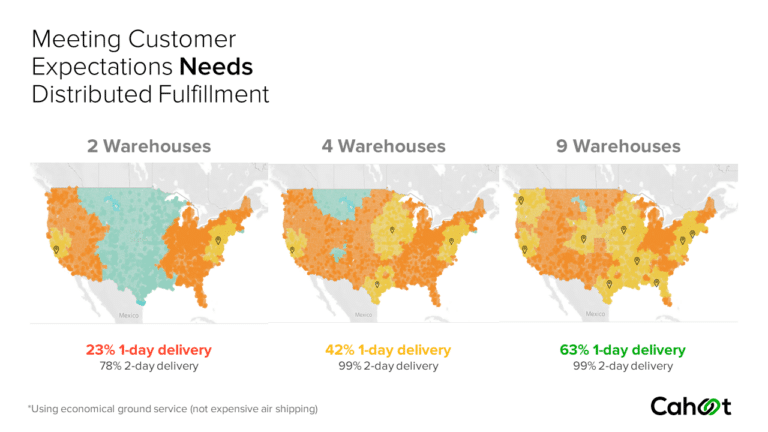
As the number of sales channels and warehouses increases, the operational complexity increases exponentially. Legacy shipping software was built for the old world, where fulfilling orders from just a single warehouse location was the norm. It was never built to handle the complexities of distributed fulfillment. Too many things at the core of the software would have to change to elegantly handle distributed fulfillment. This means merchants often try to get by with complex, convoluted workarounds that keep breaking. However, effective inventory management and synchronization can be achieved through the use of advanced fulfillment software, which streamlines operations, enhances accuracy, and addresses common challenges in the fulfillment lifecycle.
Today’s multi‑warehouse, multi‑channel environment creates many problem areas for Sellers to manage:
- When inventory is spread across such a large number of warehouses, which location should each order be routed to (you can’t draw a line down the middle of a map and expect to get the best shipping rate)?
- Distributed fulfillment offers possibilities if there are problems at any one warehouse location—such as receiving orders after the cut‑off time, running out of inventory, or inclement weather. How can software make identifying such exceptions and rerouting them easier?
- How can fulfillment be handled across multiple sales channels while ensuring a consistent, cohesive experience for customers?
- Can the system natively integrate with best‑in‑class fulfillment networks to unify your logistics technology and operations?
- With ecommerce growing all the time, online shoppers are sharing more sensitive data than ever. With an increased consumer demand for privacy protection, how does your shipping software keep personal information secure?
We’ll now take a look at each of these, examining the differences in the way legacy and next‑generation ecommerce shipping software handle them.
Automatic Order Routing and Label Generation
Legacy Software – Crude and Primitive Routing
Many of today’s popular legacy software have automated order routing features. However, do not be fooled—these capabilities are limited and prone to error, especially when handling diverse shipping options.
In systems like ShipStation, a “Ship From” location can be set based on specified criteria—such as the SKU ordered or the customer’s address. However, a large number of clunky automation rules have to be written—for example, writing a rule to have all orders from West Coast customers be shipped from your California warehouse. Similar rules mapping other states to respective fulfillment locations have to be manually written. Similarly, if you have certain SKUs available only in specific locations, you need to write rules to assign orders accordingly.
Creating such a large number of automation rules is an error‑prone, painful process for many reasons. Here are a few of them:
- So much to configure. Merchants need to ensure they’ve captured every business process through a rule. If they forget to set up any rule (quite possible, given the high levels of operational complexity today), it can create problems and cost leakages. Even the simplest of workflows require rules to be defined. For example, imagine that you wish to use only certain carrier services to make deliveries to residential addresses. Even in that case, you need to define automation rules mapping the address type to appropriate services.
- You’re guessing and hoping. Because your rules are manually defined by mapping SKUs or customer addresses to fulfillment locations, there could always be cases where the rules don’t make the most optimal decision. Without doing a deep, time‑consuming manual investigation, you’ll never be able to actually tell.
- Requires constant maintenance. Rules become obsolete when carriers change or update their services. For example, when USPS introduced Ground Advantage, your rules didn’t automatically update to factor in the new service. This means you had to spend hours updating and rewriting them.
Slow process. Sellers don’t feel comfortable beginning shipping with the software until they’re confident they’ve captured all of their processes through automation rules. This delays go‑live, ultimately increasing your time to value.
Next‑Gen Software – Intelligent, Powerful Routing Technology
Cahoot’s next‑generation shipping software comes with end‑to‑end intelligent automation. When you receive an order, the system intelligently compares multiple warehouse locations, inventory levels, carriers, and shipping services to pick the cheapest label that will meet the delivery SLA committed to the customer. In this way, the Cahoot shipping management software takes the thinking and error out of the rate shopping process, always providing the optimal shipping label, and improves shipping speed because it takes actual estimated real‑time delivery date into account based on ship date and day of the week.
With our technology, you won’t face the automation problems that we’ve highlighted with legacy software. Our intelligent order routing capabilities provide Sellers with many benefits:
- Nothing to configure – it just works. You don’t need to spend time worrying whether you’ve captured all your business workflows through automation rules. You don’t have to update rules and make sure they’re all compatible when business needs change. Cahoot factors in all variables like shipping services, warehouse locations, and inventory levels to pick the optimum fulfillment location on every order automatically.
- Based on the lowest cost, no more guessing. There’s no need to worry about whether your automations have been configured correctly to truly pick the best location every time. You can rest assured knowing that the decision is in the hands of technology, which makes the right choice for every order.
- No maintenance. The system automatically factors in any changes that carriers make to their services. There are no hand‑written automation rules to update or overwrite. When new services like Ground Advantage are launched, the system factors in this additional information and continues to automatically route orders correctly.
- Ready‑to‑go. Sellers can begin shipping in days or weeks with our software, not months. There’s no need to spend time wondering whether you’ve captured workflows through elaborate automations. This means you’ll be able to go live faster and shorten your time to value.
ShipStation vs. Cahoot: 21x Faster, Real Results
Get the inside scoop on how a leading merchant switched from ShipStation to Cahoot—and what happened next. See it to believe it!
See the 21x DifferenceMulti‑Warehouse Exception Handling with Multi‑Carrier Shipping Software
Legacy Software – Limited Rerouting Capability
With legacy software, it’s difficult to plan for the unexpected. Let’s imagine you have 2 warehouses—one in Chicago, and the other in Southern California. Suppose a blizzard strikes the Chicago location.
When working with legacy systems, you don’t have an easy way to temporarily suspend locations. All you’re looking for is a way to temporarily put fulfillment from your Chicago location on hold, while you wait for the weather to improve.
In legacy systems like ShipStation, each SKU is mapped to a list of warehouses from where it can be shipped. You will need to update this mapping between SKUs and fulfillment locations to stop fulfillment from one of your warehouses. This is a painful workaround that you have to perform for a very short period of time—once the weather improves, you’ll have to repeat the process to restore the original configuration.
All this adds to what is already a stressful time, making it difficult for your business to quickly adjust to, and recover from unexpected events. Robust shipping software solutions can help manage these exceptions more effectively, ensuring smoother operations and better customer service.
Next Gen Software – Agile, Flexible Order Rerouting
With Cahoot’s next‑generation shipping software, adverse events don’t have to mean disaster for your business. If one of your fulfillment locations goes down, you can quickly toggle it off. The system will automate shipping from the remaining available locations, helping you keep your customer promises and continue selling.
There are other scenarios when you might require intelligent exception management which need not be emergencies. For example, if one of your warehouse locations needs to close for a holiday, the system can exclude that location and continue to simplify shipping for you across the other active locations.
There are no automations to undo or rewrite. You don’t have to spend a lot of time restoring your system to its original state once the affected location is back up and running again—it’s just a simple toggle to flip on and off. This ensures that your business can continue operating smoothly during such events, and quickly recover from them with minimal impact.
Multichannel Capabilities
Legacy Software – Many Integrations, but of What Value?
One advantage that legacy software has by virtue of having been around for a longer time is its long list of integrations. These tools, such as ShipStation, Shipwise (formerly DesktopShipper), and ShippingEasy all have a long list of integrations with shopping cart platforms, online marketplaces, and other tools that ecommerce Sellers use.
However, while this is definitely a positive, we think this is a case of winning the battle but losing the war. In the above sections, you’ve seen some of the limitations of these tools (keep reading to see more deficiencies), and how they can hamper your productivity and hurt your costs on every single order. You might save a little time with out‑of‑the‑box integrations to more platforms, but does it really matter if these tools negatively impact your bottom line?
Next‑Gen Software – All the Integrations You’re Used To
Cahoot’s next‑generation shipping software is tightly integrated with all leading online marketplaces and shopping cart platforms, including Amazon, Walmart, Shopify, eBay, BigCommerce, WooCommerce, and Adobe Commerce (formerly Magento 2). We’re also integrated with all leading shipping carriers and ecommerce tools that Sellers use today. Our ecommerce shipping solution provides robust integrations that streamline rate shopping, label creation, and order tracking, making shipping more efficient and cost effective for businesses of all sizes.
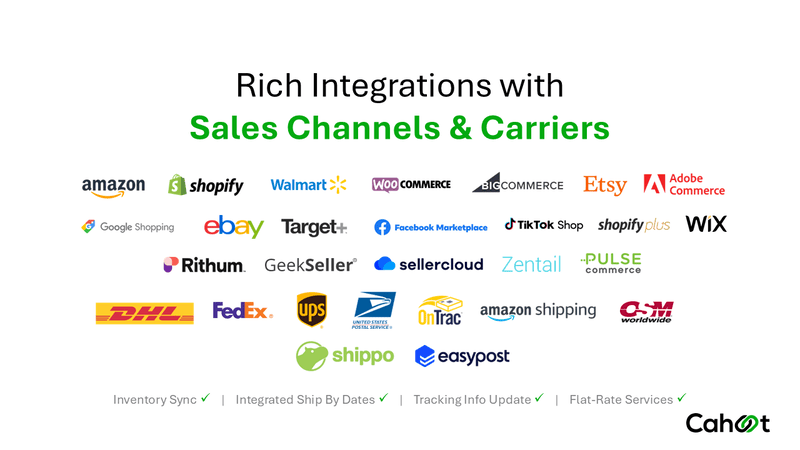
What really matters is the depth of integration between the channel and your shipping software. A simple integration may fetch orders from Shopify or Amazon into your shipping software, but fail to sync inventory or push back tracking information. With our integrations, Cahoot automatically fetches all information required to fulfill an order from the sales channel and intelligently pushes tracking information back to the channel. We also maintain an inventory sync, ensuring that you won’t accept orders on out‑of‑stock items, preventing overselling. The system also provides you with color‑coded alerts to quickly alert you to dipping inventory levels, enabling timely, proactive replenishment rather than reacting to customer frustration on canceled orders.
While our list of integrations might be comparatively smaller (but growing!), you won’t feel the difference—our API allows you to connect Cahoot with any other system you’re using. And as we’ve highlighted in the above sections (keep reading for more!), the system offers real cost savings and productivity gains on every single order.
Integration With Fulfillment Networks
Legacy Software – Cobbled Together and Disjointed
Legacy ecommerce shipping software works well if you’re fulfilling a small number of orders from your own warehouse location. However, if you’re partnering with multiple 3PLs, have a combination of in‑house and outsourced fulfillment, or are working with order fulfillment networks, cracks start to emerge. This stems from legacy software’s lack of native integration with fulfillment networks. Selecting the right shipping solution that seamlessly connects all fulfillment nodes is crucial for efficient order fulfillment and handoff to multiple carriers.
With tools like Flexport, you can’t expand nationwide coverage through their network while still running your own operations. For example—what if you wish to fulfill certain orders from your own warehouses if you have inventory and rates are cheaper? Flexport seeks to capture all volume even if it is inefficient to do so because they don’t integrate with all your fulfillment nodes. Many legacy software have a similar problem, where they find it difficult to manage a combination of in‑house and outsourced fulfillment. Rather than the system intelligently identifying which orders need to be outsourced, the Seller has to define this—which is time‑consuming and error‑prone.
Other forms of chaos can emerge when you’re trying to force a legacy shipping software and 3PL vendor (like Flexe, for example) to work together. The 3PL might require you to figure out which orders you’re going to ship with them, generate a file with all that information, and send it over to them. If you’re trying to participate in a program like Seller Fulfilled Prime, you have tight cut‑off times and very little room to maneuver. Imagine scrambling in the limited time you have between the cutoff time and the carrier pickup to collate and send over the information. You have to hope and pray that you haven’t made a mistake and that you’ve sent the information in time for your 3PL to process the shipments.
Lastly, let’s imagine a scenario where you’ve partnered with multiple 3PLs to achieve nationwide coverage. You have to either use the shipping software to print labels manually and hand that over to each of the 3PLs or share your credentials with all of them. This increases the number of parties your carrier credentials go to, increasing risk and vulnerability for your business.
If you’re experiencing some of these frustrations and want to migrate from your existing fulfillment partner, we know that it’s easier said than done. The process can be uncertain, confusing, and stressful for your business. We’ve put together a step‑by‑step guide to help you make the switch from one fulfillment partner to another, which you can read here!
Next‑Gen Software – Natively Integrated
Cahoot’s shipping software is tightly integrated with our order fulfillment network (having over 100 warehouses in the US). The system is also flexible enough to accommodate any fulfillment locations you run your own operations from—making handling scenarios where there is a combination of in‑house and outsourced fulfillment easy to manage. In such cases, the system is able to intelligently and automatically identify the orders where fulfillment is cheaper through outsourcing rather than being handled at your own warehouse. This frees up your time and ensures you’re getting the best deal on every order.
You also don’t need to spend time acting as the middleman between your shipping software and 3PL, where you drown in busy work generating files and handing them over to your fulfillment partner. With Cahoot, your fulfillment partners see all orders instantly and can print labels in one click. This agility and simplified workflow are just two of the reasons that help Sellers using our fulfillment network meet and surpass the challenging cut‑off times and demanding performance metrics that Amazon expects them to meet on Seller Fulfilled Prime.
It’s not just SFP where requirements are challenging. On the Walmart marketplace, merchants hoping to see increased conversion and sales must offer free nationwide 2‑day delivery with over 95% of orders expected to reach customers by the promised time.
And while you may scale to use many warehouses on the Cahoot network, none of our fulfillment partners know your carrier credentials—you share that only with us on the platform. This reduces risk and keeps your credentials safe while scaling nationwide fulfillment for you.
Information Security and Data Protection
Legacy Software – Poor Security and Privacy
Legacy ecommerce shipping software provides minimal data protection measures. Everything is fine if you own your own warehouses and are using these tools to fulfill orders. However, if you’re partnering with a 3PL (and they use legacy tools to process orders), you’ve handed over all your brand and customer data to them.
While you may sign agreements to prevent misuse, personally identifiable information about your customers (full name, address, email) and proprietary business data is openly available to your 3PL. While they may operate with good intentions, your confidential data is now at the mercy of their information security practices.
This increases the risk and exposure for your business, with little safeguards in place to protect sensitive information.
Next Gen Software – Robust Data Protection and Governance
With next‑generation shipping software, we ensure that only the essential information needed for order fulfillment is transmitted to Cahoot warehouses. We hold back or redact other information—for example, even on a shipping label, your fulfillment partner sees only the first initial of the customer’s last name—making it difficult for them to reconstruct personal customer data. And no data is copy/pasteable or exportable!
We also keep non‑essential customer, brand, and product information walled off and accessible only to you. This ensures that your data is secure and accessible to only one party—you.
Cut Costs with the Smartest Shipping On the Market
Guranteed Savings on EVERY shipment with Cahoot's AI-powered rate shopping and humanless label generation. Even for your complex orders.
Cut Costs TodayThe Future of Fulfillment is Here
Ecommerce logistics have evolved beyond the limitations of legacy shipping software. Today’s merchants need solutions that don’t just patch problems with complex rules and manual oversight but instead offer true automation, intelligence, and flexibility. The challenges of distributed fulfillment, multi‑channel sales, and increasing customer expectations demand technology that works for you—not against you.
Cahoot’s next‑generation shipping software isn’t just an upgrade; it’s a transformation. With intelligent automation, seamless integrations, and built‑in security, our system ensures that fulfillment is fast, cost‑effective, and effortlessly scalable. From real‑time order routing to automated packaging selection, every feature is designed to help you save time, reduce costs, and focus on growing your business rather than troubleshooting logistics.
The days of clunky, error‑prone software are over. The future belongs to merchants who embrace smarter, more efficient fulfillment—where technology does the heavy lifting, and businesses thrive. It’s time to leave behind outdated systems and step into a world where shipping works smarter, not harder.
Are you ready to experience the future of ecommerce fulfillment? The next generation of shipping starts now. If you’d like to learn more, check out our Next Generation Shipping Software Guide, Part 3: “Next‑Gen Warehouse Automation Software for Ecommerce: Fulfillment Efficiency”.
Frequently Asked Questions
Who uses shipping software?
Shipping software has features that can benefit various clients, including individual Sellers, ecommerce brands, retailers, and courier service providers. Feature‑rich software like Cahoot is autonomous and makes highly intelligent and scalable fulfillment and shipping accessible to retailers and brands of all sizes.
What is fulfillment optimization?
Fulfillment optimization is the process of determining the best options for sourcing and order fulfillment, which results in more efficient use of inventory and reduced costs.
What is a shipping platform?
A shipping platform helps you ship faster and cost‑effectively by organizing orders, offering pre‑negotiated shipping rates, enabling shipping rate comparison, and managing shipping workflow.
Written By:
Rinaldi Juwono
Rinaldi Juwono leads content and SEO strategy at Cahoot, crafting data-driven insights that help ecommerce brands navigate logistics challenges. He works closely with the product, sales, and operations teams to translate Cahoot’s innovations into actionable strategies merchants can use to grow smarter and leaner.
Related Articles
HTS Code Explained: What It Is, Why It Matters, and How Ecommerce Brands Use It
HTS codes (Harmonized Tariff Schedule codes) are standardized numerical classifications that identify imported products for U.
Shipping Labels Explained: What They Include, How They Work, and Common Mistakes
Shipping labels are the operational backbone of ecommerce fulfillment, a small piece of paper that determines whether packages reach customers successfully or trigger costly failur...
USPS Click-N-Ship Explained: How It Works, Costs, and When Sellers Should Use It
USPS Click-N-Ship is the postal service’s free online label-printing tool, and for most Shopify sellers shipping more than 50 packages monthly, it’s already time to move beyond it....
Ecommerce Shipping Challenges: The World Has Changed and Traditional Shipping Software is Not Enough
In this article
16 minutes
- The ‘Old World’ of Ecommerce: Lower Complexity
- The ‘Old World’ of Ecommerce: Lower Costs
- Inefficiency in Operations Did Not Impact Margins
- The ‘New World’ of Ecommerce: High Operational Complexity
- Rising Costs
- Efficient Operations Essential for Margins and Profits
- Why Sellers Need to Switch to Next-Gen Ecommerce Shipping Software
- Summary
- Frequently Asked Questions
At Cahoot, we believe today’s ecommerce industry needs next‑generation shipping software. Selecting the best shipping software is crucial for enhancing efficiency and customer satisfaction. But before we talk about this amazing technology, it’s first worth asking – why is now the time? After all, legacy shipping software has been around for years. Thousands of Sellers are already using these tools – why make the switch?
We believe the present moment is perfect because ecommerce is dramatically different from how it looked just twenty years ago. The event that changed everything was the introduction of Amazon Prime in 2005. Just like the first iPhone revolutionized society’s experience with personal technology, Prime’s introduction transformed everything in the ecommerce industry. Sellers had to throw out old strategies and create entirely new ones to run their businesses.
The differences are stark, but we’ve summarized them in this table:
|
Parameter
|
Old World (1990’s, early 2000’s)
|
New World (ChatGPT – Present)
|
|---|---|---|
|
Sales Channels |
Just one |
Many, ever‑increasing |
|
Competitive Pressure |
Minimal |
Intense |
|
Customer Expectations |
Low |
Sky high |
|
# Warehouses |
Just one |
Four or more |
|
Carrier Mix |
Sign one contract |
Rate‑shop across multiple carriers |
|
Order Profile |
Small and simple |
Large and complex |
|
Carrier GRI |
Stable for decades |
Increasing |
|
Warehouse Staffing |
Easier and economical |
Wages keep going up |
|
Warehouse Leasing |
Less competition for space |
Heavy demand for scarce space |
Let’s begin by going back to the 1990s and journey through the early 2000s to see what the ‘old world’ of ecommerce looked like, for Sellers and customers. By understanding these changes, we can see how modern shipping solutions can turn challenges into a competitive advantage.
Let AI Optimize Your Shipping and Boost Profits
Cahoot.ai software selects the best shipping option for every order—saving you time and money automatically. No Human Required.
See AI in ActionThe ‘Old World’ of Ecommerce: Lower Complexity
In the olden days of ecommerce, life was simpler. Fewer channels to manage, fewer customer expectations, and less technological complexity meant uncomplicated logistics and order fulfillment processes that seem almost quaint by today’s standards.
Just One Channel to Manage
In the old world, Amazon was not the ‘everything store’ yet. It was largely a first‑party Seller of a few products like books, CDs, and DVDs. They did not face much competition – Walmart and Target restricted themselves to physical stores while shopping cart platforms like Shopify and BigCommerce did not exist. All this meant that Sellers did not have multiple sales channels to sell and take care of customers on. There was usually just one channel – their own website. With just one channel to support, it was also possible to operate with smaller‑sized teams.
Minimal Competitive Pressure
In the 1990s, online marketplaces did not exist. Amazon launched its third‑party marketplace only in 2000. In this environment, customers did not have a lot of choices. Sellers had to ensure they drew customers to their website through good marketing. Once they found you, it was not easy to comparison‑shop across different listings, brands, or platforms. There was little pressure on Sellers – it was unlikely a competitor would undercut you on price or beat you on shipping speed.
Low Customer Expectations
Perhaps most importantly, customers had no expectation of free and fast shipping. Before Prime’s introduction in 2005, customers had never tasted that experience. They were willing to wait 7–10 days for orders and covered the cost of shipping. Even if they did not like this experience, there was no social media platform at the time where they could share their frustration.
Single Warehouse, Single Carrier
The combination of lower customer expectations and sales through a single channel meant that Sellers could get by with operating from a single warehouse location, or two if they really needed the space. Customers living far away were okay with waiting as long as 1–2 weeks for their orders. Because customers were willing to cover shipping costs, Sellers saw no reason to compare and find the lowest rate among multiple carriers. It was easier to just sign a contract with one carrier. Why bother with cost optimization when the customer was paying?
Small and Simple Orders
In the old world, lower basket sizes (units per transaction) were common because customers were yet to trust making payments over the internet. The least risky way to test ecommerce was to just buy one item. As confidence grew, so did basket sizes. Multi‑Line, Multi‑Quantity (MLMQ) orders were less frequent, reducing warehouse packing complexity.
In summary, Sellers faced little complexity in running their businesses in the old world. They sold on a single channel, faced minimal competitive threats, and could easily satisfy customers. All of this translated into simpler operations across the shipping lifecycle.
The ‘Old World’ of Ecommerce: Lower Costs
We’ve taken a look at how operationally simpler it was to run an ecommerce business in the old world. But this was not the biggest advantage Sellers had – we’ll now explain how costs were lower back then.
Shipping Costs Were Cheaper
Carrier General Rate Increases held steady at 4.4%–4.9% through the 1990s and into the 2010s, which provided predictability and control over delivery costs.
Labor was Cheaper
In the old world, ecommerce did not require massive warehouse labor networks. Sellers could staff warehouses at wages that protected margins, as fewer large players competed for workers.
Warehouse Space was Cheaper
Warehouse demand was lower, so Sellers could find and lease space more easily and at lower rates. Fewer ecommerce operations competed for limited industrial real estate.
Across the fulfillment workflow, Sellers had cost certainty. Carrier rates, labor wages, and warehouse leases were steady, protecting margins without constant optimization.
ShipStation vs. Cahoot: 21x Faster, Real Results
Get the inside scoop on how a leading merchant switched from ShipStation to Cahoot—and what happened next. See it to believe it!
See the 21x DifferenceInefficiency in Operations Did Not Impact Margins
In a world without marketplaces, customers paid shipping fees and lacked social media to complain. There was no pressure to optimize operations or cut costs – margins remained protected without innovation.
The ‘New World’ of Ecommerce: High Operational Complexity
Prime’s launch in 2005 changed ecommerce permanently. Today’s Sellers operate in a vastly more complex environment.
Many Channels to Manage
Amazon’s third‑party marketplace, Walmart, Target, Shopify, BigCommerce, and others mean Sellers must sell and support customers across multiple platforms. This requires larger teams and integrated shipping solutions.
Intense Competitive Pressure
Online marketplaces give customers infinite choice. Sellers face constant threats of price undercuts, faster shipping, and knock‑offs. High shipping costs further squeeze margins.
Sky High Customer Expectations
Customers now expect 1‑day and 2-day free shipping. Cart abandonment soars without transparent free, fast options and social media amplifies complaints.
Multiple Warehouses, Multiple Carriers
To meet fast, free delivery, Sellers must distribute inventory across strategically located warehouses and rate‑shop among many carriers. Multi‑carrier shipping software automates this complexity.
Large and Complex Orders
Higher free‑ship thresholds and multi‑item carts drive more Multi‑Line, Multi‑Quantity (MLMQ) orders, requiring more varied box sizes and longer packing times.
Sellers today juggle multiple channels, unrelenting competition, and sky‑high expectations — reinventing every step of shipping with distributed fulfillment and intelligent software.
Rising costs
Complexity isn’t the only challenge — costs have also soared in the new world.
Shipping Cost is Expensive
Carrier GRIs jumped to 5.9% in 2022, 6.9% in 2023, and 5.9% in 2024 and 2025 — well above historical norms and inflation, leaving Sellers scrambling to adjust budgets and operations.
Labor is Expensive
Warehouse wages have risen as Amazon, Walmart, and Target compete for labor. In some regions, $20/hr has become the baseline, making staffing more costly for smaller Sellers.
Warehouse Space is Expensive
Warehouse rents soared during COVID‑19 and remain high as supply lags demand. Over 80% of U.S. warehouses were built before 2000, driving up lease rates.
Sellers now face rising carrier rates, labor wages, and lease costs, compounding the complexity of meeting modern customer demands.
Cut Costs with the Smartest Shipping On the Market
Guranteed Savings on EVERY shipment with Cahoot's AI-powered rate shopping and humanless label generation. Even for your complex orders.
Cut Costs TodayEfficient Operations Essential for Margins and Profits
In marketplaces, creative cost‑saving and resource pooling are essential. Sellers must optimize operations to preserve margins, stay competitive, and win.
Why Sellers Need to Switch to Next‑Gen Ecommerce Shipping Software
Legacy tools worked in the old world but add problems in the new one. They lack automation, cost savings, and multi‑channel flexibility, consuming time rather than simplifying workflows.
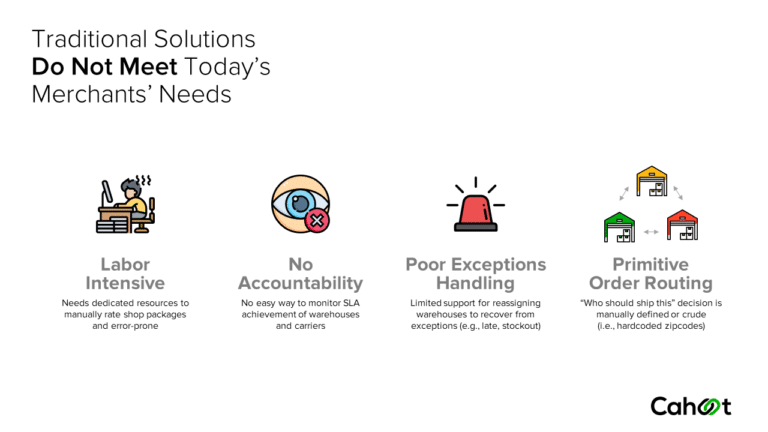
Choosing shipping software is crucial in developing an effective shipping and fulfillment strategy.
The next generation of ecommerce shipping software must solve three key problems:
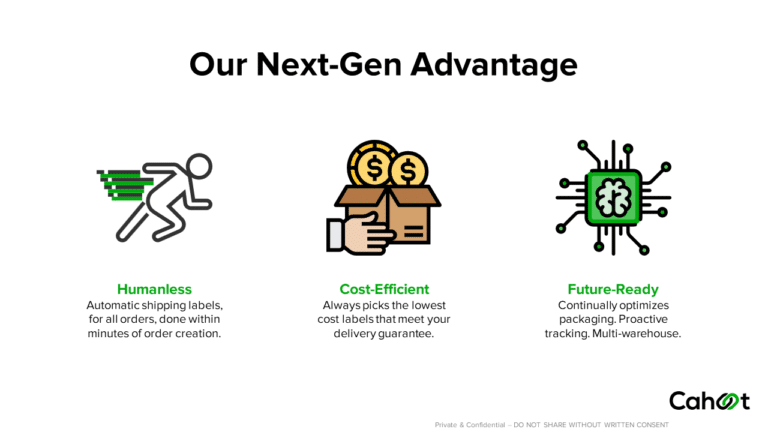
- Simplify the operational complexities of the new world of ecommerce
- Drive operational efficiencies and productivity gains for your team
- Generate meaningful cost savings across each step of the shipping and order fulfillment workflow
In the coming sections, we’ll dive deeper into each of these aspects and explain how Cahoot’s next‑generation software is purpose‑built to address these challenges.
Summary
Ecommerce has come a long way. The simplicity of the past has given way to a fiercely competitive, complex environment where every decision matters. Traditional shipping software is now a relic, not a reliable tool.
To thrive today, businesses need software that simplifies complexity, enhances efficiency, and drives down costs in ways the old world never required.
At Cahoot, we’re actively shaping the future of ecommerce fulfillment. In today’s market, the right technology isn’t just helpful—it’s essential.
If you’d like to learn more, check out our Next Generation Shipping Software Guide, Part 2: “Shipping Software for Ecommerce Fulfillment: The Next Generation of Shipping Simplified”.
Frequently Asked Questions
How can I reduce shipping costs for my ecommerce business?
Reducing shipping costs requires a multi‑faceted approach:
- Negotiate rates with multiple carriers rather than relying on a single provider
- Consider using regional carriers for deliveries within specific areas
- Optimize packaging to reduce dimensional weight charges
- Implement zone skipping by shipping bulk orders to carrier hubs closer to final destinations
- Use shipping software that compares rates across carriers in real time
- Offer local pickup options for customers in your area
- Consider flat‑rate shipping for certain product categories
What are the most common causes of parcel delivery delays?
Several factors commonly contribute to delivery delays:
- Weather events and natural disasters
- Carrier capacity constraints during peak seasons
- Customs clearance issues for international shipments
- Address errors or incomplete delivery information
- Staffing shortages at carrier facilities
- Vehicle breakdowns or logistical issues
- High volume surges (e.g., Black Friday/Cyber Monday)
- Last‑mile delivery complications in rural or hard‑to‑access areas
How can I reduce the environmental impact of my ecommerce shipping?
To make your shipping more sustainable:
- Use right‑sized packaging to minimize waste and reduce dimensional weight
- Choose recycled or biodegradable packaging materials
- Offer carbon offset options at checkout
- Consolidate orders when possible to reduce the number of shipments
- Partner with carriers that have environmental initiatives or electric vehicle fleets
- Implement a packaging reuse program for returns
- Consider local fulfillment options to reduce transportation distances
What should I do about rising return rates in ecommerce?
To address the challenge of increasing returns:
- Provide detailed product descriptions, measurements, and high‑quality images to set accurate expectations
- Implement a clear, easy‑to‑understand return policy
- Consider offering free returns as a competitive advantage
- Use analytics to identify products with high return rates and address underlying issues
- Implement a return merchandise authorization (RMA) system to streamline the process
- Consider restocking fees for certain categories to discourage unnecessary returns
- Offer virtual try‑on or AR features for appropriate products
How can I improve last‑mile delivery efficiency?
Improving last‑mile delivery, often the most expensive part of shipping, requires:
- Partnering with multiple carriers to diversify delivery options
- Implementing delivery management software to optimize routes
- Offering alternative delivery options like BOPIS (Buy Online, Pick Up In Store)
- Using lockers or pickup points in convenient locations
- Providing narrow delivery windows to improve customer experience
- Leveraging data analytics to predict delivery challenges in specific areas
- Considering micro‑fulfillment centers in urban areas for faster delivery
What are the best practices for international shipping in ecommerce?
For effective international shipping:
- Partner with carriers experienced in global logistics
- Understand customs documentation requirements for each country
- Use harmonized system (HS) codes correctly for all products
- Be transparent about duties and taxes that customers may need to pay
- Consider using a third‑party logistics provider specializing in international shipping
- Implement reliable package tracking for international orders
- Offer DDP (Delivered Duty Paid) options for a smoother customer experience
- Research import restrictions for products in your target markets
How can I manage shipping expectations during peak seasons?
To handle peak season shipping challenges:
- Plan ahead by increasing inventory and staffing well before peak periods
- Communicate realistic delivery timeframes to customers
- Consider implementing order cutoff dates for holiday deliveries
- Diversify carrier partnerships to spread volume across multiple providers
- Use shipping software that can automatically route orders to carriers with capacity
- Offer incentives for early shopping to spread out order volume
- Maintain transparent communication about potential delays
- Consider temporary local pickup options during extremely high‑volume periods
Written By:
Rinaldi Juwono
Rinaldi Juwono leads content and SEO strategy at Cahoot, crafting data-driven insights that help ecommerce brands navigate logistics challenges. He works closely with the product, sales, and operations teams to translate Cahoot’s innovations into actionable strategies merchants can use to grow smarter and leaner.
Turn Returns Into New Revenue
Related Articles
HTS Code Explained: What It Is, Why It Matters, and How Ecommerce Brands Use It
HTS codes (Harmonized Tariff Schedule codes) are standardized numerical classifications that identify imported products for U.
Shipping Labels Explained: What They Include, How They Work, and Common Mistakes
Shipping labels are the operational backbone of ecommerce fulfillment, a small piece of paper that determines whether packages reach customers successfully or trigger costly failur...
USPS Click-N-Ship Explained: How It Works, Costs, and When Sellers Should Use It
USPS Click-N-Ship is the postal service’s free online label-printing tool, and for most Shopify sellers shipping more than 50 packages monthly, it’s already time to move beyond it....
Top 7 Supply Chain Strategies for Making Free Shipping Profitable
In this article
18 minutes
Free shipping has become an expectation in ecommerce, but for many businesses, it feels like an uphill battle against shrinking profit margins. The key to making free shipping work isn’t just about absorbing the cost, it’s about optimizing your supply chain to offset those expenses. From strategic inventory management to innovative fulfillment methods, businesses that refine their logistics can transform free shipping from a financial burden into a competitive advantage. In this guide, we’ll explore supply chain strategies that not only help sustain free shipping but also attract more customers without compromising your bottom line.
1. Minimize Inventory Storage With Just-in-Time Procurement
Just-in-Time inventory Stocking (JIT) is a common inventory management technique and a lean methodology to increase efficiency. A successful example is the apparel retailer Zara, with its “mind-spinningly supersonic” supply chain. Zara operates in an industry where inventory “spoils” quickly so they commit less than a quarter of a season’s line and produces about half of its line at the start of the season. The remaining? They were designed and produced during the season. Zara identifies popular styles and puts new similar designs in stores throughout the season while they’re still popular. With JIT, Zara improved its cash flow by reducing low-demand inventory while doubling down on what’s working.
Today, online Sellers can quickly gather and process historical sales data to make better demand predictions, but they are still just guesses. And yes, some safety stock is still needed as a buffer, but Sellers don’t need to dedicate as much space for storage as they had in the past. With proper data analysis and planning for smaller but more frequent procurement cycles, merchants can derisk the capital investment and direct the savings into their customer acquisition strategy.
Another application of JIT is cutting storage costs at 3PLs such as Fulfilled by Amazon. FBA is generally an excellent option, but only if the Seller can handle the storage costs (including peak season storage rates and aged inventory surcharges). By estimating their sales via FBA, Sellers can ship items regularly to FBA warehouses in quantities that will sell quickly. The remaining items can be stored in an inexpensive warehouse or their own facility.
Let AI Optimize Your Shipping and Boost Profits
Cahoot.ai software selects the best shipping option for every order—saving you time and money automatically. No Human Required.
See AI in Action2. Buy Online Pick Up In Store (BOPIS)
This is not strictly a solution for improving shipping costs, but it can help the customer get their order on their schedule at a lower cost to you. Buy Online Pick Up in Store (BOPIS) enables customers to pick up their items from one of your physical retail locations. The key here is to eliminate the shipping cost altogether by encouraging the customer to pick up their order.
Customers expect free and fast shipping and in some categories such as grocery, healthcare products, and some household items, fast shipping is a priority over free shipping. You may even want to offer a discount to encourage in-store pick-up which is a win-win for both you and your customer.
BOPIS bypasses the shipping process, cutting delivery from days to mere hours. Moreover, it can be a differentiator between you and a competitor, leading to higher top-line revenue. To minimize additional staffing needs and wait times, self-service package lockers can be used as a touchless way for customers to pick up their orders. Prepared orders are delivered to a locker inside or outside of your store that customers can open via an app or one-time password.
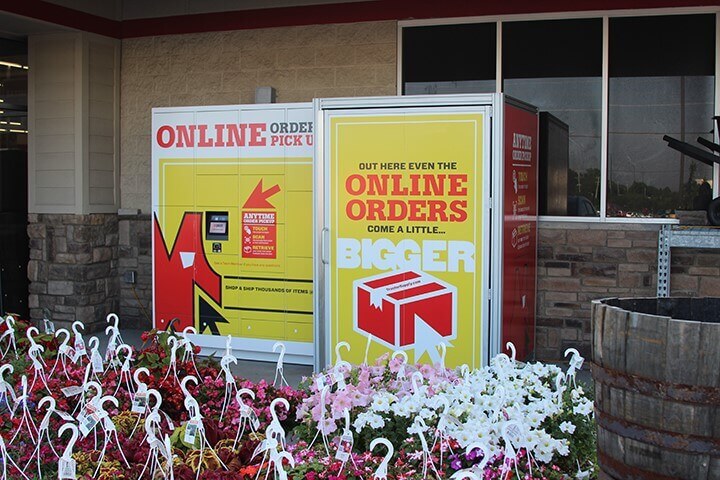
3. Zero Inventory Through Dropshipping
Dropshipping is a popular order fulfillment method used by many online Sellers. Dropshipping is an ecommerce business model that allows retailers to sell products without holding onto inventory. Instead, the retailer forwards customer orders to a third-party supplier who ships the product directly to the customer for a fee. Sellers don’t stock the items in their warehouse, effectively making it a zero-inventory business. When an order for a dropship item is received, the Seller purchases the item from a wholesale supplier who ships the order directly to the customer on behalf of the Seller. Sellers don’t handle or even see the product in the whole process.
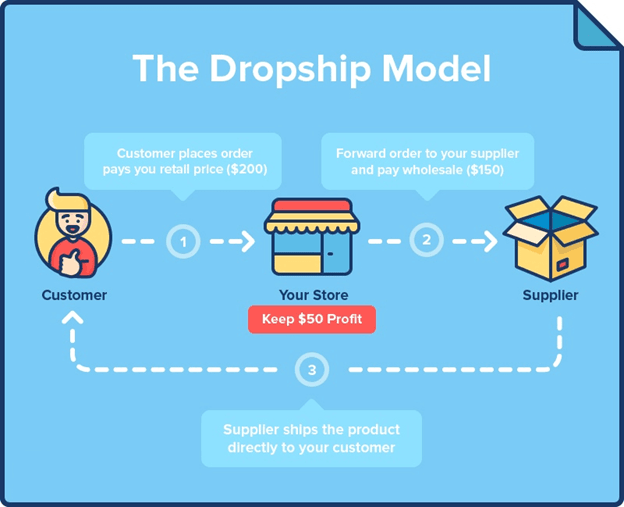
Dropshipping has a host of advantages as the online Seller does not require capital to pre-purchase inventory, does not need a warehouse to store it, and doesn’t even need expertise in order fulfillment and operations. However, the Seller must contend with low margins and no control over fulfillment. Therefore, dropshipping should be pursued by Sellers who intend to focus on building a diverse and creative product portfolio and concentrate on marketing to drive sales and revenue growth.
In the dropshipping model, the suppliers assume the risk of unsold inventory, though it’s minimal as they tend to have many affiliates selling their wares, and they pass the cost of logistics to the dropship Seller. Running an assetless business and maintaining low operational costs allows you to offer free shipping while concentrating on improving your sales without worrying about fulfillment.
Another form of dropshipping is cross-docking. In this ecommerce business model, instead of the wholesaler shipping orders directly to their affiliate’s customers, they bulk ship all the days’ orders to the merchant’s warehouse, who then fulfills all the customer orders. Cross-cocking tends to be used by merchants that already have the fulfillment infrastructure and the sunk costs of operating a physical ecommerce business. However, this strategy enables them to sell an expanded product catalog with lower product pricing and logistics fees, which results in higher profitability at a lower risk profile comparable to pure-play dropshipping.
4. Streamlining Your Supply Chain
The supply chain, in general, is not easy to manipulate. However, it’s a good idea to step back and reassess your supply chain for opportunities to improve your cost structure and allow you to offer free shipping.
Here are a few high-level recommendations to streamline your supply chain:
Optimize Sourcing: When you first open an online store, you would typically start with the easiest product sourcing options. As you scale and increase your bargaining power, though, you should look beyond the current sourcing and look for alternative suppliers that align with your selling strategy, which can be a cost leader, highly differentiated, or anywhere in between. You should also consider talking directly with manufacturers, if you’re not already (and using a broker or aggregator), and have a conversation about how you can bring your landed costs down. For example, sometimes overseas factories have preferred freight forwarders with much better ocean container rates than you might currently have available. Ask your 3PL/4PL if they can help with container shipping rates for the same reason…they can often get better rates by aggregating volume across clients.
Optimize Your Order Fulfillment Location: Ecommerce allows businesses to operate from anywhere they can get an internet connection. But as you scale, the inbound and outbound shipping becomes one of the most significant contributors to fulfillment costs. Moving your fulfillment location closer to the customer can save you money AND delight customers with faster shipping; middle of the country, for example (if more than one warehouse is not feasible, though Cahoot makes it easy to add warehouse locations to your existing setup to improve efficiency and reduce cost). On the other hand, being closer to vendors will help you reduce lead time and inbound costs. Both of these factors should be considered in deciding the optimal fulfillment center location. In addition, some locations also enjoy cheaper warehouse rents, cheaper labor costs, and may have government incentives. Taken together, an optimized fulfillment infrastructure can sometimes save substantial money.
Reduce Inventory: As an ecommerce business grows, the common reaction is to increase the size of the warehousing facility as well as the inventory on hand to meet the customer demand. But inventory is a cost trap and increasing inventory should be avoided as much as possible. Explore options such as reducing lead time from suppliers and getting rid of slow-moving inventory. Drastic measures such as liquidation and promotional sale of obsolete items should be standard practices in an industry with dynamic SKUs.
Consider Distributed Inventory: Distributed warehousing is a well-known solution for offering fast and free shipping. Whether leveraging a 3PL service such Amazon FBA, Multi-Channel Fulfillment (MCF), or a 3PL that has many locations, the benefits of distributing inventory to minimize final-mile shipping cost can often improve margins enough to be able to offer free shipping.
Multi-Channel Sales: Many studies have shown that the advantage of selling on many channels is huge. You reach more customers and the topline sales growth increases. This is not different from the conventional brand offering their product through the flagship store, departmental stores, specialty stores, or even outlets. In a similar vein, online shoppers have different channel preferences, and as such, different channels tend to command the attention and loyalty of different demographics. For example, Gen Z is more likely to shop via social channels and be drawn to influencer marketing while millennials prefer comparing different marketplaces and stores. Mix up your strategy to reach more eyeballs to grow revenue and earn the budget needed to cover free shipping.
ShipStation vs. Cahoot: 21x Faster, Real Results
Get the inside scoop on how a leading merchant switched from ShipStation to Cahoot—and what happened next. See it to believe it!
See the 21x Difference5. Optimize Shipment Packaging
Packaging is an often-overlooked opportunity to optimize shipping costs. Shipping costs are dependent on the size and weight of the package, and online Sellers should look to cut down on both while choosing the optimal packaging. Shipping “air” is throwing money out the window.
If you are using small cardboard boxes, you can cut down on weight and size both by going with poly bubble mailers (if the product can ship and deliver safely in one). Poly mailers are versatile and can accommodate different shapes and sizes of items while keeping the cubic volume and weights low. For example, a poly bubble mailer of size 7.5” x 12” can weigh just 0.5 ounces compared to 3.6 ounces for a small 6”x6”x4” box. Be mindful of only shipping small and strong items using poly mailers like books, cables, or kitchen gadgets. For apparel, some brands like Abercrombie & Fitch use un-padded poly mailers that cost and weigh even less than their bubble-padded brethren.
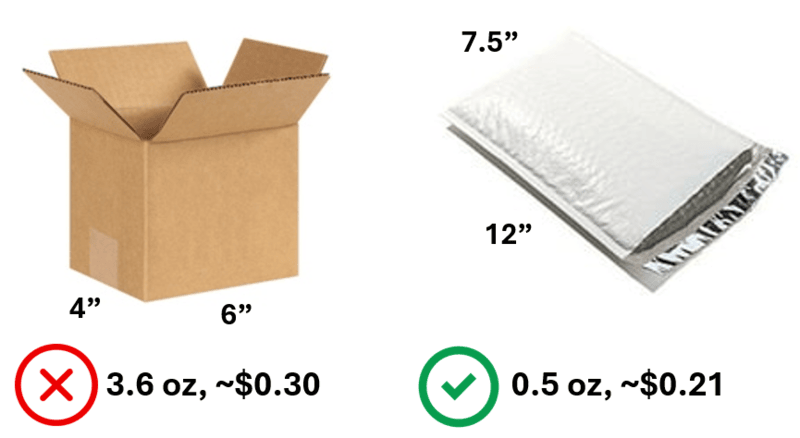
Another way to cut costs is to use carrier-provided boxes or packaging. All carriers give away free packaging for specific classes of mail. If you are shipping within that service, buying a separate box and affixing the label to it may be more costly than just going with the carrier-provided packaging.
Lastly, consolidate shipping supplies into the 20-ish sizes that are used most often and negotiate bulk discounts to help reduce your packaging costs. As a part of the exercise, take the time to optimize your packaging sizes around the frequency of multi-line/multi-quantity orders by SKU. In other words, figure out the most frequently ordered quantities for your products and purchase the packaging that is optimum for those orders. For example, you may be using the same package to ship multiple quantities of an item like soap. But if your box is designed to accommodate 5 units of soap, and your most commonly order quantity is 2 units, you should consider getting a separate smaller package and save money on the cheaper box or mailer and lower shipping cost. It increases complexity but will save money over time.
Smart cartonization software can be worth its weight in gold and could protect most of your shipping budget by itself by helping you automatically ship in the most economical packaging, minimizing the amount of shipped “air” and extra cost associated with the larger shipment. It can also help you track packaging inventory and alert you when you’re running low.
PRO TIP: Order packaging in bulk directly from overseas manufacturers for the most impactful savings. Buying from domestic suppliers allows you to buy Just In Time and minimize how much is spent at once, but the advantage of saving ~30 – 40% on shipping supplies may far outweigh the convenience of local sourcing in the long run.
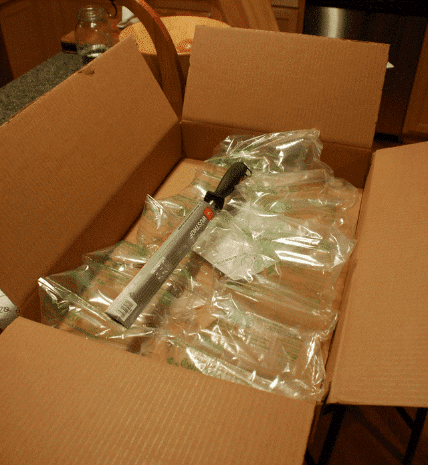
6. Reuse Packaging from Inbound Orders
There are two main benefits of reusing supplies from inbound orders. The first is reducing waste (most used shipping supplies are sent to the landfill), and the second is reducing the supplies you need to buy. Packaging supplies like boxes, mailers, and void fill may look trivial when you consider the cost of 1 unit, but en masse, the costs can really add up because they apply to every order shipped.
If you offer fragile or sensitive items that require special packaging, chances are some materials from your inbound shipments can be reused. For example, reusing void fill materials like bubble wrap, peanuts, or crinkled paper can reduce your spending on new supplies while reducing waste. Of course, the amount that can be reused may vary from each Seller, but it’s generally a better idea to reuse before finally recycling them.
Inbound boxes can also be reused to save money here and there, especially if you’re shipping larger items. But be aware that customers can be sensitive to what their package looks like when it’s delivered. If a reused box has old shipping labels, stickers, tape, and/or writing on them, they may have a poor experience and may not buy from you again.
Cut Costs with the Smartest Shipping On the Market
Guranteed Savings on EVERY shipment with Cahoot's AI-powered rate shopping and humanless label generation. Even for your complex orders.
Cut Costs Today7. Warehouse Robots
Autonomous mobile robotics (AMR) is an exciting innovation in warehousing operations that helps reduce the costs of the picking, packing, and sorting parts of the fulfillment workflow. The robots eliminate the cost of labor from these steps while increasing efficiency. Fulfillment is faster and there are fewer mistakes when a robot conducts an operation. Currently, order fulfillment centers that have robots working alongside humans can transport many more items at once, and in some cases, the complete rack of shelves are brought to stations manned by humans, rather than humans going to the shelves to pick products.
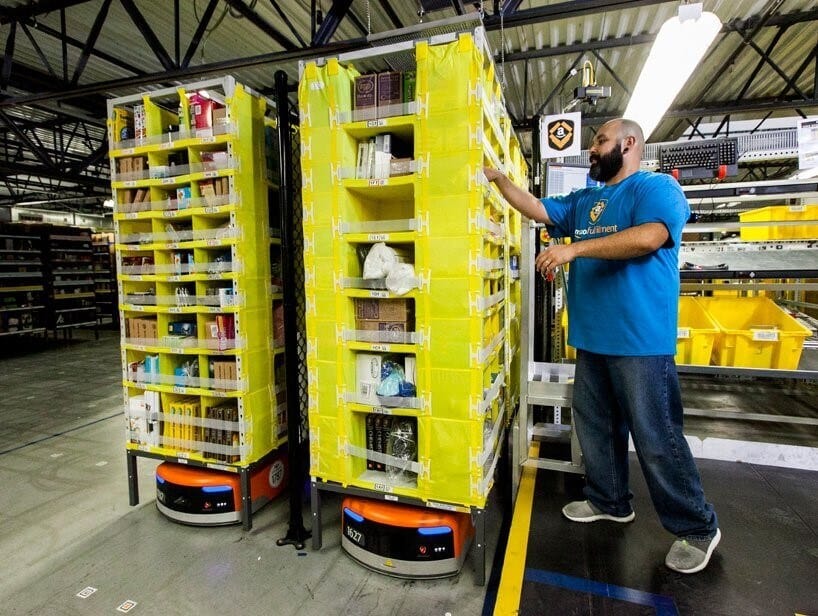
In other cases, robots speed-sort items by weight and volume to be packaged accordingly for different shipping services. This reduces human error while increasing fulfillment speed.
Kiva Systems and 6 River Systems have been two breakthrough AMR robot developers that have helped lower costs significantly for ecommerce Sellers. Kiva specializes in moving the entire shelf of products mentioned previously and was acquired by Amazon for the exclusive use of Amazon fulfillment centers. 6 River Systems was acquired by Shopify and is best known for their collaborative mobile robot named “Chuck” that uses sensors to navigate warehouses, avoiding obstacles and slowing down around people and equipment, guiding workers through their work zones to reduce walking and increase efficiency.
According to Amazon in 2016, Kiva robots cut the cost of warehousing by 20%, which amounts to more than $22 million dollars per warehouse per year. It is estimated that Amazon could save as much as $2.5 billion per year if the robots were deployed to all facilities.
Using robots helps businesses cut the time required to fulfill each order. At the same time, it has allowed better utilization of space by building narrower isles and getting rid of handling mechanisms that were required before.
For a warehouse without any robots, simple solutions such as Automated Guided Vehicles (AGV’s) can be an entry level solution. They are used extensively on factory floors and follow a predetermined path to transport materials without human intervention. This helps reduce manpower. Another solution could be Autonomous Mobile Robots (AMR’s) that can identify their environment and information on packages, where items are located on shelves, and can be used for picking, putaway, sorting, counting, and replenishment tasks, reducing human intervention even further.
Summary
Successful ecommerce businesses don’t just offer free shipping, they master the logistics behind it. Whether through just-in-time inventory, dropshipping, or regional fulfillment centers, the right logistical decisions can make all the difference. Businesses that stay ahead in supply chain optimization will not only keep shipping costs under control but also position themselves for scalable, long-term success. The key is to continuously refine operations, embrace emerging technologies, and find efficiencies that drive long-term savings that can be reinvested into a growth strategy that includes free shipping. With the right approach, free shipping can become a sustainable and profitable part of your business.
Download The Ultimate Guide to Profitable Free Shipping
Frequently Asked Questions
How to lower supply chain costs?
Companies can reduce their supply chain costs by working with suppliers, choosing specialist logistics and warehousing firms, using technology to boost efficiency, and finding ways to reduce waste such as materials or time.
How to reduce the cost of supply chain?
Streamlined processes, efficient transportation, and optimized inventory management all contribute to significant cost savings. By minimizing waste and maximizing resource utilization, businesses can lower expenses and boost profitability.
What is an efficient supply chain?
Supply chain efficiency focuses on delivering quality products to customers at the lowest possible cost by maximizing such resources as materials and labor. Supply chain responsiveness focuses on customers’ expectations and strives to provide a quality product faster.
What is cost control in supply chain management?
It involves optimizing operations to deliver maximum value with minimum waste, thereby impacting the total cost of the products or services. Supply chain managers and leaders have a pivotal role in analyzing and optimizing the supply chain.
Where can I reduce supply chain costs?
Some examples include: avoid minimum order quantities, know your reorder point, get rid of obsolete stock, implement Just-in-Time inventory management practices, and use consignment inventory (or a drop shipping business model).
Written By:

Manish Chowdhary
Manish Chowdhary is the founder and CEO of Cahoot, the most comprehensive post-purchase suite for ecommerce brands. A serial entrepreneur and industry thought leader, Manish has decades of experience building technologies that simplify ecommerce logistics—from order fulfillment to returns. His insights help brands stay ahead of market shifts and operational challenges.
Turn Returns Into New Revenue
Related Articles
HTS Code Explained: What It Is, Why It Matters, and How Ecommerce Brands Use It
HTS codes (Harmonized Tariff Schedule codes) are standardized numerical classifications that identify imported products for U.
Shipping Labels Explained: What They Include, How They Work, and Common Mistakes
Shipping labels are the operational backbone of ecommerce fulfillment, a small piece of paper that determines whether packages reach customers successfully or trigger costly failur...
USPS Click-N-Ship Explained: How It Works, Costs, and When Sellers Should Use It
USPS Click-N-Ship is the postal service’s free online label-printing tool, and for most Shopify sellers shipping more than 50 packages monthly, it’s already time to move beyond it....
Top 12 Shipping Strategies For Making Free Shipping Profitable
In this article
31 minutes
- Structured Negotiation with Multiple Carriers
- Convince Suppliers to Use Your Shipping Account
- Use Trade or Group Association Discounts
- Use Shipping Label Software
- Maximize Ground Shipping Services
- Try Amazon Shipping
- Take Advantage of ‘Hybrid' Shipping Services
- Consider a Regional Carrier or Regional Rates
- Avoiding Residential Address Surcharges
- Use Zone Skipping for High Volume Zones
- Use International Freight Forwarders to Fulfill International Orders
- Selling Internationally through Full-Service Cross-Border Solutions
- Summary
- Frequently Asked Questions
For ecommerce sellers, shipping is more than just getting a package from point A to point B — it’s the invisible backbone, quietly shaping customer satisfaction, operational costs, and, ultimately, your bottom line. Yet, as carriers raise their rates and consumer expectations for fast, free shipping continue to rise, businesses are left with a difficult choice: absorb the costs, pass them on to customers, or find a smarter way to optimize logistics to avoid sacrificing profit.
The good news? You don’t have to choose between customer satisfaction and profitability. With the right shipping strategies — whether it’s negotiating better carrier rates, using regional shipping options, or leveraging technology to streamline fulfillment — you can reduce costs while maintaining service quality. This guide explores key tactics to help businesses of all sizes take control of their shipping costs and turn logistics into a strategic advantage.
1. Structured Negotiation with Multiple Carriers
Shipping costs are easily the biggest component of your order fulfillment prices, worse if you happen to sell big bulky items. But the problem is, every year the carriers increase their rates while you have to keep prices low to stay competitive. Giants like Amazon can afford to subsidize their deliveries, but how are you to offer free shipping as a small business?
Well, a lot.
With Amazon’s transportation business, Amazon Shipping, enabling the company to reduce its reliance on USPS, UPS, and FedEx, these national carriers are doing all they can to retain their customers. For these carriers, every bit of business is important to retain shareholder value. This presents you with the perfect opportunity to pull up your socks and put on your negotiation cap.
The key is shopping around and negotiating with your carrier Account Manager (if you have one). Chances are you’ll get a better deal if you can convince carriers that you are a reliable source of repeat business. First, you’ll have to gather what your business’ shipping needs are and then you formulate a formal Request for Proposal (RFP). This RFP document will help carriers assess your needs and tailor a deal for you. It’s easier to distribute this document across multiple carriers rather than setting up one-on-one discussions with everyone too early in the negotiation. For more details, Logiwa does an excellent job of explaining how to go about it.
There’s a merit to being well-prepared for your negotiation. Be sure to really understand what sort of shipping profile your business has, ranging from:
- Breakdown of your historical shipping speeds (Ground, Express, Consolidation)
- Shipment weights and dimensional weights
- Percentage of residential vs. commercial deliveries, including weekend deliveries
- How often errors and corrections like address changes and incorrect weights occur

Having a clear sense of what your business really needs helps you avoid paying for features you don’t really need in your deal with the carrier and makes sure that you do negotiate for the items that you use the most. Pulse Commerce also has a great in-depth article on how you can negotiate better rates using shipping data and analytics.
Let AI Optimize Your Shipping and Boost Profits
Cahoot.ai software selects the best shipping option for every order—saving you time and money automatically. No Human Required.
See AI in Action2. Convince Suppliers to Use Your Shipping Account
You might be leaving money on the table if you use your shipping account for only outbound shipments from your warehouse(s). Most ecommerce Sellers get inbound inventory shipments from their suppliers. If you’re one of those merchants, it would be a good idea to convince your suppliers to send them using your shipping account, meaning the carrier will bill you directly for the inbound shipment. This translates to more shipping volume on your account, and if we learned anything from the first tip, the more volume you have the more bargaining power you’ll have as well. In addition, you might already hit a higher volume discount even before further negotiations.
There are third-party contract negotiation/optimization solutions such as TransImpact, ShipSigma, and ShipRx, (among many others), that will analyze your shipping history for you, identify the most commonly used services, sizes, weights, and accessorial fees, and then help you negotiate your best agreement. With over 600 negotiable terms in a UPS contract, for example, outsourcing the work could make sense.
Lastly, make sure to request that any outsourced fulfillment partners also use your negotiated accounts. Modern ecommerce order fulfillment providers such as Cahoot have a Bring Your Own Carriers option that allows you to keep your volume on your accounts while outsourcing the fulfillment logistics to increase efficiency and lower cost.
A simple solution would be to set up a process through which suppliers can provide you with all the shipment details and you can provide them with the shipping labels. You can email those labels directly to them, and they can be printed, and packages can be handed over to the carrier.
3. Use Trade or Group Association Discounts
Trade organizations such as the American Bar Association or the Outdoor Industry Association are not just good for their annual conferences and shows, but they also offer a lot of advantages to their members. One of them is working together to help businesses reach scale when buying goods and services.
image courtesy: UPS
Shipping carriers often have relationships with many professional associations and offer member discounts. Depending on the size of the organization, you could be eligible for discounted rates of up to 50 percent with UPS and FedEx.
While UPS does not advertise the associations they offer discounts to, don’t hold back from asking your Account Manager or your association, whether you qualify. By aggregating your volume with that of your industry peers, you may just find that you’ve been missing out on a lucrative opportunity.
4. Use Shipping Label Software
There are two types of shipping label software we’re talking about in this tip: multi-carrier channel-integrated shipping label software such as Cahoot or ShipStation, and specific carrier websites that support online shipping label generation, such as USPS.
Shipping label software is an easy opportunity for Sellers who are new to ecommerce and/or haven’t reached the volume to qualify for negotiated rates or discounted 3PL services yet to get access to discounted rates. Cahoot, ShipStation and many others aggregate their shipping volume to negotiate big discounts with several carriers each and pass the savings onto their customers. Alternatively, you can print your shipping labels at usps.com instead of at the post office counter and enjoy the same reduced rates (commercial program) available to larger shippers. Discounted USPS shipping labels can also be purchased through authorized USPS postage services like Endicia which claims savings of up to 40%, whereas Stamps.com can save you up to 30% on Priority Mail services. Online shipping with USPS also saves you from carrying all your packages to the post office with its free parcel pickup service.
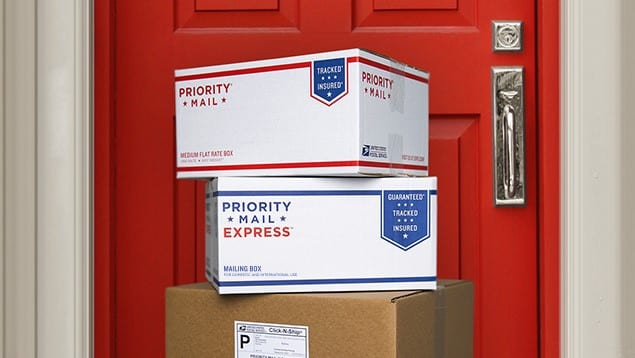
image courtesy: UPS
Using USPS is ideal only if you are shipping packages weighing less than two pounds. For heavier packages, it’s less expensive to go with the private carriers (FedEx and UPS). For private carriers, it’s best to open an account online rather than shipping them through the physical stores (e.g. The UPS Store and FedEx Office). These carriers reward the Do-it-yourself mentality! If you pay & print labels online and drop them off at the carrier store, you can save up to 50% compared to doing all of this directly at the carrier’s store.
5. Maximize Ground Shipping Services
Free shipping is a great motivator for shoppers even if it means getting the delivery a little later in some cases. According to a study published by McKinsey & Company in 2025, 95% of online shoppers prefer free standard delivery over paid expedited delivery, and 8 out of 10 shoppers are willing to wait even longer for a free shipment. Therefore, using the cheaper ground shipping option may be your best bet.
Similar to tip #3, which aims to add enough margin to the shopping cart subtotal to make free shipping viable, an alternative is to provide free shipping but at a slower speed. Consider offering a no-rush delivery option for customers willing to wait for free shipping. Ground shipping uses more economical long-haul trucks to move packages around the country rather than expensive air cargo, reducing the carrier’s costs and giving you better margins.
Here are some possible options for ground shipping from different carriers:
- FedEx Ground: Offers delivery to commercial destinations with the certainty of delivery on a pre-informed day. They deliver within typical business hours and the delivery timeline is between one and five days.
- FedEx Home: This is like FedEx Ground but with deliveries to residential addresses. It is slightly more expensive and has a wider delivery window, between 9 am and 8 pm. The delivery duration is between one and five days.
- UPS Ground: UPS Ground shipping is a ground delivery service that guarantees delivery on a specific date, similar to FedEx.
- USPS Ground Advantage: USPS Ground Advantage is an affordable and reliable service for sending packages to all 50 states, U.S. military bases, territories, possessions, and Freely Associated States. The delivery timeline is published as between two and five business days, but packages can be delivered in as little as one day. Rates are lower if shipping labels are purchased online as shippers benefit from commercial rates rather than retail rates if purchased inside a post office.
Check out this price comparison table using February 2025 rates for the ground shipping services described above to help determine which carriers to consider. Keep in mind that historically, UPS and FedEx have had more reliable on-time delivery:
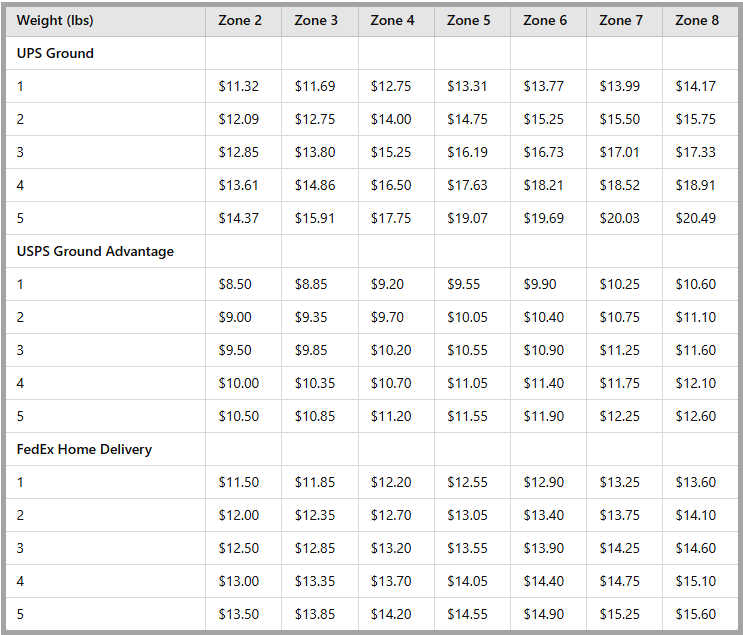
ShipStation vs. Cahoot: 21x Faster, Real Results
Get the inside scoop on how a leading merchant switched from ShipStation to Cahoot—and what happened next. See it to believe it!
See the 21x Difference6. Try Amazon Shipping
Amazon Shipping is the newest last-mile shipping service meant to complement and partially replace existing national providers like UPS, USPS, and FedEx. It started by servicing only Fulfilled by Amazon (FBA) orders but has since been aggressively recruiting high-performing retailers to use Amazon Shipping at low teaser rates. If you are a top-rated Seller on Amazon and haven’t received any such invitation, you should reach out to your Amazon contact and try to make your case for it as it offers reliable delivery in two to five days to the majority of the contiguous United States. Pickup and delivery is available seven days a week with no additional weekend delivery fees or residential surcharges.
Amazon Shipping uses Delivery Service Partners (DSPs), that is, freelance partners delivering on behalf of Amazon, while Amazon provides the technology needed for drivers to successfully pick up and deliver packages. By awarding delivery routes to DSPs, the management of the fleet and employees is borne by the outsourced companies, the dependence on traditional shipping carriers is eliminated, and Amazon can offer fast deliveries at lower costs than the unionized national carriers.
Amazon Shipping can sometimes be cheaper than the discounted shipping rates that Amazon offers to merchants using its FBA program. With total control over operations and a contracted workforce, Amazon can run an efficient and lean operation and pass on incredible savings to its participating merchants.
7. Take Advantage of ‘Hybrid’ Shipping Services
Hybrid services are a great example of how competitors work together to increase value by working in their areas of expertise. The most expensive component of shipping is the last-mile delivery. And the ground distribution network, especially in residential areas, has never been strong for large national carriers such as UPS and FedEx. So they work together with USPS to offer ‘hybrid’ services; the moniker originates from this collaboration, (aka ‘co-opetition’, that is, cooperative competition), which makes it possible to leverage what each does best to maximize efficiency and lower costs.
Carriers supporting consolidation services collect large volumes of packages, sort them in their own ground network facilities, consolidate them, and then inject them into the USPS network way downstream for delivery to the doorstep (that USPS is already touching every day), effectively outsourcing the final delivery.
Consolidation services are using the USPS Parcel Select service that has a delivery timeline between two and seven days, however, these shipments are lower priority and can sometimes take up to 10 days to deliver. So while much less expensive than UPS, FedEx, and USPS Ground services, packages can take 2 to 5 days longer to deliver to your customer. If your business offers recurring subscription purchases like dog food, you may not care how long transit takes, you just need to ship a few days earlier to meet your customer’s subscription expectations.
Hybrid shipping services are ideal for packages weighing less than 10 pounds (the lighter, the better), and best for residential, non-urgent, low-value domestic deliveries. Outside of this sweet spot, the prices for hybrid services may be comparable to other service types but hybrid services will take longer to deliver.
Packages heavier than 10 pounds should use standard ground shipping or Priority Mail Flat Rate box (because if it fits, it ships; up to 70 pounds, regardless of distance). And the Priority Mail delivery expectation is 1 – 3 days, making it a good option for shipments that need to arrive quickly but don’t require expensive overnight services.
See the 2025 FedEx Ground Economy delivery details and package weight and size limits:
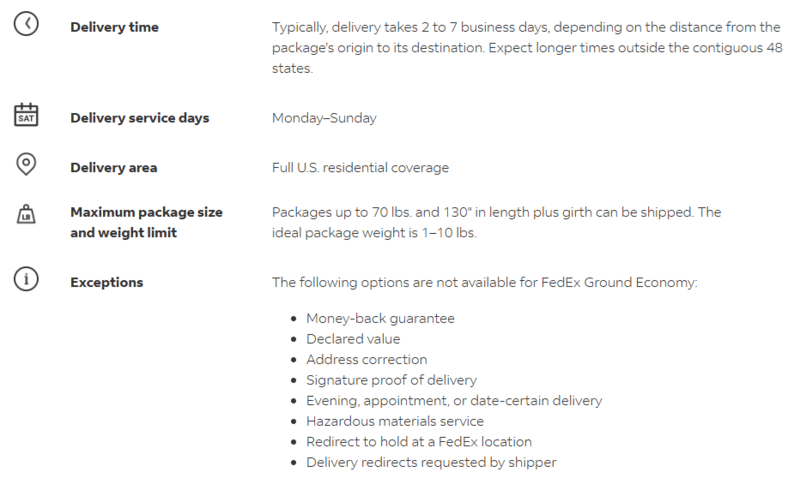
image courtesy: FedEx
Here’s a UPS Mail Innovations graphic depicting how consolidation services ‘skip’ steps along the USPS sortation and delivery journey and get injected into the USPS network much further downstream, often one step before residential delivery:
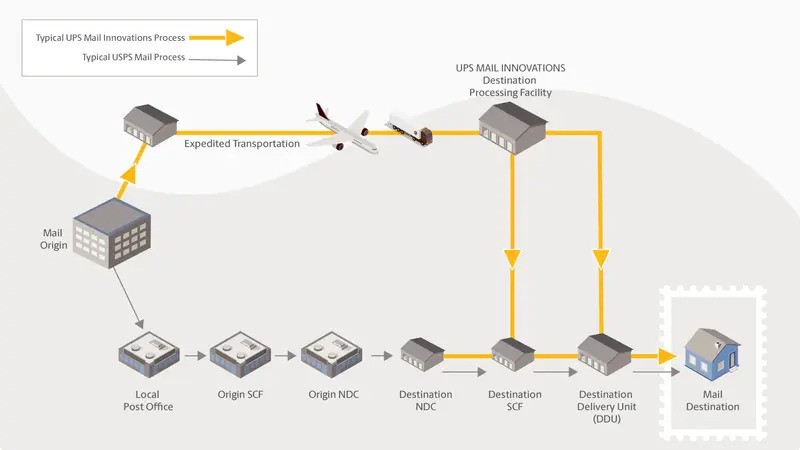
image courtesy: UPS
Note: there are substantial minimum volume commitments to qualify for free pickup of packages by many of the consolidation services. Some piggyback on existing infrastructure, while others require separate workflows and must be kept separate from standard ground shipping services. Make sure to understand how your workflows will change when implementing these services.
8. Consider a Regional Carrier or Regional Rates
Some carriers operate in specific regions only; they are often less expensive compared to FedEx or UPS because they operate in a smaller area and use mainly ground transportation for delivery. By avoiding expensive air cargo, ground services don’t have to help absorb some of the overall operational costs. Their delivery networks are typically limited, but many of them cover a wide range of states with fast deliveries. Some of the prime examples of such carriers are:
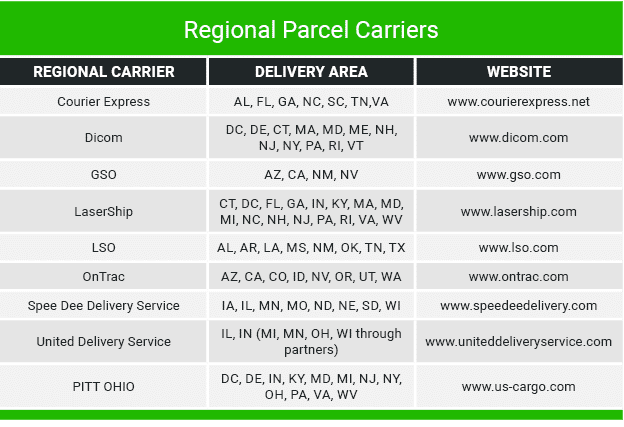
Note: LaserShip and OnTrac merged and now operate under the name OnTrac.
Regional carriers typically provide better services than national carriers because they specialize and operate in a smaller area. They can provide same day or next day delivery options for deliveries that usually take a couple of days through FedEx and UPS.
They are more flexible in accommodating the requests of online Sellers too. Since they have a smaller base of customers and fewer packages to handle, it is not uncommon for them to provide later pickup time and earlier deliveries.
Cut Costs with the Smartest Shipping On the Market
Guranteed Savings on EVERY shipment with Cahoot's AI-powered rate shopping and humanless label generation. Even for your complex orders.
Cut Costs Today9. Avoiding Residential Address Surcharges
UPS and FedEx, the biggest national carriers, add a surcharge for all shipments to residential addresses. A carriers’ definition of a residential addresses isn’t always clear, but you can reduce some of your costs by planning around residential surcharges and encouraging customers to ship to their office building or a commercial pickup location (e.g. The UPS Store, FedEx Office, or a Pickup Locker). Benefits to the customer include:
- Accurate Delivery: Carriers don’t leave packages at the wrong address by accident, creating a WISMO (Where is My Order) customer service event.
- Improved Successful Delivery Rate: Helps people living in densely populated, urban areas such as apartment buildings.
- Security and Safety: Office buildings often have secure access and reception areas, reducing the risk of packages being lost or stolen compared to home delivery.
- Convenience: Packages can be received during business hours without needing to adjust a personal schedule or worry about missed deliveries.
- Immediate Access: Packages can be opened and inspected immediately upon arrival, which is helpful for checking for damage or errors.
- Reduced Delivery Attempts: Since someone is usually available during business hours, there are fewer chances of multiple delivery attempts, which can delay receipt and require pickup from inconvenient carrier locations.
- Less Disturbance at Home: This can be beneficial if they work from home or prefer not to have deliveries to a residence (for example, dogs may start barking and disturb a work phone call in progress).
UPS defines residential delivery as delivery to a location that is a home, including a business operating out of a home.
FedEx adopts a similar definition of a residential address:
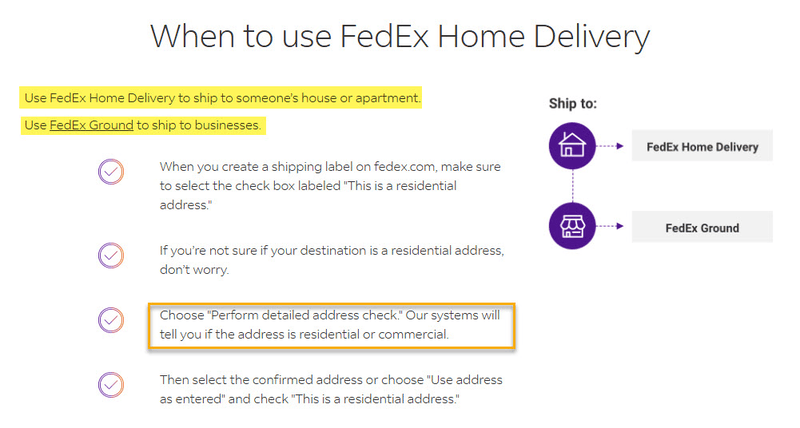
image courtesy: FedEx
You can find the complete list of surcharges for FedEx and UPS on their site here.
Carriers impose residential surcharges because, to them, it is more expensive to deliver to a residence. A courier can deliver many packages to many different businesses in a single trip to a commercial building, whereas typically a courier makes one delivery to a single residential address at a time.
It’s important to choose the right shipping service to avoid surcharges. For example, FedEx Ground is cheaper than FedEx Home Delivery, but when shipped to residential addresses, the shipper will incur a ~$4 fee that will be reflected on the invoice. Be careful not to make too many mistakes or your carrier account and negotiated rates may be negatively impacted.
Another way to avoid residential surcharges is to utilize hybrid services such as UPS SurePost and FedEx Ground Economy, (or even Amazon Shipping), all of which do not impose this fee. Also, keep in mind that hybrid services do not give you a guaranteed delivery day and take longer to deliver by design.
Also, analyzing your past shipments will help you understand just how much of a problem residential surcharges are for you so you can take action accordingly. The surcharges may not seem like much, but when shipping high-volume and utilizing a less ideal carrier/services mix, they can add up quickly.
The solution is to separate your deliveries for home and commercial addresses and select delivery methods accordingly. While we can’t force the customers to only ship to a commercial address, you can make it easier to create the correct shipping labels (and make fewer mistakes) by asking the customer to identify in the address type if it is a commercial or residential address. Lastly, there are intelligent shipping software solutions like Cahoot that provide accurate address type identification using USPS and UPS databases, along with auto-rate shopping across all carriers and services to help you ship as economically as possible.
10. Use Zone Skipping for High Volume Zones
Zone skipping is a practice of consolidating orders and shipping them together to a destination region. From there on, the parcels can be shipped individually within the destination region. The shipping cost is often calculated by the number of regions or ‘zones’ a package travels through to reach the destination. Through zone skipping, the parcel is injected into the carrier’s network directly into the destination zone. Hence, the term Zone-Skipping.
This is ideal for online Sellers with a large volume of sales within a region. If you have close to a truckload of orders from a zone every day, zone skipping is for you. Your objective should be to get your orders as close to the destination as possible in fewer stops and sorts, where the shipping carrier can pick up and deliver each package to the final destination.
For example, if you are based out of Detroit (Zone 1) and have a considerable volume of orders from Southern California (Zone 8); if you ship all your orders directly, you will pay high shipping rates for Zone 8 for all orders. With zone skipping, you can bundle all your orders going to Southern California every couple of days and send them by truck in bulk. Once in Southern California, packages are picked up by the shipping carrier and shipped within the Zone at lower rates. You save big because paying for bulk transportation is far cheaper than the difference between zone 8 and zone 1 shipping rates per unit.
Here is a snapshot of how zone skipping saved money for two online merchants:
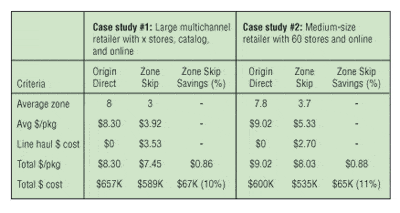
image courtesy: MultiChannelMerchant.com
USPS Parcel Select is a great complementary service to zone skipping. Under Parcel Select, Sellers drop their packages in bulk at a postal facility as close to the destination as possible. Not only, do they save on zone-skipping, but Parcel Select also offers an additional discount for bulk shipping, similar to the hybrid shipping services mentioned above. But in this case, you’re dealing directly with USPS without the intermediaries.
11. Use International Freight Forwarders to Fulfill International Orders
Shipping international from the US can be a costly affair. Besides, international shipping can be an operational headache too. There are several things to consider. You need enough manpower and time to manage the different aspects of international shipping that aren’t considerations for domestic shipments.
International Freight Forwarding services carry out the logistics operations on behalf of a firm. These generally involve, as the name suggests, large orders. But these days, a lot of freight forwarding agencies offer services tailored to ecommerce Sellers, for example, less-than-container load (LCL) services, where they bundle your parcels with other parcels to fill pallets and containers, which are then delivered to your destination country via the conventional freight network. At the destination, the last-mile delivery is done by the local postal service in the destination country.
This end-to-end process is taken care of by the freight forwarder. Online Sellers enjoy savings since they get a bulk freight discount for what is essentially parcel shipping, and only have to deal with their freight forwarder. Freight Forwarders also provide support for calculating real-time duties, taxes, and other governmental fees to present itemized final prices to customers as well as costs to Sellers before the sale is made.
In some cases, if you have an order fulfillment provider like Amazon FBA in the destination country, a freight forwarder ensures that your items reach the fulfillment provider’s warehouses.
A good example of such a service is DHL eCommerce (formerly Global Mail) which provides a solution tailored for online Sellers.
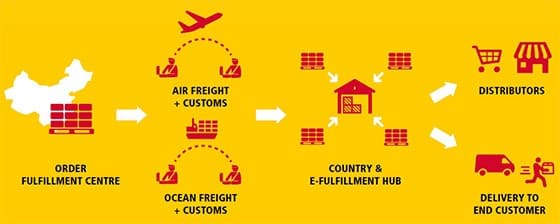
12. Selling Internationally through Full-Service Cross-Border Solutions
While domestic sales and fulfillment can be taken care of using the shipping strategies we’ve discussed so far, selling and delivering to customers in other countries is a whole other ball game.
Aside from accurately calculating shipping charges and various import fees, there are a few other things that an online Seller needs to do. To avoid surprises, your customer must understand your product’s pricing and the different tariffs included in the final landed cost. Additionally, having familiar payment options at checkout would reduce hesitancy, for example, by allowing payment via China Union Pay, WeChat, or Alipay.
Thankfully there are cross-border solutions such as Global-e’s BorderFree and International Localized Checkout that provide a comprehensive solution for selling to international customers. An end-to-end solution typically includes:
- Localization of your product content and checkout pages in locale-specific language, UI, and currency.
- Calculation of duties, taxes, and import fees for transparent final pricing to customers before the order is placed.
- Presenting and processing country-specific payment options.
- Efficient international order fulfillment using freight forwarders and other service providers.
The following checkout page is an example of an online store that uses Global-e to display the page to a Chinese customer buying from a Seller located in Australia:
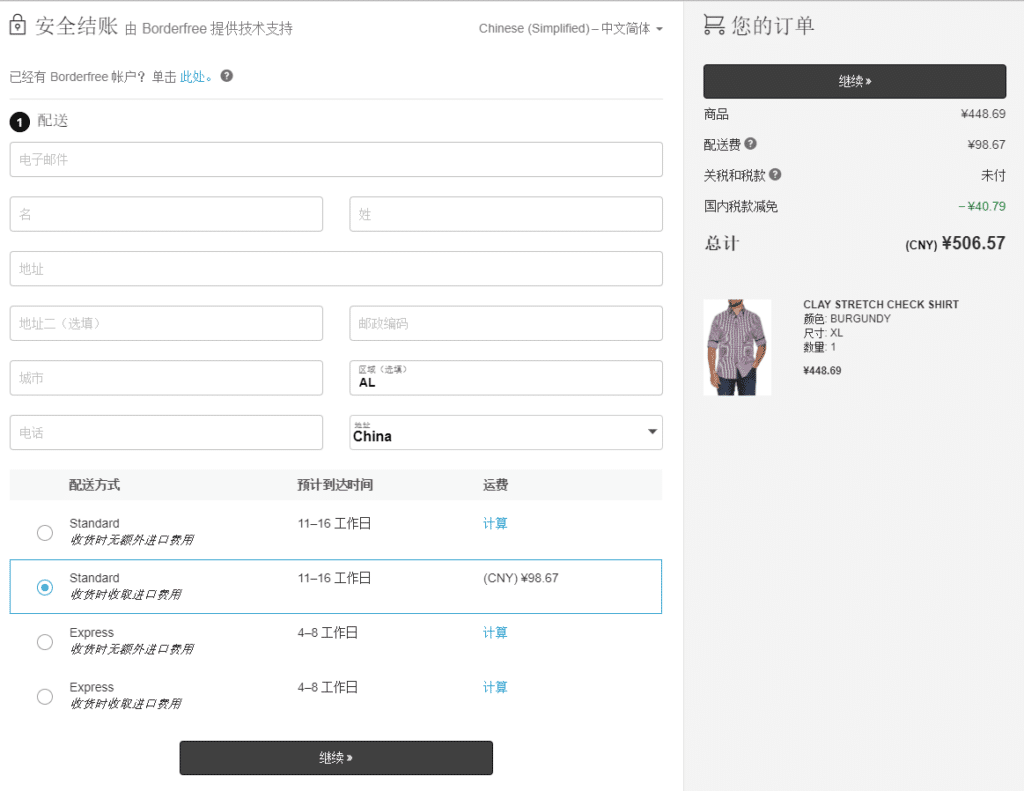
Summary
Mastering shipping isn’t just about saving a few dollars per package — it’s about building a sustainable and profitable business that encourages customer loyalty while building a scalable foundation for future growth. The strategies outlined here, from negotiating better carrier rates to leveraging hybrid shipping solutions, are designed to help you take control of your logistics instead of letting them control you. In an era where customer expectations are sky-high and operational costs are constantly climbing, businesses that optimize their shipping program can carve out an undeniable edge over competitors. Whether you’re a growing e-commerce brand or an established retailer, the right approach to shipping will not only protect your margins but also ensure a seamless experience for your customers. The key is to stay adaptable, explore new opportunities, and continually refine your strategy — because in shipping, as in business, the smartest players always come out ahead.
Download The Ultimate Guide to Profitable Free Shipping
Frequently Asked Questions
What is the most cost-effective shipping method?
Generally speaking, for standard delivery service, (1 – 5 days), USPS is the cheapest option for smaller, lighter packages that are traveling short distances, while UPS and FedEx tend to be cheaper for larger packages traveling longer distances. However hybrid shipping services where consolidator carriers accumulate and inject mass quantities of packages into the USPS network for final mile delivery take much longer to deliver, but can offer substantial savings over standard delivery services.
Does offering free shipping increase sales?
Yes, offering free shipping can increase sales. Studies show that free shipping is a key factor in purchasing decisions.
What is free shipping?
Free shipping is a marketing strategy used by online stores that allow shoppers and customers not to have to pay an additional fee when placing orders for particular items. From the online shopper’s perspective, getting no additional cost added to an item purchased makes shopping much easier.
Who really pays for free shipping?
There Is No Such Thing as “Free Shipping”. It is a fact that shipping costs are being paid for, whether consumers know it or not. Customers ultimately pay for this perk, even if it is not specified in their online shopping cart. The cost is lumped in with the final price of the goods they buy.
What is a good free shipping threshold?
Knowing how much an average customer spends per transaction can provide a better idea of what a business’ minimum order value for free shipping should be. A free shipping threshold should be about 30% above the average order value.
What is the psychology of free shipping?
The psychology of free shipping shows that customers often perceive free shipping as a better deal than a discount. This perception increases the perceived value of a purchase and encourages higher spending.
How do businesses make money with free shipping?
Free shipping can help boost sales. Shoppers believe they’re getting a better deal when they don’t have to pay for shipping costs which can help increase cart sizes. Customers will buy more to get free shipping and will take their business elsewhere if they can’t.
Written By:
Indy Pereira
Indy Pereira helps ecommerce brands optimize their shipping and fulfillment with Cahoot’s technology. With a background in both sales and people operations, she bridges customer needs with strategic solutions that drive growth. Indy works closely with merchants every day and brings real-world insight into what makes logistics efficient and scalable.
Turn Returns Into New Revenue
Related Articles
HTS Code Explained: What It Is, Why It Matters, and How Ecommerce Brands Use It
HTS codes (Harmonized Tariff Schedule codes) are standardized numerical classifications that identify imported products for U.
Shipping Labels Explained: What They Include, How They Work, and Common Mistakes
Shipping labels are the operational backbone of ecommerce fulfillment, a small piece of paper that determines whether packages reach customers successfully or trigger costly failur...
USPS Click-N-Ship Explained: How It Works, Costs, and When Sellers Should Use It
USPS Click-N-Ship is the postal service’s free online label-printing tool, and for most Shopify sellers shipping more than 50 packages monthly, it’s already time to move beyond it....
Understanding Dimensional Weight Pricing
As ecommerce continues to grow year-over-year, shipping costs remain one of the most critical elements affecting profitability. Dimensional weight pricing, often abbreviated as dim weight, is a crucial concept that every ecommerce business must grasp to avoid overpaying for shipping. This pricing model is designed to account for the space that a package occupies in relation to its actual weight. Whether you are a small business owner or managing logistics for a large ecommerce operation, understanding how dimensional weight works can help streamline your shipping processes and save on costs. In this article, we will break down what dimensional weight is, why carriers use it, and how to manage and minimize its impact on shipping expenses.
What is Dimensional Weight?
Dimensional weight is a pricing technique used by shipping carriers to charge based on the volume of a package rather than its actual weight. In traditional weight-based shipping models, customers pay according to the physical weight of their package. However, this approach doesn’t always account for packages that are large but lightweight—think of a large box filled with foam padding or bubble wrap, but containing only a small item inside. In these cases, the carrier is still using valuable space on their truck or aircraft, and thus, dimensional weight is applied.
To calculate dimensional weight, the carrier will use a formula that considers the dimensions of the package—its length, width, and height. For most carriers, this is usually done by multiplying these three dimensions together to find the volume of the package. That number is then divided by a standard “dimensional factor,” which varies depending on the carrier.
For example, if a box measures 12 inches long, 10 inches wide, and 8 inches tall, the volume would be 960 cubic inches (12 x 10 x 8). The carrier would then divide that number by the dimensional factor (let’s say it’s 139 for domestic ground shipping with FedEx or UPS), which results in a dim weight of 6.9 pounds (rounded up to the nearest pound, so 7 pounds). If the actual weight of the package is 3 pounds, the carrier would charge for the 7-pound dimensional weight instead of the actual weight, since it takes up more space.
Let AI Optimize Your Shipping and Boost Profits
Cahoot.ai software selects the best shipping option for every order—saving you time and money automatically. No Human Required.
See AI in ActionWhy Do Carriers Use Dimensional Weight?
Carriers adopted dimensional weight pricing to more accurately reflect the costs of transporting packages. Shipping is not only about the weight of the package—it’s also about how much space it occupies in a truck or airplane. The more space a package takes up, the less room there is for other packages. For shipping carriers, this means they can carry fewer goods, which ultimately reduces their efficiency and increases costs.
In recent years, the rise of ecommerce has led to an influx of smaller, lightweight items that are packaged in oversized boxes. While these packages are light in weight, they take up considerable space in transportation vehicles. As a result, carriers needed a way to ensure they were being fairly compensated for the space they were losing in favor of these packages. Dimensional weight provides a more accurate measure of the space a package occupies, which helps carriers balance costs, maximize capacity, and avoid inefficiencies.
Additionally, with the increasing popularity of express shipping and global commerce, international shipping has become more complex. In the case of air freight, the cost of moving goods is heavily influenced by the weight-to-space ratio. Shipping carriers must account for both weight and volume when determining prices to remain competitive while covering their expenses. Dimensional weight ensures that carriers are not subsidizing the cost of lighter, bulkier packages, which is crucial for maintaining profitability in a highly competitive and resource-intensive industry.
The Importance of the DIM Factor
The “DIM factor” is a crucial element in dimensional weight pricing. This factor represents the “expected” ratio of a package’s volume (in cubic inches) to its weight. It plays a vital role in determining the dimensional weight of a package, and its value can vary depending on the carrier and the mode of transportation (ground, air, etc.). The DIM factor is a multiplier that converts the volume of the package into a weight equivalent. A lower DIM factor means that less volume per pound is “expected,” resulting in a higher dimensional weight, while a higher DIM factor leads to a lower dimensional weight for the same package.
Understanding the DIM factor is essential for ecommerce shippers because it allows them to better estimate shipping costs. As indicated above, different carriers may use different DIM factors, and knowing these differences can help make more informed decisions about which carrier to choose for a specific shipment. Additionally, some carriers may update their DIM factors periodically, so it’s important to stay informed about any changes to ensure you’re not caught off guard by unexpected cost increases.
Carriers can offer different DIM factors depending on the type of shipment. For example, express and international shipments might have a different DIM factor compared to standard ground shipping. This variation in the DIM factor means that dimensional weight can affect the total cost of shipping depending on how quickly the package needs to reach its destination and the method of transport being used.
Differences in DIM Factors Among Carriers and 3PLs
Different shipping carriers use slightly varied dimensional weight (DIM) calculation methods, primarily by adjusting the DIM factor, which influences how volume converts to weight. For example:
- FedEx, DHL, and UPS generally use a DIM factor of 139 for ground shipments within the U.S.
- USPS uses a factor of 166.
Additionally, different DIM factors may be used for air as opposed to ground shipments. This means that the same package might be billed at different rates depending on which carrier is used, making it crucial for shippers to compare options before selecting a service.
Some carriers also offer customized DIM factors for high-volume shippers or businesses that negotiate specific contracts. Additionally, certain services, such as USPS Priority Mail, do not apply dimensional weight pricing unless the package exceeds a particular size threshold (e.g., one cubic foot for domestic shipments). Understanding these variations can help ecommerce businesses strategically choose carriers and optimize packaging to minimize shipping costs.
In addition to differences in DIM factors among carriers, various 3PL services may use differing DIM factors when assessing fulfillment or inventory removal fees. Just as carriers use different DIM factors when calculating rates for different kinds of shipments, 3PLs may use different factors for domestic as opposed to international shipments, or for specific product classes. Be sure to confirm the DIM factors used by any 3PL service, including FBA, to accurately forecast shipping and fulfillment costs.
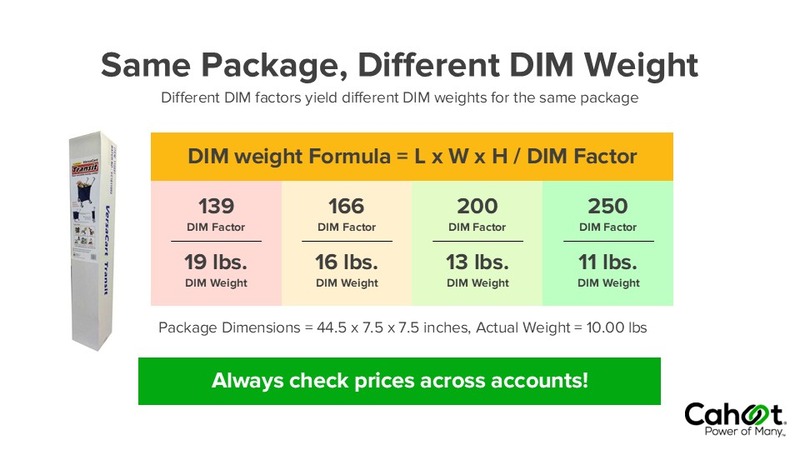
How to Minimize Dimensional Weight Costs
While dimensional weight pricing is a reality that ecommerce shippers must navigate, there are several strategies that can help minimize the associated costs. Here are some practical tips for reducing the financial impact of dimensional weight:
- Optimize Packaging: One of the most effective ways to reduce dimensional weight charges is to carefully consider the packaging you use. Shipping products in unnecessarily large boxes is a common mistake that results in higher shipping costs. Choose packaging that fits the product as closely as possible without wasting space. Nowadays, there is cartonization software that helps you decide what package to use to minimize excess space. If you can’t, you may also want to explore packaging materials like air pillows or foam inserts that can better protect your products while minimizing wasted space.
- Use Custom Packaging: If you consistently ship products that have irregular shapes or sizes, investing in custom packaging could be a smart move. Custom packaging allows you to reduce empty space within the box, which will help lower the dimensional weight.
- Consolidate Shipments: For businesses that ship multiple items, consolidating shipments into fewer packages can help lower dimensional weight charges. Instead of sending each item individually, combine them into a larger, more efficient package. This strategy helps spread out the dimensional weight across multiple products, reducing the overall cost of shipping.
- Take Advantage of Volumetric Pricing: Some carriers offer volume discounts or reduced dimensional weight charges for larger or heavier shipments. If you regularly ship large volumes, consider negotiating with carriers for better rates based on your shipment sizes. Shipping in bulk or negotiating long-term contracts with carriers can also provide discounts on dimensional weight charges.
- Compare Carrier Rates: As we’ve discussed, the DIM factor used can vary between carriers or between services for a given carrier. The exact same package can be billed as 18 pounds in one carrier account and 35 pounds in another. Therefore, it’s important to compare rates from different carriers to see who offers the most cost-effective pricing based on your packages’ size and weight.
- Monitor Your Shipments: Consistently tracking your shipping costs and reviewing your packaging practices can lead to ongoing savings. If you notice that certain shipments are disproportionately affected by dimensional weight pricing, reassess your packaging and look for ways to reduce the dimensions of those shipments.
- Choose the Right Service: When selecting a shipping method, choose the one that best fits the size and weight of your package. Ground shipping, for example, often has different dimensional weight rules than air freight, and express services can come with higher fees due to the faster delivery time. Take time to analyze your options before committing to a particular service.
ShipStation vs. Cahoot: 21x Faster, Real Results
Get the inside scoop on how a leading merchant switched from ShipStation to Cahoot—and what happened next. See it to believe it!
See the 21x DifferenceConclusion
Dimensional weight pricing is a necessary part of modern shipping, particularly for ecommerce businesses that regularly ship lightweight but bulky packages. Understanding dimensional weight, the importance of the DIM factor, and how to minimize costs can significantly improve your bottom line. By optimizing packaging, choosing the right carrier, and staying informed about changes in pricing, you can effectively navigate dimensional weight charges and keep your shipping expenses in check. In the competitive world of ecommerce, small adjustments to your shipping strategy can lead to big savings, ultimately helping you offer more competitive pricing and enhancing your customers’ satisfaction.
Fortunately, Cahoot is here to help. Our state-of-the-art shipping software is able to integrate across all major sales channels and compares rates across carriers to automatically select the most cost-effective options to meet your delivery requirements. Our nationwide network of warehouses ensures that, whatever your product and wherever your customer base, we are able to accommodate your specific fulfillment needs. Our proven solutions can help small businesses scale into established players, provide needed savings to sellers seeking to remain competitive, or find the best shipping solutions for bulky or hard-to-ship products. Whatever blockers are keeping your business from reaching its potential, Cahoot is here to help.
Frequently Asked Questions
Why is dimensional weight used by carriers?
Dimensional weight is used to account for the space taken up by a package as well as its weight. This kind of pricing has long been used for services like air freight, where space is at a premium and must be accounted for. With the explosion of ecommerce in the late 2000s and early 2010s, the major carriers began to apply dimensional weight pricing to ground shipments around 2015, to ensure that limited space in freight and delivery trucks is used efficiently.
Why do DIM factors differ between carriers or services?
Different carriers use varying DIM factors to align their pricing models with their specific operational costs, transportation methods, and target markets. The DIM factor represents the volume that equates to one pound of billable weight, and adjusting the factor allows carriers to balance space utilization and profitability. A lower DIM factor results in a higher dimensional weight, meaning shippers are charged more for bulky but lightweight packages. Conversely, a higher DIM factor allows for more generous volume-to-weight conversions, reducing costs for shippers.
Written By:
Indy Pereira
Indy Pereira helps ecommerce brands optimize their shipping and fulfillment with Cahoot’s technology. With a background in both sales and people operations, she bridges customer needs with strategic solutions that drive growth. Indy works closely with merchants every day and brings real-world insight into what makes logistics efficient and scalable.
Turn Returns Into New Revenue
Related Articles
HTS Code Explained: What It Is, Why It Matters, and How Ecommerce Brands Use It
HTS codes (Harmonized Tariff Schedule codes) are standardized numerical classifications that identify imported products for U.
Shipping Labels Explained: What They Include, How They Work, and Common Mistakes
Shipping labels are the operational backbone of ecommerce fulfillment, a small piece of paper that determines whether packages reach customers successfully or trigger costly failur...
USPS Click-N-Ship Explained: How It Works, Costs, and When Sellers Should Use It
USPS Click-N-Ship is the postal service’s free online label-printing tool, and for most Shopify sellers shipping more than 50 packages monthly, it’s already time to move beyond it....
UPS Next Day Air Saver: Delivery Times, Costs & When to Use It
In this article
6 minutes
- Key Takeaways
- What Is UPS Next Day Air Saver?
- UPS Next Day Air Saver vs Other UPS Services
- Delivery Times and Guarantees
- Shipping Costs and Rates
- Weight and Size Limits
- Signature Requirements
- Service Coverage Areas
- Scheduling and Pickup
- Why Ecommerce Businesses Choose UPS Next Day Air Saver
- When to Choose UPS Next Day Air Saver
- Tips to Maximize Savings
- Final Thoughts
- Frequently Asked Questions
Key Takeaways
- UPS Next Day Air Saver offers fast, overnight shipping at a lower cost than standard Next Day Air, making it ideal for urgent deliveries.
- Delivery is guaranteed by the end of the day for residential addresses, with potential money-back guarantees for late shipments, providing reliability for businesses.
- The service accommodates packages up to 150 pounds and offers substantial savings for regular shippers, benefiting industries like ecommerce, legal, and medical fields.
What Is UPS Next Day Air Saver?
UPS Next Day Air Saver is a next-day air service from UPS that guarantees packages will be delivered by the end of the next business day. It’s similar to regular UPS Next Day Air, but more affordable, with delivery typically by 3:00 PM to commercial addresses and end-of-day for residential addresses.
You still get timely delivery, tracking, and access to express shipping options, just with slightly later arrival times, ideal for businesses that want to leverage UPS without paying premium rates.
Save Big on UPS Air
Access deeply discounted UPS Next Day Air and Air Saver rates through Cahoot, without volume commitments or long-term contracts.
See How It WorksUPS Next Day Air Saver vs Other UPS Services
Here’s a snapshot comparison of UPS Next Day Air Saver with other popular UPS expedited services:
|
Service
|
Delivery Time
|
Coverage
|
Saturday Delivery
|
Typical Use Case
|
|---|---|---|---|---|
|
UPS Next Day Air
|
By 10:30 AM
(most locations) |
All 50 states
|
Optional with fee
|
Highest-priority packages needing early delivery
|
|
UPS Next Day Air Saver
|
By 3:00 PM (commercial)
End-of-day (residential) |
48 contiguous states + limited AK/HI
|
Optional with fee
(metro only) |
Cost-effective next-day delivery for ecommerce and businesses
|
|
UPS 2nd Day Air
|
By the end of the 2nd business day
|
All 50 states
|
Optional with fee
|
Less urgent packages that can wait a day
|
Note: UPS Next Day Air Saver is not available in areas where guaranteed morning delivery (UPS Next Day Air Early) is already promised by other UPS services.
Delivery Times and Guarantees
For commercial addresses, delivery speed for UPS Next Day Air Saver is guaranteed by 3:00 PM; however, UPS now uses zone-based time windows, so in some metro areas, Air Saver commercial deliveries may be later than 3:00 PM. For residential addresses, packages arrive by the end of the business day (“end-of-day” is typically defined as 7:00 PM, but deliveries have been known to deliver after 11 PM local time in some cases). These guaranteed delivery times make it a strong alternative to pricier services like UPS Next Day Air Early AM.
UPS may offer a money-back guarantee for late deliveries on eligible shipments, though coverage varies by zone, season, and contract. You’ll want to confirm this on the UPS website or contact UPS customer service if timing is critical.
Shipping Costs and Rates
The next-day air saver cost depends on multiple variables:
- Package’s weight
- Dimensions (dimensional weight may apply)
- Origin and destination
- Chosen shipping methods and optional services
Businesses often see cost savings of $2.95 to $10.23 per shipment versus standard Next Day Air rates, depending on weight, zone, and contract rates. That makes the next-day air saver package a favorite for ecommerce shipping and bulk senders.
Here’s an illustrative example from the current UPS Rate and Service Guide. These rates assume actual weight (not dimensional weight), with no declared value, accessorials, or Saturday delivery. Important caveats: Rates vary by account volume, service tier, fuel surcharge, and peak-season surcharges. Always confirm pricing with your UPS rep or shipping software.
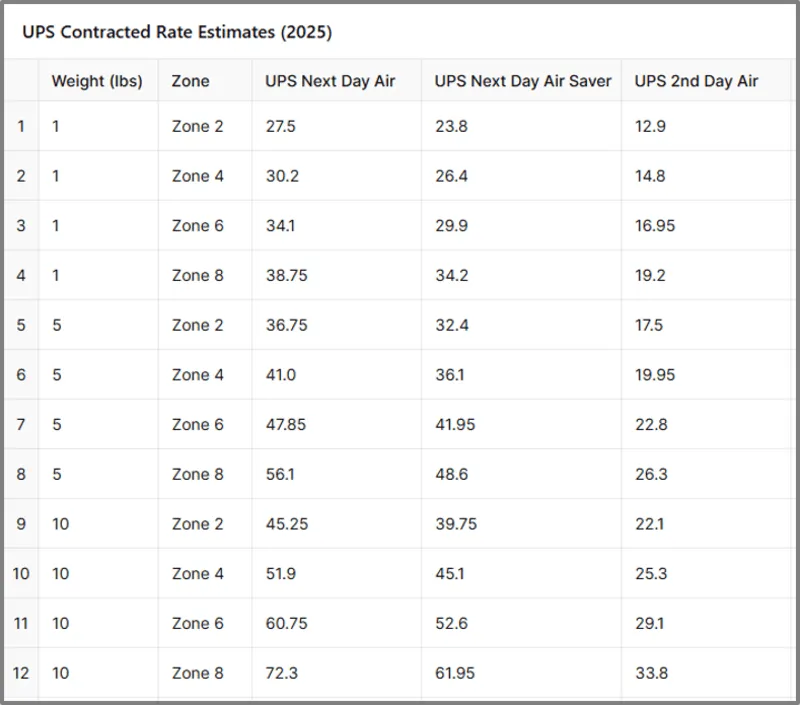
Weight and Size Limits
- Maximum weight limit: 150 lbs per package
- Max size: 108 inches in length, or 165 inches in combined length + girth
Exceeding these limits can require freight classification or other UPS services.
Slash Your Fulfillment Costs by Up to 30%
Cut shipping expenses by 30% and boost profit with Cahoot's AI-optimized fulfillment services and modern tech —no overheads and no humans required!
I'm Interested in Saving Time and MoneySignature Requirements
- Commercial address: Signature is required for delivery
- Residential addresses: No signature required unless requested
This flexibility balances customer expectations with security and speed.
Service Coverage Areas
UPS Next Day Air Saver is available across the 48 contiguous states, with limited availability in Alaska and Hawaii. It’s not available in areas already covered by guaranteed morning delivery under UPS Next Day Air Early.
International shipments require separate UPS Express shipping services.
Scheduling and Pickup
- Cutoff times: Typically 4:00 PM to 6:00 PM local time
- Can specify pickup windows and reference numbers
- Missed pickups can be rescheduled via your UPS account
UPS also supports Saturday delivery for Air Saver shipments, but not by default. Saturday delivery for Air Saver is only available in limited metro areas, and often requires an upgrade to Next Day Air or an additional surcharge.
Why Ecommerce Businesses Choose UPS Next Day Air Saver

If you’re shipping high volumes or dealing with customer demands for one-day delivery, UPS Next Day Air Saver is the best compromise between fast delivery and affordable shipping.
Industries that benefit:
- Ecommerce & DTC brands
- Medical and pharmaceutical shipping
- Legal and financial services
Using Air Saver helps brands:
- Meet customer expectations for speed
- Reduce shipping charges while maintaining quality
- Handle urgent shipments reliably
- Boost sales with competitive delivery options
When to Choose UPS Next Day Air Saver
- You want overnight shipping but don’t need early AM delivery
- You’re sending to commercial addresses where 3 PM is sufficient
- You’re balancing shipping speed and budget
- You’re optimizing shipping costs during peak ecommerce cycles
Use UPS Next Day Air Saver when:
Looking for a New 3PL? Start with this Free RFP Template
Cut weeks off your selection process. Avoid pitfalls. Get the only 3PL RFP checklist built for ecommerce brands, absolutely free.
Get My Free 3PL RFPTips to Maximize Savings
- Set a free shipping threshold to increase cart size
- Choose next-day air saver shipping only for qualifying zones and weights
- Compare against UPS 2nd Day Air and standard Next Day Air rates weekly
- Revisit contract discounts quarterly with your UPS rep
- Combine with third-party shipping options or rate shopping tools to reduce waste
Final Thoughts
UPS Next Day Air Saver gives ecommerce brands, shippers, and logistics managers a powerful way to get packages delivered quickly without overspending. It’s a proven method to meet customer expectations, reduce costs, and protect margins, especially when delivery times are important, but guaranteed morning delivery isn’t necessary.
Want more strategies to lower your shipping costs and improve fulfillment? Explore Cahoot’s distributed order fulfillment solutions built for fast, affordable delivery across all major carriers.
Frequently Asked Questions
What is UPS Next Day Air Saver?
A UPS overnight delivery service that guarantees next-day delivery by end of business day at lower rates than standard Next Day Air.
How does UPS Next Day Air Saver differ from Next Day Air?
Next Day Air arrives by 10:30 AM; Air Saver by 3:00 PM (commercial) or end-of-day (residential). Air Saver is more affordable.
Does UPS Next Day Air Saver support Saturday delivery?
Yes, but only in select metro areas and for an added fee.
Are there weight and size limits for UPS Next Day Air Saver?
Packages can weigh up to 150 lbs and be up to 165 inches in length + girth.
Where is UPS Next Day Air Saver available?
It serves the 48 contiguous U.S. states and some areas in AK/HI, except where guaranteed morning delivery supersedes it.
Written By:

Jeremy Stewart
Jeremy Stewart leads customer success at Cahoot, helping merchants achieve high-performance logistics through smart technology and process optimization. With a background in both ecommerce operations and client services, Jeremy ensures that every merchant using Cahoot gets measurable results—whether they’re scaling from one warehouse to many or managing complex returns.
Turn Returns Into New Revenue
Related Articles
Seller Fulfilled Prime Works — But Only With the Right Operating Model
Seller Fulfilled Prime is attractive for very rational reasons.
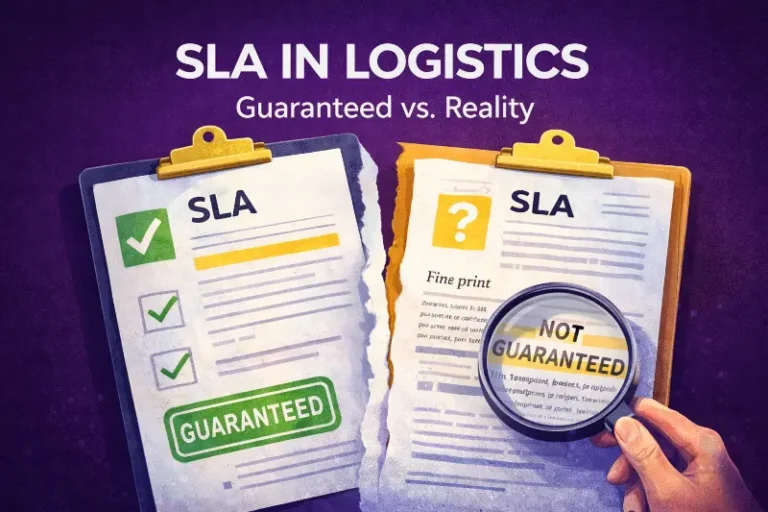
SLA Meaning in Logistics: What Service Level Agreements Actually Guarantee (and What They Don’t)
The gap between what 3PL providers promise in SLA marketing (“99.
HTS Code Explained: What It Is, Why It Matters, and How Ecommerce Brands Use It
HTS codes (Harmonized Tariff Schedule codes) are standardized numerical classifications that identify imported products for U.
What is DHL eCommerce and Why It’s Important for Online Sellers
In this article
12 minutes
- Key Takeaways
- DHL eCommerce: An Overview
- Affordable Shipping Solutions
- Domestic Shipping Services
- International Shipping Options
- Hybrid Delivery Model
- Integration with Ecommerce Platforms
- Real-Time Tracking and Transparency
- Operational Pitfalls
- What They Don’t Tell You: Hidden Costs in DHL’s Latest Rate Hike
- Customs and Trade Considerations
- Sustainability Initiatives
- Checklist for Sellers
- Summary
- Frequently Asked Questions
DHL eCommerce provides shipping solutions for online businesses worldwide. Learn about its services, benefits, and how it can improve your shipping process.
Key Takeaways
- DHL eCommerce offers affordable and scalable shipping solutions, making it suitable for businesses of all sizes, with no minimum volume requirements.
- The company provides fast domestic shipping options, with services like Expedited Max averaging delivery in just 2 – 3 days.
- Commitment to sustainability is a key focus for DHL eCommerce, as they aim for net-zero emissions by 2050 through their GoGreen program.
DHL eCommerce: An Overview
DHL eCommerce is a division of Deutsche Post DHL Group, specializing in domestic and international shipping solutions for ecommerce merchants around the world. With operations in over 220 countries and territories, DHL eCommerce shipments provide extensive global reach, making it a reliable partner for businesses looking to expand their market presence.
The company employs over 45,000 specialists focused on ecommerce logistics, ensuring that your shipments are handled by experienced professionals. DHL eCommerce offers services for ecommerce businesses, marketplaces, and B2B shippers, helping them manage their logistics effectively as a logistics company. This makes it an ideal choice for businesses of all sizes, from small startups to large enterprises.
Sustainability is also a key focus for DHL eCommerce, aligning with green logistics goals to promote environmentally friendly practices. Partnering with DHL eCommerce allows businesses to grow and meet changing demands while contributing to a more sustainable future.
Slash Your Fulfillment Costs by Up to 30%
Cut shipping expenses by 30% and boost profit with Cahoot's AI-optimized fulfillment services and modern tech —no overheads and no humans required!
I'm Interested in Saving Time and MoneyAffordable Shipping Solutions
One of the standout features of DHL eCommerce is its affordability, particularly for international parcels. While rates vary based on size, weight, and service level, many ecommerce sellers report that DHL eCommerce often provides lower-cost options compared to USPS for similar cross-border shipments. For example, shipping a lightweight package from the U.S. to the UK can be significantly cheaper through DHL’s Parcel International Direct service compared to USPS Priority Mail International. This price advantage makes DHL eCommerce a compelling choice for businesses seeking cost-effective international delivery without compromising global reach.
DHL eCommerce offers:
- Scalable pricing models that adjust based on order volume, allowing businesses to save on costs as more shipments are processed.
- No minimum volume requirements, making DHL accessible for businesses of varying sizes. But note that ultra-low tier pricing is only available to high-volume shippers (e.g., 1,500+ packages per month).
- A transparent pricing structure that factors in both weight and dimensions, ensuring that you know exactly what you’re paying for.
DHL eCommerce offers competitive pricing for lightweight packages by consolidating and pre-sorting shipments, reducing costs and simplifying the shipping process. With its global network and partnerships with various carriers, DHL eCommerce makes it easy for businesses to expand their reach and deliver packages efficiently.
For example, a Brooklyn-based apparel brand shipping lightweight t-shirts to customers in California saved nearly 35% on each DHL eCommerce shipment compared to USPS Ground Advantage. By using DHL’s scalable pricing and consolidating shipments during peak sale periods, they optimized both cost and delivery accuracy, while avoiding common USPS delays.
Domestic Shipping Services
DHL eCommerce offers a range of domestic shipping services to cater to different needs. One of the popular specific services is the Expedited Max service, which ensures faster deliveries with an average postal time of just 2 – 3 days. The Ground shipping service averages 3 – 8 days for delivery, suitable for less time-sensitive shipments.
Another notable service is the SmartMail Parcel, designed for packages weighing up to 25 lbs. This service allows for a maximum shipment value protection of up to $100, providing peace of mind for valuable items.
DHL eCommerce delivery times can range from 2 to 8 business days for domestic shipments within the United States, making it a versatile option for various shipping needs. These options allow businesses to tailor their shipping strategies to meet customer expectations and ensure timely deliveries, whether expedited or more cost-effective ground shipping is needed.
A popular DTC skincare brand uses Expedited Max for its starter kits under 1 lb—ensuring delivery in 2 – 3 days—while heavier bottles are shipped via Ground to keep shipping costs down. This dual strategy lets them meet shopper expectations on speed while preserving margin.
International Shipping Options
DHL ecommerce services comparison table.

DHL eCommerce provides robust international shipping solutions for businesses aiming to expand globally. The DHL Parcel International Direct service offers:
- Coverage of 37 important ecommerce markets
- Shipping times range from 3 to 10 business days
- Options for duty paid in advance or upon delivery, simplifying the customs process for businesses
The Parcel International Standard service delivers to over 220 countries and territories, with transit times of 4 to 8 business days for Europe and Canada, and 8 to 14 days for the rest of the world. This service is ideal for businesses looking to reach a wider audience without breaking the bank.
For smaller parcels under 4.4 lbs, DHL Packet International offers a cost-effective solution with expected delivery times of 4 to 8 business days. These options enable businesses to select the most suitable service based on shipping needs and destination country, ensuring timely and efficient deliveries worldwide.
However, brands shipping to the UK or Canada should closely monitor customs documentation. One merchant selling tech accessories saw delays of up to 7 days due to missing HS codes on shipping labels, a preventable issue that impacted their ability to confirm delivery dates and caused complaints from international shoppers.
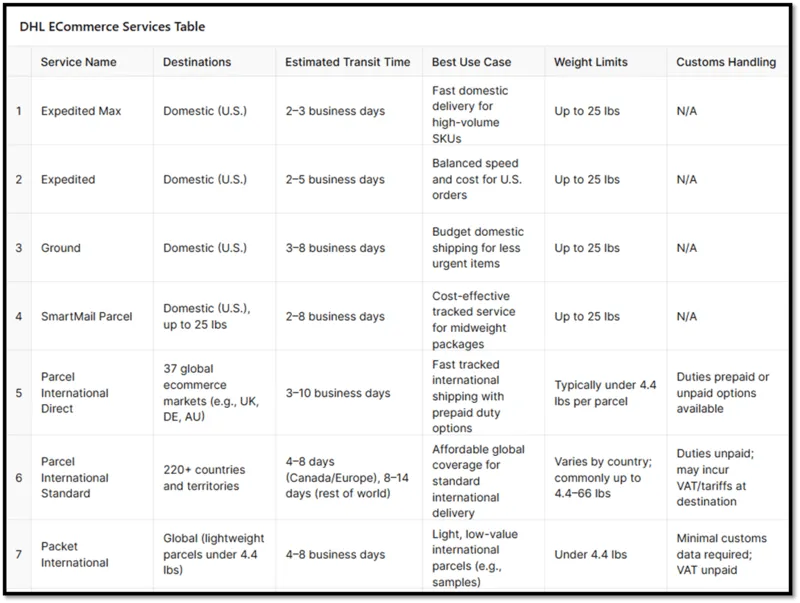
Looking for a New 3PL? Start with this Free RFP Template
Cut weeks off your selection process. Avoid pitfalls. Get the only 3PL RFP checklist built for ecommerce brands, absolutely free.
Get My Free 3PL RFPHybrid Delivery Model
DHL eCommerce employs a hybrid delivery model that combines the strengths of DHL and USPS. In this model, DHL manages upstream logistics, including sorting and processing packages at distribution centers, then transfers them to USPS for last-mile delivery.
This collaboration allows DHL eCommerce to offer economical shipping solutions while ensuring reliable last-mile service through USPS. However, reliance on USPS can lead to service variability across regions, which businesses should keep in mind when planning their shipping strategies.
For example, a Texas-based seller noticed consistent delays in rural New England ZIP codes when DHL hands off to USPS. To mitigate this, they adjusted cut-off times and proactively updated customers with tracking links to manage expectations, a tactic that helped reduce customer service tickets by 18%.
Integration with Ecommerce Platforms
DHL eCommerce seamlessly integrates with all major ecommerce platforms, making it easier for businesses to manage their shipping operations. Key features include:
- Marketplace sellers can connect their accounts for a streamlined shipping experience.
- Simplified parcel delivery and returns.
- Real-time rate retrieval for shipments, improving efficiency and accuracy in pricing.
The 1-call buys feature simplifies the shipping label purchase process, accelerating operations and helping businesses grow. By connecting with platforms like Shopify, Pulse Commerce, and BigCommerce, DHL eCommerce ensures that businesses can manage their orders and shipments with ease.
Real-Time Tracking and Transparency
Transparency is key in the shipping process, and DHL eCommerce excels in providing real-time tracking for shipments. Key features include:
- The Delivery Confirmation Service offers tracking from the sender to the recipient.
- Ensures visibility throughout the shipping journey, providing important details.
- Particularly beneficial for international shipments, where comprehensive tracking is crucial.
DHL eCommerce utilizes advanced technologies and features to enhance shipment tracking.
- Uses GPS and RFID to provide accurate real-time updates on the location of shipments.
- Minimizes human error and enhances automation in tracking parcels.
- Sends proactive notifications to customers regarding any delays or issues during the shipping process, improving their overall experience.
With various tracking solutions, such as API and On-Demand Delivery options, DHL eCommerce caters to diverse business needs, ensuring that both merchants and consumers have access to reliable tracking information.
Operational Pitfalls
While DHL eCommerce offers numerous benefits, there are also operational challenges to be aware of. Many sellers experience tracking delays, particularly during peak shipping seasons, which can lead to customer dissatisfaction. Inadequate communication with logistics partners and the shipper can exacerbate these issues, leading to unforeseen delays in order fulfillment.
Disruptions in supply chains can significantly impact shipping timelines for DHL eCommerce users. Additionally, certain SKUs, particularly those containing hazardous materials, cannot be shipped through DHL eCommerce, making compliance essential. Establishing clear guidelines for unacceptable shipment types is crucial for avoiding pitfalls and ensuring smooth operations.
A seller in the supplements category learned this the hard way when a batch of shipments containing hemp-based products was flagged during transit. Despite full compliance on the origin country side, destination country regulations caused parcel returns and spam-level customer support volume. Lesson learned: Review restricted items by both carrier and country before you ship.
DHL eCommerce’s tracking updates depend on timely USPS tracking event updates, making it important for sellers to monitor these closely. By being proactive and aware of these potential challenges, businesses can gain valuable insights to better navigate the complexities of using DHL eCommerce for their shipping needs.
What They Don’t Tell You: Hidden Costs in DHL’s Latest Rate Hike
If you blinked, you might’ve missed it, but DHL quietly implemented another round of rate increases in July 2025. While smaller than the dramatic spike that took effect in January, these new rates still chip away at the cost advantage many merchants once counted on.
Let’s break it down.
In early 2024, DHL was one of the most affordable shipping options for lightweight parcels, especially in Zones 1 and 2. Fast forward to July 2025, and that edge is eroding. Rates for 1 – 5 oz parcels in Zones 1 & 2 have climbed significantly—often by $0.10 to $0.20 per package. That might sound negligible, but if you’re shipping 10,000 orders per month, that’s a $1,000–$2,000 hit to your bottom line.
What most merchants miss:
- Price creep is consistent across all weight breaks. The increases are small but relentless.
- The biggest relative jumps are at the lightest weights (1 – 3 oz), a core volume segment for ecommerce.
- Zone compression no longer delivers the savings it used to. Previously, you could count on Zones 1 & 2 to be reliably cheap. Now, even “local” deliveries are being repriced to match broader zone costs.
This isn’t just a DHL issue. It’s the downstream effect of new USPS pricing agreements that have reshaped how DHL and other consolidators structure their pricing tiers. In short: the margins are tighter, and their flexibility is fading.
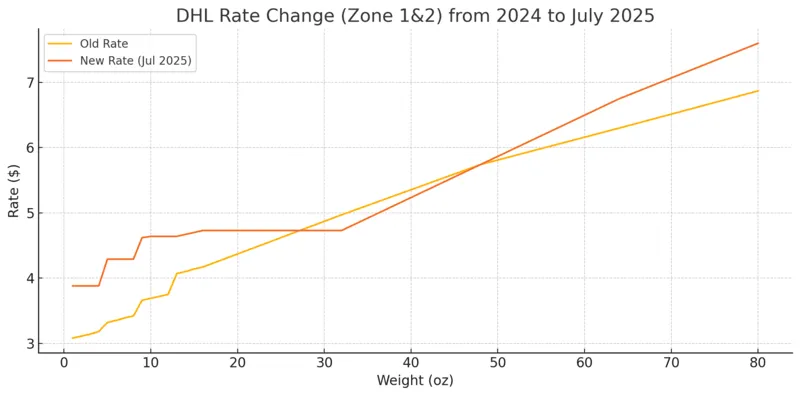
Customs and Trade Considerations
International shipping involves navigating complex customs and trade regulations. DHL eCommerce provides options for customs clearance, letting businesses choose between prepaid or unpaid duties, thus streamlining international shipping processes and avoiding unexpected costs.
Changes in U.S. tariffs do not apply to shipments that have already left their origin, and no current exemptions exist for small businesses regarding tariffs. This situation has created challenges for many businesses who are advised to explore existing trade agreements to obtain tariff impacts and stay informed about changing trade regulations to help their business grow.
Sustainability Initiatives
DHL eCommerce is committed to sustainability, as demonstrated by its GoGreen program. The company aims for net-zero emissions by 2050, encouraging employees to engage in climate protection initiatives. This collective effort emphasizes the importance of individual contributions to combat climate change.
The GoGreen program fosters a culture of environmentally friendly behavior within DHL and encourages customers to adopt sustainable practices. Choosing DHL eCommerce allows businesses to align with eco-friendly shipping solutions and contribute to a more sustainable future.
Scale Faster with the World’s First Peer-to-Peer Fulfillment Network
Tap into a nationwide network of high-performance partner warehouses — expand capacity, cut shipping costs, and reach customers 1–2 days faster.
Explore Fulfillment NetworkChecklist for Sellers
DHL can be a powerful ally, but only if you treat it as one part of your fulfillment toolkit. Hybrid delivery, tracking intelligence, and adaptive networks (like Cahoot) are how you thrive in 2025’s logistics landscape.
- Checklist: Before you go all-in on DHL…
- Know your SKU best fit (size/weight limits)
- Be GDPR & customs-ready for cross-border parcels
- Build tracking automation for 48-hour gaps in tracking updates
- Add a fulfillment backup plan for shipments >$800 (de minimis changes may lead to customs delays or rejections)
- Build sustainability/consumer transparency into shipping costs
By following this checklist, sellers can optimize their use of DHL eCommerce and ensure smooth operations.
Summary
In summary, DHL eCommerce offers a comprehensive suite of shipping solutions designed to meet the needs of ecommerce businesses. From affordable domestic and international shipping options to real-time tracking and sustainability initiatives, DHL eCommerce provides the tools necessary for businesses to thrive in the competitive online market.
Many merchants adopt a hybrid strategy, using DHL eCommerce for non-urgent items and maintaining parallel channels with a faster delivery service provider like DHL Express or UPS for high-ticket or time-sensitive orders. This hybrid approach keeps costs in check while meeting the diverse delivery expectations of today’s online shoppers.
By leveraging these services, businesses can enhance their shipping processes, improve customer satisfaction, and contribute to a more sustainable future. Whether you’re a small startup or a large enterprise, DHL eCommerce has the solutions to help you succeed.
Frequently Asked Questions
What is the delivery time for DHL eCommerce domestic shipping services in the United States?
DHL eCommerce domestic shipments typically take 2 to 8 business days, depending on the specific shipping service selected. Options like Expedited Max average 2 – 3 days, while Ground shipping may take up to 8 days. Delivery timelines are influenced by package weight, destination location, and USPS’s last-mile performance.
How long does DHL eCommerce international shipping take for online shoppers sending packages abroad?
DHL eCommerce offers several international shipping services. For example, Parcel International Direct delivers to 37 countries in about 3 to 10 business days, while Parcel International Standard ships to over 220 countries in 4 to 14 days. Shipping times vary based on the destination country, service type, and customs clearance.
What is DHL eCommerce’s hybrid delivery model and how does it affect shipping performance?
The hybrid delivery model used by DHL eCommerce combines DHL’s global logistics infrastructure with USPS for domestic last-mile delivery. This allows ecommerce businesses to access affordable, reliable shipping while benefiting from USPS’s nationwide reach. However, tracking and delivery times may vary depending on USPS efficiency in the final delivery zone.
Does DHL eCommerce offer real-time tracking for shipments and delivery confirmation?
Yes, DHL eCommerce provides real-time shipment tracking through GPS and RFID technologies. Merchants and customers can track packages across every stage of the shipping process, from pickup to final delivery. The Delivery Confirmation service ensures visibility and enhances trust, especially for international ecommerce shipments.
What sustainability programs does DHL eCommerce offer for eco-conscious ecommerce businesses?
DHL eCommerce is committed to sustainable logistics through its GoGreen program, which aims for net-zero carbon emissions by 2050. The company invests in alternative fuels, electric vehicles, and climate protection initiatives, helping ecommerce merchants align their shipping operations with environmentally responsible practices.
Written By:
Jeremy Stewart
Jeremy Stewart leads customer success at Cahoot, helping merchants achieve high-performance logistics through smart technology and process optimization. With a background in both ecommerce operations and client services, Jeremy ensures that every merchant using Cahoot gets measurable results—whether they’re scaling from one warehouse to many or managing complex returns.
Turn Returns Into New Revenue
Related Articles
Seller Fulfilled Prime Works — But Only With the Right Operating Model
Seller Fulfilled Prime is attractive for very rational reasons.
SLA Meaning in Logistics: What Service Level Agreements Actually Guarantee (and What They Don’t)
The gap between what 3PL providers promise in SLA marketing (“99.
HTS Code Explained: What It Is, Why It Matters, and How Ecommerce Brands Use It
HTS codes (Harmonized Tariff Schedule codes) are standardized numerical classifications that identify imported products for U.
What is a Return Label: A Quick and Easy Guide for Ecommerce
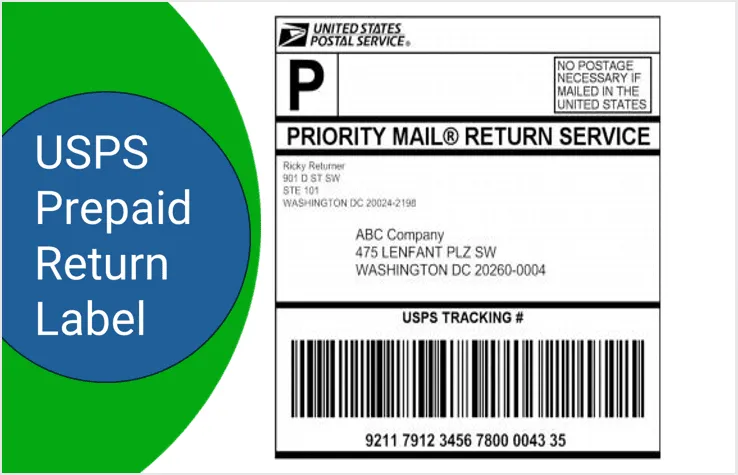
In this article
13 minutes
- Key Takeaways
- Understanding Return Labels
- How Return Shipping Labels Work
- Types of Return Labels
- Benefits of Using Return Labels
- Common Mistakes with Return Labels
- Tips for Creating Effective Return Labels
- Alternatives to Including Return Labels in Packages
- The Environmental Impact of Return Labels
- Summary
- Frequently Asked Questions
For online shoppers, a seamless return process is just as important as a smooth purchase experience. For both Sellers and buyers, return shipping labels play a vital role in ensuring that returning a product is hassle-free, efficient, and cost-effective. But what is a return label, and how does it work?
This comprehensive guide explores return shipping labels in-depth, covering their creation, usage, benefits, potential pitfalls, and evolving alternatives, including boxless returns and peer-to-peer return models.
Key Takeaways
- Return labels streamline the return process, making it easy for customers to quickly ship items back to retailers.
- Different types of return labels, including prepaid and customer-paid options, cater to varied customer needs and improve efficiency.
- Digital return labels and self-service platforms reduce paper waste and empower customers to manage their returns easily.
Understanding Return Labels
Return labels play a crucial role in ecommerce by simplifying the process of sending items back to the Seller and ensuring minimal hassle for both parties. Including return labels in packages speeds up the return process and enhances customer satisfaction, in particular, for those that don’t own a printer, though striking a balance is necessary to avoid excessive returns and potential revenue loss.
Definition of Return Labels
A return label can either be a pre-printed 4 x 6-inch sticker or printable on standard paper that contains all necessary information for a parcel carrier to deliver a package back to the Seller. It typically includes the recipient’s name and address, package weight, and a tracking barcode. These labels enable both customers and retailers to manage returns efficiently. Effective return labels include tracking information and a clear return address. Often, these labels are prepaid and pre-addressed, simplifying the return process for customers.
Make Returns Profitable, Yes!
Cut shipping and processing costs by 70% with our patented peer-to-peer returns solution. 4x faster than traditional returns.
See How It WorksPurpose of Return Labels
Return labels in ecommerce aim to enhance customer service and boost sales by establishing trust with customers. Simplifying the return process increases the likelihood of repeat purchases and improves overall customer satisfaction. Including return labels with original purchases eliminates the hassle of creating labels and printing them, improving the company’s reputation for customer service and boosting customer loyalty.
How Return Shipping Labels Work
Return shipping labels simplify the reverse logistics process for both consumers and retailers. Providing a prepaid return label in the package or the ability to easily print one quickly allows customers to prepare the return, drop it off, (or schedule a pickup), and enables the Seller to track its transit back to the warehouse and process it efficiently, providing a hassle-free and quick refund experience. Utilizing tracking numbers also provides visibility into the shipment’s current location and minimizes lost packages. Scannable QR codes are also available from carriers that can be scanned at the post office, for example, and the pre-paid label is printed and affixed by the postal worker. The reduced reliance on paper and printer simplifies returns for those who don’t own them.
Creation of Return Shipping Labels
Creating return shipping labels involves selecting a shipping carrier, specifying the return address, and covering the shipping costs. The return address must be clearly stated for the label to be effective. Return labels can be included in outbound packages or provided through online portals or platforms for customers to print. Return labels can also be created directly from the different shipping carrier’s website. Customers can print these labels from the respective websites or request them via email. Note that each carrier has its own unique label, so it’s important that return shipments are handed over to the correct carrier. If a printed return label is not included, it’s recommended that customers contact the Seller first in case they are provided at no cost.
Usage of Return Shipping Labels
To use a return shipping label, customers must securely pack the items so they travel and deliver safely, seal the package, affix the label to the outside of the package making sure to not overlap a seam, side, or corner, and either drop it off or request a pick-up from the carrier. The label must be printed and attached to the package before sending it back, following the company’s instructions (sometimes an RMA, return merchandise authorization, needs to be included). Proper packaging prevents damage during the return shipping process (which could void the refund), and securely attaching the label ensures accurate and timely delivery. Customers should confirm receipt by tracking the package after shipping it, and reach out to the Seller if the refund is not received within the window indicated in the return policy.
Types of Return Labels
Return labels can be broadly categorized into prepaid, customer-paid, and specialized labels for exchanges and gifts. Each type serves a unique purpose.
Prepaid Return Labels
Prepaid return labels, provided and paid for by the retailer, mean customers do not incur shipping costs for returns. This convenience enhances customer satisfaction by eliminating the need to find a printer or visit the post office, especially when using a prepaid shipping label that can be handed over to a carrier during a separate delivery. Because prepaid return labels allow customers to return products without additional fees, the returns process is more seamless and considered to be more customer-friendly, though businesses need to consider the prepaid return label cost as part of the overall transaction and cost of doing business.
Customer-Paid Return Labels
If a package lacks a pre-printed return label and the Seller doesn’t offer the ability to create them, customers can create a return label themselves. While customer-paid return labels require the customer to cover the return shipping cost, they have the flexibility to decide when and how to use them, which carrier to use, etc. Typically, return labels with carriers like FedEx and UPS do not expire, making them a reliable option.
Exchange and Gift Return Labels
Exchange return labels facilitate swapping items for different sizes, colors, or styles without additional shipping costs for the customer, enhancing flexibility and satisfaction. However, businesses must be vigilant about preventing bracketing, which is a form of returns abuse when customers buy multiple sizes, colors, or styles with the intention of returning many of them after inspecting them at home. Gift return labels enable recipients to return gifts without incurring shipping charges, making the process convenient and customer-friendly. These specialized labels add flexibility to the returns process. Often, however, retailers will recommend exchanges or store credit over returns because refunds often go back to the gifter rather than the giftee. In this case, the return shipping cost is avoided and the gifter isn’t alerted to the giftee’s return of their gift.
Convert Returns Into New Sales and Profits
Our peer-to-peer returns system instantly resells returned items—no warehouse processing, and get paid before you refund.
I'm Interested in Peer-to-Peer ReturnsBenefits of Using Return Labels
Return labels streamline product returns, ensuring efficiency for both Sellers and customers. Customers can easily sticker or print return labels and tape them onto the original packaging to facilitate their returns. The original shipping label should either be completely obscured or all barcodes defaced to avoid confusion and sortation errors at carrier facilities. Alternatives to traditional return labels have become more prevalent in recent years to give online shoppers more choices for returning items in ways they find more convenient for them, which improves customer engagement.
Increased Customer Satisfaction
Return labels save time and prevent frustration for customers, making the process straightforward. A ready-to-use return label enhances convenience and reduces effort in processing returns. A user-friendly return process significantly increases repeat purchases from satisfied customers.
Efficient Inventory Management
Tracking returns through labels helps businesses maintain accurate inventory counts. Ecommerce companies using pre-printed return labels typically see a significant reduction in processing time, enabling quicker refunds and exchanges as they’re essentially pre-approving the return removing nearly half of the customer service and processing burden from the workflow.
Cost Control
Prepaid return labels minimize unexpected costs associated with returned merchandise. Negotiating lower shipping rates through bulk agreements and pre-determining the carrier and service (shipping speed) helps Sellers control return costs more effectively. Whether provided as pre-printed stickers or as digital return labels that allow customers to print their own labels, prepaid return labels lead to quicker returns, and thus, refunds.
Common Mistakes with Return Labels
Common errors with return labels can cause delays, increased shipping costs, and complications in the returns process. Mislabeling addresses or not following specific return protocols (such as RMAs) are typical issues.
Incomplete Information
Omitting essential details like tracking numbers can hinder the return process. Attention to detail when creating return labels, such as including all relevant details, is crucial to avoid delays or complications.
Poor Label Quality
Using low-quality materials (paper, ink, shipping tape) can result in labels that tear easily during transit, impacting readability and usability. Labels should be clear and readable, and printed paper labels should be completely covered with shipping tape to prevent them from getting wet and tearing during the return transit.
Lack of Instructions
Providing adequate instructions to customers prevents confusion and ensures customers use return labels correctly. Failure to include clear usage guidelines can result in improper usage. Clear communication about return label usage enhances customer confidence and decreases the time to refund.
Tips for Creating Effective Return Labels
Labels lacking clarity can lead to misinterpretation by shipping providers, causing delays. Effective return labels enhance the customer experience and streamline the returns process by ensuring they get to their intended destination quickly and accurately.
Clear and Concise Information
Return labels should include essential details such as the order number and reason for return. Clear and concise information is crucial for a smooth returns process.
Branding and Professionalism
Incorporating branding elements into the return process enhances visibility and reinforces customer trust. A professionally designed return policy, return web page, and/or web portal affects perception and trust.
Testing and Feedback
Testing the return policy and process with a select group of customers gathers insights on clarity and usability. Collecting ongoing returns feedback can improve customer engagement resulting in higher lifetime value.
Alternatives to Including Return Labels in Packages
Digital return labels offer a convenient alternative to physical labels by allowing customers to create their own return shipping labels online, streamlining the returns process and enhancing efficiency.
Digital Return Labels
Digital return labels can be sent via email or customer portals, allowing customers to print them as needed, enhancing convenience and significantly decreasing paper consumption. Switching to digital return labels substantially reduces paper waste generated by traditional printed labels. Implementing print-on-demand return labels minimizes unnecessary printing, creating labels only when needed. This reduces waste and offers a cost-effective solution for businesses optimizing their returns process.
Self-Service Return Platforms
A self-service platform allows customers to initiate their own returns and choose between a refund, exchange, or store credit, increasing options and empowering customers to manage their return labels independently while helping businesses retain revenue. Enabling customers to generate their own return labels also increases customer engagement with the retailer or brand while reducing the burden on customer service teams.
Boxless Returns
Providing customers with scannable QR codes and local drop-off locations, (aka attended kiosks), and not a return shipping label at all, enables them to complete their returns while they’re already running other errands. Many returns portal solutions have tens of thousands of drop-off locations nationwide (e.g. Staples, Kohl’s, The UPS Store, and FedEx Office, among many other well-known brick-and-mortar brands), making it easy to simply make a quick stop while they’re already out and about. And nearly all stores print a receipt for your return that includes a coupon or special offer while you’re already in the store, encouraging additional shopping. Businesses benefit from the consolidated return of inventory (lower shipping costs and it’s more efficient to process returns in batches), and reduced fraud (humans putting their hands on the items) being returned.
The Environmental Impact of Return Labels
The impact of pre-printed return labels on the environment is often overlooked. Every label printed and not used is waste. Digital return labels enable customers to print their own labels only when they’re needed, reducing physical waste in addition to providing flexibility.
Reducing Paper Waste
Including a return label in the box generates waste, contributing to increased paper consumption that just goes to the landfill. Digital return labels sent via email or made available through an online portal allow customers to print them at their convenience and eliminate the unnecessary refuse or recycling burden and the costs associated with the paper or label stickers, printer ink, electricity, labor, etc. So in addition to customer convenience, digital labels are more eco-friendly.
Sustainable Packaging Solutions
Utilizing biodegradable shipping supplies also positively impacts the environment. Switching to recycled packaging helps conserve natural resources and reduce pollution. Sustainable packaging can also enhance brand image, attracting eco-conscious consumers.
No More Return Waste
Help the planet and your profits—our award-winning returns tech reduces landfill waste and recycles value. Real savings, No greenwashing!
Learn About Sustainable ReturnsPeer-to-Peer Returns
A revolutionary approach to ecommerce returns is Cahoot’s peer-to-peer (P2P) returns, which eliminates the need for returns to be sent back to Sellers and processed through warehouses. Instead, returned products in perfectly good condition are resold to a new buyer and ‘forwarded’ directly to the next purchasing customer. The returns are cheaper, faster, and more sustainable by eliminating one leg of shipping and eliminating warehouse reprocessing. The returning customer gets cash back for doing a good job forwarding the product to the new customer, the new buyer gets a discount for buying a perfectly good ‘open box” item, and the Seller never even has to see the return. Nearly 48% of all returns can be resold immediately using Cahoot’s system; no piles of unsorted, unprocessed, unsold items sitting in a corner that never get their value recaptured. This is especially useful for apparel and footwear companies that operate in highly competitive and seasonal markets where products have a shelf-life.
Summary
In conclusion, return shipping labels are an indispensable tool in ecommerce, ensuring seamless and efficient returns. Whether using traditional return labels, boxless returns, or peer-to-peer models, businesses must continuously optimize their return strategies to balance customer satisfaction with cost management. By offering flexible, transparent, and well-executed return solutions, Sellers can transform returns from a logistical headache into an opportunity for enhanced customer loyalty, operational efficiency, and cost control. By adopting sustainable practices and leveraging digital solutions, businesses can enhance their returns process and align with the growing demand for eco-friendly initiatives.
Frequently Asked Questions
What is a return shipping label?
A return shipping label can either be a pre-printed 4 x 6-inch sticker, or printable on standard paper from a file or web browser. It contains all the necessary information for a parcel carrier to deliver a package back to the Seller. It typically includes the recipient’s name and address, package weight, and a tracking barcode. It’s a handy ecommerce tool that takes the hassle out of returns!
What are the benefits of prepaid return labels?
Prepaid return labels make returns hassle-free for customers by covering shipping costs, ensuring a smoother and more convenient experience. Plus, they can boost customer satisfaction and loyalty.
How do digital return labels help reduce environmental impact?
Digital return labels are a great way to cut down on paper waste since customers only print them when necessary. This simple shift helps lessen the overall environmental footprint from excess packaging.
What is a common mistake to avoid with return labels?
It’s crucial to include all necessary details on your return label, like accurate addresses and tracking numbers, to avoid complications with the return process. Skipping this step can really slow things down, or even lead to lost packages and voided refunds.
Written By:
Indy Pereira
Indy Pereira helps ecommerce brands optimize their shipping and fulfillment with Cahoot’s technology. With a background in both sales and people operations, she bridges customer needs with strategic solutions that drive growth. Indy works closely with merchants every day and brings real-world insight into what makes logistics efficient and scalable.
Turn Returns Into New Revenue
Related Articles
HTS Code Explained: What It Is, Why It Matters, and How Ecommerce Brands Use It
HTS codes (Harmonized Tariff Schedule codes) are standardized numerical classifications that identify imported products for U.
Shipping Labels Explained: What They Include, How They Work, and Common Mistakes
Shipping labels are the operational backbone of ecommerce fulfillment, a small piece of paper that determines whether packages reach customers successfully or trigger costly failur...
USPS Click-N-Ship Explained: How It Works, Costs, and When Sellers Should Use It
USPS Click-N-Ship is the postal service’s free online label-printing tool, and for most Shopify sellers shipping more than 50 packages monthly, it’s already time to move beyond it....