
AI May Change Discovery. Fulfillment Still Wins the Sale.
During Cahoot’s Ugly Talk: Selling in a World Run by Algorithms panel in New York, much of the conversation focused on how artificial intelligence may reshape ecommerce discovery. Panelists discussed how conversational search, recommendation engines, and AI assistants could influence the way customers evaluate products online.
But as the discussion progressed, another point began to emerge.
Even if algorithms change how customers find products, the fundamental mechanics of ecommerce remain unchanged. Once a customer decides to buy, the experience shifts from digital discovery to physical delivery. The end-to-end process of fulfillment becomes critical for any ecommerce business, as it encompasses every step from order receipt to delivery and returns.
And that transition introduces an entirely different set of challenges.
AI systems can help customers choose a product, but they cannot determine whether the item arrives quickly, whether the packaging is correct, or whether the delivery experience meets the customer’s expectations.
Those outcomes depend on fulfillment, which directly impacts customer satisfaction.
This article is part of a series inspired by Ugly Talk: Selling in a World Run by Algorithms, a live panel hosted by Cahoot in New York. The discussion brought together operators and technology leaders including Manish Chowdhary of Cahoot, Nihar Kulkarni of Roswell NYC, Frank Pacheco of Nearly Natural, and YiQi Wu of Aimerce.
Throughout the conversation, the panel explored how artificial intelligence, recommendation systems, and platform algorithms are changing how ecommerce brands compete for visibility and customers.
These ideas are part of a broader framework for understanding how AI is reshaping ecommerce. For a complete breakdown of how discovery systems, product pages, brand authority, behavioral data, and fulfillment infrastructure interact, see The AI Commerce Playbook for Ecommerce Brands.
Discovery Is Changing in the Ecommerce Fulfillment Process
The emergence of AI-assisted shopping tools suggests that product discovery may become more conversational and context-driven in the coming years.
Instead of typing short search phrases into marketplaces or search engines, shoppers may increasingly ask open-ended questions about the products they need.
AI systems can then interpret those questions and generate recommendations based on product data, reviews, and contextual information.
This shift has the potential to reshape how ecommerce brands compete for visibility. The signals that influence discovery may expand beyond simple keyword matching to include broader signals such as brand authority, product context, and customer feedback.
But while the discovery layer evolves, the rest of the ecommerce process still depends on physical operations. When a customer places an online order through an online store, it triggers the order fulfillment process, which includes receiving, storing, picking, packing, and shipping the product to the customer.
The Moment That Still Matters Most
Once a customer decides to purchase a product, the experience moves from the digital world into the physical supply chain.
The item must be picked, packed, shipped, and delivered.
At this stage, the quality of the customer experience depends far less on algorithms and far more on logistics infrastructure. Fast delivery has become a standard expectation in order fulfillment, with customers now anticipating same-day or next-day shipping as the norm.
A product that arrives quickly and reliably reinforces the customer’s trust in the brand. Working with the right fulfillment partner can help ensure reliable order fulfillment and meet these expectations for fast delivery. A delayed shipment, damaged package, or incorrect order can undo the positive impression created during discovery.
No matter how sophisticated recommendation systems become, the physical delivery of the product remains the moment when customer expectations are ultimately confirmed or broken.
Inventory Management and Location Determine Delivery Speed
One of the key operational factors influencing customer experience is the location of inventory.
Products stored closer to customers can be delivered faster and at lower cost. Items stored in distant warehouses require longer shipping times and more expensive transportation.
Effective warehouse management and the use of a warehouse management system are essential for businesses to manage inventory efficiently and optimize delivery speed. These systems provide real-time visibility and automation, helping companies oversee stock levels and streamline order processing.
The entire fulfillment process begins with receiving inventory, which involves coordinating shipments and verifying contents to ensure accurate stock levels. Businesses may need to purchase inventory in advance to make sure products are available for fast delivery and to meet customer expectations.
During the panel discussion, Frank Pacheco of Nearly Natural shared an example that illustrates how sensitive ecommerce performance can be to delivery expectations. “I had a product that had been selling about forty thousand dollars a day for years. Then it got stuck in receiving and the delivery promise changed from two-day Prime to seven days.” Nothing about the product itself had changed. The price, reviews, and listing content remained the same. But the impact on sales was immediate. “Nothing else changed — same price, same ranking, same product. But we lost about seventy-five percent of daily sales just because the shipping speed changed.” The experience reinforced a simple but powerful reality: when customers believe a product will take longer to arrive, many will simply choose a faster option instead.
As ecommerce volumes grow and delivery expectations rise, brands increasingly need to think strategically about where inventory is placed.
The ability to distribute inventory across multiple locations allows companies to reduce transit times and improve delivery performance.
While AI discovery may influence which products customers consider, the placement of inventory ultimately determines how quickly those products can reach the customer’s door.
Order Processing and Management
Order processing and management are at the heart of a successful ecommerce fulfillment process. The fulfillment process begins the moment a customer places an order on your ecommerce platform, setting in motion a series of steps that directly impact customer satisfaction and loyalty. To meet customer expectations for fast, accurate delivery, ecommerce businesses must have a streamlined order management system capable of handling everything from order intake to final shipment.
A robust order management system is essential for tracking orders, managing inventory levels, and providing real-time updates to customers. Effective inventory management ensures that products are available when customer demand spikes, preventing costly stockouts or excess inventory that can tie up valuable warehouse space. By leveraging an advanced inventory management system, businesses can optimize inventory counts, improve inventory and order management, and maintain the right inventory levels to support business growth.
Choosing the right fulfillment model is another critical decision for ecommerce businesses. Many start with in-house fulfillment, managing order processing and inventory storage themselves. While this approach offers control, it can become challenging as order volumes increase and operational costs rise. At this stage, shifting from in-house logistics to a third-party logistics (3PL) provider can offer significant advantages. Third-party logistics partners bring expertise, fulfillment centers in strategic locations, and the ability to negotiate discounted shipping rates, all of which can reduce shipping costs and improve delivery speed.
For businesses experiencing rapid growth or seasonal demand, utilizing multiple fulfillment centers or third-party logistics alternatives to Amazon FBA can further enhance customer satisfaction by reducing transit times and fulfillment costs. This distributed approach allows for faster, more reliable delivery, which directly impacts customer trust and retention.
To ensure fulfillment excellence, ecommerce businesses should monitor key performance indicators such as order accuracy, on-time delivery, and customer feedback. Ecommerce shipping software for warehouse automation can automate order processing, provide real-time visibility into inventory and order status, and help manage multiple ecommerce sales channels efficiently. By continuously tracking these metrics, businesses can identify opportunities to improve operational efficiency, reduce fulfillment errors, and enhance the overall customer experience.
Ultimately, effective ecommerce fulfillment operations depend on aligning your fulfillment strategy with your business goals and customer expectations. Whether you manage fulfillment in-house or partner with a third-party logistics provider, turning ecommerce order fulfillment into a profit driver by investing in the right order management system, optimizing inventory management, and selecting the right fulfillment model are essential steps to improve customer satisfaction, build customer loyalty, and drive long-term business growth.
Algorithms Cannot Ship Packages
Artificial intelligence can assist with many aspects of ecommerce, from product recommendations to demand forecasting.
But the physical movement of goods still depends on warehouses, transportation networks, and fulfillment operations.
Even the most advanced AI-driven shopping interface cannot compensate for weak logistics infrastructure. If orders cannot be processed efficiently or delivered reliably, the customer experience suffers regardless of how the product was discovered.
For ecommerce brands, this creates a clear operational priority. Many businesses choose to outsource fulfillment to third-party logistics providers for small businesses to achieve cost savings and avoid significant upfront investment in infrastructure, technology, and facilities.
Discovery systems may evolve rapidly, but fulfillment capabilities remain the foundation of customer satisfaction.
The Real Competitive Advantage: Customer Satisfaction
The conversation at Ugly Talk ultimately reinforced a simple insight.
Algorithms influence how customers find products.
Operations determine whether the purchase experience succeeds.
Brands that invest heavily in discovery optimization but neglect fulfillment infrastructure may struggle to meet customer expectations once orders begin arriving.
On the other hand, companies that combine strong discovery strategies with reliable fulfillment operations—whether through traditional providers or peer-to-peer fulfillment networks vs traditional 3PLs—are far more likely to deliver the consistent experiences customers expect.
In the end, the future of ecommerce will likely involve both.
AI systems may help customers discover products more efficiently. But the brands that win long-term loyalty and drive customer retention will still be the ones that deliver those products quickly, accurately, and reliably. For Shopify merchants and Amazon sellers alike, selecting the best 3PL for your Shopify store or among top Amazon 3PL shipping companies for reliable fulfillment is central to meeting these expectations. Effective reverse logistics ensures a smooth returns process, while branded packaging enhances the unboxing experience and reinforces brand identity—both of which play a crucial role in building customer retention and encouraging repeat business.
Written By:

Manish Chowdhary
Manish Chowdhary is the founder and CEO of Cahoot, the most comprehensive post-purchase suite for ecommerce brands. A serial entrepreneur and industry thought leader, Manish has decades of experience building technologies that simplify ecommerce logistics—from order fulfillment to returns. His insights help brands stay ahead of market shifts and operational challenges.

Turn Returns Into New Revenue
Related Articles
What Is Demand Planning? How It Impacts Inventory, Forecasting, and Profitability
Demand planning is the process of estimating future customer demand so that a business can align its inventory, procurement, and operations to meet that demand without carrying mor...

Why 100% P2P Adoption Is the Wrong Goal
Peer-to-peer returns let customers send eligible returned items directly to other customers instead of routing every package back through the warehouse, cutting shipping and proces...
Walmart Officially Allows Amazon Multi-Channel Fulfillment (MCF)
Big news for multichannel sellers: Walmart now officially allows Amazon Multi-Channel Fulfillment (MCF), Amazon’s service for using its fulfillment network to ship orders from mult...
What “Fulfilled by TikTok” Really Means for Ecommerce Sellers

In this article
 19 minutes
- Introduction to Fulfilled by TikTok
- How inventory moves through TikTok's fulfillment network
- The real difference between seller-managed and platform-managed fulfillment
- Sellers do not control where inventory goes or how orders route
- Fee structures that compress margins faster than sellers expect
- Documented operational failures reveal infrastructure immaturity
- Benefits of Fulfilled by TikTok
- Inventory Management and Metrics
- Getting Started with FBT
- When FBT works and when it creates problems
- Frequently Asked Questions
Fulfilled by TikTok (FBT) is a platform-managed fulfillment program where TikTok stores, picks, packs, and ships orders on behalf of TikTok Shop sellers. For ecommerce operators evaluating this fulfillment option, the operational reality is more complex than the pitch: FBT trades packaging control, inventory flexibility, and margin transparency for faster delivery badges and metric protection. Whether that trade-off makes sense depends entirely on your product profile, channel mix, and tolerance for platform dependency. This article breaks down how FBT actually works, what it costs, and when it creates more problems than it solves.
Introduction to Fulfilled by TikTok
Fulfilled by TikTok (FBT) is a game-changing fulfillment service designed to simplify the order fulfillment process for TikTok Shop sellers. By leveraging TikTok’s robust logistics infrastructure and fulfillment expertise, FBT allows sellers to shift their focus from packing and shipping to what matters most—content creation, marketing, and driving sales. With FBT, TikTok Shop sellers can trust that their products will be stored, picked, packed, and shipped efficiently, ensuring a high level of customer satisfaction and a seamless customer experience. As a cornerstone of TikTok’s fulfillment services, FBT not only streamlines operations but also enhances the overall shopping journey for buyers, making it easier for sellers to grow their businesses within the dynamic TikTok Shop ecosystem.
How inventory moves through TikTok’s fulfillment network
At its core, FBT follows the same model as other platform-managed fulfillment services. Sellers ship inventory to TikTok’s designated fulfillment centers, and TikTok handles everything from that point forward: warehousing, order processing, picking, packing, shipping, and returns. TikTok manages inventory storage within its warehouse or fulfillment center, ensuring products are available and ready for efficient processing.
The inbound process starts in TikTok’s Seller Center portal, where sellers create shipments, assign SKUs, and schedule delivery appointments for pallet-sized loads. TikTok operates 14+ fulfillment centers across the United States, with hub consolidation points on both coasts. Sellers choose from three inbound methods: shipping to a single hub (East or West), shipping to both hubs, or shipping directly to multiple fulfillment centers. Each method carries different cost and compliance implications.
Once inventory arrives, TikTok’s system takes over order management entirely. When a customer places a TikTok Shop order, the platform’s routing system identifies the nearest warehouse holding that product and processes customer orders within 24 hours. TikTok is responsible for packing orders and shipping orders directly from its warehouses, using standardized packaging and handing parcels to carrier partners, with a delivery target of two to five business days. According to TikTok’s internal data, 82.7% of FBT orders arrive within three business days when a seller routes more than 30% of volume through the program.
Products listed through FBT receive a “Free 3-Day Delivery” badge visible to shoppers. TikTok claims this badge drives a 15 to 20% higher conversion rate and a 30%+ increase in daily product views. These are platform-reported figures, and operators should weigh them accordingly. The number of orders fulfilled and the efficiency of TikTok’s warehouses contribute to these performance metrics.
The real difference between seller-managed and platform-managed fulfillment
The distinction between fulfilling your own TikTok Shop orders and using FBT is not just operational convenience. It is a fundamental shift in who controls the customer experience.
With seller-managed fulfillment (or using a third party logistics provider such as those outlined in this guide to choosing the right 3PL company), sellers retain control over packaging, branding, carrier selection, and inventory allocation across channels. Sellers can choose fulfilling orders in house or opt for self fulfillment, giving them full control over the logistics process. Inventory can be allocated across different sales channels, such as a Shopify store, wholesale, and other platforms. A branded unboxing experience, custom inserts, and the ability to fulfill orders from a shared inventory pool serving Shopify, wholesale, and other channels all remain intact. The tradeoff is that sellers bear full responsibility for meeting TikTok’s performance metrics: a Valid Tracking Rate of 95% or higher, on-time delivery within six business days, and a Seller-Fault Cancellation Rate below 2.5%. For those who do not want to handle fulfillment in house, fulfillment experts at third party logistics providers can assist with efficient order management, especially when you understand how the best 3PLs for small business structure their services and pricing.
FBT removes that operational burden. Logistics-related issues (late dispatch, cancellations, shipping damage, and negative reviews tied to delivery problems) are excluded from seller performance metrics when using FBT. TikTok also reimburses sellers for lost or damaged packages. This metric protection is one of FBT’s most tangible benefits, particularly for sellers who struggle to maintain consistent fulfillment quality at scale.
But the cost of that protection is control. FBT ships in TikTok’s standardized packaging with no branded boxes, no inserts, and no custom materials. Sellers cannot select carriers or influence delivery routing. And critically, inventory stored in FBT warehouses can only fulfill TikTok Shop orders. That stock cannot be used for Shopify storefront orders, marketplace listings, or any other channel. For multi-channel ecommerce businesses, this creates a forced inventory split that complicates demand forecasting and reduces allocation efficiency.
Sellers do not control where inventory goes or how orders route
FBT’s inventory placement system requires sellers to follow TikTok’s routing guide and allocation recommendations regardless of which inbound method they choose. When shipping directly to multiple fulfillment centers (the option that avoids hub placement fees), TikTok specifies which locations to ship to and how much inventory each should receive. Sellers cannot freely select warehouses.
Non-compliance carries real financial penalties. Inbound incident fees start at $0.50 per unit for routing violations, including misrouted shipments, incorrect quantities, mislabeled cartons, and failure to meet arrival timelines. These fees are tiered by weight and add up quickly for large shipments.
On the outbound side, TikTok’s system automatically routes each order to the nearest warehouse holding the ordered product. Sellers have no ability to manually route individual orders or prioritize specific fulfillment centers. This automated routing is efficient when the network functions well, but it also means sellers have no recourse when specific warehouse locations underperform. TikTok does not operate all of its warehouses directly. It partners with external 3PL providers, known as TikTok partners, and service quality can vary between locations compared with more modern options like a peer-to-peer fulfillment network versus traditional 3PLs. The efficiency and reliability of fulfillment through TikTok partners can be significantly impacted by order volumes, especially during sales spikes or viral moments. As one logistics consultancy noted, “Your brand is at the mercy of whichever 3PL TikTok chooses for you.”
Fee structures that compress margins faster than sellers expect
FBT’s cost structure is an all-inclusive per-unit fulfillment fee covering pick, pack, packaging materials, and last-mile shipping. For single-unit orders, fees start at $3.58 per item in the lightest weight tier and increase with weight. Multi-unit orders from the same seller start at $2.86 per item (as of January 2026). Fees are calculated on the greater of actual unit weight or dimensional weight. However, sellers should be aware of potential additional fees for packaging non-compliance or when selecting special logistics services, which can increase overall fulfillment costs.
These fulfillment costs stack on top of TikTok’s referral fee (approximately 6% of the sale price for most categories) and a transaction fee of roughly 3.78%. For a $50 product shipped as a single unit, minimum platform fees reach approximately $8.47 before accounting for product cost, advertising, or affiliate commissions. That represents about 17% of the sale price before cost of goods. For some sellers, the availability of express shipping options and the benefit of faster shipping can help justify these higher fees, as they can improve customer satisfaction and boost sales performance, especially when balanced against how ecommerce return rates affect profit margins.
The margin pressure intensifies for lower-priced products. A $12 item faces minimum platform fees of $4.30 or more, consuming roughly 36% of the sale price in fees alone. Add affiliate commissions (commonly 10 to 20% on TikTok Shop) and the economics become difficult to sustain.
Storage fees add another layer. TikTok offers 60 days of free storage per inbound shipment. After that, daily fees per cubic foot escalate on a tiered schedule: modest rates through 270 days, then a sharp increase to $0.25 per cubic foot per day after 365 days. For slow-moving inventory management scenarios, these storage fees accumulate well above industry averages for warehouse space. Hub placement fees ($0.31 to $0.45+ per unit depending on hub location and weight) and a $3 return handling fee per item further erode margins on products with high return rates.
Documented operational failures reveal infrastructure immaturity
The risks of FBT are not theoretical. Investigative reporting from Modern Retail in early 2026 documented several significant operational failures with TikTok shipping, highlighting the challenges of maintaining reliable shipping through TikTok’s logistics services.
One agency executive reported that TikTok’s warehouse shipped entire case packs of three units as individual orders instead of breaking them into single units. This error persisted for approximately one month, resulting in losses exceeding six figures for the affected brand. During peak holiday season, another brand found that orders tagged with the “Free 3-Day Delivery” badge were severely delayed, with shipments stuck for weeks. These operational failures can be especially damaging during flash sales or other high-volume events, where rapid fulfillment is critical to capitalize on viral demand. Customers repeatedly canceled orders and left negative reviews, and when the brand sought compensation, TikTok attributed the delays to third-party carrier partners.
These incidents reflect a fulfillment network that is still maturing. TikTok’s U.S. warehouse infrastructure has been operational for only a few years, and the reliance on a patchwork of 3PL partners introduces inconsistency. Sellers who depend on FBT for customer experience should understand that fulfillment quality is ultimately outside their control, and reliable shipping is not always guaranteed.
Policy volatility compounds the operational risk. In early 2026, TikTok announced it would discontinue independent seller shipping entirely, requiring all U.S. sellers to use FBT or TikTok-controlled logistics by March 31, 2026. After significant seller backlash, TikTok reversed the mandate on February 17, 2026, preserving seller shipping as an option. This reversal underscores a pattern of abrupt policy shifts that makes long-term operational planning difficult.
Benefits of Fulfilled by TikTok
Fulfilled by TikTok offers a host of benefits that can transform the way sellers operate on TikTok Shop. By outsourcing the entire fulfillment process to TikTok, sellers can significantly reduce fulfillment costs and eliminate the hassle of managing multiple fulfillment methods. FBT’s streamlined logistics help improve shipping lead times, resulting in faster deliveries and higher conversion rates. Sellers also enjoy robust seller protection, as FBT shields them from logistics-related issues and negative reviews tied to shipping or delivery problems. With free storage for a set period and no hidden fees, FBT helps sellers avoid the unexpected costs often associated with traditional fulfillment. The platform makes it easy to create inbound shipments, track inventory, and forecast replenishment needs, ensuring sellers can meet customer demand and provide a seamless shopping experience. By leveraging TikTok’s fulfillment network, sellers are well-positioned to drive business growth and customer satisfaction.
Inventory Management and Metrics
Effective inventory management is at the heart of success with Fulfilled by TikTok. Sellers must keep their TikTok Shop inventory levels accurate and ensure they have enough stock to meet customer demand. FBT provides real-time inventory tracking, allowing sellers to monitor stock, track orders, and optimize fulfillment metrics such as shipping lead times and orders delivered. By analyzing these key performance indicators, sellers can refine their fulfillment strategies, improve customer satisfaction, and make data-driven decisions to support business growth. TikTok’s network of fulfillment centers and warehouses further reduces shipping lead times, enabling fast delivery and helping sellers consistently meet customer expectations. With FBT, sellers gain the tools and insights needed to manage inventory efficiently and deliver a superior customer experience.
Getting Started with FBT
Getting started with Fulfilled by TikTok is designed to be straightforward and accessible for all TikTok Shop sellers. To begin, sellers simply log in to the Seller Center, select the “Fulfilled by TikTok” option, and follow the guided steps to create their first inbound shipment. Once registered, sellers ship their products to TikTok’s fulfillment centers, where TikTok handles storage, picking, packing, and shipping directly to customers. FBT integrates seamlessly with TikTok Shop sales, streamlining order management and fulfillment so sellers can focus on content creation and growing their business. By letting TikTok handle the logistics, sellers benefit from the platform’s extensive resources and fulfillment expertise, ultimately driving customer satisfaction, increasing sales, and setting the stage for long-term success.
When FBT works and when it creates problems
FBT delivers the most value for a specific seller profile: high-velocity, lightweight products with fast inventory turnover and no branded packaging requirements. If your best-selling SKUs are simple, standardized items (phone accessories, basic apparel, beauty consumables) that move through inventory in under 30 days, the conversion lift from the delivery badge and the metric protection may outweigh the costs and control tradeoffs.
Sellers without existing warehouse infrastructure also benefit. For a small independent company or small operations testing product-market fit on TikTok Shop, FBT eliminates the need for fulfillment staff, storage space, and carrier negotiations, though some may instead prefer dedicated ecommerce order fulfillment services that outclass traditional 3PLs. TikTok offers numerous benefits to these sellers, such as enabling sellers to focus on growth by handling logistics, warehousing, and delivery. The all-inclusive fee structure simplifies order fulfillment cost calculations, even if total costs are higher than a mature in-house operation. There are numerous benefits, including cost savings, improved customer loyalty through fast deliveries, and the ability to capitalize on TikTok’s virality for sales growth.
FBT creates problems in several clearly identifiable scenarios:
- Multi-channel sellers lose inventory flexibility because FBT stock cannot fulfill Shopify, wholesale, or other marketplace orders, forcing a separate demand forecast for TikTok alone
- Brands that depend on custom packaging sacrifice the unboxing experience entirely, since TikTok ships in standardized materials with no room for inserts or branded elements
- Low-margin products face unsustainable fee stacking when fulfillment costs, referral fees, transaction fees, and affiliate commissions combine
- Sellers with unpredictable viral demand face a forecasting dilemma, as inventory committed to FBT warehouses cannot be redirected during spikes on other channels
- Products requiring special handling, kitting, or assembly are poorly suited to TikTok’s standardized warehouse operations
For mid-market Shopify brands operating across multiple sales channels, the most practical approach is selective use: route a limited number of fast-moving, high-margin SKUs through FBT to capture the delivery badge benefits while maintaining fulfillment flexibility for the rest of your catalog, applying the same strategic thinking you would use when evaluating Shopify order fulfillment options. Keep FBT inventory allocation tight (under 30 days of supply) to stay within free storage windows, and maintain a parallel fulfillment capability through your existing 3PL or warehouse operation.
There are already success stories of sellers who have grown their business with FBT, showing how TikTok is enabling sellers to focus on scaling and customer satisfaction.
Frequently Asked Questions
What is Fulfilled by TikTok and how does it work?
Fulfilled by TikTok (FBT) is a platform-managed fulfillment program primarily used by TikTok Shop merchants—businesses that sell products through TikTok’s platform and leverage TikTok’s fulfillment services. Also known as FBT Fulfilled, this service is part of TikTok’s comprehensive fulfillment services, which manage storage, order picking, packing, shipping, and customer satisfaction. Sellers create inbound shipments through TikTok’s Seller Center, send inventory to designated warehouses, and TikTok handles all order fulfillment from that point forward. When customers place orders, TikTok’s system automatically routes them to the nearest warehouse holding that product and ships within 24 hours. Products fulfilled through FBT receive a “Free 3-Day Delivery” badge visible to shoppers.
How much does Fulfilled by TikTok cost?
FBT charges an all-inclusive per-unit fulfillment fee starting at $3.58 per item for single-unit orders in the lightest weight tier (as of January 2026). Multi-unit orders from the same seller start at $2.86 per item. These fees stack on top of TikTok’s 6% referral fee and 3.78% transaction fee. For a $50 product, minimum platform fees reach approximately $8.47 (about 17% of the sale price) before product cost or advertising. Storage is free for 60 days, then incurs daily fees per cubic foot on an escalating schedule. Hub placement fees range from $0.31 to $0.45+ per unit, and return handling costs $3 per item. Additional fees may apply for packaging compliance issues, non-compliance penalties, or when using special logistics services.
What is the difference between seller-managed fulfillment and Fulfilled by TikTok?
Seller-managed fulfillment (also known as self fulfillment or fulfilling orders in house, including using your own 3PL) lets you control packaging, branding, carrier selection, and inventory allocation across all sales channels. You can use the same inventory pool for TikTok Shop, Shopify, wholesale, and other marketplaces when your fulfillment tech stack is supported by robust order fulfillment integrations and ecommerce partners. However, you bear full responsibility for meeting TikTok’s performance metrics (95% Valid Tracking Rate, on-time delivery, cancellation rate below 2.5%). FBT removes this operational burden and excludes logistics-related issues from your seller performance metrics. But you lose all packaging control, cannot choose carriers, and inventory stored in FBT warehouses can only fulfill TikTok Shop orders, not other channels.
Can I control where my inventory is stored in TikTok’s fulfillment network?
No. TikTok’s inventory placement system specifies which fulfillment centers receive your inventory and how much each location should hold. Order volumes and various factors, such as sales spikes or regional demand, can influence which warehouse or fulfillment center is selected to receive inventory and how quickly orders are processed. Even when shipping directly to multiple warehouses (avoiding hub placement fees), sellers must follow TikTok’s routing guide. Non-compliance results in inbound incident fees starting at $0.50 per unit for routing violations, misrouted shipments, incorrect quantities, or missed arrival timelines. On the outbound side, TikTok’s system automatically routes each order to the nearest warehouse holding that product with no seller override capability.
What are the margin risks of using Fulfilled by TikTok?
FBT creates significant margin pressure through fee stacking. A $50 product faces approximately $8.47 in minimum platform fees (17% of sale price) before product cost. For a $12 item, minimum fees of $4.30+ consume roughly 36% of the sale price. Add affiliate commissions (commonly 10 to 20% on TikTok Shop) and margins compress rapidly. Storage fees after the 60-day free period escalate to $0.25 per cubic foot per day after 365 days. The $3 return handling fee per item erodes margins on products with high return rates. Low-margin products and lower-priced items face the most severe pressure from this fee structure.
What operational problems have sellers experienced with Fulfilled by TikTok?
Documented failures include TikTok warehouses shipping entire case packs of three units as individual orders instead of breaking them apart, causing six-figure losses for one brand over approximately one month. During holiday peak season, orders with “Free 3-Day Delivery” badges were severely delayed for weeks, stuck in TikTok’s fulfillment network with customers canceling and leaving negative reviews. These issues highlight the challenges of maintaining reliable shipping through TikTok Shipping and TikTok partners, as operational failures and delays with third-party carrier partners can undermine seller credibility and customer satisfaction. In early 2026, TikTok announced it would force all sellers to use FBT by March 31, 2026, then reversed the mandate on February 17, 2026 after seller backlash, illustrating policy volatility that complicates planning.
When does Fulfilled by TikTok make sense versus when should sellers avoid it?
FBT makes sense for high-velocity, lightweight products with fast inventory turnover (under 30 days), no branded packaging requirements, and sellers without existing warehouse infrastructure. For a small independent company, TikTok offers numerous benefits through FBT, such as cost savings, improved customer loyalty with fast deliveries, and the ability to capitalize on TikTok’s virality for sales growth, similar to how the right 3PL for your Shopify store can unlock scale on that channel. The delivery badge conversion lift and metric protection justify the costs for simple, standardized items like phone accessories or beauty consumables.
FBT creates problems for multi-channel sellers (inventory locked to TikTok only), brands requiring custom packaging (TikTok uses standardized materials only), low-margin products (unsustainable fee stacking), sellers with unpredictable viral demand (cannot redirect inventory to other channels), and products requiring special handling or kitting (TikTok’s standardized operations cannot accommodate).
There are also success stories of sellers who have grown their business with FBT, demonstrating the positive impact of the service for small independent companies.
Can I use Fulfilled by TikTok for some products and self-fulfill others?
Yes. The most practical approach for mid-market Shopify brands is selective use: route a limited number of fast-moving, high-margin SKUs through FBT to capture delivery badge benefits while maintaining fulfillment flexibility for the rest of your catalog through your existing 3PL or warehouse. For products that do not fit the FBT model, sellers can use self fulfillment or fulfilling orders in house, allowing them to manage storage, packing, and shipping independently, much like choosing between FBA vs FBM on Amazon based on control, cost, and service tradeoffs. Keep FBT inventory allocation tight (under 30 days of supply) to stay within free storage windows. This hybrid approach lets you benefit from the conversion lift and metric protection on products that fit FBT’s model while preserving packaging control, multi-channel inventory flexibility, and lower costs for products where FBT economics do not work, similar to leveraging specialized Amazon FBM shipping and order fulfillment services alongside platform-managed options.
Written By:

Rinaldi Juwono
Rinaldi Juwono leads content and SEO strategy at Cahoot, crafting data-driven insights that help ecommerce brands navigate logistics challenges. He works closely with the product, sales, and operations teams to translate Cahoot’s innovations into actionable strategies merchants can use to grow smarter and leaner.
Turn Returns Into New Revenue
Related Articles
What Is Demand Planning? How It Impacts Inventory, Forecasting, and Profitability
Demand planning is the process of estimating future customer demand so that a business can align its inventory, procurement, and operations to meet that demand without carrying mor...
Why 100% P2P Adoption Is the Wrong Goal
Peer-to-peer returns let customers send eligible returned items directly to other customers instead of routing every package back through the warehouse, cutting shipping and proces...
Walmart Officially Allows Amazon Multi-Channel Fulfillment (MCF)
Big news for multichannel sellers: Walmart now officially allows Amazon Multi-Channel Fulfillment (MCF), Amazon’s service for using its fulfillment network to ship orders from mult...
How Ecommerce Brands Ship Furniture Without Destroying Margins

In this article
24 minutes
- DIM weight punishes large items regardless of actual weight
- The 150-pound threshold determines parcel versus LTL economics
- Packaging choices directly determine damage rates and return costs
- Zone-skipping and regional fulfillment compress distance costs
- Returns cost asymmetry makes free shipping lethal for furniture brands
- Furniture fulfillment is a product design problem before it is a logistics problem
- Measuring shipping performance: KPIs and continuous improvement
- Frequently Asked Questions
Furniture brands that enter ecommerce often discover their margins evaporate not because furniture is inherently expensive to ship, but because they are using fulfillment models and carrier strategies built for books, apparel, and electronics and are unprepared for the impact of rising FedEx and UPS surcharges on ecommerce shipping costs. A 40-pound accent chair shipped in a 24x24x36 inch box does not cost three times more than a 40-pound bag of dog food because it weighs more. It costs more because dimensional weight pricing, parcel carrier surcharges, and damage rates destroy the economics of bulky, irregularly shaped products. Several factors—such as shipping distance, package size, weight, service type, and special handling requirements—significantly influence the cost to ship furniture and must be considered when planning your shipping strategy. The brands that ship furniture profitably understand this is not a shipping problem. It is a fulfillment architecture problem, and solving it requires decisions most ecommerce operators never consider, especially given the hassle and complexity of finding reliable and cost-effective furniture shipping solutions.
DIM weight punishes large items regardless of actual weight
The single biggest cost driver for furniture shipping is dimensional weight, not actual weight, especially as parcel carriers like UPS and FedEx continue to tighten dimensional weight rules and rounding policies. Parcel carriers (UPS, FedEx, USPS) calculate shipping costs based on whichever is greater: the item’s actual weight or its dimensional weight. Dimensional weight is calculated by multiplying the package’s length, width, and height in inches, then dividing by a carrier-specific divisor. FedEx and UPS use a divisor of 139 for most commercial accounts. USPS uses 166 for retail customers and 139 for commercial accounts.
A dining chair weighing 30 pounds but packaged in a 24x24x36 inch box has a dimensional weight of (24 x 24 x 36) / 139 = 149 pounds. You pay to ship 149 pounds, not 30. That same chair in a slightly larger 30x30x40 inch box (because the legs were not removed) has a dimensional weight of (30 x 30 x 40) / 139 = 259 pounds. An extra six inches in each dimension more than doubles your billable weight. Beds and other larger pieces, such as sofas, are especially impacted by dimensional weight pricing, making them more suitable for freight services or LTL shipping rather than parcel carriers, especially when you apply best practices for shipping heavy items profitably.
This is why furniture brands that ship assembled items or use oversized packaging for protection consistently lose money on shipping. Before packing, it is important to remove detachable parts, such as table legs or bed frames, to reduce the box size and lower shipping costs. Proper packing and careful disassembly of large pieces can help minimize dimensional weight. In fact, carefully disassembling large pieces of furniture can reduce shipping costs and risk of damage. The actual weight is irrelevant. What matters is cubic volume, and furniture occupies enormous cubic volume relative to weight. A 15-pound pillow shipped in proper packaging might bill at 8 to 10 pounds dimensional weight. A 15-pound side table shipped fully assembled bills at 80 to 120 pounds dimensional weight.
The operational consequence is that furniture brands must design their entire product line and packaging strategy around dimensional weight constraints, not just actual weight limits. Items that cannot be disassembled or flat-packed into smaller boxes become uneconomical to ship via parcel carriers. Brands that ignore this and attempt to absorb dimensional weight costs discover their gross margins turning negative on every order.
The 150-pound threshold determines parcel versus LTL economics
Parcel carriers handle packages up to 150 pounds (actual or dimensional weight, whichever is greater) and with combined length plus girth not exceeding 165 inches (with maximum length of 108 inches). Beyond these limits, you must use LTL (less-than-truckload) freight. This transition point is where furniture shipping economics completely change, and LTL freight shipping is often the best choice for furniture over 150 lbs.
Parcel shipping charges per package based on weight and zone (distance). LTL freight charges based on freight class (determined by density, handling, stowability, and liability), weight, and distance, but spreads the cost across multiple shippers sharing truck space. For furniture weighing 150 to 500 pounds, LTL is often 50% to 70% cheaper than trying to force the item into parcel service limits. Canada is a common destination for economical LTL freight shipping, along with the US and Mexico, especially for palletized and heavy furniture shipments.
The problem is that most ecommerce brands are not set up operationally for LTL shipping or for turning ecommerce order fulfillment into a profit driver. Parcel carriers provide door-to-door residential delivery with tracking that integrates seamlessly into Shopify and similar platforms. LTL requires freight terminals, bills of lading, freight class determination, and often accessorial charges (residential delivery fees, liftgate service if the destination lacks a loading dock, inside delivery if you want the driver to bring the item past the threshold). Many furniture brands discover LTL only after they have already committed to product designs that exceed parcel limits and customer expectations that include residential delivery. The cost to ship a single piece of furniture varies widely based on distance and size, with local shipments typically ranging from $150 to $500, and longer distances from $300 to $1000.
The threshold issue becomes particularly acute for furniture items in the 100 to 200 pound range. A sofa weighing 150 pounds actual weight but packaged in dimensions yielding 250 pounds dimensional weight exceeds parcel limits on both metrics. But it is light enough that customers expect it to arrive via normal delivery, not freight truck. Brands caught in this gap either pay extraordinary parcel oversize surcharges (often $75 to $150 per package) or transition to LTL and absorb the cost of residential delivery accessorials (typically $90 to $150 per shipment). Shipping just one piece can be especially challenging, as the logistics and costs for a single item are often less economical than shipping multiple items together.
Packaging choices directly determine damage rates and return costs
Furniture damage during transit is not random, and it is heavily influenced by the choice and application of protective dunnage and smart packaging. It is a function of packaging adequacy relative to handling intensity. Using the right packing supplies—such as blankets, foam padding, and packing tape—is essential to protect ship furniture from damage during shipping. Parcel shipments pass through 8 to 12 touch points (pickup, local terminal, hub, destination terminal, delivery vehicle, final delivery). Each touch point involves conveyors, sorting equipment, or manual loading where packages are stacked, shifted, and compressed. LTL freight involves fewer touch points (typically 3 to 5) but heavier equipment (forklifts, pallet jacks) and shared truck space where freight shifts during transit.
Proper packaging should include layered protection: start with stretch wrap to secure moving blankets around the furniture, which helps prevent drawers and doors from opening and cushions large items to prevent scuffs. Add cardboard corner protectors and extra foam padding on edges and corners for added protection. For fragile parts, use foam padding or bubble wrap, but avoid placing tape or bubble wrap directly on finished surfaces to prevent varnish damage. Always leave enough room in the box for padding and cushioning, but use the smallest box possible that still allows for protective packaging to save on shipping costs. Secure small hardware, such as knobs and screws, in a sealable bag and attach it to the furniture to avoid loss. When sealing boxes, use packing tape to ensure the box stays closed during transit and labels remain attached.
Furniture brands that use minimal packaging to reduce dimensional weight discover 15% to 25% damage rates. Brands that overpackage to prevent damage increase dimensional weight to the point where shipping costs exceed product margins. The optimization point sits between these extremes and depends entirely on the item’s construction, style, and the chosen shipping method.
Disassembled furniture components (table legs, chair backs, bed frames shipped in pieces) require less protective packaging because individual components are smaller and less vulnerable. Assembled furniture requires corner protection, edge wrapping, and void fill to prevent movement inside the box. Glass, mirrors, and upholstered items require foam, bubble wrap, or corrugated dividers to prevent scratching or puncture. Each layer of protection adds dimensional weight, which increases shipping cost, which must be weighed against the cost of damage and returns. For added security, consider securing furniture to a wooden pallet or using a pallet to provide stability and protection from damage during shipping. Wrapping furniture in Styrofoam can also provide additional protection.
Before shipping, clean the furniture to identify any pre-existing damages, and take high-quality photographs to document its condition for potential claims. Packing experts are available at many locations to assist with professional packing advice or services, ensuring you use the right supplies and techniques for your furniture’s style and construction.
The return cost asymmetry for furniture is severe, and even return solutions that prioritize customer convenience, such as Happy Returns reverse logistics networks, must be evaluated carefully against bulky-item economics. A damaged apparel item costs $8 to $15 to return via prepaid label. A damaged 80-pound coffee table costs $150 to $300 to return via LTL freight, plus restocking labor, plus the likelihood that the returned item is unsellable due to additional damage incurred during return transit. Many furniture brands discover that their return policy (which customers expect to mirror Amazon’s lenient approach) is incompatible with the economics of bulky item returns, especially given how ecommerce return rates affect profit margins across product categories. A 5% return rate on furniture can eliminate 100% of net margin if return logistics are not carefully managed.
Operational best practice for furniture brands is to invest in packaging that minimizes damage (reducing return frequency) even if it increases dimensional weight moderately, because return costs vastly exceed incremental shipping costs. But this only works if the product is designed for efficient packaging in the first place. Furniture items with protruding elements, non-stackable shapes, or components that cannot be nested create packaging challenges that no amount of bubble wrap can solve economically.
Zone-skipping and regional fulfillment compress distance costs
Parcel and LTL shipping costs scale with distance. A package shipping from Los Angeles to San Francisco (Zone 2) costs 40% to 60% less than the same package shipping from Los Angeles to New York (Zone 8). For furniture brands shipping from a single warehouse location, this means customers on the opposite coast pay dramatically more for shipping, or the brand absorbs that cost and averages it across all customers (eroding margin on distant shipments).
Regional fulfillment solves this by positioning inventory closer to customers before orders occur. A furniture brand with warehouses in California, Texas, and Pennsylvania can ship most orders within Zones 2 to 4 instead of Zones 6 to 8. For a 60-pound chair with 120-pound dimensional weight shipping 2,000 miles, the cost difference between Zone 3 and Zone 7 can be $40 to $80 per shipment. Multiply that across hundreds of monthly orders and the margin impact is enormous.
The challenge for furniture brands is that regional fulfillment requires inventory distribution, which increases carrying costs and stockout risk. A brand with $500,000 in inventory split across three warehouses needs more safety stock than the same brand with $500,000 in one location, because demand variance across regions is less predictable than national aggregate demand. Furniture also has lower SKU velocity than apparel or consumables, which means each regional warehouse holds slow-moving inventory that ties up capital.
Zone-skipping (a logistics strategy where shipments are consolidated and moved via truckload to a regional hub closer to the final destination, then inducted into the parcel network for final delivery) offers a middle path. Instead of shipping individual furniture packages across the country via parcel, a brand ships pallets of furniture to a West Coast hub via LTL, then the hub breaks down the pallets and ships individual packages the last 200 to 500 miles via parcel. This reduces per-package shipping cost by 20% to 40% but requires volume (typically 50+ packages per week to a given region) to justify the complexity.
In addition to these strategies, transport options such as shipping container services like PODS or U-Pack allow customers to pack their furniture and have it transported at their own pace, providing flexibility for both brands and customers when moving or delivering large items.
For furniture brands shipping 200+ units per month, distributed fulfillment or zone-skipping becomes operationally necessary to maintain competitive shipping costs. Brands shipping fewer than 50 units per month cannot justify the complexity and must either accept higher shipping costs, restrict their geographic market, or position their brand as premium to support higher price points that absorb shipping expenses.
Returns cost asymmetry makes free shipping lethal for furniture brands
Ecommerce customers expect free shipping. Amazon has conditioned buyers to consider shipping costs as a sign of an uncompetitive retailer. For apparel, electronics, and small goods, brands can offer free shipping by building the cost into product pricing, negotiating carrier discounts, and accepting 3% to 5% margin compression. For furniture, free shipping is a margin death spiral.
The problem is not the outbound shipping cost (which can be modeled and priced into the product). The problem is the return cost, which cannot be easily modeled because return rates vary wildly by product, customer expectations, and damage rates. A $300 side table with $60 outbound shipping cost and a 10% return rate incurs an average return cost of $18 per order (10% return rate x $180 average LTL return cost). If the brand offered free shipping and absorbed the $60 outbound cost, the total shipping burden is $78 per order. On a product with 40% gross margin ($120), shipping consumes 65% of gross profit.
This math explains why furniture brands that offer blanket free shipping either operate at unsustainably low margins, restrict their catalog to small items that avoid LTL freight, or quietly add “shipping and handling” fees at checkout (which customers perceive as deceptive), instead of using marketing strategies that make free shipping profitable. The brands that succeed at furniture ecommerce without destroying margins do one of three things: they charge shipping explicitly and position their brand around value rather than convenience; they offer free shipping only above high order minimums ($500+) that spread shipping costs across multiple items; or they build membership models where customers pay an annual fee for free shipping, effectively pre-funding the shipping budget, often supported by pricing strategies that keep free shipping profitable.
Free shipping on furniture is dangerous because it hides the true cost structure from customers and prevents brands from steering customers toward more economical fulfillment options. A customer ordering a single chair expects the same free shipping experience as ordering a book. But the chair costs $40 to $80 to ship, and if damaged or unwanted, costs $150 to $300 to return. The brand that promised free shipping has now lost $200+ on a $300 order. This is not a sustainable business model at scale. For customer satisfaction, it is critical that furniture is delivered on time and in good condition, as delays or damage at delivery can lead to dissatisfaction and costly returns.
Operational best practice is to expose shipping costs transparently and offer options. Ground shipping at actual cost, expedited shipping at a premium, or in-store/curbside pickup for customers within driving distance of a warehouse. Customers who genuinely value speed will pay for expedited shipping. Customers who value price will accept slower ground shipping. Customers who are local will pick up. But all three groups need visibility into the cost structure to make informed decisions, and the brand needs them to self-select into economical fulfillment paths rather than defaulting everyone into a money-losing “free shipping” promise.
When shipping high-value or antique furniture, the value of the item being shipped can affect shipping costs, as more expensive or antique items may require special care. Shipping insurance is crucial to cover potential damage during transit, and customers can purchase insurance to protect valuable or fragile items beyond the carrier’s standard liability. This additional insurance is especially important for antiques or high-value furniture, providing peace of mind and better risk management for both the seller and the buyer.
Furniture fulfillment is a product design problem before it is a logistics problem
The brands that ship furniture profitably do not solve shipping problems with better carriers or smarter 3PLs. They solve shipping problems during product design. A chair designed with removable legs that nest inside the seat frame ships in a 20x20x12 inch box (67 pounds dimensional weight) instead of a 24x24x36 inch box (149 pounds dimensional weight). That packaging difference saves $15 to $30 per shipment, which over 1,000 units per year is $15,000 to $30,000 in margin recovery.
Tables designed with collapsible bases, sofas designed as modular components, bed frames designed to flat-pack… these are not aesthetic choices. They are margin-preservation strategies disguised as product features. The furniture brands that treat shipping as an afterthought (“we will figure out logistics after we design the product”) consistently struggle with ecommerce economics. The brands that design for shipping from day one build products that customers want and that the business can afford to deliver.
Preparing and shipping furniture is a job that requires careful planning and coordination between teams. It is important to choose shippers who specialize in furniture shipping to ensure safe and efficient delivery. Platforms like uShip connect users with trusted carriers who specialize in transporting furniture, while FreightCenter specializes in furniture transport and offers various shipping options to ensure safe delivery. Many furniture shipping companies also offer tracking services so customers can monitor the status of their shipments.
This requires cross-functional collaboration that most mid-market brands do not have. Product designers must understand dimensional weight calculations. Operations teams must provide feedback on packaging costs and damage rates. Finance must model the margin impact of dimensional weight at various package sizes. Marketing must position the brand in a way that justifies either explicit shipping charges or the higher price points required to absorb shipping costs.
Furniture ecommerce is hard not because furniture is big, but because the entire ecommerce fulfillment ecosystem (parcel carriers, 3PLs, warehouse management systems, customer expectations) was built for small, high-velocity goods. Furniture brands that succeed are those that recognize they are operating outside the standard model and make deliberate, informed decisions about product design, packaging, carrier selection, fulfillment locations, and pricing strategy to align their cost structure with their revenue model. Brands that attempt to force furniture into standard ecommerce workflows discover their margins disappearing one shipment at a time.
Measuring shipping performance: KPIs and continuous improvement
For furniture brands and shipping services, keeping furniture shipping costs under control while delivering a high-quality customer experience is an ongoing challenge. The most successful businesses in transporting furniture—whether it’s a single piece of furniture or a full truckload of valuable antiques—rely on a disciplined approach to measuring and improving their shipping performance.
Key Performance Indicators (KPIs) are essential tools for tracking the effectiveness of your shipping service. Common KPIs include on-time delivery rates, average shipping costs per furniture item, damage rates during transit, and customer satisfaction scores after delivery. By monitoring these metrics, businesses can quickly identify bottlenecks, inefficiencies, or recurring issues that drive up costs or erode customer trust.
For example, if a shipping service notices that shipping antiques or other valuable furniture items consistently results in higher damage rates, this signals a need to pay special attention to packaging methods or carrier selection. Adjusting packaging materials, such as using more bubble wrap or reinforced boxes, or choosing a carrier that specializes in handling fragile shipments, can protect valuable items and reduce costly returns.
Continuous improvement is not just about cutting costs—it’s about balancing competitive pricing with the need to protect every piece of furniture in transit. By analyzing data on shipping costs and delivery times, companies can optimize routes, consolidate shipments, or adjust fulfillment locations to reduce expenses and speed up delivery. For instance, tracking the cost per shipment for different regions can reveal opportunities to use regional hubs or zone-skipping strategies, ultimately lowering the cost to deliver a single piece of furniture to a new home.
Customer feedback is another critical KPI. Monitoring satisfaction scores and post-delivery surveys helps businesses understand whether their shipping service meets the specific needs of customers, especially those shipping valuable or fragile items. This feedback loop enables companies to refine their processes, offer tailored shipping options, and build a reputation for reliability and care.
Ultimately, the brands that excel at furniture shipping are those that treat performance measurement and continuous improvement as core business practices. By leveraging KPIs, paying special attention to the unique requirements of each shipment, and making data-driven adjustments, these businesses can offer competitive pricing, protect valuable furniture items, and deliver a service that keeps customers coming back—without letting shipping costs destroy their margins.
Frequently Asked Questions
Why does dimensional weight matter more than actual weight for furniture shipping?
Dimensional weight (DIM weight) is calculated by multiplying package length, width, and height, then dividing by a carrier divisor (139 for FedEx/UPS commercial, 166 for USPS retail). Carriers charge based on whichever is greater: actual weight or dimensional weight. A 30-pound chair in a 24x24x36 inch box has a dimensional weight of 149 pounds, so you pay to ship 149 pounds. Furniture occupies enormous cubic volume relative to its actual weight, making DIM weight the primary cost driver. This is why furniture brands must design products and packaging to minimize box dimensions, not just reduce product weight.
When should furniture brands use LTL freight instead of parcel shipping?
Use LTL (less-than-truckload) freight when items exceed 150 pounds actual or dimensional weight, or when package dimensions exceed 108 inches in length or 165 inches in combined length plus girth. LTL is typically 50% to 70% cheaper than parcel for furniture weighing 150 to 500 pounds. However, LTL requires different operations including freight terminals, bills of lading, freight class determination, and often accessorial charges for residential delivery ($90 to $150), liftgate service, or inside delivery. Furniture brands shipping items in the 100 to 200 pound range face the hardest decision, as these items exceed economical parcel limits but are light enough that customers expect residential parcel delivery.
How do packaging choices affect furniture damage rates and costs?
Furniture damage rates range from 15% to 25% with minimal packaging and drop to 3% to 8% with proper protection. However, protective packaging (bubble wrap, foam, corner guards, void fill) increases dimensional weight, which increases shipping costs. The optimization point depends on the item and shipping method. Parcel shipments pass through 8 to 12 touch points with conveyors and automated sorting. LTL involves 3 to 5 touch points but uses forklifts and shared truck space. The return cost for damaged furniture ($150 to $300 via LTL) vastly exceeds incremental packaging costs, so brands should invest in packaging that minimizes damage even if it moderately increases dimensional weight, but only if the product is designed for efficient packaging first.
What is the margin impact of regional fulfillment for furniture brands?
Regional fulfillment positions inventory closer to customers, reducing shipping zones and costs. Shipping a 60-pound chair with 120-pound dimensional weight costs $40 to $80 less in Zone 3 versus Zone 7. For brands shipping 200+ units monthly, this saves $8,000 to $16,000 per month. However, regional fulfillment increases inventory carrying costs because safety stock must be held at multiple locations, and furniture’s lower SKU velocity means more slow-moving inventory tying up capital. Zone-skipping (consolidating shipments to regional hubs via truckload, then final delivery via parcel) offers 20% to 40% cost savings but requires 50+ packages per week to a region to justify the operational complexity.
Why is free shipping particularly dangerous for furniture brands?
Free shipping is a margin death spiral for furniture because return costs are asymmetric. A $300 side table with $60 outbound shipping and 10% return rate incurs $18 average return cost per order (10% return rate x $180 LTL return cost). With free shipping, the brand absorbs $60 outbound plus $18 return cost, totaling $78 per order. On 40% gross margin ($120), shipping consumes 65% of gross profit. Unlike apparel where returns cost $8 to $15, furniture returns cost $150 to $300 via LTL freight. Brands offering free shipping either operate at unsustainably low margins, restrict catalogs to small items, or add hidden fees at checkout. Successful furniture brands charge shipping explicitly, offer free shipping only above high minimums ($500+), or use membership models where customers pre-fund shipping costs.
What role does product design play in furniture shipping costs?
Product design determines shipping costs before logistics decisions matter. A chair with removable legs that nest inside the seat ships in a 20x20x12 inch box (67 pounds DIM weight) versus 24x24x36 inches assembled (149 pounds DIM weight). This saves $15 to $30 per shipment, or $15,000 to $30,000 annually at 1,000 units. Tables with collapsible bases, modular sofas, and flat-pack bed frames are margin-preservation strategies disguised as product features. Furniture brands that treat shipping as an afterthought after product design consistently struggle with ecommerce economics. Brands that design for shipping from day one (involving product designers in dimensional weight calculations, operations in packaging costs, and finance in margin modeling) build products customers want that the business can afford to deliver.
How should furniture brands approach shipping cost strategy?
Expose shipping costs transparently and offer options rather than promising free shipping. Provide ground shipping at actual cost, expedited shipping at premium pricing, and in-store/curbside pickup for local customers. Customers who value speed will pay for expedited shipping. Customers who value price accept ground shipping. Local customers will pick up. All three groups need visibility into cost structure to make informed decisions and self-select into economical fulfillment paths. Alternatively, offer free shipping only above order minimums ($500+) that spread costs across multiple items, or build membership models where customers pay annual fees for shipping benefits. The critical error is hiding shipping costs in product pricing without accounting for return cost asymmetry, which destroys margins at scale.
What are the key operational differences between parcel and LTL furniture shipping?
Parcel shipping (UPS, FedEx, USPS) handles packages up to 150 pounds and 165 inches length plus girth, provides door-to-door residential delivery, integrates with ecommerce platforms, and charges based on weight and zone with tracking at every touch point. LTL freight handles 150 to 15,000 pounds, requires freight terminals and bills of lading, charges based on freight class (density, handling, stowability, liability) plus accessorial fees, provides less granular tracking, and requires coordination for residential delivery including liftgate service if no loading dock exists. Parcel offers convenience and speed. LTL offers 50% to 70% cost savings for heavy/bulky items but requires different operational infrastructure and customer communication about delivery expectations.
Written By:

Indy Pereira
Indy Pereira helps ecommerce brands optimize their shipping and fulfillment with Cahoot’s technology. With a background in both sales and people operations, she bridges customer needs with strategic solutions that drive growth. Indy works closely with merchants every day and brings real-world insight into what makes logistics efficient and scalable.
Turn Returns Into New Revenue
Related Articles
What Is Demand Planning? How It Impacts Inventory, Forecasting, and Profitability
Demand planning is the process of estimating future customer demand so that a business can align its inventory, procurement, and operations to meet that demand without carrying mor...
Walmart Officially Allows Amazon Multi-Channel Fulfillment (MCF)
Big news for multichannel sellers: Walmart now officially allows Amazon Multi-Channel Fulfillment (MCF), Amazon’s service for using its fulfillment network to ship orders from mult...
Why Small Ecommerce Brands Are Winning with AI (While Enterprises Struggle)
Conventional wisdom says large companies should dominate AI adoption.
Subscription Box Fulfillment: Why Recurring Orders Break Traditional 3PL Models

In this article
22 minutes
- Introduction to Subscription Box Fulfillment Services
- Kitting and assembly create fixed windows that conflict with continuous fulfillment
- Inventory forecasting must account for churn, which standard systems do not track
- Peak alignment between billing dates and ship dates creates artificial crunch points
- Labor planning for batch fulfillment conflicts with continuous order processing
- Operational failures in subscription fulfillment compound across cycles
- Technology in Subscription Fulfillment
- Performance Metrics and Monitoring
- What operations leaders should require from subscription fulfillment partners
- Conclusion and Future of Subscription Business
- Frequently Asked Questions
Subscription box fulfillment looks deceptively simple until you try to run it through a traditional 3PL built for one-off ecommerce orders. The recurring nature of subscription shipments creates operational demands that standard fulfillment operations are not designed to handle: predictable kitting windows, synchronized inventory arrivals, batch labor planning, and delivery timing aligned to billing cycles rather than purchase dates. When these requirements collide with warehouses optimized for individual order processing, the results are late boxes, wrong SKUs, and inventory drift that compounds month over month. Delays or errors in subscription box fulfillment can quickly damage a brand’s reputation and lead to decreased customer satisfaction.
For Shopify brands running subscription models (or considering them), understanding why subscription box fulfillment breaks traditional 3PL workflows is not academic. It is the difference between a subscription business that scales and one that spends every cycle firefighting fulfillment failures. Outsourcing Shopify order fulfillment can lead to significant cost savings and operational efficiency improvements. Reliable shipping and complete visibility into order and inventory status are essential for maintaining customer trust and retention.
Introduction to Subscription Box Fulfillment Services
Subscription box fulfillment services have become a cornerstone for ecommerce businesses looking to deliver curated experiences to their customers month after month. As the global subscription box market surges toward an estimated $62.89 billion by 2028, brands are increasingly turning to specialized box fulfillment providers to manage the complex logistics of recurring shipments. A top-tier subscription box fulfillment company does more than just pack and ship products—it ensures every box is assembled with care, features custom packaging, and arrives on time to delight subscribers. Branded boxes and thoughtful presentation are essential for building customer satisfaction and loyalty, while efficient subscription box fulfillment processes help brands scale without sacrificing quality. In a market where timely deliveries and memorable unboxing experiences drive retention, choosing the right fulfillment company is critical to the success of any subscription box business.
Kitting and assembly create fixed windows that conflict with continuous fulfillment
Standard ecommerce fulfillment processes orders as they arrive. A customer places an order at 2:14 PM, the warehouse picks and packs it by 4:00 PM, and it ships the same day. Subscription box fulfillment does not work this way. Curated subscription boxes require careful assembly, vendor coordination, and attention to detail to ensure each box meets high presentation standards and delivers a memorable customer experience. All boxes for a given cycle must be assembled in batches before any can ship, and that assembly cannot begin until every component for that month’s box has arrived and been staged.
This creates a compression problem. If your subscription box contains six SKUs, one custom insert, and branded packaging, the kitting process requires all seven elements to be on hand simultaneously. The use of custom boxes and custom branded packaging not only enhances the unboxing experience but also reinforces brand perception and can drive word-of-mouth marketing. A delay in any single component holds the entire batch. Traditional 3PLs are not built around this constraint. Their warehouse management systems prioritize order throughput (get orders out as fast as possible), not batch readiness (ensure all components are available before starting assembly).
The operational consequence is predictable: subscription brands frequently discover, three days before their ship date, that one SKU is still in transit from a supplier. Because traditional fulfillment centers lack visibility into component dependencies for kit assembly, they cannot alert the brand until the kitting window opens and workers discover the missing item. At that point, the brand faces a binary choice between delaying the entire cycle (missing committed delivery dates for thousands of subscribers) or shipping incomplete boxes (creating immediate customer service issues and churn risk). Quality control in the packing process is essential to ensure a consistent and high-quality unboxing experience, and the inclusion of custom inserts can further delight subscribers and create a unique, memorable interaction with the brand.
Kitting also introduces labor planning challenges that continuous fulfillment avoids. A warehouse handling individual orders can flex labor hour by hour based on inbound order volume. Subscription box assembly requires concentrated labor during a narrow window. If you ship 10,000 boxes per month, all 10,000 must be kitted, packed, and staged within a 48 to 72 hour period. Traditional 3PLs struggle to staff for this burst model because their labor allocation systems assume relatively constant daily volume, not monthly spikes.
Inventory forecasting must account for churn, which standard systems do not track
Traditional ecommerce inventory planning answers a straightforward question: based on recent sales velocity, how much stock should we hold? Subscription box fulfillment must answer a different question: based on expected active subscribers next month (accounting for new signups, cancellations, pauses, and skips), how much stock do we need for each component in next month’s box?
That distinction breaks most 3PL inventory management systems. Standard warehouse management software does not track subscriber counts, churn rates, or renewal timing. It tracks SKU velocity. If you sold 500 units of a product last month, it forecasts you will sell roughly 500 units next month. But subscription models do not work on sales velocity. They work on subscriber base multiplied by fulfillment rate. A brand with 5,000 active subscribers and 3% monthly churn needs inventory for approximately 4,850 boxes next month, not 5,000. If 10% of subscribers pause or skip that month, the actual requirement drops to 4,365 boxes. Predictive forecasting, which uses historical data and seasonal trends, can help brands anticipate order volumes and prevent stockouts in this dynamic environment.
Traditional 3PLs cannot make this calculation because they lack access to subscription platform data (active subscribers, churn trends, pause rates). The result is chronic inventory misalignment. Brands either overstock (because the 3PL ordered based on last month’s shipped volume without accounting for declining subscriber counts) or understock (because the 3PL did not forecast the spike from a successful marketing campaign that added 2,000 new subscribers three weeks before the ship date). To handle unexpected demand spikes from marketing or influencer activities, maintaining buffer inventory is essential.
This problem compounds when subscription boxes include variable SKUs. If your February box contains different products than your January box, you cannot rely on historical velocity at all. You need a forecast based entirely on projected active subscribers for February, adjusted for expected churn and skips. Most fulfillment companies do not have systems designed to make this calculation, and they lack integrations with the subscription management platforms (Recharge, Cratejoy, Bold Subscriptions) where this data lives. Efficient inventory management is necessary for successful subscription box fulfillment to prevent stockouts and delays.
The operational consequence is inventory drift. Month one, you are 200 units short on one SKU and delay shipments. Month two, you overcompensate and order 800 extra units, which sit in paid warehouse storage for six months before being liquidated. Month three, a supplier ships late and you discover the shortage too late to reorder. These are not isolated incidents. They are the predictable result of running subscription fulfillment through inventory systems that were never designed to synchronize stock levels with subscriber counts.
Peak alignment between billing dates and ship dates creates artificial crunch points
Most subscription businesses bill customers on a specific date (the 1st, the 15th, or the anniversary of their signup). Fulfillment centers ship boxes on a different schedule (when assembly is complete and carriers are scheduled for pickup). The gap between these two events creates a mismatch that traditional 3PLs struggle to manage. Shipping subscription boxes requires careful coordination to align shipping with customer billing cycles, ensuring that boxes are sent out on a recurring basis and meet customer expectations.
Consider a subscription box business that bills all customers on the 1st of the month. Customers expect their box to arrive shortly after billing. If fulfillment does not begin until the 10th (because that is when all components arrived and kitting started), and shipping takes until the 14th, and transit adds three to five days, subscribers do not receive their boxes until the 17th to 19th. That is a two-to-three-week lag between billing and delivery, which feels like broken promises to customers who were charged on the 1st. Rapid delivery is essential in subscription box fulfillment, and optimized logistics—such as strategic fulfillment centers and efficient shipping processes—help ensure orders are shipped on time and meet customer expectations.
Traditional 3PLs cannot fix this because they do not control the timing of component arrivals or supplier lead times. They fulfill orders when inventory is available, not when billing cycles dictate. Subscription brands need fulfillment partners who work backward from the required delivery date to establish firm deadlines for component receipt, kitting start, and batch ship dates. That requires proactive coordination between the brand, suppliers, and the fulfillment center, which is not part of standard 3PL workflows. Additionally, a clear returns management process is necessary to handle damaged items or cancellations, ensuring a smooth experience for subscribers.
The operational consequence is customer dissatisfaction that manifests as churn. Research consistently shows that timely delivery is one of the highest drivers of subscription satisfaction, and 17% of consumers will stop using a retailer after just one late delivery. When traditional fulfillment models push delivery dates deeper into the month (because they lack the systems to synchronize supplier arrivals with billing windows), brands pay the cost in subscriber retention.
Labor planning for batch fulfillment conflicts with continuous order processing
Traditional fulfillment centers staff to handle continuous order flow. Orders arrive throughout the day, picking happens continuously, packing stations run at steady utilization, and shipping occurs in regular waves. Subscription box fulfillment operates on a batch model: zero kitting activity for 25 days per month, then 48 to 72 hours of concentrated assembly where the entire monthly volume must be built, quality checked, and staged. Batch shipping allows brands to streamline logistics by shipping all boxes on a predetermined date each month, ensuring timely delivery to subscribers.
This creates a staffing problem that standard 3PL labor models cannot solve. If your subscription business ships 10,000 boxes per month and each box requires 8 to 12 minutes of assembly time (picking six SKUs, inserting branded materials, arranging products for presentation, packing, and sealing), you need approximately 1,300 to 2,000 labor hours compressed into a 3-day window. That is 16 to 25 full-time workers dedicated exclusively to your subscription kitting for three days straight, then reassigned to other work for the rest of the month. Custom kitting, which involves organizing items based on a picking list to create a cohesive package, is essential for delivering a consistent and high-quality experience to subscribers.
Traditional 3PLs resist this model because their operations are designed around stable daily labor allocation. They staff for average daily volume, not monthly peaks. When a subscription brand needs 20 workers for three days and then none for 25 days, the 3PL faces an impossible choice: either overstaff the facility (carrying unutilized labor most of the month) or understaff the subscription kitting window (missing deadlines and creating quality control failures).
The operational consequence is that subscription brands frequently discover their 3PL cannot complete kitting on schedule. Assembly starts on Monday morning with a target ship date of Wednesday afternoon, but by Tuesday evening only 60% of boxes are complete because the warehouse allocated insufficient labor. The 3PL extends the window to Friday, which pushes carrier pickup to Monday, which delays deliveries by a full week and triggers subscriber complaints. An assembly-line approach, where specific tasks are assigned to team members, can increase speed and reduce errors during the kitting process, helping to meet tight shipping deadlines.
Specialized subscription box fulfillment services solve this by organizing labor around batch cycles rather than continuous flow. They staff specifically for assembly windows, using flexible labor pools that ramp up during kitting periods and scale back between cycles. Traditional 3PLs built for continuous ecommerce order processing do not have these labor models in place.
Operational failures in subscription fulfillment compound across cycles
When standard ecommerce fulfillment fails, the impact is isolated to individual orders. A mis-pick affects one customer. A stockout delays one shipment. Subscription box fulfillment failures cascade across the entire subscriber base and carry forward into future cycles.
If kitting for your February cycle discovers that 200 units of one SKU are missing, you cannot ship 200 incomplete boxes. You either delay all 10,000 boxes (affecting every subscriber), or you ship 9,800 complete boxes and 200 substituted boxes (creating inconsistency that erodes the subscription value proposition). During box assembly, using a ‘golden sample’ as a benchmark for quality control ensures that every box matches the intended standard. Neither option is acceptable, but traditional 3PLs force you to choose because their systems do not prevent the stockout from occurring in the first place.
Worse, these failures create operational debt that accumulates month over month. If February boxes ship late, March kitting starts later (because your team is still resolving February issues), which compresses the March assembly window, which increases the likelihood of March delays. Maintaining quality control is crucial for subscription boxes, especially when they are meticulously assembled, to prevent these cascading issues. A subscription business that misses delivery windows two months in a row is no longer managing fulfillment. It is managing a crisis.
The most insidious failure mode is inventory drift caused by inaccurate kitting. If your subscription box contains six items but the warehouse occasionally packs only five (because they ran out of one SKU mid-batch and did not halt the process), your inventory records diverge from physical reality. The system shows 200 units of SKU A in stock, but the actual count is 400 because 200 boxes shipped without it. This drift makes it impossible to forecast accurately for future cycles, which creates more stockouts, which compounds the drift.
Traditional 3PLs struggle to prevent this because their quality control processes are designed for individual order accuracy, not batch kit consistency. They verify that the correct items went into each specific box, but they do not verify that all boxes in a batch contained identical kits unless explicitly programmed to do so. Subscription fulfillment requires batch-level quality control, where a variance of even one unit in any box triggers a halt and investigation. A memorable unboxing experience, made possible by consistent quality control, can increase customer loyalty and drive word-of-mouth marketing.
Technology in Subscription Fulfillment
Modern subscription fulfillment relies heavily on advanced technology to meet the demands of recurring orders and high customer expectations. Fulfillment companies are leveraging automation, artificial intelligence, and data analytics to streamline every aspect of the fulfillment process. Automated systems can forecast inventory levels with greater accuracy, reducing the risk of stockouts and overstocking, while AI-driven insights help personalize the customer experience and optimize order processing. Seamless platform integration with leading ecommerce platforms like Shopify, WooCommerce, and Amazon enables real-time tracking, automatic order updates, and efficient inventory management. By harnessing these technologies, fulfillment companies can provide a smoother, more reliable customer experience, minimize manual errors, and ensure that every subscription box order is processed and shipped with precision.
Performance Metrics and Monitoring
Success in the subscription box business hinges on the ability to monitor and optimize key performance metrics throughout the fulfillment process. Tracking metrics such as order accuracy, shipping times, inventory levels, and customer satisfaction allows brands to identify bottlenecks and continuously improve their operations. A reliable fulfillment partner should offer real-time tracking, detailed analytics, and transparent reporting, empowering businesses to make data-driven decisions. Monitoring on-time delivery rates, fulfillment accuracy, customer retention, and net promoter scores provides a clear picture of how well the box fulfillment process is meeting customer expectations. By keeping a close eye on these metrics, subscription box businesses can enhance customer satisfaction, boost retention, and ensure that every shipment reinforces their brand’s reputation for reliability and quality.
What operations leaders should require from subscription fulfillment partners
Subscription box fulfillment is not broken standard fulfillment. It is a fundamentally different operational model that requires purpose-built processes. Choosing the right fulfillment service and tailored fulfillment solutions can address your unique fulfillment needs and support business growth by enabling scalable, efficient operations. Brands evaluating 3PLs for subscription services should verify that potential partners can demonstrate:
Integration with subscription management platforms. The fulfillment company must pull subscriber counts, churn data, pause rates, and upcoming order volumes directly from Recharge, Cratejoy, or whichever platform manages your subscriptions. Manual CSV uploads are not sufficient because they introduce lag and human error.
Inventory planning based on subscriber forecasts, not SKU velocity. The system must calculate required inventory as (projected active subscribers) x (fulfillment rate) x (SKUs per box), adjusted for expected churn, pauses, and skips. Historical sales velocity is irrelevant.
Batch kitting capabilities with component dependency tracking. The warehouse must be able to stage all components for a cycle, verify complete availability before starting assembly, and halt kitting if any component is missing rather than shipping incomplete boxes.
Labor models designed for assembly bursts, not continuous processing. Ask how the 3PL staffs for subscription cycles. If they describe stable daily allocation, they do not understand the model. If they describe flex labor pools that ramp for kitting windows, they have experience with subscription fulfillment.
Delivery date-driven scheduling that works backward from customer expectations. The fulfillment partner should establish firm component receipt deadlines, kitting start dates, and batch ship dates based on when subscribers expect to receive boxes, not when inventory happens to arrive.
Automation and technology integration. Automation in subscription box fulfillment, such as automated renewal workflows and predictive restocking, streamlines processes, reduces human error, and supports business growth by enabling efficient scaling and improved accuracy.
The fundamental insight is that subscription box fulfillment is not a variant of ecommerce fulfillment. It is a different discipline with different constraints, and attempting to run it through systems designed for one-off orders creates predictable, recurring failures. Brands serious about subscription models and recurring revenue businesses need partners who understand that subscription box fulfillment services support business growth by handling everything from kitting and branded packaging to delivery optimization, ensuring recurring operational excellence, not improvisation every cycle.
Conclusion and Future of Subscription Business
The future of the subscription box business is bright, with more brands embracing subscription models to secure recurring revenue and foster customer loyalty. As competition intensifies, efficient subscription box fulfillment services will be the differentiator that sets successful brands apart. Outsourcing fulfillment to a trusted partner allows businesses to focus on growth, marketing, and product innovation, while ensuring that every box reaches customers on time and in perfect condition. Operational efficiency, powered by advanced technology and a customer-centric approach, will be essential for meeting evolving customer expectations and sustaining long-term growth. By choosing the right fulfillment partner and investing in scalable, tech-driven solutions, subscription businesses can deliver exceptional experiences, build lasting customer relationships, and thrive in the dynamic world of ecommerce.
Frequently Asked Questions
What makes subscription box fulfillment different from standard ecommerce fulfillment?
Subscription box fulfillment operates on fixed batch cycles where all boxes must be assembled simultaneously within narrow time windows, rather than processing individual orders continuously as they arrive. In this model, order details are typically transmitted and managed through integration with ecommerce platforms, allowing order information to be automatically imported into the fulfillment center’s system and automating the subscription fulfillment process. This requires synchronized inventory arrivals (all components must be on hand before kitting begins), concentrated burst labor (thousands of boxes assembled in 48 to 72 hours), and delivery timing aligned to billing cycles instead of purchase dates. Traditional ecommerce fulfillment systems are designed for continuous order flow and cannot handle these batch-based constraints.
Why do traditional 3PLs struggle with kitting and assembly for subscription boxes?
Traditional 3PLs prioritize order throughput (shipping individual orders as fast as possible) rather than batch readiness (ensuring all kit components are available before starting assembly). Their warehouse management systems lack visibility into component dependencies, so they cannot alert brands to missing SKUs until the kitting window opens and workers discover the shortage. This creates last-minute crises where brands must choose between delaying the entire cycle or shipping incomplete boxes. Additionally, traditional 3PLs struggle to staff for burst labor models, since their systems assume relatively constant daily volume rather than monthly assembly spikes.
How does inventory forecasting differ for subscription boxes versus standard ecommerce?
Subscription box inventory planning must forecast based on projected active subscribers (accounting for churn, pauses, and skips) multiplied by SKUs per box, rather than historical sales velocity. A brand with 5,000 subscribers and 3% monthly churn needs inventory for approximately 4,850 boxes, not 5,000. If 10% pause that month, the requirement drops to 4,365. Predictive forecasting, which uses historical data and seasonal trends to predict order volumes, along with real-time inventory syncing with ecommerce platforms, is essential for modern subscription box fulfillment workflows to prevent stockouts and ensure accurate inventory planning. Traditional 3PL inventory systems cannot make this calculation because they lack integration with subscription management platforms where subscriber data lives, resulting in chronic overstocking or understocking that compounds month over month.
What is the billing date versus ship date alignment problem in subscription fulfillment?
Most subscription businesses bill customers on specific dates (the 1st, 15th, or signup anniversary), but fulfillment centers ship when assembly is complete and inventory available. To optimize shipping costs, many fulfillment companies compare rates from a variety of carriers and use tools like ShipStation or EasyShip for rate shopping, helping identify the most cost-effective shipping routes and methods to reduce costs and improve delivery times. If billing occurs on the 1st but fulfillment does not begin until the 10th (when all components arrive), boxes may not deliver until the 17th to 19th. This two-to-three-week lag between billing and delivery creates customer dissatisfaction. Traditional 3PLs cannot solve this because they fulfill orders when inventory is ready, not when billing cycles dictate, and lack systems to work backward from required delivery dates to establish firm component receipt and kitting deadlines.
Why does batch fulfillment create labor planning problems for traditional 3PLs?
Subscription box assembly requires concentrated labor during narrow windows (1,300 to 2,000 hours compressed into 3 days for 10,000 boxes requiring 8 to 12 minutes each) rather than steady daily allocation. Automating tasks such as order processing and inventory management can greatly improve efficiency in subscription box fulfillment and help save time by streamlining these processes. Traditional 3PLs staff for average daily volume and cannot accommodate models requiring 20 workers for three days then none for 25 days. They must either overstaff the facility (carrying unutilized labor most of the month) or understaff kitting windows (missing deadlines). Specialized subscription fulfillment services solve this with flexible labor pools that ramp for assembly periods, which standard ecommerce 3PLs do not offer.
What are the operational consequences when subscription fulfillment fails?
Subscription failures cascade across the entire subscriber base and compound month over month. If 200 units of one SKU are missing during kitting, brands must delay all 10,000 boxes or ship incomplete boxes, both creating subscriber churn. Late February boxes delay March kitting start, compressing the March window and increasing March delay likelihood. Inventory drift from inaccurate kitting (boxes shipping with five items instead of six) causes records to diverge from physical reality, making future forecasting impossible and creating more stockouts. These are not isolated incidents but predictable results of running subscription fulfillment through systems designed for individual order processing.
What should brands require from subscription box fulfillment partners?
Brands should verify that 3PLs can demonstrate: (1) direct integration with subscription platforms like Recharge or Cratejoy to pull subscriber counts and churn data, not manual CSV uploads; (2) inventory planning based on projected active subscribers multiplied by SKUs per box rather than historical velocity; (3) batch kitting with component dependency tracking that verifies complete availability before starting assembly and halts if any component is missing; (4) labor models designed for assembly bursts with flex pools that ramp for kitting windows; (5) delivery date-driven scheduling that works backward from customer expectations to establish firm component receipt, kitting start, and batch ship deadlines.
Fulfillment solutions should be tailored to meet specific fulfillment needs, such as regulatory compliance and climate-controlled storage for meal kits, as well as consistent, automated shipments for replenishment boxes. Automation in subscription box fulfillment can greatly improve efficiency and accuracy, ensuring that each business’s unique requirements are met.
Can in-house fulfillment work for subscription boxes better than outsourcing?
In-house fulfillment provides complete control over kitting quality, brand consistency, and custom packaging, making it viable for brands shipping under 1,000 boxes monthly or those with highly complex curation requiring specialized knowledge. However, outsourcing subscription box fulfillment can help businesses scale, save time, and focus on business growth by leveraging the expertise and technology of fulfillment partners. In-house operations face the same batch labor, inventory synchronization, and timing challenges as traditional 3PLs, plus the burden of managing warehouse space, staffing fluctuations, and supplier coordination. Most brands transition to specialized subscription 3PLs when volume exceeds 2,000 to 5,000 boxes monthly or when operational complexity begins affecting delivery consistency and team bandwidth.
Written By:
Indy Pereira
Indy Pereira helps ecommerce brands optimize their shipping and fulfillment with Cahoot’s technology. With a background in both sales and people operations, she bridges customer needs with strategic solutions that drive growth. Indy works closely with merchants every day and brings real-world insight into what makes logistics efficient and scalable.
Turn Returns Into New Revenue
Related Articles
What Is Demand Planning? How It Impacts Inventory, Forecasting, and Profitability
Demand planning is the process of estimating future customer demand so that a business can align its inventory, procurement, and operations to meet that demand without carrying mor...
Why 100% P2P Adoption Is the Wrong Goal
Peer-to-peer returns let customers send eligible returned items directly to other customers instead of routing every package back through the warehouse, cutting shipping and proces...

Why More Automation Didn’t Lower Return Costs
Returns automation does improve returns operations: it cuts manual touches, smooths intake, speeds sorting, and makes workflow execution more consistent.
Seller Fulfilled Prime Requires the Right Operating Model — Not the “Perfect” 3PL

In this article
21 minutes
- Introduction to Seller Fulfilled Prime
- The Hidden Cost of Replacing Your Existing Warehouse for SFP
- Why Most 3PLs Cannot Use Your Warehouse as an SFP Node
- Governance vs Ownership: A Different Model for SFP
- How Governance-Based Fulfillment Recovers Late Orders in Real Time
- SLA Monitoring and Enforcement Across Warehouse Types
- Why Geographic Redundancy Matters More Than Warehouse Speed
- Prime Members and Orders
- Trial Period and Prime Eligibility
- Cahoot as a Fulfillment Governance Layer
- The Real Question Is Not Which 3PL, But Which Operating Model
- Conclusion
- Frequently Asked Questions
Seller Fulfilled Prime doesn’t fail because sellers lack speed or good warehouses. It fails because most fulfillment partners force centralized, ownership-based models that can’t adapt when Amazon order timing breaks. SFP requires a governance-led fulfillment layer that treats all warehouses as interchangeable nodes and dynamically reroutes orders to preserve Prime metrics.
Seller fulfilled prime work allows qualified sellers to ship Prime orders directly from their own warehouses, provided they meet strict Amazon requirements for fast shipping, on-time delivery, and customer service. Sellers must qualify through a trial period and consistently maintain Prime standards to remain eligible.
Most Amazon Seller Fulfilled Prime content focuses on rules, speed, or providers. This article focuses on operating model design, the part sellers usually get wrong.
By the time most Amazon sellers begin evaluating a seller fulfilled prime fulfillment partner, they have already invested heavily in understanding Amazon Seller Fulfilled Prime and how it differs from other fulfillment options like FBA. They know the trial period requirements. They know what prime delivery standards Amazon enforces. They understand that maintaining prime eligibility means defending performance metrics week after week, not just during enrollment.
What they have not yet confronted is a structural problem that sits beneath vendor selection: most fulfillment partners operate under ownership-based models that actively prevent sellers from preserving the infrastructure they already have. That decision, more than carrier choice or warehouse speed, often determines whether seller fulfilled prime works quietly in the background or becomes a recurring source of operational stress.
Introduction to Seller Fulfilled Prime
Seller Fulfilled Prime (SFP) is an Amazon program that empowers eligible sellers to display the coveted Prime badge on their product listings while managing their own fulfillment process or partnering with a third party logistics provider (3PL). Unlike Fulfillment by Amazon (FBA), SFP allows sellers to reach Prime customers without sending inventory to Amazon’s warehouses, giving them more control over inventory management, shipping costs, and the entire fulfillment process. SFP sellers can leverage their own facilities or work with a fulfillment partner to meet Amazon’s strict delivery standards. To join the program, sellers must complete a trial period, during which they must demonstrate their ability to consistently meet Prime delivery promises and performance metrics. This flexibility makes seller fulfilled prime an attractive option for businesses seeking to optimize shipping costs and maintain operational control while tapping into Amazon’s vast Prime customer base.
The Hidden Cost of Replacing Your Existing Warehouse for SFP
When an amazon seller begins evaluating options for seller fulfilled prime, the default assumption is often that signing with a third party logistics provider means moving inventory out of an existing facility and into the provider’s fulfillment center. For many sellers, that facility represents years of investment, established processes, trained staff, and proximity to suppliers or regional customer concentrations.
Abandoning that infrastructure is not just operationally disruptive. It is expensive.
Lease obligations do not disappear. Staff cannot always be reassigned. Regional advantages evaporate. Inventory transitions take time, and during that transition, the seller is often paying for two facilities while managing the complexity of splitting inventory across locations. For businesses shipping bulky items or operating with thin margins, the cost of abandoning an owned or leased warehouse in favor of a 3PL’s fulfillment center can be prohibitive. While partnering with a 3PL can offer cost savings through shipping discounts and optimized fulfillment, these benefits may be offset by the costs of abandoning existing infrastructure for an established ecommerce business.
Yet most traditional 3PLs offer no alternative. Their business model is built on ownership and control of the entire fulfillment process. They own the warehouse. They employ the staff. They negotiate the carrier contracts. They configure shipping settings. In exchange, they promise to meet prime delivery standards and preserve prime status.
That model works for sellers who do not have existing infrastructure or who are willing to consolidate operations entirely under one roof. But for sellers who already operate a capable warehouse, or who need geographic coverage that a single fulfillment center cannot provide, the ownership model creates a forced choice: give up what you have built, or stay out of seller fulfilled prime entirely. While some 3PLs promise cost-effective solutions, the forced ownership model can negate these potential savings for established ecommerce businesses.
This is not a vendor problem. It is a model problem.
When comparing fulfillment options, it’s important to note that Fulfillment by Amazon (FBA) relies on Amazon’s warehouses to store and ship products, whereas Seller Fulfilled Prime (SFP) allows sellers to use their own facilities or partner with a 3PL, offering more control over stock and fulfillment processes.
Why Most 3PLs Cannot Use Your Warehouse as an SFP Node
The reason most fulfillment partners cannot incorporate a merchant-owned warehouse into their seller fulfilled prime operations is structural, not technical.
Most 3PLs offer a fulfillment solution that prioritizes full control over the entire fulfillment and inventory process. This approach limits flexibility for marketplace sellers who already have existing infrastructure in place.
Traditional 3PLs are designed around control. Their ability to meet Amazon’s strict performance metrics depends on controlling every variable that affects prime orders: warehouse layout, staff training, cutoff enforcement, carrier pickup schedules, packing procedures, and system integrations. When a 3PL takes responsibility for prime compliance, they take responsibility for the entire supply chain from inventory receipt to final carrier scan.
That responsibility becomes liability the moment a prime order is late, mislabeled, or canceled. If the 3PL does not control the warehouse where the failure occurred, they cannot prevent it from happening again. From their perspective, allowing a seller to fulfill prime orders from their own facility introduces uncontrollable risk.
This is why most 3PLs treat fulfillment as binary. Either they manage everything, or they manage nothing. There is no middle ground where the seller retains their existing warehouse while the 3PL ensures prime eligibility across a distributed network.
The result is that sellers with functioning warehouses face an uncomfortable dilemma. They can stay in-house and absorb the full complexity of seller fulfilled prime alone, or they can hand everything over to a provider and accept the cost and disruption of starting over.
What they cannot do, under most traditional models, is keep what works and add the resilience they need.
Governance vs Ownership: A Different Model for SFP
The alternative to ownership-based fulfillment is governance-based fulfillment.
Under a governance model, the role of the fulfillment partner is not to own warehouses or employ staff. The role is to monitor, enforce, and dynamically manage prime orders across multiple nodes, whether those nodes are owned by the partner, leased by the seller, or operated by independent third party logistics providers.
This distinction matters because it changes the relationship between the seller and the partner. Instead of handing over control, the seller retains their existing infrastructure and gains access to a layer of oversight and redundancy designed specifically to preserve prime metrics when conditions are imperfect.
In practice, governance-based fulfillment treats all warehouses as interchangeable from Amazon’s perspective. Orders are routed not based on which entity owns the facility, but based on which node can meet the prime delivery promise most reliably given current conditions. Having multiple warehouse locations as part of a nationwide network is crucial to ensure fast and reliable Prime delivery, as it allows orders to be fulfilled from the most optimal site. If one location experiences a carrier delay, a staffing issue, or a cutoff conflict, the system reroutes the order to another node before Prime performance is affected.
This is not theoretical. It is how distributed fulfillment networks operate when they are designed around resilience rather than ownership.
The key difference is that the seller does not lose their existing warehouse. They gain additional capacity and geographic coverage without being forced to abandon what they have already built. The fulfillment partner does not take possession of inventory. Instead, they ensure that prime orders flow to the right location at the right time, regardless of who operates that location.
For sellers evaluating a seller fulfilled prime fulfillment partner, this distinction is often invisible until it is too late. Most vendors present themselves as capable of handling SFP, and on paper, they are. The question is not whether they can meet prime delivery standards from their own fulfillment center. The question is whether their operating model allows the seller to preserve infrastructure that is already working. Governance-based fulfillment helps streamline processes by automating order routing and performance monitoring across the network, increasing efficiency and reliability.
How Governance-Based Fulfillment Recovers Late Orders in Real Time
One of the clearest operational advantages of governance-based fulfillment shows up when Amazon order timing breaks.
Amazon does not release prime orders on a predictable schedule. Orders drop throughout the day and night, and cutoff enforcement is inconsistent. A seller operating from a single warehouse in the Eastern time zone may receive an order at 4:00 PM Pacific that cannot be shipped same-day because the local carrier has already picked up for the day. That order, despite being packed correctly and handed off on time the next morning, will count as a handling failure because it did not ship within Amazon’s zero day handling window.
Under an ownership model, there is no recovery path. The order ships late, and the metric takes the hit.
Under a governance model, the system recognizes the timing conflict and reroutes the order in real time to a West Coast node where the carrier has not yet picked up. The order ships the same day. Governance-based fulfillment enables same day shipping and reliable ground shipping options to fulfill orders quickly and consistently meet Prime delivery standards. The prime delivery promise is preserved. The customer receives their package on time. Prime eligibility is defended without manual intervention.
This is not a rare edge case. It is a recurring failure mode that shows up in support data across SFP sellers operating from limited geographic footprints. Weekend orders, holiday timing, and regional weather all create scenarios where a single warehouse cannot absorb variability without risking prime status.
Governance-based fulfillment does not eliminate those scenarios. It absorbs them by treating the fulfillment network as a system rather than a collection of independent locations.
For sellers who already operate their own warehouse, this distinction is the difference between abandoning that facility or extending its usefulness by adding nodes in other time zones and carrier regions.
SLA Monitoring and Enforcement Across Warehouse Types
Governance-based fulfillment only works if performance is monitored and enforced consistently across all nodes, regardless of who owns them.
This is where many distributed models break down. It is not enough to route orders intelligently if the receiving warehouse does not meet the same standards as the rest of the network. A seller-owned facility and a partner-operated fulfillment center must perform to the same SLA, use the same carrier services, follow the same cutoff rules, and upload tracking at the same cadence.
In practice, this requires real-time visibility into every node’s performance, automated alerting when thresholds are at risk, and the authority to reroute or intervene before prime metrics degrade. Monitoring fulfillment performance is essential, leveraging integrated shipping services and accurate shipping labels—such as those provided by Amazon’s Buy Shipping Services—to ensure compliance with Prime standards and maintain reliable shipment tracking and delivery confirmation.
Traditional 3PLs do not operate this way because they do not need to. When they control the entire fulfillment process, internal systems handle enforcement. But in a governance model, enforcement must span facilities that operate under different ownership structures, different WMS platforms, and different staffing models.
This is why governance is more complex than ownership. It requires infrastructure capable of aggregating data across heterogeneous systems, applying uniform standards, and making routing decisions fast enough to preserve prime delivery promises in real time.
For sellers evaluating a seller fulfilled prime fulfillment partner, this capability is rarely visible during the sales process. Most vendors can demonstrate their own warehouse performance. Few can demonstrate their ability to monitor and enforce SLAs across nodes they do not own.
That gap becomes critical the moment a seller needs to scale beyond a single location or integrate their existing warehouse into the SFP network.
Why Geographic Redundancy Matters More Than Warehouse Speed
One of the most persistent misconceptions in seller fulfilled prime is that success is primarily a function of warehouse speed.
In reality, speed is table stakes. What separates resilient SFP operations from fragile ones is geographic redundancy.
Amazon evaluates prime delivery based on what it promises customers at the point of purchase. That promise is influenced by the distance between the warehouse and the delivery address, carrier transit times, and the day of the week the order is placed. A warehouse that ships same-day to nearby customers may still generate three or four day delivery promises for customers on the opposite coast.
Those longer promises count against prime eligibility even if the warehouse performs perfectly. Over time, concentrated inventory in a single region quietly erodes prime metrics because Amazon begins showing slower delivery speeds to customers outside that region.
The only way to prevent delivery promise inflation is to position inventory closer to more customers. By distributing inventory across multiple regions, sellers can offer Prime shipping to a wider customer base, meeting fast delivery expectations and achieving higher customer satisfaction. That means operating from multiple regions, not just one fast warehouse.
For sellers working with traditional 3PLs, adding geographic coverage usually means paying for additional fulfillment centers and splitting inventory across them. That increases fulfillment costs, complicates inventory management, and introduces coordination overhead.
Under a governance model, geographic coverage is built into the system. Nodes are already distributed. Inventory can be allocated based on demand patterns without requiring the seller to sign separate agreements or manage multiple vendor relationships.
This is why governance-based fulfillment scales more efficiently than ownership-based models. Adding coverage does not require doubling infrastructure. It requires routing intelligence. The ability to offer Prime shipping from multiple locations is also key to maintaining Prime eligibility and customer trust.
Prime Members and Orders
Prime members are among Amazon’s most loyal and high-value customers, expecting fast, reliable shipping and a seamless customer experience with every order. For SFP sellers, meeting these expectations is essential to maintaining Prime eligibility and driving customer satisfaction. This means fulfilling Prime orders with same-day or next-day shipping, providing valid tracking information, and delivering exceptional customer support. By consistently meeting these standards, SFP sellers can enhance the customer experience, build trust with Prime members, and increase repeat purchases. Additionally, seller fulfilled prime allows sellers to differentiate their brand through custom packaging and branded shipping materials, further elevating the unboxing experience and reinforcing brand identity. Ultimately, prioritizing customer satisfaction and operational excellence helps SFP sellers maintain their Prime badge and stand out in a competitive marketplace.
Trial Period and Prime Eligibility
The trial period is a crucial step for any seller looking to participate in Seller Fulfilled Prime. During this phase, SFP sellers must prove their ability to meet Amazon’s rigorous performance standards by fulfilling a minimum number of Prime orders, maintaining a high on-time shipping rate, and ensuring valid tracking for every shipment. Effective inventory management and streamlined fulfillment processes are essential to passing the trial and achieving Prime eligibility. Once the trial period is successfully completed, sellers must continue to uphold these standards to retain the Prime badge on their listings. Consistent performance in areas such as on-time shipping, low cancellation rates, and accurate tracking is key to maintaining Prime eligibility and reaping the benefits of increased visibility and sales that come with being a trusted SFP seller.
Cahoot as a Fulfillment Governance Layer
Cahoot does not operate like a traditional third party logistics provider.
Cahoot does not own warehouses. Cahoot does not require sellers to abandon their existing facilities. Cahoot does not force consolidation under a single roof.
Instead, Cahoot acts as a fulfillment governance layer that treats seller-owned warehouses, partner facilities, and independent nodes as interchangeable parts of a distributed network. Orders are routed dynamically based on delivery promises, carrier behavior, and real-time performance data. SLAs are monitored and enforced uniformly across all nodes. Prime metrics are defended through redundancy and intelligent rerouting, not through perfect execution at a single location. Specialized providers like Red Stag Fulfillment can also be integrated into the network to handle unique shipping needs, such as heavy or oversized items, leveraging their regional warehouses and expertise.
For sellers evaluating a seller fulfilled prime fulfillment partner, this model solves the problem most vendors create: it allows the seller to preserve their existing infrastructure while gaining the geographic coverage and operational resilience required to sustain seller fulfilled prime at scale.
Cahoot’s role is not to replace what sellers have built. It is to extend it, monitor it, and ensure that prime orders flow to the right location at the right time, regardless of who operates that location.
This is what governance-based fulfillment looks like in practice. It is not about finding the perfect 3PL. It is about designing an operating model that absorbs variability instead of exposing it. Sellers can also maintain branded packaging, ensuring a customized unboxing experience and consistent brand recognition even when fulfillment is distributed across multiple partners.
The Real Question Is Not Which 3PL, But Which Operating Model
By the time most sellers begin comparing fulfillment partners, they have already accepted the premise that seller fulfilled prime requires handing over control to a single provider. Enrolling in Seller Fulfilled Prime requires an Amazon professional seller account and proper setup of a Prime shipping template to ensure products are eligible for Prime benefits.
That premise is false.
Seller fulfilled prime does not require the perfect 3PL. It requires the right operating model, one that treats fulfillment as a distributed system rather than a centralized operation.
For sellers who already operate capable warehouses, the cost of abandoning that infrastructure is avoidable. For sellers who need geographic coverage to prevent delivery promise inflation, relying on a single fulfillment center is insufficient. For sellers who need resilience against carrier delays, weekend timing conflicts, and Amazon system behavior, ownership-based models introduce more risk than they eliminate.
The alternative is governance-based fulfillment, where the role of the partner is not to own warehouses but to ensure that prime orders are routed, monitored, and recovered across a network of nodes that may include seller-owned facilities, partner warehouses, and independent operators. This approach also allows sellers to manage multiple sales channels and utilize tools like Buy Shipping to streamline order fulfillment, maintain compliance, and optimize delivery performance.
This is not a vendor feature. It is a model difference.
Sellers who understand that difference before they sign contracts save more than money. They preserve optionality, reduce waste, and build SFP operations that scale without requiring them to dismantle what already works.
Seller fulfilled prime works when the operating model is designed for resilience, not when the vendor promises perfection.
That is the part most sellers get wrong.
Conclusion
In conclusion, Seller Fulfilled Prime offers Amazon sellers a powerful way to maintain more control over their fulfillment process, inventory management, and shipping costs while still accessing the vast Prime customer base. By meeting Amazon’s strict performance standards and successfully completing the trial period, SFP sellers can display the coveted Prime badge, boost customer satisfaction, and drive business growth. To maximize the benefits of the Prime program, sellers should carefully evaluate their fulfillment strategy, consider the right operating model or fulfillment partner, and ensure they can consistently meet Amazon’s requirements. With the right approach, seller fulfilled prime enables sellers to unlock new sales opportunities, streamline operations, and achieve long-term success in the competitive ecommerce landscape.
Frequently Asked Questions
Why can’t most 3PLs use my existing warehouse for Seller Fulfilled Prime?
Most 3PLs operate under ownership-based models where they control the entire fulfillment process to ensure prime compliance. They cannot incorporate merchant-owned warehouses because doing so introduces variables they cannot control, such as staff training, cutoff enforcement, carrier pickup schedules, and system integrations. From their perspective, allowing prime orders to flow through a facility they do not own creates uncontrollable risk that could affect their ability to maintain prime eligibility across all clients.
What is the difference between governance-based and ownership-based fulfillment for SFP?
Ownership-based fulfillment requires the 3PL to own and control the warehouse, staff, and entire fulfillment process. Governance-based fulfillment treats warehouses as interchangeable nodes in a distributed network, routing orders dynamically based on which location can best meet the prime delivery promise. Under governance models, sellers can retain their existing warehouses while the partner monitors performance, enforces SLAs, and reroutes orders to preserve prime metrics across multiple facilities.
How does time-zone rerouting help recover late Amazon orders?
When an Amazon order drops late in the day in one time zone, a warehouse in that region may have already completed carrier pickups for the day, forcing a next-day shipment that violates zero day handling requirements. Governance-based systems detect this timing conflict and reroute the order in real time to a West Coast node where carrier pickups have not yet occurred. The order ships same-day, the prime delivery promise is preserved, and prime eligibility is defended without manual intervention.
What does SLA monitoring across multiple warehouse types involve?
SLA monitoring in governance-based fulfillment requires real-time visibility into performance across all nodes, regardless of ownership. This means tracking carrier cutoffs, handling times, tracking upload cadence, and delivery performance uniformly across seller-owned facilities, partner warehouses, and independent operators. Automated alerting flags performance risks before they affect prime metrics, and the system has authority to reroute orders when one node cannot meet SLA requirements.
Why is geographic redundancy more important than warehouse speed for SFP?
Amazon evaluates prime delivery based on promises shown to customers at purchase, which are influenced by distance between warehouse and delivery address. A single fast warehouse can still generate three to four day delivery promises for distant customers, and those longer promises count against prime eligibility even with perfect execution. Geographic redundancy prevents delivery promise inflation by positioning inventory closer to more customers, which is the only way to maintain consistently fast delivery speeds across nationwide coverage.
What happens to my existing warehouse if I work with a governance-based partner?
Under governance-based fulfillment, your existing warehouse remains operational and becomes part of a distributed network. You retain ownership and control of the facility while the partner monitors performance, enforces SLAs, and routes prime orders across multiple nodes. This allows you to preserve the infrastructure you have built while gaining geographic coverage and operational resilience without being forced to abandon your warehouse or duplicate fulfillment costs.
How does Cahoot differ from traditional third party logistics providers for SFP?
Cahoot operates as a fulfillment governance layer rather than a warehouse owner. Cahoot does not require sellers to abandon existing facilities or consolidate inventory under one roof. Instead, Cahoot monitors and routes prime orders dynamically across a distributed network that can include seller-owned warehouses, partner facilities, and independent nodes. SLAs are enforced uniformly, and orders are rerouted in real time to preserve prime metrics when conditions are imperfect.
What should I look for when evaluating a seller fulfilled prime fulfillment partner?
The critical distinction is whether the partner operates under an ownership model or a governance model. Ownership models require you to move inventory into their fulfillment center and give up existing infrastructure. Governance models allow you to retain your warehouse while gaining distributed coverage and real-time order routing. Evaluate whether the partner can monitor and enforce SLAs across facilities they do not own, whether they support dynamic rerouting based on delivery promises, and whether their model forces you to abandon infrastructure that already works.
Written By:
Rinaldi Juwono
Rinaldi Juwono leads content and SEO strategy at Cahoot, crafting data-driven insights that help ecommerce brands navigate logistics challenges. He works closely with the product, sales, and operations teams to translate Cahoot’s innovations into actionable strategies merchants can use to grow smarter and leaner.
Turn Returns Into New Revenue
Related Articles
What Is Demand Planning? How It Impacts Inventory, Forecasting, and Profitability
Demand planning is the process of estimating future customer demand so that a business can align its inventory, procurement, and operations to meet that demand without carrying mor...
Why 100% P2P Adoption Is the Wrong Goal
Peer-to-peer returns let customers send eligible returned items directly to other customers instead of routing every package back through the warehouse, cutting shipping and proces...
Walmart Officially Allows Amazon Multi-Channel Fulfillment (MCF)
Big news for multichannel sellers: Walmart now officially allows Amazon Multi-Channel Fulfillment (MCF), Amazon’s service for using its fulfillment network to ship orders from mult...
Seller Fulfilled Prime Works — But Only With the Right Operating Model
In this article
22 minutes
- Introduction to Seller Fulfilled Prime
- Why Seller Fulfilled Prime Attracts Capable Operators
- The Assumption Most Seller Fulfilled Prime Guides Make
- Seller Fulfilled Prime Is Scored on What Customers See: The Importance of the Prime Badge
- Enrollment and Trial Period: The First Hurdle
- How Seller Fulfilled Prime Starts to Break in the Real World
- The Gap Between Qualification and Seller Fulfilled Prime Requirements Sustainability
- Returns and Refunds Add a Second Pressure Point
- Why Successful Seller Fulfilled Prime Feels Quiet
- What the Right Operating Model Changes
- Where Cahoot Fits Into This Picture
- Seller Fulfilled Prime Is Not Easy, But It Is Achievable
- Frequently Asked Questions
Seller Fulfilled Prime is attractive for very rational reasons.
For many brands, it represents a way out of the tradeoffs that come with FBA or Amazon’s 1P model. Inventory stays closer. Cash flow feels more predictable. Delivery issues can be addressed directly instead of disappearing into Amazon’s black box. For operators who already run warehouses and ship at scale, Seller Fulfilled Prime often feels less like a gamble and more like a natural evolution.
Seller Fulfilled Prime works by allowing third-party Amazon sellers to fulfill Prime orders directly from their own warehouse, through a fulfillment partner, or by partnering with a third party logistics provider, rather than relying on Amazon’s fulfillment centers like FBA sellers. To gain access to the SFP program, sellers must have a professional selling account, enable Prime shipping, and assign products to the Prime shipping template. The qualification process includes a seller fulfilled prime trial and a prime trial period, during which sellers must meet strict requirements such as zero day handling time, two day shipping, fast and free shipping, and managing shipping labels through Amazon’s systems. SFP offers benefits like the Prime badge displayed on prime listings, exposure to Amazon shoppers, increased brand recognition, free returns for Prime customers, and improved customer satisfaction. Sellers choose between sales channels and fulfillment models based on their online business needs, and SFP can eliminate FBA shipping costs. Maintaining Prime status and Prime eligibility requires meeting ongoing performance metrics, including on time delivery rate, shipping speed, cancellation rate, nationwide delivery coverage, and fulfillment capacity. Seller Fulfilled Prime offers are subject to ongoing review, and sellers cannot graduate from the trial during major sales events. Shipping policies differ for Prime and non Prime customers, and a strong prime strategy is needed to succeed in the SFP program.
Amazon’s Seller Fulfilled Prime requirements, enrollment steps, and performance thresholds are well documented. Many sellers start by learning exactly what Amazon expects in order to qualify and stay enrolled. If you are looking for a detailed, tactical walkthrough of those requirements and how to meet them, we cover that separately in our complete guide to selling and winning on Seller Fulfilled Prime.
What those guides rarely explain is why sellers who follow them still struggle after they go live.
This article does not restate Amazon’s Seller Fulfilled Prime requirements or setup steps. Instead, it focuses on the part most sellers only learn through experience: Seller Fulfilled Prime is not primarily a setup challenge. It is a sustained execution problem, and the failure modes are subtle, cumulative, and often invisible until it is too late to correct them.
Introduction to Seller Fulfilled Prime
Amazon Seller Fulfilled Prime (SFP) is a powerful program that enables third-party sellers to offer Prime-eligible products while maintaining full control over their own fulfillment process. Unlike Fulfillment by Amazon (FBA), where inventory is sent to Amazon’s warehouses, SFP allows sellers to ship directly from their own facilities, giving them greater flexibility and oversight. For many Amazon sellers, this means the ability to manage inventory more closely, respond to customer needs faster, and avoid some of the constraints of Amazon’s fulfillment network.
The real draw of Seller Fulfilled Prime is access to Prime customers—Amazon’s most loyal and high-converting shoppers. By displaying the Prime badge on their listings, SFP sellers can significantly boost their visibility and sales potential. The Prime badge is more than just a symbol; it signals fast, reliable shipping and a premium customer experience, which can increase conversion rates by 20-25% compared to non-Prime offers. For brands and operators who already have robust fulfillment capabilities, SFP represents a strategic way to reach Prime members without relinquishing control to Amazon’s fulfillment centers.
However, joining the Seller Fulfilled Prime program is not as simple as flipping a switch. Amazon sets a high bar for performance, requiring sellers to meet strict delivery promises, maintain nationwide shipping coverage, and consistently deliver at Prime speeds. SFP is designed for sellers who are ready to operate at the highest level, ensuring that every Prime order meets the expectations of Amazon’s most demanding customers. For those who can rise to the challenge, SFP offers a unique opportunity to expand reach, strengthen brand control, and build a direct relationship with Prime shoppers—all while running a seller-fulfilled operation.
Why Seller Fulfilled Prime Attracts Capable Operators
Seller Fulfilled Prime tends to attract serious operators, not beginners. These are teams with warehouses, staff, carrier contracts, and confidence in their ability to ship orders on time. Many already operate six days a week. Some have shipped truckloads to retailers for years and assume parcel fulfillment is simply a more granular version of the same work.
Sellers choose between managing fulfillment in-house or partnering with a third party logistics provider or fulfillment partner, depending on the needs of their online business and prime strategy.
From that vantage point, SFP looks manageable. SFP enables sellers to offer prime listings and prime products, increasing their visibility across Amazon’s sales channels. If orders are picked, packed, and shipped on time, Prime should take care of itself.
That assumption holds right up until Amazon begins scoring performance based on customer-facing delivery promises rather than internal execution. Maintaining prime status requires ongoing attention to prime orders and compliance with Amazon’s requirements.
Many sellers come to Seller Fulfilled Prime after experiencing limitations with FBA, particularly around inventory control, check-in delays, and returns handling. For those weighing the broader tradeoffs between fulfillment models and alternatives to Fulfillment By Amazon (FBA), we have also explored how Seller Fulfilled Prime compares to FBA from an inventory and delivery perspective in a separate analysis.
The Assumption Most Seller Fulfilled Prime Guides Make
Most Seller Fulfilled Prime content assumes that once a seller understands the rules, execution is largely a matter of discipline. Meet the metrics, follow the process, and performance will follow.
In practice, Seller Fulfilled Prime is not a discipline problem. It is a systems alignment problem.
Amazon does not evaluate SFP based on when an order leaves a warehouse. It evaluates SFP based on what delivery promise was shown to the customer at the time of purchase and whether that promise was met. Amazon closely monitors on time delivery rate and shipping speed as key metrics for maintaining prime eligibility and ensuring the prime badge displayed on listings. That promise is recalculated constantly and depends on variables that sit partially or entirely outside the seller’s control.
This is where capable sellers begin to lose ground without realizing it. Failure to meet these metrics can result in loss of prime eligibility.
Seller Fulfilled Prime Is Scored on What Customers See: The Importance of the Prime Badge
Delivery speed in Seller Fulfilled Prime is not measured by ship-by timestamps or internal SLAs. It is measured by what Amazon promises customers on the product page. For Prime orders, Amazon’s delivery promises are based on strict two day shipping and zero day handling time requirements.
That promise is influenced by inventory location, customer ZIP code, cutoff times, carrier calendars, weekends, holidays, SKU size tier, and historical performance. Achieving nationwide delivery coverage requires significant fulfillment capacity and careful configuration of the prime shipping template to ensure SKUs are eligible for Prime and meet the required shipping speeds. With a single warehouse, it is common for delivery promises to quietly stretch to three or four days for customers far from the origin, even when orders ship the same day.
Watch: Why Offering Two-Day Shipping Is Not Enough for SFP
A warehouse may ship every order promptly while Amazon shows slower delivery dates to shoppers far from the stocked inventory. This video explains why SFP performance depends on the promises customers see, and how inventory location, cutoffs, carrier transit, and shipping settings affect those promises.
The takeaway: Check the delivery dates shown for each enrolled size tier across customer locations and times of day. Shipping an order on time protects execution, but it does not by itself create the required share of fast customer-facing page views.
Those longer promises count against delivery speed metrics. They count even if regional lanes perform perfectly. They count even if the seller never intended to serve those customers with Prime speed.
Across Seller Fulfilled Prime merchants, a recurring pattern shows up in support data: sellers believe they are meeting same-day handling requirements, yet Amazon’s delivery speed metrics still degrade. The root cause is often delivery promise inflation rather than late fulfillment. Orders ship on time, but because inventory is concentrated in one or two locations, Amazon begins showing three to five day delivery promises to customers farther from the origin. Those longer promises count against Prime performance even though nothing changed operationally. From the seller’s perspective, everything looks healthy. From Amazon’s scoring model, Prime exposure is already eroding.
Most sellers do not notice this happening. The warehouse is shipping. Tracking is uploading. Nothing appears broken. The only signal is buried in performance dashboards that update after the damage is already done.
Enrollment and Trial Period: The First Hurdle
Enrolling in the Seller Fulfilled Prime program begins with a rigorous trial period that tests a seller’s ability to meet Amazon’s exacting Prime shipping standards. Before gaining access to the full benefits of SFP, sellers must prove they can consistently deliver on the Prime promise—fast, free shipping and exceptional service—using their own fulfillment process.
During the trial period, which typically lasts 30 days, sellers are required to fulfill at least 100 Prime trial orders, each meeting Amazon’s strict criteria for same-day or one-day handling and rapid shipping speeds. Every Prime order must ship free of charge, and sellers must leverage Amazon Buy Shipping services to ensure tracking and delivery performance are up to Prime standards. The trial is not just about speed; it’s also a test of reliability, as sellers must demonstrate the ability to handle customer service inquiries promptly and maintain a seamless fulfillment process from their default shipping address.
Success in the SFP trial period hinges on having robust systems in place—accurate inventory management, efficient order processing, and the ability to configure shipping settings to reflect Prime customers’ expectations. Sellers must be prepared to handle fluctuations in order volume and maintain performance even during peak periods. Only after passing this initial hurdle can sellers officially enroll in the Seller Fulfilled Prime program, display the coveted Prime badge on their listings, and unlock access to Amazon’s vast Prime customer base. For those who are ready, the trial period is the gateway to a new level of sales potential and operational control within the Prime program.
How Seller Fulfilled Prime Starts to Break in the Real World
The early weeks of Seller Fulfilled Prime are often calm.
Orders flow normally. Carriers pick up. Tracking numbers upload. Teams feel validated that the decision to pursue SFP was correct.
Then the cracks appear, usually in small and frustrating ways.
A carrier misses a Saturday pickup. The order is packed on time, but the first scan happens after midnight, which Amazon treats as a handling failure. A package ships on schedule, but the origin scan is delayed until it reaches a hub. A ground service that normally appears in Amazon Buy Shipping does not show up for a particular order, forcing a more expensive service or delaying shipment. For more about how to deal with issues like these, see this guide to carrier shipment exceptions and how to fix them fast.
Support tickets from active SFP merchants show that many early failures stem from Amazon-side behavior rather than seller execution. Amazon’s Buy Shipping system intermittently fails to return eligible services, rejects lower-cost services with messages like “does not meet promised delivery date,” or temporarily hides services that are visible in Seller Central. In other cases, the same order that fails label creation will succeed hours later without any change. These inconsistencies force sellers into more expensive services or delayed fulfillment, increasing both cost and Prime risk without any clear root cause the seller can control. Issues with shipping labels can further complicate fulfillment and affect customer satisfaction.
Carrier scan timing is another frequent source of silent failure. Support data shows repeated cases where orders are packed and handed off on time, but the first carrier scan does not occur until late evening or after midnight, especially on weekends. Amazon treats these as late handling events even though the seller met internal deadlines. Saturday pickups are particularly fragile. When a carrier misses a pickup or delays scanning until a hub, Prime metrics take the hit. The seller sees a completed shipment. Amazon sees a broken promise. Missed scans and delayed pickups can negatively impact the on time delivery rate and increase the risk of a higher cancellation rate, both of which are critical for maintaining SFP eligibility and customer satisfaction.
None of these events feel catastrophic. Each one feels like a minor exception.
Under Seller Fulfilled Prime, exceptions compound.
One of the clearest signals from SFP support history is that failures rarely happen during onboarding. They happen weeks later, after volume increases and variability sets in. A single bad weekend, a weather disruption, or a cluster of carrier delays can mathematically push Prime performance below threshold with very little room to recover. Sellers often assume these are temporary anomalies, but Amazon’s scoring model treats them as structural signals. By the time warnings appear, the underlying exposure has already accumulated.
One metric in particular tends to surprise sellers once Seller Fulfilled Prime is live: carrier on-time delivery. Even when orders are picked, packed, and shipped correctly, missed scans, delayed pickups, or transit variability can quickly erode Prime performance. We take a deeper look at why carrier on-time delivery is often the hardest metric to control, and why it plays such an outsized role in SFP success, in a separate breakdown focused specifically on that issue.
From the seller’s perspective, nothing fundamentally changed. From Amazon’s perspective, the Prime promise was not defended consistently.
The Gap Between Qualification and Seller Fulfilled Prime Requirements Sustainability
Qualifying for Seller Fulfilled Prime proves a seller can meet Amazon’s baseline requirements. However, maintaining Prime status requires ongoing attention to performance metrics and strict compliance with Amazon’s requirements to ensure continued Prime eligibility.
That distinction matters more than most sellers expect.
Seller Fulfilled Prime is evaluated weekly. Volume spikes, carrier behavior, returns timing, and Amazon system behavior all continue to count whether or not they are convenient. Prime order limits can cap exposure, but they do not eliminate liability. Orders already in customer carts still flow through. Metrics continue to accrue.
This is why many sellers fail SFP not during setup, but several weeks after launch. The system does not break loudly. It erodes quietly. Failure to maintain Prime eligibility can result in the loss of Prime status and access to Prime benefits.
Returns and Refunds Add a Second Pressure Point
For categories like furniture, oversized goods, or bulky items, returns introduce another layer of strain.
Prime products fulfilled through Seller Fulfilled Prime must offer free returns to maintain customer satisfaction and comply with Amazon’s requirements. This ensures that Prime customers receive the full benefits of Prime, including hassle-free returns, which is essential for a positive shopping experience and seller reputation.
Amazon may issue refunds before inspection. Returnless refunds may be authorized. SAFE-T claims take time to resolve. Cash flow pressure appears before operational issues feel severe.
Returns introduce a second layer of strain that often surprises first-time SFP sellers. Support patterns show that Amazon frequently issues refunds before inspection, authorizes returnless refunds, or processes refunds outside the seller’s stated return window. SAFE-T claims provide a path to recovery, but they are slow and labor-intensive. Meanwhile, shipping costs and refunds hit immediately. For bulky or oversized items, this turns returns into a cash flow timing problem, not just a customer experience issue, adding pressure at the same time Prime performance must be defended.
Meanwhile, the fulfillment team is still focused on meeting Prime shipping promises. Compliance, shipping, and reimbursement issues begin to compete for attention.
This is often where leadership becomes involved, not because SFP was mismanaged, but because the operating model was not designed to handle multiple sources of variability at once.
Why Successful Seller Fulfilled Prime Feels Quiet
The clearest signal that Seller Fulfilled Prime is working is how little attention it requires.
In successful operations, Prime does not dominate daily conversations. It does not require constant manual intervention or executive escalation. Exceptions are absorbed without derailing performance. Delivery promises hold even when conditions are imperfect.
This is not because those operations face fewer problems. It is because they are designed to absorb problems without letting them cascade into Prime failures. A successful prime strategy focuses on operational excellence and customer satisfaction, allowing SFP to run smoothly in the background.
When SFP requires heroics, it is usually compensating for structural gaps rather than execution errors.
What the Right Operating Model Changes
The right operating model does not eliminate complexity. It contains it.
It accounts for geographic coverage rather than assuming effort can overcome distance. It anticipates weekend behavior rather than reacting to it. It assumes carriers and systems will occasionally fail and builds in ways to prevent those failures from becoming Prime violations.
Most importantly, it prevents Seller Fulfilled Prime from becoming a risk multiplier during moments when the business can least afford it, such as peak season, channel transitions, or early DTC expansion.
Operational risk is only part of the equation. Seller Fulfilled Prime also changes the economics of fulfillment in ways that are not always obvious upfront. Shipping costs, returns behavior, refunds, and carrier selection all affect margin once SFP is live. Before committing fully, it is worth understanding how the math actually works and when SFP makes financial sense. We break down those tradeoffs in more detail in our analysis of Amazon SFP profit math and pitfalls.
This is where partner choice quietly becomes strategic. Not because Seller Fulfilled Prime cannot be run internally, but because the cost of discovering these failure modes through live Prime traffic is higher than most sellers expect.
Sellers choose between managing fulfillment in-house or partnering with a fulfillment partner or third party logistics provider (3PL), depending on their sales channels and operational needs. The right fulfillment partner can help sellers meet strict SFP requirements, streamline operations, and support multiple sales channels beyond Amazon.
This is also where partner choice becomes a strategic decision rather than a procurement exercise. Seller Fulfilled Prime can be run internally, but many sellers decide they do not want to absorb this level of variability alone, especially during peak season or major channel transitions. For teams evaluating outside support, we have also outlined what to look for and how to compare providers that specialize in supporting Seller Fulfilled Prime operations.
Where Cahoot Fits Into This Picture
At this point in the article, a reasonable reader might be wondering whether Seller Fulfilled Prime is simply too fragile to be worth pursuing.
It is not.
Seller Fulfilled Prime works. But it does not work by accident, and it does not work simply because a team is capable or well intentioned. It works when the operational complexity described above is absorbed by infrastructure instead of people.
That distinction is where experience matters.
Cahoot has been operating Seller Fulfilled Prime programs for years across merchants with very different profiles, including brands shipping bulky items, operating from limited warehouse footprints, and running meaningful Prime volume. The failure modes described earlier are not edge cases. They are recurring patterns that show up once SFP is live at scale.
Cahoot acts as both a fulfillment partner and a third party logistics provider (3PL), helping sellers meet Amazon’s strict SFP requirements by managing inventory, shipping, and delivery standards. By leveraging Cahoot’s expertise as a fulfillment partner, sellers can streamline operations and develop customized logistics solutions that ensure success within the SFP program.
What separates successful SFP operations from fragile ones is not effort. It is whether the operating model is designed around how Amazon’s systems and carriers actually behave, not how they are supposed to behave.
In practice, that means planning for weekend pickup variability instead of being surprised by it. It means accounting for scan timing issues before they turn into handling violations. It means recognizing that delivery promises inflate quietly when inventory is concentrated, and putting guardrails in place before Prime exposure erodes. It also means having a way to keep orders moving when Amazon’s Buy Shipping system behaves inconsistently.
Most sellers do not fail at Seller Fulfilled Prime because they lack discipline. They fail because they are learning these realities for the first time while live Prime traffic is already flowing.
That is why many merchants choose not to treat SFP as a solo experiment. The cost of discovering these dynamics through trial and error can be high, especially during an early DTC expansion or a transition away from FBA or 1P.
Cahoot’s role in Seller Fulfilled Prime is not to promise perfection. It is to make Prime uneventful. Over time, that is what allows SFP to fade into the background of the business instead of becoming a recurring source of operational stress.
When the operating model is right, Seller Fulfilled Prime stops feeling fragile. It becomes predictable. It becomes something the organization trusts rather than something it manages nervously.
Seller Fulfilled Prime does not need heroics to succeed. It needs an operating model that has already seen the edge cases and knows how to absorb them.
That is what makes SFP not just possible, but sustainable.
Seller Fulfilled Prime Is Not Easy, But It Is Achievable
Seller Fulfilled Prime is not for the faint of heart. It demands discipline, realistic expectations, and an honest assessment of how much variability an operation can absorb.
But it is achievable.
Many sellers run SFP successfully and profitably. The difference is not ambition or effort. It is whether Seller Fulfilled Prime is treated as a system that must work quietly in the background, not a feature that can be turned on and optimized later.
When supported by the right operating model, Seller Fulfilled Prime delivers exactly what sellers hope it will. Control, reliability, and a stronger customer experience.
The mistake is not pursuing Seller Fulfilled Prime.
The mistake is underestimating what it takes to sustain it.
Frequently Asked Questions
What is Seller Fulfilled Prime and how does it differ from FBA?
Seller Fulfilled Prime allows third-party sellers to fulfill Prime orders from their own warehouse or through a fulfillment partner, rather than sending inventory to Amazon’s fulfillment centers. Unlike FBA, SFP gives sellers full control over inventory, handling, and shipping while still displaying the Prime badge and accessing Prime customers. Sellers must meet strict performance requirements including zero day handling time and two day shipping to maintain Prime eligibility.
What are the main requirements to qualify for Seller Fulfilled Prime?
To qualify for SFP, sellers must have a professional selling account, complete a trial period fulfilling at least 100 Prime orders in 30 days, achieve nationwide delivery coverage, maintain same-day or one-day handling times, offer free two-day shipping, use Amazon Buy Shipping for tracking, and meet ongoing performance metrics including on-time delivery rate above 93.5% and cancellation rate below 0.5%.
Why do sellers fail at Seller Fulfilled Prime after successfully enrolling?
Most SFP failures occur weeks after launch, not during setup. Sellers often struggle because Amazon evaluates performance based on customer-facing delivery promises rather than warehouse execution. Issues like carrier scan delays, weekend pickup failures, delivery promise inflation from concentrated inventory, and Amazon Buy Shipping system inconsistencies compound quietly over time. By the time performance warnings appear, the underlying problems have already accumulated beyond easy recovery.
How does inventory location affect Seller Fulfilled Prime performance?
Inventory location directly impacts the delivery promises Amazon shows customers. With a single warehouse, customers far from the origin may see three to five day delivery promises even when orders ship same day. These longer promises count against Prime speed metrics regardless of actual fulfillment performance. Successful SFP operations account for geographic coverage strategically rather than assuming fast handling can overcome distance.
What role do carrier scan times play in SFP performance?
Carrier scan timing is a frequent source of silent SFP failure. Orders packed and handed off on time may not receive their first carrier scan until late evening or after midnight, especially on weekends. Amazon treats delayed scans as late handling events even when sellers met internal deadlines. Saturday pickups are particularly vulnerable, and missed or delayed scans directly impact on-time delivery rates and overall Prime eligibility.
Should I manage Seller Fulfilled Prime in-house or use a fulfillment partner?
The decision depends on your ability to absorb operational variability consistently. In-house SFP is viable for teams with robust fulfillment infrastructure, carrier relationships, and capacity to handle weekend operations and edge cases. Many sellers choose a fulfillment partner or 3PL because the cost of discovering SFP failure modes through live Prime traffic exceeds the cost of partnering with experienced operators, especially during peak season or channel transitions.
How do returns affect Seller Fulfilled Prime operations?
Returns add a second layer of operational strain to SFP. Prime products must offer free returns, and Amazon frequently issues refunds before inspection or authorizes returnless refunds. SAFE-T claims for reimbursement are slow and labor-intensive. For bulky or oversized items, returns create immediate cash flow pressure while fulfillment teams must simultaneously defend Prime performance metrics, turning returns into both a financial and operational challenge.
What does it mean when Seller Fulfilled Prime “feels quiet”?
The clearest sign of successful SFP operations is how little daily attention the program requires. Prime does not dominate conversations, demand constant manual intervention, or require executive escalation. Exceptions are absorbed without derailing performance, and delivery promises hold even when conditions are imperfect. This happens not because successful operations face fewer problems, but because they are designed to absorb problems without letting them cascade into Prime failures.
Written By:
Rinaldi Juwono
Rinaldi Juwono leads content and SEO strategy at Cahoot, crafting data-driven insights that help ecommerce brands navigate logistics challenges. He works closely with the product, sales, and operations teams to translate Cahoot’s innovations into actionable strategies merchants can use to grow smarter and leaner.
Turn Returns Into New Revenue
Related Articles
What Is Demand Planning? How It Impacts Inventory, Forecasting, and Profitability
Demand planning is the process of estimating future customer demand so that a business can align its inventory, procurement, and operations to meet that demand without carrying mor...
Why 100% P2P Adoption Is the Wrong Goal
Peer-to-peer returns let customers send eligible returned items directly to other customers instead of routing every package back through the warehouse, cutting shipping and proces...
Walmart Officially Allows Amazon Multi-Channel Fulfillment (MCF)
Big news for multichannel sellers: Walmart now officially allows Amazon Multi-Channel Fulfillment (MCF), Amazon’s service for using its fulfillment network to ship orders from mult...
SLA Meaning in Logistics: What Service Level Agreements Actually Guarantee (and What They Don’t)
In this article
20 minutes
- Introduction to Service Level Agreements in Logistics
- Types of SLAs in Logistics and Fulfillment
- How SLAs actually function as contractual frameworks between the service provider and client
- Understanding the SLA, SLO, and KPI hierarchy
- What logistics SLA metrics actually measure and what they don't
- How 3PL contracts structure SLAs and service credits
- The exclusions and loopholes that limit SLA protection
- Why meeting SLA thresholds doesn't guarantee customer satisfaction
- How to evaluate proposed SLAs before signing
- Monitoring performance beyond what your 3PL reports
- Frequently Asked Questions
The gap between what 3PL providers promise in SLA marketing (“99.9% accuracy guaranteed!”) and what’s actually enforceable in contracts is vast, and understanding this gap is essential for operations leaders building reliable fulfillment. SLAs are price adjustment mechanisms, not performance guarantees; they provide remedies after failures occur rather than preventing them. A 3PL can repeatedly miss SLA targets and simply pay modest credits indefinitely, with no obligation to actually fix underlying problems. For mid-market Shopify brands, the key insight is this: SLA compliance does not equal good customer experience, and building resilient operations requires looking far beyond contractual thresholds. SLAs establish clear expectations, hold service providers accountable, and provide structured recourse if commitments aren’t met.
This reality shapes everything from vendor evaluation to daily monitoring. When a 3PL achieves 98% on-time delivery, that still means 2% of customers experience failures, potentially thousands of late orders monthly for high-volume brands. Each individual failure is 100% failure for that customer, and they don’t care about aggregate statistics. The brands that succeed build operations that don’t rely solely on SLA enforcement, treating these agreements as baselines rather than safety nets. A strong SLA is a sign of commitment to quality and can lead to new business opportunities by demonstrating reliability and consistency.
While this article focuses on logistics, SLAs are also critical in the technology industry, where they help establish trust, clarify service expectations, and foster transparency between vendors and clients.
Introduction to Service Level Agreements in Logistics
A Service Level Agreement (SLA) is the backbone of any successful logistics partnership, providing a clear, contractual framework that defines what both the service provider and the customer can expect from each other. In logistics and fulfillment, a service level agreement SLA spells out the specific service levels that must be met—such as delivery timelines, inventory accuracy, and order processing standards—ensuring that customer expectations are transparent and measurable from the outset.
When a service provider agrees to an SLA, they commit to achieving defined performance metrics in exchange for payment and, often, the opportunity to earn additional incentives. These metrics might include on-time shipping rates, order accuracy percentages, or inventory management benchmarks. By setting these standards, the SLA not only clarifies the responsibilities of both the service provider and the customer, but also establishes a baseline for operational efficiency and accountability.
Ultimately, a well-crafted service level agreement helps prevent misunderstandings, supports business objectives, and provides a mechanism for addressing service failures if they occur. For logistics operations, this means smoother service delivery, improved trust, and a shared commitment to meeting or exceeding agreed-upon service levels.
Types of SLAs in Logistics and Fulfillment
Logistics and fulfillment operations rely on several distinct types of SLAs, each designed to address different business scenarios and relationships. Understanding these variations is essential for both service providers and customers aiming to align on expectations and measure performance effectively.
A customer based SLA is tailored to the unique requirements of a single client, detailing the specific services provided and the exact service levels expected. This approach allows for customization based on the customer’s business model, order volume, or special handling needs, ensuring that the service provider’s performance is directly aligned with the customer’s priorities.
In contrast, a service based SLA focuses on a particular service or set of services—such as warehousing, transportation, or returns processing—regardless of which customer is using them. This type of agreement standardizes service levels across all clients for that service, making it easier for the service provider to manage multiple customers while maintaining consistent quality.
Multi-level SLAs are used in more complex logistics environments involving multiple parties, such as the service provider, the customer, and third-party vendors or carriers. These agreements coordinate service levels across the entire supply chain, clarifying roles and responsibilities for each stakeholder and ensuring that agreed upon service levels are met throughout the process.
Internal SLAs, meanwhile, are used within an organization to define expectations between different departments or teams—such as logistics and customer service—helping to drive operational efficiency and accountability internally.
Across all these SLA types, key performance indicators (KPIs) such as order fulfillment rates, shipping times, and inventory accuracy are used to measure the service provider’s performance. By tracking these metrics, all parties involved can verify that the agreed upon service levels are being met, supporting continuous improvement and business success in logistics and fulfillment.
How SLAs actually function as contractual frameworks between the service provider and client
A Service Level Agreement is a formal contract between a service provider and their client defining expected service levels, performance metrics, and remedies for non-compliance. In logistics specifically, SLAs govern third-party logistics relationships by establishing accountability for delivery accuracy, shipping timelines, and handling efficiency. SLAs also clarify the roles and responsibilities of all stakeholders, as well as processes and channels for troubleshooting issues and handling disputes. But their legal nature exists in a nuanced space between enforceable contracts and performance guidelines.
SLAs become legally binding when incorporated into a Master Service Agreement (MSA), and their terms and penalties are then enforceable in court. SLAs outline penalties and remedies when service levels are not met, and penalties for failing to meet SLA terms are typically structured as service level credits. However, any legal processes involved in enforcing an SLA tend to be extremely lengthy and costly, which is why most remedies flow through service credits rather than litigation. Service level credits are financial or service-based compensations provided to the client when the provider fails to meet agreed-upon service levels. Some vendors may negotiate earn-back clauses that allow them to regain service level credits if they maintain performance above required levels for a specified period, helping them avoid ongoing penalties. The more detailed an SLA is, the more likely it is to be enforced, but vague penalty clauses that lack clear definitions often fail judicial scrutiny.
Internal SLAs (between departments within an organization) function as service guidelines without strict legal repercussions, while external SLAs with 3PL vendors carry potential penalties or contract termination rights for non-compliance. Courts scrutinize SLA penalties based on proportionality, clarity, and mutual agreement, distinguishing between legitimate pre-estimated damages and punitive measures intended only to punish.
Understanding the SLA, SLO, and KPI hierarchy
The terminology confusion around service levels creates real operational problems. An SLA is the promise you make to customers or receive from vendors (contractual, with consequences), while service level objectives (SLOs) are specific performance benchmarks within an SLA, such as error rates, request latency, or uptime, that set performance baselines for evaluating whether service providers meet the agreed standards. A Service Level Indicator (SLI) is the actual measurement, what you achieved. Key Performance Indicators (KPIs) measure broader strategic business goals like customer lifetime value or cost per order.
The practical hierarchy works like this: if your SLA promises 99% order accuracy to customers, your internal SLO should target 99.5% to build buffer for inevitable variations. A service level objective (SLO) is an agreement within an SLA about a specific metric like response time or uptime. You measure actual performance (SLI) against that target, and track broader KPIs to understand business impact. This distinction matters because SLOs are vastly inferior to SLAs. They lack enforceable consequences, yet many 3PLs offer SLOs while marketing them as performance guarantees.
The concept of “error budgets” links these together practically. If your SLA allows 1% order errors over 30 days and you’ve used only 0.3% by day 15, you have remaining error budget that might permit riskier process changes. But if you’ve already hit 0.9% by day 10, operations need to lock down. This framework empowers teams to balance innovation against service commitments.
Performance metrics are agreed upon by both parties in an SLA to track service performance.
What logistics SLA metrics actually measure and what they don’t
On-time shipping measures the percentage of orders handed to carriers by committed deadlines. Critically, this measures “shipped on time,” not “delivered on time.” The distinction matters enormously: once packages leave the warehouse, liability typically transfers to carriers, introducing the possibility of unexpected shipment exceptions; yet customers blame the brand, not the carrier. Industry standard thresholds run 95-98% for acceptable performance, with best-in-class providers achieving 99.5-99.8%. Red Stag Fulfillment reported 99.993% on-time shipping in 2024 as a benchmark.
Same-day shipping cutoff times typically range from noon to 6 PM local time, with noon being most common and later cutoffs considered premium service. Order processing is measured from order receipt into the Warehouse Management System to ship confirmation/carrier handoff, typically excluding weekends and holidays. For B2C fulfillment, same-day processing for orders before cutoff with 98%+ compliance is standard; B2B standards allow 2 business days for standard parcel orders.
Pick accuracy rates reveal warehouse operational quality. Industry average runs 97-98%, while best-in-class achieves 99.5-99.9%, and over 35% of warehouses have picking error rates of 1% or more. Inventory accuracy SLAs typically require 97%+ minimum, with top 20% of companies achieving 99.888% according to WERC benchmarking. The Perfect Order Rate, measuring orders delivered on time, complete, damage-free, with accurate documentation, has a median performance of only 90%, with best-in-class targeting 95%+.
Returns processing timeframe SLAs run 24-48 hours from receipt as industry standard, with best-in-class providers completing processing within 24 hours. System uptime SLAs commonly guarantee 99.9% service availability (allowing approximately 8.76 hours of annual downtime) with 99.99% representing high availability for critical applications. Uptime or availability is often expressed in ‘nines’, such as 99.9% or 99.999% uptime, to indicate the level of service reliability expected. SLAs define expectations around service availability, set policies for downtime, and lay out procedures for failure and disaster recovery to ensure consistent performance and operational stability. Customer service response time standards run 24 hours for standard priority, with 1-4 hours expected for critical issues. ShipBob reports an average response time of 1.23 hours.
SLAs often include documentation on security measures, data protection, and disaster recovery.
How 3PL contracts structure SLAs and service credits
Standard 3PL contracts structure on-time shipping SLAs around thresholds like “98%+ of orders received by cutoff ship same-day during normal operations,” with seasonal adjustments dropping to 97-98% during peak periods and 95-97% during Cyber Week. Accuracy SLAs typically guarantee 99.5-99.99% pick/order accuracy and 97-99.8% inventory accuracy, with inventory shrinkage allowances of 0.5-0.65% where clients absorb the first 0.5% and 3PLs absorb excess. Service tracking is essential for monitoring service quality and ensuring that the service levels outlined in SLAs are consistently met.
Service credits are calculated as a percentage of monthly service fees, graduated by severity of breach. Typical credit structures range from 5% for minor misses to 25% for severe underperformance, with monthly credit caps commonly set at 5-20% of aggregate monthly fees. Some contracts put 10% of monthly fees “at risk” with credits drawn from this pool. The critical limitation: if a 3PL failure causes $100,000 in lost sales and brand damage, a 10% credit on a $5,000 monthly fee ($500) provides meaningless compensation. An SLA should include a section that defines the penalties that either side will incur should they not fulfill the terms of the agreement. It should also clearly define how penalties are calculated to prevent disputes.
Beyond credits, 3PL contracts may include financial penalties for repeated failures, reship costs for correcting errors, and inventory loss compensation above shrinkage allowances. Termination rights typically trigger after Tier-1 SLA failures for 3 consecutive months or 4 months in any 6-month period, or when service credits equal 20%+ of monthly service fees for 2+ consecutive months. Cure periods run 30-60 days for most material breaches, with 90-150 days for complex issues requiring remediation plans.
The multi-party complexity of brand to 3PLs to carrier relationships creates accountability gaps. 3PLs are responsible for order fulfillment, meeting ship cutoffs, and inventory management, but explicitly disclaim liability for carrier mistakes in final delivery. This means a 3PL can achieve 100% SLA compliance while customers experience significant delivery failures. The 3PL measures “ship date” while customers experience “delivery date.”
The exclusions and loopholes that limit SLA protection
Force majeure clauses have expanded dramatically beyond traditional “acts of God” to include war, natural disasters, government actions, pandemics, cyberattacks, and port closures. Many force majeure provisions include vague catch-all language like “any event beyond reasonable control” which can excuse virtually any service failure. Weather exclusions routinely appear but rarely define what constitutes “extreme.” Predictable seasonal patterns like winter storms may be excluded even when foreseeable.
Peak season carve-outs effectively modify SLAs when they matter most. During Black Friday/Cyber Monday when order volumes spike 300-500%, fulfillment systems are often exempted from normal SLA targets. 3PLs may maintain “SLA compliance” by adjusting what counts as on-time rather than actually meeting original standards. Carrier delay exclusions transfer risk once packages leave warehouses, and system outage exclusions cover scheduled maintenance (often with unlimited windows), “emergency maintenance” (provider-defined), and third-party platform failures.
The language loophole “commercially reasonable efforts” deserves special attention. Legal analysis confirms this is the weakest standard, allowing providers to give “reasonable consideration to their own interests” and abandon efforts when economically unfeasible. Salesforce’s Master Subscription Agreement, for example, doesn’t guarantee specific uptime, instead offering a vague promise to use “commercially reasonable efforts” to maintain service continuity. When evaluating SLAs, reject this language and insist on specific performance obligations with measurable criteria.
Why meeting SLA thresholds doesn’t guarantee customer satisfaction
Measurement methodology issues allow aggregate metrics to mask individual failures. A 95th percentile response time of 3 seconds means 5% of customers experience worse performance, potentially thousands of orders daily for high-volume brands. If a 3PL achieves 95% on-time delivery across all customers, some customers may get 99% while others get 80%; the aggregate hides individual customer experience entirely.
Reporting period definitions significantly affect compliance calculations. Lengthening measurement periods dilutes problems. A 10-hour outage spread over a month has lesser percentage impact than over a week. Monthly averages can hide weekly disasters. Volume threshold requirements mean smaller brands may find their SLAs effectively unenforceable if credits only apply above certain order volumes.
Service credit caps, typically 5-25% of monthly fees, fail to compensate actual damages. Credits don’t cover lost sales revenue, customer acquisition costs wasted on churned customers, brand reputation damage, emergency expedited shipping costs, marketplace seller rating impacts, or chargeback processing. “Sole and exclusive remedy” clauses, the most dangerous SLA provision, bar claims for actual damages and prevent contract termination for SLA failures, eliminating negotiating leverage entirely.
The fundamental gap: SLAs measure what’s easy to measure, not what matters. System uptime percentage doesn’t capture customer order delivery experience. Average response times don’t reflect individual customer impact. Ticket closure rates don’t mean problems are actually resolved. A 3PL can be technically compliant while customers have consistently poor experiences.
How to evaluate proposed SLAs before signing
During 3PL evaluation, demand actual metrics with documented evidence for accuracy rates, on-time shipping, and inventory accuracy. Ask how uptime is calculated, what exclusions apply, who captures and reports data, and how often performance data will be shared. The measurement period (monthly vs. quarterly) and what constitutes a “failure” under each metric must be defined explicitly in writing.
Red flags in SLA language include vague performance exclusions like “vendor may modify service at any time,” weak remedies with credits capped at 10-20% with no termination rights, unclear measurement methodologies, auto-renewal traps with short notice periods, and unreasonably low liability caps. When vendors claim SLAs are “non-negotiable,” they typically mean procedural terms like uptime percentages. Legal terms including definitions, exclusions, credits, and termination provisions remain negotiable.
Key negotiation targets include pushing for higher accuracy commitments (99.0% to 99.5% to 99.9%), requesting automatic service credits rather than requiring claim submissions, establishing termination rights for repeated failures, negotiating higher liability caps targeting 12 months of fees for business-critical operations, and securing root cause analysis requirements after any failure. A 30-60 day ramp-up period where SLA is measured but not penalized during onboarding protects both parties during transition.
Your 3PL’s SLA must exceed your customer-facing promise to build buffer for carrier delays. If promising 2-day delivery, your 3PL needs same-day fulfillment plus 1-2 day transit, with 15-20% additional buffer for carrier variability. Set 3PL SLAs one tier higher than minimum acceptable customer experience.
Monitoring performance beyond what your 3PL reports
Real-time monitoring requirements include inventory levels updated as orders ship, immediate order status visibility post-fulfillment, automated exception alerts for failed deliveries and stalled shipments, and integration health monitoring. Periodic reporting should run daily for order accuracy and on-time shipping, weekly for carrier performance and exception trends, monthly for full KPI dashboards and SLA compliance summaries, and quarterly for strategic business reviews with 3PL leadership.
Build independent tracking rather than relying solely on 3PL self-reported data, which has inherent conflicts of interest. Essential capabilities include monthly mystery shopping with test orders to validate picking accuracy, exception dashboards tracking customer complaints by category, NPS correlation linking delivery performance to satisfaction trends, and independent carrier scorecards. Track the flow from orders placed to orders shipped same-day to orders delivered on-time to customer satisfaction score by week.
Deploy independent verification when error rates are reported below 1% but support tickets tell a different story, when your 3PL can’t explain discrepancies between their data and yours, when monthly reviews feel like “everything is fine” but customers complain, or when revenue impacts (returns, churn) aren’t reflected in operational reports. Methods include third-party audits for inventory counts, independent carrier tracking, customer surveys with delivery-specific questions, and unannounced facility visits during peak periods.
Frequently Asked Questions
What does SLA mean in logistics and fulfillment?
SLA (Service Level Agreement) is a formal contract between a service provider and client defining expected service levels, performance metrics, and remedies for non-compliance. One common type is the customer service level agreement, which specifically outlines performance standards, response times, and remedies between a business and an external service provider to ensure service quality in customer relationships. In logistics, SLAs govern 3PL relationships by establishing accountability for delivery accuracy, shipping timelines, and handling efficiency. SLAs are also an important part of outsourcing and information technology (IT) vendor contracts, providing an end-to-end view of the working relationship. However, SLAs are price adjustment mechanisms, not performance guarantees. They provide remedies after failures occur (typically service credits equal to 5-25% of monthly fees) rather than preventing failures. A 3PL can repeatedly miss SLA targets and simply pay modest credits indefinitely with no obligation to fix underlying problems, meaning SLA compliance does not equal good customer experience.
What’s the difference between internal SLAs and vendor SLAs?
Internal SLAs are service commitments between departments within an organization that function as guidelines without strict legal repercussions or financial penalties. Vendor SLAs are contractual commitments from external service providers (like 3PLs) that become legally binding when incorporated into Master Service Agreements, carrying potential penalties, service credits, or contract termination rights for non-compliance. The critical distinction is enforceability: internal SLAs rely on organizational accountability, while vendor SLAs include remedies and legal recourse. However, enforcement through litigation is extremely lengthy and costly, so most vendor SLA remedies flow through service credit mechanisms rather than courts.
What are common SLA metrics in ecommerce fulfillment?
Common fulfillment SLA metrics include on-time shipping (95-98% industry standard, 99.5-99.8% best-in-class, measuring orders handed to carriers by deadline, not delivery), pick accuracy (97-98% average, 99.5-99.9% best-in-class), inventory accuracy (97%+ minimum, 99.888% top 20%), order processing time (same-day for orders before cutoff with 98%+ compliance for B2C), returns processing (24-48 hours standard, 24 hours best-in-class), Perfect Order Rate (90% median, 95%+ best-in-class for on-time, complete, damage-free with accurate documentation), system uptime (99.9% common allowing 8.76 hours annual downtime), and customer service response time (24 hours standard, 1-4 hours for critical issues).
Business process metrics are also used as key performance indicators (KPIs) within service level SLAs to assess broader business success and ensure effective monitoring of service quality. A service-level SLA is a contract that details a defined service provided to multiple customers, specifying the expected level of service and support.
Why doesn’t meeting an SLA guarantee good customer experience?
SLAs measure aggregate performance that can mask individual failures. While an SLA defines the specific service expected by establishing clear, measurable metrics and remedies, a 95% on-time delivery SLA means 5% of customers experience failures, potentially thousands of late orders monthly for high-volume brands. Each individual failure is 100% failure for that customer regardless of aggregate statistics. Additionally, most logistics SLAs measure “shipped on time” not “delivered on time.” Once packages leave the warehouse, carrier liability transfers, but customers blame the brand. A 3PL can achieve 100% SLA compliance (shipping on time) while customers experience significant delivery failures. Measurement periods also dilute problems: monthly averages hide weekly disasters, and 95th percentile metrics ignore the worst 5% of experiences.
SLAs help businesses maintain operational efficiency and improve customer satisfaction by keeping services reliable and responsive, but meeting SLA targets alone does not always guarantee a positive customer experience.
What are common SLA loopholes and exclusions brands should watch for?
Common exclusions include force majeure clauses with vague catch-all language like “any event beyond reasonable control” that excuse virtually any service failure, peak season carve-outs that modify SLAs during Black Friday/Cyber Monday (when performance matters most), carrier delay exclusions transferring risk once packages leave warehouses, weather exclusions without defining “extreme,” system outage exclusions for unlimited “scheduled maintenance” and provider-defined “emergency maintenance,” and “commercially reasonable efforts” language allowing providers to abandon efforts when economically unfeasible. Service credit caps (typically 5-25% of monthly fees) fail to compensate actual damages, and “sole and exclusive remedy” clauses bar claims for lost sales, brand damage, or contract termination.
It is important to review service warranties within the SLA, as indemnification clauses can protect the customer by requiring the service provider to compensate for breaches of these warranties, including covering litigation costs and damages. Additionally, an SLA should not be viewed as a static document; it should evolve with business needs, technology changes, and market shifts to stay relevant.
How should brands evaluate and negotiate 3PL SLAs?
Demand actual metrics with documented evidence during evaluation, not just promised percentages. Ask how metrics are calculated, what exclusions apply, who captures data, and how often performance reports are shared. Red flags include vague exclusions, weak remedies (credits capped at 10-20% with no termination rights), unclear measurement methodology, and “commercially reasonable efforts” language.
When working with service providers, including cloud service providers, it is important to scrutinize and negotiate SLAs carefully, as these agreements define the expected service levels and remedies for failures. Most service providers have standard SLAs that can be a good starting point for negotiation.
Negotiation targets include pushing for higher accuracy (99.0% to 99.5% to 99.9%), automatic service credits without claim submissions, termination rights for repeated failures (e.g., 3 consecutive months missing Tier-1 SLAs), higher liability caps (12 months of fees for critical operations), and root cause analysis requirements after failures. Your 3PL’s SLA must exceed your customer-facing promise by 15-20% to build buffer for carrier delays and variability.
Written By:
Indy Pereira
Indy Pereira helps ecommerce brands optimize their shipping and fulfillment with Cahoot’s technology. With a background in both sales and people operations, she bridges customer needs with strategic solutions that drive growth. Indy works closely with merchants every day and brings real-world insight into what makes logistics efficient and scalable.
Turn Returns Into New Revenue
Related Articles
What Is Demand Planning? How It Impacts Inventory, Forecasting, and Profitability
Demand planning is the process of estimating future customer demand so that a business can align its inventory, procurement, and operations to meet that demand without carrying mor...
Why 100% P2P Adoption Is the Wrong Goal
Peer-to-peer returns let customers send eligible returned items directly to other customers instead of routing every package back through the warehouse, cutting shipping and proces...
Walmart Officially Allows Amazon Multi-Channel Fulfillment (MCF)
Big news for multichannel sellers: Walmart now officially allows Amazon Multi-Channel Fulfillment (MCF), Amazon’s service for using its fulfillment network to ship orders from mult...
Inventory Turnover Ratio: What It Is, How to Calculate It, and How Ecommerce Brands Improve It
In this article
26 minutes
- What inventory turnover ratio actually measures
- Understanding goods sold and average inventory
- What good and bad turnover actually look like in ecommerce
- How low turnover traps cash and multiplies risk
- How excessively high turnover triggers operational problems
- How fulfillment speed and returns directly influence turnover
- Practical ways to improve turnover without sacrificing service levels
- The relationship between turnover and business model sustainability
- Frequently Asked Questions
Inventory turnover ratio (also called stock turnover) measures how many times a company sells and replaces its inventory during an accounting period. For ecommerce brands, this metric reveals far more than operational efficiency. It exposes cash conversion speed, obsolescence risk, and whether your inventory strategy aligns with customer demand. A Shopify brand holding $200,000 in average inventory while generating $1.2 million in annual COGS turns inventory six times per year, meaning each dollar tied up in stock converts to sales roughly every 60 days. That conversion speed determines whether you’re funding growth with customer revenue or depleting cash reserves to finance unsold goods.
The trap most mid-market brands fall into is treating turnover as a purely operational metric to maximize without understanding the trade-offs. Pushing turnover higher by cutting stock levels can trigger stockouts that damage customer satisfaction and increase expedited shipping costs. Conversely, low turnover signals that cash is trapped in slow-moving inventory, accumulating storage costs while opportunity costs compound. Inventory values used in the calculation are typically obtained from the balance sheet. The inventory turnover ratio is increasingly viewed as a strategic differentiator for companies. This guide explains how inventory turnover actually works in ecommerce operations, what the number reveals about business health, and how to improve turnover without sacrificing the fulfillment speed customers expect.
Monitoring inventory turnover helps businesses make better decisions regarding pricing, marketing, and inventory management.
What inventory turnover ratio actually measures
The inventory turnover ratio is an important inventory ratio that shows how efficiently a company converts inventory into sales by calculating how many times the entire inventory stock sells and gets replaced during a given period. Calculating inventory turnover involves dividing Cost of Goods Sold (COGS) by the average value of inventory held during the same period:
Inventory Turnover Ratio = Cost of Goods Sold ÷ Average Inventory
COGS represents the direct costs attributable to producing the goods sold during the period, including product acquisition cost, inbound freight, customs duties, and fulfillment costs directly tied to orders. The average inventory value is calculated as (Beginning Inventory + Ending Inventory) ÷ 2, representing the typical inventory value held throughout the same period. Both COGS and average inventory should be measured over the same period and use the same valuation method, typically cost rather than retail price. This inventory ratio can also be expressed as inventory divided by sales or COGS, depending on the context.
A concrete example illustrates the inventory turnover calculation. A DTC skincare brand reports $1,800,000 in COGS for the year. Beginning inventory on January 1 was $250,000, and ending inventory on December 31 was $350,000. Average inventory equals ($250,000 + $350,000) ÷ 2 = $300,000. The inventory turnover ratio is $1,800,000 ÷ $300,000 = 6.0, meaning the brand sold and replaced its entire inventory six times during the year.
The ratio translates to days using a simple conversion: 365 days ÷ Inventory Turnover Ratio = Days to Sell Inventory. A turnover ratio of 6.0 means 365 ÷ 6 = approximately 61 days to sell through the average inventory level. This days-to-sell metric often resonates more clearly with operations teams than the abstract ratio itself.
The inventory turnover ratio measures operational efficiency in converting inventory investment into revenue, capital efficiency in how quickly cash tied up in inventory returns through sales, and demand alignment showing whether inventory levels match actual customer demand. High turnover suggests strong sales relative to inventory levels, efficient inventory processes, and lower holding costs. Low turnover indicates weak sales relative to stock on hand, excess inventory accumulation, or obsolete inventory taking up warehouse space.
Calculating the inventory turnover ratio helps businesses make smarter decisions in areas like pricing, manufacturing, and purchasing.
Understanding goods sold and average inventory
To accurately calculate inventory turnover and assess your inventory management processes, it’s essential to understand two foundational concepts: goods sold and average inventory. In ecommerce, “goods sold” refers to the cost of goods sold (COGS)—the direct costs associated with producing or purchasing the products that are actually sold during a given period. This includes expenses like raw materials, manufacturing labor, and direct shipping or fulfillment costs. COGS is a critical figure because it reflects the real investment made to generate sales, not just the sticker price of your products.
Average inventory, on the other hand, represents the typical inventory value your business holds over a specific period—often calculated monthly, quarterly, or annually. To determine average inventory, you add your beginning inventory (the inventory value at the start of the period) to your ending inventory (the value at the end of the period) and divide by two. This average inventory value smooths out fluctuations and provides a more accurate picture of the inventory levels you’re managing throughout the sales cycle.
The inventory turnover ratio measures how many times your company’s inventory is sold and replaced within a given period. The formula is straightforward: divide your cost of goods sold by your average inventory value. For example, if your ecommerce store has a COGS of $100,000 and an average inventory of $20,000, your inventory turnover ratio is 5. This means you’re selling and replenishing your inventory five times during that period—a sign of strong sales and efficient inventory management.
A good inventory turnover ratio varies by industry, but for most ecommerce businesses, a ratio between 2 and 6 is considered ideal. This range typically indicates you have enough inventory to meet customer demand without tying up excessive capital in unsold stock or incurring unnecessary holding costs. A high inventory turnover ratio often signals strong sales and operational efficiency, but if it’s too high, it could mean you’re not keeping enough inventory on hand, risking stockouts and lost sales opportunities. Conversely, a low inventory turnover ratio may point to weak sales, excess inventory, or inadequate inventory stocking, all of which can increase storage costs and reduce profitability.
Striking the right balance is crucial. Too much inventory leads to excessive inventory and higher holding costs, while too little can result in inadequate inventory and lost sales. Monitoring your inventory turnover ratio, along with related metrics like days sales of inventory (DSI)—which measures the average number of days it takes to sell your inventory—can help you fine-tune your inventory management strategies. By analyzing these efficiency ratios, you can identify areas for improvement, optimize inventory levels, and better align your stock with actual customer demand.
Ultimately, understanding goods sold and average inventory, and how they factor into the inventory turnover formula, empowers ecommerce brands to make smarter decisions. Effective inventory management not only supports sales and customer satisfaction but also drives business performance by reducing costs and freeing up capital for growth. By keeping a close eye on your inventory turnover rate and related metrics, you can ensure your business remains agile, efficient, and ready to meet market demand.
What good and bad turnover actually look like in ecommerce
Defining “good” turnover for ecommerce requires context that extends beyond simple numerical thresholds. The appropriate turnover ratio depends on product category characteristics, business model, and growth stage rather than universal benchmarks. The ideal inventory turnover ratio varies by industry, and understanding this benchmark is crucial for effective inventory management.
Product categories with naturally high turnover ratio include consumables and supplements that customers reorder frequently, fast fashion and trending items with short product lifecycles, and low-cost impulse purchases where customers don’t deliberate extensively. These categories often see higher inventory turnover ratios of 8-15 times annually because products move quickly and brands can maintain leaner inventory positions. A higher ratio generally indicates strong sales, efficient inventory management, and increased market demand, but it can also present challenges such as supply chain vulnerabilities and potential stockouts.
Product categories with naturally low ratio include furniture and large durable goods with infrequent purchase cycles, luxury items with smaller customer bases and longer consideration periods, and seasonal products concentrated in specific selling windows. These categories may operate successfully with low turnover ratios of 3-5 times annually because the business model anticipates longer inventory holding periods. A low ratio can indicate weak sales, excess inventory, or market demand issues, and may require adjustments in pricing, marketing, or supply chain strategies.
The business model also shapes appropriate turnover expectations. Dropshipping or made-to-order models can achieve extremely high turnover (or infinite turnover in pure dropship cases) because inventory never sits in owned warehouses. Brands holding their own inventory for immediate fulfillment typically target turnover ratios of 4-8 times annually, balancing stock availability against cash efficiency. Brands with long production lead times from overseas manufacturers may accept lower turnover of 3-4 times annually to maintain stock buffers that prevent stockouts.
The inventory turnover ratio is important for assessing inventory management efficiency. It helps businesses identify excess stock, improve cash flow, and make informed decisions to optimize operations.
For most industries, the ideal inventory turnover ratio is between 5 and 10. However, for industries with perishable goods, such as florists and grocers, the ideal ratio will be higher to prevent inventory losses. Industry benchmarks for inventory turnover ratios can be found through online searches or databases managed by industry associations. High-volume, low-margin industries tend to have high inventory turnovers, while low-volume, high-margin industries tend to have much lower inventory turnover ratios.
Signs of healthy turnover include steady sales velocity without frequent stockouts, inventory age reports showing minimal obsolete or slow-moving stock, cash flow that supports operations without constant emergency financing, and the ability to respond to demand shifts without massive overstock. The absolute number matters less than whether turnover supports sustainable operations.
Signs of problematic turnover manifest differently depending on whether turnover is too low or too high. Excessively low turnover creates warning signals including warehouse space consumed by slow-moving products, cash tied up in inventory that could fund marketing or growth, increasing obsolescence risk as products age or trends shift, and rising storage costs eating into margins. Excessively high turnover generates different problems: frequent stockouts damaging customer experience, expedited shipping costs to fulfill orders from distant warehouses, lost sales when products are unavailable during demand spikes, and stressed supplier relationships from constant rush orders.
The Goldilocks principle applies: turnover should be high enough to prevent cash from stagnating in unsold inventory, but low enough to maintain service levels and fulfillment speed that meet customer expectations. The right number depends on your specific situation rather than external benchmarks.
How low turnover traps cash and multiplies risk
Low inventory turnover creates a cash flow problem disguised as an inventory management issue. When products sit unsold for extended periods, the cash used to purchase that inventory remains locked in stock rather than cycling back through sales to fund operations. This working capital trap intensifies for growing brands where cash constraints limit marketing spend, product development, or expansion opportunities.
The holding costs of slower inventory compound over time. Storage costs for warehouse space scale with inventory volume, whether you’re paying 3PL storage fees per pallet or carrying your own facility costs. Insurance costs typically calculate as a percentage of inventory value, meaning higher inventory levels directly increase premiums. Obsolescence risk grows as products age, particularly for items with expiration dates, seasonal relevance, or style sensitivity. For beauty and supplement brands, products approaching expiration dates may become unsellable at full price or even total write-offs.
Opportunity cost represents the hidden damage from low turnover. Every dollar trapped in slower inventory is a dollar unavailable for customer acquisition, product development, or operational improvements. A brand with $400,000 in excess inventory earning a turnover ratio of 2.0 instead of 6.0 has roughly $267,000 in capital that could fund growth initiatives if deployed differently.
The risk concentration intensifies when low turnover stems from poor inventory mix decisions. Having the wrong products in stock creates dual problems: the products you do have aren’t selling (low turnover), and the products customers want aren’t available (stockouts). Insufficient inventory can lead to missed sales opportunities during demand spikes or supply chain issues, further impacting profitability and customer satisfaction. This inventory mismatch destroys profitability from both directions while tying up capital in the least productive way possible.
Brands with low turnover often face a vicious cycle where cash constraints prevent ordering fast-moving inventory because too much capital is tied up in slower inventory. The inventory mix deteriorates further, turnover drops, and the cash position weakens. Breaking this cycle requires decisive action on slower inventory through promotions, bundling, or liquidation to free capital for better-performing products.
Conducting a comprehensive assessment of inventory management processes can help identify the causes of low turnover ratios.
How excessively high turnover triggers operational problems
While low turnover clearly signals problems, excessively high turnover creates a different set of operational challenges that can be equally damaging. Brands chasing a higher ratio by cutting stock levels too aggressively often discover that the cure is worse than the disease, especially if their supply chain is not robust enough to handle rapid replenishment.
Stockouts become frequent when inventory levels drop below safety stock requirements. Each stockout carries multiple costs: immediate lost sales from customers who won’t wait, long-term customer relationship damage when shoppers lose confidence in product availability, and competitive disadvantage as customers discover alternative brands during stockout periods. Aligning inventory with consumer demand is crucial to prevent these stockouts and optimize sales opportunities. Research consistently shows that 21-43% of customers who encounter stockouts will buy from a competitor rather than wait, representing permanent customer loss rather than delayed revenue.
Fulfillment costs increase when lean inventory forces multi-location shipping. A brand with one central warehouse maintaining minimal stock may need to split orders across multiple shipments when local inventory runs out, doubling shipping costs. Expedited shipping from distant warehouses to meet delivery promises further erodes margins. The per-order fulfillment cost can easily increase 30-60% when inventory positioning forces inefficient shipping patterns.
Supplier relationships suffer under constant pressure for rush orders. Manufacturers and wholesalers typically offer better pricing for planned, larger orders with reasonable lead times. Brands operating with razor-thin inventory constantly requesting expedited production or shipping forfeit these discounts, pay premium rates for rush service, and risk supplier prioritization of more stable customers during capacity constraints. Supply chain vulnerabilities can further exacerbate these issues, making it harder to maintain consistent stock levels.
The lost sales opportunities extend beyond immediate stockouts. Products with inconsistent availability lose organic search visibility as algorithms deprioritize unreliable listings, and customer reviews often mention availability issues even after problems are resolved. The compounding effect of these visibility losses can persist long after inventory levels stabilize.
Operational chaos emerges when teams spend excessive time firefighting inventory issues rather than executing strategic work. Expedited shipping decisions, supplier escalations, customer service for stockouts, and constant demand forecasting adjustments all consume management attention that could drive growth initiatives.
The paradox of a high turnover ratio is that while it appears to signal efficiency and strong sales, it often masks operational fragility. A higher ratio can indicate increased demand or efficient inventory management, but it also raises the risk of stock shortages if the supply chain cannot keep up. High inventory turnover is particularly important for businesses dealing with perishable goods to avoid losses from spoilage. A brand turning inventory 12 times annually might be optimally efficient or might be one demand spike away from customer satisfaction collapse. Context matters more than the number itself.
How fulfillment speed and returns directly influence turnover
The relationship between inventory turnover and ecommerce fulfillment operations runs deeper than most brands recognize. Decisions about warehouse location, stock distribution, and returns processing directly impact the turnover ratio through mechanisms that aren’t obvious from the formula alone.
Multi-warehouse distribution affects turnover through stock fragmentation, with inventory divided across multiple locations. Splitting inventory across three warehouses to reduce shipping costs and delivery times means each location holds partial stock. A SKU with 300 total units might have 100 at each location. If one location experiences stockouts while another location has slow-moving inventory, the aggregate turnover may appear healthy while location-level turnover varies wildly. This fragmentation often increases total inventory requirements by 20-40% compared to centralized storage because safety stock must be maintained at each location.
The safety stock penalty for faster fulfillment is real. Brands promising 1-2 day delivery must maintain higher inventory buffers than brands offering 5-7 day delivery, simply because forecast error compounds over shorter time horizons and there’s less opportunity to replenish between order and shipment. This higher safety stock directly reduces turnover ratio by increasing the denominator (average inventory) without proportionally increasing the numerator (COGS).
Returns processing speed affects turnover in ways rarely captured in standard metrics. When returned products sit in inspection queues for days or weeks before returning to sellable inventory, the effective inventory available to support sales drops while the accounting inventory (and thus the turnover calculation) remains unchanged. Slow returns processing creates phantom inventory that looks available on paper but cannot actually fulfill orders, forcing brands to carry higher overall inventory levels to maintain service levels.
Returns destination decisions also matter. Products returned to customers’ nearest warehouse may create inventory imbalances where some locations accumulate returned inventory while others face stockouts. The brand’s total inventory position may be adequate, but poor distribution drives both stockouts and excess inventory simultaneously, killing turnover efficiency.
Managing the company’s inventory across multiple warehouses requires holistic tracking and optimization to ensure that inventory is efficiently allocated and converted into sales, supporting both operational efficiency and liquidity.
The inventory velocity variance between fulfillment models creates dramatically different turnover profiles. Amazon FBA inventory often turns faster than owned warehouse inventory for the same products because Amazon’s algorithm-driven demand forecasting and nationwide distribution network enable tighter inventory management. However, brands lose control over inventory placement decisions, and FBA storage fees for slow-moving inventory can become prohibitively expensive, forcing liquidation or removal. Learn more about low-cost bulk storage options like Amazon AWD for FBA sellers.
Ecommerce brands must recognize that fulfillment strategy decisions (warehouse count, location, delivery speed promises, returns routing) directly drive inventory requirements and therefore turnover ratios. Optimizing turnover requires coordinated decisions across inventory purchasing, warehouse placement, and fulfillment promises rather than treating these as independent variables.
Practical ways to improve turnover without sacrificing service levels
To effectively manage inventory and optimize turnover, businesses need a systematic approach that addresses demand forecasting, inventory mix, and operational execution simultaneously.
Improve demand forecasting accuracy to reduce safety stock requirements. Most mid-market ecommerce brands rely on simple historical averages or gut instinct for purchasing decisions. Implementing statistical forecasting that accounts for seasonality, trends, and promotional impacts can reduce forecast error by 20-40%, directly enabling lower safety stock levels without increasing stockout risk. Modern demand forecasting strategies leverage inventory turnover alongside AI and predictive analytics to further enhance accuracy. Cloud-based inventory management platforms and enterprise resource planning (ERP) systems like Cin7, Inventory Planner, or Brightpearl automate this analysis for brands lacking dedicated inventory planners, integrating inventory tracking, replenishment, and quality traceability to improve operational efficiency.
The ABC analysis focuses inventory investment on products that drive revenue. Classify products into A items (top 20% of SKUs driving 80% of revenue), B items (middle 30% driving 15% of revenue), and C items (bottom 50% driving 5% of revenue). Maintain higher turnover targets and tighter inventory control for A items, moderate buffers for B items, and minimal stock or made-to-order approaches for C items. This segmentation prevents slow-moving C items from consuming cash better deployed supporting fast-moving A items.
Accelerate slow-moving inventory liquidation to free trapped cash. Identify products that haven’t sold in 90-180 days and implement aggressive clearance pricing, product bundling with fast-movers, or liquidation through secondary channels. The sooner slow inventory converts to cash (even at a loss), the sooner that capital can fund productive inventory. A product marked down 40% that sells in two weeks generates better returns than the same product sitting at full price for six months while accumulating storage costs.
Optimize reorder points and quantities using data rather than intuition. The Economic Order Quantity (EOQ) model balances ordering costs against holding costs to identify optimal purchase quantities. While the classic EOQ formula makes assumptions that don’t perfectly fit ecommerce, the principle of balancing setup costs against carrying costs remains valid. Brands ordering too frequently incur excessive order fulfillment costs and administrative costs; brands ordering too infrequently tie up excess capital. Most brands should reorder A items more frequently in smaller quantities while B and C items can use larger, less frequent orders.
Negotiate better payment terms with suppliers to reduce working capital pressure. Extended payment terms (Net 60 or Net 90 instead of Net 30) mean products can sell before payment is due, reducing the cash tied up in inventory. Some suppliers offer early payment discounts (2/10 Net 30), and brands should calculate whether the discount percentage exceeds their cost of capital before deciding whether to pay early.
Implement consignment or drop-ship arrangements for slow-moving or long-tail products. Products that sell infrequently don’t justify inventory investment when suppliers can ship directly to customers. The gross margin may be lower due to higher per-unit costs, but the elimination of inventory carrying costs and obsolescence risk often produces better overall profitability.
Vendor-Managed Inventory (VMI) is another effective strategy, where businesses share inventory turnover data with suppliers to maintain optimal stock levels. This collaborative approach helps ensure that inventory is replenished efficiently, reducing the risk of stockouts or overstocking.
Improve inventory visibility across all channels to prevent overbuying. Brands selling through Shopify, Amazon, wholesale partners, and other channels often struggle with fragmented inventory data. When purchasing decisions are made without complete visibility into what’s already in the channel, safety stock buffers multiply across each channel, bloating total inventory. Unified inventory management that aggregates all channel inventory into a single view enables more efficient purchasing.
Use pre-orders and made-to-order for predictable launches. Products with long lead times or uncertain demand can use pre-order strategies to collect orders before purchasing inventory. This shifts inventory risk from the brand to the customer, improving cash flow by collecting payment before inventory investment. The tradeoff is longer delivery times and potential customer frustration if production delays occur.
Optimize warehouse slotting to reduce pick times and improve fulfillment speed. Faster order processing enables same inventory to support higher order volumes, effectively increasing turnover. Placing fast-moving products in easily accessible locations reduces labor time per order, increasing daily order capacity without adding staff. This operational improvement may seem unrelated to inventory turnover but directly affects how much inventory is needed to support a given sales volume.
The inventory ratio is a key performance indicator for evaluating how efficiently a business manages its inventory. Monitoring the inventory turnover ratio is important because it helps businesses make better decisions regarding inventory management, reduce excess stock, and improve cash flow. By tracking this metric, companies can benchmark against industry standards and adjust their strategies to achieve optimal operational effectiveness.
The relationship between turnover and business model sustainability
Inventory turnover, also known as stock turnover, ultimately reveals whether your business model’s unit economics are sustainable. The metric connects three critical business dimensions: cash conversion speed (how quickly invested capital returns through sales), operational efficiency (how effectively inventory supports sales volume), and risk exposure (how vulnerable the business is to obsolescence or market shifts). The inventory turnover ratio can also be used to assess a company’s forecasting, inventory management, and sales and marketing expertise.
A sustainable ecommerce business model maintains turnover that supports growth without constant external financing. Brands turning inventory 4-6 times annually while maintaining adequate service levels typically generate sufficient cash flow from operations to fund moderate growth. Brands with turnover below 3 times annually often require external capital to fund inventory purchases, making growth dependent on financing availability rather than operational performance.
The working capital requirement scales inversely with turnover. A brand with $2 million in annual COGS and 4x turnover needs $500,000 in average inventory ($2M ÷ 4). The same brand with 8x turnover needs only $250,000 in average inventory. That $250,000 difference represents freed capital available for marketing, product development, or growth initiatives. For brands in early growth stages where capital is scarce, doubling turnover can be more impactful than doubling revenue.
Cash flow timing creates the hidden constraint most founders underestimate. Even profitable brands with healthy margins can face cash crunches when inventory investment outpaces cash collection. A brand spending $100,000 on inventory in January that sells in March with Net 30 payment terms doesn’t collect cash until April, a 90-day cycle. If growth requires increasing inventory purchases each month, cash outflows can exceed cash inflows despite profitable operations. Higher turnover shortens this cycle and reduces working capital pressure.
The inventory turnover calculation is a key part of understanding these dynamics. The inventory turnover ratio shows how efficiently a company sells and replaces its inventory over a specific period. Inventory turnover also serves as an early warning system for business model problems. Declining turnover often signals weakening demand before revenue declines become obvious, particularly when sales growth masks deteriorating inventory efficiency. A brand growing revenue 20% while turnover drops from 6x to 4x is accumulating inventory faster than it’s selling, suggesting demand is softer than purchasing decisions assume.
Frequently Asked Questions
What is inventory turnover ratio and why does it matter for ecommerce?
Inventory turnover ratio measures how many times a company sells and replaces its inventory during an accounting period, calculated as Cost of Goods Sold divided by Average Inventory. For ecommerce brands, this metric reveals cash conversion speed, obsolescence risk, and whether inventory strategy aligns with customer demand. A brand with $1.2 million in annual COGS and $200,000 in average inventory has a turnover ratio of 6.0, meaning each dollar tied up in stock converts to sales roughly every 60 days. This conversion speed determines whether you’re funding growth with customer revenue or depleting cash reserves to finance unsold goods.
How do you calculate inventory turnover ratio?
The standard formula is: Inventory Turnover Ratio = Cost of Goods Sold (COGS) ÷ Average Inventory. COGS represents direct costs attributable to producing goods sold during the period (product acquisition, inbound freight, customs, fulfillment costs). Average Inventory equals (Beginning Inventory + Ending Inventory) ÷ 2. For example, a brand with $1,800,000 in annual COGS, $250,000 beginning inventory, and $350,000 ending inventory calculates: Average Inventory = ($250,000 + $350,000) ÷ 2 = $300,000. Turnover Ratio = $1,800,000 ÷ $300,000 = 6.0. This translates to 365 ÷ 6 = 61 days to sell through average inventory levels.
What is a good inventory turnover ratio for ecommerce brands?
There is no universal “good” turnover ratio because appropriate levels depend on product category, business model, and growth stage rather than fixed benchmarks. Consumables and fast fashion often achieve 8-15 times annually because products move quickly and brands maintain leaner inventory. Furniture and luxury items may operate successfully at 3-5 times annually because business models anticipate longer holding periods. Signs of healthy turnover include steady sales velocity without frequent stockouts, minimal obsolete stock, cash flow supporting operations without emergency financing, and ability to respond to demand shifts. The right number balances preventing cash stagnation against maintaining service levels and fulfillment speed.
How does low inventory turnover hurt ecommerce businesses?
Low turnover traps cash in unsold inventory rather than cycling back through sales to fund operations. A brand with $400,000 in excess inventory earning 2.0x turnover instead of 6.0x has roughly $267,000 in capital unavailable for customer acquisition or growth. Holding costs compound over time through storage fees, insurance costs (percentage of inventory value), and obsolescence risk (especially for products with expiration dates or seasonal relevance). Opportunity cost represents hidden damage where trapped capital cannot fund marketing or product development. Low turnover often creates a vicious cycle where cash constraints prevent ordering fast-moving inventory because too much capital is tied up in slow-movers, further deteriorating inventory mix.
Can inventory turnover be too high, and what problems does that create?
Excessively high turnover from cutting stock levels too aggressively creates serious operational problems. Frequent stockouts result when inventory drops below safety stock requirements, causing immediate lost sales (21-43% of customers buy from competitors rather than wait), long-term customer relationship damage, and competitive disadvantage. Fulfillment costs increase 30-60% per order when lean inventory forces multi-location shipping or expedited shipping from distant warehouses. Supplier relationships suffer under constant rush orders, forfeiting volume discounts and risking deprioritization during capacity constraints. Products with inconsistent availability lose organic search visibility and accumulate negative reviews. High turnover may signal optimal efficiency or operational fragility one demand spike away from customer satisfaction collapse.
How can ecommerce brands improve inventory turnover without increasing stockouts?
Improve turnover while maintaining service through systematic approaches: implement statistical demand forecasting accounting for seasonality/trends/promotions to reduce forecast error 20-40% and enable lower safety stock; use ABC analysis to maintain higher turnover for top 20% of SKUs driving 80% of revenue while accepting lower turnover for slow-movers; accelerate slow-moving inventory liquidation through aggressive clearance, bundling, or secondary channels to free trapped cash; optimize reorder points and quantities using data rather than intuition to balance ordering costs against holding costs; negotiate extended payment terms (Net 60-90) so products sell before payment is due; implement consignment or drop-ship for slow-moving products; improve inventory visibility across all channels to prevent overbuying safety stock; and use pre-orders for predictable launches to shift inventory risk from the brand to the customer.
Written By:
Indy Pereira
Indy Pereira helps ecommerce brands optimize their shipping and fulfillment with Cahoot’s technology. With a background in both sales and people operations, she bridges customer needs with strategic solutions that drive growth. Indy works closely with merchants every day and brings real-world insight into what makes logistics efficient and scalable.
Turn Returns Into New Revenue
Related Articles
What Is Demand Planning? How It Impacts Inventory, Forecasting, and Profitability
Demand planning is the process of estimating future customer demand so that a business can align its inventory, procurement, and operations to meet that demand without carrying mor...
Why 100% P2P Adoption Is the Wrong Goal
Peer-to-peer returns let customers send eligible returned items directly to other customers instead of routing every package back through the warehouse, cutting shipping and proces...
Walmart Officially Allows Amazon Multi-Channel Fulfillment (MCF)
Big news for multichannel sellers: Walmart now officially allows Amazon Multi-Channel Fulfillment (MCF), Amazon’s service for using its fulfillment network to ship orders from mult...
FIFO Inventory Explained: What It Means for Ecommerce, Warehousing, and Profitability
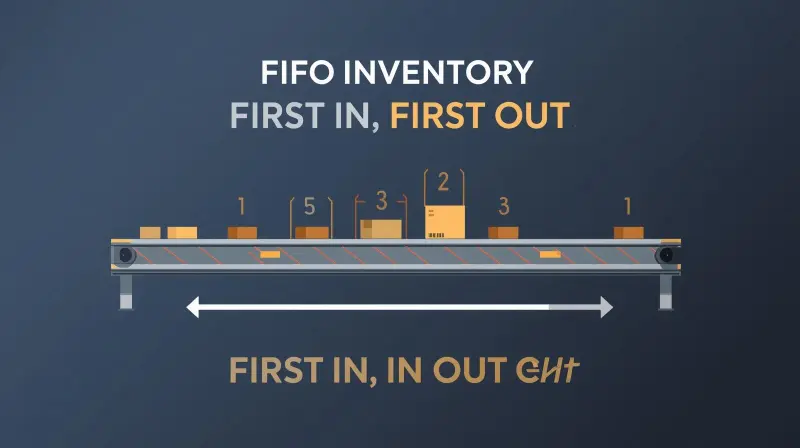
In this article
20 minutes
- What FIFO actually means for warehouse operations
- Physical warehouse implementation determines FIFO success
- Multi-location operations multiply FIFO complexity
- Inventory aging management prevents costly write-offs
- Returns create the most difficult FIFO disruptions
- Most common FIFO implementation mistakes
- When strict FIFO matters most versus where flexibility makes sense
- Calculating Ending Inventory Balance
- Frequently Asked Questions
FIFO (First In, First Out) is the dominant inventory method for ecommerce brands for good reason: it prevents obsolescence, aligns with international accounting standards, and delivers better customer experiences. Implementing FIFO requires careful planning and attention to detail, including staff training and updating inventory tracking systems. Businesses should also be prepared for initial costs such as software implementation, warehouse reorganization, and staff training during the transition, which are short-term investments for long-term benefits. For Shopify brands and logistics leaders, understanding FIFO goes far beyond accounting theory. It requires mastering warehouse implementation, returns management, and knowing when strict enforcement pays off versus when flexibility makes sense. About two-thirds of American companies use FIFO, and its prohibition under IFRS for the alternative (LIFO) makes it effectively mandatory for brands with international operations. FIFO is popular because it is intuitive, internationally accepted, and matches the natural flow of business operations. This guide provides the operational playbook mid-market brands need.
What FIFO actually means for warehouse operations
FIFO operates on a deceptively simple principle: FIFO assumes the oldest inventory items (those purchased or produced first) are sold first. This assumption directly influences how costs are assigned to inventory sold, as the cost of your oldest inventory flows to Cost of Goods Sold (COGS), while ending inventory reflects more recent purchase costs. When you buy 100 units at $5 in January, then 100 more at $8 in March, and sell 120 units, FIFO assigns the $5 cost to the first 100 sold and $8 to the remaining 20.
FIFO closely mirrors the actual flow and natural flow of goods in most businesses, making it intuitive and practical for inventory management. The critical distinction that trips up many operations teams is that FIFO is fundamentally a cost flow assumption, not necessarily a physical flow requirement. Accounting FIFO tracks which costs get assigned to COGS (always the oldest purchase costs first, regardless of which physical item ships). Physical FIFO, meanwhile, refers to warehouse practices where the oldest physical items are picked and shipped first. You can technically use FIFO accounting without physically shipping oldest items first, but for perishable goods or items with expiration dates, aligning both is essential. FIFO is recognized and accepted by international financial reporting standards (IFRS) and generally accepted accounting principles (GAAP). Implementing FIFO requires detailed record-keeping of inventory entry and exit dates for accurate inventory accounting and COGS calculations, and each inventory item must be tracked accordingly.
This explains why FIFO dominates ecommerce: it matches the natural inventory flow most brands want anyway, reduces expired product risk, and produces higher reported profits during inflationary periods. The balance sheet accurately reflects current asset values when ending inventory is valued at recent costs rather than costs from purchases made years ago. Aligning the physical flow of goods with their representation on financial statements enhances financial reporting and provides a clearer picture of inventory health.
Physical warehouse implementation determines FIFO success
The most effective infrastructure for FIFO implementation uses gravity flow racking systems, inclined tracks equipped with rollers that naturally move products from the loading end to the pick face. Carton flow racks work for case picking and smaller items, where products are stocked at the back and picked from the front. Pallet flow racks handle bulk storage with pallets sliding on roller beds at a 4% incline, accommodating up to 30 pallets deep per channel while increasing storage density by approximately 60% compared to selective racking.
Modern warehouse management systems calculate optimal pick paths while enforcing FIFO constraints through a multi-step process. The WMS determines oldest inventory based on received date, lot number, or expiration date; identifies bin locations containing that oldest inventory; calculates an efficient route through the warehouse; then guides pickers via RF scanners or mobile devices to specific locations in sequence. The key tension in pick path optimization is balancing shortest route against FIFO requirements. The system should prioritize compliance over pure travel efficiency, even if it adds steps.
Slotting strategy directly impacts FIFO effectiveness. ABC analysis should integrate with FIFO principles: A items (high velocity) belong closest to packing and shipping in flow rack systems, while forward pick areas maintain small quantities of fast-movers near pack stations with replenishment from bulk storage following strict rotation. Dynamic slotting, where WMS assigns available locations rather than fixed slots per SKU, requires robust lot tracking but enables automatic FIFO via system direction. Most mid-market brands benefit from a hybrid approach with fixed zones but dynamic slot assignment within those zones.
Barcode scanning and lot tracking form the enforcement layer. At receiving, incoming products must capture lot number, expiration date, and supplier details. WMS assigns locations and links lot data to bin positions. During picking, scanners direct workers to oldest lots and validate correct products. This systematic approach achieves 98-99.5% inventory accuracy versus 85-95% with manual processes, while providing complete audit trails for regulatory compliance and rapid recall response.
Most businesses use Warehouse Management Systems (WMS) or Inventory Management Software (IMS) to automate FIFO tracking, which improves accuracy and efficiency. Inventory software can further streamline FIFO processes, automate FIFO tracking, and reduce manual errors, especially for large or fast-moving inventories across industries like retail, manufacturing, and medical devices.
Multi-location operations multiply FIFO complexity
Distributed inventory across multiple warehouses creates several interconnected challenges. Systems must coordinate inventory data across locations to prevent stockouts while maintaining FIFO at each facility. Maintaining accurate inventory balances across multiple locations is essential for reliable financial reporting, as discrepancies can impact reported ending inventory values and key financial metrics. The fundamental question becomes whether FIFO applies within each location or across the entire network. When the same SKU exists in multiple warehouses with different ages, should the system ship from the warehouse with oldest inventory or the one closest to the customer?
Three strategic approaches address network-wide FIFO. A hub-and-spoke model maintains strict FIFO at a central bulk storage warehouse that feeds regional fulfillment centers. Decentralized FIFO has each location maintain its own sequence, ideal when shipping speed trumps network-wide rotation. The hybrid approach monitors aging across the network centrally and triggers inter-warehouse transfers or promotions for slow-moving inventory at specific locations. Cloud-based WMS with real-time updates across all locations, automated transfer order generation when inventory ages past threshold, and centralized visibility dashboards form the technology foundation. Effective inventory control in multi-location environments is critical to ensure compliance, operational efficiency, and accurate oversight of inventory processes.
When working with 3PLs, FIFO compliance requires explicit contractual requirements. Key questions include confirming the 3PL’s WMS supports FIFO/FEFO allocation, verifying lot tracking capabilities for batch numbers and expiration dates, ensuring access to inventory aging reports, and defining FIFO compliance in service level agreements with specific metrics. Leading fulfillment providers like ShipBob offer lot tracking from dashboards and support both FIFO and FEFO, while specialized food and supplement 3PLs like Speed Commerce provide FIFO/FEFO implementation with recall management capabilities.
Inventory aging management prevents costly write-offs
FIFO’s primary operational benefit is preventing inventory obsolescence. The systematic rotation ensures products with expiration dates or limited lifecycles sell before deterioration. Industry standard aging categories classify inventory as fresh (0-60 days), aging (60-180 days), or dead stock (180+ days). A healthy inventory turnover target is 60-90 days, and companies conducting monthly audits using FIFO principles reduce excess stock by 20-30%.
Shelf life requirements vary dramatically by product category and create different urgency levels. Food and beverages, especially in grocery stores, require strict temperature-controlled storage and rotation by receipt date for safety compliance. In grocery stores, FIFO inventory management is essential to ensure freshness, reduce waste, and maintain quality and safety standards for perishable products. FIFO is also widely used in industries such as food and beverage, pharmaceuticals, and manufacturing to maintain compliance with health and safety regulations. Cosmetics present a unique challenge: the FDA does not require expiration dates, so manufacturers bear responsibility for stability testing. Mascara typically lasts 2-4 months due to microbial exposure risk, while lipsticks extend 1-2 years. Dietary supplements similarly lack FDA-mandated expiration dates, though most well-formulated products remain within specification for 1-3 years when stored correctly.
For fashion and seasonal inventory, FIFO helps prevent unsellable stock accumulation, but the urgency differs from expiration-based products. Fashion faces style obsolescence where up to 30% of retail items become outdated within one year as consumer trends evolve rapidly. Fashion retailers often use shorter 30-day aging buckets versus the standard 90-day intervals, with markdown cadences of 30-70% discounts to clear seasonal stock.
Products with expiration dates may require FEFO (First Expired, First Out) rather than simple FIFO based on receipt date. The distinction matters: a shipment of dairy products received today may have a shorter shelf life than canned goods received months ago. FEFO recognizes that newer arrivals might expire sooner than older stock and prioritizes by expiration date rather than arrival sequence. Implementation requires labeling with batch numbers and expiration dates, warehouse optimization for easy access to products nearing expiration, WMS integration for automated alerts and expiration-based picking, and thorough staff training.
Returns create the most difficult FIFO disruptions
Product returns disrupt FIFO’s natural sequence in ways that require careful operational design. When returned items re-enter inventory, they do so at their original cost basis rather than current market value, requiring tracking of which cost layer the item originally came from. A product purchased 60 days ago may return to inventory alongside products received days earlier, and strict FIFO would prioritize the returned item, but it may now be less desirable due to slight wear, older packaging version, or approaching expiration.
Processing delays compound the problem. According to McKinsey research, the fragmentation of reverse-logistics operations leads to increasingly higher complexity, with processing time ranging from 10% overhead for straightforward in-store returns to 42% for mail returns processed centrally and restocked. In-store returns that are restocked in the store take 12-16 fewer days to process compared to mail returns restocked via distribution centers, directly translating to higher likelihood of full-price sell-through.
The economic reality has shifted brand behavior: it costs approximately twice as much to process an online return as it does to sell the original item, and nine of the top 10 U.S. retailers now slate returned inventory directly for liquidation regardless of condition. The liquidation market has accordingly expanded, reaching $644 billion in 2020 according to Colorado State University research.
For brands that do restock returns, a grading system provides the decision framework. Grade A items (like new, unopened, original packaging intact) can restock for full-price sale with 60-80% markup potential. Grade B items (fully functional with minor cosmetic flaws or opened packaging) route to discount or outlet channels at 40-60% markup potential. Grade C items (functional but with significant wear or moderate damage) flow to secondary markets or liquidation at 20-40% markup with volume strategy. Grade D (non-working or cosmetically beyond repair) goes to parts, recycling, or disposal.
Best practices for maintaining FIFO discipline with high return rates include designating a dedicated returns processing zone separate from fresh stock, targeting processing within 24-48 hours of receipt, creating a separate inventory pool for returned items with FEFO principles applied within that pool, and considering a “Returns-First” policy where graded returns fulfill orders before fresh inventory when appropriate for the product category.
Most common FIFO implementation mistakes
Inconsistent application across locations ranks among the top FIFO failures. Different warehouses following varying protocols creates confusion, and without unified visibility, identical SKUs at different locations may be picked inconsistently with newer stock shipping before older stock elsewhere. The solution requires WMS with cross-location FIFO enforcement, priority rules per warehouse for stock allocation, sequential pallet licensing across facilities, and regular compliance audits.
Ignoring lot codes and manufacturing dates creates untraceable inventory layers. Many businesses track receipt date only, missing manufacturing date which determines actual product freshness, a critical failure for perishables where receipt date alone doesn’t capture how long a product has existed. Goods-received procedures must capture SKU identification, lot/batch numbers, receipt date, and manufacturing date.
Manual FIFO tracking fails predictably as businesses grow. Human error plays a significant role when employees overlook older stock or make mistakes during checks. Discrepancies between physical inventory and records become common, and the system is vulnerable to data entry errors causing costly shortages or stockouts. Most mid-market brands processing 500-50,000 orders monthly need automated WMS solutions. Manual processes simply cannot keep pace with dynamic demands at that scale. Automated systems are essential to calculate costs accurately, maintain reliable inventory accounting, and ensure compliance with accounting standards.
Cross-contamination of old and new stock represents the physical manifestation of FIFO breakdown. Newer inventory stacked on top of or in front of older inventory is a fundamental violation, and items racked more than one pallet deep create access challenges requiring additional resources to reach oldest stock. Warehouse design should function like a river rather than a lake. Products flow from receiving to shipping without stagnation points where inventory gets forgotten.
Peak season FIFO breakdown deserves special attention. Volume of goods to process can increase by 40% during peak periods, and technology systems that work fine during normal volumes often buckle under pressure while staff take shortcuts prioritizing speed over proper rotation. Building 10-20% buffer stock, implementing wave picking with batches released based on priority, establishing overflow procedures, and stress-testing technology infrastructure before peak all mitigate risk. Effective inventory management and inventory control are essential to prevent these common FIFO implementation mistakes and support long-term operational success.
When strict FIFO matters most versus where flexibility makes sense
FIFO urgency varies dramatically by product category, and one-size-fits-all enforcement wastes resources while providing diminishing returns.
Product categories requiring strict FIFO or FEFO include food and beverages (where approximately 60% of food waste results from ineffective inventory management), cosmetics and beauty products (where active ingredients like vitamin C and retinol degrade over time), dietary supplements (where potency matters), and pharmaceuticals (where degraded medications may not provide therapeutic benefit or may yield toxic compounds). Fashion and apparel also benefit significantly from FIFO to prevent style obsolescence, though the mechanism differs from expiration-based categories. FIFO is especially beneficial for businesses dealing with price fluctuations, as it helps reduce losses from changing market prices by ensuring older, often cheaper, stock is sold first.
Product categories where FIFO matters less include durable goods without expiration dates or degradation concerns, commodities with homogeneous products where age doesn’t affect quality, building materials like bricks (which may even benefit from LIFO for accounting purposes), and stable products with very long shelf lives. Electronics occupy a middle ground. They don’t expire but face obsolescence risk from new models and warranty tracking needs.
A tiered approach implements strict FIFO/FEFO for perishables and regulated products, standard FIFO for products with moderate shelf life or fashion/seasonal items, and relaxed FIFO for durables and commodities where age doesn’t affect quality. ABC analysis integration focuses strict FIFO on the 20% of products driving 80% of sales while using data analytics to identify which SKU categories require tightest control.
The cost-benefit calculation favors strict FIFO investment when waste reduction from expired or obsolete inventory is significant, quality assurance directly impacts customer satisfaction and return rates, regulatory compliance requirements exist (FDA-regulated categories), and volume exceeds what manual tracking can handle accurately. Choosing FIFO or LIFO should be part of a company’s overall financial strategy, considering tax implications and financial reporting goals. FIFO can result in higher income taxes for a company due to a wider gap between costs and revenue, and during inflationary periods, FIFO can overstate a company’s profits, which can lead to higher tax liabilities. Warehouses using WMS report 25% reduction in labor costs and 50% increase in order accuracy, with most automated solutions paying for themselves within one to two months.
Calculating Ending Inventory Balance
Accurately calculating your ending inventory balance is a cornerstone of effective inventory valuation and financial reporting, especially when using the FIFO inventory valuation method. The ending inventory balance reflects the value of your remaining inventory at the close of an accounting period, directly impacting your balance sheet, income statement, and overall financial health.
Here’s how to determine your ending inventory balance under FIFO. If you’re managing inventory for Amazon FBA, recent FBA restrictions and IPI score requirements could also impact your inventory strategies.
- Determine the Total Cost of Goods Available for Sale: Start by adding the cost of your beginning inventory to the total cost of all inventory purchases made during the period. This figure represents the total investment in inventory that could potentially be sold.
- Calculate the Cost of Goods Sold (COGS): Using the FIFO method, assign the costs of your oldest inventory to the goods sold during the period. This means the earliest acquired inventory costs are used first when calculating COGS, which is especially important during periods of rising prices or fluctuating inventory costs.
- Subtract COGS from the Total Cost of Goods Available for Sale: The difference between your total cost of goods available for sale and your COGS gives you the value of your remaining inventory. This figure is your ending inventory balance, representing the most recent inventory costs under FIFO.
By following this valuation method, businesses dealing with inventory can ensure their financial statements reflect a current and accurate picture of inventory value. This not only supports compliance with generally accepted accounting principles and international financial reporting standards, but also provides a strategic advantage in managing inventory costs, optimizing cash flow, and making informed decisions about future purchasing and sales strategies. Automating this process with inventory management software or warehouse management systems can further streamline calculations and maintain detailed records for audit and reporting purposes.
Frequently Asked Questions
What is FIFO inventory and how does it work in ecommerce?
FIFO (First In, First Out) is an inventory method where the oldest inventory items (purchased or produced first) are sold first. In accounting, FIFO assigns the cost of your oldest inventory to Cost of Goods Sold (COGS), while ending inventory reflects more recent purchase costs. The critical distinction for ecommerce operations is that FIFO has two meanings: accounting FIFO (cost flow assumption) and physical FIFO (warehouse practice of shipping oldest items first). While you can technically use FIFO accounting without physically shipping oldest items first, for perishable goods or items with expiration dates, aligning both is essential to prevent obsolescence and ensure customer satisfaction.
What’s the difference between FIFO and LIFO inventory methods?
FIFO (First In, First Out) is an inventory accounting method that sells the oldest inventory first, while LIFO (Last In, First Out) sells the newest inventory first. The weighted average cost method, another inventory valuation technique, assigns the same cost to each item by averaging the cost of all inventory units, which helps smooth out price fluctuations. These are among the main inventory valuation methods, and the choice of accounting method directly impacts net income, stock value, current inventory value, and financial statements.
During inflation, FIFO results in lower COGS (using older, cheaper costs) and higher reported profits compared to LIFO, leading to higher net income and potentially higher tax liabilities. In contrast, LIFO shows higher COGS (using recent, expensive costs), which can reduce taxable income and tax liabilities during inflationary periods. The weighted average cost method provides consistent profit margins by assigning the same cost to all units sold.
The Internal Revenue Service (IRS) permits FIFO for tax purposes in the United States, and FIFO is required under International Financial Reporting Standards (IFRS) and is standard in many jurisdictions. LIFO is prohibited under IFRS, making FIFO effectively mandatory for brands with international operations or global expansion plans.
FIFO helps maintain accurate current inventory and current inventory value, which is important for financial reporting and inventory management. Tracking inventory sold (FIFO sells the oldest inventory first) is essential for calculating cost of goods sold (COGS) and analyzing profit margins. Inventory software widely supports the FIFO inventory method, automating FIFO tracking, improving inventory control, and ensuring accurate reporting. Effective inventory management and inventory control are crucial for maintaining accurate inventory balances and supporting business needs. The accounting method chosen should reflect the actual flow of goods and align with the company’s operational requirements.
About two-thirds of American companies use FIFO because it matches natural inventory flow, prevents expiration issues, and produces balance sheets that accurately reflect current asset values.
How do you physically implement FIFO in an ecommerce warehouse?
Physical FIFO implementation requires three key elements: infrastructure (gravity flow racking systems with carton flow racks for small items or pallet flow racks that increase storage density by approximately 60%), technology (WMS that determines oldest inventory based on received date/lot number/expiration, identifies bin locations, calculates efficient routes, and guides pickers via RF scanners), and processes (barcode scanning at receiving to capture lot numbers and expiration dates, slotting strategy with high-velocity items in flow rack systems, and designated returns processing zones). This systematic approach achieves 98-99.5% inventory accuracy versus 85-95% with manual processes.
What product categories require strict FIFO versus where it matters less?
Strict FIFO/FEFO is critical for food and beverages (safety compliance), cosmetics and beauty products (active ingredients like vitamin C and retinol degrade), dietary supplements (potency matters), pharmaceuticals (degraded medications may be ineffective or toxic), and fashion/apparel (style obsolescence where up to 30% of items become outdated within one year). FIFO matters less for durable goods without expiration dates, commodities where age doesn’t affect quality, building materials, and stable products with very long shelf lives. Electronics occupy a middle ground (no expiration but obsolescence risk from new models). A tiered approach implements strict FIFO for high-risk categories while using relaxed FIFO for durables.
How do product returns affect FIFO inventory management?
Returns disrupt FIFO’s natural sequence because returned items re-enter inventory at their original cost basis, not current market value. A product purchased 60 days ago may return alongside items received days earlier, and strict FIFO would prioritize the returned item even though it may be less desirable due to wear, older packaging, or approaching expiration. Processing delays compound the problem (10% overhead for in-store returns versus 42% for mail returns processed centrally). Best practices include designating dedicated returns processing zones separate from fresh stock, processing within 24-48 hours, creating a separate inventory pool for returned items, and using a grading system (Grade A for like-new restocking, Grade B for discount channels, Grade C for liquidation, Grade D for disposal).
What are the most common FIFO implementation mistakes?
The top FIFO failures include inconsistent application across multiple warehouse locations (different protocols create confusion and newer stock may ship before older stock elsewhere), ignoring lot codes and manufacturing dates (tracking receipt date only misses actual product freshness for perishables), manual FIFO tracking that fails predictably as businesses grow (human error, discrepancies, data entry mistakes), cross-contamination of old and new stock (newer inventory stacked on/in front of older inventory preventing access), and peak season FIFO breakdown (volume increases by 40% and staff take shortcuts prioritizing speed over rotation). Solutions require WMS with cross-location enforcement, capturing lot/batch numbers at receiving, automated systems for 500+ monthly orders, and warehouse design that flows like a river rather than a lake.
Written By:
Indy Pereira
Indy Pereira helps ecommerce brands optimize their shipping and fulfillment with Cahoot’s technology. With a background in both sales and people operations, she bridges customer needs with strategic solutions that drive growth. Indy works closely with merchants every day and brings real-world insight into what makes logistics efficient and scalable.
Turn Returns Into New Revenue
Related Articles
What Is Demand Planning? How It Impacts Inventory, Forecasting, and Profitability
Demand planning is the process of estimating future customer demand so that a business can align its inventory, procurement, and operations to meet that demand without carrying mor...

The Shipping Speed Paradox: Why DTC Brands Are Slowing Down
Everyone’s talking about faster delivery.

Why Cross-Border DTC Brands Are Moving Fulfillment Inside the US
Cross-border ecommerce fulfillment is the process of shipping ecommerce orders across national borders—often from warehouses outside the United States to U.
HTS Code Explained: What It Is, Why It Matters, and How Ecommerce Brands Use It
In this article
23 minutes
- What COGS actually means in an ecommerce context
- How COGS differs from operating expenses in financial reporting
- Typical direct costs properly included in ecommerce COGS
- Common costs mistakenly excluded from COGS
- How incorrect COGS distorts profitability analysis and decision-making
- Practical framework for ecommerce COGS classification
- Sanity-check checklist for COGS accuracy
- COGS and Tax Returns: What Ecommerce Brands Need to Know
- When to get professional help with COGS classification
- Frequently Asked Questions
Cost of Goods Sold (COGS) represents the direct costs attributable to producing the goods a company sells during an accounting period. COGS is a business expense reported on financial statements and is deductible for income tax purposes, reducing taxable income. For ecommerce brands, this seemingly straightforward accounting concept becomes operationally complex when founders must decide whether shipping upgrades, returns processing, custom packaging, and 3PL fulfillment fees belong in COGS or operating expenses. The classification matters because gross profit (revenue minus COGS) determines whether your business model actually works at a unit economics level, while operating profit (gross profit minus operating expenses) tells you whether your overhead structure is sustainable. To calculate gross profit, subtract COGS from total revenue.
The stakes are meaningful. Ecommerce brands averaging 35-40% gross margins who incorrectly exclude $8-12 per order in fulfillment-related costs from COGS may believe they’re profitable when unit economics are actually negative. This misclassification postpones critical business model corrections until cash reserves deplete, making COGS calculation accuracy an operational priority, not just an accounting exercise. Accurately calculating COGS is essential for tax planning and managing tax liability, as an accurately calculated COGS helps businesses manage their tax liability effectively. Knowing how to calculate COGS and calculate cost is also important for financial modeling and inventory management. COGS is critical for determining gross profit, guiding pricing strategies, and informing tax calculations.
What COGS actually means in an ecommerce context
COGS encompasses all direct costs tied to producing or acquiring the inventory sold during a specific period. The fundamental COGS formula reads: Beginning Inventory + Purchases During Period – Ending Inventory = COGS. A company’s inventory levels and inventory values directly affect COGS, and inventory figures are reported as current assets on the company’s balance sheet at the end of an accounting period. This calculation determines which inventory costs flow through the income statement as expenses (sold goods) versus which remain on the balance sheet as assets (unsold inventory). Inventory accounting methods, such as FIFO and LIFO, also impact how inventory affect COGS and overall financial reporting.
The accounting principle governing COGS is matching, requiring expenses to be recognized in the same period as the related revenue. When you sell a product in January that you manufactured in November, the production costs become COGS in January (when revenue is recognized), not November (when costs were incurred). This timing alignment ensures the company’s income statement accurately reflects COGS and its impact on gross profit, so gross profit accurately reflects the profitability of goods actually sold.
For ecommerce specifically, COGS typically includes product acquisition cost (wholesale cost or manufacturing cost), inbound freight to get inventory to your warehouse or 3PL, customs duties and import fees for international sourcing, payment processing fees directly tied to transactions (often 2.9% plus $0.30 per transaction), and costs directly involved in making products ready for sale. COGS includes all direct costs associated with producing goods, such as raw materials and direct labor.
Raw materials are a key component of COGS. Direct materials consist of raw materials and components that become part of the finished product.
Direct labor is another major element. Direct labor refers to wages and salaries for employees directly involved in the manufacturing or production process.
The critical distinction separates direct costs (those that wouldn’t exist without the sale) from indirect costs (those that support the business broadly). Direct costs scale with unit volume. Indirect costs remain relatively fixed across reasonable volume ranges. This distinction determines COGS versus operating expense classification.
COGS includes all direct costs incurred to create the products a company offers.
How COGS differs from operating expenses in financial reporting
Operating expenses (OpEx) represent the indirect costs incurred to run the business that aren’t directly attributable to producing sold goods. Common ecommerce operating expenses include marketing and advertising costs, administrative salaries (CEO, finance, HR), office rent and utilities, software subscriptions (Shopify, email marketing, analytics), customer service labor, and general overhead not tied to specific units sold. Administrative costs are a component of operating expenses and typically include salaries, general administrative expenses, and other overheads. Operating expenses include selling, general, and administrative (SG&A) expenses, which are not included in COGS.
The income statement structure reveals why the distinction matters:
Revenue
- Cost of Goods Sold = Gross Profit
- Operating Expenses = Operating Income (EBIT)
- Interest and Taxes = Net Income
Both COGS and operating expenses reduce a company’s pre-tax income, but COGS appears above operating expenses on the income statement.
Gross profit represents the fundamental profitability of your business model before overhead. Gross profit is the amount left over to cover fixed expenses and taxes. If gross profit is negative or insufficient to cover operating expenses, the business cannot achieve profitability through operational efficiency alone. The business model itself requires correction.
Operating income shows whether the business generates profit after covering all costs of running the operation. Negative operating income indicates either inadequate gross margins, excessive overhead, or both.
For ecommerce brands, healthy benchmarks typically show gross margins of 40-60% (depending on category), operating expenses of 25-40% of revenue, and operating margins of 5-15%. Brands with gross margins below 35% face structural challenges unless operating at significant scale with extreme efficiency.
It’s important to distinguish between direct and indirect costs. Indirect expenses, such as administrative salaries and office expenses, are not included in COGS. Fixed costs, such as rent and management salaries, are not included in COGS because they do not fluctuate with production volume, while variable costs like materials and labor are included in COGS. COGS does not include indirect costs that the business incurs regardless of how much is produced, such as office expenses and administrative salaries.
Typical direct costs properly included in ecommerce COGS
Product acquisition cost forms the foundation of COGS. For brands purchasing inventory wholesale, this includes the invoice cost from suppliers. For brands manufacturing products, this encompasses raw materials and direct labor directly involved in production—these are the direct costs involved in the production process. Direct labor refers to wages and salaries for employees directly involved in the manufacturing or production process, while direct materials consist of raw materials and components that become part of the finished product. Manufacturing overhead costs directly tied to production (factory rent allocated to produced units, equipment depreciation, utilities for production facilities) are also included. Production efficiency is crucial in managing COGS and improving profitability, as it helps reduce waste and optimize resource use.
Inbound freight represents a properly includable COGS component. The cost to transport inventory from supplier to your warehouse or 3PL facility is a direct cost attributable to making inventory available for sale. This includes international shipping from overseas manufacturers, domestic freight from US suppliers, and customs brokerage fees for imports. Most COGS include variable costs like materials and labor that fluctuate with production levels, making it important to monitor these expenses as they change with output.
Customs duties, tariffs, and import taxes paid on imported inventory qualify as COGS since these costs are directly tied to specific imported goods and wouldn’t exist without those purchases. For brands sourcing from China, tariffs of 7.5-25% on invoice value represent substantial COGS components.
Payment processing fees tied directly to transactions generally belong in COGS for ecommerce. While some accountants classify these as operating expenses, the argument for COGS inclusion is strong: these fees (typically 2.9% + $0.30 for credit cards) are direct costs that scale with each transaction and wouldn’t exist without the sale. Stripe, PayPal, and Shopify Payments all charge per-transaction fees that meet the “direct cost attributable to sale” definition.
Packaging costs for standard shipping containers merit COGS classification when they’re essential to delivering sold products. The cardboard box, void fill, and packing tape required to ship an order represent direct costs tied to that sale. However, the classification becomes nuanced for premium branded packaging used for marketing purposes rather than shipping necessity.
Warehousing and fulfillment costs create the most complexity in ecommerce COGS classification. The conservative accounting approach treats these as operating expenses since warehouse capacity represents a fixed cost infrastructure. However, for brands using 3PL services with per-unit pricing, a strong operational argument exists for COGS inclusion since costs scale directly with volume and wouldn’t exist without sales. Analyzing the production process can help identify opportunities to improve production efficiency and reduce COGS, ultimately enhancing profitability.
Common costs mistakenly excluded from COGS
Returns processing costs represent the most frequently misclassified expense in ecommerce COGS. When a customer returns a product, the revenue reversal is obvious, but many brands fail to capture the full cost picture. Return-related COGS includes the original outbound shipping cost (now unrecoverable), return shipping cost (whether customer-paid or seller-paid), restocking labor to inspect and re-inventory the item, and refurbishment costs if the item requires repackaging or repair before resale.
For brands with 15-20% return rates, excluding these costs from COGS can overstate gross margins by 3-5 percentage points. A brand believing they have 40% gross margins may actually have 35% when returns costs are properly allocated.
Shipping upgrades and expedited fulfillment costs often hide outside COGS classification despite being direct costs tied to specific sales. If a customer pays for expedited shipping and you charge them a fee that partially covers the carrier charge, the net shipping cost (carrier charge minus customer payment) represents a direct cost attributable to that sale. Many brands default to classifying all shipping as operating expenses, but the portion tied directly to order fulfillment meets COGS criteria.
Custom packaging that exceeds basic shipping requirements creates classification ambiguity. A plain cardboard box is clearly COGS. A custom-printed branded box with tissue paper, stickers, and thank-you cards serves dual purposes: shipping necessity and marketing. The conservative approach splits these costs, allocating the basic shipping container cost to COGS and the incremental branding cost to marketing OpEx. However, if branded packaging is your standard for all orders, the entire cost arguably belongs in COGS.
Storage costs for inventory sitting in warehouses represent another frequently misclassified expense. While monthly warehouse rent appears to be a fixed operating expense, the portion allocated to storing sold inventory should flow through COGS. 3PL providers typically charge storage fees per pallet or cubic foot per month. When inventory sells, the accumulated storage cost for that specific inventory becomes a direct cost attributable to the sale.
Shrinkage, damage, and obsolescence costs must ultimately flow through COGS. Inventory that disappears due to theft, breaks during handling, or becomes unsellable represents a cost of goods that generated no revenue. These costs can be handled through periodic COGS adjustments based on physical inventory counts or through real-time write-offs as issues are identified.
It is important to note that COGS does not include indirect costs that the business incurs regardless of how much is produced, such as office expenses and administrative salaries. Distribution costs and sales costs are also considered indirect expenses and are not included in COGS. Additionally, management salaries are excluded from COGS and are classified as operating or administrative expenses.
How incorrect COGS distorts profitability analysis and decision-making
Overstating gross margins by excluding legitimate COGS creates a cascade of strategic errors. Founders make pricing decisions based on incomplete cost information, believing products are profitable when they’re not. This leads to persistent underpricing that volume growth cannot overcome. Inaccurate COGS can also result in misleading financial statements, which undermines transparency, tax compliance, and financial analysis.
Product line decisions suffer when COGS misclassification makes unprofitable SKUs appear attractive. A brand may continue investing in products with negative true gross margins because incomplete COGS calculations show false profitability. Meanwhile, genuinely profitable products get deprioritized due to incomplete cost comparisons.
Inventory management becomes dysfunctional when COGS doesn’t reflect true unit economics. Brands over-order inventory for products with artificially attractive margins, tying up cash in stock that actually loses money with each sale. The resulting inventory bloat compounds the problem by generating additional storage costs and obsolescence risk.
Fundraising and valuation discussions rely heavily on gross margin metrics. Investors evaluate ecommerce businesses using gross margin as a primary indicator of business model viability. A brand presenting 45% gross margins that actually has 35% margins when costs are properly allocated faces credibility destruction when due diligence reveals the misclassification. This can crater valuations or kill fundraising entirely.
Cash flow planning fails when P&L profitability doesn’t align with cash reality. A brand showing positive gross profit on the income statement while hemorrhaging cash often suffers from COGS misclassification. The “profitable” P&L gives false confidence while the bank account depletes, delaying necessary corrections until the situation becomes critical.
Unit economics analysis becomes meaningless without accurate COGS. Customer acquisition cost (CAC) to lifetime value (LTV) ratios, contribution margin analysis, and cohort profitability tracking all depend on knowing the true cost of goods sold. If COGS is understated by $10 per order, a $50 LTV may actually be $40, transforming a seemingly healthy 3:1 LTV:CAC ratio into a marginal 2:1 ratio. Understanding COGS helps businesses make informed decisions about product pricing and cost management strategies.
Practical framework for ecommerce COGS classification
The operational test for COGS inclusion asks: “Would this cost exist if we didn’t make this specific sale?” If the answer is clearly no, the cost belongs in COGS. If the answer is “it would exist anyway to support the business broadly,” it’s an operating expense. Grey areas benefit from conservative classification: when uncertain, default to COGS inclusion to avoid overstating gross profit. Different accounting methods, such as FIFO, LIFO, average cost, and the special identification method, can be used to determine which inventory costs are included in COGS. The choice of accounting method directly affects inventory values and how COGS is calculated on financial statements.
The variability test examines whether costs scale with unit volume. Costs that increase proportionally with sales volume (packaging materials, payment processing fees, pick-pack-ship labor) typically belong in COGS. Costs that remain relatively fixed regardless of sales volume (administrative salaries, software subscriptions, office rent) clearly belong in operating expenses.
The traceability test determines whether costs can be attributed to specific sold units. If you can reasonably allocate a cost to individual SKUs or orders (product cost, inbound freight per unit, allocated storage costs), COGS classification is appropriate. If costs support the business broadly without clear unit attribution (marketing, customer service, general administration), operating expense classification is correct.
There are three main methods that a company can use when recording the level of inventory sold during a period: first in, first out (FIFO), last in, first out (LIFO), and the average cost method. The FIFO method assumes that the oldest inventory units are sold first, which typically results in a lower COGS than under LIFO. The LIFO method assumes the latest goods added to inventory are sold first, leading to a higher COGS amount during periods of rising prices. The average cost method uses the average price of all goods in stock to value the goods sold, smoothing out price fluctuations. Additionally, the special identification method uses the specific cost of each unit of merchandise to calculate the ending inventory and COGS for each period.
For ecommerce brands using 3PL fulfillment, a practical approach treats all per-unit 3PL fees as COGS. This includes receiving fees per unit received, storage fees for inventory held, pick-pack-ship fees per order fulfilled, and materials costs for boxes and packing materials. Monthly 3PL account management fees and setup charges remain operating expenses since they don’t scale with individual transactions.
For DTC brands managing their own warehousing, a hybrid approach allocates costs between COGS and OpEx. Warehouse labor directly handling inventory (receiving, picking, packing, shipping) flows to COGS based on time allocation. Warehouse rent, utilities, and equipment depreciation split between COGS (based on percentage of space used for sold inventory) and OpEx (based on space used for unsold inventory and operations).
Sanity-check checklist for COGS accuracy
Review your current COGS components against this checklist to identify potential misclassifications:
Definitely in COGS:
- Product acquisition cost (wholesale or manufacturing cost)
- Inbound freight from supplier to warehouse
- Customs duties and import fees
- Raw materials (if manufacturing)
- Direct production labor (if manufacturing)
- Payment processing fees (per-transaction charges)
- Basic shipping containers and packing materials
- 3PL per-unit fees (receiving, pick-pack-ship, storage)
Probably in COGS (check your classification):
- Outbound shipping costs (net of customer payments)
- Returns processing costs (shipping, restocking, refurbishment)
- Allocated warehouse rent (portion for sold inventory)
- Inventory shrinkage, damage, obsolescence
- Warehouse labor directly handling inventory
- Expedited fulfillment costs for specific orders
- Branded packaging (if standard for all orders)
Definitely NOT in COGS (operating expenses):
- Marketing and advertising
- Administrative salaries (CEO, CFO, HR)
- Customer service labor
- Software subscriptions (Shopify, email, analytics)
- Office rent and utilities
- Professional fees (legal, accounting)
- General insurance
- Research and development
Common red flags indicating COGS problems:
- Gross margin above 60% (unless luxury/high-touch category)
- Gross margin improving while cash flow worsens
- Disconnect between P&L profitability and cash position
- Fulfillment costs entirely in operating expenses
- No returns costs allocated to COGS
- Shipping costs treated uniformly as OpEx
- Storage costs missing from COGS entirely
Calculate gross margin using this formula: (Revenue – COGS) ÷ Revenue × 100%. For a $1M revenue ecommerce brand, compare these scenarios:
Understated COGS (common error): Revenue: $1,000,000
COGS (product cost only): $400,000
Gross Profit: $600,000
Gross Margin: 60%
Properly stated COGS (including fulfillment, shipping, returns): Revenue: $1,000,000
COGS (product + shipping + fulfillment + returns): $550,000
Gross Profit: $450,000
Gross Margin: 45%
The 15-percentage-point difference transforms financial planning and strategic decisions. If operating expenses run $400,000 annually, the understated COGS scenario shows $200,000 operating income (20% operating margin), while the accurate scenario shows $50,000 operating income (5% operating margin). This difference determines whether the business appears highly profitable or marginally viable.
COGS and Tax Returns: What Ecommerce Brands Need to Know
For ecommerce brands, understanding how Cost of Goods Sold (COGS) interacts with tax returns is essential for accurate financial reporting and minimizing tax liabilities. COGS isn’t just an accounting figure—it’s directly impacts your taxable income, net income, and ultimately, how much you owe in income tax. Getting it right means more than just tracking direct costs; it requires a strategic approach to inventory valuation, documentation, and compliance.
How COGS Impacts Tax Reporting
COGS represents all the direct costs incurred to produce or purchase the goods sold during an accounting period. This includes raw materials, direct labor costs, and manufacturing overhead costs. For tax purposes, the IRS allows ecommerce businesses to deduct COGS from sales revenue, reducing gross income and, by extension, taxable income. The lower your reported gross profit (after deducting COGS), the less income tax you’ll owe—making accurate COGS calculation a critical part of tax planning.
Calculating COGS for Tax Purposes
The standard formula for calculating COGS is:
COGS = Beginning Inventory + Purchases During the Period – Ending Inventory
This formula ensures that only the costs tied to goods actually sold during the accounting period are expensed, while the value of unsold inventory remains on the balance sheet. For example, if your beginning inventory is $100,000, you purchase $500,000 in new inventory, and your ending inventory is $150,000, your COGS for the period is $450,000. This figure is reported on your company’s income statement and directly affects your gross profit and net income.
Inventory Valuation Methods and Their Tax Impact
The method you use to value inventory—such as First-In, First-Out (FIFO), Last-In, First-Out (LIFO), or the Average Cost Method—can significantly affect your COGS calculation and, therefore, your tax liability. Under FIFO, the oldest inventory costs are expensed first, which can result in lower COGS and higher taxable income during periods of rising prices. LIFO, on the other hand, expenses the most recent inventory costs first, often resulting in higher COGS and lower taxable income. The Weighted Average Method smooths out price fluctuations by averaging the cost of all inventory units.
Choosing the right inventory valuation method is not just an accounting decision—it’s a strategic one that can influence your tax position, cash flow, and even your pricing strategies. It’s important to select a method that aligns with your business model and to apply it consistently for both financial reporting and tax purposes.
Direct and Indirect Costs in COGS for Tax Returns
While COGS primarily includes direct costs—such as raw materials, direct labor, and other direct costs attributable to goods sold—certain indirect costs may also be included for tax purposes. These can encompass storage costs, shipping costs, and a portion of overhead costs directly tied to inventory. However, it’s crucial to distinguish between costs that are truly part of COGS and those that are operating expenses or administrative expenses, as misclassification can lead to compliance issues or missed tax deductions.
Documentation and Compliance
Accurate COGS calculation for tax reporting requires meticulous record-keeping. Ecommerce brands must maintain detailed records of beginning inventory, purchases, ending inventory, and all the costs incurred in producing or acquiring goods. This includes invoices for raw materials, payroll records for direct labor, and receipts for shipping and storage costs. Proper documentation not only supports your COGS calculation but also protects your business in the event of a tax audit.
Strategies for Managing COGS and Minimizing Tax Liability
When to get professional help with COGS classification
Engage a qualified ecommerce accountant when annual revenue exceeds $500K or when preparing for fundraising, acquisition discussions, or significant financing. The cost of professional accounting guidance ($2,000-5,000 annually for fractional CFO support) prevents the far larger costs of misclassified financials discovered during due diligence.
Warning signs that demand immediate accounting review include: widening gap between P&L profit and cash position, gross margins that seem too good to be true, inability to explain profitability to investors, upcoming fundraising or acquisition discussions, rapid growth with deteriorating cash flow, and switching from self-fulfillment to 3PL (or vice versa).
Questions to ask your accountant about COGS:
- How are we classifying 3PL fulfillment fees?
- Where do returns costs appear in our financials?
- Are payment processing fees in COGS or OpEx?
- How do we handle inventory storage costs?
- Is our shipping cost allocation defensible?
- Do our gross margins align with industry benchmarks?
- Can you reconcile our P&L profit to cash flow?
Frequently Asked Questions
What is COGS in ecommerce and why does it matter?
COGS (Cost of Goods Sold) represents all direct costs attributable to producing or acquiring the goods sold during an accounting period. For ecommerce, this typically includes product acquisition cost, inbound freight, customs duties, payment processing fees, packaging, and fulfillment costs directly tied to orders. COGS matters because it determines gross profit (revenue minus COGS), which reveals whether your business model is fundamentally profitable before overhead. Ecommerce brands averaging 35-40% gross margins who incorrectly exclude $8-12 per order in fulfillment costs may believe they’re profitable when unit economics are actually negative, masking critical business model problems until cash reserves deplete.
What’s the difference between COGS and operating expenses?
COGS includes direct costs that wouldn’t exist without specific sales (product cost, shipping, fulfillment tied to orders), while operating expenses include indirect costs that support the business broadly (marketing, administrative salaries, software, office rent). The income statement separates these: Revenue – COGS = Gross Profit, then Gross Profit – Operating Expenses = Operating Income. This structure matters because gross profit shows if your business model works at a unit economics level, while operating income shows if your overhead structure is sustainable. Healthy ecommerce benchmarks show 40-60% gross margins and 25-40% operating expense ratios.
What costs should be included in ecommerce COGS?
Ecommerce COGS should include product acquisition or manufacturing cost, inbound freight to warehouse/3PL, customs duties and import fees, payment processing fees (typically 2.9% + $0.30 per transaction), basic shipping containers and packing materials, 3PL per-unit fees (receiving, storage, pick-pack-ship), outbound shipping costs net of customer payments, returns processing (return shipping, restocking labor, refurbishment), allocated warehouse rent for sold inventory, and inventory shrinkage/damage/obsolescence. The test is whether costs scale with unit volume and wouldn’t exist without specific sales.
What costs are commonly misclassified and excluded from COGS?
The most frequently misclassified costs are returns processing (including return shipping, restocking, and refurbishment, often 3-5% of gross margin for brands with 15-20% return rates), shipping upgrades and expedited fulfillment tied to specific orders, custom packaging beyond basic shipping necessity, storage costs for sold inventory (especially 3PL storage fees), and allocated warehouse labor directly handling inventory. Many brands default to classifying all these as operating expenses, which can overstate gross margins by 10-15 percentage points and mask negative unit economics until cash flow problems force recognition.
How does incorrect COGS calculation distort business decisions?
Incorrect COGS creates a cascade of strategic errors: pricing decisions based on incomplete cost information lead to persistent underpricing, product line decisions favor unprofitable SKUs that appear attractive with false margins, inventory management over-orders stock for products with negative true economics, fundraising discussions present inflated gross margins that crater during due diligence, cash flow planning fails when P&L shows profit while bank accounts deplete, and unit economics analysis (CAC:LTV ratios, contribution margin, cohort profitability) becomes meaningless. A brand showing 45% gross margins that actually has 35% when properly classified faces credibility destruction with investors and delayed business model corrections.
How can I check if my COGS classification is accurate?
Run this sanity check: Calculate gross margin as (Revenue – COGS) ÷ Revenue × 100%. Red flags include gross margin above 60% (unless luxury category), improving gross margin while cash flow worsens, fulfillment costs entirely in operating expenses, no returns costs in COGS, shipping treated uniformly as OpEx, and disconnect between P&L profitability and cash position. Compare your COGS to the “Definitely in COGS” checklist (product cost, inbound freight, customs, payment processing, packaging, 3PL fees) and “Probably in COGS” items (outbound shipping net of customer payments, returns processing, allocated warehouse costs, branded packaging if standard). For brands over $500K revenue or preparing for fundraising, engage an ecommerce-specialized accountant for professional review.
Written By:
Indy Pereira
Indy Pereira helps ecommerce brands optimize their shipping and fulfillment with Cahoot’s technology. With a background in both sales and people operations, she bridges customer needs with strategic solutions that drive growth. Indy works closely with merchants every day and brings real-world insight into what makes logistics efficient and scalable.
Turn Returns Into New Revenue
Related Articles
What Is Demand Planning? How It Impacts Inventory, Forecasting, and Profitability
Demand planning is the process of estimating future customer demand so that a business can align its inventory, procurement, and operations to meet that demand without carrying mor...
Why 100% P2P Adoption Is the Wrong Goal
Peer-to-peer returns let customers send eligible returned items directly to other customers instead of routing every package back through the warehouse, cutting shipping and proces...
Walmart Officially Allows Amazon Multi-Channel Fulfillment (MCF)
Big news for multichannel sellers: Walmart now officially allows Amazon Multi-Channel Fulfillment (MCF), Amazon’s service for using its fulfillment network to ship orders from mult...