
Fast Delivery Isn’t the Hard Part – Inventory Decisions Are
In this article
 19 minutes
- Why Fast Fulfillment Strategy is Essential: Carrier Optimization Cannot Overcome Inventory Constraints
- The hidden economics of multi-warehouse fulfillment
- When expedited shipping becomes a symptom of structural failure
- Calculating true delivery cost beyond carrier rates
- Predictive logistics transforms inventory positioning
- Operational cascades from inventory misplacement
- Decision frameworks for inventory management and network design
- The importance of customer satisfaction in fulfillment strategy
- Creating a competitive advantage through inventory placement
- Practical implementation for operations leaders
- Peak season exposes inventory placement decisions
- Frequently Asked Questions
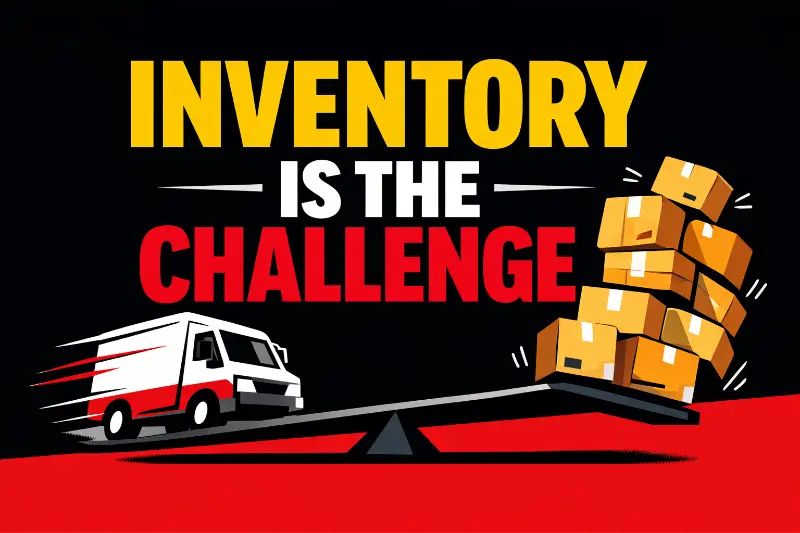
Fast delivery is no longer a differentiator in ecommerce, it is an expectation. Same-day and next-day promises are now table stakes, driven by regional carrier expansion, AI-assisted routing, and increasingly dense fulfillment networks. Industry discussions, including recent coverage in Inbound Logistics, have rightly reframed expedited shipping as a systems problem rather than a pricing one.
What those conversations often stop short of explaining is why so many brands still fail to execute fast fulfillment consistently. The issue is rarely the carrier. It is almost always the inventory decision that came before the order was ever placed.
Where you store inventory, not which carrier you choose, determines whether fast delivery is economically viable. Strategic inventory positioning achieves 71% faster delivery compared to single-location fulfillment, while brands trying to “buy speed” through expedited shipping often pay 3-5x ground rates to compensate for poor placement decisions. The math is unforgiving: a package traveling from Los Angeles to Boston cannot reach customers in two days via ground shipping regardless of carrier, but the same order fulfilled from a Pennsylvania warehouse arrives in Zone 2 transit times at a fraction of the cost.
Why Fast Fulfillment Strategy is Essential: Carrier Optimization Cannot Overcome Inventory Constraints
Shipping costs are fundamentally determined by distance-based pricing zones, not carrier selection. A 35-pound FedEx Ground package costs approximately $20.93 in Zone 2 (local) versus $25.74 in Zone 3, a 23% increase for just one zone jump. At Zones 6-8, costs can exceed the baseline by 80-120%. Carrier optimization provides 10-15% savings within a given zone; proper inventory placement can eliminate 2-3 zones entirely.
The coverage math illustrates this principle clearly. A single centrally-located warehouse (Kansas or Kentucky) reaches 60-70% of the US population within two-day ground shipping. Adding a second strategic location (Knoxville, Tennessee plus Salt Lake City, Utah, for example) extends that coverage to 96% of US addresses. A three-warehouse configuration (coasts plus central hub) reaches 98% or more. Commonwealth Inc. research suggests that same-day delivery requires 15-25 facilities across major markets, next-day needs 5-7, and two-day coverage requires just 3-5 strategically positioned locations.
Real time inventory tracking and accurate monitoring of inventory levels are essential for optimizing inventory placement and preventing stockouts or overstocking. Warehouse management systems (WMS) provide real-time visibility into stock levels across all warehouses and fulfillment centers, while an Order Management System (OMS) ensures a single source of truth by updating inventory levels instantly after every sale. This real-time visibility supports strategic decisions for a fast fulfillment strategy.
J&J Global Fulfilment’s CCO Claudine Mosseri observes that most businesses fundamentally misunderstand their actual customer distribution: “Most businesses have no idea how their customers are distributed across shipping zones. They think they serve customers ‘nationwide’ but when we analyze their actual ZIP codes, we often find the majority of orders going to just three or four zones. That changes everything about their optimal fulfillment strategy.”
The hidden economics of multi-warehouse fulfillment
The case for distributed inventory appears straightforward: ShipBob merchants report 13% overall shipping cost savings from distributed inventory, and cookware brand Our Place achieved $1.5 million in annual freight savings by expanding from two to four warehouses while cutting delivery times from 5-6 days to 2.5 days. These headline numbers, however, obscure substantial hidden costs that can reverse the economics for smaller operations.
Storage costs alone can increase dramatically when splitting inventory. A single warehouse storing 1,000 cubic feet at $0.75 per cubic foot costs $750 monthly. The same inventory split across two warehouses at 750 cubic feet each (with higher per-unit rates of $0.85) costs $1,275, representing 70% higher storage expense. Safety stock multiplication compounds this: a slow-moving item requiring one pallet in a single warehouse may need three pallets across three locations, tripling carrying charges for that SKU.
Additional hidden costs include inbound freight duplication (multiple container shipments instead of consolidated receiving), inventory transfer expenses when demand shifts require rebalancing, technology upgrades for multi-location warehouse management systems, and sales tax nexus obligations in each state where inventory resides. Implementing real time inventory tracking and real-time visibility in inventory management helps prevent overstocking or stockouts, optimizing capital invested in inventory and reducing hidden costs. Many 3PLs also charge minimum monthly fees per warehouse location, averaging $195-$337 as of 2024.
The break-even threshold is higher than commonly advertised. Red Stag Fulfillment estimates a minimum of $5 million GMV or 50-100+ daily orders before multi-warehouse economics become favorable. Below this volume, distributed fulfillment often creates “higher inventory costs, increased inbound shipping expenses, and reduced efficiency.”
When expedited shipping becomes a symptom of structural failure
Paying premium shipping rates to compensate for inventory placement failures represents a false economy that compounds over time. OnTrac research reveals that 88% of retailers still display vague delivery ranges like “4-6 business days” at checkout, while 84% of consumers used expedited shipping in the past six months. The disconnect suggests widespread reliance on speed premiums rather than network optimization.
The diagnostic signs of poor inventory placement are measurable: high percentage of Zone 6-8 shipments, frequent air shipping to maintain delivery promises, and stockouts requiring emergency expedited transfers between warehouses. One illustrative calculation: if 20% of orders require expedited shipping at an $8 per-order premium, annual costs reach $16,000 for a 10,000-order business. That may sound manageable until compared against the $30,000-$100,000+ annual overhead of operating a second warehouse that could eliminate much of that expedited volume.
The breaking point indicators include warehouse capacity at 80%+ for three or more consecutive months, delivery performance slipping despite team effort, expedited shipping consuming more than 15% of the shipping budget, and Zone 7-8 shipments representing over 30% of orders. At these thresholds, paying for speed rather than building infrastructure becomes unsustainable. Focusing solely on speed can result in sacrificing accuracy, leading to incorrect shipments that cause costly errors, returns, and customer dissatisfaction. Slow fulfillment also leads to customer dissatisfaction and lost sales, highlighting the need for quality control to ensure order accuracy while optimizing for speed.
Calculating true delivery cost beyond carrier rates
The complete cost formula extends far beyond published shipping rates: True Delivery Cost = Direct Shipping + Hidden Costs + Opportunity Costs + Infrastructure Costs. Direct costs include base carrier rates, fuel surcharges (20-30% of total), residential delivery surcharges, dimensional weight adjustments, and peak season surcharges that add 15-30% during holidays.
Hidden costs prove particularly consequential. Online returns average 20-30% versus 9% for in-store purchases, with returns processing adding 30% to initial delivery emissions. Fast shipping increases CO₂ emissions by up to 15%, while transportation costs jump 68% for expedited service. Shipping and returns account for 37% of total greenhouse gas emissions in online shopping, an increasingly material concern for brands and investors.
Operational complexity creates additional hidden costs when managing multiple locations. Multi-warehouse WMS and order management system upgrades typically cost $5,000-$8,000+ annually. Inventory allocation errors lead to cross-warehouse transfers. Split shipments (multiple packages to the same customer) occur in 40% of ecommerce orders and cost 25-30% more than consolidated fulfillment due to duplicate handling and freight charges.
To streamline operations and improve order processing, integrating warehouse management systems, barcode scanners, or AI-driven automation can minimize human errors and significantly boost speed and accuracy. Streamlining order processing through automation—such as automating order entry, invoicing, and tracking—and leveraging barcode scanners for picking and packing not only speeds up the fulfillment process but also reduces costly mistakes.
Healthy benchmarks provide useful reference points: fulfillment should represent 8-12% of revenue, with percentages above 15% indicating inefficiency. Shipping typically comprises 40-70% of total fulfillment costs. Average US cost per package reached $9.08 in 2024, while 3PL fulfillment ranges from $4-10 per order versus $7-15 for in-house small business operations.
Predictive logistics transforms inventory positioning
Geographic-level demand forecasting has evolved from competitive advantage to operational necessity. Modern forecasting employs hierarchical architectures analyzing demand at SKU, location, regional, category, and channel levels simultaneously. The critical variables extend beyond historical sales to include geodemographics (communities surrounding each location have distinct shopping patterns), regional seasonality, local competitive dynamics, and weather patterns.
Amazon’s 2013 anticipatory shipping patent (US8615473B2) established the conceptual framework now becoming industry standard: inventory proactively pushed toward geographical areas based on predicted demand, with final destination assignment occurring en route. The patent model incorporates historical buying patterns, wish lists, shopping cart activity, and even cursor hover time to forecast regional demand.
Leading platforms operationalize these concepts at scale. Blue Yonder’s cognitive demand planning incorporates hundreds of variables including economic data like CPI, inflation, GDP, interest rates, and fuel prices. Manhattan Associates’ fulfillment optimization simulation engine models alternative strategies balancing cost, speed, service level, and margin, achieving up to 50% reduction in split shipments. Walmart’s route optimization technology avoided 94 million pounds of CO₂ by eliminating 30 million unnecessary miles.
The ROI data supports investment: AI implementations demonstrate 20-30% average inventory reduction and 65% reduction in lost sales due to out-of-stock situations. One multinational food company achieved $70 million in value within six weeks of AI deployment. A multi-location retailer operating 12 regional warehouses reduced total network inventory by 18% while improving fill rates from 89% to 96%.
With the rapid growth of e-commerce, scalable and efficient order fulfillment strategies are essential to support increasing sales volumes and business expansion. Developing a fast fulfillment strategy in 2026 requires predictive operations, distributed networks, and unified technology ecosystems, enabling growth by supporting scalability and operational efficiency.
Operational cascades from inventory misplacement
When inventory sits in the wrong location, costs compound through multiple channels simultaneously. The average fulfillment or shipping error costs $35-58.50 per incident excluding customer service time. Split shipments (an almost inevitable consequence of distributed inventory without intelligent routing) increase costs by 25-30% through duplicate handling and freight charges while confusing customers and eroding brand trust.
Fulfillment errors and delays can significantly damage brand reputation and erode customer trust, leading to a negative customer experience. Effective order fulfillment helps businesses manage demand, streamline logistics, and minimize inefficiencies, all of which are crucial for maintaining a positive customer experience and protecting brand reputation.
The compounding pattern follows a predictable trajectory: immediate higher per-order shipping costs and customer confusion; short-term increased “where is my order” inquiries and customer service costs; medium-term lost repeat purchases and negative reviews; long-term eroded market share and reduced customer lifetime value. Baymard research shows 49% of customers cite unexpected shipping costs as their primary reason for cart abandonment, while PwC found 41% of luxury shoppers would switch brands after a single poor delivery experience.
Stockout dynamics differ significantly between concentrated and distributed inventory. Concentrated inventory creates catastrophic single-point-of-failure risk, where any disruption leaves no backup options. Distributed inventory ensures that stockouts in one region don’t impact operations elsewhere, though it requires sophisticated demand forecasting to avoid the opposite problem: popular SKUs running out in one location while sitting overstocked in another. One brand using three fulfillment centers “encountered issues: popular SKUs would run out in one location and sit overstocked in another, causing lost sales until stock was rebalanced.” They ultimately reverted to two warehouses.
Decision frameworks for inventory management and network design
The signals indicating readiness for distributed fulfillment are measurable: shipping costs rising as a percentage of revenue, high concentration of orders shipping to Zones 5-8, frequent express shipping to maintain delivery promises, single warehouse bottlenecking during volume spikes, customer complaints about delivery times increasing, and competitors offering faster delivery in key markets.
The decision matrix balances multiple factors. Single-warehouse strategies favor businesses with fewer than 100 daily orders, under $5 million annual GMV, customer geography concentrated in 2-3 regions, unique or differentiated products where customers will wait, high SKU counts that would multiply carrying costs, and low margins that cannot absorb overhead. Multi-warehouse strategies favor the inverse: 100+ daily orders, $5 million+ GMV, truly nationwide dispersed customers, commodity products where speed provides competitive advantage, low SKU counts, and high margins.
ABC-XYZ inventory segmentation provides a practical allocation framework. “A” items (the top 20% of SKUs generating 80% of revenue) should be placed in multiple fulfillment centers nearest customers. “B” items warrant centralized or limited distribution. “C” items (slow-movers) belong in single locations and may be candidates for discontinuation. The XYZ overlay addresses demand predictability: predictable demand (X) allows confident distribution, variable demand (Y) requires safety stock buffers, and unpredictable demand (Z) should remain centralized to reduce risk of stockouts or overstock situations. To meet demand across multiple sales channels, businesses must align their inventory and fulfillment processes by integrating sales channels and developing a comprehensive order fulfillment strategy. A successful order fulfillment strategy optimizes every aspect of the product fulfillment process, ensuring efficient operations and customer satisfaction.
The importance of customer satisfaction in fulfillment strategy
Customer satisfaction is at the heart of every successful e-commerce business, and a robust fulfillment strategy is essential to consistently meet customer expectations. In today’s competitive landscape, customers expect fast, reliable, and transparent order fulfillment. When the fulfillment process is streamlined—delivering orders accurately and on time—customers are more likely to be delighted with their experience, leading to higher rates of repeat purchases and positive word-of-mouth.
A well-designed order fulfillment process goes beyond simply shipping products; it encompasses every touchpoint, from the moment a customer places an order to the final delivery. Offering multiple shipping options allows customers to choose the speed and cost that best fits their needs, while real-time tracking and proactive updates provide peace of mind and build trust. Ensuring accuracy in picking, packing, and shipping not only reduces costly errors but also enhances the overall delivery experience.
Prioritizing customer satisfaction within your fulfillment strategy is a critical role for any e-commerce business aiming for long-term success. Satisfied customers are more likely to return, recommend your brand, and become loyal advocates. By focusing on fulfillment processes that consistently meet or exceed customer expectations, businesses can drive growth, strengthen their reputation, and secure a competitive position in the market.
Creating a competitive advantage through inventory placement
Strategic inventory placement is a powerful lever for gaining a competitive advantage in e-commerce fulfillment. By analyzing sales data and leveraging demand forecasts, businesses can identify their top-performing products and position them optimally within their warehouse or across multiple distribution centers. This targeted approach reduces picking and packing times, lowers labor costs, and accelerates delivery speed—key factors in improving customer satisfaction and reducing shipping costs.
Modern inventory management systems and warehouse management systems enable real-time tracking of stock levels, allowing businesses to dynamically adjust inventory placement as demand shifts. This agility ensures that high-demand items are always close to the customers who want them, minimizing delays and enhancing fulfillment speed. For many businesses, partnering with third-party logistics providers or utilizing specialized fulfillment centers can further streamline fulfillment operations, reduce operational costs, and elevate service quality.
Optimizing inventory placement not only improves the efficiency of the fulfillment process but also supports a more responsive and scalable fulfillment strategy. By reducing operational and labor costs, increasing delivery speed, and ensuring products are always available where they’re needed most, businesses can achieve a true competitive edge. In a market where customers expect fast, reliable service, smart inventory placement is essential for meeting demand, improving customer satisfaction, and driving sustained business growth.
Practical implementation for operations leaders
An effective inventory placement audit begins with mapping customer concentration by ZIP code, identifying where the majority of orders actually originate. Many brands discover that 60-70% of orders concentrate in major coastal metros despite assumptions of nationwide distribution. Current zone distribution analysis reveals what percentage of orders ship in lower-cost Zones 1-4 versus expensive Zones 5-8. Cost-per-zone and transit time calculations establish the baseline for improvement.
SKU-level analysis applies the Pareto principle: 80% of sales come from 20% of SKUs. These “A” SKUs merit multi-location distribution investment, while slow-movers should remain centralized. Reorder quantity calculation (Average Daily Units Sold × Average Lead Time) combined with demand variability analysis determines appropriate safety stock levels for each location.
To further improve efficiency and reduce costs, it is essential to optimize warehouse layout and warehouse operations. Optimizing warehouse layout reduces picking and packing times, while streamlining fulfillment processes can lower costs and increase efficiency across the operation.
Common implementation mistakes include selecting fulfillment partners based solely on cost without evaluating SLAs and technology capabilities, expanding warehouses without unified WMS integration, starting peak season planning too late (November instead of Q1), underinvesting in demand forecasting, and assuming in-house fulfillment saves money without calculating true total costs including overhead.
The successful transformation pattern from case studies follows a consistent sequence: Our Place expanded from 2 to 4 fulfillment centers and cut delivery times from 5-6 days to 2.5 days while saving $1.5 million annually. Semaine Health scaled from single location to 4 centers, reducing transit time from 5.2 to 3.6 days while saving $2+ per order. Ample Foods added a second center and increased 2-day ground coverage from 32% to 65% of customers while achieving 13% bottom-line savings.
Peak season exposes inventory placement decisions
The peak season stress test reveals whether inventory placement decisions were strategic or reactive. Order volumes spike 300-500% during peak periods, and fulfillment systems either scale gracefully or collapse entirely. The preparation timeline demands attention: optimal planning begins in January for Q4 execution, with late summer representing the latest viable start date. Waiting until November to plan for holiday fulfillment means you’re already too late.
Peak season performance benchmarks set by leading 3PLs in 2025 include 99.975% order accuracy, 87% same-day fulfillment, and 99.9% next-day shipping. Return rates peaked at 17.7% during Christmas and Boxing Week 2024, with over $122 billion in returns processed by the first week of January 2025, creating substantial reverse logistics pressure that compounds placement mistakes. During these periods, last mile delivery becomes critical, as shipping speed and reliability directly impact customer satisfaction. Clear communication with customers about delivery times and shipping costs is essential to reduce uncertainty and build trust. Maintaining relationships with multiple carriers ensures redundancy and flexibility in shipping, helping brands adapt quickly to disruptions and meet delivery promises during peak demand.
The micro-seasonality within Q4 requires granular inventory positioning: October demands Halloween items peaking in final two weeks while early gift-buying begins; November explodes with Black Friday deal-seekers and thoughtful gift selection; December brings urgent purchases with specific delivery deadlines; post-holiday creates returns surge. Each phase stresses inventory placement differently, rewarding brands that pre-positioned inventory based on predictive demand signals rather than reacting to orders as they arrive.
Frequently Asked Questions
Why does inventory placement matter more than carrier selection for fast delivery?
Inventory placement determines the fundamental distance packages must travel, which directly controls both transit time and shipping costs. A package traveling from Los Angeles to Boston cannot reach customers in two days via ground shipping regardless of which carrier you use. However, the same order fulfilled from a Pennsylvania warehouse arrives in Zone 2 transit times at a fraction of the cost. Carrier optimization provides 10-15% savings within a given zone, but proper inventory placement can eliminate 2-3 zones entirely, resulting in 71% faster delivery and dramatically lower costs.
What is the minimum order volume needed to justify multiple fulfillment locations?
Red Stag Fulfillment estimates a minimum of $5 million annual GMV or 50-100+ daily orders before multi-warehouse economics become favorable. Below this threshold, the hidden costs of distributed fulfillment (higher storage rates, safety stock multiplication, inbound freight duplication, technology upgrades, and inventory transfer expenses) typically outweigh the shipping savings. A single warehouse storing 1,000 cubic feet costs $750 monthly, while splitting that inventory across two warehouses can cost $1,275 (70% higher) due to higher per-unit rates and duplicated overhead.
How do I know if my business needs distributed fulfillment or if I’m overpaying for expedited shipping?
Warning signs include expedited shipping consuming more than 15% of your shipping budget, Zone 7-8 shipments representing over 30% of orders, warehouse capacity at 80%+ for three or more consecutive months, and delivery performance slipping despite operational improvements. Calculate the cost: if 20% of your orders require expedited shipping at an $8 premium, that’s $16,000 annually for a 10,000-order business. Compare this against the $30,000-$100,000+ cost of operating a second warehouse. If you’re consistently paying expedited rates to compensate for poor placement, distributed fulfillment likely makes economic sense.
What is ABC-XYZ inventory segmentation and how does it guide warehouse placement decisions?
ABC-XYZ segmentation combines sales velocity with demand predictability to determine optimal inventory placement. “A” items are your top 20% of SKUs generating 80% of revenue and should be placed in multiple fulfillment centers nearest customers. “B” items warrant centralized or limited distribution. “C” items (slow-movers) belong in single locations. The XYZ overlay adds demand predictability: predictable demand (X) allows confident distribution across locations, variable demand (Y) requires safety stock buffers, and unpredictable demand (Z) should remain centralized to reduce risk of stockouts or overstock situations.
How does predictive logistics and AI-powered demand forecasting improve inventory placement?
Geographic-level demand forecasting analyzes patterns at SKU, location, regional, category, and channel levels simultaneously, incorporating geodemographics, regional seasonality, local competition, and weather patterns. Amazon’s anticipatory shipping patent established the framework: inventory is proactively pushed toward geographical areas based on predicted demand. Modern AI implementations demonstrate 20-30% average inventory reduction and 65% reduction in lost sales due to stockouts. One multi-location retailer reduced total network inventory by 18% while improving fill rates from 89% to 96% using predictive placement.
When should I start planning inventory placement for peak season?
Optimal peak season planning begins in January for Q4 execution, with late summer representing the latest viable start date. Order volumes spike 300-500% during peak periods, and waiting until November means you’re already too late. The micro-seasonality within Q4 requires granular positioning: October for Halloween and early gift-buying, November for Black Friday, December for urgent deliveries, and post-holiday for returns processing. Return rates peaked at 17.7% during Christmas 2024 with over $122 billion processed in early January, creating reverse logistics pressure that compounds poor placement decisions made months earlier.
Written By:

Rinaldi Juwono
Rinaldi Juwono leads content and SEO strategy at Cahoot, crafting data-driven insights that help ecommerce brands navigate logistics challenges. He works closely with the product, sales, and operations teams to translate Cahoot’s innovations into actionable strategies merchants can use to grow smarter and leaner.

Turn Returns Into New Revenue
Related Articles
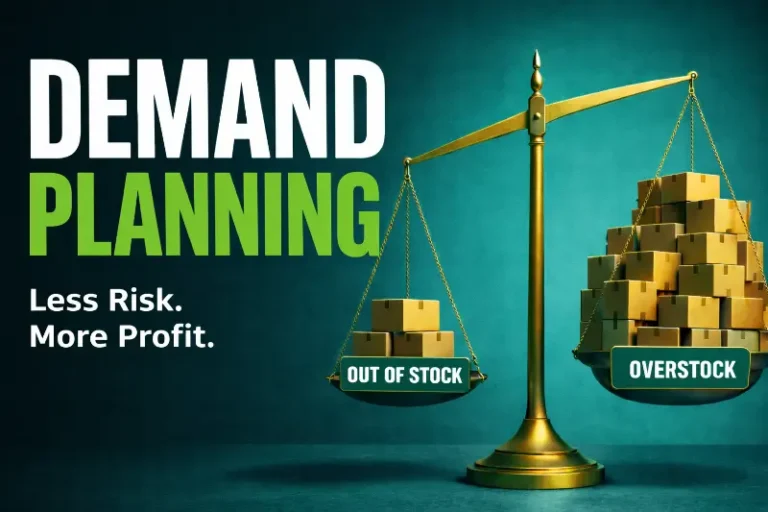
What Is Demand Planning? How It Impacts Inventory, Forecasting, and Profitability
Demand planning is the process of estimating future customer demand so that a business can align its inventory, procurement, and operations to meet that demand without carrying mor...

Why 100% P2P Adoption Is the Wrong Goal
Peer-to-peer returns let customers send eligible returned items directly to other customers instead of routing every package back through the warehouse, cutting shipping and proces...
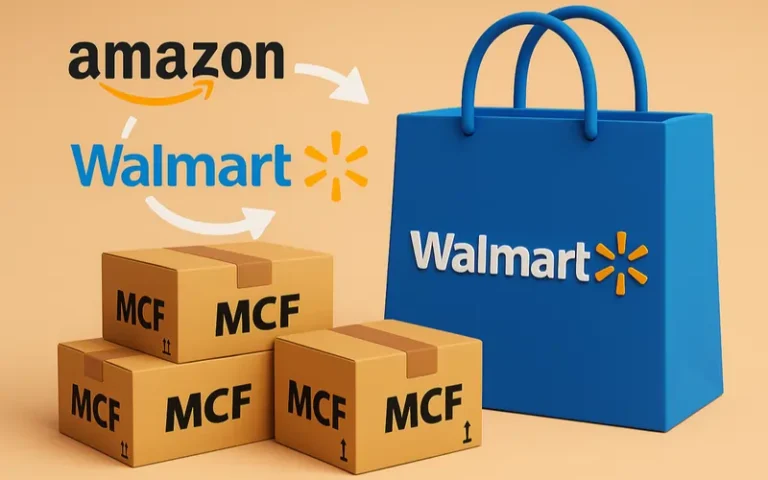
Walmart Officially Allows Amazon Multi-Channel Fulfillment (MCF)
Big news for multichannel sellers: Walmart now officially allows Amazon Multi-Channel Fulfillment (MCF), Amazon’s service for using its fulfillment network to ship orders from mult...
Moving from Amazon 1P to 3P: What It Actually Takes to Succeed
In this article
24 minutes
- Introduction to Amazon Transition
- Benefits of the 3P Model
- Amazon Marketplace Opportunities
- The accountability shift from Amazon to brand operations
- FBA performance thresholds determine Prime eligibility
- Seller Fulfilled Prime requires infrastructure most brands lack
- Inventory forecasting becomes brand responsibility without safety net
- Pricing control requires active management, not just authority
- Buy Box competition determines revenue reality
- The Hybrid Option: Running 1P and 3P Concurrently
- The 6–9 month transition timeline and revenue dip
- When brands should not attempt the transition
- Frequently Asked Questions
The decision to move from Amazon Vendor Central (1P) to Seller Central (3P) usually follows months of frustration with pricing control loss, erratic purchase orders, and margin compression from chargebacks. In the 1P model, Amazon acts as the retailer, purchasing inventory from your brand and controlling pricing, brand experience, and profitability. Many brands are making the move from vendor to seller models as market trends show a shift toward greater flexibility and control. The appeal of 3P is straightforward: reclaim pricing authority, eliminate Amazon’s payment delays, access customer data for retargeting, and stop bleeding margin to deductions. Brands who successfully transition document margin improvements of 20-56%, MAP compliance increases from single digits to mid-90s, and revenue per unit gains of 30-50%. These outcomes are real and achievable, but they require operational capabilities most 1P vendors do not currently have.
The core mistake brands make is treating the 1P to 3P transition as a strategic pivot that simplifies operations. The reality is precisely opposite. Moving to 3P represents a significant change in your Amazon business model, shifting responsibilities and platform management. When you move from Vendor Central to Seller Central, you join the ranks of third party sellers, taking on complete accountability for fulfillment performance, inventory forecasting, Prime eligibility maintenance, and customer service execution from Amazon back to your brand. This vendor central to seller transition means Amazon’s enforcement standards for 3P sellers are explicit, measurable, and ruthlessly applied. Failing to meet Order Defect Rate thresholds below 1%, Late Shipment Rate below 4%, or Valid Tracking Rate above 95% triggers account-level warnings, Buy Box suppression, or outright suspension. Success on 3P depends less on your intent to regain control and more on whether your operating model can consistently meet Amazon’s performance standards without Amazon absorbing the operational risk. This article explains exactly what operational capabilities the transition requires, which failure modes cause the most damage, and what metrics determine whether your brand can succeed as a 3P seller, all while accessing Amazon’s vast audience of potential customers.
Introduction to Amazon Transition
Transitioning from Amazon’s 1P (first-party) vendor model to the 3P (third-party) seller model is a pivotal decision for brands looking to optimize their Amazon strategy. In the 1P model, brands sell products wholesale to Amazon through Vendor Central, allowing Amazon to control pricing, inventory management, and customer relationships. This approach offers simplicity and access to Amazon’s scale, but it comes at the cost of limited control over key aspects like pricing and customer data.
By contrast, the 3P model empowers brands to sell directly to customers on the Amazon platform via Seller Central. This shift gives brands more control over their pricing, inventory, and marketing, but it also requires hands-on management and a deeper understanding of the operational demands of the Amazon ecosystem. Brands moving from 1P to 3P must be prepared to take ownership of inventory management, set their own prices, and engage directly with customers. Understanding these differences is essential for brands considering the transition, as it impacts everything from profit margins to customer experience and long-term growth on Amazon.
Benefits of the 3P Model
Adopting the 3P model on Amazon unlocks a range of benefits for brands seeking greater autonomy and profitability. One of the most significant advantages is direct control over pricing, allowing brands to adjust pricing in real-time in response to market trends and competitor actions. This flexibility supports more competitive pricing strategies and helps protect profit margins.
With the 3P model, brands also gain full oversight of their inventory levels, enabling them to manage stock more efficiently, avoid stockouts, and reduce excess inventory. This level of control extends to marketing efforts as well—3P sellers can create custom brand stores, run targeted sponsored ads, and implement marketing strategies tailored to their goals. By selling at their own set prices and only paying referral fees and fulfillment costs, brands can often achieve higher profit margins compared to the 1P model. Ultimately, the 3P approach gives brands the tools to optimize their marketing strategy, respond quickly to changes in demand, and maximize profitability on the Amazon platform.
Amazon Marketplace Opportunities
The Amazon marketplace represents a vast opportunity for brands leveraging the 3P model, offering access to millions of active customers worldwide. This expansive audience can drive significant sales growth, but success requires more than just listing products. Brands must master inventory management, accurately forecast demand, and adjust pricing to stay competitive in a dynamic environment.
Utilizing Seller Central, brands can tap into Amazon’s powerful platform tools, including Fulfillment by Amazon (FBA) and Amazon Advertising, to streamline operations and reach more customers. However, careful planning is essential—effective inventory management and pricing strategies are critical to maintaining sales momentum and avoiding costly stockouts or overstock situations. Brands that invest in understanding the Amazon marketplace and its unique requirements are best positioned to capitalize on its potential and achieve sustained growth as 3P sellers.
The accountability shift from Amazon to brand operations
In the 1P model, Amazon acts as the retailer by purchasing inventory wholesale and assumes responsibility for storage, fulfillment, customer service, returns processing, and Prime delivery performance. Brands face operational accountability only for supplying inventory on time, maintaining product quality, and complying with labeling requirements. Amazon absorbs the fulfillment risk. If a package arrives late, the customer blames Amazon. If inventory runs out, Amazon decides whether to reorder. If customer service fails, Amazon handles the complaint.
The 3P model inverts this structure completely. Brands become the merchant of record responsible for every aspect of the customer experience Amazon previously controlled. With this shift, brands gain greater control over pricing, inventory, and customer interactions, but also take on increased operational responsibilities. Using Fulfillment by Amazon (FBA), brands must forecast demand accurately enough to avoid both stockouts and excess inventory storage fees, ship inventory to Amazon’s fulfillment network meeting specific prep and labeling standards, maintain inventory health scores above 350 to avoid storage limits, manage returns and customer refunds within Amazon’s performance windows, and maintain seller performance metrics that meet or exceed Amazon’s minimum thresholds. Using Seller Fulfilled Prime (SFP), brands must deliver 99% of orders within the promised delivery window, maintain on-time shipment rate of 99% or higher, achieve valid tracking rate of 99% or higher, and respond to customer inquiries within 24 hours with resolution rates meeting Amazon’s standards. Moving to 3P also means less reliance on Amazon for operational execution, as brands must independently manage these critical functions.
The operational gap between what 1P vendors currently do and what 3P sellers must execute creates transition failure. A supplement brand selling through Vendor Central receives erratic purchase orders but doesn’t own demand forecasting or inventory positioning decisions. Moving to 3P, that same brand must accurately forecast demand 60-90 days ahead (accounting for manufacturing lead times), determine optimal inventory allocation across Amazon’s fulfillment network, monitor inventory health to avoid long-term storage fees accumulating on slow-moving stock, and react to demand shifts faster than Amazon’s algorithm previously did. The change in vendor relationship means the brand’s operations team must now build capabilities that Amazon previously owned, increasing the brand’s responsibilities and independence.
FBA performance thresholds determine Prime eligibility
Prime eligibility drives conversion rates that make or break Amazon sales velocity. Products without the Prime badge convert at significantly lower rates, lose Buy Box competitiveness, and rank lower in search results. For 3P sellers using FBA, Prime eligibility is automatic as long as inventory remains in stock at Amazon’s fulfillment centers. The operational challenge is maintaining that in-stock position through accurate demand forecasting and proactive inventory management. Monitoring stock levels is crucial to avoid both stockouts and overstock, ensuring consistent Prime eligibility and sales performance.
Amazon measures FBA seller performance through the Inventory Performance Index (IPI), a score from 0-1000 that combines excess inventory percentage, FBA sell-through rate, stranded inventory percentage, and in-stock rate for popular products. Sellers must maintain IPI scores above 350 to avoid storage volume limits and above 500 to access unlimited storage. Falling below 350 triggers inventory storage caps that can force stockouts on high-velocity products because Amazon limits how much inventory you can send. To maintain optimal inventory, forecasting demand accurately is essential for balancing stock levels and meeting FBA requirements.
The operational failure mode appears when brands treat FBA like 1P purchase order fulfillment. A kitchenware brand transitioning from 1P receives their first month’s sales data as a 3P seller, analyzes velocity, and ships 90 days of inventory to FBA to ensure stock availability. Three problems emerge: Amazon applies long-term storage fees (currently $6.90 per cubic foot) on inventory stored 271-365 days, killing margin on slower-moving SKUs; excess inventory reduces the FBA sell-through component of IPI score, potentially triggering storage limits; and capital is tied up in slow-moving inventory that could fund faster-turning products or other channels.
The success threshold requires demand forecasting accuracy that balances in-stock rates against inventory efficiency. Industry practice for established 3P sellers targets 60-90 days of stock for A-level SKUs (high velocity), 30-60 days for B-level SKUs (moderate velocity), and 15-30 days for C-level SKUs (low velocity), with weekly or bi-weekly replenishments instead of large quarterly shipments. Tools like RestockPro, Forecastly, or Inventory Lab automate restock recommendations, but the operational capability requirement is someone on your team monitoring daily, understanding the recommendations, and executing replenishment shipments 2-4 times monthly instead of quarterly like 1P purchase orders. These practices are essential for a successful transition from Amazon 1P to 3P, ensuring you meet FBA requirements and maintain sales momentum.
Seller Fulfilled Prime requires infrastructure most brands lack
Seller Fulfilled Prime allows brands to fulfill orders from their own warehouse while maintaining Prime badge eligibility and conversion advantages. The appeal is obvious: avoid FBA fees averaging 15-20% of product price, maintain inventory at your facility for multi-channel fulfillment, and eliminate the IPI score constraints that limit FBA storage. However, handling fulfillment independently presents significant challenges, as brands must manage all logistics, order processing, and customer service without Amazon’s direct support. When managing orders, brands can choose from different fulfillment methods, such as Fulfilled By Amazon (FBA), Seller Fulfilled Prime (SFP), or leveraging order routing and splitting technologies to optimize delivery and control. There are also various fulfillment options available, including self-fulfillment, using FBA, or working with a third party logistics provider (3PL), allowing brands to select the strategy that best fits their operational capabilities and cost structure. The operational requirements are extreme and most brands underestimate them.
Amazon requires SFP sellers to deliver 99% of orders by the promised delivery date, maintain on-time shipment rate of 99% or higher (orders shipped by the commit time Amazon calculates), achieve valid tracking rate of 99% or higher with carrier-scanned tracking events, maintain cancellation rate below 2.5%, and achieve Order Defect Rate below 1% (combining late delivery rate, pre-fulfillment cancel rate, and customer return dissatisfaction rate). These thresholds are minimum requirements. Falling below any metric triggers warnings and potential Prime badge removal.
The 99% delivery performance standard means on a monthly volume of 1,000 Prime orders, you can have at most 10 late deliveries before risking SFP eligibility loss. A single carrier service disruption affecting 15 packages in one day consumes your entire month’s error budget with margin remaining. Most brands operating their own fulfillment centers achieve 95-98% on-time delivery rates, which is excellent for standard ecommerce but insufficient for SFP’s 99% requirement.
An apparel brand transitioning from 1P attempts SFP to avoid FBA fees on high-value items. Their warehouse operates at 97% on-time shipment during normal periods but experiences a 2-day carrier pickup delay during a winter storm affecting 35 orders. Amazon immediately issues a performance warning. The following month, a warehouse labor shortage causes 12 orders to ship one day late. Amazon suspends Prime eligibility, removing the badge from all listings. Conversion rates drop 40% overnight. The brand scrambles to appeal, provides a corrective action plan, and after 3 weeks regains Prime status. But the sales velocity loss during those 3 weeks permanently damages search ranking and quarterly revenue targets.
The infrastructure gap between standard warehouse operations and SFP requirements includes carrier integrations providing real-time tracking updates meeting Amazon’s scanning requirements, warehouse management systems with automated shipping workflows preventing late shipments, same-day processing for orders received by cutoff (typically 2 PM local time for next-day delivery), regional fulfillment centers or 3PL partnerships enabling 1-2 day delivery coverage to 95%+ of U.S. addresses, and automated performance monitoring alerting when metrics trend toward threshold violations. To meet Amazon’s strict requirements, brands need robust logistics infrastructure, including reliable warehousing, inventory management, and shipping capabilities. Brands operating single warehouses with manual pick-pack-ship processes almost never meet these requirements consistently. The capital investment in WMS, carrier partnerships, and potential multi-location fulfillment typically exceeds $50,000-150,000 before considering ongoing operational costs.
Inventory forecasting becomes brand responsibility without safety net
The operational capability requirement is statistical demand forecasting that accounts for seasonality, trends, promotional impacts, and new product velocity ramps. Minimum viable practice includes ABC classification segmenting inventory by velocity with different restock policies for each tier, sell-through rate monitoring with automatic alerts when velocity drops below forecast, seasonal adjustment factors based on 12-24 months of historical data, and promotional impact modeling that forecasts demand spikes from deals and adjusts inventory accordingly. Brands transitioning from 1P typically have none of these capabilities because Amazon’s purchase order system previously provided demand signals. Building internal forecasting competency takes 6-12 months and requires either dedicated personnel with supply chain expertise or investment in inventory management software with forecasting modules.
Additionally, listing optimization becomes critical in the 3P model. Expertly optimizing product titles, descriptions, and images is essential for maximizing product visibility and sales, as it directly impacts search rankings and conversion rates.
Pricing control requires active management, not just authority
Reclaiming pricing control is a primary motivation for moving to 3P, but operational reality requires distinguishing between pricing authority and pricing execution. In 3P, you have complete control over your pricing and listings, unlike 1P where Amazon sets retail pricing and you have limited influence. The 3P model offers more pricing control, allowing you to set your own prices and manage your listings independently. Amazon’s only constraint is that price plus shipping must be competitive enough to win the Buy Box against other sellers of the same ASIN. The execution challenge is that profitable pricing requires active management responding to competitive dynamics, not just setting a price and walking away.
Amazon’s Buy Box algorithm evaluates price, fulfillment method (FBA preferred over seller-fulfilled), seller performance metrics, and shipping speed. If your price is 5-10% higher than FBA competitors selling the same product, you lose the Buy Box regardless of your performance metrics. Losing the Buy Box suppresses conversion rates by 80-90% because most customers buy from the default Add to Cart option without checking other sellers.
A consumer electronics brand moves from 1P to 3P specifically to control pricing and protect margin. They set prices at MSRP across their catalog. Within two weeks, unauthorized sellers listing the same ASINs at 15-20% below MSRP capture the Buy Box. The brand’s conversion rates drop from 12% to 2% despite identical traffic. They discover seven unauthorized sellers sourcing products from distributors and liquidators. The brand must either match the lower prices (sacrificing the margin they moved to 3P to protect), invest in brand gating enforcement to remove unauthorized sellers (requiring trademark registration, brand registry, and aggressive reporting), or accept 2% conversion rates and revenue collapse.
The operational requirements for profitable pricing include competitive price monitoring checking competitor prices 1-2 times daily with automated alerts on undercutting, repricing rules that automatically adjust prices to maintain Buy Box competitiveness within margin guardrails, MAP policy enforcement for brands with authorized reseller networks (requires legal documentation, monitoring, and violation response process), and brand registry + transparency or Project Zero to remove unauthorized sellers systematically. These capabilities require either dedicated personnel managing pricing and enforcement or investment in repricing tools like RepricerExpress, Informed.co, or similar platforms charging $50-500 monthly plus percentage fees on repriced sales.
Buy Box competition determines revenue reality
The Buy Box is the default purchase mechanism on Amazon product pages. Approximately 83-90% of Amazon sales occur through the Buy Box. If your listing doesn’t win the Buy Box, you’re competing for the remaining 10-17% of customers who manually click “Other Sellers” and comparison shop. For 1P vendors, Amazon Retail typically owns the Buy Box by default. Moving to 3P, you must compete for it.
Amazon evaluates Buy Box eligibility based on multiple factors with the following hierarchy: price competitiveness (within ~5% of lowest FBA offer), fulfillment method (FBA strongly preferred), seller performance metrics (ODR < 1%, Late Shipment Rate < 4%, Valid Tracking >95%), and shipping speed (Prime eligibility nearly essential for consumer products). You need all factors working together. Excellent performance metrics don’t compensate for prices 20% above competitors. FBA fulfillment doesn’t overcome a 5% ODR from customer complaints.
The failure scenario appears when brands assume they’ll own the Buy Box because they’re the brand owner. A supplement brand lists their products as 3P seller, prices at MSRP, uses FBA, and maintains excellent metrics. They discover five other FBA sellers listing the same ASINs at 12-18% below MSRP. These sellers source products from distributors, liquidators, or gray market channels. The brand owner only wins the Buy Box 15-20% of the time based on Amazon’s rotating algorithm. The other 80-85% of time, sales go to sellers offering lower prices.
The operational requirement is proactive supply chain control preventing products from reaching unauthorized sellers, or aggressive enforcement removing them after they appear. When moving to 3P, it is essential to manage a dedicated seller account to streamline operations and avoid conflicts, especially during the transition from 1P. All product listings, inventory, and performance metrics are managed through Amazon Seller Central, which gives brands direct control over their data and optimization strategies. Supply chain control tactics include MAP policies with distributor agreements requiring compliance, selective distribution limiting which wholesalers can purchase, and minimum order quantities or terms that make small-scale reselling unprofitable. Enforcement tactics require Amazon Brand Registry enrollment (requires USPTO trademark registration), IP infringement reporting to remove counterfeit or unauthorized listings, test buys to verify authenticity and gather evidence, and for brands meeting requirements, enrollment in Transparency (unique serialized codes on each unit) or Amazon Project Zero (direct listing removal authority).
Brands transitioning from 1P rarely have these controls in place because Amazon was the primary purchaser. Building supply chain discipline and enforcement programs takes 6-12 months and ongoing operational overhead managing compliance and monitoring violations. Additionally, transitioning to 3P not only increases control but also opens opportunities to expand into other marketplaces beyond Amazon, such as international platforms, further diversifying your sales channels.
The Hybrid Option: Running 1P and 3P Concurrently
For some brands, a hybrid approach—operating both Vendor Central (1P) and Seller Central (3P) accounts simultaneously—can offer the best of both worlds. This strategy allows brands to launch new products as 3P sellers, building demand and testing the market with direct control over pricing and marketing. Once products are established, brands can transition select SKUs to 1P, leveraging Amazon Retail’s purchase orders and fulfillment scale for high-volume items.
A hybrid model can provide flexibility, combining the operational advantages of direct selling with the reach and reliability of Amazon’s wholesale infrastructure. However, it’s important to note that Amazon generally prefers a single selling model per ASIN to prevent channel conflict, and may suppress or penalize listings that appear in both Vendor Central and Seller Central. Brands considering a hybrid strategy should carefully coordinate their approach to avoid operational issues and ensure compliance with Amazon’s policies, while maximizing the benefits of both 1P and 3P selling.
The 6-9 month transition timeline and revenue dip
The actual transition mechanics require careful sequencing to minimize sales disruption. Most brands experience a 15-35% sales velocity dip during transition that recovers over 2-4 months post-completion. The revenue impact is structural to the transition process, not a failure, but brands must plan cash flow and inventory to survive the trough.
The recommended transition sequence begins with establishing Seller Central account and completing Brand Registry enrollment (requires USPTO trademark registration, 4-6 weeks if not already complete). You then create new listings or gain control of existing ASINs (may require Amazon support intervention if ASINs were created by Vendor Central), and implement FBA by sending initial inventory shipments to Amazon fulfillment centers with typical 2-3 week inbound processing time. You need to notify Amazon Vendor Manager of intention to transition and negotiate wind-down terms (typically 60-90 day notice required), then coordinate the final vendor purchase orders and sell-through timing to avoid both stockouts and stranded inventory.
The revenue dip occurs during the window when Amazon’s 1P inventory depletes but before 3P FBA inventory is fully live and ranked. A skincare brand provides 90-day notice to their Vendor Manager in August targeting November transition. Amazon reduces purchase orders in September-October, allowing inventory to naturally deplete. By late October, several SKUs stock out. The brand has FBA inventory in transit and being received, but processing delays mean some products aren’t available for sale until mid-November. During the 3-week gap, those SKUs generate zero revenue. Even after restocking, organic search ranking has dropped from stockout impact and takes 4-6 weeks to recover. Total revenue for November and December runs 25-30% below prior year despite Q4 seasonality typically increasing sales.
The mitigation tactics include timing transitions during slower sales periods (avoid Q4 at all costs), building 60-90 days of safety stock before starting wind-down to cover any gaps, using Amazon’s “Close Account” transition option if Amazon proposes it (allows immediate 3P setup without wind-down), and front-loading advertising spend during and immediately post-transition to rebuild search velocity and ranking faster. Even with perfect execution, expect 2-4 months of suppressed sales that must be planned into cash flow projections and inventory financing.
When brands should not attempt the transition
The 1P to 3P transition is not universally beneficial. Several brand profiles face higher failure risk or negative economics post-transition. Brands with average selling prices below $15-20 often find FBA fees (typically 15-20% of selling price plus per-unit pick-pack fees of $3-4) consume margin gains from pricing control. Brands without dedicated operations personnel to manage daily FBA inventory monitoring, restock decisions, and performance metric tracking struggle to maintain the discipline 3P requires. Brands with widely distributed wholesale channels creating unauthorized seller proliferation cannot control the Buy Box without extensive enforcement infrastructure.
Brands in these categories should either accept 1P’s structural constraints as preferable to 3P’s operational demands, invest 6-12 months building the operational capabilities 3P requires before attempting transition, or implement a hybrid model using 3P for high-margin or brand-controlled products while maintaining 1P for commodity items where Amazon’s purchasing power and fulfillment network provide value despite pricing control loss.
Frequently Asked Questions
What are the minimum performance metrics required for 3P sellers?
Amazon enforces minimum performance thresholds for all Seller Central accounts: Order Defect Rate below 1% (combining negative feedback rate, A-to-Z Guarantee claims, and credit card chargebacks), Late Shipment Rate below 4% for seller-fulfilled orders, Pre-Fulfillment Cancel Rate below 2.5%, Valid Tracking Rate above 95% (orders with carrier-scanned tracking), and for Seller Fulfilled Prime specifically, on-time delivery rate of 99% or higher with 99% on-time shipment rate. Falling below these thresholds triggers account-level warnings, Buy Box suppression, or account suspension. These metrics are measured over rolling 30-day or 90-day windows depending on metric type. Brands must monitor daily and implement corrective action immediately when trending toward violations.
How does FBA inventory management differ from 1P purchase order fulfillment?
In 1P, Amazon generates purchase orders based on their algorithm and assumes inventory forecasting responsibility. Brands simply fulfill POs when received. In FBA, brands own complete demand forecasting, determining how much inventory to manufacture, when to ship to Amazon’s fulfillment network, and how to balance in-stock rates against inventory storage fees. Amazon measures performance through the Inventory Performance Index (IPI score 0-1000) combining excess inventory percentage, sell-through rate, stranded inventory, and in-stock rate. Scores below 350 trigger storage limits preventing inventory replenishment. Successful FBA management requires statistical forecasting accounting for seasonality, ABC inventory classification with different restock policies per tier, and proactive monitoring to avoid both stockouts (which damage ranking) and overstock (which incurs $0.83-6.90 per cubic foot monthly storage fees).
What infrastructure is required for Seller Fulfilled Prime eligibility?
SFP requires 99% on-time delivery and 99% on-time shipment rates, which demand infrastructure most brands lack. Required capabilities include warehouse management systems with automated shipping workflows preventing late shipments, carrier integrations providing real-time tracking updates with carrier-scanned events meeting Amazon’s requirements, same-day order processing for orders received by cutoff time (typically 2 PM local), regional fulfillment centers or 3PL partnerships enabling 1-2 day delivery to 95%+ of U.S. addresses, and automated performance monitoring alerting when metrics trend toward threshold violations. Single warehouse operations with manual processes typically achieve 95-98% on-time rates, which is insufficient for SFP’s 99% requirement. Capital investment in systems and multi-location fulfillment often exceeds $50,000-150,000 before ongoing operational costs.
How do brands control the Buy Box after moving to 3P?
The Buy Box algorithm evaluates price competitiveness (within ~5% of lowest FBA offer), fulfillment method (FBA strongly preferred), seller performance metrics (meeting all thresholds), and shipping speed (Prime eligibility). Winning requires all factors together. Brands must implement competitive price monitoring 1-2 times daily with repricing rules maintaining competitiveness within margin guardrails, use FBA for consistent fulfillment advantage, maintain perfect seller metrics, and enforce supply chain control preventing unauthorized sellers from undercutting. This requires either MAP policies with distributor agreements, selective distribution limiting wholesale access, Brand Registry enrollment enabling IP enforcement, or Transparency/Project Zero programs requiring serialized codes or providing direct listing removal authority. Brands without supply chain discipline face perpetual Buy Box competition from unauthorized sellers sourcing through gray market channels.
What causes the revenue dip during transition and how long does it last?
Revenue dips occur during the window when Amazon’s 1P inventory depletes but before 3P FBA inventory is fully live and ranked. Typical sequence: brand provides 60-90 day vendor wind-down notice, Amazon reduces purchase orders allowing natural depletion, some SKUs stock out before FBA inventory processes through inbound (2-3 weeks), stockouts damage organic search ranking requiring 4-6 weeks post-restock to recover, and conversion rates suppress during ranking recovery period. Most brands experience 15-35% sales velocity reduction lasting 6-12 weeks with full recovery taking 2-4 months. Mitigation includes timing transitions during slower periods (never Q4), building 60-90 days safety stock before wind-down starts, and front-loading advertising spend post-transition to rebuild velocity faster. Even perfect execution typically produces 2-4 months suppressed sales requiring cash flow planning.
When should brands not attempt moving from 1P to 3P?
Brands should avoid transition or delay until capabilities develop if: average selling price is below $15-20 making FBA fees (15-20% of price plus $3-4 per unit) consume margin gains from pricing control; no dedicated operations personnel exist to manage daily inventory monitoring, restock decisions, and performance metric tracking; widely distributed wholesale channels create unauthorized seller proliferation without enforcement infrastructure to control it; or forecasting accuracy, WMS capabilities, and supply chain discipline are insufficient to meet Amazon’s 3P performance standards. These brands should either accept 1P constraints as preferable to 3P operational demands, invest 6-12 months building necessary capabilities before attempting transition, or implement hybrid models using 3P only for high-margin products where control benefits justify operational overhead.
Written By:
Rinaldi Juwono
Rinaldi Juwono leads content and SEO strategy at Cahoot, crafting data-driven insights that help ecommerce brands navigate logistics challenges. He works closely with the product, sales, and operations teams to translate Cahoot’s innovations into actionable strategies merchants can use to grow smarter and leaner.
Turn Returns Into New Revenue
Related Articles
What Is Demand Planning? How It Impacts Inventory, Forecasting, and Profitability
Demand planning is the process of estimating future customer demand so that a business can align its inventory, procurement, and operations to meet that demand without carrying mor...
Why 100% P2P Adoption Is the Wrong Goal
Peer-to-peer returns let customers send eligible returned items directly to other customers instead of routing every package back through the warehouse, cutting shipping and proces...
Walmart Officially Allows Amazon Multi-Channel Fulfillment (MCF)
Big news for multichannel sellers: Walmart now officially allows Amazon Multi-Channel Fulfillment (MCF), Amazon’s service for using its fulfillment network to ship orders from mult...
Why Amazon 1P Feels Out of Control — and Why That’s Not Your Fault
In this article
23 minutes
- How pricing authority disappears and why it costs more than you think
- How inventory forecasting becomes production planning chaos
- How extended payment terms strain working capital during growth
- When DTC and wholesale channels conflict with Amazon's pricing
- Why reasonable operators dismiss problems until they compound
- The role of Brand Registry in protecting your brand on Amazon
- What the economics reveal about 1P model sustainability
- Frequently Asked Questions
When your Amazon Vendor Central account starts generating problems faster than your team can fix them, the instinct is to treat each issue as a separate operational failure. Pricing drops without warning, purchase orders arrive erratically, payments delay beyond projections, and wholesale partners complain about being undercut. Operations leaders naturally assume these problems have solutions, that better processes or stronger vendor manager relationships will restore control. This assumption is wrong. The loss of pricing authority, inventory visibility, and cash flow predictability is not a bug in the Amazon 1P model. It is the model itself, working exactly as designed to optimize Amazon’s economics rather than yours. This article is an amazon 1p vs 3p comparison, highlighting the different selling options available to an amazon seller, and how each model impacts control, branding, and operations.
The distinction matters because it changes what you should do. Operational problems have operational fixes. Structural problems require strategic decisions about whether the economics still work for your business. Choosing the best path among the available selling options—whether a first party relationship (1P) or a third party relationship (3P)—is crucial for your brand’s growth and success on Amazon. In a first party relationship, you act as a vendor selling products directly to Amazon, while in a third party relationship, you sell products directly to consumers on Amazon’s marketplace, retaining more control over pricing and branding. This article explains exactly how control erodes in Amazon 1P, why reasonable operators dismiss early warning signs, when each issue becomes material enough to require strategic response, and what the downstream consequences mean for brand economics and multi-channel strategy. Amazon’s algorithmic systems, driven by artificial intelligence, play a significant role in these processes, impacting pricing, inventory, and operational decisions.
How pricing authority disappears and why it costs more than you think
Amazon’s algorithmic pricing system operates on three inputs that collectively strip vendors of pricing control. The algorithm matches competitor prices across both third-party sellers on Amazon and major external retailers including Walmart and Target. Price changes by other sellers on the Amazon platform can also trigger algorithmic adjustments, further eroding your ability to maintain consistent pricing. When a distributor liquidates old inventory at 40% off your minimum advertised price to a small ecommerce site, Amazon’s crawlers detect the discount within hours and match it. The algorithm also discounts products when Amazon holds excess inventory, dropping prices to accelerate sell-through velocity regardless of your wholesale cost. Finally, when Amazon’s margin on your product exceeds category averages, the system may reduce retail price even without competitive pressure.
The operational scenario plays out predictably. A premium kitchenware brand sells mixing bowls to Amazon at $25 wholesale with a suggested retail price of $60. Amazon initially prices at $55, yielding healthy margin. Three months later, a discontinued color variant appears on a discount site at $35. Amazon matches within 24 hours. Target sees Amazon’s price and drops to $34. Amazon adjusts to $33. Within a week, the product that should sell for $55-60 has a new market price of $33, generating losses for Amazon on every sale at the $25 wholesale cost.
Reasonable operators initially dismiss this as temporary. “It’s just one SKU with unusual competitive activity. Our core products maintain pricing.” The problem becomes material when the pattern repeats across the catalog. Research shows that among popular products from 50 top Shopify brands selling on both channels, Amazon prices lower than the brand’s own DTC site 49% of the time. The pricing erosion spreads through two mechanisms: the market perceives the new lower price as the true value, making $60 seem overpriced everywhere, and wholesale partners who cannot match Amazon’s algorithmic discounting stop carrying the product entirely.
The downstream consequences compound beyond immediate margin loss. Your Shopify conversion rate drops as customers comparison shop and find Amazon 20-30% cheaper. Google Shopping ads become unprofitable because your ad costs reflect higher DTC pricing while Amazon’s lower price captures the conversion. Wholesale partners issue ultimatums about MAP policy enforcement, not understanding that once you sell wholesale to Amazon, MAP policies become legally unenforceable under price-fixing statutes. Multiple brands have documented losing brick-and-mortar retail distribution specifically because stores cannot compete with Amazon’s algorithmic discounting on products those retailers helped build market for.
The brand economics shift fundamentally. A product with 55% gross margin at $60 retail becomes a 24% gross margin product at $33 retail, assuming Amazon still pays $25 wholesale. In addition to margin compression from price drops, sellers must also account for marketplace fees, referral fees, and additional fees such as advertising, co-ops, and chargebacks, all of which further impact profitability. Except Amazon frequently doesn’t maintain purchase orders when products become unprofitable for them, introducing the second control problem.
How inventory forecasting becomes production planning chaos
Amazon’s purchase order system operates through algorithmic forecasting that provides vendors zero visibility into ordering logic. The algorithm analyzes sales velocity, seasonal patterns, and fulfillment center inventory across Amazon’s network, then generates purchase orders that vendors must confirm within 24-48 hours or risk auto-cancellation. The system delivers POs in patterns that initially seem data-driven but reveal volatility at scale.
A supplement brand manufacturing in 90-day production cycles receives the following PO sequence: July orders 5,000 units, August orders 4,200 units, September orders 8,500 units (Amazon building inventory for Q4), October orders 2,100 units (existing inventory still clearing), November orders zero (no PO generated), December orders 11,000 units (panic reorder after Black Friday stockout). The brand’s production planner cannot reliably forecast because Amazon’s algorithm optimizes for Amazon’s network-wide inventory efficiency, not the vendor’s manufacturing constraints.
Reasonable operators initially treat this as a demand forecasting problem. “We need to get better at predicting Amazon’s ordering patterns.” The issue becomes material when you realize you cannot predict the algorithm because it incorporates variables you cannot see, including competitive pricing changes, category-level inventory targets, fulfillment center capacity planning, and promotional calendar impacts across Amazon’s entire marketplace. Amazon introduced a Sell-In Forecast feature in 2024 giving some vendors 3-month projections, but it remains limited to select accounts and updates infrequently.
The costly consequence appears in two opposite scenarios. Scenario one: Amazon orders 70% more than normal in August-September for Q4 inventory buildup, depleting your warehouse stock. Your manufacturing pipeline cannot accelerate fast enough to meet the surge. Amazon’s fulfillment centers stock out in early November despite your production running at capacity. Research across 240 sellers found that Amazon stockouts resulted in average revenue loss of $18,000 per event from ranking drops, lost Buy Box time, and slow velocity recovery even after restocking.
Scenario two: Amazon overestimates demand and orders 10,000 units of a new product launch through the Born to Run program. The product doesn’t perform as expected. Amazon stops ordering after the initial shipment. You now hold 7,000 units of inventory you manufactured for Amazon that Amazon won’t purchase. Your only customer for this production run has unilaterally decided to stop buying. Unlike 3P selling where you control inventory shipments to FBA, 1P vendors cannot send inventory without a purchase order. Your inventory sits idle while Amazon’s listing shows out of stock.
The multi-channel implications create additional complexity. Because you cannot reliably predict Amazon’s ordering, you cannot confidently promise inventory to other retail channels. Maintaining accurate stock levels across all sales channels is critical to prevent overselling and optimize fulfillment processes. A wholesale partner places an order expecting delivery in 30 days, but Amazon unexpectedly generates a large PO that consumes your available inventory. You either short your wholesale partner (damaging that relationship) or short Amazon (risking chargebacks and PO cancellations). The working capital tied up in inventory manufactured for Amazon but not yet purchased (or purchased but not yet paid for) constrains your ability to fund inventory for other channels.
How extended payment terms strain working capital during growth
Standard Amazon vendor payment terms have extended from Net 30 to Net 60 (now most common) to Net 90 (increasingly requested) to Net 120 (now appearing in some vendor agreements). The cash conversion cycle creates a predictable math problem that becomes acute during growth. You receive a purchase order from Amazon, pay your manufacturer immediately or within Net 30, ship to Amazon’s fulfillment network within 1-4 weeks, then wait 60-90 days for Amazon’s payment, which is then reduced by various deductions and chargebacks.
A vendor on Net 90 terms shipping $500,000 per month to Amazon has $1.5 million in receivables outstanding at any moment before accounting for deductions. Amazon offers Quick Pay Discounts (QPD) for faster payment in exchange for 1-3% invoice discounts. One analysis found vendors on Net 60 with 2% QPD waiting 64 days to receive 93% of invoice value after repeated deductions.
Reasonable operators initially accept extended terms as industry standard wholesale practice. “Target and Walmart also have Net 60 terms. This is normal for large retailers.” The issue becomes material when growth acceleration requires increased inventory investment but delayed payment recovery limits capital availability for that investment. A brand growing 30% annually must increase inventory purchases proportionally, but if Amazon comprises 60% of revenue, the capital required to fund Amazon’s inventory sits in receivables for 90+ days while shorter-term working capital needs go unfunded.
The operational scenario creates a growth trap. Q4 requires significant inventory investment in August-September. You finance production using operating capital or debt. Amazon pays for September shipments in late December (Net 90). January and February become tight cash months because you collected Q4 revenue too late to fund Q1 inventory purchases at the growth rate the business requires. Brands in this position either slow growth to match cash availability, secure external financing to bridge the working capital gap, or face stockouts that damage marketplace performance.
Research shows 93% of Amazon vendors experience deductions that can consume up to 7% of total revenue across more than 100 different chargeback types. Shortage claims (Amazon claims fewer units received than invoiced) comprise approximately 75% of deductions by volume. These deductions appear only when invoices become due for payment, 60-90 days after shipment, when vendors may not remember shipment details well enough to dispute effectively. Recovery specialists report 97% success rates disputing shortage claims, indicating most are Amazon warehouse errors, but the dispute process consumes operational resources and delays payment recovery another 30-60 days.
The downstream consequence for brand economics is straightforward. Extended payment terms plus 7-15% deductions plus dispute recovery time means effective payment cycles of 90-150 days at 85-93% of invoice value. This working capital burden is sustainable at stable volumes but becomes a growth constraint when expansion requires increased inventory investment that cannot be funded from delayed receipts. Brands commonly discover this constraint only after committing to growth targets that the cash conversion cycle cannot support without external financing.
When DTC and wholesale channels conflict with Amazon’s pricing
The multi-channel implications of pricing control loss extend beyond immediate margin compression. When Amazon’s algorithm prices your product at $33 while your Shopify store lists the same item at $60, customer perception shifts fundamentally. The $60 price appears as overpricing rather than premium positioning. Your own website’s conversion rate drops as shoppers abandon carts to buy from Amazon. Google Shopping ads become unprofitable because your acquisition costs reflect $60 pricing economics while Amazon captures conversions at $33.
Research found that among customers who encounter the same product on both a brand’s DTC site and Amazon, 49% find Amazon cheaper with faster delivery. This price discovery damages DTC economics even for customers who ultimately purchase through your site, because Amazon’s visibility establishes the price reference point that makes your DTC pricing appear expensive.
The wholesale channel faces even more severe disruption. Brick-and-mortar retailers cannot match Amazon’s algorithmic pricing because their economics require the full margin structure. When Amazon discounts your mixing bowls to $33, the specialty kitchenware store paying $25 wholesale cannot profitably sell at $33 after accounting for rent, labor, and inventory carrying costs. Multiple vendor accounts document this progression: wholesale partners complain about Amazon pricing, initially accept assurances that it’s temporary, then issue MAP enforcement ultimatums, then discover MAP policies cannot legally constrain Amazon as a wholesale buyer, then ultimately discontinue the product line.
One documented vendor experience captures the trajectory: “I told them they are going in the wrong direction when dealers were dropping their product lines because of Amazon ignoring MAP. At first, they said the volume that Amazon generated was too great to ignore. Then they complained about the huge amount of returns from Amazon they had to deal with. Eventually, they told me they are stuck in this relationship where they constantly lose money, but too deep to get out.”
The strategic consequence is channel conflict that undermines omnichannel strategy coherence. You cannot simultaneously build a premium DTC brand at $60 while Amazon sells the same product at $33. You cannot maintain wholesale partnerships with specialty retailers when Amazon undercuts them by 40%. You cannot invest in brand positioning and premium market perception when the largest sales channel presents your products as discount items. However, selling branded items through the 3P model on Amazon gives you more control over pricing and brand identity, helping to protect your premium positioning. These conflicts are not operational problems with operational solutions. They are structural conflicts between Amazon’s algorithmic pricing optimization and your brand strategy.
Why reasonable operators dismiss problems until they compound
The Amazon Vendor Central invitation creates psychological factors that delay recognition of structural problems. Being invited to Vendor Central is framed as validation, a recognition that Amazon sees strategic value in your brand. The invite-only model creates prestige that emotionally anchors operators to the relationship before understanding its constraints. The initial growth velocity reinforces commitment. Amazon’s marketplace typically generates higher sales volume than most brands previously experienced, and operations teams focus on fulfilling increased purchase orders rather than analyzing unit economics.
The wholesale framework creates false comfort because the 1P model resembles traditional relationships with Target or Walmart. Operations teams apply existing wholesale frameworks that don’t account for Amazon’s algorithmic pricing, extended payment terms, or chargeback complexity. Amazon’s recruitment language references “joint business plans” and “collaborative growth,” positioning the relationship as strategic partnership rather than wholesale supply arrangement where Amazon holds unilateral control over pricing, inventory timing, and payment terms.
Problems compound slowly enough that each individual issue seems manageable. Pricing drops on one SKU feel like temporary competitive activity. Erratic purchase orders appear as normal demand volatility. Extended payment terms match industry trends toward longer cycles. Chargebacks and deductions seem like operational details to optimize through better compliance. Each issue in isolation has a plausible operational explanation, delaying recognition that these issues collectively represent structural features of how the 1P model allocates risk and control.
The inflection point where issues become material rather than operational occurs at different thresholds for different businesses. Financial signals include margin compression exceeding 5-10% annually without recovery path, cumulative deductions reaching 5-10% of shipped costs, and working capital strain from extended payment terms limiting growth investment. Relationship signals include Vendor Manager non-responsiveness persisting across multiple escalations and major wholesale partners issuing ultimatums about Amazon pricing. Strategic signals include DTC channel building becoming a priority but Amazon pricing undermining it, and premium brand positioning eroding as products appear perpetually discounted.
The test for whether problems have become structural rather than operational is whether escalation paths work. When Vendor Manager escalations fail repeatedly, when margin erosion continues despite compliance optimization, when purchase order volatility persists regardless of forecasting improvements, the constraint is structural. One former Amazon Vendor Manager observed: “These combined with the ever-unresponsive Vendor Managers leave usually no reliable path to turn the profitability and revenue uncertainty around.”
The role of Brand Registry in protecting your brand on Amazon
For brands navigating the complexities of Amazon Vendor Central and Seller Central, the Amazon Brand Registry stands out as a critical tool for regaining and maintaining control in an environment where control is often elusive. The Brand Registry is designed to empower both first party sellers (1P) and third party sellers (3P) with greater authority over their brand presence, product listings, and customer experience on the Amazon platform.
At its core, Brand Registry gives brands the ability to protect their intellectual property and ensure that their product listings—across all sales channels—accurately reflect their brand identity. This is especially vital in a marketplace where unauthorized sellers and counterfeiters can quickly erode brand equity and customer trust. By enrolling in Brand Registry, brands can proactively monitor and remove counterfeit listings, unauthorized third party sellers, and inaccurate product descriptions, helping to safeguard their reputation and maintain a consistent brand image.
One of the most significant advantages of Brand Registry is the increased control it offers over product listings and visual listing elements. Brands can directly manage product data, images, and enhanced content, ensuring that customers see accurate, compelling information that drives conversions. This level of listing optimization is essential for both 1P and 3P sellers, as it helps differentiate authentic products from unauthorized or low-quality alternatives, and supports a premium brand presence even in a crowded marketplace.
Brand Registry also plays a pivotal role in pricing strategy. While 1P vendors often face limited control as Amazon assumes control over retail prices, Brand Registry provides tools to help monitor and enforce minimum advertised price (MAP) policies and maintain consistent pricing across channels. This is crucial for protecting profit margins and preventing price erosion, especially when selling through multiple sales channels, including other retailers and other marketplaces. For brands using a hybrid approach—selling both directly (3P) and via wholesale supplier relationships (1P)—Brand Registry helps coordinate pricing and messaging, reducing the risk of channel conflict and supporting a unified go-to-market strategy.
Operational capabilities are another area where Brand Registry delivers value. With access to advanced inventory management and inventory forecasting tools, brands can better track inventory levels, anticipate demand, and avoid costly stockouts or overstock situations. The centralized dashboard streamlines order management and fulfillment, making it easier to manage multiple sales channels and maintain high service levels for customers. For brands scaling their Amazon business, these actionable insights are invaluable for making data-driven decisions about production, replenishment, and marketing.
Advertising tools available through Brand Registry further enhance a brand’s ability to drive sales and build customer loyalty. Brands gain access to exclusive advertising campaigns, such as Sponsored Brands and A+ Content, which can boost visibility, improve conversion rates, and reinforce brand messaging. These tools are especially important for brands looking to stand out in the Amazon marketplace and maximize the return on their advertising spend.
Perhaps most importantly, Brand Registry provides brands with access to richer customer data and analytics. This actionable insight into customer behavior, preferences, and feedback enables brands to refine product development, optimize marketing strategies, and deliver a better customer experience. In a landscape where direct access to customer data is often restricted—particularly for 1P vendors—Brand Registry helps bridge the gap, giving brands the information they need to make smarter business decisions.
For brands considering enrollment, key steps include securing a registered trademark, preparing detailed product information and images, and actively monitoring product listings and customer reviews. By leveraging the full suite of Brand Registry tools, brands can maintain greater control over their Amazon presence, protect against counterfeiters, and unlock new opportunities for growth—regardless of whether they sell as first party or third party sellers.
In the ongoing debate of 1p vs 3p, the biggest difference remains how much control a brand can maintain over pricing, inventory, and customer relationships. While 1P sellers may face limited control as Amazon assumes control over key aspects of the business, Brand Registry helps level the playing field by giving all brands—regardless of selling model—greater control over their product listings, brand presence, and operational capabilities.
As the Amazon platform continues to evolve and competition intensifies, Brand Registry is no longer optional for brands serious about protecting their profit margins, optimizing their sales channels, and building a sustainable Amazon business. Whether you’re selling directly, through wholesale, or using a hybrid model, Brand Registry is the foundation for maintaining control, driving growth, and ensuring your brand stands out in the world’s largest online marketplace.
What the economics reveal about 1P model sustainability
Multiple brands who transitioned from 1P to 3P documented specific economic outcomes that quantify the structural constraints. An apparel brand increased net revenue per unit from $30.19 to $47.76, a 56% improvement, by eliminating wholesale discount and 1P-specific fees. A U.S. electronics brand reclaimed up to 20% in margin with a 40% drop in unauthorized listings within three months. Panasonic documented MAP compliance improving from single digits to mid-90s after transitioning. An accessories brand saw 604% growth in Amazon sales over 12 months after switching to Seller Central with enforcement strategy.
These outcomes indicate that 1P’s structural constraints created 20-56% margin disadvantages and MAP compliance failures that were not operational failures but inherent features of the model. The brands did not get better at executing within 1P. They changed to a model where they controlled pricing, inventory timing, and customer relationships. In the 3P model, the third party relationship allows brands to retain greater control and flexibility over branding, pricing, and marketing, selling directly to consumers on Amazon’s platform.
Amazon’s own behavior confirms the economic trajectory. In 2024, Amazon terminated vendors generating under $5-10 million annually, signaling that only enterprise-scale brands remain strategic 1P partners. Third-party sellers now account for 62% of paid units on Amazon’s marketplace. This shift reflects Amazon’s economic calculation that 3P seller fees (typically 15% referral fee plus FBA fulfillment fees) generate better returns than 1P wholesale margin minus operational costs of buying, storing, and discounting inventory. For 3P sellers, fulfillment fees and Prime eligibility are key components of the cost structure and value proposition—fulfillment fees are incurred when using Amazon’s logistics, while Prime eligibility through FBA boosts product visibility, customer trust, and sales.
For brands between $1-10 million in Amazon revenue, the structural constraints of margin compression from fees averaging 15-25%, payment delays of 60-120 days, complete loss of pricing authority, and customer data blindness create compounding problems that operational excellence cannot solve. The prestige of Vendor Central invitations and the wholesale framework familiarity mask these dynamics initially, but scale amplifies rather than resolves them.
Frequently Asked Questions
What is Amazon 1P and how does it differ from 3P?
Amazon 1P (first-party) through Vendor Central is a wholesale model where brands sell inventory to Amazon at wholesale cost, and Amazon becomes the retailer who controls pricing, inventory, listings, and customer relationships. Products display “Ships from and sold by Amazon.com.” Amazon 3P (third-party) through Seller Central is a marketplace model where brands sell directly to customers, maintain pricing control, manage inventory levels, and access customer data. Products display “Sold by [Brand Name] and Fulfilled by Amazon” when using FBA. The biggest difference is control: 1P vendors surrender pricing authority, inventory visibility, and customer data in exchange for Amazon handling operations, while 3P sellers maintain control but assume increased responsibility for operations and customer service.
Why does Amazon control pricing in the 1P model?
When brands sell wholesale to Amazon through Vendor Central, Amazon purchases inventory and becomes the legal owner who then retails it to consumers. As the retailer, Amazon has legal authority to set retail prices independent of wholesale cost. Amazon’s algorithmic pricing system adjusts prices based on competitor matching (both 3P sellers and external retailers), overstock situations requiring faster sell-through, and margin optimization against category averages. Brands cannot enforce MAP (minimum advertised price) policies against Amazon because once products sell wholesale, dictating retail prices violates price-fixing laws. This pricing authority loss is structural to the wholesale relationship, not a policy Amazon could change.
When does pricing control loss become a material problem?
Pricing control loss becomes material when it creates downstream consequences beyond immediate margin compression. The inflection point occurs when Amazon’s algorithmic discounting is 20-30% below your DTC pricing, reducing Shopify conversion rates as customers comparison shop; wholesale partners issue MAP enforcement ultimatums or threaten to discontinue product lines because they cannot compete; Google Shopping and paid acquisition become unprofitable because ad costs reflect higher DTC pricing while Amazon captures conversions at lower prices; and premium brand positioning erodes as products appear perpetually discounted across the largest sales channel. Financial materiality thresholds include margin compression exceeding 5-10% annually and pricing erosion spreading from isolated SKUs to 30%+ of catalog.
How do extended payment terms affect growing brands specifically?
Extended payment terms (Net 60-90-120) create working capital constraints during growth acceleration. A vendor on Net 90 shipping $500,000 monthly has $1.5 million in receivables before deductions. Growth requires proportional inventory investment, but capital recovery delays limit funding availability. The growth trap appears when Q4 inventory purchases in August-September require immediate payment while Amazon’s payment arrives in late December, leaving January-February with insufficient cash to fund Q1 inventory at continued growth rates. Deductions consuming 7-15% of revenue plus 90-150 day effective payment cycles mean brands must fund growth from external capital or slow expansion to match cash availability. This constraint appears only after committing to growth targets the cash conversion cycle cannot support.
Why do wholesale partners drop brands selling through Amazon 1P?
Wholesale partners discontinue products when Amazon’s algorithmic pricing makes them uncompetitive. When Amazon discounts a product 30-40% below retail partners’ wholesale cost plus required margin, brick-and-mortar stores cannot profitably carry the item. The progression follows a pattern: partners initially complain about Amazon pricing, accept temporary reassurances, issue MAP enforcement demands, discover MAP cannot legally constrain wholesale buyers, then ultimately discontinue the product. Multiple documented cases show specialty retailers who helped build brands dropping those products specifically because Amazon 1P pricing made their inventory unsellable. This channel conflict is structural because Amazon’s algorithmic optimization prioritizes marketplace velocity over brand distribution strategy.
How do you know if 1P problems are structural rather than operational?
Problems become structural rather than operational when escalation paths fail repeatedly. Operational problems respond to process improvements and vendor management. Structural problems persist regardless of optimization. Key indicators include: Vendor Manager escalations producing no resolution across multiple attempts over 3+ months; margin erosion continuing despite compliance optimization, better shipping processes, and reduced chargebacks; purchase order volatility persisting regardless of forecasting improvements and demand planning; and retail partnerships deteriorating despite MAP policy documentation and partner communication. The decisive test is whether the constraint is solvable within the existing model’s mechanics. If better execution within 1P cannot restore control over pricing, inventory timing, and cash flow, the constraint is structural to the model itself.
Written By:
Rinaldi Juwono
Rinaldi Juwono leads content and SEO strategy at Cahoot, crafting data-driven insights that help ecommerce brands navigate logistics challenges. He works closely with the product, sales, and operations teams to translate Cahoot’s innovations into actionable strategies merchants can use to grow smarter and leaner.
Turn Returns Into New Revenue
Related Articles
What Is Demand Planning? How It Impacts Inventory, Forecasting, and Profitability
Demand planning is the process of estimating future customer demand so that a business can align its inventory, procurement, and operations to meet that demand without carrying mor...
Why 100% P2P Adoption Is the Wrong Goal
Peer-to-peer returns let customers send eligible returned items directly to other customers instead of routing every package back through the warehouse, cutting shipping and proces...
Walmart Officially Allows Amazon Multi-Channel Fulfillment (MCF)
Big news for multichannel sellers: Walmart now officially allows Amazon Multi-Channel Fulfillment (MCF), Amazon’s service for using its fulfillment network to ship orders from mult...
Amazon AWD vs FBA: What’s the Difference and Which One Should You Use?
In this article
23 minutes
- Introduction to Amazon Services
- AWD provides low-cost bulk storage with automatic FBA replenishment
- FBA delivers end-to-end fulfillment with Prime badge access
- The fundamental distinction determines when each service applies
- The combined AWD-FBA workflow creates a scalable inventory system
- Decision criteria depend on inventory velocity, volume, and risk tolerance
- Operational realities require contingency planning for AWD delays
- Practical implementation requires testing and backup plans
- Strategic recommendations from experienced sellers emphasize redundancy
- Frequently Asked Questions
Amazon Warehousing and Distribution (AWD) and Fulfillment by Amazon (FBA) serve fundamentally different purposes, and using them correctly can slash storage costs by up to 80% during peak season while eliminating capacity constraints. AWD launched in September 2022 as an upstream bulk storage solution that feeds inventory into FBA, not as a replacement for it. The critical insight most sellers miss: AWD cannot ship directly to customers, making it purely a warehouse solution while FBA handles the actual fulfillment to Prime customers. Both services operate within the Amazon fulfillment network, which manages the placement and movement of inventory across Amazon’s fulfillment centers to optimize delivery speed and reduce fees. This guide provides operations leaders with the complete framework for deciding when to use each service or both together.
The strategic question isn’t AWD versus FBA, but rather how to orchestrate them as complementary systems. High-volume sellers storing $250,000 in inventory report paying just $80/month in AWD storage fees, compared to thousands in FBA storage. However, seller feedback reveals a critical caveat: AWD auto-replenishment can take 20-30+ days during peak seasons instead of the stated 10-14 days, leading some sellers to experience stockouts despite having abundant inventory sitting in AWD warehouses.
Introduction to Amazon Services
Amazon provides a robust suite of services designed to help sellers manage inventory and fulfill customer orders efficiently. Two of the most important solutions in Amazon’s ecosystem are Amazon Warehousing and Distribution (AWD) and Fulfillment by Amazon (FBA). Each service addresses different needs within the supply chain, and understanding their unique roles is essential for optimizing inventory management, controlling storage costs, and maximizing customer satisfaction.
Amazon AWD is tailored for bulk storage and distribution, allowing sellers to store large quantities of inventory in Amazon’s dedicated warehousing and distribution network. This service is ideal for managing bulk inventory, especially for products with longer storage duration or seasonal demand. AWD stores inventory in a dedicated storage space at lower storage fees compared to FBA, making it a cost-effective solution for long-term storage and managing overflow inventory. One of AWD’s standout features is its ability to automatically replenish FBA fulfillment centers, ensuring inventory levels remain healthy and reducing the risk of stockouts. Additionally, AWD supports multi-channel distribution, enabling sellers to use the same inventory pool for Amazon orders and other sales channels, streamlining the supply chain and improving overall inventory management.
In contrast, FBA is a more comprehensive fulfillment service that goes beyond storage. FBA handles the entire fulfillment process, including picking, packing, shipping, customer service, and returns. By leveraging Amazon’s extensive fulfillment center network, sellers can offer fast, reliable shipping and access the Prime badge, which is a major driver of sales on Amazon’s marketplace. FBA is a comprehensive fulfillment solution that is particularly well-suited for sellers who prioritize customer experience and want to benefit from Amazon’s trusted brand and logistics expertise. However, FBA storage fees are typically higher than AWD, especially during peak seasons, and sellers may incur additional costs such as inbound placement fees, fulfillment fees, and aged inventory surcharges.
When evaluating AWD vs FBA, sellers should consider their inventory management needs, sales volume, and fulfillment goals. AWD is best for storing large quantities of inventory at lower storage costs, managing long-term or seasonal stock, and supporting multiple distribution channels. FBA, on the other hand, is ideal for sellers seeking a more comprehensive fulfillment solution that includes fast shipping, customer service, and seamless integration with Amazon’s marketplace. The choice between AWD and FBA often comes down to balancing storage fees, fulfillment fees, and the need for a scalable, reliable distribution solution.
Both AWD and FBA have distinct pricing models. AWD charges storage fees based on the cubic footage of inventory stored, with additional transportation fees for moving inventory from AWD warehouses to FBA fulfillment centers. This model is particularly advantageous for managing bulk inventory and reducing overall storage costs. FBA, meanwhile, calculates storage fees based on product size and weight, and adds fulfillment fees for each order processed, as well as potential surcharges for aged inventory or low inventory levels.
Ultimately, Amazon’s warehousing and distribution services offer sellers flexible options for storing and shipping inventory. By understanding the differences between AWD and FBA, and considering factors like storage space, inventory pool management, and total storage costs, sellers can develop a fulfillment strategy that supports business growth and customer satisfaction. Whether you need to store large quantities of inventory for long-term distribution or require a more comprehensive fulfillment solution for fast-moving products, Amazon AWD and FBA provide the tools to succeed in today’s competitive e-commerce landscape.
AWD provides low-cost bulk storage with automatic FBA replenishment
Amazon Warehousing and Distribution operates as a third-party logistics solution offering bulk inventory storage at significantly lower costs than FBA. Launched at Amazon Accelerate in September 2022, AWD emerged from Amazon’s excess warehouse capacity built during the pandemic ecommerce boom. VP Gopal Pillai identified three pain points AWD addresses: high storage prices, complicated fee structures, and insufficient storage capacity.
The service works through a straightforward flow: sellers ship bulk inventory to AWD distribution centers (using LTL or truckload shipments only, no small parcel), Amazon stores and manages the inventory, then automatically or manually transfers stock to FBA fulfillment centers when inventory runs low. AWD facilities, also referred to as AWD warehouses, are optimized for bulk storage while FBA centers are optimized for picking, packing, and fast delivery. AWD provides dedicated storage space in Amazon’s fulfillment centers for sellers’ inventory. Crucially, inventory cannot move backward from FBA to AWD.
AWD’s pricing structure offers substantial savings over FBA storage. AWD offers significantly lower storage fees compared to FBA, especially for long-term storage, and AWD offers cheaper storage options for sellers managing bulk or seasonal inventory. The base storage rate is $0.48 per cubic foot monthly, with a Smart Storage Rate of $0.43 for sellers maintaining 70%+ auto-replenishment ratios, and an Amazon Managed Rate of $0.38 for those using Amazon Global Logistics or Partnered Carrier Program. However, significant changes effective October 2025 introduce peak season fees of $2.40 per cubic foot for Q4 and non-peak rates of $0.78, a departure from AWD’s original “no seasonal surcharges” value proposition.
When considering AWD cost, it is influenced by storage fees, fulfillment fees, and additional surcharges. AWD’s pricing model is designed to provide cheaper storage for long-term inventory.
Processing fees run $1.35 per box as an inbound processing fee for both inbound and outbound handling, while transportation from AWD to FBA costs $1.15 per cubic foot at base rates or $1.04 with managed service discounts. AWD charges transportation fees to cover the cost of moving inventory from an AWD warehouse to Amazon’s fulfillment network. A key benefit: AWD pricing includes FBA inbound placement fees, eliminating the $0.16-$3.32 per unit charges sellers face when shipping directly to FBA with minimal location splits. AWD can help sellers avoid high peak season surcharges and inbound placement fees while reducing bulk storage costs.
Eligibility requires an active Amazon seller account in good standing, with most retail categories supported including apparel, electronics, beauty, and home goods. Recent additions in 2024-2025 expanded coverage to shoes, expiration-dated products, and non-sort conveyable items. Ineligible products include Amazon devices, hazmat items, meltable products, refrigerated goods, and lithium-ion batteries. Size limits cap individual SKUs at 18” × 14” × 8” and under 20 pounds per carton.
AWD imposes no capacity limits, a stark contrast to FBA’s storage restrictions. AWD does not have seasonal surcharges, which can lead to lower overall storage costs compared to FBA during high-demand periods. Combined with the auto-replenishment system that bypasses FBA capacity limits, this creates a powerful solution for sellers constantly battling restock limits.
Using AWD for storing inventory offers several advantages, such as eliminating peak season storage fees and additional surcharges associated with traditional FBA storage, thereby reducing overall storage costs and avoiding surprise expenses.
FBA delivers end-to-end fulfillment with Prime badge access
Fulfillment by Amazon remains the cornerstone of Amazon seller logistics, providing complete end-to-end fulfillment: storage, picking, packing, shipping, customer service, and returns handling. FBA warehouses handle the customer-facing logistics such as picking, packing, and shipping, ensuring a seamless experience for both sellers and buyers. The service automatically qualifies products for Prime, accessing over 200 million Prime members who actively filter for Prime-eligible products. FBA also offers options for branded packaging as part of its comprehensive fulfillment service, allowing sellers to enhance brand visibility and customer experience with custom packaging, labeling, and inserts.
Current FBA fulfillment fees for non-apparel standard-size items range from $3.06 for small items under 2 ounces to $6.27 plus $0.16 per half-pound for items over 3 pounds. Apparel commands higher fees, typically $0.30-$1.00 more per tier. Large bulky items start around $9.73 plus $0.42 per pound, while extra-large items exceeding 150 pounds hit $158.49 base plus $0.83 per pound.
Monthly storage fees for standard-size products are $0.78 per cubic foot during January-September and surge to $2.40 per cubic foot during the October-December peak season, reflecting the impact of high demand periods. Oversized products pay $0.56 off-peak and $1.40 peak. The aged inventory surcharge compounds costs for slow-moving stock: $1.50 per cubic foot at 181-270 days, $3.80 at 271-365 days, and $6.90 per unit or $0.15 per unit monthly (whichever is greater) beyond 365 days.
FBA fees are part of a different fee structure compared to AWD, with FBA typically having cheaper base fulfillment fees but including hidden costs like low-inventory-level fees and peak season surcharges. The low-inventory-level fee, introduced April 2024, penalizes sellers when historical days of supply drops below 28 days, with charges ranging from $0.32 to $2.09 per unit based on size tier and shortage severity. This fee targets standard-size items and reflects Amazon’s push for consistent inventory availability.
FBA capacity limits are now measured in cubic feet and calculated as approximately 5 months of forecasted sales (reduced from 6 months in mid-2025). The Inventory Performance Index (IPI) threshold stands at 400 minimum, with sellers below this level facing immediate storage restrictions and potential surcharges up to $10 per cubic foot. IPI updates weekly based on rolling 3-month performance data, evaluating excess inventory, sell-through rate, stranded inventory, and in-stock rate.
Multi-Channel Fulfillment (MCF) extends FBA capabilities to non-Amazon sales channels including Shopify, eBay, TikTok Shop, and proprietary websites. MCF fees run 30-50% higher than standard FBA rates since Prime shipping subsidies don’t apply. A 3.5% fee increase took effect January 15, 2025, and multi-unit discounts can reduce per-unit fees by up to 50%.
FBA provides a more comprehensive fulfillment service, including picking, packing, and shipping, which can be beneficial for sellers with fast sell-through rates. FBA is suitable for items with high sales velocity requiring fast, Prime-eligible shipping, and FBA products are eligible for Prime’s fast shipping, which is critical for winning the Buy Box and customer trust.
The fundamental distinction determines when each service applies
The central difference between AWD and FBA lies in their supply chain positions: AWD is upstream bulk storage while FBA is downstream customer fulfillment. AWD cannot pick, pack, or ship to end customers—these services, including customer service, are provided by FBA. It exclusively moves inventory to FBA fulfillment centers or bulk distribution channels like Walmart Fulfillment Services, third-party warehouses, or retail partners. AWD also supports multi-channel distribution, allowing sellers to use their inventory for both Amazon and non-Amazon orders.
When customers order a product, that order can only be fulfilled from FBA inventory, never directly from AWD. Products stored in AWD are considered “in stock and buyable” when automatic replenishment is enabled, leveraging Amazon’s demand forecasting to restock FBA when stock levels are low and help prevent stockouts. However, the actual Prime-eligible fast shipping only occurs once inventory physically reaches FBA. Some sellers report AWD-only inventory showing 40+ day delivery windows to customers.
Storage cost differentials are substantial. AWD’s pricing model is based on cubic feet of storage, while FBA’s pricing is based on item count and size. During off-peak months, AWD saves approximately 38% compared to FBA standard storage ($0.48 versus $0.78 per cubic foot). During Q4 peak season, savings historically reached 80% ($0.48 versus $2.40), though the October 2025 fee changes narrow this advantage. One seller documented paying $61.56 in AWD storage versus $217.84 in FBA storage for comparable volume. AWD generally has higher per-unit fulfillment fees than FBA, which can be disadvantageous for sellers with high-volume, low-value products.
Control and visibility differ significantly between platforms. FBA provides full real-time visibility of inventory levels per SKU, detailed order tracking, and comprehensive reporting on sales velocity. AWD’s dashboard shows inventory in bulk with less granular tracking, but Amazon’s advanced warehouse management system tracks inventory levels in real-time for AWD users. Inventory effectively “goes invisible” during AWD-to-FBA transit, complicating demand planning for fast-moving products.
Transfer speed represents AWD’s most significant operational risk. Amazon states 2-4 days for AWD receiving and 10-14 days for AWD-to-FBA replenishment. Real seller experiences paint a different picture: optimal conditions see 3-8 days, but peak season reports document 20-30+ days or even longer. Third-party inventory software recommends using 20-day inbound lead time as worst-case planning. The auto-replenishment algorithm runs only three times weekly, creating potential timing gaps.
AWD is particularly beneficial for sellers with large inventory volumes or slow-moving products.
The combined AWD-FBA workflow creates a scalable inventory system
The optimal approach for many high-volume sellers combines Amazon Warehousing Distribution (AWD) and FBA in an upstream-downstream relationship. The flow moves from supplier or manufacturer to AWD bulk storage, then to FBA fulfillment centers, and finally to customers. Think of AWD as a staging warehouse and FBA as the shipping hub. Combining AWD and FBA is a common strategy to maintain low storage fees while ensuring consistent, fast fulfillment.
Auto-replenishment mechanics work through Amazon’s proprietary data-science model that monitors FBA inventory levels continuously. When available FBA inventory plus in-transit inventory falls below the calculated optimal supply level, the system triggers replenishment. Sellers can choose full automation (Amazon decides quantities), automation with limits (seller-set min/max FBA thresholds), or manual replenishment only. Sellers can also use the Amazon Managed Service for auto-replenishment, which helps avoid certain storage surcharges and fees, such as the aged inventory surcharge and low-level inventory fee.
Achieving a 70% auto-replenishment ratio (ARR) over 90 days unlocks significant benefits: aged inventory surcharges for 181-365 day inventory are waived, low-inventory-level fees can be avoided, overage fees may be waived, and most importantly, AWD auto-replenishment bypasses FBA capacity limits entirely. Sellers also qualify for the Smart Storage Rate (10% discount) and, effective April 2025, the first 90 days automatically qualify for this rate.
Real-world applications demonstrate the strategy’s power. Q4 preparation becomes dramatically cheaper by storing bulk holiday inventory in AWD during off-peak months, avoiding FBA’s October-December storage surcharges, and letting auto-replenishment feed FBA as demand increases. For sellers facing FBA restock limits, keeping overflow in AWD (which doesn’t count against FBA storage limits) provides an overflow valve. International sellers routing containers through AWD via Amazon Global Logistics report 25% savings on cross-border transportation combined with lower storage rates.
Coordinating inventory between systems requires careful planning. Best practices include tracking in-transit inventory separately (it’s not in AWD or FBA during transfer), setting restock points with buffers (if selling 20 units daily and transfer takes 14 days, set FBA minimum at 280+ units), using inventory management software integrating both systems, and planning 3-4 weeks ahead for seasonal demand spikes. Sellers can send inventory from AWD to FBA as needed to optimize costs and logistics.
Decision criteria depend on inventory velocity, volume, and risk tolerance
AWD makes the most sense for specific seller profiles and inventory characteristics. High-volume sellers shipping thousands of units benefit from bulk storage economics. Products with 60+ days expected sell-through maximize AWD’s flat-rate advantage. AWD is more suitable for sellers with long-term storage needs and those who manage large quantities of inventory. Seasonal businesses storing holiday inventory year-round avoid FBA’s Q4 surcharges, and AWD is a cost-effective option for managing seasonal inventory due to its cheaper storage and predictable costs. International importers leveraging Amazon Global Logistics plus AWD capture compounding savings. One seller reported storing enough inventory to cover $250,000 in gross revenue for just $80 monthly in storage fees. Many sellers are considering or adopting AWD, with mixed feedback from the seller community about its pros and cons.
FBA alone suffices when products sell within 30-60 days, when sellers need custom packaging, labeling, or Amazon Custom product personalization (unavailable through AWD), when same-day or expedited Prime fulfillment is essential, or when products require FBA prep work like poly-bagging or bundling. Fast-turnover SKUs that don’t justify AWD-to-FBA transfer time perform better with direct FBA placement.
The hybrid AWD-FBA strategy suits high-volume products where bulk storage in AWD drip-feeds into FBA, Q4 preparation scenarios avoiding storage surcharges, international imports routing through AWD first, and mixed-velocity catalogs where fast movers go direct to FBA while slow movers flow through AWD.
Neither service is optimal when sellers need custom packaging, branded unboxing, or kitting services; when products have expiration dates (AWD doesn’t support them); when predictable, guaranteed SLAs are essential (AWD delays are common); or when heavy multi-channel selling requires fulfillment flexibility beyond Amazon’s ecosystem. Third-party 3PLs like ShipBob, MyFBAPrep, or Red Stag serve brands needing capabilities AWD and FBA don’t provide.
Operational realities require contingency planning for AWD delays
Stockout risks differ substantially between approaches. AWD-FBA combinations carry significant risk during peak seasons when replenishment can stretch to weeks or months. The auto-replenishment system doesn’t always trigger reliably, and AWD warehouses regularly run out of capacity and refuse shipments. Sellers report receiving messages stating capacity isn’t available and to try again in 7 days. FBA-only approaches face capacity limits and higher storage costs for safety stock but offer greater inventory control and visibility.
One experienced seller’s stark warning captures the risk: “Go to another 3PL service if you are running into FBA limits. Do not use AWD, don’t risk it. You could lose your entire business just to save a couple bucks.” Another documented having “half of our inventory stuck in ‘receiving’ for several weeks without any indication of when it may be located,” with Amazon indicating it could take 180 days before inventory might be found.
Cash flow impacts favor AWD for lower storage costs keeping more capital available for inventory purchases, predictable monthly costs without seasonal surcharges, and reduced overall warehousing expenses. However, capital tied up in slow-moving inventory stuck in AWD delays creates risk, and additional processing fees ($1.35 per box inbound plus $1.35 outbound) plus transportation fees ($1.04-$1.15 per cubic foot) add to costs.
Forecasting requirements intensify with AWD. Plan for 4-8 weeks minimum from AWD receipt to FBA availability. Demand forecasting must extend 60-90 days ahead. Critically, as one seller noted, “Amazon’s algorithms do not understand seasonal products,” manual intervention becomes necessary, eliminating the promised convenience and discounts.
Account health benefits from AWD include avoiding low-inventory-level fees with auto-replenishment, maintaining consistent Prime-ready status, and exemption from aged inventory surcharges when auto-replenishing 70%+ of units. Potential negatives include stockouts during peak season tanking Best Seller Rank, lost Buy Box time when inventory is stuck in transfer, and IPI score impacts from fluctuating FBA inventory.
Practical implementation requires testing and backup plans
Enrolling in AWD involves logging into Seller Central, navigating to Growth, Explore Programs, Warehousing and Distribution, and clicking Enroll. After reviewing product eligibility and preparing inventory with proper barcodes and secure packaging, create shipments in the AWD portal and ship using Amazon labels via LTL or truckload carriers. Post-enrollment, set auto-replenishment thresholds per SKU, configure replenishment ratios targeting 70%+ for Smart Storage rates, and monitor the AWD inventory dashboard. Sellers using AWD can distribute their inventory across multiple sales channels, not just Amazon, which allows them to reach different customer bases and supports a multi-channel sales strategy.
Managing inventory across both services requires daily monitoring of FBA stock levels during Q4, conservative replenishment thresholds higher than the default 44 units, tracking of AWD-to-FBA transfer times to calibrate forecasting, and maintaining a 3PL backup for emergency replenishment. The default 44-unit threshold triggers replenishment when FBA stock hits that level. Sellers with higher velocity products should increase this substantially.
Common mistakes include using AWD solely to avoid FBA placement fees when AWD is designed for bulk storage of thousands of units, trusting auto-replenishment during peak season when delays are common, not planning for capacity constraints when AWD regularly refuses shipments, sending seasonal products without manual intervention since Amazon’s algorithms don’t understand seasonality, and underestimating transfer times by planning for days rather than weeks. AWD reviews are largely negative, with many users complaining about replenishment delays and missing items affecting their business.
Cost calculations should compare total landed costs. For a standard-size item in Q4, direct FBA might cost $0.78 per cubic foot for three months plus $2.40 for one month ($4.74 total) plus inbound placement fees of approximately $0.50 per unit. The AWD-FBA hybrid for the same period costs $0.48 per cubic foot for four months ($1.92) plus $2.70 per box processing plus $1.15 per cubic foot transportation, with inbound placement fees waived. AWD wins for slow-moving inventory over 60 days; FBA wins for fast-moving inventory under 30 days.
Strategic recommendations from experienced sellers emphasize redundancy
Expert consensus favors a hybrid strategy with contingencies. One consultant advises: “Use AWD for lower-cost backend storage and smoother replenishment, and let FBA handle fast delivery and customer-facing fulfillment. Together, they create a smart, scalable solution.” Another recommends thinking of “AWD as overflow storage, not the backbone of your supply chain” and keeping “at least two inbound pathways open: AWD and either a 3PL or direct-to-FBA shipments.”
Testing before committing is essential. Run test shipments in off-peak weeks to understand how Amazon treats your account before Q4 hits. International sellers should leverage Amazon Global Logistics plus AWD for compounding savings on cross-border transportation and storage. Some successful sellers accept higher FBA storage costs for reliability: “I’m fine with spending $10,000 a month in storage. It is what it is. At least it’s checked in and it’s there.”
Success stories demonstrate AWD’s potential: one international seller shipped a pallet from China for $250 through AGL handling tariffs, with two-month total time from pickup to inventory logged and just $50 monthly storage thereafter. Failure cases reveal the risks: seasonal products received to one location “too late to get them to FBA” forced expensive returns, and capacity redirections sent pallets from Maryland to Texas at thousands of dollars in additional cost.
Frequently Asked Questions
What is Amazon AWD and how does it work?
Amazon Warehousing and Distribution (AWD) is a bulk storage service launched in September 2022 that stores large quantities of inventory at low costs and automatically replenishes FBA fulfillment centers. AWD charges $0.48-$0.78 per cubic foot monthly (depending on season and replenishment ratio) compared to FBA’s $0.78-$2.40 rates. Sellers ship inventory via LTL or truckload to AWD facilities, and Amazon’s system automatically transfers products to FBA when stock runs low. AWD cannot ship directly to customers and requires FBA for actual order fulfillment.
What is the main difference between AWD and FBA?
AWD is upstream bulk storage while FBA is downstream customer fulfillment. AWD stores inventory in large quantities at lower costs but cannot pick, pack, or ship to customers. FBA handles actual order fulfillment, customer service, returns, and provides Prime eligibility. When a customer orders a product, it must be fulfilled from FBA inventory, never directly from AWD. Think of AWD as a staging warehouse feeding inventory into FBA fulfillment centers.
How long does AWD to FBA replenishment take?
Amazon states 10-14 days for AWD-to-FBA transfers, but real seller experiences vary significantly. Optimal conditions see 3-8 days, while peak season (Q4) transfers commonly take 20-30+ days or longer. The auto-replenishment algorithm only runs three times weekly, creating potential timing gaps. Third-party inventory management software recommends planning for 20-day inbound lead times as worst-case scenarios. Sellers must plan 4-8 weeks minimum from AWD receipt to FBA availability to avoid stockouts.
When should I use AWD versus FBA alone?
Use AWD for high-volume inventory with 60+ days expected sell-through, seasonal products stored during off-peak months to avoid Q4 FBA surcharges, international imports via Amazon Global Logistics, and overflow inventory when hitting FBA capacity limits. Use FBA alone for products selling within 30-60 days, items requiring custom packaging or prep work unavailable through AWD, fast-turnover SKUs where transfer delays create stockout risk, and when predictable SLAs are essential. Most high-volume sellers benefit from a hybrid approach combining both services.
What are the costs of using AWD versus FBA?
AWD storage costs $0.48-$0.78 per cubic foot monthly (base to peak season) versus FBA’s $0.78-$2.40. AWD charges $1.35 per box for inbound and outbound processing plus $1.04-$1.15 per cubic foot for AWD-to-FBA transportation, but waives FBA inbound placement fees ($0.16-$3.32 per unit). FBA charges fulfillment fees ranging from $3.06 to $6.27+ per unit plus aged inventory surcharges ($1.50-$6.90 per cubic foot) and low-inventory-level fees ($0.32-$2.09 per unit). AWD offers 38-80% storage cost savings for slow-moving inventory but adds processing and transportation fees.
What are the risks of using AWD?
Major risks include unpredictable transfer delays (20-30+ days during peak season versus stated 10-14 days), capacity constraints where AWD refuses shipments and tells sellers to try again in 7 days, inventory going invisible during AWD-to-FBA transit complicating demand planning, auto-replenishment algorithms that don’t trigger reliably or understand seasonal products, and potential stockouts despite having abundant inventory stuck in AWD warehouses. Experienced sellers recommend maintaining 3PL backup options and never relying solely on AWD as the backbone of supply chain operations.
Written By:

Indy Pereira
Indy Pereira helps ecommerce brands optimize their shipping and fulfillment with Cahoot’s technology. With a background in both sales and people operations, she bridges customer needs with strategic solutions that drive growth. Indy works closely with merchants every day and brings real-world insight into what makes logistics efficient and scalable.
Turn Returns Into New Revenue
Related Articles
What Is Demand Planning? How It Impacts Inventory, Forecasting, and Profitability
Demand planning is the process of estimating future customer demand so that a business can align its inventory, procurement, and operations to meet that demand without carrying mor...

The Shipping Speed Paradox: Why DTC Brands Are Slowing Down
Everyone’s talking about faster delivery.

Why Cross-Border DTC Brands Are Moving Fulfillment Inside the US
Cross-border ecommerce fulfillment is the process of shipping ecommerce orders across national borders—often from warehouses outside the United States to U.
Ecommerce Fulfillment Is Becoming a Demand Accelerator in 2026
In this article
23 minutes
- Introduction to Ecommerce Fulfillment
- Ecommerce Fulfillment Models
- Delivery speed now directly determines customer satisfaction and whether customers buy
- Marketplace algorithms now treat fulfillment as a ranking signal
- Geographic inventory management and placement constrain or enable growth
- Stock-outs trigger algorithmic penalties that compound lost sales
- AI shopping agents evaluate fulfillment as primary selection criteria
- Speed and reliability standards have become non-negotiable table stakes
- Distributed fulfillment networks require sophisticated orchestration technology
- Ecommerce Fulfillment Provider Selection
- Outsourcing Fulfillment and Costs
- Operational consequences of fulfillment operations failures compound rapidly
- Frequently Asked Questions
The era when fulfillment was merely an operational expense is over. In 2026, fulfillment performance directly shapes marketplace visibility, conversion rates, and customer lifetime value, functioning as either a demand accelerator or a demand suppressor. Data shows that 2-day or faster delivery options correlate with a 10.5% conversion rate uplift and an 8.9% increase in repeat purchases, while slow shipping causes 21-23% of all cart abandonments. With AI shopping agents now processing over 50 million shopping queries daily and evaluating delivery speed as a primary ranking criterion, fulfillment reliability has transformed from a back-office function into the decisive factor separating growing brands from those losing ground.
Ecommerce fulfillment refers to the entire supply chain process involved in delivering online orders to customers. Ecommerce fulfillment is the process of getting orders to customers who make purchases online.
This structural shift means ecommerce operators can no longer treat logistics as separate from demand generation. As Digital Commerce 360 declared in their 2026 trends analysis: “The battlefront has moved away from the front end and marketing promises to inventory and data flow. The trend shows it is less about getting customers but more about how you can fulfil the promises.” For mid-market to enterprise operators, understanding this evolution and acting on it has become essential for competitive survival.
Introduction to Ecommerce Fulfillment
Ecommerce fulfillment is the backbone of any successful online business, shaping both customer satisfaction and long-term loyalty. The ecommerce fulfillment process encompasses every step from receiving and storing inventory, to picking, packing, and shipping orders directly to customers’ doors. As online shopping continues to accelerate, the efficiency and reliability of your fulfillment process can make or break the customer experience.
A well-optimized ecommerce fulfillment process ensures that orders are shipped accurately and on time, directly impacting customer satisfaction and repeat business. Effective inventory management is essential, allowing businesses to maintain the right stock levels, avoid costly stockouts, and streamline the entire fulfillment process. Whether you’re managing fulfillment in-house or working with a fulfillment partner, choosing the right approach is critical for scaling your online business.
There are several ecommerce fulfillment models available, each with its own advantages and challenges. Understanding these models—and how they align with your business goals—will help you develop a fulfillment strategy that supports growth, controls costs, and consistently meets customer expectations. In this guide, we’ll explore the key models, the importance of inventory management, and how to select the right fulfillment partner to support your business as it evolves.
Ecommerce Fulfillment Models
Ecommerce brands have a range of fulfillment models to choose from, each designed to support different sales channels and business needs. The most common approaches include in-house fulfillment, outsourced fulfillment through third-party logistics (3PL) providers, hybrid models, and dropshipping.
In-house fulfillment gives brands direct control over the pick, pack, and ship process, making it easier to maintain quality and customize the customer experience. However, as order volumes grow or sales channels diversify, managing fulfillment internally can become complex and resource-intensive.
Outsourced fulfillment, often managed by specialized 3PLs, allows ecommerce brands to leverage external expertise and infrastructure. This model is especially effective for businesses selling across multiple sales channels, as fulfillment providers can efficiently pick, pack, and ship orders from strategically located warehouses.
Hybrid models combine elements of both in-house and outsourced fulfillment, enabling brands to retain control over certain products or regions while scaling with external partners elsewhere. Dropshipping, meanwhile, allows brands to sell products without holding inventory, with suppliers handling the shipping process directly to customers.
Choosing the right fulfillment model depends on your business size, product mix, and growth ambitions. The ability to efficiently pick, pack, and ship across all your sales channels is essential for delivering a seamless customer experience and supporting business expansion.
Delivery speed now directly determines customer satisfaction and whether customers buy
The relationship between fulfillment performance and conversion has become mathematically predictable. Research from Jitsu and Coresight found that retailers offering 2-day or faster delivery see conversion rates climb 10.5% compared to standard shipping options. The impact compounds: companies implementing same-day delivery report 66% conversion rate improvements, a 77% increase in net-new sales, and 78% improvement in repeat purchases.
Amazon’s dominance illustrates this dynamic. The platform maintains conversion rates of 10-13%, roughly five times the global ecommerce average of 1.65-3%, with Prime members converting at even higher rates due to fast, reliable shipping and frictionless checkout. This performance gap creates pressure across the entire market: 63% of consumers now expect two-day delivery as standard, with 86% defining “fast delivery” as two days or less.
Cart abandonment data reveals the cost of falling short. Baymard Institute’s 2025 analysis of 50 studies found global cart abandonment averaging 70.22%, with 21% directly citing slow delivery and 39% abandoning over extra costs including shipping fees. Capital One Shopping research found that 43% of shoppers have abandoned a cart or retailer entirely due to slow shipping speeds, and 63% choose a different retailer for future purchases when shipping exceeds two days.
The customer lifetime value impact proves even more significant. Shoppers receiving their first order within two days demonstrate 40% higher CLV over 12 months, while Bain & Company research shows that a 5% increase in customer retention can boost profits by 25-95%. Fast and accurate fulfillment is crucial for customer satisfaction and encourages repeat purchases. Efficient, reliable fulfillment helps build customer trust and brand loyalty. Fast fulfillment doesn’t just close sales, it builds the foundation for repeat business by helping meet customer expectations and fostering customer loyalty.
Marketplace algorithms now treat fulfillment as a ranking signal
Fulfillment metrics have become core inputs to the algorithms determining product visibility on major marketplaces. On Amazon, where over 82% of sales flow through the Buy Box, delivery speed now “trumps fulfillment type” according to recent algorithm analysis, meaning even merchant-fulfilled sellers can win if regional delivery matches or exceeds FBA performance. Products with FBA enrollment rank 3-7 positions higher on average than equivalent merchant-fulfilled listings and convert 1.5-2x better. Fulfillment by Amazon FBA is an ecommerce fulfillment service that gives you access to Amazon’s vast logistics network. With FBA, products are sent directly to Amazon fulfillment centers, where Amazon handles storage, packing, shipping, and customer service, enabling fast Prime shipping and improved ranking potential.
Amazon’s performance thresholds enforce this reality with severe consequences. Sellers must maintain Order Defect Rates below 1%, Late Shipment Rates below 4%, Valid Tracking Rates above 95%, and On-Time Delivery Rates above 90% to avoid account suspension. Premium shipping eligibility requires even tighter tolerances: On-Time Delivery above 93.5%, Cancel Rate below 0.5%, and Valid Tracking at 99%.
Walmart’s marketplace has implemented similar structures, with sellers using Walmart Fulfillment Services seeing a 50% GMV lift on items tagged “Walmart Fulfilled” with “2-Day Shipping” badges. The platform now requires On-Time Delivery Rates above 90%, Valid Tracking Rates above 99%, and will introduce a 2% Negative Feedback Rate threshold in early 2026. Non-compliant sellers face listing suppression, suspension, or termination, with termination appeals explicitly not accepted.
The buy box calculation extends beyond speed to include pricing within 5% of the lowest offer, consistent inventory availability, geographic proximity to customers, and performance history. Sellers experiencing stockouts face immediate Buy Box loss, potential search result suppression, and for products with three or more stockouts in 90 days, extended ranking suppression that can take 3-4 weeks to recover.
Geographic inventory management and placement constrain or enable growth
Where inventory sits determines what delivery promises are possible, which directly impacts conversion and marketplace visibility. A fulfillment warehouse plays a crucial role in managing and storing inventory, ensuring efficient order processing and integration with ecommerce platforms. Maintaining well-organized store inventory and optimal inventory levels across multiple locations is essential for fast, reliable ecommerce fulfillment. An inventory management system helps track and manage inventory across fulfillment warehouses, providing real-time visibility and preventing stockouts or overstocking. The process of receiving inventory involves inspecting, counting, and logging products into a Warehouse Management System (WMS), which supports accurate inventory control and streamlined operations. Analysis from ShipBob shows that distributing inventory across multiple fulfillment centers reduces shipping times by 71%, while strategic placement enables 45% more in-region orders and average shipping cost savings of 6.25% per order.
The mathematics of shipping zones explain this relationship. A 5-pound FedEx Ground package costs $11.98 in Zone 2 but $18.42 in Zone 8, a 54% increase. Transit times range from 1-2 days for Zones 1-2 to 5-6+ days for Zones 7-8. For businesses shipping 1,000 packages monthly, the difference between serving customers in Zones 2-3 versus 7-8 can exceed $100,000 annually in additional shipping costs alone.
The conversion impact proves equally stark. Case studies document the consequences: Our Place reduced delivery times from 5-6 days to 2.5 days by expanding from two to four fulfillment centers, saving $1.5 million in freight costs while improving 98% of parcels to Zones 1-6. Aroma360 cut EU delivery from 25 days (shipping from Miami) to 3 days using UK-based fulfillment, an 88% reduction that transformed European market viability.
Network design research indicates that three strategically positioned warehouses can enable 98% of U.S. customers to receive 2-day ground shipping nationwide. Optimal locations include Ohio (central access, high-volume throughput), Texas/Atlanta (southern coverage reaching both coasts), California (West Coast and import operations), and Pennsylvania/New Jersey (Northeast density). For businesses with sufficient volume, zone skipping (consolidating shipments destined for the same region into truckloads that bypass multiple sorting facilities) delivers 30-50% shipping cost reductions on applicable routes.
Stock-outs trigger algorithmic penalties that compound lost sales
The immediate revenue loss from inventory unavailability represents only a fraction of the total cost. Marketplace algorithms actively penalize inconsistent availability, creating compounding effects that persist long after stock returns. To avoid these issues, it is essential to manage inventory effectively across all fulfillment centers, using technology and warehouse management systems to monitor and optimize stock levels.
On Amazon, a 7-day stockout reduces organic ranking by 30-50%, with recovery requiring 3-4 weeks of consistent inventory. Products experiencing three or more stockouts in 90 days face extended ranking suppression that demands higher CPC bids and promotional spending to regain visibility. Survey data from 240 sellers found that Amazon stockouts resulted in an average of $18,000 in lost revenue per incident, accounting for ranking drops, missed Buy Box time, and slow recovery.
Inventory management is critical to growing an ecommerce business and involves tracking and controlling stock levels to meet demand. The Inventory Performance Index (IPI) creates additional pressure. Amazon’s current minimum threshold of 400 (on a 0-1,000 scale) triggers immediate storage restrictions and capacity limits when breached. As of April 2025, long-term storage fees now apply at 271 days (reduced from 365), while holding 26+ weeks of inventory triggers Storage Utilization Surcharges of up to $10 per cubic foot on excess inventory.
Pattern’s “Ecommerce Equation” framework (Revenue = Traffic × Conversion × Price × Availability) captures this dynamic. As their analysis states: “You can fully optimize your traffic, conversion, and price, but without having product available to sell, you can’t grow revenue for your brand.” Availability isn’t merely a sub-component of conversion; it’s a standalone revenue lever that can zero out all other optimization efforts.
AI shopping agents evaluate fulfillment as primary selection criteria
The rise of AI-mediated commerce introduces a new set of buyers who evaluate fulfillment programmatically. ChatGPT now processes over 50 million shopping-related queries daily from 800+ million weekly users, with OpenAI’s November 2025 launch of Shopping Research and Instant Checkout enabling direct purchases within the interface. Perplexity’s Buy with Pro offers one-click checkout with memory-driven personalization. Google’s AI Mode in Search, powered by Gemini 2.5 and a Shopping Graph of 50+ billion product listings refreshed 2 billion times hourly, can complete purchases via agentic checkout with user confirmation.
These agents evaluate products differently than human browsers. BCG research confirms that AI agents “prioritize price, user ratings, delivery speed, and real-time inventory over brand familiarity or loyalty.” When two sellers offer similar products, the agent selects based on shipping speed, reviews, and availability, even if title, image, and structured data are otherwise identical. According to Mastercard’s analysis, agents “evaluate shipping times, return policies and other logistical details” as core selection criteria. AI agents also process online orders by analyzing fulfillment options and selecting the most efficient provider to ensure timely delivery.
An efficient supply chain is critical for meeting the criteria set by AI agents, as it impacts delivery speed, inventory accuracy, and overall customer satisfaction. Automation and multi-carrier software are essential for efficient ecommerce fulfillment, especially in meeting customer demands.
This shift reduces merchant control over the customer journey. Retailers face what BCG describes as “loss of direct traffic, reduced insight into customer behavior and weakened brand loyalty as agents compare products based on a narrow set of criteria.” AI agents may break up multi-item purchases across retailers to optimize price per item, making cross-selling and upselling significantly harder.
The technical requirements for AI visibility are becoming clear. OpenAI’s product feed specification requires merchants to provide shipping methods, costs, and estimated delivery times; seller identification and policy links; return windows; and aggregated review statistics. Machine-readable schema markup for shipping details, return policies, and real-time inventory status determines whether AI agents can even evaluate a listing. Products with missing GTINs or stale availability data may be skipped entirely.
McKinsey projects the U.S. B2C retail market could see up to $1 trillion in orchestrated revenue from agentic commerce by 2030, with global projections reaching $3-5 trillion. While current adoption remains modest (ChatGPT referrals accounted for just 0.82% of ecommerce sessions over Thanksgiving weekend), the trajectory is clear. Businesses with subscription models stand to benefit particularly, given agents’ ability to manage replenishable recurring purchases autonomously.
Speed and reliability standards have become non-negotiable table stakes
Same-day delivery has crossed from competitive advantage to consumer expectation. The global same-day delivery market reached $14.7 billion in 2025, growing at 20.8% annually toward projected values of $66-83 billion by 2033. Consumer surveys show 80% now expect retailers to offer same-day options, 67% of U.S. consumers expect same-day delivery availability, and 28% have abandoned purchases specifically because they needed items sooner than the provided delivery estimate.
The operational requirements to meet these expectations are precise. Amazon requires On-Time Delivery Rates above 90% (increased from prior thresholds in September 2024), Valid Tracking Rates above 95%, and Order Defect Rates below 1%. Walmart demands On-Time Delivery above 90%, Valid Tracking above 99%, Cancellation Rates below 2%, and Refund Rates below 6%. Target Plus requires shipping within 24 hours of order placement with delivery within 5 days, and no dropshipping allowed. Shipping delays are a key challenge in ecommerce fulfillment, often caused by errors in order processing, picking, packing, and managing high order volumes, which can hinder delivery times and customer satisfaction.
Industry benchmarks for order accuracy set the bar even higher. Best-in-class operations target 99.5-99.9% accuracy rates, with the WERC benchmark median at 99.6%. Inventory accuracy standards similarly require 99.5%+ for reliable fulfillment, though average retail accuracy without RFID sits at just 65%. The gap between leaders and laggards creates real competitive separation.
Returns processing has emerged as an equally critical standard. Research shows 72% of online customers expect refund credits within 5 days, and 88% would limit or stop shopping with merchants that take longer. With 24.5% of online sales returned (versus 8.9% in physical stores) at a cost of approximately $100 per ecommerce order, returns processing speed directly impacts both customer retention and operational costs. Returns management is an integral part of the ecommerce fulfillment process, involving the handling of returned items and issuing refunds or exchanges.
Distributed fulfillment networks require sophisticated orchestration technology
Building a multi-node fulfillment network demands more than additional warehouse space. Effective distributed fulfillment requires Distributed Order Management (DOM) systems capable of intelligent routing based on customer proximity, real-time inventory availability across all nodes, shipping cost optimization, service level requirements, and carrier performance data.
The technology stack encompasses Order Management Systems (OMS) for central processing, Warehouse Management Systems (WMS) for per-node operations, Transportation Management Systems (TMS) for carrier selection and rate shopping, and the DOM layer for orchestration. A warehouse management system plays a critical role in managing inventory, streamlining warehouse operations, and improving scalability for businesses operating their own warehouses or using hybrid fulfillment models. Order processing is a key component of distributed fulfillment, involving the steps of receiving, reviewing, and preparing customer orders to ensure timely and accurate shipments. A fulfillment solution provides a comprehensive system for managing fulfillment activities such as inventory management, order processing, and shipping, and can integrate with various ecommerce platforms and channels to streamline operations and support growth. These systems collectively manage ecommerce fulfillment operations, which include receiving inventory, storing and packing products, shipping orders, and handling customer service and returns. Leading DOM vendors include Fluent Commerce, SAP Order Management, Manhattan Associates, and ecommerce-focused options like ShipBob and Extensiv. Integration requirements span ecommerce platforms (Shopify, BigCommerce, Magento), marketplaces (Amazon, Walmart, TikTok Shop), ERP systems (NetSuite, SAP), carrier APIs, and returns platforms.
The ROI from proper orchestration is substantial. Freedom Australia reduced order cancellation rates by 85% using DOM capabilities, increasing stock availability 10x for online business. Zone skipping implementations deliver 30-50% shipping cost reductions on applicable routes, with ShipBob documenting savings of $3,000 on 2,000-package shipments from Philadelphia to Minneapolis.
However, the complexity costs deserve honest assessment. Multi-warehouse operations increase total safety stock requirements, raise inbound freight costs to multiple locations, create duplicate storage and handling fees, and demand significant technology and integration investment. Analysis of mid-sized sellers (1,000 orders/month) found that using two warehouses saved only 10% on shipping but added approximately 25% more total cost, around $48,000 annually in overhead. The calculus only works at sufficient volume.
Ecommerce Fulfillment Provider Selection
Selecting the right fulfillment partner is a pivotal decision for any ecommerce business aiming to scale efficiently. The ideal fulfillment partner should align with your current needs and future growth plans, offering the flexibility and service levels required to support your evolving fulfillment strategy.
Key considerations include the size and complexity of your business, the range of fulfillment services offered, technology integration capabilities, and the provider’s geographic reach. A robust fulfillment partner should offer advanced inventory management systems, real-time order tracking, and seamless integration with your ecommerce platforms and sales channels.
When evaluating potential partners, ask targeted questions about their experience with similar businesses, their ability to handle seasonal spikes, and their approach to customer service and returns. Assess whether their fulfillment operations can scale with your business and if their technology stack supports your order management and reporting needs.
Timing is also crucial—many brands wait too long to outsource, resulting in operational bottlenecks and missed growth opportunities. By proactively seeking the right fulfillment partner, you can streamline your fulfillment process, reduce operational headaches, and focus on growing your online business.
Outsourcing Fulfillment and Costs
Outsourcing fulfillment operations to a third-party logistics provider (3PL) can be a strategic move for ecommerce brands looking to accelerate business growth and expand into new markets. A professional 3PL brings expertise, technology, and a network of fulfillment centers to efficiently manage the entire order fulfillment process, from inventory storage to shipping orders.
However, it’s essential to understand the full scope of ecommerce fulfillment costs before making the leap. Typical expenses include storage fees for inventory, pick and pack charges for each order, shipping costs based on destination and package size, and additional service fees for value-added services like branded packaging or returns management. Some providers may also charge setup or integration fees, so it’s important to review contracts carefully.
While outsourcing can reduce operational costs and free up resources for core business activities, brands should evaluate the total cost of fulfillment—including hidden fees and the impact on customer experience. The right fulfillment partner will offer transparent pricing, scalable solutions, and the operational excellence needed to support your business growth without sacrificing quality service or customer satisfaction.
Operational consequences of fulfillment operations failures compound rapidly
Poor fulfillment performance triggers cascading effects that extend far beyond immediate order problems. Failed deliveries cost an average of $17.78 per attempt and account for 8-20% of shipments depending on geography. Late delivery correlates with a 1.1% increase in returns for every day late. And 69% of consumers blame the brand, not the carrier, for poor delivery experiences.
Customer lifetime value takes direct hits. Research shows 58% of consumers will stop doing business after a bad service experience, 32% leave after a single negative interaction, and lost customers now cost an average of $29 each, up from $9 a decade ago. Repeat customers spend 67% more than first-time buyers and are 60% less likely to churn than dissatisfied customers. Every fulfillment failure potentially eliminates that future value.
The competitive context makes these failures particularly costly. Industry-wide average delivery time improved 27% year-over-year to 3.7 days in late 2024, meaning the threshold for acceptable performance keeps rising. Amazon has normalized 2-day shipping and now pushes same-day and 1-day as the new standard. Carriers implemented 5.9% rate increases in 2024 with additional surcharges for peak seasons, rural areas, and oversized packages. Operators falling behind face both margin pressure and market share erosion. Inefficiencies in fulfilling orders can drive up your fulfillment cost, directly impacting your bottom line through inefficient, day-to-day execution. Comparing fulfillment costs and optimizing the process of fulfilling orders is essential to remain competitive and profitable.
During peak season, these challenges intensify. Holiday 2024 saw on-time performance drop to approximately 84%, return rates surge from 17.6% to 20.4%, and up to 7% of packages reported damaged or lost. Brands utilizing two or more last-mile partners experienced 27% fewer delivery failures, suggesting that carrier diversification has become a necessary resilience strategy.
Frequently Asked Questions
How does delivery speed affect conversion rates?
Retailers offering 2-day or faster delivery see conversion rates increase by 10.5% compared to standard shipping. When a customer places an order, it initiates the ecommerce fulfillment process, which consists of several distinct steps: receiving, storing, picking, packing, shipping, and returns processing. Efficient management and quick processing of customer orders are crucial for meeting delivery speed expectations. Same-day delivery implementations report 66% conversion improvements, 77% increases in net-new sales, and 78% improvement in repeat purchases. Cart abandonment data shows 21% of abandoned carts cite slow delivery as the reason, while 43% of shoppers abandon retailers entirely due to slow shipping. The impact on customer lifetime value is equally significant, with customers receiving first orders within two days showing 40% higher CLV over 12 months.
What marketplace performance metrics determine seller visibility and Buy Box eligibility?
Amazon requires Order Defect Rates below 1%, Late Shipment Rates below 4%, Valid Tracking Rates above 95%, and On-Time Delivery Rates above 90% to avoid suspension. Premium shipping eligibility requires On-Time Delivery above 93.5%, Cancel Rate below 0.5%, and Valid Tracking at 99%. Walmart demands On-Time Delivery above 90%, Valid Tracking above 99%, Cancellation Rates below 2%, and Refund Rates below 6%.
Ecommerce logistics play a crucial role in meeting these strict marketplace performance metrics, as they ensure smooth order processing and timely delivery. Efficient logistics provide a significant competitive edge in ecommerce.
Products with FBA enrollment rank 3-7 positions higher and convert 1.5-2x better than merchant-fulfilled equivalents, though delivery speed now matters more than fulfillment type.
How do stockouts impact marketplace rankings and revenue?
A 7-day Amazon stockout reduces organic ranking by 30-50%, with recovery requiring 3-4 weeks of consistent inventory. Timely ship inventory processes are crucial to prevent stockouts and maintain sales momentum. Products with three or more stockouts in 90 days face extended ranking suppression requiring higher CPC bids to regain visibility. Survey data shows average revenue loss of $18,000 per stockout incident when accounting for ranking drops, missed Buy Box time, and slow recovery. Accurate fulfillment is associated with higher customer lifetime value and reduces costly returns. Sellers also risk falling below Amazon’s IPI threshold of 400, triggering storage restrictions and capacity limits.
What are the cost and conversion benefits of distributed fulfillment networks?
Distributing inventory across multiple fulfillment centers reduces shipping times by 71%, enables 45% more in-region orders, and saves an average of 6.25% per order on shipping costs. A 5-pound package costs $11.98 in Zone 2 versus $18.42 in Zone 8, meaning geographic placement can save businesses shipping 1,000 packages monthly over $100,000 annually. Case studies show Our Place saved $1.5 million in freight costs while improving 98% of parcels to Zones 1-6 by expanding from two to four fulfillment centers. However, ecommerce fulfillment cost in distributed networks depends on several factors, including order volume, product size, storage requirements, and value-added services. Smaller operations may find the overhead (25% higher total costs) outweighs the 10% shipping savings.
How do AI shopping agents evaluate fulfillment when making purchase decisions?
AI agents prioritize price, user ratings, delivery speed, and real-time inventory over brand familiarity or loyalty. When two sellers offer similar products, agents select based on shipping speed, reviews, and availability. In an ecommerce store, AI agents evaluate fulfillment options by analyzing available shipping methods, costs, and estimated delivery times to ensure a seamless order processing workflow. Customers increasingly expect same-day or next-day shipping as a baseline requirement. OpenAI’s product feed specification requires merchants to provide shipping methods, costs, estimated delivery times, return windows, and aggregated review statistics. Products with missing GTINs or stale availability data may be skipped entirely. Machine-readable schema markup for shipping details, return policies, and real-time inventory status determines whether AI agents can evaluate a listing.
What technology stack is required for an effective ecommerce fulfillment process in multi-warehouse fulfillment?
Effective distributed fulfillment requires Distributed Order Management (DOM) systems for intelligent routing, Order Management Systems (OMS) for central processing, Warehouse Management Systems (WMS) for per-node operations, and Transportation Management Systems (TMS) for carrier selection. Leading DOM vendors include Fluent Commerce, SAP Order Management, Manhattan Associates, ShipBob, and Extensiv. Integration requirements span ecommerce platforms (Shopify, BigCommerce, Magento), marketplaces (Amazon, Walmart, TikTok Shop), ERP systems (NetSuite, SAP), carrier APIs, and returns platforms. A good fulfillment partner can provide access to advanced technology and infrastructure that may be too costly for a business to develop in-house. With a dedicated account manager, businesses receive hands-on support in managing fulfillment technology, ensuring smooth integration and ongoing optimization. The technology investment becomes cost-effective only at sufficient order volumes.
Written By:
Rinaldi Juwono
Rinaldi Juwono leads content and SEO strategy at Cahoot, crafting data-driven insights that help ecommerce brands navigate logistics challenges. He works closely with the product, sales, and operations teams to translate Cahoot’s innovations into actionable strategies merchants can use to grow smarter and leaner.
Turn Returns Into New Revenue
Related Articles
What Is Demand Planning? How It Impacts Inventory, Forecasting, and Profitability
Demand planning is the process of estimating future customer demand so that a business can align its inventory, procurement, and operations to meet that demand without carrying mor...
Why 100% P2P Adoption Is the Wrong Goal
Peer-to-peer returns let customers send eligible returned items directly to other customers instead of routing every package back through the warehouse, cutting shipping and proces...
Walmart Officially Allows Amazon Multi-Channel Fulfillment (MCF)
Big news for multichannel sellers: Walmart now officially allows Amazon Multi-Channel Fulfillment (MCF), Amazon’s service for using its fulfillment network to ship orders from mult...
What Is Rithum? A Practical Guide for Ecommerce Operators
In this article
21 minutes
- The merger created a connected commerce ecosystem, not just another software tool
- Core modules orchestrate data and orders, not physical goods
- Operational workflows reveal what brands actually do with the platform
- Rithum is orchestration software, not a logistics operation
- More channels means exponentially more fulfillment complexity
- The platform makes sense at specific complexity thresholds
- Implementation requires months, not weeks, of committed resources
- Product Listings Management: Controlling Your Catalog Across Channels
- Inventory Management: Keeping Stock Synced and Sales Flowing
- Private Marketplaces: Expanding Beyond Public Channels
- Delivery Performance: Meeting Customer Expectations at Scale
- Integration with Other Platforms: Connecting Your Commerce Stack
- Insights and Analytics: Turning Data into Actionable Strategy
- Frequently Asked Questions
Rithum is the commerce operations platform created to solve a fundamental scaling problem: brands and retailers drowning in the complexity of managing dozens of marketplace connections, each with unique requirements for product data, order processing, and compliance. Rithum was formed when two industry pioneers, CommerceHub and ChannelAdvisor, joined forces—following CommerceHub’s acquisition of ChannelAdvisor in November 2022 and the combined company’s rebrand as Rithum in December 2023—along with acquired technologies DSCO and Cadeera. The platform now connects 40,000+ companies processing $50 billion in annual GMV across 420+ marketplaces and retail channels.
Rithum’s bold vision is to build the world’s most connected commerce ecosystem, empowering brands and retailers to operate seamlessly at scale. This vision drives the company’s strategy to innovate and transform global commerce operations.
For operators considering enterprise commerce platforms, understanding what Rithum actually does (and critically, what it doesn’t do) separates informed decisions from expensive mistakes.
The merger created a connected commerce ecosystem, not just another software tool
The strategic logic behind Rithum begins with understanding its parent companies. CommerceHub, founded in 1997 in New York, built its business helping major retailers like Home Depot, QVC, and Nordstrom manage dropship supplier networks without holding inventory. ChannelAdvisor, founded in 2001 in North Carolina, took the opposite approach, helping brands like Samsung, Crocs, and Under Armour sell across marketplaces and manage digital advertising. In November 2022, the two companies joined forces when CommerceHub purchased ChannelAdvisor for $23.10 per share in a take-private transaction. This merger created a powerful connection between their systems and networks, integrating their complementary viewpoints.
The combined entity solves the problem IDC analyst Heather Hershey identified: “Leaders from brands and retailers need a partner that is thinking holistically across different partnership models in the connected commerce ecosystem.” DSCO, acquired in 2020, added distributed inventory visibility and B2B networking capabilities. Cadeera, acquired alongside the 2023 rebrand, brought multi-modal AI for product onboarding automation and channel mapping. The result positions Rithum as a platform covering the entire ecommerce lifecycle from product listing through fulfillment coordination, though that description requires significant caveats.
Core modules orchestrate data and orders, not physical goods
The platform operates through interconnected modules serving distinct functions. Marketplace listings management centralizes product catalog distribution to 420+ channels, with data transformation engines adapting content to each platform’s unique specifications. Amazon requires different attribute structures than Walmart or TikTok Shop. The Magic Mapper AI tool auto-categorizes products to marketplace taxonomies, reducing manual mapping work. Rithum uses AI through RithumIQ to automate product categorization and provide pricing recommendations, helping brands and retailers optimize products for each channel. Error detection systems flag broken or non-compliant listings with suggested fixes. Rithum’s AI engine accelerates growth, boosts margins, and simplifies operations.
Inventory management synchronizes stock levels in real-time across all connected channels. When a product sells on Amazon, quantities decrement everywhere (Walmart, eBay, Target Plus, and retailer dropship connections) within minutes. The platform supports up to 600,000 inventory items per account, with quantity buffers, safety stock settings, and automatic bundle management that adjusts availability across components and assembled products. Critical limitation: Rithum doesn’t hold inventory. It provides visibility into inventory you store elsewhere (warehouses, 3PLs, FBA) but requires external feeds from WMS or ERP systems.
Order management and routing provides centralized visibility across marketplaces, DTC sites, and wholesale channels. Smart routing rules evaluate fulfillment options (geographic proximity, cost optimization, inventory availability, supplier performance) and direct orders to optimal locations. The system integrates with Amazon FBA/MCF, Walmart Fulfillment Services, and third-party warehouses. For retailers operating dropship programs, this module routes orders to appropriate suppliers and monitors SLA compliance.
The delivery suite (primarily retailer-facing) handles shipping label management, delivery date prediction, and rate shopping across carrier contracts. Retail media advertising management consolidates campaign execution across Amazon, Walmart, and other retail media networks with automated bidding strategies. Analytics and reporting consolidates performance metrics across all channels into customizable dashboards with product-level profitability tracking. Rithum also helps users manage paid search and shopping ads, including automated bidding strategies and connecting ad spend to sales. Rithum improves fulfillment costs while providing customers with accurate shipping and delivery timeframes.
Analytics and reporting consolidates performance metrics across all channels into customizable dashboards with product-level profitability tracking. Rithum also helps users manage paid search and shopping ads, including automated bidding strategies and connecting ad spend to sales. Rithum simplifies complexity with insights to improve supplier performance and protect customer experience.
Rithum’s user experience and dashboard are designed for simplicity and user-friendliness. The platform does not require an additional app for setup or operation, making it easy for users to get started and manage their workflows efficiently.
Let AI Optimize Your Shipping and Boost Profits
Cahoot.ai software selects the best shipping option for every order—saving you time and money automatically. Learn more about Amazon Buy Shipping integration and how it enables error-free order fulfillment. No Human Required.
Operational workflows reveal what brands actually do with the platform
DSW migrated its dropship operations to Rithum in 2019 after outgrowing a previous solution. The footwear retailer integrated 152 connections and 250 brands, maintaining approximately 100% fill rate while monitoring click-to-porch delivery speed through visibility tools. Their Senior Manager of Fulfillment Operations noted that rapid and easy supplier onboarding made them a strong partner in the growth of their network. This illustrates the core retailer use case: expanding product assortment without holding inventory.
Boardriders (Quiksilver, Billabong, ROXY) added 50 new sales channels in one year using the platform’s automated marketplace onboarding. The action sports company fixed channel fragmentation issues and managed fulfillment routing across expanded distribution. Superdry moved from spreadsheet-based marketplace management to centralized operations, enabling faster launches across 21 international websites serving 100+ countries.
For brands expanding to new marketplaces, the typical workflow involves uploading product catalogs via data feed or API, applying transformation tools to adapt content for each destination’s requirements, launching listings, and managing real-time inventory synchronization. Rithum allows you to expand into new sales channels and manage product listings centrally across 420+ marketplaces. When orders arrive, they flow through the centralized dashboard with routing rules directing them to designated fulfillment locations. A Forrester study found this approach saves approximately 600 technical labor hours per marketplace per year, reducing daily feed management from 5+ hours to largely automated operation.
With Rithum, users can expect convenient and efficient control over their marketplace operations, making it easier to manage multiple channels and streamline workflows.
Dropship program workflows follow a structured sequence: suppliers upload inventory to Rithum, updates sync automatically to connected retailers, orders match SKUs to suppliers and export based on defined schedules, and the system monitors SLA performance while validating tracking codes. Suppliers onboard in days rather than weeks using centralized portals with built-in templates. Forrester documented a 66% reduction in supplier onboarding time for retailers using the platform.
Rithum is orchestration software, not a logistics operation
The critical boundary every operator must understand: Rithum does not pick, pack, or ship orders. It does not operate warehouses, store inventory, negotiate carrier rates, or manage carrier relationships. These functions require entirely separate infrastructure. Speed Commerce’s analysis states the distinction clearly: “CommerceHub specializes in streamlining dropshipping and marketplace operations, connecting retailers and suppliers for efficient order fulfillment, a focus that is different from the warehousing and physical distribution services offered by 3PLs.”
Operators using Rithum remain responsible for physical order fulfillment execution (picking, packing, shipping), warehouse operations or 3PL partnerships, carrier account management and shipping relationships, customer service for order inquiries, returns processing and reverse logistics, and maintaining inventory accuracy in source systems.
According to Rithum’s service terms, customers must handle buyer customer service and perform all work necessary to appropriately integrate with Rithum’s API. The platform expects inventory feed updates at minimum weekly (real-time recommended) with one-to-one SKU/inventory number relationships.
This means a complete tech stack typically includes an ERP system (Rithum offers managed integrations with SAP, NetSuite, Microsoft Dynamics 365, Sage Intacct, Acumatica), a WMS or 3PL partnership, shipping software (ShipStation, ShipWise), carrier accounts (FedEx, UPS, USPS), and ecommerce platform connections (Shopify, BigCommerce, Magento). Official 3PL partners include DCL Logistics, Speed Commerce, Fulfyld, and Bleckmann Logistics, indicating the expectation that fulfillment happens through external partners.
More channels means exponentially more fulfillment complexity
Adding retail channels through Rithum doesn’t simplify fulfillment. It compounds complexity. Research shows 22% of ecommerce decision makers cite logistical challenges as the main barrier to marketplace expansion. Each marketplace has unique fulfillment requirements: different shipping timeframes, packaging standards, labeling rules, and compliance penalties.
Retailer SLA requirements illustrate the challenge. Nordstrom requires 98% of orders fulfilled before defined due dates. Stage Stores specifies 48 business hours for fulfillment lead-time. EDI compliance violations (late or inaccurate ASNs, incorrect labeling, shipping errors) trigger chargebacks ranging from hundreds to tens of thousands of dollars per violation. The most common chargeback cause: problems with EDI 856 Advance Ship Notices.
Inventory accuracy requirements intensify at scale. Stockouts and overstocking cost U.S. retailers $1.75 trillion annually according to industry data. Real-time synchronization across channels is essential. Overselling leads to cancellations, chargebacks, and damaged seller scorecards. Multi-location fulfillment adds coordination complexity, particularly for multi-unit orders sourced from different warehouses. Strategic warehouse placement becomes critical for meeting delivery SLAs without excessive shipping costs.
This is precisely why Rithum is powering the orchestration layer of commerce operations, ensuring seamless coordination of order routing and data flow. Rithum dynamically routes orders to the best fulfillment centers to maximize margins, helping brands and retailers meet complex requirements efficiently. By powering the future of commerce operations, Rithum enables businesses to adapt and thrive as fulfillment demands evolve. Execution happens elsewhere. Operators who don’t already have fulfillment infrastructure (either owned warehouses with WMS systems or 3PL partnerships) face significant additional buildout before Rithum becomes useful.
ShipStation vs. Cahoot: 21x Faster, Real Results
Get the inside scoop on how a leading merchant switched from ShipStation to Cahoot—and what happened next. See it to believe it!
The platform makes sense at specific complexity thresholds
Rithum is typically appropriate for mid-market to enterprise operations. Users report monthly costs of $2,000+ after initial periods, with GMV percentage fees, per-channel integration charges, and EDI transaction fees adding to base costs. The pricing model uses progressive GMV/ad spend tiering that resets monthly or annually. Two-year contract lock-ins are commonly reported.
Complexity indicators suggesting Rithum may be appropriate: selling across 5+ major marketplaces requiring centralized listing management, operating dropship or 3P commerce programs requiring supplier-retailer coordination, managing retail media advertising across multiple platforms, pursuing international expansion across diverse marketplaces, facing EDI requirements from major retailers (Home Depot, Lowe’s, Target, Kroger), or needing intelligent order routing across multiple fulfillment locations. Rithum helps brands and retailers list, market, and optimize their products across various commerce channels through its retailers list functionality, enhancing sales, fulfillment, and delivery capabilities. Additionally, Rithum enables retailers to launch curated third-party marketplaces while maintaining control over sales.
Rithum is likely overkill for single-channel Amazon or Shopify sellers, operations with under 1,000 SKUs, businesses generating under $1M annually, dropshippers with simple operations, or companies needing only basic inventory synchronization. For these scenarios, direct marketplace tools (Seller Central, Seller Hub) or lighter multichannel platforms (Linnworks at ~$449/month, SellerActive for SKU-heavy operations, Sellercloud at $1,199/month with included WMS functionality) offer more appropriate starting points.
The competitive landscape includes Feedonomics (feed management without order/inventory modules, owned by BigCommerce), ChannelEngine (1,300+ channels with stronger European focus), Productsup (global localization), and Sellercloud (full backend with WMS at lower cost but steeper learning curve). Feedonomics receives higher ratings for support and ease of setup; Sellercloud offers more included infrastructure for budget-conscious operations.
Implementation requires months, not weeks, of committed resources
Official implementation follows five phases: solution overview and account creation, account configuration and API integration, content enhancement and data optimization, training and soft launch, then full product rollout and ongoing management. Rithum’s approach to commerce technology and implementation is rooted in innovation, aiming to advance retail operations through cutting-edge solutions. Reported timelines range from weeks for basic setups to 6-9 months for complex implementations. One competitor claims customers launch 30,000 SKUs on TikTok in under a week versus months on Rithum, highlighting the tradeoff between platform comprehensiveness and speed.
Rithum recently launched the 2026 Commerce Readiness Index, a benchmark report for retail executives, further demonstrating its commitment to providing innovative resources for the industry.
Customer responsibilities before implementation begins include providing acceptable inventory feeds in required formats (CSV with headers, one SKU per item), establishing seller accounts on target marketplaces, staffing launch teams familiar with each platform’s requirements, completing API integration work, and designating a single point of contact for decisions. Image URLs must be hosted and accessible; product data requires Global Trade Identification Numbers (UPCs, EANs) for most marketplaces.
Common post-implementation challenges reported by users include product delistings due to platform bugs (takes weeks to fix), integrations that only work 90% of the time, billing on cancelled orders counted toward GMV-based fees, and slow support response on unresolved tickets. The platform’s rigidity (adapting workflows to Rithum rather than customizing Rithum to existing workflows) frustrates operators expecting flexibility.
Success factors from experienced users emphasize clean, well-structured product data before implementation, realistic timeline and cost expectations, internal champions with ecommerce/technical expertise, backup plans for capabilities Rithum doesn’t provide (shipping software, WMS, customer service), and budget buffers for unexpected costs including EDI transaction fees that add up quickly.
Product Listings Management: Controlling Your Catalog Across Channels
Managing product listings across a growing number of major commerce channels can quickly become overwhelming for brands and retailers. Rithum’s product listings management solution puts you back in control, allowing you to seamlessly manage, optimize, and expand your catalog across marketplaces, social platforms, and ecommerce websites—all from a single, unified dashboard. By leveraging the power of the Rithum network, you can ensure your products are accurately represented, easily discoverable, and consistently updated wherever your customers shop.
This end-to-end solution empowers brands and retailers to redefine commerce operations by automating the adaptation of product data to each channel’s unique requirements. Whether you’re launching new SKUs or updating existing listings, Rithum streamlines the process, helping you maintain a seamless commerce experience and unlock infinite possibilities for growth. With built-in tools for bulk editing, error detection, and AI-driven optimization, you can drive scalable business results while supporting cost-effective fulfillment and sustainable growth.
By maintaining control over your product listings and expanding your reach to new channels, Rithum enables you to tap into new markets, connect with more customers, and ensure your brand stands out in a crowded digital landscape. The result is a more agile, responsive, and profitable commerce operation—ready to meet the demands of today’s connected consumers.
Inventory Management: Keeping Stock Synced and Sales Flowing
In the fast-paced world of commerce, inventory accuracy is non-negotiable. Rithum’s inventory management solution is designed to keep your stock levels perfectly synced across every channel, ensuring that sales keep flowing and customers always find what they’re looking for. By integrating with the Rithum network, brands and retailers gain access to a connected commerce ecosystem that delivers real-time visibility into inventory, no matter how many warehouses, 3PLs, or fulfillment partners you use.
This advanced solution streamlines order fulfillment by automatically updating stock levels as sales occur, reducing the risk of overselling or stockouts. With Rithum, you can focus on driving your business forward, confident that your inventory data is accurate and up-to-date across all platforms. The platform’s robust integration capabilities mean you can connect your existing systems and processes, unlocking new levels of innovation and operational efficiency.
Rithum’s mission and vision center on empowering limitless growth for brands and retailers. By providing the tools to manage inventory with precision and agility, Rithum helps you achieve sustainable growth, improve customer satisfaction, and stay ahead in a rapidly evolving market. With enhanced visibility and control, your business is positioned to capitalize on every opportunity the connected commerce ecosystem has to offer.
Private Marketplaces: Expanding Beyond Public Channels
For brands and retailers looking to go beyond traditional public marketplaces, Rithum’s private marketplaces solution offers a powerful way to create curated, exclusive shopping experiences. By leveraging the Rithum network, you can connect directly with suppliers and partners to build a private marketplace tailored to your unique business goals and customer needs.
This approach allows you to tap into new sales channels, expand your reach, and increase revenue—all while maintaining full control over your brand, product assortment, and customer experience. With Rithum, creating a private marketplace is easy and efficient, enabling seamless commerce that delights customers and strengthens supplier relationships.
Private marketplaces also support sustainable growth by allowing you to curate offerings, manage access, and ensure quality, all within a secure and scalable environment. Whether you’re looking to offer exclusive products, launch a B2B portal, or create a specialized retail experience, Rithum empowers brands and retailers to unlock infinite possibilities and drive long-term success—while maintaining the flexibility to adapt as your business evolves.
Delivery Performance: Meeting Customer Expectations at Scale
In the era of instant gratification, delivery performance can make or break the customer experience. Rithum’s delivery performance solution is designed to help retailers and brands meet—and exceed—customer expectations for speed, reliability, and convenience. By integrating with the Rithum network, you gain access to a wide range of delivery options, including cost-effective fulfillment and sustainable shipping solutions that scale with your business.
Rithum empowers you to optimize delivery operations, monitor performance in real time, and quickly adapt to changing market demands. This ensures that your customers receive their orders on time, every time, fostering loyalty and driving repeat business. With seamless commerce at the core, Rithum helps you maintain high standards of service while expanding your reach and unlocking infinite possibilities for growth.
By leveraging advanced analytics and automation, you can identify bottlenecks, improve delivery speed, and reduce costs—all while maintaining control over your operations. Rithum’s delivery performance tools are built to empower brands and retailers to drive scalable growth, enhance customer satisfaction, and stay competitive in a rapidly evolving commerce landscape.
Cut Costs with the Smartest Shipping On the Market
Guaranteed Savings on EVERY shipment with Cahoot’s AI-powered rate shopping and humanless label generation. Even for your complex orders.
Integration with Other Platforms: Connecting Your Commerce Stack
A truly connected commerce ecosystem requires seamless integration across all your platforms and channels. Rithum’s integration solution enables retailers and brands to connect their entire commerce stack—including ecommerce platforms, major marketplaces, and social media channels—through the Rithum network. This unified approach streamlines commerce operations, improves performance, and empowers your business to innovate and grow.
With Rithum, integrating with other platforms is easy and efficient, allowing you to create a seamless commerce experience for your customers. Whether you’re looking to expand into new markets, launch on additional channels, or connect with new partners, Rithum provides the tools and flexibility to make it happen. The platform’s robust integration capabilities ensure that your data flows smoothly between systems, unlocking infinite possibilities for operational efficiency and business growth.
By empowering your commerce operations with Rithum, you gain the visibility, control, and agility needed to achieve your mission and vision of limitless growth and innovation. To learn more about how Rithum can help you connect, integrate, and expand your business, visit www.rithum.com and discover the future of seamless, connected commerce.
Insights and Analytics: Turning Data into Actionable Strategy
In today’s fast-moving commerce landscape, data is the key to unlocking infinite possibilities and driving sustainable growth. Rithum’s connected commerce ecosystem empowers brands, retailers, and suppliers to redefine commerce operations by transforming raw data into actionable strategy. With end-to-end solutions and the expansive Rithum network, businesses gain the speed, visibility, and control needed to thrive across all major commerce channels.
Rithum’s advanced analytics and reporting tools provide deep visibility into every aspect of your commerce operations. Real-time insights reveal customer behavior, emerging market trends, and performance across marketplaces, enabling you to make informed decisions with confidence. Personalized recommendations help you optimize product listings and marketing campaigns, ensuring your products stand out and perform at their best on every channel.
Seamless integration with the world’s leading marketplaces and commerce platforms means you can create, manage, and optimize your product catalog from a single, unified dashboard. This not only streamlines operations but also empowers fast, cost-effective fulfillment and helps maintain a consistent brand experience—no matter where you sell.
By joining forces with Rithum, you tap into a network built by industry pioneers, designed to power the future of commerce. Our mission is to empower brands and retailers to drive scalable growth, innovate with confidence, and stay ahead in a limitless, ever-evolving market. Whether you’re looking to expand your reach, improve performance, or gain deeper insights into your business, Rithum provides the tools and expertise to help you succeed.
Stay connected with the latest trends, insights, and best practices by following our page and accessing our library of informative posts, features, and software tutorials. For deeper industry knowledge, watch our expert-led video where we explain key insights about product visibility and AI shopping platforms. Discover how the Rithum network can help you unlock infinite possibilities and achieve your business goals. Visit www.rithum.com today to learn more, download our latest report on the future of commerce, and join a community dedicated to empowering fast, seamless, and sustainable growth in the world of connected commerce.
Frequently Asked Questions
What exactly is Rithum?
Rithum is a commerce operations platform that connects brands and retailers to 420+ marketplaces and retail channels. It manages product listings, synchronizes inventory across channels, routes orders to fulfillment locations, and provides analytics. Rithum’s vision centers on enabling seamless commerce, creating an integrated and highly connected ecosystem for smooth, efficient, and scalable retail operations across multiple channels. The platform was formed in December 2023 from the merger of CommerceHub and ChannelAdvisor, along with acquired technologies DSCO and Cadeera. It processes $50 billion in annual GMV for 40,000+ companies but does not handle physical fulfillment.
Rithum also offers smart home technology, including a sleek, wall-mounted touchscreen device that acts as a central hub for controlling lighting, audio, and climate. The Rithum Switch is a smart home control panel that combines lighting, audio, and climate control into one intuitive touchscreen interface.
Does Rithum fulfill orders or handle warehousing?
No. Rithum is orchestration software, not a logistics operation. It does not pick, pack, ship orders, operate warehouses, store inventory, or manage carrier relationships. All physical fulfillment happens through your own warehouses, 3PL partners, or services like Amazon FBA. Rithum routes orders to these locations and ensures data flows correctly, but execution responsibility sits entirely with your fulfillment partners.
How much does Rithum cost?
Users report monthly costs starting at $2,000+ with additional fees based on GMV percentage, per-channel integrations, and EDI transactions. The pricing model uses progressive tiering that resets monthly or annually. Two-year contract commitments are commonly reported. Actual costs vary significantly based on GMV volume, number of connected channels, and specific features used. Budget above the baseline for transaction fees and integration charges.
When does a business actually need Rithum versus simpler tools?
Rithum makes sense for operations selling across 5+ major marketplaces, managing dropship or supplier programs, running retail media campaigns across multiple platforms, facing EDI requirements from major retailers, or needing intelligent order routing across multiple fulfillment locations. It’s typically overkill for single-channel sellers, operations under 1,000 SKUs, businesses under $1M annually, or companies needing only basic inventory sync. Lighter alternatives like Linnworks, SellerActive, or direct marketplace tools serve these simpler scenarios better.
How long does Rithum implementation take?
Implementation timelines range from weeks for basic setups to 6-9 months for complex deployments depending on number of channels, integration complexity, and product catalog size. The process requires clean product data, API integration work, marketplace seller accounts, dedicated internal resources, and realistic timeline expectations. Common delays include data formatting issues, integration troubleshooting, and marketplace-specific compliance requirements.
What’s the difference between Rithum and competitors like Feedonomics or ChannelEngine?
Feedonomics focuses primarily on feed management and product data optimization without order management or inventory modules. ChannelEngine offers 1,300+ channel connections with stronger European marketplace coverage. Sellercloud includes WMS functionality at lower cost but has a steeper learning curve. Rithum’s advantage lies in its comprehensive suite covering listings, inventory, orders, advertising, and analytics in one platform, plus its network of retailer connections from the CommerceHub legacy. The tradeoff is higher cost and longer implementation versus more focused alternatives.
Written By:
Indy Pereira
Indy Pereira helps ecommerce brands optimize their shipping and fulfillment with Cahoot’s technology. With a background in both sales and people operations, she bridges customer needs with strategic solutions that drive growth. Indy works closely with merchants every day and brings real-world insight into what makes logistics efficient and scalable.
Turn Returns Into New Revenue
Related Articles
What Is Demand Planning? How It Impacts Inventory, Forecasting, and Profitability
Demand planning is the process of estimating future customer demand so that a business can align its inventory, procurement, and operations to meet that demand without carrying mor...
Why 100% P2P Adoption Is the Wrong Goal
Peer-to-peer returns let customers send eligible returned items directly to other customers instead of routing every package back through the warehouse, cutting shipping and proces...
Walmart Officially Allows Amazon Multi-Channel Fulfillment (MCF)
Big news for multichannel sellers: Walmart now officially allows Amazon Multi-Channel Fulfillment (MCF), Amazon’s service for using its fulfillment network to ship orders from mult...
How Rithum Fulfillment Works (And How to Choose the Right 3PL)
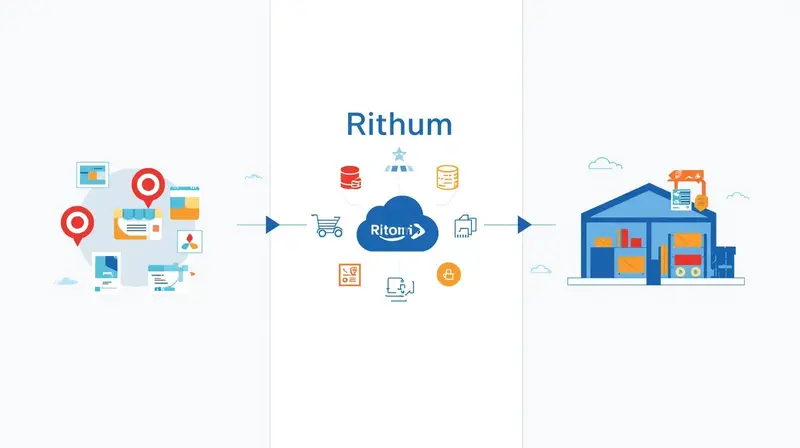
In this article
15 minutes
- How Rithum evolved from two competing platforms into commerce middleware
- The order lifecycle from retailer purchase to customer delivery
- Retailer SLAs demand near-perfect execution with significant financial penalties
- Why sellers struggle after Rithum implementation
- What qualified 3PLs need to handle Rithum-connected orders
- Integration architecture connects WMS to retail channels
- Selecting the right fulfillment partner determines retail dropship success
- Frequently Asked Questions
Rithum is the middleware providing the orchestration and data routing needed for seamless order fulfillment, routing orders between retailers like Target Plus, Nordstrom, and Walmart to your fulfillment operation. However, it won’t pick, pack, or ship a single product—those physical actions are handled by your 3PL, in-house warehouse, or Amazon’s Multi-Channel Fulfillment service. By accurately managing inventory levels and order quantities, sellers can feel confident in the reliability of their integrated ecommerce solution, knowing that Rithum orchestrates the entire order fulfillment process.
This distinction matters because retailers like Walmart require 99% on-time shipping with $5-per-order penalties for violations, while Nordstrom cancels orders entirely if shipment doesn’t occur within one business day. When inventory sync fails or carrier performance drops, Rithum’s orchestration capabilities become irrelevant. Rithum maintains real-time inventory levels across all connected channels to prevent overselling and automatically syncs your Amazon inventory quantities with your channels. Your 3PL relationship determines whether you meet these unforgiving standards or face suspension from programs that took months to join. Rithum uses machine learning to provide accurate delivery dates at the time of purchase, accounting for variables like carrier performance, but successful implementation also depends on having the needed information, configuration, and support in place.
How Rithum evolved from two competing platforms into commerce middleware
Rithum emerged in December 2023 when CommerceHub and ChannelAdvisor unified under a single brand following CommerceHub’s $23.10 per share acquisition of ChannelAdvisor in November 2022. The combined company also absorbed DSCO, a distributed inventory platform acquired in 2020, and Cadeera, an AI company. This consolidation brought together CommerceHub’s enterprise retailer integration strengths (primarily EDI-based connections with major retailers) and ChannelAdvisor’s marketplace listing and advertising platform serving 40,000+ companies globally.
The platform now operates three core systems under the Rithum umbrella. OrderStream from the CommerceHub legacy handles enterprise dropship and retailer integration through EDI and SFTP connections. DSCO provides a modern API-first architecture supporting dropship, marketplace, and buy-online-pickup-in-store workflows. The original ChannelAdvisor platform manages multichannel marketplace listings and digital marketing across 420+ marketplace integrations, allowing users to list products across multiple marketplaces and efficiently manage their catalog.
What unifies these components is their function as translation and routing software sitting between sellers and retail channels. Rithum normalizes purchase orders, inventory feeds, and shipment confirmations across different file formats and retailer-specific requirements. When Home Depot sends an EDI 850 purchase order or Nordstrom expects an ASN within 24 hours of shipment, Rithum handles format compliance and data routing, but the warehouse operations remain entirely your responsibility. To learn more about how these integrations work together, visit the dedicated Rithum fulfillment page or documentation.
If you want to learn more about the unified Rithum platform and how to list your products efficiently, visit this page for additional resources and support.
The order lifecycle from retailer purchase to customer delivery
Understanding exactly how orders flow through Rithum reveals where seller responsibility begins and ends. When a customer orders from Target.com or Nordstrom.com, the retailer generates a purchase order transmitted to Rithum’s network. Rithum validates the order against product catalog and inventory data, then routes it to your designated fulfillment endpoint based on pre-configured business rules. Rithum provides an Order Summary page to help users manage their open orders. You can click on the Order Summary page to quickly see the status of all your open orders, which are categorized based on their current state in the order fulfillment lifecycle. Rithum provides real-time visibility into the entire order lifecycle from pick and pack to final delivery.
Your 3PL receives the order via SFTP, API, or EDI connection, typically as an EDI 940 warehouse shipping order. The 3PL acknowledges receipt, picks and packs the product, generates a shipping label, and ships with the carrier. Critically, shipment confirmation data (tracking number, carrier, service level, and ship date) must flow back through Rithum to the retailer via an EDI 856 advance shipment notice, often required same-day for retailers like Nordstrom.
The business rules you configure in Rithum determine routing logic. Orders can route based on warehouse proximity to customers, inventory availability at specific locations, carrier service levels required to meet delivery promises, or cost optimization. You can set quantity buffers to hide listings when stock falls below thresholds and establish priority-based distribution center selection. But these rules only work if your inventory data is accurate and your 3PL can execute within the required timeframes. Depending on your retailer’s business rules, you may be able to partially ship an order when you have enough stock on hand to fulfill some items. You may need to split the items into separate packages, known as a split shipment, when preparing an order for shipment.
You must review your new orders and determine how you plan to ship the items before you can ship your orders or create packing slips.
Sellers configure fulfillment endpoints for internal warehouses, Amazon FBA/MCF, Walmart Fulfillment Services, third-party 3PLs, or dropship supplier networks. Rithum’s recent RithumIQ AI engine claims 96% accuracy in delivery promise forecasting and up to 10% shipping cost savings through machine learning-based routing, but these benefits require accurate underlying data from fulfillment partners. Rithum provides predictive delivery dates at checkout, achieving up to 96% accuracy.
Retailer SLAs demand near-perfect execution with significant financial penalties
Each major retailer connected through Rithum enforces distinct compliance requirements with meaningful consequences for violations. These requirements explain why 3PL selection matters so critically. Missing a single metric can trigger chargebacks, payment denials, or program suspension. Managing order quantities accurately is essential to meet retailer requirements and avoid backorders or inventory discrepancies.
Walmart’s Drop Ship Vendor program sets the most stringent bar: 99% on-time shipping, ≤0.1% backorder rate, and line-level order acknowledgment within four business hours. Orders received before the local warehouse cutoff (typically noon) must ship the same day. Chargebacks include $5 per purchase order for late shipments and $5 per unit for rejected or backordered items. Two or more ignored order alerts trigger a suspension warning, with minimum seven-day suspensions for non-response.
Nordstrom requires shipment within one business day of order receipt. Failure means Nordstrom cancels the order and you receive no payment. The advance shipment notice must transmit the same day as physical shipment. Nordstrom supplies shipping labels through their UPS account, and using the wrong carrier account means no payment. Monthly scorecards track performance across timeliness, compliance, and fulfillment accuracy, with $10 fees per non-compliant invoice.
Managing multiple retailer SLAs can be complex, but Rithum pulls orders from all sales channels into a single platform, providing a unified view of every order. Automation in Rithum helps to eliminate manual errors, achieving up to 40% reduction in errors.
Target Plus requires fulfillment within 24 business hours with a maximum five-business-day transit time. Sellers must use Target-branded packing slips, maintain $5 million commercial general liability insurance, and accommodate all carrier service levels. Amazon and Walmart fulfillment services are explicitly prohibited, requiring US-based fulfillment from your own operation or 3PL.
Best Buy’s Supplier Direct Fulfillment expects shipment within two business days with monthly SLA targets: 99% adjusted fill rate, 95% shipped-on-time rate, 99% timely ship notices, and 95% timely inventory advice. Performance reviews occur weekly at the warehouse level, and orders unfulfilled within 30 calendar days are automatically cancelled.
Macy’s Vendor Direct Fulfillment also requires shipment within two business days, but critically mandates that sellers cancel orders if product won’t ship within that window, regardless of reason. Out-of-stock items must be cancelled and communicated within one business day.
Why sellers struggle after Rithum implementation
Industry analysis reveals consistent patterns of post-implementation difficulty rooted in platform limitations, inventory synchronization failures, and the inherent complexity of multi-retailer dropship operations. According to a 2025 Threecolts analysis, brands commonly wait months before going live while being billed, with setup involving endless back-and-forth, rigid templates, and a one-size-fits-all workflow.
Inventory accuracy problems compound exponentially with scale. Unlike owned inventory with direct warehouse visibility, retail dropship requires suppliers to accurately report real-time availability across multiple locations. A Rithum and eTail industry report found 40% of companies cite inventory coordination across platforms as their top challenge, with 33% citing marketplace data integration as their second-biggest issue. When a store shows 100 units available but the supplier has zero, the seller faces refunds, angry customers, and potential account suspension. Errors add up to $8,000 to $15,000 in lost profit annually from preventable mistakes.
Multi-location fulfillment complexity creates routing failures where orders route to distant warehouses while closer facilities have stock, or split shipments divide orders across multiple locations unnecessarily. Without proper systems, gaining visibility across multiple warehouses requires calling or emailing each warehouse, waiting for responses, and manually aggregating information. By the time you have the answer, it’s already outdated. A nationwide network can resolve these challenges by increasing efficiency and visibility.
Platform rigidity forces businesses into workflows that don’t adapt to their needs. Custom rules for inventory allocation or specific sequences require additional payment and long waits, with results often partial fixes or compromises that never fully solve the underlying need. However, businesses can expand product assortments without carrying inventory through Rithum. Rithum also allows businesses to test new product categories through dropshipping or private marketplaces without the risk of owning inventory. Adding new channels becomes especially painful. Each marketplace has unique requirements, forcing teams to map attributes manually, reformat catalogs, and wait on slow updates. For successful integration, the needed steps include providing all required information, configuring system connections, and ensuring ongoing support to address marketplace-specific requirements.
Integration failures between Rithum and WMS/ERP systems create disconnects where orders don’t fulfill on time, inventory shows as available when it’s not, and tracking information doesn’t reach customers. Traditional integrations require 60 to 90 days of custom development, with each new client bringing unique tech stacks, data models, and business rules.
What qualified 3PLs need to handle Rithum-connected orders
Selecting a 3PL for retail dropship through Rithum requires specific capabilities that many fulfillment providers lack. The core requirement is certified EDI compliance supporting essential transactions. The required EDI transactions can be listed as follows: EDI 850 (purchase orders), 855 (acknowledgments), 856 (advance ship notices), 810 (invoices), 940 (warehouse shipping orders), and 945 (warehouse shipping confirmations).
Multi-warehouse networks provide geographic coverage enabling one-to-two-day delivery to 96%+ of the US population, with automated order routing based on inventory availability, customer proximity, and SLA requirements. When items are unavailable at one location, orders automatically route to alternative facilities. This redundancy proves critical when individual warehouse disruptions would otherwise cause SLA violations.
Real-time inventory synchronization must flow bidirectionally from WMS to Rithum to prevent overselling, and from sales channels back through the system to maintain accurate availability and quantities across 420+ connected marketplaces. The National Retail Federation reports inventory distortion costs retailers billions annually, making immediate sync of every order, receipt, transfer, and adjustment essential to ensure correct quantities are reflected at all times.
Carrier diversification protects against single-carrier disruptions while enabling rate shopping for cost optimization. Required capabilities include integration with UPS, FedEx, USPS, DHL, and regional carriers, plus support for retailer-supplied shipping labels where programs like Nordstrom provide their own UPS account credentials.
Technical integration typically occurs through SFTP file automation (every Rithum account includes unique SFTP credentials), AS2 protocol for secure data exchange, or REST APIs with webhooks for real-time connectivity. File formats use specific extensions: .neworders for incoming orders, .confirm for acknowledgments, .inventory for stock updates, and .shipment for tracking confirmations.
ChannelAdvisor provides launch services to assist customers with setting up their ChannelAdvisor Fulfillment Services account. The ChannelAdvisor Launch Team is responsible for establishing the necessary calls with customers during the setup process, and customers will have access to the Launch Team via email for the duration of the services period. The number of calls with the ChannelAdvisor Launch Team will not exceed three per Fulfillment Endpoint.
Integration architecture connects WMS to retail channels
Rithum’s integration architecture supports multiple data exchange methods depending on retailer requirements and seller technical capabilities. API-based connections use REST architecture with JSON format, requiring Content-Type, API-Key, Timestamp, and Authorization headers with HMAC signature or access token authentication. Webhooks enable real-time event-driven data push for immediate updates.
EDI connections remain essential for major retailers who require specific document formats. The workflow proceeds from retailer purchase order (EDI 850) through supplier acknowledgment (EDI 855) to warehouse shipping instruction (EDI 940), warehouse confirmation (EDI 945), advance ship notice (EDI 856), and invoice (EDI 810). Each retailer may require different EDI formats, which Rithum translates through its Universal Connection Hub that normalizes supply chain communications across different file formats.
WMS integration connects through pre-built connectors from providers like Extensiv, Shipedge, Logiwa, and Deposco, or through integration platforms like Cleo, TrueCommerce, and SPS Commerce. Pre-built integrations can deploy in under one hour with documentation available on the integration documentation page. To learn more about setup options, click on the integration documentation page for detailed guidance.
SKU mapping across channels requires maintaining a master database with external identifier mappings. A single product may have different SKUs per channel or retailer, requiring one-to-many mapping relationships. Rithum’s Shadow SKU functionality enables channel-specific presentation while maintaining internal inventory consistency. Poor SKU mapping drives 10%+ error rates that cascade into fulfillment failures.
To learn more about Rithum’s integration architecture, visit the dedicated resource page for additional information.
Selecting the right fulfillment partner determines retail dropship success
The fundamental truth of Rithum-connected retail dropship is that platform capabilities become irrelevant without execution excellence at the fulfillment level. Sellers choosing 3PLs should feel confident in their fulfillment partner’s ability to meet retailer requirements. Sellers should verify specific capabilities: certified Rithum or CommerceHub integration through EDI or API, multi-warehouse network with intelligent order routing, real-time inventory synchronization with sub-15-minute update frequency, and multi-carrier relationships enabling rate shopping across UPS, FedEx, USPS, and regional carriers.
Critical performance metrics to require contractually include 99.5%+ order accuracy (with some 3PLs guaranteeing 99.9%), same-day fulfillment for orders received by cutoff, inventory accuracy matching physical counts to recorded inventory, and OTIF (on-time, in-full) rates meeting or exceeding retailer thresholds. Rithum computes SLA performance based on retailer-provided delivery dates and notifies suppliers of each order that misses requirements, but that notification arrives too late if your 3PL already failed.
Top 3PLs with demonstrated retail dropship expertise are providing comprehensive support for ecommerce businesses by managing the entire order fulfillment process. This includes providers like a2b Fulfillment (specializing in Amazon FBM/SFP and Walmart DSV), ShipBob (distributed inventory with 2-day express shipping), Red Stag Fulfillment (zero shrinkage guarantee with 99.9% accuracy), and DCL Logistics (40+ years of fulfillment SLA expertise). Integration platform partners like Extensiv 3PL Warehouse Manager, Pipe17, and ConnectPointz provide pre-built CommerceHub/Rithum connectors that accelerate deployment.
Frequently Asked Questions
Is Rithum a 3PL or fulfillment provider?
No. Rithum is order orchestration and retail connectivity software that routes orders between retailers and your fulfillment operation. It does not warehouse inventory, pick and pack orders, or ship products. All physical fulfillment happens through your chosen 3PL, in-house warehouse, or fulfillment service like Amazon MCF. Rithum handles order translation, inventory sync, and retailer integration, but execution responsibility sits entirely with your fulfillment partner.
How does Rithum connect to retailers like Target Plus and Nordstrom?
Rithum maintains pre-built integrations with 420+ retail channels through EDI connections, API partnerships, and SFTP file exchanges. When a customer purchases on Target.com or Nordstrom.com, the retailer sends a purchase order to Rithum in their required format (typically EDI 850). Rithum normalizes this data and routes it to your designated fulfillment endpoint based on business rules you configure. Your 3PL then fulfills the order and sends shipment confirmation back through Rithum to the retailer.
What happens if my 3PL misses a retailer SLA deadline?
Consequences vary by retailer but typically include financial penalties and potential program suspension. Walmart charges $5 per order for late shipments and $5 per unit for backorders. Nordstrom cancels orders and you receive no payment if shipment doesn’t occur within one business day. Best Buy tracks weekly performance at the warehouse level with monthly scorecards. Repeated violations can result in account suspension from retail programs, which often take months to rejoin.
Can I use Amazon FBA or Walmart fulfillment services for Rithum orders?
It depends on the retailer. Target Plus explicitly prohibits using Amazon or Walmart fulfillment services, requiring US-based fulfillment from your own operation or a third-party 3PL. Other retailers may allow it if the fulfillment partner can meet their specific SLA requirements and technical integration needs. Check individual retailer program terms before configuring fulfillment endpoints, as violations can result in immediate suspension.
Why do multi-warehouse 3PLs reduce order cancellation risk?
Multi-warehouse networks provide inventory redundancy and geographic distribution. When one location is out of stock or experiences disruptions, orders automatically route to alternative facilities that have inventory. This prevents the order cancellations that occur when single-warehouse operations run out of stock or face localized issues like weather delays, labor shortages, or carrier disruptions. Geographic distribution also enables faster delivery times, helping meet strict retailer transit requirements.
How long does it take to integrate a 3PL with Rithum?
Integration timelines vary by technical approach. Pre-built EDI or API connectors from certified 3PL partners can deploy in under one hour with proper documentation. Custom API integrations typically require two to six weeks for development, testing, and certification. Traditional EDI connections need careful setup and retailer-specific testing before production go-live, often requiring 60 to 90 days for full deployment across multiple retail channels. Choose 3PLs with existing Rithum or CommerceHub certifications to minimize implementation time.
Written By:
Indy Pereira
Indy Pereira helps ecommerce brands optimize their shipping and fulfillment with Cahoot’s technology. With a background in both sales and people operations, she bridges customer needs with strategic solutions that drive growth. Indy works closely with merchants every day and brings real-world insight into what makes logistics efficient and scalable.
Turn Returns Into New Revenue
Related Articles
What Is Demand Planning? How It Impacts Inventory, Forecasting, and Profitability
Demand planning is the process of estimating future customer demand so that a business can align its inventory, procurement, and operations to meet that demand without carrying mor...
Walmart Officially Allows Amazon Multi-Channel Fulfillment (MCF)
Big news for multichannel sellers: Walmart now officially allows Amazon Multi-Channel Fulfillment (MCF), Amazon’s service for using its fulfillment network to ship orders from mult...
Why Small Ecommerce Brands Are Winning with AI (While Enterprises Struggle)
Conventional wisdom says large companies should dominate AI adoption.
Amazon’s Big-Box Store Signals the Rise of No-Wait Commerce
In this article
24 minutes
- Introduction to Instant Commerce
- What Amazon's Big-Box Concept Actually Enables
- This Is Not About Faster Shipping
- No-Wait Commerce as a New Tier
- How This Differs from Whole Foods and Lockers
- Shopping Habits in the Age of No-Wait Commerce
- Customer Experience in the Instant Commerce Era
- Demand and Growth of Instant Commerce
- Logistics and Operations Behind Instant Access
- Technology Infrastructure Powering No-Wait Commerce
- Challenges and Opportunities for Retailers
- Which Merchants Benefit and Which Feel Pressure
- What This Means for Brand Placement and Selection
- The Competitive Context Shift
- Best Practices for Succeeding in Instant Commerce
- A Grounded Takeaway
- Frequently Asked Questions
Amazon’s proposed 229,000-square-foot retail store in suburban Chicago is not about shipping faster or expanding delivery capacity. It introduces a new tier of ecommerce where customers can buy from Amazon’s catalog and take possession immediately, without waiting for delivery windows, checking locker availability, or tracking packages. This “no-wait” model reshapes how urgency, access, and competition work in ecommerce, and it rewards a very specific type of merchant.
Instant commerce was created rapidly as a disruptive retail model, with companies quickly developing and implementing new ways for consumers to shop and receive products. The swift establishment of instant commerce has transformed traditional retail, setting new expectations for speed and convenience. Many customers are already familiar with the concept of instant commerce through services like Uber Eats, Instacart, or DoorDash, which have made quick delivery options a recognized part of everyday life.
The concept, now under local approval review in Orland Park, Illinois, represents Amazon’s most significant physical retail experiment since acquiring Whole Foods in 2017. But understanding what this store actually enables requires looking beyond the square footage and grocery aisles to see the fulfillment architecture underneath.
The development of automation and artificial intelligence has made distribution and delivery systems increasingly sophisticated, enabling faster and more efficient order fulfillment.
China has been a leader in instant commerce, with intense competition among technology giants driving innovation. Chinese consumers can expect to receive their orders within an hour, thanks to advanced logistics, a reliable transport network, and sophisticated distribution systems. However, the rapid growth of instant commerce in China has also led to criticism of the working conditions for delivery workers, who often face insufficient and excessively demanding environments.
Instant commerce typically focuses on delivering everyday essentials, groceries, and medicines within 10-60 minutes.
Introduction to Instant Commerce
Instant commerce is redefining the way consumers interact with ecommerce brands, setting a new standard for speed and convenience in shopping online. At its core, the instant commerce model is built on the promise of delivering products to customers with unprecedented speed—sometimes within hours of placing an order. This shift is powered by advanced delivery networks, robust fulfillment systems, and the strategic use of artificial intelligence to optimize every step of the process.
Retailers and companies are investing heavily in technology to provide a seamless customer experience, from the moment a product is added to the cart to the instant it arrives at the customer’s door. The integration of real-time data analytics and AI-driven logistics allows businesses to anticipate demand, manage inventory efficiently, and ensure that fast shipping is not just an option, but an expectation. As a result, consumers now enjoy the ability to order groceries, electronics, and everyday essentials online and receive them the same day or even within hours, making shopping online more convenient and reliable than ever before.
The rise of instant commerce is not just about speed—it’s about meeting the evolving needs of customers who value both time and convenience. Retailers are building sophisticated fulfillment networks and partnering with logistics providers to ensure they can provide the level of service today’s consumers demand. As technology continues to advance, the instant commerce model will only become more integral to the way we shop, transforming the retail landscape for both businesses and consumers.
To learn more about instant commerce, AI tools, and integrated ecommerce solutions, explore additional resources and further reading to deepen your understanding of these rapidly evolving technologies.
What Amazon’s Big-Box Concept Actually Enables
According to planning documents reviewed by multiple news outlets, the proposed store combines in-person shopping with digital ordering and immediate curbside pickup. Customers can browse physical aisles for groceries and general merchandise while simultaneously ordering items from Amazon’s broader catalog through an app or in-store kiosk. Those items get pulled from back-of-house inventory and prepared for pickup before the customer finishes shopping.
Optimizing the checkout process is crucial in instant commerce environments. Implementing simplified checkout forms or a single-page form can significantly reduce customer churn and improve conversions. A streamlined checkout page also plays a key role in increasing conversion rates and minimizing cart abandonment.
The store design dedicates substantial floor space to fulfillment operations rather than retail displays. Planning documents describe separate access points for retail customers and delivery drivers, dedicated queuing areas for order pickup, and a layout optimized to support both in-store shopping and rapid order assembly. A customer could walk into the store, order a sweater in a different color than what is on the rack, and pick it up at the front counter before leaving.
This is not the same as existing pickup options. Amazon already offers next-day pickup at some locations and grocery collection within 30 minutes at Whole Foods. Reports indicate Amazon is also developing a “rush” pickup service that would allow customers to collect orders from its stores within an hour, combining online marketplace items with in-store inventory in a single unified order.
The big-box format scales this capability dramatically. The store’s back-of-house operations can support a vastly larger product selection than any current Amazon physical location, bridging the gap between the convenience of a neighborhood store and the depth of Amazon’s online catalog.
This Is Not About Faster Shipping
Amazon’s delivery network already works well for most customers. Same-day delivery reaches thousands of cities. Prime members can get household essentials and fresh groceries delivered in under an hour through the recently launched Amazon Now service in test markets. Two-day shipping feels almost quaint compared to what the company can now execute.
The breakthrough here is not incremental speed improvement. It is skipping delivery entirely.
Delivery, no matter how fast, still involves waiting. Even a one-hour delivery window means staying home, watching for notifications, and being present when the package arrives. Traditionally, e-commerce delivery times were much longer, often taking several weeks or at least 1-7 days across broader regions. Instant commerce has drastically shortened these long wait times, shifting consumer expectations from weeks or days to just minutes or a couple of hours. Lockers solve the availability problem but add another stop. The no-wait model eliminates all of that. You order, you drive, you have it.
This distinction matters because it changes which shopping occasions Amazon can capture. Some purchases do not tolerate any delay. The ingredient missing from tonight’s dinner. The charger needed for tomorrow’s trip. The birthday gift discovered too late for shipping. These moments currently default to physical retail because the alternative requires waiting.
No-Wait Commerce as a New Tier
Same-day delivery compressed the ecommerce timeline from days to hours. No-wait commerce compresses it further, from hours to minutes. The limiting factor is no longer logistics speed but physical proximity.
This creates a new competitive tier above same-day delivery. Click-and-collect sales in the United States are projected to reach nearly $113 billion this year, growing 17% from 2023. Research firm eMarketer estimates approximately 153 million Americans will use click-and-collect services in 2025, representing about 68% of online buyers. Walmart currently leads this category with projected sales of $38.5 billion, leveraging more than 4,600 U.S. stores that can reach roughly 95% of households within three hours.
The difference between retailers who expand their reach by leveraging omnichannel strategies and marketplaces and those who do not is significant—those using established marketplaces and robust omnichannel management can facilitate same-day or even instant commerce, while others risk falling behind. Major retailers and marketplaces like DoorDash, Uber Eats, Amazon, Walmart, and Instacart now offer instant commerce options for a variety of businesses, including grocery stores and restaurants, further accelerating the shift toward rapid fulfillment.
Amazon’s big-box concept positions the company to compete directly in this space, but with a catalog advantage no grocery-focused retailer can match. A customer picking up milk and eggs could also grab electronics, home goods, clothing, and items from third-party sellers, all in one stop, all without waiting.
The implications extend beyond convenience. No-wait commerce shifts purchasing decisions. When customers know they can have something in their hands within an hour of wanting it, the calculus around impulse purchases, urgent needs, and last-minute shopping changes fundamentally.
How This Differs from Whole Foods and Lockers
Amazon already operates physical retail through Whole Foods, Amazon Fresh, and Amazon Go locations. It already offers pickup through lockers at thousands of locations. The big-box concept differs from all of these in purpose and capability.
Whole Foods serves a specific grocery customer seeking organic, premium products. Its stores are designed for browsing and discovery, not rapid fulfillment of general merchandise. Amazon Fresh focuses on everyday grocery needs with tech-enabled checkout but limited selection beyond food and household staples. Amazon Go prioritizes convenience and speed for grab-and-go purchases but operates at small scale.
Lockers solve a different problem entirely: receiving packages when you are not home. They extend delivery flexibility but do not eliminate waiting. You still order, wait for fulfillment, wait for shipping, and then retrieve.
The big-box format is purpose-built for a different use case. Planning documents describe it as a “fulfillment-first retail layout” where back-of-house operations support both in-store shopping and pickup orders simultaneously. The design separates delivery vehicle traffic from customer pickup lanes, creating dedicated infrastructure for rapid order handoff.
This is not a grocery store with Amazon products added. It is a fulfillment node with a retail front end, designed to serve customers who want immediate possession without the constraints of traditional retail inventory.
Shopping Habits in the Age of No-Wait Commerce
The instant commerce model is fundamentally reshaping how consumers approach shopping online. Today’s customers expect not just a wide selection, but also the ability to receive their purchases with unprecedented speed and convenience. Recent surveys reveal that convenience is the top reason consumers choose to shop online, with 76% citing it as their primary motivator. Fast shipping is no longer a luxury—66% of shoppers now consider it a basic expectation.
This shift in consumer mindset is driving ecommerce brands and businesses to rethink their fulfillment strategies. Companies are investing heavily in delivery networks and logistics infrastructure to meet the demand for rapid delivery. The rise of services like Uber Eats, which now deliver not only restaurant meals but also groceries and everyday essentials, exemplifies how the instant commerce model is expanding across categories.
For many ecommerce brands, partnering with third-party delivery services has become a strategic necessity to offer customers the speed and convenience they expect. Whether it’s groceries, household items, or last-minute gifts, the ability to provide fast, reliable delivery is a key differentiator in a crowded marketplace. As a result, businesses are constantly refining their fulfillment processes to ensure they can meet customer needs at any hour, reinforcing the central role of convenience in the modern shopping experience.
Customer Experience in the Instant Commerce Era
In the era of instant commerce, delivering an exceptional customer experience has become the top priority for ecommerce brands. Today’s consumers expect more than just fast delivery—they want a seamless, personalized, and intuitive shopping journey from start to finish. Companies are leveraging artificial intelligence and advanced technology tools to create dynamic product pages, offer tailored recommendations, and streamline the checkout process, ensuring that every interaction feels effortless and engaging.
Industry leaders like Uber Eats and Amazon have set the benchmark for what customers expect when shopping online, offering reliable delivery services that consistently meet or exceed expectations. Real-time order tracking, instant notifications, and easy-to-navigate interfaces are now standard features, providing consumers with transparency and control over their purchases. Retailers are investing in building robust technology infrastructure to support these services, recognizing that a superior customer experience is essential for retaining loyalty and driving repeat business.
Artificial intelligence plays a crucial role in this transformation, enabling companies to analyze customer behavior, predict preferences, and optimize every touchpoint along the shopping journey. By harnessing these tools, retailers can offer services that not only meet but anticipate customer needs, from personalized product suggestions to proactive customer support. In the instant commerce era, the brands that invest in technology and prioritize customer experience are the ones best positioned to thrive.
Demand and Growth of Instant Commerce
The demand for instant commerce is surging as more consumers embrace the convenience of shopping online and expect their purchases to arrive with lightning speed. Fast shipping has evolved from a competitive advantage to a baseline expectation, with 66% of shoppers now considering it a necessity. Convenience remains the primary reason consumers choose to shop online, cited by 76% in recent surveys, underscoring the importance of rapid and reliable delivery services.
Retailers and companies are responding by investing in advanced fulfillment systems and expanding their delivery networks to meet these heightened expectations. The instant commerce market is projected to grow faster than traditional retail, fueled by the increasing adoption of mobile devices and the rise of on-demand services. In China, for example, ecommerce giants like Alibaba and JD.com have set the standard by offering same-day delivery in major cities, demonstrating what’s possible when technology, logistics, and consumer demand align.
As more retailers build out their instant commerce capabilities, the market is poised for continued expansion. The ability to provide fast, convenient delivery is becoming a key differentiator, driving competition and innovation across the industry. For consumers, this means greater choice, more flexibility, and the assurance that their needs can be met quickly—no matter where they shop or what they buy.
Logistics and Operations Behind Instant Access
Delivering on the promise of instant access requires a sophisticated logistics and operations backbone. Ecommerce brands must develop robust delivery networks that can handle high order volumes and tight turnaround times. This often involves leveraging artificial intelligence and advanced data analytics to optimize delivery routes, predict demand spikes, and allocate inventory efficiently.
Retail locations are increasingly being reimagined as fulfillment hubs, not just points of sale. These sites serve as critical nodes in the instant commerce ecosystem, enabling businesses to stage inventory closer to customers and facilitate rapid order pickup or delivery. Seamless integration between ecommerce platforms and logistics systems is essential, allowing for real-time order tracking, inventory updates, and customer notifications.
Industry leaders like Amazon and Alibaba are at the forefront of these operational innovations. They are experimenting with new fulfillment methods, such as dark stores—retail spaces dedicated solely to online order processing—and highly automated warehouses that can process and dispatch orders within minutes. These advancements enable companies to provide a superior customer experience, ensuring that products are available when and where consumers need them. As the competition intensifies, businesses that invest in cutting-edge logistics and fulfillment technology will be best positioned to thrive in the era of instant commerce.
Technology Infrastructure Powering No-Wait Commerce
At the heart of the instant commerce model lies a powerful technology infrastructure that enables ecommerce brands to deliver on the promise of no-wait shopping. Advanced tools and platforms are essential for managing online stores, processing orders, and coordinating delivery across multiple channels. A builder platform allows ecommerce brands to quickly create and customize online storefronts, supporting advanced headless commerce solutions with cutting-edge technology. Artificial intelligence is a game-changer in this space, optimizing everything from product pages to logistics workflows.
AI-driven analytics help businesses predict customer behavior, personalize shopping experiences, and streamline fulfillment operations. For example, intelligent algorithms can recommend products based on browsing history, adjust inventory levels in real time, and even automate customer service through chatbots and virtual assistants. These tools not only enhance the customer experience but also allow companies to manage their operations more efficiently.
Mobile-first technology is another critical component, as more consumers prefer to shop and track their orders on smartphones and tablets. Ecommerce brands are investing in responsive platforms and apps that make it easy for customers to browse, buy, and manage their accounts from anywhere. It is important to adjust marketing and email automation to account for changes in fulfillment and delivery times within an instant commerce model, allowing customers to manage their account settings accordingly. Additionally, implementing post-purchase marketing triggers and post-purchase email automation is crucial for enhancing the customer experience after the sale is completed, ensuring continued engagement and satisfaction. The growing adoption of AI-powered support services ensures that help is always available, further reducing friction in the buying process.
Investors are taking note of these trends, with significant funding flowing into companies developing innovative solutions for instant commerce. As the market continues to evolve, businesses that leverage the latest technology and AI-driven tools will be able to provide faster, more reliable service—meeting the high expectations of today’s consumers and setting new standards for the future of ecommerce.
Challenges and Opportunities for Retailers
The rise of instant commerce presents both significant challenges and exciting opportunities for retailers. Building and maintaining a delivery network capable of supporting same-day or next-day fulfillment requires substantial investment in technology, logistics, and skilled personnel. Retailers must ensure that their fulfillment systems are agile enough to handle fluctuating demand and deliver orders quickly and accurately, all while maintaining a seamless customer experience.
To meet these challenges, companies are turning to artificial intelligence and advanced analytics to optimize their supply chains, predict order volumes, and allocate resources efficiently. Real-time order tracking, personalized product recommendations, and streamlined checkout processes are now essential components of the customer experience, requiring ongoing investment in technology and infrastructure.
Despite these hurdles, the opportunities for growth are immense. Retailers that successfully implement instant commerce can increase sales, improve customer satisfaction, and gain a competitive edge in an increasingly crowded market. By leveraging cutting-edge technology and building robust delivery networks, businesses can provide the fast, reliable service that today’s consumers expect—positioning themselves for long-term success in the evolving world of ecommerce.
Which Merchants Benefit and Which Feel Pressure
The no-wait model creates clear winners and losers among product categories and merchant types. Building a market-leading company in instant commerce requires developing new infrastructure and networks from scratch or through integration. Understanding this dynamic matters for anyone selling on Amazon or competing with it.
Products that win on immediacy gain the most. Consumables, replacement items, and anything purchased to solve an immediate problem benefit from no-wait availability. Phone chargers, batteries, cleaning supplies, cooking ingredients, and everyday household items all fit this profile. When a customer needs something now, the merchant who can deliver possession fastest wins. Modern consumers have become spoiled by the convenience of instant commerce, expecting near-instant gratification and setting new standards for customer expectations.
Brands with high-velocity SKUs positioned for impulse purchase also stand to gain. The customer browsing the store for groceries might add a new kitchen gadget, a seasonal decoration, or a trending product they saw online. This cross-category exposure creates opportunities for products that benefit from physical proximity to other purchases.
Companies that have gained traction in instant commerce are those that have adapted quickly to changing consumer expectations, leveraging speed and convenience to capture market share.
The pressure falls differently. Products that depend on storytelling, configuration, or extended consideration face a compressed decision window. Complex electronics, customized items, and products requiring research do not gain much from no-wait availability because the purchase decision itself takes time. A customer will not impulse-buy a laptop while picking up groceries.
Premium and differentiated brands also face a new competitive context. When a category becomes available for immediate possession, the brand that happens to be in stock wins over the brand that requires shipping. This advantages commodity products and private labels that can be present in back-of-house inventory over specialized products that require fulfillment from distant warehouses.
Operational efficiency in instant commerce can reduce fulfillment costs by up to 75% per order compared to centralized warehouses. Consumers can access a curated selection of 2,000-4,000 SKUs per location, and many are willing to pay a premium for faster delivery.
What This Means for Brand Placement and Selection
Merchants should understand that Amazon’s big-box concept does not guarantee shelf space or even in-store presence in the traditional sense. The store’s back-of-house inventory model means products might be available for immediate pickup without ever appearing on a retail display. It is important for merchants to understand the factors that influence product placement and selection in instant commerce, as these can directly impact their visibility and sales opportunities. Additionally, customer demographics play an important role in shaping demand for instant commerce services, influencing which products are prioritized for rapid fulfillment.
Amazon controls which products get stocked in these locations, how they are categorized, and whether they appear in app-based or kiosk ordering. This is not a consignment model where brands secure shelf placement through negotiation. It is an extension of Amazon’s existing marketplace dynamics, where the platform decides what inventory to position for rapid fulfillment based on demand signals, margin considerations, and operational efficiency.
For merchants, this means access to no-wait commerce runs through Amazon’s existing seller relationships and inventory systems. Products with strong sales velocity and Prime eligibility are more likely candidates for local stocking. But the decision remains Amazon’s, not the seller’s.
The visibility implications are significant. A product available for one-hour pickup will likely receive algorithmic preference over products requiring standard shipping, particularly for searches with urgency signals. This creates a new dimension of competitive advantage that depends on physical proximity rather than just price, reviews, or advertising.
The Competitive Context Shift
Amazon’s big-box experiment reflects a broader recognition that ecommerce and physical retail are converging rather than competing. In today’s world, commerce is more interconnected and global than ever, with instant and omnichannel approaches catering to a worldwide consumer base and meeting diverse expectations. Consumer Intelligence Research Partners analysts noted that 93% of Amazon customers also shop at Walmart, suggesting the battle is not for exclusive loyalty but for share of each shopping occasion.
For multichannel sellers, this shift means evaluating which products and which moments each channel serves best. No-wait commerce captures urgency-driven purchases that might otherwise go to a local retailer. Instant commerce relies on dense urban networks for logistics to enable rapid fulfillment, while traditional ecommerce employs scalable logistics models to serve planned purchases where delivery timing is flexible. Physical retail captures discovery and experience-driven shopping.
The merchants best positioned for this environment are those who can serve multiple purchase contexts rather than optimizing for a single channel. A product available for immediate pickup at an Amazon big-box location, same-day delivery through Prime, and discovery through a brand’s own retail presence covers more customer moments than any single-channel strategy.
This is not a call to action or a required playbook. Amazon’s big-box concept remains in early planning stages, with local approval still pending and no confirmed timeline for additional locations. But the direction is clear: the line between ecommerce and physical retail continues to blur, and the merchants who understand how each channel serves different customer needs will navigate the shift most effectively.
Best Practices for Succeeding in Instant Commerce
Succeeding in the instant commerce model requires businesses to place convenience, speed, and a superior customer experience at the heart of their operations. As consumers increasingly expect to receive products within hours, ecommerce brands must rethink every aspect of their delivery networks and fulfillment strategies. Leveraging artificial intelligence is essential—not only for optimizing logistics and inventory management but also for enhancing product pages and personalizing the shopping journey.
To build a robust instant commerce ecosystem, companies should invest in advanced technology that streamlines order processing and enables real-time tracking. AI-driven tools can analyze consumer behavior, predict demand, and automate key processes, ensuring that delivery is both fast and reliable. Retailers and merchants who collaborate closely with logistics partners and technology providers are better positioned to meet the evolving needs of their customers.
Another best practice is to focus on seamless integration across all touchpoints. This means creating intuitive product pages, simplifying checkout processes, and providing instant support to address any issues that may arise. Businesses should also prioritize transparency, offering clear communication about delivery times and order status to build trust with consumers.
Building strong relationships with retailers, merchants, and consumers is vital for long-term success. By fostering open communication and aligning on shared goals, ecommerce brands can create a network that delivers on the promise of instant commerce. Ultimately, those who invest in speed, convenience, and customer-centric solutions will stand out in a competitive marketplace and grow faster in the world of instant commerce.
A Grounded Takeaway
Amazon’s big-box store signals that the company sees physical retail not as a retreat from ecommerce but as an extension of it. The goal is not to replace delivery with stores but to capture purchase occasions that delivery cannot serve well.
For sellers, this represents a shift in competitive context rather than a required strategic pivot. It is crucial for ecommerce businesses to assess whether they are ready to meet the demands of instant commerce, as near-instantaneous shopping and delivery experiences require new levels of operational preparation. Products that benefit from immediacy may find new advantages. Products that depend on differentiation, storytelling, or extended consideration will continue to compete on those dimensions regardless of fulfillment speed.
By 2026, instant commerce will have expanded from niche grocery services to a mainstream retail channel, covering categories like electronics and beauty. The rise of no-wait commerce does not invalidate existing strategies. It adds a new dimension to how customers evaluate options and make decisions. Understanding that dimension, even without acting on it immediately, positions merchants to adapt as the retail landscape continues evolving.
Frequently Asked Questions
What is no-wait commerce?
No-wait commerce describes a purchasing model where customers buy products online and take physical possession immediately through curbside pickup or in-store collection, eliminating delivery windows entirely. It represents a tier above same-day delivery, where the limiting factor is physical proximity rather than logistics speed.
How does Amazon’s big-box store differ from Whole Foods or Amazon Fresh?
The proposed big-box format is designed as a fulfillment-first retail layout with substantial back-of-house operations supporting both in-store shopping and rapid order pickup. Unlike Whole Foods or Amazon Fresh, which focus primarily on grocery retail, the big-box concept would offer Amazon’s broader catalog of general merchandise available for immediate collection.
Does this mean Amazon delivery is getting slower?
No. Amazon’s delivery network continues to expand and accelerate, with same-day and even sub-hour delivery available in many markets. The big-box concept addresses a different customer need: immediate possession without any waiting, which delivery cannot provide regardless of speed.
Will my products be available in Amazon’s big-box stores?
Amazon controls inventory selection and placement in its physical retail locations. Products with strong sales velocity and Prime eligibility are more likely candidates for local stocking, but the decision rests with Amazon based on demand signals and operational considerations, not seller negotiations.
What types of products benefit most from no-wait commerce?
Products purchased to solve immediate needs benefit most: consumables, replacement items, last-minute gifts, and impulse purchases. Products requiring extended research, customization, or storytelling gain less advantage from immediate availability because the purchase decision itself takes time.
When will Amazon’s big-box store open?
The proposed store in Orland Park, Illinois, is still awaiting final local approval. If approved, local officials estimate a potential opening in late 2027. Amazon has not announced plans for additional locations or a broader rollout timeline.
Written By:
Rinaldi Juwono
Rinaldi Juwono leads content and SEO strategy at Cahoot, crafting data-driven insights that help ecommerce brands navigate logistics challenges. He works closely with the product, sales, and operations teams to translate Cahoot’s innovations into actionable strategies merchants can use to grow smarter and leaner.
Turn Returns Into New Revenue
Related Articles
What Is Demand Planning? How It Impacts Inventory, Forecasting, and Profitability
Demand planning is the process of estimating future customer demand so that a business can align its inventory, procurement, and operations to meet that demand without carrying mor...
Why 100% P2P Adoption Is the Wrong Goal
Peer-to-peer returns let customers send eligible returned items directly to other customers instead of routing every package back through the warehouse, cutting shipping and proces...
Walmart Officially Allows Amazon Multi-Channel Fulfillment (MCF)
Big news for multichannel sellers: Walmart now officially allows Amazon Multi-Channel Fulfillment (MCF), Amazon’s service for using its fulfillment network to ship orders from mult...
Amazon Seller-Fulfilled Meltable Product Policy: What Sellers Need to Know

In this article
14 minutes
- Introduction to Amazon Meltable Products
- What Amazon Considers a Meltable Product
- How to Identify Meltable ASINs
- Amazon's Seller-Fulfilled Meltable Product Policy
- Understanding the 75°F to 155°F Temperature Range
- FBA Meltable Restrictions vs. Seller-Fulfilled Flexibility
- Operational Considerations for Meltable Fulfillment
- Selling Meltable Products Across Multiple Channels
- Managing Customer Complaints and Enforcement Risk
- Conclusion
- Frequently Asked Questions
Selling meltable products through seller-fulfilled channels on Amazon requires a clear understanding of where responsibility lies when heat-sensitive inventory arrives damaged. Amazon allows sellers to fulfill chocolate, gummies, supplements, and other meltable items year-round under Seller-Fulfilled Prime and standard FBM, but the burden of ensuring product quality throughout storage and shipping falls entirely on the seller. Amazon sellers face unique challenges with meltable products, including compliance with temperature requirements and managing the risks of shipping during hot or cold weather.
This operational reality creates both opportunity and risk. While FBA historically restricts meltable inventory during warmer months, seller-fulfilled channels remain open, giving brands flexibility to maintain sales continuity. Amazon meltable inventory is subject to specific seasonal restrictions, with important dates and guidelines that sellers must follow to avoid penalties or losses. However, that flexibility comes with strict accountability. Customer complaints about melted products can trigger listing suppression, and Amazon reserves the right to remove offers that consistently fail to meet quality standards.
Amazon’s meltable inventory policy outlines the regulations for handling, storage, and shipping of temperature-sensitive products, especially during periods of increased risk. This policy is essential for sellers to understand in order to avoid stock disruptions and maintain compliance.
Amazon enforces a seasonal restriction on meltable products, prohibiting their storage and shipment from April 15 to October 15. This means that during this period, meltable inventory cannot be stored or shipped through Amazon’s fulfillment centers.
Introduction to Amazon Meltable Products
Selling meltable products on Amazon opens up exciting opportunities, but it also brings a unique set of challenges that every seller must address. Meltable inventory refers to products that are especially vulnerable to temperature fluctuations—think chocolates, gummies, and wax based items. These heat sensitive products can easily lose their quality or become unsellable if not properly stored and shipped, especially during warmer months or in regions with extreme heat.
Amazon’s meltable inventory policy is designed to ensure that meltable products maintain their integrity from the moment they leave your facility until they reach the customer’s doorstep. This means sellers must pay close attention to how they store inventory, select packaging materials, and manage the shipping process. Failing to account for the risks associated with temperature sensitive items can lead to customer complaints, negative reviews, and even listing suppression.
In this article, we’ll break down what you need to know about selling meltable products on Amazon, including how to navigate the platform’s policies, identify which products are considered meltable, and implement best practices for storage and shipping. Whether you’re looking to sell chocolates, wax based products, or other temperature sensitive inventory, understanding these guidelines is essential for keeping your business running smoothly and maintaining customer satisfaction.
What Amazon Considers a Meltable Product
Amazon defines meltable products as items that can be damaged or degraded when exposed to temperatures between 75°F and 155°F during storage or transit. This temperature range reflects the conditions products commonly encounter in warehouses, delivery vehicles, and on doorsteps during summer months.
The meltable category includes:
- Chocolate and chocolate-containing items
- Chocolate bars
- Power bars and protein bars
- Gummies and jelly-based products
- Wax-based products including candles and certain cosmetics
- Certain beauty products that are sensitive to heat
- Select supplements and vitamins with heat-sensitive formulations
It is important to note that while meltable products are temperature-sensitive, perishable products—such as those requiring refrigeration, freezing, or temperature-controlled storage—are generally prohibited from FBA year-round due to their short shelf life and storage needs.
This classification matters because it determines how Amazon evaluates product condition complaints. When a customer reports receiving a melted item, Amazon assesses whether the product inherently falls into the meltable category and whether the seller took appropriate measures to protect product integrity during fulfillment. To determine if a product qualifies as meltable under Amazon’s policies, sellers should assess the product’s composition, consult Amazon’s official meltable product lists, and verify heat sensitivity through manufacturer data.
Products classified as meltable must be removed from Amazon fulfillment centers before the seasonal cutoff date of April 15.
How to Identify Meltable ASINs
Before listing heat-sensitive products, sellers should verify whether specific ASINs carry meltable classification. Amazon determines meltable ASIN classification based on product characteristics and temperature sensitivity. Amazon maintains a downloadable meltable ASIN list that identifies products flagged within this category. This list is accessible through Seller Central and provides a reference point for compliance planning.
Sellers should use their seller central account to check for meltable flags on their products and to access the Meltable ASIN List. Checking meltable status before listing helps sellers understand their obligations upfront. Products on this list carry heightened scrutiny during customer complaint reviews, and sellers should plan their storage and shipping strategies accordingly.
If a product is incorrectly classified as meltable, sellers can submit an exemption request through Seller Support. To request reclassification, sellers must include a letter on the manufacturer’s official letterhead, detailed product specifications (such as heat resistance and technical data), and other supporting documentation. Amazon evaluates exemption requests based on various factors, including product features that prevent melting. Sellers must gather detailed documentation to support their appeal for reclassification of meltable products.
For products not yet on the list, sellers should consider the item’s melting point and temperature resistance when determining appropriate handling procedures. The fact that an ASIN is not currently classified as meltable does not absolve the seller from responsibility if the product arrives damaged due to heat exposure.
Amazon’s Seller-Fulfilled Meltable Product Policy
The Amazon meltable product policy for seller-fulfilled orders places clear responsibility on sellers for ensuring products arrive in acceptable condition. Unlike FBA, where Amazon controls storage and shipping environments, seller-fulfilled channels make the seller accountable for the entire fulfillment process.
Amazon’s enforcement approach is complaint-based. The platform monitors customer feedback, return rates, and product condition reports. When complaints about melted or heat-damaged items reach a certain threshold, Amazon may take action ranging from suppressing the listing to removing the offer entirely. Non compliant products, such as meltable items shipped or stored outside of Amazon’s allowed temperature guidelines, can result in significant account issues and put sellers at a competitive disadvantage.
Repeated complaints of melted products can lead to offer suppression or even account suspension, directly impacting a seller’s account health rating.
Key policy elements sellers must understand:
- Sellers bear full responsibility for product condition at delivery
- Amazon does not provide temperature-controlled shipping or storage for seller-fulfilled orders
- Enforcement triggers are complaint-driven rather than proactive
- Amazon reserves the right to suppress or remove offers with consistent quality issues
- Reinstatement may require demonstrating improved fulfillment practices
This complaint-based model means sellers may not receive warning before action is taken. A sudden spike in returns or negative reviews during a heat wave can quickly escalate to listing-level consequences.
Understanding the 75°F to 155°F Temperature Range
The temperature range Amazon references for meltable products reflects real-world conditions products encounter between leaving a seller’s facility and reaching the customer. This range is not arbitrary. It accounts for:
Warehouse storage conditions: Many fulfillment facilities lack climate control, particularly in regions with extreme summer temperatures. Products stored in non-air-conditioned environments can easily reach 90°F or higher.
Transit environments: Delivery trucks and cargo areas frequently exceed 100°F during summer months. Products may sit in these conditions for extended periods during sorting and last-mile delivery.
Doorstep exposure: Final delivery often involves packages sitting on porches or in mailrooms where temperatures can spike well above ambient outdoor conditions.
Understanding this temperature spectrum is critical because it highlights why packaging alone may not be sufficient protection. Insulated packaging and cold packs can provide temporary barriers, but they have limits. Packaging should be designed to withstand temperature fluctuations to help protect meltable products during storage and transit. A package sitting in a 120°F delivery truck for several hours will eventually reach damaging temperatures regardless of initial packaging measures. Improper handling or inadequate packaging can lead to products arriving melted or deformed, resulting in customer dissatisfaction, increased returns, and negative reviews.
FBA Meltable Restrictions vs. Seller-Fulfilled Flexibility
Amazon historically restricts meltable FBA inventory during warmer periods, specifically prohibiting the storage and shipping of meltable products through its FBA program from April 15 to October 15 each year. During this restricted period, FBA shipments containing meltable products may be rejected or returned at the seller’s expense, and sellers must remove any meltable inventory from Amazon fulfillment centers before the cutoff date of April 15.
These restrictions exist because Amazon fulfillment centers and logistics networks are not designed to maintain temperature-controlled environments for standard inventory. Rather than accept liability for products that arrive melted, Amazon shifts the risk by restricting what sellers can send. Managing in stock meltable inventory is crucial—sellers should monitor inventory levels, sales projections, and make timely decisions about promotions, removal, or disposal before the meltable season begins. To remove meltable inventory before the cutoff, sellers can create a removal order in Seller Central, which allows them to dispose of or return inventory efficiently and avoid unnecessary storage fees or product loss.
Seller-fulfilled channels operate differently. During the restricted period, sellers can switch to Fulfilled by Merchant (FBM) to continue selling meltable products directly to customers. Amazon allows sellers to fulfill meltable products year-round through Merchant Fulfilled Network (MFN) and Seller-Fulfilled Prime (SFP). The platform does not impose seasonal restrictions because the risk transfers entirely to the seller.
This distinction creates opportunity for brands willing to invest in proper fulfillment infrastructure. While competitors may go dark on FBA during meltable season, seller-fulfilled sellers can maintain availability. However, that competitive advantage requires genuine operational capability to deliver products in acceptable condition.
Operational Considerations for Meltable Fulfillment
Successfully fulfilling meltable products requires addressing multiple operational variables. While specific solutions depend on product characteristics and geographic footprint, sellers should evaluate several key areas, especially when dealing with temperature sensitive products that require special handling.
Storage environment: Products should be stored in conditions that prevent degradation before shipping begins. For many meltable items, this means climate-controlled warehousing, particularly during summer months. Relying on standard warehouse space in regions with high temperatures introduces risk from the moment inventory arrives.
Shipping method selection: Transit time directly impacts heat exposure. Choosing fast, reliable carriers for shipping meltable products minimizes time in transit and reduces the risk of temperature damage. Expedited shipping reduces the window during which products encounter elevated temperatures. However, faster shipping increases costs, requiring sellers to balance margin against quality risk.
Regional heat variability: Fulfilling orders to Phoenix in July presents different challenges than shipping to Seattle. Sellers with national distribution should consider how regional temperature patterns affect delivery success rates and whether differentiated fulfillment strategies make sense.
Packaging limitations: Insulated packaging and cold packs provide meaningful protection, but they are not unlimited solutions. Sellers should consider using cold shipping solutions to safely deliver meltable products during warmer months. These materials delay heat transfer rather than prevent it entirely. Sellers should test packaging effectiveness under realistic conditions rather than assuming protection.
Proper labeling is crucial for meltable products to ensure safety, compliance, and proper handling during transit. Sellers should clearly label packages containing meltable products to inform carriers about the special care needed during transit.
By implementing these practices, sellers can help ensure customer satisfaction by maintaining product quality and reducing the risk of temperature-related issues.
Selling Meltable Products Across Multiple Channels
Brands selling meltable goods across Amazon, Shopify, and other platforms face compounded operational challenges. Each channel may have different customer expectations, return policies, and fulfillment requirements, but the underlying physics of heat-sensitive products remains constant. When selling meltable inventory across multiple channels, it is crucial to understand and comply with each platform’s meltable product policies and classifications.
Maintaining consistent storage and shipping standards across channels is essential to preserve the product’s shelf life and ensure quality throughout its journey. A customer who orders chocolate through Shopify expects the same product quality as a customer ordering through Amazon. Using separate fulfillment processes for different channels increases complexity and creates opportunities for inconsistency.
Multi-channel sellers should consider whether their fulfillment infrastructure supports year-round meltable handling regardless of which channel generates the order. This may involve:
- Centralized inventory management in climate-controlled facilities
- Standardized packaging protocols across all channels
- Unified carrier selection based on temperature-sensitive requirements
- Consistent quality monitoring and complaint tracking
It is also important to regularly monitor inventory for unsellable inventory, such as damaged, expired, or restricted products, and remove it promptly to avoid unnecessary storage fees or compliance issues. Sellers must ensure that all inventory maintains a shelf life of over 90 days upon arrival at FBA; otherwise, products may be disposed of by Amazon. Monitoring and maintaining the product’s shelf life for all inventory is essential to prevent losses and maintain customer satisfaction.
The goal is operational coherence that protects product integrity regardless of where the customer happens to purchase.
Managing Customer Complaints and Enforcement Risk
When customer complaints occur, response speed and thoroughness matter. Sellers should monitor feedback closely during high-risk periods and have processes ready to address issues before they compound. To maintain customer satisfaction, proactive communication and careful fulfillment practices are essential, especially when shipping meltable products during warm seasons.
Proactive communication can help manage expectations. Some sellers inform customers about heat-sensitive shipping during checkout or include handling instructions in packaging. While this does not eliminate complaints, it can reduce surprise and frustration when issues occur.
Documenting fulfillment practices becomes important if Amazon requests evidence of improvement following enforcement action. Sellers who can demonstrate temperature-controlled storage, appropriate packaging, and expedited shipping options are better positioned to restore listings than those operating without structured processes. If a product is incorrectly classified as meltable, sellers can submit an exemption request through Seller Support in Amazon Seller Central, providing documentation to resolve classification issues. Additionally, using inventory management tools is essential for tracking meltable product compliance and avoiding excess removal fees before April 15. For more insights on optimizing order fulfillment strategies during peak events like Prime Day, explore available options.
Conclusion
In conclusion, selling meltable products on Amazon demands a thorough understanding of the platform’s meltable inventory policies and a proactive approach to inventory management. Protecting product integrity is not just about meeting Amazon’s requirements—it’s about ensuring that your customers receive high-quality, undamaged products every time. By staying vigilant about storage conditions, using appropriate packaging, and monitoring the shipping process, sellers can significantly reduce the risk of customer complaints and maintain a strong reputation.
Success in selling meltable products comes down to preparation and adaptability. Regularly review your inventory management practices, stay informed about any updates to Amazon’s meltable product policy, and be ready to adjust your strategies as needed. With careful planning and a commitment to quality, selling meltable products on Amazon can be both profitable and rewarding, helping you build a loyal customer base and grow your business with confidence.
Frequently Asked Questions
Are meltable products allowed year-round on Amazon?
Yes. Seller-fulfilled meltable products can be listed and sold year-round on Amazon. FBA has seasonal restrictions for meltable inventory, but Seller-Fulfilled Prime and standard merchant fulfillment do not impose the same limitations.
Can I sell meltable products with Seller-Fulfilled Prime?
Yes. Amazon permits meltable products through Seller-Fulfilled Prime without seasonal restrictions. However, sellers remain fully responsible for ensuring products arrive undamaged, and consistent quality issues can result in listing suppression.
What happens if customers complain about melted items?
Amazon tracks customer complaints, return rates, and product condition feedback. If complaints reach a concerning threshold, Amazon may suppress or remove the listing. Reinstatement typically requires demonstrating improved fulfillment practices.
Does Amazon provide temperature-controlled shipping?
No. Amazon does not offer temperature-controlled storage or shipping for seller-fulfilled orders. Sellers must arrange appropriate storage environments, packaging, and carrier services independently to protect product integrity.
How do I know if my product is classified as meltable?
Amazon provides a downloadable meltable ASIN list through Seller Central. Sellers should check this list before listing heat-sensitive products and plan fulfillment strategies based on classification status.
What temperature range does Amazon consider for meltable products?
Amazon references the 75°F to 155°F range when evaluating meltable product handling. This range reflects temperatures commonly encountered during storage and transit, particularly during warmer months.
Written By:
Rinaldi Juwono
Rinaldi Juwono leads content and SEO strategy at Cahoot, crafting data-driven insights that help ecommerce brands navigate logistics challenges. He works closely with the product, sales, and operations teams to translate Cahoot’s innovations into actionable strategies merchants can use to grow smarter and leaner.
Turn Returns Into New Revenue
Related Articles
What Is Demand Planning? How It Impacts Inventory, Forecasting, and Profitability
Demand planning is the process of estimating future customer demand so that a business can align its inventory, procurement, and operations to meet that demand without carrying mor...
Walmart Officially Allows Amazon Multi-Channel Fulfillment (MCF)
Big news for multichannel sellers: Walmart now officially allows Amazon Multi-Channel Fulfillment (MCF), Amazon’s service for using its fulfillment network to ship orders from mult...
Why Small Ecommerce Brands Are Winning with AI (While Enterprises Struggle)
Conventional wisdom says large companies should dominate AI adoption.
Seller Fulfilled Prime vs FBA: The Inventory and Delivery Truth Amazon Doesn’t Fix
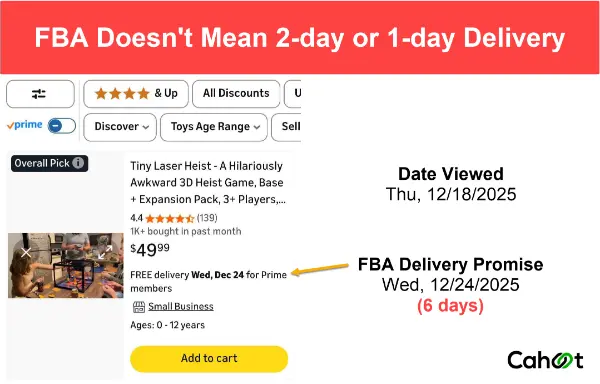
In this article
4 minutes
- FBA’s Prime Delivery Problem: Inventory Placement Gaps
- SFP’s Strict Delivery Standards vs. FBA’s Flexibility
- Inbound Delays and Stockouts: FBA’s Unseen Time Cost
- Returns and Control: FBA’s Lenient Policies vs SFP’s Oversight
- Fee Surprises and Predictability: FBA’s Surcharges vs SFP’s Costs
- The Accountability Asymmetry: Convenience vs Control
- Frequently Asked Questions
Amazon’s Fulfillment by Amazon (FBA) promises Prime convenience, but when one fulfillment center runs out of stock, Prime delivery times can quietly stretch to four or five days even if inventory exists elsewhere.
For Amazon sellers, the choice between Seller Fulfilled Prime and FBA shapes far more than shipping costs. It determines who controls delivery speed, inventory positioning, and customer expectations. The uncomfortable truth is that Amazon does not routinely rebalance inventory across warehouses to preserve two-day Prime speeds. Meanwhile, Seller Fulfilled Prime (SFP) holds sellers to strict 1-day and 2-day delivery standards, highlighting a stark accountability asymmetry in how Prime shipping is achieved.
In this article, we’ll break down why FBA’s convenience often trades away control and reliability. We’ll examine how lack of dynamic inventory placement leads to regional Prime delays, how inbound receiving bottlenecks leave sellers waiting with no SLA, and how FBA’s lenient returns and unpredictable fees add hidden costs. By contrast, we’ll see how SFP’s demanding requirements can actually deliver more consistent Prime service through operational control and accountability. If you’re evaluating FBA vs SFP, understanding these differences will help you avoid costly mistakes and choose the fulfillment model that truly meets your delivery reliability and inventory control needs.
Prime Delivery Promises vs What Customers Actually See
Prime eligibility and Prime delivery speed are often treated as the same thing. They are not.
On many Fulfilled by Amazon listings, customers see a Prime badge but are quoted delivery dates four or five days out at the moment of page view. This is not an edge case. It happens when inventory is unevenly distributed across fulfillment centers and Amazon does not rebalance stock fast enough to preserve speed.
Under Seller Fulfilled Prime, this gap does not exist. Listings are either eligible for one-day or two-day delivery, or they are not. Sellers are held strictly accountable to those delivery promises, and Prime eligibility can be removed quickly if performance slips.
The result is a structural difference in accountability. FBA allows Prime listings to degrade on delivery speed without seller-level consequences. SFP does not. From the customer’s perspective, the promise is clearer, and from the seller’s perspective, delivery performance is enforced rather than assumed.
FBA’s Prime Delivery Problem: Inventory Placement Gaps
Under FBA, Amazon decides where to store your products, and it does not actively redistribute your inventory solely to maintain fast Prime delivery nationwide. Your inventory is stored in Amazon’s fulfillment centers, and merchants incur storage fees for inventory stored there. That sounds like a fair trade until you realize what you are giving up: the ability to keep delivery speed consistent across regions when demand shifts.
Operationally, Prime speed depends on distance. The moment your closest node runs out, the system has two options: move inventory between nodes to keep delivery promises intact, or ship from farther away and accept a slower ETA. Amazon often chooses the latter because inter-warehouse moves cost time, labor, and capacity. The result is a Prime badge that stays visible while the experience quietly degrades.
This is not about Amazon being “broken.” It is about incentives. Amazon optimizes network-wide efficiency and cost, not the delivery precision of any single seller’s ASIN in every zip code. That means you can do everything right as a seller, keep inventory healthy overall, and still watch Prime ETAs stretch because your stock is sitting in the “wrong” place.
When Prime delivery speed quietly degrades, the downstream impact is real. Customers do not compare your operational constraints. They compare your listing to the next Prime option that still shows two-day delivery. If you are running ads or relying on organic rank, the timing mismatch can show up as a conversion dip that looks like a product problem, even though it is actually an inventory placement problem.
When One Fulfillment Center Runs Dry (Example)
To make this concrete, imagine you send 100 units to FBA and Amazon splits them across two nodes. Say 50 units land in California and 50 units land in Arizona. Demand from the Southwest burns through Arizona first. Now an order comes in from Phoenix or Las Vegas after that Arizona node is empty.
In that moment, you still have inventory in the network, but not in the right place. Amazon can ship from California, which preserves availability, but it often stretches the promised delivery window. Suddenly the same Prime-eligible listing can show a 4 or 5-day “Prime” delivery timeframe even though inventory exists elsewhere. The seller did not change anything. The customer experience changed anyway.
That gap between “inventory exists” and “inventory is positioned correctly” is where FBA’s convenience starts to look like a control problem. As a seller, you cannot tell Amazon to reposition units to a different node. You also cannot force the platform to prioritize speed over network cost when the closest facility is out.
No Dynamic Rebalancing = Slow Prime in Some Regions
Amazon does not routinely rebalance inventory between fulfillment centers to preserve Prime delivery speeds. That “routinely” is the key word. Inventory can move for Amazon’s broader reasons, but it is not a seller-facing mechanism designed to keep your ASIN at two-day Prime everywhere, all the time.
What makes this especially frustrating is the invisibility. Prime members can receive slower delivery without seller penalties, and sellers often do not notice until performance declines show up elsewhere. Your listing still looks Prime, but customers see the truth in the delivery estimate.
This is the first major accountability asymmetry. FBA absorbs delivery slippage as a platform outcome rather than a seller performance failure. The badge stays. The listing stays. The conversion damage is yours to carry.
SFP’s Strict Delivery Standards vs. FBA’s Flexibility
One of the biggest contrasts in Seller Fulfilled Prime vs FBA is how delivery performance is enforced. Under SFP, Amazon treats delivery speed like a seller-controlled promise. Under FBA, Amazon treats delivery speed like a network outcome. That difference shapes everything about how Prime is experienced by customers.
SFP is not “easier” than FBA. It is the opposite. It is a compliance regime. You are responsible for the pickup cutoffs, the carrier selection, the weekend handling, the scan discipline, the packaging accuracy, and the routing logic that ensures the order arrives within the Prime window. If you fail, the program corrects you quickly.
That is exactly why SFP can be operationally superior for sellers who can run a disciplined fulfillment operation. You do not have to accept silent Prime degradation due to inventory placement decisions you cannot influence. You earn the badge by meeting the delivery standard directly.
Prime Delivery SLAs: One-Day and Two-Day or Else
SFP sellers must meet strict on-time delivery, tracking, and cancellation thresholds or risk losing their Prime badge. Amazon enforces these standards weekly, which means the feedback loop is tight. If your operation drifts, you find out immediately through metrics and enforcement, not through a gradual conversion decline.
This enforcement is not “fair” in a philosophical sense, but it is clear. SFP tells sellers exactly what the standard is and expects it to be met consistently. That creates operational accountability. It also forces sellers to build inventory positioning and routing strategies that actually match demand, rather than relying on Amazon’s network to make it work behind the scenes.
Now contrast that with FBA. FBA listings can quietly slip to four-day or five-day Prime delivery in certain regions without seller consequences, because the seller is not the party being measured for transit performance. The customer sees slower Prime. The badge stays. Nobody “fails” the SLA because, under FBA, the seller is not the accountable entity for the final delivery promise.
That is the second major accountability asymmetry: SFP sellers carry strict SLAs, while FBA sellers can experience Prime slippage that looks similar to a service failure but is not treated as one.
If you want the Prime badge to mean “reliably fast,” not “eligible but variable,” SFP’s enforcement model is the reason it can outperform FBA in practice.
If you want a deeper look at how SFP fulfillment is operationalized, see Cahoot’s Amazon SFP fulfillment overview.
Why Multi-Line Orders Expose the Limits of Naive Fulfillment Logic
Single-item orders are easy to fulfill. Multi-line orders are where fulfillment systems reveal their limitations.
In many FBA networks, not all SKUs are stocked at every fulfillment center. When a customer orders multiple items, the system must decide whether to split the shipment across locations or ship everything from a single, farther warehouse.
Both options introduce risk. Splitting shipments increases cost. Shipping from farther locations increases delivery time. Yet sellers are still held to Prime expectations, even when no single fulfillment center can satisfy the order optimally.
The real challenge is decision-making. Does the system understand when to consolidate, when to split, and when to expedite? Can it balance delivery speed, cost, and Prime compliance without manual intervention?
For sellers operating at scale, this intelligence gap becomes one of the most common reasons Prime performance erodes.
Inbound Delays and Stockouts: FBA’s Unseen Time Cost
Even if you accept Prime delivery variability under FBA, there is another operational drag that sellers underestimate: inbound receiving time. Sending inventory into Amazon does not mean it is immediately sellable. Units can sit in receiving, processing, or transfer status before they become available for customers to purchase.
The critical issue is that sellers have no seller-facing inbound receiving SLA. During peak congestion or network strain, sellers may wait days or weeks before inbound units are checked in and available for sale. The inventory exists, but it is commercially invisible. That creates “phantom stockouts” where your supply chain is technically healthy, but your listing is not.
Those phantom stockouts compound the placement problem. If your nearby fulfillment node sells out and you replenish, the replenishment may not become sellable in time to prevent Prime ETAs from stretching. You are paying for storage and fulfillment services, but you still cannot control how quickly your inventory turns back into sellable units.
For operators, this is not a minor inconvenience. It distorts reorder points, breaks forecasting, and forces sellers to carry more buffer inventory than they otherwise would. It also punishes sellers during promotional lifts when speed of replenishment matters most.
SFP: Bypass the Check-In Queue
SFP bypasses Amazon’s receiving delays entirely because the inventory is already under your operational control. Inventory is available as soon as it is on your shelf or in your fulfillment network. There is no “checked in but not sellable” limbo that can last an unpredictable amount of time.
This matters because it restores a direct link between your demand signals and your replenishment actions. When your local node runs low, you can reposition inventory intentionally. When demand shifts, you can reroute fulfillment to the right warehouse the same day. Your Prime performance becomes a function of your decisions, not Amazon’s internal processing priorities.
To understand the mechanics behind that control, see Cahoot’s breakdown of ecommerce order routing and multi-warehouse fulfillment.
FBA Is Not Set It and Forget It. It Just Hides the Work
FBA is often described as hands-off fulfillment. In practice, it is hands-off until something goes wrong.
When FBA misses delivery expectations, customers do not blame the carrier or the fulfillment network. They blame the brand. Late deliveries routinely trigger negative reviews, even when the seller had no control over inventory placement or carrier execution.
At that point, the work reappears. Sellers must monitor reviews, open cases, provide evidence, and request removals. None of this is automatic, and none of it is guaranteed to succeed. The operational cost is not eliminated. It is deferred.
Seller Fulfilled Prime makes the work explicit upfront. Performance is monitored in real time, issues are surfaced immediately, and corrective action happens before customer trust is damaged. The difference is not effort. It is timing and visibility.
Returns and Control: FBA’s Lenient Policies vs SFP’s Oversight
Returns are where FBA’s convenience can quietly become a margin leak. Amazon’s return experience is optimized for customer trust and frictionless refunds. That is great for Prime adoption, but it often shifts risk onto sellers through reduced inspection control, unclear disposition, and limited recovery options.
Under FBA, the seller is not necessarily the party physically handling returns. That can reduce visibility into condition, packaging tampering, missing components, or repeated abuse patterns. It can also make it harder to decide whether a unit should be resold, refurbished, liquidated, or written off. In practice, sellers often discover return quality issues only after inventory health declines and customer complaints rise.
When you do not control inspection and disposition, you lose a key lever in protecting brand integrity. If you sell products where condition matters, such as consumables, premium goods, or items with a high “open box” penalty, that loss of control is not theoretical. It shows up in recoverable value, refund disputes, and long-term customer trust.
SFP: Hands-On Returns and Brand Protection
With SFP, returns come back to the seller or the seller’s fulfillment partner. That gives you the ability to inspect returned items, apply consistent grading rules, and decide the best disposition path. You can re-enter good units into sellable inventory, route damaged units to refurbishment, or flag abuse patterns earlier.
This is not about making returns “harder” for customers. It is about restoring operational oversight so you can protect margin and quality. If your business depends on resale recovery, refurb workflows, or strict condition standards, SFP’s returns control can be the difference between stable profitability and slow leakage.
For more context on returns strategy and recovery levers, see Cahoot’s customer returns management article.
Fee Surprises and Predictability: FBA’s Surcharges vs SFP’s Costs
FBA fees are not just “a fee.” They are a moving system: fulfillment fees, storage fees, peak season surcharges, dimensional adjustments, and program changes that can shift cost structures without much operational warning. Even when you understand the fee table, the lived experience is that costs can change based on factors you do not fully control, such as network congestion and storage duration.
This unpredictability forces sellers to plan with buffers. Buffers in margin. Buffers in inventory. Buffers in pricing. The moment your costs drift and you do not adjust fast enough, you lose money on volume and often do not notice until the monthly report closes.
SFP does not magically make fulfillment cheaper. That is not the point. The point is that SFP shifts cost drivers into places where operators can act: carrier mix, packaging discipline, warehouse labor efficiency, and inventory positioning. Those are controllable levers. You can measure them, improve them, and forecast them. That is operational predictability, not a cost hack.
For sellers who run fulfillment like an operation rather than an outsourcing decision, that predictability can be more valuable than theoretical per-unit savings.
Carrier Variance Is Real and Prime Metrics Do Not Adjust for It
Carriers do not perform evenly across regions or days of the week.
Weekend pickups and deliveries introduce measurable variance, particularly with ground services. In some regions, certain carriers consistently miss weekend delivery commitments. During peak periods, this variance increases as networks strain under volume.
Prime performance metrics do not account for these realities. Sellers are held to delivery promises regardless of carrier behavior, weather events, or weekend constraints. If a seller relies on a single carrier, they inherit that carrier’s weakest performance windows.
Seller Fulfilled Prime requires flexibility by design. Supporting multiple carriers is not a cost optimization tactic. It is a risk management necessity.
Delivery Speed Directly Impacts Conversion and Sales Velocity
Customers do not compare Prime badges. They compare delivery dates.
When the same product shows different delivery promises across regions, customers choose the option that arrives sooner. In competitive categories, a difference of even two days can determine which listing wins the sale.
Operators regularly observe wide delivery variance for the same product across ZIP codes under FBA. In some locations, delivery is same-day. In others, it stretches to four or five days. Customers facing longer waits often choose alternative brands that arrive faster.
This directly affects glance views, conversion rate, and sales velocity. Faster delivery is not just a fulfillment metric. It is a growth lever.
Seller Fulfilled Prime allows sellers to control that lever instead of inheriting it.
The Accountability Asymmetry: Convenience vs Control
If you strip away the marketing, FBA and SFP represent two different accountability models.
FBA is convenience with diluted accountability. You outsource storage, packing, and shipping, but you also outsource the ability to defend Prime speed when inventory placement shifts. If Prime delivery slows because the nearest node sells out, that is treated as a network reality. The seller is not penalized, but the seller also cannot fix it.
SFP is control with enforced accountability. You carry the SLA risk directly, but you also gain the operational authority to design your own inventory positioning, shipping cutoffs, and routing logic to protect Prime speed. When something breaks, the program forces you to correct it quickly, which is painful, but it also prevents silent degradation.
That is the core contrarian insight: SFP’s strictness is not a flaw. It is the mechanism that keeps Prime meaningfully fast because someone is actually accountable for the promise.
Frequently Asked Questions
Does Amazon rebalance FBA inventory between fulfillment centers to maintain Prime delivery speed?
No. Amazon does not routinely rebalance FBA inventory between fulfillment centers to preserve two-day Prime delivery speed. Inventory can move for Amazon’s broader network reasons, but sellers should not rely on rebalancing as a consistent mechanism to protect two-day delivery in every region.
Why do Prime delivery times slow down on FBA listings when inventory exists elsewhere?
Because Prime speed is driven by where inventory is positioned, not whether inventory exists somewhere in the network. When the closest fulfillment node runs out, Amazon may ship from a farther node rather than moving inventory between nodes to preserve the two-day promise. That distance shift is what turns a two-day expectation into a four-day or five-day Prime estimate.
Why are Seller Fulfilled Prime sellers held to stricter delivery standards than FBA sellers?
Because under SFP, Amazon treats the seller as the responsible party for the Prime delivery promise. The program measures on-time delivery, tracking quality, and cancellations against strict thresholds and enforces them frequently. Under FBA, Amazon is the operator, so delivery outcomes are treated as network performance rather than a seller compliance metric, even when the customer experience resembles a service-level miss.
How do FBA inbound receiving delays affect inventory availability and stockouts?
Inbound receiving delays create a gap between “inventory shipped” and “inventory sellable.” Sellers can have units physically at Amazon facilities but unavailable for purchase while they wait in receiving or processing. Because there is no seller-facing inbound receiving SLA, that delay can be unpredictable, which increases the risk of stockouts, rank loss, and Prime delivery slowdowns that occur even when the seller replenished on time.
How much control do sellers have over returns when using Fulfilled by Amazon?
Less than most sellers assume. Under FBA, returns are handled through Amazon’s customer-optimized process, and sellers often have limited control over inspection, disposition, and recovery decisions. That reduced oversight can increase write-offs, make recovery workflows harder, and reduce visibility into return condition patterns compared to SFP, where returns flow back through the seller’s operation.
When does Seller Fulfilled Prime make more operational sense than FBA?
SFP makes more operational sense when delivery reliability and inventory control matter more than outsourcing convenience. If you have multiple fulfillment locations or a partner network, can meet strict one-day and two-day SLAs, and want direct control over inventory positioning, receiving speed, and returns recovery, SFP can deliver a more consistent Prime experience. It is not a shortcut. It is a model for sellers who are willing to run fulfillment as a disciplined operation and accept accountability in exchange for control.
Written By:

Manish Chowdhary
Manish Chowdhary is the founder and CEO of Cahoot, the most comprehensive post-purchase suite for ecommerce brands. A serial entrepreneur and industry thought leader, Manish has decades of experience building technologies that simplify ecommerce logistics—from order fulfillment to returns. His insights help brands stay ahead of market shifts and operational challenges.
Turn Returns Into New Revenue
Related Articles
What Is Demand Planning? How It Impacts Inventory, Forecasting, and Profitability
Demand planning is the process of estimating future customer demand so that a business can align its inventory, procurement, and operations to meet that demand without carrying mor...
Why 100% P2P Adoption Is the Wrong Goal
Peer-to-peer returns let customers send eligible returned items directly to other customers instead of routing every package back through the warehouse, cutting shipping and proces...
Walmart Officially Allows Amazon Multi-Channel Fulfillment (MCF)
Big news for multichannel sellers: Walmart now officially allows Amazon Multi-Channel Fulfillment (MCF), Amazon’s service for using its fulfillment network to ship orders from mult...